Normal view

  • ✇Dawn Newspaper Pak
  • OGDCL makes significant oil, gas discovery in Sindh’s Sanghar district none@none.com (Khaleeq Kiani)
    ISLAMABAD: The state-owned Oil and Gas Development Company Limited (OGDCL) on Wednesday said it made a significant oil and gas discovery from its exploratory well Bobi Deep-1, located in Sindh’s Sanghar district. The company is the country’s largest oil and gas producer and, in April this year, began commercial production from Pakistan’s largest-ever oil and gas discovery from a single well. In a statement issued today, OGDCL said the well successfully tested the Massive Sand interval of the Low
     

OGDCL makes significant oil, gas discovery in Sindh’s Sanghar district

ISLAMABAD: The state-owned Oil and Gas Development Company Limited (OGDCL) on Wednesday said it made a significant oil and gas discovery from its exploratory well Bobi Deep-1, located in Sindh’s Sanghar district.

The company is the country’s largest oil and gas producer and, in April this year, began commercial production from Pakistan’s largest-ever oil and gas discovery from a single well.

In a statement issued today, OGDCL said the well successfully tested the Massive Sand interval of the Lower Goru Formation and produced 2,000 barrels of oil per day (bpd) and 1.1 million standard cubic feet of gas per day (mmscfd) through a cased-hole Drill Stem Test (DST), confirming the hydrocarbon potential of the reservoir.

A Drill Stem Test (DST) is a temporary well-completion procedure used in oil and gas exploration to assess the pressure, permeability and production potential of a geological formation. It helps determine whether a well has encountered a commercially viable reservoir without the need for costly permanent casing.

“The achievement marks a major milestone for OGDCL as the first hydrocarbon discovery from the Massive Sand play within the Bobi and Dhamraki Mining Lease,” the company stated.

“Beyond the discovery itself, the success has opened a new exploration window in the area, de-risking similar prospects in the surrounding region and creating opportunities for future reserve additions and resource growth,” said the oil company.

The discovery is particularly significant because the project had previously encountered complex subsurface challenges that led to the suspension of drilling operations.

“Rather than abandoning the prospect, OGDCL relied on indigenous expertise and adopted an innovative approach to address the issue,” it said.

A multidisciplinary team of geoscientists and engineers collaborated with the Centre for Pure and Applied Geology at the University of Sindh, Jamshoro, to investigate the formation through advanced geophysical surveys, subsurface studies and field evaluations.

The joint effort led to the development of a comprehensive geological and geophysical model, enabling OGDC to de-risk the prospect and resume operations. Multiple engineering safeguards, specialised civil works and extensive technical evaluations were carried out before the drilling rig was redeployed and the target depth successfully reached.

“The exploratory well Bobi Deep-1 success story stands as a testament to indigenous innovation, technical excellence and industry-academia collaboration. It demonstrates how local expertise can successfully resolve complex operational challenges and unlock new hydrocarbon resources for the country,” the company said.

“The discovery is expected to contribute towards enhancing Pakistan’s indigenous oil and gas production, strengthening national energy security, reducing reliance on imported energy and augmenting the hydrocarbon reserves base of the country,” it concluded.

Last April, OGDCL announced the successful revival of oil and gas production from Chak#2-2 well, a joint venture in the Sinjhoro Block in Sanghar.

The Sinjhoro Block comprises OGDCL as the operator with a 62.5 per cent working interest, alongside Government Holdings (Pvt) Ltd (GHPL) with 22.5pc, and Orient Petroleum Inc. (OPI) holding a 15pc share.

  • ✇Dawn Newspaper Pak
  • Literacy rate improves by 2pc, but education spending falls in 2025 none@none.com (Kashif Abbasi)
    ISLAMABAD: The literacy rate for individuals aged 10 and above in Pakistan rose from 61 to 63 per cent, while spending on education faced a decline, according to Economic Survey 2025-26. It stated that male literacy was 73pc and female at 54pc, reflecting a gradual progress and narrowing gender gap. Urban areas continued to have higher literacy rates with a total of 74 per cent (81 per cent for males and 68 per cent for females), while rural areas had a lower rate of 55 per cent (67 per cent for
     

Literacy rate improves by 2pc, but education spending falls in 2025

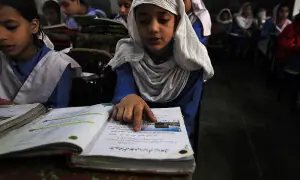
ISLAMABAD: The literacy rate for individuals aged 10 and above in Pakistan rose from 61 to 63 per cent, while spending on education faced a decline, according to Economic Survey 2025-26.

It stated that male literacy was 73pc and female at 54pc, reflecting a gradual progress and narrowing gender gap.

Urban areas continued to have higher literacy rates with a total of 74 per cent (81 per cent for males and 68 per cent for females), while rural areas had a lower rate of 55 per cent (67 per cent for males and 44 per cent for females).

Rural female literacy showed the most significant improvement. Punjab recorded the highest literacy rate at 68 per cent, followed by Sindh and Khyber Pakhtunkhwa, both at 58 per cent. Balochistan had the lowest rate at 49 per cent. The urban–rural divide persisted with urban Punjab at 78 per cent and rural Sindh at 39 per cent. Overall, the data highlighted steady but uneven progress with rural female literacy playing a key role in the observed improvements, despite continuing regional and gender disparities.

Expenditure

The survey stated that education expenditure stood at Rs962 billion during the financial year 2025 compared to Rs1251.06 billion in the previous year. Expenditure in year 2024-25 remained 0.8pc of GDP while in year 2022-23 it was recorded at 1.5pc of GDP. In 2021-22, it was 1.7pc of GDP, showing a constant decline.

In the year 2020-21, education expenditure was recorded at 1.4pc of GDP, while it was 1.9pc of GDP in 2019-20.

Meanwhile, the survey highlighted the issue of out-of-school children (OOSC), stating that OOSC in Pakistan had declined from 38 per cent in 2023 (male: 35 per cent, female: 42 per cent) to 28 per cent in 2025 (male: 25 per cent, female: 31 per cent), demonstrating significant progress across all provinces particularly in Balochistan where the proportion decreased from 69 per cent to 45 per cent, followed by Sindh (47 per cent to 39 per cent), Punjab (32 per cent to 21 per cent), and Khyber Pakhtunkhwa (30 per cent to 28 per cent).

Highlighting the issue of missing facilities, the report said around 65 per cent of schools in the country had access to electricity though there were disparities among provinces. Punjab and ICT have higher access, while Balochistan reports substantially lower coverage and therefore requires focused attention. Punjab and ICT also lead in the percentage of primary schools with water facilities, while Balochistan and AJK face challenges with only 23 per cent coverage. Toilet access in schools varies widely among provinces. Pakistan shows moderate access to boundary walls in schools with Punjab, Khyber Pakhtunkhwa and ICT at the forefront. As schools progress to higher levels, the availability of electricity, drinking water, toilets and boundary walls improves.

“Education is the foundation of a better future for every child and a strong society. Pakistan’s large youth bulge can be transformed into a productive resource through effective investment in education. However, this requires improved access to quality and equity across all levels of education. In the face of demographic changes, technological advancements and governance challenges, education remains a vital tool for social stability and sustainable development. Recognising its importance, the government continues to prioritise the education sector through policy reforms and targeted investments,” read the report.

Published in Dawn, June 12th, 2026

  • ✇Dawn Newspaper Pak
  • 2 policemen martyred in separate 'targeted attacks' in Bannu none@none.com (Muhammad Waseem Khan)
    BANNU: Two police constables lost their lives in separate incidents of targeted killings in Bannu district, officials said on Friday. Police authorities termed both incidents acts of terrorism and have launched search operations to trace and arrest the perpetrators. On Friday morning, Police Constable Mishqat Amir was returning home after attending a gathering at the Hamza Tablighi Centre when he came under attack on Bannu-Miranshah Road near Azad Mandi. According to initial reports, unidentifie
     

2 policemen martyred in separate 'targeted attacks' in Bannu

BANNU: Two police constables lost their lives in separate incidents of targeted killings in Bannu district, officials said on Friday.

Police authorities termed both incidents acts of terrorism and have launched search operations to trace and arrest the perpetrators.

On Friday morning, Police Constable Mishqat Amir was returning home after attending a gathering at the Hamza Tablighi Centre when he came under attack on Bannu-Miranshah Road near Azad Mandi.

According to initial reports, unidentified armed assailants opened fire on him while he was on his way home. As a result of the attack, the constable sustained critical injuries and died on the spot.

In a separate incident that took place on Thursday night in Saidgi Baka Khel, Police Constable Muhammad Roshan, who belonged to the Wazeer sub-division police, was shot by unidentified gunmen outside his residence.

Police said that Roshan was serving at the North Waziristan Temporarily Displaced Persons (TDPs) Camp in Baka Khel and had returned home after completing his duties.

According to officials, the attackers opened fire on him while he was standing outside his house. He was seriously injured and immediately shifted to a nearby hospital for medical treatment. However, he succumbed to his injuries and embraced martyrdom.

Police authorities have classified both incidents as targeted killings linked to terrorism. Investigations are underway from multiple angles, while intelligence-based search operations have been launched in the respective areas to apprehend those responsible.

Police ranks and residents condemned the attacks and called for swift action against the perpetrators. Law enforcement officials reiterated their commitment to maintaining peace and bringing the attackers to justice.

Bannu district has been the scene of repeated security incidents in recent months, with both civilians and local security forces coming under attack amid a broader surge in militant violence.

Violence in Bannu has included attacks on police and jirga members, prompting targeted operations by police and security forces in various localities to disrupt militant networks.

Last month, the Pakistan Institute for Conflict and Security Studies (PICSS) said in an assessment that after two consecutive months of improvement, Pakistan’s security situation had deteriorated sharply in May 2026, driven primarily by escalating terrorist violence in Khyber Pakhtunkhwa and Balochistan.

On May 9, a suicide attack in Bannu claimed the lives of 15 police personnel, after which Pakistan issued a “strong demarche” to Afghanistan.

SHC orders protection for newlywed Jacobabad couple after angry relatives torch village

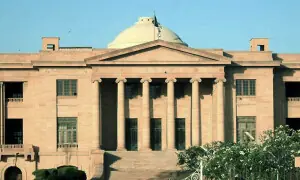
The Sindh High Court (SHC) on Thursday ordered police to provide protection to a newlywed couple from Jacobabad whose relatives allegedly torched multiple houses in the groom’s village last month in retaliation for their marriage of choice.

Hearing an application seeking protection for the couple — Hassan Buriro and Sidra Channa — Justice Saleem Jessar issued a written order stipulating that the couple be given protection, directing that the couple’s “life, honour and property” be ensured.

The IO also recorded the woman’s statement within the court premises.

During the hearing, the couple’s legal counsel informed the court that the two had married without any pressure and with consent on May 5.

He added that the couple was receiving threats from their relatives who did not approve of the marriage. The counsel added that the relatives set fire to Jacobabad’s Siddique Arain village on May 13.

The state counsel stated that the government was bound to ensure the safety of all citizens without discrimination and that the couple is given protection as per the law.

The SHC also ordered the IO to submit the case challan to the relevant court as per standard procedure.

In May, amid heightened tensions between the families of the bride and groom, a large number of armed men from the bride’s side stormed Siddique Arain village, allegedly resorting to heavy aerial firing to spread fear and panic among residents and torching more than 100 homes belonging to the groom’s relatives, sources said.

The fire caused extensive damage to the houses and substantial losses to residents, but no casualties were reported, according to sources.

Sindh Chief Minister Murad Ali Shah also took notice of the incident, sought a report on the torching of houses in the village and directed the authorities concerned to take action against those responsible.

The chief minister was quoted as saying that no one could be allowed to harm people’s lives and property. “Torching more than 100 homes is an inhuman and intolerable act,” he said.

  • ✇Dawn Newspaper Pak
  • Is K-IV a pipe dream? none@none.com (Zofeen T. Ebrahim)
    TWENTY years is a long time. Long enough for children to grow up and have children of their own. When K-IV (or the Greater Karachi Bulk Water Supply Scheme) was conceived in 2006, my son and daughter were 19 and 14, respectively. Today, I am a grandmother. Karachi has changed. So has my life. But some things never change — I still rely on water tankers. I’m not alone. The entire lane in my Clifton neighbourhood has depended on water tankers for years. When water does come through the Karachi Wat
     

Is K-IV a pipe dream?

TWENTY years is a long time. Long enough for children to grow up and have children of their own. When K-IV (or the Greater Karachi Bulk Water Supply Scheme) was conceived in 2006, my son and daughter were 19 and 14, respectively. Today, I am a grandmother.

Karachi has changed. So has my life. But some things never change — I still rely on water tankers.

I’m not alone. The entire lane in my Clifton neighbourhood has depended on water tankers for years. When water does come through the Karachi Water and Sewerage Corporation’s (KWSC) pipes, we often avoid it because of recurrent sewage contamination in our underground tank. The exercise of emptying, cleaning and refilling it is costly and cumbersome.

We pay a hefty amount every other week for tanker water. Bargaining is not an option —risking it means they may not show up again, as demand is high.

It is in moments like these that the K-IV project comes to mind — Karachi’s long-awaited answer to its water woes. First proposed over two decades ago, the 650 MGD scheme was approved in 2014 after another eight-year delay, yet remains unfinished, leaving millions still waiting for water from Keenjhar Lake.

Experts say costs have increased almost seven-fold, from Rs25 billion to Rs171bn, an increase of about 583 per cent. They are likely to increase due to delays that the experts can foresee.

The K-IV project has faced funding constraints and repeated delays since its inception, with deadlines repeatedly missed and project heads changed. After a nine-year delay, it was inaugurated in June 2015 by then chief minister Syed Qaim Ali Shah, followed by two re-inaugurations — by Sindh governor Dr Ishratul Ibad in 2016 and Prime Minister Shehbaz Sharif in 2023.

Karachi’s K-IV project has faced funding constraints and repeated delays since its inception.

When investigative journalists Mahim Maher and Sohail Khan published their landmark 2019 exposé on K-IV — a piece that doubles as a masterclass on Karachi’s water supply system — the project was already 13 years old. Their investigation found that delays, design flaws, bureaucratic wrangling and political interferences had plagued the scheme from the very start.

Seven more years have passed since the piece that had named and shamed those connected with the water supply project was published. But Karachi still waits.

Now, as the project nears completion, those inv­olved with it find the last mile to be the hardest.

‘If all goes well’ seems to be a common refrain used at high-level meetings, as though not using the phrase may tempt fate and lead to another delay. The latest completion deadline is December 2028. But nothing is set in stone.

While these four words — ‘if all goes well’ — speak volumes about a project that has spent 24 years missing deadlines, it is important to understand why K-IV discussions are peppered with this phrase.

Even if the core K-IV elements in the project are completed by the end of this year, as informed by insiders, without the 50 MW power supply required to bring alive the pumping complex near Keenjhar, the water cannot even be pumped out from the lake. Construction of the power infrastructure, due for completion by June 2027, only began in March this year, making it unlikely to be operational on time.

Another major hurdle is the Rs74bn K-IV Augmentation Project, which will connect the K-IV reservoirs to Karachi’s distribution network. With 80pc of its funding coming from World Bank and Asian Infrastructure Investment Bank loans, the project must meet stringent social, environmental, health and safety standards that have repeatedly delayed construction.

As a result, only 2.7 kilometres of the planned 98 km pipeline is under construction, with work halted at least three times over compliance issues, while the remaining 95 km is still awaiting procurement and tender approvals.

The institutional outlook is equally troubling. With no recruitment since 2008 under the former KWSB or its successor, the KWSC, nearly half of its 9,000 employees are expected to retire within the next five years, leaving no new cadre of qualified personnel to carry forward the institutional memory needed to run the utility.

Compounding the problem is a board that, arguably, lacks both independence and the expertise needed to effectively steer either the utility or the Karachi Water and Sewerage Services Improvement Project, the agency executing the augmentation project under the water corporation.

For Chief Minister Murad Ali Shah’s vision of a “modern and sustainable water supply system” for Karachi to materialise, all stakeholders must move with urgency. Otherwise, parts of the completed infrastructure could deteriorate from prolonged inactivity.

However, acceleration in pace requires seamless funding which has not happened. Loans from foreign institutions may take time to arrive and be processed, but it was the federal government’s responsibility to ensure a smooth flow of funds for the project. Last year, the federal government allocated only Rs3.2bn in the budget against a required Rs40bn. Even after raising it to Rs8.5bn, a shortfall of Rs31.5bn remains.

In all this time, however, three things have remained remarkably constant: the PPP’s continuing rule in Sindh, the thriving water-tanker economy and Karachi’s chronic thirst. It is against the backdrop of these constants that Karachi’s water crisis continues to unfold.

But it is not just about bringing more water to the city. Who is going to fix the crumbling distribution network or the aging and ailing sewerage system?

What about the weak governance, unchecked urban growth and decades of lethargy by different departments? Even if K-IV pumps water from Keenjhar and moves it to Karachi, it cannot fix the system. That, perhaps, is the lesson of Karachi’s water story in 2026. n

The writer is an independent journalist based in Karachi.

Published in Dawn, June 12th, 2026

Gilgit-Baltistan votes in legislative assembly elections on Sunday; 24 constituencies up for grabs

GILGIT: The people of Gilgit-Baltistan will vote in the general elections for the GB Legislative Assembly on Sunday after the polls were delayed by four months due to harsh winter weather.

The PPP and other political parties have staged a series of rallies across the region and ramped up efforts to garner support ahead of the polls.

All arrangements have been finalised, with elections to be contested in 24 constituencies. According to the GB Election Commission, there are 958,480 registered voters in the region, including 503,772 male and 454,708 female voters.

A total of 396 candidates are contesting the elections, with 266 running as independents. Only eight women are contesting the elections, five of them as independent candidates.

Meanwhile, 23 candidates from the PPP are contesting the elections, while the PML-N has fielded 22 candidates. Both parties have nominated one female candidate each. Additionally, 15 candidates from the Istehkam-i-Pakistan Party (IPP) and 10 from the PTI are in the fray.

Moreover, 10 candidates are contesting on the tickets of the Pakistan Nazaryati Party, while nine belong to the Jamiat Ulema-i-Islam-Fazl (JUI-F), seven to the Majlis-i-Wahdat-i-Muslimeen (MWM), and six each to the Jamaat-i-Islami (JI) and Muttahida Qaumi Movement (MQM). Four candidates are representing the Awami Workers Party (AWP), while one candidate each from the Awami National Party (ANP), Sunni Ittehad Council (SIC) and the PML-Q is also in the race

The polling will run from 8am to 5pm on Sunday.

GB Chief Election Commissioner Raja Shahbaz Khan has issued a notification delegating the powers of a first-class magistrate to all district returning officers and returning officers to ensure the peaceful, transparent and lawful conduct of the elections.

According to the notification, Khan said that the strict implementation of election laws, adherence to the election code of conduct and transparency in the electoral process would be ensured at all costs so that free, fair and impartial elections could be held while upholding the trust of the people.

In a statement, GB Caretaker Minister for Information and Broadcasting Ghulam Abbas appealed to the people to actively participate in the electoral process and exercise their right to vote, saying that the vote is the voice of every citizen, the foundation of the democratic system and a national duty.

He said that elections are an important pillar of any democratic society and that active participation of the people is key to strengthening democratic traditions.

The caretaker minister added that the people of GB have always shown maturity and responsibility in national affairs, and expressed hope that they would turn up at polling stations in large numbers on election day.

He emphasised that every vote matters and plays a key role in the development, prosperity and future of the region. He urged the people to rise above any pressure, fear or bias and exercise their vote according to their free will.

Abbas further said that all relevant institutions were fulfilling their responsibilities to ensure peaceful, transparent and fair elections, urging the people to abide by the election code of conduct, cooperate with law enforcement agencies and play their positive role in making the democratic process successful.

He said that for a strong, stable and developed Gilgit-Baltistan, it was essential that every eligible voter exercise their right to vote and contribute to the further strengthening of the democratic process.

  • ✇Dawn Newspaper Pak
  • Federal govt extends closing times for markets, restaurants none@none.com (News Desk)
    The federal government on Tuesday, amid deliberations over its ongoing austerity measures, decided to extend the operating hours of shops, markets, restaurants and other commercial outlets citing longer daylight hours and rising summer temperatures. The decision was taken at a meeting of the Committee for Monitoring and Implementation of Austerity Measures, chaired by Deputy Prime Minister and Foreign Minister Ishaq Dar. The government had announced unprecedented austerity measures on March 9 in
     

Federal govt extends closing times for markets, restaurants

The federal government on Tuesday, amid deliberations over its ongoing austerity measures, decided to extend the operating hours of shops, markets, restaurants and other commercial outlets citing longer daylight hours and rising summer temperatures.

The decision was taken at a meeting of the Committee for Monitoring and Implementation of Austerity Measures, chaired by Deputy Prime Minister and Foreign Minister Ishaq Dar.

The government had announced unprecedented austerity measures on March 9 in the wake of the Middle East war to deal with the global energy crisis, which had arisen due to the closure of the Strait of Hormuz.

As per the revised schedule, the closing timings are as follows:

  • Shops, markets, malls, and general retail: 9pm
  • Restaurants, cafes and eateries: 11pm (takeaway and delivery services exempt)
  • Marriage halls and event venues: 10pm (no change in timings)
  • Essential services (pharmacies, hospitals, fuel stations, IT & telecom-related services) are exempted.

“The Committee also directed provincial governments to ensure effective implementation of these guidelines in coordination with federal authorities,” the statement said.

On May 11, PM Shehbaz had extended the countrywide austerity drive till June 13.

The measures extended included 50 per cent reduction in fuel allowance for official vehicles, with the exemption of operational vehicles such as ambulances and public buses.

Other steps included grounding 60pc of official vehicles and a complete ban on foreign visits by ministers and government officials, excluding those deemed essential for the country’s interests, as specified the last time.

Among previously announced austerity measures, the working week for all government offices was reduced to four days — Monday to Thursday.

However, the additional holiday was not availed by banks. It did not apply to the agriculture and industrial sectors, or essential services such as hospitals and ambulance services.

Under the measures, the salary of parliamentarians was to be cut by 25pc, while employees of state-owned enterprises (SOEs) and government-supervised institutions were to see their salaries cut by 5pc-30pc.

Expenses of government departments were reduced by 20pc, along with a ban on purchasing vehicles, furniture, air conditioners and other items for government departments.

  • ✇Dawn Newspaper Pak
  • IHC seeks answers on action under ‘Zainab’ child protection law none@none.com (Malik Asad)
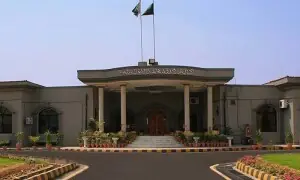
    ISLAMABAD: More than five years after the passage of a landmark child protection law, key provisions of the Zainab Alert, Response and Recovery Act, 2020 — including the agency meant to issue rapid alerts for missing children — remain unimplemented, the Islamabad High Court was told on Thursday. During the hearing of a writ petition filed by Sanila Khurram against the Federation of Pakistan and others, the court took notice of data submitted by the Islamabad Capital Territory (ICT) administratio
     

IHC seeks answers on action under ‘Zainab’ child protection law

ISLAMABAD: More than five years after the passage of a landmark child protection law, key provisions of the Zainab Alert, Response and Recovery Act, 2020 — including the agency meant to issue rapid alerts for missing children — remain unimplemented, the Islamabad High Court was told on Thursday.

During the hearing of a writ petition filed by Sanila Khurram against the Federation of Pakistan and others, the court took notice of data submitted by the Islamabad Capital Territory (ICT) administration, according to which 562 criminal cases relating to missing children and child abuse were registered in the federal capital between 2022 and 2025.

The court noted that the Zainab Alert Act was enacted to protect children’s rights, including the right to life and protection from violence, abuse, neglect, abduction and exploitation, in line with Pakistan’s obligations under the UN Convention on the Rights of the Child.

Justice Arbab Muhammad Tahir observed that a careful reading of the preamble of the act showed the law’s clear intent, yet its enforcement remained elusive.

The Act envisages the establishment of the Zainab Alert, Response and Recovery Agency under Section 3, with its powers and functions enumerated in Section 5.

The court directed the Ministry of Human Rights to submit a comprehensive report addressing at least 11 specific areas of concern.

These include whether the agency has been established; what standard operating procedures or rules exist for issuing alerts; what technological framework has been developed for the Zainab Alert Act database; whether real-time information is being shared by law enforcement agencies; what penal action has been taken against delinquent officials under Section 9; and whether rules have been framed under Section 18 of the Act.

Sources indicated that the rules have still not been notified.

The court also sought details on legal aid mechanisms for victims, the constitution of the ICT Child Protection Advisory Board and the integration of the Zainab Alert Act database with the ICT Police.

The court demanded a centralised record of cases tried under the act, including the number of cases referred for prosecution, pending trial and concluded, as well as the average time taken for trial, particularly whether trials concluded within the period stipulated under Section 15 of the Act.

The Ministry of Human Rights was directed to send an officer well conversant with the facts, while the director general of the authority — if such an authority exists in operation — was ordered to appear in person before the court.

The ICT Police was also directed to submit its response. Justice Tahir adjourned the case until July 1, 2026.

Published in Dawn, June 5th, 2026

  • ✇Dawn Newspaper Pak
  • Punjab draws excess water as Sindh and Balochistan face severe shortages none@none.com (M.B. Kalhoro)
    LARKANA: Water shortages in Sindh and Balochistan are deepening as Punjab continues to draw excess water, threatening the downstream provinces’ agricultural activities and drinking water supplies. According to data from the Sukkur Barrage Control Room on Wednesday, the total upstream inflow at Sukkur Barrage was recorded at 50,620 cusecs, while the total withdrawal stood at 32,120 cusecs. Irrigation department sources and representatives of growers and millers stated that the combined water al
     

Punjab draws excess water as Sindh and Balochistan face severe shortages

LARKANA: Water shortages in Sindh and Balochistan are deepening as Punjab continues to draw excess water, threatening the downstream provinces’ agricultural activities and drinking water supplies.

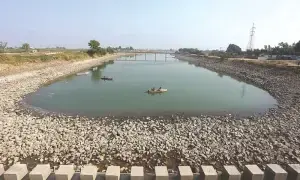
According to data from the Sukkur Barrage Control Room on Wednesday, the total upstream inflow at Sukkur Barrage was recorded at 50,620 cusecs, while the total withdrawal stood at 32,120 cusecs.

Irrigation department sources and representatives of growers and millers stated that the combined water allocation for Sindh’s seven canals is 53,200 cusecs. With the actual supply at just 32,120 cusecs, Sindh is facing an overall shortage of 21,080 cusecs, or 39.6 per cent.

In contrast, upstream barrages and canal systems in Punjab continue to withdraw water well above their allocated share. Against an allocation of 44,000 cusecs, Punjab is currently drawing 53,394 cusecs — an excess of 9,394 cusecs, or 21.35pc. This continued over-withdrawal is directly reducing water availability downstream.

Barrage and canal breakdowns

The water distribution data across key canal systems paints a critical picture:

Right Bank Canals (Sukkur Barrage): North West (NW) Canal: Receiving 2,100 cusecs against an allocation of 4,260 cusecs (50.7pc shortage).Rice Canal: Receiving 5,300 cusecs against an allocation of 8,700 cusecs (39.1 pc shortage).Dadu Canal: Receiving only 860 cusecs against an allocation of 5,997 cusecs, marking the most critical deficit at 85.7 pc.

Left Bank Canals & Kotri Barrage: Nara Canal: Receiving 8,820 cusecs against an allocation of 13,037 cusecs (32.3 pc shortage).Khairpur Feeder East: Receiving 1,440 cusecs against an allocation of 2,150 cusecs (33pc shortage).Rohri Canal: Receiving 10,530 cusecs against an allocation of 15,541 cusecs (32.2pc shortage).Khairpur Feeder West: Receiving 1,160 cusecs against an allocation of 3,525 cusecs (67.1pc shortage).Kotri Barrage: Receiving 11,905 cusecs against an allocation of 26,900 cusecs (55.74pc shortage).

Impact on Balochistan

Under the 1991 Water Apportionment Accord, Balochistan is entitled to 2,200 cusecs through the North West Canal. However, because the total supply in the NW Canal has dropped to 2,100 cusecs, Balochistan is receiving less than its allocated share.

Prior to the 1991 accord, Balochistan’s share was 451 cusecs. In light of the Indus River System Authority (Irsa) Accord, Sindh now routes the revised 2,200 cusecs to the neighboring province. Flows are monitored at the Garang Cross Regulator, located at RD-102 of the Khirthar/North Western Canal near the Sindh-Balochistan border, which serves as the primary inter-provincial control and measurement point.

Official demands for equitable distribution

Well-placed sources confirmed that irrigation officials formally communicated the severe deficit on Wednesday to the chief engineer of the Barrage Management Unit.

The correspondence highlighted that the 85.7pc shortage in the Dadu Canal and the 50.7 pc shortage in the NW Canal are severely impacting the districts of Larkana, Shikarpur, and Qambar-Shahdadkot, alongside downstream areas in Balochistan.

The communication — which was also sent to the secretary irrigation Sindh, secretary (technical) irrigation, and the director of regulation —called for immediate steps to ensure equitable distribution. Officials warned that the current scarcity poses an acute threat to seasonal crops, particularly rice production.

Agro-economic threat to Larkana

The water crisis threatens a vital economic hub. According to Khair Muhammed Shaikh, president of the Larkana Chamber of Commerce and Industry (LCCI), Larkana Division is a leading rice-producing region.

“Larkana District alone produces around 242,000 metric tons of rice annually. The division contributes approximately Rs90 billion per year in foreign exchange from rice production alone. Furthermore, out of 650 rice mills in Sindh, nearly 500 are located in the Larkana region, underscoring its central role in agro-processing and trade.”

Published in Dawn, June 11th, 2026

CM Murad approaches PM Shehbaz for restoration of curtailed water supplies

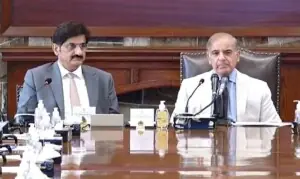
HYDERABAD: Sindh Chief Minister Syed Murad Ali Shah has urged Prime Minister Mian Mohammad Shehbaz Sharif to halt the filling of dams until the monsoon season to prevent a severe crisis in the province.

In a letter sent on Thursday, he warned that vital water supplies were being diverted away from Sindh, causing major shortages during the crucial early Kharif sowing season. He called on the PM to direct the Indus River System Authority (Irsa) to guarantee Sindh’s water shares under the 1991 Water Apportionment Accord.

CM Murad strongly criticised the continued release of water into the controversial Taunsa-Panjnad and Chashma-Jhelum link canals, which divert water from the main Indus River system to Punjab’s tributaries.

According to the chief minister, Sindh is facing a 41 per cent shortfall in its allocated water supply. On June 6, the province’s water utilisation stood at 57,867 cusecs against its accord allocation of 98,700 cusecs. By contrast, Punjab faced just a 10 per cent shortfall, drawing 97,970 cusecs against an allocation of 109,100 cusecs.

Writes to premier over filling of dams in Punjab while water crisis in Sindh deepening

The shortages come despite a significant 40 per cent improvement in overall water availability compared to last year. Total inflows into the Indus River system currently stand at 216,894 cusecs, up from 154,407 cusecs during the same period last year.

River inflows (in cusecs): Indus (at Tarbela): 110,000 (78,800 last year), Kabul (at Nowshera): 43,200 (24,700 last year), Jhelum (at Mangla): 35,410 (30,000 last year) and Chenab (at Marala): 28,284 (20,907 last year).

National reservoirs also show a 16 per cent increase in storage, totalling 4.07 million acre-feet (MAF) compared to 3.504 MAF last year. Current storage levels include 1.173 MAF at Tarbela, 2.667 MAF at Mangla, and 0.23 MAF at Chashma.

Mr Shah pointed out the paradox that despite higher inflows and healthier reservoirs, Sindh’s canal withdrawals have dropped by 33 per cent from 86,293 cusecs last year to 57,867 cusecs this year.

Meanwhile, diversions to the Chashma-Jhelum and Taunsa-Panjnad link canals have risen by 16 per cent, from 23,586 cusecs to 27,316 cusecs.

“There is a growing concern that operational priorities are focused on storage maximisation in reservoirs and canal diversions, rather than ensuring equitable distribution,” Mr Shah wrote.

He warned that the low water levels at Sindh’s barrages were now threatening supplies to both Sindh and neighbouring Balochistan, adding that Sindh continues to support Balochistan despite its own acute shortages.

Published in Dawn, June 12th, 2026

In meeting with business leaders, PM Shehbaz says govt taking measures to bring informal economy into tax net

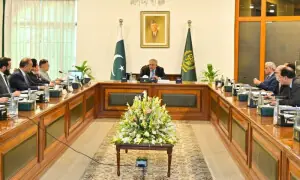
Prime Minister Shehbaz Sharif on Wednesday said that the government was taking measures to bring the informal economy into the tax net in the upcoming budget, the Prime Minister’s Office (PMO) said.

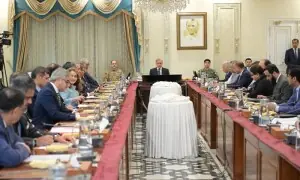
The premier made the declaration during a meeting with a delegation of renowned businessmen and industrialists, where he exchanged views with them on the pace of the country’s economic growth and consulted with them over the upcoming budget.

“You are the ambassadors of Pakistan,” the premier told the delegation, expressing gratitude for the business community’s support to the government in “difficult economic conditions”.

PM Shehbaz noted that a “strong partnership” with the private sector was a “guarantee of economic growth”, and underscored the “utmost importance” of consulting with them over policymaking for the economy.

“We are on the path of export-led growth,” the premier remarked, adding that export-led growth was “core” of Pakistan’s economic policy.

He told the businessmen that the government was taking actions to bring the informal economy into the tax net, as well as measures aimed at providing relief to the public in the upcoming budget.

He noted that the government’s business-friendly policies have made the economy stable and restored foreign investor confidence. PM Shehbaz further outlined plans to promote industries that “increase domestic production, boost exports, and create maximum job opportunities”.

“Development in industry, agriculture, and information technology will further stabilise the economy and create new employment opportunities,” the prime minister was quoted as saying. He added that the government had also launched programmes for “technical and vocational training” of the youth to promote employment opportunities.

During the meeting, the delegation was “briefed on government’s measures to promote business, industry and trade,” the PMO said.

They were informed that reforms were being brought to “tax tribunals for expeditation of tax cases”. “Recruitments in these tribunals have been made through an extremely transparent process,” the delegation was told.

They were also briefed that a committee has been formed for the “establishment of special commercial courts”. The delegation was also told that work was underway on the “upgradation of M-10 Motorway and paperless freight corridor to improve inland access from Karachi’s ports”.

The business community was further informed that the construction of M-13 Motorway (Kharain-Rawalpindi) will minimise the travel distance between Lahore and Islamabad. As per the statement, the delegation was also briefed on the upgradation of ML-1 and ML-2 railway projects.

On artificial intelligence (AI), they were informed that a “National AI Transformation Plan” was being developed. During the meeting, the delegation was briefed that “the installation of video analytics in the sugar and cement sector” had improved revenue collection.

According to the handout, the business delegation lauded the prime minister and his team for their diplomatic efforts “to restore peace in the region” — an apparent reference to Pakistan’s role in mediating between the United States and Iran amid the conflict in the Middle East.

As per the statement, the leaders expressed faith in Pakistan’s economic recovery and fiscal management under PM Shehbaz’s leadership and thanked him for “setting the economy on the right path and providing the business sector a conducive environment”.

The delegation also appreciated the “vision to promote digital payments and a documented economy”. Business leaders also expressed support for measures aimed at “tax reforms and ease of business operations”.

“Business leaders expressed gratitude to the prime minister for reducing electricity tariffs for industries, abolishing the export development levy, and ensuring timely payment of tax refunds,” as per the PMO.

The move to take the business community into confidence over the upcoming budget was appreciated during the meeting, it said.

“Business leaders presented their recommendations to the prime minister on strengthening the economy and on the budget, offering “full cooperation” to the government on economic development.

“Participants in the delegation appreciated the government’s commitment to industrial development, increasing exports, and creating new employment opportunities,” PMO added.

The delegation included notable businessmen, including Arif Habib, Atif Bajwa, Zeelaf Munir, Muhammad Ali Tabba, Musadaq Zulqarnain, Mian Muhammad Mansha, and Ziad Bashir, among others.

Federal ministers Rana Tanveer Hussain, Azam Nazeer Tarar, Musadik Malik, Ahad Khan Cheema, Attaullah Tarar, Shaza Fatima Khawaja, Ali Pervaiz Malik and Awais Leghari were also present.

  • ✇Dawn Newspaper Pak
  • Heavy silt deposits give illusion Attabad is ‘drying up’ none@none.com (From the Newspaper)
    RECENT photos and videos of the Attabad Lake in Gilgit-Baltistan seem to show that the size of the water body has shrunken considerably. But the phenomenon at play here is not a drying-up of the lake, rather heavy silt and sedimentation encroaching on the lake bed, according to an iVerify fact check published on Friday. Known as GB’s “crown jewel” and a major tourist attraction, the lake was formed after the Attabad village in the Gojal Valley witnessed a major landslide on January 4, 2010. Rece
     

Heavy silt deposits give illusion Attabad is ‘drying up’

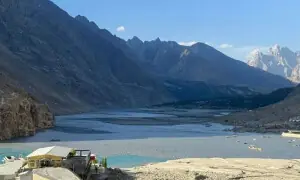
RECENT photos and videos of the Attabad Lake in Gilgit-Baltistan seem to show that the size of the water body has shrunken considerably.

But the phenomenon at play here is not a drying-up of the lake, rather heavy silt and sedimentation encroaching on the lake bed, according to an iVerify fact check published on Friday.

Known as GB’s “crown jewel” and a major tourist attraction, the lake was formed after the Attabad village in the Gojal Valley witnessed a major landslide on January 4, 2010.

Recent visuals of the lake have had netizens talking, showing large parts of its once-turquoise waters replaced by dry, exposed land.

Many raised concerns over a “visible decline in water levels”, linking it to environmental degradation, while other argued that the apparent drying was a usual phenomenon.

Jamil Nagri, Dawn’s correspondent in Gilgit, confirmed the authenticity of the visuals circulating on social media.

But the size of the lake, which is not a natural water body, rather a landslide-dammed reservoir, is susceptible to influence from factors such as inf­lows from multiple sources and outflow management thro­ugh spillways constructed to reduce pressure on the natural dam.

According to a 2024 research paper authored by personnel from the China Geological Surv­­ey, a gradual reduction in the lake’s surface area had been ob­­served between 2010 and 2020.

According to the authors of the story, titled Changes in the Hydrological Characteristics of the Attabad Landslide-Dammed Lake on the Karakoram Highway, sediment accumulated in the lake’s upstream northern estuary as the water body evolved over time, increasing the extent of exposed sediment deposits and altering the surrounding landscape.

“Because of its proximity to the source of the Hunza River, the lake experiences rapid silting. Over time, this natural se­­dimentation gradually shrinks the active water area and alters the surrounding landscape,” the paper noted.

The study observed that chan­­ges in the lake became less pronounced after 2016, suggesting that the water body was moving towards a more stable state.

“The lake has not dried up; instead, it is shrinking due to high levels of silt in the lake, which is a natural phenomenon,” a GB-based climate expert said. He explained that there was siltation in the summer from tributaries, which made it look like the lake was drying up.

This fact check was originally published by iVerify Pakistan — a project of CEJ and UNDP

Published in Dawn, June 6th, 2026

❌
Subscriptions