Joshua Wong’s national security case has been transferred to a higher court, where the pro-democracy activist faces up to life imprisonment, following the conclusion of committal proceedings.
Joshua Wong. File Photo: Joshua Wong, via Facebook.
Wong appeared at the West Kowloon Magistrates’ Courts on Thursday morning to face a charge of conspiring to commit foreign collusion, a crime under the Beijing-imposed national security law.
He was arrested in June last year while in jail. Wong i
Joshua Wong’s national security case has been transferred to a higher court, where the pro-democracy activist faces up to life imprisonment, following the conclusion of committal proceedings.
Joshua Wong. File Photo: Joshua Wong, via Facebook.
Wong appeared at the West Kowloon Magistrates’ Courts on Thursday morning to face a charge of conspiring to commit foreign collusion, a crime under the Beijing-imposed national security law.
In the present case, the 29-year-old stands accused of conspiring with self-exiled activist Nathan Law and “other persons unknown” between July 1 and November 23, 2020, to request foreign countries, organisations, or individuals based overseas to impose sanctions, blockades or engage in other hostile activities against Hong Kong or China.
Magistrate Victor So said in August last year that Wong’s case would be transferred from the magistrate’s court to the High Court, where the maximum penalty is life imprisonment. At the magistrate’s court, the maximum penalty is two years, or three years when a defendant faces more than one offence.
Since then, Wong has appeared at a number of hearings related to the committal of the case to the High Court.
The High Court. File photo: Kyle Lam/HKFP.
Under court reporting laws, media reports relating to procedures involving the transfer of cases from the magistrate’s court to the High Court are severely restricted.
Reports cannot publicise the contents of the procedures, and can only describe information such as the names of defendants, judges and lawyers, and information on the charges.
Wong has been remanded since November 2020, when he was detained in an unauthorised assembly case linked to the anti-extradition protests and unrest in 2019.
A Hong Kong court has ordered the forfeiture of more than HK$670,000 in “terrorist property” from three persons involved in a thwarted bomb plot during the 2019 protests.
The High Court. File photo: Kyle Lam/HKFP.
In a written judgment on Thursday, High Court Judge Judianna Barnes ruled that Wong Chun-keung and Ng Chi-hung were “terrorists” and Lau Pui-ying was a “terrorist associate” under the United Nations (Anti-Terrorism Measures) Ordinance.
Barnes said a total sum of HK$674,860 in
A Hong Kong court has ordered the forfeiture of more than HK$670,000 in “terrorist property” from three persons involved in a thwarted bomb plot during the 2019 protests.
The High Court. File photo: Kyle Lam/HKFP.
In a written judgment on Thursday, High Court Judge Judianna Barnes ruled that Wong Chun-keung and Ng Chi-hung were “terrorists” and Lau Pui-ying was a “terrorist associate” under the United Nations (Anti-Terrorism Measures) Ordinance.
Barnes said a total sum of HK$674,860 in the defendants’ accounts and in cash, which was liable to be seized under the ordinance, was “intended to be used to finance or otherwise assist the commission of ‘terrorist acts.’”
In November 2024, Ng was sentenced to almost 24 years in jail for masterminding the foiled bomb plot, which aimed to kill police officers at a demonstration on December 8, 2019, amid the large-scale protests and unrest that year.
Wong, who led a radical group known as “Dragon Slayers,” was sentenced to 13 and a half years in prison. Both defendants pleaded guilty, with Wong testifying for the prosecution in exchange for leniency in sentencing.
Lau was among seven defendants who stood trial by jury. In August 2024, the nine-member jury found her and five others not guilty. Only one defendant was convicted by the jury and was sentenced to 10 years and 10 months behind bars.
Despite her acquittal, authorities submitted “numerous Telegram messages” that showed Lau “actively administered, together with [Wong], crowd-funding exercise in securing funds” for Dragon Slayers and the bomb plot, according to the judgment on Thursday.
A rally is held in Hong Kong Island on December 8, 2019, to mark International Human Rights Day. File photo: May James/HKFP.
Between November 6 and December 9, 2019, Lau’s three accounts received net deposits of more than HK$1 million while she was earning a salary of less than HK$3,000, the government submitted.
Barnes said the evidence “overwhelmingly supported” the government’s application to forfeit the sum.
Roughly HK$536,000 was kept in Lau’s three accounts, according to the judgment, while the remainder, around HK$138,000, consisted of deposits in Wong and Ng’s bank accounts, as well as cash.
Wong and Ng did not oppose the application while Lau was absent throughout the proceedings, including court notices and a hearing regarding the government’s application.
The anti-terrorism ordinance, enacted in 2002, was invoked for the first time to prosecute the group.
The defendants were accused of planning a bomb attack during a rally marking International Human Rights Day, plotting to place two bombs along the rally’s marching route to kill police officers.
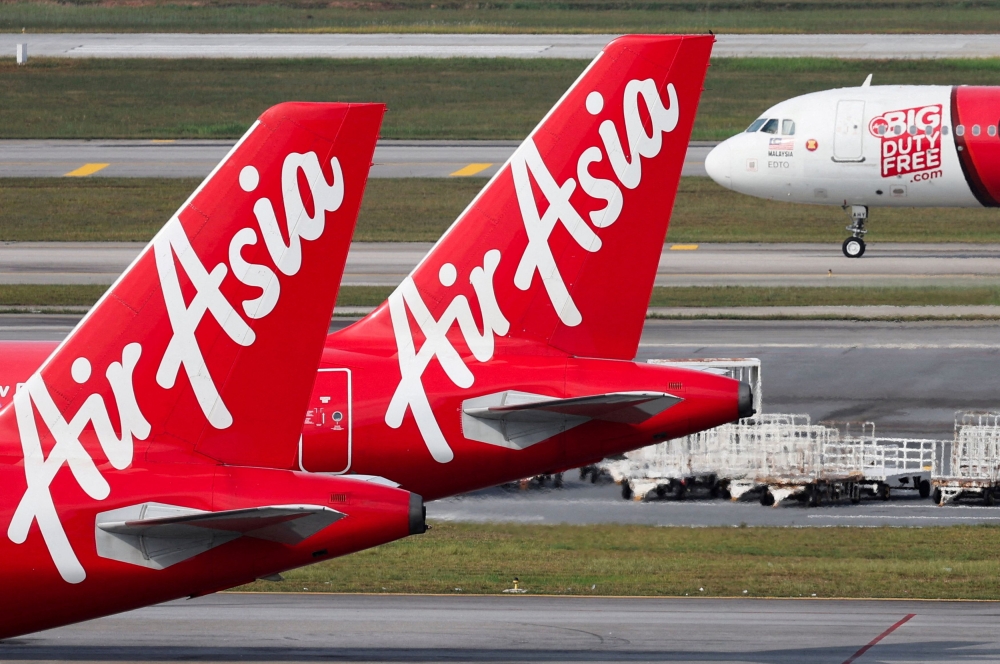
SINGAPORE, June 10 — The Singapore High Court has issued an order to seize Capital A Bhd’s stakes in BigPay and Teleport, in a move to enforce a partial arbitration award, according to The Edge. According to the report, Sheriff of the Supreme Court of Singapore issued a notice of seizure involving Capital A’s wholly-owned subsidiary Move Digital Sdn Bhd’s 99.56 per cent stake in BigPay Pte Ltd and an 11.45 per cent stake in Teleport Everywhere Pte Ltd.The enforc
SINGAPORE, June 10 — The Singapore High Court has issued an order to seize Capital A Bhd’s stakes in BigPay and Teleport, in a move to enforce a partial arbitration award, according to The Edge.
According to the report, Sheriff of the Supreme Court of Singapore issued a notice of seizure involving Capital A’s wholly-owned subsidiary Move Digital Sdn Bhd’s 99.56 per cent stake in BigPay Pte Ltd and an 11.45 per cent stake in Teleport Everywhere Pte Ltd.
The enforcement action is to compel Move Digital to comply with a partial arbitration award requiring it to buy out BigPay co-founders Christopher Davison and Navin Rajagopalan’s minority interests in BigPay for US$14.736 million (RM59.85 million), the report said.
The seizure notice covers 204,809,509 shares in BigPay and 481,730 shares in Teleport, according to the Singapore court filing cited by The Edge.
The action also relates to the recovery of unpaid interest tied to cost orders arising from enforcement proceedings in Singapore.
The dispute traces back to 2021 when the two minority shareholders initiated arbitration under the Singapore International Arbitration Centre rules against AirAsia Digital (now Move Digital), AirAsia Bhd and BigPay over alleged breaches of shareholder agreements following the termination of a 2017 investment pact.
The founders had previously sought a buyout of between US$140 million and US$183 million, but a December 2024 arbitration tribunal ordered a significantly lower valuation of US$14.736 million, the report said.
Capital A said Move Digital plans to file a written objection to the enforcement action, adding that it believes it has valid grounds to challenge the seizure.
Teleport remains Capital A’s largest revenue contributor, accounting for about 40 per cent of group revenue in the first quarter ended March 31, 2026, while BigPay continues to be part of its digital financial services portfolio, the report said.
Capital A shares rose one sen, or 2.5 per cent, to 41.5 sen yesterday, giving the group a market capitalisation of RM1.86 billion, according to Bursa Malaysia data cited in the report.
A Hong Kong court has upheld the conviction and sentence of a journalist and former head of a press union for obstructing police while reporting.
Ronson Chan in 2024. File photo: Kelly Ho/HKFP.
Veteran journalist Ronson Chan began serving his five-day sentence on Friday after Deputy High Court Judge Lily Wong upheld a lower court’s conviction over an incident in September 2022, when Chan refused to show his ID card to a police officer while reporting on a homeowners’ meeting.
In her w
A Hong Kong court has upheld the conviction and sentence of a journalist and former head of a press union for obstructing police while reporting.
Ronson Chan in 2024. File photo: Kelly Ho/HKFP.
Veteran journalist Ronson Chan began serving his five-day sentence on Friday after Deputy High Court Judge Lily Wong upheld a lower court’s conviction over an incident in September 2022, when Chan refused to show his ID card to a police officer while reporting on a homeowners’ meeting.
In her written judgment, which was not read out in court on Friday, Wong shot down Chan’s argument that the police officer’s demand was unlawful and found that the journalist had obstructed the police by wilfully delaying the presentation of his identification.
According to case details, Chan was covering the meeting at MacPherson Stadium in Mong Kok, where he was stopped by a plainclothes police officer who said he was acting “suspiciously” and asked to see his identification card.
He was arrested on suspicion of obstructing a police officer after allegedly failing to comply with demands to produce his ID card despite multiple warnings.
At trial, Chan said that he refused to present his identification due to privacy concerns, referring to an incident during the 2019 protests when a police officer showed his ID card in front of his camera, which was live-streamed to thousands of viewers.
The High Court. File photo: Kyle Lam/HKFP.
The West Kowloon Magistrates’ Courts found Chan guilty in September 2023, a year after he was arrested.
The trial judge, Leung Ka-kie, said Chan deliberately stopped the police officer from carrying out her duties and that his persistent questioning of officers when they asked for his identification was “reckless and unreasonable.”
‘Social climate’
Noting online calls to protest at the homeowners’ meeting, Judge Wong also concurred with the trial judge’s ruling that the police officers were justified in their actions to maintain public order.
“As the Magistrate ruled… given the social climate at the time, observing the rules and maintaining order in public places in Hong Kong was both important and commendable,” Judge Wong wrote.
Chan repeatedly questioned the officers and ignored warnings to calm down, and only offered an opaque cardholder, which constituted wilful obstruction, the judge added.
Chan’s barrister, Steven Kwan, told the court that he would seek a certificate from the appellate court to take the journalist’s appeal to the city’s apex court, but did not submit a bail application.
With the certificate, Chan would be able to seek permission for a final chance to appeal his conviction and sentence.
Reactions from press groups
Chan, who was elected as chair of the Hong Kong Journalists Association (HKJA) in June 2021, stepped down at the end of his term in June 2024, citing increasing pressure against him and the press union.
Hong Kong Journalists Association. Photo: HKFP.
In a statement issued on Friday, the HKJA expressed “deep regret” over the court’s decision and raised concerns about the ruling’s impact on journalists’ work.
“Citing the exercise of constitutionally protected fundamental rights as grounds for a search is legally untenable, and today’s ruling failed to directly address this contradiction,” the HKJA said.
Reporters Without Borders (RSF) said on Friday that it “is outraged by the imprisonment of Ronson Chan.”
“The verdict sets a dangerous precedent, effectively giving the police a free hand and further eroding already dismantled press freedoms,” said Aleksandra Bielakowska, advocacy manager of RSF Asia Pacific.
In April, the 70th month since Beijing imposed the national security law, the Hong Kong government applied to the court to seize assets belonging to Apple Daily founder Jimmy Lai, who is serving a 20-year prison sentence.
St Paul’s Co-educational College Choir performs at the opening ceremony of National Security Education Day on April 15, 2026, at the Hong Kong Convention and Exhibition Centre. Photo: GovHK.
On National Education Day, a top Chinese official delivered a warning about tho
In April, the 70th month since Beijing imposed the national security law, the Hong Kong government applied to the court to seize assets belonging to Apple Daily founder Jimmy Lai, who is serving a 20-year prison sentence.
St Paul’s Co-educational College Choir performs at the opening ceremony of National Security Education Day on April 15, 2026, at the Hong Kong Convention and Exhibition Centre. Photo: GovHK.
On National Education Day, a top Chinese official delivered a warning about those who “politicised” the deadly Tai Po fire and tried to “stir up chaos” in the city.
Gov’t seeks to seize Jimmy Lai’s assets
The Hong Kong government filed an application with the High Court on April 2 to seize “offence-related” properties owned by jailed pro-democracy media tycoon Jimmy Lai on national security grounds.
In a statement issued the same day, the government mentioned Lai’s earlier convictions under the Beijing-imposed national security law. It said the High Court had found that he was the “mastermind and driving force behind the case, consciously using Apple Daily and his personal influence” to undermine local and Beijing authorities.
Hong Kong pro-democracy media mogul Jimmy Lai. File photo: Kelly Ho/HKFP.
The assets include credit balances in bank accounts belonging to or linked to the Apple Daily founder.
Fifteen bank accounts under Lai’s name – 10 with HSBC, two with Hang Seng Bank and three with Shanghai Commercial and Savings Bank – have over HK$32 million.
The government is also seeking to seize bank accounts belonging to 17 companies linked to Lai. It is also demanding that Lai give up shares in 17 companies, some of which overlap with the 17 firms whose assets the government is seeking to seize.
Among the companies whose assets and shares the government wants to seize are Dico Consultants Ltd, which has over HK$404,302 in its HSBC account, and Lai’s Hotel Properties Ltd, which has over HK$3.1 million in its four HSBC accounts.
Lai has been summoned to the High Court on July 8 to hear the government’s application. The case will be presided over by Esther Toh, one of the three judges who heard his national security trial.
Apple Daily headquarters. Photo: Candice Chau/HKFP.
The move to seize Lai’s assets came after the government designated three companies linked to Lai’s now-defunct Apple Daily tabloid “prohibited organisations” in late March and removed them from the corporate registry. Police cordoned off the Apple Daily building in Tseung Kwan O a day later.
The three firms were tried and convicted alongside the Apple Daily founder in his high-profile national security case. Lai was sentenced to 20 years behind bars in early February, while the companies were each fined over HK$3 million.
Wong Kwok-ngon, known by his pen name Wong On-yin, has been detained since his arrest in December for allegedly divulging in a YouTube video details of enquiries made by police during a national security investigation.
Judge Stanley Chan said the pre-trial review would take place behind closed doors on August 11, and the trial would begin on October 9.
Wong Kwok-ngon in a YouTube video posted on December 2, 2026. Screenshot: On8 Channel – 王岸然頻道, via YouTube.
Wong’s offence falls under the Safeguarding National Security Ordinance, a homegrown security law known as Article 23. It was added to the ordinance in May as part of subsidiary legislation, and Wong is the first to be charged under the new law.
He is also charged with sedition over videos posted on YouTube between January 3 and December 6 last year. He plans to plead not guilty to both charges.
The defendant, who continues to represent himself, told the court he had dropped his legal aid application.
Asked by the judge whether he had legal knowledge for self-defence, Wong said he had “three law degrees” and was confident of handling the case.
Nat. security clauses for restaurant licences
Secretary for Environment and Ecology Tse Chin-wan said in early April that all Hong Kong restaurant licences would include national security clauses from September.
Shops awaiting for lease on a Hong Kong street in October 2024. File photo: Kyle Lam/HKFP.
Tse made the remarks on April 7, nearly a year after the Food and Environmental Hygiene Department (FEHD) introduced the provisions for restaurant licence renewals in May.
“With restaurants renewing their licences gradually, we expect that by September this year, all restaurant licences will contain the clauses,” Tse told reporters, according to RTHK.
Retiree jailed over seditious Facebook posts
A Hong Kong man was jailed for a year under the city’s homegrown national security law after pleading guilty to making seditious remarks on Facebook, including comments supporting Hong Kong’s and Taiwan’s independence.
The magistrate handed Chong, a retiree in his early 60s, an 18-month sentence but discounted it by six months after considering his guilty plea.
A Facebook log-in screen. Photo: Pixabay, via Pexels.
Chong was accused of making 53 seditious social media posts between March 2024 and November 2025, local media reported.
The posts had wording such as “dissolving the Chinese Communist Party is the most important thing” and “Hong Kong independence is within sight.”
The defendant posted on a public Facebook page called “Holy Raymond,” which features the Chinese phrase “Heaven will destroy the Chinese Communist Party, God bless Hong Kong” as its profile picture.
During mitigation ahead of sentencing, his lawyer argued that Chong was a Falun Gong believer who had come to hate the Chinese Communist Party because of false information that the CCP engaged in live organ harvesting.
Beijing official warned of ‘politicising’ Tai Po fire
China’s top official in charge of Hong Kong affairs warned of some people who “politicised” the deadly Tai Po fire and tried to use the disaster to “stir up chaos” in Hong Kong.
Xia Baolong, director of the Hong Kong and Macao Affairs Office, delivered his remarks on April 15 via a recorded video shown at a National Security Education Day ceremony.
In his speech, Xia mentioned the massive fire that broke out at Wang Fuk Court, a government-subsidised housing estate in Tai Po, on November 26, killing 168 people.
Xia Baolong, the director of the Hong Kong and Macau Affairs Office, gives a speech via a video on National Security Day on April 15, 2026. Photo: GovHK.
“After the Tai Po fire, some malicious people politicised the tragedy, attempting to use the disaster as a means to disrupt Hong Kong,” Xia said in Mandarin, without giving further details.
“Once again, it reminds us that along Hong Kong’s path toward prosperity under good governance, there will be various risks and challenges.”
Speaking at the same event, Hong Kong Chief Executive John Lee also warned that some people were “using the disaster to stir up chaos” and “to incite hatred” in Hong Kong.
“Only through the government’s swift action and decisive law enforcement has the situation been able to return to normal,” Lee said in Mandarin.
French journalist denied entry to city
A French journalist was denied entry to Hong Kong in November, Reporters Without Borders (RSF) said in late April, accusing the city’s authorities of “weaponising visas” against foreign media workers.
French journalist Antoine Vedeilhe. Photo: Reporters Without Borders.
Antoine Vedeilhe, who was shooting a documentary for French public broadcaster France Télévisions, was questioned upon arrival at Hong Kong International Airport on November 2 last year, RSF said in a statement on April 24.
He was detained for three hours before being deported without being given a reason, it added.
The press freedom NGO said Vedeilhe was the 13th foreign media worker who had been denied entry or a visa by the city’s authorities following Beijing’s imposition of the national security law in 2020.
“In the journalist’s view, his detention was a reprisal for his work on a documentary examining Beijing’s grip on Hong Kong,” RSF said.
Another cameraman for the documentary was able to enter the city, RSF said, but he was followed by “unidentified individuals that he suspects were Hong Kong’s national security police.”
“In the following days, there was a hacking attempt on Vedeilhe’s private email account and his sources in the documentary were harassed by the national security police,” the NGO said.
In an emailed reply to HKFP’s enquiries, the Hong Kong government said it “strongly condemns the smearing remarks and distorted narratives by” RSF.
Prosecution and arrests figures
As of April 1, a total of 394 people have been arrested for “cases involving suspected acts or activities that endanger national security” since Beijing’s national security law came into effect, according to the Security Bureau. That figure includes those arrested under Article 23 and for other offences.
Of the 208 people and five companies that have so far been charged, 180 people and four companies have been convicted or are awaiting sentencing.
In total, 100 people and four companies have been charged under Beijing’s national security law, with 79 persons and three companies convicted. Thirteen people have been charged under Article 23, 10 of whom have been convicted.
Hong Kong authorities have proposed tightening the regulation of claw machine shops by implementing a licensing regime to curb addiction risks.
A claw machine in Hong Kong. Photo: Kyle Lam/HKFP.
The Home and Youth Affairs Bureau’s proposal, included in a document submitted to the Legislative Council (LegCo) on Monday, comes as claw machine shops proliferate in the city as a low-maintenance business opportunity.
“Since these activities may involve gaming elements or addiction risks, a
Hong Kong authorities have proposed tightening the regulation of claw machine shops by implementing a licensing regime to curb addiction risks.
A claw machine in Hong Kong. Photo: Kyle Lam/HKFP.
The Home and Youth Affairs Bureau’s proposal, included in a document submitted to the Legislative Council (LegCo) on Monday, comes as claw machine shops proliferate in the city as a low-maintenance business opportunity.
“Since these activities may involve gaming elements or addiction risks, appropriate restrictions on format or content may be necessary to protect participants, especially youth, from physical or mental harm or significant financial loss,” the bureau said.
The government seeks to introduce new requirements, such as posting a notice indicating that devices are licensed. The bureau is also considering mandatory addiction warning labels on machines.
A list of licensed premises has also been uploaded to the Home Affairs Department’s Office of the Licensing Authority, the document read.
The tightened regulations will function under the city’s Gambling Ordinance, which currently stipulates that claw machine shops must hold an Amusement With Prizes Licence (AWPL). Before that licence can be granted, a venue must hold a public entertainment licence.
However, a 2022 High Court ruling determined that claw machines do not meet the definition of “entertainment” and thus do not require a public entertainment licence, creating a regulatory gap.
The bureau is proposing to remove the requirement for a public entertainment licence and allow the Home Affairs Department to issue AWPLs directly.
Prize caps, addiction risks
Speaking on an RTHK programme, lawmaker Vincent Cheng said he agreed with the government’s proposal in principle but asked the authorities to consider whether the new curbs would stamp out the business.
A claw machine loaded with panda toys in Tsim Sha Tsui, Hong Kong, December 11, 2024. Photo: Kyle Lam/HKFP.
“We have to consider whether [the regulation] will affect the industry’s development,” he said, urging the government to “strike a balance.”
Lawmaker Bill Tang, who chairs the LegCo Panel on Home Affairs, Culture and Sports, welcomed the tightened regulations, saying that some claw machine operations had “evolved” beyond their original leisurely purpose.
Prizes in certain machines now include high-value items such as mobile phones, encouraging gambling behaviour, Tang said. He proposed a HK$5 limit on the fee for each game and that the value of each prize be capped at HK$300.
The bureau has also proposed to regulate internet cafes, moving away from a Code of Practice model and introducing a mandatory licensing system.
One option is to bring internet cafes in line with the regulatory regime for traditional gaming arcades, imposing strict age restrictions for adult- or children-only venues and a ban on students in school uniform.
Another model would be to allow cafes to operate if they meet strict safety conditions.
The proposals are scheduled to be discussed at the legislature on Monday.

 Login
Login