Normal view

  • ✇LIFE
  • Visiting the Studio Lots of Early Hollywood Bill Syken
    In 1938 Hollywood was still in its infancy. While cinema had long evolved from the point where most movies were simply filmed plays, the industry was just beginning to demonstrate what movies could do as a distinct art form. A LIFE magazine story titled “Sound Stages of Hollywood Hum with Work on Movies for 1938” took a broad look at the state of the movie industry. One sign of how young cinema was is that LIFE began its article by explaining how sound stages had become necessary with the dem
     

Visiting the Studio Lots of Early Hollywood

10 June 2026 at 18:23

In 1938 Hollywood was still in its infancy. While cinema had long evolved from the point where most movies were simply filmed plays, the industry was just beginning to demonstrate what movies could do as a distinct art form.

A LIFE magazine story titled “Sound Stages of Hollywood Hum with Work on Movies for 1938” took a broad look at the state of the movie industry. One sign of how young cinema was is that LIFE began its article by explaining how sound stages had become necessary with the demise of the silent film era.

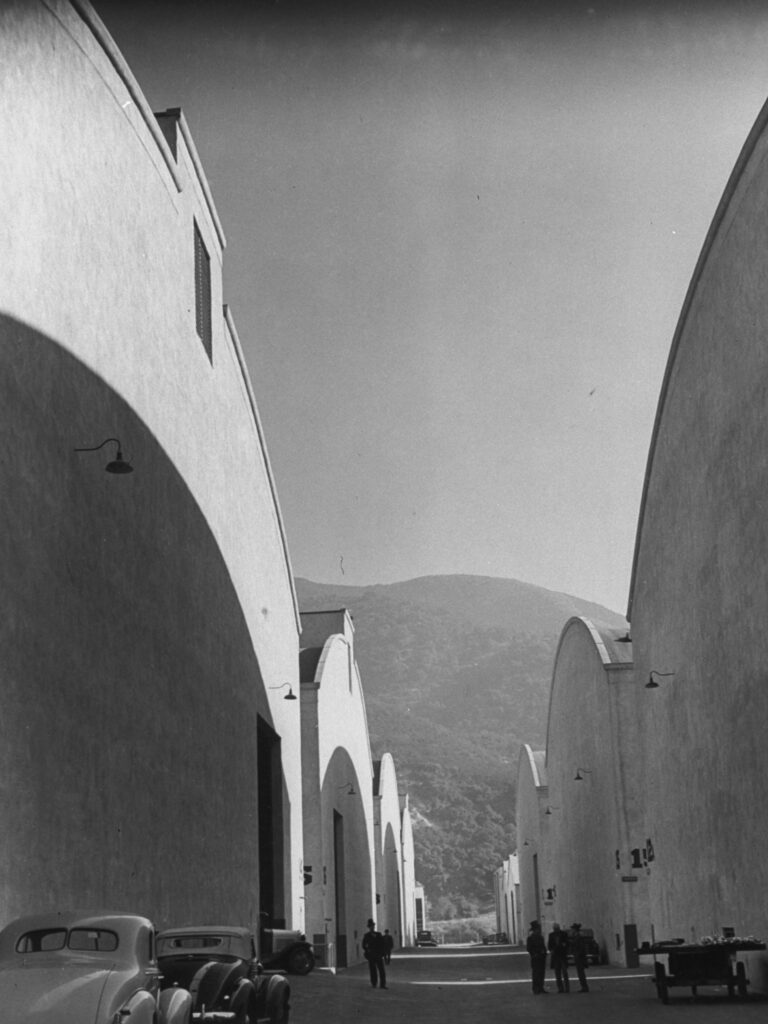
Sound stages…cover all the Hollywood movie lots. Ever since the advent of sound drove the movies indoors, these huge, sound-proof buildings have been the factories of the cinema industry. Covering more than an acre of ground, each stage is so big that within its walls can be re-enacted the sinking of the Titanic or Napoleon’s retreat from Moscow.

The theme that LIFE hammered in its story was the rise of big-budget pictures, which the magazine referred to as “million-dollar epics.” A million dollars is a lot, but also not that much for a movie budget, even taking inflation into account. For point of reference, a million dollars back then would be the equivalent of about $23 million in 2026. The most expensive blockbusters of today—such as the newer entries in the Star Wars and Jurassic Park franchises—cost around $500 million.

LIFE, perhaps sensing what the future would be, looked at this culture with disdain.

Hollywood’s most successful studios are headed by producing “geniuses” with a fondness for sending expeditions to the South Seas for “atmosphere” and junking $100,000 worth of film to shoot it in color. Surrounding them are equally temperamental directors, writers and actors. The only reason the movies ever get made at all is that beneath the batteries of geniuses are amazingly smooth-working studios.

While the text of the story had its snarky moments, the photographs by Margaret Bourke-White looked more lovingly at the magic of movie making. Her images include movie sets recreating lavish ballrooms or the streets of San Francisco circa 1859, and also showed appreciation to the prop master who kept a vast collection of smoking pipes to give directors plenty to choose from.

Bourke-White also took several photos from the set of the movie The Big Broadcast of 1938, which may be of interest to modern movie fans because of the way its ship models and lifeboats and icebergs call to mind one of the most extravagant and successful productions in the history of film—James Cameron’s 1997 movie Titanic.

The Big Broadcast of 1938 was the last in a series of variety show anthologies, and this edition featured a story about a race between two big boats, the Colossal and the Gigantic—two names which obviously reference the ship Titanic.

To compare The Big Broadcast of 1938 to the vast enterprise behind of the making of James Cameron’s movie is to appreciate how far cinema has evolved. And this isn’t a knock on the prop department’s work on The Big Business of 1938. Rather, it’s a recognition of what happens when one generation after another tries top those that came before—no matter what the cost.

The Warner Bros Studio lot in Burbank, California, 1938.

Margaret Bourke-White/Life Picture Collection/Shutterstock

On the Paramount Studios lot Ernst Lubitsch, with cigar in his mouth, directed Gary Cooper and Claudette Colbert in the 1938 romantic comedy “Bluebeard’s Eight Wife.”

Margaret Bourke-White/Life Picture Collection/Shutterstock

A movie set of the Paramount Studios lot, 1938.

Margaret Bourke-White/Life Picture Collection/Shutterstock

On the set of a movie at Paramount Studios, 1938.

Margaret Bourke-White/Life Picture Collection/Shutterstock

This prop was being built for the musical comedy “The Big Broadcast of 1938” from Paramount Studios.

Margaret Bourke-White/Life Picture Collection/Shutterstock

This prop was being built for the musical comedy “The Big Broadcast of 1938” from Paramount Studios.

Margaret Bourke-White/Life Picture Collection/Shutterstock

On the set of the movie “The Big Broadcast of 1938” from Paramount Studios.

Margaret Bourke-White/Life Picture Collection/Shutterstuck

A set for the oceanbound musical comedy “The Big Business of 1938” at Paramount Studios.

Margaret Bourke-White/Life Picture Collection/Shutterstock

This iceberg prop was built for use in the Paramount Studios musical comedy “The Big Business of 1938.”

Margaret Bourke-White/Life Picture Collection/Shutterstock

Paramound prop master Charles J. Mccormick posed with a prop mosquito on his hand that he controlled with a hair held in his other hand; the mosquito was made for the 1937 comedy “Thrill of a Lifetime.”

Margaret Bourke-White/Life Picture Collection/Shutterstock

The Paramount Studios prop room included a wide selection of pipes, 1938.

Margaret Bourke-White/Life Picture Collection/Shutterstock

This breakaway stick in the Paramount Studios prop department was held together with toothpicks and designed to break away on contact, 1938.

Margaret Bourke-White/Life Picture Collection/Shutterstock

Prop man R.B. Berscheid at work at Warner Bros. studio, 1938.

Margaret Bourke-White/Life Picture Collection/Shutterstock

Prop champagne bottles on the lot at Warner Bros., 1938.

Margaret Bourke-White/Life Picture Collection/Shutterstock

This puppet of actress Martha Raye was built for a publicity gag and then kept hanging around the Paramount props department, 1938.

Margaret Bourke-White/Life Picture Collection/Shutterstock

This prop street on the Paramount Ranch, 30 miles from Hollywood, was meant to replicate San Francisco circa 1859 for the 1937 movie “Wells Fargo.”

Margaret Bourke-White/Life Picture Collection/Shutterstock

A set on the Paramount Studios ranch, 30 minutes north of Hollywood, 1938.

Margaret Bourke-White/Life Picture Collection/Shutterstock

The post Visiting the Studio Lots of Early Hollywood appeared first on LIFE.
  • ✇LIFE
  • This Was No Woodstock: Inside a Music Festival Disaster Bill Syken
    The Woodstock music festival was one of the signature moments the 1960s. Site owner Max Yasgur, a farmer and the concert site owner, memorably declared that the gathering proved that “a half a million young people can get together and have three days of fun and music and have nothing but fun and music.” Woodstock’s success naturally inspired imitators, but the magic was hard to recapture. The Altamont concert later that year famously turned deadly when a member of Hell’s Angels, who had b
     

This Was No Woodstock: Inside a Music Festival Disaster

28 May 2026 at 18:02

The Woodstock music festival was one of the signature moments the 1960s. Site owner Max Yasgur, a farmer and the concert site owner, memorably declared that the gathering proved that “a half a million young people can get together and have three days of fun and music and have nothing but fun and music.”

Woodstock’s success naturally inspired imitators, but the magic was hard to recapture. The Altamont concert later that year famously turned deadly when a member of Hell’s Angels, who had been hired for security, stabbed an audience member near the stage as the Rolling Stones performed.

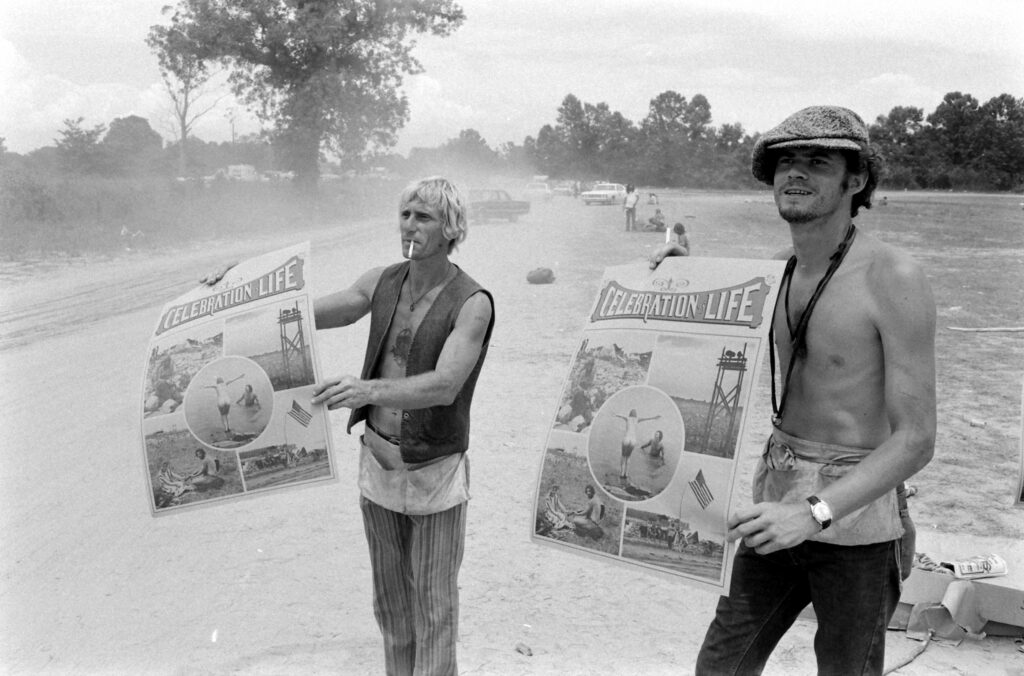
Another music festival, the Celebration of Life in June 1971, is not as well-remembered as Altamont, but it was such a disaster that it helped put an end to the music festivals for a while.

The Celebration of Life had to change locations three times due to local resistance before finding a last-minute home on a remote tract of land in McCrea, Louisiana, about 60 miles north of Baton Rouge. The festival was scheduled for eight days but started late and shut down halfway through, with the IRS placing a tax lien that froze the organizers’ bank accounts. Performers who did get on the stage included Chuck Berry, the Stephen Stills Band, and Ike & Tina Turner. But others who had been promoted on the bill but never made the stage included Pink Floyd, the Beach Boys, the Allman Brothers and Miles Davis.

Most tragically, multiple attendees drowned in a river that bordered the festival site while seeking refuge from Louisiana’s summer heat.

Here’s what LIFE magazine wrote about the event, in a story headlined “Perhaps the last of the rock festival fiascos“:

Even before it opened, last week’s rock festival in McCrea, La., was a disaster. The stage collapsed while it was under construction, and when it was fixed, the sound system failed. Most of the previously advertised talent didn’t show up, food was overpriced, water was scarce, and sanitation facilities inadequate. The temperature soared over 100 degrees. Within four days there had been five deaths—four drownings and a drug overdose—and what the crowd wanted most was to go home.

While some later reports lowered the number of confirmed deaths to two, this was a brutal event by any accounting.

LIFE staff photographer Bill Ray appears to have arrived in McCrea after the music stopped, but he captured some of the aftermath of the Celebration of Life, including concertgoers, many of them nude, trying to cool down in the river. Ray also took many shots of people looking to hitch a ride home, holding up signs requesting transport to such locations as Virginia, Miami and New Mexico—a testament to how far people had traveled to get there. The happiest images he shot were of people who had been picked up and were on their way home.

In 2013 a 32-minute documentary called McCrea 1971 reviewed what went wrong with Celebration of Life, and the problems began with its hasty setup. In one historic clip a promoter said, “It takes about a month to set up a festival, but we’ll try to do it in about three days.” A local who attended the festival talked about the folly of festival goers swimming in a river that people from the area knew to be a “death trap.” He said, “I know of no one I have ever met who would willingly get in and swim in the Atchafalaya River.”

In 2018 Rolling Stone magazine ran its own retrospective on the Celebration of Life and talked about how out of hand things got. Because of the heat performances that were originally planned to start during the day shifted to the overnight, leaving attendees with nothing to do all day. Makeshift boulevards called “Smack Street” and “Cocaine Alley” cropped up on the festival site. Stunningly, given what happened at Altamont, festival organizers hired the Galloping Goose Motorcycle Club for security and its members reportedly became abusive with attendees.

LIFE magazine’s wish that music festivals go away for a while came to fruition. And while festivals have made a major comeback in recent years, they now look very different, with stronger organizations behind them. Some complain about how corporate they have become, with special bleachers for VIPs and so on. However you feel about that, it’s worth remembering that a more loosely organized gathering can come with its own hazards—sometimes big ones.

The ill-fated Celebration of Life music festival, after several late location changes, took place in McCrea, Louisiana, 1971.

Bill Ray/Life Picture Collection/Shutterstock

Concertgoers sought relief from the sweltering heat at the ill-fated Celebration of Life music festival in McCrae, Louisiana, 1971.

Bill Ray/Life Picture Collection/Shutterstock

Concertgoers sought relief from the sweltering heat at the ill-fated Celebration of Life music festival in McCrae, Louisiana, 1971.

Bill Ray/Life Picture Collection/Shutterstock

The ill-fated Celebration of Life music festival in McCrea, Louisiana, 1971.

Bill Ray/Life Picture Collection/Shutterstock

Concertgoers looked for rides home after the ill-fated Celebration of Life music festival in McCrae, Louisiana was cut short, 1971.

Bill Ray/Life Picture Collection/Shutterstock

The ill-fated Celebration of Life music festival in McCrea, Louisiana, 1971.

Bill Ray/Life Picture Collection/Shutterstock

Concertgoers looked for rides home after the ill-fated Celebration of Life music festival in McCrae, Louisiana was cut short, 1971.

Bill Ray/Life Picture Collection/Shutterstock

Concertgoers looked for rides home after the ill-fated Celebration of Life music festival in McCrae, Louisiana was cut short, 1971.

Bill Ray/Life Picture Collection/Shutterstock

Concertgoers looked for rides home after the ill-fated Celebration of Life music festival in McCrae, Louisiana was cut short, 1971.

Bill Ray/Life Picture Collection/Shutterstock

Concertgoers looked for rides home after the ill-fated Celebration of Life music festival in McCrae, Louisiana was cut short, 1971.

Bill Ray/Life Picture Collection/Shutterstock

Concertgoers looked for rides home after the ill-fated Celebration of Life music festival in McCrae, Louisiana was cut short, 1971.

Bill Ray/Life Picture Collection/Shutterstock

Concertgoers looked for rides home after the ill-fated Celebration of Life music festival in McCrae, Louisiana was cut short, 1971.

Bill Ray/Life Picture Collection/Shutterstock

Concertgoers looked for rides home after the ill-fated Celebration of Life music festival in McCrae, Louisiana was cut short, 1971.

Bill Ray/Life Picture Collection/Shutterstock

Concertgoers looked for rides home after the ill-fated Celebration of Life music festival in McCrae, Louisiana was cut short, 1971.

Bill Ray/Life Picture Collection/Shutterstock

Concertgoers caught a ride home after the ill-fated Celebration of Life music festival in McCrae, Louisiana was cut short, 1971.

Bill Ray/Life Picture Collection/Shutterstock

Concertgoers caught a ride home after the ill-fated Celebration of Life music festival in McCrae, Louisiana was cut short, 1971.

Bill Ray/Life Picture Collection/Shutterstock

The post This Was No Woodstock: Inside a Music Festival Disaster appeared first on LIFE.

  • ✇LIFE
  • The Original ‘Thomas Crown Affair’: Talk About A Steamy Set Bill Syken
    In 2027 Michael B. Jordan will direct and star in the second remake of the 1968 movie The Thomas Crown Affair. The story is about a wealthy thief who pulls daring heists, and the romance that develops between him and a female investigator. Jordan, who won an Academy Award in 2026 for his performance in Sinners, has been wanting to play Thomas Crown since 2016. LIFE staff photographer Bill Ray was on the set of the original movie, and he captured the chemistry that Jordan will be aspiring to e
     

The Original ‘Thomas Crown Affair’: Talk About A Steamy Set

21 May 2026 at 17:45

In 2027 Michael B. Jordan will direct and star in the second remake of the 1968 movie The Thomas Crown Affair. The story is about a wealthy thief who pulls daring heists, and the romance that develops between him and a female investigator. Jordan, who won an Academy Award in 2026 for his performance in Sinners, has been wanting to play Thomas Crown since 2016.

LIFE staff photographer Bill Ray was on the set of the original movie, and he captured the chemistry that Jordan will be aspiring to equal.

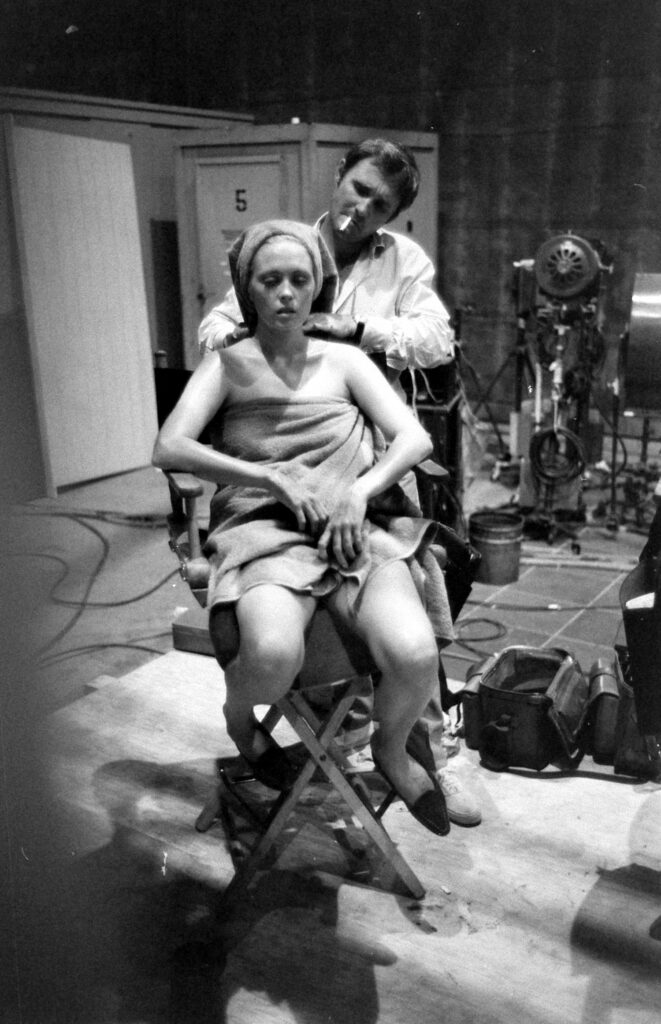
The first movie starred Steve McQueen, an iconic actor who is the subject of the three best-selling images in the LIFE photo store. His opposite number in their cat-and-mouse pursuit was Faye Dunaway, who was coming off a star-making performance in Bonnie and Clyde. McQueen and Dunaway’s scene together in a sauna was the centerpiece of Bill Ray’s photo shoot.

But while the actors were prominent in the photos that ran in LIFE, the star of the accompanying article was director Norman Jewison, who was a hot property at the time because his previous movie, In the Heat of the Night, had just won the Academy Award for Best Picture.

Jewison was in his first decade of what would be a long Hollywood career that included such films as Moonstruck (1987) and The Hurricane (1999). LIFE honored Jewison’s prowess with an article formatted as if it were the script for a documentary about him.

For instance, the article included in its “dialogue” this quote from Jewison as he was in the process of directing Dunaway and McQueen in one of the movie’s steamier scenes:

The script calls for “chess with sex.” I like that…Faye, you are playing chess, but there is another game going on. Without thinking, your right hand goes up your left arm, lightly caressing, to your throat…Steve, let’s see your eyes follow her hand…You’re up to the shoulder, across to the neck. She looks up and catches you watching. (Jewison laughs). Good. You’re embarrassed. You smile and look down. Great!

The stars of the movie had relatively few lines in the LIFE story. Dunaway said of Jewison, “He’s the only man I’ve ever known who has no hostility in him. He’s all love.” McQueen, complaining about how long Jewison kept him on set in pursuit of a scene, said “I hate him, but I love him.”

Michael B. Jordan talked about his Crown remake at CinemaCon in April 2026. Jordan, who will be co-starring with Adria Arjona, said that he initially fell in love with the story from the 1999 version that starred Pierce Brosnan and Rene Russo. But he had also studied the original and said, “McQueen brought this effortless cool, this rebellious edge. He didn’t just steal. He made a statement.”

Faye Dunaway (seated) and director Norman Frederick Jewison on the set of ‘The Thomas Crown Affair,’ 1967.

Bill Ray/Life Picture Collection/Shutterstock

Steve McQueen and Faye Dunaway during the filming of ‘The Thomas Crown Affair’, 1967.

Bill Ray/LIfe Picture Collection/Shutterstock

Faye Dunaway and Steve McQueen on the set of`The Thomas Crown Affair,’ 1967.

Bill Ray/LIfe Picture Collection/Shutterstock

Faye Dunaway;Norman Jewison;Steve Mcqueen

Bill Ray/LIfe Picture Collection/Shutterstock

Director Norman Frederick Jewison (left) with actors Steve McQueen and Faye Dunaway during the filming of ‘The Thomas Crown Affair’ 1967.

Bill Ray/LIfe Picture Collection/Shutterstock

Norman Jewison directed Steve McQueen and Faye Dunaway in the 1967 crime caper ‘The Thomas Crown Affair,’ 1967.

Bill Ray/LIfe Picture Collection/Shutterstock

Faye Dunaway and Steve McQueen on the set of`The Thomas Crown Affair,’ 1967.

Bill Ray/LIfe Picture Collection/Shutterstock

Faye Dunaway and Steve McQueen on the set of`The Thomas Crown Affair,’ 1967.

Bill Ray/LIfe Picture Collection/Shutterstock

Faye Dunaway and Steve McQueen on the set of`The Thomas Crown Affair,’ 1967.

Bill Ray/LIfe Picture Collection/Shutterstock

Faye Dunaway and Steve McQueen on the set of`The Thomas Crown Affair,’ 1967.

Bill Ray/LIfe Picture Collection/Shutterstock

Faye Dunaway and Steve McQueen on the set of`The Thomas Crown Affair,’ 1967.

Bill Ray/LIfe Picture Collection/Shutterstock

Director Norman Frederick Jewison (left) with actors Steve McQueen and Faye Dunaway during the filming of ‘The Thomas Crown Affair’ 1967.

Bill Ray/LIfe Picture Collection/Shutterstock

Director Norman Frederick Jewison (left) with actors Steve McQueen and Faye Dunaway during the filming of ‘The Thomas Crown Affair’ 1967.

Bill Ray/LIfe Picture Collection/Shutterstock

Director Norman Frederick Jewison (left) with actors Steve McQueen and Faye Dunaway during the filming of ‘The Thomas Crown Affair’ 1967.

Bill Ray/LIfe Picture Collection/Shutterstock

Director Norman Frederick Jewison (left) with actors Steve McQueen and Faye Dunaway during the filming of ‘The Thomas Crown Affair’ 1967.

Bill Ray/LIfe Picture Collection/Shutterstock

Director Norman Frederick Jewison (left) with actors Steve McQueen and Faye Dunaway during the filming of ‘The Thomas Crown Affair’ 1967.

Bill Ray/LIfe Picture Collection/Shutterstock

Director Norman Frederick Jewison (left) with actors Steve McQueen and Faye Dunaway during the filming of ‘The Thomas Crown Affair’ 1967.

Bill Ray/LIfe Picture Collection/Shutterstock

The post The Original ‘Thomas Crown Affair’: Talk About A Steamy Set appeared first on LIFE.

  • ✇LIFE
  • The Making of a Mermaid, 1948 Bill Syken
    The concept of the mermaid has been around since at least the 14th century, and this beloved creature has shown up in dozens of movies, including Splash and The Little Mermaid. LIFE was there in 1948 when Hollywood took its first stab at making a mermaid look real. The movie was a 1948 summer release called Mr. Peabody and the Mermaid, which was a light romance about a man who goes fishing and makes an unexpected catch. The mermaid was played by Ann Blyth, who had been nominated for an Acade
     

The Making of a Mermaid, 1948

6 May 2026 at 15:48

The concept of the mermaid has been around since at least the 14th century, and this beloved creature has shown up in dozens of movies, including Splash and The Little Mermaid. LIFE was there in 1948 when Hollywood took its first stab at making a mermaid look real.

The movie was a 1948 summer release called Mr. Peabody and the Mermaid, which was a light romance about a man who goes fishing and makes an unexpected catch. The mermaid was played by Ann Blyth, who had been nominated for an Academy Award a couple years earlier for her supporting role in Mildred Pierce. In February 1948 LIFE devoted a story to the making of a custom-fitted tail for Blyth. The story’s headline announced that this tail cost $18,000 (or about a $250,000 in 2026 dollars) and called its creation “the most ambitious make-up job ever to be performed on the nether extremities of an actress.”

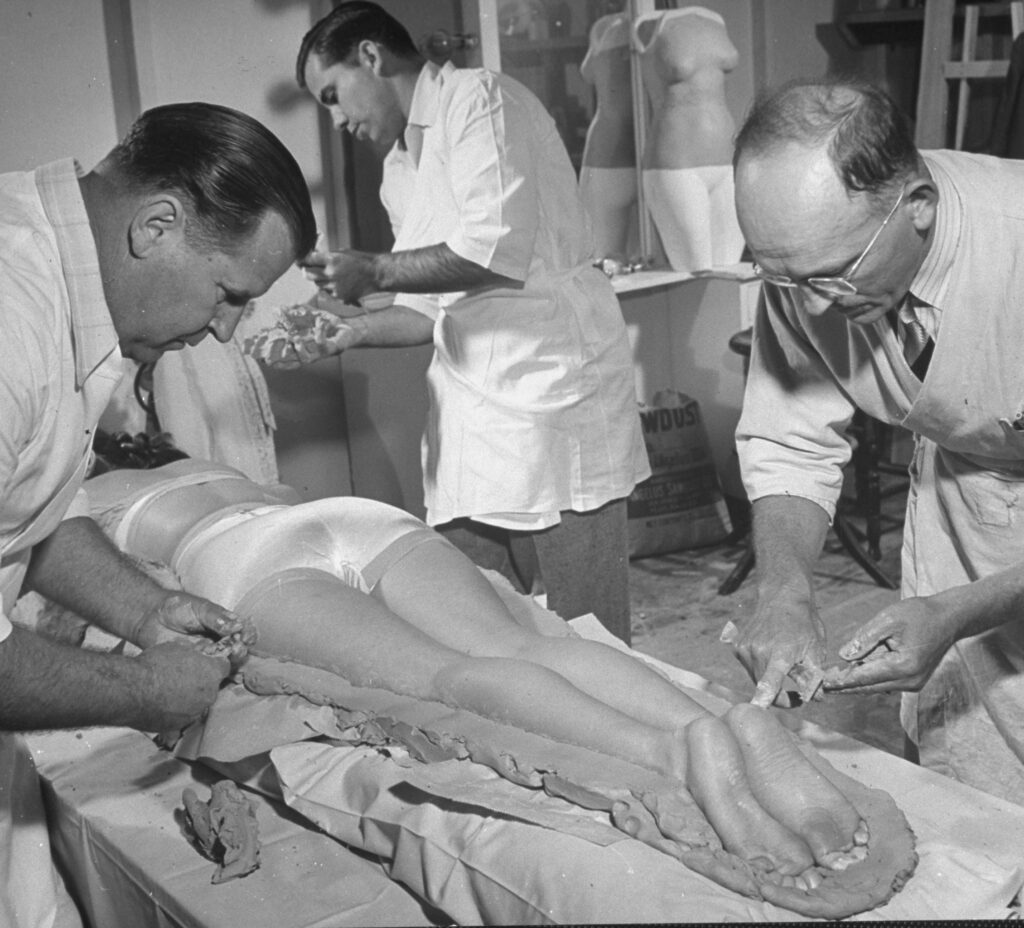
The brains behind the tail was Bud Westmore, a Hollywood makeup legend who would also be featured in LIFE for his work on another semi-aquatic figure, The Creature from the Black Lagoon. For the mermaid’s tail Westmore made a plaster-of-Paris mold directly from Blyth’s body. He then encased the resulting model in rubber and carved the tail. LIFE staff photographer Allan Grant documented every step in the process.

And when it came time for Blyth to get into the water on the movie set, another LIFE photographer, Loomis Dean, was there to take pictures.

Unfortunately when the movie actually came out, LIFE’s film critic was not so impressed. A group review of Mr. Peabody and the Mermaid and two other summer releases was headlined, “Three expensive movies aim at fantasy and miss it by a mile.” The quality of the tail was not remarked upon at all.

It’s a sentiment all too familiar to modern moviegoers. Special effects can be spectacular, but the story still needs to work. A tail can be great and the movie can still flounder.

Actress Ann Blyth had her legs coated in grease before a plaster mold was made of her legs as part of the crafting of a state-of-the-art mermaid’s tail for the 1948 film “Mr. Peabody and the Mermaid.”

Allan Grant/Life Picture Collection/Shutterstock

Makeup artists crafted a mermaid’s tail for actress Ann Blyth for the film “Mr. Peabody and the Mermaid,” 1948.

Allan Grant/Life Picture Collection/Shutterstock

Master makeup artist Bud Westmore fitted rubber to a plastic mold while making a tail for actress Ann Blyth in the 1948 movie “Mr. Peabody and the Mermaid.”

Allan Grant/Life Picture Collection/Shutterstock

Ann Blyth showed off the custom-made, $18,000 tail she wore in the 1948 film “Mr. Peabody and the Mermaid.”

Loomis Dean/Life Picture Collection/Shutterstock

Ann Blyth showed off the custom-made, $18,000 tail she wore in the 1948 film “Mr. Peabody and the Mermaid.”

Loomis Dean/Life Picture Collection/Shutterstock

Ann Blyth starred in the 1948 film “Mr. Peabody and the Mermaid.”

Loomis Dean/Life Picture Collection/Shutterstock

Ann Blyth and William Powell starred in the 1948 film “Mr. Peabody and the Mermaid.”

Loomis Dean/Life Picture Collection/Shutterstock

Ann Blyth starred in the 1948 film “Mr. Peabody and the Mermaid.”

Loomis Dean/Life Picture Collection/Shutterstock

Ann Blyth starred in the 1948 film “Mr. Peabody and the Mermaid.”

Loomis Dean/Life Picture Collection/Shutterstock

The post The Making of a Mermaid, 1948 appeared first on LIFE.

❌
Subscriptions