❌

Normal view

Palesa Monareng has drawn over 100 self-portraits – and is now turning them into a book

8 June 2026 at 07:00

Candle, 2022

The London-born illustrator has spent a decade building a distinctive pencil-based practice, and she's only just getting started.

Ideas come to Palesa Monareng on long walks with her dog, Herzog. Not from scrolling – she is already fretting about how much the "near catatonic scrolling" she does shapes her creative output – and not, despite what her client list might suggest, from the briefing documents of the many major commissions that have come her way. Just the walks with Herzog.

Palesa is a London-born illustrator, a decade into a practice built on graphite portraiture, animated motion drawings and an ongoing body of self-portraits now more than 100 works deep. After a foundation year at Central Saint Martins, she grew her audience through what she describes as "irreverent sketch projects". This included influencer portraiture and Moleskine travel sketches, producing work that was playful, specific and shareable enough to reach art directors in the United States. Early commissions from Nike and The New York Times sprang up from this. And since then, her client list has expanded to include Amazon, Netflix, ESPN, Forbes, The New Yorker, HarperCollins and Macmillan.

What holds it all together is the pencil. Palesa's graphite portraits are precise and atmospheric, carrying weight and texture in a way that feels out of step with what typically fills our screens and feeds. She returns, again and again, to loops and to "arrivals as endings, slices of the surreal and all the fun textures you can arrive at with just plain pencil on paper". Her reading list reflects the same sensibility and shapes the architecture of how she thinks and creates: Borges' short stories, Eduardo Galeano's illustrated Upside Down World, Jodorowsky and Moebius' The Incal, Hofstadter's GΓΆdel, Escher, Bach.

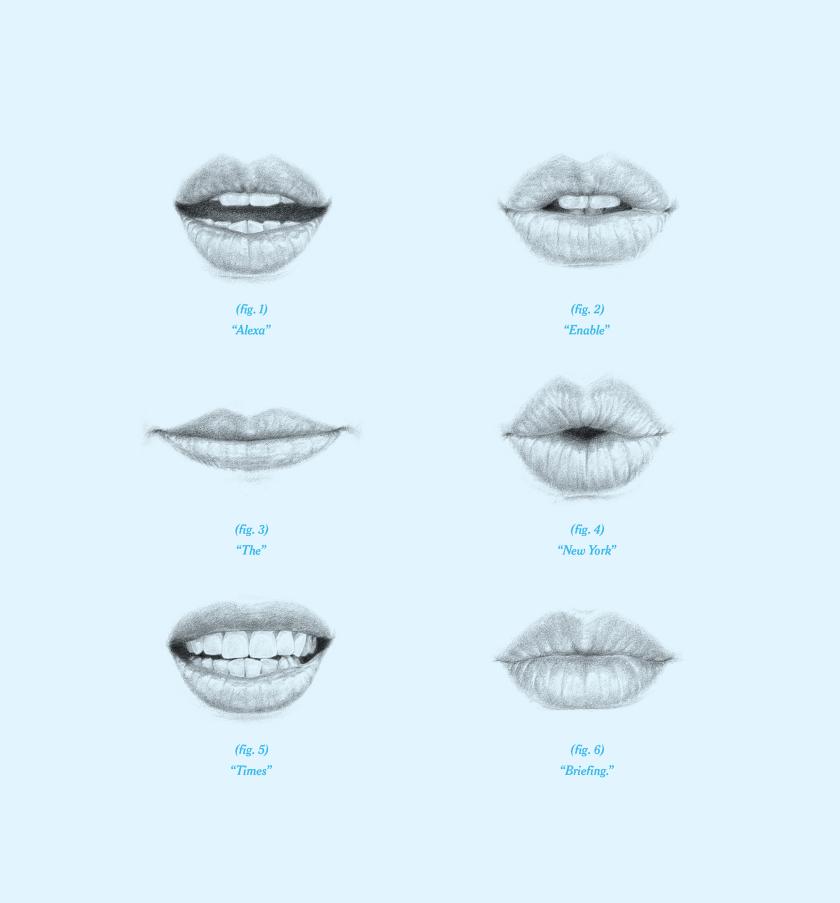
Amazon Alexa campaign

Amazon Alexa campaign

Essence Power 40

Essence Power 40

Bleacher Report, NFL

Work for The New York magazine

Work for The New York magazine

Her motion portraiture, on the other hand, involves a slightly different labour of love. She uses old-school rotoscoping, which involves shooting video, cutting footage to the desired frame rate in Photoshop, hand-drawing each layer, scanning them back in, and generating the animation from the stack. It is painstaking in a way that most digital workflows aren't, and the results bear that out. The Candle animation, in which she worked into a single sheet of paper with pencil layers scanned at intervals, produces a shadow play that feels almost alchemical. "I really enjoy building an animation on a single piece of paper," she says, "in conversation with the scanner."

A more recent piece, Cube Study 2026, came after Palesa signed with literary agency Janklow & Nesbit to write her first book – a manuscript threading together those 100-plus self-portraits with the experience of her digital life. It has her thinking about how identities are filtered and shaped through platforms. "Now that so many of us are in daily conversation with some kind of agentic Tom Riddle's diary," she says, "ruminating on consciousness doesn't seem as esoteric as it used to." The cube in Cube Study functions as a way into that – a moving, Rubik's Cube-like structure that holds the question of the self at a distance as it shifts and swaps around.

Steve Aoki

Whales, 2025

Cube Study, 2026

Doge Study, 2019

On what she hopes her audiences take away from her work, Palesa is refreshingly direct about the conditioning that years of digital-first practice can produce. "Like a lot of digital-first creatives, I've trained myself to gauge a response to my work through engagement rates and virality," she admits. But strip that away, and what she actually wants is pretty clear: "I just hope they enjoy the quality of my lines, and that a sense of mystery and mischief welcomes them into spending time with the works."

With new Nike work dropping soon and the manuscript in full swing, we're excited to see what comes next. Herzog, presumably, is ready for a walk.

The Favourite
The Favourite

  • βœ‡Creative Boom
  • SMLXL put ecstatic dogs with wind blowing in their fur on a cosmetics bottle Ayla Angelos
    The Barcelona and New York studio was asked to merge Midnight Cosmetics' sleek monochrome world with HotDog's bold, chaotic energy – and found the answer in gouache, flying fur, and dogs in a state of pure bliss. The brief, on paper, looked like a collision waiting to happen. Midnight Cosmetics – a company defined by minimal, clean, sophisticated aesthetics – wanted to collaborate with HotDog, a pet brand known for its bold colours and
     

SMLXL put ecstatic dogs with wind blowing in their fur on a cosmetics bottle

11 June 2026 at 06:01

The Barcelona and New York studio was asked to merge Midnight Cosmetics' sleek monochrome world with HotDog's bold, chaotic energy – and found the answer in gouache, flying fur, and dogs in a state of pure bliss.

The brief, on paper, looked like a collision waiting to happen. Midnight Cosmetics – a company defined by minimal, clean, sophisticated aesthetics – wanted to collaborate with HotDog, a pet brand known for its bold colours and energy. Two visual identities that had almost nothing in common were brought together for a dog fur mist.

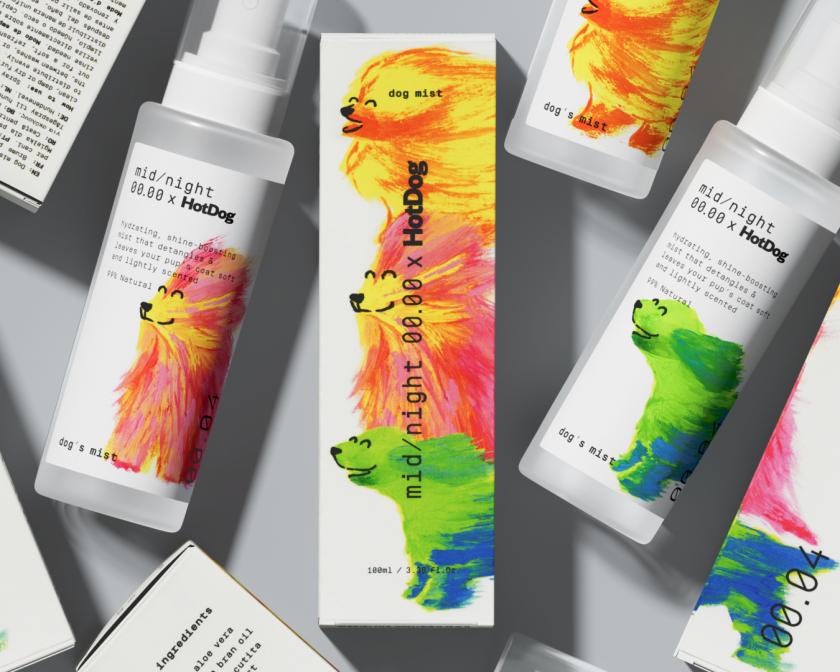
SMLXL, the Barcelona and New York design studio founded in 2023 by Anna Berbiela, Guillem CasasΓΊs and Javier Arizu, was handed the project and told to make it work. What they produced is a fine example of clever packaging design. Midnight's signature black-and-white structure was left almost entirely intact, then detonated by an explosion of gouache-painted dogs caught in moments of pure sensory pleasure – fur flying, faces rapturous and colour running riot across the clinical white ground.

"We decided to take Midnight's signature, clean black-and-white packaging and 'intervene' on it," Guillem explains, "by introducing an explosion of colour and personality." The key was to stop thinking of the two brands as conflicting forces and treat Midnight's minimalism as a base. Once they did that, everything followed. "This allowed HotDog's vibrant, expressive energy to break through, creating a visual tension that is both conceptually sound and highly striking."

The mist itself is utterly intangible and physical – designed to soften and refresh a pooches' fur – so SMLXL needed a medium that could communicate that through movement. "We realised those benefits are best expressed through movement – specifically, hair flowing freely in the air," Guillem says. Gouache, with its saturated colour and rich texture, gave the illustrations the energetic quality they needed and a physicality that makes the product's softness feel almost transferable through the bottle, or like your own hair is starting to move.

It is a good example of how SMLXL generally operates. The three founders met during their first year of university in Barcelona in 2008, went on to work together at the design studio Mucho, spent time separately at studios in London, Barcelona and New York, then reunited to co-found PrΓ ctica in 2018. They ran that studio until 2024, when they launched SMLXL – now a team of seven, with Anna and Guillem in Barcelona and Javier heading up New York. The name captures something essential about how they work across whatever the project demands.

Their portfolio runs from the visual identity system for the America's Cup to Barcelona's Christmas lights, from a New York Times Magazine cover to the signage system for the recently redesigned MoMA Design Store in SoHo. The thread between it all is a process that starts with finding the core idea, then jumping right in. "Before diving into design or any purely graphic exercise," Guillem says, "we zoom out to focus on the core idea. We view the concept as an abstract element that must fit the project perfectly; once that foundation is locked in, the graphic design work begins."

In the future, they are considering opening their own experimental shop – an object-oriented space free of client briefs, driven purely by curiosity. They have also just directed their first music video, stepping into entirely new territory that they clearly relish. "Embracing the unknown is exactly what sparks those unexpected creative executions that we love so much," Guillem says. The HotDog packaging project is also out in the world now, and the Pomeranians holding the bottles in the campaign photography are, it should be noted, extremely good.

  • βœ‡Creative Boom
  • Vivid and restless, TjaΕ‘a Cizej's compositions are built like puzzles Ayla Angelos
    The Slovenian graphic designer and recent Werkplaats Typografie graduate approaches typography with a messy, intuitive process, making work that is impossible to look away from. Earlier this spring, TjaΕ‘a Cizej was staying at her parents' place in Slovenia, surrounded by nature, and noticed buds on a branch. She had spent the previous two years in Arnhem, in the Netherlands, attending the Werkplaats Typografie master's programme. "Mayb
     

Vivid and restless, TjaΕ‘a Cizej's compositions are built like puzzles

9 June 2026 at 07:51

The Slovenian graphic designer and recent Werkplaats Typografie graduate approaches typography with a messy, intuitive process, making work that is impossible to look away from.

Earlier this spring, TjaΕ‘a Cizej was staying at her parents' place in Slovenia, surrounded by nature, and noticed buds on a branch. She had spent the previous two years in Arnhem, in the Netherlands, attending the Werkplaats Typografie master's programme. "Maybe that has something to do with the fact that I spent a lot of time in cities over the last couple of years, and when I came back home, I became more aware of the beauty and ordinariness of the nature I grew up around," she tells Creative Boom.

TjaΕ‘a started studying graphic design at 15, in high school in Slovenia, before going on to a bachelor's degree at the Academy of Fine Arts in Ljubljana. She graduated from Werkplaats Typografie last summer and is now based in Arnhem, taking on client work and learning to build a variable font on the side. Her practice sits between typography, colour and printmaking, designing posters, identities and collaborative pieces that treat letters as forms to be pushed, pulled, recombined and, occasionally, made almost illegible (almost).

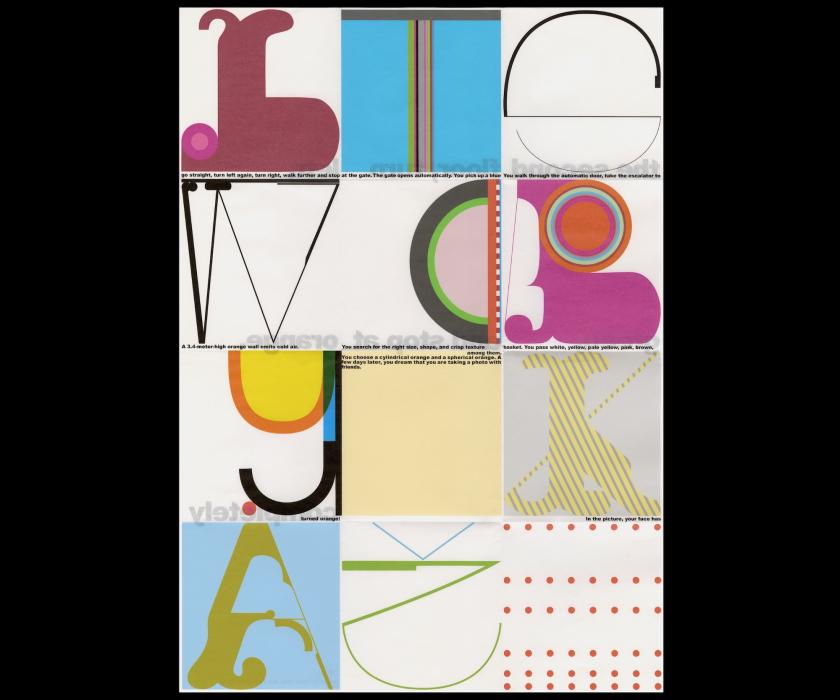
Her process, by her own description, is very messy and very simple. She doesn't sketch beforehand. She starts with a letter and follows the feeling – you know, things like what colours appear first and what forms are starting to take shape. "I'm not professionally trained as a type designer, and honestly, I never really planned to become one," she says. "Mainly, I'm just putting parts of letters together, almost like a puzzle." The posters and identities that emerge from this approach are vivid and restless, awash with saturated colours, forms that hover between legibility and abstraction, and energetic compositions that seem to be communicating something with each line and dent.

Her personal projects are where she creates her favourite pieces, in part because they turned out well, but also because the process of making them was more "lighter and joyful" than others. The Kompas poster is one she is most attached to. Made during her time at Werkplaats Typografie, it involved working with traditional Chinese characters for the first time. "I liked discovering how I could find my own way of working with completely different letterforms," she says. The poster was installed in the lightbox at the Werkplaats Typografie building in Arnhem, where it guided visitors in the right direction, giving the piece a functional dimension alongside its graphic one.

The Book Launch poster, made in collaboration with her classmate and friend Xiaohan Zhang, worked a little differently. Xiaohan provided images and drawing material, while TjaΕ‘a's role was to respond, bringing her typographic and visual interpretation to what she was given. For this piece, she chose a photograph of a child hiding playfully and built around it with small typographic elements. "I'm very happy with how it resonated with the event itself and how everything came together," she says. "It also brings back very nice memories of my classmates at Werkplaats Typografie."

The Orange poster, on the other hand, features a grid of 12 uniform squares, each with its own identity. This isn't necessarily a favourite of hers, but she enjoyed how the project pushed her towards printed matter and physical experimentation, a direction she wants to keep following. "It made me want to create more things like that."

What TjaΕ‘a does not carry into the work is any particular expectation of how it should land. "I don't carry any particular message or meaning in my work," she says, "but it feels very good to express myself through it and to feel fulfilled by that." This summer, she hopes to turn towards personal projects – potentially a first full typeface, and some interactive publications she has been thinking about for a while.

  • βœ‡Creative Boom
  • How David Adrien uses frames to shift the way we look at everyday things Ayla Angelos
    The Paris-based illustrator and bookbinder creates small, meticulously crafted objects exploring what happens when you merge "playfulness and control". David Adrien grew up in Paris and studied printmaking in Brussels before returning to France to finish his degree and settle there. Since graduating, he has worked primarily as an illustrator, contributing to collective comics fanzines along the way. But more recently, his practice has
     

How David Adrien uses frames to shift the way we look at everyday things

9 June 2026 at 08:00

The Paris-based illustrator and bookbinder creates small, meticulously crafted objects exploring what happens when you merge "playfulness and control".

David Adrien grew up in Paris and studied printmaking in Brussels before returning to France to finish his degree and settle there. Since graduating, he has worked primarily as an illustrator, contributing to collective comics fanzines along the way. But more recently, his practice has expanded back towards something that he's been missing since his school days: "More self-initiated projects involving volume and making things by hand," he says. "I really want to focus on that, also following a strong desire to use fewer digital devices."

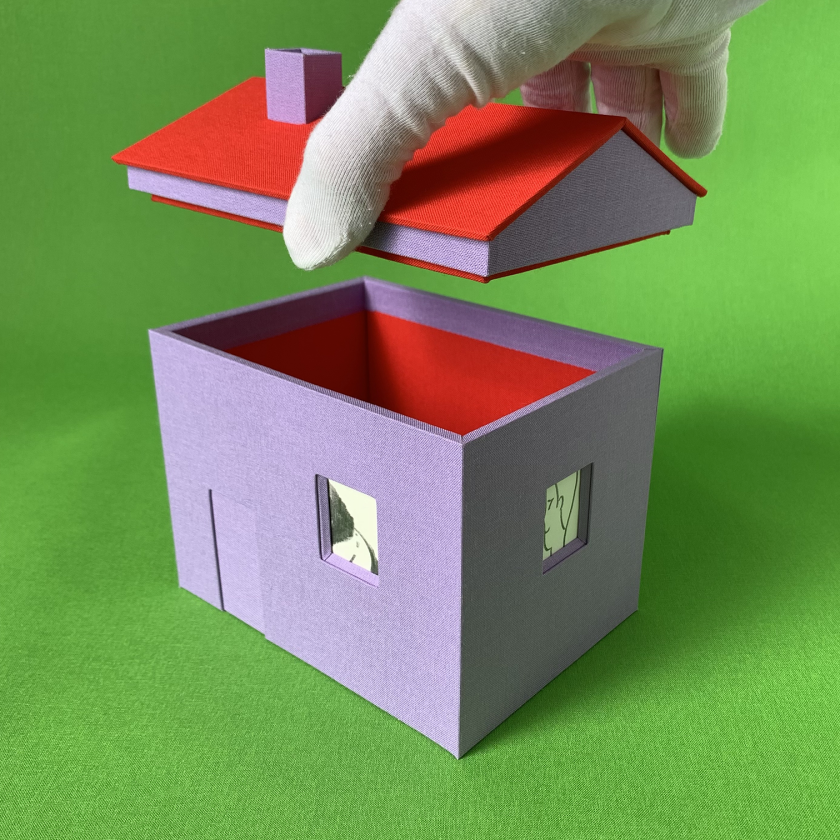
Since then, David has been making small framed drawings – gorgeously hand-built objects in which a modest, loosely rendered image sits inside a frame constructed from cardboard, acrylic glue and bookcloth, using techniques borrowed from bookbinding. What makes them compelling is less the image alone than the relationship between the image and the beautiful sculpture that encases it. "I find that since my drawing style for this side of my work is quite simple and loose," he explains, "the frame surrounding it has to be very minimal and meticulously crafted for the piece to be as striking as possible. The tension between playfulness and control is a very important part of my practice."

When he's about to commence one of his frame projects, he starts with observation, watching how things are presented to the eye and closely seeing what happens when the context shifts. "My inspiration really comes from observing my everyday environment and trying to see how everything is framed in a very broad sense," he says. Small adjustments like moving an object, changing a background, placing one thing next to another that has no obvious reason to be there, and looking at it from a different perspective are where his ideas truly take off. "The magic of combination inspires me," he says, "and the unexpected dialogue that can exist between elements that only had a little to do with each other in the first place."

If you were to take a very quick glance at his recent computer works, perhaps with a squint, you might think you're just looking at any old laptop. But then you spot how each piece has a small landscape painting – a nod to the default desktop wallpapers that most of us have long stopped seeing – set within a frame that mimics the proportions of a screen. It's a handcrafted, witty and cleverly built optical illusion. "It connects old subjects and mediums to contemporary technologies and the new challenges they bring," David says, "like a bridge between past, present and future."Β 

In his Fragile series, the frames are made entirely from a squishy protective foam – the kind used to cushion things in transit – wrapped around small colour drawings. The result looks, as David puts it, like a toy version of a traditional artwork. "Seeing such a small piece of art surrounded by this much protection gives it a different status," he says. "It elevates a basic artistic gesture into something precious." The change in perception is something he strives for in his practice. "I'm very interested in tweaking the lenses with which we look at things."

Trickery aside, David wants the work to feel approachable. "I just want to make art that can start conversations while also feeling welcoming," he says. "Sometimes art and the discourse around it can seem a bit daunting from the outside."Β 

Pedro Nekoi makes surreal, saturated worlds from traffic cones, vintage magazines and Tokyo backstreets

8 June 2026 at 07:30

The Brazilian-born, Tokyo-based digital artist blends 3D animation, collage and physical sculpture – and believes art exists to give people a little more joy than they started with.

Pedro Nekoi will tell you that his whole creative process takes two or three days. Or just one, if he drinks three coffees. This is a man who clearly enjoys what he does.

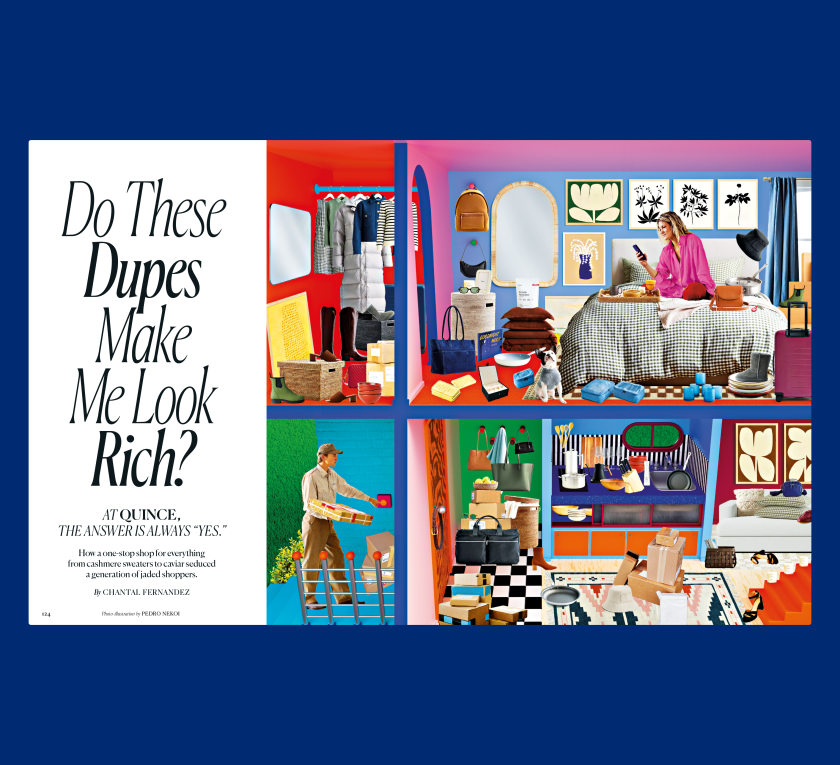
Pedro grew up in Paulista, in northeastern Brazil, before spending almost 12 years in SΓ£o Paulo – working in advertising agencies and magazines, gaining experience in art direction while developing a personal practice on the side. Right before the pandemic, he left the corporate world to focus on freelancing. It was the right call. Since then, he has worked with clients including Adobe, Spotify and Anitta, held solo exhibitions in Tokyo and created large-scale murals. He has been based in Tokyo for the past 10 months, and the city, he says, has changed everything.

"Living in Tokyo has become a huge source of inspiration for me," he explains, "because the city constantly balances futuristic aesthetics with nostalgic, retro charm. You can walk through an incredibly modern area and suddenly discover a tiny hidden kissaten or an old neon sign that feels frozen in time." That collision of the hyper-contemporary pressing up against something preserved is exactly the kind of visual tension that feeds his work.

He photographs it obsessively, whether that's unusual wall textures, vintage signs, faded colours or strange objects on the street. Maybe it's a plastic traffic cone or a specific colour combination glimpsed on a walk. "Exploring those hidden visual gems has become one of my favourite activities in the city and one of the biggest influences on my work."

After capturing everything on his camera roll, the process from there is layered and purposefully messy. He draws on his iPad – "my sketches are usually very chaotic; honestly, I'm probably the only person who can fully understand them" – and thinks about composition and movement simultaneously, since animation is central to his work. He digs into his archive of vintage magazines for collage elements, then builds the 3D composition on screen, letting colour, texture and pattern develop intuitively once the structure is in place.

The result is imagery that is densely chromatic and slightly hallucinatory – surreal environments in which retro portraiture, bold geometric forms, tropical references, and digital space coexist without an obvious hierarchy.

What has shifted most recently is his relationship with the physical. For a long time, Pedro worked exclusively on screen, his output living entirely in digital space. His solo exhibition in Tokyo, Welcome to Nekoiland, changed that. For the show, he experimented with printing works on acrylic and with incorporating moving elements such as lights, mirrors, and elements drawn from his animations. "Seeing my digital language become something tangible felt incredibly exciting to me," he says. The exhibition led directly to his next project: a series of six acrylic flower vases combining his surreal digital collages with functional, physical objects. "I loved the contrast between something digitally imagined and something that could exist in everyday life," he says.

The ambition behind it all is simple. "There's already so much heaviness in everyday life," he says, "so I like the idea that art can momentarily transport people into a more surreal, colourful and imaginative world. If viewers can leave my work feeling a little more joyful and maybe even pass that feeling on to someone else, then I feel like the artwork has fulfilled its purpose."

Adobe x Sundance, 2025

Adobe x Sundance, 2025

Karolina Burlikowska photographs cherries in brandy glasses and flowers through rain – finding joy in nature and contrast

10 June 2026 at 07:31

Art direction & set design, Miguel Morte

Art direction & set design, Miguel Morte

Working across still life, collage and mixed media, the London-based Polish photographer is drawn to details that feel "slightly off, slightly magical".

It started with a friend's Sony Ericsson phone in Poland in the early 2000s. Karolina Burlikowska got hold of it and started taking pictures. She begged her parents for a camera. She spent hours after school on DeviantArt and Tumblr, looking at what other people were making and trying things herself. "I got obsessed" is the phrase she uses, and it describes her entire journey that followed.

After a year studying at Akademia Fotografii in Warsaw, where she first encountered professional photographers and began to understand what a practice could look like, she moved to London. After years of assisting on kids' shoots, high-fashion, food, and TV ads, she absorbed how different photographers and assistants worked until her own rhythm gradually revealed itself. She now works primarily in still life, moving between digital and analogue, shooting on a proper camera or just her phone, scanning, printing, and reworking images until they feel right. This year, she became commercially represented worldwide by Making Pictures.

Terra Incognita, 2026. Design Studio Salina

Terra Incognita, 2026. Design Studio Salina

Terra Incognita, 2026. Design Studio Salina

Terra Incognita, 2026. Design Studio Salina

Personal work

Personal work

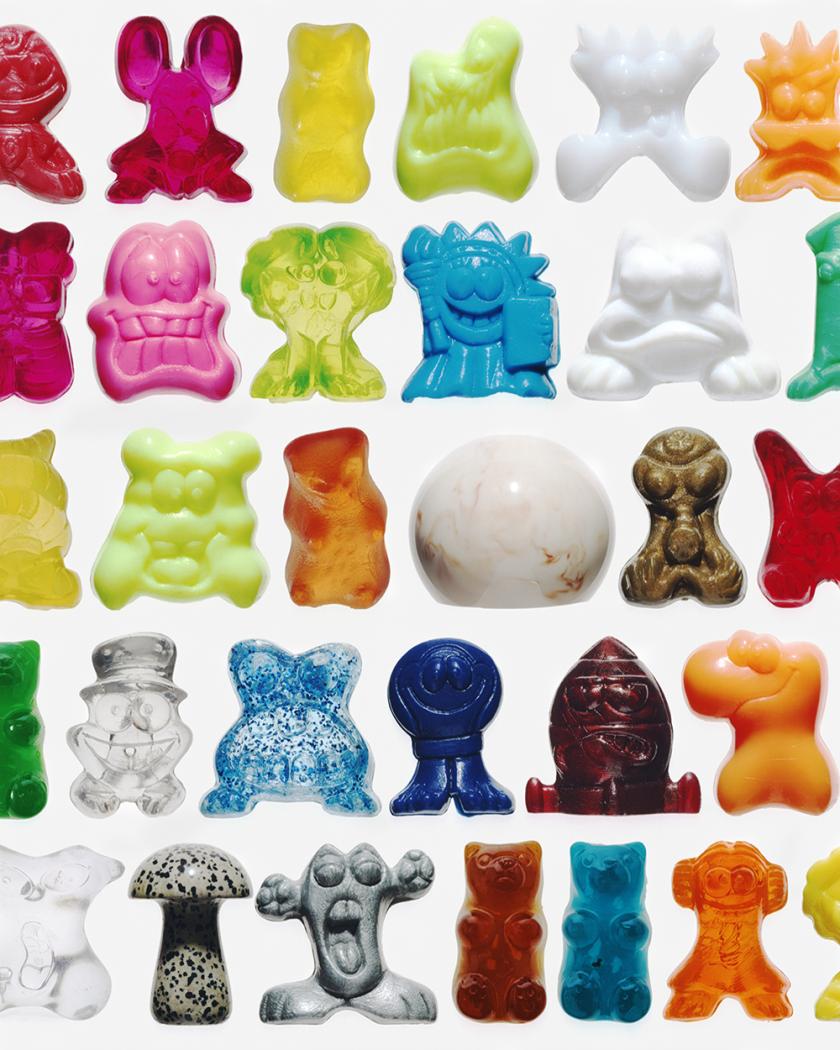
The images she makes are vivid and slightly strange. A cherry suspended on a long stem inside a brandy glass, the liquid below it layered in bands of yellow and red. A grid of sweets, like gummy bears and small figurines in every colour, arranged like a scientific sample. A flower photographed through a wet surface, its petals blurring into something translucent and barely there. Across it all runs a consistent aesthetic that's clinical and ordered, but also very much playful and alive. "I'm drawn to contrasting feelings," she says.Β 

When it comes to the creative process, Karolina takes herself outdoors and into nature, observing the small details most people walk past. I'm drawn to small details, disrupted patterns, reflective surfaces, natural phenomena – anything that feels slightly off, slightly magical." But she is clear that inspiration arrives during the making, not before. "I just follow what catches my eye," she says, "and try to stay open to where it takes me." On shoot days, she arrives with a plan and a lighting idea, then allows herself to deviate if the structure starts to feel too rigid. "Ultimately, I want to have fun and play a little when shooting my own ideas."

Set design, Lucy Webster

Set design, Lucy Webster

Set design, Sarah Hardy

Set design, Sarah Hardy

SELECTION Wallpaper* Design Awards issue, 2026

SELECTION Wallpaper* Design Awards issue, 2026

The project she is most proud of right now is Terra Incognita, which means 'unknown land' in Latin. It's a recently completed self-published zine designed by Eugenia Luchetta at Studio Salina, formed of collage and mixed media built from her own photography – featuring spikey compositions and bold, textural colour formations. The premise of the project grew from her instinct to observe nature without affecting it in any way, and it also reflects that 90 per cent of her work consists of physically manipulated prints. "I was observing the natural world but didn't want to disrupt it in situ," she explains, "so I created new, surreal worlds with their representation as a print."Β 

One collage from the zine is a current favourite of hers, particularly for the way the colours melt into a gradient at the top, and for the cut-out shape that follows the contour of a leaf. "It just feels right," she says.Β 

Sometimes it's important to take a moment and reflect on why you make work in the first place, as well as your purpose for showing it to your audience. Karolina has many fun shoots with creatives planned for the future, and when asked what will happen when she puts it out into the world, her hope is simple: "At least one person will find joy looking at it."

Personal work

Personal work

Set design, SoleΜ€ne Riff

Set design, SoleΜ€ne Riff

Art direction & set design, Sherin Awad

Art direction & set design, Sherin Awad

How Jana Frost uses collage and set-building to explore time, symbolism and the subconscious

9 June 2026 at 08:05

artist portrait. Photography by Brian Lockyer

artist portrait. Photography by Brian Lockyer

The London-based artist draws on archival imagery and a nomadic upbringing to create work that feels unfamiliar and impeccably handmade.Β 

Born in Belarus, raised in Estonia, and having spent a significant portion of her life in Malta before settling in London, Jana Frost describes herself as a "third culture kid" – and that layered, peripatetic identity runs through everything she makes. "There's always been something in me that's drawn to the symbols and stories that travel across cultures, that mean something to people regardless of where they're from," she tells Creative Boom. "I think that's partly why I became so fascinated by symbolism, how the same archetypes resurface across completely different traditions, and how symbols carry meaning almost subconsciously, before you've even had time to analyse them. That feels very connected to how I make work."

Jana studied Fine Art, with a focus on sculpture and ceramics, but the physical demands of the medium made it difficult to sustain while moving frequently. Collage offered a way forward due to its portability and immediacy, while still allowing her to think spatially and construct worlds. Over time, those instincts towards scale reasserted themselves. "The collage work started expanding into physical space," she explains, "into sets and installations – almost like returning to sculpture, but through a different language."

artist portrait. Photography by Brian Lockyer

artist portrait. Photography by Brian Lockyer

Portrait, Photography by Sophia French

Portrait, Photography by Sophia French

Her practice now sits somewhere between collage and set-building, and her ideas tend to begin in a subconscious place, like dreams, feelings she can't yet articulate or an image that won't leave her alone. "If something creates a sense of curiosity in me, I'll keep digging into it," she says, "researching, collecting references until it forms into something I want to express visually." Folklore, mythology, the origins of fairy tales, and the psychology of collective storytelling all feed into the work. So too does cinema, particularly the era before digital editing or CGI, when filmmakers had "almost no tools, no digital editing, no CGI, no safety net. I think that era represents a kind of peak of human creativity under constraint," Jana says. "The idea that limitation forces invention – and that the most atmospheric worlds are often built from the simplest means."

Jana's process starts with a sketch, followed by deep archival research – digging into old illustrations, library scans and historical prints – before she moves into digital assembly to test composition and scale. Then comes the printing, cutting, stitching and placing. "And that's where it gets unpredictable," she says. "There's a constant conversation between the digital and the physical, and the final work always carries the evidence of that – the seams, the joins, the slight imperfections."

Vogue BTS

Vogue BTS

Vogue, Photography by Elio Nogueira

Vogue, Photography by Elio Nogueira

Vogue, Photography by Elio Nogueira

Vogue, Photography by Elio Nogueira

Vogue, Photography by Elio Nogueira

Vogue, Photography by Elio Nogueira

Time also springs up as a recurring motif. Jana is drawn to early collage techniques where artists would reprint compositions using a press, causing the ink to bleed and merge until the original and the new elements became indistinguishable. In her own work, she places archival imagery alongside the new – sometimes this involves photographs she's taken herself – to produce what she calls "a kind of temporal confusion". Working predominantly in black and white, or within a restrained palette, she deliberately removes obvious time markers. "It's quite similar to how dreams function," she says. "There's no clear timeline – it's more like a collage of memories, references and emotions all existing at once."

Among her recent projects, her directorial debut – a music video titled Godless Man – stands out as a formative moment. "Everything was practical, in-camera and deliberately imperfect," she says. "It reminded me why I work the way I do. There's something that happens when you build something real in front of a lens that you can't replicate digitally." A Vogue editorial followed after this, and was the first time she took her physical cutouts abroad. "These very fragile, very handmade things are travelling to be part of something at that level," she says. "It felt like a confirmation that the work belongs in those spaces." More recently, a collaboration with Canon brought her to Uzbekistan for a full immersive installation, while her animated collage videos have begun to attract commercial interest. "It suggests that handmade, tactile animation has a real place in contemporary visual culture," she says, "not just as a novelty – but as a genuine language."

Behind the scenes

Behind the scenes

Behind the scenes

Behind the scenes

Jana Frost, Godless Man (Copyright Β© Jana Frost, 2026)

Jana Frost, Godless Man (Copyright Β© Jana Frost, 2026)

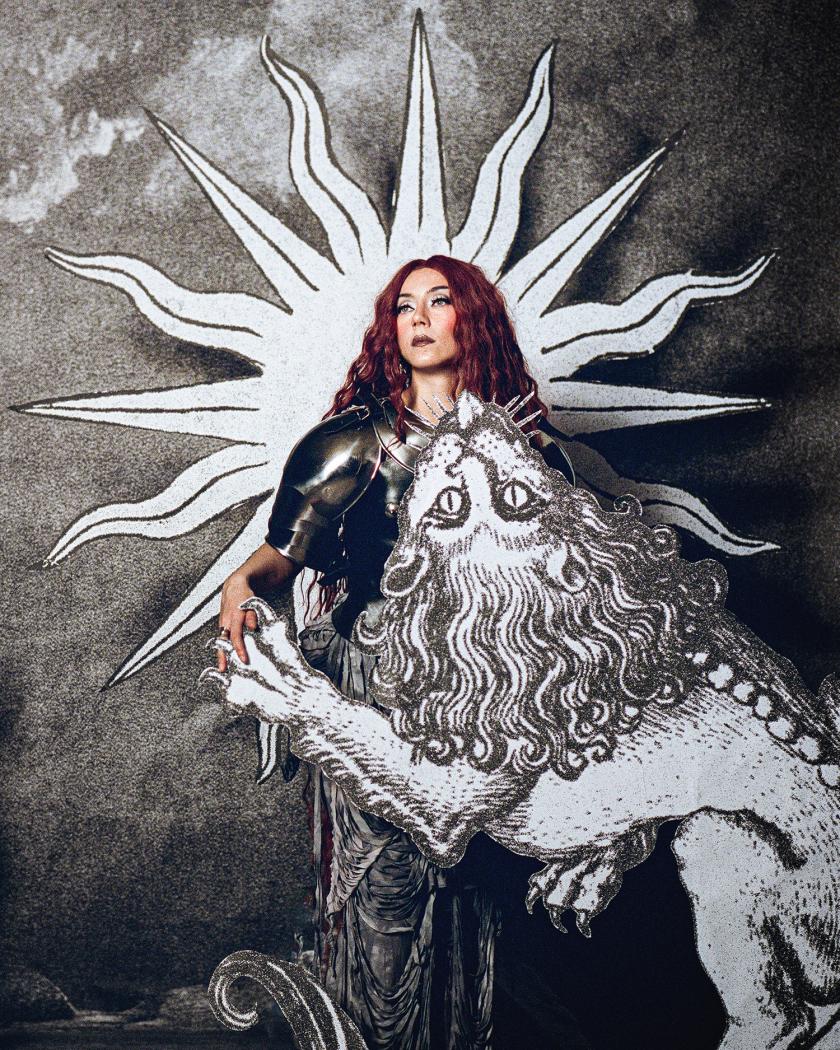
Jana is not especially interested in directing how people interpret what they see. "I want the work to feel slightly unsettling but also familiar – like something you recognise emotionally, even if you can't fully explain it," she says. Once the work is in the world, she considers it no longer hers. Currently, she is deep in a series of short films shot on 16mm, each exploring a different symbolic world through the same visual language.

Alongside that, she operates as a full creative director on a number of commercial projects, shaping entire visual narratives from concept to final image. "That feels like the direction everything is moving: building complete worlds," she says, "rather than individual moments within them."

❌
Creative Boom