Normal view

Feral horse numbers in Australia’s alps are on the rise again. It’s time to act

Theo Clark/Getty

Last year, we noted early signs of recovery in Australia’s high country, following the reduction of feral horse numbers.

These had dropped from 17,000 in 2023 to around 3,000 in 2024 across Kosciuszko National Park, thanks to the management efforts of NSW National Parks staff and contractors.

But horse numbers are already bouncing back. The latest survey data estimate between 6,476 and 16,411 horses now roam the national park.

So, what happened?

A mild summer

The answer is simple. If feral horse eradication is impossible — or politically and legally off the table — then continuous management of horse numbers is essential.

With no aerial culling within the national park in 2025, two factors likely contributed to this rapid rebound.

First, horses move. Control efforts have largely focused on remote parts of Kosciuszko National Park, away from people, trails and roads. Once resident herds in these areas have been culled, horses from surrounding regions – particularly adjacent state forests – likely moved in.

Second, horses breed. After a mild summer with significant rainfall across the high country, most mares will have bred. During Autumn fieldwork, we observed large numbers of foals accompanying herds throughout the region.

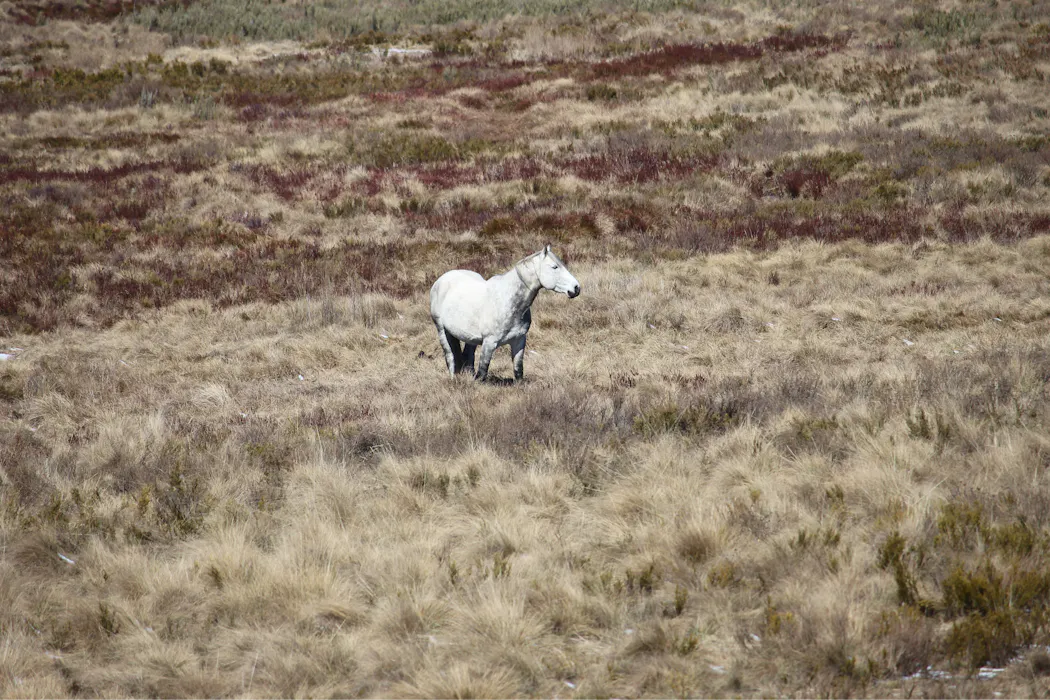
A herd of feral horses in an alpine meadow.
If feral horse numbers aren’t rapidly reduced again, things will get worse for the alpine environment and the horses themselves. crbellette/Getty

A numbers game

If numbers aren’t rapidly reduced again, things will only get worse, both for the fragile alpine environment and the horses themselves. With winter conditions imminent, many horses will struggle to maintain condition as snow covers grazing areas and energy reserves are depleted.

Ironically, some of the strongest opposition to culling overlooks these very real animal welfare consequences. Leaving horse populations unmanaged may ultimately result in prolonged suffering from starvation and exposure, compared with humane control conducted by trained professionals.

Forecast El Niño conditions may further compound these pressures, with drought likely to persist through spring and summer. As water and food become scarce, horses will likely concentrate around creeks, wetlands, alpine bogs, fens and meadows. These are precisely the alpine ecosystems most vulnerable to trampling, grazing and erosion.

And this is where hard-fought gains will be rapidly lost. Banks will become eroded, clear waters fouled and our fabled high plains replaced by overgrazed paddocks.

A long-term effort

We don’t need to look far to see what happens when a population of feral animals goes unchecked. Great Keppel Island, for example, is overrun with a thousand or more feral goats, denuding dune and forcing increasingly exasperated locals to erect fences around their properties

As with horses in Kosciuszko, political hesitancy and delayed action on Great Keppel have allowed ecological damage to escalate while management becomes increasingly difficult and expensive.

New South Wales Environment Minister, Penny Sharpe, recently said the latest Kosciuszko feral horse numbers confirmed the need for “continued management”, required to meet the target of reducing feral horse numbers to 3,000 by mid-2027.

But where did that target come from? It’s a holdover from the repealed Kosciuszko Wild Horse Heritage Act and, when even basic population growth models are applied, the implications become clear. Maintaining a population of 3,000 horses would still require the removal of well over 1,000 animals every two years — indefinitely.

In other words, there is no “set and forget” solution. If horse populations are to remain capped, ongoing culling will be necessary in perpetuity.

Alternative solutions?

Some have suggested that instead of culling, rehoming and fertility control should be used. While many Australians might like the idea of a “brumby” or two grazing in the back paddock, the number of landholders willing and able to care for these animals is far smaller.

Even retired racehorses struggle to find suitable long-term homes once their racing careers end, highlighting the practical limitations of large-scale rehoming programs.

Likewise, although various fertility control options have been suggested, vaccines, intra-uterine devices or surgical sterilisation are all invasive procedures for which horses need to be caught and sedated. These may be effective to maintain a small herd in an easily accessible area. But previous assessments have warned such an approach must be carried out in concert with large scale culling efforts.

Population dynamics vs politics

We don’t have to look far to find other examples of how invasive species management could be improved. In 2016, then New Zealand Prime Minister John Key introduced a bold plan to rid Aotearoa of all introduced predators in the next 30 years.

Predator Free 2050 is the first national-scale initiative to reduce the impacts of introduced predators, capitalising on the invention of new technologies including real-time automated species identification to trap targeted species and mobilising neighbourhoods across the country to join the effort.

Australia faces a different set of challenges — larger landscapes, divided jurisdictions and deeply entrenched cultural and political debates around invasive species management.

But the broader lesson remains the same: meaningful conservation outcomes require long-term commitment, clear targets and the willingness to act before ecological problems become too difficult to reverse.

The Conversation

David M Watson receives funding from the Australian Government (DAFF and DCCEEW).

Patrick Finnerty does not work for, consult, own shares in or receive funding from any company or organisation that would benefit from this article, and has disclosed no relevant affiliations beyond their academic appointment.


How common is sex-selective abortion in Australia, really?

The Good Brigade/Getty Images

New South Wales parliament is debating a bill this week that seeks to ban abortions performed on the basis of fetal sex.

If passed, health practitioners who perform such abortions would face professional misconduct charges and lose indemnity insurance coverage for the procedure.

At first glance, this might appear to be a defensible measure to address a practice that sits uneasily with gender equality.

But there’s little evidence sex-selective abortions are occurring in Australia.

The South Australian Law Reform Institute has warned such prohibitions would restrict and delay access to time-sensitive care. They would also prove unworkable and unenforceable.

When and how can you determine fetal sex?

Fetal sex can be determined through non-invasive prenatal testing. This blood test is taken from the pregnant person between ten and 14 weeks’ gestation, and costs around A$500 to $800 out of pocket.

Around 25–30% of pregnant people use this type of testing.

Fetal sex can also be determined through routine ultrasounds performed at around 20 weeks’ gestation.

When can you get an abortion?

Australia progressively decriminalised abortion between 2002 and 2023. It’s now legal in all states and territories.

Decriminalisation shifted decision-making power from doctors to pregnant people, recognising them as the authorities on their own pregnancies. Pregnant people are no longer required to account for their decisions to medical professionals.

However, gestational limits apply in most states and territories (aside from the Australian Capital Territory), ranging from 14 to 24 weeks.

Beyond those limits, medical signoff is still required.

What does the law say about sex-selective abortion?

The law varies by state.

South Australia explicitly prohibits it.

During its decriminalisation debate, NSW passed a statement of parliamentary opposition to the practice.

No other state or territory has specific provisions.

How common is sex-selective abortion?

The evidence base for the bill is thin. The SA Law Reform Institute found “little, if any, evidence that abortions purely on the basis of gender are a real issue in Australia”.

A 2020 NSW review similarly found sex-selective abortions “are rarely performed for the sole purpose of sex selection”.

Proponents cite a recent study as evidence of the practice among people with specific migrant backgrounds.

The study’s own authors, however, describe their findings as “indirect evidence” of a skewed sex ratio at birth. They note only that this “may be indicative of prenatal sex selection” and explicitly state it “does not establish causality”.

It’s actually an anti-abortion strategy

Sex-selection amendments are a well-documented anti-abortion strategy designed to foment stigma and discourage health practitioners from providing abortions.

This bill is one of several currently before state parliaments to limit access to abortions. It’s part of a coordinated effort to erode abortion access and contest the principle that abortion is health care.

Legislation is only part of the strategy. The parliamentary process is also used as a mechanism to advance narratives that frame abortion as morally indefensible. The goal is to undermine not just access, but the legitimacy of abortion itself.

The language of the second reading speech reflects this. The speech contains no reference to fetuses or embryos, only “unborn babies” and “girls”.

There are no “pregnant people” or even “women”, only “mothers”. Doctors who perform abortions are “abortionists.” Advocates are the “pro-abortion lobby”.

This is the lexicon of the anti-abortion movement. It constructs a worldview in which the fetus has independent moral status, the pregnant person exists only as a mother, and abortion is something only the unscrupulous would defend.

The bill’s stated justification rests on one study’s indirect and observational findings about “two migrant communities”, who are portrayed as culturally at odds with Australian values of gender equality.

The bill positions abortion restrictions as a protective, progressive measure, obscuring Australia’s uneven and incomplete record on gender equality.

What could the bill mean for pregnant people and providers?

In practice, the bill reintroduces medical gatekeeping for pregnant people. It will return pregnant people to a regime in which their reasons for terminating a pregnancy are subject to medical and legal scrutiny.

This burden is likely to fall unevenly on racialised communities: in practice, people from some ethnic communities may face greater scrutiny of their decisions from health providers.

It also imposes greater professional and personal risks on abortion providers. Australia already faces a shortage of abortion providers. Exposing health practitioners to professional sanction and voiding their indemnity insurance deters providers.

The international literature is clear: bans on sex-selective abortion do nothing to address the underlying causes of son preference. Those causes are social, economic and cultural.

What sex-selective abortion bans do is restrict reproductive autonomy – itself foundational to gender equality. This bill will not advance gender equality. It will restrict abortion access and expose providers to sanction.

The Conversation

Erica Millar receives funding from the Australian Research Council. She is a member of the South Australian Abortion Action Coalition.

Anna Noonan does not work for, consult, own shares in or receive funding from any company or organisation that would benefit from this article, and has disclosed no relevant affiliations beyond their academic appointment.

Would you buy milk from a gene-edited cow? Consumers may be more open than you think

Getty Images

As temperatures rise, New Zealand’s dairy farmers face a growing challenge: keeping cows cool enough to remain productive.

Heat stress can reduce milk production, harm animals and lower the environmental efficiency of dairy farming. For an economy so heavily reliant on dairy exports, the stakes are significant.

Over recent years, scientists have been exploring whether gene editing can deliver dairy cattle better able to cope with warmer temperatures, while producing fewer methane emissions. There is also potential for dairy products that carry valuable functions, such as being allergy-free.

Yet, regardless of the scientific promise behind such products, they still must gain consumer acceptance. Would shoppers actually buy gene-edited milk?

Our recently published study suggests they might, particularly if the products offer clear personal benefits and are priced competitively.

What we asked consumers

Gene editing enables specific tweaks to be made to an organism’s DNA. This can be done to promote desirable traits or remove undesirable ones – and without necessarily introducing new genetic material.

That sets it apart from traditional genetic modification technology and is seen by some researchers as a more precise approach that may prove more acceptable to consumers.

To understand how people would feel about milk from gene-edited “climate-smart” dairy cows, we surveyed nearly 1,100 New Zealand consumers. Rather than simply ask whether they supported the technology, we wanted to know the trade-offs they might make when faced with real purchasing decisions.

In a choice experiment designed to mimic supermarket shopping, they chose between conventional milk, organic milk and three forms of gene-edited milk.

These included a standard version, an allergy-free version designed to improve digestibility and a version incorporating a “COVID-protection” feature, based on research into milk carrying protective antibodies.

Because cows have not yet been gene-edited for commercial dairy production, our study did not provide participants actual gene-edited milk. Instead, they were asked to evaluate a series of hypothetical products and price points designed to reflect future supermarket choices.

They were first given information about gene editing and “climate-smart” milk before repeatedly selecting their most and least preferred options across a series of shopping scenarios.

This allowed us to examine not just attitudes towards gene editing, but how consumers weigh price, familiarity and potential benefits.

Price and benefits matter most

Overall, we found conventional milk to be the most preferred option. This wasn’t surprising. Consumers often trust familiar foods more than unfamiliar technologies, especially when it comes to products they consume regularly.

But the study also showed that consumer resistance to gene-edited milk is neither fixed, nor particularly high. When it was offered at a lower price than conventional milk, for instance, acceptance increased significantly.

We also found acceptance improved when the milk offered clear and easy-to-understand consumer benefits.

Among all the gene-edited products we tested, allergy-free milk was the most popular. This suggests consumers may be more open to food technologies when they can clearly see how the product benefits them personally.

Branding a product allergy-free, for instance, is tangible and easy to understand. By contrast, broader environmental or technical claims can feel more abstract or uncertain to many consumers.

While some consumers found the idea of milk with COVID-protection features appealing, others may have been sceptical or fatigued by pandemic-related messaging.

Compared with allergy-free milk, the health benefit was also more complex and potentially harder to understand.

A pathway to acceptance?

As climate pressures intensify, food systems around the world will likely face difficult trade-offs between sustainability, affordability and productivity.

Technologies such as gene editing may become more attractive, as they promise faster and more targeted solutions than conventional breeding methods.

Our findings suggest there may be a pathway towards greater consumer openness, particularly when innovations deliver direct and meaningful benefits, rather than vague promises of future sustainability.

At the same time, the study shows consumers still value familiarity and simplicity. Traditional products continue to hold a strong advantage, while price remains a major factor shaping purchasing decisions.

Gene-edited foods may therefore succeed not by replacing conventional foods overnight, but by gradually earning consumer trust through clear benefits, affordability and transparent messaging from producers.

For all the cutting-edge science that surrounds them, the future of these innovations ultimately depends on how well consumers believe they fit into their everyday lives.

The Conversation

Damien Mather has received research funding from the Ministry of Business, Innovation and Employment.

Götz Laible received funding from the Ministry of Business, Innovation and Employment with additional support from CRV Ltd and Livestock Improvement Corporation.

Kara Xiaohui Ma does not work for, consult, own shares in or receive funding from any company or organisation that would benefit from this article, and has disclosed no relevant affiliations beyond their academic appointment.

‘Some people’s lives matter more than others’: local responders in Sudan feel ignored as the world focuses on other crises

In April 2026, Sudan marked three years of civil war – one of the most ignored humanitarian crises in the world.

This conflict began between two factions that seized power after a coup in 2021: the Sudanese Armed Forces (SAF), led by Abdel Fattah al-Burhan, and the Rapid Support Forces (RSF), a paramilitary group led by Mohamed Hamdan “Hemedti” Dagalo.

The actions of these men have thrown Sudan into the worst humanitarian crisis in the world. It has involved crimes against humanity, genocide, the death of potentially more than 150,000 people, the forced displacement of more than 15 million civilians and 19 million people facing acute hunger.

In one of the most dangerous places in the world, local leaders are putting their lives at risk to provide humanitarian assistance within their communities.

These volunteers have formed Emergency Response Rooms or غرف الطواريء to coordinate, resource and carry out life-saving assistance. They describe being motivated by nafeer – a Sudanese tradition focused on a “deep sense of social responsibility” and “collective volunteerism”.

This concept is grounded in the idea that one must “lift your bowl to your neighbour”. Diaspora communities around the world have been funding and coordinating this work for years.

As one 25-year-old female volunteer told us:

The success of emergency rooms stems from the spirit of volunteerism and the desire to help others. This motivation keeps people working despite the challenges they face, like lack of funding, security threats from authorities and working in active war zone.

However, nafeer, by its nature, should only last for a limited period. After three years, these crisis leaders are exhausted, and the international humanitarian system is not stepping up to support them.

In fact, our recent research shows the system’s own structures are making their work harder.

Our research

We spoke to 20 local leaders from Emergency Response Rooms, civil society organisations and women’s associations. These interviewees were based in Darfur, Greater Khartoum, Gezira, Kassala, Al-Qadarif, Kordofan and the Nuba Mountains.

Interviews were conducted online in Arabic by Mayada Elmaki, a Sudanese-British researcher living between Europe and Qatar.

Responders’ names, organisations and locations were taken out, due to safety concerns. Of the 20 leaders we spoke with, only a quarter received a salary. The remainder were unpaid volunteers.

Because these community organisations have not been formally recognised as “humanitarian” by the international humanitarian system itself, their people are not considered “humanitarian workers”. This means they are not given the legal protection afforded those conferred on humanitarian workers under international law, including the Geneva Conventions. This puts them at extra risk of harm from military and paramilitary forces.

The Sudanese emergency workers say funders from within the humanitarian system – including governments, nongovernmental organisations and UN agencies – are often more focused on managing perceived risk than on what the community actually needs.

Funding is often so inflexible, it takes an “extremely, extremely long time” to access. Getting money from funders require negotiating quite different templates and procedures.

As one person told us:

when our priority is saving lives first, it’s problematic when donors dictate what we should focus on.

Sudan is one of the most dangerous places in the world to deliver humanitarian assistance. It is also home to one of the most chronically underfunded humanitarian crises.

The number of organisations in Sudan getting money from these major humanitarian funders has fallen dramatically in recent years. This isn’t because things have improved, but because the priorities of many international organisations have shifted elsewhere.

As one Sudanese humanitarian leader put it:

When one crisis receives more attention and support than another, it means some people’s lives matter more than others.

At the heart of the international humanitarian system’s ethical foundation is the idea that assistance should be based on need alone – not factors such as geopolitical interest. But this is not what many of our interviewees have experienced.

The international community has taken some notice. Sudan’s Emergency Response Rooms were awarded major humanitarian prizes in 2025 and have been twice nominated for the Nobel Peace Prize.

But awards are not protection, funding, or recognition within the humanitarian system.

As Sudanese leaders, community members and volunteers endure one of the world’s worst humanitarian crises, the international system needs to step up.

Local priorities

Our research seeks to amplify the priorities of local Sudanese responders.

They are calling for:

  • better protection and compensation for those on the front lines
  • more flexible agreements with major funding bodies
  • direct funding that acknowledges operational costs
  • funding for long-term rebuilding of Sudan (not just the emergency response).

Otherwise, the international humanitarian system and the major players in it will, as one person told us, continue “ploughing the sea”, and “keep going in circles without real progress”. They added:

I hope my words reach them and make them reconsider their policies and establish long-term strategies for developing local communities.

The Conversation

Max Kelly recevies funding from the Norwegian Refugee Council. This research is funded in part by Deakin University, and the Norwegian Refugee Council (NRC).

Julia Hartelius and Mayada Elmaki do not work for, consult, own shares in or receive funding from any company or organisation that would benefit from this article, and have disclosed no relevant affiliations beyond their academic appointment.

A right mess: how mining, media and political interests are combining to influence public debate in Australia

Mining billionaire Gina Rinehart is bankrolling the acquisition of a 9.5% stake in Southern Cross Media by Bruce McWilliam, who worked for Murdoch’s News Corp for nine years and is also a former Seven Network executive.

This venture is costing Rinehart $26 million. It does not buy her a direct stake in Southern Cross, but if McWilliam cannot uphold his side of a security deed he has signed with her, she could take control of it.

Southern Cross is one of Australia’s biggest media organisations. It owns the Seven Network, 7news.com.au, the Triple M and Hit radio brands, a raft of regional radio stations, and West Australian Newspapers.

The Rinehart-McWilliam-Murdoch axis is a formidable force, part of a new combination of media, political and mining interests, reminiscent of that which formed the Liberal Party in the 1940s. The other key figures are News Corp chair Lachlan Murdoch, One Nation leader Pauline Hanson and Liberal Party director Tony Abbott.

This is the lens through which it is instructive to assess the media’s coverage of One Nation’s rise since the Farrer byelection on May 9.

To see the parallels with the 1940s, we need to join a few dots.

Rinehart is a benefactor to Hanson. She recently bought her a light aircraft worth $1 million.

She is also a benefactor to Lachlan Murdoch. Her company Hancock Prospecting is sponsoring Sky News, owned by Murdoch’s News Corporation, to the extent of a little over $1 million for a Sky event in Dubbo called the Bush Summit.

Lachlan Murdoch is chairman of News Corporation. In 2023, he appointed Tony Abbott to the board of the News subsidiary, Fox Corporation, a day after Rupert Murdoch announced his retirement. In May this year, Abbott was elected unopposed as federal president of the Liberal Party.

Lessons from the 1940s

The parallels with the 1940s can be seen in volume two of Sally Young’s magisterial two-volume history of the Australia media, Media Monsters, where she describes the machinations that led to the formation of the Liberal Party.

The right was in disarray. Robert Menzies’ comically ill-named United Australia Party had been trounced by Labor at the 1943 election. In the aftermath, Menzies was re-elected leader but made it a condition that he had the right to form a new party.

He was backed by an entity called Collins House. This was a collection of companies connected by networks of powerful business figures who dominated mining and manufacturing. An influential figure was Lachlan Murdoch’s grandfather, Keith Murdoch. As managing director of the all-powerful Herald and Weekly Times (HWT) newspaper group, he provided a vital connection between the Collins House group and the most senior level of politics.

The HWT and other major media proprietors of the day anointed Menzies and his proposal for the new Liberal Party, at a dinner of Collins House magnates in Melbourne in 1944.

The difference between the political circumstances of the 1940s and those of today is that today there are two right-wing political parties contending for supremacy: the Liberal Party and One Nation.

Rinehart seems to be having a million quid each way on which will prevail. By contrast, if the recent coverage of One Nation by The Australian is any guide, Lachlan Murdoch has already cast his vote decisively for the Liberal Party.

The media sober up

For a fortnight after One Nation’s historic win in Farrer, the media, including News Corp media, were intoxicated by the attendant excitement and controversy: the shredding of Liberal Party support; Hanson’s ambition to be prime minister; the possibility of a Liberal-One Nation coalition.

Then, led by The Australian, the media began to sober up. On May 23, its editor-at-large, Paul Kelly, wrote that the Nationals, Liberals and One Nation were locked in a bitter competition with “life or death” consequences.

From that point on, The Australian applied the blowtorch of journalistic scrutiny to One Nation, and The Age and Sydney Morning Herald swiftly followed.

With its customary disregard for journalistic ethics, The Australian made a point of reporting that One Nation’s South Australian parliamentary team was looking like a “rainbow coalition”, one of its MPs having come out as gay with a partner who was an Indonesian Muslim.

But then it got into some serious public-interest journalism. For two days it pursued the party over its handling of rape allegations against an adviser, Sean Black.

It accused Hanson of shirking her parliamentary duties by being absent from 88% of Senate estimates hearings over the past decade. It also drew attention to the fact One Nation had failed to lodge audited financial records for three years in Queensland, and disparaged its policy proposal for citizen-initiated referendums.

On June 3 it drew on all this to publish a thundering editorial. One Nation was drifting further out to the fringes. It would be divisive and disruptive. It had appeared to lurch into blind confusion. Hanson was “not fit in any sense” for the role of prime minister.

On June 6, it led page one with a full-frontal attack, carrying the self-revealing headline: “Hanson hit”. It said Hanson had been caught out misleading voters, raising further questions about her capacity to be prime minister.

The Age and SMH were by then taking up the theme.

Suddenly Hanson was reportedly not sure if she would pitch for the prime ministership. She had admitted having had to close down party branches that had been “infiltrated by extremists”. She had insisted she would not be influenced by Rinehart despite having adopted one of Rinehart’s key policies. In other words, she was all over the place.

On June 6, the papers’ political and international editor, Peter Hartcher, described her as a firebrand provocateur who specialises in grievances without solutions and turns to scapegoats instead – Asians, First Nations people, Muslims. He pointed out that Hanson had answered “no” when asked by another journalist whether she could think of any error that Donald Trump might have made since taking power.

The same day another Age/SMH commentator, Paul Sakkal, wrote about what he called the collection of right-wing forces barracking for Hanson: openly white supremacists, people who rallied alongside neo-Nazis, supporters of the so-called sovereign citizen Dezi Freeman, who had killed two policemen. “A serious governing party cannot retain these relationships.”

A right mess

The big question after all this is how the forces brought together through the new media-politics-mining combination will resolve the obvious tensions involved in creating an effective force on the right of Australian politics.

Murdoch, through The Australian, has clearly signalled his contempt for One Nation, and already has Abbott on his team through Fox Corporation.

Rinehart, with her substantial holdings via McWilliam in Southern Cross Media, could go either way: backing Hanson or the Liberals. And her record indicates she would use her power to influence editorial decision-making to support her choice.

In 2012 she became the largest shareholder in the Fairfax company, with 14.99%. However, she refused to sign the company’s charter of editorial independence, and as a result was refused a seat on the board. She sold out in 2015.

Her history in refusing to sign the Fairfax charter is a strong indicator she would want the option of using her position on any media board to influence editorial decisions.

The old Fairfax newspapers, The Age, the SMH and the Australian Financial Review, are now owned by the Nine Entertainment Company, and stand outside the new cabal. A crucial question is whether they might prove to be a countervailing force.

One Nation set off this earthquake in Australian politics, but how the media play into the aftershocks will be a significant factor in the shaping of the new landscape.

Correction: this article originally referred to Gina Rinehart as “billionaire heiress to the Lang Hancock mining empire”. This has been amended to “mining billionaire”.

The Conversation

Denis Muller does not work for, consult, own shares in or receive funding from any company or organisation that would benefit from this article, and has disclosed no relevant affiliations beyond their academic appointment.

Should we ‘stream’ school students based on ability? New research suggests yes – but we need to be cautious

SolStock/ Getty Images

Educators have long debated whether students should be “streamed” – or organised into different classes based on their academic performance.

Is it better for students to be learning with students of a similar “ability”, or a mix?

In Australia, most high schools stream students according to their ability, especially for maths. Streaming can also occur in the primary years.

New research from the United Kingdom suggests streaming can help some students. What does this mean for Australian schools?

Concerns about streaming

Education researchers have been raising concerns about streaming for decades.

Some scholars argue seemingly objective ideas around ability unintentionally favour white, privileged students. Students from minority racial groups and disadvantaged backgrounds are more likely to find themselves in the lowest streams.

Research suggests a student’s natural “ability” may be less important for academic success than a student’s background, or their motivation and approach to learning

What happens in the lower streams?

Students streamed into “lower” groups often end up doing lower-level work and miss out on the challenges they would need to develop more advanced skills.

The intent of easier work might be to protect low-stream students from repeated experiences of failure. But research suggests students end up stuck in a vicious cycle of low achievement. They get fewer opportunities to extend themselves, so they don’t perform as well and continue to get fewer opportunities.

Streaming can also impact students’ self-confidence. Some researchers have linked being in a lower class with students experiencing shame and not enjoying school.

This means streaming can widen achievement gaps already linked to social class and race. This concern has spurred “de-streaming” movements in New Zealand and Ontario, Canada.

In Australia, some schools have stopped streaming in a bid to be more inclusive, but streaming is still the norm.

A new UK study

Despite these concerns, a new UK study, involving Becky Taylor, one of the authors of this article, has just found high-achieving maths students in England achieved better results when streamed.

The study examined the maths results and self-belief of students in years 7 and 8. It did this by comparing schools (which were matched for background and other demographic factors). This included 28 that used mixed-ability grouping and 69 that used streaming.

It found streaming Year 7–8 students was beneficial for higher-ability students. These students made three months’ more progress in schools that streamed students for maths that those that did not. Streaming also did not damage the results or self-belief of students from disadvantaged backgrounds.

In fact, this study found students who were not streamed made only one month less progress overall than students who were, after two years. Students with disadvantage and students with low prior achievement made similar amounts of progress regardless of how they were grouped.

These findings were surprising because they seem to contradict previous claims streaming can harm some students without benefiting others. This new study can and has been interpreted as showing streaming benefits some students while creating no harm to others.

However, the findings do reinforce previous research suggesting streaming is inequitable and widens achievement gaps. The new study found high-achieving students made much more progress than low-achieving students when streaming was used.

What are the lessons for Australia?

Educators in Australia often look to the UK for policy and evidence in education. So they might interpret the latest findings as encouragement to stream students in Australia.

But we need to be cautious.

The teaching in most mixed classes in the study looked more like low-stream than high-stream teaching. There were no appropriate opportunities for extension. So the findings might not generalise to mixed classes that include challenging work.

Most examples of effective mixed “ability” maths teaching gives all students access to challenging, rigorous tasks, and teaches to the “top”.

The researchers also found a similar structure was widely used in all year 7 and 8 maths classes observed for the study. This involved teacher input, student practice, and a bit of feedback of the end. There was very little small-group work and almost no differentiation – where teachers vary their methods for different students’ needs. Research tells us small-group work and differentiation are important for helping students reach their potential.

Australia also has a different educational context. Many schools in the UK study were very large – Australia has many small rural and remote schools that can’t stream.

Finally, results also only cover streaming in mathematics, and it could be different for other subjects.

What now?

We encourage schools and policymakers to continue to approach streaming with caution.

Research still suggests streaming or mixed groupings can be done well or done poorly. It often comes down to the teaching – and whether schools keep evaluating how different students’ needs are being met.

The Conversation

Becky Taylor receives funding from the Education Endowment Foundation. She is an author of the UK study reported in this article.

David Pomeroy receives funding from the Teaching and Learning Research Initiative (TLRI). He is a member of the Kōkirihia implementation team, a New Zealand collective working to challenge streaming.

Olivia Johnston does not work for, consult, own shares in or receive funding from any company or organisation that would benefit from this article, and has disclosed no relevant affiliations beyond their academic appointment.
Kids on social media more than two hours a day at higher risk of mental illness

Sixteen Miles Out/Unsplash

As the United Kingdom and other countries make moves to follow Australia’s lead in restricting access to social media for under 16s, there is still much we don’t know about how the technology impacts young people’s mental health over time.

For example, does using social media for a certain amount of hours each day lead to increased harm? Are younger adolescents more vulnerable than older ones? Is there any difference between boys and girls?

Our new study, published today in the Medical Journal of Australia, provides some important answers to these questions. It found clear risks from heavier social media use on young people’s mental health.

Alongside this, we also undertook a recent poll of Australian parents about efforts to restrict access to social media for young people. The findings suggests the law is changing parents’ views and practices around their children’s social media use.

A debate over age

When Australia restricted access to social media for young people under 16 last December, there was considerable debate about whether 16 was the appropriate age threshold.

There were a number of longitudinal studies that examined associations between adolescent social media use and mental health. But very few had systematically investigated whether risks of social media use differed across age during adolescence.

One large 2022 study from the UK found that increases in adolescents’ social media use over time were associated with lower life satisfaction during specific age periods – 11 to 13 years of age for girls and 14 to 15 years of age for boys. It focused on life satisfaction and did not assess symptoms of mental health.


Digging deeper

Our new study aimed to dig deeper into these trends.

We used data from 1,195 students in Melbourne whom researchers have followed annually from 12 to 18 years of age.

We examined whether their social media use was related to later mental health problems, and statistically accounted for a range of individual and family factors that are known to influence both social media use and mental health. Therefore, we were able to reduce alternative explanations and strengthen confidence in our findings – even though we couldn’t prove causation.

We found that adolescents who spent more than two hours per day on social media had a higher risk of developing mental health problems one year later, compared with those using social media for less than one hour per day. The mental health problems included elevated symptoms of depression and poor wellbeing.

Importantly, the risks of social media use were not evenly experienced across adolescence.

The strongest effects consistently emerged in adolescents aged 12 to 13 for both girls and boys. The estimated risk for symptoms of depression and anxiety, as well as poor wellbeing and self-harm, was roughly twice as large compared with adolescents aged 14 to 16 and those aged 17 to 18.

Overall, the estimated size of effects was modest. But in girls aged 12 to 13, more than two hours of daily social media use was associated with around 11 additional cases of high depressive symptoms per 100 adolescents.

Even small effects can become meaningful at a population level when large numbers of young people are spending more than two hours a day on social media.

Age-based restrictions alone aren’t enough

Our study cannot determine a precise age at which social media becomes “safe”. Nor should a single study inform national legislation on age-based restrictions.

However, combined with other research, our study suggests that younger adolescents are particularly vulnerable to the potential harms of social media, with the strongest effects emerging during early adolescence.

As a result, we expect that Australia’s social media law will have the greatest impact on the mental health of younger adolescents. But further research is needed to confirm this.

However, age-based restrictions alone are unlikely to eliminate all risks associated with adolescent social media use. We found evidence that some risks for mental health problems – namely elevated symptoms of depression – persisted for young people up to 18 years of age.

This highlights the need for continued supports for older adolescents.

This includes holding social media platforms accountable for algorithms and features that promote compulsive engagement and exposure to harmful content. One way to achieve this is through Australia’s proposed digital duty of care reform.

It also involves improving education on digital literacy and safety at schools and supporting parents to help young people develop healthier online habits.


Read more: Australia wants social media to be ‘safe by design’. What does that actually look like?


Changing the norm

We also recently undertook a poll of more than 2,000 parents of 0- to 17-year-olds about the law restricting access to social media in Australia.

The survey found that 59% of parents felt the law supported them to set rules around social media use. Also, 39% of parents reported that the law has changed their view on when children should first have their social media accounts, with 16 years being the most commonly endorsed age (38%).

These findings, which are yet to be published, demonstrate that public health policies can influence what is considered appropriate or expected behaviour.

While evidence on the impacts of Australia’s social media law is still emerging, it has already influenced global discussions on adolescent social media use.

Debates about age-based social media restrictions are now occurring in many countries. And the conversation is increasingly shifting from whether social media affects young people’s mental health to when young people may be most vulnerable and how we as a society should respond.

The Conversation

Nandi Vijayakumar receives funding from the National Health and Medical Research Council and the Australian Research Council.

Susan M. Sawyer receives funding from the National Health and Medical Research Council. She is a member of the Australian eSafety Commission's Academic Advisory Committee that is advising on the evaluation of Australia's Social Media Minimum Age Act.

Sylvia C. Lin does not work for, consult, own shares in or receive funding from any company or organisation that would benefit from this article, and has disclosed no relevant affiliations beyond their academic appointment.

The White House UFC event is a perfect storm of fight culture and US politics

The United States government is preparing a suite of events to celebrate “the most important milestone” in the country’s history: the 250th anniversary of the Declaration of Independence on July 4.

One of the festivities planned is set to take place on June 14 (which is president Donald Trump’s 80th birthday) on the South Lawn of the White House: “UFC Freedom 250” – a mixed-martial arts (MMA) competition organised by the Ultimate Fighting Championship (UFC).

It will be the first professional sporting event held at the White House.

So why is this happening and what does it say about the state of US politics?

Why is the White House hosting the UFC?

Trump has been a long-time supporter of the UFC and its CEO, Dana White.

He provided venues for the UFC in the early 2000s when MMA was struggling to go mainstream.

Trump even has a walkout song – Kid Rock’s “American Bad Ass” – played whenever he enters the UFC arena as a spectator.

In turn, White joined Trump on his presidential campaigns. In 2024, he also connected Trump with influencers and podcasters such as Joe Rogan, who cover MMA and other topics of interest to their audiences (mostly young men).

This increased Trump’s popularity among young male voters, contributing to his 2024 win.

However, more than one year into Trump’s second term, this popularity has deteriorated. Rogan and other podcasters have been critical of the president for starting the war with Iran.

Rogan, who will be commentating the June 14 event, has expressed concerns for the safety of the gathering and called it a “gimmick”.

However, Trump said the event is a “good gimmick” and “great for America”.

More than 4,000 people are expected to gather on the White House’s South Lawn to watch 14 professional male fighters punch, kick, and grapple each other, with the president’s official residence in the background.

Tickets cannot be purchased by the general public. Instead, Trump and the UFC leadership will distribute 1,400 invitations to attendees of their choosing, with the rest allocated to US military officers.

However, there are reports of invited celebrities snubbing the event and some tickets being sold as a part of US$1.5 million (A$2.14m) packages bundled with other UFC events.

Politics and sports converging

Trump closely associates himself with many sports, including American football, tennis, golf and MMA. This is part of his hypermasculine, populist image intended to attract his core supporters.

The ideological underpinnings of Trump’s “jock” image come out clearly in his sports-related policies, such as the controversial ban on transgender athletes in women’s sports.

This aligns well with many aspects of the UFC – whose CEO is comfortable with his association with the “manosphere”.

The UFC event at the White House reflects Trump leaning further into the polarising nature of his presidency.

It’s already obvious the event is not without politics: Sean Strickland, America’s only current men’s UFC champion, has alleged he has been prohibited from attending because of his stance on Israel’s war on Palestine.

Trump’s political opponents have also criticised UFC Freedom 250 for its costs, the impact on the White House as a culturally significant site and because it will distract from the Declaration of Independence anniversary.

This culminated in a lawsuit filed to stop the event due to alleged corrupt use of public land for private gain.

Even some fighters are against the event including the US’ Bryce Mitchell. He said:

It’s really outside of what the goal of the government was intended to be […] the government is supposed to protect us, not entertain us.

What about women?

With so much debate in the public domain about masculinity, fight sports and politics, the lack of women fighters at UFC Freedom 250 highlights the sport’s tumultuous relationship with women athletes.

Back in 2011, White infamously touted he would never sign a woman to a UFC contract.

But since then, several women athletes have become huge stars in the sport, including UFC Hall of Famers Ronda Rousey, Joanna Jędrzejczyk and Amanda Nunes.

Yet women are absent from the UFC 250 roster. When asked why, White failed to offer anything more than: “we did try to make a women’s fight. We couldn’t get it done.”

Even though women are missing from the UFC 250 roster, this does not negate the growing success of women fighters even within the UFC and the potential of fight sports to provide sources of strength, empowerment and belonging for all genders.

A costly, controversial spectacle

The UFC 250 event is groundbreaking in many ways and will entertain many fight fans across the world.

At a reported cost of more than US$60 million (A$86m), it will certainly be one expensive display of American pride and flamboyance.

There’s also no doubt the event has become a political spectacle and one which reflects the combative and hypermasculine image Trump presents to the world.

The Conversation

Adele Pavlidis receives funding from the Australian Research Council

Erin Nichols and Kateryna Kasianenko do not work for, consult, own shares in or receive funding from any company or organisation that would benefit from this article, and have disclosed no relevant affiliations beyond their academic appointment.

What would it take for Pauline Hanson to become prime minister?

There has been a lot of speculation lately, not least from Pauline Hanson, about the possibility of the One Nation leader riding her surging polling figures into the Lodge at the next election.

So what are the rules around who can be prime minister? What would need to happen first? Is it likely Hanson will ever hold the position, or is this just hype?

What are the rules?

While the prime minister has historically come from the House of Representatives and not the Senate, where Hanson is, this is not actually stipulated in the Constitution.

This means many of our rules are mostly conventions inherited from the Westminster traditions of the United Kingdom, rather than legal requirements.

By these conventions, the prime minister has historically been the leader of the party or parties that can maintain the confidence of the House of Representatives. To be eligible, section 64 of the Constitution requires only that all government ministers have a seat either in the Senate or House within three months of being appointed to the role.

So, given Hanson holds a seat in the Senate, she’s eligible to be a government minister and will remain so unless she loses her seat and can’t get it back.

By convention, prime ministers have traditionally been drawn from the House of Representatives. This convention is so strong that when Senator John Gorton was voted by the Liberals to become their leader in 1968, he resigned and moved to the lower house almost immediately.

Having the prime minister in the lower house means they are directly accountable to the people of an individual electorate, can face more scrutiny during question time, and helps to show they’re better in control of their own ministers and backbenchers. It also means they share in the three-year electoral cycle with the majority of MPs, rather than six-year terms of senators.


Read more: The new leader of the Greens sits in the Senate. Why is that so unusual in Australian politics?


What would need to happen?

First, One Nation would need to get a large enough share of seats in the lower house to ensure Hanson could survive a vote of no confidence. This would need to be either a majority (76 of the 150 seats up for grabs) or a large enough share to persuade other parties to join a coalition or at least guarantee her confidence.

An example of this in practice occurred after the 2010 election, when Prime Minister Julia Gillard needed to negotiate with independents and Greens to form government.

It is likely Hanson would want to move from the Senate (where she’s very safe) to a lower house seat, either by resigning and running herself in 2028 or persuading another member to vacate the seat. In the latter scenario, she would still need to win a byelection in that seat. If her party or coalition could obtain the right numbers, either by election or defection from other parties, she could then make a case to the governor-general for appointment to the top job.

What is likely to happen?

The reason we are asking these questions is because One Nation for the first time in its history has been polling better than the Liberal-National Coalition federally (and with a higher primary than Labor in two recent polls).

This comes as the conservative parties, after several leadership changes and election defeats, are at one of their lowest ebbs. It is also reflective of an environment in which none of the major parties is attracting as enthusiastic support as in the past. Similarly, Albanese and Labor are at a point in the electoral cycle where incumbents are generally in decline.

History may prove me wrong, but I think Hanson’s ambitions are unlikely to be achieved for three reasons.

First, although the Liberal and National parties are struggling at the moment, they may bounce back in the coming years. Polling outside of an election period is also different from when an election is looming – and the next federal election is not due until 2028.

Low satisfaction with Albanese in 2024 didn’t translate to a win for his opponent Peter Dutton in 2025. The polls reversed just before the election when people were paying more attention, and Albanese was elected with a large majority.

Voters closer to an election may put more scrutiny on One Nation’s policies around economic management, or their positions on vaccines, abortion and gun control. With migration falling, the importance of their core issue area may have lessened as well, although much will depend on how people are feeling about the state of the economy, and how much they connect migration with other pressing issues such as housing.


Read more: What does One Nation actually believe in?


Second, despite some recent polling suggesting as many as 18 Labor seats were potentially under threat from One Nation, the main contest – at least for now – will be between One Nation and the Coalition for rural and regional seats.

Unless Hanson’s appeal can spread much further than it has in the past into the seats where most people live in cities with a more multicultural electorate, it’s unlikely One Nation would win more seats than Labor. The centrist independents who are doing well in these areas where Labor struggles would be unlikely to team up with her.

Finally, Hanson has historically been both the party’s greatest strength, and its greatest weakness. Her initial win in Oxley in 1996 was as a disendorsed Liberal candidate. By 1998 she was voted out again. When she was out of politics (and contemplating a move to the UK), the party struggled, despite an initial surge of enthusiasm at the 1998 Queensland state election (winning 11 seats from around 22% of the primary vote). By the next election, none of those elected were still with the party.

She has famously fallen out with other MPs in the past, including former Labor leader Mark Latham, who led the party in New South Wales, and the longstanding member for Mirani in Queensland, Stephen Andrews. One Nation has reportedly been aiming to create a more stable and traditional party branch structure recently. However, the party has often been run from the top down while lacking the organisational discipline of other parties.

Until the Farrer byelection last month, they had never won a federal lower house seat under their own label. It remains to be seen whether recent success in South Australia and the inclusion of high-profile but divisive figures such as Barnaby Joyce and Cory Bernardi will make the party more or less stable in the long term.

The Conversation

Pandanus Petter is employed with funding received from The Australian Research Council.

Too hot, too humid: why the sustained heatwave in India and Pakistan is so dangerous

India and Pakistan are no strangers to heat. This time of year is the worst, as heat peaks before the monsoon brings cooler conditions from June.

But this year’s heat is something else. Intense, sustained heat began in mid-April. Daily maximum temperatures have topped 46°C in many locations, with some areas running around 5–8°C above seasonal norms.

The unrelenting heat has driven record demand for electricity in India as people turn on air conditioners – and worsened drought conditions affecting more than a million square kilometres across both countries.

When extreme heat combines with humidity, it can be lethal. Human bodies cannot cool themselves easily in these conditions. The heatwave has claimed at least 37 lives in India and 10 in Pakistan. These figures are likely to be a major underestimate, as heat-related deaths are systemically undercounted in India.

Why is it so hot?

It’s usually a hot wait for the monsoon. But several factors can line up to make a bad season much worse.

One reason it’s been so bad this year is due to persistent high-pressure weather systems. When these systems sit in place, they make heatwaves more likely by suppressing cloud formation and reducing the chance of cooling rain. This year, strong high-pressure systems have lingered over parts of India and Pakistan, trapping hot air near the surface and allowing temperatures to build over many days.

With less rain, there’s more heat at ground level and soils dry out. Drier soils make things worse, because less heat is used up evaporating moisture in the soil and more goes into heating the land. High pressure systems can often hang around for many days, allowing extreme heat to build up.

It’s often worst in cities, as concrete and asphalt absorb heat during the day and release it slowly overnight. This means cities stay hotter overnight, boosting health risks for people without access to cooling.

Behind these immediate reasons is the big one: climate change. As the world gets steadily hotter, heatwaves get worse and worse. Estimates from World Weather Attribution suggest the first big heatwave from 15–29 April 2026 was made about three times more likely and about 1°C hotter due to climate change.

At current global levels of global warming (~1.4°C), this means the subcontinent faces similar events about once every five years. At present, we’re tracking towards 2.6°C of warming by 2100. At that level of heat, heatwaves like this would hit every 2-3 years and be 2.2°C hotter.

Humidity makes heat much more lethal

The number on a thermometer is only part of the danger.

Many parts of India and Pakistan are intensely humid. When sustained extreme heat arrives, humidity acts to intensify the threat to health. Humidity levels are worsening in parts of the region.

That’s because it’s harder to cool down naturally in humid conditions. Human bodies use sweating as the main method of cooling. When these beads of warm water evaporate off the skin, heat is carried away.

Humid air makes sweating a much less effective method of cooling. When the air already holds a lot of moisture, it takes longer for sweat to evaporate. The body can keep getting hotter even as it sweats.

This is why scientists are increasingly concerned about lethal humidity – when heat and humidity combine to rapidly sicken or kill.

Dying like this is deeply unpleasant. It begins with the core body temperature rising. People sweat more to try to shed the heat, but sweating doesn’t work well. If there’s no reprieve, the body temperature can keeps rising past 40°C and heatstroke can set in, damaging the brain and other vital organs. This can be fatal without rapid cooling and urgent care.

To gauge the combined danger of heat and humidity, scientists use measures such as the wet-bulb temperature. This reflects how much cooling is possible through sweating.

It used to be thought the limit for human survival was a wet-bulb temperature of 35°C. But new research shows heat and humidity can be lethal across a range of temperature and humidity combinations. For example, for older people who are outdoors, 35°C and 90% humidity is as deadly as 45°C and 30% humidity. These levels have already been reached during heatwaves in Southern Asia in recent years. For instance, even healthy 18-35 year olds are at risk of dying with humidity of 40% and temperatures of 45°C.

It’s likely some areas of the subcontinent have hit those limits at times during this intense period of heat. But we can’t say for sure, as most weather bulletins give air temperatures rather than wet-bulb temperature.

A threat faced unequally

The risks of heat and humidity are not faced equally. Wealthier people can turn on the air conditioner and avoid going outdoors.

But poorer people in informal settlements can’t escape the heat. Neither can construction workers, farmers, delivery riders and others doing physically demanding work outdoors.

There’s another risk too. The body needs cooler temperatures overnight to recover from intense heat. When the heat continues overnight, there’s no relief.

While cities are hotter than the surrounding areas, rural communities still face threats from heat and humidity. That’s because more work tends to be outdoors, healthcare is often far away and cooling is limited.

When could relief come?

When the monsoon arrives, it usually brings cooler conditions. Cloud cover and widespread rainfall help lower daytime temperatures, though humidity often stays high. The monsoon usually arrives in early June in southern India and covers the whole country by mid-July. In Pakistan, the monsoon typically arrives later, usually beginning in early July. The monsoon often lasts till September.

Relief can’t come too soon for the region.

Unfortunately, it won’t be the last threat. But as climate change ramps up, extreme heat and humidity will hit these nations more often – and more severely.

The Conversation

Oluwafemi E. Adeyeri receives funding from the Australian Research Council.

Sarah Perkins-Kirkpatrick receives funding from the Australian Research Council and is President of the Australian Meteorological and Oceanographic Society.

Where did language come from? Nobody really knows, but the theories are fascinating

Sriharu Kapu/Unsplash

Humans are the only species known to use fully symbolic language: a system capable of expressing abstract ideas, imaginary worlds and endless combinations of meaning. But how did we get there?

The origins of language have fascinated philosophers, scientists and storytellers for thousands of years. Despite all our advances in linguistics, archaeology and cognitive science, we still don’t know exactly how language began.

That uncertainty hasn’t stopped people from trying to solve the mystery. In fact, some of the earliest theories of language’s origins are among the strangest and most entertaining ideas in the history of science.

Bow wow, ding-dong

In the 19th century, scholars proposed a flurry of curious theories to explain how speech first emerged. Many of these theories were given playful nicknames by the German philologist Max Müller, who intended them partly as satire. Yet the theories were genuine attempts to tackle one of humanity’s biggest questions.

German philologist Max Müller gave playful nicknames to competing theories of language’s origins. Public domain, via Wikimedia Commons

The most famous is probably the Bow-Wow Theory. This suggested language began through imitation of natural sounds. Early humans, according to this theory, copied the noises around them: animal cries, splashing water, thunderclaps and birdsong. Words such as “buzz”, “hiss”, “bang” and “splash” seem to support the idea because they sound like what they describe.

But there is a problem. Different languages hear the same sounds differently. English dogs go “woof” or “bow-wow”, but in Turkish they go “hev-hev”, while Indonesian dogs go “guk-guk”. Even animal noises, it turns out, are filtered through culture and language.

And onomatopoeic words (words that imitate sounds) make up only a tiny fraction of our vocabularies. Most words sound nothing like their meanings. For instance, there is nothing inherently tree-like about the word “tree”.

That brings us to the Ding-Dong Theory, which argued that sounds and meanings are naturally connected in some deeper, almost mystical way.

Some words do seem to fit their meanings uncannily well. “Mini”, “teeny” and “itsy-bitsy” feel small and delicate. “Lump”, “rump” and “plump” sound heavier and rounder.

Modern linguists call this sound symbolism. One famous experiment asked participants to match two nonsense words, “bouba” and “kiki”, to two shapes: one rounded and one jagged. Most people matched “bouba” with the soft shape and “kiki” with the sharp one.

The effect is real, but it is limited. Most language still appears to be arbitrary, which means there is no natural reason why a particular sound should mean a particular thing.

Pooh-pooh, la-la, ye-he-ho

Other theories focused less on imitation and more on emotion and social interaction.

The Pooh-Pooh Theory proposed that speech began with instinctive emotional cries such as “ouch”, “oh” or perhaps less publishable exclamations uttered after stubbing a toe. According to this idea, language evolved from spontaneous vocal reactions to pain, surprise, fear or joy.

Again, though, there are complications. Interjections vary widely across languages. English speakers say “ouch”. Greeks say “aou”. Czechs might exclaim “ach”. Emotional sounds are not nearly as universal as they seem.

Then there is the wonderfully named Yo-He-Ho Theory, which suggested language emerged from rhythmic chants used during collective labour, like sailors chanting “yo-heave-ho” while hauling ropes, or workers singing together to coordinate physical effort.

The theory may sound quaint, but modern researchers do think rhythm, cooperation and social bonding played important roles in human evolution. Language is, after all, deeply social.

Charles Darwin speculated that speech evolved from musical expression. Herbert Rose Barraud, Public domain, via Wikimedia Commons

Another proposal, the La-La Theory, linked language to music. Charles Darwin entertained the possibility that speech evolved from musical calls used in courtship and emotional expression. Before humans spoke, perhaps we sang?

Some modern theories echo this idea. One hypothesis suggests that, as early humans began walking upright, parents increasingly needed to soothe babies from a distance. Sing-song vocalisations, cooing and proto “baby talk” may have helped strengthen emotional bonds and eventually paved the way for speech.

Gestures, symbols and brains

Today, most scientists think no single theory fully explains language origins. Instead, language probably emerged gradually through a combination of gestures, vocalisations, facial expressions, social cooperation and increasing cognitive complexity.

Some researchers argue that language began with gestures before shifting to speech. Others believe language evolved as a tool for social bonding, allowing larger groups of humans to cooperate and share information. Still others see language as tied to the evolution of symbolic thought itself: our ability to imagine, plan, remember and communicate abstract ideas.

Biology is also a factor. Humans have developed unusually precise control over the tongue, lips and vocal tract. We have evolved specialised brain regions linked to language processing.

But anatomy alone cannot explain language. Parrots can mimic speech sounds. Many animals communicate. None, however, appear to possess grammar and symbolism on the human scale. And, frustratingly, early language leaves no evidence behind. Spoken words don’t fossilise.

That lack of evidence is one reason the topic became so controversial that, in 1866, the Société de Linguistique de Paris banned discussions about language origins altogether, dismissing the field as hopelessly speculative.

Saraswati, Hindu goddess of knowledge and speech – Raja Ravi Varma (1894) Public domain, via Wikimedia Commons

Of course, theories about language origins also appear in religion and mythology. In Greek mythology, the messenger god Hermes was associated with language and communication. In the Hindu tradition, the goddess of knowledge and speech Saraswati bestowed Sanskrit upon humanity. In the Judeo-Christian tradition, language was a gift from God, who enabled Adam to name the animals in the Garden of Eden.

These stories reflect something deeply human: our urge to explain where language came from, because language itself feels almost magical. Every theory of language origins captures a small piece of the puzzle. Imitation, emotion, rhythm, music, gesture, cooperation and symbolic thought probably all played some role.

But none can provide a complete answer. The truth is that language evolved so long ago, and likely so gradually, that we will never pinpoint a single moment when it began, unless someone invents a time machine.

The birth of language will probably remain one of humanity’s greatest unsolved mysteries. Still, the theories themselves tell us something important. Humans are always trying to explain what makes us human. And language may be the most human thing of all.

The Conversation

Karen Stollznow does not work for, consult, own shares in or receive funding from any company or organisation that would benefit from this article, and has disclosed no relevant affiliations beyond their academic appointment.

Politicians have long misunderstood the ‘working class’. The rise of the far right shows how mistaken they have been

Class has always mattered, and now social democratic parties that sprung from a working class — including the Australian Labor Party – are finding out why.

Over many years, and in many countries, a growing view among political actors and within political science was that class was losing its punch. The line was something like this. The working class once voted for labour parties. The middle class voted conservative. But over many years) that difference between how the classes voted got smaller and smaller. In some places it disappeared.

The “decline of class” narrative suited the leaders of labour and social democratic parties.

They could safely adopt market-based neoliberal policies, with a human touch added, in the knowledge their base wouldn’t desert them. But their base was changing. It was becoming more middle class, more individualistic, more awake to the benefits of market solutions to complex problems.

Now, those politicians are shocked by the rise of far-right political parties that now claim to represent the working class. In Australia, One Nation is close to matching Labor — in some polls, it is already ahead.

In the United Kingdom, Reform is leading in all the polls, while the governing Labour party is below 20%. In Germany, the neo-nazi AfD is presently leading in all opinion polls, while the Social Democrats are below 14%.

In the United States, the Republican Party has gone full Trump, on an agenda with aspects that look eerily reminiscent of prewar Germany. In France, the National Rally candidate is ahead in all opinion polls for the next presidential election.

‘Blue collar’ is not the same as ‘working class’

In many countries, the labour and social democratic parties are mere shadows of their former selves.

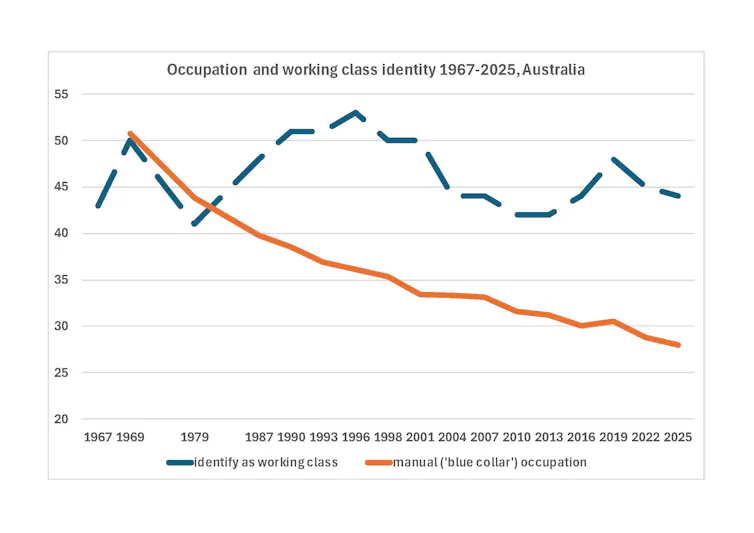
Perhaps the labour parties mistook the decline in “blue-collar” (manual) jobs for the decline of the working class. In Australia, the blue-collar share of jobs fell from 44% in 1979 to 28% in 2025. It’s fallen in the UK, the US and elsewhere.

Union membership, once a mostly “blue-collar” phenomenon, declined in most industrialised countries. It fell from an average of 30% of employees across the OECD in 1985 to 19% in 2005 and 15% in 2023. The fall was even greater in Australia.

But these changes did not reflect how likely people were to identify as working class.

In Australia, national attitude and election surveys give us a good idea of trends in people’s views. Between 1979 and 2007, the proportion of respondents in a standard national survey defining themselves as working class or lower class temporarily grew from 40%, to the low 50s in the 1980s and ‘90s, then back to 44% by 2007. In 2025, after a bit more movement, it was still 44% working class.

A chart with two lines, showing (in red) a gradual decline in blue collar occupations and *b) a variable but relatively flat proportion of peoploe identifying as working class.
Occupation x working class identity. Australian Election Study and Australian Bureau of Statistics, CC BY

A British survey in 1983 found 58% of people claimed to be working class. By 2005, those identifying as working class had barely fallen to 57%. In 2023, still 53% of people identified as working class.

In the US, where the phrase “working class” appeared absent from public discourse for decades until Trump, a differently worded question showed that in 1976, 51% of Americans thought of themselves as either working class or lower class. In 2006, the same survey showed 52% identifying as either working class or lower class. Within this period, numbers had fluctuated from year to year — but always between 48% and 55% expressed working or lower class identity.

A Gallup poll added “upper-middle class” to the options, and the proportion claiming working or lower class status was only 39% in 2006. In 2024, that number was 43%.

In Canada, the proportion identifying as working or lower class was 36% in 1980 and still 36% in 1995. In 2017, a different poll found 37% identified as working class.

In short, while “blue-collar” jobs have sharply declined almost everywhere, the experience of “working class” has been relatively stable, within some fluctuating bounds. Differences in class identity between countries seem more notable than differences over time, perhaps due to how questions are asked or how different cultures interpret them.

This is not to say that giving a “working class” response to a forced-choice survey question is the same as a deeply thought position on class. But if people no longer thought of themselves as working class, you would expect to see some pretty big changes over time in answers to these questions.

How the working class was left behind

Sure, jobs changed, a lot. But there has never been much middle-class glamour in the “white collar” jobs at the checkout counter, behind the hamburger hotplate or in the call-centre factory.

Class relations didn’t weaken. In fact, inequality worsened in many countries. Neoliberal policies, including those adopted by social democratic parties, made the rich much richer, but they slowed the growth in the wellbeing of the majority of people, and left the working class behind.

The proportion that thought big business had too much power, and income and wealth should be redistributed, became larger.

Unions lost ground not because their ideas became unpopular with workers. It simply became much harder for unions to recruit and retain members in the face of increasingly hostile employers, governments and laws.

Working class voters didn’t have solutions to hand. But nor were they offered any by social democratic parties that barely spoke their language. Now the door has been opened to far-right parties, presenting alternatives that appeal to some facing those class problems.

There’s life in class voting yet, just not in the way we thought of it.

The Conversation

Over the years David Peetz has received funding for research from the Australian Research Council, various unions and employers, the Fair Work Commission, state and national governments of both political flavours in Australia and overseas, the International Labour Organisation and the Organisation for Economic Cooperation and Development. He is presently employed by the Centre for Future Work.

❌
AU Conversation