Normal view

Are Australia’s carbon farming schemes just hot air? Hardly – forests are regrowing almost everywhere

Trees take carbon dioxide from the air and turn it into wood, storing it for decades. This is why Australian authorities have made forest regeneration eligible for carbon credits.

The largest carbon farming scheme is known as human-induced regeneration. Here, land owners and managers support forests to return on once-forested land. Every tonne of carbon dioxide soaked up by regrowing trees is worth one Australian carbon credit, about A$37.50.

The scheme has around 42 million hectares of land on its books. But only a third of this area is eligible for carbon credits, as the land has to be assessed as likely to regenerate into forest under changed management.

In recent years, some projects have come under fire. Researchers have suggested there’s not enough regeneration or that regeneration would have happened anyway. But independent assessment of these claims suggest these concerns are overblown.

As someone responsible for formally reviewing almost 100 of these projects since 2023, I have visited many sites and verified the data. Overall, I found these projects were being managed well – and forests are regrowing.

How does carbon farming work?

Under the rules, the area can’t have been forested for at least a decade before the project starts. It must have a high likelihood of becoming forested and richer in carbon through regeneration.

If left alone, trees will naturally regrow unless something stops them. Grazing by livestock, feral animals and sometimes native animals is the biggest barrier.

Many regeneration projects are in semi-arid areas with limited water. If water is made freely available for livestock, it can lead to surging numbers of kangaroos, wallabies and other native animals that eat regenerating saplings. This is why one method of limiting grazing is removing artificial watering points.

Fencing is another method. Australian and international researchers have found trees and vegetation on degraded land usually regenerate better when behind fences, though not always.

Does it work?

Australian authorities define a forest as an area dominated by trees over two metres tall, with existing or potential taller trees covering 20% or more of the area.

Participants have to prove forests of local tree species exist in the surrounding area, show the land can support forest and that there are sources of seeds. They also have to show evidence the area could be considered forest 20 years or so after the project begins.

Before carbon farmers can earn credits, the evidence they supply is audited and reviewed by teams of independent experts.

As one of these experts, I have reviewed a great deal of evidence and been on site when data was collected by independent ecologists to confirm how accurate tree cover estimates are. They’re not perfect. But they are very good.

If regeneration is too slow or fails, the area can be removed from the scheme. To date, about 6% of the land considered likely to regenerate has been taken off the scheme. Put another way, that means forests are actually regrowing on 94% of the land considered likely to regenerate.

How human-induced regeneration projects are assessed and audited.

Is criticism warranted?

Prominent critics have questioned the link between stopping grazing and regenerating forest. If this critique was accurate, it would mean there was no permanent boost to forests by ending grazing.

They argue instead in favour of only giving carbon credits to projects where trees are actively planted on previously cleared land.

The problem is, planting is relatively expensive and can be limited in scope. Planting also requires great care in tree species selection and genetics.

By contrast, removing pressure and allowing forests to naturally regenerate avoids these issues. Natural regeneration can also work in areas where planting and tree management would be expensive.

The critics used national-scale maps of woody vegetation to argue tree cover on some projects was falling short.

But as other experts have pointed out, these criticisms don’t stack up. The maps and models they rely on underestimate tree cover, compared to local and precise data gathered by aircraft with high-resolution scanning lasers.

When regeneration areas are independently assessed using similar gold standard methods, almost all show clear signs of regenerating forest.

Where does this leave us?

Worldwide, there are very real and well documented problems with carbon credit schemes intended to protect or restore forests.

This is why it’s important to scrutinise Australia’s human-induced regeneration scheme and others like it. But not all criticisms are valid.

The good news is, gold standard data gathered by participants cross-checked with regular on the ground audits and reviews show the scheme is largely working.

Regeneration can be slow, even after livestock have been removed. Some heavily degraded areas may not regenerate at all. But overall, it is leading to more forests and more carbon stored.

Under Australia’s carbon credit rules, all methods of producing credits expire after ten years. As a result, the human-induced regeneration scheme closed to new participants in 2023. Policymakers are working on new nature-based solutions to store carbon and boost wildlife on privately managed land.

But for the foreseeable future, forests will quietly regrow on huge tracts of land – and their successes and failures will be tracked and measured to make sure Australia has more trees than it would have otherwise.

The Conversation

Cris Brack subcontracts to ANU Enterprise to deliver regular independent reviews of the Human Induced Regeneration program. He has no current research grants but previously received income to help develop Australia’s National Carbon Accounting System (NCAS) and advise industry and government about sustainable natural resource management.


A High Court ruling could allow hundreds of former detainees to sue the government. A legal expert explains why

For nearly 20 years, the Commonwealth operated under the mistaken assumption that it was allowed to hold people in immigration detention indefinitely. In 2023, the High Court’s landmark ruling confirmed otherwise.

We are now about to see the fallout of those events, with the government facing potential civil liability to people who, as it turns out, were unlawfully detained.

A new High Court judgment in a case called Abdel-Hady vs the Commonwealth has left the door open for a man who was unlawfully detained to sue the government for compensation, potentially allowing hundreds of others to do the same.

How did we get here?

The legal history traces back to a 2004 High Court case. That case found that the Migration Act allows the government to detain unlawful non-citizens until they were deported, even if there was no realistic prospect of deportation (for example, if no other country would accept them).

For a person who had nowhere else to go, this effectively led to indefinite detention.

In a 2023 decision, often dubbed the NZYQ case, the High Court reopened and overruled that earlier case on constitutional grounds. The upshot was that the government had, for some time, been relying on an invalid law to detain a person where there was no foreseeable prospect of deporting them.

Without legal authority to detain, the Commonwealth faces potential liability for false imprisonment. This tort (a civil wrong) provides compensation if a person, including a government official, detains someone without lawful authority.

It is relatively clear that people held in immigration detention have been “detained” in the legal sense. Since the NZYQ case, it also seems relatively clear that this detention was unlawful if there was no realistic prospect of deportation.

What did the court find?

This is where the new decision becomes relevant.

Safwat Abdel-Hady came to Australia from Austria in 1997. He lived here on a visa until it was cancelled on character grounds in 2017, leading to his detention. He commenced proceedings in 2021 challenging the legality of his detention and seeking compensation.

Abdel-Hady has a health condition that makes it dangerous for him to fly. The Commonwealth eventually came to accept that, from at least July 2022, there was no foreseeable prospect of deporting him. He was released in 2024 after the Commonwealth consented to court orders which ruled his detention for that period had been unlawful.

This left just the civil part of Abdel-Hady’s claim unresolved. With no real dispute about whether he had been unlawfully detained, the Commonwealth asked the High Court to recognise a new type of defence that would protect the government from liability.

In essence, the government argued that if an official is carrying out their duties under a law that’s previously been found to be valid, that would be a legal defence, even if the High Court later reverses its position.

All members of the High Court gave short shrift to that argument. One of the difficulties, the court said, was that the scope of the defence was ill-conceived.

More importantly, the defence did not sit comfortably with constitutional principle. The court reiterated that it’s a fundamental principle of our legal system that the government only interferes with liberty where it has legal authority to do so.

To recognise this new defence would have essentially transformed the government’s obligation to obey the law into an immunity where the government believes (even for good reason) it is acting within its power. Three judges said this “would amount to an inversion, if not a perversion, of constitutional principle”.

Potentially hundreds of claims

In rejecting the government’s defence, the judgment opens the door for Abdel-Hady and other people in a similar position to proceed with liability claims against the government.

Reports suggest around 350 people were released in the wake of the NZYQ finding. It is unclear how many of these people were actually detained unlawfully, or how many additional people might now be able to bring a claim.

Assuming any of these people are found to have been falsely imprisoned, the scope of potential liability will depend on each person’s circumstances, including the length of their detention and its impacts on them.

Previous false imprisonment claims against government have ranged from very significant awards in the order of hundreds of thousands of dollars all the way down to nominal damages of $1 in situations where detention was inevitable.

It is also possible that the Commonwealth will seek to settle claims rather than litigate, as it has done in previous false imprisonment matters in immigration detention.

Where to from here?

The implications of the High Court overruling its previous judgment in this situation are clearly significant for the government. The High Court only rarely overturns its previous judgments, and there are very important constitutional reasons why the High Court needs the ability to do so.

For the government, the matter may be an expensive lesson on the risks inherent in passing legislation that gives wide-ranging detention powers to the executive. Later regulatory workarounds have also been challenged and struck down.

As the High Court observed in this case, it was (and remains) open to government to manage or ameliorate some of those risks through carefully crafted legislation.

The case highlights the difficult position that government officials face when seeking to enforce a law that they believe to be valid, but later turns out not to be. But as Justice Michelle Gordon observed, to excuse the government from liability in this case on grounds of unfairness would simply shift the burden from the government to the unlawfully imprisoned person.

The Conversation

Ellen Rock is affiliated with the New South Wales Legislative Council Delegated Legislation Committee as an independent legal adviser.

A compelling biography of A.D. Hope asks us to rethink his literary legacy

A.D. Hope. National Archives of Australia, CC BY-NC-ND

I began teaching Australian literature not long after the death of Alec Derwent (A.D.) Hope (1907-2000). Despite Hope’s canonical status, I – like many – overlooked him, gravitating to writers more engaged with feminist, environmental, postcolonial and decolonial questions, or to those whose poetry was freshly modern, postmodern or experimental. Hope seemed conventional and dated by comparison.

Such assumptions were reinforced by his most anthologised poem, Australia (1943), with its image of the land as menopausal woman:

She is the last of lands, the emptiest,
A woman beyond her change of life, a breast
Still tender but within the womb is dry.

And even allowing for its time of writing, this poem’s silence about Australia’s First Peoples presents a barrier for many readers. In short, why bother?


Review: A.D. Hope: A Life – Susan Lever (La Trobe University Press )


Susan Lever’s compelling biography A.D. Hope: A Life asks us to stop and think again. Well aware of what will strike readers as problematic, Lever prompts us to revisit Hope’s writings. Tracing the life, career and achievement of this “grand old man”, the all-but-forgotten poet and professor, Lever documents his contribution to Australian literary culture during a formative period of postwar nation building.

That the biography yields an excellent cultural history is one of its attractions. But even more arresting is what Lever shows about the philosophical reach, formal brilliance and impassioned force of Hope’s poetry.

It’s the poetry that stands at the core of this biography. The poetry speaks into the gaps left, for instance, by embargoed letters. It dramatises the contradictory aspects of Hope’s life as suburban husband and father, as philanderer and poet-professor, as radio broadcaster for children, as savagely caustic reviewer, and as generous mentor to young writers.

The reverse is also true: we see how the paradoxes shaping his intellect, passions, views and desires are imprinted within and generative of the poetry. This is apparent in both the poetry’s formal design and its content.

Hope’s university education was checkered: a stellar undergraduate career at Sydney, a disappointing third-class honours degree at Oxford, then teacher training. But this period exposed him to psychology, especially Freud, and fostered his love of philosophy, languages and philology. It also inspired his abiding admiration of 17th- and 18th-century poets and satirists like Ben Jonson, Alexander Pope and Jonathan Swift.

Enamoured of this neoclassical literary tradition, Hope resisted the dominant, post-romantic modes and forms of his own time: the personal lyric and free verse. He instead turned towards, and advocated for, the liveliness of discursive forms like the long narrative poem, the satire, the meditation and the epistle.

These, he wrote in his essay The Discursive Mode (1956), allowed for “narrative, drama, excogitation, argument, description”. They were, in other words, forms for thinking with.

The poetry is dark, the poetry is bleak, the poetry is funny, the poetry is joyful. And it is disciplined. Inhabiting a variety of older forms and modes, the poetry is always precise, metrically controlled and rhymed.

At the same time, Hope makes his verses think and speak. His poems voice ideas and questions, canvassing matters that still press on us today:

Go tell those old men, safe in bed,
We took their orders and are dead.

(Inscription for a War, 1971)

Returning to the poetry, we discover that Hope’s invocation and remodelling of traditional forms – of classical, biblical and mythical scenes, and of 17th- and 18th-century texts – is what makes his poetry modernist in form and spirit.

Darkness and bawdiness

Lever’s biography takes us from Hope’s idyllic childhood in Tasmania to his old age as the “great panjandrum of Canberra” (in Patrick White’s vengeful phrase).

In Lever’s telling, productive antinomies recur. Poems drawn from childhood, such as Ascent into Hell and Observation Car from his collection The Wandering Islands (1955), are haunted by darkness and existential dread.

Observation Car recalls a train journey away from home. Not unlike Walter Benjamin’s backward-gazing angel of history, the poet is spellbound, transfixed by receding time as the train hurls him relentlessly onward:

Only the past is assured. From the observation car
I stand looking back and watching the landscape shrivel,
Wondering where are we going and just where the hell we are.

Yet Observation Car also contains images that objectify women’s bodies, a pattern that recurs elsewhere in Hope’s poetry. His bawdy verse satires, penned during and beyond his student years, together with his ongoing preoccupation with sexuality, earned him the nickname of “Phallic Alec”.

Cover of A.D. Hope first book of poetry The Wandering Islands (1955)

In his more serious and sophisticated poems, like The Double Looking Glass (1963), women’s bodies are still subject to the male gaze. Even so, as implied by its title, the looking glass is double, refracting many layers.

Lever is not an apologist. But her account persuades us that at least some of these poems dramatise intense struggles with masculinity, sexuality and desire. “Readers do not need to look far to find patriarchal positions or failures of taste in Hope’s poetry,” she writes, “but his best work examines sexuality in a way that reveals the poet’s own struggles to understand it.”

Hope’s poetry can be read both ways at once: as objectifying and as self-implicated. And though Lever chooses not to dwell on gossip, her account shows the importance of Hope’s various love affairs for his poetry.

Hope’s sensibility, Lever suggests, aligned with that of a key cohort of mid-century writers, internationally and across the political spectrum, who felt “that a return to tradition in art was essential to preserving social order”. This suggestion doesn’t dislodge, but it does reframe, Hope’s reputation as conservative and out of date.

At the same time, the biography highlights the lucidity and feeling of his poetry’s response to the modernity of his own time, and perhaps ours.

One of Hope’s recurring questions concerns the role of the poet in secular, scientific modernity. Inspired by the University of Sydney philosopher John Anderson, Hope soon shed the religiosity of his Presbyterian upbringing for atheism and scientific materialism. But the biography unfolds a paradox: in life and in poetry, he sought spiritual meaning that might square with science.

For Hope, poetry, like music, is sourced in mystery. This is dramatised, for instance, in his polyphonic poem, Vivaldi, Bird and Angel, Or, Il Cardinello (1972):

Somewhere beyond this frame of natural laws,
Moving in time on its predestined grooves,
I hear another music to which it moves.
Wherever I go, whatever I do, I seem
To step in time to that resistless stream
And though, I trust, a rational man, I vow
I heard it as a child, I hear it now;
With every year I live, it sounds more clear,
More vast, more jubilant to the inward ear;
Beyond my power to imagine or invent
That choir of being, or this sole instrument
Of my response to that invisible world.

The Australianness (or not) of Hope’s poetry is, thankfully, not at issue in Lever’s biography. We are reminded, too, of Hope’s impatience with hackneyed settler tropes of the bush. This rejection of parochialism seems yet another mark of his modernity.

With publication of The Wandering Islands, his late-arriving first book of poetry, Hope won international as well as national recognition. Even so, Lever’s biography registers the consequences of Australia’s distance from the literary centres of London and New York.

Hope’s poetic mode runs in tandem with that of other poets of his time, notably with the work of W.H. Auden. Lever does not argue, in line with some earlier commentators, that Hope was influenced by Auden. But her biography assures us that he did read Auden’s poetry, along with that of many of his contemporaries.

Hope’s poetry is both like and unlike Auden’s “iceberg verse”: it is “tidy” like Auden’s, and metrically disciplined, even clinical, but it is neither “cold” nor “oblique”.

Persistence, poise and acumen

Reading Lever’s account makes it clear that, despite difficulties, interruptions and constraints, Hope’s academic life and poetry wove together. His public lectures and literary essays, his outreach through teaching and broadcasting, his sometimes vexed networks, his friendships with the literary luminaries of his day (Douglas Stewart, James Macauley, Judith Wright, Leonie Kramer, Rosemary Dobson, James Macauley, among many others) and with politicians and prime ministers – all this put Hope at the centre of Australian literature in the cultural heyday of its study and professionalisation.

Susan Lever makes clear how A.D. Hope’s life and poetry were woven together. Georgie Greene/Black Inc.

That this is the first biography of Hope, appearing more than two decades after his death, borders on shocking. It is a gift for which we should be grateful, especially given the precarity, in these “job-ready” days, of literature – let alone Australian literature – as a subject of university teaching and scholarly investment.

Taking on such a project against the odds required persistence, fortitude, poise and critical acumen. These are the very qualities that make Lever’s biography shine. Clear eyed about her subject, she is intelligently sensitive to Hope’s life; she shows us the brilliance of his poetry’s form and language, and the liveliness of its thought and feeling.

Returning to Hope’s poetry after reading the biography, I found much to enjoy and admire. The late poem A Swallow in the House (1991), for example, describes a familiar situation in order to generate a question of startling applicability today. The bird, trapped inside the house, is baffled by the transparency of the window. The familiar “yielding element” suddenly “becomes a wall”. And so:

We drop bewildered, not knowing why we fall.
What in my house, what perhaps in my century
Waits to baffle us all? We can only wait and see.

The poem recognises our blinkered presentism. Gesturing to things invisible yet in plain sight, it prompts us to ask what we, in the common sense of our contemporary moment, might fail to see, understand or appreciate.

The Conversation

Brigid Rooney does not work for, consult, own shares in or receive funding from any company or organisation that would benefit from this article, and has disclosed no relevant affiliations beyond their academic appointment.

AI at the World Cup: smarter tactics, healthy players, safer crowds – but new risks

With 48 teams and 104 games across 16 host cities and three countries (the United States, Canada and Mexico), this year’s FIFA World Cup is projected to be the biggest sporting event ever in terms of attendance, revenue and global viewership.

It also promises to be the most technologically advanced, and artificial intelligence (AI) in particular will touch almost all aspects of the tournament.

This reflects a growing use of AI in soccer and across elite sport, with tools being applied not only to optimise athlete performance but also enhance match officiating, event security and fan experience.

Let’s look at how AI will be used in the World Cup, who may benefit and what risks could emerge.


Read more: We tested the new World Cup ball – this is what you need to know about how it will fly, dip and swerve


How it will be used on the pitch

In our review of AI use in soccer we found various ways it can assist on the pitch:

  • tools to support player, team and match evaluation
  • forecasting of match outcomes and in-game events (such as expected goals and assists, corners, passes, opposition tactics)
  • monitoring athlete workload
  • injury prediction and detection
  • talent scouting.

At the World Cup, coaches will use AI alongside more conventional data to inform how they approach each game, including what opposition strengths they need to negate and what weaknesses they can exploit.

Similarly, high performance staff will use AI to monitor player health and wellbeing, and forecast potential injuries.

The dreaded penalty shoot-out is one area where AI will have a direct influence. Teams will use AI to synthesise historical data to provide insights on goalkeepers and penalty takers’ likely strategies.

A key benefit is the speed at which these analyses can be undertaken. What used to take days of old-fashioned human legwork can now be done in hours, even for entire squads.

Should a game go to a shootout, AI could very likely influence the winning kick or save.

What about referees?

Match officials will also be supported by AI.

While semi-automated offside technology was introduced in the 2022 World Cup, it will be enhanced through the addition of AI-enabled 3D avatars of every player. The aim is to improve referees’ decision accuracy through the use of more precise body dimensions of the players involved.

The avatars will also be used to provide more engaging content when Video Assistant Referee (VAR) decisions are shown to fans. Rather than seeing only generic figures, fans will now see realistic avatars incorporating players’ faces, kit and even their hairstyle.

Another use in match officiating will be referee view technology, which uses body cameras to capture in-game footage from the referee perspective. AI will be used to stabilise images, with the emphasis on enhancing the fans’ immersive experience.

What about off the field?

Crowd management and logistics are other areas where AI will be deployed.

FIFA has built an “Intelligence Command Centre” – which will connect data across matches, venues and broadcasters – as well as digital twin models of stadiums to monitor and forecast crowd behaviour.

This will aim to ensure crowd-related issues such as bottlenecks are controlled.

Are there any risks?

While there are many benefits, a broad spectrum of risks will need to be managed.

Key concerns with AI tools are substandard outputs, and loss of skills and meaningful work for humans. To combat this, teams should ensure AI is only used to support human decision making, not replace it.

Data privacy and security will be key concerns, with the possibility of confidential or sensitive information being leaked or accessed by unauthorised or malicious actors. The use of AI in areas such as security and crowd management could also provide the opportunity for highly disruptive cyber attacks.

Equality could be an issue: teams with more financial power may have an advantage through more sophisticated tools.

In an attempt to level the playing field, FIFA has introduced Football AI Pro, an AI tool available to all teams. This soccer-specific large language model supports both pre- and post-match analysis and provides access to more than 2,000 metrics.

The aim is to ensure all nations have access to at least some level of AI support. It remains to be seen which nations actually use it.

Another potential adverse outcome is tactical homogenisation, where games become predictable because every team follows the same AI-generated game plan.

Sadly, AI will likely be deployed for nefarious purposes, for example as part of ticketing scams through AI-generated images, deepfakes, websites and phishing emails. Fans should take care at all times.

AI will be everywhere

AI is fast becoming a key component of high performance sport. It will be leveraged throughout the tournament to support preparation, performance and recovery.

While it could increase the gap between larger and smaller nations, it might also give smaller nations a new edge.

So could 2026 be the year in which AI genuinely contributes to a World Cup win? We won’t see an AI agent scoring a goal, or a robot coach calling the shots (at least not yet) but there is no doubt the winner of the tournament will have relied on AI along the way.

In terms of who that will be – well, we could always ask AI.

The Conversation

Paul Salmon receives funding from the Australian Research Council

Isaiah Jesse Elstak receives Commonwealth funding through an Australian government research training program scholarship.

Scott McLean does not work for, consult, own shares in or receive funding from any company or organisation that would benefit from this article, and has disclosed no relevant affiliations beyond their academic appointment.

Mosquitoes learn to link the smell of DEET with a blood meal – new study

Chris F/Pexels

Mosquito repellents are key to protect ourselves from mosquito bites and the pathogens they might carry. The most widely used active ingredient in insect repellents is N,N-diethyl-meta-toluamide, commonly known as DEET.

Highly effective, long-lasting (approximately five hours) and cheap to make, DEET is a gold-standard insect repellent. But even though it was developed more than 80 years ago, there are important gaps in our understanding of how DEET actually works.

A new paper in the Journal of Experimental Biology led by Claudio Lazzari from the University of Tours, France, now shows mosquitoes can be conditioned to be attracted to DEET.

This provides an important piece of the puzzle in our understanding of how DEET works, and hints that this important mozzie repellent could have a vulnerability.

A vital tool that’s not fully understood

Insect repellents are a major method of protection against mosquito-borne diseases including malaria, dengue, chikungunya, Ross River virus, Japanese encephalitis virus and more. Many of these diseases are expanding on a global scale due to travel, urbanisation and climate change.

Female mosquitoes transmit parasites and viruses when they feed on vertebrate blood, which they need to provide proteins for egg development. To find their next blood meal, mosquitoes are strongly attracted to odours and physical cues emitted by warm-blooded “hosts”, including humans.

These include carbon dioxide we exhale, lactic acid in our sweat, and a complex combination of other chemicals that varies between people. Mosquitoes detect all these with sensory organs located in their antennae, proboscis (the pointy mouth part they use to suck blood) and the maxillary palps that flank it.

DEET has been in widespread commercial use since the 1950s, but there’s a lot of scientific debate over how exactly it works as a mozzie repellent. Is it blocking the odour of the host, is it toxic to the mosquito, or something else?

In 2008, groundbreaking research showed DEET blocks the response of sensory neurons to host odours in mosquitoes and vinegar flies. This means DEET is likely “confusing” the mosquito rather than repelling it. A couple of years later, scientists found a small portion of mosquitoes exposed to DEET are insensitive to it, and it’s a heritable trait.

This means mosquitoes do have a physiological response to DEET. But there are also signs some of the mozzie reactions are behavioural. In one study, mosquitoes exposed to DEET were less sensitive to it if exposed again within three hours. This hints they can temporarily get used to the chemical.

A man spraying his arm with insect repellent outdoors.
DEET may not be fully understood, but it’s a vital tool in protecting ourselves against mosquito-borne diseases. Chalabala/Getty Images

What did the new study find?

The new study shows it’s possible to condition mosquitoes to bite more if they’re repeatedly exposed to DEET during a blood meal. Not only does this tell us more about how it repels mosquitoes, but it raises the prospect mosquitoes may actually be attracted towards DEET in some cases.

First, the researchers developed a behavioural test. They kept mosquitoes in tiny cages and moved a food target (a warm bag of blood) towards them, recording proboscis movements when they sensed the target. This was the “biting attempt response”.

To test things further, the team ran a classical conditioning experiment. Mosquitoes were run through one of five “training programs” exposing them to various combinations of an unconditioned stimulus (heat), a conditioned stimulus (short exposure to DEET in a plume of air) and a reward (a short opportunity to feed on blood).

Here’s where it gets surprising. The mosquitoes whose training program included a squirt of DEET while they were already feeding on blood, afterwards had a significantly higher biting response when exposed to DEET again.

If the mosquitoes were exposed to DEET before being offered the blood bag, none of them tried to bite it.

Then, one of the researchers boldly offered her hands up for testing. One of the hands was treated with DEET. About 50% of the mosquitoes who went through the DEET-blood meal training program tried to bite the hand coated in DEET. By contrast, 100% of untrained mozzies avoided the hand covered in DEET and went for the clean one instead.

What does all this mean?

It’s well established mosquitoes can learn and retain information. What they learn about hosts and their environment can in turn have an impact on disease transmission.

This study indicates DEET doesn’t just affect mosquitoes physiologically. There’s a cognitive response as well, which could be an important part of how it works.

The authors raise the possibility – if the concentration of DEET is not high enough to repel mosquitoes but they still sense it during a blood meal, would these mosquitoes then be more likely to bite people who smell of DEET?

It’s important to note the study happened in highly controlled lab conditions, and the training program the mozzies underwent may not reflect everyday scenarios. Future studies should try and come up with test conditions that better represent real-world situations to see if these results hold up.

At a time when mosquito-borne diseases are on the rise, DEET still provides highly effective protection. What this study contributes is an improved understanding of how DEET works – and how we might improve insect repellents in the future.

The Conversation

Leon Hugo does not work for, consult, own shares in or receive funding from any company or organisation that would benefit from this article, and has disclosed no relevant affiliations beyond their academic appointment.

Interest rates look set to hold, after inflation and fuel costs fell in April. But it’s unlikely to last

Inflation actually fell in Australia last month, thanks to temporary government fuel discounts that saw fuel prices come down by 7% from their record peaks in March.

New Australian Bureau of Statistics figures show the monthly consumer price index (CPI) rose 4.2% in the 12 months to April 2026 – down from 4.6% in March and lower than market expectations.

However, the underlying picture was less reassuring.

The closely watched “trimmed mean” measure rose to 3.4%, up from 3.3% a month earlier. (The trimmed mean is the average rate of inflation after “trimming” away the items with the largest price rises or falls, leaving the weighted average of the middle 70% of items.)


Australia’s latest inflation figures will give the Reserve Bank a reason to hold interest rates steady at its June 15-16 meeting, but not a reason to relax about inflation.

With fuel prices still much higher than before the Middle East war began, the risks of further spikes in inflation and more rate rises this year have not gone away.

How fuel discounts helped cool inflation

When oil prices surged following the war in Iran, which began on February 28, the immediate effect was obvious: petrol became more expensive, soaring nearly 33% higher in March.

The new ABS data showed fuel prices actually fell 7% in April. On April 1, the federal government dropped its fuel excise by around 32 cents per litre from April 1, as well as cutting road user charges for heavy vehicles.

Both of those discounts are set to end on July 1. The government is yet to decide whether to extend them.

But central banks worry less about the initial jump in fuel prices than about how higher transport and energy costs are feeding into many other prices across the economy.

Spreading oil price shocks

According to the new data, the largest contributors to annual inflation were housing, up 6.3%, transport, up 6.6%, and food and non-alcoholic beverages, up 2.8%.

These are essential parts of household budgets, which helps explain why inflation still feels acute for many families even as the headline rate has eased.

At the same time, the rise in trimmed mean inflation to 3.4% suggests price pressures are not limited to a few volatile items in the basket of goods used to measure inflation in Australia.


Read more: What exactly is inflation, and are interest rates the only option for dealing with it?


In a speech last week, Reserve Bank Assistant Governor Sarah Hunter warned this was exactly the risk policymakers were monitoring.

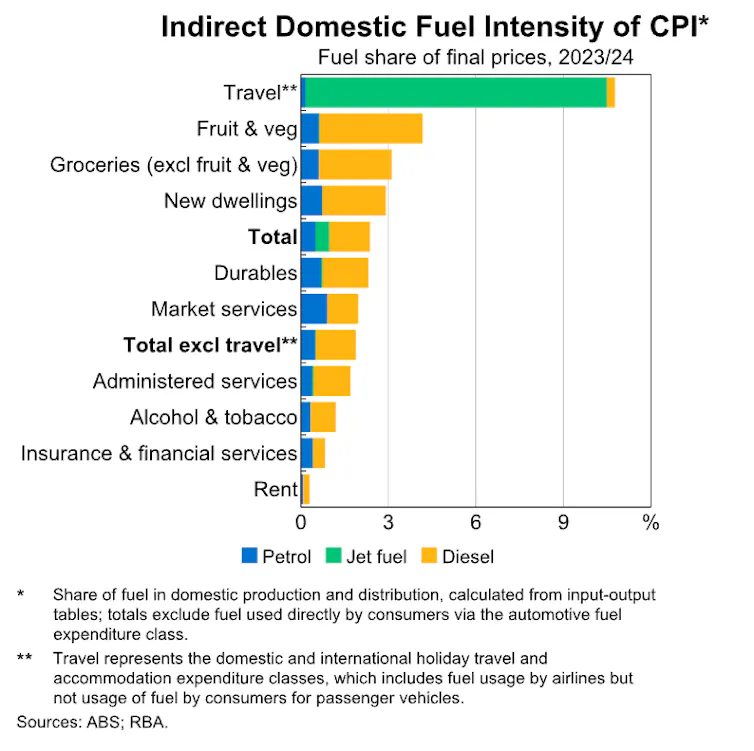
Hunter noted fuel accounts for around 2–2.5% of the cost of producing and distributing other goods and services in the CPI basket. Travel, transport and postal services, grocery items (particularly fruit and vegetables) and new home construction are all especially exposed, as Hunter highlighted with this chart.

The parts of Australia's economy most exposed to oil prices, led by travel, grocery items like fruit and vegetuables and new home construction.
The parts of Australia’s economy most exposed to oil prices, according to the Reserve Bank. RBA, May 2026

Oil also affects inflation indirectly through global supply chains of fertilisers, plastics and other industrial inputs. So higher oil prices can eventually feed into the prices of imported goods that are not obviously energy-related.

A likely interest rate hold – for now

Last month, Reserve Bank of Australia (RBA) Governor Michele Bullock warned more interest rate hikes may be on the way to fight inflation and get it back to the bank’s target of between 2–3%.

April’s softer-than-expected headline inflation number of 4.2% will reduce the case for another immediate rate rise at the bank’s June 15-16 meeting.

However, the rise in underlying inflation to 3.4% means Bullock is unlikely to sound relaxed after that meeting. Its concerns about “second-round effects” from higher oil prices have not gone away.

The Reserve Bank now faces a difficult balancing act. Higher oil prices reduce household purchasing power and slow growth. But if businesses pass rising costs through more broadly, inflation may stay above its 2–3% target for longer. That is the classic “stagflation” dilemma central banks fear.

In its May statement on monetary policy, the Reserve Bank revised up its inflation forecasts, saying it expected headline inflation to peak at 4.8%, while underlying inflation is projected to reach 3.8%. That suggests policymakers expect the oil shock to have a more persistent effect over coming quarters.

The Reserve Bank has already increased rates three times this year, lifting the cash rate from 3.6% to 4.35%.


There are now signs the economy is softening, giving the bank’s board more reason for pause.

The latest labour force data showed the unemployment rate rose to 4.5% in April, its highest level since December 2021. This is happening as households are under pressure from high interest rates, weak real income growth and elevated living costs.

Together, these figures strengthen the case for the Reserve Bank to keep rates on hold in June. But the rise in trimmed mean inflation means the Bank is still likely to emphasise caution, rather than signal Australia’s inflation problem has passed.

Looking ahead

The next few months will be critical. If global energy markets stabilise and supply disruptions ease, some inflation pressure could fade relatively quickly. That would give the Reserve Bank more confidence that inflation is moving back towards 2–3%.

But if oil prices remain elevated, or if businesses keep passing higher transport, freight and import costs through to consumers, the inflation problem could become more persistent.

The Reserve Bank is particularly alert to the possibility that repeated global inflation shocks – first the COVID pandemic, then supply chain disruptions, and now oil prices – may gradually change how businesses and households think about inflation itself.

That is why the Reserve Bank’s focus is shifting from the direct impact of higher petrol prices to the broader behavioural response across the economy.

Today’s data was therefore reassuring, but only up to a point. The headline number was better than expected. The underlying number was not.

That’s why the Reserve Bank will be cautious about declaring victory too early.

The Conversation

Stella Huangfu does not work for, consult, own shares in or receive funding from any company or organisation that would benefit from this article, and has disclosed no relevant affiliations beyond their academic appointment.

What ‘biodegradable’ packaging really means – and 3 key questions to ask about it

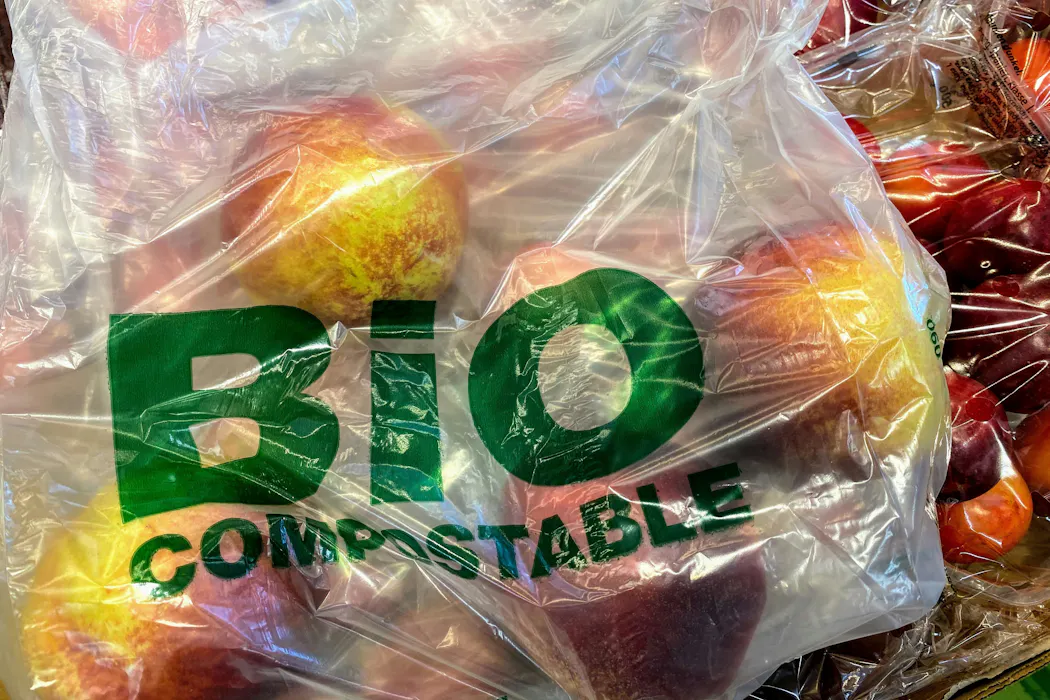
John Cameron / Unsplash

“Biodegradable” has become one of the most reassuring words in modern packaging. It appears on coffee cups, shopping bags and food containers, implying a promise: this product is better for the environment because nature will eventually take care of it.

However, biodegradability is not a simple yes-or-no property. It exists in shades, which we can measure.

Biodegradation is a complex process. Microbes and molecules present in an environment such as soil attack a material and digest it, much like what happens to food in our gut.

A material is typically defined as biodegradable if it is digested “well” by the environment in which it is placed. The more mass the material loses during digestion, and the more carbon dioxide it produces, the more biodegradable it is.

Different environments digest materials in different ways. Temperature, sunlight, oxygen, moisture and microbial diversity all influence how quickly materials degrade.

Even the most rigorous testing cannot fully capture the complexity of the real world – but it can help guide our choices.

Biodegradability is relative

In the lab we can simulate environments such as landfill, home compost bins and industrial compost facilities. If we understand in which settings a material breaks down better, we can tell the consumer how to best dispose of it and prevent pollution and other issues.

A material that decomposes quickly in an industrial composting facility may persist for years in the ocean or landfill.

Industrial composting systems maintain elevated temperatures, controlled aeration and consistent moisture. Hot, moist and oxygen-rich conditions generally aid biodegradation but they are not easy to come by in a backyard compost bin.

Home compost systems are typically cooler and more variable. The result: a material certified for industrial composting may not break down effectively at home.

Take polylactic acid (PLA), a biodegradable material generally considered to be a greener alternative to common plastics (like PET). PLA can biodegrade effectively in an industrial composting system. With temperatures above 60°C and controlled moisture, oxygen and microbial activity, microbes can convert PLA into carbon dioxide, water and biomass in just a few days.

Outside these conditions, the story changes. If PLA ends up in landfill, decomposition can be slow because oxygen is limited. In rivers or marine environments, it may persist for years and act as a raft for “alien” species. In your compost bin or worm farm it might disappear in a few months.

Time for standards

There are many ways to measure biodegradability. One common series of tests, OECD 301 assesses “ready biodegradability” in different environments as a material’s ability to biodegrade around 60% within 28 days under controlled conditions.

Industrially compostable materials are tested under very specific conditions. Standards such as EN 13432, used in Europe, assess whether packaging can successfully break down in industrial composting facilities.

To meet the standard, at least 90% of the material must biodegrade into carbon dioxide, water and biomass within six months. These tests typically involve elevated temperatures, controlled aeration, and moisture.

Most biodegradable plastic materials do not disappear cleanly. Instead, they fragment into progressively smaller particles before fully breaking down. During this period, the fragments will continue interacting with organisms and ecosystems.

Compost bins too can get indigestion

Biodegradability standards are helpful for consumers and waste regulators. Nevertheless, they are limited. They often do not test how much of any given material a specific disposal system can sustain at any one time.

This is an important parameter to take into account. Take food waste. When large quantities of food lie in landfill without oxygen, they generate methane, a greenhouse gas far more potent than carbon dioxide over short timescales.

Other biodegradable materials are no different and can throw out the balance of an ecosystem such as your compost bin, if added in excessive quantities.

Introducing certain materials to a compost bin might also cause certain microbes to thrive and others to suffer, sometimes with unintended consequences, such as making your compost bin smell bad.

In the future, biodegradability tests will likely be paired with ecotoxicity assessments, to help us understand whether a material breaks down safely and without generating harmful byproducts or microbial imbalances.

What can we do?

Few of us have an industrial composting facility nearby to take care of biodegradable materials. Industrially compostable products such as coffee cups often end up sent to landfill alongside conventional waste.

This does not mean individuals are powerless or that biodegradable materials are inherently bad.

You can start by checking local council guidance and choosing products certified for the systems available in your area, or your compost bin.

Ask yourself:

  • is this product home compostable or only industrially compostable?

  • is there infrastructure locally that can process it?

  • has it been independently certified?

As for industrially compostable coffee cups, check that you can return cups to participating cafes. They should not be placed in standard recycling bins or food and organics bins as they are considered contaminants. If unsure, place them in a bin destined for landfill.

Ultimately, the most sustainable option remains a reusable washable cup.

These may seem like small actions but they help push packaging design and waste systems toward greater transparency and accountability.

Moving beyond simple labels

As consumers, we want to make educated choices about their purchases and how they can be disposed of.

For now, we have simple labels. In the future, we will hopefully have more complete information about how materials degrade in industrial composting facilities, home compost bins, soil, freshwater, sea water and landfill sites.

Biodegradable materials offer clear advantages over highly persistent materials, but the term “biodegradable” should not be mistaken for environmentally harmless.

Let’s just remember that a biodegradable material released in the wrong place, at the wrong scale, or under the wrong conditions may behave not very differently from a non-biodegradable material.

Understanding the shades of biodegradability moves the conversation beyond simplistic labels. Nature can break many things down, eventually. The more important question is whether it can do so without getting indigestion.

The Conversation

Alessandra Sutti has received research funding from the Australian Research Council, the Marine Bioproducts Cooperative Research Centre, the Innovative Manufacturing Cooperative Research Centre and by companies participating in associated projects such as the ARC Research Hub for Functional and Sustainable Fibres and the ARC Training Centre in Sustainable Material and Responsible Technologies for Packaging (SMaRT-Pack), as well as from industry partners associated with these grants, such as HeiQ Pty Ltd, Xefco Pty Ltd, C. Sea Solutions Pty Ltd (trading as ULUU) and Simba Global Pty/Ltd. Alessandra is a paid member of the HeiQ Innovation Advisory Board, is a member of the American Chemical Society and serves as a volunteer member on Standards Australia ME-009 Committee (Microplastics). She collaborates closely with The GLOBE Program (through GLOBE Italy), The University of California Berkeley and San Francisco State University, co-developing microplastics monitoring protocols and is involved in environmental education programmes.

Martin Zaki does not work for, consult, own shares in or receive funding from any company or organisation that would benefit from this article, and has disclosed no relevant affiliations beyond their academic appointment.

National wants to scrap sexual offender character references. Should NZ go further?

Lakeview Images/Getty Images

Stopping judges from considering “good character” references when sentencing sexual offenders – as New Zealand’s National Party has pledged to if re-elected – may sound like a niche legal reform.

But it targets a real and longstanding issue in the country’s criminal justice system – and one that has drawn renewed public attention and debate over recent months.

In the courts, character references are typically used to show a defendant has no prior history of similar offending. Lawyers may point to the absence of previous convictions and present supportive letters describing the assault as out of character.

Such evidence can be introduced by defendants convicted of – or pleading guilty to – sexual offending in a bid to reduce their sentence, alongside other mitigating discounts that judges can apply under the Sentencing Act.

National argues that its proposed reform, which comes alongside a separate petition and campaign, would lead to tougher sentences and stop offenders benefiting from their personal reputation or social standing.

Some defence lawyers, however, have argued judges already treat such evidence cautiously in serious sexual offending cases, and warn that removing it entirely could undermine the principle that courts should consider all relevant circumstances at sentencing.

In any case, the move would represent a meaningful change. But the discussion also raises wider questions about New Zealand’s sentencing framework itself – particularly when it comes to how much discretion judges are presently given.

The problems with ‘good character’ references

As Justice Minister Paul Goldsmith noted when announcing the move last month, good character references are often used to argue the offending was “the exception, not the rule”.

In sexual violence cases, this can involve employers, relatives or community figures portraying the defendant as an otherwise respectable person who made a one-off mistake.

Rape cases, particularly, illustrate the flaws in this type of reasoning. Presenting evidence of a defendant’s good character can reinforce the myth that there is a meaningful distinction between a “real rapist” and someone who has merely committed rape.

This framing also risks minimising the seriousness of sexual violence and obscuring the reality that most rapes are committed by someone known to the victim, often in private places and with little or no physical force.

Another problem is that this evidence can be deeply retraumatising for victims, who may have to watch the sentencing judge consider – and sometimes even credit – claims that the assault was less serious, or rather something more akin to a misunderstanding.

If the policy choice is between continuing to treat prior “good character” as mitigation in sexual violence cases, or scrapping it, the latter would arguably appear the sensible call.

But abolishing this single mitigating factor from the Sentencing Act – at least as it applies to sexual offences – still leaves many other issues within the legislation to address.

The case for wider reform

In another development last month, an advisory group was established to bring lived experience and leadership expertise into government decision-making around family and sexual violence prevention.

While this marks an important step, overseas experience suggests New Zealand could go much further in reforming its sentencing system.

Countries including the United States, the United Kingdom, Canada and many Australian states, for instance, use sentencing commissions to develop formal sentencing guidelines.

These bodies draw on expertise from criminology, psychology, statistics and criminal law to analyse research and sentencing data, then produce guidance on how different offences and offenders should be sentenced.

The resulting guidelines help to eliminate disparities across offences, offenders, judges, and geographic regions, while also ensuring transparency in sentencing policy. They also tend to rely more on evidence and risk-based assessment than on broad and often ambiguous factors gradually developed through court decisions.

By contrast, two-decade-old Sentencing Act appears antiquated.

Aggravating and mitigating factors referenced within the legislation are often intuitive, vague and morally framed, rather than being clearly defined or grounded in evidence.

Importantly, they also provide little meaningful guidance for how judges should apply them consistently across cases involving different levels of harm, premeditation or remorse on the part of the offender.

Leaving sentencing judges with such a high level of unguided discretion risks allowing implicit biases – which all people possess – to influence sentencing decisions.

The result is that subjective assessments about who seems dangerous, remorseful or respectable can end up driving sentencing decisions, rather than being based on consistent, evidence-based assessments of harm, proportionality and risk to public safety.

Removing “good character” mitigation in sexual violence cases may therefore be worthwhile. But if New Zealand wants a better sentencing system, much broader reform is required.

The Conversation

Carrie Leonetti does not work for, consult, own shares in or receive funding from any company or organisation that would benefit from this article, and has disclosed no relevant affiliations beyond their academic appointment.

Online ads are becoming harder to spot – but we’re not powerless to stop it

Gabrielle Henderson/Unsplash

Profound changes are ahead for online advertising. At the recent Google Marketing Live event, the tech giant outlined expanded artificial intelligence (AI) systems for digital ads.

What will that look like? Picture ads integrated directly into your conversation with an AI chatbot. Or a discounted price that only you see because an AI system served it based on your browsing behaviour, intent to buy the product, and what’s available locally. And, of course, generative AI tool suites for producing online ads start to finish.

Meta and ByteDance (parent company of TikTok) have similarly accelerated the rollout of their own AI-driven advertising systems. Meta is expanding tools that automatically generate and personalise ad images, video backgrounds, captions and targeting across Facebook and Instagram feeds.

Facebook is offering tools to create personalised ads based on users’ interests and behaviours. Meta

Bytedance’s TikTok Symphony suite can generate promotional videos, scripts, AI avatars, dubbed voiceovers, and creator-style content from simple text prompts or product links.

At the same time, ads on these social media platforms are becoming harder to recognise. As one example, Instagram and Facebook recently eliminated their familiar “sponsored” labels in favour of smaller “ad” markers.

It may look like a minor interface tweak, but it signals something larger: the steady erosion of clear boundaries between advertising, entertainment, recommendation, and ordinary social interaction.

Dissolving into the flow

Social media platforms have engineered ads to mimic organic content. Just think of influencer and creator partnerships, AI-personalised search results, or brands using memes.

Increasingly, online ads are less of an interruption to the content you consume. Instead, they’re designed to dissolve into the flow itself.

When companies buy advertising space on social media, ads are automatically disclosed as a commercial message. With partnerships and AI-personalised results, the platforms currently offer limited forms of disclosure.

The result is a blurring of the lines. Products, ideas and political messages are spread through ads that look a lot like all other, non-sponsored content. And the less an ad feels like an ad, the more effective it often becomes. This is precisely where public accountability starts to break down.

For several years, researchers like us, working through projects such as the Australian Ad Observatory and the Australian Internet Observatory, have documented how difficult it already is to observe and analyse online advertising systems.

Our work has examined everything from political advertising and astroturfing campaigns, the marketing of alcohol and unhealthy foods, and the veracity of “green” claims made by advertisers.

In many cases, this work depends on relatively simple but crucial forms of signalling. Researchers need to know what counts as an advertisement, who paid for it, where it appeared, and why it was shown to particular audiences.

But those signals are weakening.

Blurry and harder to audit

A blurred system is harder to audit. Audiences should be able to recognise when they’re targeted with ads. Without clear ad disclosures, we can’t easily detect or question commercial influence in our feeds and search results.

New AI tools intensify this challenge. Instead of seeing discrete ads in your feed, you might be getting a stream of product suggestions and discounts nobody else sees. This means regulators and researchers can’t even audit them.

These personalised, disguised ads could also make product recommendations that are biased and potentially harmful. For instance, you might be telling an AI assistant that you’re stressed, and suddenly be offered a discount on a case of wine.

AI-driven dynamic advertising is highly concerning for products that are unhealthy, harmful or regulated – such as alcohol and gambling. If ads appear one moment and are gone the next, it’s almost impossible to make sure they comply with relevant regulations.

The danger is not simply that users may encounter more advertising. It’s that the underlying commercial and promotional logic and messaging become even harder to see.


Read more: OpenAI will put ads in ChatGPT. This opens a new door for dangerous influence


We’re not powerless

Australia’s emerging digital duty of care framework offers an opportunity to confront this problem directly. Much of the current discussion has focused, understandably, on harms such as misinformation, scams, abuse, or risks to children.

But opaque advertising systems are also a public interest issue. They shape political communication, consumer behaviour, health information, financial decision-making, and civic trust.

If platforms increasingly profit from blurring advertising and ordinary communication, then stronger positive obligations around disclosure and transparency become essential.

Minimum disclosures for digital advertising on social media should include:

  • consistent and clear human and machine-readable advertising labels across formats and services
  • accessible ad archives for public-interest scrutiny, including AI variations
  • inclusion of meaningful and accurate information about targeting and delivery, and
  • clear identification of AI-generated or AI-mediated advertising, including specifics on how AI was used.

This is not about banning advertising. Nor is it about returning to some imagined “clean” internet untouched by commerce. Advertising has always adapted to new media and will continue to do so.

But there’s a fundamental difference between visible persuasion and persuasion that disappears into the infrastructure.

Without clear signals on what is and isn’t an ad, we lose one of the few remaining ways to understand who is shaping the information environments we increasingly depend on every day.

The Conversation

Daniel Angus receives funding from the Australian Research Council through Linkage Project LP190101051 'Young Australians and the Promotion of Alcohol on Social Media'. He is a Chief Investigator with the ARC Centre of Excellence for Automated Decision Making & Society, and QUT Node Lead for the Australian Internet Observatory.

Nicholas Carah receives funding from the Australian Research Council through Linkage Project LP190101051 'Young Australians and the Promotion of Alcohol on Social Media' and Discovery Project DP250102499 'The Australian experience of automated advertising on digital platforms'. He is an Associate Investigator with the ARC Centre of Excellence for Automated Decision Making & Society. He is Deputy Director of the Australian Internet Observatory and Deputy Chair of the Foundation for Alcohol Research and Education.

Lauren Hayden does not work for, consult, own shares in or receive funding from any company or organisation that would benefit from this article, and has disclosed no relevant affiliations beyond their academic appointment.

‘Some people’s lives matter more than others’: local responders in Sudan feel ignored as the world focuses on other crises

In April 2026, Sudan marked three years of civil war – one of the most ignored humanitarian crises in the world.

This conflict began between two factions that seized power after a coup in 2021: the Sudanese Armed Forces (SAF), led by Abdel Fattah al-Burhan, and the Rapid Support Forces (RSF), a paramilitary group led by Mohamed Hamdan “Hemedti” Dagalo.

The actions of these men have thrown Sudan into the worst humanitarian crisis in the world. It has involved crimes against humanity, genocide, the death of potentially more than 150,000 people, the forced displacement of more than 15 million civilians and 19 million people facing acute hunger.

In one of the most dangerous places in the world, local leaders are putting their lives at risk to provide humanitarian assistance within their communities.

These volunteers have formed Emergency Response Rooms or غرف الطواريء to coordinate, resource and carry out life-saving assistance. They describe being motivated by nafeer – a Sudanese tradition focused on a “deep sense of social responsibility” and “collective volunteerism”.

This concept is grounded in the idea that one must “lift your bowl to your neighbour”. Diaspora communities around the world have been funding and coordinating this work for years.

As one 25-year-old female volunteer told us:

The success of emergency rooms stems from the spirit of volunteerism and the desire to help others. This motivation keeps people working despite the challenges they face, like lack of funding, security threats from authorities and working in active war zone.

However, nafeer, by its nature, should only last for a limited period. After three years, these crisis leaders are exhausted, and the international humanitarian system is not stepping up to support them.

In fact, our recent research shows the system’s own structures are making their work harder.

Our research

We spoke to 20 local leaders from Emergency Response Rooms, civil society organisations and women’s associations. These interviewees were based in Darfur, Greater Khartoum, Gezira, Kassala, Al-Qadarif, Kordofan and the Nuba Mountains.

Interviews were conducted online in Arabic by Mayada Elmaki, a Sudanese-British researcher living between Europe and Qatar.

Responders’ names, organisations and locations were taken out, due to safety concerns. Of the 20 leaders we spoke with, only a quarter received a salary. The remainder were unpaid volunteers.

Because these community organisations have not been formally recognised as “humanitarian” by the international humanitarian system itself, their people are not considered “humanitarian workers”. This means they are not given the legal protection afforded those conferred on humanitarian workers under international law, including the Geneva Conventions. This puts them at extra risk of harm from military and paramilitary forces.

The Sudanese emergency workers say funders from within the humanitarian system – including governments, nongovernmental organisations and UN agencies – are often more focused on managing perceived risk than on what the community actually needs.

Funding is often so inflexible, it takes an “extremely, extremely long time” to access. Getting money from funders require negotiating quite different templates and procedures.

As one person told us:

when our priority is saving lives first, it’s problematic when donors dictate what we should focus on.

Sudan is one of the most dangerous places in the world to deliver humanitarian assistance. It is also home to one of the most chronically underfunded humanitarian crises.

The number of organisations in Sudan getting money from these major humanitarian funders has fallen dramatically in recent years. This isn’t because things have improved, but because the priorities of many international organisations have shifted elsewhere.

As one Sudanese humanitarian leader put it:

When one crisis receives more attention and support than another, it means some people’s lives matter more than others.

At the heart of the international humanitarian system’s ethical foundation is the idea that assistance should be based on need alone – not factors such as geopolitical interest. But this is not what many of our interviewees have experienced.

The international community has taken some notice. Sudan’s Emergency Response Rooms were awarded major humanitarian prizes in 2025 and have been twice nominated for the Nobel Peace Prize.

But awards are not protection, funding, or recognition within the humanitarian system.

As Sudanese leaders, community members and volunteers endure one of the world’s worst humanitarian crises, the international system needs to step up.

Local priorities

Our research seeks to amplify the priorities of local Sudanese responders.

They are calling for:

  • better protection and compensation for those on the front lines
  • more flexible agreements with major funding bodies
  • direct funding that acknowledges operational costs
  • funding for long-term rebuilding of Sudan (not just the emergency response).

Otherwise, the international humanitarian system and the major players in it will, as one person told us, continue “ploughing the sea”, and “keep going in circles without real progress”. They added:

I hope my words reach them and make them reconsider their policies and establish long-term strategies for developing local communities.

The Conversation

Max Kelly recevies funding from the Norwegian Refugee Council. This research is funded in part by Deakin University, and the Norwegian Refugee Council (NRC).

Julia Hartelius and Mayada Elmaki do not work for, consult, own shares in or receive funding from any company or organisation that would benefit from this article, and have disclosed no relevant affiliations beyond their academic appointment.

It costs a million dollars a day to keep low-risk defendants on remand. More prisons aren’t the answer

Getty Images

The government has framed its NZ$503 million budget spending on prisons as necessary to maintain public safety and manage a growing prison population, forecast to increase by 36% from the current 10,000 to 14,000 by 2035.

The appeal to public safety is tied to the goal of reducing violent crime, which most voters will understandably support.

But this broad messaging obscures two crucial facts. Most assaults in New Zealand happen inside private homes, not in public spaces. And the increase in the number of people in prison comes from an excessive remand population (people awaiting trial), not from an increase in serious offending.

More than half of those who are remanded will not receive a prison sentence once their case is heard. This shows they don’t present a risk to public safety.

As of March 2026, there were 4,537 people held on remand. Each is costing the taxpayer about $414 per day. This means the large share of the remand population that poses no threat to public safety is costing taxpayers nearly $1 million every single day.

From a fiscal perspective, it is a striking decision to build new prisons for the growing remand population instead of changing the law to release those who pose no risk on bail.

Why the remand population is growing

The remand population currently accounts for 41% of the prison population, up from 13% in 2000.

Over the past 25 years, a series of legislative changes has steadily increased the number of people on remand.

The most consequential change came when the previous National-led government amended the Bail Act in 2013 to tighten bail eligibility. Until then, most defendants were granted bail automatically.

It was largely on the prosecutor to prove the defendant posed a flight risk, might reoffend or interfere with justice – by intimidating witnesses for example – while on bail.

This amendment shifted the burden of proof onto defendants. Instead of bail, remand became the new norm, because it is harder to prove something will not happen. For example, how can you prove you will not intimidate witnesses?

As a result, more people are being detained, not because more people pose a proven risk, but because the legal threshold for release is now higher.

For the men and women held on remand, the consequences are often severe. People lose jobs, housing and family connections, all of which increase the likelihood of offending. Remand has become a costly and counterproductive system that harms both individuals and the public purse.

Because Māori are already more likely to be arrested, charged and have prior convictions due to long-standing systemic inequalities, a bail rule that forces defendants to prove they are not a risk perpetuates existing disparities.

The $1 million daily cost for keeping people unnecessarily on remand would be better divested into early intervention. We know a large number of people behind bars live with learning disabilities, fetal alcohol spectrum disorder, traumatic brain injuries and severe unresolved childhood trauma.

Many end up self-medicating with alcohol or drugs because they have never received proper support. Prisons are not designed to treat these underlying issues. Often they can make them worse.

The misleading appeal to public safety

Bail laws were tightened to protect public safety and the 2026 budget decision leans on that same argument.

The idea of public safety invokes images of physical threats in communal spaces. This overlooks that most violence in New Zealand happens at home. In 2025, around 10,500 people were convicted of a violent offence, of which more than half occured within families.

Family violence is a complex and often inter-generational problem.

Prison cannot teach emotional regulation, repair relationships or undo childhood trauma. Instead, it disrupts employment, isolates people from whānau and increases the stress factors that fuel further violence.

What works to address family harm is stable housing, addiction treatment, early intervention by specialist services and long-term therapeutic support.

These approaches strengthen families, reduce harm and cost far less than imprisonment. If we want safer homes and communities, we need to invest in solutions that change behaviour, not just contain it.

It is an old line, but it remains true: every dollar invested in early childhood support saves around 13 dollars in criminal justice costs later on.

A society that keeps expanding its prisons is admitting its social policies are not working. If we are serious about reducing crime, the government needs to invest earlier.

The Conversation

Antje Deckert does not work for, consult, own shares in or receive funding from any company or organisation that would benefit from this article, and has disclosed no relevant affiliations beyond their academic appointment.

The ‘Divine Ponytail’, drug scandals and the OJ Simpson chase: looking back at the 1994 US World Cup

As the world prepares for the 2026 FIFA World Cup – to be hosted by Canada, Mexico and the United States throughout June and July – many sports fans have been looking back to 1994, the last time it was hosted in North America.

The 1994 World Cup was spectacular, chaotic and ultimately, a great success.

Its opening day was also one of the craziest days in world sports history – but that’s only part of the story.


Read more: From ‘USA94’ to now: how soccer has changed since the last American World Cup


A controversial host

The US was chosen as host in 1988, ahead of Brazil and Morocco.

The decision was controversial: soccer was not a popular national sport in the US, it did not have a professional league, and hadn’t qualified for a World Cup since 1950.

A national poll taken three weeks before the first game indicated 71% of Americans were not aware the tournament was about to happen.

The draw

The draw, to decide which countries would play each other in the group stage, was held in Las Vegas in December 1993.

It was attended by famous actors, musicians, supermodels and athletes, and was intended to gain as much attention as possible.

The late Robin Williams stole the spotlight with his improvisation, jokes at the expense of FIFA officials and enthusiasm for speaking gibberish to foreign dignitaries instead of their own languages.

The 1994 US World Cup featured so much action, even before it started.

Opening ceremony

The star-studded opening ceremony was held in Chicago in front of a sold-out crowd of 67,000, with another 750 million watching on television around the world.

It was hosted by Oprah Winfrey (who fell off the stage), and featured famous musicians such as Richard Marx and Diana Ross (who missed a penalty from five metres as part of a choreographed stunt).

Then-president Bill Clinton officially opened the tournament.

The opening ceremony was memorable in many ways.

A wild first day

The first day of the World Cup – June 17 1994 – was one of the craziest days in US sports history. Along with the opening ceremony and games, other sporting events to occur on this date included:

  • game 5 of the NBA finals between the New York Knicks and Houston Rockets
  • a tickertape parade for the New York Rangers after they broke a 54-year drought to win ice hockey’s Stanley Cup
  • golfing great Arnold Palmer played the last US Open of his career at 64 years old
  • Ken Griffey tying Babe Ruth’s record for 30 home runs in the first half of a Major League Baseball season.

Amazingly, these events were all overshadowed and interrupted by an even bigger sports-related moment: nearly 100 million people in the US tuned in to watch a car chase across southern California involving former American football star OJ Simpson, who was arrested for murder.

ESPN made a popular documentary about the events of this day titled “June 17th, 1994”.

The on-field action

Once the games began, “USA 94” gave fans far more than a novelty tournament in a new market. It was a World Cup of firsts:

  • player names appeared on shirts for the first time, helping new viewers follow the action, and more points were given for a win in group matches to encourage more attacking play

  • the US’ 1-1 draw with Switzerland at the Pontiac Silverdome became the first World Cup match played indoors

  • the Brazil-Italy final finished 0-0 after extra time and became the first World Cup final decided by penalties.

The host nation also gave its new audience something to cheer about. The US reached the knockout stage, then faced Brazil on July 4: Independence Day. Brazil won 1-0, but the symbolism was hard to miss – the underdog host had pushed one of football’s great powers on the country’s biggest national holiday.

There were bigger shocks elsewhere. Bulgaria became the tournament’s great surprise story, beating defending champions Germany and reaching the semi-finals. Romania, led by Gheorghe Hagi, knocked out Argentina in a 3-2 thriller.

Saudi Arabia produced one of the goals of the tournament when Saeed Al-Owairan ran from deep inside his own half to score against Belgium.

Saeed Al-Owairan’s wonder goal against Belgium.

For a World Cup sometimes remembered through scandal and celebrity, the football itself delivered.

In the end, Brazil won the final after extra time, but not as the carefree entertainers many people expected. This Brazil was organised, tough and powered by Romário and Bebeto.

Then came the image that still defines the tournament: Roberto Baggio, Italy’s famous “Divine Ponytail”, sending the final kick over the bar and handing Brazil its fourth men’s World Cup title.

Other notable incidents

One of soccer’s greatest players, Argentina’s Diego Maradona, scored a goal against Greece, but failed a drug test after his next game.

He was withdrawn from the tournament before he could be banned but stayed in the US as a commentator.

The goalposts collapsed during the Romania vs Mexico match, causing a lengthy delay.

To appease European broadcasters, most games started around midday US time. As a result, some fixtures were played in extreme temperatures.

Colombia defender Andres Escobar scored an own goal against US that resulted in his team being knocked out of the competition. When he returned to Colombia, he was shot dead by gangsters amid speculation his error had cost drug barons millions in gambling losses.

The legacy of ‘USA 94’

The 1994 World Cup’s lasting legacy was soccer becoming more popular in the US.

A successful professional soccer league (Major League Soccer) was set up after the event.

The US also hosted, and won, the women’s soccer World Cup in 1999.

In the end, the 1994 tournament exceeded expectations.

More than 3.5 million spectators attended it, an average of nearly 70,000 a match: still records 32 years and seven world cups later.

The Conversation

The authors do not work for, consult, own shares in or receive funding from any company or organisation that would benefit from this article, and have disclosed no relevant affiliations beyond their academic appointment.

❌
AU Conversation