Normal view

Cricket and soccer are Australian sporting giants. How can they be struggling financially?

Cricket and soccer are two of, if not the biggest national sporting codes in Australia.

Yet the governing bodies of both have recently been in the news for their financial difficulties.

How can it be these two dominant codes are struggling?

Major sports, major problems

Football Australia (FA) recently announced it will cut around 20% of its workforce, following a loss of more than $15 million. This has raised concerns about organisational performance.

But the financial detail suggests something more structural.

In 2025, FA generated record revenue of approximately $139 million, yet reported a net loss of $15.3 million – about 11% of total income.

This follows a deficit of $8.5 million the previous year.

Revenue has been rising but financial stability remains elusive, a pattern also evident in Cricket Australia (CA).

CA reported around $455 million in revenue and an operating surplus of $109.6 million in 2024–25. However, after distributing roughly $120 million to state associations, it recorded a net deficit of about $11 million.

This highlights how large revenues in sport do not necessarily deliver financial strength.

In many governing body models, revenue functions less as retained capital and more as a redistribution mechanism to support leagues, grassroots systems, pathways and national teams.

Revenue growth without financial stability

At first glance, both organisations appear financially strong.

FA has expanded commercial partnerships and participation while CA has benefited from increased attendance and broadcast income associated with major international series.

However, much of this revenue is cyclical, particularly in cricket where income fluctuates with international scheduling, while soccer revenues remain exposed to changes in participation patterns and media markets.

This suggests FA’s high fixed costs relative to variable costs are limiting profitability.

Much of FA’s cost base is now structurally embedded: national team investment, women’s soccer expansion, technical infrastructure and participation systems. These create recurring expenditure that is difficult to reduce quickly without damaging sporting or political objectives.

On the expenditure side, both organisations face relatively inflexible cost structures. FA’s employee and team-related expenses increased to more than $63 million in 2025, up from about $50 million the previous year.

Wages alone rose by roughly $11 million over the same period.

CA faces comparable pressures. Total expenses rose to nearly $346 million, with player payments exceeding $133 million – representing the largest category of expenditure.

While CA generated a substantial operating surplus, much of that cash flow is redistributed via state funding arrangements, player payments and system-wide commitments.

In practice, CA functions more like a financing institution for the broader national cricket economy.

What the financial data actually show

FA’s revenue increased from $124 million in 2024 to $139 million in 2025, yet its losses expanded from $8.5 million to $15.3 million during the same period.

This divergence reinforces earlier evidence that expenditure growth, particularly in labour-intensive areas, is outpacing revenue, reflecting cost pressures within the system.

These costs appear structurally embedded, which means they can’t be easily reduced in the short term.

FA has also been affected by the A-League’s own turbulent finances.

While FA is the governing body for soccer in Australia, the A-League is independent. FA does not directly cover the league’s losses but does support the A-League by allowing it to retain money it might otherwise have owed.

This is because a financially stable A-League is critical to the health of the entire soccer system, including player development, national team performance and the sport’s commercial viability in Australia.

CA’s position reflects a different structural constraint. While the organisation generated an operating surplus of $109.6 million, distributions of around $120 million to state associations effectively absorbed that surplus, resulting in a net deficit.

This financial uncertainty led CA to recently investigate raising money by selling some or all of its Big Bash League teams to private equity. However, the move was quashed by the states.


Read more: Cricket Australia’s Big Bash cash grab is rejected – but there are better options on the table


Governance constraints and contested reform

Australian sports’ governing bodies are increasingly caught between globalised cost structures and comparatively limited domestic market scale. Many remain dependent on cyclical broadcast markets and concentrated domestic audiences.

These structural pressures are made worse because FA still has financial obligations tied to the A-League. But anticipated A-League revenues have not been fully realised, transferring financial strain onto the FA.

CA provides a comparable example, where proposals to restructure commercial arrangements, such as the proposed Big Bash equity sales, have been constrained by stakeholder resistance.

Together, these cases illustrate how federated governance structures constrain financial adaptability, creating structurally embedded pressures in which cyclical revenues and rising cost bases generate financial strain even during periods of growth.

The Conversation

The authors do not work for, consult, own shares in or receive funding from any company or organisation that would benefit from this article, and have disclosed no relevant affiliations beyond their academic appointment.

What is the Sex Discrimination Act and how does it protect people?

The Sex Discrimination Act is currently in the news following the outcome of a high-profile court case reaffirming transgender rights in Australia.

The controversy concerns the meaning of “sex” in the act and its interaction with gender identity discrimination. The Coalition wants to amend the act to include a definition of biological sex, arguing “the law does not properly protect single sex spaces for women and girls”.

But what’s missing from the conversation is how the Sex Discrimination Act works and what it was designed to achieve.

What is the Sex Discrimination Act?

The Sex Discrimination Act is a federal law. It originally became law in 1984 and protected people from sex, pregnancy and marital status discrimination.

Currently, the act protects people from discrimination based on a wider range of attributes, called “protected attributes”. These include their sex, sexual orientation, gender identity, intersex status, marital or relationship status, pregnancy or potential pregnancy status, breastfeeding or family responsibilities.

Discrimination is prohibited in employment, the provision of goods, services and facilities, education, accommodation, land, clubs, and federal programs and laws. A purpose of the act is to eliminate “so far as possible” discrimination based on the protected attributes.

Unlawful discrimination is either “direct” or “indirect”. Direct discrimination occurs when a person with an attribute is treated less favourably than a person without that attribute in the same situation. Classic examples of direct sex discrimination are where a woman is paid less than a man while completing the same work.

Indirect discrimination addresses more subtle forms of inequality. For example, a rule may seem to treat everyone equally, but, in practice, it disadvantages one group that shares an attribute.

Let’s say a firm requires all partners to work a 60-hour week. People with family responsibilities could be less able to comply with this rule.

Rules that cause disadvantage based on an attribute can be legal if they are reasonable, but direct discrimination cannot be defended on the basis it is reasonable.


Read more: Politics with Michelle Grattan: Margaret Thornton on the landmark Tickle v Giggle transgender case


What are the exceptions?

There are limits to protection against discrimination under the Sex Discrimination Act.

The act contains many exceptions allowing conduct that would otherwise be discriminatory. For example, there are general exceptions for services where they can only be provided to members of one sex.

Exceptions also apply to staff and students in religious educational institutions.

There are exceptions for participation in sports where strength, stamina or physique is relevant.

It is also not discrimination to provide affirmative action or equal opportunity measures. But these exceptions, called “special measures”, cannot discriminate on the basis of other protected attributes.

Very few court tests

Despite the act being in force for more than 40 years, it has received little attention from higher courts.

The recent decision of Giggle For Girls v Tickle was the first case of gender identity discrimination heard by the Federal Court. The full bench found a transgender woman had been directly discriminated against on the basis of gender by being refused access to a women-only social media app.

The High Court of Australia has considered only three sex discrimination claims in its history. None of these was made under the Sex Discrimination Act. Two of those were decided in the 1980s, and one was considered in 2006. That means the High Court has not heard a sex discrimination claim in 20 years.

It has never considered the act and its prohibitions on discrimination. This means there is little higher court authority on how its provisions operate.


Read more: A historic court victory has upheld transgender rights in Australia. A legal academic explains why


The 2013 changes

Until 2013, federal law did not protect people from discrimination because of gender identity, sexual orientation or intersex status. While there were protections in state and territory acts for these attributes, they varied greatly. This led to inconsistent protection from discrimination across Australia.

In 2013, the federal Sex Discrimination Act was amended to include the attributes of gender identity, sexual orientation, intersex status and relationship status.

This made it unlawful to discriminate, directly or indirectly, against people based on their sexual orientation, gender identity, intersex status or relationship status. This protection from discrimination applies in all areas of life captured by the act.

The amendments created definitions of these newly protected attributes. The definition of gender identity was designed to achieve “maximum protection” for gender-diverse people.

It was also designed to recognise that “gender” and “sex” are distinct concepts. The definition indicates both are changeable.

Further, the definition of “intersex status” was designed to recognise that sex is not binary.

The definitions of “man” and “woman” were also removed and are instead understood by their “normal meaning”. This means the words aren’t narrowly interpreted to exclude transgender people. Women and men (of all ages) would also continue to be protected from discrimination based on their sex.

In 2013, the amendments made to the Sex Discrimination Act were not particularly controversial. As then-Attorney-General Mark Dreyfus noted in respect of a Senate Committee Report on human rights and discrimination legislation:

all parties agree on one issue – the pressing need for protection from discrimination for the lesbian, gay, bisexual, transgender and intersex community at the federal level.

It was recognised that there was substantial evidence of discrimination due to sexual orientation, gender identity and intersex status. This discrimination was harmful and created barriers in how people could live their lives.

While controversies have sprung up since, the 2013 changes to the Sex Discrimination Act remain a milestone. For many Australians, the changes marked the first time that federal law protected their right to live free from discrimination.

The Conversation

Alice Taylor does not work for, consult, own shares in or receive funding from any company or organisation that would benefit from this article, and has disclosed no relevant affiliations beyond their academic appointment.

A meteorite impact may have once rained gold on Western Australia – new study

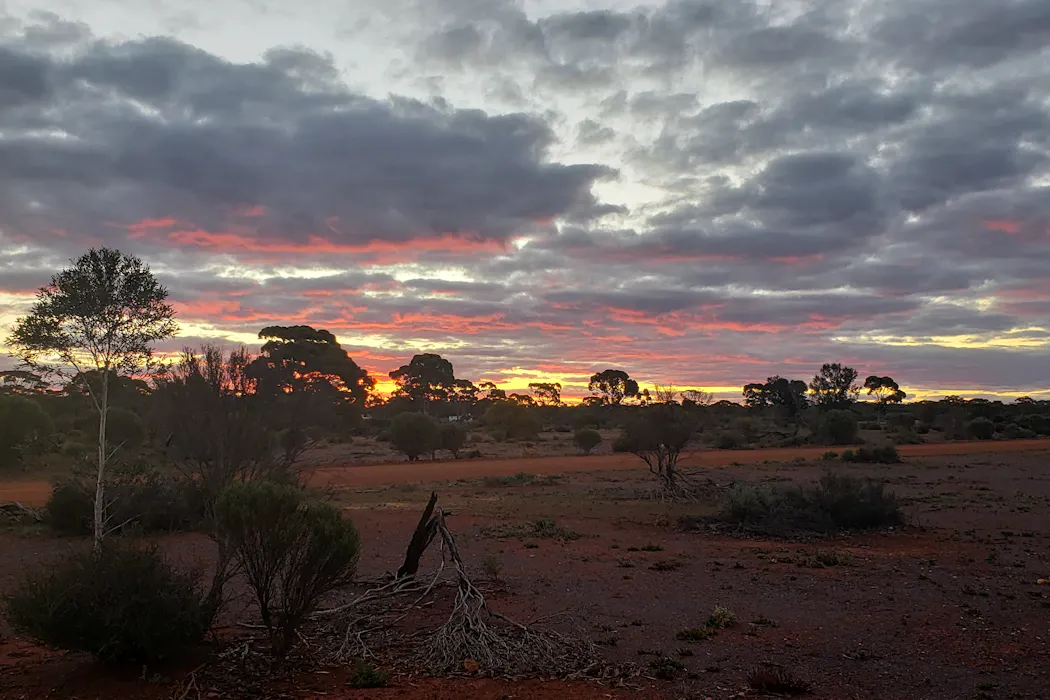
The goldfields in Western Australia. Aaron Cavosie

We’re used to a lot of different natural things falling out of the sky. These can include snow, rain, and sometimes even frogs (yes, really). All of these relate to weather phenomena.

Far more exotic things fall from the sky that are not related to weather. Earth is pelted by about 14 tons of micrometeorites each day. And larger meteorite falls also happen daily, which are visible as fireballs that streak across the night sky.

When an asteroid collides with Earth, it can trigger even stranger debris. Tektites are glassy droplets that form by melting during a meteorite impact, and are then ejected hundreds to thousands of kilometres away from the impact site. The Australasian tektite field that formed some 790,000 years ago from an unknown impact and might cover 10–30% of Earth’s surface is the most famous example.

In a new study published in the journal Meteoritics and Planetary Science, we describe the discovery of a previously unknown 4km-diameter meteorite impact crater in the Eastern Goldfields of Western Australia.

A gold band points the way

The impact site is near the town of Ora Banda (Spanish for “gold band”), a historic gold mining district about 50km north of Kalgoorlie.

For now we’ve named the site the “Ora Banda impact structure”, given its proximity to the historic mining district. However, the region has a much longer history of First Nations culture, and we’re currently working with collaborators at the Goldfields Aboriginal Language Centre on establishing an Indigenous name for the site.

The impact site is interesting for a number of reasons. Ora Banda is one of the few impact craters on Earth whose target rocks – meaning, all rocks in the area affected by the impact – are ancient greenstones, which are metamorphosed volcanic rocks like basalt.

Greenstones are valuable to the economy of Australia because in some places they contain gold. The Ora Banda impact was accidentally discovered during exploration drilling for gold.

The ‘smoking gun’ evidence for impact

If you find a site you suspect might be an impact crater, the scientific process to confirm that’s indeed the case involves documenting what’s known as diagnostic evidence.

Diagnostic impact evidence – the “smoking gun” of an impact – is that which is found nowhere else. It can include either evidence of the space rock itself, or unique high-pressure shock wave damage in the target rocks.

The first evidence for impact we found at Ora Banda was shatter cones – distinctive conical features in rocks that record the passage of the shock wave. We found a few shatter cones in rubbly outcrops at the surface, and we also found some in the drill cores.

Shatter cones formed in greenstones from the Ora Banda impact structure. Left: shatter cones in an oxidised surface sample; right: shatter cones encountered in a drill core, a cylindrical sample taken from within rocks. Aaron Cavosie

The discovery of shatter cones nailed it – we knew then this spot had to be an ancient impact site.

However, we set out to look for more evidence in order to further support our new impact hypothesis and learn more about the event. So, we went back to the cores.

Unusual rocks

The Ora Banda drill cores contained a range of different rock types. At the top was a sequence of clay-rich sediments – these washed into the crater after it formed. At the bottom were rocks that had a different story to tell: impact breccias.

Breccia is a name for any rock that’s been broken up into smaller fragments and has a matrix of smaller particles that “glue” it all together. Breccias are commonly found at impact craters, because the high-energy shock waves can cause rocks to instantly shatter.

Not surprisingly, there are different types of impact breccias, depending on what they contain.

A breccia is “monomict” if it consists of just one rock type, or “polymict” if it contains pieces of different rocks. Polymict breccias provide strong evidence of mixing, as if the rocks were thrown together in a blender. Both breccia types occur in the Ora Banda cores.

If breccia contains glassy melt particles along with other bits of rock, we call that “suevite”. The glassy bits provide key evidence for an even stranger part of the impact process.

They hint that molten material was thrown up into the sky when the meteorite smashed into Earth. While flying in the air, the molten particles turned to glass before landing back into the newly formed crater, resulting in a layer of suevite breccia.

Core sample of Ora Banda impact breccia. On the left is polymict breccia (suevite) that contains black impact glass. One the right is polymict breccia without impact glass. The boundary between the two breccia types is in the middle of the image. The scale bar is 10cm. Aaron Cavosie

But that’s not all. We found two additional types of microscopic “smoking gun” impact evidence in the breccia.

The first was shocked quartz grains, deformed in a way that’s unique to meteorite impacts. The second was meteorite residue in the glass. This happens because the meteorite vaporises and partly dissolves within the glassy melt particles.

With the discovery of shatter cones, shocked quartz, and extra-terrestrial meteorite residue, our hypothesis that the Ora Banda structure is an impact crater was confirmed.

Raining gold?

Glass and shocked minerals wasn’t all we found in the Ora Banda breccias. Some also contained small nuggets of gold.

This means that during the impact event, when all the shocked rock fragments and glass were thrown up into the sky, gold particles were also raining back down onto the surface, into the newly formed breccia deposits. That’s not something typically found in impact craters, and it shows how unique this geologic setting is.

A gold nugget found in the Ora Banda impact breccia; different imaging methods reveal it has a granular texture. Raiza Quintero

With Ora Banda, and the recently discovered Ilkurlka and Miralga structures, there are now 34 confirmed meteorite impact craters across Australia. They range in age from a few thousand years old, to the 2.2 billion-year-old Yarrabubba structure.

Some, like the iconic Wolfe Creek (Kandimalal) crater, are youthful and well preserved. Most others, including Ora Banda, are older and eroded to the point that a circular crater is no longer visible.

The Conversation

Aaron J. Cavosie has received funding from the Australian Research Council.

Raiza R. Quintero has previously received funding from the Australian Government Research Training Program and the Barringer Family Fund during her PhD.

❌
AU Conversation