Indian equity markets opened lower on Tuesday, extending losses for a second straight session as rising crude oil prices and mounting geopolitical tensions dampened investor sentiment.The benchmark Sensex slipped nearly 475 points in early trade to touch an intraday low of 75,541, while the Nifty 50 dropped more than 125 points to trade below the 23,700 mark.Selling pressure was most visible in information technology, chemicals, real estate, cement and financial stocks, with sectoral indices in
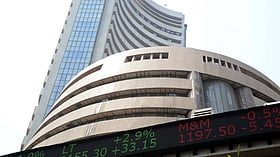
Indian equity markets opened lower on Tuesday, extending losses for a second straight session as rising crude oil prices and mounting geopolitical tensions dampened investor sentiment.
Selling pressure was most visible in information technology, chemicals, real estate, cement and financial stocks, with sectoral indices in these segments falling by more than 2 per cent during morning trade.
Among the major laggards were Infosys, Tech Mahindra, Tata Consultancy Services, HCL Technologies, Wipro, ICICI Bank, Bajaj Finance, Maruti Suzuki, Asian Paints and Dr Reddy’s Laboratories.
In contrast, metal, oil and gas, and PSU banking stocks bucked the broader trend and traded in positive territory.
The Sensex had opened at 75,688, down more than 300 points from the previous close, while the Nifty began the session lower by around 93 points at 23,722.
Market analysts attributed the weak sentiment largely to concerns surrounding geopolitical instability and the sharp rise in global crude oil prices.
Experts said sectors with relatively inelastic demand, such as pharmaceuticals and fast-moving consumer goods (FMCG), were likely to remain resilient despite broader market volatility. They noted that pharmaceutical companies could also benefit from rupee depreciation.
Analysts also pointed to improving trends in private capital expenditure, particularly in capital goods, automobiles and renewable energy sectors. According to market observers, a strong recovery in private investment activity has been overshadowed by negative global developments, but continued momentum in capex spending could support select industrial stocks.
In the commodities market, Brent crude climbed above $105 per barrel, while US benchmark West Texas Intermediate crude approached the $100 mark, intensifying concerns over inflation and input costs.
Asian markets traded mixed during the session. Japan’s Nikkei index advanced modestly and Hong Kong’s Hang Seng posted gains, while South Korea’s KOSPI fell sharply.
Wall Street had ended marginally higher overnight, with both the S&P 500 and Nasdaq recording slight gains.
A major multinational military exercise involving armed forces personnel from 13 countries commenced in Meghalaya on Wednesday, with participating troops undertaking joint training focused on counter-terrorism operations in challenging jungle and semi-mountainous terrain.The two-week exercise, titled PRAGATI 2026 (Partnership of Regional Armies for Growth and Transformation in the Indian Ocean Region), is being hosted by the Indian Army at the Umroi Military Station near Shillong.Besides India,
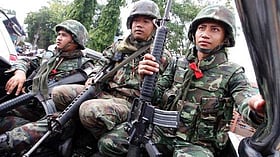
A major multinational military exercise involving armed forces personnel from 13 countries commenced in Meghalaya on Wednesday, with participating troops undertaking joint training focused on counter-terrorism operations in challenging jungle and semi-mountainous terrain.
The two-week exercise, titled PRAGATI 2026 (Partnership of Regional Armies for Growth and Transformation in the Indian Ocean Region), is being hosted by the Indian Army at the Umroi Military Station near Shillong.
Besides India, military contingents from Bhutan, Cambodia, Indonesia, Laos, Malaysia, Maldives, Myanmar, Nepal, Philippines, Seychelles, Sri Lanka and Vietnam are participating in the exercise.
Defence spokesperson Lieutenant Colonel Mahender Rawat said the exercise is designed to enhance interoperability and strengthen cooperation among partner nations while addressing evolving regional security challenges.
Focus on joint counter-terror operations
According to officials, the exercise will include joint planning drills, tactical-level exercises and coordinated counter-terrorism operations aimed at improving operational readiness and battlefield coordination in difficult terrain.
Special emphasis will be placed on physical endurance, discipline, adaptability and coordinated responses during complex military scenarios.
Military planners said the participating forces would exchange operational experiences and best practices developed through their respective counter-insurgency and counter-terrorism engagements, helping evolve common approaches for multinational operations.
The exercise will also focus on intelligence sharing, joint mission planning and developing institutional mechanisms for closer military cooperation among participating countries.
Platform for defence cooperation
As part of the programme, Indian defence manufacturers and technology firms will showcase indigenous military equipment and innovations developed under the Atmanirbhar Bharat initiative.
Officials said the display would provide an opportunity for partner nations to gain insights into India’s growing defence manufacturing capabilities while facilitating knowledge exchange in emerging technologies.
The opening ceremony was attended by senior military officers and dignitaries from participating countries.
Major General Sunil Sheoran welcomed the foreign contingents and underlined the importance of collective engagement in tackling contemporary security threats.
He urged participants to learn from one another’s experiences and said the varied strengths and perspectives brought by each nation would contribute significantly to achieving the exercise’s objectives.
The Indian Army said PRAGATI 2026 is expected to deepen military-to-military ties, enhance professional cooperation and promote a shared regional approach towards counter-terrorism and other common security challenges in the Indian Ocean region.
13-nation military exercise begins in Meghalaya, focus on counter-terror operations
Meta Platforms on Wednesday began laying off nearly 8,000 employees as part of a sweeping global restructuring exercise aimed at accelerating the company’s transition toward artificial intelligence-driven operations, according to multiple reports.The Facebook-parent company has reportedly started issuing layoff notices in phased waves, with the downsizing and internal role reshuffling expected to impact around 10 per cent of its global workforce.At the same time, Meta is said to be redeploying n
Meta Platforms on Wednesday began laying off nearly 8,000 employees as part of a sweeping global restructuring exercise aimed at accelerating the company’s transition toward artificial intelligence-driven operations, according to multiple reports.
The Facebook-parent company has reportedly started issuing layoff notices in phased waves, with the downsizing and internal role reshuffling expected to impact around 10 per cent of its global workforce.
At the same time, Meta is said to be redeploying nearly 7,000 employees into newly created AI-focused positions as it reorganises teams around what executives describe as “AI-native” structures.
In an internal memo circulated to employees, Meta’s Human Resources chief Janelle Gale said several departments were being redesigned to operate with flatter hierarchies, leaner teams and faster decision-making processes centred on AI integration.
“As org leaders worked on the changes, many of them incorporated AI-native design principles into their new org structures,” Gale said in the memo, according to reports.
The company also reportedly instructed several North American employees to work from home on the day layoffs took effect — a step Meta has followed during previous rounds of job cuts.
The restructuring marks one of the company’s most aggressive shifts toward AI so far, as CEO Mark Zuckerberg continues to prioritise artificial intelligence infrastructure, advanced computing power and next-generation AI products.
Meta has projected capital expenditure between $125 billion and $145 billion for 2026, with a significant portion earmarked for AI data centres, custom-built chips and large-scale model training systems.
Reports also suggested Zuckerberg recently reassured employees that data collected through Meta’s platforms would be used to improve AI systems and not for surveillance purposes.
The layoffs follow weeks of speculation about a major internal reorganisation at Meta. Earlier this month, several reports indicated the company was preparing to cut nearly 10 per cent of its workforce while simultaneously expanding AI-related operations to streamline productivity and remain competitive in the rapidly evolving AI race.
Meta, like several other global technology firms, has been aggressively investing in generative AI tools and infrastructure amid intensifying competition from rivals including OpenAI, Google and Microsoft.
The Bombay High Court on Monday granted bail to activist Surendra Gadling, who was arrested in 2018 in the Elgar Parishad–Maoist links case, citing his prolonged incarceration and the unlikelihood of the trial beginning soon.A bench led by Justice A.S. Gadkari, while hearing Gadling’s plea, also observed that all other accused in the case have already been granted bail, and that he should receive the same relief on grounds of parity.With this order, all those arrested in the over eight-year-old
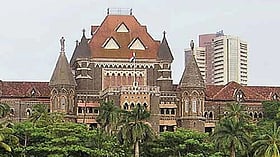
The Bombay High Court on Monday granted bail to activist Surendra Gadling, who was arrested in 2018 in the Elgar Parishad–Maoist links case, citing his prolonged incarceration and the unlikelihood of the trial beginning soon.
A bench led by Justice A.S. Gadkari, while hearing Gadling’s plea, also observed that all other accused in the case have already been granted bail, and that he should receive the same relief on grounds of parity.
With this order, all those arrested in the over eight-year-old case are now out on bail. Stan Swamy, an 84-year-old priest and tribal rights activist, had died in custody in July 2021 while awaiting trial.
Bombay HC has granted bail to lawyer-activist Surendra Gadling, who is in prison from June 6, 2018 in Bhima-Koregaon - Elgar Parishad case, considering his long incarceration.
At least 16 individuals — including lawyers, activists and academics — were booked in connection with allegedly provocative speeches delivered at the Elgar Parishad conclave held at Shaniwarwada in Pune on 31 December 2017.
Police had alleged that the speeches triggered violence at Koregaon-Bhima on the outskirts of Pune the following day. The initial probe by Pune Police claimed Maoist backing for the event, before the National Investigation Agency took over the investigation.
Other accused in the case include Varavara Rao, Sudha Bharadwaj, Anand Teltumbde, Vernon Gonsalves, Arun Ferreira, Shoma Sen, Gautam Navlakha, Sudhir Dhawale, Rona Wilson, Jyoti Jagtao and Mahesh Raut.
India’s cattle economy is marred by a profound contradiction. The regime that invokes the cow as a sacred symbol and fails to curb vigilante attacks on those who trade in cattle also presides over one of the world’s largest bovine meat export industries, earning billions from exports. It claims to protect rural India but destabilises the economic chain that links farmers, traders, tanneries, transporters and leather workers. Most recently, that contradiction played out sharply in West Bengal ahe
India’s cattle economy is marred by a profound contradiction. The regime that invokes the cow as a sacred symbol and fails to curb vigilante attacks on those who trade in cattle also presides over one of the world’s largest bovine meat export industries, earning billions from exports. It claims to protect rural India but destabilises the economic chain that links farmers, traders, tanneries, transporters and leather workers. Most recently, that contradiction played out sharply in West Bengal ahead of Eid al-Adha.
Soon after the installation of the new chief minister Suvendu Adhikari, Bengal’s BJP government tightened regulations, effectively restricting the slaughter of cattle below 14 years of age unless certified unfit for breeding or work. The Calcutta High Court declined to stay the order, observing that cow sacrifice is not an essential part of Eid rituals.
Amid fears of harassment, seizures and communal targeting, reports from Bengal’s cattle markets suggest that many Muslim cattle traders and buyers have become overly cautious. Not only are they dissuading cattle breeders from selling their livestock for slaughter, they are turning them down.
Hindu livestock farmers have reportedly complained that weak demand is hurting prices and disrupting rural economies. In some cattle markets in Bengal, buyers are simply not turning up. Having invested money in rearing cows for Eid, many farmers fear ending up in debt. In an economy built on interdependence between Hindu farmers and Muslim cattle traders, fear of retribution from vigilante groups seems to have travelled quickly.
Meanwhile, the meat export business has been thriving.
The billion-dollar contradiction
India officially prohibits the export of cow meat. But buffalo meat — marketed globally as ‘carabeef’ — is one of India’s largest agricultural export sectors.
According to the APEDA animal products export database, India exported more than 1.25 million metric tonnes of buffalo meat in 2024-25 alone, worth over $4 billion, accounting for nearly 80 per cent of all animal product exports. The biggest buyers include Vietnam, Egypt, Malaysia, the UAE and Saudi Arabia.
As per a recent Lok Sabha reply, India has 94 APEDA-registered export-grade slaughterhouses spread across Uttar Pradesh, Maharashtra, Haryana and Punjab.
Vigilantism, however, rarely distinguishes between cows and buffaloes, legal exports and illegal smuggling. Muslims have been killed or thrashed at the mere whiff of a suspicion. The politics around beef obscures the fact that our export industry is overwhelmingly buffalo meat, not cow meat. That ambiguity has led to a thriving export economy in an atmosphere of fear around cattle transport.
Cow vigilantism has become one of the defining social phenomena of the last decade. Data compiled by journalists, rights groups and researchers show that most reported cow-related mob attacks occurred after 2014, with Muslims disproportionately targeted. The date is crucial. That’s when Narendra Modi came to power at the Centre. In 2017, Reuters reported that at least 28 people — 24 of them Muslims — had been killed in cow-related violence between 2010 and mid-2017.
That violence altered the livestock economics.
The broken rural chain
For generations, rural India functioned through a circular cattle economy. Farmers sold ageing or unproductive cattle to traders. Traders supplied slaughterhouses and meat processors. Hides moved to leather clusters. Bones, fat and by-products fed ancillary industries. Selling ageing cattle gave farmers the liquidity to buy seeds, repay loans or survive a bad agricultural season. Cow vigilantism has disrupted that chain, leaving farmers vulnerable in moments of crisis. Mind you, livestock is a reliable liquid asset.
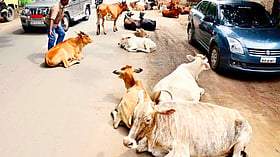
With cow vigilantism galloping across India — save in those BJP-ruled states where eating beef is permitted for political goals — that circular economy began to founder. Transporters no longer move cattle at night. Traders fear highway attacks. In several states, farmers abandon ageing cattle because selling them is too risky. The result is a surge in stray cattle destroying standing crops, especially in Uttar Pradesh.
One of India’s distinguished geneticists and animal scientists, Dr Chanda Nimbkar, argues that Maharashtra’s cow slaughter restrictions have severely distorted the livestock economy. In an illuminating essay in the Marathi daily Loksatta, she urged the lifting of the ban on cattle sale and slaughter to provide relief. ‘Even buffalo traders are increasingly targeted by self-styled gau rakshaks… directly hurting small livestock farmers’.
She is right. Two years ago, Qureshi traders — increasingly under attack in Maharashtra — boycotted the cattle trade in all the major markets of the state (similar to what is unfolding in West Bengal today). Prices of male calves and buffalos plummeted, creating great unrest among farmers and ill will against the state government. Nimbkar writes, if the government can’t control vigilante violence, it must compensate the farmers.
Sales resumed only after mediation, pushback from the farmers and assurances from the Maharashtra government that no harm would come to the traders. Till date, they haven’t returned to normalcy. Economically lagging dry-land areas have been hardest hit by the disrupted cattle trade, which has crippled the small farmer economy and added to their financial woes.
Dr Nimbkar’s critique cuts deeper. She argues that governments subsidise overcrowded gaushalas while denying farmers the economic flexibility to manage unproductive animals. The irony, she notes with frustration, is that indigenous cattle and bull populations in Maharashtra have continued to decline despite aggressive ‘cow protection’ politics, while goat populations — linked to a freer, more flexible market — have risen significantly.
In short, cow vigilantism, patronised by the state’s ruling regime, exposes the fundamental contradiction at the heart of cow politics: laws framed in the name of protection actually undermine both livestock conservation and rural livelihoods.
Few sectors reveal this contradiction more starkly than India’s leather industry which depends on the slaughter economy for hides. Disrupt slaughter, transport and cattle markets, and the leather sector feels the shock almost immediately.
As early as 1950, the Centre had warned states that blanket slaughter bans would hurt India’s tanning industry and exports. Today that warning is proven prophetic.
India’s leather industry employs roughly 4-4.5 million people directly and indirectly, many of them Dalits and Muslims concentrated in tanning, carcass handling, leather processing and footwear manufacturing. Current estimates show the sector contribute roughly $5 billion annually when domestic market value and exports are combined.
In FY 2024-25, the leather industry’s export earnings stood at around $4.8-5.7 billion. The domestic market is even bigger. In 2025, the council for leather exports (CLE) estimated that India’s domestic leather and footwear market was worth about $19 billion with ambitious plans to expand substantially over the next decade.
Major leather clusters in Kanpur, Unnao, Chennai and Kolkata depend on a stable supply of hides. Bengal is one of India’s important leather-processing centres, with Kolkata and Bantala accounting for nearly a quarter of India’s tanning activity. In a state where industry is flagging, a big dent in its leather trade could be fatal.
After cattle trade restrictions intensified in 2017, leather industry bodies warned of falling hide availability and shrinking exports. Industry reports documented declining domestic hide supply as slaughter rates fell and cattle transport became increasingly risky.
The worst affected are those on the margins — Muslim traders, Dalit leather workers, transporters and informal sector labourers.
Who owns the beef economy?
One of the least discussed aspects of India’s meat economy is that it cuts across religious identities more than politics reveals.
Some of India’s largest buffalo meat exporters are Hindu-owned firms. The export industry itself is not controlled by any one community. Yet public discourse has communalised the entire trade, collapsing distinctions between legal export businesses, local livestock markets and everyday cattle transport.
A single video of vigilante attacks has the potential to cripple transport routes and turn rural markets into communal flashpoints. Entire groups start withdrawing from traditional trades out of fear.
The republic at a crossroads
India’s cattle economy has always involved an uneasy weave of religion, caste, livelihood, agriculture and commerce. But during the Modi regime, it has also become a theatre of nationalism.
The same State that promotes export-oriented buffalo meat production because it earns foreign exchange criminalises and intimidates the people who keep that economy functioning.
The burden falls on the farmer with an unproductive animal he cannot sell; on the transporter waylaid by vigilantes; on the tannery worker without raw hides to cure; on the cattle trader who quits a market out of fear; and on communities learning to mistrust each another in spaces once built on everyday cooperation.
The cow may be sacred in India’s politics. But the economy around it is unholy.
Jaideep Hardikar is a senior Nagpur-based journalist and author of Ramrao: The Story of India’s Farm Crisis. Read more by him here
A probe has been launched after three Air India aircraft parked at Delhi's Indira Gandhi International (IGI) Airport were damaged when strong winds and heavy rain displaced ground support equipment, causing it to collide with the planes.The incident occurred on Sunday at Terminal 2 during a sudden spell of adverse weather that swept across Delhi-NCR. According to Delhi International Airport Ltd (DIAL), ground handling equipment stationed near parked aircraft was blown from its position by powerf
A probe has been launched after three Air India aircraft parked at Delhi's Indira Gandhi International (IGI) Airport were damaged when strong winds and heavy rain displaced ground support equipment, causing it to collide with the planes.
The incident occurred on Sunday at Terminal 2 during a sudden spell of adverse weather that swept across Delhi-NCR. According to Delhi International Airport Ltd (DIAL), ground handling equipment stationed near parked aircraft was blown from its position by powerful winds and struck three Air India narrow-body aircraft.
Following the incident, all three aircraft were immediately withdrawn from service for detailed inspections and repairs.
DIAL said the displaced equipment belonged to Air India Engineering Services and IndiGo's ground handling operations. Airport authorities have initiated an investigation to determine the sequence of events and assess whether additional safety measures are required to prevent similar incidents during extreme weather.
Officials said weather conditions deteriorated rapidly, with strong winds accompanied by intense rainfall. According to airport authorities, neither airlines nor the airport operator received any advance warning from Air Traffic Control (ATC) about the sudden weather change.
While Air India has not yet issued an official statement on the incident, reports suggest that an aircraft belonging to another operator may also have been affected by the severe weather conditions.
Sources indicated that two of the three damaged Air India aircraft are expected to return to service shortly after inspections and minor repairs, while work on the third aircraft could take longer depending on the extent of the damage.
The incident highlights the growing operational risks posed by sudden weather events during the monsoon season, particularly at busy airports handling large volumes of aircraft movements and ground operations.
Delhi-NCR witnessed widespread rainfall on Sunday, with strong winds affecting several parts of the national capital region, including areas around IGI Airport.
The India Meteorological Department (IMD) has forecast another spell of very light to light rain accompanied by thunderstorms and gusty winds of up to 60 kmph on 11 and 12 June, raising the possibility of further weather-related disruptions.
A Delhi court on Monday rejected the bail application of a cook accused in the Malviya Nagar hotel fire that claimed 22 lives last week.Judicial Magistrate Bhanu Pratap dismissed the plea filed by Keshav Negi shortly after he was remanded to 14 days of judicial custody.Negi was arrested on Saturday in connection with the 3 June blaze at Flourish Stays Bed and Breakfast in Hauz Rani area of south Delhi. Investigators have alleged that his negligence contributed to the fire.Appearing for the accus
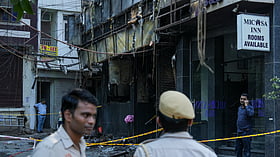
A Delhi court on Monday rejected the bail application of a cook accused in the Malviya Nagar hotel fire that claimed 22 lives last week.
Judicial Magistrate Bhanu Pratap dismissed the plea filed by Keshav Negi shortly after he was remanded to 14 days of judicial custody.
Negi was arrested on Saturday in connection with the 3 June blaze at Flourish Stays Bed and Breakfast in Hauz Rani area of south Delhi. Investigators have alleged that his negligence contributed to the fire.
Appearing for the accused, advocate Deepak Prakash argued that Negi had been booked under serious charges despite attempting to control the situation after the fire broke out.
The counsel told the court that Negi tried to douse the flames and switched off the LPG supply after noticing the fire.
The court, however, declined to grant bail.
Probe continues
Several other individuals associated with the establishment have also been detained and questioned as part of the ongoing investigation.
Hotel owner Lavkesh Bajaj was arrested earlier and booked under various charges, including culpable homicide not amounting to murder.
Investigators are examining alleged safety lapses at the establishment, which officials said was operating without a fire No Objection Certificate (NOC).
The fire broke out on 3 June and quickly engulfed parts of the building, trapping guests inside. The incident left 22 people dead and several others injured, making it one of the deadliest hotel fires in the capital in recent years.
Authorities are continuing to investigate the cause of the blaze and possible violations of safety regulations.
The case has also raised questions about accountability within regulatory agencies.
While the hotel owner, employees and other staff members have faced criminal action, officials are yet to disclose whether any inquiry has been initiated against personnel responsible for inspecting the premises or ensuring compliance with fire-safety and licensing norms.
Authorities have said the establishment was operating without a fire No Objection Certificate (NOC).
Delhi hotel fire: Court rejects bail plea of cook accused
The 13 May arrest by the CBI of Bharatiya Janata Yuva Morcha district secretary Dinesh Bilwal and his brother Mangilal Bilwal from Ramgarh in Rajasthan for their alleged involvement in the NEET-UG 2026 paper leak has triggered a political storm. Opposition parties in Rajasthan have alleged that the brothers acted as intermediaries in a larger network involving influential political leaders. The controversy has already led to the cancellation of the NEET-UG exam held on 3 May. It will now be held
The 13 May arrest by the CBI of Bharatiya Janata Yuva Morcha district secretary Dinesh Bilwal and his brother Mangilal Bilwal from Ramgarh in Rajasthan for their alleged involvement in the NEET-UG 2026 paper leak has triggered a political storm.
Opposition parties in Rajasthan have alleged that the brothers acted as intermediaries in a larger network involving influential political leaders. The controversy has already led to the cancellation of the NEET-UG exam held on 3 May. It will now be held on 21 June.
Over 22 lakh students appeared for this prestigious and India’s largest medical entrance exam across 5,432 centres. The NEET-UG is a gateway to 1.3 lakh medical seats across India’s medical colleges and the National Testing Agency (NTA), which conducts the exam, earns Rs 1,300 crore just in fees.
Investigators suspect the question paper was sold for Rs 15 lakh to be distributed to students. Rajasthan’s Special Operations Group (SOG) is investigating reports that a handwritten ‘guess paper’ was circulated among students via WhatsApp groups.
Senior officials in the SOG confirmed that over 100 Biology and Chemistry questions matched those in the actual test paper. The document was allegedly circulating among students as early as fifteen days before the test.
The investigation has linked the alleged guess paper to an MBBS student from Churu in Rajasthan, currently studying in Kerala. He is reported to have sent the document to his father who runs a paying guest accommodation in Sikar. The father in turn ‘sold’ these questions to his political contacts and to students. This document was then widely disseminated through coaching networks and messaging apps.
The latest episode puts the spotlight on Sikar’s booming coaching hub once again. Maheshwar Peri, founder of Careers360, claimed in a post on X that Sikar is the epicentre of a widespread network that has gained notoriety for such work. He said the region’s NEET success rate is six times higher than the national average. He further alleged that students in Sikar were summoned for a ‘mock test’ the day before the exam and were coached on these specific questions. He added that similar accusations had surfaced in 2024 but were not looked at with seriousness.
देश के युवाओं के सामने एक गंभीर बात रखना चाहता हूँ।
एक काम कीजिए - खुद Google कीजिए: “NEET 2024 की भयंकर चोरी के दौरान NTA का DG कौन था, और मोदी सरकार ने उसे आज कहां बैठाया है?”
देखा? समझ आया?
BJP इसी तरह आप जैसे लाखों मेहनती विद्यार्थियों के भविष्य से खिलवाड़ करने वालों को…
Educationists point to the nexus of politicians, coaching centres and the bureaucracy. One of them claimed that the leaked question paper had been widely circulated before the exam and had created a ‘social media storm’. This strangely went undetected by the NTA.
NTA director-general Dr Abhishek Singh — an IT expert who assumed office only two months ago — defended the agency, saying the examination was cancelled as soon as evidence emerged that some questions matched a PDF circulating online before 3 May.
“With the help of Central agencies, we found that some questions did match a PDF that had been circulating before the exam. Based on this, we took the decision to cancel the exam in line with our principle of ‘zero-error, zero-tolerance’ policy,” Singh said.
Investigators are examining whether the original NEET paper may have been leaked directly from the Nashik printing facility where this year’s papers were printed — a significant shift from the earlier paper leak cases that typically occurred during transportation or distribution.
DIG (retd) Shantanu Sen, a former CBI joint director, said, “Paper leaks occur primarily either where the paper is set or where it is printed. During my 33 years in service, we handled one UPSC paper leak. We solved the case within 15 days. It was the superintendent of the printing press who was responsible for the leak. In the last seven years, however, over 70 paper leaks for major examinations have occurred.”
Lok Sabha Leader of Opposition Rahul Gandhi also targeted the government for the repeated leaks. “In ten years, there have been 89 paper leaks and 48 re-examinations. Every time, the same promises are made, followed by the same deafening silence,” he wrote on X.
Gandhi also posted his concern at learning that former NTA director-general Subodh Kumar Singh, who had been removed from his post following major irregularities in NEET 2024, is currently serving as principal secretary to the chief minister of Chhattisgarh.
****
NEET 2026 के पेपर लीक की खबर सुनी।
परीक्षा नहीं - NEET अब नीलामी है।
कई सवाल परीक्षा से 42 घंटे पहले WhatsApp पर बिक रहे थे।
22 लाख से ज़्यादा बच्चे साल भर रात-रात भर आँखें जलाकर पढ़ते रहे और एक रात में उनका भविष्य बाज़ार में सरेआम नीलाम हो गया। यह पहली बार नहीं है। 10 साल में…
Questions are also being raised on how the NTA, which does not receive budgetary support from the Central government, meets its administrative costs from money collected as fees from students. A Rajya Sabha committee report noted that the NTA generated thousands of crores as surplus revenue.
In a written response submitted in Rajya Sabha on 31 July 2024, minister of state for education Sukanta Majumdar presented year-wise data on the income and expenditure of the NTA since its establishment in 2018, showing a profit of Rs 488 crore over the past six years.
For more than 22 lakh students who sat for the test on 3 May, the cancellation is traumatic considering the months of preparation that goes into it. For those who belong to disadvantaged communities, the experience is even more painful given that their families have made huge sacrifices to ensure access to expensive coaching and tuition.
While announcing the cancellation on 12 May, the NTA had promised that the exam would be reconducted without fresh registration or examination fees and that the exam fee paid by the students would be refunded. On 14 June, students will be issued fresh admit cards for the 21 June test. The registration data and candidature from the May 2026 cycle will be carried forward to the new exam date.
Ironically, the NTA claims the examination is conducted under a ‘full security protocol’, including GPS-tracked movement of question papers, biometric verification, AI-assisted CCTV monitoring and deployment of 5G jammers.
“If the security is so foolproof, how did such a leak occur?” asks Nikhil Malhotra, a Delhi-based student who appeared for the exam this year.
Fourteen Kuki individuals abducted nearly a month ago in Manipur's Senapati district were released on Tuesday, marking a significant breakthrough in efforts to ease tensions arising from the state's prolonged ethnic conflict.Officials said all the hostages were handed over safely at the Senapati district headquarters in the presence of police and security personnel.The release was facilitated by the United Naga Council (UNC), the apex body of the Naga community in Manipur, along with several civ
Fourteen Kuki individuals abducted nearly a month ago in Manipur's Senapati district were released on Tuesday, marking a significant breakthrough in efforts to ease tensions arising from the state's prolonged ethnic conflict.
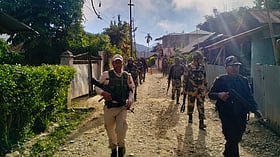
Officials said all the hostages were handed over safely at the Senapati district headquarters in the presence of police and security personnel.
The release was facilitated by the United Naga Council (UNC), the apex body of the Naga community in Manipur, along with several civil society organisations based in Senapati district.
The abductees were among more than 50 people taken hostage by armed groups in Kangpokpi and Senapati districts on 13 May, hours after three church leaders were killed in an ambush in Kangpokpi district.
Chief Minister Y. Khemchand Singh welcomed the development, describing it as a positive humanitarian gesture and calling for an end to violence.
He praised the Naga community for helping secure the release of the hostages and said the act reflected compassion, responsibility and concern for human life.
The chief minister also assured that those responsible for the crisis would face legal action and reiterated that justice would be delivered to victims and their families.
UNC cites humanitarian considerations
UNC president Ng. Lorho said the decision to release the hostages followed appeals from the Centre, the state government, church organisations and tribal bodies.
"Nagas are cultured people. We respect human rights," Lorho said, adding that the council had also taken into account assurances made regarding efforts to trace six missing Naga men who remain in captivity.
According to the UNC, discussions with stakeholders enabled the safe transfer of the 14 hostages to district authorities and security forces.
One of the released men, Paotinkai Chongloi of Taphou Kuki village, said the captives had been held for 27 days.
"We were treated well and provided food during our detention," he said.
Six hostages still untraced
Officials said 31 of the more than 50 abducted persons have now been released, including 12 Naga women from Konsakhul village, 16 Kukis from Kangpokpi district and two Salesian brothers.
However, six Naga men remain missing and their whereabouts are still unknown.
Sources said the 14 Kuki hostages were initially scheduled to be released on 1 June, but the process was delayed following disagreements among some community stakeholders and youth leaders.
Background
Manipur has witnessed recurring ethnic violence between the Meitei and Kuki communities since May 2023, resulting in at least 260 deaths and the displacement of thousands of people.
The state remained under President's Rule from 13 February 2025 following the resignation of former chief minister N. Biren Singh before an elected government was restored in February this year.
The latest release is being viewed as a rare confidence-building measure amid continuing efforts to restore normalcy and trust between communities.
Tourist arrivals in Manipur fall to 17,000 amid unrest, high airfare concerns
Bihar Police have registered a case against around 5,000 unidentified aspirants of the TRE-4 (Teacher Recruitment Examination) following clashes during a protest in Patna over delays in issuance of the next teacher recruitment notification by the Bihar Public Service Commission.Police also arrested four people, including student leader Dilip Kumar, after Friday’s demonstration near the BPSC office turned violent.The FIR was lodged at Gandhi Maidan Police Station based on a magistrate’s complaint
Bihar Police have registered a case against around 5,000 unidentified aspirants of the TRE-4 (Teacher Recruitment Examination) following clashes during a protest in Patna over delays in issuance of the next teacher recruitment notification by the Bihar Public Service Commission.
Police also arrested four people, including student leader Dilip Kumar, after Friday’s demonstration near the BPSC office turned violent.
The FIR was lodged at Gandhi Maidan Police Station based on a magistrate’s complaint alleging that protesters disrupted traffic, breached barricades, disturbed public order and misbehaved with police personnel deployed at the site.
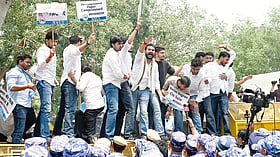
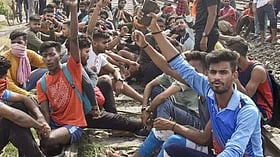
The protest began with hundreds of teacher recruitment aspirants marching from Patna College towards the BPSC office demanding immediate release of the TRE-4 notification. Police had erected barricades near JP Golambar to stop the procession.
According to protesters, candidates were held back for nearly two hours before tensions escalated after some demonstrators allegedly attempted to push through the barricades. Police subsequently used force, including a lathicharge, to disperse the crowd. Several aspirants, including women candidates, reportedly sustained injuries during the action.
On Saturday, Dilip Kumar was taken into custody and brought to Gardanibagh Hospital for medical examination before being sent to Beur Jail along with three other aspirants after being produced before a court.
“Injustice is being done to students. We are demanding vacancies but are being sent to jail,” Kumar told reporters while being escorted by police.
Patna City SP (Central) Diksha said some protesters became aggressive during the demonstration and attempted to break barricades, leading to confrontation with police.
“During the incident, there was pushing and mild lathicharge. Some police personnel were also injured,” the officer said.
She added that separate cases had also been registered over damage to barricades and clashes with police personnel.
Meanwhile, newly appointed Bihar Education Minister Mithilesh Tiwari appealed to aspirants to remain patient and acknowledged delays in the TRE-4 recruitment process.
“It is possible there has been some delay in TRE-4, and I accept that. But seeing future teachers on the streets and police chasing them is a painful sight for me,” Tiwari said.
The minister described the aspirants as “members of our family” and said the government remained open to discussions with students regarding their demands.
He also indicated that the state intended to move forward with the recruitment process soon.
Over the past two years, Bihar has recruited around 2.27 lakh teachers through TRE-1, TRE-2 and TRE-3, while nearly 3 lakh contractual teachers have reportedly secured state employee status after clearing competency examinations.
At least four people were killed, including three in the Moscow region, after Ukraine carried out what Russian officials described as the biggest overnight drone attack on the Russian capital in more than a year, authorities said on Sunday, 17 May.Another person died in Russia’s Belgorod region near the Ukrainian border, according to local officials. Russia’s defence ministry said that by midday, its forces had intercepted more than 1,000 Ukrainian drones across the country over the previous 24
At least four people were killed, including three in the Moscow region, after Ukraine carried out what Russian officials described as the biggest overnight drone attack on the Russian capital in more than a year, authorities said on Sunday, 17 May.
Another person died in Russia’s Belgorod region near the Ukrainian border, according to local officials. Russia’s defence ministry said that by midday, its forces had intercepted more than 1,000 Ukrainian drones across the country over the previous 24 hours.
The attack came days after Ukrainian President Volodymyr Zelenskyy pledged retaliation following Russia’s largest combined drone and missile assault on Kyiv over a two-day period since the war began more than four years ago.
Zelenskyy confirmed the strikes by posting a video on X showing a drone in flight, thick black smoke rising into the air and firefighters battling blazes. “Our responses to Russia’s prolongation of the war and its attacks on our cities and communities are entirely justified,” Zelenskyy posted.
He claimed Ukraine had demonstrated the ability to strike targets located over 500 km from the border despite Moscow’s extensive air defence systems. “We are clearly telling the Russians: their state must end its war,” he said.
Our responses to Russia’s prolongation of the war and its attacks on our cities and communities are entirely justified. This time, Ukrainian long-range sanctions reached the Moscow region, and we are clearly telling the Russians: their state must end its war. Ukrainian drone and… pic.twitter.com/BVFJ1BJQ1i
— Volodymyr Zelenskyy / Володимир Зеленський (@ZelenskyyUa) May 17, 2026
Russia’s foreign ministry accused Kyiv of deliberately targeting civilians. “To the sound of Eurovision songs, the Kyiv regime, financed by the EU, carried out yet another mass terrorist attack,” TASS quoted foreign ministry spokesperson Maria Zakharova as saying.
Both Russia and Ukraine deny intentionally attacking civilian targets.
Ukraine has intensified long-range drone operations inside Russian territory in recent weeks, focusing on energy and logistics infrastructure such as oil refineries, fuel depots and pipelines as both sides attempt to weaken each other’s operational capabilities.
TASS quoted Moscow mayor Sergei Sobyanin as saying that Russian air defence systems had shot down 81 drones approaching Moscow since midnight, making it the heaviest attack on the capital in over a year.
❗️❗️❗️ The question of why Zelensky's official decree was necessary, which granted Putin permission to hold a parade on Red Square on May 9, is most clearly answered by the massive attack carried out by Ukrainians on Moscow today. This kamikaze drone strike was unprecedented… pic.twitter.com/6y9ZKF3Ds9
According to Sobyanin, 12 people were injured, most of them near the entrance to Moscow’s oil refinery. Three residential buildings were also damaged, though he said the refinery’s “technology” systems remained unaffected.
Moscow region governor Andrei Vorobyov said a woman was killed after a residential building in Khimki, north of Moscow, was struck. Rescue workers were still searching the rubble for another person, he added. Two men were also killed in Pogorelki village in the Mytishchi district, Vorobyov said, adding that several apartment blocks and infrastructure facilities sustained damage in the attacks.
Sheremetyevo Airport, Russia’s busiest airport, said drone debris had fallen within its premises but caused no damage.
A day after delivering a stunning electoral debut, leaders of Tamilaga Vettri Kazhagam (TVK), founded by actor-turned-politician C. Joseph Vijay, said the party remains committed to fulfilling its promises, thanking voters for their overwhelming support in the Tamil Nadu assembly elections.Winning candidates assembled at the party headquarters in Panaiyur, Chennai, amid tight security and heavy police deployment, to chart the party’s next steps following its breakthrough performance.Calling the
A day after delivering a stunning electoral debut, leaders of Tamilaga Vettri Kazhagam (TVK), founded by actor-turned-politician C. Joseph Vijay, said the party remains committed to fulfilling its promises, thanking voters for their overwhelming support in the Tamil Nadu assembly elections.
Winning candidates assembled at the party headquarters in Panaiyur, Chennai, amid tight security and heavy police deployment, to chart the party’s next steps following its breakthrough performance.
Calling the result a “landmark moment”, Anna Nagar MLA V.K. Ramkumar said, “This is a massive victory for Tamil Nadu. We dedicate this win to the people who have placed their trust in us. We will carry forward all the promises made by our leader.” He added that the mandate reaffirmed the power of voters. “This proves that people have the ultimate power in elections. We hope to deliver the best for them.”
Polur MLA Abishek R. said the immediate focus would be internal strategy discussions. “We have gathered here for a meeting and will discuss ways to move forward,” he noted.
Striking a combative tone, Kancheepuram MLA R.V. Ranjith Kumar accused previous regimes of entrenched corruption. “Tamil Nadu has only seen corrupt governance. Even in the last five years, Rs 5 lakh crore has been borrowed, burdening people with debt, while only a few prosper. Because our leader promised to eradicate corruption, the people have given us this mandate,” he said.
Invoking history, he added, “In 1977, M.G. Ramachandran formed the government; now, Vijay has led a similar revolution. Thalapathy will deliver on every promise and work cooperatively with the Centre.” He also noted that Prime Minister Narendra Modi had congratulated TVK on its performance.
From Coimbatore (North), V. Sampath Kumar thanked voters for rejecting money power. “People voted with conviction that doing good matters more than money, defeating those who tried to win by spending thousands of crores,” he said.
Ending nearly six decades of Dravidian dominance, TVK has emerged as the surprise political force of the 2026 elections. Contesting its maiden poll, the party is leading in 108 of the 234 seats — just 10 short of the 118 required for a simple majority — placing it in a pivotal position in government formation while cementing its arrival as a major player in Tamil Nadu politics.

 Login
Login