❌

Normal view

  • βœ‡Antiques and Vintage - flickr
  • Edmund Purdom Truus, Bob & Jan too!
    Truus, Bob & Jan too! posted a photo: Italian postcard by B.F.F. Edit., no. 3236. Photo: Metro Goldwyn Mayer. Publicity still for The King's Thief (Robert Z. Leonard, 1955). Darkly handsome Edmund Purdom (1924–2009) was a British character actor who wore togas and sandals for a great deal of his career. In Hollywood, he replaced Marlon Brando in The Egyptian (1954) and Mario Lanza in The Student Prince (1954) and in Italy, he starred in countless Peplums and other genre films. Edmund
     

Edmund Purdom

Truus, Bob & Jan too! posted a photo:

Edmund Purdom

Italian postcard by B.F.F. Edit., no. 3236. Photo: Metro Goldwyn Mayer. Publicity still for The King's Thief (Robert Z. Leonard, 1955).

Darkly handsome Edmund Purdom (1924–2009) was a British character actor who wore togas and sandals for a great deal of his career. In Hollywood, he replaced Marlon Brando in The Egyptian (1954) and Mario Lanza in The Student Prince (1954) and in Italy, he starred in countless Peplums and other genre films.

Edmund Anthony Cutlar Purdom was born in Welwyn Garden City, England, in 1924. His father was an artist and London drama critic Charles Benjamin Purdom. Jesuits educated Edmund at St Ignatius College and by Benedictines at Downside School. He began his acting career in 1945 by joining the Northampton Repertory Company, appearing in productions which included 'Romeo and Juliet' and MoliΓ¨re's 'The Imaginary Invalid'. It was followed by two years of military service, during which he joined the Army Pool of Artists. He made his screen debut in the BBC TV film Carissima (1950), followed by a BBC TV adaptation of William Shakespeare’s Julius Caesar (Leonard Brett, 1951). He then joined the Shakespeare Memorial Theatre at Stratford-upon-Avon. In 1951-1952, Purdom was part of the company that Laurence Olivier and Vivien Leigh took to Broadway for alternating performances of Shakespeare's 'Antony and Cleopatra' and George Bernard Shaw's 'Caesar and Cleopatra'. He tested at Twentieth Century-Fox for the leading male role in My Cousin Rachel (1952), but Richard Burton got the part. The studio cast him instead as ship's officer Lightoller in Titanic (Jean Negulesco, 1953). His performance caught the attention of MGM, and he got a small role in the classic Julius Caesar (Joseph L. Mankiewicz, 1953) starring Marlon Brando. Purdome played Strato, the young servant of Brutus (James Mason), who holds the sword out for his master to run onto at the climax. Then he was cast in the title role opposite Jean Simmons in the epic The Egyptian (Michael Curtiz, 1954), 20th Century-Fox's most lavish production of the year. He played a brilliant physician in the service of the Pharaoh in 18th-dynasty Egypt. Ronald Bergan in The Guardian: β€œPurdom's reputation as a surrogate is underlined by the fact that he got his first chance of stardom when he replaced Marlon Brando in The Egyptian (1954) after Brando wisely cried off, preferring to play Napoleon in DesirΓ©e instead. (...) Purdom's striking dark good looks and dimpled cheeks made up for his rather wooden personality and inability to pronounce his 'r's, but not even Brando could have known how to react to dialogue such as: β€˜You have bold eyes for the son of a cheesemaker.’”

Edmund Purdom then played the leading role opposite Ann Blyth in the MGM musical The Student Prince (1954), a part originally intended for Mario Lanza. According to Wikipedia, Lanza’s disagreement with director Curtis Bernhardt over how a certain song was to be sung led to his dismissal by MGM. (Ronald Bergan adds: β€œMario Lanza's drugs-alcohol-weight problems got the better of him”) The film was subsequently directed by Richard Thorpe, and Purdom lip-synced to Lanza's singing voice. MGM gave the young unknown a considerable build-up. In the same year, he appeared in another MGM musical, Athena (Richard Thorpe, 1954), opposite Jane Powell and Debbie Reynolds. Tom Vallance cites in The Independent Debbie Reynolds saying, β€œThe only relief on the set was the action going on off camera. Linda Christian, who was Mrs Tyrone Power at the time, was also in the picture. She was a temptress, and right before our eyes, we saw the tempted, who was Edmund Purdom. They would go to his little trailer, close the door and be gone for quite a while.” Christian later divorced Power and married Purdom. He then played the title role opposite superstar Lana Turner in the biblical epic The Prodigal (Richard Thorpe, 1955), MGM's most lavish production of 1955. It was a huge flop. He partnered with Ann Blyth again in the swashbuckling CinemaScope adventure film The King's Thief (Robert Z. Leonard, 1955). Purdom's MGM contract was terminated. On television, he starred as Marco del Monte in the swashbuckler series Sword of Freedom (Peter Cotes, Anthony Squire,1957-1958). In 1959, he filmed the crime drama Malaga / Moment of Danger (Laslo Benedek, 1960) in Europe. The American premiere of the film, co-starring Trevor Howard and Dorothy Dandridge, was delayed for nearly two years. After that, he did not work in Hollywood anymore except for some cameos, such as in the MGM production The Yellow Rolls-Royce (Anthony Asquith, 1964), in which peer Rex Harrison buys his wife (Jeanne Moreau) the titular limousine, unaware that she will be using the back seat to make love to Purdom.

When his Hollywood career sizzled out, Edmund Purdom went to Italy to star in the crime drama Agguato a Tangeri / Trapped in Tangiers (Riccardo Freda, 1957) with Geneviève Page. He decided to stay in Europe. In Italy, he made the Peplums (sword and sandal epic) Erode il grande / Herod the Great (Viktor Tourjansky, 1959) with Sylvia Lopez, I cosacchi / The Cossacks (Viktor Tourjansky, Giorgio Venturini, 1960) opposite John Drew Barrymore, and Salambò / The Loves of Salammbo (Sergio Grieco, 1960) featuring Jeanne Valérie. In France, he played Rasputin in Les nuits de Raspoutine / The Night They Killed Rasputin (Pierre Chenal, 1960) with Gianna Maria Canale. In Austria, he appeared in Das große Wunschkonzert / Big Request Concert (Arthur Maria Rabenalt, 1960) with Carlos Thompson and Linda Christian. In Great Britain, he played with Ian Hendry and Janette Scott in The Beauty Jungle (Val Guest, 1964) about the dangerous world of beauty contests. Another British film was the drama The Comedy Man (Alvin Rakoff, 1964) starring Kenneth More as a struggling actor. He lived in Rome for the rest of his life and continued to work extensively in Italian B-films and on television. His later films include the Spaghetti Western Crisantemi per un branco di carogne / Chrysanthemums for a Bunch of Swine (Sergio Pastore, 1968), the Horror film Thomas e gli indemoniati / Thomas and the Bewitched (Pupi Avati, 1970) and the thriller Giornata nera per l'ariete / Evil Fingers (Luigi Bazzoni, 1971) starring Franco Nero. He also worked as a voice actor. He dubbed dialogue translated from Italian into English for the sales of Italian films in English-speaking countries. During the 1970s and 1980s, he appeared in interesting films like the crime drama L'onorata famiglia / The honourable family (Tonino Ricci, 1974) with Raymond Pellegrin, the TV film Sophia Loren: Her Own Story (Mel Stuart, 1980) in which he convincingly played actor-writer-director Vittorio de Sica, and Don Bosco (Leandro Castellani, 1988) featuring Ben Gazzara. On TV, he was seen in The Scarlet and the Black (Jerry London, 1983) starring Gregory Peck, and the mini-series The Winds of War (Dan Curtis, 1983) starring Robert Mitchum. In 1984, he directed the Horror mystery Don't Open 'Til Christmas, about a psychopath who slaughters Santas. Purdom also played the leading role of a police inspector. It would be his first and last film direction. He was also very active as a sound engineer for music, recording many classical concerts in Florence and Vienna, and he devised a technique for transferring mono (sound) to stereo. He narrated popular short Christian documentaries on the life of Padre Pio and the 7 Signs of Christ's Return. His final film was the adventure film I cavalieri che fecero l'impresa / The Knights of the Quest (Pupi Avati, 2001) starring Raul Bova. Purdom was married four times. His first three wives, all divorced, were actress and ex-ballerina Tita Phillips (1951-1956), the mother of his children; Alicia Darr (1957-1958); and actress Linda Christian (1962-1963). In 2000, he married his fourth wife, the photographer Vivienne Purdom. Edmund Purdom died from heart failure in 2009 in Rome. He was 89. His daughter, Lilan Purdom, worked as a journalist for the French television channel TF1.

Sources: Ronald Bergan (The Guardian), Tom Vallance (The Independent), Wikipedia and IMDb.

And, please check out our blog European Film Star Postcards.

  • βœ‡Antiques and Vintage - flickr
  • John Ericson in Bad Day at Black Rock (1955) Truus, Bob & Jan too!
    Truus, Bob & Jan too! posted a photo: Spanish postcard by CyA, no. 81. Photo: Metro Goldwyn Mayer. John Ericson in Bad Day at Black Rock (John Sturges, 1955). The Spanish film title was ConspiraciΓ³n de silencio. German-American film and television actor John Ericson (1926-2020) started in the 1950s as a young hunk with wavy-haired good looks and an athletic build. He made a series of popular films for MGM, including Teresa (19, 51) and The Student Prince (1954). Later, Ericson worked mo
     

John Ericson in Bad Day at Black Rock (1955)

Truus, Bob & Jan too! posted a photo:

John Ericson in Bad Day at Black Rock (1955)

Spanish postcard by CyA, no. 81. Photo: Metro Goldwyn Mayer. John Ericson in Bad Day at Black Rock (John Sturges, 1955). The Spanish film title was ConspiraciΓ³n de silencio.

German-American film and television actor John Ericson (1926-2020) started in the 1950s as a young hunk with wavy-haired good looks and an athletic build. He made a series of popular films for MGM, including Teresa (19, 51) and The Student Prince (1954). Later, Ericson worked mostly for television, most memorably as the partner of Anne Francis in Honey West (1965-1966).

John Ericson was born Joachim Alexander Ottokar Meibes in DΓΌsseldorf, Germany, in 1926. He was the son of Carl F. Meibes, a German chemist and Ellen Wilson, a Swedish actress and opera singer. Escaping from the Nazi regime, his family emigrated to the U.S. when he was three. At first, living in Detroit, they eventually settled in New York, where his dad (according to a 1955 newspaper article) found lucrative employment as president of a food extract company. After graduating from Newton High School, John enrolled at the Academy of Dramatic Arts in New York, financially supporting his studies by working at a Walgreens drug store. Most sources, including Wikipedia, incorrectly cite his acting debut as being in 'Stalag 17' on Broadway, but Ericson himself stated (in a 1989 interview with Skip E. Lowe) that his career kick-started with the romantic wartime drama Teresa (Fred Zinnemann, 1951), filmed in Italy by Metro Goldwyn Mayer. Afterwards, he made the decision not to sign a studio contract for fear of being typecast as 'boy-next-door' types. On the strength of his performance in Teresa, producer/director JosΓ© Ferrer offered Ericson not only what amounted to being the nominal lead in 'Stalag 17' (1951), but the opportunity to play an initially unsympathetic part as the slick, cynical gambler J. J. Sefton. The coveted film role was eventually assigned to William Holden, who won an Academy Award. Between 1954 and 1955, Ericson was under contract at MGM and made four films for the studio: Rhapsody (Charles Vidor, 1954) opposite Elizabeth Taylor and Vittorio Gassman, Green Fire (Andrew Marton, 1954), co-starring Stewart Granger and Grace Kelly, who had been in his class at the Academy. and the seminal Spencer Tracy Western Bad Day at Black Rock (John Sturges, 1955) as a nervy hotel clerk.

During the next three decades, John Ericson worked as a freelance actor. His wavy-haired good looks and athletic build were not lost on the industry. He co-starred with Barbara Stanwyck in Forty Guns (Samuel Fuller, 1957). His career continued mostly on television. He co-starred with Anne Francis in Honey West (1965), a short-lived series apparently modelled on the British series The Avengers (1961). It featured a crime-solving, judo-savvy lady detective (even wearing Diana Rigg-style jumpsuits) and her right-hand man. The show only lasted for 30 episodes, but has since gained a minor cult following. Ericson's frequent TV guest appearances included Rawhide (1959), Bonanza (1959), Burke's Law (1963), The FBI (1965) and The Invaders (1967). For the big screen, he went to Italy and Spain. There he starred in the Peplum Io Semiramide / Slave Queen of Babylon (Primo Zeglio, 1963) about Semiramis, a queen of the Neo-Assyrian Empire (Yvonne Furneaux). He also starred in the James Bond pastiche Agente S 03: Operazione Atlantide / Operation Atlantis (Domenico Paolella, 1965) and Spaghetti Westerns. In the U.S., he had leads in thrillers such as The Money Jungle (Francis D. Lyon, 1967) with Lola Albright, Westerns like Day of the Badman (Harry Keller, 1958) with Fred MacMurray, and Science Fiction B-graders like The Destructors (Francis D. Lyon, 1968) starring Richard Egan, and The Bamboo Saucer (Frank Telford, 1968), which was Dan Duryea's last film. Ericson also starred as the titular 1930s Depression-era gangster in Pretty Boy Floyd (Herbert J. Leder, 1960). He appeared in the Disney film Bedknobs and Broomsticks (Robert Stevenson, 1971) and posed for the nude centrefold in Playgirl magazine's January 1974 issue. On the stage, he played King Arthur to Kathryn Grayson's Guinevere in a 1967 production of the musical 'Camelot'. A reviewer commented that what Ericson lacked in the vocal department, he more than made up for by a 'masterful performance'. His dramatic theatrical credits included 'Richard III', 'Mr. Roberts' and 'A Streetcar Named Desire'. In his spare time, John Ericson took up painting landscapes and still lifes. He was also a sculptor and a keen amateur photographer. Until he died of pneumonia in 2020, he resided in New Mexico with his second wife, Karen Huston, whom he married in 1974. With his first wife, Milly Ericson Courye, he had two children, Brett and Nicole. John Ericson was 93.

Sources: I.S. Mowis (IMDb), Wikipedia and IMDb.

And, please check out our blog European Film Star Postcards.
  • βœ‡Collider
  • 'Masters of the Universe' Ending Explained: What's Next for He-Man in Amazon's Epic Fantasy? Jeffrey Harris
    Editor's Note: The following contains spoilers for Masters of the Universe.By the power of Grayskull, Masters of the Universe brings the power of He-Man to the big screen! But how does it all end? Does Prince Adam (Nicholas Galitzine) save Eternia from the Overlord of Evil, Skeletor (Jared Leto)? Should moviegoers stick around for extra end-credits scenes? Does the movie set up future installments and potential sequels? Well, time to explore exactly how this epic sci-fi fantasy adventure ends, a
     

'Masters of the Universe' Ending Explained: What's Next for He-Man in Amazon's Epic Fantasy?

8 June 2026 at 14:21

Editor's Note: The following contains spoilers for Masters of the Universe.By the power of Grayskull, Masters of the Universe brings the power of He-Man to the big screen! But how does it all end? Does Prince Adam (Nicholas Galitzine) save Eternia from the Overlord of Evil, Skeletor (Jared Leto)? Should moviegoers stick around for extra end-credits scenes? Does the movie set up future installments and potential sequels? Well, time to explore exactly how this epic sci-fi fantasy adventure ends, and how the long-time Eternian faithful will not want to leave their seats once the credits start to roll.

  • βœ‡Collider
  • Stephen King’s 8-Episode Sleeper Hit Is TV’s Next Big Horror Series Before Season 2 Dyah Ayu Larasati
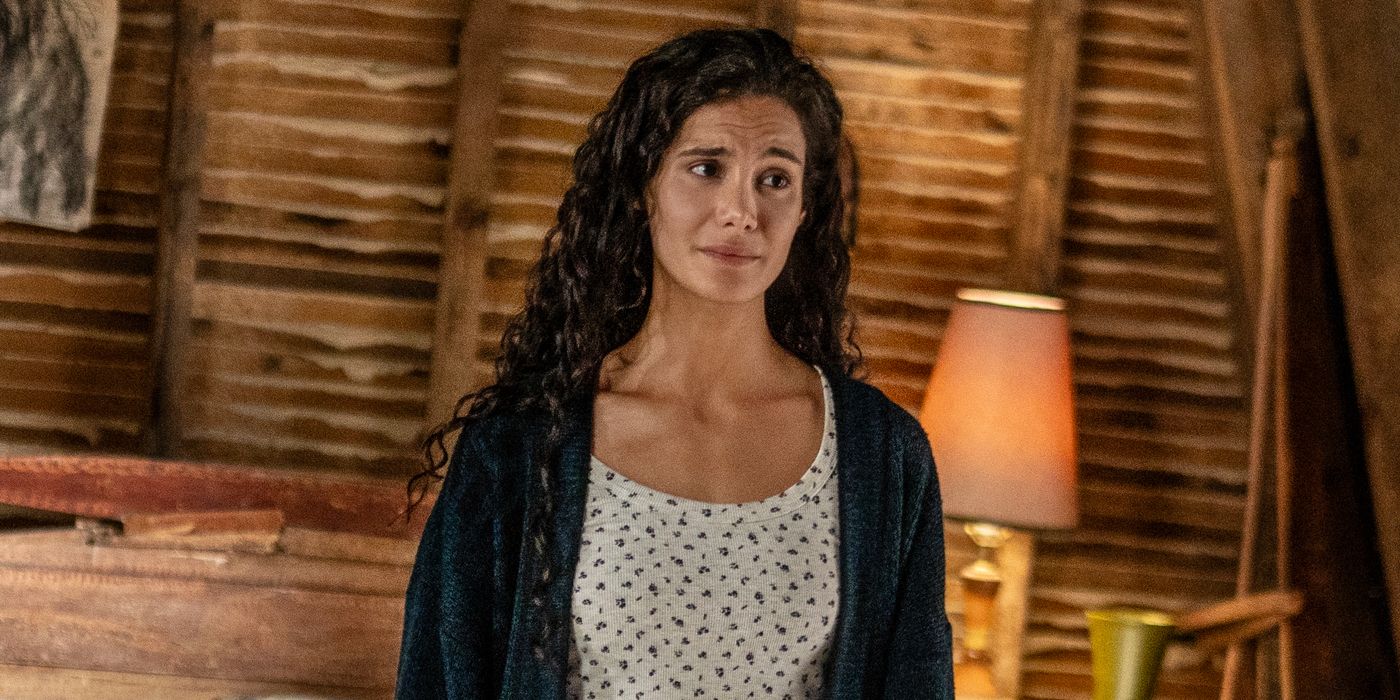
    The Stephen King reign continues with MGM+'s The Institute, which is already gearing up for a second season. Based on King's 2019 novel, the series may be one of the author's more recent adaptations but still contains allthe classic ingredients longtime fans have come to expect: small-town mysteries, ordinary people confronting unimaginable evil, and children burdened with extraordinary gifts. Instead of attending a school for gifted youngsters, however, these telekinetic and telepathic children
     

Stephen King’s 8-Episode Sleeper Hit Is TV’s Next Big Horror Series Before Season 2

14 June 2026 at 17:58

The Stephen King reign continues with MGM+'s The Institute, which is already gearing up for a second season. Based on King's 2019 novel, the series may be one of the author's more recent adaptations but still contains allthe classic ingredients longtime fans have come to expect: small-town mysteries, ordinary people confronting unimaginable evil, and children burdened with extraordinary gifts. Instead of attending a school for gifted youngsters, however, these telekinetic and telepathic children find themselves imprisoned in a facility that's using them as test subjects. Kidnapped from their families and subjected to brutal experiments, they become victims of adults who believe their powers can be weaponized for the greater good. If King's work has taught fans anything, it's that it's never a good idea to mess around with psychic powers.

❌
Subscriptions