Reading view

US military to build war-ready stockpile in Australia, documents show

The US military is planning a permanent war-ready weapons stockpile for its Marine Corps on Australia’s southeast coast beyond the range of most Chinese missiles, tender documents show and officials confirmed to AFP.

The development of the stockpile, a first for the Marine Corps in Australia, comes as the United States is keen to leverage the continent’s strategic location in the South Pacific to counter China’s rapid military build-up, analysts said.

The US Marines Corps began global pre-positioning of military supplies during the Cold War — using floating stores on ships and caves in Norway where weapons, ammunition and vehicles to sustain thousands of troops are kept.

The first land stockpile in the Asia-Pacific is expected to open this year in the Philippines, close to potential flashpoints in the South China Sea.

Documents published by the US Navy this month show advanced planning for an even larger Australian stockpile, with $30 million allocated to build warehouses and offices in southeastern Victoria state for “critical forward provisioning”.

The Australian stockpile, expected to reach full capacity by 2028, will be kept in Melbourne before being moved to US warehouses to be constructed next year at an Australian military base at Bandiana in rural Victoria, tender documents show.

Australia does not permit foreign military bases on its soil, a sensitive issue in a country that has a security alliance with the United States and is hosting an increasing variety of US forces on rotation at Australian defence bases.

The US Navy is engaging a global defence contractor to employ around 110 engineers, mechanics, material and safety specialists to manage the Australian stockpile, which includes “crew-served weapons”, the documents show.

“Marine Corps activities in Australia support integrated global sustainment by maintaining ready-for-issue equipment and supplies for operations and exercises across the Indo-Pacific,” a US Marine Corps Forces Pacific spokesperson told AFP.

The spokesperson declined to comment on contract details or force planning assumptions but said Marines equipment is kept at “high readiness”.

Contracting arrangements and the operation of the facility would be made in close coordination with Australia’s Department of Defence.

“These activities improve responsiveness, strengthen interoperability with allies and partners, and support a range of missions across the Indo-Pacific,” the spokesperson said, using an alternative description for the Asia-Pacific region.

US Army trucks were left at the Bandiana base in 2023 after an Australian war game involving US troops held every two years. The Marines stockpile at Bandiana, approved last July, is separate.

“Marine Corps and Army equipment programmes are designed to support their respective service requirements and are managed under separate authorities and processes,” the Marines spokesperson said.

Australia’s Department of Defence did not respond immediately to a request for comment.

Beyond China’s missiles?

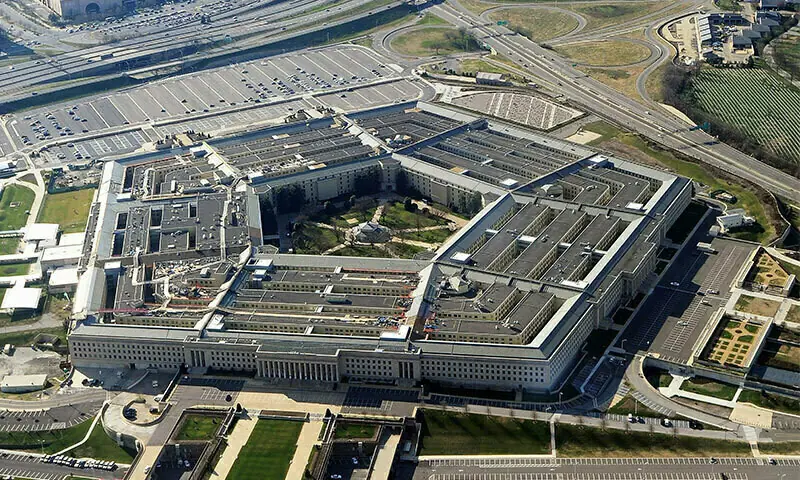
The Pentagon has asked Congress for $500m next year to improve prepositioning of equipment and fuel across the Asia-Pacific to deter China.

Around 2,000 US Marines conduct exercises for six months of the year on the opposite coast of Australia in the northern city of Darwin.

A report from the Lowy Institute think tank this week warned that China has the capability to strike northern Australia with ballistic missiles deployed from its South China Sea outposts.

Its director of international security, Sam Roggeveen, told AFP that was likely a “relevant consideration” in placing a stockpile in Australia’s southeast.

“Once these facilities are operational, they would be obvious targets for China,” he said.

The growth of US forces and equipment in Australia is “a major change to Australian policy that ties Australia much more closely to America’s strategic objectives in the region”, Roggeveen said.

Australian National University professor of international security John Blaxland said the country’s location is being seen with “a growing sense of significance” given concerns over the vulnerability of the US military base on Guam.

“With competition for influence in the Indo-Pacific having reached the highest level in over a generation, it is not surprising that the US Marines might look to Australia to enable such storage,” he said.

“Barring a massive increase in Australian defence expenditure, for which there is little political appetite, facilitating greater US investment in Australian real estate is widely considered to be the most prudent approach to take.”
  •  

Choppers collide mid-air; six die in western Rio de Janeiro

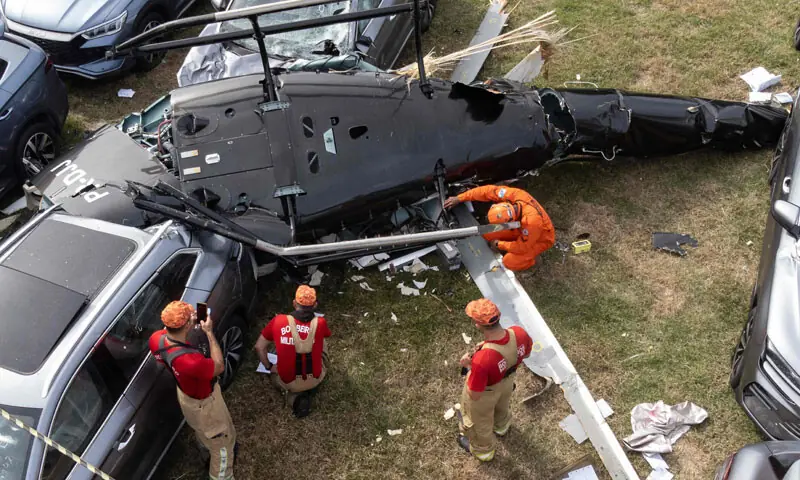
RIO DE JANEIRO: At least six people died on Sunday after two helicopters collided mid-air in western Rio de Janeiro, firefighters said.

American singer-songwriter Oliver Tree, who was in Brazil on a world tour, was aboard one of the helicopters that crashed, leaving all occupants dead, a police source told AFP.

The alternative singer and internet personality is listed as one of six people on the manifests of the two aircraft shared by the source, who said the victims could not be formally identified yet as they were badly burned in the crash.

Rio de Janeiro Ma­yor Eduardo Cava­liere said that there were “foreign nationals on board one of the aircraft,” without giving further details.

US singer Oliver Tree listed among dead

After collision, the helicopters crashed into the parking lot of an electric car dealership, igni­ting a fire that engulfed at least 20 vehicles.

The accident took place in the western suburb of Recreio dos Bandeirantes.

Rescue workers discovered one helicopter in flames among the electric cars, with five victims inside. A second helicopter found some 100 metres away was carrying only the pilot, who also died.

Published in Dawn, June 15th, 2026

  •  

Canada draw with Bosnia-Herzegovina to earn first ever World Cup point

Co-hosts Canada grabbed a second-half equaliser to draw 1-1 with Bosnia and Herzegovina on Friday in the first World Cup finals game ever played on Canadian soil.

Cyle Larin got Canada’s goal after Jovo Lukic put Bosnia ahead with a header in the 21st minute in Toronto. The result gave Canada its first point in World Cup history.

Canadian sides had a perfect record of futility at two previous tournament appearances in 1986 and 2022, with six losses.

Lukic’s goal from a corner sent the small but enthusiastic Bosnian contingent at the Toronto Stadium into a frenzy. Canada had the majority of play in the first half but failed to generate any real chances.

Bosnia and Herzegovina’s players celebrate the opening goal during the 2026 World Cup Group B football match between Canada and Bosnia and Herzegovina at the Toronto Stadium in Toronto, Canada on June 12, 2026. — AFP

The stadium erupted in the 17th minute when forward Jonathan David had a clear shot on goal, but it was easily handled by Bosnian keeper Nikola Vasilj.

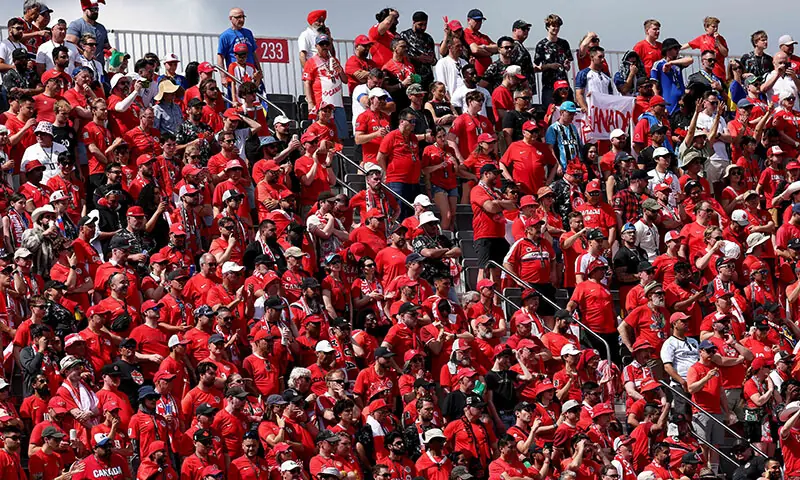
Canada’s Ismael Kone had a golden opportunity in the 30th minute, but sailed his strike well over the net, prompting groans from tens of thousands of Canadians who blanketed the stadium in a sea of red.

The second half began similarly, with Canada largely on the attack, but unable to find the net. Bosnia’s veteran defender Sead Kolasinac saved a certain goal when he diverted a strike from David onto the crossbar, extending Canada’s agony.

But Larin’s strike in the 78th minute marked a high point in Canada’s limited World Cup history, causing a mostly Canadian crowd of 43,000 to erupt.

Canada fans watch the action in the stands during the FIFA World Cup 2026 Group B match between Canada and Bosnia and Herzegovina at Toronto Stadium on June 12, 2026 in Toronto, Ontario, Canada. — AFP

Canada threatened to go ahead in the final minutes, narrowly missing a goal near the final whistle.

Canadian entertainment royalty attended the match at the home of the MLS’s Toronto FC, including film star Ryan Reynolds, from Vancouver, and Saturday Night Live and Austin Powers star Mike Myers, a Toronto native.

  •  

Brazil begin FIFA World Cup bid with Morocco draw as Scotland edge Haiti

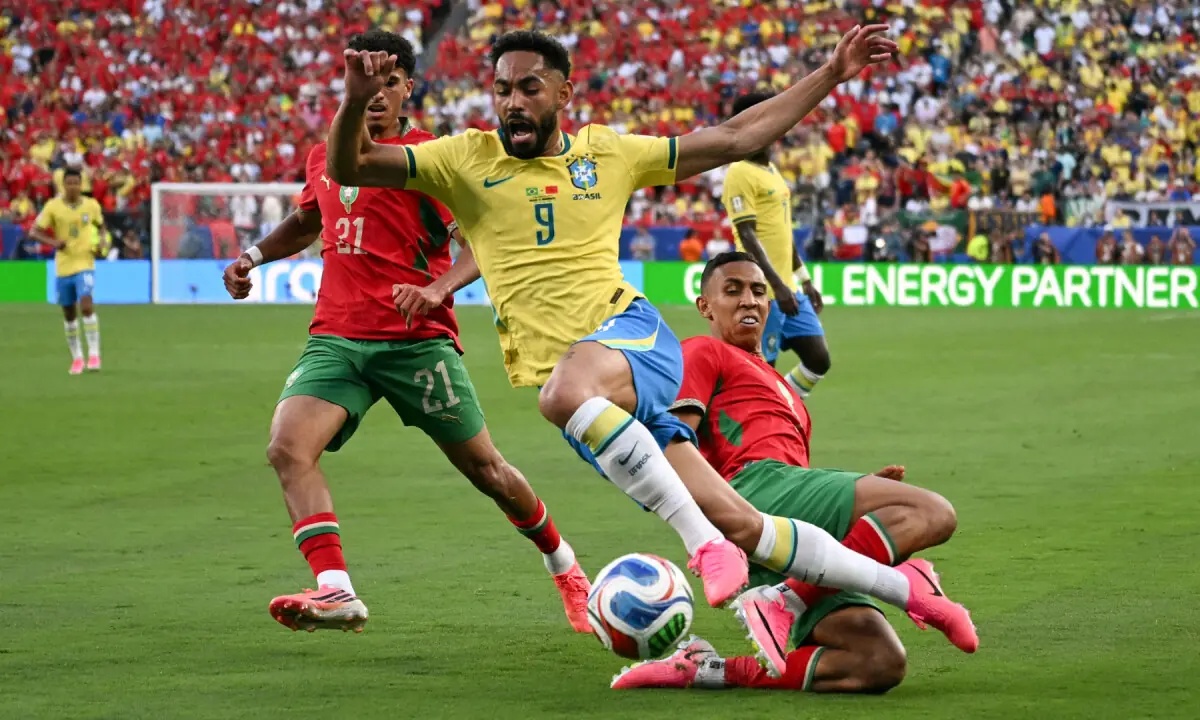
Five-time winners Brazil needed a superb Vinicius Junior equaliser to draw 1-1 with Morocco in their opening game at the World Cup on Saturday as Scotland marked their return to the tournament after a 28-year absence with a nervy 1-0 victory over Haiti.

On the first day to feature four matches at the 48-team tournament, Qatar won the first World Cup point in their history when Miro Muheim’s own goal earned the 2022 tournament hosts a 1-1 draw with Switzerland.

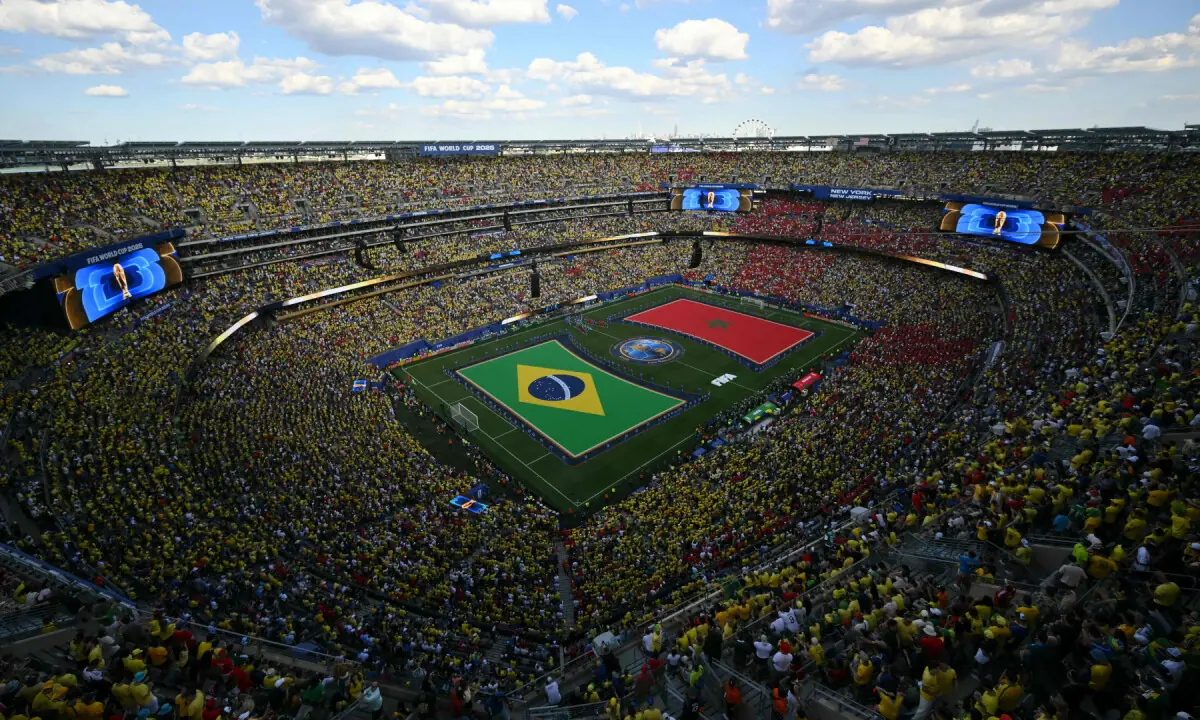
The meeting of Brazil and 2022 semi-finalists Morocco at the MetLife Stadium just outside New York City was a clash of the teams ranked sixth and seventh in the world respectively.

Ismael Saibari ran through to give Morocco a 21st-minute lead with a clever scoop in the Group C opener, but Vinicius produced a moment of magic to ensure Brazil came away with a point, cutting in from the left and unleashing a thunderous shot to level on 32 minutes.

Brazil are chasing a record sixth World Cup title, 24 years after last lifting the trophy, but Saturday’s performance suggests there is a lot of work to be done by Carlo Ancelotti’s side.

“I think this was a tough match, especially in the beginning. I think the team was a bit anxious and nerves were all over the place,” said Ancelotti.

“We didn’t play well, but we cannot lose heart. This is the first match in the World Cup and we can’t… think the team is doing perfectly from the get-go.”

Tartan Army

In Group C’s other game on Saturday, Scotland — playing in the World Cup for the first time since 1998 — were roared on to a hard-fought win over Haiti, themselves playing in their first World Cup since 1974.

Hordes of Scotland’s famous “Tartan Army” travelling supporters packed the Gillette Stadium in Foxborough, outside Boston, to watch manager Steve Clarke’s side claim their first victory in a World Cup game since the 1990 finals in Italy.

After a deafening rendition of “Flower of Scotland”, the Scots started a physical contest on the front foot, with midfield star Scott McTominay hitting the post in the 17th minute.

The breakthrough came on 28 minutes when Aston Villa midfielder John McGinn bundled a deflected shot past Haiti goalkeeper Johny Placide.

But Scotland were never able to extend their advantage against a resilient Haiti team, hanging on grimly in the closing stages before bagging a precious three points.

“Everyone said it was a must-win game — we won the game,” said Scotland manager Clarke, whose team face Morocco on Friday in their second game.

Qatar history

Earlier, Switzerland had taken the lead against Qatar in Santa Clara, California in Group B when Breel Embolo converted a first-half penalty, but Muheim’s injury-time own goal secured a share of the spoils.

“I am very proud of the team,” said Qatar’s Spanish coach Julen Lopetegui.

“I told them that even if we hadn’t scored the goal and didn’t draw I would have been proud of the mentality and discipline that they showed today. But fortunately, we scored and that was history.”

In Saturday’s late game, Australia take on Turkiye in Vancouver in Group D after the United States kicked off the group on Friday with a 4-1 demolition of Paraguay.

Elsewhere on Saturday, Ghana’s foreign minister said the country had “dispatched an official note of protest” over Canada’s refusal to issue a visa to Thomas Partey and requested the co-host country “reviews its unfortunate decision”.

Midfielder Partey is facing trial in the United Kingdom next year on rape charges.

Ghana open their campaign against Panama in Toronto on Wednesday.

  •  

Paraguay's Almiron becomes first player to be sent off under new FIFA 'mouth-covering' rule

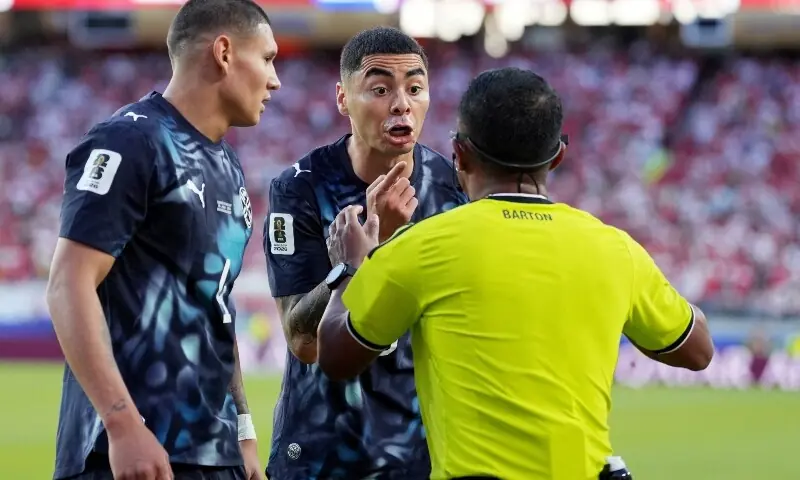
Paraguay’s Miguel Almiron claimed an unwanted piece of football history on Friday after becoming the first player to be sent off for covering his mouth during an on-field confrontation under new FIFA rules.

Former Newcastle player Almiron was given his marching orders in first half stoppage time after covering his mouth while he appeared to direct a comment at Turkiye’s Mert Muldur during the two teams’ World Cup Group D game in Santa Clara, California.

Paraguay were leading 1-0 when Almiron was dismissed following a VAR review.

FIFA announced in April that players who cover their mouths in confrontations with opponents will be given a red card.

The initiative being rolled out at the World Cup is part of a broader effort to combat racism, FIFA has said.

The new rule follows controversy earlier this year when Benfica winger Gianluca Prestianni was accused of racially abusing Real Madrid star Vinicius Junior during a Champions League game in February.

Prestianni denied racially abusing Vinicius but was later banned for six matches — with three of those suspended — for “homophobic conduct”.

FIFA President Gianni Infantino has been a prominent supporter of the new law.

“If you do not have something to hide, you don’t hide your mouth when you say something. That’s it, as simple as that,” Infantino said in March.

  •  

Spain held 0-0 by World Cup debutants Cape Verde

European champions Spain were held to a shock 0-0 draw by tiny World Cup debutants Cape Verde on Monday.

Regarded as one of the strong pre-tournament favourites, Spain had been expected to cruise past Cape Verde in their Group H opener in Atlanta.

But despite enjoying 74 per cent possession and laying siege to the Cape Verde goal, the 2010 world champions were unable to find a breakthrough against the underdogs from the volcanic archipelago of just 525,000 people, who are ranked as 2000-1 outsiders to win the World Cup by several betting websites.

Cape Verde’s Vozinha applauds fans after the FIFA World Cup 2026 Group H match between Spain and Cabo Verde at Atlanta Stadium on June 15, 2026 in Atlanta, Georgia, the US. — AFP

Not even the introduction of Barcelona superstar Lamine Yamal off the bench could engineer a goal for Luis de la Fuente’s men.

Cape Verde’s players and supporters, meanwhile, celebrated wildly after securing an improbable point in what was their first-ever World Cup match.

The underdogs, nicknamed the Blue Sharks, had never qualified for the World Cup, but were boosted in their bid to qualify for the finals after FIFA’s expansion of the tournament to 48 teams.

  •  

Saudi Arabia launches new national carrier Riyadh Air despite Middle East conflict, delays

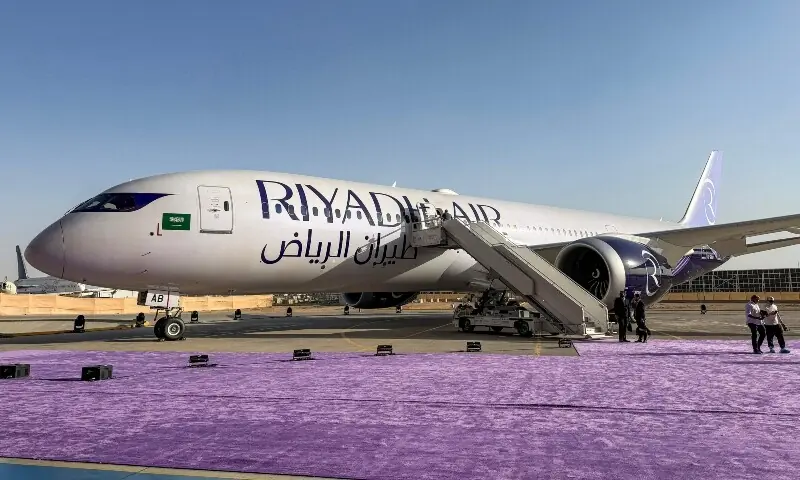
Saudi Arabia launched its second national carrier Riyadh Air after more than a year of delays on Wednesday, defying the economic turmoil triggered by the Middle East war and strong competition from established Gulf airlines.

A London-bound Boeing 787 Dreamliner in Riyadh Air’s white and lavender livery took off at 2:30am local time, putting in motion a flagship project in Saudi Arabia’s push to reduce its economic reliance on oil.

Riyadh Air, the country’s second state-owned airline after Jeddah-based Saudia, is meant to help turn the Saudi capital into a global hub to rival Dubai, the world’s busiest for international passengers.

“We want to bring glamour, we want to bring refinement, we want to bring grace back,” Riyadh Air CEO Tony Douglas told AFP.

The launch, originally planned for 2025, was set back by delivery delays from Boeing, which has suffered a series of manufacturing and safety problems in recent years.

It also follows unprecedented attacks from Iran, which has fired thousands of drones and missiles at Gulf targets, including airports, casting the wealthy region into sudden economic uncertainty.

But, for Douglas, ex-CEO of Abu Dhabi’s Etihad airline, the inaugural flight is “the culmination of four years’ worth of preparation”.

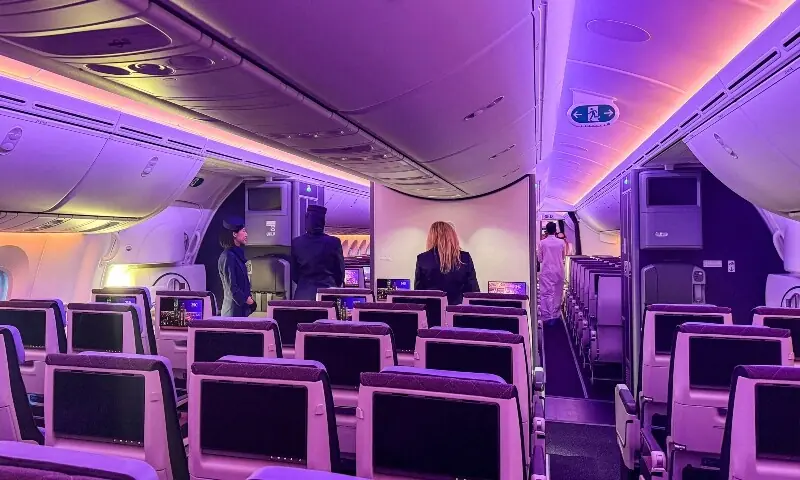
“I think Riyadh, as a result of its geography, during this particular point in time, has been less affected” by the attacks, he said, seated in a Riyadh Air Dreamliner cabin at a pre-launch event.

“You have the trials and the tribulations, you win some, you lose some, you make progress, you sometimes have setbacks, but you have made it, and this day we’ve made it,” added the CEO.

Saturated market?

Saudi Arabia is building a major new airport in Riyadh with a planned capacity of 120 million passengers a year by 2030, compared to 53m at the existing King Khalid International Airport.

Riyadh Air is owned by the $900 billion Public Investment Fund (PIF), the main vehicle for Crown Prince Mohammed bin Salman’s ambitious Vision 2030 economic reforms.

In a statement of intent, the airline ordered 132 Boeing 787 Dreamliners and last June signed for 25 Airbus A350-1000s, with an option for 50 more.

“Our ambition is to be able to connect to over 100 international cities over the next five years,” Douglas said.

At a ceremony celebrating the first planes’ delivery, PIF chief and Riyadh Air chairman Yasir Al-Rumayyan described “a historic moment for the nation” and said the company would create “200,000 direct and indirect jobs”.

Saudi Arabia is focusing on Vision 2030’s more pragmatic ventures as extravagances like Neom, a futuristic city in the desert, and Riyadh’s cuboid skyscraper Mukaab, are scaled back or scrapped to save costs.

Saudi Arabia, which is hosting the 2030 World Expo and the 2034 FIFA World Cup, and welcomes millions of pilgrims to Makkah each year, aims to triple its annual air traffic to 330 million passengers by 2030.

Some analysts have cast doubt over these ambitions in a regional market that is saturated with competitors such as Emirates, Qatar Airways and Etihad.

Yet Saudi airlines hold a significant advantage over Gulf competitors: a domestic market of approximately 35m people, by far the region’s largest.

  •  

South Africa hold Czechs, keep World Cup knockout dream alive

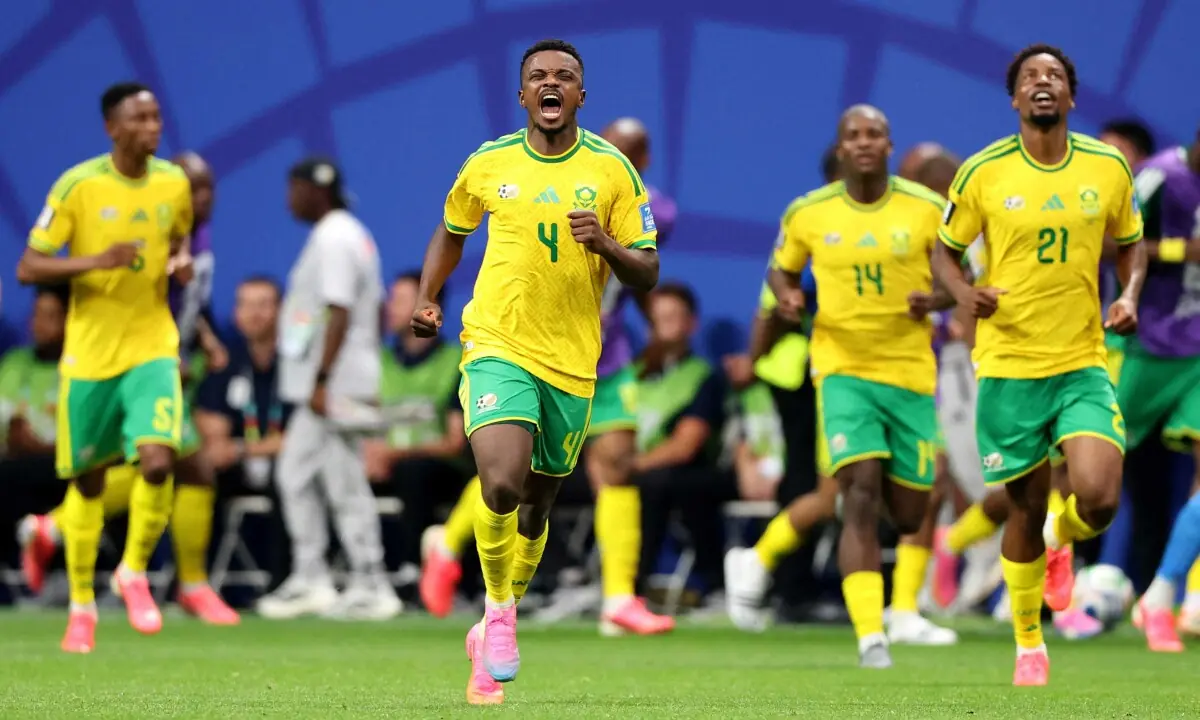
Teboho Mokoena’s penalty kept South Africa’s dream of reaching the World Cup knockout stages for the first time alive after a 1-1 draw with the Czech Republic in Atlanta on Thursday.

Michal Sadilek’s early opener had the Czechs on course for just their second World Cup win as an independent nation.

But Mokoena’s late spot-kick kept both teams in the hunt for the last 32, although they will almost certainly have to win their final Group A fixture to advance.

Both sides move onto one point, two behind co-hosts Mexico and South Korea, who face off later on Thursday.

South Africa next face South Korea, while the Czech Republic take on the daunting task of playing Mexico in the Estadio Azteca.

Both sides started with disappointing performances and defeats on the World Cup’s opening day, but the Czechs quickly set about making amends.

Patrik Schick is the biggest name in a Czech side lacking the star quality of previous generations but the Bayer Leverkusen forward missed a glorious chance inside the first minute when he planted a header wide.

Miroslav Koubek’s men only had to wait another five minutes to take the lead.

Adam Hlozek’s cross was classily cushioned by Alexandr Sojka into the path of Sadilek, who calmly stroked the ball past Ronwen Williams.

Now in their fourth attempt, South Africa have never progressed beyond the group stage at the World Cup.

Hugo Broos has overseen an upturn in Bafana Bafana’s fortunes since taking charge five years ago.

The 2010 hosts had not qualified for the World Cup since 2002 but finished third at the 2023 Africa Cup of Nations.

Their return to the global stage has exposed a lack of quality, though, particularly in forward areas.

The Czechs were left to rue not making more of their chances to kill the game off early in the second half.

Vladimir Darida took too long to get his shot off with a big chance before Lukas Cerv’s long-range effort was tipped over by Williams.

There were thousands of empty seats on show at the futuristic home of the NFL’s Atlanta Falcons, but those that were in attendance loudly booed the mid-half hydration breaks in an enclosed and air-conditioned stadium.

The majority of the crowd were backing South Africa and finally had something to cheer seven minutes from time.

Thapelo Maseko’s shot hit the arm of the unfortunate Pavel Sulc and referee Tori Penso, part of an all-female officiating team, pointed to the spot.

Mokoena confidently drilled home the spot-kick for his nation’s first World Cup goal in 16 years.

They came close to a second five minutes later when Matej Kovar saved from Relebohile Mofokeng.

But both sides had to settle for a point that could yet prove vital come the end of Wednesday’s final Group A games.

  •  

SpaceX buys Cursor for $60bn

SAN FRANCISCO: SpaceX said on Tuesday it will acquire artificial intelligence coding startup Cursor for $60 billion as shares of Elon Musk’s rocket company soared for a third straight session after a record-breaking IPO.

Near 1130am (1530 GMT), shares of SpaceX, formally Space Explor­ation Technologies Corp., stood at $214.29, up 11.2 per cent, and lifting its market value above Amazon to become the fifth largest enterprise in terms of market valuation.

Cursor, founded in 2022 and based in San Francisco, specialises in AI for creating software code, particularly for business uses. An acquisition had looked possible after the two companies had announced a partnership in April that included a clause for Cursor to be potentially bought by SpaceX for $60 billion.

In a filing with the Securities and Exchange Commission, SpaceX said the all-stock deal was expected to close in the third quarter of this year and that Cursor would become a wholly owned subsidiary.

Combining Cursor’s software and product expertise with SpaceX’s “Colossus” AI training supercomputer will enable the company “to build the world’s most useful models,” the companies said in April when announcing their partnership.

Cursor had initially emerged as a platform where developers could interface with other AI models, such as Anthropic’s Claude or Google’s Gemini programme.

In late October, Cursor’s parent company Anysphere launched its own model, Composer, which has since been updated at a competitively priced level.

Cursor’s emergence has coincided with the growth of “vibe coding,” whereby online users ditch written codes and build applications by commands executed by AI.

The company has also been boosted by the growing capacity of AI “agents,” which are able to undertake tasks of increasing sophistication well beyond responding to research queries.

Cursor described the latest version, Composer 2.5, as a “substantial improvement” over Composer 2.

“It is better at sustained work on long-running tasks, follows complex instructions more reliably, and is more pleasant to collaborate with,” according to a May 18 blog post.

Growth at Cursor has been accelerated by increased business with the private sector, where there is a greater volume of work and profit margins are more robust compared with individual clients. At its last funding round in November, Cursor was valued at $29 billion.

Published in Dawn, June 17th, 2026

  •  

India blocks Telegram before retest exam to curb cheating

India blocked access to the Telegram messenger app on Tuesday ahead of a retest of a nationwide medical college entrance examination, following a scandal last month over a question paper leak.

The failure of the hugely competitive exam, along with a separate marking fiasco in high school tests, sparked outrage and fuelled youth protests demanding the education minister’s resignation.

The electronics ministry issued the order restricting access to Telegram until Monday, the day of the retest. Message-editing features, which allow users to alter existing posts, will remain restricted until June 30.

“Both measures have been taken in the interest of public order, in response to the organised use of the platform by cheating rackets to defraud candidates,” India’s National Testing Agency (NTA) said in a statement.

The National Eligibility Entrance Test (NEET) is one of the country’s most competitive exams, attracting more than two million aspiring doctors.

The NEET exam was scrapped in May following allegations that the question paper was leaked in advance, including reports that it had been circulated through Telegram channels.

Responding to the electronics ministry’s decision, Telegram founder and CEO Pavel Durov said the week-long ban “hasn’t stopped anything” but “punishes” 150 million ordinary users of the messaging app in India and “not the insiders who leaked the exam materials”.

“The leaks just moved to other apps,” Durov said in a post on X.

The Internet Freedom Foundation, a digital rights group, said the ban “is a disproportionate answer to exam fraud”.

The intense pressure to succeed in the national exams has fuelled a lucrative industry, with tens of thousands of coaching centres across the country.

Fierce competition means that success often comes at a high personal and financial cost — creating opportunities for criminal networks seeking to sell leaked examination papers to the highest bidder.

Test pilots

India’s Central Bureau of Investigation has arrested the “kingpin” alleged to be behind the leak, naming him as a chemistry lecturer involved in the examination process for the NTA.

On Monday, the education ministry launched a website where the public can report “suspicious claims, unauthorised content, or fraudulent activities” related to the NEET exam.

Indian air force helicopters were seen on Tuesday readying for the delivery of the test papers, to “prevent any possibility of leak”, The Press Trust of India news agency reported, broadcasting images of preparations in the southern state of Tamil Nadu.

Despite rapid economic growth, millions of people in the world’s most populous nation still struggle to find stable and well-paying jobs, fuelling discontent.

Students spend years preparing for exams in the hope of securing a professional career, with the pressure intensified by limited opportunities and intense competition.

Indian media reported suicides of teenagers following the fiasco over the NEET exam.

The NEET scandal came on top of another controversy, related to the online marking system used for tests taken by nearly two million high school students.

Many students said the system had assigned incorrect grades or issued results to the wrong candidates.

Anger at the exam mishandling has been channelled by the satirical “Cockroach People’s Party”, which has won millions of followers on social media since its launch in May.

The movement emerged after India’s Chief Justice Surya Kant reportedly likened young people who criticised the government to “cockroaches” and “parasites” during a court hearing, sparking outrage among the youth. Kant later said his comments were taken out of context.

  •  

Folding clothes, making coffee and sandwich — Indian workers training AI robots to take their jobs

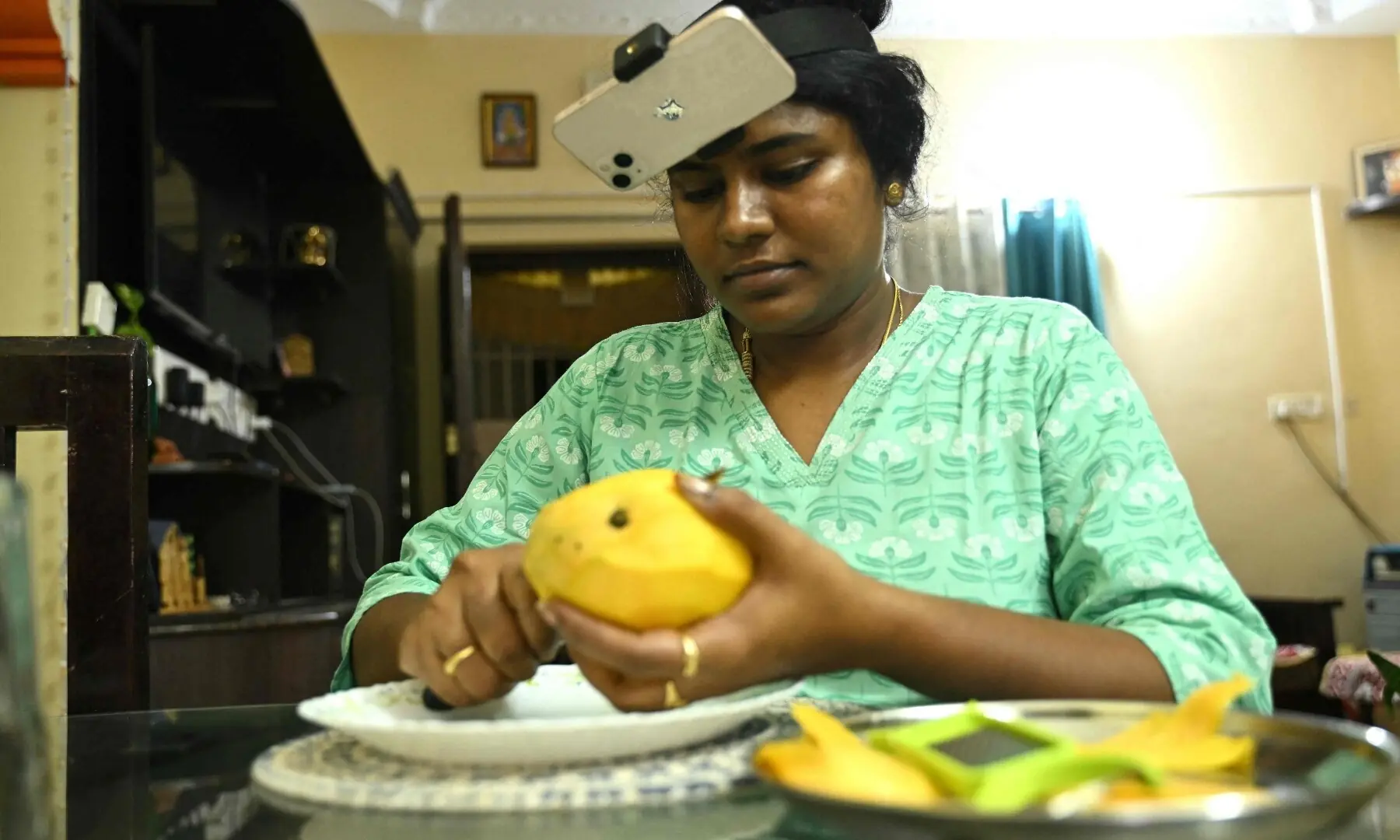
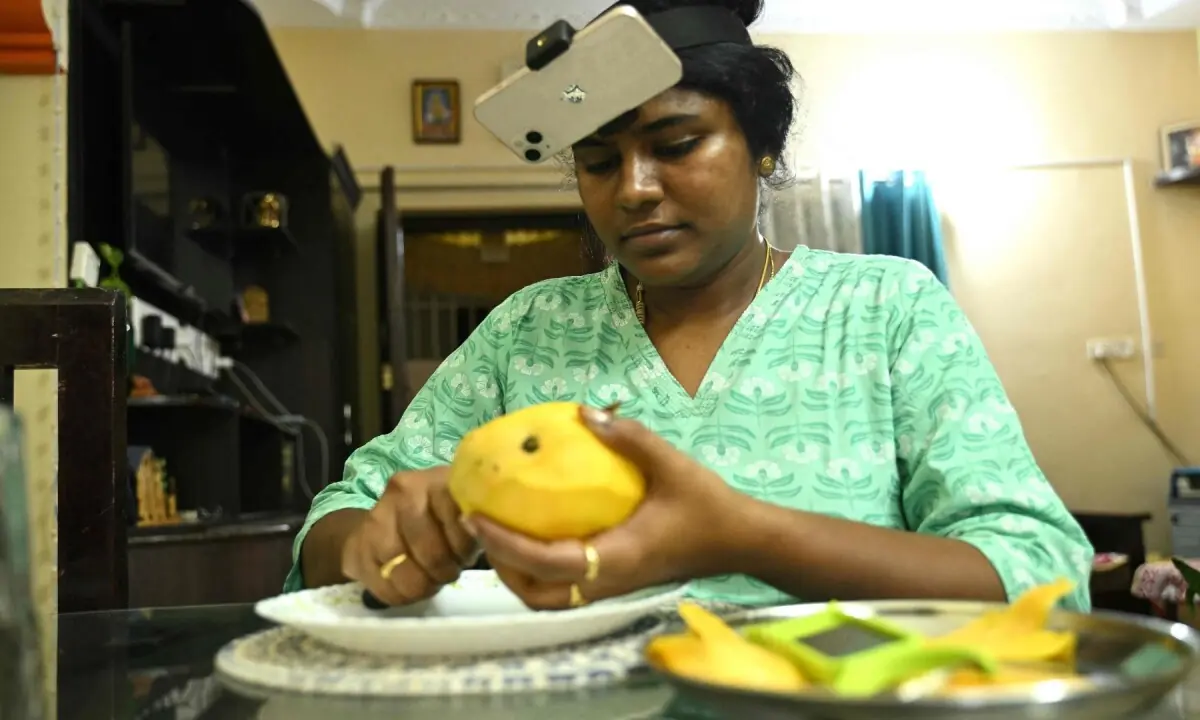
With a smartphone strapped to her head, Indian housewife Nagireddy Sriramyachandra films herself slicing mangoes to train AI-powered robots to take on household jobs in the future.

Earning just over two dollars for an hour of video, her mundane recordings are invaluable for global tech companies teaching machines how to move like humans in the real world.

The 25-year-old is one of a growing army of thousands of AI system trainers in the world’s most populous country.

“Who else will give you 250 rupees an hour just for doing housework?” said Sriramyachandra from her kitchen in Chennai in southern India’s Tamil Nadu state.

“I may get a robot myself in the future,” she added.

This photograph taken on May 15, 2026 shows an Indian housewife Nagireddy Sriramyachandra wearing a smartphone on her head as she records her actions through motion capture while slicing mangoes at her home in Chennai. — AFP

Artificial intelligence chatbots and image generators crunch reams of digital data, but building systems to navigate real-life environments is more challenging.

Developers think feeding first-person footage, called “egocentric data”, into specialised AI models will help robots copy humans.

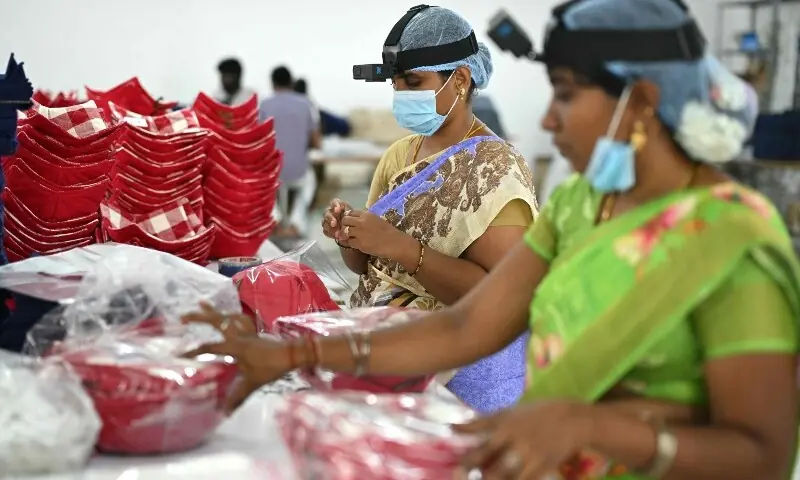
Some AI trainers work at home, others in factories or specialised studios — using video glasses, head-mounted cameras and motion sensors.

“It blares ‘hands not detected’ when I’m not recording properly,” said Sriramyachandra, who sends recordings via a special app to the AI data company Objectways.

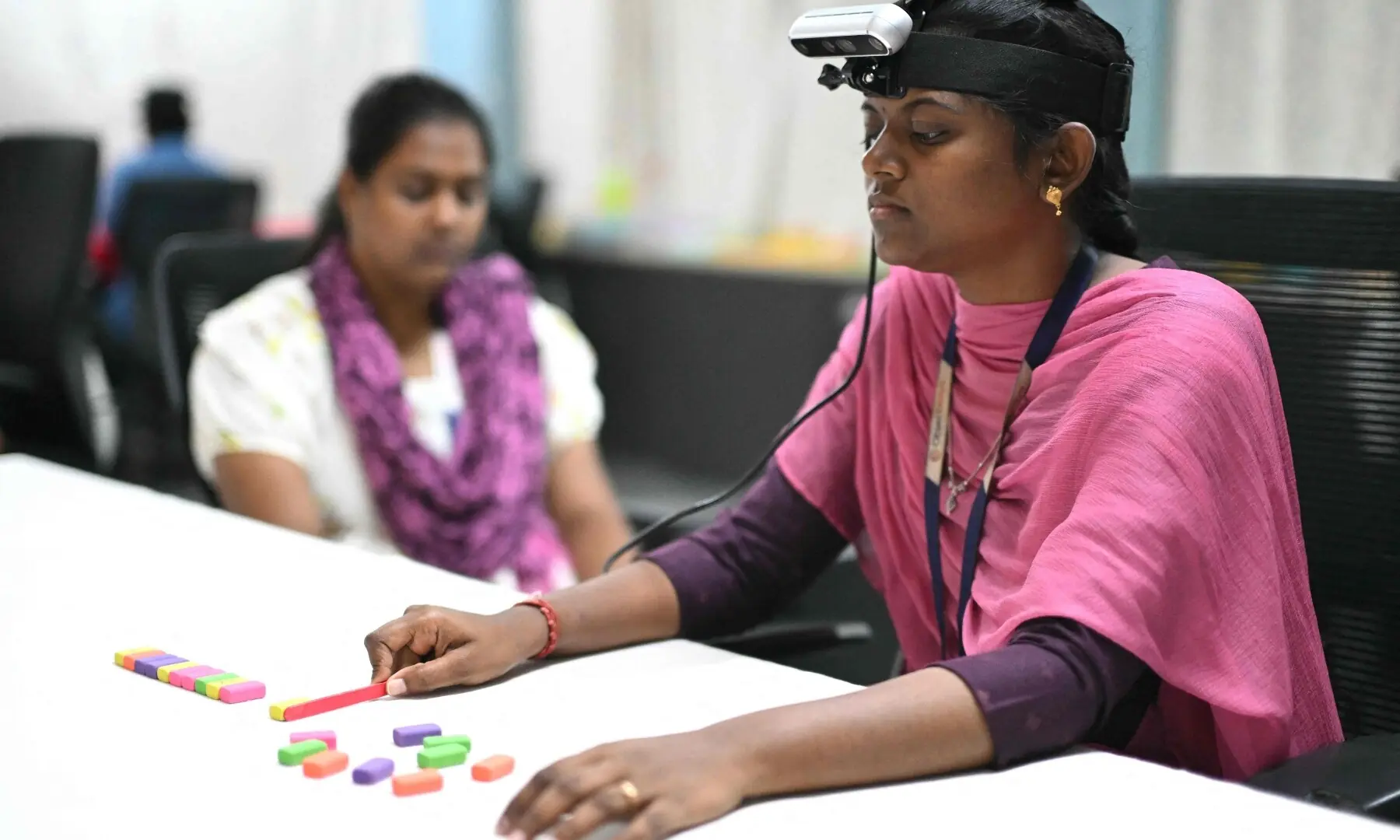
This photograph taken on May 13, 2026 shows a worker (R) wearing a RGB camera on her head recording actions through motion capture while arranging colored blocks at AI data company Objectways’ office in Tamil Nadu’s Karur district. — AFP

The firm, which has offices in India and the United States, lists Fortune 500 multinationals as clients. It works with Amazon SageMaker, a platform for machine learning models.

‘Better things’

The humanoid robot market is booming, with investment bank Morgan Stanley predicting there could be over a billion in use by 2050, mostly for industrial and commercial purposes.

“Folding clothes, coffee making… cooking a very specific thing, sandwich making,” Objectways head Ravi Shankar said, listing videos requested by clients.

“Some jobs are supposed to be taken over, so humans can go and do better things.” In India, the emerging field of spatial AI is providing new employment — for now.

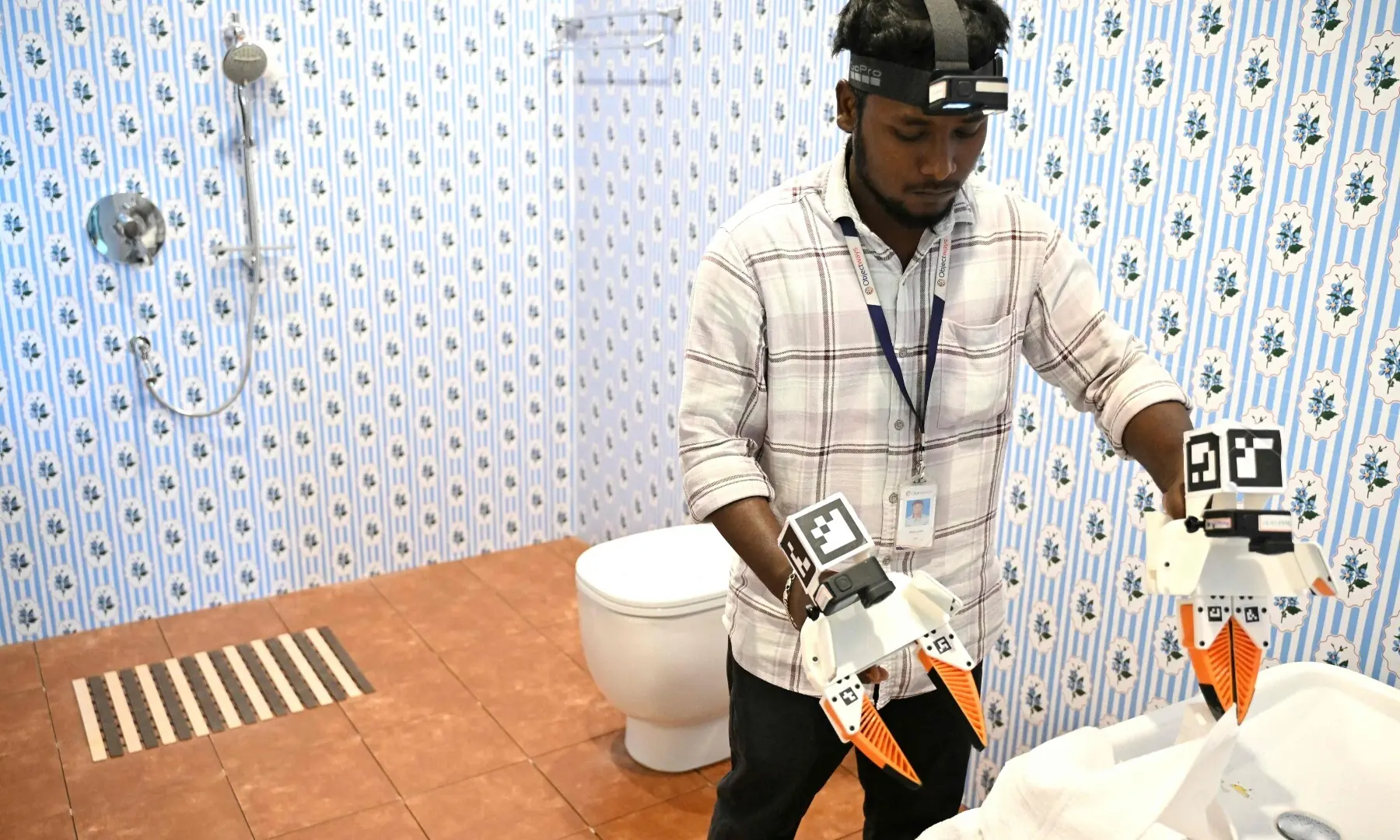
This photograph taken on May 13, 2026 shows a worker wearing a GoPro camera on his head recording actions through motion capture while folding towels inside a model bathroom at AI data company Objectways’ office in Tamil Nadu’s Karur district. — AFP

The 50-year-old CEO is US-based, but hires workers from Tamil Nadu, where he grew up, one of India’s international technology hubs.

At a Karur textile factory, busy with workers attaching labels to caps and ironing cloth bags, AFP saw eight people wearing head cameras and smart glasses supplied by Objectways.

India has positioned itself as a global middleman for the creation, processing and annotation of AI data.

“It’s likely that these data collection services will increase”, said digital labour expert Aditi Surie, from the Indian Institute for Human Settlements in Bengaluru.

Informal workers

India is aggressively developing its AI industry, but its leaders are aware that, alongside the technology’s much-hyped benefits, automation poses risks.

Government think-tank NITI Aayog said that most discussions around artificial intelligence and labour “focus on white-collar professionals and predict an almost certain loss of jobs in the segment” without urgent action.

“Little attention, if any, is paid to how AI can serve India’s 490 million informal workers, the very people who form the backbone of our economy,” it said in a report released ahead of a global AI summit in India this year.

The think-tank has examined how the technology could help or harm dozens of professions — from cobblers to sewer cleaners, farmers to tea sellers.

For the last decade, 55-year-old Ponni has sat on a roadside in Bengaluru, the city known as India’s Silicon Valley, making flower garlands.

She, too, has been paid to have a phone strapped to her forehead.

“The next generation… who might have to do work similar to mine — they will face a problem,” Ponni said.

Always wearing a camera

At an Objectways studio, AI system trainers film themselves performing household tasks in fake, fully furnished apartment rooms.

After several thousand hours of filming, the wallpaper is changed to provide clients with variety.

“Today I sit here, tomorrow I stand there,” said engineering graduate Rani N., 21, on a break from filming herself, once again, folding a towel.

Each video lasts about four minutes, and she records around 90 a day — on nearly every conceivable spot on the bed.

She says the job is “tolerable”, but feels like she’s always wearing a camera.

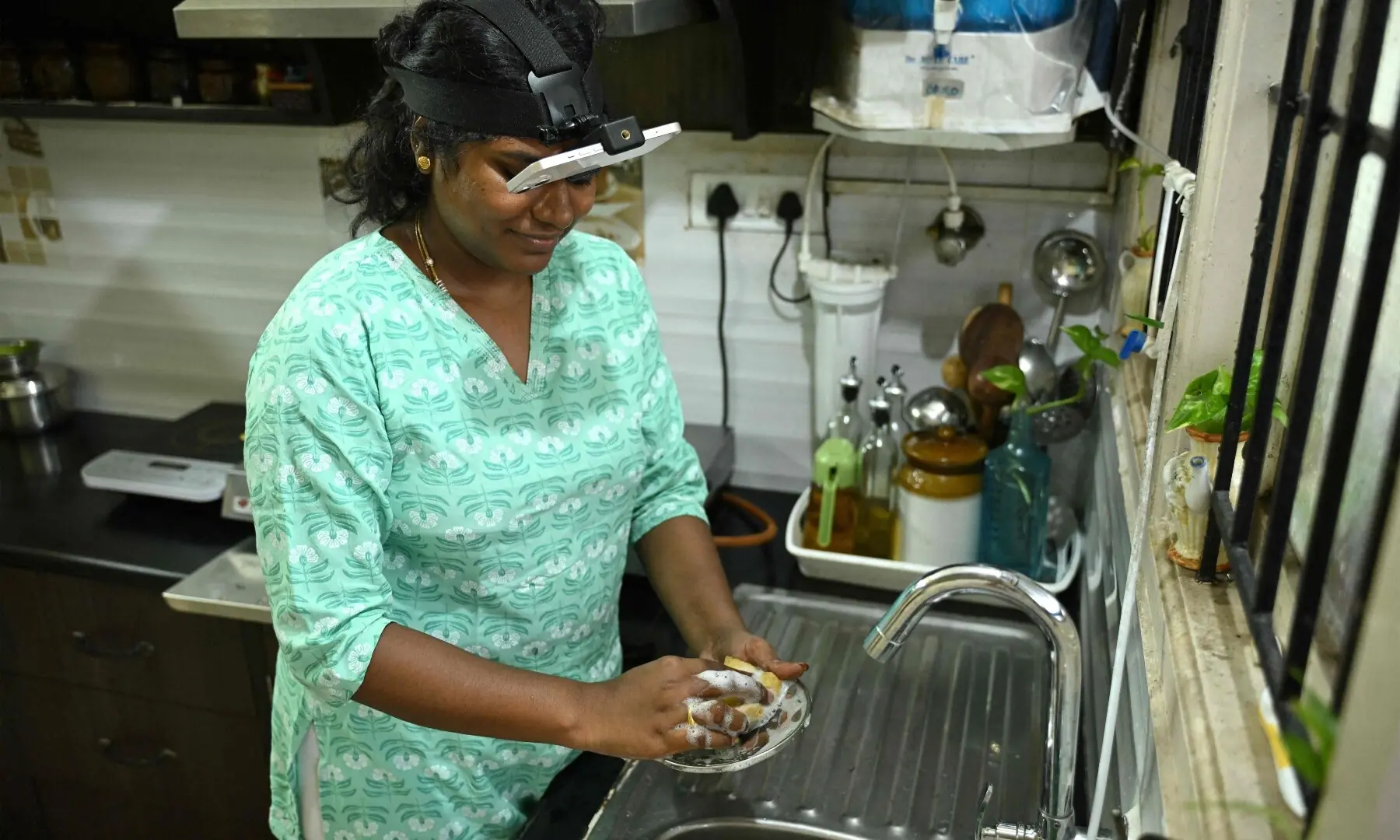
This photograph taken on May 15, 2026 shows an Indian housewife Nagireddy Sriramyachandra wearing a smartphone on her head as she records her actions through motion capture while washing dishes at her home in Chennai. — AFP

In other rooms, colleagues arranged pencil sharpeners, water bottles and crayons in patterns, recording with depth-sensor cameras.

Qanat Consulting Services in Andhra Pradesh, an Objectways subcontractor, supplies about a dozen larger data firms with recordings.

Some of its 2,000 contributors perform tasks with motion-sensor bands on their “wrists, hands and legs”, CEO Thaslim Pattan said.

Manish Agarwal of Bengaluru-based Humyn Labs, not related to Objectways, records conversations as well as videos.

Contributors discuss assigned topics — ranging from politics to entertainment — for clients wanting to process speech patterns.

Agarwal denies that robots will steal jobs, believing that networks of humans and robots “will work together” one day, he said.

“A welder in India could be managing a welder-robot in Prague,” he said.

  •  

Pakistan, 7 others blame Israel for attacks on West Bank mosques

RIYADH: Muslim-majority countries including regional heavyweights Saudi Arabia and Turkiye said on Thursday that they held Israel responsible for arson attacks on two West Bank mosques, which Palestinian officials said were torched by settlers.

The foreign ministers of Saudi Arabia, Jordan, the UAE, Qatar, Indonesia, Pakistan, Egypt and Turkiye lambasted “the continued and escalating settler violence against Palestinians in the occupied West Bank”, pointing to the mosques that were set on fire a day earlier.

“The Ministers hold Israel — as the occupying power — responsible for these attacks,” they said in a joint statement.

On Wednesday, Israeli settlers set fire to mosques in the West Bank villages of Jiljiliya, north of Ramallah, and neighbouring Mazari an-Nubani, their mayors said, with journalists at one site seeing scorched walls and graffiti.

Israel’s military confirmed the arson and graffiti on the mosques, but did not identify the perpetrators. Journalists who visited one torched mosque saw graffiti daubed on the walls in Hebrew. Some read “vengeance” and: “Hi, from the Hilltop Youth”.

The incidents came during a period of increased attacks against Palestinian communities by settlers in the Israeli-occupied West Bank since the start of the Gaza conflict in 2023.

Published in Dawn, June 19th, 2026

  •  
❌