Reading view

Refuse collection fees to rise from July; U-Save rebates may help cushion the impact for HDB households

SINGAPORE: Household refuse collection fees under the public waste collection scheme will be adjusted from July 1, 2026, marking the first revision since 2024.

According to the announcement by the National Environment Agency (NEA) made on June 12, HDB flats and non-landed private housing will see their monthly fee rise by S$0.44, from S$10.20 to S$10.64. Landed homes face a steeper increase of S$1.50, going from S$34.00 to $35.50. Both figures are inclusive of 9% GST.

Why the fees are going up

The revision comes as part of a regular review process, intended to ensure that Singapore’s overall waste management system remains sustainable. According to the announcement, the adjustment reflects rising operational and manpower costs faced by Public Waste Collectors (PWCs), who are responsible for refuse collection across the island.

While the increase may seem modest on a monthly basis, working out to just over 50 cents more for most households, it adds up over a year, and comes on top of other cost-of-living adjustments many households have had to navigate in recent years.

How HDB households can offset the increase

For HDB households, there’s some relief built in. The refuse collection fee can be offset using U-Save rebates, which are disbursed as part of the permanent GST Voucher scheme.

For FY2026, U-Save rebates will be disbursed in April, July, and October this year, with another round in January 2027. These rebates are credited directly into eligible households’ utilities accounts with SP Services, which may help cover utilities expenses, including the revised refuse collection fee.

Households looking for more details on eligibility and rebate amounts can refer to the GST Voucher – U-Save information available on the GovBenefits website.

Netizens weigh in

The announcement drew a flurry of reactions online, with many residents reacting with a mix of sarcasm and frustration.

Some took a sarcastic approach to the news. “Am I supposed to wait for the rubbish collector dressed in a smart formal suit this time to collect my rubbish face to face? No more going to bins to dispose my rubbish now right? I mean since we gotta justify the increased costs,” one commenter noted.

Others pointed out that the cumulative impact of small fee hikes shouldn’t be underestimated. “One household increase may look like a small amount. But if you multiply by the number of units in that flat, the amount is substantial!” another netizen wrote.

A recurring theme among comments was the timing of the increase relative to other forms of government support. “Just received the CDC vouchers, right? As usual, transport fares increased right after receiving the CDC vouchers last year,” one user observed, with another simply adding, “Yes. After collection of vouchers. Good timing.”

Amid the criticism, some comments took a more constructive tone, suggesting where the additional revenue should go. “It will be good if part of the higher fee is passed on to the rubbish collection workers as salary increment or special bonus,” one user suggested.

What this means for Singaporeans

For most HDB households, the actual out-of-pocket impact of this increase may end up being minimal, provided U-Save rebates continue to be applied as they have been. The bigger picture, though, is the continuous piling of small fee adjustments like refuse collection, utilities, conservancy charges. While individually small, these can feel like they’re chipping away at household budgets when they happen to occur around the same time as other cost increases.

For landed homeowners, who don’t benefit from U-Save offsets in the same way, the S$1.50 increase is a more direct hit, even if it remains a relatively small sum in absolute terms. While the increase itself is modest, it serves as a gentle reminder that small costs add up over time.

As with most household expenses, it pays to keep track of where the money goes, make use of rebates and vouchers where available, and practise habits that go a long way in helping households stay on top of their monthly budgets.

This article (Refuse collection fees to rise from July; U-Save rebates may help cushion the impact for HDB households) first appeared on The Independent Singapore News.
  •  

Full overnight road closure near JB CIQ on June 15 to 16 for RTS Link works

JOHOR BAHRU: Motorists planning a late-night crossing into Johor Bahru should take note of an upcoming road closure that may affect their route.

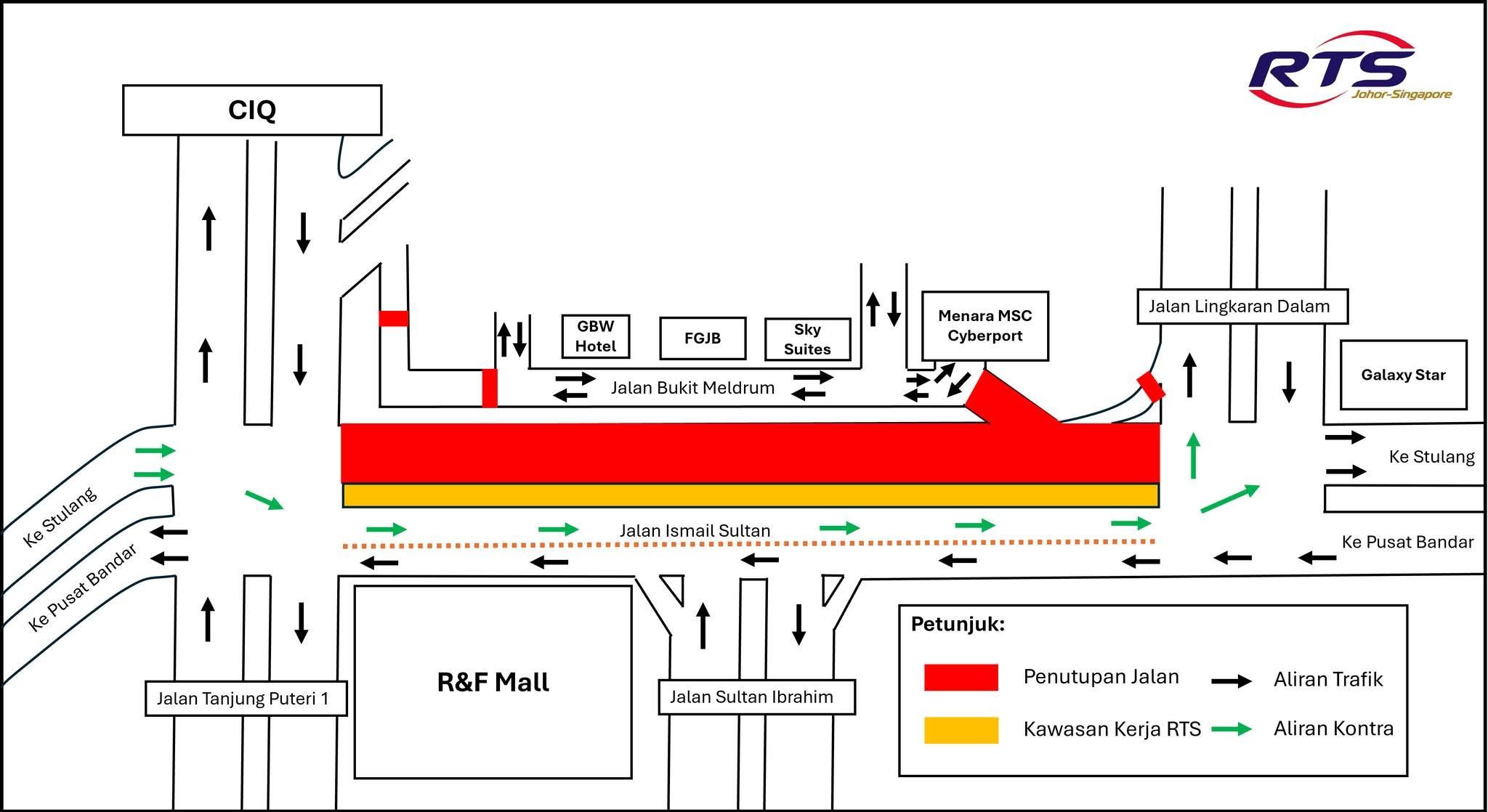
According to a traffic announcement by the RTSO, Jalan Ismail Sultan (Stulang-bound), located after the CIQ and R&F traffic light junction near GBW Hotel, will undergo a full road closure with intermittent contraflow lane operations from June 15 to 16, 2026. The closure will take place between 10 p.m. and 5 a.m., lasting a total of seven hours, and is being carried out for works related to the RTS Link project.

How the diversion will work

During the closure, motorists travelling towards Stulang will be diverted onto Jalan Ismail Sultan (City Centre-bound) via a contraflow traffic arrangement. This is marked out by green arrows on the accompanying route map.

Road users have been advised to pay close attention to all traffic signage and to follow the instructions of flagmen on duty, in order to keep traffic moving smoothly and safely during the closure period.

Merzsam Singkee: https://www.facebook.com/photo/?fbid=122245675334321910&set=a.122131150496321910
RTSO / Facebook
Route map

Why this matters for Singaporeans

For Singaporeans, even a localised overnight road closure just past the JB CIQ is worth paying attention to, particularly for those who regularly make late-night trips across the Causeway for cheaper petrol, dinner, groceries, or weekend getaways.

With the closure falling on a Monday night, the impact on weekend traffic volumes may be limited, but anyone planning a late return crossing during this window, especially those unfamiliar with the contraflow diversion, could find themselves caught out if they’re not aware of the change beforehand.

The works also show how much construction activity is currently taking place around the JB CIQ as the RTS Link project progresses. With the RTS Link set to significantly cut commute times between Woodlands and Bukit Chagar once operational, this kind of disruption is likely to become a more regular feature for cross-border motorists in the months ahead; this short-term inconvenience is likely tied to what’s expected to be a major long-term change in how Singaporeans and Malaysians move between the two cities.

For now, those planning to drive into JB late at night on June 15 to 16 would do well to factor in some extra time, or consider an alternative route or crossing time altogether.

This article (Full overnight road closure near JB CIQ on June 15 to 16 for RTS Link works) first appeared on The Independent Singapore News.

  •  

Massive fire breaks out at Gul Crescent warehouse, 80 firefighters deployed to tackle blaze

SINGAPORE: A large fire broke out at a warehouse along Gul Crescent in the early hours of Friday morning, prompting a swift response from the Singapore Civil Defence Force (SCDF).

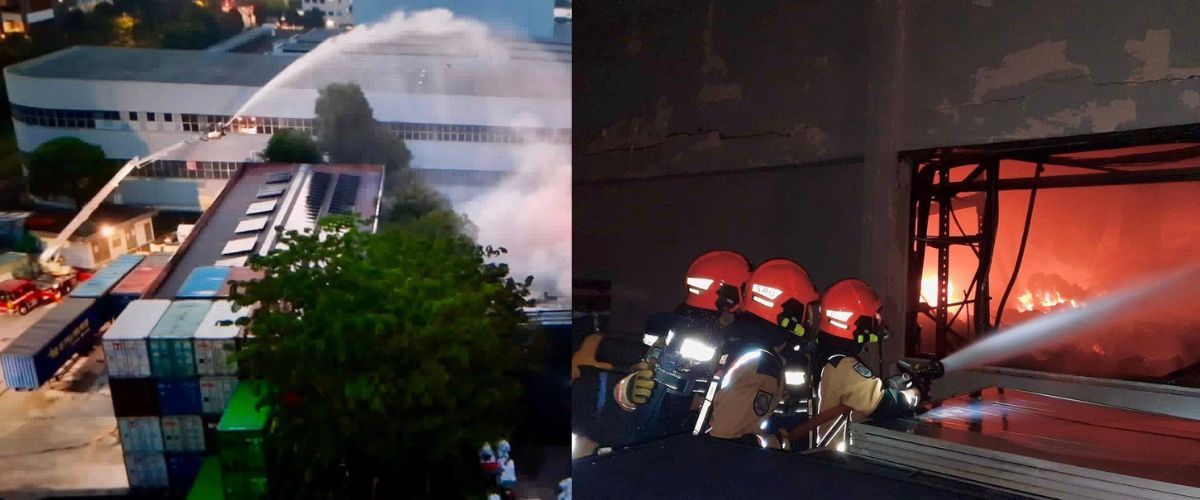
In multiple Facebook posts, the SCDF reported that the alarm was raised at around 3 a.m., with the fire involving a warehouse measuring roughly the size of a football field. Firefighters were quickly deployed to the scene to begin operations.

Chemicals and waste materials involved

In a follow-up update, the SCDF confirmed that the fire involved a mix of waste materials and chemicals stored within the warehouse. Despite the nature of the materials involved, the blaze remained contained to the building itself.

To bring the situation under control, SCDF mobilised a significant force; 20 emergency vehicles and about 80 firefighters were deployed to the scene to help control the situation. Firefighters surrounded the affected warehouse and worked to contain the fire using seven water jets, two firefighting machines, and an aerial monitor.

Fire brought under control, no injuries reported

SCDF later confirmed that the fire had been brought under control. Throughout the operation, no injuries were reported.

While the cause of the fire has yet to be confirmed, the scale of the response, involving dozens of firefighters and specialised equipment, shows how seriously SCDF treats incidents involving chemical storage, given the potential risks of toxic fumes, explosions, or rapid fire spread in such facilities.

Residents and motorists in the vicinity of Gul Crescent, an industrial area in the Jurong region, may have noticed heavy smoke or a strong burning smell during the operation. SCDF has not indicated whether any evacuation or advisory was issued to nearby premises as of writing.

Further updates are expected as investigations into the cause of the fire continue.

This article (Massive fire breaks out at Gul Crescent warehouse, 80 firefighters deployed to tackle blaze) first appeared on The Independent Singapore News.
  •  

Singapore dollar pulls further ahead of ringgit, even as Middle East jitters rattle markets

MALAYSIA: The ringgit had a mixed day on the currency markets, strengthening against the US dollar even as it lost more ground against the Singapore dollar, a divergence that’s particularly relevant for Singaporeans keeping an eye on their purchasing power just across the Causeway.

According to a Bernama report, the ringgit closed higher against the greenback as uncertainty surrounding the conflict in the Middle East weighed on the US dollar. At 6 p.m. on Friday’s close, the local note rose to 4.0555/4.0600 against the US dollar, an improvement from Thursday’s close of 4.0650/4.0690.

Why the US dollar is under pressure

SPI Asset Management managing partner Stephen Innes told Bernama that investors are largely taking a wait-and-see approach, with the next major market catalyst likely to come from developments in the Middle East rather than domestic factors.

Innes noted that markets are watching closely to see whether an emerging US-Iran peace narrative holds up or fades back into another cycle of headline-driven uncertainty. He also pointed out that stronger equity markets have helped recoup some of this week’s losses, improving regional risk appetite in the process.

Bank Muamalat Malaysia Bhd chief economist Afzanizam Abdul Rashid described the ringgit as having traded fairly stable for the day, with the ongoing US-Iran negotiations remaining the market’s main focus. He noted that oil prices fell sharply, with West Texas Intermediate dropping 2.47% to US$85.54 (RM347.08 or S$109.88) per barrel, and Brent crude falling 2.39% to US$88.22 per barrel.

But against the Singapore dollar, it’s a different story

While the ringgit gained against the US dollar, it weakened against a basket of major and regional currencies, including the Singapore dollar. The ringgit slid to 3.1602/3.1640 against the Singapore dollar, compared to 3.1556/3.1589 the day before. It also weakened against the Japanese yen, British pound, and euro, and slipped further against the Thai baht, Indonesian rupiah, and Philippine peso.

This divergence is a useful reminder that currency movements aren’t uniform; a currency can strengthen against one major counterpart while continuing to soften against others, depending on what’s driving each pairing.

What this means for the weekend crossing into Johor

For Singaporeans planning a weekend trip across the Causeway, the currency’s movement is a small but welcome one. With the ringgit slipping further against the Singapore dollar, every Singapore dollar converted goes a little further than it did the day before, whether that’s for petrol, groceries, meals, or a spot of retail therapy in JB.

The shift is marginal on a day-to-day basis, but for those who cross regularly, these incremental movements can add up over time, reinforcing the steady draw of weekend trips north for better value on everyday spending. For now, at least, the exchange rate continues to work in favour of Singaporean wallets heading across the border.

This article (Singapore dollar pulls further ahead of ringgit, even as Middle East jitters rattle markets) first appeared on The Independent Singapore News.
  •  

Seven parties charged over sinkhole that swallowed a car in Tanjong Katong

SINGAPORE: Nearly a year after a dramatic sinkhole opened up along Tanjong Katong Road South, swallowing a car along with its driver in its wake, investigations by the Building and Construction Authority (BCA), the Ministry of Manpower (MOM), and the Land Transport Authority (LTA) have concluded, with enforcement actions now being taken against those involved.

What happened on July 26, 2025

The incident took place beside a worksite where a shaft was being constructed to connect three new sewer pipelines. The works involved soil strengthening using Jet Grout Piles, as well as the casting of reinforced concrete caisson rings.

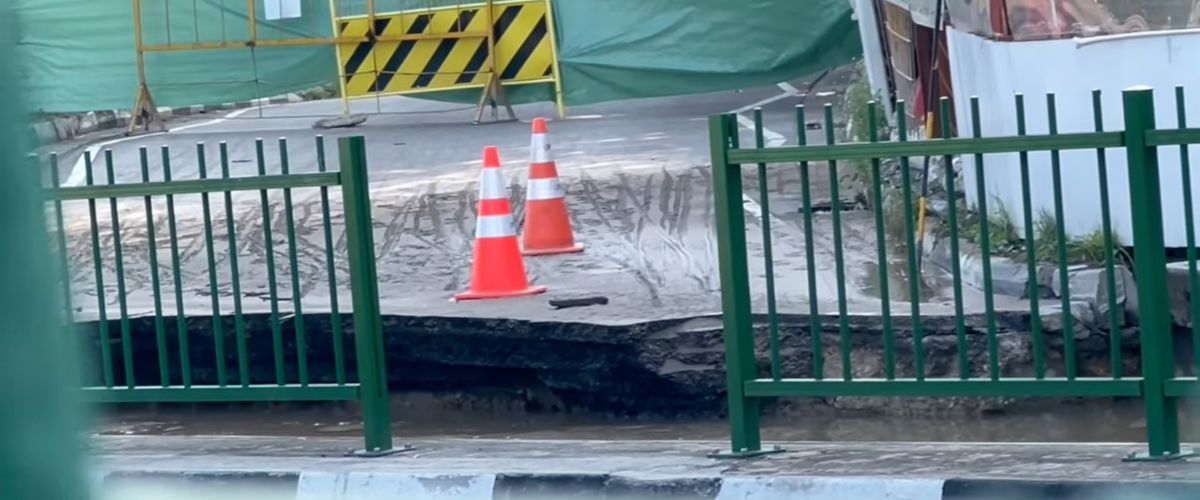
At around 5:50 p.m., part of the shaft under construction reportedly failed, causing soil to flow into the shaft. At around the same time, a sinkhole formed on the road above, and a car, with its driver still inside, fell into it. Workers at the worksite managed to rescue the driver, who was taken to hospital conscious.

Seven parties charged, two given conditional warnings

Following the joint investigation, charges have been brought against seven parties tied to the project. These include the builder, Ohin Construction Co Pte Ltd, along with its managing director, project director, and project manager. Two Qualified Persons and a resident engineer have also been charged.

The alleged lapses span several areas. Investigators found that unauthorised building works and road resurfacing had been carried out, with the works not complying with approved plans and lacking adequate risk assessments or safe work procedures. There were also reportedly licensing and supervisory failures, with specialist building works carried out without the required licence.

On the monitoring front, mandatory tests stipulated under the approved plans were allegedly not conducted, and the worksite did not have an operational video surveillance system at the time of the incident. Investigators also found that authorities were not notified of a road depression that had occurred before the sinkhole formed, and that there had been false declarations regarding the appointment of a site supervisor.

Separately, conditional warnings have been issued to PUB and Surbana Jurong Consultants Pte Ltd for offences under the Building Control Act.

Work on the project has been halted since the incident and remains so. Before it can resume, new project parties appointed by PUB will need to submit fresh structural plans, which will undergo comprehensive safety assessments and require approval from the BCA’s Commissioner of Building Control.

What this means for other construction sites in Singapore

In the aftermath of the incident, BCA reviewed more than 60 similar ongoing projects across the island and found no safety issues, reporting that adequate safeguards were in place across all of them. An advisory was also issued to the industry, reminding project parties to exercise due diligence on similar works.

MOM, for its part, has stepped up inspections at construction worksites since the incident, taking enforcement action where safety lapses were found. This included those related to excavation works, as well as issuing advisories to contractors and professionals on worker safety.

The authorities have reiterated that all parties carrying out road works must obtain the necessary permits from LTA and fully comply with regulatory requirements before starting any works. They added that breaches of safety or compliance duties that put the public at risk will be taken seriously.

For commuters and residents near construction sites, particularly those involving excavation or underground works, the case serves as a reminder of just how much relies on proper supervision, testing, and timely reporting behind the scenes, especially on projects that run beneath roads still in daily use. 

This article (Seven parties charged over sinkhole that swallowed a car in Tanjong Katong) first appeared on The Independent Singapore News.
  •  

‘Do not fail the light’ — Netizens react to Malaysia-registered car getting caught beating red light at school zone

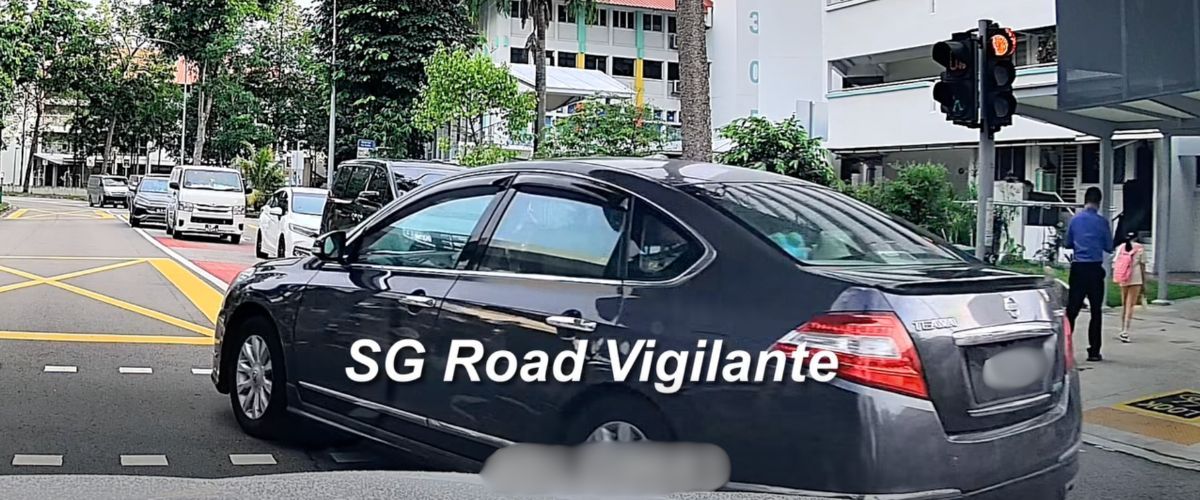
SINGAPORE: A dashcam video showing a Malaysia-registered Nissan Teana running a red light at a school zone along Ubi Avenue 1 has gone viral. As of writing, the video has racked up nearly 90,000 views, over 100 shares, and more than 350 reactions since it was posted on the Facebook page SGRV ADMIN.

According to the post, the incident occurred at around 8 a.m. on June 11, with the footage showing the Nissan Teana overtaking the dashcam vehicle in an apparent attempt to beat the red light, before failing to conform to the signal altogether.

Why school zones matter

School zones in Singapore are subject to stricter speed limits precisely because of the high volume of young children crossing roads on their way to and from school. Running a red light in such an area carries heightened risk, given how easily a child crossing on a ‘green man’ signal could be caught off guard by a vehicle barrelling through against the light.

Beating a red light is a serious traffic offence under Singapore law, given its potential to cause high-impact collisions at junctions. This risk is amplified further when the junction in question sits within a school zone.

Netizens call for action and raise enforcement concerns

The video drew strong reactions from commenters, many of whom expressed concern over the safety implications of the manoeuvre.

“A split-second failure to conform to a red light can cost a child’s future. Red means stop, especially when little lives are crossing. Do not fail the light,” one commenter wrote.

Others pointed towards the appropriate course of action. “Please report this to the Traffic Police via their online submission for disciplinary action, especially since it’s a school zone,” another user said.

Some comments leaned more cynical, questioning whether enforcement would actually follow through given the vehicle’s foreign registration. “This one is VIP, lah,” one commenter remarked sarcastically, while another added, “He knows the traffic police cannot do much to Malaysians, that’s why he did it.”

Ultimately, incidents like this tap into something most road users can agree on: running a red light, especially near a school, isn’t a matter of bad luck but a split-second decision that can have life-altering consequences.

It’s this shared understanding that explains the strength of the reaction online. Regardless of where a vehicle is registered, the expectation that drivers stop at red lights, especially in school zones, is one that cuts across nationality and background. The collective call from netizens to report such incidents reflects less an anger directed at any one driver, and more a broader, widely shared insistence that basic road safety standards shouldn’t be up for debate.

This article (‘Do not fail the light’ — Netizens react to Malaysia-registered car getting caught beating red light at school zone) first appeared on The Independent Singapore News.

  •  

Over 20 vaporisers smuggled in children’s clothing seized at Woodlands Checkpoint, two arrested

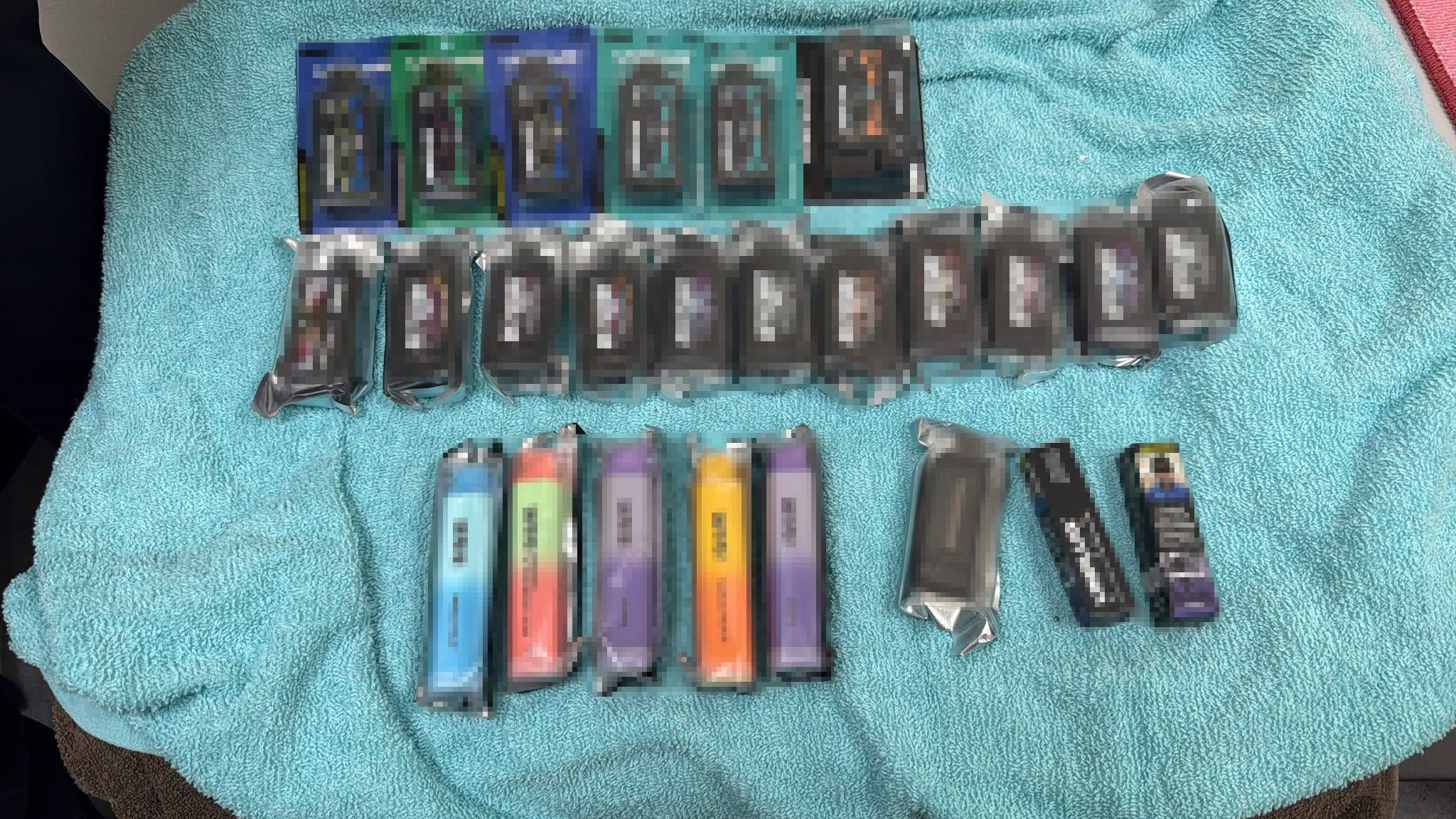
SINGAPORE: The Immigration & Checkpoints Authority (ICA) has foiled an attempt to smuggle vaporisers and related components into Singapore, after officers at Woodlands Checkpoint flagged a Malaysia-registered car for enhanced checks on May 30.

According to ICA’s Facebook post on June 11, 2026, officers profiled the vehicle and directed it for further inspection. More than 20 vaporisers and related components were found hidden within children’s clothing and towels belonging to the passengers in the car.

Two Singaporeans arrested

Following the discovery, a 37-year-old male and a 28-year-old female, both Singaporean, were arrested in connection with the case. The matter has since been referred to the Health Sciences Authority (HSA) for further investigation.

In its statement, ICA reiterated its role as “Guardians of Our Borders,” noting that it remains committed to facilitating trade and travel while keeping Singapore’s borders safe and secure.

Netizens react

The news drew a range of reactions online, with many commending the officers involved for their vigilance.

“Great work by the informers and ICA,” one commenter wrote, crediting the enforcement effort.

Others took a more cynical view of the smugglers’ attempt, with one user dismissing it bluntly as a “failed illegal investment.”

Several commenters also weighed in on what should happen next. “Give them jail time. Surely [they] will turn over [a] new leaf,” one netizen said, calling for a deterrent approach.

A reminder of ongoing vape enforcement efforts

This latest seizure comes amid continued scrutiny of vaporiser smuggling attempts at Singapore’s checkpoints, with HSA having stepped up enforcement against the importation, distribution, and use of e-vaporisers in recent years. Under Singapore law, the purchase, use, and possession of e-vaporisers and their components are illegal.

The case serves as a reminder that, despite the small and easily concealable nature of vaporisers, checkpoint officers continue to rely on a mix of profiling, experience, and physical searches to intercept such attempts, even when hidden among everyday items like children’s clothing.

This article (Over 20 vaporisers smuggled in children’s clothing seized at Woodlands Checkpoint, two arrested) first appeared on The Independent Singapore News.

  •  
❌