Reading view

The river we’re fighting over is no longer the same

"The tragedy is not that we are fighting over the Cauvery. It is that the river we are fighting over is slowly disappearing."

In Ayappa’s acclaimed short film The Story of Kaveri, the river speaks as a living presence, reflecting on how those who depend on it have turned against one another. That imagined yet deeply resonant voice captures the paradox of one of India’s most contested rivers.

For decades, the Cauvery has been the site of court battles, tribunal awards, protests and political negotiations. Beneath these visible struggles lies a quieter crisis. The river itself is changing.

Nearly 800 kilometres long, the Cauvery supports more than 80 million people across Karnataka, Tamil Nadu, Kerala and Puducherry, draining a basin of over 81,000 sq km. For centuries, it enabled a highly organised irrigation system, particularly in the delta, where paddy cultivation flourished. That long history of stability is now under strain.

At first glance, the river does not appear broken. Each monsoon, reservoirs fill, canals reopen and water flows into fields. What this seasonal recovery conceals is the Cauvery’s increasing inability to convert rainfall into reliable flows.

Rainfall is not necessarily declining. Climate projections suggest that parts of peninsular India may receive stable or even slightly higher precipitation. Yet the river itself is expected to carry less water.

A basin-scale climate study by IIT Gandhinagar (published this year in Earth’s Future) used CMIP6 climate models to show that effective water availability in the Cauvery basin will continue to decline until at least 2050, beyond which recovery remains uncertain. The study estimates a further reduction of around 3.5 per cent in flows between 2026 and 2050. This may appear modest, but it follows a much larger historical decline: streamflow in the Cauvery dropped by nearly 28 per cent between 1951 and 2012.
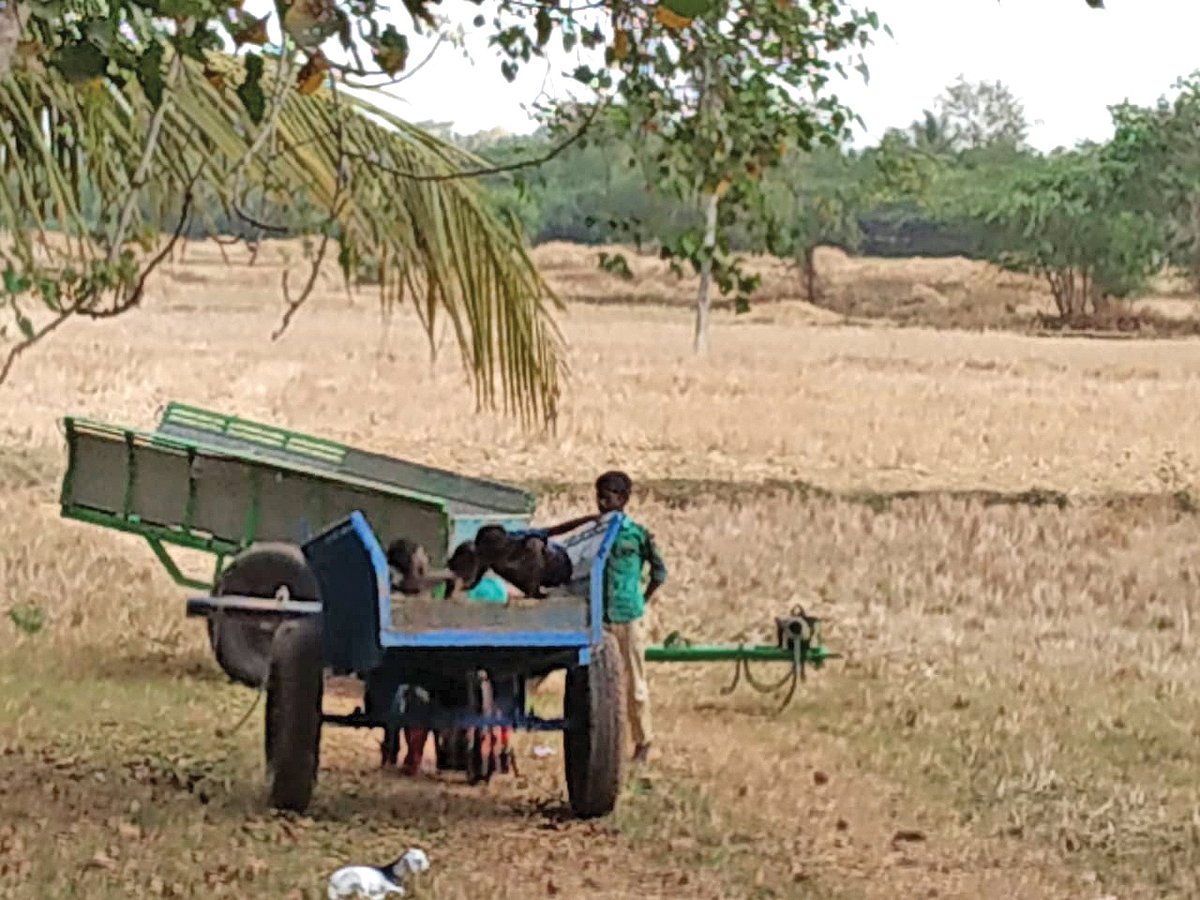
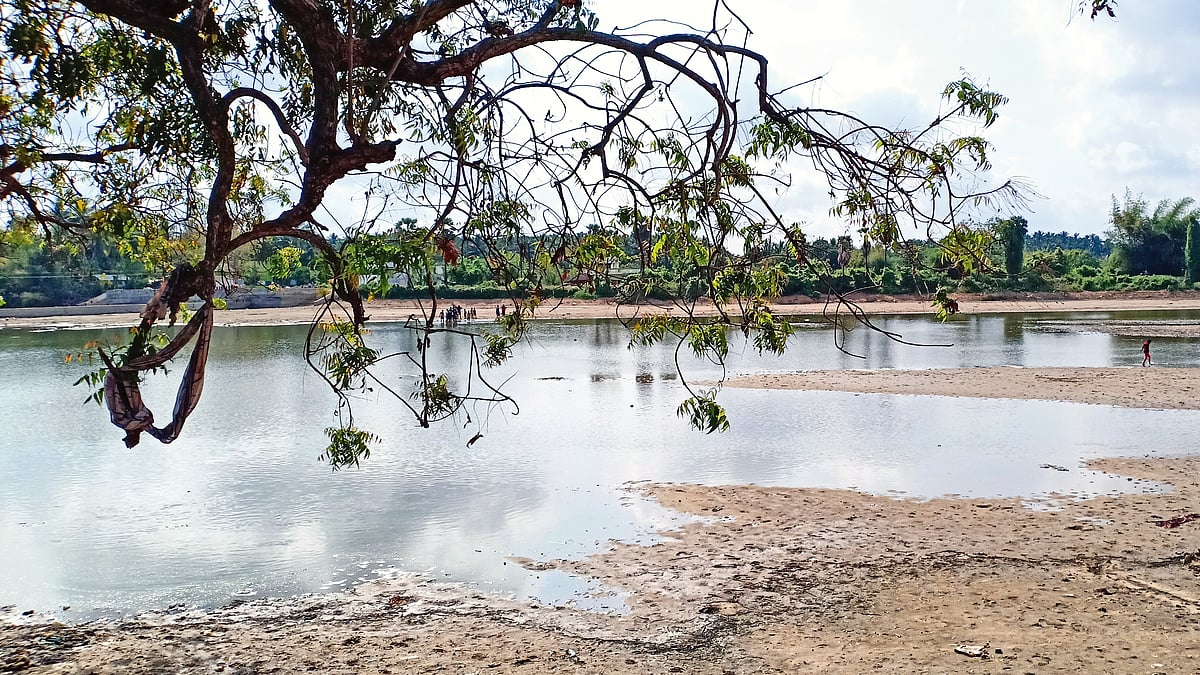
Farmers are now struggling with reduced freshwater inflows and rising sea levels (photo: author)

‘The Cauvery basin stands out as an exception,’ the study notes. ‘While several Indian rivers may see increased discharge, this basin shows a persistent decline due to rising evapotranspiration and altered rainfall patterns.’

Unlike Himalayan rivers, the Cauvery has no glacial buffer. It depends almost entirely on monsoon rainfall. That dependence is now becoming a vulnerability.

What is changing is not just how much rain falls, but how it behaves. Increasingly, rainfall arrives in short, intense bursts followed by prolonged dry spells. A study on precipitation trends by Tamil Nadu Agricultural University notes that ‘short-duration extreme rainfall events are increasing in frequency and intensity, leading to higher runoff and reduced infiltration.’

Rapid runoff reduces groundwater recharge, weakening the base flows that sustain rivers during dry periods. At the same time, rising temperatures increase evapotranspiration, meaning more water is lost to the atmosphere.

The result is hydrological decoupling. Rainfall no longer translates into river flow in a predictable manner. Reservoirs fill quickly during intense rainfall events but struggle to retain levels through extended dry periods. Farmers who once relied on predictable irrigation cycles now face uncertainty within a single season.

Human intervention has heightened this instability. The Cauvery is one of India’s most regulated rivers, with major dams such as Krishnaraja Sagar in Karnataka and Mettur in Tamil Nadu. Built to stabilise irrigation, these dams also altered the river’s natural rhythms.

Flood pulses that once replenished floodplains are curtailed. Sediment that sustained the delta is trapped upstream. Lean-season flows now depend on administrative decisions rather than ecological continuity. ‘The regulation of flows has reduced the river’s resilience,’ note basin-level assessments.

The consequences are most visible in the Cauvery delta. Spread across nearly 14.7 lakh hectares and contributing about 45 per cent of Tamil Nadu’s rice production, the delta has been the backbone of the state’s agrarian economy.

Today, reduced freshwater inflows, erratic rainfall and rising sea levels are reshaping the region. Salinity is pushing inland. Groundwater is turning brackish. Coastal erosion is increasing. Studies indicate that seawater intrusion has intensified as freshwater discharge weakens.

In parts of Thanjavur and Nagapattinam, cropping intensity has declined. Traditional kuruvai and samba cultivation cycles are becoming harder to sustain. Some farmers are shifting to pulses or aquaculture. Others are leaving the land fallow.

“We cannot plan anymore,” says K. Veerapandi, a farmer from Thiruvaiyaru. “Water may come, or it may not. Even if it comes, we don’t know when.”

Leaders of farmer organisations echo this uncertainty. P.R. Pandian of the Cauvery Delta Farmers Protection Association notes that unpredictable releases make cultivation increasingly risky. Activist Ayyakannu has pointed to rising distress, including debt and migration.

When the region was declared a Protected Special Agriculture Zone in 2020, farmer leader S. Ranganathan said, “This will help the delta survive for more than a thousand years.” Others weren’t so hopeful. “The Bill does not have the power to stop ongoing hydrocarbon projects,” says P. Maniarasan.

Even as the state seeks to protect agriculture, large-scale extractive projects continue to be planned. Proposals by ONGC and Vedanta include drilling hundreds of hydrocarbon wells across the delta. Farmers have resisted these projects, highlighting contamination and land degradation in places like Neduvasal and Kathiramangalam.

Environmental groups warn that petrochemical and refinery projects could further strain an already fragile ecosystem. Scientific studies have found heavy metals and chemical pollutants in parts of the Cauvery, including in sediments and fish.

‘The presence of heavy metals in fish indicates bioaccumulation in the food chain,’ notes a 2024 study by N.G. Nikita Gupta and S. Arunachalam, published in Frontiers in Public Health.

Contamination comes from industrial discharge, agricultural runoff and untreated sewage. Over time, pollutants accumulate, creating long-term reservoirs of toxicity. This introduces a second dimension of scarcity. Water may be available, but not usable.

Groundwater, once a fallback, is also under severe strain. Across the basin, extraction has exceeded recharge. Borewells are going deeper. In coastal areas, falling water tables are enabling seawater intrusion.

Assessments by the Central Ground Water Board, which classify several Cauvery basin blocks as over-exploited, along with IIT Gandhinagar projections that show declining runoff, suggest the basin is approaching a point where both surface and groundwater systems will be stressed simultaneously.

Urban demand has added to the pressure. Cities like Bengaluru depend heavily on Cauvery water, intensifying competition between urban and agricultural uses.

Meanwhile, political conflicts continue. The Cauvery dispute between Karnataka and Tamil Nadu has long centred on allocation. As availability declines, the focus is shifting from sharing to scarcity.

Frameworks designed for a more stable river are struggling to adapt to a new hydrological reality. Traditional water systems that once buffered variability are weakening. Tanks, canals and local storage structures have deteriorated. Urbanisation has reduced infiltration and increased runoff. The basin is losing its ability to store water when it is available and endure scarcity when it is not.

The Cauvery can no longer be considered a perennial river that guarantees stability. It is becoming a seasonal, heavily managed, increasingly unreliable system. For millions across the basin, this transition is already felt in the unpredictability of irrigation, the deepening of wells, the risks of cultivation and the shrinking margins of survival.

While we are still fighting over the same river, the river we are fighting over is no longer the same.

K.A. Shaji is a South India–based journalist who has chronicled rural distress, caste and tribal realities, environmental struggles and development fault lines. More of his writing here
  •  

‘Delimitation must move beyond numbers’

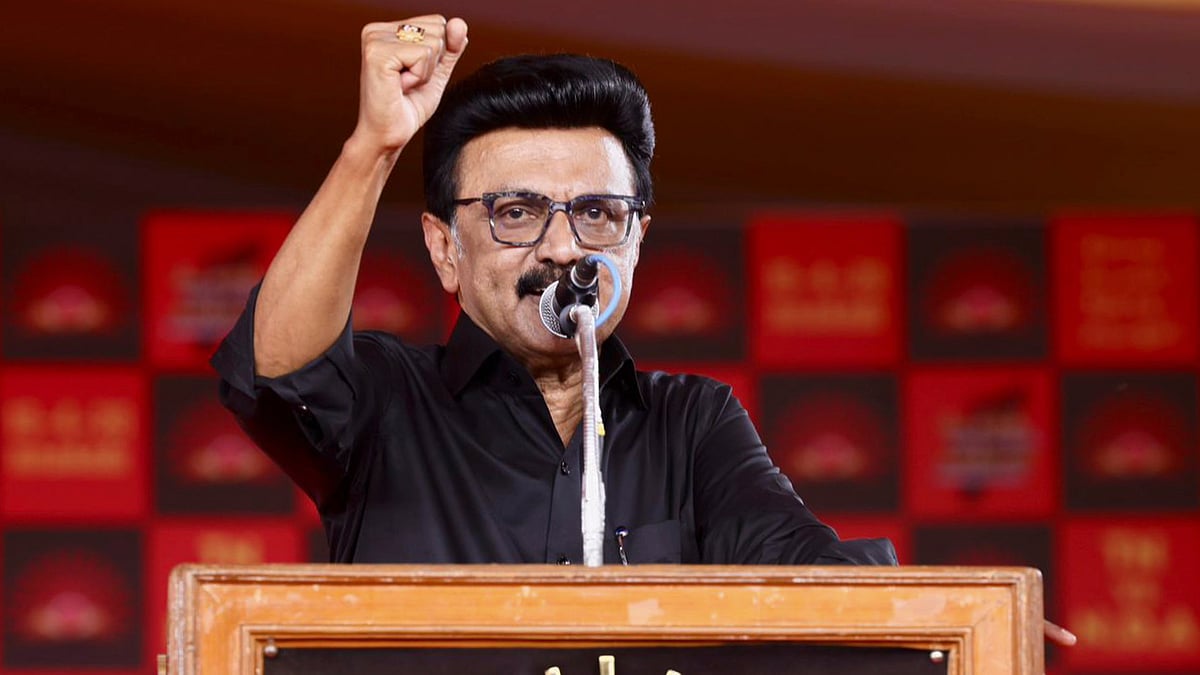
As Opposition parties across India raise alarm over the BJP’s bid to enforce a population-based delimitation at the national level, the DMK in Tamil Nadu, which can see the writing on the wall, is up in arms. Chief minister M.K. Stalin even burnt a copy of the proposed bill in Namakkal and hoisted a black flag in rejection of a ‘black law’.

The party argues that a delimitation exercise that is driven solely by population risks altering the democratic balance and weakening India’s federal structure. Salem Dharanidharan, national spokesperson of the DMK, tells K.A. Shaji why delimitation must move beyond numbers and reflect both demographic realities and governance outcomes.

What is the DMK’s proposed solution to the delimitation question?

The DMK’s position is anchored in constitutional precedent and political prudence. It argues that the current framework should continue for at least the next 25 years, much like earlier freezes that protected states that implemented national priorities such as population control. This continuity is necessary to prevent sudden distortions in representation and to preserve federal balance.

At the same time, the party calls for evolving a consensus-driven formula rather than imposing unilateral redistribution.

Population alone cannot be the determining factor because it ignores decades of policy choices that shaped demographic outcomes differently across states. Tamil Nadu’s sustained investments in public health and education brought down fertility rates significantly, while other states followed different paths. A purely population-based model would reward uneven growth and penalise governance success, which the DMK considers fundamentally unjust.

Should development indicators be considered alongside population?

The DMK believes this is central to any fair framework. Tamil Nadu ranks among the leading states in literacy, healthcare outcomes and social welfare delivery, with lower infant mortality and higher life expectancy than the national average. It is also one of the largest contributors to the Union’s tax revenues, supported by a diversified and industrialised economy. Reducing representation to population alone turns democracy into a mechanical exercise.

The DMK argues that human development indicators, fiscal contribution and governance efficiency must be factored in alongside demographic data. Without such balance, the system risks incentivising poor governance combined with higher population growth. Representation, in its view, must reflect both people and performance.

Is increasing the number of parliamentary seats a viable solution?

The DMK does not dismiss this possibility but insists it requires careful deliberation. India’s population has more than doubled since 1971 [in fact, 2.7x, from ~55 crore to an estimated 148 crore – Ed] while the number of parliamentary seats has remained unchanged, making expansion a logical consideration. However, such a move cannot be treated as a simple technical adjustment because it has significant implications for federal balance and political representation.

The party argues that any expansion must follow detailed discussions involving experts, political parties and states. It also stresses that representation should be strengthened across all tiers, including state Assemblies, panchayats and urban local bodies.

Strengthening these institutions is essential to deepen democracy at the grassroots. Only after reinforcing these layers should Parliament expansion be considered as part of a broader reform.

How can India reconcile a constitutional mandate with federal trust?

The Constitution provides both a framework and flexibility, as demonstrated by past decisions to freeze delimitation in the national interest. Reconciling mandate with trust requires a consultative process involving states, political parties and independent experts. Without such engagement, delimitation will be seen as an imposed exercise that favours certain regions.

Trust in federal institutions depends on transparency and inclusiveness. The DMK emphasises that democracy is not only about procedure but also about fairness. Any process that undermines this balance risks weakening the Union itself. Consultation and consensus are, therefore, essential.

Why has this issue resonated so strongly in Tamil Nadu?

The issue resonates because people understand the implications in concrete terms.

Tamil Nadu invested heavily in public health, education and social welfare, achieving stabilised population growth and improved quality of life. There is now a widespread perception that this success could translate into reduced political representation.

This creates a strong sense of injustice that goes beyond policy debate. The issue is seen as one of dignity and fairness. It is also linked to a broader sentiment that southern states are not adequately recognised for their contributions. This explains the depth and intensity of the response.

What is fundamentally at stake for southern states?

At stake is the balance of Indian democracy. If representation is determined purely by population, political power could become concentrated in a few regions, weakening the federal structure. This would also reshape national policy priorities in ways that may not reflect the diversity of the country.

Southern states contribute significantly to economic output and governance standards, yet their political voice could diminish. This creates a mismatch between contribution and representation. The DMK sees this as a structural issue with long-term consequences for India’s unity.

What is the DMK’s biggest concern about the current approach?

The concern goes beyond methodology to questions of intent and outcome. There is a perception that delimitation could be shaped to consolidate political advantage and reduce space for opposition. Such a shift risks deepening regional imbalances and altering electoral dynamics across the country.

There is also anxiety that regions with strong alternative political traditions may be weakened. This would influence not just representation but the nature of democratic competition. Without transparency and safeguards, these concerns become serious.

How does the DMK respond to the argument that representation must reflect population?

The DMK accepts that population is an important factor but rejects it as the sole basis. India is a Union of states, not a unitary system governed only by numbers. A purely population-based model ignores differences in governance, development and policy choices.

It risks concentrating power in regions with higher demographic growth while marginalising others. It also overlooks the role of public policy in shaping population trends. Representation must, therefore, balance demographic realities with development and federal equity.

Why does the DMK say Tamil Nadu is being penalised for success?

Tamil Nadu achieved significant reductions in fertility through sustained investments in healthcare, education and welfare. As a result, its population stabilised earlier than in many other states. If seats are redistributed purely on current population, states with higher growth gain more representation while Tamil Nadu’s share declines. This effectively penalises states that implemented national priorities responsibly.

Could this become a constitutional crisis?

At present, it remains a political issue that can still be addressed within the constitutional framework. The Constitution allows flexibility, as seen in earlier freezes on delimitation. This provides space for dialogue, negotiation and consensus-building. If the process is pushed through without addressing concerns, it could strain Centre-state relations, which could escalate into a constitutional crisis.

Is delimitation likely to become a long-term political faultline?

There is a strong possibility if handled without care. Questions of representation and federal balance have historically shaped Indian politics, and delimitation brings both into sharp focus. It also intersects with issues of regional equity, governance and democratic fairness. But it also presents an opportunity to strengthen federalism if approached with consensus.

  •  

Delimitation turns decisive as TN campaign closes with anti-Centre undercurrent

As public campaigning for the Tamil Nadu assembly election drew to a close on the evening of 21 April, what began as a relatively confined constitutional debate within Parliament transformed into the single most defining political issue on the ground, reshaping the contours of the contest in its final phase and handing a clear narrative advantage to the DMK-Congress alliance. 

Delimitation, which until recently remained a subject of technical discussion and legislative contention, especially after it was voted down by a combined opposition in Parliament, acquired an emotional and political charge in Tamil Nadu that few other issues managed to generate during this election cycle. The DMK successfully framed it as an existential question of representation and identity, arguing that the state stood to lose disproportionately if the exercise were carried out in the manner proposed by the Narendra Modi and Amit Shah leadership at the Centre.

This framing did more than merely sharpen campaign rhetoric. It altered the balance of the contest by pushing the already fragmented Opposition, led by the AIADMK and including the BJP, into a defensive position from which it struggled to recover. The final days of campaigning, marked by intense mobilisation, roadshows, and sharp exchanges, increasingly resembled a collective assertion of Tamil Nadu’s political anxieties over the delimitation proposal. The issue cut across party lines among voters, creating a wider sense of unease that the opposition found difficult to counter convincingly. AIADMK leaders and their allies were repeatedly forced to clarify that they were not acting against Tamil interests, a position that appeared reactive rather than assertive in the face of a rapidly consolidating narrative.

Tamil Nadu’s electoral landscape is vast, layered, and historically complex, with 234 Assembly constituencies that reflect varied social coalitions, regional identities, and political traditions. Yet, in this election, the projection of delimitation as the central campaign issue by chief minister M.K. Stalin cut across these diversities and resonated widely. The symbolism was unmistakable. Large numbers of people turned up wearing black attire, even in the sweltering heat, as Parliament debated the bill, signalling not just political alignment but a shared sense of grievance.

Within the alliance, seat-sharing arrangements reflected both political pragmatism and underlying tensions. The DMK contested the lion’s share of 164 constituencies, while the Congress fielded candidates in 28 seats. The remaining constituencies were distributed among smaller allies, including the VCK, CPI, CPI(M), DMDK, MDMK, IUML, MMK, SDPI, and MJK, each of which holds influence in specific pockets. While murmurs of dissatisfaction emerged within Congress ranks over the allocation of winnable seats, and parties such as the CPI(M) expressed concerns about shrinking political space, these frictions were contained effectively. In districts like Sivaganga and Kanyakumari, local disagreements over candidate selection did surface, but they did not escalate into larger disruptions. The leadership ensured that the broader political message remained intact, with Stalin publicly acknowledging the role of Rahul Gandhi and Mallikarjun Kharge in opposing delimitation and reinforcing a sense of shared purpose.

In contrast, the opposition presented a far more disjointed picture. The AIADMK, still attempting to regain coherence after the demise of J. Jayalalithaa, continued to grapple with leadership ambiguity and internal factionalism. Its alliance structure appeared fluid, shaped more by local calculations than by a cohesive state-wide strategy. The BJP, which contested a significant number of seats either directly or through allies, invested heavily in campaign visibility, deploying central leaders and pushing a mix of national and cultural narratives. However, its long-standing structural limitations in Tamil Nadu remained evident, particularly when confronted with the delimitation issue. Party leaders struggled to reassure voters that the proposed changes would not harm Tamil Nadu, and even within the party there was a quiet acknowledgement of the difficulty in overcoming the prevailing perception.

This is not the first time the BJP has attempted to expand its footprint in the state. Over the years, it has experimented with multiple strategies, including alliances with both the DMK and AIADMK, emphasis on national security and welfare schemes, and efforts to build a local leadership base. Yet, these efforts have yielded only limited success. As C. Lakshmanan, a former faculty member at the Madras Institute of Development Studies, observes, “The reasons lie deep in Tamil Nadu’s political culture. The state’s electorate has consistently prioritised regional identity, linguistic pride, and social justice narratives shaped by the Dravidian movement. Attempts to impose a homogenised national political framework have often met with resistance. Policies perceived as central overreach, whether related to language, education, or resource allocation, have triggered strong reactions.” The delimitation debate fits squarely within this pattern of resistance.

At its core, the issue raises a fundamental question about representation and fairness. Tamil Nadu, which has successfully controlled population growth and achieved significant human development outcomes, fears that it could lose parliamentary representation precisely because of these achievements. The state’s fertility rate is among the lowest in India, while several northern states continue to record higher population growth. A redistribution of seats based purely on population would therefore shift political power away from states like Tamil Nadu, altering the federal balance in ways that many here view as unjust.

For voters, this concern is neither abstract nor distant. It has been framed as a direct and tangible loss, one that could reduce the state’s influence over national policy, weaken its bargaining power in fiscal matters, and diminish its voice within the Union. In a political culture that has historically asserted federal rights with clarity and conviction, this prospect has struck a deep chord. As political observer S Satheesh Kumar notes, “The DMK recognised the political potential of this issue early in the final phase. Chief minister M.K. Stalin’s campaign took on a sharper tone, positioning delimitation as a direct threat to Tamil Nadu’s interests. His speeches repeatedly emphasised that the state was being penalised for its achievements. The argument was simple, but it resonated widely.”

The Congress amplified this message at the national level, with Rahul Gandhi and Mallikarjun Kharge framing delimitation as a challenge to the federal structure itself. Their interventions elevated the debate beyond state politics, giving it constitutional significance and reinforcing the DMK’s position on the ground. In public meetings across Tamil Nadu, Congress leaders reiterated their commitment to resisting any move that could undermine the state’s representation, helping to bridge minor fissures within the alliance and present a unified front.

The response among the public was both visible and widespread. Black protests became a defining feature of the campaign’s closing days, with demonstrations taking place across Chennai, Coimbatore, Madurai, and smaller towns. Students, traders, farmers, and professionals participated in various forms, from wearing black attire to waving black flags and organising discussions. In Tirunelveli, college students held meetings explaining the implications of delimitation, while in the delta districts, farmers linked the issue to long-standing concerns over water sharing and perceived neglect by the Centre. In industrial hubs like Hosur, workers expressed apprehension that reduced political weight could affect future investments and policy attention.

The opposition’s response remained tentative and fragmented. The BJP attempted to reassure voters that delimitation would be conducted fairly and with adequate safeguards, arguing that fears were being exaggerated for political gain. However, these assurances failed to counter the growing perception of risk. The AIADMK, constrained by its political positioning, found itself unable to articulate a strong and independent critique, choosing instead to focus on governance issues, corruption allegations, and anti-incumbency narratives that struggled to gain traction in the face of the dominant discourse.

Underlying this entire phase of campaigning was a broader anti-Centre sentiment that has been building in Tamil Nadu over the past decade. Issues such as the National Education Policy, NEET, language debates, and fiscal devolution have contributed to a perception of increasing centralisation. Delimitation emerged as the most potent expression of this sentiment, encapsulating concerns about autonomy, identity, and fairness within the federal structure.

For the DMK-Congress alliance, this convergence of issues provided a strategic advantage. It allowed the alliance to reposition the election not merely as a judgment on governance but as a larger battle to protect Tamil Nadu’s rights and representation. In doing so, it also managed to subsume internal tensions under a unifying narrative, shifting the focus from seat-sharing disputes to the stakes involved for the state as a whole.

As the campaign closed, the election stood at a critical juncture, with delimitation having redefined the political conversation in its final phase. What began as a technical constitutional proposal evolved into a powerful political movement, exposing the limitations of the opposition and reinforcing the strengths of the DMK-Congress alliance. Tamil Nadu has long demonstrated a capacity to resist political currents it perceives as misaligned with its identity and interests. This election appears to have reaffirmed that instinct, turning a complex policy debate into a decisive electoral force that could shape the outcome when votes are finally counted.

  •  
❌