More than 90 per cent of Hong Kong companies, schools, and NGOs have incorporated artificial intelligence (AI) into their workflows, according to a survey.
From right: Wilson Wong, CEO of the the Hong Kong Internet Registration Corporation Limited (HKIRC); Daniel Cheung, acting commissioner for digital policy; Lam Cheuk-ho, chief superintendent of the the Hong Kong Police Force’s Cyber Security and Technology Crime Bureau; and Edmond Lai, chief digital officer of the Hong Kong Productivity Council, at a press conference on June 2, 2026. Photo: GovHK.
According to a survey of 800 organisations conducted by the Hong Kong Internet Registration Corporation Limited (HKIRC), 94 per cent said they had used AI tools.
Among those, 63 per cent had not established an internal AI usage policy for employees, while 68 per cent had not conducted any AI training, the survey found.
HKIRC CEO Wilson Wong said on Tuesday that employees at almost half of the surveyed organisations had used unauthorised AI tools.
“While the penetration rate of AI in the workplace is exceptionally high, most organisations still face security risks regarding governance, tool usage and training,” Wong was quoted as saying in a statement issued by the government’s Digital Policy Office (DPO).
He was speaking at a joint press conference on cybersecurity, alongside representatives from the DPO, the Hong Kong Police Force’s Cyber Security and Technology Crime Bureau, and the Hong Kong Computer Emergency Response Team Coordination Centre (HKCERT).
Security risks
Wong cited an earlier survey by the HKCERT, which found around 35 per cent of businesses using AI admitted to feeding company information into AI tools.
ChatGPT app. File Photo: Focal Foto, via Flickr
Some employees used open-source AI tools to process meeting minutes, for instance, which could lead to errors or data leaks, he added.
Wong said the HKIRC, which oversees Hong Kong domain names, would launch the Secure AI@Work Enablement Campaign to provide training and assistance in formulating AI policies, as well as suggestions for suitable AI tools and regulations on information that should not be processed by AI.
The campaign “will assist organisations in plugging governance gaps through training, AI strategy and policy formulation tools and advisory services,” the statement said.
Edmond Lai, chief digital officer of the Hong Kong Productivity Council, the parent organisation of the HKCERT, said that the HKCERT would seek to bolster public education and talent cultivation in AI and cybersecurity through publicity campaigns, such as AI-generated tram advertisements and videos.
The smell of smoke filled the flat as Mr and Mrs Wong brought home eight red-white-blue and IKEA bags filled with their belongings, retrieved from their old home, now charred and damaged by the fire.
Their daughter should have been overjoyed to have been reunited with her collection of storybooks, but all she could do was recoil from the smell of ash still lingering on the paperbacks six months after the fire at Wang Fuk Court last November.
Books and toys that Mrs Wong retrieved from her Wang Fuk Court flat on May 4, 2026. Photo: Kyle Lam/HKFP.
The Wongs were among residents who returned to their fire-scorched flats to retrieve their belongings from mid-April to early May. On their allocated day, Wang Fuk Court residents made their way up the estate’s stairwells, racing against a three-hour time limit to retrieve what they could, reminisce in their former homes, and pay respects to the dead.
It was also a cathartic experience for some, as they struggled to pick up the pieces – literally and figuratively – in the wake of the deadly tragedy.
The inferno at the government-subsidised estate in Tai Po in November last year killed 168 people and has since displaced thousands of others. An inquiry hearing is under way to identify the cause of the fire – the city’s deadliest in decades – and hear testimony from residents, government officers, and others.
The Wong family was able to salvage some keepsakes and belongings, including the daughter’s books and birthday cards from friends, an old photo album, and a hard drive containing pictures and videos from the past decade.
Mrs Wong at Wang Fuk Court on May 4, 2026. Photo: Kyle Lam/HKFP.
💡HKFP grants anonymity to known sources under tightly controlled, limited circumstances defined in our Ethics Code. Among the reasons senior editors may approve the use of anonymity for sources are threats to safety, job security or fears of reprisals.
“Some of the books were gifts from friends, and some of them she bought with her own pocket money. When she saw that the things in Wang Fuk Court had come back, she was so happy. But at the same time, all of those things smelled of smoke,” said Mrs Wong, who declined to disclose her full name for privacy reasons.
She recalled that her daughter, unable to withstand the stench, retreated to her room. “She said, ‘I have to hide in my room, the living room smells so bad!’”
Nearly six months after the fire, the nine-year-old girl is still reeling from the trauma. She “has become quite sensitive to certain smells and sounds, even the school bell,” Mrs Wong told HKFP in a phone interview this month.
Mrs Wong’s Wang Fuk Court flat on May 4, 2026. Photo: Supplied.
Mrs Wong salvages a handprint painting from her Wang Fuk Court flat on May 4, 2026. Photo: Supplied.
Mrs Wong’s Wang Fuk Court flat on May 4, 2026. Photo: Supplied.
The 38-year-old mother was worried that the smell of smoke – if it continued to linger – might bring up her daughter’s memories of the escape from the burning complex. Both she and her daughter have started seeing a psychologist to process the emotional fallout.
On the fateful day in late November, Mrs Wong was working at a local nursery when a neighbour called to tell her the estate was on fire. Her daughter and father-in-law were at home. Both Mr and Mrs Wong tried to call the grandfather multiple times, and luckily, the husband’s call went through.
The girl and her grandfather made their way down the 27 floors and exited the building through the back entrance – some 20 minutes after the fire broke out.
The Wongs are now living in a rented flat in Tai Po, the same district as their old home. Smoke from incense at a nearby traditional temple and sirens from a fire depot have also become triggers for the young girl.
A photo album Mrs Wong retrieved from her Wang Fuk Court flat on May 4, 2026. Photo: Kyle Lam/HKFP.
Belongings that Mrs Wong retrieved from her Wang Fuk Court flat. Photo: Kyle Lam/HKFP.
For herself, Mrs Wong recovered some clothes that her mother-in-law had tailored to fit her. The family is still searching for an SD card containing 10 years’ worth of photos, including those of her daughter’s birth, hoping it will still be intact in the wreckage.
Mrs Wong told HKFP that she wept as she climbed all the way up to the 27th-floor flat at Wang Tai House, the second block at Wang Fuk Court that caught fire, earlier this month. To her surprise, their flat appeared to be largely untouched by the flames, though the intense heat from above and below her flat had mangled the ceiling and floor.
Before heading back to their old flat, she had resigned herself to the possibility that it might also be her last chance for a farewell. “What I wanted was to properly say goodbye to the flat,” Mrs Wong said.
Hong Kong authorities are set on a plan to buy out seven blocks at Wang Fuk Court for HK$6.8 billion and one tower largely unaffected by the blaze for another HK$1 billion, as well as to tear down the estate and turn it into a park or community facility.
The Wongs return to Wang Fuk Court on May 4, 2026. Photo: Kyle Lam/HKFP.
The Wongs return to Wang Fuk Court on May 4, 2026. Photo: Kyle Lam/HKFP.
“Every time I thought of going back, I would cry. I would worry about crying so hard that I wouldn’t have time to pack,” she said. “But I couldn’t let myself do that. I had to steel my nerves and pack up.”
Mrs Wong also brought flowers to pay her respects to her neighbour who died in the fire. “Looking at the other badly burnt units, I was reminded of all the people who left us,” she said.
Unfortunately, she did not have time to say proper goodbyes because she had to get back to packing.
The 27-storey slog up and down the building left the Wongs pressed for time. They were told to leave almost 30 minutes before their three hours were up to account for the time it would take to move all their things downstairs.
“I had hoped I would have some time to sit down and let things sink in, but I couldn’t even have that,” she said. To the family’s relief, the government has said residents will have a second chance to return to the estate. “Given a choice, I would pack up the entire place with me,” she said.
Wang Fuk Court residents return to the estate on May 4, 2026. Photo: Kyle Lam/HKFP.
Carbon Yip, who lived in a sixth-floor flat in the neighbouring Wang Cheong House, the first block that caught fire, is planning his second trip back to the estate.
“I’ll take every single opportunity to go back,” said Yip, who spent almost three decades of his life at the estate. “The last time I was home was when I left for work that day, and now we’re back.”
Yip and his wife, Karen, moved into their flat after they got married, in the block neighbouring the tower where his childhood home was. “It wasn’t just property, it was the place where I grew up,” he said about Wang Fuk Court.
Wang Fuk Court on May 4, 2026. Photo: Kyle Lam/HKFP.
“Even if we’re done packing up, if we are allowed back, I’d still want to go back, even if it’s just to sit.”
The couple, along with his older brother and father, returned to Wang Fuk Court last month, donning hard hats and name tags. They packed up their lives at the estate into about 30-odd bags, most of which have been placed into a storage unit in a nearby industrial district.
The family first went to Carbon Yip’s home and days later to his father’s flat in Wang Tai House.
They returned to the flats weeks after the father, Yip Ka-kui, also known as Sdanni Yip, gave a moving testimony before an independent committee investigating the cause of the fire and its rapid spread.
At the hearing, Sdanni Yip, who repeatedly reported potential fire hazards at the estate to authorities, accused the government of “evading responsibility.” He also gave a heartfelt tribute to his late wife, Pak Shui-lin, who spent her final moments knocking on doors to notify other residents of the fire.
Wang Fuk Court resident Carbon Yip in Tai Po on May 12, 2026. Photo: Kyle Lam/HKFP.
The Yip family’s designated social worker showed them photos of the flat before they returned so they would have a better idea of what to look for. However, even then, Carbon Yip couldn’t prepare himself for the weight of stepping back into his home.
“I had to collect myself before I could start packing, because the emotions were overwhelming,” he said, recalling the trip back to Wang Cheong House. “I don’t think anyone could accept seeing their home looking that way.”
Carbon Yip, 36, lost much of his Gundam and Digimon figurine collection to the fire. He discovered the models had melted and fused into a single unrecognisable lump of plastic. He had to throw out a large part of his Pokémon card collection, including limited anniversary-edition cases that warped and melted in the fire.
A collage of photos showing Carbon Yip’s Gundam and Digimon figurine collection damaged in the fire. Photo: Supplied.
However, he managed to salvage a commemorative crystal block made to remember their pet dog, who died early last year after about 16 years with the family. The memento was stashed away in a box, which shielded it from the worst of the fire.
Returning home reminded him of his late mother. Pak took care of their late dog, whom she called her “granddaughter,” while he and his wife worked.
“’Your daughter isn’t eating again!’ – she used to tell me whenever [the dog] was being a picky eater,” Carbon Yip said.
A photo taken on May 12, 2026, shows the commemorative crystal block of Carbon Yip’s dog, retrieved from his Wang Fuk Court flat. Photo: Kyle Lam/HKFP.
Carbon Yip, his wife, and his father have moved in with the elder brother. Seven family members are crammed into a three-bedroom flat, just a 15-minute walk from Wang Fuk Court.
“Being able to get these things back, our home can now feel a little bit more complete,” Carbon Yip said.
A traveller has been sentenced to six weeks in prison and fined HK$1,800 after attempting to smuggle cigarettes under his stockings while crossing the border from mainland China.
An incoming traveller is arrested on May 27, 2026, with packs of Illicit cigarettes wrapped around his lower legs. Photo: GovHK.
The 49-year-old man received his sentence at the Fanling Magistrates’ Courts on Thursday, one day after he was intercepted at the Lok Ma Chau Spur Line Control Point.
Customs officers seized 1,181 sticks of illicit cigarettes from the traveller, with an estimated market value of about HK$4,800, the Customs and Excise Department said in a statement on Thursday.
Around HK$3,900 in duties would have been charged on that amount of cigarettes, the statement added.
Customs also released a photo appearing to show cigarette packs wrapped around a man’s lower legs underneath his stockings.
The man was arrested on suspicion of contravening the Dutiable Commodities Ordinance and sentenced “for possessing duty-not-paid cigarettes and failing to declare them to Customs officers,” the statement said.
The department welcomed the ruling, saying: “The custodial sentence has imposed a considerable deterrent effect and reflects the seriousness of the offences.”
Hong Kong authorities have proposed tightening the regulation of claw machine shops by implementing a licensing regime to curb addiction risks.
A claw machine in Hong Kong. Photo: Kyle Lam/HKFP.
The Home and Youth Affairs Bureau’s proposal, included in a document submitted to the Legislative Council (LegCo) on Monday, comes as claw machine shops proliferate in the city as a low-maintenance business opportunity.
“Since these activities may involve gaming elements or addiction risks, appropriate restrictions on format or content may be necessary to protect participants, especially youth, from physical or mental harm or significant financial loss,” the bureau said.
The government seeks to introduce new requirements, such as posting a notice indicating that devices are licensed. The bureau is also considering mandatory addiction warning labels on machines.
A list of licensed premises has also been uploaded to the Home Affairs Department’s Office of the Licensing Authority, the document read.
The tightened regulations will function under the city’s Gambling Ordinance, which currently stipulates that claw machine shops must hold an Amusement With Prizes Licence (AWPL). Before that licence can be granted, a venue must hold a public entertainment licence.
However, a 2022 High Court ruling determined that claw machines do not meet the definition of “entertainment” and thus do not require a public entertainment licence, creating a regulatory gap.
The bureau is proposing to remove the requirement for a public entertainment licence and allow the Home Affairs Department to issue AWPLs directly.
Prize caps, addiction risks
Speaking on an RTHK programme, lawmaker Vincent Cheng said he agreed with the government’s proposal in principle but asked the authorities to consider whether the new curbs would stamp out the business.
A claw machine loaded with panda toys in Tsim Sha Tsui, Hong Kong, December 11, 2024. Photo: Kyle Lam/HKFP.
“We have to consider whether [the regulation] will affect the industry’s development,” he said, urging the government to “strike a balance.”
Lawmaker Bill Tang, who chairs the LegCo Panel on Home Affairs, Culture and Sports, welcomed the tightened regulations, saying that some claw machine operations had “evolved” beyond their original leisurely purpose.
Prizes in certain machines now include high-value items such as mobile phones, encouraging gambling behaviour, Tang said. He proposed a HK$5 limit on the fee for each game and that the value of each prize be capped at HK$300.
The bureau has also proposed to regulate internet cafes, moving away from a Code of Practice model and introducing a mandatory licensing system.
One option is to bring internet cafes in line with the regulatory regime for traditional gaming arcades, imposing strict age restrictions for adult- or children-only venues and a ban on students in school uniform.
Another model would be to allow cafes to operate if they meet strict safety conditions.
The proposals are scheduled to be discussed at the legislature on Monday.
China’s top official on Hong Kong affairs will visit the city this week to check its alignment with the National 15th Five-Year Plan and the progress of a tech hub development in the New Territories.
Beijing top official Xia Baolong (third from left) visited a tech park in the area of the Northern Metropolis in February 2025. Photo: GovHK.
Xia Baolong, director of the Hong Kong and Macao Work Office, will be in the city on Tuesday and Wednesday to inspect the five-year blueprint and the Northern Metropolis, the Hong Kong government said on Monday.
Xia is set to arrive one day after Hong Kong launched a two-month public consultation for the city’s first five-year plan.
During the public consultation period, residents can submit their views via a dedicated website, email or post, Chief Executive John Lee said on Tuesday. The government will also host activities to hear different views from lawmakers, industry leaders, and members of the public.
Lee said that the Hong Kong plan, led by the chief executive himself, would focus on the economy, technological development, and livelihood issues, as well as Hong Kong’s integration into China’s development.
Chief Executive John Lee at a press conference on January 27, 2026. Photo: Kyle Lam/HKFP.
The Northern Metropolis is a large-scale project set to transform 30,000 hectares of land in Hong Kong’s rural areas near the border with mainland China into a tech hub, providing more homes and deepening the city’s integration with Shenzhen.
Swathes of land, including rural villages in the New Territories, will make way for the development.
Xia visited Hong Kong in June last year to attend a forum marking the fifth anniversary of the national security law.
Later in April, he delivered a recorded video speech at a National Security Education Day ceremony, warning of people who “politicised” the deadly Wang Fuk Court fire and tried to use the disaster to “stir up chaos” in Hong Kong.
A local couple arrested on suspicion of child neglect has been confirmed as the biological parents of an infant born with no medical records, according to local media.
A Hong Kong couple arrested on June 2, 2026, on suspicion of child neglect. Photo: Save Lily, via Threads.
According to DNA test results, Tsang Wai-bong and Kwan Pui-sin are the parents of two-month-old Danny, local media reported on Thursday, citing unnamed government sources.
The parents, who at first opposed the DNA tests, finally agreed to take them on Wednesday, a day after they were arrested on suspicion of child neglect. The government had demanded that they undergo the tests to register the baby’s birth.
According to media reports, Tsang and Kwan were taken to the Immigration Department headquarters to assist with the investigation on Wednesday after they were released from police detention on a HK$1,000 bail.
The baby boy had not had any medical check-ups since birth, which constituted child neglect, security chief Chris Tang said on Tuesday, when he announced the arrests.
The couple said they practised “free births” and that their baby boy was born in Hong Kong around two months ago. His birth has not been registered, although Hong Kong law stipulates parents must register the birth of a newborn within 42 days of delivery.
Free birth, also called unassisted birth, involves a conscious decision to undergo pregnancy and give birth without professional maternity care or medical intervention. The trend has put the lives of mothers and babies at grave risk.
Infant in gov’t care
Stephanie Lee, a senior social work officer at the Social Welfare Department (SWD), said at a press conference on Wednesday that a court had granted the department a child protection order to care for the baby boy.
She said that Danny remained at the Caritas Medical Centre and would be sent to a care home under the child protection order to ensure his well-being. “We can all rest assured that he is now in the care of professionals,” Lee said.
The SWD will submit a report to the court to determine further welfare arrangements, she added.
Speaking to the press at midnight on Thursday outside the Immigration Department headquarters, the parents said they could apply to visit the child, and that they believed he would be safe with the authorities.
“The arrest was well-intended, as [the authorities] helped us clarify the parental relationship and whether we had committed child abuse,” Tsang said. “They were rather concerned about our son, whether medical care had been inadequate and that his parents’ identities had not been confirmed.”
Prior to their arrests, the couple launched a social media campaign in an attempt to regain custody of their daughter, Lily, from the Swedish government. Their admission of practising “free births” gained widespread attention and sparked concern over Danny’s well-being.
According to local media, the couple’s eldest daughter was born at home in Finland but died in infancy, and the Swedish government removed the second child, Lily, from their care due to health conditions.
Hong Kong’s privacy watchdog has warned against paying ransoms to hackers after education management platform Canvas was targeted in a global cyberattack, compromising the personal data of 72,000 students and staff in the city.
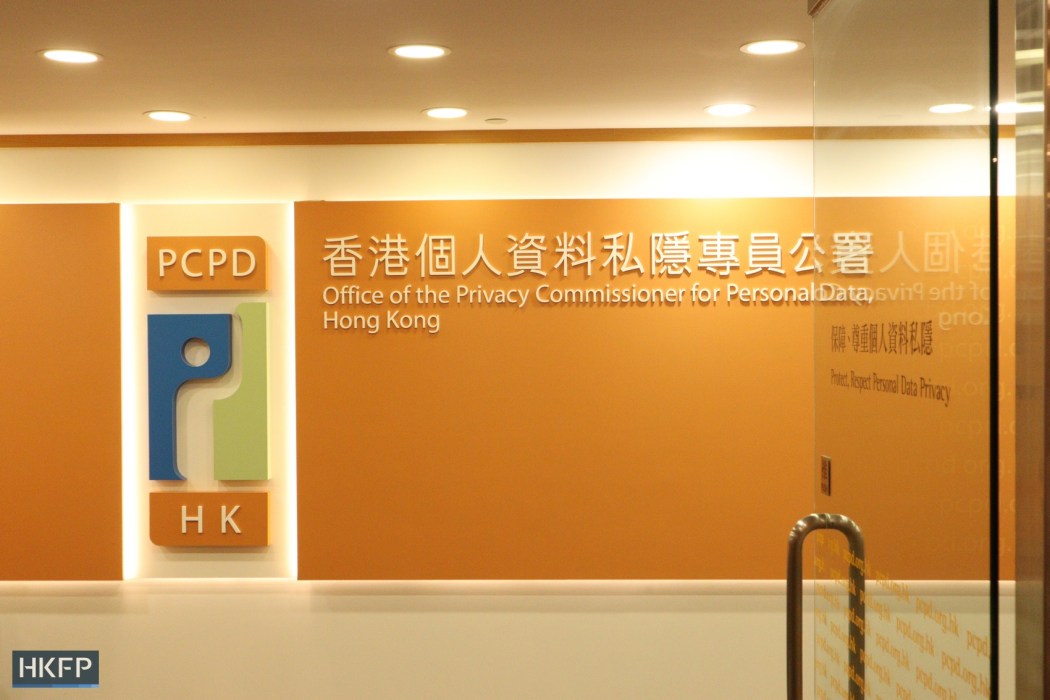
Office of the Privacy Commissioner for Personal Data. Photo: PCPD, via Wikimedia Commons.
“If it’s the case that a ransom was paid, that is a practice that we would condemn,” privacy commissioner Ada Chung told RTHK on Friday.
Instructure, the developer of Canvas, said it had reached an agreement with hacker group ShinyHunters. The group demanded that Instructure pay a ransom, or it would publicly leak the information.
Neither party has confirmed whether Instructure paid the ransom the group demanded. ShinyHunters said it had deleted the data and vowed not to extort students or institutions.
Cybersecurity
“This case involves hacking, which is illegal. Resources should not be given to the hackers, but should instead be invested in cybersecurity,” Chung said.
She added that paying the ransom could not guarantee the data would not be leaked, and that the hackers might have other plans.
The Canvas logo. Photo: Canvas by Instructure.
“It could even signal to other hackers, ‘You are willing to pay the ransom, so we will come after you,’ which carries significant risks,” she said.
According to the Office of the Privacy Commissioner for Personal Data (PCPD), the hack compromised the personal data of 72,000 students and staff from seven local institutions, including names, email addresses, student IDs, and messages.
The breach was part of a broader, global attack that hit almost 9,000 educational institutions worldwide, involving 3.5 terabytes of data from 275 million users, according to Instructure.
Chung also said on Friday that there was no evidence to suggest that there had been any public data leaks.
As Instructure would need several weeks to complete its review of the incident, Chung advised organisations that use Canvas to ensure their systems are protected and to remove any sensitive information from the platform.
A resident of the fire-ravaged Wang Fuk Court housing estate in Tai Po has said homeowners ran into hitches registering for online information sessions scheduled later this month.
Wang Fuk Court in Tai Po on December 3, 2025, one week after a deadly fire hit the housing estate. Photo: Kyle Lam/HKFP.
Hop On Management, which took over estate management duties after the owners’ corporation committee was dissolved in the wake of the fatal blaze, said in an SMS message to a resident on Sunday that he had not completed registration for an “update session” on May 20, two days after the firm initially confirmed his registration.
The management company – a subsidiary of real estate giant Chinachem Group – announced last week that it had scheduled two online sessions on May 12 and 20. Tuesday’s session will be the first time for Hop On to address residents collectively.
It will give updates on the firm’s work as well as the financial situation of the now-dissolved owners’ board and refund arrangements for the renovation works that were under way when the fire broke out in November.
According to a Hop On document shared with residents and seen by HKFP, the session is only intended to explain the current situation to Wang Fuk Court residents and answer any questions they may have. No voting procedures will take place.
Registration ‘not completed’
The resident, who declined to be identified, showed HKFP the text message he received from Hop On. It said: “You have not completed the registration procedures for the Wang Fuk Court owners update session. Therefore, we cannot confirm attendance arrangements.”
Representatives for Chinachem Group at the Lands Tribunal on January 6, 2025. Photo: Kyle Lam/HKFP.
The resident said he registered for the first session when registration opened on Wednesday, days before the deadline on Sunday at 11.59pm.
Hop On confirmed his registration on Friday but told him on Sunday afternoon that his registration had not been completed.
As of Monday morning, the resident’s registration had not been confirmed.
He said that another resident told him of experiencing the same issue.
Since Hop On was appointed administrator of Wang Fuk Court in January, residents have called on the company to hold a general meeting with homeowners. A petition launched by a group of survivors collected 247 handwritten signatures, or some 12 per cent of all households at the estate.
Hong Kong’s Building Management Ordinance stipulates that a management committee must convene a general meeting at the written request of at least five per cent of owners.
Hong Kong’s consumer watchdog has urged claw machine operators to exercise greater transparency amid a surge in complaints over the past two years.
The Consumer Council said on Monday that the number of complaints related to claw machines had surged nearly nine times over two years, from 16 cases in 2023 to 138 in 2025.
A claw machine loaded with panda dolls in Tsim Sha Tsui on December 11, 2024. Photo: Kyle Lam/HKFP.
“The complaints revealed that some machines displayed or positioned prizes in a way that was prone to misunderstanding; machine settings and gameplay explanations were unclear; and prize quality varied significantly,” the watchdog said.
Citing a complaint, the watchdog said a customer successfully grabbed a box after attempting 40 times and spending around HK$200 – only to discover it was empty.
The shop owner refused to provide a refund, saying the box was displayed only for decorative purposes and was not a prize. After the customer complained to the council, the owner apologised to the complainant and fully refunded the HK$200.
At another shop, a player reported that the claw machine automatically dropped the toy when it reached the top of the machine, preventing it from being delivered to the prize chute. Suspecting that the company had rigged the machines, he lodged a complaint.
“The Council urges claw machine operators to enhance transparency by clearly displaying, on the machine or in a conspicuous location, the charges, gameplay, mechanisms and winning conditions, as well as the contact details of the responsible person,” it said.
The Consumer Council. Photo: Consumer Council.
It also called on operators to avoid setting an excessive or unreasonable level of difficulty, “which could undermine consumer rights or create negative perceptions.”
The watchdog also advised customers to read the rules carefully and to carefully check the quality of prizes.
They should stop playing and contact staff members if they observe any abnormal settings, it added. If no employees are on site, customers can take videos of gameplay as evidence.
“Whether a prize can be clawed out is influenced not only by machine settings and prize placement, but also by skill and luck. Consumers should weigh expected expenditure against the value of the prize to avoid over‑consumption or addiction,” it added.
The Home and Youth Affairs Bureau said in a proposal to the Legislative Council last month that the low-maintenance business opportunity, which involves gambling elements or addiction risks, may need to be subject to restrictions to protect players.
Allowing vehicles from Guangdong province to enter Hong Kong’s South Lantau must be approached with “caution,” Hong Kong’s transport chief has told lawmakers.
A mainland Chinese car arrives in Hong Kong on the first day of implementation of the Southbound Travel for Guangdong Vehicles scheme on December 23, 2025. Photo: GovHK.
At a Legislative Council meeting on Wednesday, Secretary for Transport and Logistics Mable Chan said that authorities would have to consult local residents and the district council, citing recent cases of vehicles from Guangdong illegally entering the restricted scenic roads on rural South Lantau.
Addressing a question from lawmaker and rural leader Kenneth Lau, Chan said: “Regarding reviews of quotas and other potential improvements for self-drive tours on Lantau going forward, we will cautiously and carefully monitor the situation. We will also consult and explore options with local residents and the Islands District Council.”
Vehicles under the Southbound Travel for Guangdong Vehicles scheme have been operating smoothly, and testing centres in Guangdong have provided drivers with information on Hong Kong’s traffic rules, she added.
Under the southbound travel scheme, which took effect in December, up to 100 private cars from Guangdong province are permitted daily to drive into Hong Kong’s urban areas via the Hong Kong-Zhuhai-Macao Bridge and stay for a maximum of three days.
The transport minister had previously touted the scheme as a boon for Hong Kong’s economy, driving tourism and trade while enhancing “integration” for citizens in both regions.
Secretary for Transport and Logistics Mable Chan. File photo: GovHK.
The government launched the Driving on Lantau Island Scheme in 2016, allowing a daily quota of 25 private cars to access closed roads to Ngong Ping, Tai O, Cheung Sha and Mui Wo on weekdays. The second phase was launched in 2022, with the daily quota increased from 25 to 50.
Under the scheme, some 12,000 quotas are available for allocation each year, with all of them filled.
Citing official figures, Chan said that the Transport Department received about 84,000 applications in 2023 and about 30,000 in each of the subsequent two years. She attributed the high number from three years ago to pandemic-related travel restrictions that limited residents to local tourism.
Responding to a suggestion by lawmaker Chan Hok-fung to extend South Lantau permits from one day to two or three days, the transport minister said the authorities would look into extending the permit period to include weekends.
But she added that any quota extensions must balance tourism development and local residents’ traffic concerns.
Two out of three journalists say the working environment in Hong Kong has changed “for the worse” in the past year, according to the latest survey by the Foreign Correspondents’ Club.
Journalists outside Wan Chai’s District Court, on August 29, 2024. Photo: Kyle Lam/HKFP.
The 2026 FCC Press Freedom Survey, which received 78 responses from members, found that “67 per cent of respondents said the working environment for them as a journalist had changed for the worse in the last 12 months.”
The FCC pointed out that the survey “happened to take place” after Apple Daily founder Jimmy Lai was convicted and sentenced to jail, as well as Beijing’s national security office in Hong Kong, the Office for Safeguarding National Security (OSNS), summoned representatives of several major foreign media outlets, shortly following the deadly Wang Fuk Court fire.
At the meeting, the OSNS warned that some media organisations had spread false information and smeared the government in reports on the massive blaze at the housing estate in Tai Po, which killed 168 people and displaced thousands of residents.
‘Watershed moment’
One respondent said that the warning by the OSNS to foreign journalists “should be seen as a watershed moment here in Hong Kong. It has created an increased chilling effect.”
About a quarter of respondents said they experienced minor or significant interference in their work, with most describing incidents while covering the Tai Po fire. One journalist said they were told to leave when they were “speaking to survivors in a corner, disturbing no one.”
A resident in Wang Sun House, Wang Fuk Court, on April 20, 2026. Photo: Kyle Lam/HKFP.
Another respondent said that the 20-year sentence handed down to Lai “only further chills the local reporting environment.”
More than 50 per cent said sources had become less willing to be quoted during the same period, the survey found.
One respondent was quoted as saying that “the scope of what is ‘acceptable’ in terms of who can be quoted” has narrowed each year.
“It has reached the point where non-political voices who question policy-making or have reservations about certain aspects of it will get cut or reduced significantly by editors,” the respondent added.
Fewer respondents had a clear sense of what subjects are sensitive in the most recent survey, down from 78 per cent last year to 65 per cent this year, with one respondent saying the Beijing-imposed national security law “is still rather fluid and capricious.”
Half of the respondents said they were “slightly concerned” about arrest or prosecution in relation to their work as journalists, while 41 said they were not. The remaining 9 per cent said they were very concerned.
The Foreign Correspondents’ Club, Hong Kong. Photo: Kelly Ho/HKFP.
A third of respondents said their organisations had downsized in Hong Kong. Among them, a third cited the political and legal environment as well as corporate cost-cutting.
But 17 per cent of respondents said their organisations had increased staff in the city, with 40 per cent of them citing “the growing importance of Hong Kong” and increased investment.
“Press freedom remains engrained in Hong Kong law, but as is apparent from the results of our survey, the sentiment for working journalists in the city has been in flux,” said FCC President Morgan Davis.
“The FCC supports journalists’ fundamental right to conduct their work freely and without fear of intimidation or harassment,” the club said in its statement.
“We will continue to safeguard press freedom in the city, via engagement with the journalism community and relevant stakeholders, in order to make sure that Hong Kong remains an international hub for media, business and finance.”
A global cyberattack on online learning platform Canvas has compromised the personal information of more than 72,000 students and staff at Hong Kong schools and universities, according to the city’s privacy watchdog.
The Office of the Privacy Commissioner for Personal Data. File photo: Peter Lee/HKFP.
The data breaches are part of a global attack that hit almost 9,000 educational institutions worldwide, involving data from 275 million users, according to the platform’s developer, Instructure.
Seven local institutions, including three public universities, have reported the breaches to the Office of the Privacy Commissioner for Personal Data (PCPD).
They are: the Hong Kong University of Science and Technology (HKUST), the Hong Kong Polytechnic University (PolyU), City University of Hong Kong (CityU), the Hong Kong Academy for Performing Arts, the Hong Kong Art School, the Hong Kong Institute of Construction (HKIC), and Hong Kong Education City Limited.
The ShinyHunters hacker group allegedly held Instructure to ransom, threatening to leak the information unless the company paid, according to international media.
The Canvas logo. Photo: Canvas by Instructure.
Instructure said it had reached an agreement with the hacker group to prevent a public leak and gave assurances that no personal information had been compromised.
Student and staff information
The CityU breach involved 28,000 students, according to the university’s report to the PCPD, the privacy watchdog said in a statement on Monday. The leaked data may have included student names, email addresses, student IDs, and messages.
The breach also affected 42,000 students and staff at PolyU, with their names and email addresses potentially compromised, according to the PCPD.
The watchdog “has advised the relevant organisations to notify those affected as soon as possible and to provide assistance as appropriate in each case, in order to prevent the breach from escalating,” it said.
Some 2,500 students and staff at the HKIC and 71 students at the Hong Kong Art School were hit by the breach. The other three institutions have yet to confirm the number of people affected.
Students at City University of Hong Kong. File photo: GovHK.
Cybersecurity officials have called on institutions to suspend use of the online learning platform and remain vigilant against potential follow-up phishing attacks.
The Hong Kong Productivity Council chief digital officer Edmond Lai said at a press conference on Monday that such attacks could lead to further data leaks or unauthorised transactions.
He also said that the Hong Kong Computer Emergency Response Team Coordination Centre is using artificial intelligence tools to identify phishing websites potentially linked to the Canvas hack.
Meanwhile, Chief Superintendent Raymond Lam said at a press conference on Tuesday that two police reports had been made in relation to the Canvas hack.
One report was filed by a local institution, while the other involved people who used the incident as a pretence to deceive a resident.

 Login
Login