
 Login
Login
Have We Been Focusing on the Wrong Ocean Pollutants? This Study Maps What We’ve Been Missing
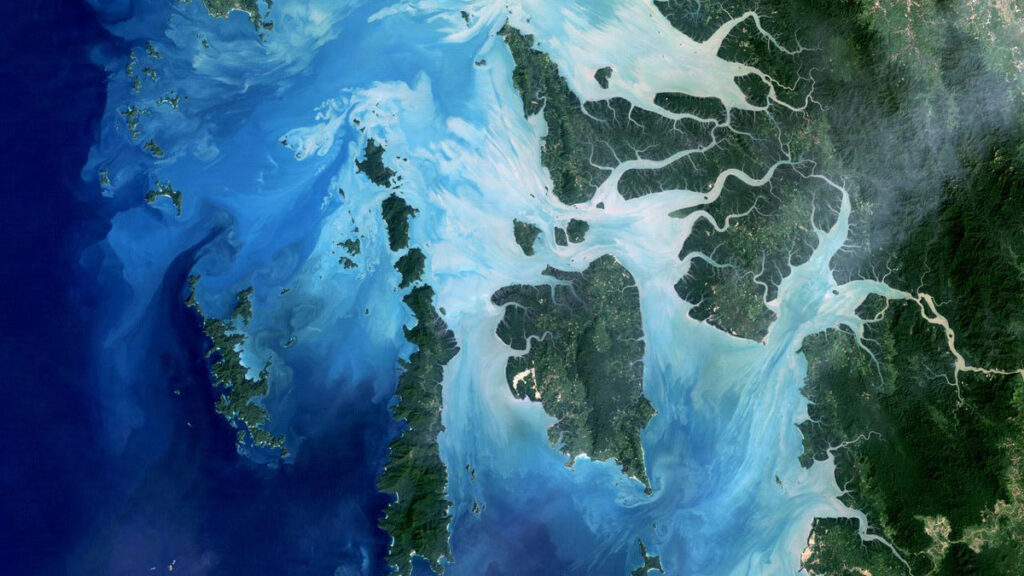
For decades, regulators built their ocean monitoring programs mainly around pesticides and pharmaceuticals, treating them as the primary chemical threat to ecological and human health.
That assumption left a much larger category of compounds largely unexamined: the industrial chemicals embedded in packaging, furniture, and everyday personal care products. Those chemicals, it turns out, have been spreading widely. And they’re now showing up even in the places some might consider pristine, such as coral reefs in the Caribbean.
These compounds are biologically active, some interfere with microbial metabolism, and according to a sweeping meta-analysis published in Nature Geoscience, they may be altering how the ocean cycles carbon, one of our planet’s most critical biogeochemical processes.
“Beyond the usual [pesticides and pharmaceuticals], what really surprised us was that everyday industrial chemicals are showing up at even higher levels and not just in coastal or polluted areas, but pretty much everywhere,” said Daniel Petras, a biochemist at the University of California, Riverside.
Led by Petras and Jarmo-Charles Kalinski, a postdoctoral fellow at the Rhodes University Biotechnology Innovation Centre, the study reanalyzed 21 publicly available datasets comprising seawater samples collected over more than a decade across the Pacific, Indian, and North Atlantic Oceans, including the Baltic and Caribbean Seas.
All groups the researchers examined—industrial pollutants, pharmaceuticals, and pesticides—belong to a class called xenobiotics: human-made organic compounds that are foreign to natural systems. Pesticides and pharmaceuticals were prevalent in coastal samples, as expected, given their well-documented entry through agricultural runoff and wastewater outfalls.
But industrial compounds behaved differently. Polyalkylene glycols used in hydraulic fluids, phthalates from polyvinal chloride (PVC) packaging, organophosphate flame retardants from furniture and electronics, and surfactants from personal care products proved far more widespread across all ecosystem types than either pesticides or pharmaceuticals. “These are chemicals we use all the time,” Petras said, “so they end up spreading widely.”
Glimpsing What Was Always There
To map the ocean’s full chemical landscape, the researchers analyzed more than 2,300 samples from temperate coastal zones, coral reefs, and the open ocean, searching for the presence of xenobiotics and examining the share of dissolved organic matter (DOM), a pool of carbon-containing molecules dissolved in seawater. In total, the team identified 248 known xenobiotic molecules. Their work offers the most comprehensive chemical map of anthropogenic organic pollution in the ocean to date.
Researchers used nontargeted mass spectrometry paired with scalable computational tools. Unlike conventional targeted analysis, which tests only for a predefined list of known hazardous molecules, this open-ended approach can detect thousands of chemicals simultaneously, even at low concentrations. The team then applied molecular networking, a computational technique that enables the identification of not only known substances but also their “families” or derivatives.
Coral Reefs as Far-Flung Hot Spots
“Our traditional idea of ‘pristine’ needs a serious rethink, as anthropogenic potential sources are now present nearly everywhere.”
For Petras, it was surprising to find these compounds in coral reefs like those in French Polynesia, which are typically viewed as perfect, “postcard-style” paradises. Yet closer examination reveals that these areas are, indeed, rarely isolated. Agriculture, urban runoff, hotel infrastructure, and cruise ship traffic all contribute pollutants. Remnants of human activity, such as sunscreen, wastewater, and boat fluids, are concentrated near reefs.
“We specifically detected plasticizers and flame retardants even in these remote areas,” Petras said. “This suggests that our traditional idea of ‘pristine’ needs a serious rethink, as anthropogenic potential sources are now present nearly everywhere.”
Anastazia T. Banaszak, a researcher at the Reef Systems Unit of the Universidad Nacional Autónoma de México who was not involved in the study, stressed the broader implications for reef conservation: “Inadequately treated urban wastewater discharges pose a risk to coral reefs and the success of restoration projects,” she said. Such discharges raise nutrient levels, fueling macroalgal blooms that grow faster than corals and compete with them for space. This pressure on ecosystems is intensifying as climate change shifts the baseline against which restoration outcomes are measured, Banaszak noted.
Carbon…and Microbes?
Beyond reefs, these synthetic compounds could be affecting the ocean’s carbon cycle. DOM is one of Earth’s largest carbon reservoirs, comparable in size to all the carbon dioxide (CO2) in the atmosphere. Marine microbes transform it from readily degradable forms into biologically resistant ones; refractory DOM that escapes microbial consumption accumulates in the ocean and acts as an important climate regulator.
But with industrial compounds representing up to 63% of DOM in some estuarine samples (with a global estimate of 10%), the microbial loop is, perhaps, facing chemical conditions it did not evolve to handle. This shift means the efficiency of the ocean’s carbon pump, the mechanism that pulls CO2 from the atmosphere, could be compromised in ways that are not yet understood.
“The data suggest they are present at substantial levels,” Petras said. “Enough that they should be considered in models of carbon cycling.”
Handling the Invisible
Finding xenobiotics is only the first step, the authors say. They laid out several suggestions for next steps. For instance, governments should mandate open-ended approaches as a standard monitoring tool, not just targeted testing of preselected chemicals. Oceanographic data also should be publicly available and standardized, following FAIR (findable, accessible, interoperable, reusable) principles.
“There’s already a strong track record of building long-term datasets for things like trace metals and nutrients. I hope that nontargeted analysis could become part of such long-term efforts,” Petras concluded. “We’ve been quite active in establishing these tools for the community.”
—Mariana Mastache-Maldonado (@deerenoir.bsky.social), Science Writer
