Reading view

Japan asks China to ensure citizens’ safety after Shanghai stabbing

Shanghai stabbing

Tokyo has asked Beijing to ensure its citizens’ safety after a stabbing in a Shanghai restaurant in which two Japanese were injured, Japan’s consulate in Shanghai told AFP Wednesday.

Shanghai skyline
Shanghai skyline. Photo: Pexels.

It is the latest diplomatic point of friction as the two countries are embroiled in a stand-off triggered by Prime Minister Sanae Takaichi’s suggestion Tokyo might intervene militarily if Beijing were to invade Taiwan.

On Tuesday, Pudong district police said on social media they had received a report that a man “was injuring people with a fruit knife in a restaurant”.

Police said the suspect, a 59-year-old surnamed Yang who was detained at the scene, had a history of mental illness.

Three people were taken to hospital, the statement said, with Japanese media later reporting two were Japanese.

Asked about the reports, the Japanese consulate in Shanghai confirmed two citizens had been hurt, adding they were receiving medical treatment.

From left: Chinese and Japanese flags.
Chinese and Japanese flags. Photos: Aboodi Vesakaran, Wikimedia Commons.

“The Government of Japan has requested the Chinese government to… clarify the facts and provide a clear explanation… (and) ensure the safety and security of Japanese nationals,” a spokesperson said in a statement.

Top government spokesperson Minoru Kihara later confirmed Tokyo had requested an explanation, adding that a consular alert had been sent out to all Japanese residents in China.

“The government will continue, while maintaining contact with the parties concerned, to provide all possible support from the standpoint of protecting Japanese nationals,” he said.

The restaurant reported to be the site of the attack, matching the police statement’s rough address, appeared calm on Wednesday.

An AFP reporter saw multiple people in grey suits, who appeared to be security, standing guard in the mall it was located in.

Police said that when Yang was detained, he had been “speaking incoherently and behaving erratically”.

AFP has contacted the Chinese ministry of foreign affairs for comment.
  •  

‘I don’t want to limit myself’: Venice winner Xin Zhilei joins Shanghai festival jury with eye on new horizons

Malay Mail

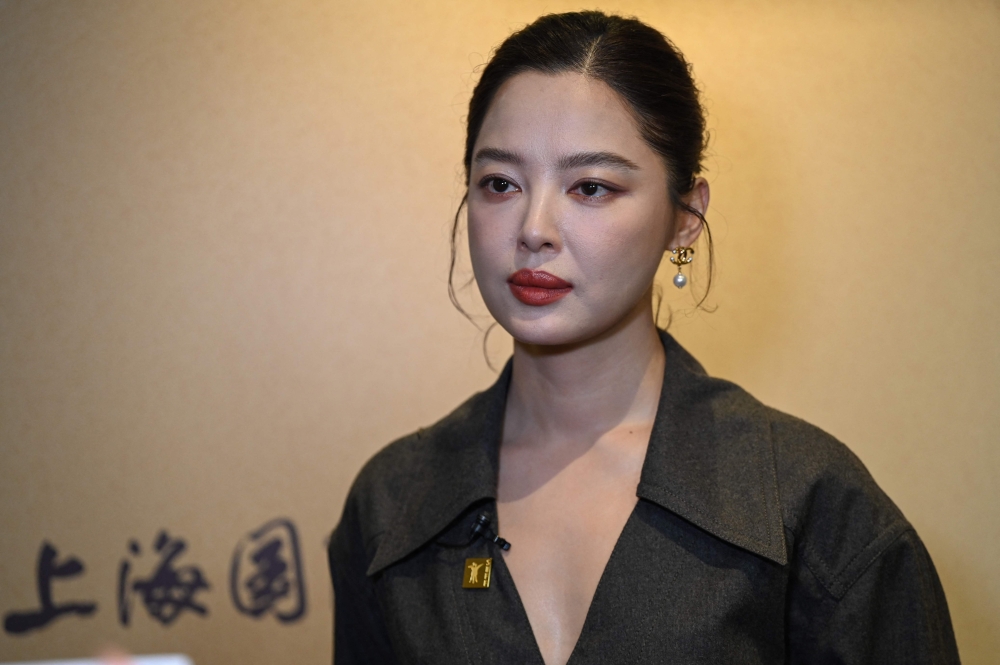
SHANGHAI, June 13 — Chinese actress Xin Zhilei said she was keen for new experiences and did not want to limit herself, as she helped kick off the Shanghai International Film Festival yesterday.

Xin, 40, became only the third Chinese woman to win best actress in Venice in September, her first major accolade in Europe after charming audiences at home.

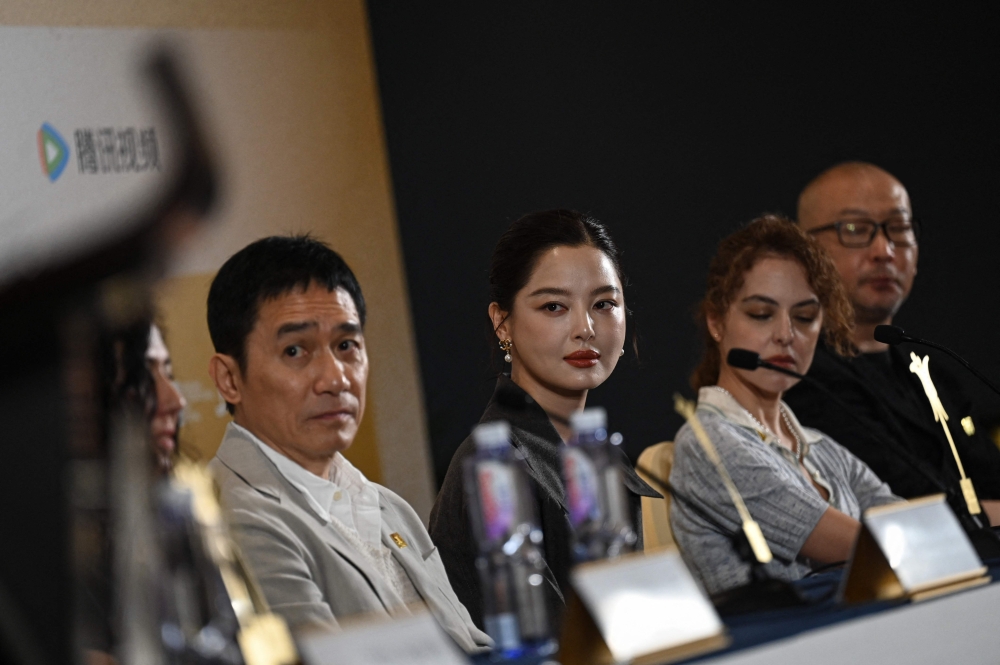
She will be part of a festival jury for the first time in Shanghai and joked at a news conference that she had asked Doubao, a Chinese AI chatbot, how to prepare for the role.

“I want to try everything I haven’t experienced before,” she later told AFP, adding she doesn’t rule out stepping behind the camera in the future.

“I don’t want to limit myself, nor do I want to box myself into a specific type... Anything is possible.”

Her Venice success came for her role in The Sun Rises on Us All, in which her character tries to make amends with a former lover who was jailed for a crime she committed.

The film was widely praised for the convincing, nuanced chemistry between her and co-star Zhang Songwen.

Asked about the challenges faced by Chinese film makers, Xin said good work would “always find its audience”.

“I truly feel that, whether in film or any other industry, we’ve entered an era where what’s false is being stripped away and only the genuine remains,” she said.

“I believe we each have to bring 100 per cent sincerity to our professions and to the work we love — only then might we have a chance to move the audience.”

Chinese actress Xin Zhilei speaks during an interview with AFP during the 28th Shanghai international film festival in Shanghai on June 12, 2026. Xin said she was keen for new experiences and did not want to limit herself, as she helped kick off the Shanghai International Film Festival yesterday as a jury member. — AFP pic

Desire and drive 

Xin’s first international break came in 2016’s Crosscurrent, a mystical romance set along the Yangtze River.

She has also starred in Chinese blockbusters and popular television series — notably 2023’s Blossoms Shanghai, directed by Hong Kong cinema legend Wong Kar-wai.

“When I first watched Crosscurrent back in the day, I didn’t really understand it — even as an actress in it,” she said.

“But years later, when I revisited it, I felt it was a truly great film.”

Xin grew up in China’s far north, near the border with Russia, in a family that struggled financially.

As her success grew, she was labelled online as someone “who wears her ambition and desire right on her face”.

Xin talked in a 2018 speech about the guilt she still feels having refused to buy her paralysed father a computer in the early days of her career, because of the cost.

“I admit I have a desire for money — because I never want to feel that regret again,” she said then.

Asked how her drive had shaped her development as an actress, she said “every person has... their own journey”.

“The reason I am who I am is precisely because I’ve gone through what I’ve gone through. And that has its own purpose.” — AFP


  •  

China’s solar heavyweights are chasing their next billion in batteries

Malay Mail

SHANGHAI, June 5 — China’s major solar panel manufacturers are ramping up higher-margin battery exports to boost revenue as growth in photovoltaic (PV) sales slows, betting on rising global demand for renewable energy storage to cut reliance on fossil fuels.

The sector has been hit by weaker domestic installations, slowing exports and record-low prices, with executives expecting global demand to decline in 2026.

That has pushed players including JinkoSolar, JA Solar, LONGi Green Energy and Trina Solar to accelerate expansion into battery storage, company executives told Reuters.

JinkoSolar plans to nearly triple its battery manufacturing capacity from 5 gigawatt-hours (GWh) to 13-14 GWh by the end of this year, as developers seek to address the intermittency of renewables, a company official said at SNEC — a solar industry gathering attended by over half a million people.

“We are seeing some goodwill from our company’s directors’ point of view, in that we are having massive investments,” Titus Koech, a regional technical head for energy storage systems, told Reuters.

Countries with high renewable penetration — including Japan, Vietnam and India, as well as Germany, the Netherlands, the US and Australia — were among the largest importers of batteries from China in 2025, according to energy think tank Ember.

At JA Solar’s booth, energy storage products took centre stage, marking a shift from PV-focused displays in previous conferences, said Gloria Gao, marketing director of its storage unit.

“If you only own a solar business, it’s not helping your business grow because the margins are really small. That’s why we started our energy storage business, because we foresee the future,” Gao told Reuters.

Solar panels exports, which typically carry better margins than domestic sales, grew 4.7 per cent in 2025 — the slowest pace since 2018, Ember data showed. Growth from May to December is expected to lag that seen in the first four months of the year, Rystad Energy analyst Fei Chen said.

By contrast, battery exports for energy storage are forecast to jump 30 per cent to 150 GWh in 2026, Rystad said.

One-stop-shop versus battery manufacturing giants

China’s solar manufacturers are entering a market dominated by battery giants such as CATL and BYD, but are betting on their supply-chain expertise and ability to offer integrated solar-plus-storage solutions.

Such integration has made energy storage “the second growth curve” after photovoltaics, a Trina Solar official said.

The company’s energy storage shipments in the March quarter — about 90 per cent exported — more than quadrupled year-on-year, added the official, who declined to be named as he was not authorised to speak to the media.

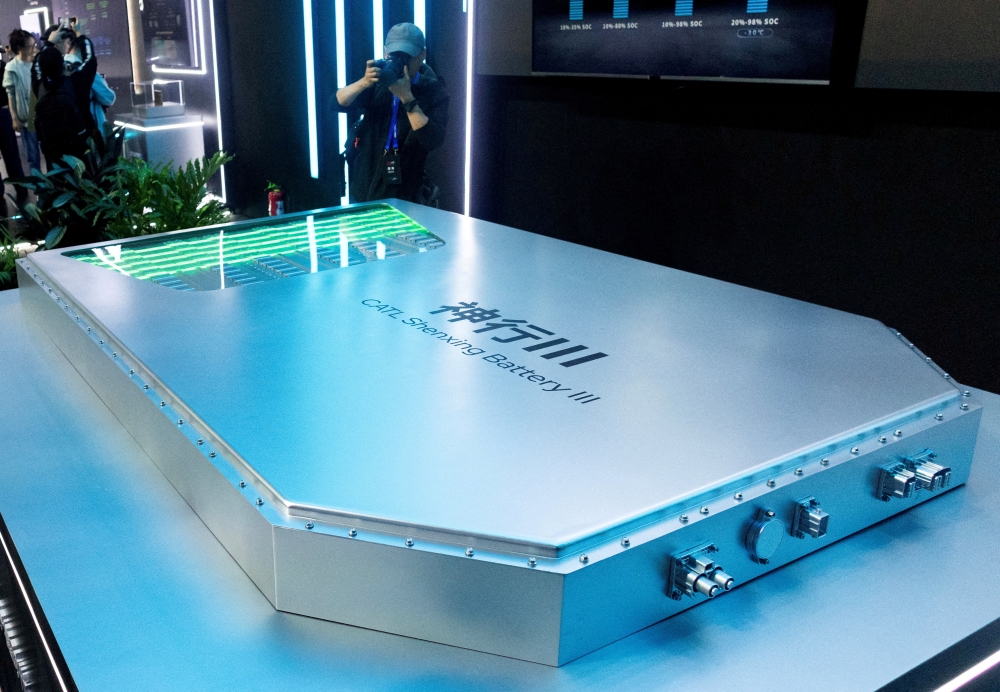
CATL, the world’s biggest battery maker, expects energy storage to account for half of its global sales by 2030, up from 25 per cent now, driven by the need to support intermittent renewable power.

LONGi’s solar-plus-storage integration initiative was advertised on a giant, curved LED screen that cut across the breadth of nearly its entire stall, taking precedence over standalone PV products at SNEC.

Consultancy Wood Mackenzie said the trend reflects a shift in buying patterns.

“When you’re buying solar and storage, you’re getting married to these companies for the next 20 years,” said Yana Hryshko, head of solar supply chain research.

“LONGi and JA just joined (the energy storage business) because you don’t buy your solar from one manufacturer and your storage from another. In the next two years, we’re not going to talk about solar without storage.” — Reuters

  •  
❌