Reading view

Everyone is an activist: SC on ‘anti-development’ litigation in Pipavav case

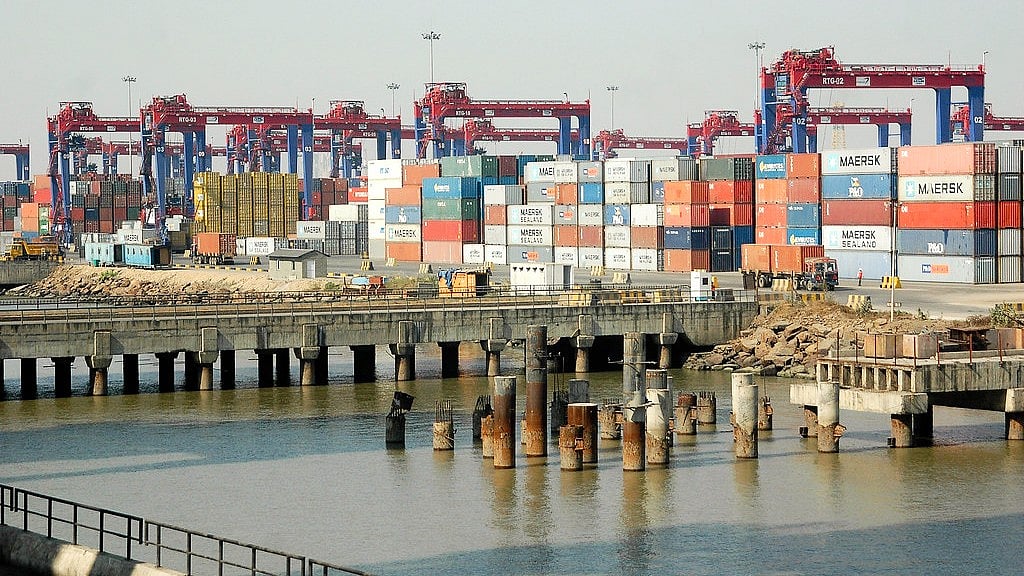
The Supreme Court on Monday, 11 May, sharply criticised what it described as a growing tendency to use environmental litigation to stall infrastructure projects, while hearing a plea linked to the expansion and modernisation of Gujarat’s Pipavav port — a long-contentious coastal project that has faced years of environmental objections and regulatory scrutiny.

Hearing a challenge to a National Green Tribunal (NGT) order upholding environmental and Coastal Regulation Zone (CRZ) clearances for the port expansion, a bench of Chief Justice Surya Kant and Justice Joymalya Bagchi questioned whether the country could progress if every major project was met with litigation.

“Show us even a single project in this country where these so-called environmental activists have said that we welcome this project,” the bench remarked. “In this country, the kind of petitions being filed are only to stall development. That is the problem. How the country is going to progress?”

At the same time, the bench clarified that courts remained conscious of environmental concerns and had consistently intervened where ecological damage was evident. It said activists and environmental groups should instead focus on offering constructive suggestions that balanced development with environmental protection.

“The attempt should never be to stall developmental projects,” the bench said.

BREAKING: Supreme Court Grants Leave In Plea Against NGT’s Pipavav Port Expansion Order, But Says It Is Not Inclined To Interfere,
"Nowadays, everyone is an activist, everything cannot be stalled, there has to be development also" the CJI said. https://t.co/NAEoDy4V2b

— LawBeat (@LawBeatInd) May 11, 2026

The case concerns the expansion and modernisation of Gujarat Pipavav Port Ltd (GPPL), India’s first private port developed under the public-private partnership model at Pipavav in Amreli district of Gujarat. The project involves expanded cargo handling facilities, new berths, dredging activity and upgraded container and liquid cargo infrastructure aimed at significantly increasing the port’s handling capacity.

The project has had a long and controversial environmental history. Environmental and CRZ clearance for the expansion was first granted in 2012 under the UPA government, but portions of the project were later challenged before the NGT over concerns relating to mangroves, grazing land, coastal ecology, fishing livelihoods and potential salinity impacts.

In 2013, the NGT had even asked the environment ministry to reconsider the clearance, observing that the environmental impact assessment process required closer scrutiny. Activists and local groups had alleged that earlier expansions of the port had already affected mangroves and coastal ecology in the region.

Yet the project continued to receive extensions and fresh approvals over the years. The Ministry of Environment, Forest and Climate Change extended the validity of environmental and CRZ clearances in 2019 after large parts of the approved work remained incomplete.

'The Great Nicobar project to develop a transshipment terminal, airport, and township, with an outlay of nearly one lakh crores, is likely to destroy over 160 sq km of pristine rainforest, cut down nearly 10 lakh trees, displace the indigenous Shompen tribe and irreparably damage…

— Dr PV Ramesh (@RameshPV2010) May 11, 2026

That trajectory, critics note, mirrors a broader policy shift under the Narendra Modi government, which has repeatedly stressed “ease of doing business” and accelerated infrastructure approvals while simultaneously diluting or relaxing environmental compliance norms in several sectors.

Over the past decade, amendments to environmental regulations — including post-facto clearances, extended validity periods for approvals and streamlined appraisal procedures — have frequently been justified in the name of speeding up development projects, such as the currently ongoing and immensely controversial Great Nicobar project.

Against that backdrop, the Supreme Court’s remarks on Monday appeared strikingly aligned with the Centre’s development-first policy approach, which has often viewed prolonged environmental litigation as an obstacle to economic growth.

The bench, however, stopped short of dismissing environmental concerns altogether. It noted that apprehensions about ecological damage could initially be genuine whenever large projects were proposed.

Dealing with the present plea, the court observed that the NGT had passed a “very detailed order” in the matter. It granted liberty to the petitioner to approach the NGT through a review application specifically on the question of whether the environmental impact assessment report had adequately considered the issues raised by the petitioner. The apex court also directed the NGT to examine that aspect.

The judges reiterated that while development was necessary, environmental safeguards could not be ignored. At the same time, they stressed that litigation should not become a means to indefinitely halt projects that governments consider vital for economic growth and infrastructure expansion.

With PTI inputs
  •  

MAHE Launches Online BCom with ACCA Accreditation

By: PR

Manipal Academy of Higher Education (MAHE) has launched a three-year Bachelor of Commerce (BCom) with ACCA accreditation in the online mode. Offered through Online Manipal, the program is best suited for students who want to build global careers in finance, accounting, and business.

The BCom (Professional) program allows learners to get exemptions for up to 9 ACCA exam papers. During this 3-year program, students also receive training for 4 strategic professional papers, accelerating learners’ pathway to a globally recognized ACCA Affiliate credential.

Candidates with a minimum of 50% marks in their 10+2 or 10+3 examinations are eligible to apply. The program fee is INR 49,000 per semester, with a total course fee of INR 2,94,000.

What is ACCA?

Association of Chartered Certified Accountants (ACCA) is a globally recognized professional accounting body offering the Charted Certified Accountant qualification that helps professionals develop competency in finance, accounting, and business management.

The Association of Chartered Certified Accountants (ACCA), headquartered in the United Kingdom and widely recognized as the global equivalent of India's Chartered Accountant designation, presents a comprehensive curriculum encompassing International Financial Reporting Standards (IFRS), ethics, law, taxation, and advanced management disciplines. Candidates seeking ACCA Affiliate status are required to successfully complete 13 examinations as outlined within the qualification framework.

How an ACCA-Accredited Online BCom Enhances Career Prospects

The integrated BCom with ACCA combines the academic rigor of a university degree with a globally recognized professional qualification valued by employers worldwide. At MAHE, this pathway is streamlined and structured to make pursuing both credentials more accessible and achievable for aspiring finance and accounting professionals.

The program offers:

●        Dual Advantage
 Get a UGC-entitled BCom degree from MAHE while studying a curriculum aligned with Association of Chartered Certified Accountants standards. This means less time spent studying the same material twice.

●        Up to 9 Paper Exemptions in ACCA
 Get exemptions across Applied Knowledge and Applied Skills levels. Reduce the number of exams and fast-track your ACCA journey. Learners will receive exemptions in Business and Technology, Management Accounting, Financial Accounting, Corporate and Business Law, Taxation, Audit and Assurance, Financial Management, Financial Reporting, and Performance Management.

●       ACCA Affiliate Status
 Achieve ACCA Affiliate status by successfully passing the Strategic Professional modules: Strategic Business Leader (SBL), Strategic Business Reporting (SBR), Advanced Financial Management (AFM), and Advanced Performance Management (APM).

●       Cost-Savings

Save up to INR 5,00,000* by pursuing this integrated BCom with ACCA and    significantly reducing your overall education and qualification costs.

* - Basis calculation of costs of 9 paper exemptions for obtaining ACCA certification independently (Source: ACCA website).

●       Career Readiness

ACCA opens doors in over 180 countries. Unlock diverse career paths in finance, accounting, and consulting in Big Four companies like Deloitte, PwC, EY, and KPMG. Career outcomes include roles such as Financial Analyst, Auditor, Tax Consultant, and Finance Manager across global organizations.

●       Path to ACCA Membership

Work towards full ACCA membership with relevant experience. Complete ethics modules and gain professional recognition. ACCA qualified professionals can also pursue an MSc in Professional Accountancy from the University of London.

For more details about the program, please visit https://www.onlinemanipal.com/online-bcom-professional-mahe

About Manipal Academy of Higher Education

Manipal Academy of Higher Education (MAHE) is one of India’s leading academic and research institutions. It is ranked #3 by NIRF, along with a NAAC A++ rating and prestigious Institution of Eminence (IoE) recognition. The institution has been offering world-class education across diverse streams since 1953.

MAHE’s online learners get free access to Coursera courses and certifications during the tenure of the program. They are also offered placement assistance in the form of skill assessments & enhancement, industry-readiness sessions, resume building, and virtual placement drives.

MAHE currently offers 10 degrees & certification programs in online mode and caters to 14,000+ learners across 44 countries and over 25 states.

About Online Manipal

Online Manipal is the digital home of Manipal Academy of Higher Education (MAHE), Manipal University Jaipur (MUJ), and Sikkim Manipal University (SMU). These three Manipal universities, accredited with NAAC A++ and NAAC A+, offer UGC-entitled online degrees equivalent to on-campus programs.

Since its inception in 2021, Online Manipal has empowered over 160,000 learners to realize their potential by providing them with accessible, affordable & industry-relevant degrees and new-age certifications in a 100% online mode.

Online Manipal’s integrated learning platform gives access to extensive e-learning material, recorded sessions, webinars, doubt clearing sessions, quizzes, assignments, and more.

MAHE Launches Online BCom with ACCA Accreditation
  •  

Sensex crashes 1,313 points as Modi’s austerity plea, oil surge spook investors

Stock markets extended their losing streak for a third straight session on Monday, 11 May, with benchmark indices plunging sharply as Prime Minister Narendra Modi’s call for austerity measures amid the West Asia crisis amplified investor concerns over inflation, fuel costs and pressure on India’s economy.

The 30-share BSE Sensex tanked 1,312.91 points, or 1.70 per cent, to settle at 76,015.28. During intra-day trade, it had fallen as much as 1,370.79 points, or 1.77 per cent, to 75,957.40.

The NSE Nifty also slumped 360.30 points, or 1.49 per cent, to close at 23,815.85. Over the last three sessions since Thursday, the Nifty has dropped more than 515 points, or over 2 per cent, while the Sensex has shed nearly 1,950 points, or 2.5 per cent.

Analysts said Monday’s sharp sell-off was driven not only by escalating geopolitical tensions in West Asia and rising crude oil prices, but also by fears triggered by Modi’s remarks on conserving foreign exchange.

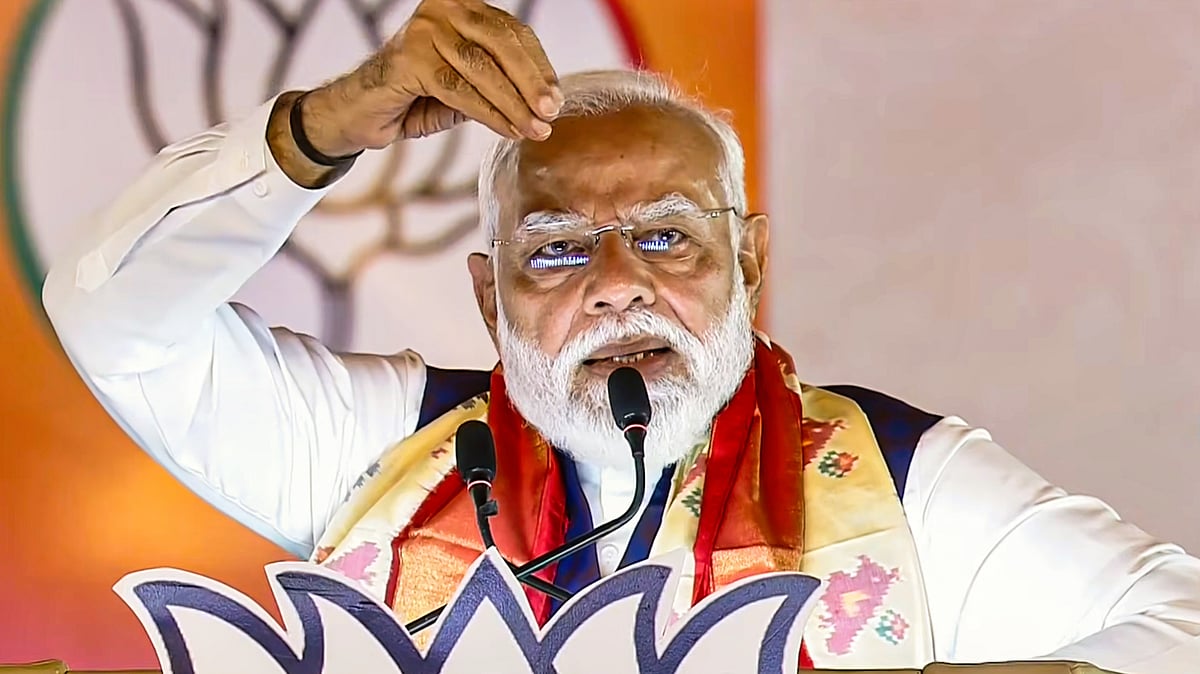
Addressing a BJP rally in Hyderabad on Sunday, Modi urged people to reduce petrol and diesel consumption, postpone gold purchases and defer foreign travel for a year in view of the ongoing crisis in West Asia.

The prime minister also advocated greater use of Metro rail services, electric vehicles, carpooling, railway freight movement and work-from-home arrangements to cut fuel consumption and save foreign exchange reserves. “We have to save foreign exchange by any means,” Modi had said, while warning that the conflict in West Asia had significantly increased petrol and fertiliser prices.

जब “ग़रीबी में आटा गीला” हो रहा है तब मोदी जी देश को बचत करने का पाठ पढ़ा रहे हैं।

28 फ़रवरी को West Asia में जंग शुरू हुई, कांग्रेस पार्टी ने हर पहलू को highlight किया —

अर्थव्यस्था की बर्बादी,
रुपये का लगातार गिरना,
पेट्रोल-डीज़ल-LPG के दाम और क़िल्लत,
किसानों के लिए…

— Mallikarjun Kharge (@kharge) May 11, 2026

Market experts said the appeal was interpreted as a sign of mounting macroeconomic stress. “The immediate trigger for today’s weakness came after PM Narendra Modi’s speech on 10 May, which the market interpreted as a sign of mounting macroeconomic stress,” said Hariprasad K., research analyst and founder of Livelong Wealth.

“While global uncertainty surrounding the US-Iran conflict and surging crude oil prices had already weakened sentiment, the prime minister’s appeal for austerity measures amplified investor concerns around India’s forex reserves, fuel costs and consumption outlook,” he added.

Investor sentiment was further hit after US President Donald Trump dismissed Iran’s response to the latest peace proposal as “totally unacceptable”, dimming hopes of an immediate diplomatic breakthrough to end the conflict in West Asia.

Brent crude, the global oil benchmark, rose 2.23 per cent to USD 103.5 per barrel. “Brent crude emerged as the key market trigger, surging 4 per cent to around USD 105.7 per barrel, intensifying concerns around imported inflation and India’s external balances,” said Siddhartha Khemka, head of research, wealth management, at Motilal Oswal Financial Services.

मोदी जी ने कल जनता से त्याग मांगे - सोना मत ख़रीदो, विदेश मत जाओ, पेट्रोल कम जलाओ, खाद और खाने का तेल कम करो, मेट्रो में चलो, घर से काम करो।

ये उपदेश नहीं - ये नाकामी के सबूत हैं।

12 साल में देश को इस मुक़ाम पर ला दिया है कि जनता को बताना पड़ रहा है - क्या ख़रीदे, क्या न…

— Rahul Gandhi (@RahulGandhi) May 11, 2026

Titan emerged as the biggest loser among Sensex stocks, tumbling nearly 7 per cent amid intense selling in jewellery counters after Modi’s remarks on postponing gold purchases.

Jewellery stocks came under broad pressure, with Sky Gold and Senco Gold falling more than 12 per cent during intra-day trade before trimming some losses. Senco Gold eventually closed 7.8 per cent lower after hitting a 10 per cent decline earlier in the session.

Other major laggards included InterGlobe Aviation, State Bank of India, Bharti Airtel, Eternal and Reliance Industries. Among the gainers were Sun Pharma, Hindustan Unilever, Adani Ports, Kotak Mahindra Bank, Axis Bank and ICICI Bank.

“The benchmark index slipped below the 24,000 mark as renewed Gulf tensions, following Trump’s rejection of Iran’s peace proposal, weighed on investor sentiment,” said Vinod Nair, head of research at Geojit Investments Ltd.

“The cautious mood deepened after the PM’s appeal to conserve energy and avoid non-essential foreign travel, prompting investors to reassess the economic impact of higher crude prices, rupee weakness and pressure on the current account deficit,” he added.

In the interest of the nation, please follow what you preach pic.twitter.com/My74PFEAlm

— Congress (@INCIndia) May 11, 2026

Broader markets also ended lower, with the BSE MidCap Select index falling 1.09 per cent and the BSE SmallCap Select index declining 0.44 per cent.

Among sectoral indices, Consumer Durables tumbled 3.76 per cent, Realty fell 2.74 per cent, PSU Banks declined 2.28 per cent and Consumer Discretionary stocks dropped 2.14 per cent. Healthcare and hospital stocks bucked the trend and ended higher.

A total of 2,892 stocks declined on the BSE, while 1,457 advanced and 189 remained unchanged.

In Asian markets, Japan’s Nikkei ended lower, while South Korea’s Kospi, Shanghai’s SSE Composite and Hong Kong’s Hang Seng settled with gains. Most European markets were trading lower, while US markets had ended higher on Friday.

Foreign Institutional Investors offloaded equities worth Rs 4,110.60 crore on Friday, according to exchange data. On Friday, the Sensex had tanked 516.33 points, or 0.66 per cent, to settle at 77,328.19, while the Nifty dropped 150.50 points, or 0.62 per cent, to close at 24,176.15.

With PTI inputs

  •  

Delhi: 2 NE women molested, assaulted outside hotel; 4 accused identified

Two women from India’s northeastern region were allegedly molested, assaulted and subjected to racist remarks by a group of men outside a hotel in southeast Delhi’s Nehru Place area, police said on Sunday.

Delhi Police said four accused had been identified and multiple teams were conducting raids to arrest them.

The incident took place around 6:30 am on 10 May near a tea stall outside a hotel in the area. According to police, a PCR call regarding women in distress was received at Kalkaji Police Station around 7 am, following which officers reached the spot and found the two women there.

A senior police officer said preliminary inquiry revealed that the women were allegedly subjected to abusive and derogatory remarks by a group of men, which later escalated into a violent confrontation.

According to the complainants, they were having tea outside the hotel when two men allegedly began catcalling them. Several others later joined in, leading to an argument that turned physical.

“One of the complainants alleged that she was molested during the incident and that her clothes were torn. The women also alleged that racist remarks were passed against them by the accused,” the officer said.

Police said one of the women also alleged that she was attacked with a bamboo stick while they were trying to leave the area. The accused allegedly restrained the women and threatened them against reporting the matter.

Both women were taken to All India Institute of Medical Sciences for medical examination after police arrived at the scene.

Police registered a case on 10 May under various provisions of the BNS (Bharatiya Nyaya Sanhita), including voluntarily causing hurt, assault with intent to outrage modesty, wrongful restraint, criminal intimidation, stalking and common intention.

Investigators said the women informed police that they would be able to identify the accused persons if produced before them.

As part of the investigation, police examined CCTV footage from nearby locations and questioned witnesses and passersby present during the incident. Officials said eight individuals were rounded up for questioning, following which four main accused were identified.

Police said raids were being carried out at locations linked to the accused, though no arrests had been made so far.

Delhi: 2 northeastern women molested, assaulted outside hotel; 4 accused identified
  •  

Ahead of crucial floor test, CM Joseph Vijay calls on DMK supremo Stalin

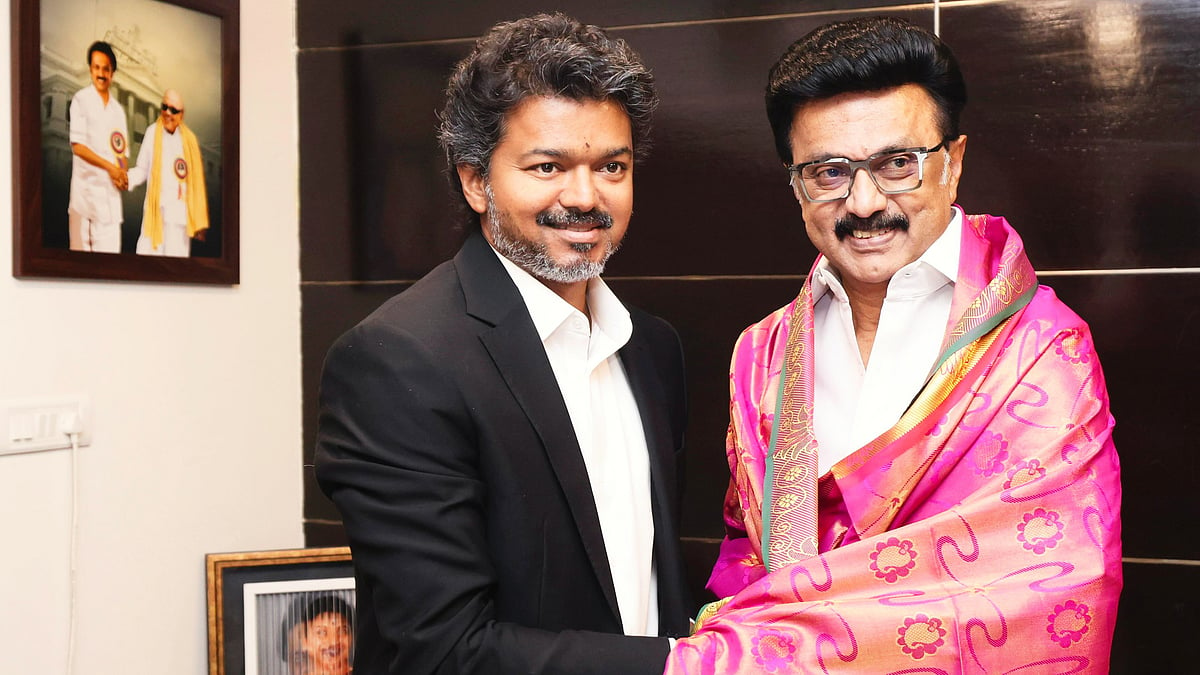
New Tamil Nadu chief minister C. Joseph Vijay on Monday, 11 May met his predecessor and DMK president M.K. Stalin at the latter’s Alwarpet residence in Chennai, days before the crucial floor test the ruling TVK government is scheduled to face in the state Assembly.

The meeting, described by government sources as a “courtesy call”, marked the first interaction between Vijay and Stalin since the TVK chief assumed office as chief minister following his party’s victory in the 23 April Assembly elections.

Stalin and his son Udhayanidhi Stalin received Vijay warmly at the residence. Udhayanidhi greeted the chief minister with a handshake and embrace upon his arrival, while Stalin later hugged Vijay, held his hands and escorted him inside the house.

The meeting comes barely a day after Vijay launched a sharp attack on the previous DMK regime over the state’s alleged Rs 10 lakh crore debt burden. He had also taken an indirect swipe at the DMK over the existence of “multiple power centres”, asserting that he alone would remain the power centre in the TVK government.

Stalin had responded strongly to Vijay’s remarks on the debt issue.

A day after taking the oath as Tamilnadu Chief Minister, C Joseph Vijay met former CM and DMK President MK Stalin.

Stalin and his son Udhayanidhi Stalin accorded a warm welcome to CM Vijay.

Visuals show the leaders hugging and greeting each other cordially, underlining a… pic.twitter.com/W1jXnFnKSj

— Surya Reddy (@jsuryareddy) May 11, 2026

Vijay’s outreach assumes significance as the TVK government prepares for a floor test in the Tamil Nadu Assembly on 13 May to prove its majority. The ruling party currently has 107 MLAs in the 234-member House following Vijay’s resignation from the Tiruchirappali East constituency.

The TVK has secured the backing of 13 legislators from the Congress, VCK, IUML and Left parties. While the VCK, IUML and Left parties are part of the DMK-led alliance, the Congress — which has extended support to the TVK government — was formerly aligned with the DMK.

During the meeting, Vijay and Stalin exchanged silk shawls and bouquets. Udhayanidhi also presented Vijay with a book documenting the DMK’s political journey titled Kalathin Niram Karuppu Sivappu-DMK 75.

The interaction between the two leaders comes weeks after an acrimonious electoral contest between the DMK and Vijay’s Tamilaga Vettri Kazhagam ahead of the Assembly polls, which the actor-turned-politician’s party won.

Later in the day, Vijay visited the residence of MDMK founder Vaiko and met the veteran leader. Vaiko’s son Durai Vaiko welcomed the chief minister on arrival.

Vaiko draped Vijay with a white silk shawl and garlanded him, while Vijay reciprocated by honouring the senior leader with a shawl. The two leaders were later seen engaged in a brief conversation as supporters and party workers gathered at the residence greeted the chief minister.

Speaking to reporters after the meeting, Vaiko said Vijay had emerged as a major political leader following the election results and claimed that the verdict reflected the people’s desire for change in Tamil Nadu.

Praising Vijay for reaching out to opposition leaders, Vaiko said the gesture sent out a positive message that “healthy politics should be encouraged in Tamil Nadu”.

  •  

Obituary: Koji Suzuki, master of Japanese horror and creator of Ring

Koji Suzuki, the Japanese novelist whose chilling psychological horror stories reshaped the genre and inspired globally successful film adaptations including Ring (1991), died at a Tokyo hospital on Friday, 8 May. He was 68.

Widely regarded as one of the defining voices of modern Japanese horror fiction, Suzuki built an international following through stories that blended supernatural terror with emotional unease, social anxieties and psychological suspense. His breakthrough novel Ring (1991) became a cultural phenomenon in Japan before spawning one of the most influential horror franchises in the world.

Born in Japan on 13 May 1957, Suzuki began his literary career at a time when horror fiction occupied only a limited space in mainstream Japanese publishing. He made his debut as a novelist in 1990 with Rakuen (Paradise, 1990), which won a superior prize at the Japan Fantasy Novel Award and immediately marked him out as a promising new voice.

But it was Ring that transformed Suzuki into a household name. The novel centred on a cursed videotape that killed viewers days after watching it — a premise that tapped into growing fears surrounding technology, media and isolation in late 20th-century society. The story’s eerie atmosphere and restrained storytelling distinguished it from more graphic horror traditions and helped establish a new template for Japanese psychological horror.

We are sad to learn that Japanese master of horror Koji Suzuki has passed away at 68.

Koji Suzuki's nightmares defined an era of horror beginning in the '90s with THE RING, originally a Suzuki novel, and DARK WATER, based on a Suzuki short story.

Rest in Peace, master. pic.twitter.com/bTPEk98Fnx

— Bloody Disgusting (@BDisgusting) May 10, 2026

Ring was adapted into the hugely successful Japanese film Ringu (1998), directed by Hideo Nakata. The film’s haunting imagery, particularly the ghostly figure of Sadako emerging from a television screen, became iconic worldwide. Its success triggered a wave of Japanese horror films that found international audiences and later inspired Hollywood remakes, including the 2002 American adaptation The Ring.

Suzuki followed up Ring with sequels and companion works including Rasen (Spiral) (1995), which expanded the mythology of the original novel and won the prestigious Eiji Yoshikawa literary award for newcomers in Japan. His stories often moved beyond conventional horror, incorporating themes of science fiction, philosophy and existential dread.

Over the years, Suzuki’s work earned both domestic and international recognition. His novel Edge (2008) received the Shirley Jackson Award in the United States, underlining his influence beyond Japan and his standing among contemporary masters of literary horror and suspense.

Apart from Ring and Spiral, Suzuki produced a diverse body of work that included Honogurai Mizu no Soko kara (Dark Water, 1996), another acclaimed supernatural tale later adapted for cinema. Other notable works included Kamigami no Promenade (Promenade of the Gods, 2003) and Ubiquitous (2005).

Critics often credited Suzuki with helping redefine horror for a modern audience by relying less on gore and more on atmosphere, suggestion and deeply human fears. His writing influenced filmmakers, authors and screenwriters across the world, particularly during the late 1990s and early 2000s, when Japanese horror enjoyed a global boom.

Though best known for terrifying readers, Suzuki’s stories were equally noted for their melancholy and emotional depth. His legacy endures not only through his novels, but also through the vast cinematic universe and cultural impact that emerged from them.

With media inputs

  •  

IPL: Down and out, are Mumbai Indians looking beyond Hardik for captaincy?

The die has been cast for Mumbai Indians, the five-time champions, as they lost their eighth game out of 11 so far and become the second team to be knocked out of any play-off chances in IPL 2026. The sense of despondency among the Mumbai Paltan, who began the season on a winning note at home, is understandable -  while the knives are once again out for the beleaguered skipper Hardik Pandya.

It’s been three seasons now that Pandya had completed the controversial trade-off from Gujarat Titans to the Mumbai camp again – with reports of an undisclosed sum of money changing hands over and above the transfer fees. While the first season in 2024 under him had been a disaster with the team finishing last in the table, they regrouped well last year to make the play-offs before slumping into inconsistency again this time.

After the 2025 season saw a rejuvenated Hardik after emerging as the MVP in India’s T20 World Cup triumph the previous year, much was expected of him after yet another critical role by him behind the Men in Blue retaining the crown last March. However, call it the fatigue factor (which has seen a number of the World T20 winning members enduring a poor IPL season) or any form of niggle, Hardik had been far from his best – scraping together 146 runs from the eight matches he played and only four wickets. 

The buzz on social media on Monday was that the captain had distanced himself from the franchise by 'unfollowing' them on Instagram and deleting the squad photos from his account. While it was not true as MI returned as one of his 'followed' accounts after a brief absence, informed sources reveal that the equation between the star allrounder and the management has entered an uncomfortable phase due to some non-cricketing issues. The last match in Raipur on Sunday, which MI lost narrowly in the last over to RCB, saw Pandya missing the third game on the trot owing to a ‘back issue,’ but it has set the tongues wagging.

‘’Hardik had developed a back issue – we will monitor it on a day-to-day basis,’’ said head coach Mahela Jayawardene after the defeat. The Sri Lankan legend, brought back into coaching operations from a global role after the MI floundered under Mark Boucher, was at a loss to explain the team’s early ouster.

Six years without a now for the mighty Mumbai Indians.#IPL2026 pic.twitter.com/UuyIDoG0bX

— Cricbuzz (@cricbuzz) May 11, 2026

‘’It’s difficult for me to sum up the season at this stage, but we were not just good enough. We were not good with bad or ball and we were not consistent,’’ remarked Mahela. A series of injuries including Rohit Sharma, Hardik and the lacklustre form of Suryakumar Yadav, Tilak Varma (barring a century) did not help MI campaign – while what hurt them especially was Jasprit Bumrah suddenly losing his venom in the earlier part of the tournament.

‘’We still have a few games left and have to continue with the season,’’ said Mahela as their next game is against Punjab Kings on 14 May.  While the mild mannered chief coach was protective about the ‘core group’ in his team – an educated guess is that the team management may be looking for a change at the helm for the next season if not for the three remaining games as well. With Rohit Sharma possibly staring at his last couple of seasons in IPL and Surya suffering a prolonged drought with the bat, Tilak Varma’s name is being aired as an incumbent for the future.

For now, the best MI can hope for is a late push to finish at mid-table and then take a fresh guard for the next season!

  •  

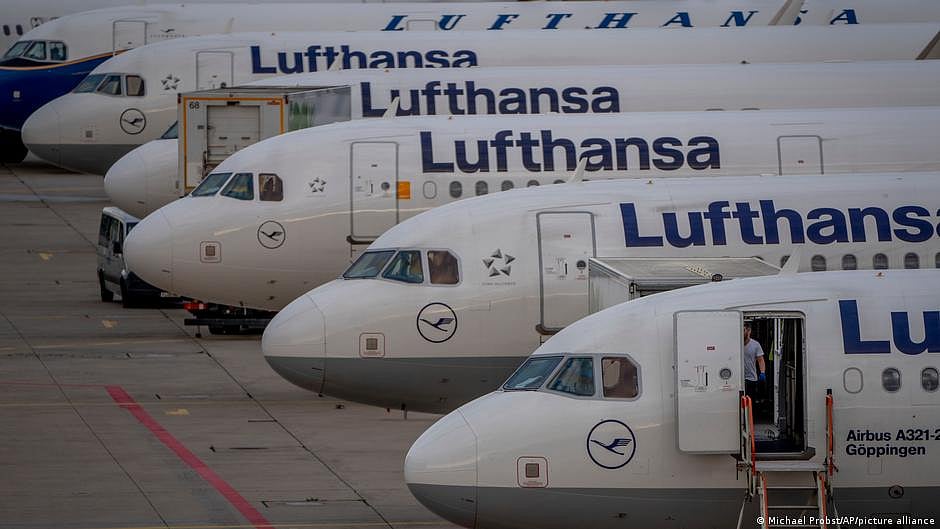
Europe’s airline industry emits more CO₂ than before COVID despite vow to decarbonise

Carbon emissions from Europe’s aviation sector have risen above pre-pandemic levels despite industry commitments to reduce pollution and improve fuel efficiency, according to a new analysis by environmental thinktank Transport & Environment.

The report said total aviation emissions from departing flights in Europe reached 195 million tonnes of CO₂ in 2025, about 2 per cent higher than levels recorded before the Covid-19 pandemic disrupted global air travel. The increase has largely been driven by the rapid expansion of low-cost airlines across Europe.

According to the analysis, Irish budget carrier Ryanair emitted 16.6 million tonnes of CO₂ in 2025, around 50 per cent higher than in 2019. The airline carried more than 200 million passengers during the year compared with about 140 million before the pandemic.

Researchers said Ryanair’s total annual emissions were roughly comparable to those of countries such as Croatia.

Concerns over aviation carbon pricing

The report criticised the limitations of the EU ETS (European Union Emissions Trading System), arguing that the mechanism does not adequately capture emissions from long-haul flights because it applies primarily to flights operating entirely within Europe.

As a result, many long-distance routes flown by major legacy carriers remain outside the system despite consuming significantly larger quantities of jet fuel. According to the analysis, Ryanair currently pays around €50 per tonne of carbon emissions under the ETS, while German airline Lufthansa pays roughly €20 per tonne.

The study highlighted that air traffic between London and New York alone generated nearly 1.4 million tonnes of CO₂ in 2025 but remains outside the scope of the carbon trading system.

Transport & Environment has called for the ETS to be expanded to cover all departing flights from Europe. The organisation argued that such a move could significantly increase public revenues and help finance sustainable aviation fuel production as well as technologies aimed at reducing climate-warming contrails generated by aircraft.

Fuel prices ‘bigger factor’ than climate rules

The report also said rising ticket prices were being driven more by fossil fuel dependence and fuel price volatility than by environmental regulations.

Giacomo Miele, author of the analysis, said the aviation industry was continuing to increase emissions despite public decarbonisation pledges.

“Aviation emissions hitting a new high is a clear signal that the industry has no intention of cleaning up its act,” Miele said.

He added that Europe should stop subsidising fossil fuel dependency and invest more aggressively in sustainable aviation infrastructure and cleaner technologies.

Ryanair defends environmental record

Ryanair defended its record, arguing that emissions had increased because it remained Europe’s fastest-growing airline while operating newer and more fuel-efficient aircraft.

The airline said its emissions per passenger continued to decline and argued that its growth was replacing travel on less efficient legacy carriers.

Ryanair also criticised the current ETS structure as discriminatory because it taxes intra-European flights while exempting many long-haul routes operated by larger airlines. The carrier claimed that when all flights are included, airline groups such as Lufthansa, Air France-KLM and IAG produce higher total emissions than Ryanair.

Europe’s airline industry emits more CO₂ than before COVID despite vow to decarbonise
  •  

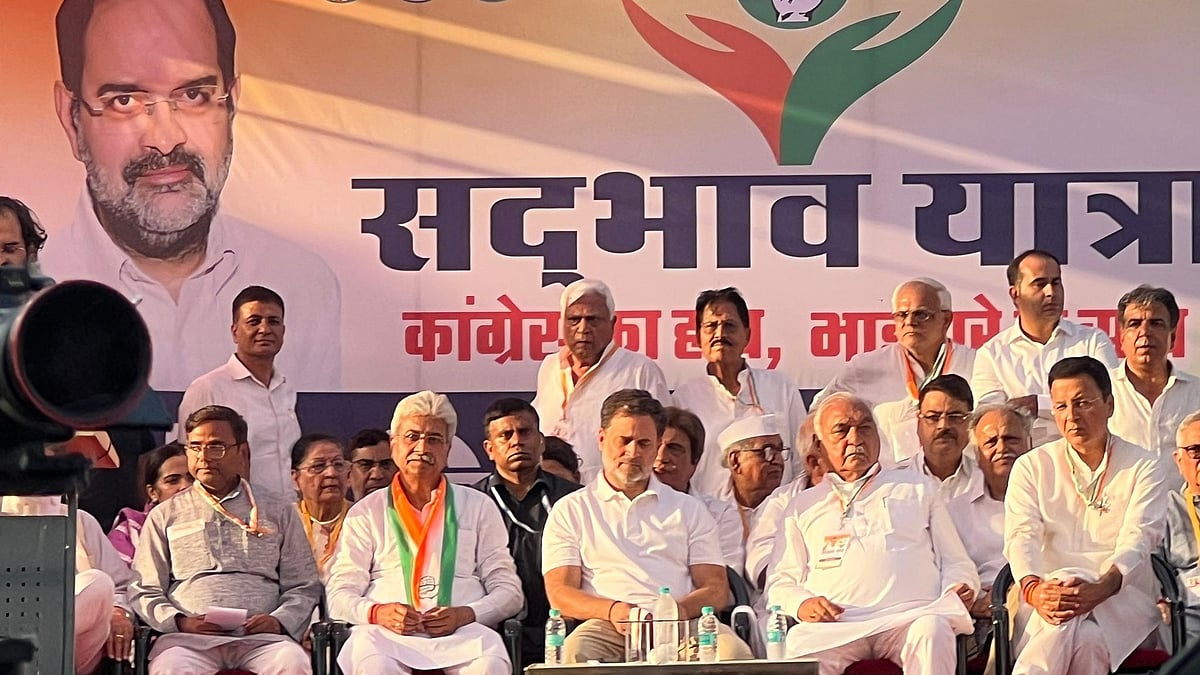
Haryana civic polls: Congress flags 17,086 duplicate voters in Panchkula

As voting took place for Haryana’s municipal corporation elections, the Congress alleged large-scale manipulation of electoral rolls in Panchkula, claiming that thousands of fake and duplicate voters had been added to the voter list.

Senior Congress leader Gurdeep Singh Sappal accused the BJP of relying not on “Modi magic” but on “voter manipulation” to secure electoral victories, and alleged complicity on the part of the Election Commission of India (ECI).

In a social media post, Sappal claimed that a detailed verification exercise conducted by local Congress workers in Panchkula had uncovered massive irregularities in the electoral rolls.

According to him, the party identified 17,086 duplicate entries linked to 8,543 voters whose names allegedly appeared in two or more places with different voter identification numbers.

He further alleged that Congress workers, during physical verification at polling booths, found that at least 11,065 voters listed in the rolls had either died or permanently shifted from the area.

People often claim that the BJP wins because of hard work and the “Modi magic.” There is nothing as Vote Chori.

People, at times also ask, why the Congress fails to work on ground to stop vote chori.

Well, the reality is quite different.

Tomorrow, on May 10, voting is… pic.twitter.com/BQ1qkI7FGx

— Gurdeep Singh Sappal (@gurdeepsappal) May 9, 2026

“The fraud has already been identified, yet the Election Commission is refusing to correct the voter list,” Sappal said, alleging that the responsibility had merely been shifted to booth-level officers. “How will they stop such people from voting? Will this not create tension and conflict at polling booths?” he asked.

Calling it a “planned conspiracy to snatch away democratic rights,” Sappal said the issue had been brought into the public domain well before polling day, leaving no justification for inaction by election authorities.

Despite the allegations, he expressed confidence that Congress candidate Sudha Bhardwaj would emerge victorious in Panchkula. He also appealed to party workers to remain vigilant against alleged fake voting attempts at polling stations.

Last week, Congress general secretary Randeep Singh Surjewala had also addressed a press conference on the issue of the vote chori. He said a month-long analysis of voter lists conducted by Congress volunteers across Panchkula Municipal Corporation’s 20 wards had revealed 17,086 duplicate entries involving 8,543 voters.

“This startling truth emerged after an independent, ward-wise cross-verification of the electoral rolls,” Surjewala said. He added that the Congress had submitted a memorandum along with documentary evidence to the Haryana State Election Commission and the Returning Officer of the Panchkula Municipal Corporation.

पंचकूला,नगर निगम चुनाव

पंचकूला में आज हमने स्टेट इलेक्शन कमीशन व रिटर्निंग अधिकारी से मुलाकात कर बाकायदा एक ज्ञापन दिया और 17,086 डुप्लीकेट वोटों की सूची भी सौंप दी।

पंचकूला नगर निगम के कुल मतदाता लगभग 2.8 लाख हैं, और इस डुप्लीकेशन का वास्तविक दायरा 17,086 से भी अधिक होने की… pic.twitter.com/OLGwEsa2lH

— Randeep Singh Surjewala (@rssurjewala) May 6, 2026

“We have handed over a detailed list of duplicate voter entries across all 20 wards. The authorities have assured us that the matter will be investigated,” he said, urging election officials to act swiftly ahead of polling.

Meanwhile, polling for Haryana’s civic bodies — including seven municipal bodies and 528 panchayats — concluded on Sunday amid reports of minor skirmishes at a few locations. Overall turnout across the state remained relatively low.

According to data released by the Haryana State Election Commission, the state recorded an overall voter turnout of around 54 per cent. Among the three municipal corporations that went to polls, Sonipat recorded the lowest turnout at 48 per cent, while Ambala and Panchkula recorded turnouts of 54.3 per cent and 53.4 per cent, respectively. Nearly 2.96 lakh voters were eligible to cast their ballots across 22 wards and 264 polling booths in Sonipat.

  •  

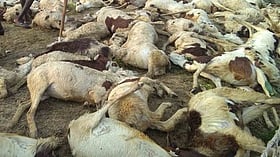
Lightning strike kills 90 sheep and goats in Kashmir’s Ganderbal district

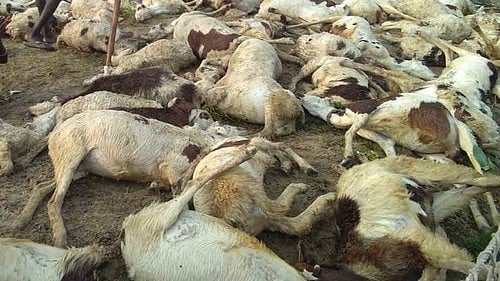
Nearly 90 sheep and goats belonging to a nomadic Bakarwal family were killed after a lightning strike hit a high-altitude grazing area in Jammu and Kashmir’s Ganderbal district during the intervening night of Sunday and Monday, officials and locals said.

The incident took place in the Dhana Dok area of Poshkar in Kangan, a remote alpine pasture in central Kashmir frequently used by migratory tribal families during the summer months.

The livestock reportedly belonged to Mohammad Yaseen Bijran and Abdul Majeed Bijran, residents of the Sunderbani area in Rajouri district, who had travelled to the upper reaches with their flock as part of the seasonal migration undertaken by Bakarwal communities.

According to locals, the region witnessed intense weather activity overnight, including thunderstorms and lightning. Residents discovered dozens of dead animals scattered across the pasture on Monday morning, with preliminary assessments suggesting that lightning had struck the flock during the storm.

The incident has caused significant financial hardship for the affected family, whose livelihood depends largely on livestock rearing and seasonal grazing in the Himalayan meadows.

Police and local administration officials were informed and later visited the area to assess the extent of the damage.

Such incidents are not uncommon in the higher reaches of Jammu and Kashmir during the summer migration season, when nomadic communities move with their livestock to mountain pastures vulnerable to sudden weather fluctuations and thunderstorms.

Every year, thousands of Bakarwals migrate on foot from districts such as Rajouri, Poonch, Reasi and Ramban towards Kashmir’s alpine meadows, travelling hundreds of kilometres with their families, livestock and household belongings in search of grazing grounds.

Over the years, the government has introduced several welfare measures for these communities, including mobile schools for children and veterinary support services in remote grazing belts.

Known for their physically demanding lifestyle and traditional food habits, the Bakarwal community remains an integral part of Jammu and Kashmir’s pastoral economy and cultural landscape.

With IANS inputs

  •  

Bangladesh measles outbreak death toll climbs to 409 after 11 more fatalities

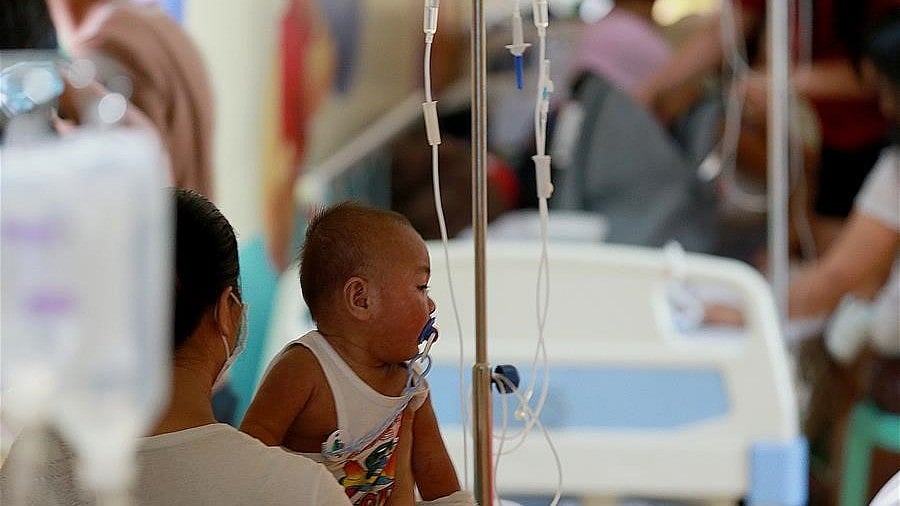
At least 11 more people have died from measles and measles-like symptoms in Bangladesh, pushing the total number of confirmed and suspected deaths linked to the outbreak to 409, according to local media reports citing official data.

The country’s Directorate General of Health Services (DGHS) said the latest fatalities were recorded in the 24 hours leading up to Sunday. Of the 11 deaths, four were from laboratory-confirmed measles cases, taking the total confirmed deaths since March 15 to 65. Another seven deaths linked to suspected infections pushed the suspected death toll to 344, Bangladeshi daily Dhaka Tribune reported.

The outbreak continues to spread rapidly across the country. In the past 24 hours alone, authorities recorded 1,503 suspected measles cases, taking the overall tally since 15 March to 49,159. Among them, 205 new cases were confirmed through testing, raising the number of confirmed infections to 6,819.

Officials said hospitals across Bangladesh have admitted 34,909 patients with measles symptoms since mid-March, putting severe pressure on the country’s public health infrastructure.

As the death toll crossed 400, criticism intensified over the handling of the health crisis by the previous interim government led by Muhammad Yunus.

An editorial published in The Daily Star described the outbreak as an “avoidable disaster” and accused the Yunus-led administration of dismantling a functioning vaccine procurement system without having the capacity to replace it.

“The country’s measles vaccination coverage rose steadily for two decades, becoming an international model for low-income countries. That record has now been squandered with shocking negligence by the past interim government,” the editorial stated.

According to the report, Bangladesh’s Health, Population and Nutrition Sector Programme — operational since 1998 — was scrapped in March 2025 without a proper transition plan.

The editorial further alleged that vaccine procurement stalled, medicine supplies to over 14,000 community clinics dwindled, and emergency buffer stocks were exhausted during the tenure of the interim administration, worsening the outbreak.

Calling for accountability, the report said: “The lack of accountability warrants a probe committee — one with the authority to establish individual responsibility. The deaths of children are tragic. Those who dismantled this programme must answer for each of these deaths.”

With IANS inputs

  •  
❌