Login
Login
Great Indian Bustard chick born in Gujarat after decade goes missing, predation feared
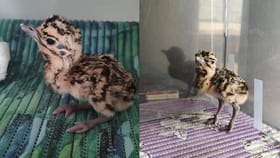
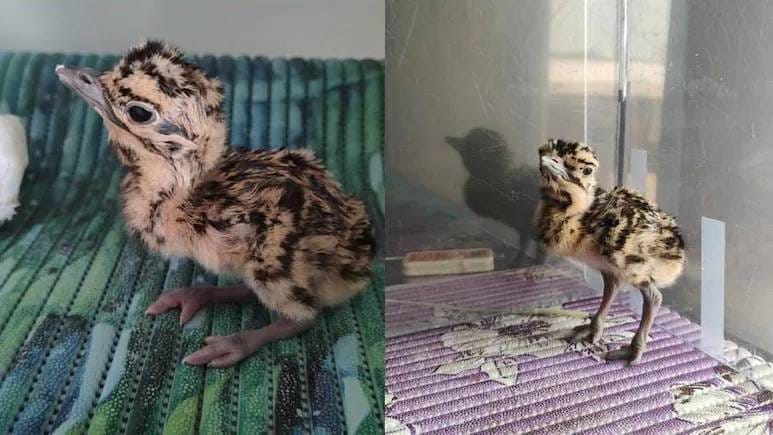
A month-old chick of the critically endangered Great Indian Bustard (GIB), born in the wild in Gujarat for the first time in nearly a decade through an experimental conservation programme, has gone missing in Kutch, raising fears that it may have been killed by predators.
The chick, hatched on 26 March in the Naliya grasslands of Kutch through the “jumpstart technique”, has not been located for the past three to four days despite extensive searches by teams from the Gujarat forest department and the Wildlife Institute of India (WII).
Conservation breakthrough ends in uncertainty
The hatching had earlier been hailed as a major conservation milestone because Gujarat had not recorded the birth of a wild GIB chick in the region for almost ten years.
The chick was born using the “jumpstart approach”, a captive-to-wild conservation method aimed at increasing the species’ population.
Under the technique, a fertile egg from a captive breeding centre is transported and placed into the nest of a wild female GIB sitting on an infertile egg, allowing the chick to hatch and be raised in natural conditions.
Forest officials fear predation
In-charge Principal Chief Conservator of Forests Jaipal Singh said there were concerns that the chick may have been hunted by predators after moving beyond the monitoring zone.
“The chick survived until it reached the stage of taking its first flight. However, it moved beyond the scope of our monitoring subsequently,” Singh said.
The Kutch forest department said that despite close surveillance by staff, wildlife watchers and WII experts, the bird could not be traced over the last few days.
“Since the area is a natural habitat for various wildlife, it is possible that it may have been hunted by them,” the department said.
Species faces extremely high mortality
Officials noted that the Great Indian Bustard faces severe survival challenges during its earliest stages of life.
According to the forest department, only around 40 per cent of laid eggs successfully hatch, and nearly 60 per cent of chicks do not survive beyond their first two months.
Because the bird nests on the ground, chicks remain highly vulnerable to predators such as jackals, foxes, feral cats, mongooses, birds of prey and monitor lizards.
Authorities said the jumpstart technique helps reduce egg predation but cannot fully eliminate the risks faced by newly hatched chicks in the wild.
Conservation efforts to continue
Despite the setback, officials said the breeding and restoration programme would continue.
Singh said the department would keep procuring fertile eggs from Rajasthan while also continuing efforts to release additional chicks into the Kutch landscape.
Two female Great Indian Bustards have also been tagged to help researchers monitor nests and collect breeding data for future conservation efforts.
The forest department said habitat restoration work was also underway, including fencing reinforcement, invasive vegetation removal, predator management and water conservation measures.
One of India’s rarest birds
The Great Indian Bustard is among the world’s rarest birds and is listed as critically endangered by the International Union for Conservation of Nature (IUCN).
Once found across large parts of India, its population has collapsed due to habitat loss, hunting, power line collisions and shrinking grasslands.
Today, the remaining population survives mainly in parts of Rajasthan and Gujarat.