Login
Login
Everyone is an activist: SC on ‘anti-development’ litigation in Pipavav case
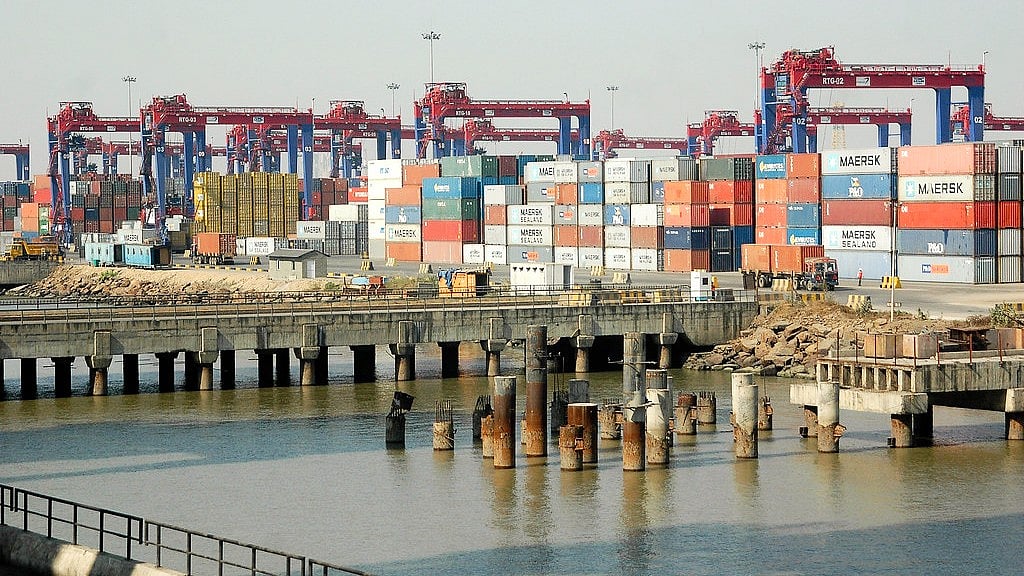
The Supreme Court on Monday, 11 May, sharply criticised what it described as a growing tendency to use environmental litigation to stall infrastructure projects, while hearing a plea linked to the expansion and modernisation of Gujarat’s Pipavav port — a long-contentious coastal project that has faced years of environmental objections and regulatory scrutiny.
Hearing a challenge to a National Green Tribunal (NGT) order upholding environmental and Coastal Regulation Zone (CRZ) clearances for the port expansion, a bench of Chief Justice Surya Kant and Justice Joymalya Bagchi questioned whether the country could progress if every major project was met with litigation.
“Show us even a single project in this country where these so-called environmental activists have said that we welcome this project,” the bench remarked. “In this country, the kind of petitions being filed are only to stall development. That is the problem. How the country is going to progress?”
At the same time, the bench clarified that courts remained conscious of environmental concerns and had consistently intervened where ecological damage was evident. It said activists and environmental groups should instead focus on offering constructive suggestions that balanced development with environmental protection.
“The attempt should never be to stall developmental projects,” the bench said.
BREAKING: Supreme Court Grants Leave In Plea Against NGT’s Pipavav Port Expansion Order, But Says It Is Not Inclined To Interfere,
— LawBeat (@LawBeatInd) May 11, 2026
"Nowadays, everyone is an activist, everything cannot be stalled, there has to be development also" the CJI said. https://t.co/NAEoDy4V2b
The case concerns the expansion and modernisation of Gujarat Pipavav Port Ltd (GPPL), India’s first private port developed under the public-private partnership model at Pipavav in Amreli district of Gujarat. The project involves expanded cargo handling facilities, new berths, dredging activity and upgraded container and liquid cargo infrastructure aimed at significantly increasing the port’s handling capacity.
The project has had a long and controversial environmental history. Environmental and CRZ clearance for the expansion was first granted in 2012 under the UPA government, but portions of the project were later challenged before the NGT over concerns relating to mangroves, grazing land, coastal ecology, fishing livelihoods and potential salinity impacts.
In 2013, the NGT had even asked the environment ministry to reconsider the clearance, observing that the environmental impact assessment process required closer scrutiny. Activists and local groups had alleged that earlier expansions of the port had already affected mangroves and coastal ecology in the region.
Yet the project continued to receive extensions and fresh approvals over the years. The Ministry of Environment, Forest and Climate Change extended the validity of environmental and CRZ clearances in 2019 after large parts of the approved work remained incomplete.
'The Great Nicobar project to develop a transshipment terminal, airport, and township, with an outlay of nearly one lakh crores, is likely to destroy over 160 sq km of pristine rainforest, cut down nearly 10 lakh trees, displace the indigenous Shompen tribe and irreparably damage…
— Dr PV Ramesh (@RameshPV2010) May 11, 2026
That trajectory, critics note, mirrors a broader policy shift under the Narendra Modi government, which has repeatedly stressed “ease of doing business” and accelerated infrastructure approvals while simultaneously diluting or relaxing environmental compliance norms in several sectors.
Over the past decade, amendments to environmental regulations — including post-facto clearances, extended validity periods for approvals and streamlined appraisal procedures — have frequently been justified in the name of speeding up development projects, such as the currently ongoing and immensely controversial Great Nicobar project.
Against that backdrop, the Supreme Court’s remarks on Monday appeared strikingly aligned with the Centre’s development-first policy approach, which has often viewed prolonged environmental litigation as an obstacle to economic growth.
The bench, however, stopped short of dismissing environmental concerns altogether. It noted that apprehensions about ecological damage could initially be genuine whenever large projects were proposed.
Dealing with the present plea, the court observed that the NGT had passed a “very detailed order” in the matter. It granted liberty to the petitioner to approach the NGT through a review application specifically on the question of whether the environmental impact assessment report had adequately considered the issues raised by the petitioner. The apex court also directed the NGT to examine that aspect.
The judges reiterated that while development was necessary, environmental safeguards could not be ignored. At the same time, they stressed that litigation should not become a means to indefinitely halt projects that governments consider vital for economic growth and infrastructure expansion.
With PTI inputs