Reading view

SpaceX IPO hands Musk sweeping power, curbs shareholder rights with supervoting shares, forced arbitration, Texas law
Malay Mail

  • Filing reveals strict limits on shareholder rights, including forced arbitration and supervoting shares
  • Musk’s control enabled by Texas incorporation, bypassing many standard governance protections for investors
  • Some investors and experts warn of risks, but strong demand may override governance concerns

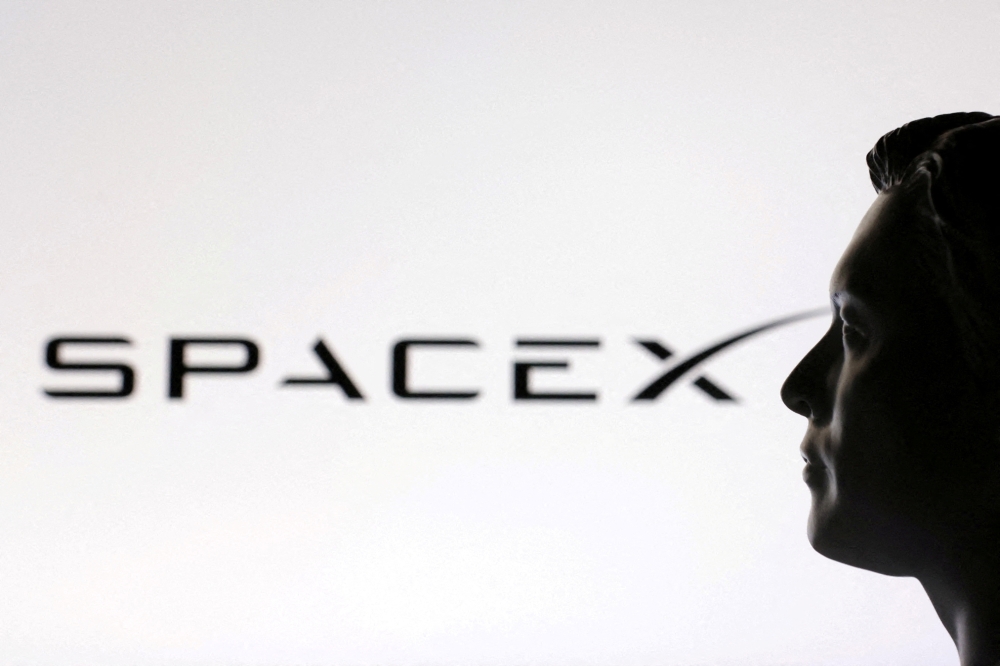
NEW YORK, May 7 — SpaceX has adopted corporate governance policies that will erode ‌typical shareholder protections in unprecedented ways, giving founder Elon Musk virtually unchecked executive authority when the rocket maker goes public later this year.

Excerpts of SpaceX’s IPO registration statement reviewed by Reuters show the company is combining supervoting shares, mandatory arbitration, stricter rules on shareholder proposals and Texas corporate law to give Musk and other insiders broad control. At the same time, it sharply limits investors’ ability to challenge management, sue in court and force votes on governance issues. And the only person who can fire Musk is Musk, who will retain majority control through supervoting shares.

“It closes the voting door, the courthouse door and the proposal door simultaneously. It’s unprecedented in terms ‌of creating a total lack of accountability,” said Bruce Herbert, CEO of Seattle-based sustainability-focused wealth management firm Newground Social Investment, which challenged Musk at his electric-vehicle company, Tesla, with a shareholder proposal that won 49 per cent of the vote in November. For all of Musk’s controversies, many investors see him as a visionary able to achieve impossible things. At Tesla, the board recently awarded him a 10-year pay package worth close to US$1 trillion (RM3.9 trillion), saying the company would lose significant value “without Elon.” At SpaceX, much of his pay is tied to launching massive data centers in space and colonizing Mars.

SpaceX did not respond to a request for comment.

Price of entry

The restrictions may not stop investors from piling in. Some investors see relinquishing some of their rights as the cost to buy in to what is expected to be the biggest initial public offering in history as SpaceX eyes up to US$75 billion in proceeds and a US$1.75 trillion valuation. Many investors fear missing out, especially if the billionaire entrepreneur can generate returns similar to those of Tesla. The EV maker’s shares have risen to about US$397.55 as of Wednesday afternoon compared with their 2010 debut at US$17. With stock splits, Tesla has given investors annualised returns of about 42 per cent, according to LSEG data.

“SpaceX is going to be such a huge part of the market that for most portfolio managers it’s very difficult not to buy, because it’s going to be driving the price of everything,” said Ann Lipton, a professor of law at the University of Colorado Law School. “And if SpaceX soars, and you don’t have a piece of it, then you’re going to look like you’re underperforming the market by comparison.”

Musk is structuring SpaceX to protect the company from the kind of shareholder criticism aimed at Tesla, according to corporate governance experts. The EV maker’s investors have challenged Musk on issues ranging from his pay package to the acquisition of his solar energy company, SolarCity.

There is a risk for investors, the experts added, that Musk sets a precedent for other high-profile, founder-led IPOs expected to come to market later ‌this year or next, including artificial-intelligence companies Anthropic and OpenAI.

“They are all complicated, potentially controversial figures that are also creating history in real time,” Dishmi Capital co-founder Shang Chou said of Musk, OpenAI founder Sam Altman and other founders. “You focus less on valuation and more on the fact that ⁠you’ve been offered a seat on a rocket ship.”

Musk consolidates power

Musk will stay on as CEO, chief technology officer and chairman of SpaceX’s ⁠nine-member board of directors after the company’s stock starts trading later this year. He has a firm grip with 42.5 per cent of the company’s equity and 83.8 per cent of the voting control, according to a May ⁠4 filing with federal regulators. SpaceX plans to use a dual-class equity structure ⁠that gives Class B shareholders 10 votes for every Class A share ⁠available to everyday investors, concentrating power with Musk and a handful of other insiders with supervoting shares. Musk’s Class B stock, which will not be available to the public, will allow him to retain more than 50 per cent of the voting power in the company after it goes public, handing him and other insiders the power to pick a majority of the board of directors.

That will also give Musk the power to “elect, remove or fill any vacancy” among those directors, the company said. It also hands to him the power to control other issues requiring shareholder approval, including M&A transactions, potentially making it easier to ⁠merge with Tesla later if he wants.

The supervoting shares will be immediately converted to Class A shares if the stock is sold, further consolidating power among the remaining Class B holders. Although the company can issue more Class B shares, only Musk, his family and “certain entities” will be eligible to receive them, the filing shows.

‘Controlled company’

Musk’s voting power will make SpaceX a “controlled company” under securities rules, the filing shows. It is not uncommon for founder-led companies in media and tech to hand control to their charismatic CEOs, as happened with Mark Zuckerberg at Meta Platforms and at News Corp with former CEO Rupert Murdoch. That designation allows them to bypass certain corporate-governance requirements so they can make big, bold moves fast.

While most publicly traded companies are required to have independent directors make up a majority of their nominating and compensation committees, controlled companies do not have to and SpaceX said it does not plan to.

“You will not have the same protections afforded to shareholders of companies that are subject to all of the corporate governance requirements,” the company warned in a list of potential risk factors for investors.

Forced arbitration

The company significantly limits shareholders’ rights to sue. ⁠SpaceX’s bylaws will make it clear that anyone who owns shares “irrevocably and unconditionally” waives all rights to pursue a jury trial. Shareholders will also be prohibited from bringing class actions against the company, its directors, officers, controlling shareholders or bankers tied to the IPO, according to the filing. Instead, shareholders will be subject to mandatory arbitration, which had long been illegal in the US The Securities and Exchange Commission reversed its position in September, allowing companies to adopt mandatory arbitration policies, which are private proceedings ⁠overseen by arbitrators.

Texas versus Delaware 

SpaceX is taking full advantage of its decision to move its incorporation in 2024 from Delaware to business-friendly Texas and the largely untested new governance laws there. The Lone Star State adopted a series of amendments to the Texas Business Organisations Code last year that significantly ⁠curtail investor protections. Musk abandoned Delaware after a ⁠judge there ruled to strip him of a 2018 Tesla pay package worth US$56 billion — a ruling that was recently reversed. The Texas incorporation gives the company extra protection from activist investors and hostile takeovers. The state’s securities laws also make it harder for challengers to make an unsolicited tender offer, run a proxy contest or remove officers, directors and management.

Shareholders will also have a harder time getting their proposals to a vote. They will need to own at least US$1 million in stock, or 3 per cent of the company, to force a vote under a new Texas rule.

“It’s definitely one of the most restrictive IPOs. He (Musk) is taking advantage of this ownership structure and the ‌Texas provisions,” University of Pennsylvania law professor Jill Fisch said.

Joel Shulman, founder and chief investment officer of ERShares, which manages the US$993 million Private/Public Crossover ETF, said he has no issues with the restrictions as a SpaceX investor.

“I would rather have him making these decisions and be in control,” he said. “He may be controversial and polarizing and he does some crazy, bizarre things sometimes, but he’s a brilliant guy when it comes to building something completely new and building wealth” for himself and shareholders. — Reuters
  •  

Fake rumours, real killings: Inside Congo’s deadly health misinformation crisis

Malay Mail

  • Churches in Congo helped fan the rumours, which spread on social media and local news outlets
  • Colonial-era atrocities and modern health trials contribute to mistrust
  • Africa CDC says misinformation in Africa is a top threat to health
  • Western aid cuts have left monitoring body short of funds

GOMA (DR Congo), May 7 — In Tshopo, a north-eastern Congolese province blanketed in rainforest, rumours rippled through villages late last ‌year claiming a mysterious illness had caused men’s genitals to atrophy.

Within days, testimonials proliferated on social media that amplified the imaginary threat, triggering a real-life panic that turned deadly before the government could react.

Angry mobs attacked and killed four health workers conducting vaccination research in an episode that took place in October, four officials and a survivor told Reuters — a deadly example of the rising danger posed by online health misinformation in Africa.

The violence has since spread to other parts of the Democratic Republic of Congo. In all, at least 17 killings related to the atrophy rumour have been reported, including the health workers, according to the WHO-led Africa Infodemic Response Alliance, which monitors fake health information. Reuters could not independently verify ‌the other deaths.

In Congo, misinformation “really led to death and murder,” said the Nairobi-based alliance’s director Elodie Ho. “It started in communities. It spread into social media and local media. It was amplified by those actors.”

An examination of over a dozen video testimonials by the news agency, one of them viewed hundreds of thousands of times, found that churches helped spread the rumours in Tshopo. Overseas accounts and local news media also played a role.

In two of the videos, verified by the news agency, pastors and worshippers at two churches in provincial capital Kisangani stated prayer had cured alleged victims.

To establish the October events in Tshopo and the spread of misinformation elsewhere in Africa, Reuters examined medical studies and spoke to at least 20 people including local and regional officials, health workers and medical experts.

In response to questions from Reuters, Tshopo’s government spokesman said local officials took the rumour seriously, investigating claims by five alleged victims, and found no evidence the illness was real.

The government has moved to punish those responsible for fueling the panic. A local court sentenced a man who accused another of spreading the disease to 12 months in prison, and around a dozen people were arrested, the spokesman and another local official said.

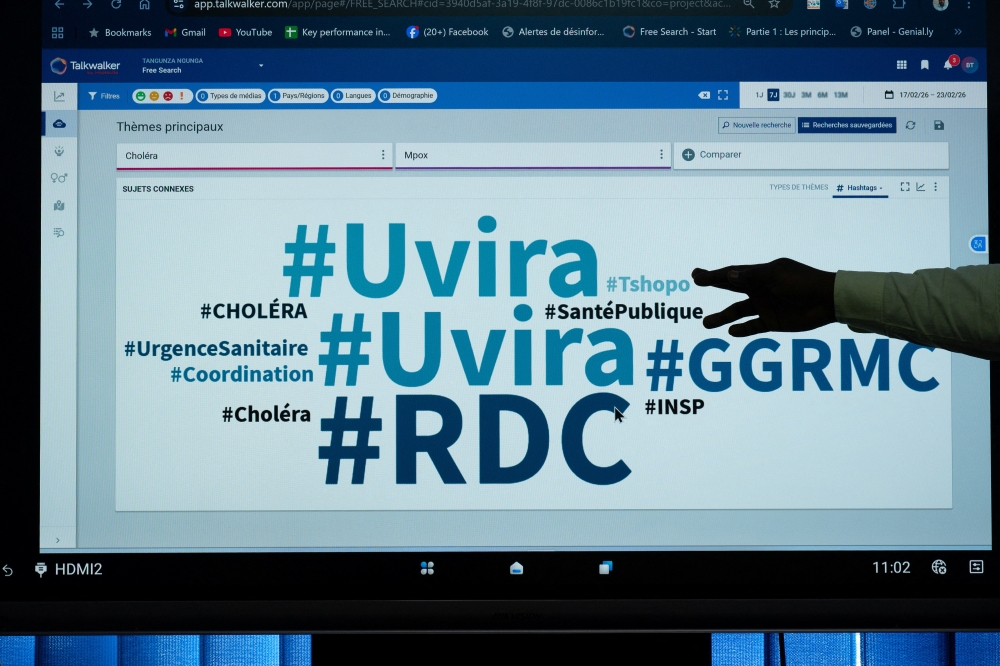
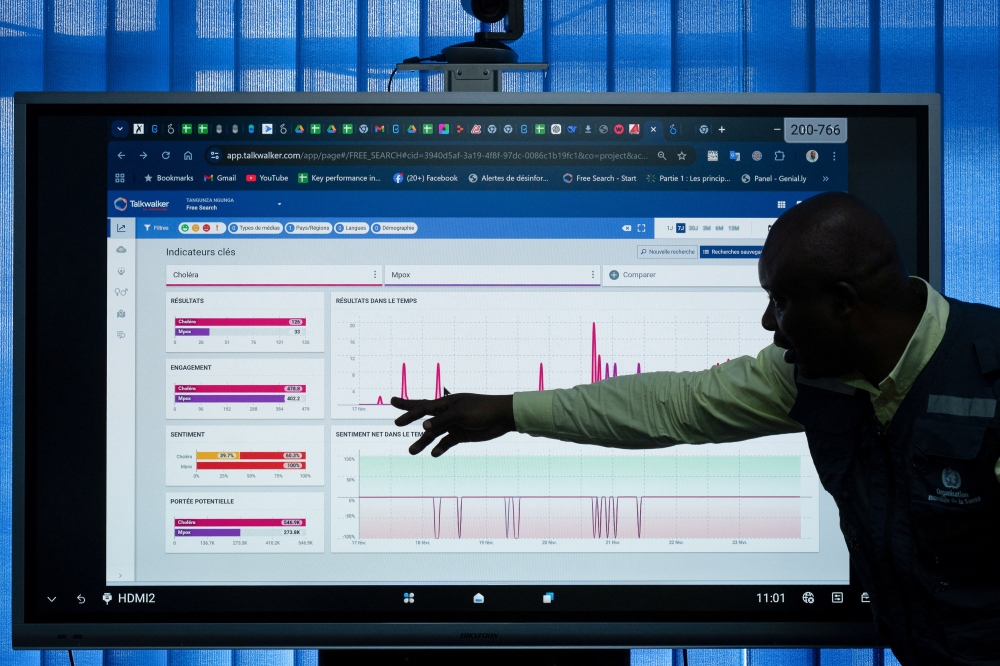
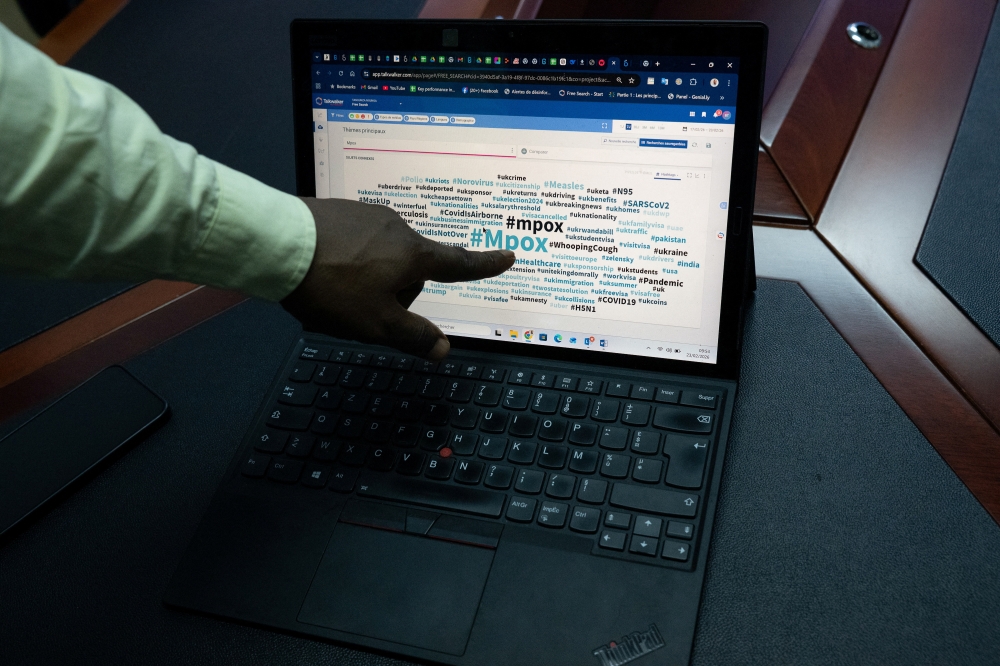
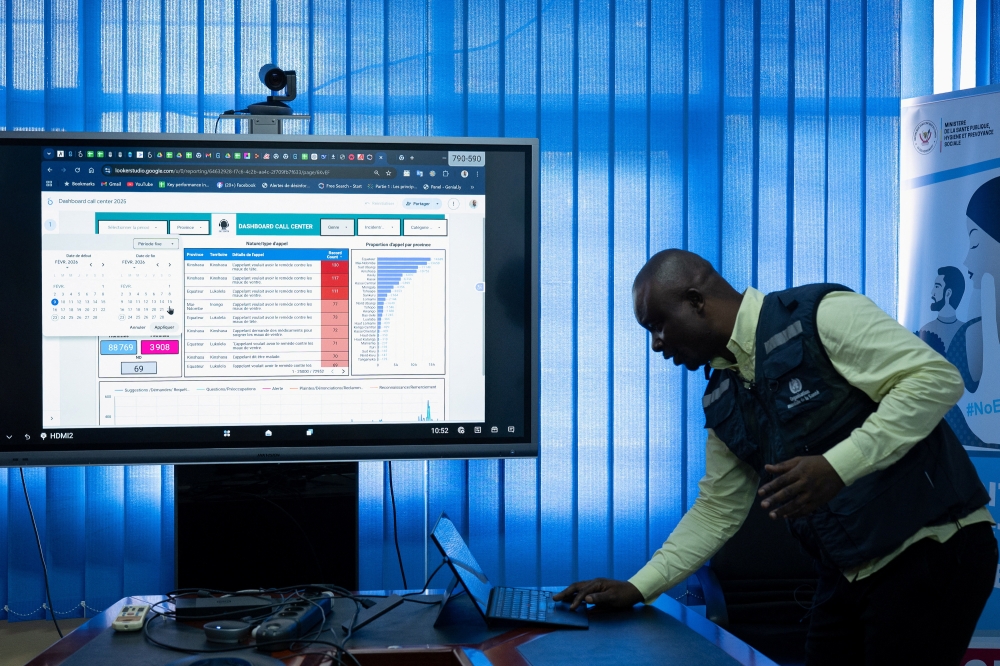
Dr Bavon Tangunza Ngunga, who counters health misinformation, shows a screen during a demonstration of infodemic applications at the WHO (World Health Organization) headquarters, in Kinshasa, Democratic Republic of Congo February 23, 2026. — Reuters pic

Mistrust rooted in colonial past

Prevalent in many parts of the world including the United States, a lack of faith in established medicine in parts of Africa is partly rooted in both the colonial era and more recent Western clinical trials.

Such mistrust is turbocharged by cheap artificial intelligence and widespread social media use, according to the African Union’s Africa Centres for Disease Control and Prevention. Uneven access to healthcare, weak rule of law and social media use play a part in the proliferation of rumours.

Dr. Jean Kaseya, Director General of the African Union’s Africa Centres for Disease Control and Prevention, said false information was keeping people away from lifesaving treatments.

“When populations do not trust vaccines, health workers, or government policies, it means they don’t access services that can help them survive,” he said.

As well as in Congo, attacks on community leaders and health workers have been recorded in Mozambique and Malawi, linked to false cholera-related information.

A WHO-managed healthline aiming to combat health misinformation and provide authoritative advice ‌has seen calls surge from 3,331 in the first quarter of 2025 to 31,636 in the fourth.

Another WHO project, tracking interactions with communities, recorded around 500 incidents since its launch last year related to rumours, conspiracy theories and other false information.

Dr Bavon Tangunza Ngunga, who counters health misinformation, shows a screen during a demonstration of infodemic applications at the WHO (World Health Organization) headquarters, in Kinshasa, Democratic Republic of Congo February 23, 2026. — Reuters pic

Churches and the cure

Dr. Bavon Tangunza, manager for the AIRA alliance in ⁠Congo, received a warning about the fake illness in Tshopo early in October, he said, when a colleague flagged the rumour spreading in the province.

Video testimonials by alleged ⁠victims soon appeared online.

One showed a taxi driver on stage at a Christian gathering in Tshopo recounting how megachurch pastor Jules Mulindwa of the Pentecostal Church Light of the World, located in Kisangani, had cured him ⁠with prayer.

The taxi driver presented no evidence, and Reuters was unable to identify him ⁠by name. The news agency could not establish who filmed the video, ⁠which bears the church’s logo. Posted on TikTok by a prominent church worker, it was widely watched — and shared.

On the Facebook page of Boyoma Revolution, an online news site listed with an address in Marseille, France, the video has been viewed more than 300,000 times.

A self-styled prophet whose TikTok channel shows him with large crowds of followers and has over 400,000 subscribers, Mulindwa has previously falsely claimed to cure coronavirus, according to CongoCheck, an online factchecking platform.

He received a 12-month prison term for defamation last year but has not served the sentence, a lawyer for the prosecution told Reuters. In response to questions from the news agency, a close relative who works for ⁠Mulindwa denied he had been convicted.

Mulindwa did not respond to requests for comment.

Another video, posted online by a local church called Assemblée Chretienne de Kisangani on October 3, showed pastor Christophore Kabamba at the church claiming to have a miracle cure. The church did not respond to requests for comment.

James Baka, a Kisangani university student who appears in the clip, told Reuters in a Facebook message that he saw others miraculously cured by the pastor.

In response to a request for comment, Boyoma Revolution acknowledged there was no evidence for the illness, but did not answer questions about why the video was still on its page.

TikTok and Facebook, which bans harmful health information but has wound down fact-checking programmes that helped it detect such content, did not immediately answer Reuters questions.

Tshopo Kwetu, a local news outlet, also shared posts about the fake illness. Director Gaston Mukendi told Reuters his outlet published information from a range of sources in line with its journalistic duties.

He pointed out an interview with a medical student debunking the rumour as an anxiety disorder.

Attacks expose vulnerability of health system

Violence erupted on October 6, when health workers reached villages in the Isangi area of Tshopo to carry out vaccination surveys.

In Ilambi village, young men accused the health ⁠workers of secretly spreading the fake disease when they saw outsiders wearing high-visibility vests and carrying tablet computers, according to local officials and Jean-Claude Kengefuku Mbatu, a member of the health worker team who escaped.

Two others in the team, Placide Mbungi and John Tangakeya, both medical doctors, tried to explain their vaccine research, which was unrelated to the health scare.

They were killed on the spot, the officials and Mbatu said.

“They burned him alive, without even leaving me a trace of him,” Tangakeya’s widow Justine Tangakeya Basekauke told Reuters.

In nearby Yafira ⁠village, their colleagues Mathieu Mosisi and Kevin Ilunga sought help from a nearby policeman, but an angry crowd killed them as well, Tshopo health official Marie Jeanne Lebe told Reuters after a review of the incident was completed.

Reuters could not independently verify all of the events surrounding the deaths.

Dr Bavon Tangunza Ngunga, who counters health misinformation, shows a screen during a demonstration of infodemic applications at the WHO (World Health Organization) headquarters, in Kinshasa, Democratic Republic of Congo February 23, 2026. — Reuters pic

False and dangerous

The day after the killings, ⁠on October 7, the governor’s office put out ⁠a statement printed and posted online declaring the rumours were false and dangerous.

Over the next month, AIRA’s Tangunza helped craft messages to be broadcast in local languages over the radio, online and through community workers, and held workshops to prepare responses to any future misinformation crises.

But the rumours continue to resurface, months later.

In an incident in March, a woman in Congo’s Lualaba province was accused of spreading the disease and lynched, while a second person survived the attack, AIRA said, citing local media reports. Reuters could not independently verify the reports.

Further complicating efforts to tackle false information, US and other nations’ foreign aid cuts over the past year have left AIRA low on funds, director Ho told Reuters in an interview.

One ‌of AIRA’s funders, The Gates Foundation, said a grant to AIRA was active through December. It did not say whether further grants were under consideration.

AIRA now has personnel in just three countries, including Tangunza in Congo, down from five.

An AI platform built to track online conversations to monitor for fake information is out of action because there is no money for the monthly subscriptions with providers, Ho said.

The WHO regional office said talks were underway to secure funding to sustain and scale up AIRA’s work. — Reuters

  •  

From reef destroyer to ocean defender: Colombian ditches fishing to rebuild coral life

Malay Mail

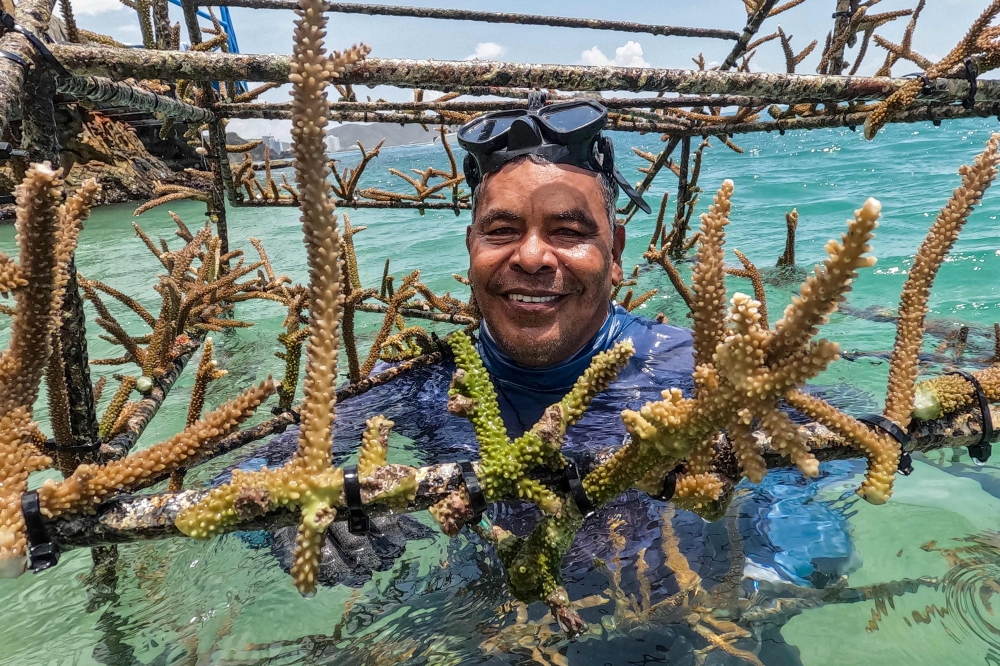
SANTA MARTA (Colombia), May 7 — Yerson Granados used to fish off Colombia’s Caribbean coast for a living, but when he discovered the havoc he was wreaking on coral reefs, he changed his ways.

The 56-year-old from the city of Santa Marta now earns his keep saving coral, which is vital for marine biodiversity.

“We used to destroy them,” Granados told AFP, his body half-submerged in the sea and diving goggles concealing his face.

“We didn’t know it was a living being. They looked like rocks to us.”

Forty-four per cent of the world’s coral species face extinction, mainly due to climate change, the International Union for Conservation of Nature estimated in 2024.

When he discovered the pressing need to preserve coral, Granados swapped his dynamite, nets and anchors for a diving suit, which he uses to plunge to the depths of the sea to attach coral fragments to an artificial reef in a bid to repopulate the area.

He was the first fisherman to retrain as an environmental defender under a pioneering project to replenish the Caribbean coral ecosystem.

CIM Caribbean Foundation estimates that it has planted 1.5 hectares worth of 20 different coral species thanks to the team of former fishermen.

The NGO is hoping to plant 36 hectares of coral by 2030, which scientific director Diana Tarazona calls reviving “underwater cities.”

“Working with them (the former fishermen) means gaining insight into what lies beyond the literature, which is that innate knowledge they have” about the sea, she said.

A typical workday for Granados entails diving 10 metres below the surface with an oxygen tank to monitor the precious gardens.

The corals spend months growing in an incubator before transplantation.

Once underwater, they become “houses for the fish,” he said.

Kevin Monsalvo, 26, has followed in the footsteps of Granados and said things are different for him since he learned more about the organism threatened with extinction.

“Life has changed quite a lot for me, because we didn’t know what a coral was,” he said.

“For me, a coral is life now.” — AFP

  •  

‘Less shocking than the news’: Burkina troupe uses circus to tell children’s war stories

Malay Mail

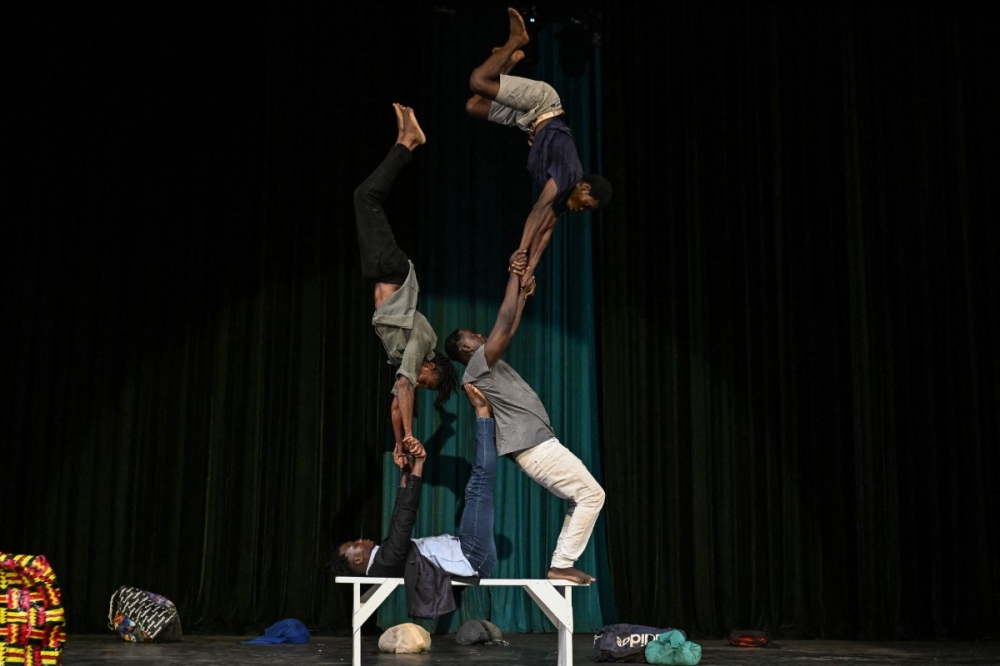
ABIDJAN, May 7 — By miming children juggling ammunition found on the ground or driven mad by fear, the four acrobats hope to express what is too painful for words: how their native Burkina Faso’s jihadist conflict has ruined countless childhoods.

Baptised “Souffle” (Breath), the Dafra Circus’s latest performance “is about life... and when we talk about life we talk about hope, and hope means the children”, the troupe’s choreographer, Jean Adolphe Sanou, told AFP after a performance in neighbouring Ivory Coast.

For more than a decade, Burkina Faso has been at war with jihadists who have killed, kidnapped, raped or recruited thousands of the west African country’s children, according to the United Nations.

Rights groups such as Human Rights Watch also accuse the Burkinabe army and its allied civilian volunteer fighters of abuses, including towards minors.

Dafra Circus does not touch on that part of the issue – the army has cracked down on criticism since taking power through two military coups in 2022.

But for nearly an hour at a concert hall in Ivory Coast’s economic capital Abidjan, the troupe’s performing quartet translated the despair, innocence and resistance of children facing the unspeakable for several hundred spectators.

Slipping into the skin of a traumatised child, one of the men executed a series of pirouettes, swaying steps and somersaults to mimic the onset of insanity.

For the troupe’s artistic director Moustapha Konate, circus is an art that “makes it possible to bring together as many people as possible” because it “draws them in through feats, beauty, fluidity of movement”.

In the 30-year-old’s eyes, dance is “perhaps the easiest way for us artists” to “deal with a topic”.

Whole troupe ‘affected’ 

Konate’s position is clear: Dafra Circus “takes a stand against the involvement of children in wars”.

According to a UN report from last year, children suffered more than any other part of the population from Burkina Faso’s spiral of violence, with more than 2,200 enduring grave abuses between 2022 and 2024.

Mostly attributed to jihadist groups, the most frequent abuses involve murder, mutilation, abductions, recruitment as child soldiers, exploitation and sexual violence.

“Souffle” takes inspiration from the lives of the artists, who travelled from their base in Burkina Faso’s second city Bobo-Dioulasso to perform at a festival in Abidjan in mid-April.

Within the circus, “everyone has been affected” by the violence, Konate affirmed.

Despite its dark subject matter, the show received a rapturous reception in both the Burkinabe capital Ouagadougou and the troupe’s Bobo-Dioulasso hometown.

“Many people aren’t familiar with the circus,” Konate said. “Seeing circus mixed with dance... theatre, juggling and storytelling was something new for them.”

Once the lights had dimmed and the spectators emptied out of the Abidjan events hall, Yeli Gnougoh Coulibaly departed, moved by the performance.

“It’s important for artists to put on shows about the terrorist violence in Burkina,” the 21-year-old said. “I’d say it’s a bit more subtle” and “less shocking than the news, because on TV... it’s scary.” — AFP

  •  

Singapore isolates two residents, awaiting test results after exposure to hantavirus‑hit cruise ship

Malay Mail

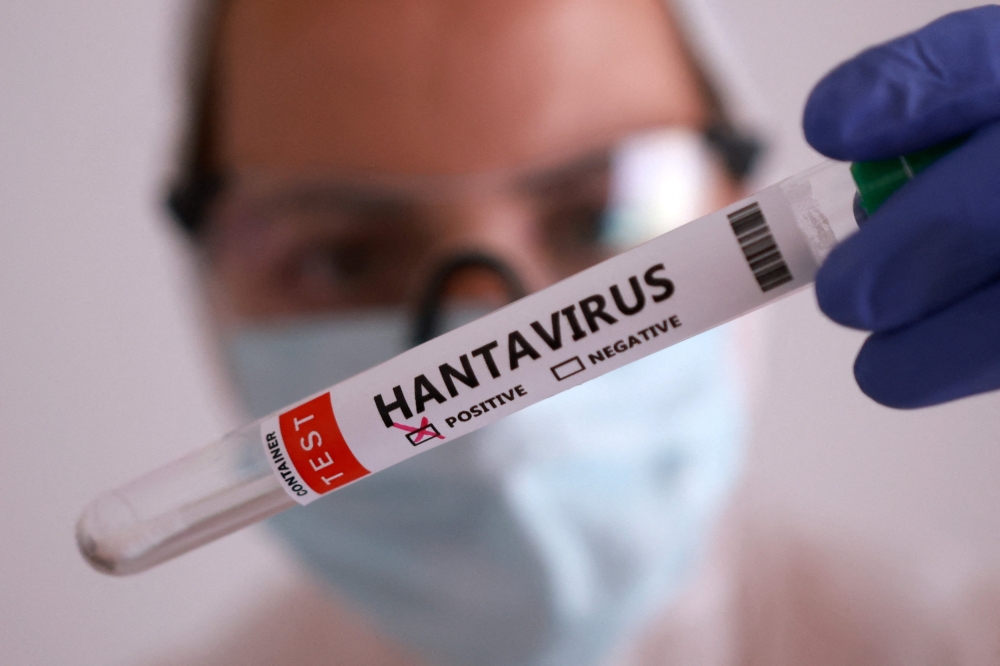
SINGAPORE, May 7 — Two Singapore residents who had been on board a hantavirus-hit cruise ship have been isolated as they await test results for the rare respiratory disease, Singapore’s Communicable Diseases Agency (CDA) said today.

Two men aged 65 and 67 had been on the ship and also the same flight as a confirmed hantavirus case from St Helena to Johannesburg on April 25, the CDA said.

Both arrived in Singapore in early May and have been isolated and are being monitored at Singapore’s National Centre for Infectious Diseases (NCID). The confirmed case did not travel to the city-state and died in South Africa.

“Two Singapore residents had been on board the cruise ship MV Hondius, which has reported an outbreak of Andes hantavirus. Both individuals have been isolated at the National Centre for Infectious Diseases, where they are being tested for hantavirus,” a CDA statement said.

“Their test results are pending. One has a runny nose but is otherwise well, and the other is asymptomatic. The risk to the general public in Singapore is currently low.”

If the pair test negative for hantavirus “they will be quarantined for 30 days from the date of last exposure”, CDA said, adding that “testing will be conducted again before release from quarantine”.

If they test positive, they will remain hospitalised for monitoring and treatment, and “contact tracing will be conducted to identify persons who have been exposed during the infectious period, and close contacts will be quarantined”, the CDA said.

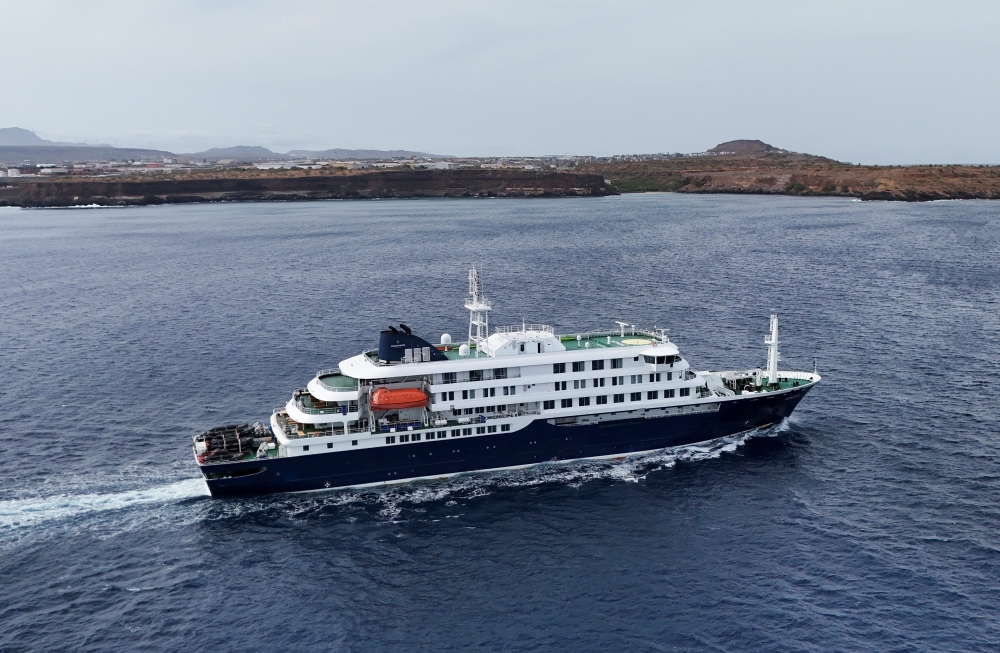
A drone view of the cruise ship MV Hondius, carrying passengers suspected of having cases of hantavirus on board, leaves Praia, Cape Verde May 6, 2026. — Reuters/Stringer pic

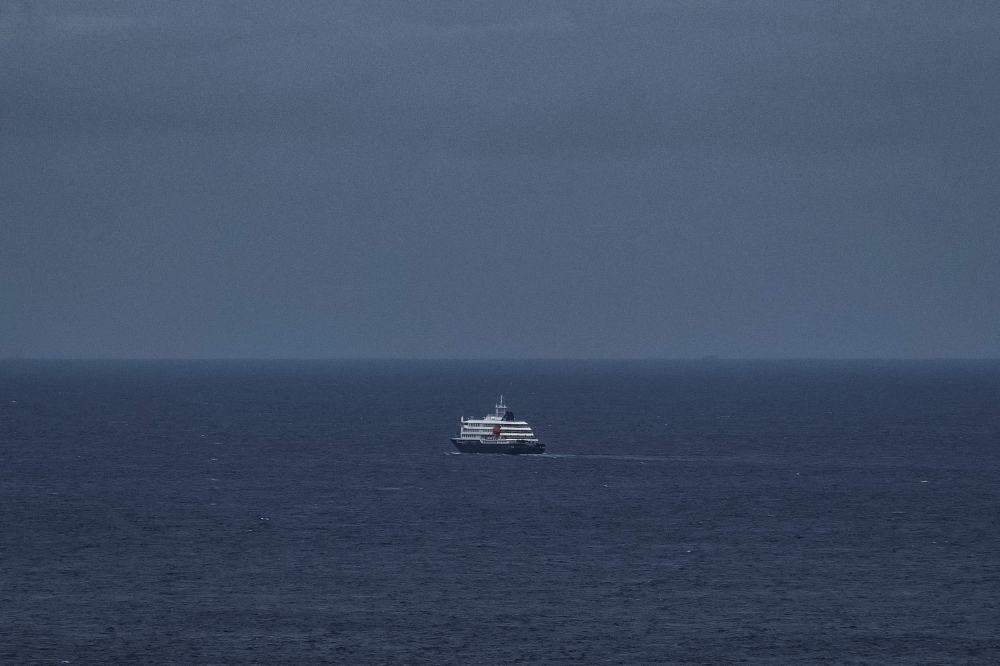
The MV Hondius has been at the centre of an international health scare since Saturday, when the UN’s health agency was informed that three passengers had died and the suspected cause was hantavirus.

Eight cases, including three deaths, had been linked to the cluster on the cruise ship by Wednesday, according to CDA.

The rare disease is usually spread from infected rodents, typically through urine, droppings and saliva.

However, experts have confirmed that the version of the virus detected aboard the Hondius is a rare strain that can be transmitted between humans. — AFP


  •  

Asean may start oil reserve scheme with select countries, says investment, trade and industry minister

Malay Mail

CEBU, May 7 — Asean may consider bringing in the private sector to help realise the newly-mooted oil stockpiling framework aimed at strengthening the region’s long-term energy security and preparedness.

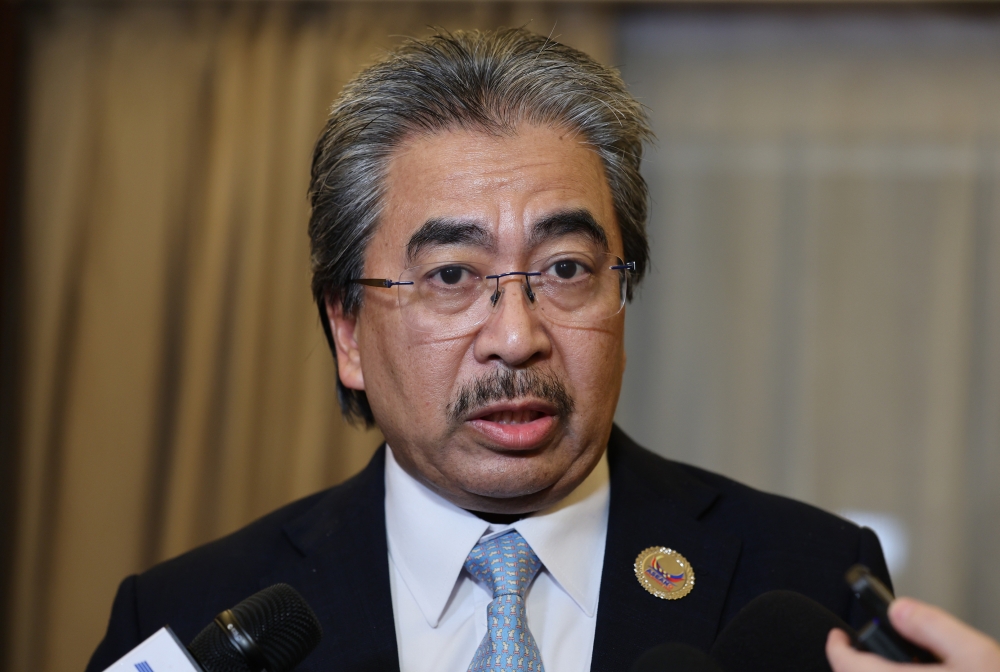
Investment, Trade and Industry Minister Datuk Seri Johari Abdul Ghani said the idea for the oil stockpiling framework was raised during one of the Asean meetings he attended here today.

“I do not think that the government (itself) can execute this. If you want to do this, you need to bring the private sector in to execute it.

“Maybe among the 11 Asean members, we should start with three or four like-minded countries that agree on this idea,” he told Malaysian reporters after attending the 27th Asean Economic Community Council Meeting and the Asean Joint Foreign and Economic Ministers’ Meeting here on Thursday.

Johari highlighted that the proposed framework, once established, would enable all Asean member states to access the stockpile and attract more investment into the energy sector in the future.

He disclosed that discussions at today’s meetings centred on the US-Israel-Iran war and US tariffs, both of which have affected almost all Asean countries, including Malaysia.

“On the Malaysia-US Agreement on Reciprocal Trade (ART), I believe we are making progress. While we await the finalisation of this ART, the ongoing war is causing significant damage to nearly all economies,” said Johari. — Bernama

  •  

Governor warns of ‘crisis’ as operator says 30 passengers disembarked hantavirus‑hit cruise ship in Saint Helena last week

Malay Mail

THE HAGUE, May 7 — A total of 30 passengers left the hantavirus-stricken Hondius on April 24 during its call at the remote British island of Saint Helena, the cruise ship’s Dutch operator said today.

“Thirty guests disembarked MV Hondius on Saint Helena on April 24, 2026. This number includes the body of the guest who passed away on board MV Hondius on April 11,” Oceanwide Expeditions said in a statement.

The company added that all people who left the ship had been contacted.

The operator said that on April 1, a total of 114 guests boarded the vessel before it left Ushuaia in Argentina for the cruise across the Atlantic Ocean to Cape Verde.

“We are working to establish details of all passengers and crew who embarked and disembarked on various stops of MV Hondius since March 20,” it added.

‘Crisis’ on Saint Helena 

Saint Helena is home to a close-knit community of around 4,400 people. The cruise ship called at the South Atlantic island from April 22 to 24.

“We are all by now aware of the challenge we face,” Saint Helena’s Governor Nigel Phillips said in a statement.

“We are now responding to a crisis none of us would have wished,” King Charles III’s representative in the territory said.

The Saint Helena government meanwhile said there were currently “no suspected or confirmed cases of hantavirus on the island”, and the risk to the public remained low.

“The situation on St Helena remains stable and controlled.”

It said that as a precautionary measure, the local health authorities were monitoring a small number of individuals identified as higher-risk contacts — namely “those who had close, prolonged contact with the unwell passengers of the vessel”.

They have been advised to isolate at home, for a period of “45 days from the last known exposure to the virus”.

“This means that the period of isolation will end on June 9 subject to any developments in the situation in St Helena.”

It added that there was no risk to the public from the deceased Dutch passenger whose remains were brought ashore on April 23.

Saint Helena has a weekly air link with Johannesburg, with a flight leaving on April 25.

One Hondius passenger on that flight died in hospital in South Africa, while a British patient from the ship is in hospital in Johannesburg. Both tested positive for hantavirus. — AFP


  •  

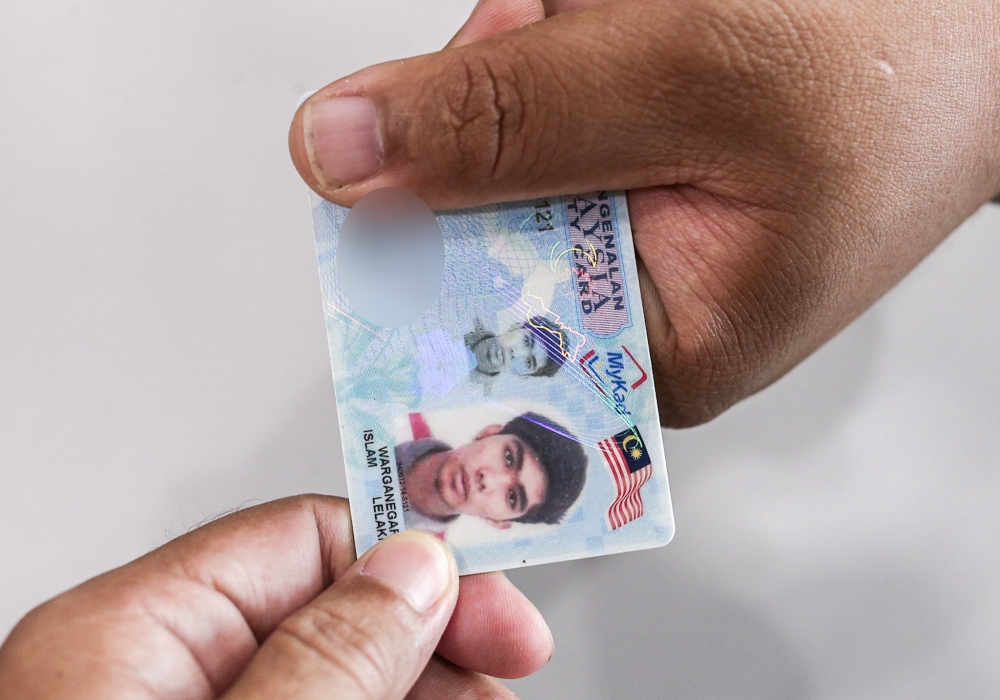
Coming in June: New MyKad with advanced encryption, holograms and QR codes, no Touch ’n Go function

Malay Mail

PUTRAJAYA, May 7 — The new MyKad, which is expected to be introduced next month, will feature 53 security elements compared with 23 on the current version.

National Registration Director-General Datuk Badrul Hisham Alias said the upgraded security features include laser engraving, ultraviolet (UV) elements, holograms, guilloche patterns, microtext, QR codes for enforcement purposes, and a chip with enhanced encryption technology.

“It certainly has better security features than what is available now.

“The launch will be announced by the Home Ministry when the time comes, and at the National Registration Department (NRD) level, we are ready for that purpose,” he told reporters after the NRD Management Meeting with the Media today.

Badrul Hisham said the introduction of the new MyKad reflects the government’s commitment to strengthening identity security in line with technological advancements and evolving security challenges.

He added that updated versions of MyPoCA and MyTentera will also be introduced next month.

At the same time, he clarified that the new MyKad would not include the Touch ‘n Go feature.

Meanwhile, Badrul Hisham said the media engagement session was organised to strengthen ties between the NRD and media practitioners.

“At the same time, the NRD also expresses its appreciation to media partners who have worked closely with the department in delivering authentic information to the public,” he said. — Bernama

  •  

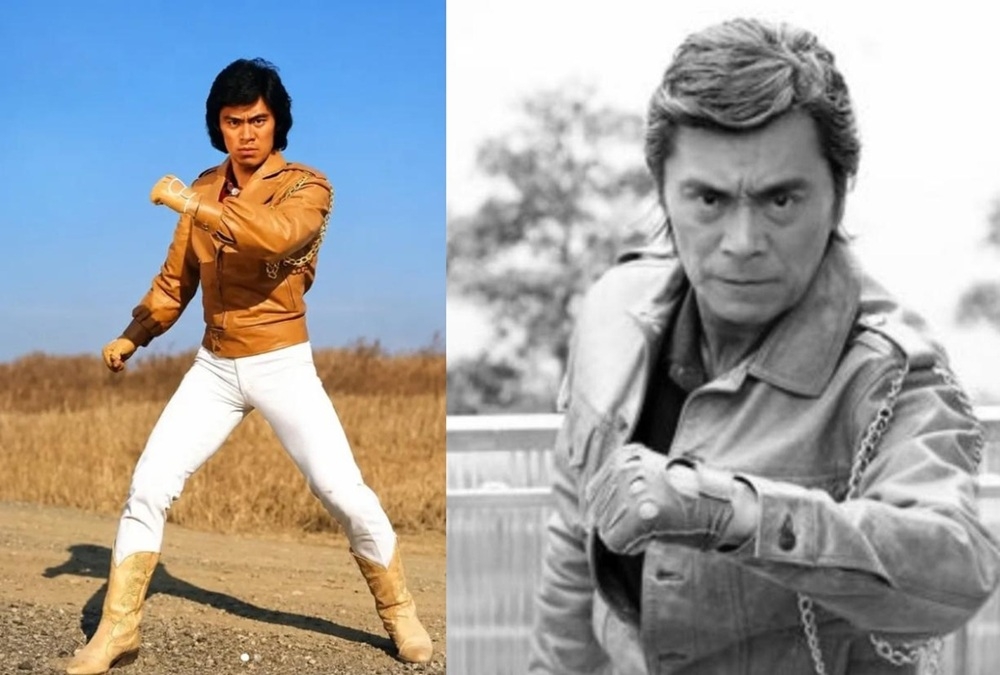
Japanese ‘tokusatsu’ legend Kenji Ohba, star of ‘Super Sentai’ and ‘Space Sheriff Gavan’, dies at 71

Malay Mail

KUALA LUMPUR, May 7 — Japanese actor and tokusatsu (special effects genre) legend Kenji Takahashi, widely known as Kenji Ohba, has died at age 71.

His agency, Japan Action Enterprise, announced on its official website, alongside multiple Japanese and online portals, that the actor died on May 6 at approximately 2.23pm.

Ohba was widely regarded as one of the most iconic figures in the world of tokusatsu during the 1970s and 1980s, particularly for his work in the Super Sentai and Space Sheriff Gavan franchises.

He was the suit actor for Android Kikaider in the 1972 series and also Akarenger in Himitsu Sentai Gorenger (1975–1977).

Ohba also appeared in minor onscreen roles, including Episode 75 of Gorenger and Episode 3 of J.A.K.Q. Dengekitai (1977).

He later gained wider recognition in Battle Fever J (1979–1980), where he played Shiro Akebono/Battle Kenya.

He followed that with another prominent role in Denshi Sentai Denjiman (1980–1981) as Daigoro Oume/Denji Blue.

He rose to wider prominence in 1982 when he was cast as the lead in the acclaimed Space Sheriff Gavan, portraying Retsu Ichijouji/Gavan and carrying the franchise as a solo hero for the first time.

He also appeared in a small role in American director Quentin Tarantino’s films Kill Bill: Volume 1 and Kill Bill: Volume 2, portraying the character Shiro, the Bald Guy.

Throughout his career, Ohba continued working as a suit actor and even made cameo appearances in numerous modern tokusatsu productions, including the Super Sentai, Kamen Rider and Space Sheriff series.

He continued to attend conventions worldwide, meeting fans and even founded his own action group, “Luck JET,” with “JET” stands for “Jaunty Eventful Troupe.”

The actor had reportedly been battling illness for several years.

In May 2018, Ohba was hospitalised after fainting at his home and had been undergoing medical treatment since then.

According to the wishes of his bereaved family, the wake and funeral services will be held privately with close relatives only, according to multiple reports.

Many online tokusatsu communities continue to mourn his death by posting moments and sharing heartfelt messages as a tribute to a living legend who brought joy to generations who grew up watching tokusatsu productions.

  •  

Girl, 16, found unconscious with neck injuries in Penampang house toilet, cops searching for man in his 30s

Malay Mail

PENAMPANG, May 7 — A foreign teenage girl was found with critical injuries in the toilet of a house in Kampung Tuntuluk here this afternoon.

Penampang Police Chief Supt Sammy Newton said the 16-year-old victim was found unconscious with severe injuries to her neck.

“The victim was rushed to Queen Elizabeth Hospital in Kota Kinabalu and is currently receiving treatment. Police are tracking down a male suspect in his 30s to assist in the investigation,” he said when contacted today.

Sammy urged members of the public with information regarding the incident to contact the Senior Investigating Officer of the Penampang District Police Headquarters Criminal Investigation Division, ASP Hairie Awang Akub, at 016-8032849.

Earlier, an 18-second video went viral on social media, showing police vehicles at the house where the incident allegedly occurred. — Bernama

  •  

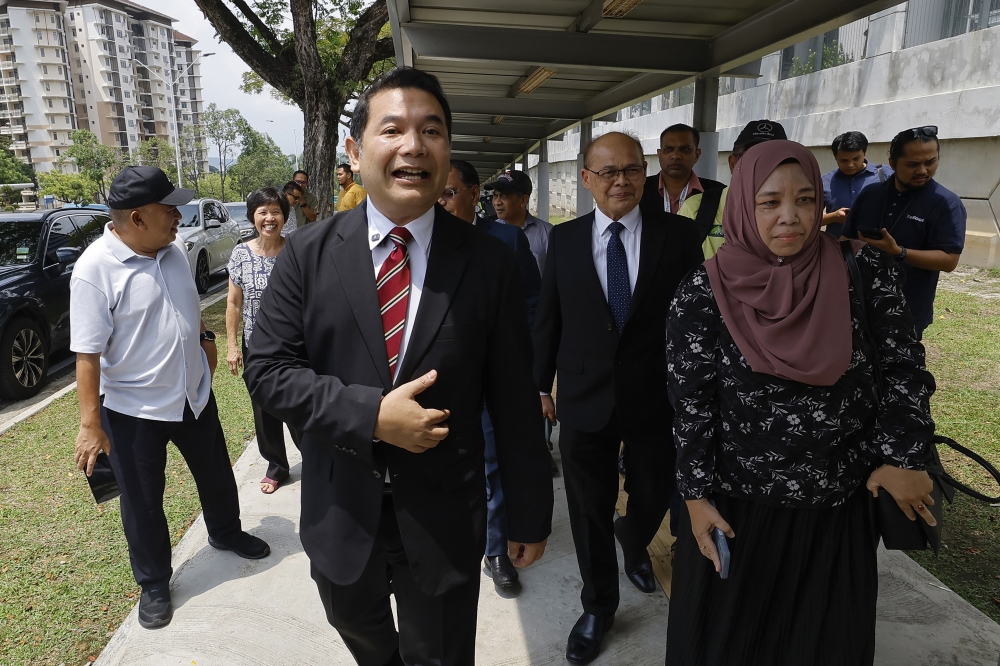
Four days and 131 pages: Rafizi says MACC done with recording his statement over RM1.1b semiconductor probe

Malay Mail

PUTRAJAYA, May 7— Former Economy Minister Datuk Seri Rafizi Ramli has completed giving his statement to the Malaysian Anti-Corruption Commission (MACC) after four days of questioning over alleged abuse of power linked to a government contract worth nearly RM1.1 billion.

According to him, the entire statement-recording process proceeded smoothly and was conducted professionally by MACC investigating officers.

“The questioning ended at 4.30 pm. I was informed that all statements had been fully recorded, covering approximately 131 pages over four days,” he told reporters after finishing the nearly seven-hour session here today.

Expressing gratitude to the MACC investigation team for their professional conduct throughout the process, Rafizi said he had not received any information on further action or possible charges to date, as the probe is still ongoing with several more witnesses expected to be called.

He added that the four-day investigation focused on the decision-making process and procedures, covering meetings, documents and related minutes.

“The focus is on the decision-making process and procedure...there is no money element whatsoever,” he said.

Yesterday, MACC chief commissioner Tan Sri Azam Baki was reported to have said that the investigation into a RM1.1 billion investment linked to a semiconductor strategic cooperation agreement between the Ministry of Economy and UK-based company Arm Holdings was now in its final stages.

He said 22 witnesses have been called so far, including political analyst Chai Jin Shern, also known as James Chai, with only two more witnesses left to have their statements recorded, one in Taiwan and another locally.

The MACC opened its investigation on Feb 16 following complaints from several non-governmental organisations alleging the agreement was rushed and skewed, potentially resulting in financial implications for the government.

The case is being investigated under Section 23 of the MACC Act 2009. — Bernama

  •  

Philippines warns Chinese research ship over ‘unauthorised operations’ in disputed South China Sea

Malay Mail

MANILA, May 7 — The Philippine Coast Guard said today it deployed aircraft to issue radio warnings to a Chinese research ship in a disputed area of the South China Sea “swarming” with vessels from Beijing’s so-called maritime militia.

The research vessel Xiang Yang Hong 33, which is capable of supporting submersible craft, was operating near a reef in the contested Spratly Islands chain, the Philippine Coast Guard said.

The Chinese ship was deploying a service boat towards the Spratlys’ Iroquois Reef yesterday when it was spotted by a Coast Guard plane, “confirming ongoing unauthorised (marine scientific research) operations”, it said in a statement.

Iroquois Reef is located at the southern end of Reed Bank, an area in the Spratlys thought to be rich in natural gas and oil.

During the flight, Manila’s Coast Guard also spotted 41 “maritime militia vessels” anchored in waters surrounding Iroquois Reef and Philippine-occupied Thitu Island, home to about 400 Filipinos and a new coast guard station.

“The Philippines has not granted such consent to the (People’s Republic of China) for any (marine scientific research) activities in these waters,” the Coast Guard said.

“The presence of the research vessel and the large-scale swarming by Chinese Maritime Militia vessels represent a serious infringement on Philippine sovereign rights and maritime jurisdiction.”

Beijing’s embassy in Manila pointed to its “historic rights” and said in reply that the relevant islands and reefs in question were Chinese territory.

It said China’s scientific research vessels conducted each of their missions in accordance with international law.

The Xiang Yang Hong 33, which left China more than three weeks ago, has been monitored conducting surveys near various Philippine-claimed features in the Spratlys, including the flashpoint Sabina Shoal and Second Thomas Shoal.

Beijing claims almost the entire South China Sea, despite an international ruling that its assertion has no legal basis, and defends its actions against Philippine vessels as lawful and proportional.

It has been deploying navy, coast guard and maritime militia forces — allegedly Chinese fishing vessels — in a bid to bar the Philippines from strategically important reefs and islands in the disputed waterway. — AFP


  •  
❌