Reading view

Median vs minimum: Why Malaysia’s RM3,500 wage target by 2030 matters for ordinary workers
Malay Mail

  • Malaysia targets RM3,500 median monthly wage by 2030 under 13MP
  • Median wage offers a clearer picture of typical earnings than average pay
  • Policy push focuses on lifting incomes across workforce, not just minimum wage

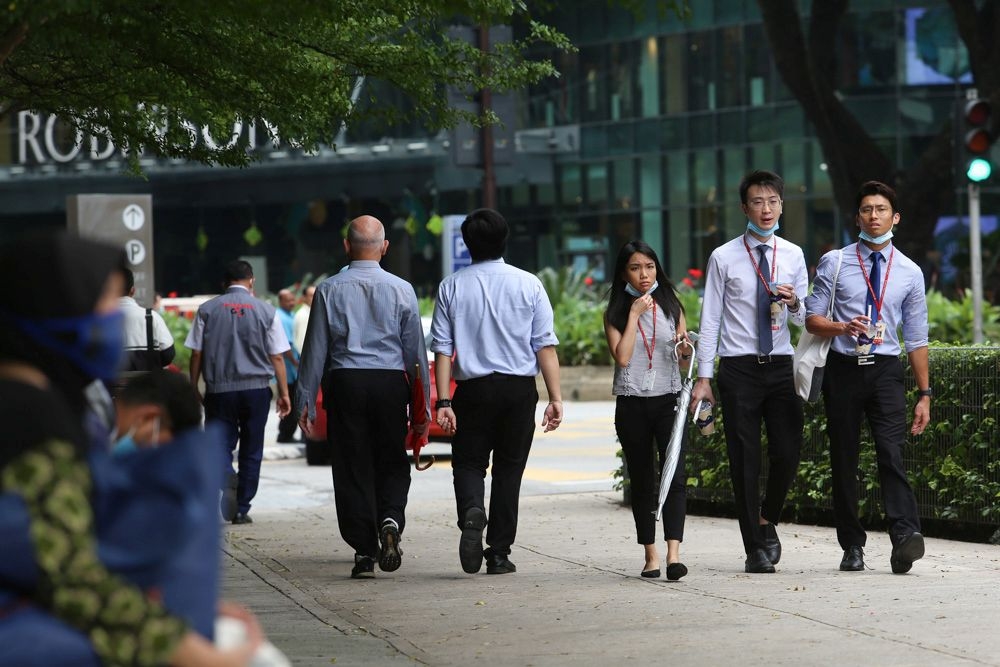
KUALA LUMPUR, May 7 — Most Malaysians earn below RM3,500 a month — a gap the government aims to close by 2030.

To understand what that means, it helps to first look at a key but often misunderstood figure: the median wage.

What is the median wage?

The median wage is the middle point of all salaries.

If every worker’s pay is arranged from lowest to highest, the median is the figure right in the middle — meaning:

  • Half of the workers earn less
  • Half earn more

In Malaysia, the median monthly wage was around RM3,000 in 2025, making it a closer reflection of what a typical worker actually earns.

Why not use the average wage?

The average wage or mean is calculated by adding up all salaries and dividing by the number of workers.

But it can be distorted by a small number of high earners.

For instance, executives earning tens of thousands of ringgit a month can pull the average up, even if most workers earn far less. It tends to overstate what ordinary workers take home.

In contrast, the median cuts through that distortion, offering a more grounded benchmark.

Median vs minimum wage

The median wage serves a different role from the minimum wage:

  • Minimum wage: the legal floor employers must pay
  • Median wage: a snapshot of typical earnings

Raising the minimum wage helps the lowest-paid workers.

Raising the median wage, however, means lifting incomes across a much broader segment of the workforce.

Where Malaysia stands now

Official data shows wages are gradually rising.

According to the Department of Statistics Malaysia’s (DOSM) formal* sector wages dataset, which draws on administrative data from EPF, Socso and DOSM, and covers over six million employees, median wages have been trending upward:

  • December 2022: RM2,764
  • December 2023: RM2,900
  • December 2024: RM3,045
  • December 2025: RM3,167

* Formal workers refer to those who work under a contract of service or apprenticeship with an employer and receive remuneration for the work completed.

What the government is targeting

The push to raise wages is anchored in the Thirteenth Malaysia Plan (13MP), which sets a median salary and wage target of RM3,500 per month by 2030.

It was recently mentioned by Human Resources Minister Datuk Seri R. Ramanan during the recent national Labour Day celebration.

“By 2030, our targets are clear: the median monthly wage is to rise to RM3,500, and Compensation of Employees is projected to reach 40 per cent of GDP,” he said.

Ramanan said that the government will strengthen the National Wages Consultative Council, including setting starting salaries for graduates and TVET leavers to achieve the target.

The plan frames wage growth as part of a broader push to improve living standards, address the cost of living and ensure workers benefit more from economic growth.

“This is not an aspiration, it is a plan already being implemented,” Ramanan added in his speech.

In achieving the target, the government has also continued to raise the wage floor, with the Minimum Wage Order 2024 gazetted to increase the minimum wage to RM1,700 per month from RM1,500, effective February 1, 2025.

How Malaysia plans to reach a RM3,500 median wage

Unlike minimum wages, the median cannot be set by law.

Instead, the 13MP outlines a series of labour market reforms and structural changes aimed at pushing wages up across the board.

The plan frames labour market reform as key to this effort, aiming to create a more dynamic and competitive employment ecosystem that can generate more high-paying skilled jobs, improve productivity and support overall wage growth.

At the core is a strategy described as “holistic wage adjustment”, which focuses on raising pay across the wage distribution, and not only the minimum.

This includes:

  • Periodic revisions of the minimum wage will take into account the living wage to ensure workers receive salaries that are commensurate with the cost of living. 
  • Encouraging firms to pay more as workers become more skilled and productive
  • Introducing structured wage ladders so workers can move up steadily
  • Establishing benchmarks for graduates and TVET leavers to lift entry-level pay

Supporting reforms

The plan also highlights broader changes to support wage growth:

  • Reducing reliance on low-wage foreign labour, pushing firms to automate and raise pay
  • Fixing job-skill mismatches, so more workers can move into higher-paying roles
  • Increasing workforce participation, especially among persons with disabilities, women and older workers

Together, these measures aim to improve job quality, which is a key driver of higher wages.

  •  

Rubio vs Vance? 2028 Republican race heats up as Trump successor battle takes shape

Malay Mail

WASHINGTON, May 7 — It was the perfect split-screen for the race to succeed Donald Trump — so long as your name is Marco Rubio and not JD Vance.

In a packed White House briefing room, journalists shouted over each other in a bid to get a question from the US secretary of state.

At the same time Vice President Vance — Rubio’s most likely rival for the 2028 Republican presidential nomination — was hundreds of miles away from the action at a political fundraiser in Oklahoma.

“Guys, this is chaos,” said Rubio as reporters desperately waved their hands at him.

The 54-year-old appeared to be enjoying his time standing in for Press Secretary Karoline Leavitt, who is on maternity leave.

He fielded a series of questions on Iran, Cuba and China with a relaxed style and dashes of humour — and little of the invective that Trump often unleashes in his briefing room appearances.

The self-confessed rap fan even threw in some hip-hop lyrics, declaring Iran’s leaders to be, in the words of Cypress Hill, “insane in the brain.”

“Rubio just wrapped up his FIRST White House Press Briefing, and he absolutely knocked it out of the park,” conservative influencer Nick Sortor said on X.

“This man is a SERIOUS contender for 2028.”

Could it mark the moment when Rubio’s star definitively rose in the race to lead a post-Trump Republican party in two and a half years?

‘Easter Bunny over the Tooth Fairy’ 

Polling has suggested that Vance, 41, has a large lead among Republican voters.

Neither man has officially declared his intention to run — and Rubio himself has publicly said that the “veep” is a friend and insisted that he would not run in 2028 if Vance is a candidate.

Nor has Trump yet anointed an heir to the throne of his Make America Great Again (MAGA) movement.

But in Washington there has been growing speculation that Trump increasingly favours Rubio. Vance’s odds on prediction markets have collapsed in recent weeks.

While Vance’s life story — growing up in poverty in an Appalachian community beset by opioid addiction — is tailor-made to appeal to Trump’s base, he has sometimes struggled to connect with voters.

Yet Vance was not as far from the action as he may have seemed on Tuesday.

Notably, his travels took him to Iowa, the crucial mid-western state where Republicans will cast their first votes for the 2028 Republican nominee — and which first propelled Trump towards the White House in 2016.

The Oklahoma fundraiser meanwhile reflects Vance’s overlooked role as Republican National Committee finance chief — which could help build his grip on a party that has never quite seemed to warm to him.

And he stopped in Ohio to vote in a primary in the state where he was formerly a senator — and his son Vivek was able to cast a kids’ vote in a contest between two mythical figures.

“He voted for the Easter bunny over the tooth fairy,” Vance said of his son.

‘You’re not ready for my DJ name’ 

Vance is still regarded with suspicion by some Trumpists.

Back in 2016 he compared his future boss to Hitler. And the former marine and anti-interventionist has kept a low profile over Trump’s Iran war.

By contrast, Rubio is a long-term foreign policy hawk who has won Trump’s praise over the Venezuela and Iran military operations.

It was Rubio, and not devout Catholic convert Vance, that Trump dispatched to meet Pope Leo XIV this week amid tensions over Iran.

The White House’s X feed on Tuesday even seemed to lean towards Rubio, announcing his press briefing with the caption “Another job?” and posting a picture of him on dozens of channels.

If it was a try-out for the top job itself, Rubio wasn’t saying.

Rubio will know that two years is an eternity in politics — and that the last former secretary of state to run for the presidency, Hillary Clinton, suffered a stunning loss to Trump.

Instead, he was content to bask in the attention at the podium, while keeping his ambitions to himself.

That includes whether he has an alternative identity as a DJ after a video clip at the weekend showed a besuited Rubio behind the decks at a wedding even as Iran negotiations continued.

“My DJ name? You’re not ready for my DJ name,” he said. — AFP 

  •  

Retirees turn idle land into Harumanis mango goldmine in Bachok

Malay Mail

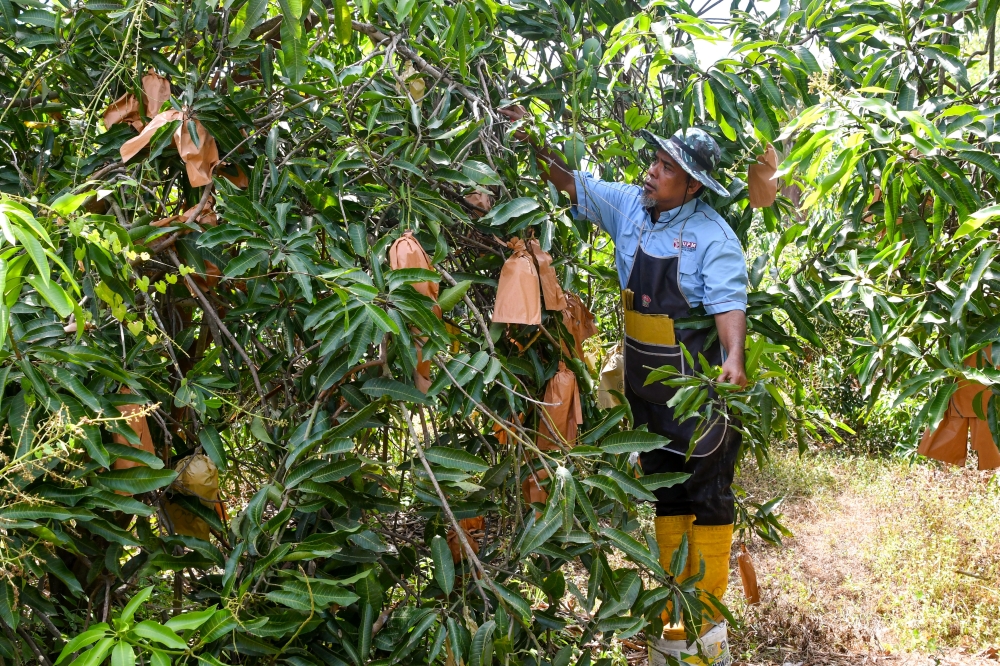
BACHOK, May 7 — While many choose to slow down after retirement, a group of retirees in Kuala Rekang, Melawi, have taken a different path by reviving idle land with Harumanis mangoes, which are now gaining recognition and putting Bachok on the map.

The premium mango, previously synonymous with Perlis, is gradually establishing a new foothold in Kelantan.

What began as a casual conversation among friends has grown into a shared source of income, strengthening community ties and giving new meaning to life after retirement.

Head of the Harumanis farm project, Mohd Rudzuan Jusoh, 53, said the initiative was sparked in late 2019 following discussions with fellow villagers after Isyak prayers, before evolving into a group farming project involving more than 40 participants.

“The idea was well received as the participants wanted to make use of idle former tobacco land while generating new income through high-value agriculture.

“We sourced the seedlings from Perlis at our own cost and cultivated them in stages,” he told Bernama recently.

He said more than 3,000 Harumanis trees are now being cultivated, with most of the participants comprising retired civil servants, including teachers, who have the time, interest and capital to venture into agriculture after leaving service.

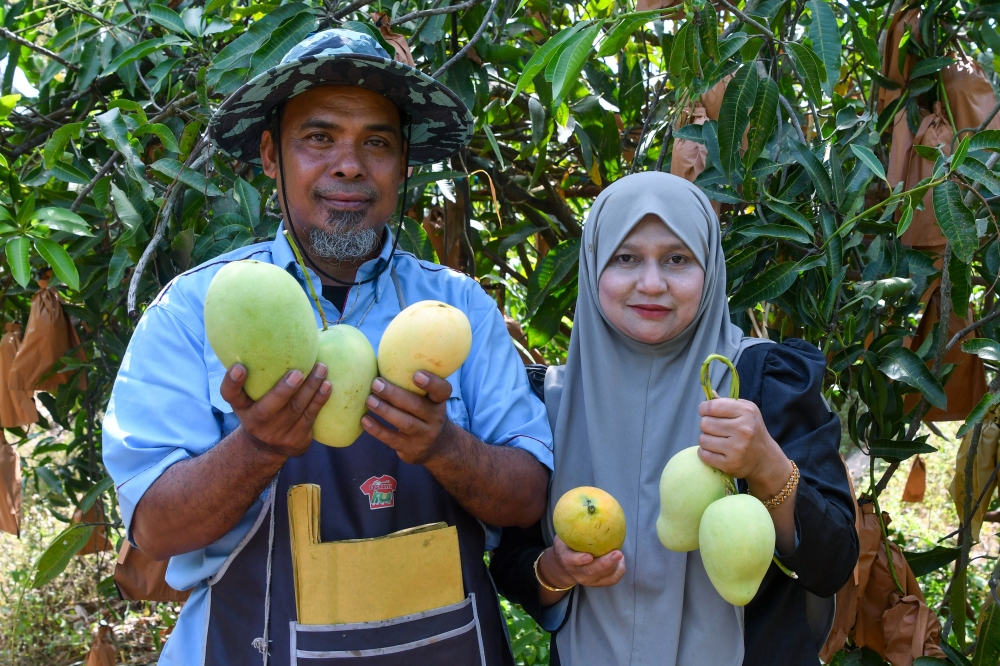
Mohd Rudzuan Jusoh and his wife Rabiatun Naemah Mohd Azmy show ripe Harumanis mangoes. — Bernama pic

He added that Bachok’s geographical advantages, its coastal location, prolonged hot weather and sufficient water supply make it suitable for the crop, along with the fertile land previously used for tobacco farming.

“According to feedback from customers, including those from Kuala Lumpur, the taste and aroma of Harumanis Bachok are comparable to those from Perlis. We offer both fully ripe (yellow) and semi-ripe (green) fruit based on demand,” he said.

Mohd Rudzuan said Harumanis trees typically begin to bear fruit within three to five years, and for this May season, the harvest is estimated at three tonnes, among the best yields so far.

He said sales will begin on May 16, with premium-grade fruit priced at RM100 for three kilogrammes and Grade A at RM100 for four kilogrammes.

Farm purchases are also available at RM100 for five kilogrammes without grading, including the option for customers to pick the fruit themselves.

Meanwhile, retired teacher Rasidi Teh, 63, said the project’s success proves that retirees can remain active and generate income while strengthening community bonds.

“From idle land, it has become a shared source of livelihood. We hope Kuala Rekang can emerge as a new Harumanis hub in Kelantan,” he said, expressing appreciation for the state government’s support through courses and grants to expand the cultivation. — Bernama 

  •  

Attenborough turns 100: Iconic naturalist who brought the wild into our homes marks milestone birthday

Malay Mail

LONDON, May 7 — David Attenborough, a leading voice on climate change and biodiversity loss whose landmark documentaries transformed popular understanding of the natural world for a global audience, marks his 100th birthday on Friday.

Attenborough’s natural history series, such as Life on Earth, in which he had a famous encounter with mountain gorillas in Rwanda, have brought the most remote corners of the planet into living rooms worldwide.

“He’s taken us all to places that we would never otherwise go. That’s a huge gift,” botanist Sandra Knapp, director of research at London’s Natural History Museum, told AFP.

The BBC is leading the celebration of the Briton’s centenary with a full week of programming dedicated to his life.

Classic episodes of series including Planet Earth II and Blue Planet II are being reshown along with others such as Life in the Freezer and Paradise Birds available on the BBC’s iPlayer service.

The centrepiece will be a 90-minute live show on his birthday from London’s Royal Albert Hall.

Knapp said Attenborough’s programmes had “expanded people’s horizons” and been an inspiration to many.

Jean-Baptiste Gouyon, professor of science communication at University College London (UCL), said Attenborough had made natural history as popular as football.

Attenborough’s programmes succeeded in instilling in the public an unparallelled passion and wonder for the natural world, said Gouyon.

Attenborough’s lifelong passion for the natural world began as child, and he went on to study geology and zoology at university.

Prince William, heir to the UK throne, has described him as a “national treasure”. Attenborough was also a firm favourite of the late Queen Elizabeth II, who knighted him in 1985.

Showing Attenborough’s cross-generational appeal, US singer-songwriter Billie Eilish has praised his “deep love and knowledge of our planet”, adding: “The animal kingdom brings out the childlike curiosity within us all.”

Mountain gorillas 

Attenborough has often reflected on his “luck” in being able to “find and film rare creatures that few outsiders have seen in the wild”.

And he has said he has been able “to gaze on some of the most marvellous spectacles that the wild places of the world have to offer”.

In 2006, he added his voice to those raising the alarm on climate change and biodiversity loss.

He declared himself “no longer sceptical” about the issue, having waited for conclusive proof that humanity was changing the climate.

Attenborough’s broadcasting career spanning nearly eight decades has been closely associated with the BBC, which he joined in the early 1950s.

Life on Earth, released in 1979, has alone been watched by 500 million people worldwide, while dozens of documentaries and associated books have made him a household name.

Recalling the series’ highlight, when he unexpectedly found himself up close with a group of mountain gorillas, Attenborough described the experience as “bliss” and “extraordinary”.

“I was simply transported,” he said ahead of his centenary, reliving how the adult female twisted his head and looked straight into his eyes and her two youngsters sat on him as the cameras rolled.

‘Modern colonialism’ 

Still making documentaries well into his nineties, he used his 2025 film Ocean to condemn the industrial fishing methods of wealthy nations, which he called “modern colonialism at sea”.

Despite his fame, the broadcaster — whose brother was the late actor and film director Richard Attenborough — has always refused to be seen as a celebrity.

Gouyon said Attenborough always made sure to direct the viewer’s gaze back to the subject matter.

On the threat to the natural world, Attenborough has said he hopes humanity will be able to change course.

“Perhaps the fact that the people most affected by climate change are no longer some imagined future generation, but young people alive today... will give us the impetus we need to rewrite our story, to turn this tragedy into a triumph,” he said at the UN Climate Summit in Glasgow in 2021.

“We are, after all, the greatest problem-solvers to have ever existed on Earth,” he said.

At 100, Attenborough no longer wanders the world’s jungles and deserts.

But he has continued to tell the story of the planet closer to home.

In Wild London, broadcast in early 2026, he marvels at the wildlife of the British capital, his birthplace, from foxes and beavers to hedgehogs and harvest mice.

After all his travels, he has confided that his favourite place remains Richmond, an affluent and leafy suburb in south-west London.

He has lived in the riverside town for many years, and still resides in the family home he shared with his late wife Jane and their two children. — AFP 

  •  

Iran war sends China factory costs soaring, raising risk of pricier goods worldwide

Malay Mail

FOSHAN (China), May 7 — Vacuum cleaners and vapes could get more expensive if the Iran war drags on for much longer, Chinese factory owners and traders warn, as the world’s manufacturing hub reels from “crazy” costs.

Weeks of US-Israeli strikes on Iran and the effective closure of the Strait of Hormuz have choked Asia’s oil supply, stymieing the production of plastic — derived from oil — across the region.

Manufacturing giant China has been comparatively sheltered from fuel shortages thanks to oil reserves and renewable energy, but local factories are picking up a ballooning raw materials bill.

“Basically, we’ve been losing money on all our orders,” said Bryant Chen, a manager at vacuum cleaner factory RIMOO in southern Guangdong province’s Foshan.

The price of plastic has risen roughly 50 per cent since before the Iran war, Chen told AFP as workers behind him fastened suction tubes to metal tanks.

“The costs of the products that we are making are being very greatly affected,” the 42-year-old said, listing plastic, copper for the vacuum’s motor and raw materials in its power cords.

“Typically at this time we’d be entering peak season, but compared to the same period previously, shipment and production data aren’t very optimistic.”

Two hours away, plastic traders in storage hub Zhangmutou said price fluctuations were the worst they’ve seen in decades.

“It has never been this crazy,” said Li Dong, 46, who entered the industry two decades ago.

The plastic, rice-sized pellets he buys for local phone case and EV battery factories jumped wildly in March, triggering days of panic that jammed the small town’s roads as factories rushed to stock up.

‘Mutual state of decline’ 

Exporters in Zhangmutou showed AFP a vast range of products their pellets would become, including drones and badminton birdies.

One trader sifted through pink, green and purple beads that she said would be moulded into e-cigarette casings sold in the Middle East.

The Iran war has hit plastic production even harder than bottlenecks caused by the Covid pandemic, when ships could not come and go from China, Li said.

Some sellers cashed in on the plastic panic, he added, fighting to take advantage of surging costs.

Li said the price of plastic had dropped around 10 to 20 per cent from its height, but he cautioned against further oil hold-ups.

“The factories we supply to will suffer the most because their direct costs will rise,” he said.

For exporters, the Middle East crisis has added to the hangover still lingering from Donald Trump’s sweeping global tariffs last year.

The US Supreme Court struck down those levies as illegal, but tolls on Chinese goods entering the US still sit at around 20 per cent.

On the outskirts of Guangzhou, one garment factory owner lamented the chaos triggered by the US President’s trade war.

Overseas clients are afraid to place orders, while Chinese manufacturers cannot pin down changing costs.

“As a result, everyone is in a mutual state of decline,” garment boss Zhou, 55, said.

While 80 per cent of his clients have returned, the fabrics scattered on his factory floor made into sweatpants headed for Europe and North America have risen 10 to 20 per cent in cost due to the Middle East war.

As overseas orders dropped, seamsters went months without a job.

‘Tensions rise, orders disappear’ 

Migrant worker Jingjing returned to her hometown in Hubei province for two months, where she made half the 400 yuan (RM240) she now earns in Guangzhou’s garment factories.

“When tensions rise... orders suddenly disappear,” the 42-year-old said.

But this year she said she always has something to do.

In a damp back alley, Jingjing joined job-seekers milling about leisurely, haggling for higher wages while garment bosses perched on scooters brandished hiring signs, desperate for day labourers.

Chen, the vacuum factory manager, said he was “still worried” about surging shipping costs should the Iran war drag on.

“If shipping costs rise, it will cause the final costs for our customers to increase sharply,” he said.

They “will have no way to sell normally, because the costs are just too high”.

Chen said RIMOO plans to expand to other markets beyond the Middle East where around 60 percent of its customers are based.

“We are still optimistic,” he said. “The market demand still exists.”

But analysts warn the war’s impact on costs will be felt for months.

“The problem is all of these costs will filter through the supply chains for the rest of the year,” said supply chain consultant Cameron Johnson.

“The longer it goes on, that kind of cascades into much bigger problems, particularly if there’s not enough oil in general to run stuff.” — AFP 

  •  

Bahasa Melayu goes global: From Nusantara roots to worldwide influence 

Malay Mail

KUALA LUMPUR, May 6 — Spoken daily by millions in Malaysia, Bahasa Melayu is far more than a national language; it is a linguistic heritage shaped by centuries of history across the Nusantara.

Historical records trace its role as a lingua franca as far back as the seventh century during the Sriwijaya Empire, a status that strengthened further under the Melaka Sultanate in the 13th century. It functioned as the language of administration, trade, and diplomacy, connecting diverse communities across the region.

Today, despite perceptions that Bahasa Melayu remains confined to South-east Asia, the language is spoken by an estimated 290 million people worldwide.

In Malaysia, efforts to elevate Bahasa Melayu onto the global stage have gained renewed momentum in recent years. Yet, these efforts are not without criticism, some question its global relevance, while others continue to undervalue its use domestically.

A language that travels easily

According to Dr Rozaimah Rashidin, Deputy President of the Malaysian Linguistics Association, Bahasa Melayu has long transcended geographical boundaries.

Beyond South-east Asia, it is spoken in places such as the Cocos (Keeling) Islands, Christmas Island in Australia, as well as communities in South Africa and Sri Lanka. The Malay diaspora has further expanded its reach, with speakers found in Saudi Arabia, Australia, the United Kingdom, Germany, the Netherlands, and even Los Angeles.

Globally, Bahasa Melayu, along with Bahasa Indonesia, ranks among the top 10 most spoken languages, with over 290 million speakers. It is also the fourth most widely used language on digital platforms and social media, underscoring its growing global presence.

Rozaimah notes that the language’s appeal lies partly in its accessibility. With a structured yet relatively simple grammatical system, it is considered easy to learn. In Malaysia, many foreign workers from countries such as Bangladesh, Vietnam, and Nepal achieve conversational fluency in a relatively short time.

The late Malay scholar Za’ba once described the language as “flexible and gentle,” a quality that continues to resonate today. In the age of social media, content creators, tourists, and influencers from abroad often pick up Bahasa Melayu quickly, using it confidently during their time in Malaysia.

However, Rozaimah emphasises that the future of any language depends heavily on what linguists call language attitude — the perceptions and emotional connection individuals have towards a language.

A desire to enjoy fresh durian as well as to see Malaysia’s beautiful beaches prompted Yang Zhi Jun, 21, from Chengdu, China to learn and master the Malay language. — Bernama pic

A positive attitude reflects pride, loyalty, and a commitment to using the language correctly. Conversely, a negative attitude emerges when a language is viewed as outdated or lacking economic value, or when foreign languages are excessively glorified at the expense of one’s own.

Interestingly, many foreigners demonstrate a strong appreciation for Bahasa Melayu, often inspiring a renewed sense of pride among Malaysians themselves.

A language of knowledge and influence

With approximately 7,168 active languages spoken worldwide today, Bahasa Melayu continues to carve its place as a language of knowledge and scholarship.

Its growing adoption by foreign learners, particularly in countries like China and the United Kingdom, has far-reaching implications, strengthening not only the language’s prestige but also Malaysia’s diplomatic and economic ties.

In China, universities such as Beijing Foreign Studies University and Guangdong University of Foreign Studies offer degree programmes in Bahasa Melayu. These initiatives have produced graduates who are not only fluent in the language but also deeply attuned to Malay cultural values, effectively serving as cultural ambassadors for Malaysia.

Meanwhile, institutions like the School of Oriental and African Studies (SOAS), University of London, play a key role in sustaining Malay studies in Europe. Through research on classical manuscripts and modern sociolinguistics, Bahasa Melayu continues to gain recognition as an academic language of global relevance.

Translation efforts by international scholars have also brought Malay literary works to wider audiences, opening doors for global appreciation of its linguistic beauty and cultural depth.

While Bahasa Melayu has, in many ways, achieved international status, it remains in a phase of consolidation, still striving to rival dominant global languages such as English.

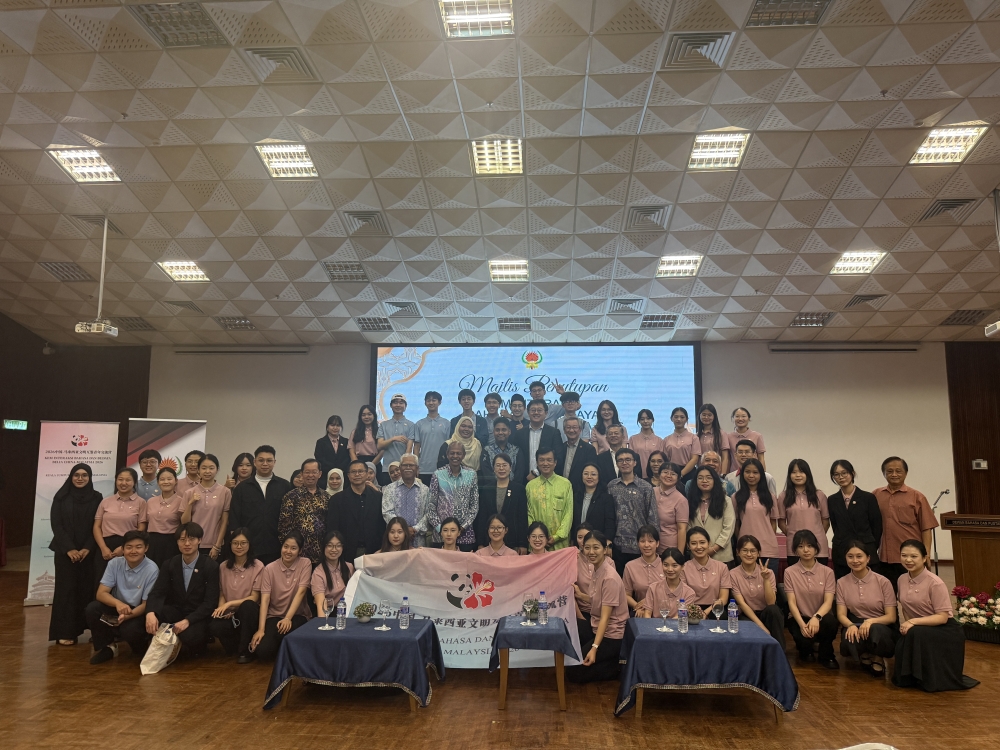
Director of the Centre for Malay Studies at Beijing Foreign Studies University (BFSU), Prof Dr Su Ying Ying said the increasingly close Malaysia-China relations in recent years have driven interest among people in both countries to learn each other’s languages and understand each other’s cultures. — Bernama pic

Language as a reflection of culture

Language, Rozaimah explains, is often described as a mirror of culture. In the case of Bahasa Melayu, its elegance lies not only in its structure but also in the values it carries.

To learn the language is to step into the cultural world of the Nusantara, one shaped by courtesy, subtlety, and respect. Concepts such as budi bahasa (graciousness) and adab (proper conduct) are deeply embedded in the language, influencing not just communication but social behaviour as a whole.

For foreign learners, mastering Bahasa Melayu often becomes a gateway to understanding these cultural nuances. It helps bridge differences, reduces feelings of unfamiliarity, and fosters trust within communities.

Language, in this sense, is not merely a tool of communication; it is a bridge that connects people across cultures.

Echoing this sentiment, Prof Dr Su Ying Ying of Beijing Foreign Studies University highlights how the richness of Malay culture has contributed to the language’s growing appeal in China.

Currently, more than 500 students across 18 institutions in China are pursuing undergraduate studies in Bahasa Melayu. BFSU, which began offering the programme in 1961, remains a key centre for Malay language development in the country.

Su herself studied Bahasa Melayu at BFSU before continuing her postgraduate studies at Universiti Kebangsaan Malaysia. She notes that many students are drawn to Malaysia not only for academic reasons but also for its peaceful environment, vibrant culture, and diverse cuisine.

“Students want to feel closer to Malaysia,” she says. “When they come here, they not only learn the language faster, but also experience the culture firsthand.”

Many achieve fluency within just two years. a testament to the language’s accessibility and enduring appeal. — Bernama 

  •  

War empties Iraq’s holy cities as pilgrim numbers collapse, businesses struggle to survive

Malay Mail

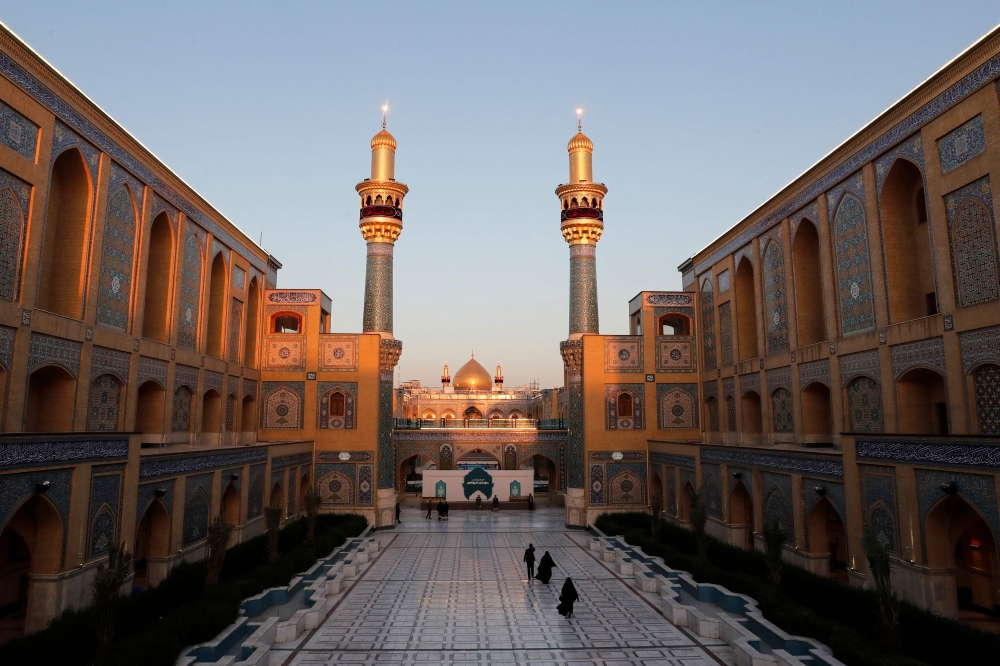
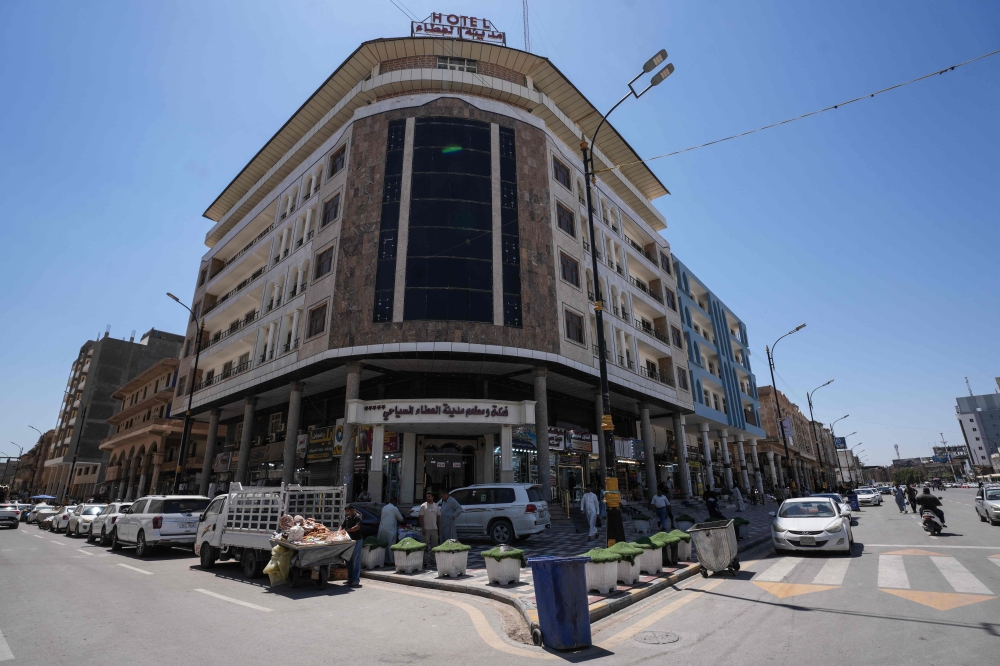
NAJAF (Iraq), May 6 — In Iraq’s holy city of Najaf, the majestic shrine of Imam Ali stands quiet, its vast courtyards no longer echoing with the multilingual whispers of pilgrims from before the Middle East war.

The absence of tourists leaves nearby shopkeepers and hotel owners with little to do, their days dragging on as they hope for the crowds to return and revive their businesses.

“Iranians used to keep us busy, whether the jeweller, the fabric merchant or the taxi driver. Now there are none,” said jewellery shop owner Abdel Rahim Harmoush.

“It used to be hard even to step into the market because of foreigners... Even street vendors drew huge crowds of visitors,” the 71-year-old added.

Millions of Shia Muslims from around the world typically flock to Najaf and fellow holy city Karbala every year.

But the regional war ignited in late February by US-Israeli strikes on Iran has stemmed the usual influx of pilgrims from the Islamic republic, Lebanon, the Gulf states, India, Afghanistan and elsewhere.

Iraq was drawn into the conflict from the onset, with strikes targeting US interests and Tehran-backed armed groups in the country.

People in the holy cities “live on religious tourism”, said Harmoush, who for 38 years has worked in the old market near Najaf’s golden-domed mausoleum.

The shrine is the ornate burial place of Ali — the Prophet Muhammad’s son-in-law, the fourth Islamic caliph and the first Shia Imam.

Harmoush warned of economic ruin were the crisis to persist: shop owners unable to pay rent and taxes, cab drivers left without passengers and labourers struggling to find work.

A shop owner waits for customers in the Old City of Najaf on April 22, 2026. — AFP pic

Hotels closed 

Hotel owner Abu Ali, 52, was forced to lay off five employees, leaving just one to tend to nearly 70 empty rooms.

“How can I pay salaries if there is no work?” he said.

Saeb Abu Ghneim, head of the hotel association in Najaf, told AFP that 80 per cent of the city’s 250 hotels had closed, with more than 2,000 employees laid off or on unpaid leave.

He added that most of Najaf’s religious tourism relies on Iranians, followed by Lebanese visitors — also trapped at home by war — and other nationalities.

The sector, which already weathered the closure of mosques and shrines in the pandemic, is a rare type of tourism in a country reeling from decades of conflicts.

Religious tourism also constitutes a significant source of revenue for Iraq’s non-oil economy.

Before the war, 28-year-old Moustafa al-Haboubi could barely manage the crowds queuing to exchange foreign currency for Iraqi dinars.

He now spends the long hours idly scrolling through his phone or chatting with neighbours.

“We barely receive one or two customers,” he said. “There are no pilgrims now, Iranian or otherwise.”

Even after a fragile ceasefire took effect on April 8 and Iraq’s airspace reopened, little has changed.

Some pilgrims trickle through during the week, while on weekends the area grows somewhat livelier as Iraqis visit the sacred sites.

People stand outside a hotel in Najaf on April 22, 2026. — AFP pic

‘Catastrophe’ 

The situation is no different in Karbala, which is around 80 kilometres (50 miles) north of Najaf and home to the shrines of the revered grandsons of Prophet Muhammad, Imam Hussein and his brother Abbas.

The main corridor linking the two golden shrines and the surrounding alleyways were once alive with the murmurs of tourists walking to prayers.

Today, the visitors are almost exclusively Iraqi.

“The situation is dangerous... a catastrophe,” said Israa al-Nasrawi, head of Karbala’s tourism committee.

She warned that the war had devastated the city’s economy, slashing tourist numbers by around 95 per cent and forcing hundreds of hotels to close.

The city’s many pilgrim tour companies sit idle.

Akram Radi, who has worked in the sector for 16 years, said his company once helped up to 1,000 visitors a month but is now operating at only 10 per cent of capacity.

“I might have to close and look for another job,” he said. — AFP 

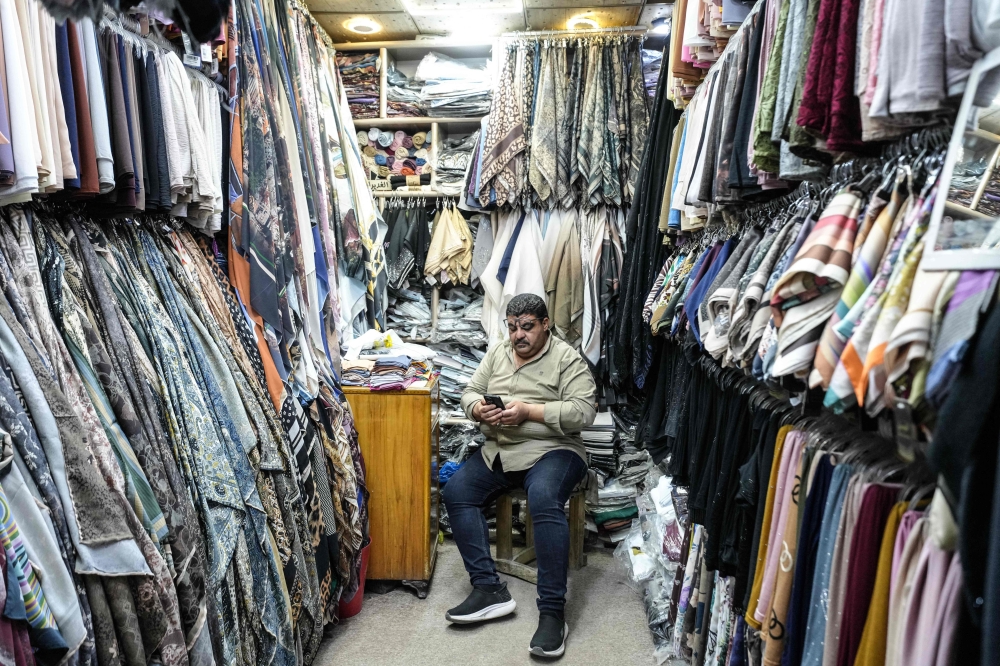
A shopkeeper of a clothing store passes time by scrolling through his phone as he sits and waits for customers in the Old City of Najaf. — AFP pic

  •  

SMK Berangan turns stingless bee farming into classroom learning, boosts student attendance

Malay Mail

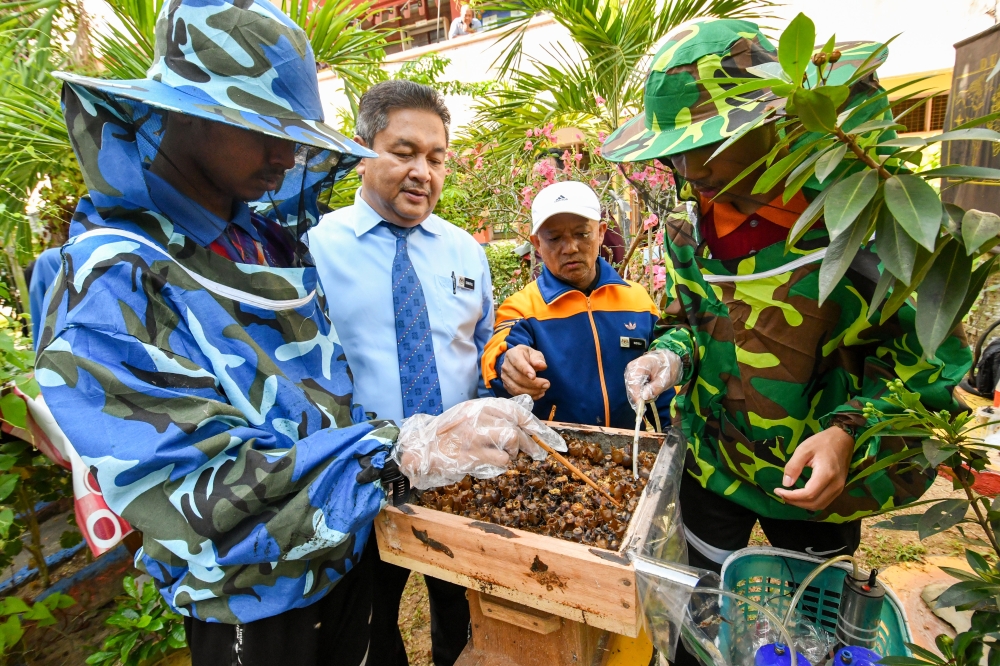
TUMPAT, May 6 — Sekolah Menengah Kebangsaan (SMK) Berangan here is taking learning beyond the classroom by introducing stingless bee farming as a practical way to build students’ skills, discipline and interest in nature.

The initiative not only provides students with hands-on experience in managing stingless bee hives and understanding the honey production process, but has also had a positive impact on school attendance.

The school’s Geography teacher, Mohd Rosli Yaakub, said the project began in 2024 with just four hives involving Form Four students and produced two kilogrammes of honey in its first year.

“Encouraged by the promising results, the number of hives has now increased to 17 and is expected to yield eight kilogrammes of honey this year,” he told reporters at the SMK Berangan Stingless Bee Sustainable Garden today.

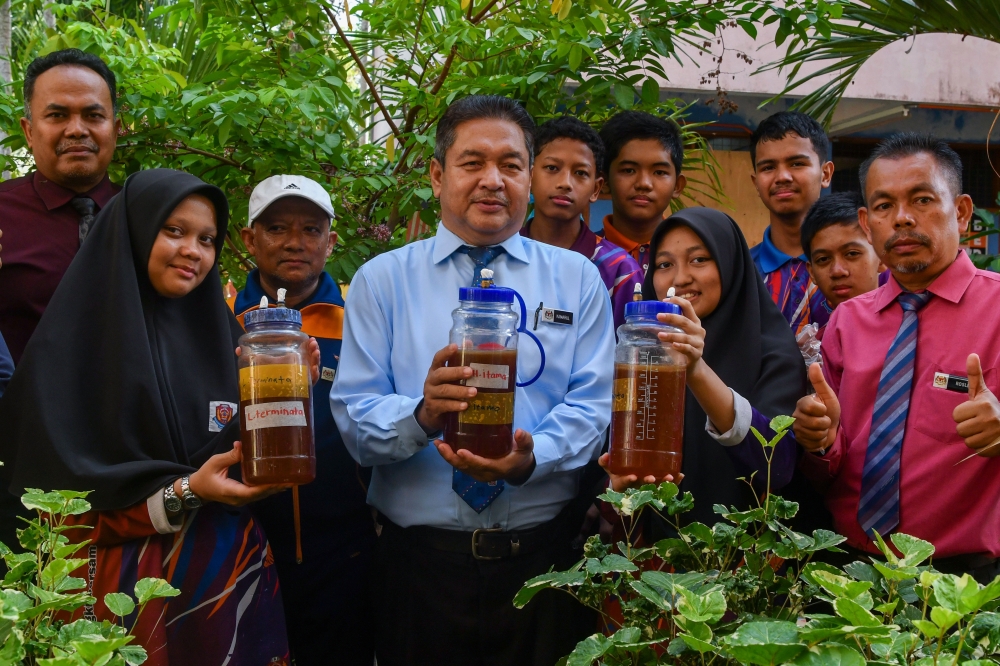
SMK Berangan students displaying stingless bee honey obtained after extracting it from the hive at the SMK Berangan Stingless Bee Sustainable Garden in Tumpat, Kelantan. With them is the school’s principal Kamarul Zaman. — Bernama pic

He said the project enables students to manage the hives themselves while gaining a better understanding of science and environmental sustainability through practical learning.

“Looking after stingless bees is relatively straightforward as they do not sting and only need flowering plants to produce good-quality honey,” he said.

Mohd Rosli, who has more than 10 years of experience in stingless bee farming, said the school currently rears five species, including Lepidotrigona terminata, Heterotrigona itama, Geniotrigona thoracica, and Tetragonula laeviceps.

Meanwhile, SMK Berangan principal Kamarul Zaman Hussin said the school has recorded a four per cent rise in student attendance since January.

“We have also distributed 250 grammes of stingless bee honey to each class, involving over 700 students and teachers, to allow them to enjoy the produce,” he said. — Bernama 

  •  

In war-hit Sudan, children race to reclaim lost education as conflict leaves millions out of school

Malay Mail

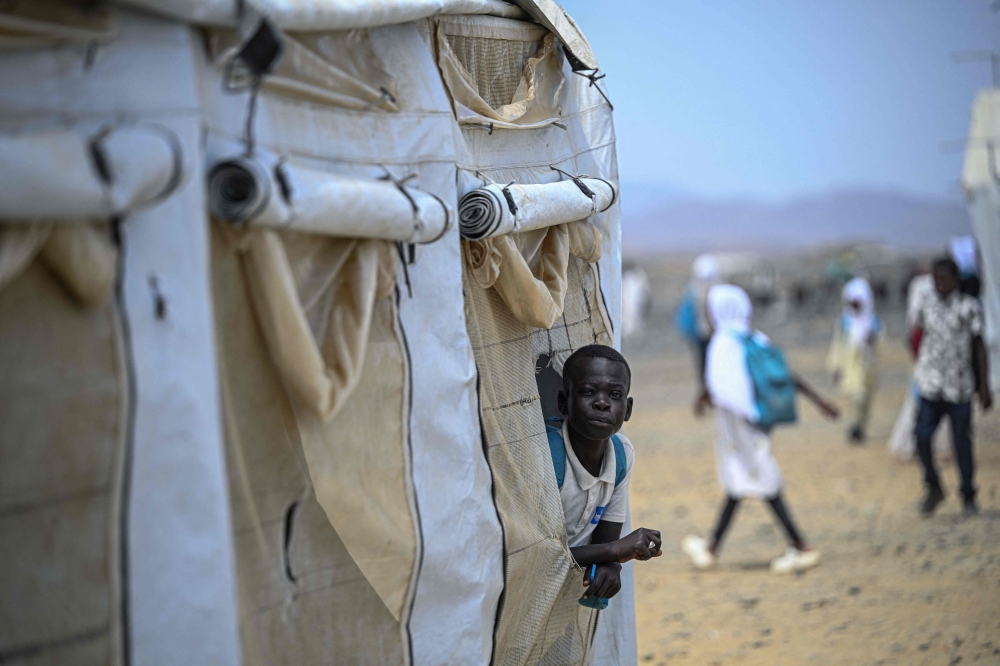
PORT SUDAN, May 6 — Sudanese 13-year-old Afrah wants to become a surgeon, and nothing will stop her, not even the war that has ravaged her country and forced millions of children out of school.

Quiet and determined, she kept learning on her own for months, uprooted by the now three-year conflict between Sudan’s army and the paramilitary Rapid Support Forces (RSF).

“I would study my lessons again and again,” she told AFP at a displacement camp in Port Sudan, where she is again receiving an education thanks to Unicef and local organisation SCEFA.

Afrah is one of more than 25 million minors in Sudan, or half the total population, of whom eight million are currently out of school, according to the UN children’s agency.

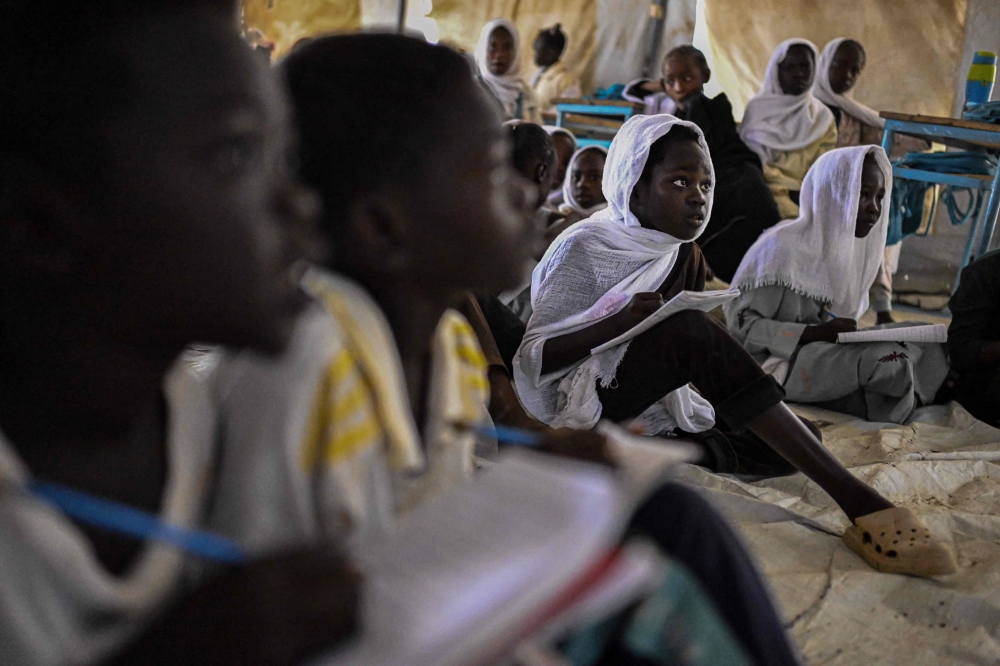
At the Al-Hishan camp, tents arranged in a square function as an elementary school for more than 1,000 children — nearly a third of whom required an accelerated curriculum to make up for lost time.

Laughter fills the camp now, but most of the children arrived traumatised by horrors including starvation and rocket fire.

Their drawings, educators said, were at first dominated by war: depictions of the tanks, weapons and death they saw as their families fled.

“They come here scared, exhausted, isolated, but over time you see their drawings change,” Unicef spokesperson Mira Nasser told AFP.

“They start to adapt and process.”

In one tent, children repeated hand-washing instructions after a social worker, while in another, they recited a poem in choral unison.

Elsewhere, a teacher — herself displaced and living at the camp — explained chemical and physical reactions to her class, as her three-year-old son pulled at her skirt.

Displaced Sudanese students attend a class at an elementary school run by the Sudanese Coalition for Education in partnership with the United Nations International Children’s Emergency Fund (Unicef), south of Port Sudan, on April 26, 2026. — AFP pic

“These children’s future is at stake, and education is itself a form of protection,” Nasser said.

“Here they can at least get a sense of normalcy, even in a displacement site. They can resume their education, they can play, they can make friends.”

DIY operation 

Awatef al-Ghaly, a 48-year-old Arabic teacher who was displaced from North Darfur, remembered her first days at the site, when thousands of families were left listless with their kids in tow.

“There were 60 teachers here. We just got to work,” she told AFP, at the same empty plot where they started, in the shadow of the Red Sea mountains.

They lined the students up by grade, threw together a schedule and started going through old lessons.

Soad Awadallah, 52, taught English for four decades in South Darfur before arriving in Port Sudan.

“It took a lot of patience, we had the kids all sat on the ground at first,” she said, gesturing towards the rows of desks that now fill the tents, a welcome addition even if students have to squeeze in four to a bench.

According to Nasser, because of the time that students lost, ranging from months to years, “some even forgot how to read and write”.

But their determination was indomitable, and the makeshift school recently graduated its first class from elementary to middle school, Ghaly said with pride.

“Even when things were difficult, in the heat of summer with bugs everywhere, the kids wanted to learn,” she said.

Before the final exam, “some of them would follow us teachers home begging for more review sessions”.

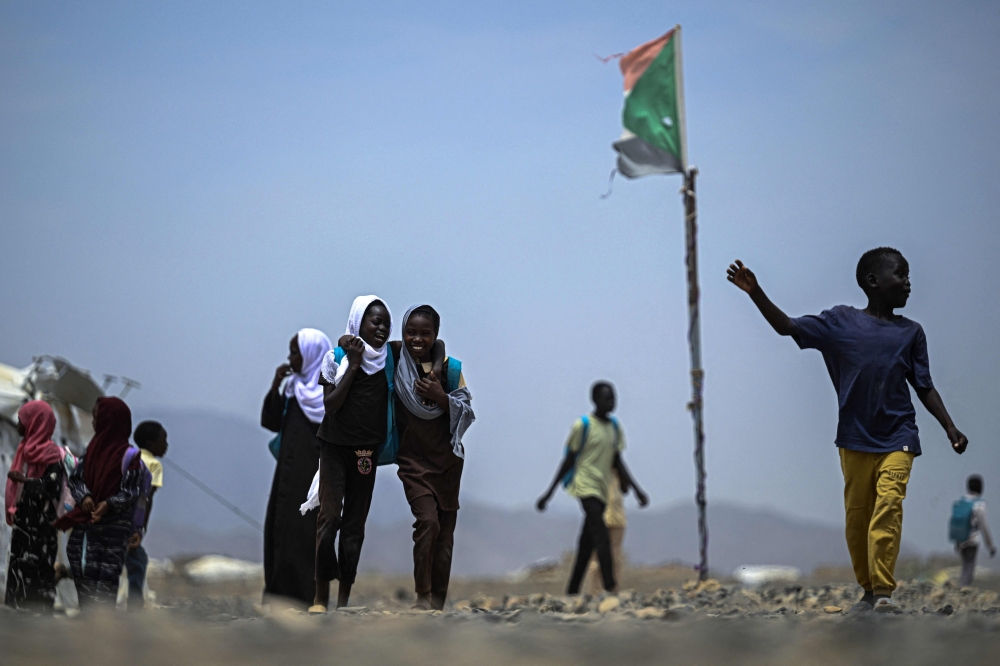
Sudanese students leave a school operated by the Sudanese Coalition for Education for All,  in partnership with the United Nations International Children’s Emergency Fund (Unicef), south of Port Sudan on April 26, 2026. — AFP pic
Sudanese students leave a school operated by the Sudanese Coalition for Education for All, in partnership with the United Nations International Children’s Emergency Fund (Unicef), south of Port Sudan on April 26, 2026. — AFP pic

‘Want to help people’ 

Fatma, 16, wants to become a psychiatrist to help those hurt by the fighting in Sudan.

“This war has destroyed people emotionally... My father was in the main market in Khartoum when the RSF went through killing people. He ran away, and he still feels that pain,” she told AFP.

“When I sit with the social worker, I feel better. I want to help people like that.”

One little girl, who came up to an AFP journalist’s hip, was missing her right arm, amputated after she was wounded in the capital Khartoum.

She high-fived with her left hand.

Across Sudan, five million children are internally displaced, according to Unicef. Millions are going hungry, including over 825,000 children under five suffering severe acute malnutrition.

The use of child soldiers has been reported across the country, and rampant sexual violence against minors has prevented many from returning to school even in areas now safe from the fighting.

Many just want to go home.

“I miss my friends and my family, I miss my school in Khartoum — it was full of trees,” 14-year-old Ibrahim said.

But he has a goal. “I want to become a petroleum engineer,” he told AFP, as the sound of children playing outside filled the tent.

During recess, dozens of pupils dashed around their teachers, laughing, playing and making hearts at AFP’s cameras.

One boy named Rizeq, clad in a red Manchester United jersey, steeled himself and walked up to the adults.

His voice a little shaky but his chest puffed out, he said: “I want more English classes in the evening.” — AFP 

  •  

Rafizi confident records for RM1.1b Arm Holdings in place as MACC probes case

Malay Mail

PUTRAJAYA, May 6 — Former Minister of Economy Datuk Seri Rafizi Ramli claims that all matters concerning documentation and agreements related to the RM1.1 billion investment with Arm Holdings were handled in an orderly manner and fully complied with established procedures.

He said that all critical records — including meeting minutes, official documents, and relevant agreements — are in existence, adding that he is confident these proofs can be presented in court should the need arise.

Speaking to reporters outside the Malaysian Anti-Corruption Commission (MACC) headquarters today, following nearly five hours of questioning, Rafizi said: “The minutes (meeting minutes), documents, and agreements are all there.

“That is why I am very confident that it was actually orderly and managed in terms of regulations and procedures, as I recall it having gone through the process back when I was in the government. So, if all this is brought to court, God willing, the evidence is indeed there. The documents are there, the minutes are there, the agreements are there.”

Earlier today, Rafizi arrived at the MACC headquarters at 1.50pm to continue the statement-recording process for the third day.

He is assisting in investigations regarding allegations of abuse of power and misconduct involving a strategic semiconductor industry cooperation agreement between the Ministry of Economy and the United Kingdom-based company. — Bernama 

  •  

Penang to probe absence of men’s football team from Sukma 2026, says state exco

Malay Mail

GEORGE TOWN, May 6 — The Penang government will convene a meeting following criticism over the decision by the Penang State Sports Council (MSNPP) not to send the state men’s football team to the Malaysia Games (Sukma) 2026.

Penang State Executive Councillor for Health, Youth and Sports Daniel Gooi Zi said the meeting would be held with the MSNPP, FA Penang and Penang FC to obtain a clearer explanation on the circumstances that led to the team being left out of the country’s premier multi-sport event.

“I will first meet MSNPP, FA Penang and Penang FC before holding a press conference to explain the matter,” he told Bernama today.

The issue came to light after MSNPP confirmed that Penang would not field a men’s football team at the 2026 Selangor Sukma after failing to finalise the players’ list within the registration deadline set by organisers.

In a statement yesterday, MSNPP took full responsibility for the decision, saying the absence of a long list of players before the registration cut-off date made it impossible for the state to complete the participation process.

According to MSNPP, participation in Sukma required early preparation and strict compliance with selection procedures, including structured training programmes and player performance assessments.

The decision has triggered disappointment among football supporters who were concerned about the management of the state youth football development, calling for an internal investigation into the matter and urged the authorities to publicly disclose the findings.

They also demanded greater accountability from those responsible and called for a more systematic and professional youth football development framework to be implemented immediately. — Bernama


  •  

Vijay — From mass hero to chief minister — Vasanthi Ramachandran

Malay Mail

MAY 6 — If the first half of Joseph Vijay Chandrasekhar’s journey was winning the elections, the second will be about governance and public trust. In politics, that is always the harder role to play.

For the actor-turned-politician who now steps into the role of Chief Minister, the second half is no longer scripted — and it may prove his most demanding role yet. It will not mark the triumphant finale of a cinematic ascent, but the beginning of a defining political chapter.

Once the swearing-in takes place at Chennai’s Jawaharlal Nehru Stadium the greater challenge before Vijay is what a Vijay government would actually look like.

At 108 seats, governance cannot rest on charisma alone. It will demand alliances, compromise, and experienced hands capable of navigating the machinery of the state.

Questions once considered premature are now unavoidable: who will shape his cabinet, what balance he strikes between technocrats, loyalists, and political veterans, and what compromises coalition-building may require.

The scale of Vijay’s rise has already altered Tamil Nadu’s political landscape in ways few anticipated — why did so many not see it coming?

According to the author, the Vijay wave was far bigger than any celebrity. Vijay ignited anti-establishment anger, captured a generation impatient for change, and turned decades of cinematic influence, fan devotion, and emotional connection into a political force that reshaped Tamil Nadu. — Screengrab from social media

The chants of “Vijay, Vijay” that followed him across Tamil Nadu were not merely expressions of admiration. They carried immense emotional expectations. For younger voters, Vijay represented not just political change but personal aspiration.

The Vijay wave was far bigger than any celebrity. Vijay ignited anti-establishment anger, captured a generation impatient for change, and turned decades of cinematic influence, fan devotion, and emotional connection into a political force that reshaped Tamil Nadu.

Vijay operated as a carefully curated political figure, defined by limited access and disciplined messaging.

Not a single interview. No relentless media blitz.

In an age of constant visibility, Vijay understood the political value of restraint. The less he appeared, the greater the intrigue became.

That distance protected the mystique around Vijay while his grassroots network strengthened beyond the glare of constant exposure.

However, unlike conventional politicians, Vijay turned every public appearance into an event. Hundreds of thousands flocked to hear him, arriving early, waiting for hours, in scenes that resembled cinematic devotion as much as political mobilisation. What unfolded across Tamil Nadu was not merely a campaign, but the conversion of fan adulation into political momentum.

Tamil Nadu did not merely watch Vijay’s rise. It participated in it.

Long before the launch of Tamilaga Vettri Kazhagam (TVK) in 2024, Vijay had begun signalling political intent through the language of his films. From around 2009 onward, his cinema increasingly reflected themes of corruption, governance, inequality, and social justice—allowing audiences to gradually connect the actor with a larger political imagination.

Over time, Vijay’s screen persona spilled into public life as fan clubs evolved into welfare networks, giving him an organisational base long before the launch of TVK.

That transformation was reinforced by years of groundwork, welfare outreach, fan mobilisation, and carefully calibrated political positioning.

Tamilaga Vettri Kazhagam (TVK), a party that did not exist three years ago, has disrupted a political order shaped over half a century by the Dravida Munnetra Kazhagam (DMK) and All India Anna Dravida Munnetra Kazhagam (AIADMK) — two Dravidian giants with some of India’s deepest grassroots machinery.

By the time he formally entered politics, Tamil Nadu was already showing signs of fatigue with the DMK-AIADMK binary, especially among younger voters searching for a different political vocabulary.

TVK’s success was not powered by star appeal alone. Its 40-point manifesto struck a chord with key constituencies.

Youth sought jobs, skills, and a voice in governance. Women responded to promises of safety, welfare, and empowerment. Farmers heard assurances of income security and risk protection.

Perhaps the most decisive force behind the Vijay wave was generational.

With nearly 1.2 crore voters — about 21 per cent of Tamil Nadu’s electorate — belonging to the Gen Z and young voter category, their influence on the election became impossible to ignore. Gen Z voters became amplifiers of Vijay’s politics, carrying his message beyond rally grounds and into homes across Tamil Nadu, shaping family conversations and transforming fan culture into a political movement built on the belief that Vijay represented the making of a new political legacy.

Vijay’s rise is neither accidental nor purely cinematic. It is the product of long preparation converging with a moment of political possibility.

The easy explanation is star power. Tamil Nadu has seen this before in leaders like Tamil Nadu’s former chief ministers M. G. Ramachandran and J. Jayalalithaa. But that explanation is no longer sufficient.

Since then, many actors have flirted with power, some have launched parties, and a few have tasted electoral success. Most eventually discovered that popularity is not the same as political durability.

Perhaps his most understated strength lies in tone.

While Tamil Nadu politics has historically been sharp, rhetorical, and confrontational, Vijay’s messaging remained measured.

Yet governing Tamil Nadu is not the same as mobilising it.

Tamil Nadu already possesses relatively strong administrative systems, welfare delivery mechanisms, and a politically aware electorate with high expectations of governance.

The public expectation, therefore, is not merely transformation — but competent continuity with cleaner governance. And that may prove Vijay’s hardest test.

Corruption remains a central public grievance, and much of Vijay’s appeal was built on the belief that he represents moral distance from entrenched political culture.

But expectations rarely stop at symbolism. They eventually demand delivery.

Governance offers no such insulation. It demands constant negotiation — with bureaucracy, competing interests, crises, and public scrutiny.

Among the most closely watched promises will be welfare commitments, including financial assistance schemes for women such as the proposed monthly support of Rs2,500.

Translating campaign promises into fiscally sustainable policy will require more than electoral goodwill; it will demand administrative discipline, political negotiation, and economic realism.

The very voters who amplified his rise may also prove impatient for results. Electoral enthusiasm can be immediate. Governance rarely is measured not against applause but against governance.

Voters may admire a star. But they test a leader.

There are no scripts. No retakes. The second half begins now...

* This is the personal opinion of the writer or publication and does not necessarily represent the views of Malay Mail.

  •  
❌