Reading view

Breaking out the binoculars for another lamppost adornment of public interest

Lampposts Tim Hamlett

One of the changes I have noticed since our last (shall we say “popular?”) District Council was replaced by a more salubrious patriots-only gathering is that we now get decorations on Sha Tin lampposts.

Sha Tin
Sha Tin. File Photo: King Ho/Pexels.

This adds to public gaiety, no doubt, but has limited effectiveness as a communication medium because the banners have to be quite small and the lampposts are quite tall. So you can’t really get any words in.

Early attempts in this area avoided the legibility problem because they were put up in celebration of anniversaries. All you could really see was a big number, but as you were seeing the same number in all sorts of other places it was quite obvious what we were supposed to be celebrating.

The latest effort did not involve a number. Looking up at it while waiting for the traffic lights to change I could not make out anything at all. My research assistant deployed her mobile phone, took a picture with the telephoto feature working flat out and announced that we were celebrating China’s 15th five-year plan.

Happily I was able to catch up with this important matter when I came across a much bigger offering on the same theme outside an MTR station. It seems we are urged to “Pro-actively align with the 15th five-year plan” and “Follow a holistic approach to development and security”.

The text seen on lamppost promotions across Hong Kong
The text seen on lamppost promotions across Hong Kong. Photo: GovHK.

I hesitate to criticise the work of other writers but I cannot resist the thought that the author of this offering needs to give some thought to finding the sort of language which means something concrete and sensible to the man in the street, who is rarely told to pro-actively align with anything, or indeed to follow a holistic approach to it.

Most English people of my generation are not bowled over by the idea of five-year plans. This is partly because rigid adherence to erroneous five-year plans caused two of the 20th century’s most catastrophic famines: in Ukraine 1932-3 and in China 1958-62.

It is also no doubt partly because UK governments have rarely attempted economic planning of this kind and the rare experiment (in the early years of the 1964 Wilson government) was not a success. The Treasury (which is what they call the Finance Ministry in the UK) has never developed a wish to run plans itself, but certainly does not want anyone else doing it.

Besides the history there is the philosophical objection, usually attributed to Friedrich Hayek, to government direction of the economy. This maintains that official intervention is an infringement of freedom and also obscures the useful information provided by prices set in the marketplace.

Whatever you think of five-year plans, though, one does have to wonder if they really call for the sort of mass public participation that the campaign on lamp-posts and MTR stations appears to be seeking. Even if we replaced proactive alignment and holistic approaches with something more democratic in tone it is far from clear what the average Hong Kong person can do to further the doubtless laudable aims of the national plan.

Apparently we are going to have our own five-year plan in due course, some time later this year. No doubt this will be a very valuable indication of what Hong Kong should be doing to further national objectives. Perhaps it would make more sense to wait for it.

Advertisement to promote the National Security Education Day in Admiralty on April 11, 2024.
Advertisement to promote the National Security Education Day in Admiralty on April 11, 2024. Photo: Kyle Lam/HKFP.

A separate question is whether the compulsive adornment of lamp-posts with announcements of public interest is a welcome innovation. Perhaps it is a dulce et decorum thing that citizens should be reminded of historic landmarks and invited to join in democratic festivals.

But there is a cost to hanging things on lampposts and District Council members need to consider whether the message they are trying to get across really suits this particular mass medium. If the only thing you can get in at a legible size is two digits then the merits of proactive alignment and holistic approaches should be advertised elsewhere. There is no point in hanging a message on a lamppost if people need a pair of binoculars to read them.

HKFP is an impartial platform & does not necessarily share the views of opinion writers or advertisers. HKFP presents a diversity of views & regularly invites figures across the political spectrum to write for us. Press freedom is guaranteed under the Basic Law, security law, Bill of Rights and Chinese constitution. Opinion pieces aim to constructively point out errors or defects in the government, law or policies, or aim to suggest ideas or alterations via legal means without an intention of hatred, discontent or hostility against the authorities or other communities.
  •  

Are Hong Kong’s new national security rules for restaurants clear enough?

Tim Hamlett restaurant licences featured image

The Hong Kong government’s attitude to the rule of law is interestingly ambiguous.

It wishes to claim credit for being a law-abiding government, but it does not want to sacrifice for this purpose the achievement of other desires.

Covid-19 restaurant eateries
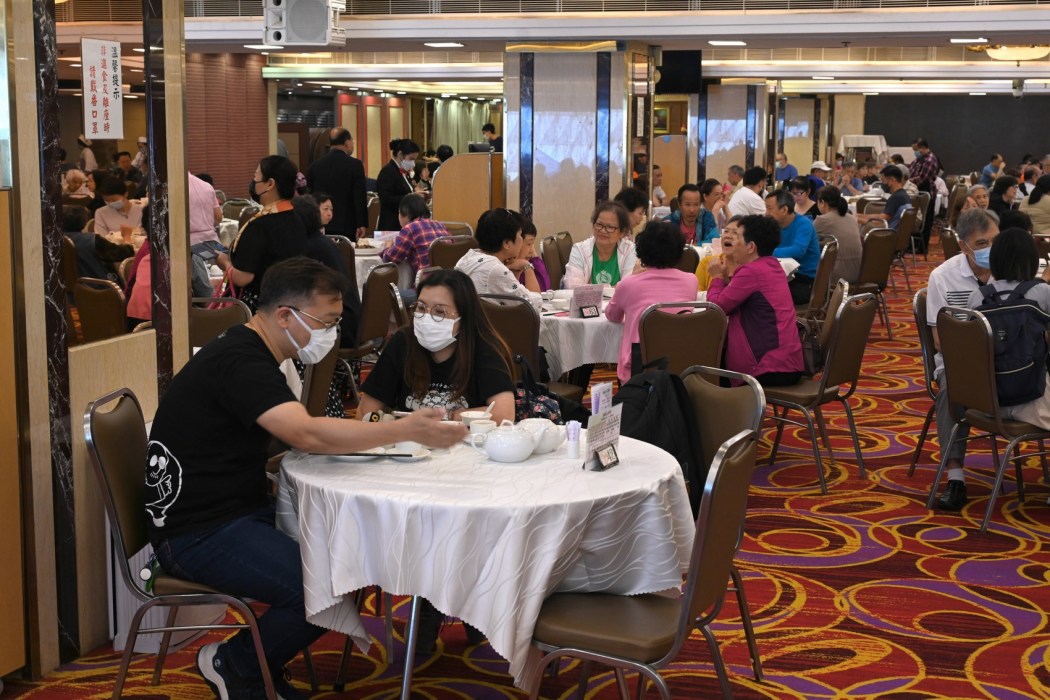
A restaurant. Photo: GovHK.

This implicit conflict is nicely wrapped up in the matter of restaurant licences.

In any sensible jurisdiction, there are some requirements for restaurant operators, intended to ensure hygiene and other worthy food-related objectives.

However, these days all government departments are expected to show their enthusiasm for national security.

So last year, the Food and Environmental Hygiene Department (FEHD), which licenses restaurants, treated permit holders to a letter warning that licences would be revoked if holders or their “related persons” engaged in conduct against national security or the public interest.

Now the FEHD has formed in the matter of using existing regulations to pester or persecute restaurants that the government, for some basically political reason, does not like.

There were complaints that what was effectively a new licence condition was too vague and consequently open to abuse.

Not so, Chief Executive John Lee told a news conference. “Offending conduct means any offence that endangers national security, or acts and events that are contrary to national security and public interest in Hong Kong. It is very clear,” he said.

But it is not very clear, because two very different things are being mixed. An offence that endangers national security is a criminal matter.

Food and Environmental Hygiene Department. File photo: GovHK Facebook.
Food and Environmental Hygiene Department. File photo: GovHK.

Conviction takes place in a public court and is a matter of record. A restaurant owner convicted of such an offence may feel that losing their licence is the least of their problems, but they can read the law and look at the way it has been applied.

They will avoid traditional menu items like “Five Dumplings, Not One Less,” or “Three Hamburgers: Revelation of Our Thyme.” “Related persons” will be urged to behave themselves.

But what does the public interest require?

This mystery persists in the latest version of the licence, which has a clause we can consider in full:

“I shall ensure that no act or activity engaged or involved in by me or any of my related persons (include the directors, officers, employees, agents and sub-contractors) may constitute or cause the occurrence of an offence endangering national security under the National Security Law or other laws of the HKSAR, or conduct is otherwise contrary to the interests of national security or the interest of the public (including public morals, public order and/or public safety) of Hong Kong.”

As tends to happen in very long sentences, the grammar wilts a bit in the closing stages and seems to require either the insertion of “that” after conduct or the deletion of “is” in the same place. But this does not affect the meaning, which still leaves the question over what might be in the public interest.

There are some legal glosses on the phrase, though unfortunately, they are not particularly helpful. Some restrictions on media stories can be waived if publication is “in the public interest”.

See also: All Hong Kong restaurant licences to have national security clauses by September – minister

Judges tend to be quite conservative about this, but the general rule seems to be that the public interest is served by stories that expose iniquity (in a broad sense) or stories that alert the public to hazards which they need to know about.

In contract law, it is well established that contracts will not be enforced if their effect is not in the public interest. Once again, this does not come up very often.

Judges are even more hostile to unenforced contracts than they are to muckraking journalists, but traditionally, contracts have not been enforced if they concern gambling or commercial sex.

The morals/order/safety part seems to have been inspired by the part of the Bill of Rights Ordinance which specifies the purposes for which the government may restrict freedom of expression.

basic law hong kong one country two systems legal
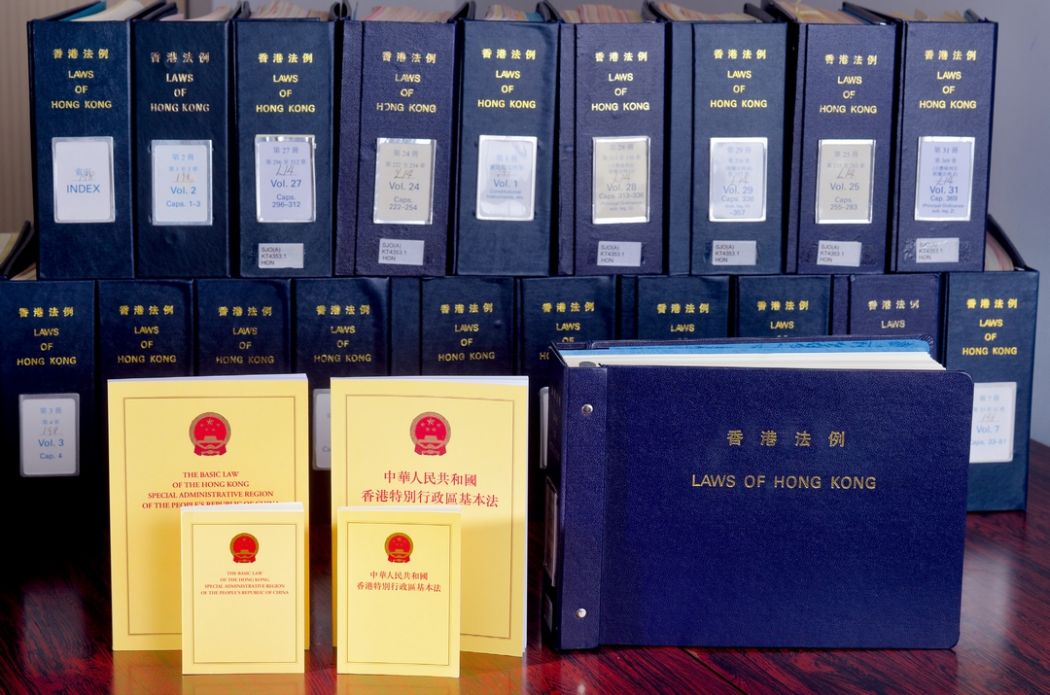
Basic Law and the Laws of Hong Kong. Photo: GovHK.

This suggests – a worrying thought – that the government intends to use threats to restaurant licences to restrict freedom of expression, and proposes that if anyone complains to rely on the permitted restrictions.

This may not fly in court because the Bill of Rights Ordinance also requires that restrictions be specified by law and necessary in a democratic society. Clearly, legal language is being used here, but perhaps as an adornment rather than a substantial signal.

Where does all this leave us? Well, one theory is that the government wishes to increase its options to suppress businesses that supported the wrong people in 2019.

Asked if this was the case, Ronnie Tong, a government adviser, replied last year that it was “hard to say”.

Another theory is that the unstated purpose is to reinforce the existing routine practice under which food outlets that have accepted bookings from organisations the government does not like tend to cancel them at the last minute.

Maybe it is just that the “public interest” is one of those elusive philosophical concepts like “soft resistance” which puzzle the public but are perfectly clear to recycled policemen and the people who write the front page of Ta Kung Pao.

The other remaining puzzle is why restaurant licences have been singled out. All government departments, we are told, have an obligation to support national security. But the numerous other licences issued for various purposes by different departments have not been amended in the same way.

Yet.

HKFP is an impartial platform & does not necessarily share the views of opinion writers or advertisers. HKFP presents a diversity of views & regularly invites figures across the political spectrum to write for us. Press freedom is guaranteed under the Basic Law, security law, Bill of Rights and Chinese constitution. Opinion pieces aim to constructively point out errors or defects in the government, law or policies, or aim to suggest ideas or alterations via legal means without an intention of hatred, discontent or hostility against the authorities or other communities.
  •  
❌