Reading view

India bans sugar exports until September 2026 to protect domestic supplies

India has imposed a ban on sugar exports until 30 September 2026 in a bid to safeguard domestic supplies and keep prices under control amid concerns over lower-than-expected production.

The Directorate General of Foreign Trade (DGFT), operating under the Ministry of Commerce and Industry, announced the decision through a notification revising the country’s export policy for sugar.

Under the new rules, the export status of raw sugar, white sugar and refined sugar has been changed from “restricted” to “prohibited”. The restrictions will remain in place until the end of September next year or until further government orders are issued.

The government said the move was aimed at ensuring adequate domestic availability of sugar in one of the world’s largest producing and consuming nations.

However, exports to the European Union and the United States under existing CXL and Tariff Rate Quota (TRQ) arrangements will continue through established procedures outlined in official public notices.

Authorities also clarified that exports carried out under the Advance Authorisation Scheme (AAS) would still be permitted in line with the provisions of the Foreign Trade Policy 2023 and the associated Handbook of Procedures.

India, the world’s second-largest sugar producer after Brazil, had previously approved exports of around 1.59 million metric tonnes after estimating that production would comfortably exceed domestic demand.

The latest restrictions are expected to tighten global sugar supplies and could support international raw and white sugar prices. Analysts believe the curbs may create opportunities for competing exporters such as Brazil and Thailand to increase shipments to markets across Asia and Africa.

The announcement comes shortly after an industry report showed that sugarcane production in India had risen by roughly 10 per cent compared with the previous year, providing support for both sugar manufacturing and ethanol production.

However, the report noted that growth across the sector remained uneven, with stronger gains largely concentrated among mills that have integrated ethanol production facilities.

With IANS inputs

  •  

All eyes on RBI as policymakers weigh inflation risks and growth outlook

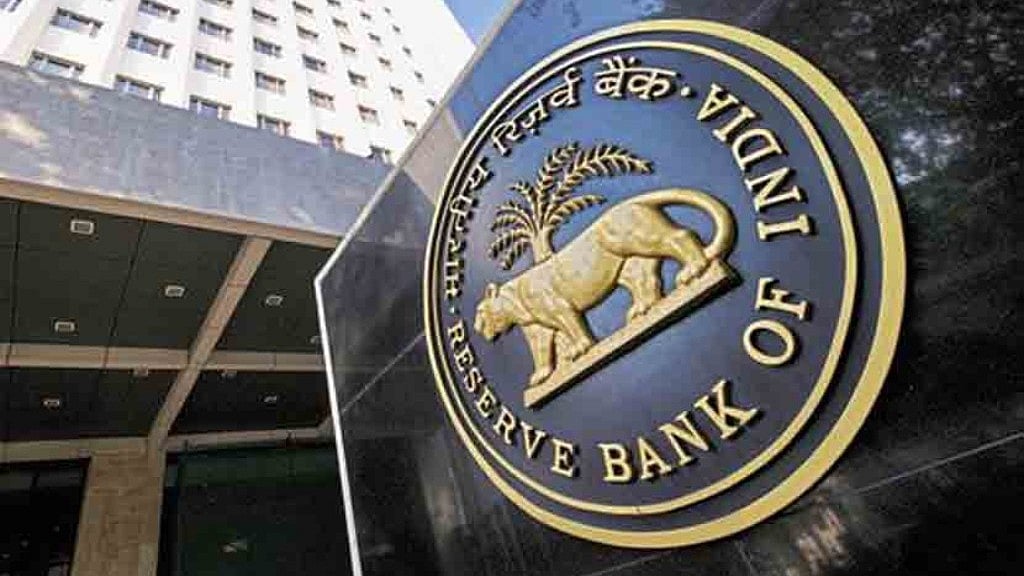
The Reserve Bank of India's (RBI) three-day Monetary Policy Committee (MPC) meeting commenced on Wednesday, with financial markets widely expecting the central bank to keep interest rates unchanged despite mounting concerns over inflationary pressures arising from higher crude oil prices and geopolitical tensions.

The six-member committee will deliberate on inflation trends, economic growth prospects and liquidity conditions before governor Sanjay Malhotra announces the policy decision on 5 June.

The meeting comes at a time when policymakers are navigating a challenging external environment marked by elevated energy prices, volatility in global markets and uncertainty stemming from developments in West Asia. While these factors have raised concerns about inflation, economists and market participants largely believe the RBI will refrain from tightening monetary policy for now.

At its previous policy review in April 2026, the central bank maintained the repo rate at 5.25 per cent and retained its neutral policy stance. Since then, rising crude oil prices, pressure on the rupee and geopolitical developments have prompted fresh debate over the future direction of monetary policy.

According to Shishir Baijal, International Partner, chairman and managing director of Knight Frank India, the central bank is expected to prioritise growth support while remaining vigilant about inflation.

He noted that much of the current inflationary pressure is being driven by supply-side factors, including elevated crude prices, geopolitical disruptions and climate-related uncertainties, areas where monetary policy has limited influence.

In such circumstances, a rate hike could weigh on economic growth without significantly easing inflationary pressures, he said.

A similar view was expressed by Gaurav Garg, Research Analyst at Lemonn Markets Desk, who expects the RBI to maintain the status quo and continue monitoring evolving risks.

According to Garg, recent increases in fuel prices, weakness in the rupee and global uncertainties have contributed to inflation concerns, but the pressures remain largely supply-driven. As a result, the central bank is likely to adopt a cautious approach rather than respond with immediate policy tightening.

For borrowers, a decision to leave the repo rate unchanged would mean continued stability in lending rates and equated monthly instalments (EMIs) on home loans, personal loans and other forms of credit. Businesses would also benefit from predictable borrowing costs at a time when investment sentiment remains sensitive to global developments.

Investors, meanwhile, are expected to focus less on the rate decision itself and more on the central bank's assessment of inflation, liquidity conditions, currency movements and external risks. Any signals regarding the future policy path could influence expectations across equity, bond and currency markets.

Market participants will therefore closely scrutinise Governor Malhotra's commentary on Friday for clues about how the RBI intends to balance inflation management with growth support in the months ahead.

The outcome of the MPC meeting is expected to provide a clearer indication of the central bank's assessment of economic conditions and the risks shaping India's monetary policy outlook for the remainder of the year.

  •  

Rupee falls to fresh record low against US dollar amid global market pressures

The Indian rupee weakened further on Wednesday, slipping to a fresh all-time low of 96.90 against the US dollar in early trade as rising crude oil prices and continued strength in the American currency rattled market sentiment.

The domestic currency opened at 96.89 in the interbank foreign exchange market before falling to 96.90, down 20 paise from Tuesday’s close.

The latest decline follows an already sharp fall in the previous session, when the rupee dropped 50 paise to settle at a record low of 96.70 against the dollar, marking its eighth consecutive day of losses.

Forex traders attributed the weakness to mounting geopolitical tensions between Iran and the United States, which have pushed up global oil prices and increased demand for the dollar as a safe-haven asset.

The dollar index, which measures the strength of the greenback against a basket of six major currencies, edged up 0.01 per cent to 99.262.

Meanwhile, Brent crude futures remained elevated at USD 110.59 per barrel despite easing 0.35 per cent in trade. Higher oil prices are particularly concerning for India, which imports the majority of its crude requirements, placing added pressure on the current account and the rupee.

Domestic equity markets also came under pressure, further dampening investor confidence. The Sensex fell 517.11 points to 74,667.51 in early trading, while the Nifty declined 152.45 points to 23,475.80.

Foreign institutional investors also turned net sellers after three straight sessions of buying. According to exchange data, FIIs sold equities worth Rs 2,457.49 crore on Tuesday, adding to pressure on both the currency and stock markets.

Market participants are expected to closely monitor geopolitical developments, crude oil movements and global currency trends for further direction in the rupee.

With IANS inputs

  •  

Govt to phase out WPI, introduce Producer Price Index from 15 June

The government will gradually phase out the Wholesale Price Index (WPI) over the next five years and replace it with a more comprehensive Producer Price Index (PPI), marking a major shift in how inflation is measured in the economy.

The Department for Promotion of Industry and Internal Trade (DPIIT) will release a revised WPI series with a new base year of 2022-23 on 15 June, replacing the current 2011-12 series. On the same day, it will also launch a new Producer Price Index framework comprising Output PPI, Trial Input PPI and Services PPI.

Speaking to reporters, Principal Economic Adviser Praveen Mahto said the WPI would continue to be published alongside the PPI for five years before being discontinued. The transition period is intended to allow businesses, government agencies and other users to shift to the new index.

"Considering the wide usage of WPI in price escalation clauses, this index will be released for five years from the date of release of the revised series along with PPI and will be discontinued thereafter," the Commerce and Industry Ministry said.

Three new producer price indices

The new PPI framework will initially include three components — Output PPI, Trial Input PPI and Services PPI. The Services PPI will initially cover seven sectors: banking, securities transactions, insurance, pension fund management, railways, air passenger transport and telecommunications. More services are expected to be added in subsequent phases depending on data availability.

Officials said the transition aligns India with global practices followed by major economies and recommendations made by the International Monetary Fund (IMF). Unlike WPI, the new system will allow policymakers and businesses to track price movements across both inputs and outputs, providing a clearer picture of how inflationary pressures move through supply chains.

The revised WPI and Output PPI will be published monthly, while Services PPI will be released quarterly. Trial Input PPI for the manufacturing sector will initially be published on an experimental basis from March 2026 to assess data quality and gather stakeholder feedback.

Expanded WPI basket

The revised WPI series significantly expands the basket of commodities tracked. According to Dilip Kumar Sinha, Deputy Director General in the Office of the Economic Adviser, the number of items covered has increased from 697 to 957.

New energy sources such as solar, wind and nuclear power have been included under the electricity category. Crude petroleum and natural gas have also been moved from the primary articles category to fuel and power, bringing them in line with other major energy products.

Officials said WPI, Output PPI and Services PPI will be compiled using basic prices, excluding taxes and trade margins, while Input PPI will use purchaser prices because industries acquire inputs from the market.

Impact on contracts

Mahto said the Department of Expenditure is expected to issue a circular advising users to adopt PPI in future long-term contracts instead of WPI, particularly where price-escalation clauses are involved.

India's current WPI series, based on 2011-12 prices, was launched in May 2017. Since its introduction in 1942, the index has undergone seven revisions. The move to PPI is expected to bring India in line with countries such as the United States, China, Japan, Germany and France, all of which use producer price indices to track changes in prices received by producers.

The announcement comes at a time when wholesale inflation remains elevated. Wholesale price inflation rose to a 42-month high of 8.3 per cent in April, driven largely by higher energy prices linked to disruptions caused by the conflict in West Asia.

Govt to phase out WPI, introduce Producer Price Index from 15 June
  •  

Economists expect RBI to hold rates amid geopolitical uncertainty, inflation risks

Economists believe the Reserve Bank of India (RBI) is unlikely to rush into changing interest rates as policymakers continue to assess the impact of geopolitical tensions and inflationary pressures on the domestic economy.

The view comes after RBI governor Sanjay Malhotra recently indicated that the central bank was adopting a cautious approach amid the evolving situation in West Asia.

Speaking last month, Malhotra said the RBI was closely monitoring developments linked to the regional conflict and refrained from offering firm guidance on the future trajectory of monetary policy.

“We are in a wait-and-watch mode,” he said, signalling that the Monetary Policy Committee (MPC) was in no hurry to alter rates.

According to Radhika Rao, Senior Economist and Executive Director at DBS Bank, India’s retail inflation is expected to rise to 3.9 per cent year-on-year in April from 3.4 per cent in March, moving closer to the midpoint of the RBI’s target range.

Rao said food inflation was likely to have increased to around 4.5 per cent from 3.7 per cent previously, driven by higher prices of perishables such as tomatoes and eggs, along with cereals and edible oils. Untimely rainfall in some regions is also believed to have added pressure to food prices.

At the same time, she noted that core inflation was expected to remain relatively contained at 3.4 per cent, supported partly by easing precious metal prices.

However, some upward pressure is anticipated in transport and services inflation due to higher aviation turbine fuel prices and increased costs in the hospitality and restaurant sectors following adjustments in commercial cooking gas prices.

Economists said the full effect of rising global crude oil prices had not yet filtered through to consumer inflation because domestic fuel prices at petrol pumps had remained unchanged.

Markets are also closely tracking the potential impact of El Niño conditions on the upcoming monsoon season, which could affect agricultural output and food inflation.

Rao added that rising import costs caused by elevated commodity prices and a weaker rupee were likely to be reflected more sharply in wholesale inflation. India’s Wholesale Price Index (WPI) had already risen faster than retail inflation in March and was expected to continue climbing in April.

At its policy meeting in April, the RBI left the repo rate unchanged at 5.25 per cent while maintaining a neutral stance on policy.

Industry body Associated Chambers of Commerce and Industry of India welcomed the decision, describing it as a calibrated move designed to preserve macroeconomic stability while supporting growth and containing inflation.

Meanwhile, Madan Sabnavis, chief economist at Bank of Baroda, said the likelihood of further rate cuts appeared limited after the RBI highlighted El Niño as a potential inflation risk.

The central bank has projected India’s GDP growth at 6.9 per cent and inflation at 4.6 per cent for the current financial year.

With IANS inputs

  •  

Rising crude prices, strong US data push rupee to 96.14 per dollar

The Indian rupee breached the psychologically significant 96-per-dollar level during intraday trade on Friday, 15 May before closing at a record low against the US currency, pressured by soaring crude oil prices, persistent strength in the dollar and growing global uncertainty.

The domestic currency eventually settled 21 paise weaker at 95.97 against the US dollar after touching an intraday low beyond the 96 mark.

The rupee has emerged as Asia’s weakest-performing currency in recent weeks as India faces a sharply rising import bill due to elevated global energy prices.

Market analysts attributed the decline to a combination of strong US economic data, hawkish signals from American policymakers and increasing investor demand for safe-haven assets.

Amit Pabari, managing director of CR Forex Advisors, said the US dollar remained firm after stronger-than-expected retail sales and resilient labour market data reduced expectations of aggressive interest rate cuts by the US Federal Reserve.

He noted that periods of heightened global uncertainty generally push investors towards the dollar, increasing pressure on emerging market currencies such as the rupee.

Santosh Meena, head of research at Swastika Investmart, said the rupee’s fresh record low reflected broader global macroeconomic concerns. According to him, higher crude oil prices were increasing India’s import costs, while elevated US interest rates and foreign fund outflows were adding to pressure on the domestic currency.

The Indian Rupee (INR) has emerged as the worst-performing currency in Asia for 2026, dropping to a record low of 95.80–95.96 against the U.S. dollar.

Modiji ko jawaab do Chodiji… pic.twitter.com/cUmolSGyAe

— Manish RJ (@mrjethwani1) May 14, 2026

The rupee’s weakness coincided with volatility in Indian equity markets. Benchmark indices surrendered early gains during the session, with the Sensex falling more than 200 points from the day’s high to trade in negative territory.

The decline also came on the same day the Centre raised petrol and diesel prices by Rs 3 per litre with immediate effect in an attempt to curb fuel demand amid supply disruptions linked to the Iran conflict.

Global oil prices remained elevated, with Brent crude trading above $109 per barrel, while the dollar index extended gains for a fourth consecutive session. Market sentiment remained cautious after talks between US President Donald Trump and Chinese President Xi Jinping failed to produce breakthroughs on key geopolitical issues, particularly tensions involving Iran.

Analysts said unresolved disagreements over Taiwan and China’s energy relationship with Iran added to investor nervousness and strengthened demand for the US dollar.

Meanwhile, the Indian government has initiated a series of measures aimed at managing external pressures and containing economic risks. After tightening restrictions on gold imports under the Advance Authorisation scheme earlier this week, the government also moved to moderate fuel consumption through higher retail fuel prices.

Economists said the steps reflected broader concerns over rising commodity prices, geopolitical instability and increasing pressure on India’s current account deficit. Despite currency weakness, Indian equities showed some resilience in early trade, supported partly by foreign institutional investors turning net buyers in the previous session.

With PTI inputs

💾

  •  

Rising fuel and food costs deepen inflation pressures in US

Americans are facing mounting financial pressure as the cost of fuel, groceries and housing continues to rise, with economists warning that geopolitical tensions and energy market disruptions are fuelling a renewed surge in inflation across the United States.

Latest figures released by the US Bureau of Labor Statistics showed that the Consumer Price Index rose 3.8 per cent in the 12 months to April, marking the fastest annual inflation rate since 2023.

Inflation increased by 0.6 per cent during April alone, driven largely by sharp rises in energy and food prices. Economists say disruptions to oil supplies linked to instability in the West Asia and concerns over shipping routes through the Strait of Hormuz have significantly pushed up fuel costs.

According to the data, the energy index climbed 17.9 per cent over the year to April, while petrol prices surged 28.4 per cent. Energy costs accounted for more than 40 per cent of the monthly increase in inflation during April.

National average petrol prices have now risen above 4.50 US dollars per gallon, according to the American Automobile Association.

Analysts noted that higher fuel prices tend to affect the broader economy, as increased transportation and shipping costs are often passed on to consumers through higher prices for goods and services.

Food prices have also continued to climb, adding further strain to household finances. The index tracking grocery inflation rose 0.7 per cent in April, with noticeable increases recorded in the prices of beef, coffee, fruits and vegetables.

For many lower- and middle-income families, rising grocery costs are proving particularly difficult, as food accounts for a larger share of household spending.

Housing costs also remained elevated. The Bureau of Labor Statistics said both rent and owners’ equivalent rent rose by 0.5 per cent during April, continuing a trend of persistent increases in shelter expenses.

Economists are increasingly concerned that wages are no longer keeping pace with inflation. Real average hourly earnings fell 0.5 per cent between March and April and were down 0.3 per cent compared with the same period last year, indicating a decline in consumer purchasing power despite nominal wage growth.

As living costs rise faster than incomes, households are increasingly cutting discretionary spending, relying more heavily on credit cards and delaying major purchases.

Residents across the country say the impact is being felt in everyday life. Maxi Baker, a mother of two from Glendale, said the cost of almost everything had risen sharply, while Los Angeles retail worker Denise Cohn said household budgets were becoming increasingly difficult to manage as “money doesn’t stretch as far”.

With IANS inputs

  •  
❌