Login
Login
Kaifi Azmi: The revolutionary romantic who gave poetry a conscience
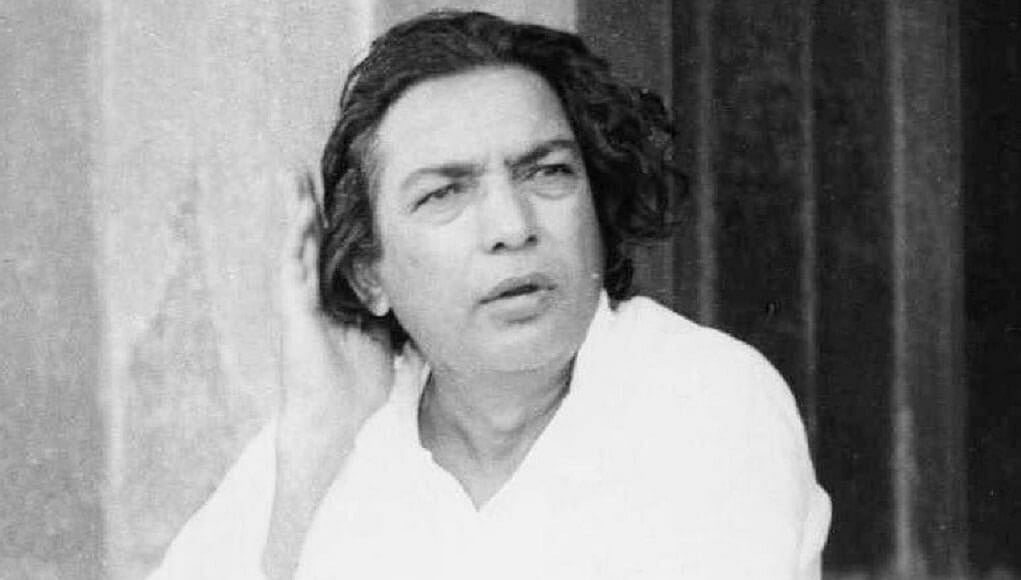
On 10 May, India remembers one of the finest poetic voices of the twentieth century — Kaifi Azmi, the revolutionary-romantic whose words transformed not only Urdu poetry but also the language of Indian cinema. Poet, lyricist, scriptwriter, activist and public intellectual, Kaifi belonged to that extraordinary generation of progressive writers who believed literature must not merely decorate society but challenge it.
Even twenty-four years after his passing, Kaifi Azmi remains astonishingly contemporary. His poetry still speaks to fractured times, to inequality, loneliness, love, resistance and human dignity. Few poets managed to combine ideological conviction with lyrical tenderness as effortlessly as Kaifi did. Whether in mushairas, political meetings or cinema halls, his words carried the same emotional intensity and moral clarity.
Born Syed Athar Hussain Rizvi on 14 January, 1919, in Mijwan village in Uttar Pradesh’s Azamgarh district, Kaifi emerged from a deeply traditional Shia family but soon gravitated toward radical politics and literature. According to accounts in his memoirs and biographies, he wrote his first ghazal at the age of eleven and stunned audiences when he recited it at a local mushaira. The matla of that youthful composition became prophetic of the turbulence and passion that would later define his literary life:
“Itna to zindagi mein kisi ki khalal pade,
Hansne se ho sukoon na rone se kal pade.”
(“May someone disturb life so deeply,
That neither laughter brings peace nor tears bring relief.”)
The young poet soon joined the Progressive Writers’ Movement and later became associated with the Communist Party of India. Unlike many literary figures who remained confined to elite circles, Kaifi immersed himself in workers’ movements, trade union activism and struggles for social justice. For him, poetry was not an escape from reality; it was a weapon against injustice.
The poet of revolution and compassion
Kaifi Azmi’s poetry carried the fragrance of romance but also the fire of rebellion. His celebrated nazm “Aurat” remains among the boldest feminist poems written in Urdu literature. Addressing women not as passive symbols of beauty but as equal participants in history, he wrote:
“Uth meri jaan mere saath hi chalna hai tujhe.”
(“Rise, my beloved, you must walk beside me.”)
In an era when patriarchy dominated both society and literature, these lines sounded revolutionary. Kaifi challenged the romanticised suffering imposed upon women and envisioned companionship built on equality. The poem remains strikingly relevant in contemporary conversations around gender justice.
His poetry also reflected deep empathy for the marginalised. In poems like “Makaan”, written after observing construction workers building luxurious homes they themselves could never inhabit, Kaifi exposed the cruelty of class divisions:
“Aaj ki raat bahut garam hawa chalti hai.”
(“Tonight, fierce winds rage through the city.”)
The “wind” in Kaifi’s poetry was often symbolic — the storm of exploitation, communal hatred or political betrayal threatening ordinary lives.
Yet Kaifi was never merely a slogan-driven poet. His genius lay in combining political consciousness with extraordinary emotional depth. His verses could move seamlessly from revolution to heartbreak, from collective suffering to intimate longing.
Bringing Urdu Poetry Into Indian Cinema
If Sahir Ludhianvi intellectualised Hindi film lyrics and Shakeel Badayuni infused them with classical grace, Kaifi Azmi brought to cinema the sophistication of modern Urdu poetry. He transformed the vocabulary and emotional texture of film songwriting.
Beginning with Buzdil in 1951, Kaifi gradually became one of the defining lyricists of Hindi cinema. His collaborations with filmmakers such as Guru Dutt, Chetan Anand and Khwaja Ahmad Abbas produced some of the most unforgettable songs in Indian cinematic history.
Who can forget the haunting melancholy of:
“Waqt ne kiya kya haseen sitam,
Tum rahe na tum, hum rahe na hum.”
(“What beautiful cruelties time has inflicted;
You are no longer yourself, nor am I myself.”)
From Kaagaz Ke Phool, the song remains one of the greatest expressions of loss and doomed love in Indian cinema. Sung by Geeta Dutt with heartbreaking tenderness, Kaifi’s lyrics elevated cinematic music into pure poetry.
Equally immortal is his patriotic elegy from Haqeeqat:
“Kar chale hum fida jaan-o-tan saathiyon,
Ab tumhare hawale watan saathiyon.”
(“We have sacrificed our lives and bodies, friends;
Now the nation rests in your hands.”)
Written in the aftermath of the 1962 India-China war, the song transcended propaganda and became an enduring meditation on sacrifice and nationhood.
Kaifi also gave Hindi cinema some of its finest songs of loneliness and existential despair. In Heer Raanjha, for which he wrote the entire dialogue in verse — an extraordinary achievement in Indian screenwriting — he penned:
“Yeh duniya yeh mehfil mere kaam ki nahin.”
(“This world, this gathering, are not meant for me.”)
The line became an anthem for generations alienated by modern life.
The literary brilliance behind the screen
To reduce Kaifi Azmi merely to a film lyricist would be a grave injustice. His literary contributions to Urdu poetry remain immense. Collections such as Aakhir-e-Shab, Jhankar, Awara Sajde and Iblis Ki Majlis-e-Shura established him among the leading Urdu poets of modern India.
His nazms combined conversational simplicity with profound philosophical depth. Unlike heavily ornamented classical poetry, Kaifi’s writing spoke directly to ordinary people while retaining literary sophistication.
One of his most powerful poems emerged after the demolition of the Babri Masjid in 1992. Deeply disturbed by rising communal hatred, Kaifi wrote “Ram Ka Doosra Banbas”, imagining Lord Ram returning to India only to find his ideals betrayed:
“Paon dhoye bina Sarju ke kinare se uthe,
Ram ye kehte hue apne dwaare se uthe.”
(“Without washing his feet in the Sarju, Ram rose from the riverbank,
Saying these words as he departed.”)
The poem was not an attack on faith but a lament for the erosion of India’s pluralistic ethos. It revealed Kaifi’s lifelong commitment to secularism and communal harmony.
The activist who never forgot his roots
Kaifi Azmi’s commitment to social change extended far beyond literature. After suffering a paralytic stroke in the 1970s, he returned to his ancestral village Mijwan and dedicated himself to rural development. Roads, schools, educational initiatives for girls and vocational programmes emerged through his relentless efforts.
Years later, his daughter Shabana Azmi would carry forward this legacy through the Mijwan Welfare Society. Kaifi believed true patriotism meant empowering the most neglected citizens.
Despite severe health struggles, he continued writing with astonishing resilience. Those who knew him often recalled his sharp wit, warmth and refusal to surrender to despair.
Cinema, poetry and immortality
Kaifi Azmi also left a lasting imprint through films like Garam Hawa, widely regarded as one of the greatest films on Partition. Writing its screenplay, dialogues and lyrics, Kaifi captured the anguish of Indian Muslims caught between memory, identity and displacement after 1947. The film remains painfully relevant in today’s climate of polarisation.
His later songs for Arth displayed unmatched emotional maturity:
“Tum itna jo muskura rahe ho,
Kya gham hai jisko chhupa rahe ho.”
(“You smile so much —
What sorrow are you hiding?”)
Or the unforgettable:
“Jhuki jhuki si nazar beqarar hai ke nahin.”
(“Your lowered gaze — is it restless or not?”)
These were not merely film songs; they were psychological portraits rendered in poetry.
Kaifi Azmi passed away on May 10, 2002, at the age of eighty-three. Yet poets like him do not really die. They survive wherever language resists hatred, wherever poetry speaks for justice, wherever love and rebellion coexist.
In an increasingly noisy age, Kaifi’s voice still arrives with rare moral elegance. He taught generations that poetry could be beautiful without becoming escapist, political without becoming shrill, and deeply human without surrendering to cynicism.
Perhaps no lines describe Kaifi Azmi himself better than his own immortal verse:
“Main dhoondta hoon jise woh jahaan nahin milta,
Nayi zameen naya aasman nahin milta.”
(“I keep searching for that world, but cannot find it;
Neither a new earth nor a new sky appears.”)
Kaifi spent his life searching for that better world — and through his poetry, he brought humanity a little closer to it.
~Hasnain Naqvi is a former member of the history faculty at St. Xavier’s College, Mumbai