 Login
Login
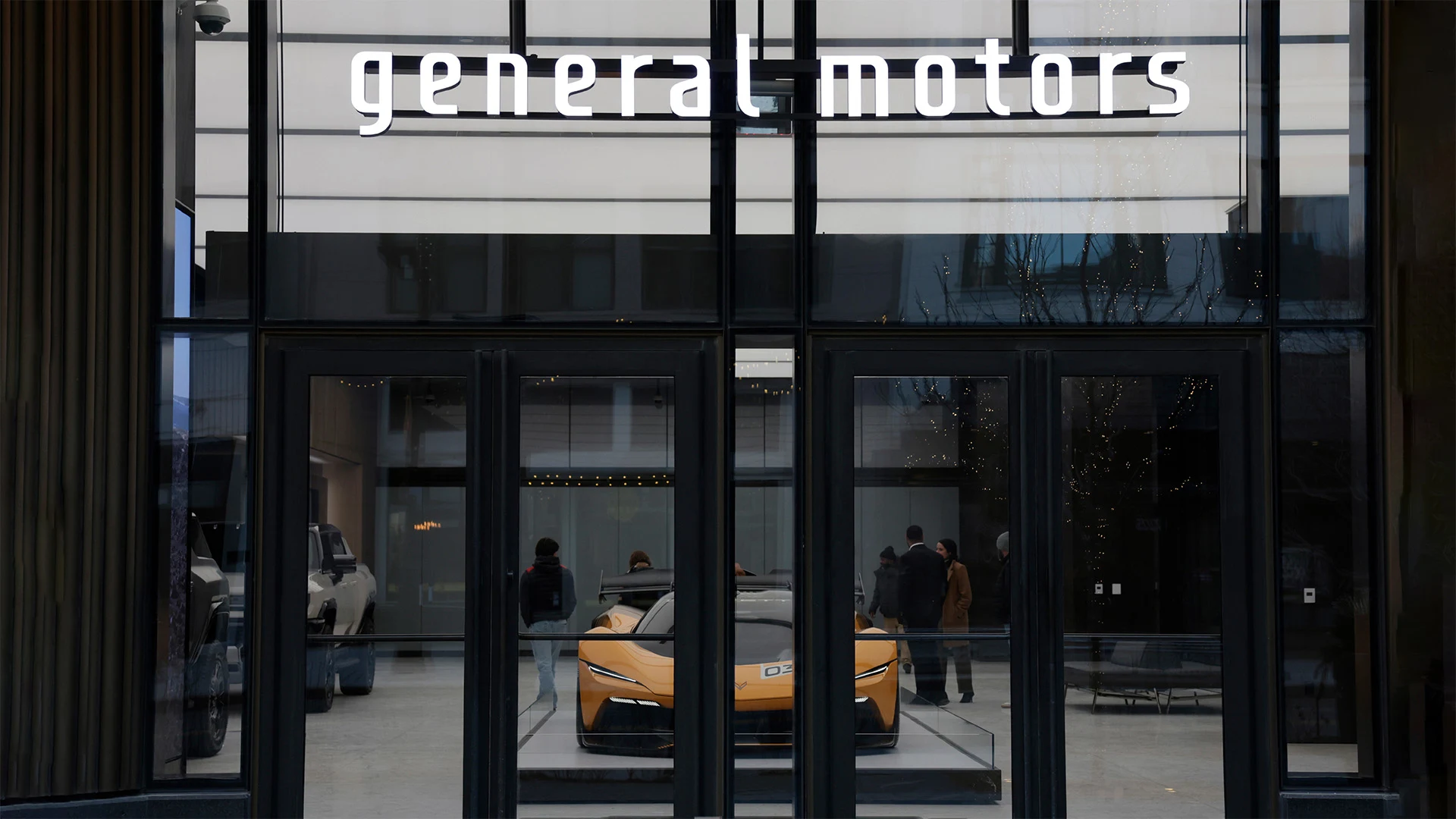
‘My Manager Said I’d Be Safe From Something Like This’: GM Just Announced Plans to Cut Up to 600 Employees
The company said that the layoffs are part of a broader transformation of its IT department.
©

The company said that the layoffs are part of a broader transformation of its IT department.
©

© Getty Images

© Getty Images for Amazon

© Getty Images

© HBO

The YouTuber wanted to create a company on her own terms. That meant prioritizing patience.

©


In a speech designed in part to head off a brewing leadership challenge after Labour’s bruising local election results, the prime minister told supporters that emergency legislation would be laid before Parliament this week to grant ministers the powers needed to take “full ownership” of the business, subject to a public interest test.
“Public ownership is in the public interest,” Sir Keir said, adding that he intended to prove his “doubters” wrong and that, for the British public, “change cannot come quickly enough.”
The decision marks a significant shift in approach. Whitehall had previously stopped short of full nationalisation, preferring instead to court private investors while keeping the blast furnaces alight through an emergency supervision regime. That regime was imposed last April after the government seized operational control of the Scunthorpe site amid mounting concerns that Jingye was preparing to switch the furnaces off, a step that would almost certainly have ended the United Kingdom’s ability to produce so-called virgin steel.
Virgin steel, smelted from iron ore rather than recycled scrap, is the grade used in heavy infrastructure projects, from new rail lines to large-scale construction. Restarting a blast furnace once it has gone cold is both technically forbidding and extraordinarily expensive, and the loss of that domestic capability has been viewed in Westminster as a strategic red line.
Talks with Jingye, the prime minister confirmed, had failed to produce a workable deal. “A commercial sale has not been possible, and now a public test could be met,” he said.
The response from the steel sector was swift and broadly supportive. Gareth Stace, director-general of trade body UK Steel, said the announcement offered “vital certainty” to the 2,700-strong Scunthorpe workforce, as well as the customers who rely on British Steel for rail, structural sections and specialist products.
“Maintaining domestic production capability for British Steel’s products is essential not only for economic growth but also for our national security and resilience,” Stace said.
However, he was clear that nationalisation alone would not be sufficient. “It is not an end goal,” he cautioned, urging ministers to use the moment as the “beginning of a clear and credible long-term plan for British Steel,” underpinned by a proper investment strategy.
The unions echoed that sentiment. In a joint statement, Roy Rickhuss, general secretary of the Community union, and Unite’s Sharon Graham said they “fully support” nationalisation, arguing that British Steel had a “bright future, with a world class highly skilled workforce making strategically important steels for the UK’s rail and infrastructure.” The pair also pressed the Treasury to mandate that government-funded projects source British-made steel — a long-standing demand of the domestic industry.
Charlotte Brumpton-Childs, national secretary of the GMB Union, said it was “right the government does everything in its power to secure its long term future.”
The Exchequer’s bill for propping up the company has already proved eye-watering. The National Audit Office reported in March that £377 million had been spent in just nine months to fund operations, wages and raw materials at Scunthorpe. Should the present rate of spending persist, the NAO warned, the total could exceed £1.5 billion by 2028, “depending on policy choices that may be taken in the future.”
The BBC understands the government is currently spending in the region of £1 million a day to keep the business afloat. Jingye, for its part, claimed the site was haemorrhaging £700,000 a day and was no longer commercially viable before ministers intervened.
No headline figure has yet been put on the cost of full nationalisation. Officials say an independent valuation of the business will be carried out once legislation is in place, with any compensation due to Jingye to be determined on the basis of that exercise.
It is not the first time the state has stepped in. The Insolvency Service ran British Steel for nine months following its 2019 collapse, at a cost to the taxpayer of around £600 million, before its sale to Jingye.
For the SME supply chain, the fabricators, hauliers and engineering firms clustered around Scunthorpe and across the wider Humber industrial corridor, the announcement removes the immediate threat of a catastrophic shutdown. Many of these businesses operate on tight margins and would have struggled to survive the loss of their principal customer.
The broader question, however, is whether public ownership can deliver the modernisation that successive private owners have failed to fund. Decarbonising primary steelmaking, replacing ageing blast furnaces with electric arc technology, and securing reliable long-term contracts with British infrastructure projects will all require capital commitments measured in billions, not millions.
The public interest test required to complete the takeover will weigh national security, the protection of critical national infrastructure and broader economic considerations. On all three counts, the government appears to have concluded that the case for intervention is now unanswerable.
Read more:
Starmer moves to nationalise British Steel as commercial rescue collapses

© hybe x geffen

© Netflix
… and two other tricky workplace dilemmas.

©
