Premenstrual dysphoric disorder is a severe form of premenstrual syndrome. SimpleImages/Moment via Getty ImagesPeople with premenstrual dysphoric disorder – a more serious form of premenstrual syndrome, commonly known as PMS – are more likely to experience suicidal thoughts and behaviors than people without it.
That is a key finding of our recent systematic review, published in the journal Administration and Policy in Mental Health and Mental Health Services Research.
We searched for informati
That is a key finding of our recent systematic review, published in the journal Administration and Policy in Mental Health and Mental Health Services Research.
We searched for information on suicidality – meaning the risk of suicide and encompassing a spectrum of thoughts, plans and behaviors intended to end one’s life – in people with this disorder. We found 18 studies, which spanned more than 2 million people who menstruate.
The likelihood of experiencing suicidal thoughts and behaviors in people with the disorder varied depending on the study and the way the participants were identified, but in general these thoughts and behaviors were relatively common.
PMDD is a long-term condition, officially recognized in 2013, that may affect up to 6% of people who have periods. It has long been considered a severe form of PMS but differs because it causes serious mood and emotional problems and is a chronic, lifelong condition.
To be diagnosed, a person must meet strict criteria, which can make it harder for some people to get the right diagnosis. A formal diagnosis requires that people track their symptoms and rate them against specific criteria over at least two menstrual cycles. Our new finding – that people with the disorder may have a higher risk of suicidal thoughts and behaviors compared with those without it – shows how important it is to identify and treat this condition without delay.
Researchers do not yet understand the exact causes of PMDD.
In the studies we reviewed, we found that reported rates of suicidal thoughts and behaviors varied a lot – from as low as 0.011% in a large group of people with premenstrual disorders to as high as 86% in a worldwide group of patients with confirmed PMDD.
This wide range suggests that the results depend heavily on how the studies were done, who was included and how the disorder was defined and measured. When in the menstrual cycle people were evaluated might also affect this, as research shows that suicidal thoughts and behaviors are strongly linked to hormonal changes during the menstrual cycle.
What still isn’t known
A great deal more research is needed to understand how suicide risk can change during the menstrual cycle.
Though we didn’t find any studies that tested treatments to address suicidal thoughts and behaviors in people with PMDD, there are evidence-based treatments for PMDD that can improve well-being, including antidepressants, hormonal contraceptives, hormone-blocking agents, cognitive behavioral therapy and lifestyle changes, such as dietary changes and exercise.
For people living with PMDD and their caregivers, seeking support is essential. For clinicians, learning to recognize and treat PMDD is a priority.
If you or someone you know is in crisis and are based in the U.S., call the 988 Suicide & Crisis Lifeline to speak with a trained listener, or text HELLO to 741741. Both services are free, available 24/7 and confidential. If you are a reader from outside the U.S., please use a helpline like the one above (for a list of resources in other countries, see here) or speak to a healthcare professional.
The Research Brief is a short take on interesting academic work.
The authors do not work for, consult, own shares in or receive funding from any company or organization that would benefit from this article, and have disclosed no relevant affiliations beyond their academic appointment.
Acting U.S. Attorney General Todd Blanche announces the indictment of former Cuban President Raúl Castro, in Miami, Fla., on May 20, 2026. Chandan Khanna/AFP via Getty ImagesThe Trump administration on May 20, 2026, indicted former Cuban President Raúl Castro for murder, based on the downing of two planes near the Cuban coastline in 1996 that killed four people.
As a historian of Latin America and U.S. foreign policy, I believe the indictment may be the prelude to direct U.S. military action a
Acting U.S. Attorney General Todd Blanche announces the indictment of former Cuban President Raúl Castro, in Miami, Fla., on May 20, 2026. Chandan Khanna/AFP via Getty Images
Before Castro, the last U.S. indictment of a Latin American leader occurred in January 2026, when a U.S. attorney appointed by President Donald Trump charged Venezuela’s Nicolás Maduro with narco-terrorism. Those charges were promptly followed by U.S. military strikes on Venezuela and the abduction of Maduro.
I believe that what’s missing from most recent analysis of this situation is the history of U.S. aggression against Cuba. This is essential context for understanding the Trump administration’s recent escalations.
‘Striking at Cuba constantly’
In 1823, U.S. Secretary of State John Quincy Adams identified Cuba as “an object of transcendent importance to the political and commercial interests of our Union.” The 1959 Cuban Revolution that overthrew U.S.-backed dictator Fulgencio Batista and replaced him with Fidel Castro, brother of Raúl, directly challenged those interests by asserting political autonomy and expropriating private property.
State Department officials observed that “the majority of Cubans support Castro” because of the government’s redistributive measures and its “real honesty, courtesy, and idealism.” One official warned “that if the Cuban revolution is successful other countries in Latin America and perhaps elsewhere will use it as a model and we should decide whether or not we wish to have the Cuban revolution succeed.”
The CIA-led Bay of Pigs invasion in April 1961 is only the most famous episode. The U.S. trained 1,400 Cuban exiles to invade Cuba, hoping to ignite a nationwide rebellion. Instead, Cubans rallied behind the government.
Longtime CIA official Richard Helms later testified that in the early 1960s, “We had task forces that were striking at Cuba constantly. We were attempting to blow up power plants, we were attempting to ruin sugar mills, we were attempting to do all kinds of things during this period. This was a matter of American Government policy.”
The Bay of Pigs invasion and the airline bombing violate the core principles of international law, including prohibitions on the unprovoked “threat or use of force” and collective punishment. The U.S. government itself defines “international terrorism” as “violent acts” intended “to influence the policy of a government by intimidation or coercion” or to “intimidate or coerce a civilian population.”
By that definition, its Cuba policy qualifies.
By ‘every possible means’
Another U.S. method of striking at Cuba was through economic sanctions, first imposed on the country in 1960. That year, a State Department official wrote that “every possible means should be undertaken promptly to weaken the economic life of Cuba” so as “to bring about hunger, desperation and overthrow of government.” The logic of collective punishment was clear: make Cubans suffer enough that they rebel against Castro.
Images of Cuban President Miguel Díaz-Canel, Raúl Castro and Fidel Castro adorn the state building in Havana, Cuba, on May 20, 2026.AP Photo/Ramon Espinosa
This policy is now more aggressive than ever. The tightening of U.S. sanctions since Trump’s first term has reduced Cuba’s income from tourism, remittances and overseas medical missions. Now, by choking off the supply of fuel, the U.S. has critically weakened the healthcare and sanitation systems that depend on electricity.
‘I was trained as a terrorist by the United States’
The focus of the recent U.S. indictment against Raúl Castro was the incident on Feb. 24, 1996, when the Cuban military, which was headed by Castro, shot down those two planes.
The planes were operated by Brothers to the Rescue, an anti-Castro group of Cuban exiles who said they were aiding Cuban emigres trying to reach Florida. The group’s head, and one of the surviving pilots that day, was José Basulto, a veteran CIA asset and participant in the Bay of Pigs invasion.
In 1962, Basulto fired a cannon and machine gun “16 times” at a Cuban hotel, he later recounted. “I was trained as a terrorist by the United States,” Basulto once told an interviewer.
I believe indicting Cuban officials over the incident is disingenuous, given the provocations by Brothers to the Rescue and U.S. actions against Cuba, which are in direct violation of international and U.S. laws that prohibit threats, nondefensive violence and collective punishment.
Kevin A. Young does not work for, consult, own shares in or receive funding from any company or organization that would benefit from this article, and has disclosed no relevant affiliations beyond their academic appointment.
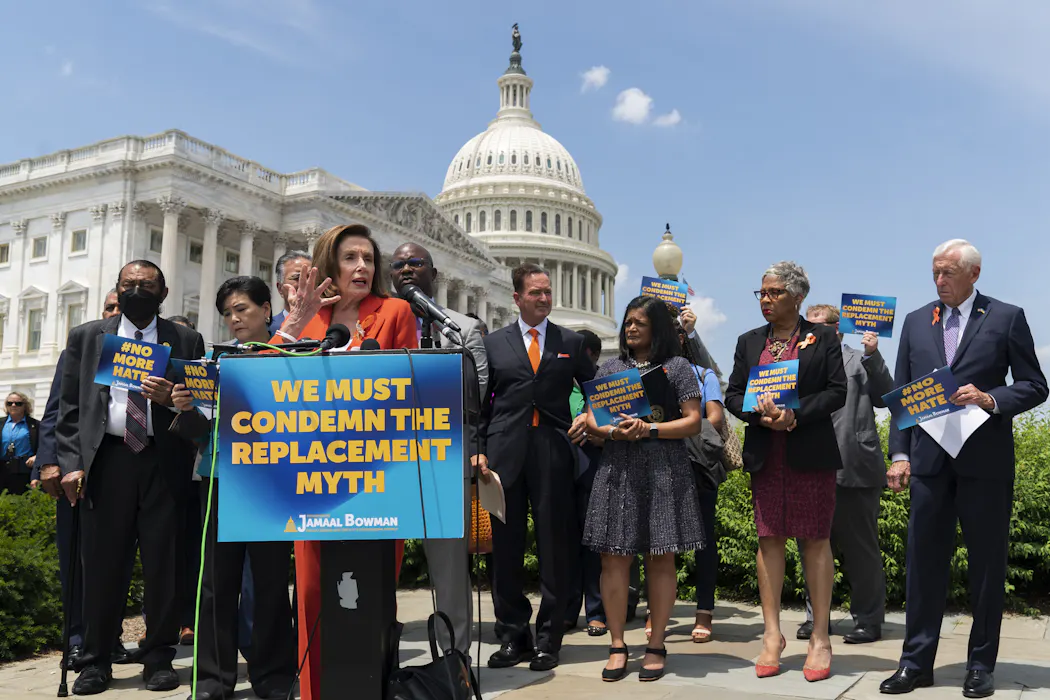
House Speaker Nancy Pelosi speaks on Capitol Hill on June 8, 2022, about a resolution condemning the great replacement theory. AP Photo/Manuel Balce CenetaDuring a Washington Nationals baseball game on May 17, 2026, three people unfurled a large banner from the upper deck of Nationals Park displaying a link to a white nationalist website.
The website, warning of the replacement of whites by people of color, called for the deportation of 100 million people from the United States.
The disturbin
House Speaker Nancy Pelosi speaks on Capitol Hill on June 8, 2022, about a resolution condemning the great replacement theory.AP Photo/Manuel Balce Ceneta
The disturbing incident reflects the broader ascendance of the “great replacement theory,” the xenophobic conspiracy theory asserting that shadowy elites are embracing permissive immigration policies to replace native-born white Americans with immigrants of color.
But are the xenophobic ideas recently expressed at Nationals Park limited to a small number of extremists, or are they also endorsed by the broader public? If the latter, how do political and media elites contribute to their spread?
To answer these questions, our team has conducted several nationally representative surveys that ask Americans about their support for key tenets of the great replacement theory.
New immigrants as a threat
We consistently found that a substantial minority of Americans agree with the sentiment that new immigrants threaten the political, cultural and economic power of white Americans. In our latest poll of 1,000 Americans fielded in March 2026, 36% agreed with the statement: “Native-born Americans are losing their economic, political, and cultural influence in this country because of the growing population of immigrants.”
A notable number of Americans – 26% – also believed political elites are trying to “replace” the existing white population, agreeing with the statement: “There are people who secretly work to make sure immigrants will eventually replace real Americans.”
Support for these beliefs is concentrated most heavily among white Americans, Republicans, conservatives and self-identifying members of Donald Trump’s Make America Great Again movement. Indeed, more than 3 in 4 members of the MAGA movement and close to 6 in 10 Republicans agreed with the statement: “Immigrants invade and colonize the United States.”
But what explains this spread of the great replacement theory?
We found that white Americans who identified as Republican, who are conservatives and who have negative views of people from other racial backgrounds are all more likely to express support for key tenets of the great replacement theory. Moreover, we uncovered clear evidence that white Americans who watch Fox News are also more likely to agree with the conspiracy theory.
Given the popularity of Fox News, we believe this latter point deserved further investigation. As detailed in our paper, while 39% of all white Americans agree that immigrants invade and colonize the U.S., 61% of white Americans who watch Fox News agree with this view. Even when taking into account partisan identification, ideology, racial attitudes and demographic characteristics, Fox News viewership remains significantly associated with more support for the great replacement theory.
Additionally, because we tracked white Americans over time, we could observe changes in their support for the conspiracy theory in response to variations in their viewership of Fox News. Simply put, the more Fox News programming that a white American watches, the more likely they are to adopt the conspiracy theory.
House Majority Whip Jim Clyburn delivers remarks on the mass shooting at the Tops Grocery Store in Buffalo, N.Y., and the rise in replacement theory rhetoric, on May 19, 2022, in Washington, D.C.Anna Moneymaker/Getty Images
Links to political violence
Our research builds on decades of work showing that public opinion is strongly influenced by media consumption. Recent scholarship, in particular, highlights the influence of Fox News on public opinion. It shows how exposure to Fox News leads Americans to express more conservative attitudes about the COVID-19 pandemic, immigration policies and criminal justice issues.
Given the attention that Fox News hosts, elected officials and pundits dedicate to the great replacement theory, our results suggest that this coverage has indeed influenced the views of white Americans. The great replacement theory is no longer purely on the fringes of society.
In our view, this is troubling, not only because the conspiracy theory treats immigration as an existential issue — where the stakes are framed as the very preservation of one’s self and country — but also because the theory is also linked to numerous instances of political violence directed at people of color and religious minorities.
As America approaches its 250th birthday, the nation will no doubt continue to grapple with the topic of immigration, race and what it means to be an American.
While there’s plenty of room for disagreement over immigration policy, conspiracy theories make it much harder to find common ground or craft political compromises. What we’ve found is that when prominent media embrace conspiracy theorizing, increased public endorsement of conspiracies will follow.
Jesse Rhodes receives funding from the National Science Foundation, the Spencer Foundation, and Demos.
Tatishe Nteta receives funding from the Russell Sage Foundation.
Adam Eichen does not work for, consult, own shares in or receive funding from any company or organization that would benefit from this article, and has disclosed no relevant affiliations beyond their academic appointment.
Acting U.S. Attorney General Todd Blanche announces the indictment of former Cuban President Raúl Castro, in Miami, Fla., on May 20, 2026. Chandan Khanna/AFP via Getty ImagesThe Trump administration on May 20, 2026, indicted former Cuban President Raúl Castro for murder, based on the downing of two planes near the Cuban coastline in 1996 that killed four people.
As a historian of Latin America and U.S. foreign policy, I believe the indictment may be the prelude to direct U.S. military action a
Acting U.S. Attorney General Todd Blanche announces the indictment of former Cuban President Raúl Castro, in Miami, Fla., on May 20, 2026. Chandan Khanna/AFP via Getty Images
Before Castro, the last U.S. indictment of a Latin American leader occurred in January 2026, when a U.S. attorney appointed by President Donald Trump charged Venezuela’s Nicolás Maduro with narco-terrorism. Those charges were promptly followed by U.S. military strikes on Venezuela and the abduction of Maduro.
I believe that what’s missing from most recent analysis of this situation is the history of U.S. aggression against Cuba. This is essential context for understanding the Trump administration’s recent escalations.
‘Striking at Cuba constantly’
In 1823, U.S. Secretary of State John Quincy Adams identified Cuba as “an object of transcendent importance to the political and commercial interests of our Union.” The 1959 Cuban Revolution that overthrew U.S.-backed dictator Fulgencio Batista and replaced him with Fidel Castro, brother of Raúl, directly challenged those interests by asserting political autonomy and expropriating private property.
State Department officials observed that “the majority of Cubans support Castro” because of the government’s redistributive measures and its “real honesty, courtesy, and idealism.” One official warned “that if the Cuban revolution is successful other countries in Latin America and perhaps elsewhere will use it as a model and we should decide whether or not we wish to have the Cuban revolution succeed.”
The CIA-led Bay of Pigs invasion in April 1961 is only the most famous episode. The U.S. trained 1,400 Cuban exiles to invade Cuba, hoping to ignite a nationwide rebellion. Instead, Cubans rallied behind the government.
Longtime CIA official Richard Helms later testified that in the early 1960s, “We had task forces that were striking at Cuba constantly. We were attempting to blow up power plants, we were attempting to ruin sugar mills, we were attempting to do all kinds of things during this period. This was a matter of American Government policy.”
The Bay of Pigs invasion and the airline bombing violate the core principles of international law, including prohibitions on the unprovoked “threat or use of force” and collective punishment. The U.S. government itself defines “international terrorism” as “violent acts” intended “to influence the policy of a government by intimidation or coercion” or to “intimidate or coerce a civilian population.”
By that definition, its Cuba policy qualifies.
By ‘every possible means’
Another U.S. method of striking at Cuba was through economic sanctions, first imposed on the country in 1960. That year, a State Department official wrote that “every possible means should be undertaken promptly to weaken the economic life of Cuba” so as “to bring about hunger, desperation and overthrow of government.” The logic of collective punishment was clear: make Cubans suffer enough that they rebel against Castro.
Images of Cuban President Miguel Díaz-Canel, Raúl Castro and Fidel Castro adorn the state building in Havana, Cuba, on May 20, 2026.AP Photo/Ramon Espinosa
This policy is now more aggressive than ever. The tightening of U.S. sanctions since Trump’s first term has reduced Cuba’s income from tourism, remittances and overseas medical missions. Now, by choking off the supply of fuel, the U.S. has critically weakened the healthcare and sanitation systems that depend on electricity.
‘I was trained as a terrorist by the United States’
The focus of the recent U.S. indictment against Raúl Castro was the incident on Feb. 24, 1996, when the Cuban military, which was headed by Castro, shot down those two planes.
The planes were operated by Brothers to the Rescue, an anti-Castro group of Cuban exiles who said they were aiding Cuban emigres trying to reach Florida. The group’s head, and one of the surviving pilots that day, was José Basulto, a veteran CIA asset and participant in the Bay of Pigs invasion.
In 1962, Basulto fired a cannon and machine gun “16 times” at a Cuban hotel, he later recounted. “I was trained as a terrorist by the United States,” Basulto once told an interviewer.
I believe indicting Cuban officials over the incident is disingenuous, given the provocations by Brothers to the Rescue and U.S. actions against Cuba, which are in direct violation of international and U.S. laws that prohibit threats, nondefensive violence and collective punishment.
Kevin A. Young does not work for, consult, own shares in or receive funding from any company or organization that would benefit from this article, and has disclosed no relevant affiliations beyond their academic appointment.
Wind farm construction means jobs and locally produced power. AP Photo/Michael DwyerThe U.S. is in a bizarre situation in 2026: It’s facing a looming energy shortage, yet the Trump administration is making deals to pay offshore wind developers nearly US$2 billion in taxpayer money to walk away from energy projects.
These politically motivated moves are costing Americans far more than just the buyouts.
Communities have been laying the groundwork for offshore energy projects for years. Offshore
The U.S. is in a bizarre situation in 2026: It’s facing a looming energy shortage, yet the Trump administration is making deals to pay offshore wind developers nearly US$2 billion in taxpayer money to walk away from energy projects.
These politically motivated moves are costing Americans far more than just the buyouts.
Communities have been laying the groundwork for offshore energy projects for years. Offshore wind development brings jobs and economic development that reshape regional economies, with the scale of public and private investment reaching into the hundreds of billions of dollars over years. East Coast communities have built up ports to support the industry and launched job-training programs to prepare workers. Construction, maintenance and shipping businesses have sprung up, along with secondary businesses that support the industry.
Offshore wind farms bring jobs and economic development. State Pier in New London, Conn., serves as a staging site for wind farm construction and supplies.AP Photo/Ted Shaffrey
Losing the projects, and the threat of losing other planned wind farms, will also likely mean higher energy prices. And while some offshore wind farms are moving ahead, developers must account for both lost momentum and increased uncertainty from the Trump administration.
As a result, Americans will bear the economic brunt of these decisions for decades ahead.
How America got to this point
To understand how the U.S. arrived in this predicament, let’s take a step back.
In March 2023, leaders from three U.S. federal agencies under the Biden administration met with the CEOs from American technology and manufacturing giants Microsoft, Amazon, Ford, GM, Dow Chemical and GE at the annual ARPA-E Energy Innovation Summit, under the banner of “Affordable, Reliable and Secure American-Made Energy”.
They agreed on a key point: The nation was staring down a severe shortage of electrons to drive American business forward.
Fortunately, solutions abounded. Enormous amounts of onshore wind and solar power had been deployed during the previous five years. More than 80% of all new power additions to the U.S. grid had come from these two sources.
Particularly exciting were plans to build large offshore wind farms up and down the Eastern Seaboard. Taken together, the wind farms would generate 30 gigawatts of new power by 2030, enough to power more than 10 million homes and reduce volatility in energy pricing thanks to long-term power purchase agreements.
The U.S. had one small wind farm at the time, off Rhode Island, and two wind turbines off Virginia, but Europe had been operating large offshore wind projects for over two decades and was building more.
In the months following the 2023 meeting, leasing and permitting for the U.S. mega projects continued, and in some areas construction got underway.
A map of offshore wind lease areas shows how many companies have paid the U.S. to lease areas of ocean for offshore wind farms. A few wind farms off New England are already operating. The lease areas where the Trump administration used taxpayer money to persuade companies to drop their wind farm plans include two TotalEnergies leases – Attentive Energy, off New Jersey, and a lease area off South Carolina – and Bluepoint Wind, also off New Jersey.U.S. Bureau of Ocean Energy Management
Then, the Trump administration arrived in 2025. As president, Donald Trump immediately issued an executive order to halt offshore wind lease sales and any approvals, permits or loans for wind farms. He had made his disdain for wind power clear ever since he lost a fight to stop construction of a small wind farm near his golf course in Scotland in the 2010s.
In March 2026, news outlets began reporting on deals struck in which the federal government would pay three offshore wind project developers hundreds of millions of dollars to cease development of their permitted projects, agree not to build others and repurpose the funds toward fossil fuel projects.
According to reported discussions involving the French energy company TotalEnergies, the money would be paid out through the Department of Interior’s Judgment Fund, intended for payment of legal settlements, despite there not being any active litigation with TotalEnergies.
The other projects agreeing to Trump’s buyouts as of early May were Golden State Wind, in California, and Bluepoint Wind, off New Jersey and New York. Both are co-owned by Ocean Winds, a joint venture of the French energy company Engie and EDP Renewables, headquartered in Spain. The California Energy Commission and members of Congress are now investigating the moves.
Offshore wind means local investment
Regardless of whether these buyouts are even legal, the losing parties will be the American taxpayers and a U.S. economy that needs more electrons on the grid, not fewer.
One analysis projected that deploying 40 GW along the U.S. East Coast by 2035 would generate roughly $140 billion in investment, much of it concentrated in port infrastructure and supply chain development.
Workers in New London, Conn., prepare a generator and its blades for transport to South Fork Wind’s offshore wind farm in 2023. To build an offshore wind farm requires manufacturing jobs, parts suppliers, dockworkers, crane operators, ship crews, as well as the wind farm construction crews and maintenance teams and many more businesses and their employees.AP Photo/Seth Wenig
In 2025, California state lawmakers authorized $225.7 million in spending for offshore wind ports and related facilities.
For these projects to pay off for local communities, however, the regions will need to see the development of wind farms.
Killing jobs
The cancellations of the planned projects also take jobs away from hard-working, blue-collar Americans.
The construction and installation of offshore wind turbines requires the expertise of skilled electrical workers, pipe fitters, welders, pile drivers, iron workers, machinists and carpenters.
Future offshore wind costs depend on investments today. As infrastructure is established and expertise grows, each subsequent project becomes easier to build, less risky and less expensive.
Canceling projects or buying back leases eliminates the electricity those projects would have generated. It also slows the accumulation of experience, scale and supply chain maturity that drive costs down over time.
The result is higher costs for future projects and for electricity ratepayers.
Limiting the supply of homegrown energy will increase energy costs for Americans, especially in the regions where the wind farms were supposed to be located – New York, New Jersey, North Carolina and California.
With the federal buyouts, the U.S. is losing 8 GW of planned electricity generation, enough to power more than 3 million homes. That generation needs to be replaced by other energy sources and expanding power transmission lines that can take seven to 10 years to get permits for and build out. The leased projects were on their way to providing new clean power generation fairly quickly. Eliminating them restarts the project clock.
Reliance on dirtier, conventional forms of power generation will increase along with foreign energy imports, such as electricity delivered from Canada to New York, leading to higher and more volatile electricity prices.
Evidence from Europe shows that offshore wind can also reduce electricity costs for consumers by lowering wholesale prices and reducing dependence on fossil fuels and their volatile prices.
Vineyard Wind I, an offshore wind farm completed in 2026, with 806 MW of generation – enough to power about 400,000 homes – is projected to save Massachusetts customers about $1.4 billion on electricity bills over the next 20 years. With a fixed-price, 20-year contract, the project also lowered prices during cold snaps and peak demand for gas, reducing volatility and cost.
From jobs to local economic development to power costs, we believe canceling these offshore wind projects is a bad deal for American taxpayers.
Christopher Niezrecki receives funding from from the National Science Foundation, Office of Naval Research, Massachusetts Clean Energy Center, ARROW Center, and several companies that support the WindSTAR Industry-University Cooperative Research Center.
Ben Link serves on the Maryland Clean Energy Center Board of Directors.
Zoe Getman-Pickering receives funding from The Massachusetts Clean Energy Center and Maryland Energy Administration. She is affiliated with ARROW based at the University of Massachusetts Amherst. ARROW is a member of NE4Wind and sits on the advisory board for The Pacific Offshore Wind Consortium.
Veterans from past wars and those returning from ongoing wars will need the country's continued support. SDI Productions/E+ via Getty ImagesMemorial Day is an apt time to reflect on the long-term consequences of war. Among them are substance use, mental health problems, homelessness and jail time for those who served in the military.
About 8% of all Americans in prisons or jails are veterans, according to the Council on Criminal Justice, a nonpartisan think tank. Veterans end up incarcerated
Veterans from past wars and those returning from ongoing wars will need the country's continued support. SDI Productions/E+ via Getty Images
Memorial Day is an apt time to reflect on the long-term consequences of war. Among them are substance use, mental health problems, homelessness and jail time for those who served in the military.
About 8% of all Americans in prisons or jails are veterans, according to the Council on Criminal Justice, a nonpartisan think tank. Veterans end up incarcerated largely because of substance use and mental health disorders, both of which also contribute to homelessness.
For more than 15 years, one tool for helping veterans break out of addiction has been Veterans Treatment Courts. These programs help veterans accused or convicted of crimes address the challenges driving their involvement in the criminal legal system.
Veterans Treatment Courts require a dedicated clinician and need to provide access to counseling, housing support and other social services to meet veterans’ needs. For this, they must have funding from the government. As a legal scholar studying the use of criminal law to aid veterans, my research shows that these programs, which exist in every state except Connecticut and Vermont, can be very effective. But they only work when they have the staffing and the resources to support veterans’ complex needs.
Veterans Treatment Courts are a subset of the drug treatment courts that were created by judges and criminal legal reformers beginning in 1988. These courts are an alternative to jail for people arrested or convicted for crimes that may be related to substance use disorders.
The idea was to allow courts to address the root causes of criminal behavior rather than simply punish people who committed crimes. Specialized treatment courts were soon developed to provide support for specific issues, such as mental health, or to groups accused of specific crimes, such as sex work.
Veterans treatment courts aim to help people address the underlying issues that lead them to commit crimes.
In 2008, a judge in Buffalo recognized that veterans in his drug treatment court would benefit from support from other veterans and the comprehensive services from the VA. So he launched a distinct program just for veterans that soon received national media attention. Veterans Treatment Courts now operate in over 745 courthouses.
Eligibility varies across courts, but typically requires that the person have served in the military and that the crime they committed is not considered so serious that it deserves incarceration. While these programs are funded through a variety of sources, such as local and state governments, the federal government offers tens of millions of dollars every year for local courthouses to set up Veterans Treatment Courts.
Veterans Treatment Courts have a variety of requirements for participants. Once admitted to the program, participants must attend a hearing where they talk to the judge about how they are doing. They must also take drug tests and attend therapy appointments. They may also have to show that they have stable housing and employment and that they have performed community service or engaged in other activities that indicate they are connected to their communities and therefore at lower risk for substance use or criminal behavior.
If participants meet program requirements, they graduate. Graduation usually means some sort of legal benefit, such as dropped charges and fines or the termination of probation.
Resources are key to success
Advocates suggest that Veterans Treatment Courts are more effective than jail or prison in preventing people from committing new crimes, and that treatment courts in general cost less than incarceration. But studies on whether they help veterans more than alternatives such as drug treatment courts or a regular criminal court have been inconclusive.
Staff stability is especially important for these programs’ viability and success. My research shows that funding cuts lead to high turnover and low morale. When the Department of Health and Human Services sent a notice canceling US$2 billion worth of funding in January 2026, treatment courts were scrambling to figure out how they could staff their programs. Though this money was restored, the cancellation showed treatment court staff that their work could end without warning.
Given that the country’s criminal legal system is already overburdened, enabling Veterans Treatment Courts to do their vital work does more than help veterans. In my view, this program also models how comprehensive social services can help people struggling with substance use disorders, mental health problems, housing insecurity and other challenges.
As people recover from past wars and return from ongoing conflicts, they will need the country’s continued investment to reintegrate and thrive.
This article has been corrected to specify that VA funding cuts were related to staffing and delivery of healthcare services.
Jamie Rowen receives funding from the National Science Foundation.
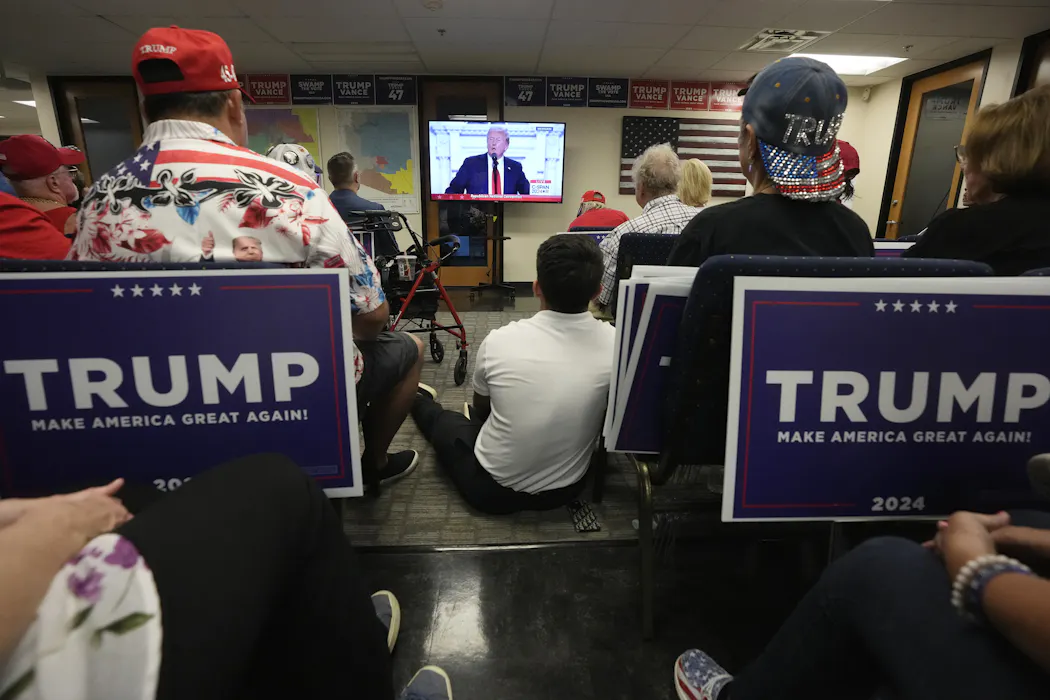
Phoenix residents watch presidential candidate Donald Trump speak at the Republican National Convention on July 18, 2024. AP Photo/Ross D. FranklinIn recent months, some prominent conservatives and erstwhile allies of President Donald Trump – former U.S. Rep. Marjorie Taylor Greene and journalist Megyn Kelly, for example – have voiced their displeasure with him on several issues. They range from Trump’s handling of the Iran war and the economy to the release of information concerning his relatio
Most notably, political commentator Tucker Carlson, once one of Trump’s most stalwart loyalists, expressed remorse for his previous support for the president, declaring in April 2026, “It’s not enough to say, well, I changed my mind – or like, oh, this is bad, I’m out.” Carlson said he will be “tormented” by his support for Trump “for a long time” and that he is “sorry for misleading people.”
But beyond former prominent Trump allies, are there other Trump supporters having second thoughts about their votes in the 2024 presidential election? To answer this question, we conducted a nationally representative poll of 1,000 U.S. adults who were recruited from an online panel maintained by YouGov, a survey research firm.
We asked self-identified Trump voters about their votes in the 2024 election. Our results suggest that a growing number of them – especially moderates, African Americans and young people – are experiencing voter’s remorse.
In our poll, roughly one-third of political moderates and African Americans who voted for Trump in 2024 said they would vote otherwise if the election were held again.AP Photo/George Walker IV, File
Support for Trump remains strong
To be clear, our survey shows that most Trump voters remain in the president’s camp.
We found that 84% of 2024 Trump voters say they would vote for Trump if given the chance to vote again in the 2024 election. That’s down 2 percentage points since we previously asked this question in July 2025.
Over 90% of members of Trump’s core base of voters – including 93% of self-identified Republican Trump voters, 95% of self-identified conservative Trump voters and 92% of Trump voters over age 55 – said they would vote for Trump as they did in 2024 if given a second chance.
Regretful Trump voters
But some groups of Trump voters are having second thoughts. The most regretful are those with whom Trump made significant gains in 2024. They include political independents, African Americans, younger people and those with more education.
Roughly 3 in 10 2024 Trump voters who identify as political moderates and African Americans said they would vote differently if the election were held again. And roughly a quarter of young and middle-aged Trump voters also suggested they would not vote for Trump if they could redo their 2024 vote.
Twenty percent of Trump supporters with postgraduate degrees expressed a reluctance to vote for Trump if given a second opportunity. Voters with some college experience and those making less than $40,000 annually reported the same sentiment in similar percentages.
Perhaps most politically perilous, 31% of independents who voted for Trump in 2024 would not vote for him again in an election do-over.
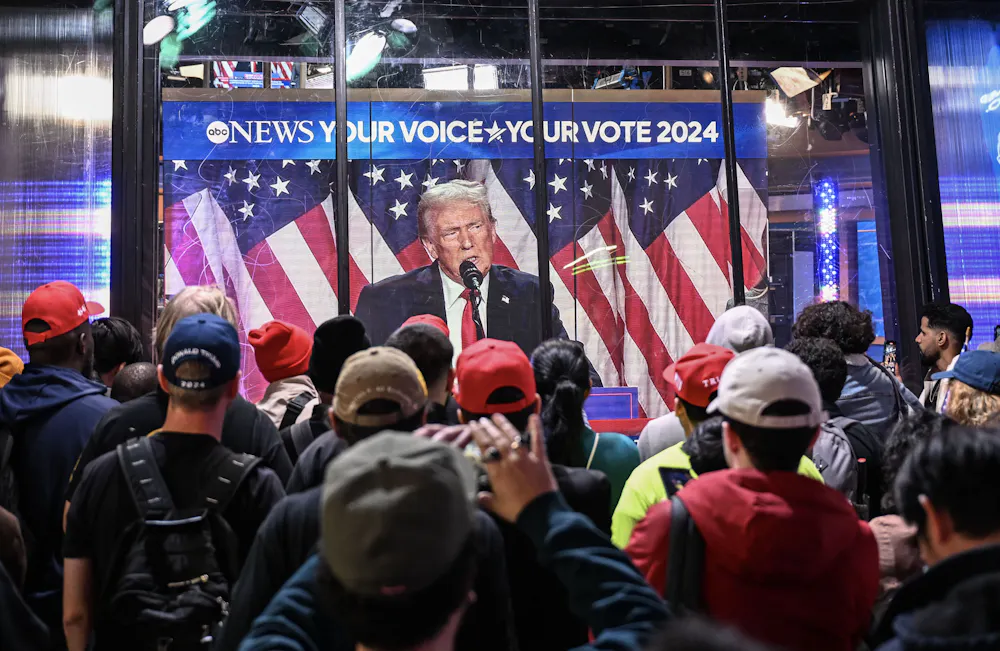
New York City residents watch Donald Trump speak as votes are tallied for the presidential election on Nov. 6, 2024.Fatih Aktas/Anadolu via Getty Images
Cracks in the coalition
What is pushing Trump voters away from the president?
There is no single cause, but our results suggest that negative perceptions of Trump’s performance on high-profile issues are playing a big role. A substantial portion of Trump voters who give the president a negative grade on the economy (22%), the Epstein files (37%) and the Iran war (49%) say they would not vote for him in an election redo.
Our results suggest that cracks are forming in the Trump coalition and that they are concentrated among the groups that before 2024 were less likely to vote for the president.
Trump may take solace in the continued loyalty of his strongest supporters. But in a close election every vote counts, and lingering dissatisfaction could undermine Republicans’ ability to mobilize key swing voters.
As Republicans face the electorate in upcoming midterms, Trump and the GOP will have to work to reclaim the support of regretful voters. Failure to do so could cost Republicans Congress in 2026 and, ultimately, the presidency in 2028.
Jesse Rhodes has received funding from the National Science Foundation, the Spencer Foundation, Demos, and the University of Massachusetts Amherst.
Adam Eichen and Tatishe Nteta do not work for, consult, own shares in or receive funding from any company or organization that would benefit from this article, and have disclosed no relevant affiliations beyond their academic appointment.
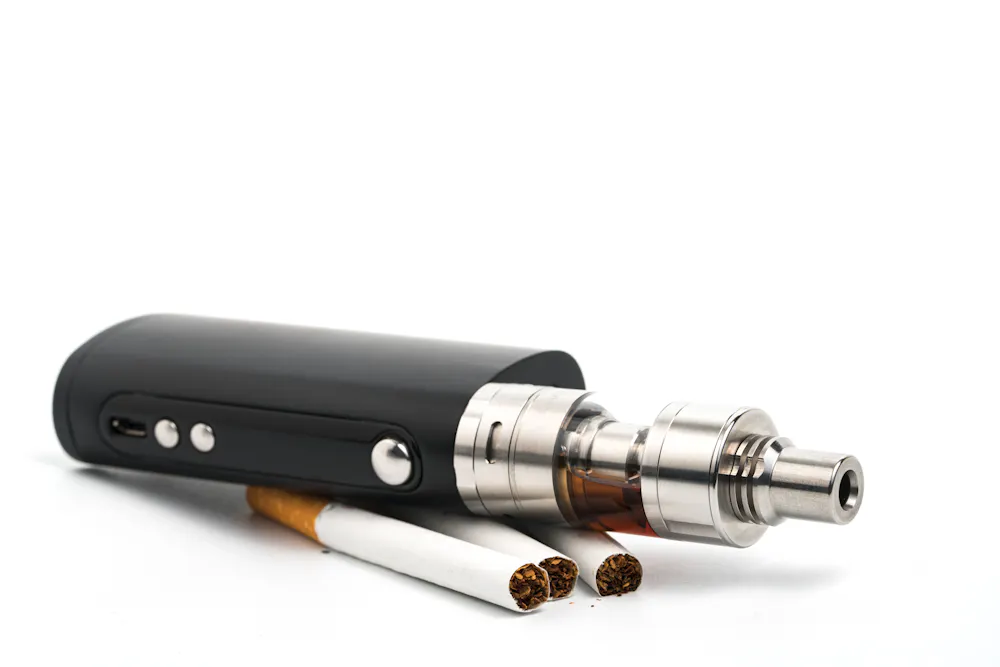
There are currently 45 approved vaping products in the U.S. Most are tobacco- or menthol-flavored; only two are fruit-flavored. Roman Mykhalchuk/iStock via Getty Images PlusThe resignation of Marty Makary, commissioner of the U.S. Food and Drug Administration, on May 12, 2026, brought to the forefront a heated controversy over fruit-flavored nicotine vapes.
Rumors had been circulating for weeks that President Donald Trump was planning to fire Makary, in large part due to Makary’s disagreement
The resignation of Marty Makary, commissioner of the U.S. Food and Drug Administration, on May 12, 2026, brought to the forefront a heated controversy over fruit-flavored nicotine vapes.
Beyond Washington, the public health community is also divided. Researchers are working to understand how flavored vapes affect public health, but the evidence is complicated.
The authorization of two fruit-flavored vapes marks a pivotal moment in U.S. e-cigarette regulation.
Former Food and Drug Administration Commissioner Marty Makary is said to have clashed with President Donald Trump over the FDA’s controversial approval of two flavored vapes.Brendan Smialowski/AFP via Getty Images
FDA’s role in regulating tobacco and nicotine
The Family Smoking Prevention and Tobacco Control Act, which was signed into law in 2009, gave the FDA the authority to regulate the manufacture, distribution and marketing of tobacco products. This includes nicotine alternatives such as e-cigarettes, vapes and oral nicotine pouches.
Tobacco and nicotine products, such as major cigarette brands, that were on the market before 2007 did not require FDA authorization, but new products, like vapes, do. To be authorized, new tobacco and nicotine products must meet the standard of being “appropriate for the protection of public health”. In other words, their benefits to the population as a whole must be judged to outweigh their risks.
The Center for Tobacco Products at the FDA is responsible for making these decisions and implementing regulations. Academic research centers, like ours, support the center in understanding how its policies might affect public health.
Vaping has a lower relative risk than smoking
Vaping nicotine is not risk-free, but research is clear that it is much less harmful than smoking. Vapes and e-cigarettes don’t contain tobacco leaf like cigarettes do, nor do they have the same toxic chemicals that are found in cigarettes. Smoking involves burning organic material, which releases cancer-causing pollutants; vaping does not.
Vapes can contain potentially harmful chemicals, but these are usually in much lower amounts than those found in cigarettes. Nicotine is an addictive chemical, but it does not on its own cause cancer. The FDA’s regulation and oversight of vapes is important for public safety. As of May 2026, the FDA has approved 45 vaping products that can be lawfully sold in the U.S.
On the other hand, the U.S. is flooded with illegal vapes, including colorful devices manufactured in China. It can be difficult to know what is in illegal vapes.
Because vaping is not risk-free but has a lower relative risk than smoking, it presents an increased risk for people who do not otherwise use tobacco or smoke, but a decreased risk for people who smoke.
Flavored vapes attract new users, especially youth
Flavored vapes can include menthol and mint, fruit and sweet flavors and concept flavors with names like “jazz,” “solar,” “fusion” and “unicorn puke.” Other flavored vapes are often packaged in bright and appealing colors, even if they do not include explicit flavor description words.
The recent FDA decision to approve two fruit- and sweet-flavored nicotine vapes, which have the color-coded names of “Sapphire” and “Gold,” is a potentially significant expansion of the FDA’s approach to authorizing e-cigarettes.
Research shows that flavored vapes attract new users, including young people who do not have a history of smoking tobacco. It also shows that experimenting with flavors increases the appeal of vapes among adolescents. Young people often think fruit-flavored vapes are less harmful than tobacco-flavored vapes.
Flavored vapes might help people quit smoking
Flavored vapes can attract youth, but they can also appeal to people who smoke. For people who smoke, switching to nicotine vapes can diminish their exposure to cancer-causing chemicals and potentially lower their likelihood of tobacco-related disease.
Researchers regularly assess the scientific evidence on whether e-cigarettes can help people stop smoking. Regularly updated evidence across more than a hundred studies continues to show that nicotine vapes can help people who use cigarettes to quit smoking.
However, researchers don’t yet know whether or how adding flavors to vapes might affect smoking and vaping. While fruity and sweet flavors can be appealing to people who smoke, tobacco and menthol flavors are sometimes more popular among older people who have a history of smoking tobacco.
As the recent clash between Trump and Makary shows, the debate over flavored vapes continues. Whatever the outcome, it remains important that decisions made about vapes are based on scientific evidence, and that the reasons behind policy decisions are communicated effectively to the public.
Claire L. Ma is a Postdoctoral Research Fellow at the Center for the Assessment of Tobacco Regulations, where she leads research dissemination efforts for the Policy Analysis and Dissemination Core. Her research is funded by the FDA and NIH through a Federal grant to the University of Michigan School of Public Health. Dr. Ma does not receive any funding from the tobacco or vaping industries.
Holly Jarman is the Co-Lead of the Policy and Dissemination Core for the Center for the Assessment of Tobacco Regulations (CAsToR) at the University of Michigan and receives funding from the NIH and FDA for that work. Jarman does not receive any funding from the tobacco or vaping industries.
Jamie Hartmann-Boyce receives funding from the NIH, FDA, Truth Initiative, Cancer Research UK and the Massachusetts Department of Health for research related to tobacco control. She does not receive any funding from tobacco or vaping industries.

 Login
Login