Normal view

How Pennsylvania’s new paid leave bill leaves the sandwich generation behind

Approximately 63 million Americans are family caregivers. Jub Rubjob/Moment Collection via Getty Images

The number of family caregivers has grown from 53 million Americans in 2020 to 63 million as of 2025. This number is expected to increase as the baby boomer generation ages and faces the limitations of our current health and social services systems.

A family caregiver is an unpaid individual who provides assistance to a family member who needs support due to illness, disability or aging.

The population of metro Pittsburgh is one of the oldest in the country, according to U.S. Census Bureau data. This means an increasing proportion of the local population will require care from family caregivers as they age. In Allegheny County, the number of residents age 65 and older is projected to grow by 50,000 by 2050.

Despite their critical role in supporting the aging population, however, family caregivers are not often provided with medical training or help with navigating the health and social services systems. This puts them at significant risk of experiencing physical and mental strain that can lead to burnout and leaving the workforce before retirement age. Caregivers and those they support can also develop health complications based on these factors.

This is particularly true for women, who provide a disproportionate amount of care in the U.S.

I study ways to improve the quality of life for aging adults and their care partners. My work centers on how family caregiving can improve mental health for families. I also examine the toll that caregiving takes on families navigating serious illness and decline.

Sandwich generation caregivers

The “sandwich generation” refers to adults – typically in their 40s and 50s – who are simultaneously caring for their aging parents while raising their own children. They are “sandwiched” between two generations of dependents and often face significant financial and emotional pressures as a result.

A woman wearing glasses stands at a podium.
Pennsylvania is currently debating paid leave legislation through the Family Care Act, proposed by Democratic Rep. Jennifer O'Mara. Rep. Jennifer O'Mara/Instagram

These caregivers often find themselves caught between work and unpredictable caregiving demands. Without formal protections like paid leave, they may feel forced to reduce hours, turn down promotions or leave the workforce altogether. These decisions can add to the financial strain they’re already under.

Where the law falls short

Several national and state programs exist to support older adults.

The federal Older Americans Act funds services like meal delivery, transportation and caregiver support, and Medicaid Home and Community-Based Services helps older adults receive care at home rather than in a facility. But systemic barriers – from eligibility gaps to access issues – limit their reach.

Federal initiatives like the RAISE Family Caregivers Act offer some hope for family caregivers. It outlines specific actions the government can take to help caregivers, including making it easier for them to balance caregiving with their jobs.

In addition, several states have implemented paid family leave policies. California, for example, offers up to eight weeks of paid family caregiving leave – replacing up to 90% of wages for lower earners. Washington and Massachusetts both provide up to 12 weeks, with wage replacement rates of 90% and 80%, respectively, and include job protection so caregivers don’t have to choose between their loved one and their livelihood.

Pennsylvania may be next. Legislators are currently debating the Family Care Act, paid leave legislation proposed by state Rep. Jennifer O'Mara. The bill, approved by the Pennsylvania House in March 2026, would allow employees to take up to 12 paid weeks off after the birth of a child or to care for a family member during a serious illness. Spotlight PA reports that the House-approved bill proposes employers cover the cost, with grants available for small businesses.

The state Senate’s version of the Family Care Act, pending in the Labor & Industry Committee as of May 2026, would fund benefits through employee payroll deductions of up to 1% of their income. This addresses a critical gap in existing federal law, which guarantees only unpaid leave.

Even if passed and signed into law, the proposal may fall short for sandwich generation caregivers, who face simultaneous, overlapping demands on both ends of the age spectrum. Many of these caregivers have already reduced hours or left the workforce entirely. A benefit tied to employment may never reach the people who need it most.

Pittsburgh’s generational tug-of-war

Pittsburgh-based sandwich generation caregivers face competing demands: securing reliable, affordable childcare – a growing problem in Allegheny County driven by staffing shortages and limited spots – while simultaneously managing eldercare responsibilities. Without a state or federal paid leave mandate, many Pittsburgh workers, like those in lower-wage or part-time roles, have no guaranteed access to the time off they might need to meet either obligation.

Paid leave policies vary by employer, and without a universal federal mandate, coverage is uneven – often weakest for lower-wage workers, part-time employees and people at small businesses.

Research has shown that sandwich generation caregivers already use most of their paid time off for caregiving tasks. This means they have limited time to take care of their own health. The proposed Family Care Act caps paid leave at 12 weeks per year. While this is an improvement from having no mandatory paid leave, it’s designed to supplement – not replace – standard sick days. The Family Care Act would cover intermittent leave for singular events, like childbirth or surgery. But sandwich generation caregiving is chronic, overlapping and resource-intensive in ways the bill isn’t designed to address.

A historic-looking building behind a sign that says
The Pennsylvania paid leave bill would give workers paid leave for up to 12 weeks. arlutz73/iStock collection via Getty Images Plus

In addition, the act proposes a partial wage replacement – 90% of wages for a weekly benefit cap ranging from $573 to $995 per week, depending on the individual’s earnings.

Caregivers who step back from work to care for a child or an aging parent are disproportionately lower- and middle-income workers. A 90% wage replacement rate at a lower-wage tier means those workers don’t have to choose between a paycheck and showing up for their family.

Yet this coverage is still likely insufficient for caregivers who often face significant financial strain related to caregiving, such as out-of-pocket expenses for care.

While the Family Care Act – whether it is funded through employee and employer payroll contributions – is a step forward, it still falls short for sandwich generation caregivers. What this population needs is the ability to take flexible time off as needs arise, not just in one block. However, intermittent leave presents administrative challenges for employers, like scheduling disruptions and paperwork burdens that could make it harder to put into practice.

The Conversation

Kate Perepezko does not work for, consult, own shares in or receive funding from any company or organization that would benefit from this article, and has disclosed no relevant affiliations beyond their academic appointment.
Blackout risks are rising – why neighboring power grids can’t just send extra electricity where it’s needed

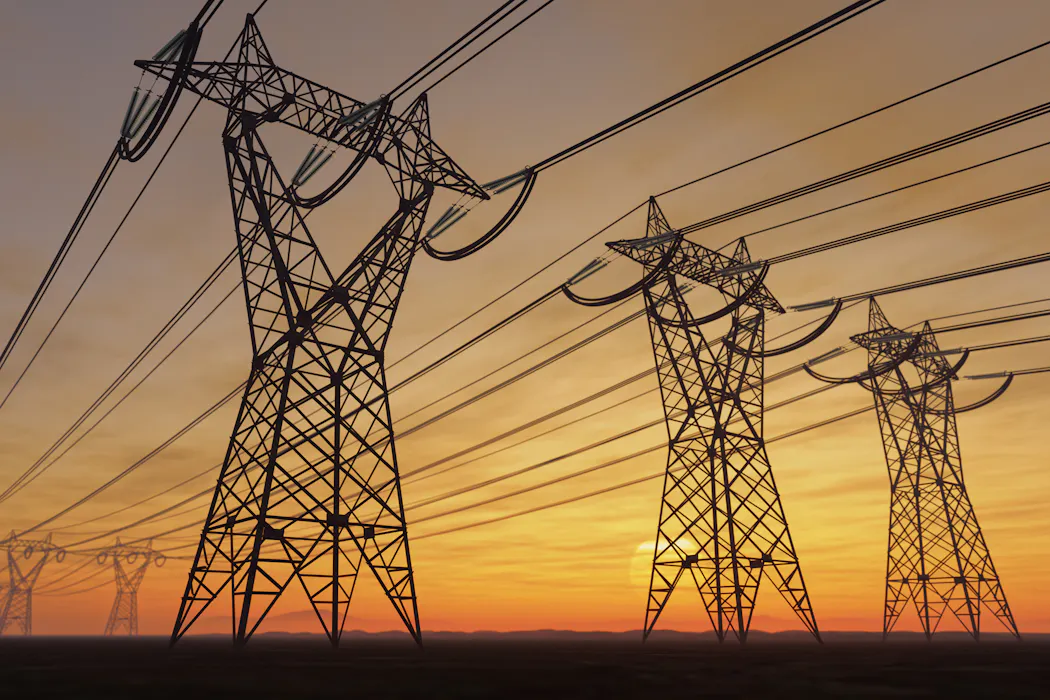
Transmission lines can carry power long distances, but the U.S. grids aren't all connected. imaginima/iStock/Getty Images Plus

Extreme weather is posing a growing threat to the power supplies Americans rely on.

In 2021, a fierce winter storm left millions of Texans without electricity and water for days. Hurricane Helene in 2024 knocked out power to about 5 million customers across the U.S. Southeast.

Beyond the immediate human and economic toll, major blackouts like these often leave behind the same unsettling contrast: One region goes dark while nearby places still have power.

This raises a question: If electricity is still available somewhere nearby, why can’t it be sent where it is needed most?

Two satellite images show how much of the Atlanta area lost power in Hurricane Helene.
Hurricane Helene left much of Georgia in the dark for several days starting in late September 2024. The satellite image on the left is a normal August night in the Atlanta region. The one on the right shows the same area on Sept. 28, 2024. Lauren Dauphin/NASA Earth Observatory

There has to be a wire into the crisis

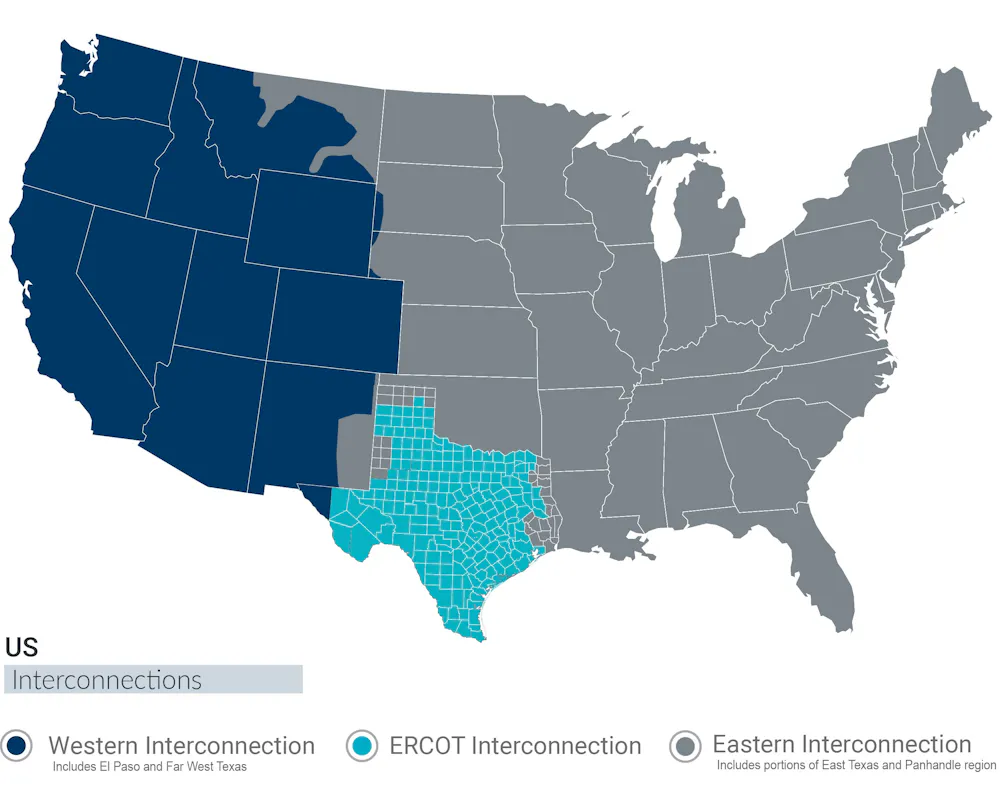
The U.S. bulk power system is not one seamless national grid, but three major grid regions known as interconnections – the Eastern, Western and ERCOT – Electric Reliability Council of Texas – systems. There are very few transmission lines between them, so if one has too little power, the others may not be able to help much.

Map shows three regions
There are few links between the U.S. Eastern, Western and ERCOT interconnections. ERCOT

That limited connectivity made the 2021 Texas blackout far more severe: As the storm knocked out gas lines and power generators, ERCOT was forced into the largest deliberate electricity shutoff in U.S. history. Operators cut power to millions of customers to avoid a total grid collapse.

More than 4.5 million Texans lost power, and hospitals across the state struggled with electricity and water shortages. At that time, the total power ERCOT was able to import from the neighboring systems could cover only about 6% of the demand.

Today, there are proposals to build more transfer capacity between Texas and neighboring grids. The Southern Spirit Transmission project, announced by the Department of Energy in 2024, would include a 320-mile transmission line connecting Texas with Louisiana and Mississippi. According to the DOE, the project could improve the Texas grid’s resilience during periods of high demand and extreme weather. If this line had existed in 2021, it could have reduced the scale of the power losses by roughly 15%, enough to keep electricity flowing to 600,000 additional Texas homes during peak demand.

A map shows a line from Mississippi to the Texas border.
Pattern Energy is developing the 320-mile Southern Spirit Transmission line to connect Texas’ power grid and the Southeastern transmission grids for power sharing. Pattern Energy

The wire has to survive the disaster

That physical constraint on where power can flow begins with how the U.S. grid is organized.

At the broadest level, it is divided into the three independent interconnections. Within those larger networks, multiple regional grids can share power with one another. But moving electricity across them still depends on the availability of transmission paths.

A map shows the regional power system operators and three regions without a formal power market structure.
Seven major regional grid operators within the U.S. interconnections help manage power flows, electricity markets and reliability, typically across multistate regions, but they don’t cover all of the area. In large parts of the Northeast, Southwest and Southeast, independent utilities generate and transmit their own power without a formal power market structure. Federal Energy Regulatory Commission

Extreme weather can damage transmission lines and substations, making it impossible to bring in additional electricity.

Hurricane Ida showed why this matters.

In August 2021, all eight transmission lines feeding New Orleans were damaged by the storm and knocked out of service. That left the whole city without normal grid power and set the stage for a recovery that took weeks in some of the hardest-hit areas. Across the wider network, the storm also disabled 216 substations and more than 2,000 miles of transmission lines. When the main lines for electricity are broken, nearby power cannot flow in.

A large transmission tower lies on its side, twisted, after a hurricane.
Hurricane Ida crumpled a huge transmission tower carrying high-voltage power lines into New Orleans in August 2021. AP Photo/Gerald Herbert

The answer to bolstering power grids is not just to build more high-voltage transmission lines. It is also important to harden the transmission corridors that already exist so they can withstand extreme weather and be restored more quickly after a disaster.

In New Orleans, that is already shaping investment. Entergy New Orleans, the city’s main electric utility, has an accelerated grid-hardening plan that aims to replace existing utility poles with more fortified poles to withstand higher winds and selectively move some lines underground in high-risk areas. The first phase, scheduled through 2026, covers about 63 miles of power lines at a cost of $100 million.

At the federal level, the Federal Energy Regulatory Commission has required transmission providers to report how they assess risks to transmission assets, how those risks affect system operations and how they plan to reduce them, including under extreme heat and cold.

The hidden regulatory rules for sharing power

When the power goes out in one area, a nearby grid may look fine and keep its own lights on, but that does not mean its surplus power can be easily shared. Federal standards require transmission providers to have enough electricity available in reserve to serve their own local homes and businesses safely. In plain terms, only excess electricity above that safety threshold can realistically be treated as power available to help neighboring grids during an outage.

Decisions also have to be made quickly, and the logistics for sending power from one company have to be arranged before the blackout begins. The grid facing power shortages must know which sources will send extra power, which lines can carry it and what to do if the transfer creates overloads elsewhere.

The emergency operations manual used by PJM, which coordinates electricity flows across large parts of the Midwest and mid-Atlantic region, says operators are expected to act immediately when their power demand exceeds the supply to stabilize the grid. If the shortage lasts too long, protective systems begin disconnecting parts of the grid to stop a wider collapse. Once those systems are disconnected, even power that arrives later may no longer reach the areas where it is needed most.

Neighboring grids to the rescue

In early September 2022, a brutal heat wave pushed California’s power grid to the brink. On Sept. 6, the state hit an all-time record power demand of 52,061 megawatts.

That same evening, when the system was most strained, a crucial lifeline of about 8,000 MW of electricity flowed in from neighboring areas. This massive external support met 12.5% of the local demand, successfully maintaining the power supply for millions.

Analyses after the heat wave confirmed what had averted the crisis. The California Independent System Operator, or CAISO, concluded that “imported electricity from neighboring balancing authorities played a key role in maintaining system reliability” during those critical hours.

Crucially, this rescue relied on established sharing agreements. Beyond prescheduled transfers, CAISO reported that power generators in the Western Energy Imbalance Market – a system launched in 2014 to help Western power systems share electricity in emergencies – dynamically delivered an extra 1,000 MW of emergency power.

That event proved how having real-time, cross-regional coordination mechanisms already in place can ultimately save a grid under siege. Similar arrangements already exist elsewhere in the United States. PJM and MISO, the Midcontinent Independent System Operator, have a process for scheduling electricity flows when the regions know help will be needed. Utilities in the Southeast use an exchange platform to trade power closer to the time it is needed.

While different regions use different designs, the broader lesson is the same: Outside help is most likely to work when the grid has a usable transmission path, spare electricity to share and a system for moving that power before the emergency begins.

Yan Wen, a postdoctoral research scientist in electrical engineering at the University of Tennessee, contributed to this article.

The Conversation

The authors do not work for, consult, own shares in or receive funding from any company or organization that would benefit from this article, and have disclosed no relevant affiliations beyond their academic appointment.

Will future missions to the Moon be sustainable? It may depend on whom you ask

Earth draws closer to passing behind the Moon in this image captured by the Artemis II crew during their lunar flyby. NASA

There’s a new space race to the Moon, and this time the ambitions are not just to visit but to stay. NASA’s Artemis program aims to establish a long-term human presence on the lunar surface in the 2030s. China, India, Japan and a number of private companies all have lunar mission programs of their own.

As of now, the human footprint on the Moon is small. That could change with the planned increase of lunar missions.

National space agencies are focused on science and exploration, while private companies aim to develop a lunar economy – potentially with mining operations. In the coming years, these groups will test technology and build some initial infrastructure on the Moon. From 2030 onward, Moon bases could become a reality.

But what are the long-term consequences of lunar missions for the Moon itself? The Artemis program’s goals are sustainable exploration and setting up a sustainable presence on the Moon. However, sustainability is a broad concept with a variety of definitions and uses when it comes to space exploration. As a sustainability scholar, a space systems engineer and a planetary scientist, we’ve been trying to pin down what sustainability means in a lunar context.

The delicate lunar environment

Unlike Earth, the Moon has no biodiversity, climate as we typically think of it, or oceans. But it does have its own active environment. While the Moon may seem unchanging and indestructible, it is surprisingly sensitive to human activity. Without the wind, water or other natural forces that reshape the Earth, things that happen on the Moon tend to leave a mark – sometimes for thousands, or even millions, of years.

When a rocket lands on the Moon, its engines blast the surface with exhaust gases and send fine dust particles flying at enormous speeds. A single landing by a large modern spacecraft, such as SpaceX’s Starship, could disturb an area of the lunar surface two to five times larger than the Apollo missions did in the 1960s and 1970s.

Some of those ejected dust particles can travel tens of miles across the surface, and the finest grains can reach the Moon’s orbit, potentially threatening other spacecraft. Images from satellites in lunar orbit show that changes to the uppermost layer of the surface from a single landing can remain visible for decades.

Landings can also release water vapor, carbon dioxide and other gases into the lunar exosphere – an extremely thin layer of atoms hovering above the surface – and create a temporary atmosphere.

And all these effects can come from just one mission. Future missions will focus on the polar regions, which have ideal spots for collecting solar energy atop peaks, as well as water in the form of ice in craters. Scientists don’t yet understand what the cumulative effects of the dozens of missions planned over the coming decade on the lunar environment – its surface, its thin atmosphere and its scientifically precious polar regions – will be, and whether they’re reversible.

A close-up view of an astronaut's bootprint in the lunar soil.
Without weather, footprints from human missions to the Moon last much longer than on Earth. NASA

The concept of sustainability

On Earth, the concept of sustainability balances protecting the environment, maintaining economic well-being and caring for society – current as well as future generations.

But what does sustainability mean on the Moon? To find out, we sent out a survey asking people with a demonstrated interest in space and lunar exploration to define sustainability in this new context. We received 277 complete responses from academics, space industry professionals, space agency staff and engaged members of the public.

We found that people mean very different things when they talk about lunar sustainability – and those differences often track closely with who they are and where they work.

People working in the space industry tended to think about sustainability in financial and operational terms: keeping missions affordable, making infrastructure reusable, and developing the Moon’s resources to support a self-sustaining economy.

Academics, on the other hand, related lunar sustainability to environmental and ethical concerns more frequently. A significant portion of all respondents – roughly 1 in 5 – were opposed to large-scale human activity on the Moon altogether. Their responses echoed a “leave no trace” philosophy: Don’t disturb natural conditions, don’t commercialize what belongs to all of humanity, and don’t plant flags in places that shouldn’t be owned.

The majority of respondents fell somewhere in between, calling for a careful balance of scientific, commercial and environmental interests.

The Apollo 15 lander sitting on the surface of the Moon, with a panoramic view of the dusty, rocky lunar landscape.
Human activity, from robotic landers to crewed missions – such as Apollo 15, shown here – has the potential to reshape the surface of the Moon. NASA

A continuing conversation

This diversity of perspectives on what sustainability means on the Moon is not a surprise. Even for the Earth, people do not have a universally agreed-upon perspective.

However, the shared cultural significance of the Moon calls for conversations between many groups of people, from space agencies to communities living near rocket launch sites, and from space industry professionals to amateur lunar enthusiasts.

The Moon has always been Earth’s closest celestial companion in our planet’s journey through space. As it becomes a destination for space agencies and some companies, the decisions made now will shape what the lunar surface looks like, and what the Moon means to people, for generations to come.

Some of those decisions may be irreversible. Researchers are only beginning to explore the cumulative effects of human activity on the lunar environment. And policymakers are even further behind in developing the governance frameworks needed to make collective decisions about it.

The conversation about what sustainability means for lunar missions is becoming increasingly relevant as plans for lunar bases move forward.

The Conversation

Marco A. Janssen received funding from NASA.

Afreen Siddiqi received funding from NASA.

Parvathy Prem receives funding from NASA.

How a shifting Nile landscape shaped the rise of the ancient empire of Kush in Sudan

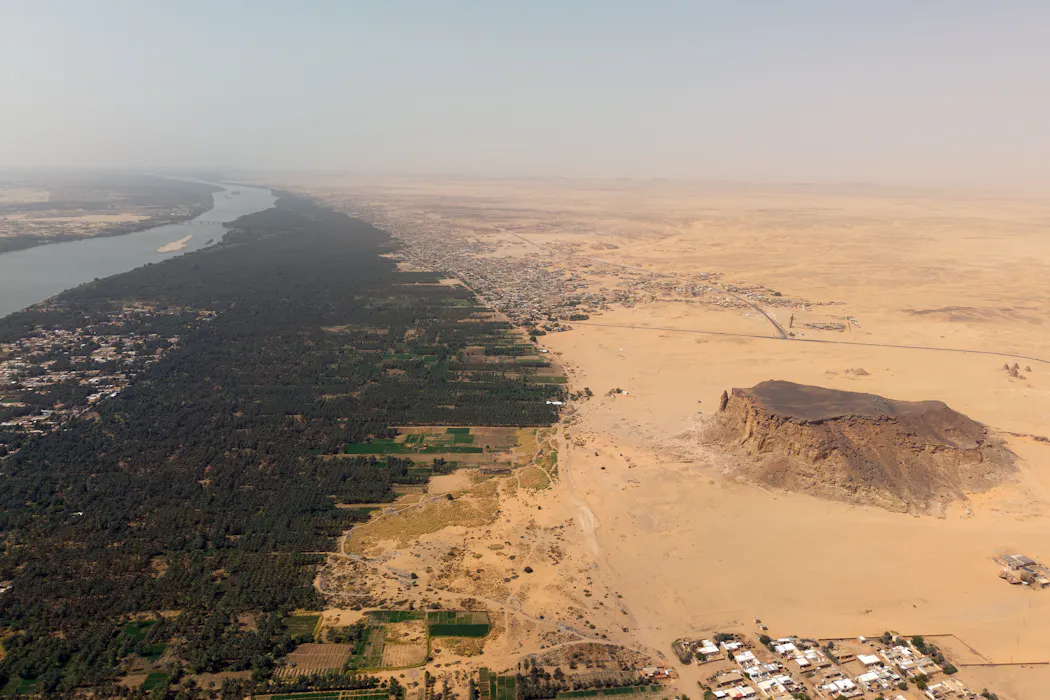
Jebel Barkal mesa and the archaeological site at its base in the Nile Valley. Sami Elamin

When I first became co-director of an archaeological project at Jebel Barkal in northern Sudan in 2018, I was amazed by the site’s pyramids, temples and palaces. It had been an urban center in the ancient empire of Kush, which dominated the Nile Valley off and on for over 2,000 years, from 2000 B.C.E. to 350 C.E.

Panoramic view of a sandy landscape with a large mesa on the right and smaller pyramids in the distance, all against a blue sky.
Panorama of Jebel Barkal with royal pyramids at left. Gregory Tucker

I was far from alone in admiring the ruins – European and American travelers have visited and archaeologists had documented the site for the past two centuries. More recently, Jebel Barkal was recognized as a UNESCO World Heritage site in 2003.

But researchers still know so little about the ancient city and its residents, particularly compared with other ancient cities of Egypt, Assyria, Greece and Rome. Where did nonroyal people live? What did they eat? We don’t even know how they got their water, since the site is about a mile away from where the Nile flows today. Could there have been a nearby channel of the Nile that has since filled in? What was this landscape like when Jebel Barkal was a major urban center? More broadly, how did changes in climate over the past 4,000 years affect the growth of the city?

Some of these questions can be studied by a field called geomorphology, the study of how the Earth’s surface changes, especially by erosion. To learn more about how the landscape around Jebel Barkal had changed over millennia, I invited two Dutch geomorphologists, Jan Peeters and Tim Winkels, who had previously worked on Nile landscapes in Egypt, to come to Sudan to design a study.

The Nile as a source of life

Map of northeastern Africa showing the path of the Nile River
The Nile runs through Sudan, past the ancient city of Jebel Barkal and then through Egypt before reaching the Mediterranean Sea. Peeters et al PNAS 2026, CC BY

The Nile floods at the end of every summer, as rains from the Indian Ocean monsoon fall on the highlands of East Africa. The ancient historian Herodotus famously called Egypt “the gift of the Nile” because in Egypt. the rich silt the floods deposited every year made for fertile fields. Egyptians retained the floodwaters in ponds and basins to use later for irrigation.

Upstream in Sudan, however, the underlying geology and geomorphological setting is different. This stretch of the Nile is interrupted by bedrock outcrops that break the flow of the river by what are called cataracts: islands, rapids and even small waterfalls.

The Nile also cuts more deeply into the bedrock and is more confined to the riverbed in Sudan than in Egypt. The floodplains here are generally more limited. As a result, it’s harder to hold onto water to use for irrigation after the annual flood has passed.

Our team wanted to understand how the ancient city interacted with the Nile and how that relationship developed through time as climate and the local environment shifted. Our recent study, published in the Proceedings of the National Academy of Sciences, looked at how the Nile channel and floodplain and Jebel Barkal evolved over centuries.

Map of where the team took the sediment cores in the Nile River valley.
The team extracted soil samples in a line that stretched across both sides of the Nile River and in another line closer to Jebel Barkal. Peeters et al PNAS 2026; background WorldView-3 satellite imagery © 2025 Maxar Technologies, CC BY

To learn about the ancient landscape, we collected 26 sediment cores, averaging 26 feet (8 meters) in depth and 3 inches (8 centimeters) in diameter. These cores are like time capsules that preserve the stacked layers of sediment from Nile floods that accumulated gradually over thousands of years. Connecting the dots, 17 of our cores formed a line across the Sudanese Nile valley. A second group of nine cores focused on the area where the ancient city developed.

The work was physically challenging, due both to the unrelenting Saharan sun and the depth of the sediments. Together with a team of five local men, we spent weeks drilling the cores using hand augurs and a gas-powered drill.

Four men focus on a piece of drilling equipment on the sandy land on the side of an unpaved road.
The team works to drill and extract a core that will stretch from today’s surface of the Earth down an average depth of 26 feet (8 meters). Pawel Wolf

Hatim Awad Abdullah was this group’s energetic leader. He had his own interest in the history of Nile flooding, in part because his father and grandfather had told him that the river used to flood different areas than it has in more recent times. Our conversations with Hatim were part of a broader effort on our project to engage members of the local community, and they informed and enriched our understanding of the landscape. Other projects in Sudan have taken similar steps toward community engagement.

Extracting info from the sediment layers

Once our team had extracted the long sediment cores, we laid them out in sections so the geomorphologists could document what was in them at different levels. Sediments at the top of the cores are more recent, those lower down come from earlier in time.

Long, thin cylinders lie on the dusty ground, revealing dirt in their interiors.
The cores were removed in 3-foot (1-meter) segments that preserved the layers of sediment. Pawel Wolf

Finer clays, silts and coarser sands would all have been deposited by different processes. Gentle flooding from the Nile could have carried some of these particles. More turbulent water draining from the desert via seasonal drainage channels called wadis might have brought others. By working from the deepest, oldest parts of the core samples to the ground surface, the geomorphologists could reconstruct a sequence of flooding and sediment deposition over thousands of years.

Our next step was to try to establish dates for when the sediments at different levels were deposited. One set of information came from fragments of ancient pottery found in some of the cores. Our team’s ceramic specialist, Saskia Büchner-Matthews, was able to analyze these small pieces and could often tell by their color, texture and shape when they had been made.

Another line of evidence relied on a technique called optically stimulated luminescence dating. By measuring the energy given off by minerals in the sample, like quartz grains, this amazing technique establishes when a sediment was last exposed to light. In order for optically stimulated luminescence dating to work, the samples need to be kept in the dark, so we had to be careful that our sediments were collected in black opaque tubes. Our team member Liz Chamberlain did this labor-intensive analysis in a specialized lab at Wageningen University in The Netherlands.

Our results show, first of all, that there had been an ancient Nile channel close to Jebel Barkal, but more like 10,000 years ago – millennia before the people of Kush built their city here. By the time the site was first occupied around 2000 B.C.E., that channel had long since filled in. So we still don’t know for sure how the people of Jebel Barkal got their water, but it’s clear that the Nile wasn’t running right next to the city.

Cross-section diagram of the Nile River channel at five different times.
This schematic reconstruction illustrates how the Nile channels and floodplain changed over time to the present condition in the top image. Peeters et al PNAS 2026, CC BY

The data also shows that the floodplain began to build up from regular Nile flooding starting around 2000 B.C.E. This process continued until the early 20th century, when upstream dam construction altered the Nile’s natural flood regime. That gentle accumulation of fertile soil in the floodplain, which the people of Jebel Barkal used as agricultural fields, encompasses nearly the entire ancient history of the city.

The cores our team drilled show that the city grew during a time of abundant rains and productive, predictable Nile flooding that provided fertile soil for agriculture. It doesn’t look like local climate change is the reason Jebel Barkal eventually went into decline.

Our scientific results lend new weight to an inscription of the ancient Kushite king Taharqo, who ruled over both Nubia and Egypt from about 690-664 BCE. It records a gentle and particularly abundant flood in the sixth year of his reign.

“When the time for the rising of the Inundation came, it continued rising greatly each day and it passed many days rising at the rate of one cubit every day.

"It penetrated the hills of South-land, it overtopped the mounds of North-land, and the land was (again) Primeval Waters, an inert (expanse), without land being distinguishable from river. …

"Every man of Nubia was inundated with an abundance of everything, Egypt was in beautiful festival, and they thanked the god Amun for His Majesty.”

This research has been particularly satisfying for me because it helps build a richer picture of life in ancient Sudan, comparable in depth and detail to what we know about other ancient civilizations.

The Conversation

Geoff Emberling has received funding from the U.S. Department of State (through its Ambassadors Fund for Cultural Preservation), the National Endowment for the Humanities, National Geographic, and private donors including Kitty Picken, Steve Klinsky, and Roger and Ann Cogswell. In addition to his position at the University of Michigan, he is a board member of the International Society for Nubian Studies and Secretary of the American Sudanese Archaeological Research Center.

A fungal disease, along with climate change, threatens Colorado’s prized peaches

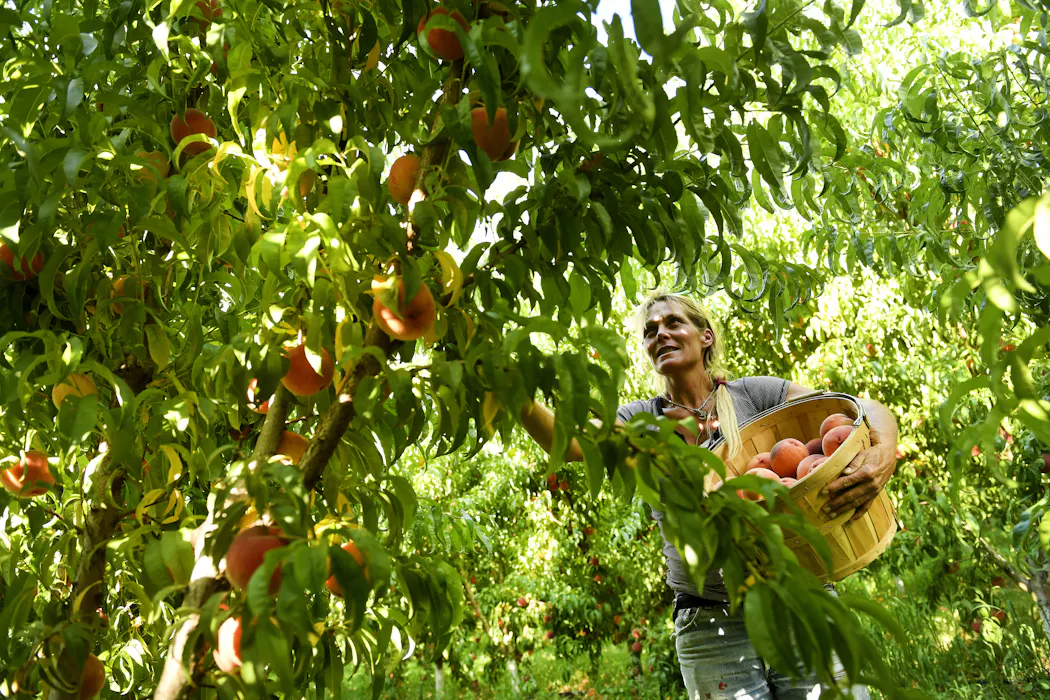
Colorado's peach industry is threatened by a fungal disease. Helen H. Richardson/The Denver Post via Getty Images

In western Colorado, home to the treasured Palisade peach, cytospora canker is one of the most economically consequential fungal diseases faced by growers.

A recent survey conducted by Colorado State University in Orchard Mesa found that 100% of the orchards have trees infected with cytospora canker. In some orchards, you can smell the sweetness of gummosis, the sweet oozing of sap from a tree that occurs from injury, stress, pathogen infection or insect damage.

We are part of a team of fruit tree growers, extension personnel and researchers who are developing tools for mitigating cytospora canker in fruit tree orchards in Colorado and Utah.

In a study we published, we estimate this disease results in at least US$3 million in annual economic losses for growers in Colorado. In infected large branches, which are called scaffolds, the damage can result in a 50% loss of peaches per tree.

Peaches were first planted in Palisade and Grand Junction in 1882 by one of the first white settlers to the area, John Harlow. Peaches and other fruit trees have been Colorado staples ever since. In 2024, Colorado farmers produced roughly 15,000 tons of peaches valued at $34 million.

However, fruit tree production in the Intermountain West, which covers Colorado, Utah and Idaho, is threatened by diminishing water supplies, spring frosts, variable winter temperatures and soils that are above the ideal pH range for peach trees. Further exacerbating the environmental stresses are pest problems and the persistent cytospora canker disease.

What is cytospora canker?

Cytospora canker is caused by fungi within the genus Cytospora. These pathogens are found globally and affect more than 70 species of woody shrubs and trees. These fungi have been present on fruit trees in the U.S. since at least 1892 when cytospora canker was first discovered on peach, plum and almond trees in Pennsylvania and New Jersey. Cytospora canker was first described as only a disease of stressed trees, but now it is recognized as a destructive disease in tree fruit across the U.S.

Plant Talk Colorado: What is cytospora canker? A video from Colorado State University Extension.

Growers expect peach trees to live for 20 years. The first five of those years are initial growth. The next 10 years are full production. Then, the tree’s productivity tapers off in the last five years of its life. The disease has halved the life of an orchard in Colorado from 20 years to 10 years or fewer. Trees that get infected during the first or second year are typically dead by year four or five before they reach peak production.

Cytopora canker typically enters through wounded and woody branches or twigs. Wounding occurs when branches are pruned to maintain tree vigor or through severe freezing or hail events. Freeze events are common in Colorado and are particularly harmful in the fall if temperatures drop abruptly without giving trees enough time to acclimate to the temperature shift.

Ice formation within plants causes swelling and cracking in woody tissues, as well as the formation of ice crystals within plant cells that can puncture the cells, leaving them vulnerable to oxidative damage and infection. Small cracks enable cytospora spores, like the seeds of a plant, to enter and begin to cause infections.

Cytospora canker and freeze

In 2020, a major freeze event damaged many trees throughout Colorado.

Following a warm October, temperatures dropped from 65 degrees Fahrenheit (18 degrees Celsius) to below 10 F (-23 C) in a 48-hour time span in the fruit region around the town of Hotchkiss. Because the recent temperatures had been in the 70s, there was not an appropriate amount of acclimation in the trees to be prepared for this large temperature drop. Leaves were still green, and sap was still flowing through the woody tissues.

The damage from this single freeze directly led to the death of tens of thousands of peach trees across the western slope of Colorado.

The sudden freeze also allowed for a proliferation of new cytospora canker infections on peaches trees that were not killed outright by the freeze. The surviving trees were often more vulnerable because the cracked skin and bark of peach branches was now exposed to infection by the fungus. This correlation between cytospora infection and cold damage is thought to be a major reason why cytospora canker is a particularly significant disease in Colorado.

To manage the pathogen, growers can remove trees that are infected, protect wounds with chemicals to prevent new infections and ensure that established trees are free of stress. However, management strategies have limited efficacy due to the growing conditions. While Palisade has the most ideal peach-growing microclimate in Colorado, the cold season is near the limits of what peaches can tolerate.

In April 2026 there were several nights when the temperatures reached into the low 20s F (-7 degrees C) in different orchards in Delta County, Colorado. Fruit had already started to grow and was very susceptible to the cold temperatures. As a result, growers around Hotchkiss and Paonia lost their peach crop.

Palisade orchards avoided that level of damage because on those same nights the temperatures dropped only to the upper 20s F (-2 degrees C), which damaged some fruit but left enough behind to have a full crop in most cases. Spring frosts like these reduce fruit production but generally aren’t going to contribute to increased proliferation of cytospora canker.

Solutions in progress

Researchers from Colorado State University are working toward developing strategies to combat this disease. Our team has developed chemical options for conventional and organic growers that have helped slow the spread. We are determining whether some peach cultivars are tolerant to the pathogens, and we are continuing to understand the population biology of cytospora to help us develop new management strategies.

The pathogen can be spread through air, on insects, during irrigation and possibly with the movement of new peach trees into orchards. Many fungi that produce cankers in trees can move spores only short distances through rain splash. But spores of the fungus have been found in collection traps about 250 feet (76 meters) from a tree with canker that is making spores.

We have established the cytospora working group as a collaborative research, extension and grower group to collectively develop solutions for cytospora canker. We are continuing to better understand factors involved in disease development and establish best management practices to help growers combat this disease and keep the Colorado peach industry vibrant.

Read more of our stories about Colorado.

The Conversation

Jane Stewart receives funding from USDA NIFA AFRI.

David Sterle does not work for, consult, own shares in or receive funding from any company or organization that would benefit from this article, and has disclosed no relevant affiliations beyond their academic appointment.
100 million African children are not in school. What’s driving the trend and how to reverse it

Many countries across Africa have embraced universal basic education policies in recent decades. But recent data has revealed that more than 100 million children and adolescents remain out of school, out of a total potential population of 469 million. The latest statistics suggest that after some years of progress, the situation is deteriorating. Education and youth empowerment scholar Moses Ngware and his co-researchers recently carried out an analysis of trends going back 25 years. Their main findings are set out below.

What are the school attendance trends in Africa across all age groups?

In 2000, the number of out-of-school children in primary school, lower secondary and upper secondary was above 100 million. It was down to about 90 million in 2014, and then up again to 100 million by 2025.

Viewed against Africa’s high population growth of above 2.5%, these absolute numbers suggest that school participation is not keeping pace.

Nevertheless, between 2000 and 2024, the proportion of out-of-school children and adolescents declined at all education levels. It fell from 37% to 20% for primary schools; from 47% to 35% for lower secondary and from 56% to 47% for upper secondary school-age children. This is despite the absolute numbers of out-of-school children remaining high.

Countries that showed greatest improvement included Côte d’Ivoire, Ethiopia, Guinea, Madagascar and Mozambique. Improvements were driven by at least two main factors. First, targeted policy responses that enabled them to achieve good coverage in a short time. Second, a strong political will combined with a multi-sectoral approach. The approaches included combining conditional cash transfers for households, food supplies, expanding access to schools and implementing universal education policies that reduce cost of schooling for households.

On the other hand, there are countries that made little or no progress. They include Angola, Cape Verde, Lesotho, South Sudan and Zimbabwe. The main drivers of the low progress are:

  • political instability, as seen in South Sudan

  • poor economic performance, as witnessed in Zimbabwe

  • the high opportunity cost of schooling, as seen in Lesotho, where boys drop out due to poverty related coping mechanisms, including herding cattle, with only one in every five boys completing grade 12.

What are the notable changes in recent years?

In the past five years, we have seen a steady increase in absolute numbers of out-of-school children and adolescents from 95 million to 100 million, with an average of about 1 million children either not transitioning from primary to secondary school or leaving school or not joining school at all.

There are two main drivers of such a trend. First, finance – the fizzling effect of the universal basic education subsidies of the early 2000s. These subsidies made basic education affordable to many households. Of the 42 African countries with free education in their policies, only three were in a position to offer free schooling in 2025. Donor funding of education by multilateral organisations has also been reduced, with education aid in Africa declining by 7% in 2024. Second, the negative impact of COVID-19, with about 10 million who left school due to the lockdowns never to return, for various reasons, including forced marriages among girls and child labour for boys.

Across all the schooling levels, higher than before rates of out-of-school children and adolescents were observed in the Sahel region, in Central African Republic, Chad, Mauritania and northern Nigeria. These countries or regions are characterised by politically motivated violence, harsh climatic changes and a history of low school participation.

Why is school completion important for societies?

The main benefits to societies of school completion include transition to decent work, girls’ empowerment, and improved health outcomes. An additional year of schooling increases an individual’s lifetime earnings by about 10% on average, with a potential to increase an individual’s purchasing power. Such benefits can also trickle down to households through providing household financial stability and enhanced family support.

For girls, school completion is critical for participation in decision making at societal level. Research shows that a woman’s power to make decisions, such as education for her children or where to invest, increases with education attainment. This has a bearing on economic independence and gender equity within the society.

Furthermore, and related to these two benefits, children of mothers who have completed secondary education have a 45% lower under-3 mortality rate. This implies that such children have about half the risk of death before age 3 compared to those born to mothers with no education.

What are the gender dynamics?

By 2025, the proportion of males that were out of school, at 51%, was only slightly higher than that of females. However, the out-of-school female rate was on the rise – up by two percentage points in 10 years.

If this growth continues, then the proportion of out-of-school females will overtake that of males in the coming years. This will compound the vulnerabilities disadvantaged girls face in their schooling journey and transition to work.

In addition, the gains made in the last three decades in closing gender gaps in education will be eroded. Eroding the gains made in education has severe consequences, especially for girls. For instance, we are likely to see an increase in females getting married much earlier, and child bearing among adolescents may also increase.

What lessons can we learn from the better-placed countries?

There are a number of important lessons to be learnt from countries that have lowered the number of out-of-school children and adolescents.

First, Algeria, Ghana, Kenya and Rwanda have relied on a strong national policy framework backed by political good will, high-level central coordination and donor-partner support.

Second is the importance of targeted social support such as school feeding and conditional cash transfers. Close evaluations using hard data are needed.

Third is the elimination of significant direct fees or levies at basic education level, with timely financial disbursements and school supplies.

Fourth is the lesson that affirmative action for vulnerable populations is an invaluable investment. These populations include disadvantaged girls, children from remote rural areas, children with disabilities, and children from poor households.

Finally, there are other interventions that can add value depending on the context. These include reducing travel distance through expanding infrastructure, and flexible school entry, such as late entry to improve participation. Another is catch-up programmes, which means accelerating progression to recover lost time and learning.

The Conversation

Moses Ngware receives funding from. African Population and Health Research Center (APHRC)

Rice feeds billions of people – but its role in fueling climate change is growing

Rice paddies are essential to lives and livelihoods in many parts of Asia. Jingting Zhang

Rice feeds more than half the world. From terraced paddies in Southeast Asia to irrigated fields in China and India, it underpins daily meals for billions of people.

But the same flooded soils that help rice thrive also create ideal conditions for microbes that release climate-warming gases.

In a new study, our team of environment and agriculture scientists found that greenhouse gas emissions from rice paddies have nearly doubled globally since the 1960s, averaging about 1.1 billion tons of carbon dioxide-equivalent emissions per year in the 2010s. That’s roughly equal to the annual emissions of 239 million cars.

This makes rice-growing the largest emissions source in agriculture outside of livestock, and rice demand is expected to keep rising.

Farmers have ways to reduce their rice crops’ emissions without lowering their yields. If every grower used the best currently available “climate-smart” options, we found that global rice emissions could be reduced by about 10% by midcentury. However, greater reductions are needed to slow climate change, which would require developing additional, more effective strategies.

Why rice emissions have increased

Rice emissions have risen for two reasons: the expansion of rice cultivation area and the intensification of management practices.

Just over half of the global increase is from the expansion of rice-growing areas. In Africa, for example, the rice-growing area has roughly doubled since the 1960s, helping drive a twofold rise in methane emissions in the region.

At the same time, rice farmers are using more fertilizers and organic amendments, such as straw and manure, planting more productive rice varieties and growing the plants closer together. The result is more rice but also more greenhouse gas emissions.

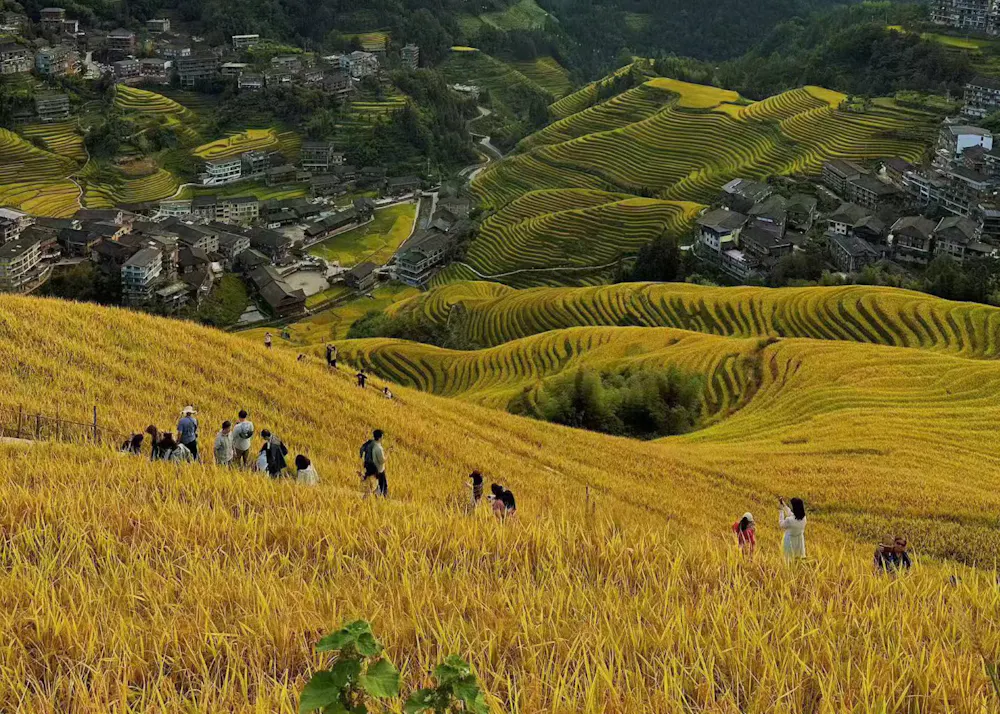
People walk through a rice field on a hill with golden crops and more hills in the distances.
After rice is harvested, one technique for improving soil fertility is to plow the dried rice stalks back into the soil. But this also increases methane emissions. Jingting Zhang

We found that one practice in particular – leaving rice stalks in the field after harvest and then plowing them into the soil to improve soil fertility – was responsible for about 18% of rice’s increase in overall net emissions since the 1960s. The reason: It increases the organic matter in the soil, which microbes then decompose, creating more methane emissions.

Rising global temperatures further accelerate microbial activity in the soils, meaning even more emissions.

Fertilizer is another major contributor to emissions. Use of synthetic nitrogen increased by about 76% after 2000, boosting nitrous oxide – another powerful greenhouse gas. It contributed about 9% of the increase in total global net emissions from human activities.

Irrigation practices also affect emissions. In the past, irrigated rice paddies were kept flooded throughout the growing season, resulting in constant greenhouse gas emissions produced by microbes that thrive in the wet environment. Over the past two decades, however, more farmers have used intermittent flooding – draining their fields periodically.

This change has lowered methane emissions compared with keeping the paddies continuously flooded. However, we found a slight increase in nitrogen oxide emissions as soils cycled between wet and dry, which induces microbes to transform nitrogen in organic matter into nitrogen oxide gases, particularly nitrous oxide.

Climate impact of rice production

Putting a full climate price tag on rice production is harder than measuring one greenhouse gas at a time.

Rice paddies emit methane and nitrous oxide from wet or flooded soils. They also remove carbon dioxide from the atmosphere as rice grows, and they lose carbon from their soils between crop seasons.

A credible global estimate requires consistently accounting for different gases and soil carbon changes, as well as the uncertainty involved in tracking data across space and time.

To do that, we combined three approaches:

  • An ecosystem computer model allowed us to simulate crop growth, water conditions and soil processes to estimate changes in methane, nitrous oxide and soil carbon together.

  • An artificial intelligence-powered machine learning model improved estimates where measurements were sparse to cover all rice regions in the world.

  • And a meta-analysis of more than 1,200 field experiment sites provided direct evidence of how practices such as irrigation, fertilizer use and management of crop residue affect emissions.

Together, they allowed us to quantify emissions from 1961 to 2020, determine what drove those emissions, and test the potential of mitigation techniques under future climate conditions.

What works and doesn’t for climate mitigation

There are ways to reduce emissions from rice production without sacrificing yield.

Our study found that reducing fertilizer use and residue applications, managing irrigation to allow dry periods in between flooded ones and reducing tillage could, together, reduce global greenhouse gas emissions from rice by about 10% by midcentury.

We were surprised to find that replacing chemical fertilizers with more organic choices is not always better from a greenhouse gas perspective, although it is valued in organic farming.

Maintaining moderate amounts of straw and other crop residue in the field can help boost soil fertility, but too much can increase methane emissions and accelerate the loss of carbon from the soil. Another option is to convert part of the residue into biochar – burning it under low-oxygen conditions before mixing it into flooded soils. Biochar can help stabilize soil carbon and reduce methane emissions.

A view across flooded rice paddies with mountains in the distance.
Rice has long been grown in flooded fields, which promotes methane production. By intermittently draining the fields, researchers found farmers could reduce their fields’ methane emissions. Jingting Zhang

Improving water management can be a powerful tool for reducing emissions. Periodically draining fields reduces methane production, though it may slightly raise nitrous oxide emissions. This strategy is particularly effective in regions with reliable irrigation infrastructure, including large parts of Asia.

Managing fertilizer use is also an effective mitigation strategy, particularly in highly fertilized systems, including parts of China and South Asia. Excess nitrogen increases nitrous oxide without a clear increase in crop yields and increases water pollution. Reducing overapplication of nitrogen reduces emissions and water pollution, and it saves farmers money in the process.

The effects of tilling, the practice of plowing the soil between crop seasons, have large regional differences. Reducing tilling is often promoted as climate-friendly, but we found that it does not always minimize net emissions in flooded systems. In rice fields in temperate zones, including much of the U.S. and China, cooler conditions can limit methane production, allowing the soil carbon benefits of reduced tilling to outweigh the methane risk. In warmer, persistently flooded systems, however, low-oxygen conditions can boost microbial activity, increasing methane production and accelerating soil carbon loss.

Overall, we found that no single practice works everywhere. Each region will need to assess the most effective practices for reducing emissions.

A climate ceiling for rice production

The bottom line is both hopeful and sobering: Targeted sets of optimized practices can deliver meaningful emission reductions without losing rice yields, but the total global possible reduction is modest.

To reduce emissions further will require better guidance to help farmers determine the best levels of organic amendments, such as straw or biochar, and new approaches that can reduce emissions without undermining rice production.

The Conversation

Hanqin Tian receives funding from US Department of Agriculture, US National Science Foundation, and Andrew Carnegie Fellowship Program.

Pep Canadell receives funding from the Australian National Environmental Science Program-Climate Systems Hub.

Shufen (Susan) Pan receives funding from U. S. National Science Foundation

Jingting Zhang does not work for, consult, own shares in or receive funding from any company or organization that would benefit from this article, and has disclosed no relevant affiliations beyond their academic appointment.

Rice feeds billions of people – but its role in fueling climate change is growing

Rice paddies are essential to lives and livelihoods in many parts of Asia. Jingting Zhang

Rice feeds more than half the world. From terraced paddies in Southeast Asia to irrigated fields in China and India, it underpins daily meals for billions of people.

But the same flooded soils that help rice thrive also create ideal conditions for microbes that release climate-warming gases.

In a new study, our team of environment and agriculture scientists found that greenhouse gas emissions from rice paddies have nearly doubled globally since the 1960s, averaging about 1.1 billion tons of carbon dioxide-equivalent emissions per year in the 2010s. That’s roughly equal to the annual emissions of 239 million cars.

This makes rice-growing the largest emissions source in agriculture outside of livestock, and rice demand is expected to keep rising.

Farmers have ways to reduce their rice crops’ emissions without lowering their yields. If every grower used the best currently available “climate-smart” options, we found that global rice emissions could be reduced by about 10% by midcentury. However, greater reductions are needed to slow climate change, which would require developing additional, more effective strategies.

Why rice emissions have increased

Rice emissions have risen for two reasons: the expansion of rice cultivation area and the intensification of management practices.

Just over half of the global increase is from the expansion of rice-growing areas. In Africa, for example, the rice-growing area has roughly doubled since the 1960s, helping drive a twofold rise in methane emissions in the region.

At the same time, rice farmers are using more fertilizers and organic amendments, such as straw and manure, planting more productive rice varieties and growing the plants closer together. The result is more rice but also more greenhouse gas emissions.

People walk through a rice field on a hill with golden crops and more hills in the distances.
After rice is harvested, one technique for improving soil fertility is to plow the dried rice stalks back into the soil. But this also increases methane emissions. Jingting Zhang

We found that one practice in particular – leaving rice stalks in the field after harvest and then plowing them into the soil to improve soil fertility – was responsible for about 18% of rice’s increase in overall net emissions since the 1960s. The reason: It increases the organic matter in the soil, which microbes then decompose, creating more methane emissions.

Rising global temperatures further accelerate microbial activity in the soils, meaning even more emissions.

Fertilizer is another major contributor to emissions. Use of synthetic nitrogen increased by about 76% after 2000, boosting nitrous oxide – another powerful greenhouse gas. It contributed about 9% of the increase in total global net emissions from human activities.

Irrigation practices also affect emissions. In the past, irrigated rice paddies were kept flooded throughout the growing season, resulting in constant greenhouse gas emissions produced by microbes that thrive in the wet environment. Over the past two decades, however, more farmers have used intermittent flooding – draining their fields periodically.

This change has lowered methane emissions compared with keeping the paddies continuously flooded. However, we found a slight increase in nitrogen oxide emissions as soils cycled between wet and dry, which induces microbes to transform nitrogen in organic matter into nitrogen oxide gases, particularly nitrous oxide.

Climate impact of rice production

Putting a full climate price tag on rice production is harder than measuring one greenhouse gas at a time.

Rice paddies emit methane and nitrous oxide from wet or flooded soils. They also remove carbon dioxide from the atmosphere as rice grows, and they lose carbon from their soils between crop seasons.

A credible global estimate requires consistently accounting for different gases and soil carbon changes, as well as the uncertainty involved in tracking data across space and time.

To do that, we combined three approaches:

  • An ecosystem computer model allowed us to simulate crop growth, water conditions and soil processes to estimate changes in methane, nitrous oxide and soil carbon together.

  • An artificial intelligence-powered machine learning model improved estimates where measurements were sparse to cover all rice regions in the world.

  • And a meta-analysis of more than 1,200 field experiment sites provided direct evidence of how practices such as irrigation, fertilizer use and management of crop residue affect emissions.

Together, they allowed us to quantify emissions from 1961 to 2020, determine what drove those emissions, and test the potential of mitigation techniques under future climate conditions.

What works and doesn’t for climate mitigation

There are ways to reduce emissions from rice production without sacrificing yield.

Our study found that reducing fertilizer use and residue applications, managing irrigation to allow dry periods in between flooded ones and reducing tillage could, together, reduce global greenhouse gas emissions from rice by about 10% by midcentury.

We were surprised to find that replacing chemical fertilizers with more organic choices is not always better from a greenhouse gas perspective, although it is valued in organic farming.

Maintaining moderate amounts of straw and other crop residue in the field can help boost soil fertility, but too much can increase methane emissions and accelerate the loss of carbon from the soil. Another option is to convert part of the residue into biochar – burning it under low-oxygen conditions before mixing it into flooded soils. Biochar can help stabilize soil carbon and reduce methane emissions.

A view across flooded rice paddies with mountains in the distance.
Rice has long been grown in flooded fields, which promotes methane production. By intermittently draining the fields, researchers found farmers could reduce their fields’ methane emissions. Jingting Zhang

Improving water management can be a powerful tool for reducing emissions. Periodically draining fields reduces methane production, though it may slightly raise nitrous oxide emissions. This strategy is particularly effective in regions with reliable irrigation infrastructure, including large parts of Asia.

Managing fertilizer use is also an effective mitigation strategy, particularly in highly fertilized systems, including parts of China and South Asia. Excess nitrogen increases nitrous oxide without a clear increase in crop yields and increases water pollution. Reducing overapplication of nitrogen reduces emissions and water pollution, and it saves farmers money in the process.

The effects of tilling, the practice of plowing the soil between crop seasons, have large regional differences. Reducing tilling is often promoted as climate-friendly, but we found that it does not always minimize net emissions in flooded systems. In rice fields in temperate zones, including much of the U.S. and China, cooler conditions can limit methane production, allowing the soil carbon benefits of reduced tilling to outweigh the methane risk. In warmer, persistently flooded systems, however, low-oxygen conditions can boost microbial activity, increasing methane production and accelerating soil carbon loss.

Overall, we found that no single practice works everywhere. Each region will need to assess the most effective practices for reducing emissions.

A climate ceiling for rice production

The bottom line is both hopeful and sobering: Targeted sets of optimized practices can deliver meaningful emission reductions without losing rice yields, but the total global possible reduction is modest.

To reduce emissions further will require better guidance to help farmers determine the best levels of organic amendments, such as straw or biochar, and new approaches that can reduce emissions without undermining rice production.

The Conversation

Hanqin Tian receives funding from US Department of Agriculture, US National Science Foundation, and Andrew Carnegie Fellowship Program.

Pep Canadell receives funding from the Australian National Environmental Science Program-Climate Systems Hub.

Shufen (Susan) Pan receives funding from U. S. National Science Foundation

Jingting Zhang does not work for, consult, own shares in or receive funding from any company or organization that would benefit from this article, and has disclosed no relevant affiliations beyond their academic appointment.

❌
Subscriptions