Normal view

The war in Iran – again – points to the strategic shortcomings of assassination as policy of foreign affairs

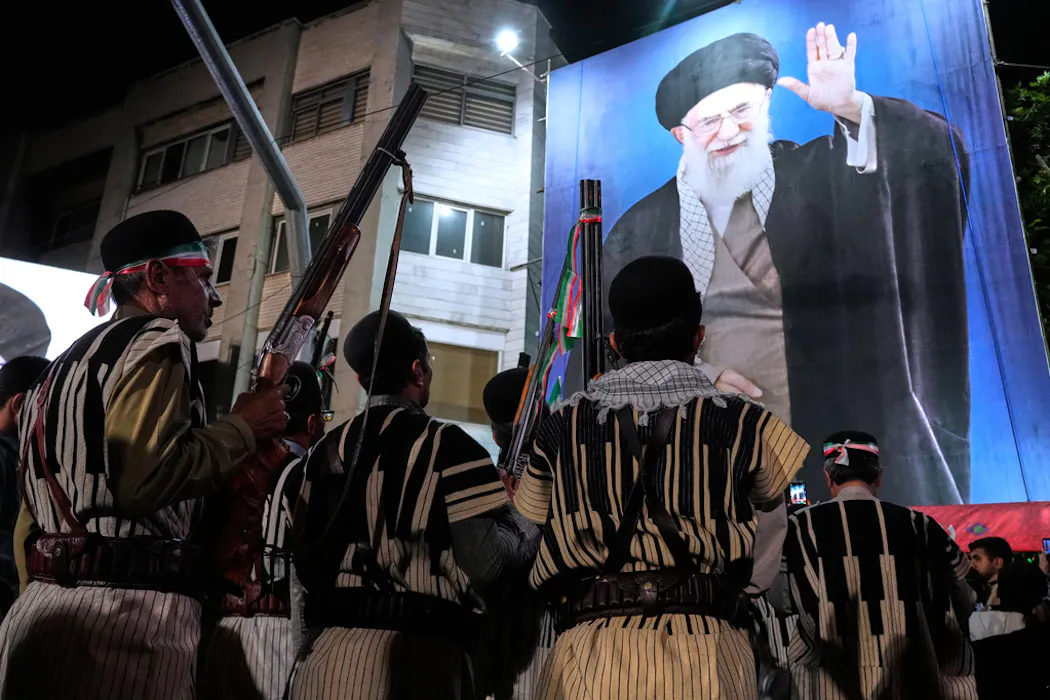
Iranians hold their guns during a pro-government gathering near the residence where former Iranian Supreme Leader Ayatollah Ali Khamenei was killed. AP Photo/Vahid Salemi

The coordinated U.S.-Israeli strikes at the outset of the war in Iran killed Supreme Leader Ali Khamenei, along with other key regime figures. In doing so, the United States and Israel crossed what The New York Times and others described as “a new Rubicon”: the deliberate, overt killing of a head of state.

President Donald Trump and Israeli Prime Minister Benjamin Netanyahu framed their war not simply as retaliation or coercion, but as an opening for political collapse. Remove enough of the leadership, the logic ran, and the structure beneath it either breaks apart or becomes vulnerable enough for a public uprising to finish the job.

Yet as a former senior U.S. intelligence officer who held leadership roles at the CIA and National Counterterrorism Center, I believe such triumphalist logic masks the strategic shortcoming of such targeted killings.

Disruption is not the same as collapse

Most scholars, too, have concluded that targeted killings or assassinations, often referred to as leadership decapitation, can disrupt operations and degrade organizational effectiveness. Under some conditions, they can even force the targeted side to capitulate. But they rarely lead to collapse.

The work of Jenna Jordan, a scholar of international relations at Georgia Tech, remains one of the clearest warnings against inflated expectations about anticipated effect of such strikes. Across a large body of cases of targeting killings of non-state militant groups, she found that older, larger, more institutionalized organizations are harder to break down through leadership removal than small, young, weakly structured ones.

Patrick Johnston, a former director of the Counterterrorism Center at West Point who has studied counterinsurgency campaigns, found more evidence that decapitation can help end conflicts than Jordan did. Other research has backed-up Johnston’s conclusion that some terrorist groups are vulnerable to leadership targeting.

But even these more favorable studies point to only conditional gains; they do not treat decapitation as a path to automatic political success or as a substitute for broader strategy.

Targeting heads of state is even more fraught

In counterterrorism efforts, disruption may be a good enough outcome for policymakers. Indeed, if the objective is to delay attacks or degrade operational effectiveness, leadership removal can have value. That was how the U.S. campaign against al-Qaeda was generally understood by American policymakers. Even Osama bin Laden’s death and repeated strikes against senior deputies were treated as major blows, not as proof that the organization had ceased to exist or no longer mattered as an operational threat.

Smoke rises from an airstrike.
Portraits of Hezbollah’s late leaders Hassan Nasrallah, right, and his cousin, Hashem Safieddine, are seen, as smoke rises following an Israeli airstrike in Beirut’s southern suburbs on March 30, 2026. AP Photo/Hassan Ammar

Yet when the target is a state, the political bar is even higher. Tactical disruption is, again, not the same as political collapse. It is also not the same as creating a more favorable bargaining environment for the country relying on assassinations.

That distinction matters because recent scholarship has found that killing or capturing leaders may weaken an adversary on the battlefield but does not necessarily tell us how an adversary will respond politically — whether it becomes more willing to bargain, less able to negotiate, or more determined to keep fighting.

Removing another country’s leaders may weaken it in the short term, while changing who is left to negotiate, compromise or escalate. A strike could therefore succeed operationally while narrowing the political options that follow.

Iran’s response to the initial killing of senior leaders in the opening days of the current conflict illustrates the point. Khamenei’s death staggered the government, but it did not break it. Within little more than a week, Iran’s Assembly of Experts appointed Mojtaba Khamenei, his son, as supreme leader.

The government redistributed authority through institutions built to survive political shock: the clerical establishment, the Islamic Revolutionary Guard Corps, and the broader security bureaucracy.

The assassinations did not create a pathway for coercion, negotiation, or popular uprising. Indeed, as the ongoing lack of a long-term resolution to the conflict shows, the Trump administration is not now dealing with a more pliable Iran. Rather, it is facing a state steered by a successor leadership with an agenda even more hostile to U.S. policy in the Middle East, stronger incentives to prolong the conflict and a demonstrated willingness to absorb the pain of defiance.

Israel has long used targeted killing to disrupt adversaries — most visibly in its recent campaigns against Hamas and Hezbollah — but the Iran case shows the danger of turning the tool into a theory of political transformation.

A broader phenomenon

That same gap between tactical achievement and strategic effect appears in other settings as well.

Recent scholary work on criminal organizations in Latin America finds that state decapitation campaigns are often associated with short-term increases in violence, including clashes with state forces, even when they damage the targeted organization.

For example, in February 2026, Mexican forces killed Nemesio Oseguera Cervantes, better known as El Mencho, the head of the Jalisco New Generation Cartel. Yet, according to reporting, the organization continues to operate, with its core operations and networks largely intact. Meanwhile, reprisals followed quickly: 25 members of Mexico’s National Guard were killed and blockades and arson was seen across several states.

Newspapers hang on display at a kiosk.
Newspapers hang on display for sale in Mexico City a day after the Mexican army killed Jalisco New Generation Cartel leader Nemesio Oseguera Cervantes, known as AP Photo/Jon Orbach

Leadership removal imposed a tactical cost, but it did not translate neatly into strategic collapse.

And yet the appeal persists

So why does decapitation remain so attractive? James Walsh, a scholar of political violence, intelligence and armed conflict at the University of North Carolina in Charlotte, suggests targeted killing gives policymakers a means to measure progress in a conflict where success is otherwise difficult to define. It produces a name and a result — often a photo and, in some cases, footage of the strike that can be shown at a press conference. It may not be less complex than diplomacy in operational terms, but it is often easier to explain politically: a strike can be presented as action, while negotiations require patience, trade-offs and the risk of appearing to compromise with an enemy.

In the case of El Mencho, his death gave Mexican President Claudia Sheinbaum a political trophy as well as a tactical victory. It allowed her to show action against cartel power at a moment of domestic strain over cartel violence and sustained U.S. pressure for Mexico to take a harder line. A named target and a confirmed death are easier to present as progress.

A similar dynamic may be present in the Ukraine-Russian war. Russian President Vladimir Putin is reportedly hunkered down in fear of an assassination attempt, most plausibly from Ukraine. But Putin’s death would not, by itself, end Russia’s war or dissolve the Russian state.

A successful strike against the man most identified with the invasion would, though, have an immeasurable rallying effect for Ukrainians after years of sacrifice. The reverse would also be true if a Russian operation killed Ukrainian President Volodymyr Zelenskyy. The political and symbolic shock would be enormous, but neither country’s war effort would necessarily crumble.

High-level decapitations can impose costs, degrade an organization or state’s capacity and force adversaries to operate under sustained pressure. But they cannot, according to the evidence, translate tactical achievement into the political outcomes that leaders invoke to justify such targeted killings.

That is, I believe, the lesson the war in Iran should have reinforced. Whatever the arguments for or against assassination as a matter of state policy, decapitation is a tool of disruption not of transformation. It becomes a strategic error when leaders treat it as the latter.

The Conversation

Brian O'Neill does not work for, consult, own shares in or receive funding from any company or organization that would benefit from this article, and has disclosed no relevant affiliations beyond their academic appointment.
Why the director of national intelligence needs more than political loyalty to do the job

President Donald Trump’s choice for acting director of national intelligence, Bill Pulte, has proved controversial. Pulte’s lack of background in national security matters has sparked resistance from Democrats on Capitol Hill, which is not surprising. But some Republicans, too, have expressed dismay at the president’s choice, a Trump loyalist who currently runs the Federal Housing Finance Agency.

I see no evidence of any qualifications for that job,” said U.S. Sen. John Cornyn, a Republican from Texas.

The current director of national intelligence, Tulsi Gabbard, is leaving the job at the end of June 2026.

Here’s why it matters who holds the job of director of national intelligence.

Principal national security adviser

To speak of telling truth to power seems terribly old-fashioned these days, but as a veteran of White House intelligence operations, I know that is the essence of the job.

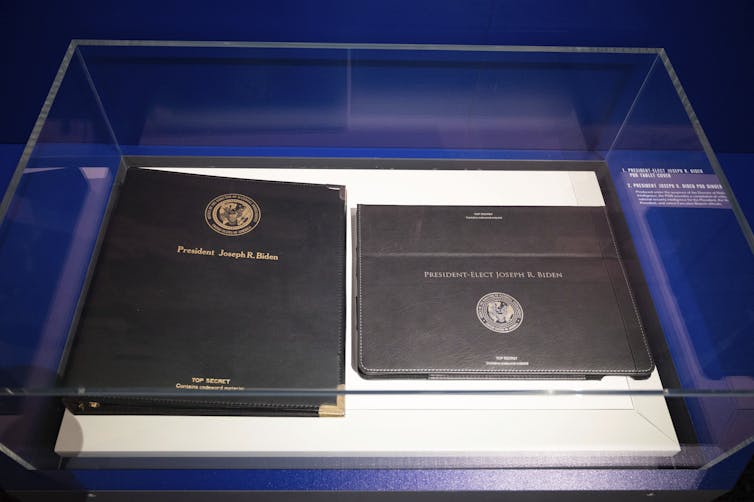
The director of national intelligence is the president’s principal adviser on intelligence, though the CIA director has remained somewhat co-equal in that role. In past administrations, the director of national intelligence has been responsible for both the President’s Daily Brief, where the most crucial and sophisticated intelligence is presented, and for the work of the National Intelligence Council.

Most of the President’s Daily Brief items are still done by the CIA, but the director of national intelligence or a deputy briefed the president, daily in most administrations but one or two times a week in the first Trump administration. Now, it is not clear the briefings take place.

The issues in those briefings lean toward the immediate and tactical: What is the situation on the ground in the wars in Iran and Ukraine? If the United States does X, how will the Iranian regime or Russian President Vladimir Putin respond?

But intelligence strives to push presidents and their colleagues to think more strategically: What are the implications of hypersonic missiles? What is the trajectory of the relationship between Russia and China? What are China’s geostrategic objectives, and what is the role of the Belt and Road Initiative in that vision? What if, far from toppling it, U.S. and Israeli attacks push the Iranian regime to become more hard line, or even produce some “rally ’round the flag” effect among previous opponents of the regime.

Two brown notebook covers that have 'President Joseph R. Biden' and 'TOP SECRET' printed on the front.
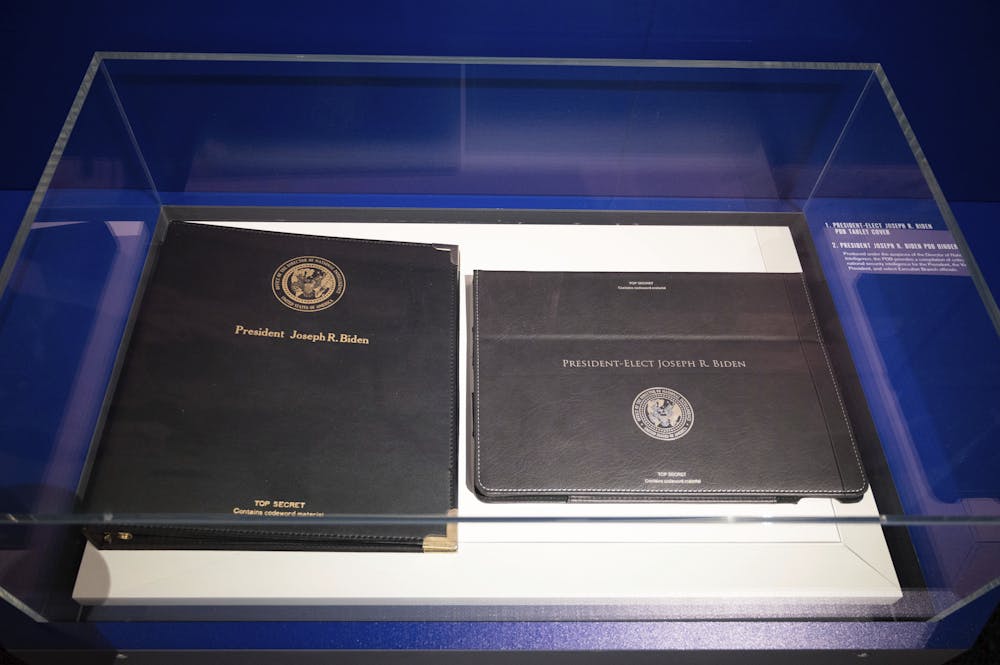
A display showing the covers of the President’s Daily Brief at the Central Intelligence Agency’s museum in the headquarters building in Langley, Va., on Sept. 24, 2022. AP Photo/Kevin Wolf

9/11 led to intelligence changes

I was chair of the National Intelligence Council from 2014 to 2017, providing day-to-day intelligence support to the National Security Council and its committees, as well as trying to find time to do more strategic intelligence, looking at trends and connections across issues, producing what are called National Intelligence Estimates.

The director of national intelligence, known as the DNI, sits atop the 17 agencies that make up what is called the U.S. intelligence community. The director neither runs those agencies nor has full control of their budgets.

Rather, the director of national intelligence coordinates them, which sometimes seems like the proverbial herding of cats. They assemble a combined budget for intelligence, but many of the big agencies, such as the National Security Agency, which makes and breaks codes and intercepts signals of interest, belong to the Pentagon.

The creation of the director of national intelligence position was a direct result of the 9/11 terrorist attacks.

The report of the 9/11 Commission was vividly damning about the failures of communication between agencies in the run-up to 9/11. In meetings in New York that summer, CIA and FBI officers were literally unsure what they could tell each other: The former wondered whether the FBI people were really cleared to hear this, while the latter feared that talking might blow a case they were working on. That lack of coordination played a role in letting the plotters slip through intelligence, often in plain sight.

The result of the commission’s work was the Intelligence Reform and Terrorism Prevention Act of 2004, which created the director of national intelligence position.

Before that, the director of central intelligence wore two hats, as the director of the Central Intelligence Agency and loose coordinator of the broader intelligence community. Hardly surprisingly, directors of central intelligence spent most of their time running the CIA, for that was the source of their troops – and their troubles when they arose.

A score of blue-ribbon panels over 50 years had recommended breaking the director of central intelligence’s conflict of interest – coordinating agencies and their budgets while running one of them – and creating a director of national intelligence position.

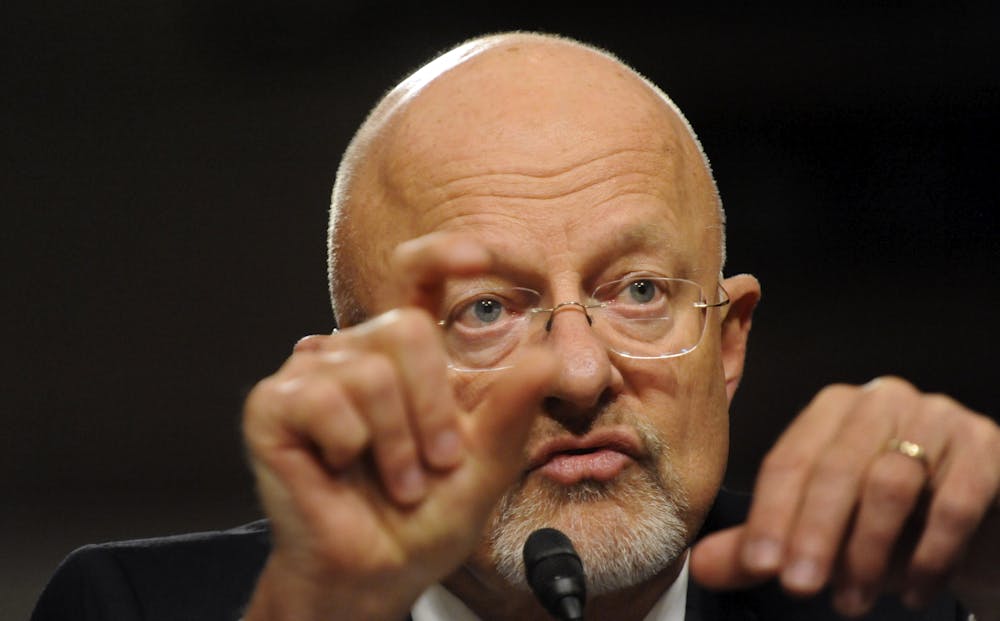
James Clapper, the director of national intelligence for whom I worked as chair of the National Intelligence Council, constantly emphasized “integration.” Across agencies, integration mostly means talking to each other and sharing information. This works against the natural tendency to scoop your colleagues.

Across disciplines, integration means better aligning what information intelligence agencies collect with what analysts need.

How integration works

If presidents want to know what the CIA thinks about a particular issue, they can simply ask. Usually, though, the question is what does the intelligence community think, and then the question goes to the National Intelligence Council, the director of national intelligence’s interagency group for intelligence analysis.

The National Intelligence Council is organized like the State Department, with officers for regions and functions. Once a question has been presented, the relevant national intelligence officer will convene his or her colleagues from the other agencies. They will argue about the answer to the question, a process sweetly called “coordination,” then agree on the answer. If need be, the process can be done in a few hours.

Major strategic analyses – national intelligence estimates – like one done in 2022 on the implications of the COVID-19 pandemic out to 2026, may take months. In all cases, though, the analysis carefully records where there are differences of view in the intelligence community.

In my last year chairing the National Intelligence Council, of the 700 or so analyses we did, about 400 were responses to questions – called “taskings” in governmentese – from the national security adviser or one of the deputies.

National intelligence officers are national experts from inside or outside federal government, and their deputies – the heart and soul of the NIC – are all assigned from intelligence agencies. The largest number come from the CIA, but I worked with a cyber analyst from the Secret Service and a wonderful analyst from the New York Police Department.

A bald man with a goatee talks into a microphone and gestures with his hands.
James Clapper, nominated by President Barack Obama for director of national intelligence, testifies at his Senate Select Intelligence Commitee confirmation hearing on July 20, 2010. Melina Mara/The Washington Post via Getty Images

Resolutely nonpolitical stance

What was striking then and has struck me both times I’ve had the privilege of running a U.S. intelligence agency is the dedication of the officers.

They work for the nation, not for a political party or ideology. As chair of the NIC, I had no idea of the politics of my people, save for the several closest to me. For them, telling truth to power is not a slogan. It is what they do. They are always worried about “politicizing” – producing an assessment to suit a policymaker’s preference or, worse, being pressured to do so.

The president’s daily briefers, for instance, give up a year of their lives to come to work at 4 a.m., learn their briefs and then fan out across Washington to brief senior officials. They like being “on the team” of the person they brief, but they become uncomfortable if the conversation turns political.

The director of national intelligence sets the tone for that resolutely nonpolitical stance and polices it through principles articulated in the agency’s analytic integrity and standards. As chair of the NIC, for instance, I’d receive regular assessments of both the quality of our analyses and whether we risked becoming “politicized.”

For their part, do politicians and agency leaders like it when their pet projects are assessed by intelligence as unwise or infeasible? Of course not. I’ve been on that side of the intelligence-policy divide as well. But the United States is much the better for it.

This story, originally published on Dec. 4, 2024, has been updated to reflect that Bill Pulte has been chosen by President Trump to be the acting director of national intelligence.

The Conversation

Gregory F. Treverton does not work for, consult, own shares in or receive funding from any company or organization that would benefit from this article, and has disclosed no relevant affiliations beyond their academic appointment.
The war in Iran – again – points to the strategic shortcomings of assassination as policy of foreign affairs

Iranians hold their guns during a pro-government gathering near the residence where former Iranian Supreme Leader Ayatollah Ali Khamenei was killed. AP Photo/Vahid Salemi

The coordinated U.S.-Israeli strikes at the outset of the war in Iran killed Supreme Leader Ali Khamenei, along with other key regime figures. In doing so, the United States and Israel crossed what The New York Times and others described as “a new Rubicon”: the deliberate, overt killing of a head of state.

President Donald Trump and Israeli Prime Minister Benjamin Netanyahu framed their war not simply as retaliation or coercion, but as an opening for political collapse. Remove enough of the leadership, the logic ran, and the structure beneath it either breaks apart or becomes vulnerable enough for a public uprising to finish the job.

Yet as a former senior U.S. intelligence officer who held leadership roles at the CIA and National Counterterrorism Center, I believe such triumphalist logic masks the strategic shortcoming of such targeted killings.

Disruption is not the same as collapse

Most scholars, too, have concluded that targeted killings or assassinations, often referred to as leadership decapitation, can disrupt operations and degrade organizational effectiveness. Under some conditions, they can even force the targeted side to capitulate. But they rarely lead to collapse.

The work of Jenna Jordan, a scholar of international relations at Georgia Tech, remains one of the clearest warnings against inflated expectations about anticipated effect of such strikes. Across a large body of cases of targeting killings of non-state militant groups, she found that older, larger, more institutionalized organizations are harder to break down through leadership removal than small, young, weakly structured ones.

Patrick Johnston, a former director of the Counterterrorism Center at West Point who has studied counterinsurgency campaigns, found more evidence that decapitation can help end conflicts than Jordan did. Other research has backed-up Johnston’s conclusion that some terrorist groups are vulnerable to leadership targeting.

But even these more favorable studies point to only conditional gains; they do not treat decapitation as a path to automatic political success or as a substitute for broader strategy.

Targeting heads of state is even more fraught

In counterterrorism efforts, disruption may be a good enough outcome for policymakers. Indeed, if the objective is to delay attacks or degrade operational effectiveness, leadership removal can have value. That was how the U.S. campaign against al-Qaeda was generally understood by American policymakers. Even Osama bin Laden’s death and repeated strikes against senior deputies were treated as major blows, not as proof that the organization had ceased to exist or no longer mattered as an operational threat.

Smoke rises from an airstrike.
Portraits of Hezbollah’s late leaders Hassan Nasrallah, right, and his cousin, Hashem Safieddine, are seen, as smoke rises following an Israeli airstrike in Beirut’s southern suburbs on March 30, 2026. AP Photo/Hassan Ammar

Yet when the target is a state, the political bar is even higher. Tactical disruption is, again, not the same as political collapse. It is also not the same as creating a more favorable bargaining environment for the country relying on assassinations.

That distinction matters because recent scholarship has found that killing or capturing leaders may weaken an adversary on the battlefield but does not necessarily tell us how an adversary will respond politically — whether it becomes more willing to bargain, less able to negotiate, or more determined to keep fighting.

Removing another country’s leaders may weaken it in the short term, while changing who is left to negotiate, compromise or escalate. A strike could therefore succeed operationally while narrowing the political options that follow.

Iran’s response to the initial killing of senior leaders in the opening days of the current conflict illustrates the point. Khamenei’s death staggered the government, but it did not break it. Within little more than a week, Iran’s Assembly of Experts appointed Mojtaba Khamenei, his son, as supreme leader.

The government redistributed authority through institutions built to survive political shock: the clerical establishment, the Islamic Revolutionary Guard Corps, and the broader security bureaucracy.

The assassinations did not create a pathway for coercion, negotiation, or popular uprising. Indeed, as the ongoing lack of a long-term resolution to the conflict shows, the Trump administration is not now dealing with a more pliable Iran. Rather, it is facing a state steered by a successor leadership with an agenda even more hostile to U.S. policy in the Middle East, stronger incentives to prolong the conflict and a demonstrated willingness to absorb the pain of defiance.

Israel has long used targeted killing to disrupt adversaries — most visibly in its recent campaigns against Hamas and Hezbollah — but the Iran case shows the danger of turning the tool into a theory of political transformation.

A broader phenomenon

That same gap between tactical achievement and strategic effect appears in other settings as well.

Recent scholary work on criminal organizations in Latin America finds that state decapitation campaigns are often associated with short-term increases in violence, including clashes with state forces, even when they damage the targeted organization.

For example, in February 2026, Mexican forces killed Nemesio Oseguera Cervantes, better known as El Mencho, the head of the Jalisco New Generation Cartel. Yet, according to reporting, the organization continues to operate, with its core operations and networks largely intact. Meanwhile, reprisals followed quickly: 25 members of Mexico’s National Guard were killed and blockades and arson was seen across several states.

Newspapers hang on display at a kiosk.
Newspapers hang on display for sale in Mexico City a day after the Mexican army killed Jalisco New Generation Cartel leader Nemesio Oseguera Cervantes, known as AP Photo/Jon Orbach

Leadership removal imposed a tactical cost, but it did not translate neatly into strategic collapse.

And yet the appeal persists

So why does decapitation remain so attractive? James Walsh, a scholar of political violence, intelligence and armed conflict at the University of North Carolina in Charlotte, suggests targeted killing gives policymakers a means to measure progress in a conflict where success is otherwise difficult to define. It produces a name and a result — often a photo and, in some cases, footage of the strike that can be shown at a press conference. It may not be less complex than diplomacy in operational terms, but it is often easier to explain politically: a strike can be presented as action, while negotiations require patience, trade-offs and the risk of appearing to compromise with an enemy.

In the case of El Mencho, his death gave Mexican President Claudia Sheinbaum a political trophy as well as a tactical victory. It allowed her to show action against cartel power at a moment of domestic strain over cartel violence and sustained U.S. pressure for Mexico to take a harder line. A named target and a confirmed death are easier to present as progress.

A similar dynamic may be present in the Ukraine-Russian war. Russian President Vladimir Putin is reportedly hunkered down in fear of an assassination attempt, most plausibly from Ukraine. But Putin’s death would not, by itself, end Russia’s war or dissolve the Russian state.

A successful strike against the man most identified with the invasion would, though, have an immeasurable rallying effect for Ukrainians after years of sacrifice. The reverse would also be true if a Russian operation killed Ukrainian President Volodymyr Zelenskyy. The political and symbolic shock would be enormous, but neither country’s war effort would necessarily crumble.

High-level decapitations can impose costs, degrade an organization or state’s capacity and force adversaries to operate under sustained pressure. But they cannot, according to the evidence, translate tactical achievement into the political outcomes that leaders invoke to justify such targeted killings.

That is, I believe, the lesson the war in Iran should have reinforced. Whatever the arguments for or against assassination as a matter of state policy, decapitation is a tool of disruption not of transformation. It becomes a strategic error when leaders treat it as the latter.

The Conversation

Brian O'Neill does not work for, consult, own shares in or receive funding from any company or organization that would benefit from this article, and has disclosed no relevant affiliations beyond their academic appointment.

❌
Subscriptions