
 Login
Login


Supreme Court geofencing case weighs constitutionality of digital dragnets – and how far your rights go in the data Big Tech collects on you

Google tracks the vast majority of cellphones in the United States, collecting your location, usage and device data through installed software and apps. The tracking occurs by various autonomous processes you cannot see or stop, even when you turn off location history, and Google and other companies keep that data for years. Outside of your control and wherever you go, your cellphone continuously creates a durable and revealing digital trail, and law enforcement agencies can get warrants to obtain it.
But some of those warrants aren’t looking for data about a specific person. Instead, police are compelling tech companies to reveal every cellphone in a particular area during certain time periods. Called geofence warrants, their use is at the heart of a case before the U.S. Supreme Court that will determine what the Fourth Amendment’s protections against unreasonable search and seizure mean in the digital age.
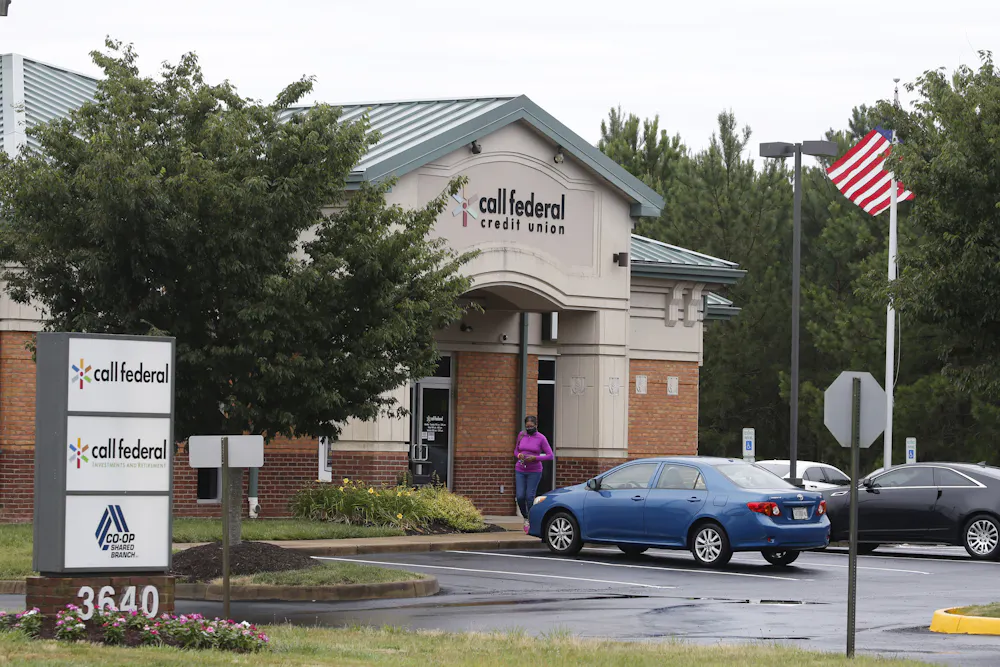
The Supreme Court case Chatrie v. United States involves the hunt for a suspect in an armed bank robbery in busy Midlothian, Virginia, in May 2019, and how police settled on a man named Okello Chatrie as the perpetrator.
Detective Joshua Hylton was granted a geofence warrant that compelled Google to search its database and identify every cellphone in a 17½-acre area around the bank, including private residences and a church, for a period of two hours. Working closely with Google, police ultimately narrowed in on Chatrie. When the trial court denied Chatrie’s motion to suppress the geofence-derived evidence, Chatrie appealed.
The Supreme Court will decide if, when and how law enforcement can use geofences. It matters because all cellphone-carrying people can end up in tomorrow’s geofence, like all those who were unknowingly grabbed in the Chatrie search. And nearly all users are unaware of these fences. No one specifically consents to be included in them, but people have no choice. What happened in the Chatrie case is a feat otherwise impossible but for advances in location tracking technology and advanced AI systems.
As a privacy, electronic surveillance and tech law attorney, author and legal educator, I have spent years researching, writing, educating and advising about these kinds of privacy and legal issues, and my books on electronic surveillance and evidence are routinely cited and relied upon by courts grappling with these issues.
How geofences work
Geofences are part of modern life. By carrying your smartphone and other devices, you generate location and other device activity data. That data is collected, stored, analyzed, and bought and sold by multiple companies. The location history data being collected about you is what makes geofences possible, and it is comprehensive and precise.
Location history relies on a variety of sources of data that can include cell tower location, cellphone data such as connections to Wi-Fi networks and Bluetooth sources, and cellular data sent via cell tower. This means the communications you received and sent and the apps you used can be swept up in a geofence.
Advanced AI technologies analyze that data to discern increasing amounts of personal and behavioral data – insights about people, groups and activities – that can be used for a variety of purposes, including targeted advertising. Your rich location history and device data get snatched up regularly in such fences by private companies; your present and past self travels through them constantly.
A geofence can be in real time, for instance to identify and track who is at a protest, or any period in the past decade or so. It can be dynamically generated, like a circle around a specific location, or it could be a predefined set of boundaries, such as a specific address or area defined by streets or other geographical boundaries. One geofence warrant that Google received covered 2.5 square miles of San Francisco for a period of 2½ days.
There has been a significant increase in law enforcement’s use of geofence warrants over the past decade. Google revealed in court that it received a 1,500% percent increase in geofence requests from 2017 to 2018, a 500% percent increase from 2018 to 2019, and by 2020, it had 11,500 geofence warrants in a year. Between 2021 and 2023, geofence warrants made up over 25% of all warrants that Google received from law enforcement agencies in the United States.

Search warrants and the Fourth Amendment
The Fourth Amendment is the foundation on which all U.S. electronic privacy laws rest. When government agents want to search or seize a person, place or thing – absent consent or emergency – the Fourth Amendment requires agents to obtain a court-approved warrant based on probable cause. Agents do this by providing a judge with enough evidence to establish probable cause that the person, place or thing to be searched or seized is associated with a crime.
The resulting warrant must describe with “particularity” the specific person, place or thing to be searched or seized. If these requirements are not met, the search is unreasonable and therefore unlawful, and evidence obtained in that search cannot be used in court, barring a good-faith exception.
The Fourth Amendment’s “particularity” requirement strictly forbids general warrants, historically used by British troops against Colonists to engage in overly broad or all-encompassing searches.
Reverse warrants
The only “particularity” that police can specify in applying for a geofence warrant is that a crime occurred at a particular time and place. Hence, geofence warrants are often called reverse warrants because they literally reverse the traditional process of conducting an investigation to identify a suspect and then obtain a warrant to gather information on that suspect. Geofence warrants gather all devices in a time and place, and then, aided by technology, police sift through for potential suspects.
The execution of a geofence warrant is very different from that of a typical warrant. Litigation records reveal a collaborative effort between law enforcement and Google that follows a three-step process. First, law enforcement officials specify in the warrant a time and place to be searched. The data they’re seeking is not merely a list of cellphone devices in the area; it is usually more detailed. For instance, it could include data about whether a device accessed a particular email account or app or sent a text at the time it was in the area of the geofence.
Second, the company provides the officials with an anonymized list of users or devices matching the warrant’s criteria. At this point, things start to become more fluid, and the officials may seek additional information about specific users outside of the initial search parameters.
Third, law enforcement officials then analyze the information and request that the company “unmask” certain users. In complying, Google may tell police the account holder’s name, their address, their email address, and even whether they were communicating or using certain apps during the relevant time. The officials then decide whether any of the users may be connected to the crime.
This close work between the private entity – usually Google – and law enforcement throughout the geofence warrant process raises significant privacy and civil liberties concerns. It also does not appear that there is any court review or judicial oversight during this give-and-take between law enforcement officers and Google in the geofence warrant process.
A split among appeals courts
In the Chatrie case, the trial court took issue with the geofence warrant police used, finding that it lacked particularized probable cause. But the trial court also determined that the officers in question had relied on the defective warrant in good faith, and thus it ruled the geofence evidence could be used against the defendant.
On appeal to the 4th U.S. Circuit Court of Appeals, a divided panel affirmed the trial court’s decision, and it concluded, over vigorous dissent, that obtaining the geofence data was not a search. The full 4th Circuit affirmed the trial court’s decision.
But the 4th Circuit’s 2024 Chatrie decision stands at odds with the 5th Circuit’s 2024 decision in United States v. Smith. In the Smith case, the 5th Circuit ruled that “geofence warrants are modern-day general warrants and are unconstitutional under the Fourth Amendment.” This split among the federal appeals courts should be resolved by the Supreme Court in its Chatrie decision.
Chatrie and the Supreme Court
For decades, the court has grappled with law enforcement’s use of technologies to track the location of people or things, issuing decisions about cell site location information and GPS. It has ruled that the U.S. Constitution requires law enforcement agents to obtain a warrant to track a person using their cellphone location history data or GPS, barring exigent circumstances.
The government is arguing in the Chatrie case that users voluntarily consented to the collection of location history, so they have no reasonable expectation of privacy in the data, and thus there is no violation of the Fourth Amendment.
Some of the amicus briefs filed in support of the defendant assert that electronic location data is protected by the Fourth Amendment’s warrant requirement, and that the geofence warrant fails to satisfy the Fourth Amendment’s particularity requirement. Some also argue that approving this warrant would open the door to a variety of reverse search warrants. And some contend that there is no meaningful consent or voluntariness around the data collection that underpins geofence technology.
Questions from the Supreme Court justices during oral arguments on April 27, 2026, indicate that at least some of them consider geofence warrants to be general warrants and thus unconstitutional. But for now, we wait.
Anne Toomey McKenna serves on the Advisory Board to the Institute for Electrical and Electronics Engineers (IEEE)-USA's Artificial Intelligence Policy Committee (AIPC) and Chairs multiple AIPC subcommittees. The AIPC work involves subject matter and education-related interaction with U.S. Senate and House congressional staffers and the Congressional AI Caucus. McKenna has received funding from the National Security Agency for the development of legal educational materials about cyberlaw (a course which the government still makes available online for the public) and funding from The National Police Foundation together with the U.S. Department of Justice-COPS division for legal analysis regarding the use of drones in domestic policing.
