Normal view

Is AI really ‘writing’? From a priestess to philosophers, ancient authors would have said ‘no’

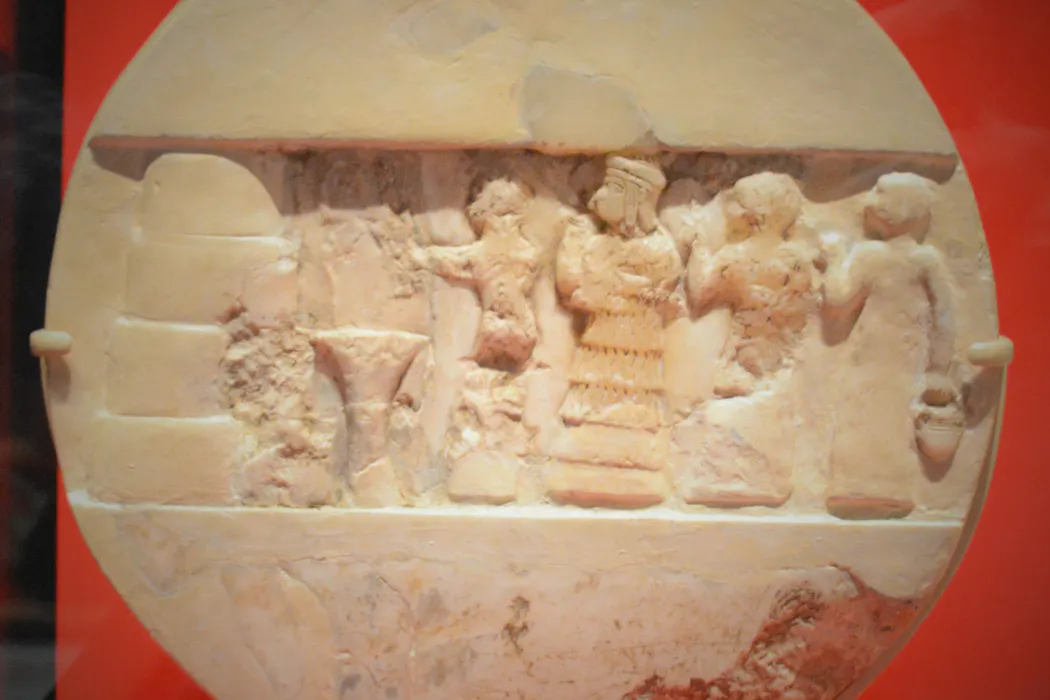
An ancient disk shows the priestess Enheduanna, third figure from the right, during a ritual. Mefman00/Wikimedia Commons, CC BY

I teach writing and rhetoric, but my college students and I often overlook a surprisingly complicated question: What is writing?

And can artificial intelligence really do it?

Many people think of “writing” as putting words on a page. However, even from very early on, writers have seen their craft as something more. From Enheduanna, the first named author on record, to Plato and Aristotle, writing has been portrayed and defined in ways that suggest AI may not be “writing” at all.

If not, what should we call AI text? ChatGPT and I have an idea.

Praising and pleading

Enheduanna, who lived around 2,300 B.C.E., was a powerful princess, priestess and poet of the Akkadian Empire, in what is now Iraq. She has been celebrated as the earliest known writer, though the authorship of her poems and hymns is debated.

One of her poems, “The Exaltation of Inanna,” reveals a sense of what writing is and does – portraying it as a living medium that expresses experience and shapes the future.

First, the poem praises the ancient Mesopotamian goddess Inanna, who was associated with fertility and war, among other powers. “My Lady, you are the guardian / Of all greatness,” Enheduanna says, in a translation by Jane Hirschfield.

A rectangular tablet covered with tiny, cuneiform-like text.
A tablet in the Penn Museum in Philadelphia inscribed with a copy of Enheduanna’s ‘Exaltation of Inanna.’ Masha Stoyanova/Flickr via Wikimedia Commons

That praise may be strategic. It is followed by Enheduanna’s plea to overthrow Lugal-Ane, a rebel king who she describes exiling her and taking her post at the temple of Ur. “Now I have been cast out / To the place of lepers,” she writes, describing her suffering. “Day comes, / And the brightness / Is hidden around me.”

Grieving, Enheduanna writes a new destiny. In a translation by Sophus Helle, the priestess envisions Inanna coming to her aid and “tear[ing] off this fate, Lugale-Ane.” And her pleading seems to be successful: The end of the poem depicts Enheduanna restored to her post.

In Enheduanna’s poetry, writing does not simply communicate information. It interacts with the present and changes the future. The priestess’s pleas please the goddess, move her heart, and she restores Enheduanna to her post – though historians have little evidence of whether an exile and return really happened.

But her poetry did have real-world influence, helping to create religious and political unity in the world’s first empire. For example, her writing merged the Sumerian goddess Inanna with the Akkadian goddess Ishtar, describing a single “Queen of Heaven.”

AI writing can be used to try to create change, such as by swaying someone’s political opinion. But it lacks the human emotions that make experiences like praise, gratitude and suffering possible – the emotions and motivations that make writing a living medium with real-world effects.

Transforming over informing

Two thousand years after Enheduanna, Plato and his student Aristotle offered another influential view of writing – one that complements hers.

In the “Phaedrus,” which discusses the relationship between love and rhetoric, Plato famously defines writing as a poor copy of speech. Speech’s job is to represent thoughts; thoughts, in turn, represent knowledge and truth. Similarly, Aristotle writes, “Spoken words are the symbols of mental experience and written words are the symbols of spoken words.”

A hexagonal tile shows two men in loose robes holding up a book and their hands as they debate.
A relief of Plato and his student Aristotle by Italian Renaissance sculptor Luca della Robbia. sailko/Wikimedia Commons, CC BY-SA

Even that definition marks a sharp contrast with AI, which lacks thoughts and mental experiences. Its output proceeds from data aggregation and text generation.

To understand what writing is, we also need to look at what it does. Although Plato elevates speech over writing, he suggests in “Phaedrus” that good writing may lead a learner toward truth and knowledge. Similar to Enheduanna, he employs writing as a tool for change, both inside and outside the text.

In Plato’s dialogues, characters often radically change their opinions. And today, almost 2,500 years after his death, the philosopher’s real-world impact is clear. For instance, universities and colleges today are collectively called the “Academy” because that was the name of Plato’s group, the first institution of higher learning in the West. English scholar Alfred North Whitehead famously wrote that all Western philosophy is “a series of footnotes to Plato.”

Aristotle’s voluminous works, too, show writing’s purpose transcends communication. In “Rhetoric,” for instance, he details ways to make writing persuasive. Aristotle defines rhetoric as a way of “moving souls,” not just exchanging knowledge.

For both of the Greek philosophers, then, writing is more about transformation than information.

A dark brown material with so many holes it barely holds together, printed with small text in black ink.
This second-century papyrus of Plato’s ‘Phaedrus,’ found in modern-day Egypt, was reconstructed from several fragments. Oxyrhynchus Papyri Collection/Oxford's Art, Archaeology and Ancient World Library via Wikimedia Commons

Today, however, AI tools’ popularity may make writing less dynamic and less moving. Use of AI risks a “blandification” of writing, according to a study led by computer science professor Natasha Jaques. In other words, much AI writing today lacks distinct voices, making it sound the same – which could make people’s thinking more similar, too.

‘Generwriting’

Overall, these three ancient authors agree that writing emerges from thoughts and experiences – a process that strives to create change. Enheduanna, Plato and Aristotle also agree that writing’s essence transcends the simple summaries and information transmission common to AI output today.

Although AI can generate creative texts, its writing may not “move souls” the way human writing does. Several studies show a “pro-human attribution bias” or an “AI penalty,” meaning that people prefer human writing even when AI writing is stylistically similar. People want to read what other people write, not what an algorithm pumps out.

Perhaps we need a different word for AI’s output. Common terms today include “generative content” and “synthetic text,” but I wondered if I could land on something simpler – and involve AI itself. After prompting and tweaking ChatGPT over and over, I settled on one word: “generwriting.”

Though AI is here to stay, new words may help distinguish types of text. And as Enheduanna, Plato and Aristotle remind us, there are elements of writing that may always be unique to embodied, thinking beings striving to move souls.

The Conversation

Ryan Leack does not work for, consult, own shares in or receive funding from any company or organization that would benefit from this article, and has disclosed no relevant affiliations beyond their academic appointment.
Why the director of national intelligence needs more than political loyalty to do the job

President Donald Trump’s choice for acting director of national intelligence, Bill Pulte, has proved controversial. Pulte’s lack of background in national security matters has sparked resistance from Democrats on Capitol Hill, which is not surprising. But some Republicans, too, have expressed dismay at the president’s choice, a Trump loyalist who currently runs the Federal Housing Finance Agency.

I see no evidence of any qualifications for that job,” said U.S. Sen. John Cornyn, a Republican from Texas.

The current director of national intelligence, Tulsi Gabbard, is leaving the job at the end of June 2026.

Here’s why it matters who holds the job of director of national intelligence.

Principal national security adviser

To speak of telling truth to power seems terribly old-fashioned these days, but as a veteran of White House intelligence operations, I know that is the essence of the job.

The director of national intelligence is the president’s principal adviser on intelligence, though the CIA director has remained somewhat co-equal in that role. In past administrations, the director of national intelligence has been responsible for both the President’s Daily Brief, where the most crucial and sophisticated intelligence is presented, and for the work of the National Intelligence Council.

Most of the President’s Daily Brief items are still done by the CIA, but the director of national intelligence or a deputy briefed the president, daily in most administrations but one or two times a week in the first Trump administration. Now, it is not clear the briefings take place.

The issues in those briefings lean toward the immediate and tactical: What is the situation on the ground in the wars in Iran and Ukraine? If the United States does X, how will the Iranian regime or Russian President Vladimir Putin respond?

But intelligence strives to push presidents and their colleagues to think more strategically: What are the implications of hypersonic missiles? What is the trajectory of the relationship between Russia and China? What are China’s geostrategic objectives, and what is the role of the Belt and Road Initiative in that vision? What if, far from toppling it, U.S. and Israeli attacks push the Iranian regime to become more hard line, or even produce some “rally ’round the flag” effect among previous opponents of the regime.

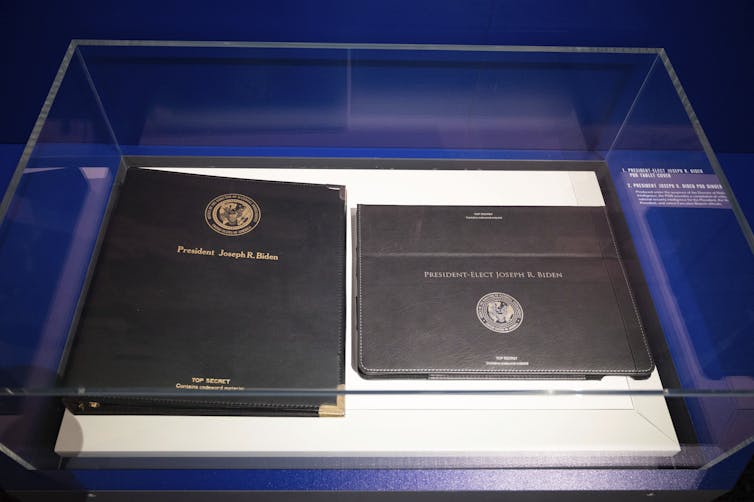
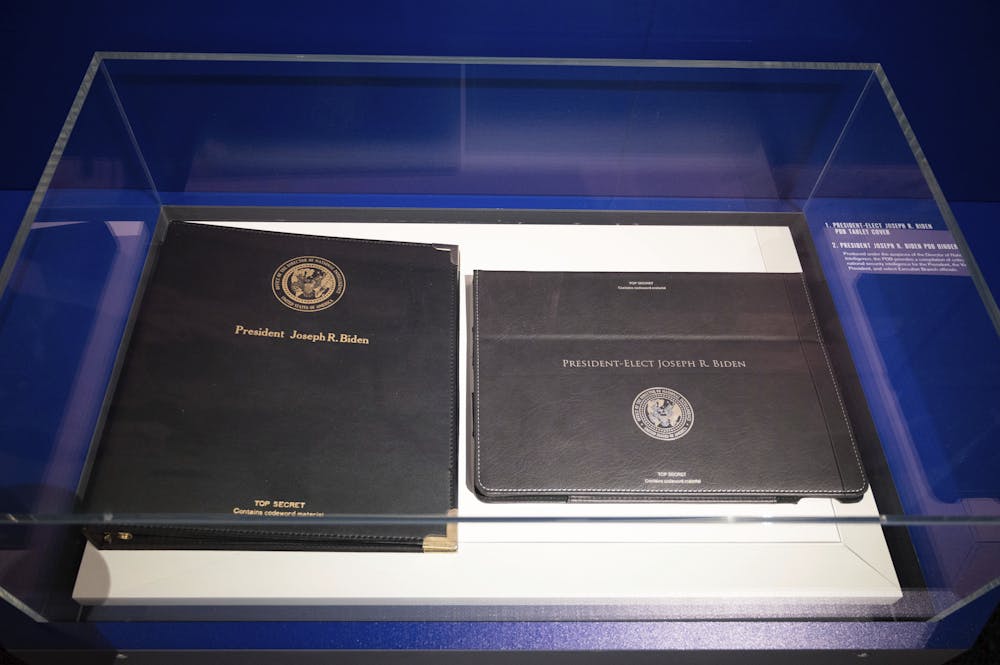
Two brown notebook covers that have 'President Joseph R. Biden' and 'TOP SECRET' printed on the front.
A display showing the covers of the President’s Daily Brief at the Central Intelligence Agency’s museum in the headquarters building in Langley, Va., on Sept. 24, 2022. AP Photo/Kevin Wolf

9/11 led to intelligence changes

I was chair of the National Intelligence Council from 2014 to 2017, providing day-to-day intelligence support to the National Security Council and its committees, as well as trying to find time to do more strategic intelligence, looking at trends and connections across issues, producing what are called National Intelligence Estimates.

The director of national intelligence, known as the DNI, sits atop the 17 agencies that make up what is called the U.S. intelligence community. The director neither runs those agencies nor has full control of their budgets.

Rather, the director of national intelligence coordinates them, which sometimes seems like the proverbial herding of cats. They assemble a combined budget for intelligence, but many of the big agencies, such as the National Security Agency, which makes and breaks codes and intercepts signals of interest, belong to the Pentagon.

The creation of the director of national intelligence position was a direct result of the 9/11 terrorist attacks.

The report of the 9/11 Commission was vividly damning about the failures of communication between agencies in the run-up to 9/11. In meetings in New York that summer, CIA and FBI officers were literally unsure what they could tell each other: The former wondered whether the FBI people were really cleared to hear this, while the latter feared that talking might blow a case they were working on. That lack of coordination played a role in letting the plotters slip through intelligence, often in plain sight.

The result of the commission’s work was the Intelligence Reform and Terrorism Prevention Act of 2004, which created the director of national intelligence position.

Before that, the director of central intelligence wore two hats, as the director of the Central Intelligence Agency and loose coordinator of the broader intelligence community. Hardly surprisingly, directors of central intelligence spent most of their time running the CIA, for that was the source of their troops – and their troubles when they arose.

A score of blue-ribbon panels over 50 years had recommended breaking the director of central intelligence’s conflict of interest – coordinating agencies and their budgets while running one of them – and creating a director of national intelligence position.

James Clapper, the director of national intelligence for whom I worked as chair of the National Intelligence Council, constantly emphasized “integration.” Across agencies, integration mostly means talking to each other and sharing information. This works against the natural tendency to scoop your colleagues.

Across disciplines, integration means better aligning what information intelligence agencies collect with what analysts need.

How integration works

If presidents want to know what the CIA thinks about a particular issue, they can simply ask. Usually, though, the question is what does the intelligence community think, and then the question goes to the National Intelligence Council, the director of national intelligence’s interagency group for intelligence analysis.

The National Intelligence Council is organized like the State Department, with officers for regions and functions. Once a question has been presented, the relevant national intelligence officer will convene his or her colleagues from the other agencies. They will argue about the answer to the question, a process sweetly called “coordination,” then agree on the answer. If need be, the process can be done in a few hours.

Major strategic analyses – national intelligence estimates – like one done in 2022 on the implications of the COVID-19 pandemic out to 2026, may take months. In all cases, though, the analysis carefully records where there are differences of view in the intelligence community.

In my last year chairing the National Intelligence Council, of the 700 or so analyses we did, about 400 were responses to questions – called “taskings” in governmentese – from the national security adviser or one of the deputies.

National intelligence officers are national experts from inside or outside federal government, and their deputies – the heart and soul of the NIC – are all assigned from intelligence agencies. The largest number come from the CIA, but I worked with a cyber analyst from the Secret Service and a wonderful analyst from the New York Police Department.

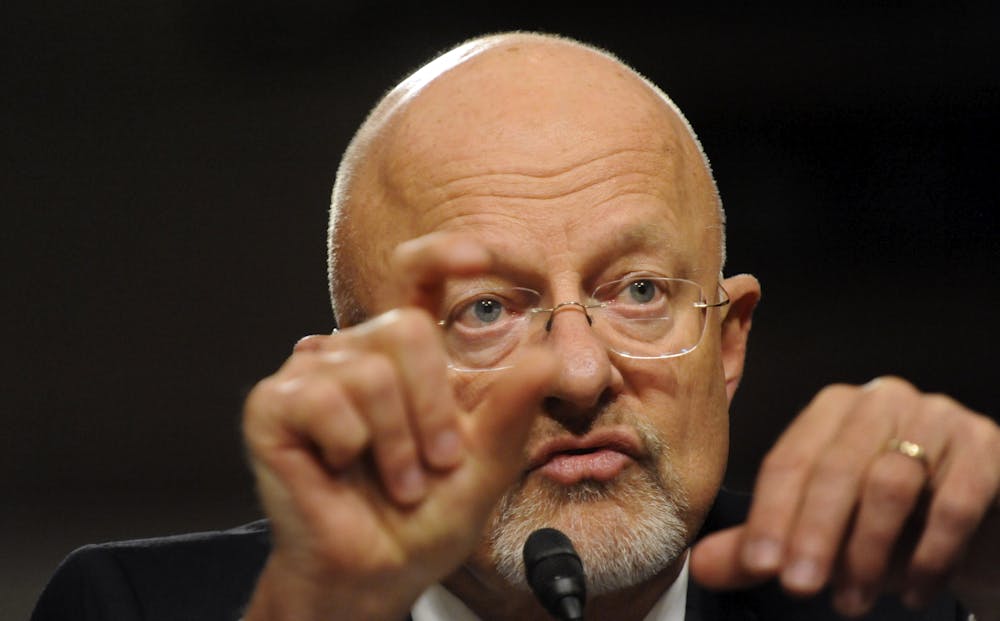
A bald man with a goatee talks into a microphone and gestures with his hands.
James Clapper, nominated by President Barack Obama for director of national intelligence, testifies at his Senate Select Intelligence Commitee confirmation hearing on July 20, 2010. Melina Mara/The Washington Post via Getty Images

Resolutely nonpolitical stance

What was striking then and has struck me both times I’ve had the privilege of running a U.S. intelligence agency is the dedication of the officers.

They work for the nation, not for a political party or ideology. As chair of the NIC, I had no idea of the politics of my people, save for the several closest to me. For them, telling truth to power is not a slogan. It is what they do. They are always worried about “politicizing” – producing an assessment to suit a policymaker’s preference or, worse, being pressured to do so.

The president’s daily briefers, for instance, give up a year of their lives to come to work at 4 a.m., learn their briefs and then fan out across Washington to brief senior officials. They like being “on the team” of the person they brief, but they become uncomfortable if the conversation turns political.

The director of national intelligence sets the tone for that resolutely nonpolitical stance and polices it through principles articulated in the agency’s analytic integrity and standards. As chair of the NIC, for instance, I’d receive regular assessments of both the quality of our analyses and whether we risked becoming “politicized.”

For their part, do politicians and agency leaders like it when their pet projects are assessed by intelligence as unwise or infeasible? Of course not. I’ve been on that side of the intelligence-policy divide as well. But the United States is much the better for it.

This story, originally published on Dec. 4, 2024, has been updated to reflect that Bill Pulte has been chosen by President Trump to be the acting director of national intelligence.

The Conversation

Gregory F. Treverton does not work for, consult, own shares in or receive funding from any company or organization that would benefit from this article, and has disclosed no relevant affiliations beyond their academic appointment.
Beyond Disney: A 1616 portrait of Pocahontas shows how English colonizers saw Indigenous Americans

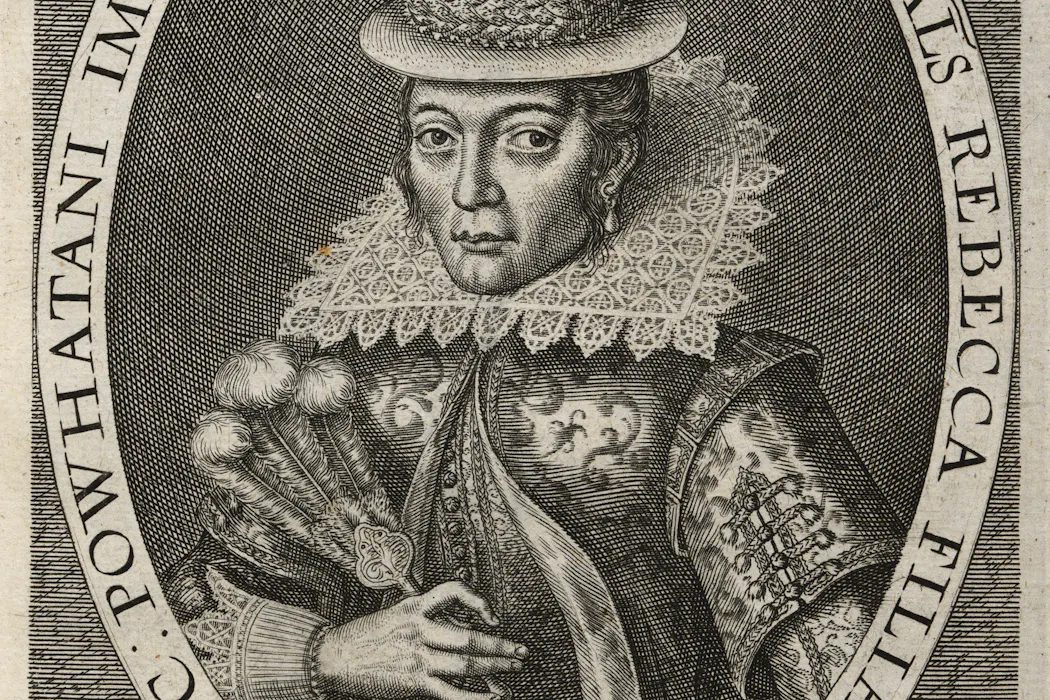
Simon van de Passe's 1616 engraving of Pocahontas is the only known portrait made during her lifetime. National Portrait Gallery/Wikimedia Commons

Thanks to the Walt Disney Company, Pocahontas may be the most famous Native American who lived in the 17th century. The animated film version of her early life included her speaking with a willow tree, befriending animals, singing about “the colors of the wind,” and being caught up in an ill-fated romance with Captain John Smith.

The 1995 film created an enduring visual image of Pocahontas, and contained some details drawn from the historical record, though plenty is pure fiction. Smith was, in fact, one of the English colonists who arrived in Jamestown, Virginia, soon after its founding in 1607. Pocahontas’ father Wahunsonacock – whom colonists and Disney called Powhatan – was the paramount chief of the Powhatans, who lived in communities along the edges of Chesapeake Bay and its tributaries.

Only one portrait of Pocahontas from her lifetime exists – a sharp contrast with the Disney-drawn image most Americans know. And it speaks volumes about how the English saw colonization.

Powerful family

As I describe in my 2026 book, “Contested Continent: The Struggle for North America, c. 1000 to 1680,” Wahunsonacock was the most consequential political figure in early Virginia, the land Powhatans knew as Tsenacommacah. Through personal alliances and shrewd stratagems, he controlled perhaps 30 communities along the shores of Chesapeake Bay and its tributaries.

A black and white illustration shows a man in a feather headdress sitting on a platform above a seated crowd.
An engraving of Wahunsonacock by William Hole appeared on a map John Smith created of Virginia. Virtual Jamestown/Wikimedia Commons

Pocahontas, also known as Matoaka and Amonute, was probably about 10 or 11 years old when she encountered Smith in late 1607. At that moment he was a captive of her father, who, Smith later wrote, was about to have him killed. Though scholars believe Wahunsonacock was likely putting Smith through a ritual adoption, the colonist claimed Pocahontas saved his life.

In 1613, the English took Pocahontas captive during a conflict known as the first Anglo-Powhatan War. After obtaining his daughter’s freedom in 1614, Wahunsonacock approved her marriage to John Rolfe, who played a leading role in the colony’s tobacco economy, and she converted to Christianity. Sometime between 1615 and 1617 she gave birth to their son, Thomas.

Pocahontas in England

Two years after the marriage, Pocahontas and Rolfe sailed to England, where she played a leading role in her father’s diplomatic mission.

During her stay in London, which included meeting King James I, Pocahontas sat for a portrait by the artist Simon van de Passe. Her clothing and pose echoed portraits of other elite English women of the era. The image emphasizes her tall stovepipe hat, ample lace collar, a dress with detailed embroidery or brocade, and a pearl earring dangling from her left ear.

A black and white engraving of a woman with a serious expression, wearing an ornately embroidered gown.
Simon van de Passe’s 1616 engraving of Pocahontas is the only known portrait made during her lifetime. National Portrait Gallery/Wikimedia Commons

In addition to her English clothing, Pocahontas holds either a feather fan, common for an upper-class woman at the time, or a quill pen. Since Europeans considered literacy a crucial marker of civilization, either object would highlight English hopes that Indigenous Americans could rapidly embrace the colonists’ culture.

Power of art

The engraving of Pocahontas was not the first image of Native peoples of the mid-Atlantic coastline circulating in England. Illustrations in one widely reprinted book played a crucial role in convincing the English to establish settlements in North America.

In the late 16th century, advocates of English colonization understood that descriptions of North America could make foreign territory more enticing to potential migrants. They wanted to demonstrate to English men and women that they could create profitable economies and coexist with Native peoples.

An ornate title page looks like a stone monument, with figures with colored clothing positioned around it.
The title page of the 1590 edition of Theodor de Bry’s ‘A Briefe and True Report of the Newfound Land of Virginia.’ Livinncary/Wikimedia Commons, CC BY-SA

Some promoters recognized that watercolor images painted in 1585 by the artist John White depicting the Carolina Algonquians of the Outer Banks could perhaps generate interest – and investments. The promoters, who had ties to leading figures in the English court as well as to printers, also saw the benefits of an in-depth study of the region by the young English mathematician and writer Thomas Harriot, “A Briefe and True Report of the Newfound Land of Virginia.” In 1590, the promoters worked with the Flemish printer Theodor de Bry to produce an illustrated version, which contained engravings based on White’s paintings.

The volume described Carolina Algonquians’ practices and enumerated commodities that could be extracted for profit. Some of the Native Americans depicted in these pages are clad with only a deerskin loincloth. Some of the women wear skirts but not tops.

To Europeans bred on the idea that clothing an entire body was a marker of civilization, these Alqonquians’ appearance was significant. People who colonizers considered “savages” were often depicted nude, like the Tainos whom Christopher Columbus encountered a century earlier. English men and women reading the book about the Algonquians, on the other hand, saw them as a people who would, under the right tutelage, adopt English-style culture – including Protestant Christianity.

“Some religion they have alreadie,” Harriot wrote in “A Briefe and True Report,” “which although it be farre from the truth, yet being as it is, there is hope it may been the easier and sooner reformed.”

To make the point that Native Americans could be converted to European culture, the engravers added depictions of ancient Britons, allegedly based on an old chronicle. Three of these images of Picts depicted them as nude, bearing tattoos more extensive than the Algonquians’. These individuals are also portrayed as more violent: A Pict man holds a head still dripping blood, with another head at his feet, while a Pict woman brandishes spears and a broadsword.

Reality check

When Pocahontas sat for Van de Passe, his portrait did more than create a resemblance of the young woman, who would die the following year, soon after leaving London – felled either by disease or, as a Virginia tribe’s oral history suggests, poison.

Like the images popularized by Harriot’s book, her portrait suggested that Native Americans would soon embrace English ways. Pocahontas herself, as the words on the engraving noted, had become Rebecca Rolfe after her marriage. In his writings, her husband celebrated her conversion to the Anglican faith. The proof of the model of cultural conversion seemed to be on plain view in the portrait.

Pocahontas’ father died in 1618. Four years later, the Powhatans launched a rebellion against English colonists. On March 22, 1622, under the direction of a war captain named Opechancanough, they killed approximately one-fourth of the colonists in Virginia. The English labeled the violence a “barbarous massacre” and launched a war of vengeance, which included a mass poisoning of Powhatans in 1623 – an action that the English at the time knew violated the emerging law of war.

Seeing Pocahontas poised on a chair, wearing an elegant hat and holding a quill pen, the English had assumed that Native Americans would embrace the colonizers’ ways. March 1622 proved them wrong.

This article has been updated to correct the description of the object Pocahontas holds in Simon van de Passe’s engraving.

The Conversation

Peter C. Mancall has received funding from the Huntington Library, the National Endowment for the Humanities, and the Mellon Foundation.

❌
Subscriptions