Normal view

  • ✇Ontario Nature Blog
  • Mass Mortality of 142 Turtles Calls for Increased Conservation Efforts Grace McGrenere
    In 2022, Carleton University biologist, Grégory Bulté arrived at Opinicon Lake for his first day of field work for the season. Bulté has been studying and tracking northern map turtles since 2003, returning every spring to the lake. As he went to retrieve his camera from the hibernation site, he spotted a dead turtle. He paddled towards it and then noticed another. Sightings of turtles with crushed shells and missing limbs continued. In his wetsuit, he swam the shoreline to pick up the carcass
     

Mass Mortality of 142 Turtles Calls for Increased Conservation Efforts

1 May 2026 at 14:54

In 2022, Carleton University biologist, Grégory Bulté arrived at Opinicon Lake for his first day of field work for the season. Bulté has been studying and tracking northern map turtles since 2003, returning every spring to the lake.

As he went to retrieve his camera from the hibernation site, he spotted a dead turtle. He paddled towards it and then noticed another. Sightings of turtles with crushed shells and missing limbs continued. In his wetsuit, he swam the shoreline to pick up the carcasses, counting 142 in total —10 per cent of the total population.

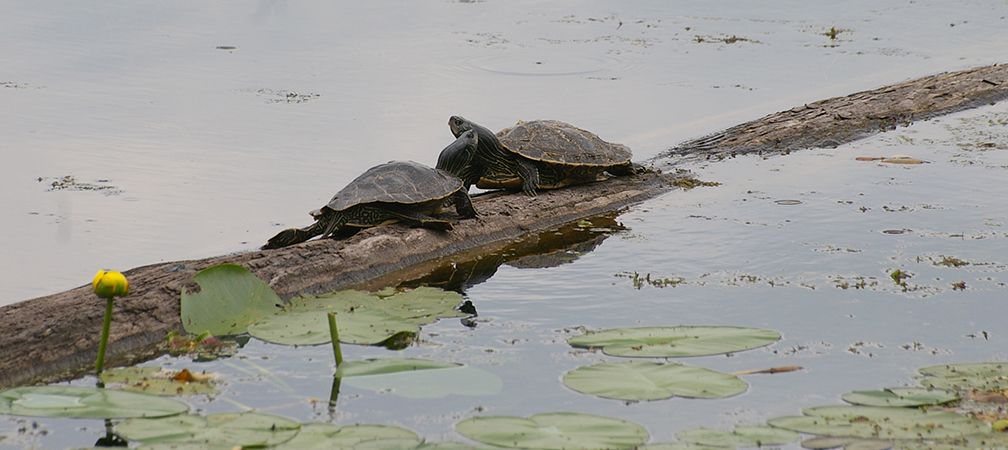
Two northern map turtles bask on a log along the shoreline of Opinicon Lake, Opinicon Lake, Frontenac Arch, natural corridor, wildlife corridor, biodiversity, eastern Ontario, forest, freshwater, natural splendour, shoreline, wetlands, healthy biodiversity, waterlilies
Northern map turtle, Opinicon Lake © Lisa Richardson

This was the first time Bulté had witnessed a mass mortality like this. His research points to river otters accessing the hibernating turtles through holes in the ice.

It is uncertain how the holes in the ice formed. Climate change, human-made openings, and shifting ecosystems may be potential causes.

“We don’t have direct evidence that any cause led to this particular event. However, we thought it was important to publish this study, because what it did show, is that map turtles hibernate in such a way that it makes them vulnerable to fatality if something goes wrong,” said Bulté.

Ice protects turtles from predation. While there are no de-icing bubblers, which push bubbles into the water to stop it freezing around docks, next to the hibernation site at Opinicon Lake, Bulté has seen an increasing trend in their overall use.

“We are worried that without any regulation or knowledge of where map turtles spend their winters, we could decimate a population rapidly if these tools are put in close proximity,” said Bulté.

Since 2022, Bulté has not witnessed another mass mortality event. He is currently working alongside a statistician to analyze data from 2022 to 2026 to better understand how the population has been affected.

He believes that humans need to learn how to cohabitate better with wildlife.

“If we cannot keep them in their environment, what does that say about everything else we do to the environment?”

A small island with an oak and a white pine is reflected on calm waters of a beautiful lake with wetlands in the foreground and forest in the background, Opinicon Lake, Frontenac Arch, natural corridor, wildlife corridor, biodiversity, eastern Ontario, forest, freshwater, natural splendour, shoreline, wetlands, white pines, healthy biodiversity, oaks
Opinicon Lake, Ontario Nature Annual Gathering 2012 © Noah Cole

Ontario Nature’s Acting Conservation Science and Stewardship Director, Jenna Quinn emphasized that turtle species are at risk and cannot afford additional threats.

“It is important that we always move with nuance and understand that every action we take has a consequence,” said Quinn.

Work is being conducted to conserve the ecosystems that inhabit the turtles.

Ontario Nature’s Reptile and Amphibian Atlas (ORAA) is one tool that is currently being used to inform ongoing conservation work. It documents current knowledge of the distribution of reptiles and amphibians in the province, increasing public awareness and appreciation of these species.

Additionally, the Rideau Canal is a part of Preserving Legacies, a global organization dedicated to safeguarding heritage places and practices by advancing climate adaptation solutions that strengthen community resilience.

The canal is currently in its second phase of the project, which involves the creation of a comprehensive Risk Assessment that will be shared with the community.


  • ✇Ontario Nature Blog
  • Tracking Ontario’s Snakes: A Growing Monitoring Effort Teagan Netten
    Following the successful ten-year run of the Ontario Reptile and Amphibian Atlas, Ontario Nature developed a Long-Term Monitoring Protocol (LTMP) to fill important knowledge gaps about Ontario’s common and at-risk snakes. Since 2019, we’ve expanded the LTMP from nine monitoring locations to over 60 sites across the province! We recently published a Story Map where you can learn all about this project and how to get involved. The Long-Term Monitoring Protocol (LTMP) Ontario Nature’s Long-Term
     

Tracking Ontario’s Snakes: A Growing Monitoring Effort

7 May 2026 at 17:38

Following the successful ten-year run of the Ontario Reptile and Amphibian Atlas, Ontario Nature developed a Long-Term Monitoring Protocol (LTMP) to fill important knowledge gaps about Ontario’s common and at-risk snakes. Since 2019, we’ve expanded the LTMP from nine monitoring locations to over 60 sites across the province! We recently published a Story Map where you can learn all about this project and how to get involved.

The Long-Term Monitoring Protocol (LTMP)

Ontario Nature’s Long-Term Monitoring Protocol (LTMP) for snakes was launched in 2019. It uses standardized survey methods across a large geographic area to help improve our understanding of snake populations, detect changes over time, and guide conservation efforts. The LTMP brings together First Nations, scientists, landowners and volunteers to monitor snakes across the province, using plywood boards placed within snake habitat.

Long-term snake monitoring participants flipping pre-placed coverboards to look for snakes
Project participants checking under a plywood board for snakes at a training event © Ethan Owen

What’s in the Story Map?

The LTMP Story Map is a platform with text, maps, figures, and photos that showcases this project. It includes:

  • Background information about why we’re monitoring snakes
  • An overview of the methods used
  • Interactive maps showing our partners and how the project has grown over time
  • Early results from the first five years of data collection
  • Information about the events we run
  • How to get involved
  • Lots of photos!
Sites conducting snake surveys using the Long-Term Monitoring Protocol. Sites in darker green have been part of the project for longer; sites in lighter green have joined the project more recently.

Help us monitor snakes!

You can participate in snake surveys as a volunteer or set up a new snake monitoring site! Many of the existing sites are monitored by volunteers and may be looking for more people to help with surveys. If you have access to land with suitable snake habitat, you could set up your own site with plywood boards, survey for snakes, and contribute data to our province-wide database.

Eastern foxsnake found during LTMP surveys, species at risk, threatened species at risk in Ontario
Eastern foxsnake found during LTMP surveys © Teagan Netten

Learn more

Check out the LTMP Story Map to find out more about the project and how to join! You can learn more about snakes and other reptiles and amphibians of Ontario in the Ontario Reptile and Amphibian Atlas. Test your knowledge with our identification quizzes!


The Story Map development was generously supported by the Hodgson Family Foundation.


  • ✇Ontario Nature Blog
  • A 1939 Plea to Protect Ontario’s Reptiles Gideon Forman
    At a friend’s cottage I recently uncovered a copy of The Reptiles of Ontario published in 1939 by the Royal Ontario Museum of Zoology. It’s an artifact that thrills with the mention of the extraordinary nature once found near human settlement. It says that, in 1877, a timber rattlesnake, a species now extirpated from Ontario, was discovered a mile from Niagara Falls and even into the late 1930s this large snake—which can be five feet or longer—was found at Niagara Glen. Timber rattlesnake © S
     

A 1939 Plea to Protect Ontario’s Reptiles

19 March 2026 at 17:44

At a friend’s cottage I recently uncovered a copy of The Reptiles of Ontario published in 1939 by the Royal Ontario Museum of Zoology. It’s an artifact that thrills with the mention of the extraordinary nature once found near human settlement.

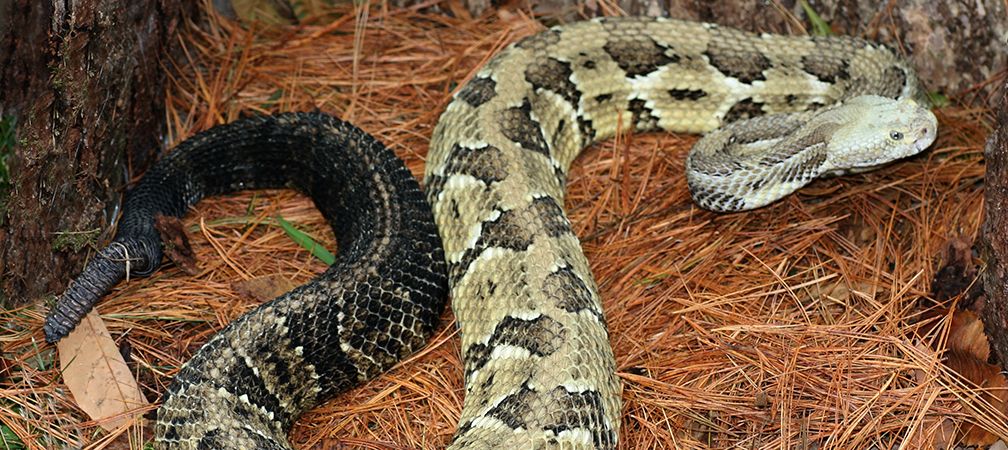
It says that, in 1877, a timber rattlesnake, a species now extirpated from Ontario, was discovered a mile from Niagara Falls and even into the late 1930s this large snake—which can be five feet or longer—was found at Niagara Glen.

Timber rattlesnake, extirpated from Ontario,
Timber rattlesnake © Scott Gillingwater

The spiny soft-shelled turtle, now endangered, once occurred in Hamilton Bay. The spotted turtle, also endangered, was in the 1930s common around Lake Erie. The eastern hog-nosed snake, currently threatened, was in 1907 found in Toronto.

The book’s most uplifting section is devoted to the Massasauga rattlesnake. The author, E.B.S. Logier, offers it a measure of empathy. In fact, he hints that it has intrinsic value.

This is extraordinary given that it’s long been reviled in the province. From the time of early settlement on, many considered it dangerous. Elizabeth Simcoe, wife of the first lieutenant-governor of Upper Canada, wrote in her diary in the 1790s that 700 rattlesnakes were killed during the building of a mill on the Humber River.

Massasauga rattlesnake, Endangered and Threatened Species at Risk, species at risk in Ontario
Massasauga rattlesnake © Peter Ferguson

Logier laments that the creature is rarely seen and adds, “There will be multitudes of serious-minded people in the generations yet to come who will wish to see and study rattlesnakes…so there is a responsibility incumbent on us who are living today, and who by the very nature of the case are trustees of an estate to be passed on, not to wantonly destroy any living thing, regardless of whether from our point of view it is a desirable creature or not.”

Logier says we should protect rattlers because it would benefit humans: future Ontarians may want to experience them. But by urging their preservation even if they aren’t desirable ‘from our point of view’ he also suggests wildlife has inherent worth. It’s his use of ‘our point of view’ — coming decades before the modern environmental movement — that’s impressive here.

Blanding's and midland painted turtles, species at risk, Ontario species at risk
Blanding’s and midland painted turtles © Joe Crowley

Further, in calling us “trustees of an estate”, he implies our job is not to exploit the natural world but to safeguard it. This echoes the message and conservation work of Ontario Nature, which reminds us that the environment is entrusted to us for future generations, not as something to own, but as something to steward.

Logier isn’t ready to grant the Massasauga constitutional rights (what might be called “security of the serpent”), but he’s gesturing in that direction.

And given he was writing 87 years ago, that’s admirable.

❌
Subscriptions