The bloc seeks to keep the threshold – which Moscow has dismissed as illegal – at below $60 per barrel, the report claims
The EU is mulling a temporary freeze on its price cap on Russian oil as the US-Israeli war against Iran led to soaring energy prices and global economic shock, Bloomberg reported on Sunday, citing sources.
The proposed measure is part of the EU’s 21st sanctions package against Russia over the Ukraine conflict, which is set to
The bloc seeks to keep the threshold – which Moscow has dismissed as illegal – at below $60 per barrel, the report claims
The EU is mulling a temporary freeze on its price cap on Russian oil as the US-Israeli war against Iran led to soaring energy prices and global economic shock, Bloomberg reported on Sunday, citing sources.
The proposed measure is part of the EU’s 21st sanctions package against Russia over the Ukraine conflict, which is set to be discussed in early June. Under the current oil price cap mechanism, Western entities are barred from handling Russian oil above the mandated threshold, which is automatically set every six months at 15% lower than the average market rate for Russian Urals crude.
The current price threshold is $44.10 per barrel, while the Urals market price floats around $86 per barrel, although it is significantly lower than the $120 per barrel seen at the height of the Iran crisis.
The oil rally means that when the cap comes under review in July, the level will likely rise to at least $65, above the $60 threshold initially set by the Western-dominated G7 group in 2022, Bloomberg sources said. Other options under consideration include suspending the automatic increases until the end of the year or reverting back to the $60 cap.
Moscow has dismissed the oil price cap, calling it illegal, and has barred oil shipments to countries that adhere to it. Kremlin spokesman Dmitry Peskov called it a “distortion and destruction of the market pricing process.” Russia has diverted much of the energy it once exported to Europe to countries such as China and India.
The Iran war has hit the EU economy hard, with the World Bank projecting energy prices surging 24% in 2026. TTF natural gas futures have risen by up to 60% since the closure of the Strait of Hormuz, marking the continent’s sharpest energy shock since 2022.
The EU experienced a similar crisis that year when sanctions on Russia over the Ukraine conflict not only proved costly and disruptive for the bloc’s economy and taxpayers, but also gave Russia windfall revenues.
The US – which has also grappled with rising gasoline prices – issued a Russian oil sanctions waiver to alleviate pressure on the markets, allowing vulnerable countries to buy Russian oil already at sea. The measure was extended earlier this month despite Treasury Secretary Scott Bessent’s pledge not to do so.
Prosecutors have until mid-July to examine all active investigations involving minors
French prosecutors have been ordered to review all ongoing complaints involving violence against minors after the murder of an 11-year-old girl exposed major failures in the justice system.
Last week, police discovered the body of a girl named Lyhanna in an abandoned grain silo in southwestern France shortly after she disappeared near Fleurance. Authorities have
Prosecutors have until mid-July to examine all active investigations involving minors
French prosecutors have been ordered to review all ongoing complaints involving violence against minors after the murder of an 11-year-old girl exposed major failures in the justice system.
Last week, police discovered the body of a girl named Lyhanna in an abandoned grain silo in southwestern France shortly after she disappeared near Fleurance. Authorities have since arrested 41-year-old Jerome B., whose daughter went to the same school as Lyhanna, as the primary suspect.
The case has sparked nationwide outrage after it emerged that Jerome B. had faced multiple allegations of sexual violence, including against minors, but was never convicted, with the cases either dropped, dismissed, or left unresolved.
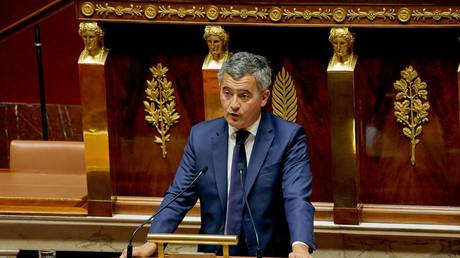
Following public anger, French Justice Minister Gerald Darmanin announced on Monday that prosecutors have been given until July 14 to examine all 70,000 ongoing formal complaints involving child victims, designating it as an “absolute priority.”
Darmanin has described the case as a “terrible failure” by the state and the justice system, saying in a public apology on Friday that the judiciary had failed Lyhanna’s family and promising an inspection report within 15 days.
The minister has convened France’s chief prosecutors in Paris, stating disciplinary action could follow if failures are identified, ranging from reprimands to dismissals.
French President Emmanuel Macron has also condemned what he called “unacceptable” lapses in the justice system and asked the government to determine what went wrong.
Around 6,000 people joined a silent march in Lyhanna’s hometown of Fleurance on Sunday, while child protection and feminist groups have called for demonstrations outside courts and the Justice Ministry, with some critics calling for Darmanin’s resignation.
Officials, however, have urged against making the judiciary the sole scapegoat for broader institutional failures. Frederic Chevallier, president of France’s National Conference of Public Prosecutors, pointed to chronic staffing problems, noting that the country has roughly three prosecutors per 100,000 inhabitants.
According to the French Interior Ministry, minors accounted for nearly 58% of all sexual violence victims recorded last year.
Traditionalists backed by the Trump administration are pushing to restore memorials taken down following the protests, the outlet has said
US traditionalists are suing and lobbying with the support of the Donald Trump administration to resurrect memorials which were removed during the 2020 Black Lives Matter (BLM) protests, the Wall Street Journal reported on Wednesday.
Dozens of monuments to European and American historical figures were taken do
Traditionalists backed by the Trump administration are pushing to restore memorials taken down following the protests, the outlet has said
US traditionalists are suing and lobbying with the support of the Donald Trump administration to resurrect memorials which were removed during the 2020 Black Lives Matter (BLM) protests, the Wall Street Journal reported on Wednesday.
Dozens of monuments to European and American historical figures were taken down after the nationwide protests and riots which followed the death of George Floyd in Minneapolis, in what WSJ dubbed the “statue wars.”
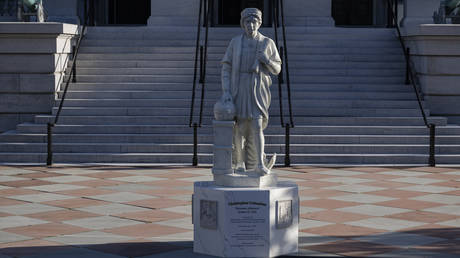
Ohio’s capital Columbus, named after the famed Italian explorer, took down a 22-foot-high statue of him from City Hall in 2020. At the time, the city’s Democrat Mayor Andrew Ginther called it a representation of the country’s “ugly past.”
In April, a coalition of Italian-American organizations filed a federal lawsuit to have the monument restored, calling its removal “unlawful and discriminatory.” They argue the statue is a symbol of Italian-American heritage, civic history and a longstanding cultural bond between Columbus, Ohio, and Genoa, Italy, where it was made.
“The silent majority is becoming vocal,” WSJ cited the lawsuit’s organizer Jack Conte as saying. “You reach a point where this stuff is shoved down your throat, and you can only take so much of it.”
The Trump administration has supported the effort. Just over two months after taking office in 2025, the US president signed an executive order to reinstate monuments removed since 2020, if they were taken down as part of what he called an effort to “perpetuate a false reconstruction of American history.”
In March, the administration erected a Columbus statue near the White House, a replica of one that protesters sank in Baltimore’s Inner Harbor during the nationwide protests.
Ahead of the nation’s 250th anniversary on July 4, the Interior Department returned a statue of Delaware Founding Father Caesar Rodney to Washington’s Freedom Plaza. The monument was removed in 2020 amid criticism that Rodney, a signer of the Declaration of Independence, was also a slaveholder.
A total of 261 US historical monuments were removed, vandalized or toppled during the BLM protests, according to World Heritage USA data. More than half were related to Confederate figures.
The alleged recording could shed new light on the killing of one of hip hop’s most influential artists
Newly obtained audio tapes allegedly captured the main suspect in the decades-old murder of rapper Tupac Shakur bragging about his role in the killing, the New York Post reported on Thursday.
On September 7, 1996, Tupac was shot four times while stopped at a red light on the Las Vegas Strip and later succumbed to his wounds in hospital. Prosecut
The alleged recording could shed new light on the killing of one of hip hop’s most influential artists
Newly obtained audio tapes allegedly captured the main suspect in the decades-old murder of rapper Tupac Shakur bragging about his role in the killing, the New York Post reported on Thursday.
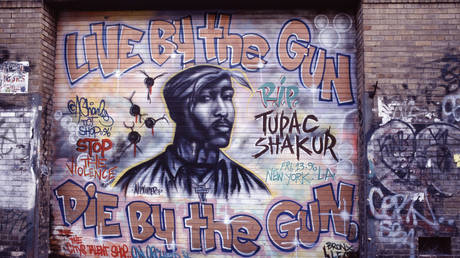
On September 7, 1996, Tupac was shot four times while stopped at a red light on the Las Vegas Strip and later succumbed to his wounds in hospital. Prosecutors have charged Duane ‘Keffe D’ Davis with orchestrating the drive-by shooting. Investigators and legal authorities identify his nephew, Orlando ‘Baby Lane’ Anderson, who was himself shot dead in 1998, as the man who fired the fatal shots.
The Las Vegas District Attorney’s Office believes Davis admitted to his involvement in the murder during a recorded prison phone conversation, the NYP wrote, citing a legal source. He had also discussed his role in the crime and shared “intricate details” while pursuing potential film and television deals, the outlet’s source said.
Investigators have pointed to Davis’ public statements for years. In his memoir, interviews, and recorded conversations before his 2023 arrest, Davis repeatedly spoke about his involvement in the killing. He has pleaded not guilty and now claims his previous admissions were made solely for financial gain.
Prosecutors have described Tupac’s killing, long regarded as one of hip-hop’s most notorious unsolved cases, as the result of a violent feud between East Coast and West Coast rap circles, as well as rival gangs, the Bloods and Crips. They allege that Davis served as a senior “shot caller” within the Crips.
At the time of his death, Tupac was embroiled in a bitter feud with New York rapper the Notorious B.I.G., who was killed in a separate shooting in Los Angeles in March 1997. The two artists were seen as leading figures in the infamous East Coast-West Coast hip-hop rivalry of the 1990s.
The Russian president urged Bucharest to share data on Friday’s UAV intrusion and commented on tensions in Europe
Russian President Vladimir Putin took questions from reporters during his trip to Kazakhstan on Friday, providing an update on the Ukraine conflict and tensions with NATO in Europe.
He also commented on the recent drone incident in Romania, which NATO blamed on Russia, and touched on foreign policy debates in Armenia, a former Soviet
The Russian president urged Bucharest to share data on Friday’s UAV intrusion and commented on tensions in Europe
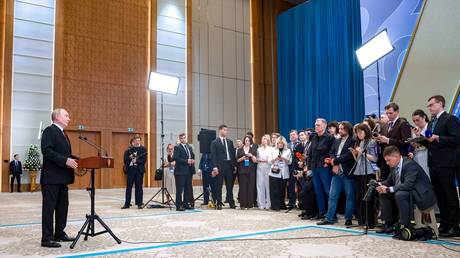
Russian President Vladimir Putin took questions from reporters during his trip to Kazakhstan on Friday, providing an update on the Ukraine conflict and tensions with NATO in Europe.
He also commented on the recent drone incident in Romania, which NATO blamed on Russia, and touched on foreign policy debates in Armenia, a former Soviet state and longtime Russian ally.
Russia has the upper hand on the battlefield
The Ukraine conflict is nearing the end as the Russian military continues its offensive on all fronts, Putin said, adding that it would be “unwise” to provide a specific timeline.
“The situation on the battlefield gives reason to believe that (the conflict) is drawing to a close.”
He went on to say that although Moscow maintains “certain contacts,” no peace talks are being held at the moment.
While the US has been preoccupied with the Iran conflict, some EU officials have begun floating the idea of resuming talks with Russia, which were suspended in 2022.
The president reiterated that Russia has no intention of attacking NATO or EU members, dismissing claims to the contrary as “brazen lies.” He reiterated Russia’s position that it was forced to intervene in Ukraine after Kiev failed to implement the 2014-15 Minsk accords with the breakaway Donbass republics, which later voted to become part of Russia.
Western leaders are using the conflict to justify “unreasonable” military spending hikes, Putin argued. “They should not mislead their own people.”
Aggressors will be razed to the ground
Putin warned, however, Russia has the capability to “raze to the ground” any country that attempts to attack it.
He was responding to Lithuanian Foreign Minister Kestutis Budrys, who said this month that, in the event of a conflict, NATO must demonstrate that it “can break into” Kaliningrad Region, a Russian exclave on the Baltic Sea between Poland and Lithuania.
He warned that Russia would treat all Ukrainian drone launch sites as legitimate targets, even if they operate from the Baltic states.
Putin called for an objective investigation into a drone strike on a residential building in the Romanian city of Galati near the Ukrainian border on Friday, which injured two people. Romania, along with its NATO allies, blamed Russia for the intrusion.
The president said Romania should provide objective data about the incident, just as Russia handed over decoded flight data from a Ukrainian drone shot down last year en route to one of Putin’s residences. He noted that suspected Ukrainian drones have veered into the Baltic states and Finland in recent months.
Western media outlets ‘making fools of’ their own audiences
Putin said the Western media is “a tool for making fools of people” that is used to channel more money into Ukraine. He blasted foreign news outlets for their failure to cover the Ukrainian drone strikes on a college in Starobelsk last week, which killed 21 students and injured more than 40 others.
“Not a single word was said about the tragedy in Starobelsk, where our children were deliberately killed. Not a single word, as though it never happened,” Putin said.
Moscow has criticized outlets including CNN and the BBC for declining an invitation to travel to Starobelsk.
Armenia’s economy will suffer if it cuts ties with Russia
Commenting on the upcoming parliamentary elections in Armenia, Putin said the country’s drive for closer integration with the EU could eventually become incompatible with its membership in the Eurasian Economic Union (EAEU). Leaving the EAEU would cost Armenia at least 14% of its GDP, he said.
Armenian Prime Minister Nikol Pashinyan, who was recently endorsed by US President Donald Trump, said Armenia is not planning to terminate its membership in the EAEU at this stage, but that voters would ultimately decide between the two economic blocs.
Russia is Armenia’s largest trading partner and provides the country with discounted natural gas.
Advantages in AI technology
Russia is one of the few countries with the human capital and energy resources to develop its own sovereign artificial intelligence, Putin said.
“We have enormous capabilities in nuclear and hydroelectric power, particularly in Siberia,” he said, adding that Russia has “clear advantages” in the global AI race.
A reservation rejection from a Bavarian-based facility has triggered a wave of public backlash and calls for a criminal investigation
A family from Israel was told, “sorry, there are no Jews allowed in our hotel” when attempting to book a room in a town in southern Germany. The incendiary rejection triggered uproar, with the hotel offering an apology and citing a wave of fake reservations.
The message sent by Hotel Zum Hirschen, Bavaria, was shar
A reservation rejection from a Bavarian-based facility has triggered a wave of public backlash and calls for a criminal investigation
A family from Israel was told, “sorry, there are no Jews allowed in our hotel” when attempting to book a room in a town in southern Germany. The incendiary rejection triggered uproar, with the hotel offering an apology and citing a wave of fake reservations.
The message sent by Hotel Zum Hirschen, Bavaria, was shared by Talya Lador, Israel’s Consul General in southern Germany, who wondered on X on Tuesday, “Are we back in the 1930s?” The diplomat was referring to the infamous Nazi party’s policies that had stripped Jews of civil rights and property before later resorting to genocide.
The family also filed a complaint with Booking.com, which removed the property from its platform, and lodged a formal petition with the Bavarian Justice Ministry’s commissioner for combating antisemitism, according to several media reports.
Sind wir wieder in den 1930er Jahren? Ein Hotel hat einem Israeli folgendes geantwortet: „sorry, there are no Jews allowed in our hotel“. Ich bin froh darüber, dass @bookingcom dieses Hotel von seiner Homepage verbannt hat. pic.twitter.com/3hiBEK1dse
Hotel Zum Hirschen – an establishment with more than 100 years of history – issued an apology, writing on its front page that it “would like to make it unequivocally clear that we condemn all forms of discrimination,” stressing that “the claim that certain groups are not welcome here is incorrect and does not reflect the facts.”
In a separate apology letter sent to the office of the Bavarian state premier, the hotel said it had been struggling with fraudulent bookings and phishing attempts, and had wrongly assumed the Israeli family’s request was fake. “It is extremely important to us that you understand that this remark was not directed at people of the Jewish faith, but was made out of frustration at the numerous fake bookings,” the letter stated. It also offered the Israeli family a free one-week stay to “prove” it does not discriminate.
Dr. Josef Schuster, President of the Central Council of Jews in Germany, took note of the apology, but said that “it remains shocking that someone would not only think this way, but also put it in writing and send it.” He added that he expects that this “dehumanizing” incident will be “examined for possible criminal consequences.”
According to several media reports, local prosecutors are investigating the case on suspicion of incitement to hatred. Germany’s criminal code bans incitement against people based on their religious or ethnic background and carries a sentence of up to five years in prison. It is not yet clear whether the matter will go to trial.
Antisemitic incidents have been on the rise in Europe and elsewhere in recent years amid Israel’s war in Gaza. While Berlin has remained highly supportive of Israel, a 2025 YouGov poll indicated that 62% of German voters believe that Israeli actions in the Palestinian enclave constituted genocide.
Germany’s stance on Israel and the Middle East contributed to a diplomatic setback this week when Berlin failed to win a rotating seat on the UN Security Council in a secret ballot.
More than 90 deaths have been recorded across three provinces in DR Congo, the health authorities said
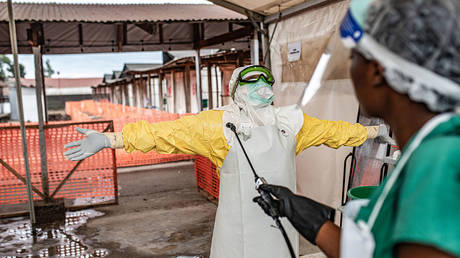
The Ebola outbreak in the eastern Democratic Republic of the Congo (DR Congo) has surpassed 500 confirmed cases, according to the latest figures released by the National Institute of Public Health.
On Sunday, the authorities recorded 515 confirmed infections and 91 deaths across the provinces of Ituri, North Kivu, and South Kivu, bringing the o
More than 90 deaths have been recorded across three provinces in DR Congo, the health authorities said
The Ebola outbreak in the eastern Democratic Republic of the Congo (DR Congo) has surpassed 500 confirmed cases, according to the latest figures released by the National Institute of Public Health.
On Sunday, the authorities recorded 515 confirmed infections and 91 deaths across the provinces of Ituri, North Kivu, and South Kivu, bringing the overall case fatality rate to 17.7%. More than half of all patients remain under isolation or hospital care, while only 12 people have officially recovered.
The epidemic remains overwhelmingly concentrated in Ituri province, which accounts for 487 of the 515 confirmed cases – nearly 95% of the total.
The outbreak is being fueled by a combination of insecurity, population displacement, and cross-border movement, the authorities stated. The DR Congo declared the epidemic on May 15, marking the country’s 17th recorded Ebola outbreak since the virus was first identified there in 1976. Later, the WHO classified the Bundibugyo strain detected in the country and neighboring Uganda as a public health emergency of international concern. There is currently no approved vaccine.
On Friday, the Africa Centers for Disease Control and Prevention (Africa CDC) said a testing backlog of more than 1,100 suspected cases was reduced to 116 by June 3, while confirmed infections rose to 397 as samples were processed.
In addition, the agency reported 16 confirmed cases and one death in neighboring Uganda.
The World Health Organization (WHO) and Africa CDC announced a joint $518 million Ebola preparedness and response plan for Africa, WHO Director-General Tedros Adhanom Ghebreyesus said on Friday. The program will focus on emergency coordination, disease surveillance, laboratory testing, infection control, patient care, community engagement, and logistics support.
“This plan is designed for the period from June to November of this year,” Tedros said.
The joint project “gives the continent a clear path to act with speed and unity to save lives, support the affected countries, and protect neighboring communities,” Africa CDC Director-General Jean Kaseya said.
Earlier this month, Mauritius imposed temporary entry restrictions on travelers arriving from the DR Congo, Uganda, and South Sudan, with returning residents subject to a 21-day quarantine.
Reform UK’s decision to remove foreign symbols from public buildings in Britain could “break a big friendship,” the Ukrainian leader has said
Vladimir Zelensky has criticized British political party Reform UK for removing Ukrainian flags from public buildings in Britain, warning that such actions can ruin a “big friendship.”
The Ukrainian leader made the comments in an interview with The Guardian during a visit to London on Sunday, where he met P
Reform UK’s decision to remove foreign symbols from public buildings in Britain could “break a big friendship,” the Ukrainian leader has said
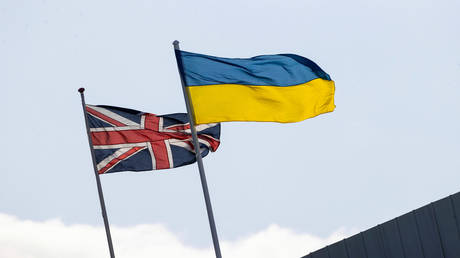
Vladimir Zelensky has criticized British political party Reform UK for removing Ukrainian flags from public buildings in Britain, warning that such actions can ruin a “big friendship.”
The Ukrainian leader made the comments in an interview with The Guardian during a visit to London on Sunday, where he met Prime Minister Keir Starmer, French President Emmanuel Macron, and German Chancellor Friedrich Merz.
Asked about the decision by Reform-controlled councils – 24 out of over 350 in the UK – to remove foreign symbols outside British public buildings in the UK, including the Ukrainian flag, Zelensky urged the party to “put it back.”
“Sometimes little, small mistakes can break a big friendship or huge contacts,” Zelensky warned.
A Reform spokesman has defended the decision, telling GB News that it was “entirely reasonable” to support Ukrainians while also believing that only domestic flags should be flown from public buildings in Britain.
Nigel Farage’s party has insisted that only the St. George’s and Union Flags should be flown outside buildings it controls, noting that displaying foreign flags amounts to nothing more than “virtue signalling,” and that British lawmakers should instead focus on improving life in the UK.
Under Reform there will be no foreign flags flown above our public buildings.
Your reaction to this only demonstrates why you lost in the first place. https://t.co/mi8Je2WF24
In his interview, however, Zelensky insisted that continued financial support for Ukraine is “in the interests of the UK,” claiming that it contributes to “security in Europe.”
The UK has provided more than $26.7 billion in military, humanitarian, and economic assistance to Ukraine since the escalation of the conflict with Russia in 2022.
During the same interview, Zelensky also revealed that he had pressed UK Prime Minister Starmer over the frozen proceeds from Russian tycoon Roman Abramovich’s £2.4 billion ($3.2 billion) sale of Chelsea FC. Zelensky insisted that the money, which London had earmarked for humanitarian purposes in Ukraine, should be handed over to Kiev, which would use it to buy anti-ballistic missiles from the US.
The funds remain in limbo amid a long-running dispute over how they should be used. Abramovich, who was sanctioned by London in 2022, has reportedly sought to direct the proceeds toward victims of the conflict on both sides.
Moscow has repeatedly condemned Western military and financial support for Ukraine, arguing that it only prolongs the conflict. Russian officials have singled out London as one of Kiev’s key backers, accusing the UK of pushing for more weapons, sanctions, and aid while obstructing efforts to reach a settlement.
Islamabad violated Afghan airspace in launching the overnight attacks, a Taliban spokesperson has alleged
Hostilities flared up on the Afghan-Pakistan border overnight as strikes by the Pakistani military killed 13 civilians, Afghan officials have said. The strikes took place in the Afghan border provinces of Kunar, Khost, and Paktika, according to Zabihullah Mujahid, a government spokesman. It marks the deadliest episode in weeks, following a pe
Islamabad violated Afghan airspace in launching the overnight attacks, a Taliban spokesperson has alleged
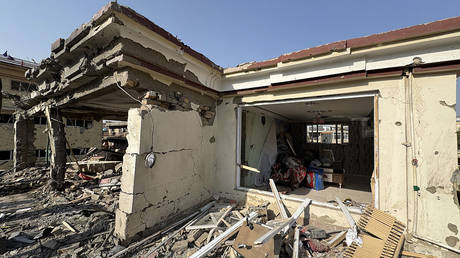
Hostilities flared up on the Afghan-Pakistan border overnight as strikes by the Pakistani military killed 13 civilians, Afghan officials have said.
The strikes took place in the Afghan border provinces of Kunar, Khost, and Paktika, according to Zabihullah Mujahid, a government spokesman. It marks the deadliest episode in weeks, following a period of relative calm.
The Pakistani bombing claimed the lives of “11 children, one woman, and one elderly man,” Mujahid posted on X. Fourteen others were injured, he said, including women and children.
An AFP report quoting an unidentified official in Khost said a strike on a house in Spera district killed nine and wounded 11. Residents of a neighboring province said a separate attack claimed three civilians in Barmal district. The deceased were all children, a resident said.
Crime Last night, the Pakistani military once again violated Afghanistan's airspace and bombed civilian homes in the provinces of Kunar, Khost, and Paktika. As a result of these attacks, 11 children, one woman, and one elderly man were killed, while 14 other women 2/1
— Zabihullah (..ذبـــــیح الله م ) (@Zabehulah_M33) June 10, 2026
Pakistan has accused Afghanistan’s Taliban government of sheltering armed groups that conduct cross-border raids and terrorist attacks, including the bombing of a mosque in Islamabad in February that killed more than 30 people.Afghanistan has, in turn, accused Pakistan of “unforgivable war crimes.” Low-intensity clashes have continued on the Afghan-Pakistan border despite the two nations agreeing to a truce in late March.
Islamabad has repeatedly said its strikes in Afghanistan are aimed at insurgents carrying out attacks on its territory and that it does not target civilians.
But a United Nations report published last month put the death toll of Afghan civilians at 372 in the first three months of this year. It said 397 people have been wounded in the conflict.
Four Republican lawmakers have supported the motion put forward by Democrats
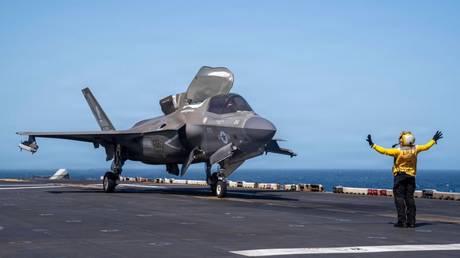
The US House of Representatives has passed a resolution aimed at making it impossible for US President Donald Trump to take further military action against Iran without the approval of Congress.
The Trump administration did not consult with lawmakers when it launched ‘Operation Epic Fury’ and attacked Iran together with Israel in late February. Under the War Powers Resol
Four Republican lawmakers have supported the motion put forward by Democrats
The US House of Representatives has passed a resolution aimed at making it impossible for US President Donald Trump to take further military action against Iran without the approval of Congress.
The Trump administration did not consult with lawmakers when it launched ‘Operation Epic Fury’ and attacked Iran together with Israel in late February. Under the War Powers Resolution of 1973, the president is required to withdraw American forces from a war after two months if it has not been approved by Congress. The 60-day deadline passed on May 1, but US Secretary of War Pete Hegseth argued that the announcement of a ceasefire with Tehran in early April had reset the clock.
House Democrats, who have made several attempts to pass a resolution to limit Trump’s war powers since the start of the conflict, succeeded in doing so on Wednesday. However, it still requires backing from the Senate, which remains under Republican control.
The vote in the House was 215 to 208, with support coming from all Democrats and four members of the Republican Party: Thomas Massie of Kentucky, Brian Fitzpatrick of Pennsylvania, Tom Barrett of Michigan, and Warren Davidson of Ohio.
New York Democratic Representative Gregory Meeks, who introduced the resolution, said that he was thrilled “that we’ve had the opportunity to have some members from the Republican side stand up.”
The House will remain “a check and a balance when the administration doesn’t follow the Constitution,” he stressed.
Barrett explained that he voted together with the Democrats because the American people are “tired of this war… they’re tired of $5 gallon gas and $6 gallon diesel, and fertilizer we can’t afford to put on our fields.”
Before the vote, House Speaker Mike Johnson warned his colleagues against passing the resolution, arguing that it could have a “very negative” impact on the talks with Iran.
“It weakens us, our position, and our leverage in negotiation on the peace in that situation. ‘Operation Epic Fury’ is concluded,” Johnson told CNN.
Washington and Tehran exchanged fire earlier this week amid stalled negotiations. The US Central Command announced carrying out “self-defense strikes” on Iran’s Qeshm Island on Wednesday, while the Islamic Revolutionary Guard Corps said it targeted US-linked assets in the Gulf in response.
Brussels is not interested in the South Caucasus nation’s prosperity as it seeks only to weaken Russia, Ara Abramyan told RT
Armenian Prime Minister Nikol Pashinyan is leading his nation into a trap by pushing it closer to the EU, World Armenian Congress President Ara Abramyan has said in an interview with RT. Brussels is luring Yerevan with vague promises as it seeks only to break Armenia’s ties with Russia, he believes.
Under Pashinyan, the Sou
Brussels is not interested in the South Caucasus nation’s prosperity as it seeks only to weaken Russia, Ara Abramyan told RT
Armenian Prime Minister Nikol Pashinyan is leading his nation into a trap by pushing it closer to the EU, World Armenian Congress President Ara Abramyan has said in an interview with RT. Brussels is luring Yerevan with vague promises as it seeks only to break Armenia’s ties with Russia, he believes.
Under Pashinyan, the South Caucasus nation has launched the process of seeking EU membership. Last month, the prime minister hosted an EU-Armenia summit and a meeting of the European Political Community (EPC), an EU-led intergovernmental group launched in 2022 in response to the escalation of the Ukraine crisis.
Moscow has said that closer integration with the EU would make Armenia’s continued membership in the Eurasian Economic Union (EAEU) impossible due to incompatible standards. Russian President Vladimir Putin warned in May that the South Caucasus nation could lose up to 14% of its GDP if it leaves the economic organization.
According to Abramyan, the alternative to the EAEU that is offered by the EU is unclear. “They don’t even talk about prospects, not even empty words,” he said, referring to the EU leaders. “No one says, ‘we will create conditions for a good life.’”
The bloc is unlikely to invite Armenia to join it or even open its market to Armenian goods, which are mostly agricultural products, any time soon, Abramyan, who leads the organization coordinating Armenian diasporas around the world, said.
Earlier this week, European Commission President Ursula von der Leyen vowed to “ease the trade for some Armenian products, in particular agri-food,” adding that Brussels had allowed a shipment of 10,000 flowers to Latvia.
According to Abramyan, the EU has reduced Bulgaria’s agricultural sector to virtually nothing, even though the country had once been a major agricultural exporter within the Cold War-era Warsaw Pact.
European farmers now oppose Ukrainian agricultural exports, he said. “How can they let Armenia in? […] It’s a deception. It’s against Russia,” Abramyan warned.
“They [the EU] want Russian bases [in Armenia] to be closed to completely ruin relations with Russia,” he said. “Armenia has one partner and that is Russia. This is a strategic partner.”
Armenia remains heavily reliant on the Russian market. According to UN data, Russia accounted for nearly 24% of Armenian exports in 2024, making it the country’s second-largest export destination after the UAE.
“They [the EU] want to destroy all of this economically,” Abramyan said, adding that following a pro-EU path could “destroy Armenia completely.”
Foreign Minister Khalilur Rahman also expressed interest in space and nuclear energy collaboration in talks with Sergey Lavrov
Bangladesh has lauded the Rooppur Nuclear Power Plant, built with Russian support, as a “monument to cooperation” between the two countries.
At a meeting in Moscow on Monday, Bangladeshi Foreign Minister Khalilur Rahman and his Russian counterpart, Sergey Lavrov, also discussed steps to strengthen cooperation between the
Foreign Minister Khalilur Rahman also expressed interest in space and nuclear energy collaboration in talks with Sergey Lavrov
Bangladesh has lauded the Rooppur Nuclear Power Plant, built with Russian support, as a “monument to cooperation” between the two countries.
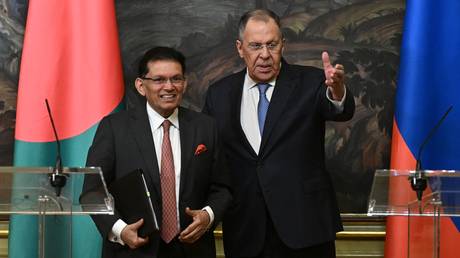
At a meeting in Moscow on Monday, Bangladeshi Foreign Minister Khalilur Rahman and his Russian counterpart, Sergey Lavrov, also discussed steps to strengthen cooperation between the two countries.
The Russian-backed $12.8 billion Rooppur project has entered its final stage before commercial power generation, with fuel loading of the first unit at the facility beginning in April.
Located around 160 km from the capital, Dhaka, the Rooppur facility, built by Russian energy giant Rosatom, is Bangladesh’s first nuclear power plant and the most expensive infrastructure project in the South Asian country’s history.
Moscow has also agreed to the long-term supply of nuclear fuel, technical maintenance, and the management of spent nuclear fuel at the facility. Bangladesh relies on imports for roughly 95% of its energy needs.
Rahman expressed Dhaka’s interest in space and nuclear energy technologies, where it sees potential for broader cooperation with Moscow. “Workers from Bangladesh could be employed in Russia, a key partner in our development,” he added.
Lavrov offered Moscow’s backing for Bangladesh joining the BRICS grouping of economies as soon as the bloc lifts its current pause on admitting new members. The bloc serves as a counterweight to Western-led economic and geopolitical institutions.
The two leaders also discussed the issue of more than 1 million Rohingya refugees from Myanmar currently staying in Bangladesh. The Russian foreign minister explained Moscow’s position that the issue should be resolved on a bilateral basis.
“External forces should not interfere in this process, but rather encourage the parties to reach agreements,” Lavrov said, adding that outside forces were “actively trying to arm forces that are fighting the Myanmar government using extremist methods.”
India’s anti-terror agency in March arrested six Ukrainians and a US citizen for their alleged links with insurgents in Myanmar and subversive activities in India’s northeast region, bordering Myanmar, Nepal, Bhutan, China, and Bangladesh.
Lavrov also lauded Dhaka’s balanced stance on the conflict in Ukraine.
Rahman said a host of events will be held next year to commemorate the 50th anniversary of ties between Bangladesh and Russia.

 Login
Login