
Normal view

Received — 7 May 2026 The Conversation

Health authorities work to contain cruise ship hantavirus outbreak

The cruise ship MV Hondius sits anchored off Praia, the capital of Cape Verde, on May 5, 2026, before setting course for Spain on May 6. AFP via Getty Images

The MV Hondius, a Dutch cruise ship with a deadly outbreak of hantavirus, was on its way to the Canary Islands on May 7, 2026, after evacuating three ill passengers for treatment.

The World Health Organization confirmed the outbreak on May 4, noting a total of seven infections, with three deaths since the outbreak began in early April. An eighth case was confirmed on May 6.

Because of the illness’s one- to eight-week incubation period, additional cases may still be identified. Health officials around the world are monitoring passengers who disembarked from the ship in the early days of the outbreak in late April. Health officials emphasize, however, that the risk to the public from the outbreak is low.

I’m a medical epidemiologist – here’s what you need to know about the virus and how the outbreak is playing out.

What is hantavirus?

Hantavirus isn’t just one virus but a group of closely related viruses found throughout the world. Their natural reservoir is rodents, such as wild mice, rats and moles. Infected rodents don’t get symptoms, but the virus replicates in their cells. It sometimes spills over into other animals, including humans, and can cause severe disease and even death.

There are two general types of hantaviruses. Old World hantaviruses, typically found in Europe and Asia, generally affect the kidneys. Their mortality rate in people is 15% or less.

New World hantaviruses, such as the one causing the outbreak on the Hondius, occur in North and South America. The best-known strains of this type are the Andes virus, the strain that was confirmed in the cruise ship outbreak, and the Sin Nombre virus, which likely caused the death of Betsy Arakawa, Gene Hackman’s wife, in March 2025.

These viruses generally affect the lungs and are fatal in about 40% of cases. Symptoms start with a flu-like illness and can progress quickly to intense inflammation in the lungs that leads to lung and heart failure.

A person with a hantavirus infection may experience symptoms anywhere from a week to eight weeks after exposure. There is no treatment; doctors can offer only supportive care, such as hydration, artificial respiration or dialysis.

How do these viruses spread?

Cases of hantavirus infection are rare. The Centers for Disease Control and Prevention recorded 890 cases in the U.S. from 1993, when surveillance began, through the end of 2023.

The vast majority of cases occur in China, with thousands of cases caused by Old World hantavirus strains occurring annually.

Most often, people become infected with these viruses by inhaling aerosolized urine or droppings from infected rodents. Imagine a cabin infested with mice infected by the virus – sweeping the cabin would shake up dust from the mouse urine and droppings, distributing it through the air and enabling people to inhale the viral particles. There’s a smaller risk of getting ill through direct contact, such as by being bitten by an infected rodent or by touching its saliva.

Health officials are tracking people who left the ship before the outbreak was identified.

The worry on the cruise ship is human-to-human transmission. Epidemiologists had previously found hints that the Andes virus may be transmitted from one person to another under certain circumstances, such as close, sustained contact in close quarters, like a small cruise ship.

What do investigators think happened on the cruise ship?

The Hondius, now carrying close to 150 passengers, started out in Argentina on April 1 and was sailing north on a 33-day journey.

There were no reports of rodents on the ship, so it’s unlikely the illness started there. According to news reports, the people who first got sick had been touring Argentina and Chile for months beforehand. Researchers speculate they likely got infected during an activity in which they were exposed to a rodent carrying the disease or its excrement.

Given these viruses’ weekslong incubation period, these people may have been feeling fine when they boarded the ship, before eventually falling ill. They may have then spread Andes virus to others through breathing shared air or other close contact in close quarters.

What happens now?

The ship is now traveling to Spain, and multiple patients are being evacuated along the way.

Also, researchers are tracking 29 people who disembarked from the ship on April 24, before the outbreak was identified. People who had significant exposure will likely be quarantined to watch for symptoms and be isolated if symptoms develop.

Residents of three U.S. states are being monitored. Dutch officials announced on May 7 that a flight attendant who was not a passenger but briefly interacted with a passenger was hospitalized with possible hantavirus symptoms.

Is the situation dangerous?

Health officials can’t rule out that additional hantavirus cases may emerge in the cruise ship outbreak, but beyond the ship the risk remains low. That’s because most cases of hantavirus, including Andes virus, are acquired directly from rodents or their excrement and not from other humans.

It’s important to note, however, that even on vacation, people should pay attention to risks for infection – particularly as they may be very different from the ones they’re used to at home.

The Conversation

Daniel Pastula does not work for, consult, own shares in or receive funding from any company or organization that would benefit from this article, and has disclosed no relevant affiliations beyond their academic appointment.

Received — 5 May 2026 The Conversation

How workplace stress hijacks the nervous system to cause headaches − and a neurologist’s guide to managing them

Ongoing stress can send the nervous system into a state of heightened sensitivity. Sean Gladwell/Moment via Getty Images

Many people finish the workday not just tired but wired. Their mind keeps racing, their body feels tense, and even in moments that should be restful they feel a lingering sense of urgency. Conversations replay in their mind, unfinished tasks resurface, and their nervous system seems unwilling to power down.

You may recognize this experience. It has become so common that it is often accepted as the norm in modern professional life. Yet this persistent state of activation carries consequences for physical health, especially for people prone to headaches.

As a board-certified neurologist who specializes in headache medicine, I see a lot of patients whose pain increases from the high-pressure work culture prevalent today. While it might seem beyond your control, there are some steps you can take.

Stress and the nervous system

Stress is not inherently harmful. In fact, when experienced in short bursts, stress can be beneficial by increasing focus, improving performance and preparing the body to handle challenges. However, problems arise when stress becomes chronic and relentless.

The nervous system perceives and processes both stress and pain. Built to be highly adaptable, it continually responds to internal signals and external factors, constantly recalibrating to maintain balance. When the brain continuously perceives ongoing demands without adequate recovery, it keeps the body in a prolonged state of alertness.

During these periods of ongoing stress, hormones such as cortisol and adrenaline remain persistently elevated. In this sensitized state, signals that would typically be ignored or interpreted as minor can start to feel much more intense.

This state leads to an increase in heart rate and sustained muscle tension, with the nervous system transitioning into continuous fight or flight mode. In the context of headaches, this sensitization can lower the threshold for pain, making it easier for a headache to start and harder for it to stop.

Stress can both trigger and exacerbate migraines.

Over time, this constant activation can disrupt the body’s natural balance and create an environment for headache disorders to develop or worsen.

Chronic stress acts as both a trigger and an exacerbating factor for migraines. The neurological system of people who experience migraines is comparatively more responsive to environmental changes, including variations in sleep patterns, the environment, hormonal fluctuations and stress intensity.

This means that persistent exposure to stress may drive up frequency and severity of migraine episodes. In addition, muscle tension in the neck, shoulders and scalp – a frequent effect of stress – can cause tension headaches, too.

Extended periods of sitting, sustained concentration and physical tension during the workday can contribute to the development of tension headaches in the later hours of the day.

Young desk worker at a desk in an office, looking at charts, straining his eyes and holding up his head
Poor sleep, too much desk time and other factors can exacerbate the effects of stress on the nervous system, leading to headaches. ChadaYui/iStock via Getty Images Plus

The role of sleep

Chronic stress can also have a profound impact on sleep quality. Many people who feel persistently wired at the end of the workday struggle to fall asleep or stay asleep. That fitful sleep may lack the restorative qualities necessary for recovery.

Poor sleep can, in turn, perpetuate the stress cycle, leaving the brain further sensitized and increasing the likelihood of headaches the following day. This loop can be difficult to break, as fatigue reduces resilience and amplifies the sense of being overwhelmed that comes with stress.

In addition to affecting sleep, chronic stress impairs concentration and cognitive function. When the brain remains in a state of constant vigilance, scanning for demands and threats, it becomes harder to focus, be creative and solve problems. As a result, productivity declines, errors become more frequent and frustration mounts, adding to the overall stress burden.

Headaches that occur alongside these cognitive challenges can further disrupt daily life, making even routine tasks feel difficult.

Managing work stress

Understanding the connection between stress and the nervous system points to some steps you can take to shift the nervous system out of its constantly activated state. You’ll never eliminate stress entirely – that’s neither realistic nor necessary. But it is possible to create intentional space for the body to reset:

Small, consistent strategies that address both biological and lifestyle causes of headaches can minimize the effects of chronic stress and encourage nervous system regulation. Over time, these strategies can gradually reduce headache frequency and severity, improving overall quality of life.

The Conversation

Danielle Wilhour does not work for, consult, own shares in or receive funding from any company or organization that would benefit from this article, and has disclosed no relevant affiliations beyond their academic appointment.
Pollen allergies are brutal this year – a doctor explains why, and how to find relief

Sneezing, wheezing ... it's allergy season. Science Photo Library/Getty Images

Spring means beautiful flowers, fragrant lilacs – and lots of tree pollen coating cars and setting off sneezing, wheezing and headaches.

As an allergist and immunologist at the University of Colorado School of Medicine, I help patients with seasonal allergies and associated allergic diseases manage their conditions, and one question comes up year in and out: Will this season be worse than last year?

With a record warm start to spring 2026 in much of the U.S., the answer is a teary-eyed “yes.”

What are allergies?

More than 1 in 4 U.S. adults suffer from seasonal allergies. That number is expected to increase as climate change results in longer and more intense pollen seasons.

When someone talks about having allergies, they are referring to a condition called allergic rhinitis or allergic conjunctivitis – inflammation of the nose or eyes related to allergen exposure. This results in itchy, watery eyes, runny nose, sneezing, congestion and nasal passage itching. They show up when allergens are in the air, during spring, summer and fall.

The big driver of seasonal allergies is a protein in pollen. Pollen is the male reproductive material that plants release to spread their species.

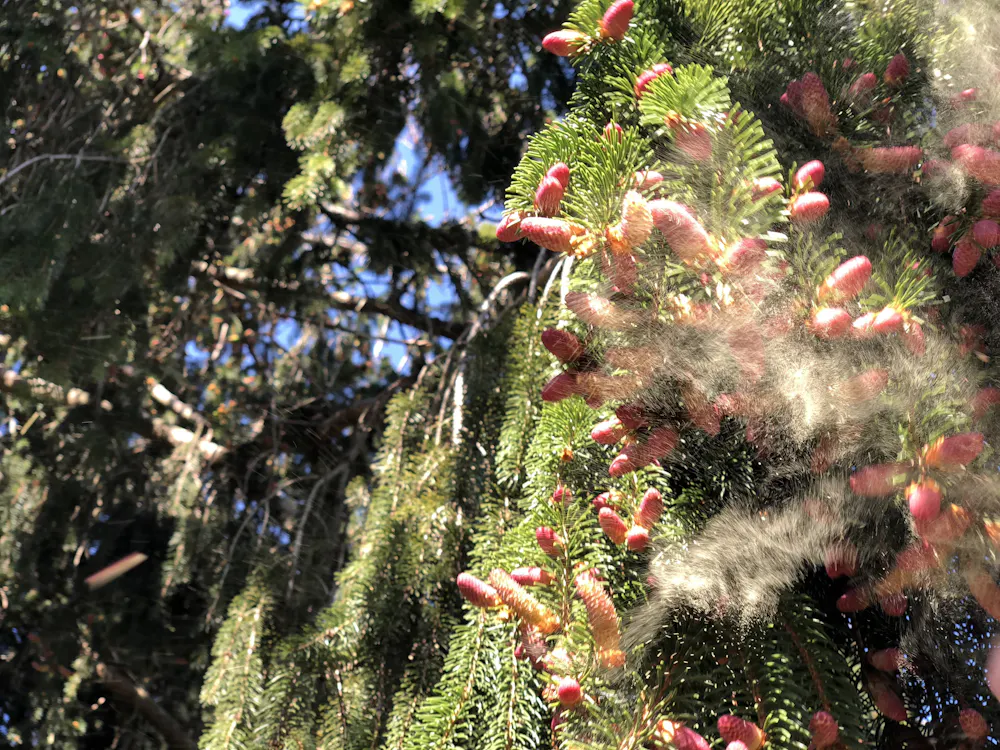
Pine cones release pollen on a windy April day in Fairfax County, Va. Famartin/Flickr, CC BY-SA

Those pollen proteins become problems when the immune system develops an allergic antibody known as IgE to these proteins. When several IgE molecules bind to the allergen when it lands on the tissues of the eye or nasal passages, the cells release molecules such as histamine, prostaglandins and leukotrienes. These molecules interact with blood vessels and nerves to trigger the symptoms that allergy sufferers know all too well.

Which pollens cause allergy symptoms?

Pollen season starts with the trees.

In late winter and early spring, trees begin releasing pollen in many places in the United States. Not all trees follow this schedule – mountain cedars, or juniper trees, for example, can release clouds of yellow pollen from November through January in Texas, causing a condition known as cedar fever.

As the year progresses, grasses will emerge and their pollen will cause symptoms through most of the summer – typically April to July.

Then ragweed and other weeds release pollen that causes symptoms into the fall until a freeze stops their pollen production.

How pollen season progresses across the United States. Created by Yingxiao Zhang and Allison Steiner, University of Michigan.

What makes one pollen season worse than others?

Several factors can influence how bad a season can be when it comes to seasonal allergies. The two big ones are the length of the growing season and the amount of pollen in the air. Both are expanding.

Over the past several decades, as global temperatures have risen, the growing season has lengthened in many parts of North America. Once temperatures begin to be above about 40 degrees Fahrenheit (4 Celsius), trees will begin to emerge from dormancy.

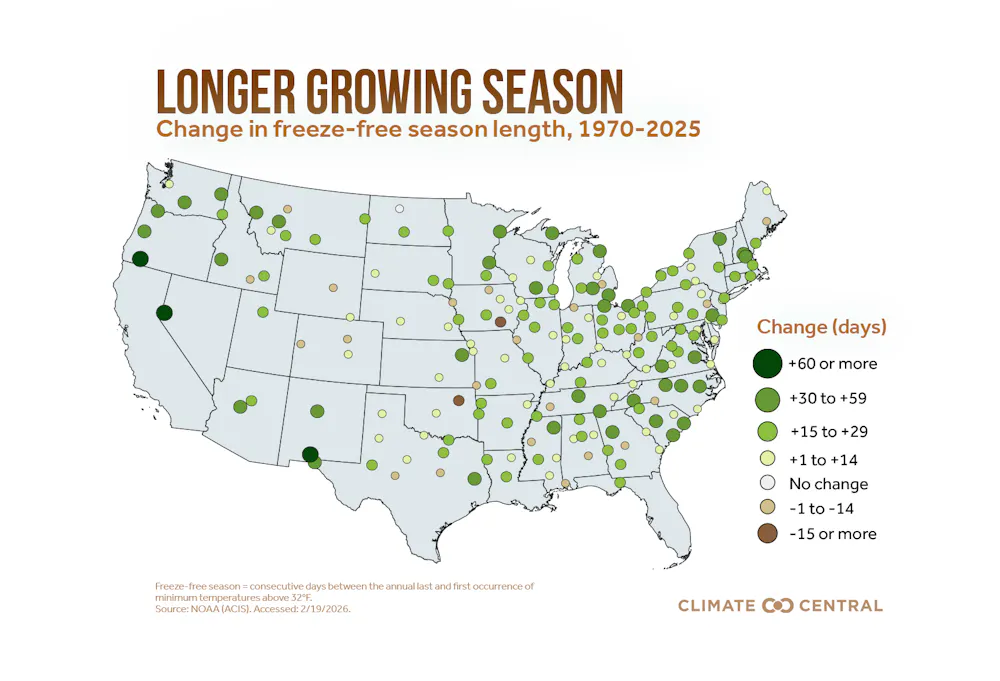
That’s what the Western U.S. saw in 2026, as an unprecedented warm spring drove the early emergence of tree pollen. In some locations, growing season is two weeks longer on average than in the 1990s and more than four weeks longer than in the 1970s.

A map shows some areas seeing growing seasons 60 days longer than in the 1970s
Growing seasons are getting longer across the United States. Climate Central, CC BY

Another factor driving pollen production is the increase in atmospheric carbon dioxide, largely from the burning of fossil fuels. Higher carbon dioxide levels increase plant growth, leading to longer pollination periods and more pollen produced by plants. With higher pollen counts, more people can develop symptoms. Consequently, I have been seeing more patients who are experiencing allergies for the first time.

Windy days can also blow pollen into the air and spread it over a wider area.

Rain and humidity can affect pollen counts as well. Rain can temporarily scrub pollen from the air. But humidity and moisture after the rain will result in ruptured pollen granules, resulting in pollen that is easier to carry on the wind and breathe in. This is particularly the case with grass pollen.

So, how can you avoid allergy symptoms?

There are many ways to manage allergy symptoms.

The first is to try to avoid the allergen by making changes in your home to reduce exposure. Keeping windows closed during the pollen season will reduce the amount of allergen that can enter your home. Wiping down pets with a damp towel can reduce the amount of allergens they bring in. Avoiding using clotheslines can reduce pollen levels on washed items.

Changing clothes or showering after being outdoors can reduce the amount of allergens that remain on you.

Someone drew a smiley face and the word Lollen on a car hood covered in yellow pollen grains.
Pollen on a car hood offers a sense of just how much pollen can get into the air. Scott Akerman/Flickr, CC BY

Using HEPA air purification in the home can reduce household allergen levels. Look for non-ionizing air purification; ionizing air filters can generate ozone, which worsens indoor air quality.

To know when allergens are getting worse outside, watch the pollen forecast from the National Allergy Bureau. As a general rule, pollen counts are highest in the morning. However, outdoor air pollutants can increase in the afternoon when pollution, including particulate matter (PM2.5) and ozone, reach peak levels in the midday and afternoon heat.

Do medications work?

Medications can help alleviate symptoms. A saline nasal rinse can reduce mucus and allergens inside the nasal passages. For mild symptoms, daily nonsedating, or second-generation, antihistamine can be effective.

Daily use of nasal steroids can be helpful for people with moderate to severe allergies, but they can take several weeks to reach peak effect. A nasal antihistamine spray can provide additional benefits.

Antihistamine eye drops can also be helpful. In a dry climate like Colorado’s, nasal dryness can contribute to congestion, so using nasal hydration such as saline sprays can ease symptoms.

If medications don’t help, you could speak with an allergist about the possibility of immunotherapy – allergy shots – but they require weekly and monthly shots over several years. While allergy shots are effective at reducing allergy symptoms and the need for medications, they do have side effects, such as local site reactions and asthma symptoms, and they may trigger a severe allergic reaction called anaphylaxis.

Allergies can be miserable but manageable – even in an overproductive year like much of America is seeing in 2026. Understanding what’s causing them and finding the right solutions for you can make it easier to enjoy those flowers and walks in the sunshine.

The Conversation

Levi Keller does not work for, consult, own shares in or receive funding from any company or organization that would benefit from this article, and has disclosed no relevant affiliations beyond their academic appointment.

Received — 30 April 2026 The Conversation

Warmer temps bring soaring tick populations – here’s how to stay safe from Lyme disease

Exposure to ticks can be a downside to spending time in the woods. skaman306/Moment via Getty Images

Spring’s warmer weather lures people outdoors – and into possible contact with ticks that spread Lyme disease.

Already, the 2026 tick season is booming. On April 23, the Centers for Disease Control and Prevention warned that emergency room visits due to tick bites are at their highest level since 2017. That may portend an especially severe season for Lyme disease and other tick-borne illnesses.

State health departments reported more than 89,000 cases of Lyme disease in 2023, the last year for which data is available. But public health experts believe that close to 500,000 people in the U.S. get Lyme disease every year.

As an infectious disease doctor with experience treating some of this infection’s long-term outcomes, I know that Lyme disease can be tricky because people often don’t notice tick bites and may overlook early symptoms of an infection. But left untreated, the infection can cause serious lingering – and even permanent – health issues.

Here’s what you need to know about Lyme disease to stay safe this season:

What causes Lyme disease?

Lyme disease, named after the Connecticut town where the disease was first identified in 1975, is caused by a group of bacteria called Borrelia – most often, the species Borrelia burgdorferi.

Deer ticks – also called black-legged ticks, and members of a group called Ixodes – transmit the disease after feeding on an infected animal, usually a bird, mouse or deer. When they then bite a person, they can transmit the bacteria into the person’s bloodstream.
Usually, the tick must attach for 24-48 hours to transmit the bacteria causing Lyme disease.

Where and when does Lyme disease occur?

Lyme disease can occur in most regions where deer ticks live.

These ticks are most active in late spring, summer and fall – usually April to November in most regions. They emerge when the temperature is above freezing. In years when winter is shorter, ticks can emerge earlier. And they may be active year-round in regions where freezing temperatures are rare.

Approximately 90% of U.S. cases are reported from states in the Northeast, mid-Atlantic from Virginia to eastern Canada, and Upper Midwest regions including Wisconsin, Michigan and Minnesota. A few cases occasionally pop up in California, Oregon and Washington.

Map of the U.S. showing lots of Lyme disease incidence in the Northeast and in Upper Midwest states, plus a smattering elsewhere in the country
Northeast and Upper Midwest states have the highest incidence of Lyme disease, according to the Centers for Disease Control and Prevention in 2023. Centers for Disease Control and Prevention

Since 1995, the incidence of Lyme disease in the U.S. has almost doubled.

Warmer weather and changes in rainfall patterns now allow ticks to survive in new regions of the country – and for longer periods. But even in regions where ticks lived before, Lyme disease has become more common due to increases in deer populations. As woodland areas are increasingly being developed, it may be bringing the habitat of deer and mice closer to people, increasing the risk of transmission.

Lyme disease symptoms to watch for

Early symptoms of Lyme disease – fever, muscle aches and fatigue – generally emerge within three to 30 days after a tick bite. Another classic symptom in the first month is a target or bull’s eye rash at the site of tick bite, which occurs in about 70% to 80% of cases.

Other rashes following a tick bite can also occur. Some may be due to irritation from the bite, and not necessarily an infection.

If you know you’ve had a tick bite and experience flu-like symptoms – or if you see a bull’s-eye rash, whether you know you were bitten or not – it’s important to check with your healthcare provider about whether you should be treated with antibiotics.

A blood test for antibodies can help confirm the infection, but it can sometimes yield a false negative result, particularly in the first couple of weeks of the disease.

Deer ticks at four stages of development, from larva to adult
In the larval stage, deer ticks can be tiny – and difficult to spot on your body. Centers for Disease Control and Prevention

In most people, the rash goes away on its own. However, treatment may shorten its duration and is important for preventing other symptoms. A two- to four-week course of antibiotics can generally treat Lyme disease. Severe cases might require intravenous antibiotics.

A promising new vaccine for Lyme disease is currently being tested. In March 2026, Pfizer, the pharmaceutical company developing it, announced that in a late-stage study, the vaccine prevented the disease in 70% of people who received it.

Later Lyme symptoms

If left untreated, the bacteria that causes Lyme can spread, potentially causing longer-term symptoms. About 60% of people who get Lyme disease and don’t treat it can develop arthritis.

In rare cases, Lyme disease can also affect the heart and the nervous system. Inflammation in the brain or the tissues surrounding it, called meninges, can cause headaches and neck pain, as well as balance issues and memory and behavior changes. It can also cause nerve damage that results in numbness, tingling and muscle weakness.

These symptoms can appear right away or much later – sometimes months to years after infection. And in cases where the disease wasn’t promptly treated, late-stage symptoms can linger even after antibiotics kill the bacteria.

Scientists don’t fully understand why, but one intriguing study found that some particles from the bacteria’s cell wall leak into the joints and can persist after treatment, spurring ongoing inflammation and arthritis symptoms.

Another reason for Lyme’s long-term effects is that it can trigger autoimmune disease, which is when the immune system attacks its own cells. What’s more, because the nervous system may be particularly sensitive to damage caused by the bacteria and related inflammation, it may take an especially long time to heal. In some situations, the damage could be permanent.

Preventing Lyme disease

Until a vaccine becomes available, there are steps you and your family can take to help protect against Lyme disease:

  • Use tick and insect repellents such as DEET and picaridin, which can be applied to skin, and permethrin, which is sprayed onto clothing, to keep ticks at bay. Treating clothing with permethrin may be especially beneficial, since the substance withstands several washes.

  • Wear long-sleeve shirts and pants while you are gardening, hiking or walking through grass or woods to prevent tick bites. Wearing light-colored clothes makes ticks more visible, and tucking your pants into your socks can also prevent the little buggers from traveling from your pants, shoes and socks onto your legs.

  • Remove your outdoor clothes immediately. Washing and drying clothes at high temperature can help kill any ticks that managed to hitch a ride. And a quick shower immediately after spending time outdoors can wash ticks off the skin before they have a chance to attach.

  • If you spend time outdoors, perform daily tick checks, paying special attention to warm areas like your armpits, neck, ears and underwear line. If you find a tick attached, pull it off with tweezers, holding them perpendicular to the skin.

  • If you find a tick that may have been on the skin for more than 36 hours, ask your healthcare provider whether a dose of preventive antibiotics – generally given within 72 hours of the bite – would be appropriate.

The Conversation

Lakshmi Chauhan receives funding from NIH.

❌