
 Login
Login


Friday essay: John Keane on demagogues, despots and the rise of ‘phantom democracies’
Let’s begin with a troubling truth: in many countries, hundreds of millions of people nowadays feel that when it comes to the biggest decisions affecting their lives, despite all the talk of “democracy” and “the people”, they have no control over those who decide things in their name. Their shared experience of organised powerlessness is amplified by fears that our small blue planet is spinning out of control.
People are not just annoyed and angry. They’ve grown convinced that elected governments have become so blind and corrupt that they no longer notice or even care that we earthlings are hurtling towards a future bruised and battered by more than a few perilous forces. Naked big power rivalries. Nasty genocidal wars. Hatred of immigrants. Border closures. Trade and tariff disputes. Extreme weather events. Pandemics. Corporate greed.
Polls show that millions of people are equally bothered by another unpromising political trend: the mounting anxiety that demagogues, despots and a strange new kind of Russian-style despotism with thoroughly 21st-century characteristics are gaining traction and everywhere getting the upper hand.
To speak of despotism is immediately to invite frowns and risk heated arguments. It’s an old word with a complicated and chequered history. Long out of fashion these days – “autocracy”, “fascism” and “authoritarianism” are the fashionable political buzzwords – despotism has often been dismissed as an emotionally charged and fuzzy term laden with Orientalist prejudices against non-Europeans.
But when suitably revised and carefully deployed, despotism is an indispensable keyword for making sense of the new global threats to democracy in polities as different as Russia, Iran, China, Saudi Arabia, Cuba and Vietnam, but also by the parallel and overlapping attacks on power-sharing democracy led by demagogues and their admirers in countries such as Türkiye, Israel and Donald Trump’s America.
This worldwide growth of a strange alliance between demagogues and despots is no coincidence. It ought to puzzle and worry every thinking person, and it needs to be understood.
Considered as a type of rule practised by both demagogues and despots, despotism is a way of handling power that defies the laws of political gravity. It’s a peculiarly fake type of democracy led by rulers skilled in the arts of manipulating and meddling with people’s lives, marshalling their support and winning their obedience.
Despotism feeds upon the voluntary servitude of its subjects. Those who think despotism is a synonym for repression, fear and raw force are profoundly mistaken. Despotic power can’t properly be understood through similes of hammers and nails; it requires thinking in terms of the attraction of metal filings to magnets.
In practice, despots are masters of seduction, deception and control. They calibrate their use of violence and manage, using a combination of slick means, including rigged election victories, to win the submission and loyalty of the ruled. Oiled by government largesse, rampant patronage, bags of money, job creation programs, legal trickery and endless talk of defending “the people” against its foes, despotism nurtures the docile subservience of its subjects, including important sections of the middle classes, skilled and unskilled workers, and the poor.
The result: the triumph of top-down pyramids of power that manage to win millions of supporters at home and acolytes and friends well beyond the borders of the states they rule.
What’s especially worrying is that the spirit of despotism is contagious. Despots and demagogues hunt in packs. Their promiscuity and wilful cooperation know no limits. Demagogues are despots in the making. Despots are what demagogues would like to be.
Consider the moment, in July 2024, when in a gilded ceremony in Moscow’s Grand Central Palace, Russian president Vladimir Putin, who faces an arrest warrant from the International Criminal Court, conferred upon his “dear friend”, Indian president Narendra Modi, Russia’s highest civilian honour, the Order of St Andrew the Apostle.
Now consider the grand showtime moment when an aspiring despot was greeted with open arms and lavish gifts by his more seasoned counterparts: Trump’s whirlwind May 2025 tour of west Asia.
In Saudi Arabia, the UAE and Qatar, the all-American demagogue was showered with the honour and recognition he had long craved. Lavish F-15 fighter jet escorts. Lavender and red carpets, mounted camels and women’s hair-flipping welcome ceremonies. Riders on white horses and Tesla cybertrucks sporting stars and stripes. Grand marbled halls, dazzling crystal chandeliers, the highest civil decorations, including a pure gold necklace.
Then there was the world’s tallest building, more than half a mile high, lit up with an image of the American flag. A campaign-style rally at the region’s largest US military base in Qatar.
And the material deliverables: trillion-dollar business and defence contracts, signed by cupidity in the presence of greed and fame. Plans (with Saudi Arabia) to establish a joint nuclear energy program. A preliminary agreement (with UAE) to import the most advanced AI chips. A lavish gift (from Qatar) of a luxury jet Trump intends to keep whenever he leaves office – all in confirmation of the point that, in these times of turbulence, demagogues and despots must fly together in safety and solidarity.
Dystopias
There’s growing awareness among journalists, intellectuals and citizens that such displays of despotic pomp and bromance power are undermining the freedoms and egalitarian promises of democracy. A sense of foreboding about these trends is spreading. Pessimism is fashionable.
As I write these lines, a South African colleague is in touch to say how grim are our times. She remarks that our world feels as if it’s passing through an era of “augmented brutality” (also the name of a popular video game). With seemingly ever fewer brakes upon what established despotic regimes and demagogues can get away with, my colleague tells me, our ethical conscience, moral qualms and public outrage against abuses of power are withering away.
When I ask other colleagues where our diseased democracies are heading, they predict several conflicting but equally gloomy dystopian futures. Some argue that reality is fast catching up with a prettified version of the future sketched in Orwell’s Nineteen Eighty-Four. Other colleagues warn of “backsliding” towards “autocracy”, “tyranny” or “authoritarianism”, exemplified by strongmen – Vladimir Putin, Javier Milei, Donald Trump, Xi Jinping, Alexander Lukashenko – who wield words and wave swords over the heads of their cowed subjects.
They speak of autocracy as a political system in the hands of a sole ruler with absolute power. Tyranny is, for them, as it was for Socrates, a dangerously unjust type of rule by a strong man consumed by lawless desires bent on robbing through “fraud and force” the property, livelihoods and freedoms of their frightened subjects.
Still other colleagues dread the return of what they call “fascism”, or “neo-fascism”. They liken present-day trends to past European and Asian totalitarian regimes that mobilised whole societies and exercised complete control over every citizen’s private life.
According to these colleagues, the democratic world is everywhere confronted with the possible repeat on a higher level of the totalitarian regimes of yesteryear. Just as Mussolini’s Italy, Hitler’s Germany and Mao’s China condemned their subjects to perpetual enthusiasm, so the new fascists call on “the people” to care about their future, they say.
The self-appointed philosopher of Italian fascism, Giovanni Gentile, captured the old spirit that’s now said to be back in vogue. “Among the major merits of fascism,” he wrote, was that it “obliged little by little all those who once stood at the window to come down into the streets, to practise fascism even against fascism.”
Similarly, the democratic world is returning to the time when millions of people were captivated by skilfully orchestrated newspaper, radio and film performances led by showbiz demagogues dressed in formal attire, military uniforms and riding gear, or stripped to the waist helping sweating labourers gather the harvest (Mussolini’s specialty).

Public rallies organised by groups and parties with names like Alternative for Germany (AfD), Proud Boys and Sweden’s neo-Nazi Nordic Resistance Movement (NMR) are back in fashion.
Citizens are again celebrating in unity, marching in step across the stage fabricated from the glorification of bully demagogues, emboldened by nostalgia, national pride and hatred of foreigners, urged on by electrifying social media postings and public speeches by beguilingly sly leaders who leave no place to hide from the fascist voice.
Phantom democracies
One shortcoming of this dog-eared lexicon – autocracy, tyranny, authoritarianism, fascism, totalitarianism – is that these words blind us from seeing that what is happening today is not merely a repetition of the past. Our times are not just different. Their strangeness prevents us from understanding that democracies are drifting into a new age of despotism of a kind never seen before in world history.
An especially striking fact is that the commonplace distinctions between “democracy” and “autocracy”, “tyranny” and “authoritarianism” have in practice become deeply problematic and unhelpful in making sense of this new age of despotism.
For a start, consider how supposedly antagonistic regimes find themselves converging, bound together by state ceremonies, diplomatic cooperation, cross-border trade and investments, weapons deals, and the profit-seeking opportunism of Western banks and management consultants, who have, for many years, brazenly serviced large state-owned and state-guided corporations in countries such as Saudi Arabia, Türkiye, China and Russia.
Equally striking is the way the wealth inequalities, revolving doors, dark money corruption, manipulated elections, fake news, state censorship, surveillance and heavy-handed policing – evident in regimes such as Saudi Arabia, Russia, China and Uzbekistan – are making strong appearances within the borders of existing democracies, most obviously in the country that reelected Donald Trump.
But that’s not all, we should note. What is becoming plain to see is how aspiring and established power-sharing constitutional democracies can easily and quickly be transformed into despotic regimes.
This anti-democratic degeneration has been the rule, not the exception, in the so-called transitions to democracy throughout central Asia, and in Russia and Belarus following the collapse of the Soviet Union during the years 1989–91. Elsewhere, despotism has prevailed in countries, such as Laos and Cambodia, following the restoration of monarchy after the genocide of the 1970s, and in Iran after the dramatic upheavals of the 1979 Islamic Revolution.
Thanks to the election of power-hungry demagogues, the spirit and substance of despotism has also taken root in what political scientists once called consolidated democracies, initially in geopolitically less significant bellwether countries, such as Serbia, and nowadays in important states such as Brazil and Poland, and in the heartlands of the American empire.
Least obvious, and more than a little paradoxical, is the manner in which the established despotic regimes of our era mimic the methods of their so-called “democratic” rivals. Today’s so-called tyrannies and autocracies – I call them despotisms because their rulers are masters of the arts of seductive power – are parasitical upon the corrupted ideals and failures of power-sharing democracy.
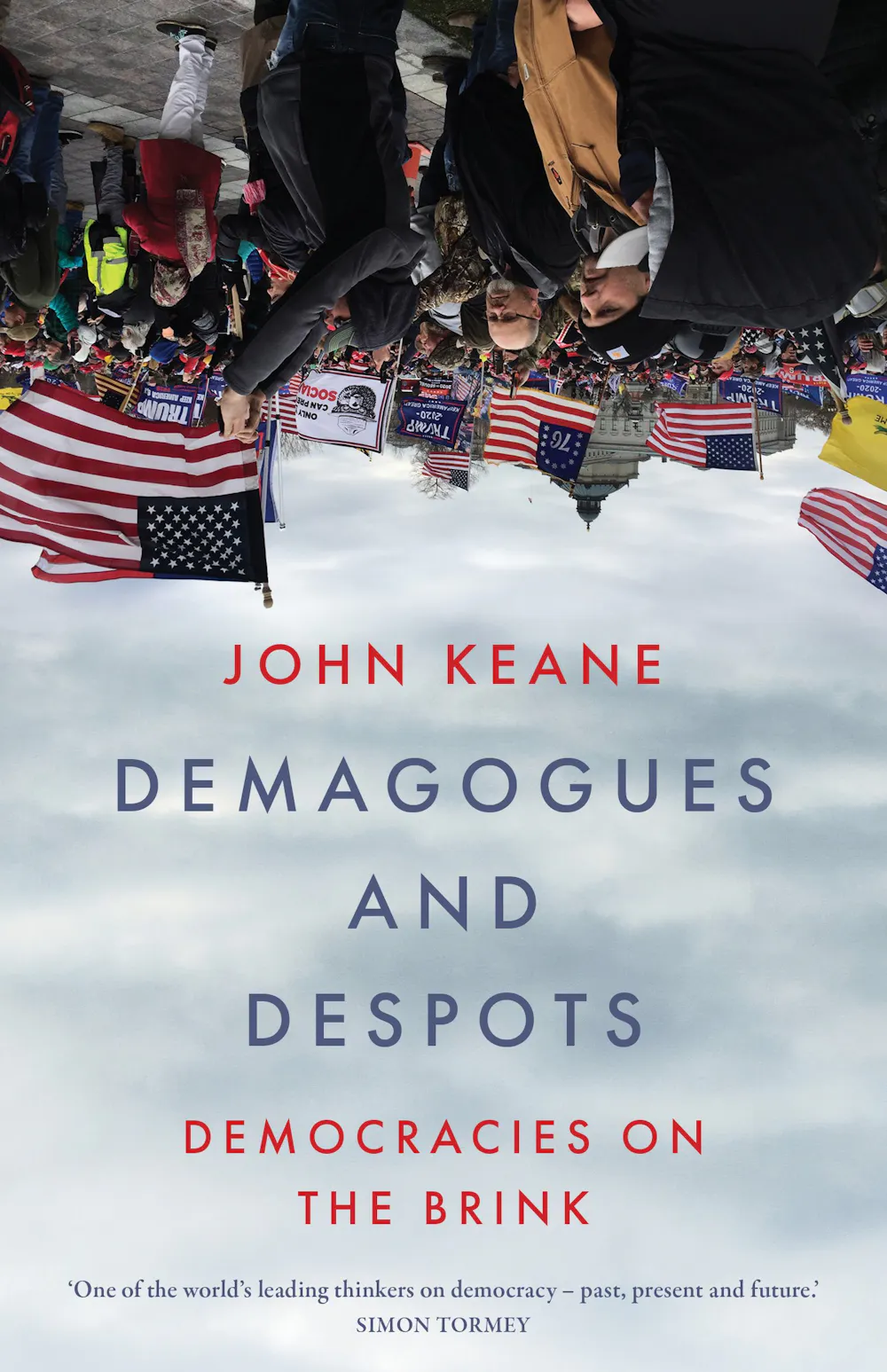
But more than that, Russia, China, Saudi Arabia, Iran and other established despotisms exemplify a strange new type of pseudo-democratic government led by rulers skilled in manipulating their subjects into conformity to their designs.
Considered as a form of rule, these despotisms are something new under the sun. They are more stable, more attractive and better at managing political earthquakes and governing people than many observers suppose.
Despite their vulnerability to internal dysfunctions, external shocks, wars and chronic public resistance, these despotic governments learn the arts of ruling under duress. Trial-and-error improvement and perfection of the techniques of exercising power are their specialty, and a key explanation of their tightening political grip in world affairs, as is their whip-smart seductiveness.
It’s worth remembering that the original Greek term despótēs – from dómos (house) and pósis (husband, spouse) – referred to a benevolent and all-powerful master of a household, held in reverence and respect by its women, children and slaves. It later referred, in Christian circles, to God and to the bishops and patriarchs of the Byzantine Empire, whose power was blessed with authority by their subjects, who were duty bound to submit in all matters because they benefited from their masters’ kindness and good works.
Today’s despots aspire to stand in their shoes. They specialise in convincing their subjects to obey necessity and call it freedom. They want “the people” to suppose things are getting better and bigger, and that there is no viable alternative to the present order. They seduce rather than merely repress.
In this sense, the despotisms of our age are state-of-the-art forms of tutelary power, a type of media-saturated political rule that achieves something many previous observers thought impossible: they dominate their subjects by winning their calculated support and affection by means of top-down, people-friendly techniques of government, elections, happiness forums, online Q&A portals, public opinion sampling and anti-corruption agencies.
These regimes run by despots are more perfect and mature forms of the despotism yearned for by demagogues in so-named democracies. They are phantom democracies.
Two adventurers
That there are heat-seeking attractions and slow-motion convergences taking place between established despotic regimes, the United States and other so-named democracies, might surprise, shock and puzzle us. It shouldn’t. The breakdown of the semantic division between “democracy” and “autocracy” and the global drift towards phantom democracy are trends that have older and deeper roots.
To understand the strange new power dynamics fuelling the worldwide growth of despotism, we must turn to history to examine the thinkers and writers for whom the coming of global despotism would have been unsurprising.
Let’s therefore turn back the clock a hundred years, to the crucial moment when the struggle for election-centred democracy and “votes for all” came of age. Many observers predicted it would become the only political game on Earth. An American president, Woodrow Wilson, called for a world “made safe for democracy”, a form of “just government” that rested upon “the consent of the governed”.

In the catastrophic aftermath of the first world war, with empires everywhere collapsing, the flames of revolution licking the backsides of the rich and powerful, and demands for the right of “the people” to vote prevailing on several continents, two writers in particular stand out from the crowd. A Venezuelan named Laureano Vallenilla Lanz (1870–1936) and a German, Max Weber (1864–1920), made predictions that have an uncanny relevance for understanding today’s troubling times.
These writers weren’t timeless political geniuses. They were thoughtful explorers, curious and concerned about democracy’s fate, adventurers mapping out the likely consequences of the new age of people power in a period racked by enormous geopolitical and socio-economic upheavals.
Lanz was sure that parliamentary democracy was an unworkable ideal. He instead championed a new form of despotic government whose authority was based on “the people”. He threw down the gauntlet to grammarians suspicious of oxymorons by calling it “democratic Caesarism”: a political system whose rulers would use periodic elections and various forms of “soft” and “hard” power to rule absolutely over their compliant subjects.
In contrast, Weber feared that the advent of free and fair elections and parliamentary democracy, which he supported, would spawn the rise of demagogues: strongmen impatient with checks and balances, who in the name of “the people” would do everything they could to transform parliamentary democracy into what he called “plebiscitarian leader democracy”.
Democratic Caesarism
Lanz was a polymath scholar, senator, diplomat, national archives director and, for many years, editor of the leading Caracas newspaper El Nuevo Diario, the Venezuelan government’s unofficial mouthpiece. His book Cesarismo democrático, published in 1919, is unfortunately still not translated into English.
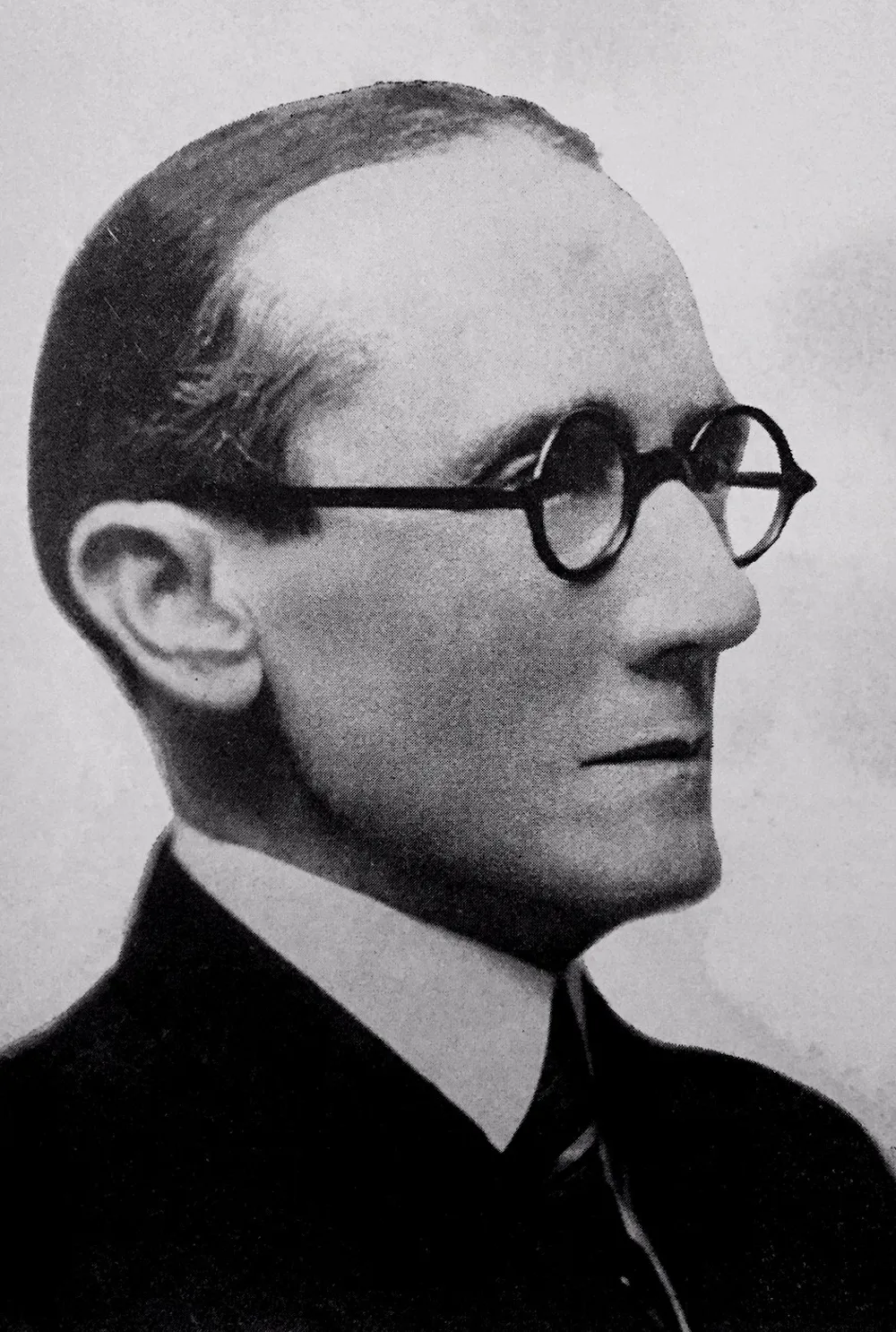
That’s a pity, considering that during the 27-year caudillo dictatorship (1908–35) of General Juan Vicente Gómez, for whom he served as in-house intellectual, Lanz foresaw that the ideals of democracy, loosely understood as popular self-government based on the periodic election of representatives to a parliament, could readily be harnessed by demagogues everywhere to perfect a new type of rule unknown in previous human history.
Strong-armed government with democratic trimmings and trappings was possible, necessary and desirable, he reasoned. Smart rulers had no reason to fear the advent of the universal franchise, periodic elections and the other paraphernalia of what was called “democracy”.
On the contrary, if rulers played their hands well, the mechanisms of self-government, in the name of “the people”, could be used to recruit them into an army of supporters loyal to a strong ruler, who would periodically win their votes and thus confirm their faithful subordination.
Lanz was no democrat in any straightforward sense. He detested the “spontaneous anarchy” within the human condition. The masses weren’t to be trusted. Fickle, excited by their passions, plagued by ignorance and arrogance, their outbursts regularly bring great social disorders and episodes of violence into the field of government.
Lanz was convinced that the old Thomas Hobbes principle of homo homini lupus (man is a wolf to other men) was correct. But he believed mandatory heavy-handed rule could win the people’s affection and support. Political leadership had to be exercised by a popular strongman – a “necessary gendarme”, he termed it – who would channel the energies of the masses towards a genuinely democratic order of effective government based on stable social relations.
In a remarkably creative if bizarre turn of thinking, Lanz reasoned that the history of turbulent disorder in postcolonial Venezuela and other countries proved that without a strongman leader the people couldn’t become their true selves. He urged a new form of political ventriloquism. Like Moses, who divined water from a rock, the leader would relieve the people of injustice and show them the way to a promised land of popular self-fulfilment.
With the advent of electoral democracy, the “ignorance and fanaticism of the popular masses” could be both tamed and refined by means of strong-armed leadership that galvanised people to pull themselves up by their bootstraps, elevating men and women to the concomitant dignity that comes with the enjoyment of equality with others.
Lanz urged, and predicted, that this new form of “democratic Caesarism” would unleash the power of the masses, satisfy their “unconscious yearnings”, cure their hurt pride, make them feel wanted and important in determining the fate of the world.
Acting as the representative and regulator of popular sovereignty, the great leader, “democracy personified”, would be a genuine expression rather than a denial of truly representative democracy. The people could be persuaded to give themselves voluntarily to a new form of servitude, embrace with open arms rulers who would redeem and guarantee their wellbeing.
The novel result would be of historic significance. The new political system of “democratic Caesarism” would combine, into a higher form of political harmony, opposites that were once thought to be irreconcilable antagonisms: democracy and despotism; top-down leadership and equality; individual greatness and collective self-discipline; the power of the people and rule by despots who claimed to be their sole representative.
Führerdemokratie
It is of great interest, and highly relevant to the problem of despotism, that in the same period in which Lanz trumpeted the need for a newly “democratic” form of despotism, Weber launched an anguished defence of elections and parliamentary government.
A hard-working scholar, widely considered to be the greatest German social scientist of his generation, Weber predicted that in the aftermath of war, revolution and the triumphant entry of “the people” onto the stage of history, the transition to parliamentary democracy, with votes for all, would be an unhappy affair. The coming of the universal franchise and representative government would unleash electoral battles among demagogue leaders, who would use every campaign-trail trick to hoodwink and spellbind their audiences, win the votes of “the people” and, with cunning, luck and force, rule in their name.

Rather inelegantly, Weber called this scenario “plebiscitarian leader democracy” (plebiszitäre Führerdemokratie). The wonderfully German compound phrase was later to cause some embarrassment. A democracy with a Führer, people would ask? But his reasoning was marked by crystalline clarity and conviction.
The advent of periodic elections with universal suffrage, combined with a free press and civil liberties, Weber predicted, would propel the growth of fiercely competitive, mass membership, all-powerful party machines. Their leaders, lusting after power, hallucinating on fame, convinced they had the political support of “the people”, would behave like “dictators on the battlefield of elections”.
Following a visit to the United States, Weber thought that it was there, amid the razzamatazz of party machine politics, conventions and presidential election spectacles, that the “leader democracy” trend was most fully developed. It confirmed the new meaning of democracy as a political system, in which “the people elect a leader in whom they have trust” then say: “Now shut up and obey.”
Looking towards the future, Weber hoped that the coming of parliamentary democracy would produce level-headed leaders willing to put their shoulders to the wheel of history – politicians like William Gladstone, a Conservative MP who later became the leader of the Liberal Party and four-times prime minister of the United Kingdom.
In the case of post-World War I Germany, Weber proposed the direct election of a president, who would play the role of “steward of the masses”, respect the constitution, and accept that if they made mistakes “the gallows and the rope” would be their fate.
Weber’s personal wish was that cool-headed leaders, capable of skilfully winning elections by persuading millions of people of the importance of parliamentary elections, would prevail in opposition to forces such as demagoguery and the cramping and suffocating effects of what some nowadays call the “deep state” bureaucracy, whose spread he despised.
A self-described “class conscious bourgeois” liberal, Weber was sure Führerdemokratie was the only practicable form of democracy. Talk of “the will of the people” and “the true will of the people” were mere fictions, he told a colleague.
Weber died in June 1920, a victim of the Spanish flu pandemic, aged only 56. He did not live to see the rise of fascist demagogues, such as Mussolini and Hitler, who craftily rose to power on the back of the electoral democracy they later helped to destroy. A man who championed prudent reason, he worried that in the age of parliamentary democracy leaders might easily be seduced by the charms of vanity. He was equally aware that high-level politics in the new parliamentary democracies of Germany and other countries already involved the exploitation of “mass emotionality”.
Hence his abiding worry that they might degenerate into a new form of what he variously called “Caesarism” and “sultanism”, the kind of demagogic rule exercised by Napoleon III and the bossy chancellorship of Otto von Bismarck after the founding, in 1871, of the German Empire.
Weber understandably feared demagogues intoxicated with power and their own messianic certainties. In a burst of wildly creative forecasting, he predicted that in the name of democracy their hubris and lust for concentrated power might well disfigure and destroy power-sharing democracy.
If that happened – as has happened in recent decades in Russia, and is now occurring in the United States – parliamentary government would be transformed into a thoroughly modern form of despotic rule that combined “one person, one vote” elections with disdain for parliaments, intolerance of countervailing powers, and an overbearing executive playing the role of a “great statesman at the helm”, drunk on the liquor of permanent emergency rule.
This is an edited extract from Demagogues and Despots: Democracies on the Brink.
John Keane will be appearing at the launch of Reclaiming Democracy Together, Melbourne Town Hall, May 9, 2026.
John Keane does not work for, consult, own shares in or receive funding from any company or organisation that would benefit from this article, and has disclosed no relevant affiliations beyond their academic appointment.


.jpg)

