Import duties on certain plastic products and LPG used by the petrochemical industry will be cut to 0% for six months starting in May, after which the Indonesian government will reassess market conditions before deciding whether to extend or adjust the measure.TikTok deactivates millions of child accounts in IndonesiaIndonesia begins construction on 13 mega-projects to achieve energy self-relianceIndonesia invites int’l investment in 116 new oil and gas blocks
Import duties on certain plastic products and LPG used by the petrochemical industry will be cut to 0% for six months starting in May, after which the Indonesian government will reassess market conditions before deciding whether to extend or adjust the measure.
The ConversationAlong with a drop in temperatures, May brings plenty of new streaming options, whether you’re after some classic American political drama, or some local family TV you can enjoy with the kids.
We’ve also got Timothée Chalamet’s Oscar-nominated film Marty Supreme coming to Stan, as well as a new series from Richard Gadd (of Baby Reindeer fame) on HBO Max. Sit back, grab a blanket, and enjoy.
All The President’s Men
Prime Video and Apple TV
All the President’s Men, which has j
Along with a drop in temperatures, May brings plenty of new streaming options, whether you’re after some classic American political drama, or some local family TV you can enjoy with the kids.
We’ve also got Timothée Chalamet’s Oscar-nominated film Marty Supreme coming to Stan, as well as a new series from Richard Gadd (of Baby Reindeer fame) on HBO Max. Sit back, grab a blanket, and enjoy.
A masterpiece of political cinema, All The President’s Men remains one of the finest films about investigative journalism ever made. Steeped in a fog of paranoia and distrust – an atmosphere shaped in no small part by cinematographer Gordon Willis’ matchless treatment of light and shade – it is as relevant now as it was on first release.
Redford was the driving force behind the film. Convinced that the story demanded a restrained, quasi-documentary approach, he initially envisioned a black-and-white film shot in a pared-back style, with an emphasis on process rather than star power.
Warner Bros, with whom he had a production deal, thought otherwise. Having already agreed to finance the film, the studio insisted that Redford take a leading role – and marketed the as yet-unmade project as “the most devastating detective story” of the century.
The result is an endlessly watchable and quotable (“Follow the money”) film that generates narrative and dramatic tension through the sheer difficultly of knowing anything at all.
In age beset by disinformation, brazen political deceit, strategic obfuscation and collapsing trust in public institutions, that lesson feels less historically distant than it does disturbingly prescient.
The ABC’s new series Caper Crew follows 12-year-old Amelia Delaney (Isabella Zhang) and her 9-year-old brother Kai (Luka Sero), who live in Woodspring, “the most boring town on Earth”. That is, apart from one incident 27 years ago when the infamous Kangaroo Gang stole the town’s priceless golden meteorite. “The Nug” was never found, despite a $100,000 reward.
When their mysterious con-artist grandmother, Queenie, appears out of the blue and starts teaching them the art of the grift, Amelia and Kai can’t help but wonder: was Queenie part of the Kangaroo Gang? Does she know where The Nug is? The siblings join forces with their friends Penelope (Caitlin Niemotko) and Ophelbert (Tevita Hu) on a mission to find the lost object.
The young cast members are very endearing. The adults don’t disappoint, either; Tina Bursill is magnetic as Queenie, while Annie Maynard and ABC-favourite Michael Theo captivate as Mayor Katinkatonk and drama teacher Jojo Encore, respectively.
For parents and carers watching with kids, Caper Crew combines a Wes Anderson-esque visual quality with a nostalgic ode to millennial classics such as Matilda and Harriet the Spy. It may charm younger viewers into taking up magic, or planning their own heists. It also reminds us just how good Australian family TV can be, with a bit of resourcing.
“And you thought The Clash were angry!” retorts Beth (Joanna Scanlan), describing her newly-formed punk band of women largely 50 years and over.
Riot Women, a hilarious five-part BBC drama series, champions strong female characters whose dilemmas authentically reflect the female experience. The band’s tracks Hot Flush, I’m Not Done Yet, and Invisible No More counter society’s assumption that menopausal women have a use-by date.
Punk is used as a metaphor for female rampage, rather than the show’s subject – and despite some dark storylines (including suicide and violence against women), the show is a raucous celebration of women on their own terms. These women find joy and energy in mid-life, emerging as formidable because they no longer give a damn.
Riot Women is written by Sally Wainwright and co-directed by Wainwright and the late Amanda Brotchie, an enormously talented Australian director.
The outstanding ensemble cast is drawn from the crème de la crème of British talent, with Joanna Scanlan as Beth, Rosalie Craig as Kitty, Lorraine Ashbourne as Jess, Tamsin Greig as Holly, and Amelia Bullmore as Yvonne.
It’s an original, emotionally resonant and high-quality drama that, like much of Wainwright’s work, doesn’t disappoint.
– Lisa French
Marty Supreme
Stan, from May 15
Marty Supreme is a frenetic tale inspired by Marty Reisman, the charismatic American table tennis champion of the 1950s.
Charged by Timothée Chalamet’s electric lead performance – alongside a stellar supporting cast (including Gwyneth Paltrow), and director Josh Safdie’s signature, anxiety-inducing aesthetic – the film captures a young man’s all-or-nothing quest for greatness.
Marty Mauser is a morally ambiguous protagonist engaged in a sociopathic, self-obsessed pursuit of glory. But Safdie invites the audience to champion his quest. In this, Marty emerges as a particularly compelling entry into Hollywood’s longstanding tradition of unlikable heroes.
How does Safdie succeed in creating a protagonist who – despite lying that his mother died during childbirth and neglecting his pregnant girlfriend – nonetheless wins the audience’s support?
Marty’s championing is undoubtedly in part due to Chalamet’s star image and onscreen charisma. And his quest for greatness depicts the triumphant tale of a figure who, against all odds, continues to pursue his dreams with obsessive belief.
While his extreme measures may be unsympathetic – and perhaps unforgivable – Marty’s fundamental desire to transcend his circumstances remains relatable. His unrelenting commitment to his dream catalyses his moral failing. But he is nonetheless a figure capable of tenderness.
While Marty Supreme dramatises the egotistical pursuit of its flawed protagonist, it ultimately explores the universal ambition to dream big – and questions what is worth sacrificing in order to achieve success.
Lizard (2020) is a Sundance-winning short film by British-Nigerian filmmaker and writer, Akinola Davies Jr. Currently streaming on Mubi, alongside Davies’ BAFTA-winning debut feature My Father’s Shadow (2025), it’s a magical and gritty portrait of religion, hypocrisy and violence.
Co-written with his brother, Wale Davies, Lizard is based on Davies Jr’s own childhood experiences. The thematically nuanced 18-minute narrative follows the inquisitive eight-year-old Juwon who, following some misbehaviour and removal from her Sunday school service, confronts the criminal underbelly of her Lagos church.
The fluidity between the real and surreal is central to Davies Jr’s cinematic imagination. Juwon is gifted with the ability to sense danger. Her mystic-like intuition materialises in the presence of the eponymous agama lizard: a figure who leads the young girl through her milieu.
The film masterfully blends elements of the fantastical with realist stylisation. It’s a portrayal of sociopolitical corruption and exploitation, but also extends beyond this. Through Juwon’s child-like imagination, it confronts the processes of understanding trauma and memory – with the film’s sensibilities questioning reality’s supposed superiority over fantasy.
Davies Jr is cementing himself as an exciting, distinctive voice in international cinema. I’m looking forward to watching My Father’s Shadow.
– Oscar Bloomfield
Half Man
HBO Max
Richard Gadd is perhaps best known for his hugely successful series, Baby Reindeer. Part of the unsettling thrill of that Emmy-award winning series was watching a dramatisation of Gadd’s own experience of being stalked. We saw a vulnerable protagonist, played by Gadd, drawn into considerably uncomfortable situations.
Now Gadd has returned to our screens with a new series called Half Man. A similar viewing experience to Baby Reindeer is established in the opening episode, where we witness a vulnerable, isolated young man get drawn into a toxic relationship. Gadd is a master at building tension and discomfort.
Niall (Jamie Bell) is visited by his estranged step-brother Ruben (Gadd) on his wedding day. After a violent confrontation, we jump back 30 years to when they were two schoolboys. Ruben has just gotten out of youth detention and, since his mother is dating and living with Niall’s mother, he has no choice but to move in and share Niall’s room.
As boys, a young Ruben (Stuart Campbell) is prone to violent outbursts at any moment, and young Niall (Mitchell Robinson) is shy and bullied by his classmates for being perceived as gay. The early dynamics between the two boys make for incredibly unsettling viewing. But knowing how good the emotional pay-off of Baby Reindeer was, I can’t wait to see where the series goes.
– Stuart Richards
The authors do not work for, consult, own shares in or receive funding from any company or organisation that would benefit from this article, and have disclosed no relevant affiliations beyond their academic appointment.
Let’s begin with a troubling truth: in many countries, hundreds of millions of people nowadays feel that when it comes to the biggest decisions affecting their lives, despite all the talk of “democracy” and “the people”, they have no control
over those who decide things in their name. Their shared experience of organised powerlessness is amplified by fears that our small blue planet is spinning out of control.
People are not just annoyed and angry. They’ve grown convinced that elected governm
Let’s begin with a troubling truth: in many countries, hundreds of millions of people nowadays feel that when it comes to the biggest decisions affecting their lives, despite all the talk of “democracy” and “the people”, they have no control
over those who decide things in their name. Their shared experience of organised powerlessness is amplified by fears that our small blue planet is spinning out of control.
People are not just annoyed and angry. They’ve grown convinced that elected governments have become so blind and corrupt that they no longer notice or even care that we earthlings are hurtling towards a future bruised and battered by more than a few perilous forces. Naked big power rivalries. Nasty genocidal wars. Hatred of immigrants. Border closures. Trade and tariff disputes. Extreme weather events. Pandemics. Corporate greed.
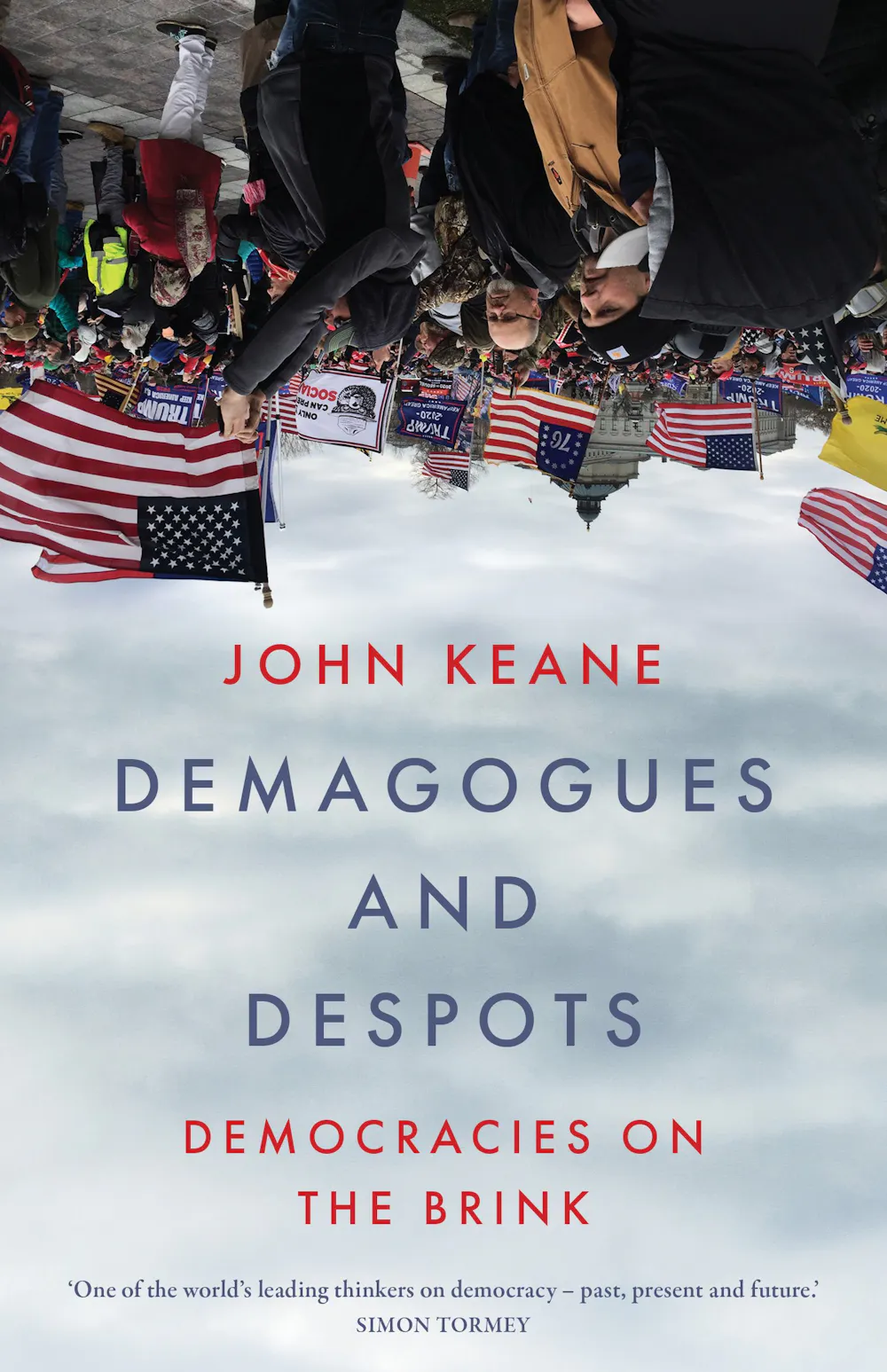
Polls show that millions of people are equally bothered by another unpromising political trend: the mounting anxiety that demagogues, despots and a strange new kind of Russian-style despotism with thoroughly 21st-century characteristics are gaining traction and everywhere getting the upper hand.
To speak of despotism is immediately to invite frowns and risk heated arguments. It’s an old word with a complicated and chequered history. Long out of fashion these days – “autocracy”, “fascism” and “authoritarianism” are the fashionable political buzzwords – despotism has often been dismissed as an emotionally charged and fuzzy term laden with Orientalist prejudices against non-Europeans.
But when suitably revised and carefully deployed, despotism is an indispensable keyword for making sense of the new global threats to democracy in polities as different as Russia, Iran, China, Saudi Arabia, Cuba and Vietnam, but also by the parallel and overlapping attacks on power-sharing democracy led by demagogues and their admirers in countries such as Türkiye, Israel and Donald Trump’s America.
This worldwide growth of a strange alliance between demagogues and despots is no coincidence. It ought to puzzle and worry every thinking person, and it needs to be
understood.
Considered as a type of rule practised by both demagogues and despots, despotism is a way of handling power that defies the laws of political gravity. It’s a peculiarly fake type of democracy led by rulers skilled in the arts of manipulating and meddling with people’s lives, marshalling their support and winning their obedience.
Despotism feeds upon the voluntary servitude of its subjects. Those who think despotism is a synonym for repression, fear and raw force are profoundly mistaken. Despotic power can’t properly be understood through similes of hammers and nails; it requires thinking in terms of the attraction of metal filings to magnets.
In practice, despots are masters of seduction, deception and control. They calibrate their use of violence and manage, using a combination of slick means, including rigged election victories, to win the submission and loyalty of the ruled. Oiled by government largesse, rampant patronage, bags of money, job creation programs, legal trickery and endless talk of defending “the people” against its foes, despotism nurtures the docile subservience of its subjects, including important sections of the middle classes, skilled and unskilled workers, and the poor.
The result: the triumph of top-down pyramids of power that manage to win millions of supporters at home and acolytes and friends well beyond the borders of the states they rule.
What’s especially worrying is that the spirit of despotism is contagious. Despots and demagogues hunt in packs. Their promiscuity and wilful cooperation know no limits. Demagogues are despots in the making. Despots are what demagogues would like to be.
Consider the moment, in July 2024, when in a gilded ceremony in Moscow’s Grand Central Palace, Russian president Vladimir Putin, who faces an arrest warrant from the International Criminal Court, conferred upon his “dear friend”, Indian president Narendra Modi, Russia’s highest civilian honour, the Order of St Andrew the Apostle.
Now consider the grand showtime moment when an aspiring despot was greeted with open arms and lavish gifts by his more seasoned counterparts: Trump’s whirlwind May 2025 tour of west Asia.
In Saudi Arabia, the UAE and Qatar, the all-American demagogue was showered with the honour and recognition he had long craved. Lavish F-15 fighter jet escorts. Lavender and red carpets, mounted camels and women’s hair-flipping welcome ceremonies. Riders on white horses and Tesla cybertrucks sporting stars and stripes. Grand marbled halls, dazzling crystal chandeliers, the highest civil decorations, including a pure gold necklace.
Then there was the world’s tallest building, more than half a mile high, lit up with an image of the American flag. A campaign-style rally at the region’s largest US military base in Qatar.
And the material deliverables: trillion-dollar business and defence contracts, signed by cupidity in the presence of greed and fame. Plans (with Saudi Arabia) to establish a joint nuclear energy program. A preliminary agreement (with UAE) to import the most advanced AI chips. A lavish gift (from Qatar) of a luxury jet Trump intends to keep whenever he leaves office – all in confirmation of the point that, in these times of turbulence, demagogues and despots must fly together in safety and solidarity.
Dystopias
There’s growing awareness among journalists, intellectuals and citizens that such displays of despotic pomp and bromance power are undermining the freedoms and egalitarian promises of democracy. A sense of foreboding about these trends is spreading. Pessimism is fashionable.
As I write these lines, a South African colleague is in touch to say how grim are our times. She remarks that our world feels as if it’s passing through an era of “augmented brutality” (also the name of a popular video game). With seemingly ever fewer brakes upon what established despotic regimes and demagogues can get away with, my colleague tells me, our ethical conscience, moral qualms and public outrage against abuses of power are withering away.
When I ask other colleagues where our diseased democracies are heading, they predict several conflicting but equally gloomy dystopian futures. Some argue that reality is fast catching up with a prettified version of the future sketched in Orwell’s Nineteen Eighty-Four. Other colleagues warn of “backsliding” towards “autocracy”, “tyranny” or “authoritarianism”, exemplified by strongmen – Vladimir Putin, Javier Milei, Donald Trump, Xi Jinping, Alexander Lukashenko – who wield words and wave swords over the heads of their cowed subjects.
They speak of autocracy as a political system in the hands of a sole ruler with absolute power. Tyranny is, for them, as it was for Socrates, a dangerously unjust type of rule by a strong man consumed by lawless desires bent on robbing through “fraud and force” the property, livelihoods and freedoms of their frightened subjects.
Still other colleagues dread the return of what they call “fascism”, or “neo-fascism”. They liken present-day trends to past European and Asian totalitarian regimes that mobilised whole societies and exercised complete control over every citizen’s private life.
According to these colleagues, the democratic world is everywhere confronted with the possible repeat on a higher level of the totalitarian regimes of yesteryear. Just as Mussolini’s Italy, Hitler’s Germany and Mao’s China condemned their subjects to perpetual enthusiasm, so the new fascists call on “the people” to care about their future, they say.
The self-appointed philosopher of Italian fascism, Giovanni Gentile, captured the old spirit that’s now said to be back in vogue. “Among the major merits of fascism,” he wrote, was that it “obliged little by little all those who once stood at the window to come down into the streets, to practise fascism even against fascism.”
Similarly, the democratic world is returning to the time when millions of people were captivated by skilfully orchestrated newspaper, radio and film performances led by showbiz demagogues dressed in formal attire, military uniforms and riding gear, or stripped to the waist helping sweating labourers gather the harvest (Mussolini’s specialty).
Public rallies organised by groups and parties with names like Alternative for Germany (AfD), Proud Boys and Sweden’s neo-Nazi Nordic Resistance Movement (NMR) are back in fashion.
Citizens are again celebrating in unity, marching in step across the stage fabricated from the glorification of bully demagogues, emboldened by nostalgia, national pride and hatred of foreigners, urged on by electrifying social media postings and public speeches by beguilingly sly leaders who leave no place to hide from the fascist voice.
Phantom democracies
One shortcoming of this dog-eared lexicon – autocracy, tyranny, authoritarianism, fascism, totalitarianism – is that these words blind us from seeing that what is happening today is not merely a repetition of the past. Our times are not just
different. Their strangeness prevents us from understanding that democracies are drifting into a new age of despotism of a kind never seen before in world history.
An especially striking fact is that the commonplace distinctions between “democracy” and “autocracy”, “tyranny” and “authoritarianism” have in practice become deeply problematic and unhelpful in making sense of this new age of despotism.
For a start, consider how supposedly antagonistic regimes find themselves converging, bound together by state ceremonies, diplomatic cooperation, cross-border trade and investments, weapons deals, and the profit-seeking opportunism of Western banks and management consultants, who have, for many years, brazenly serviced large state-owned and state-guided corporations in countries such as Saudi Arabia, Türkiye, China and Russia.
Equally striking is the way the wealth inequalities, revolving doors, dark money corruption, manipulated elections, fake news, state censorship, surveillance and heavy-handed policing – evident in regimes such as Saudi Arabia, Russia, China and Uzbekistan – are making strong appearances within the borders of existing democracies, most obviously in the country that reelected Donald Trump.
But that’s not all, we should note. What is becoming plain to see is how aspiring and established power-sharing constitutional democracies can easily and quickly be transformed into despotic regimes.
This anti-democratic degeneration has been the rule, not the exception, in the so-called transitions to democracy throughout central Asia, and in Russia and Belarus following the collapse of the Soviet Union during the years 1989–91. Elsewhere, despotism has prevailed in countries, such as Laos and Cambodia, following the restoration of monarchy after the genocide of the 1970s, and in Iran after the dramatic upheavals of the 1979 Islamic Revolution.
Thanks to the election of power-hungry demagogues, the spirit and substance of despotism has also taken root in what political scientists once called consolidated democracies, initially in geopolitically less significant bellwether countries, such as Serbia, and nowadays in important states such as Brazil and Poland, and in the heartlands of the American empire.
Least obvious, and more than a little paradoxical, is the manner in which the established despotic regimes of our era mimic the methods of their so-called “democratic” rivals. Today’s so-called tyrannies and autocracies – I call them despotisms because their rulers are masters of the arts of seductive power – are parasitical upon the corrupted ideals and failures of power-sharing democracy.
But more than that, Russia, China, Saudi Arabia, Iran and other established despotisms exemplify a strange new type of pseudo-democratic government led by rulers skilled in manipulating their subjects into conformity to their designs.
Considered as a form of rule, these despotisms are something new under the sun. They are more stable, more attractive and better at managing political earthquakes and governing people than many observers suppose.
Despite their vulnerability to internal dysfunctions, external shocks, wars and chronic public resistance, these despotic governments learn the arts of ruling under duress. Trial-and-error improvement and perfection of the techniques of exercising power are their specialty, and a key explanation of their tightening political grip in world affairs, as is their whip-smart seductiveness.
It’s worth remembering that the original Greek term despótēs – from dómos (house) and pósis (husband, spouse) – referred to a benevolent and all-powerful master of a household, held in reverence and respect by its women, children and slaves. It later referred, in Christian circles, to God and to the bishops and patriarchs of the Byzantine Empire, whose power was blessed with authority by their subjects, who were duty bound to submit in all matters because they benefited from their masters’ kindness and good works.
Today’s despots aspire to stand in their shoes. They specialise in convincing their subjects to obey necessity and call it freedom. They want “the people” to suppose things are getting better and bigger, and that there is no viable alternative to the present order. They seduce rather than merely repress.
In this sense, the despotisms of our age are state-of-the-art forms of tutelary power, a type of media-saturated political rule that achieves something many previous observers thought impossible: they dominate their subjects by winning their calculated support and affection by means of top-down, people-friendly techniques of government, elections, happiness forums, online Q&A portals, public opinion sampling and anti-corruption agencies.
These regimes run by despots are more perfect and mature forms of the despotism yearned for by demagogues in so-named democracies. They are phantom democracies.
Two adventurers
That there are heat-seeking attractions and slow-motion convergences taking place between established despotic regimes, the United States and other so-named democracies, might surprise, shock and puzzle us. It shouldn’t. The breakdown of the semantic division between “democracy” and “autocracy” and the global drift towards phantom democracy are trends that have older and deeper roots.
To understand the strange new power dynamics fuelling the worldwide growth of despotism, we must turn to history to examine the thinkers and writers for whom the coming of global despotism would have been unsurprising.
Let’s therefore turn back the clock a hundred years, to the crucial moment when the struggle for election-centred democracy and “votes for all” came of age. Many observers predicted it would become the only political game on Earth. An American president, Woodrow Wilson, called for a world “made safe for democracy”, a form of “just government” that rested upon “the consent of the governed”.
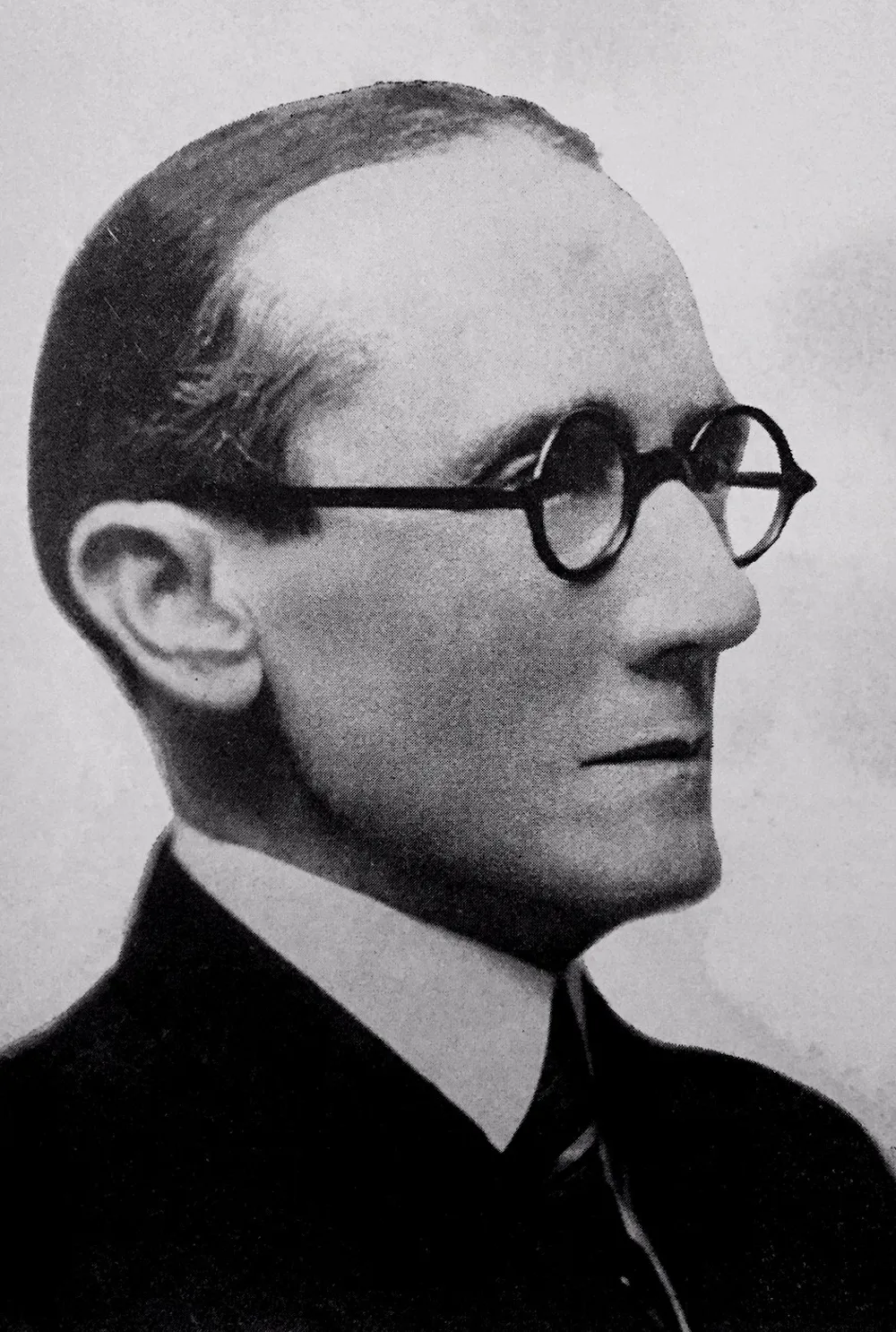
In the catastrophic aftermath of the first world war, with empires everywhere collapsing, the flames of revolution licking the backsides of the rich and powerful, and demands for the right of “the people” to vote prevailing on several continents, two writers in particular stand out from the crowd. A Venezuelan named Laureano Vallenilla Lanz (1870–1936) and a German, Max Weber (1864–1920), made predictions that have an uncanny relevance for understanding today’s troubling times.
These writers weren’t timeless political geniuses. They were thoughtful explorers, curious and concerned about democracy’s fate, adventurers mapping out the likely consequences of the new age of people power in a period racked by enormous geopolitical and socio-economic upheavals.
Lanz was sure that parliamentary democracy was an unworkable ideal. He instead championed a new form of despotic government whose authority was based on “the people”. He threw down the gauntlet to grammarians suspicious of oxymorons by calling it “democratic Caesarism”: a political system whose rulers would use periodic elections and various forms of “soft” and “hard” power to rule absolutely over their compliant subjects.
In contrast, Weber feared that the advent of free and fair elections and parliamentary democracy, which he supported, would spawn the rise of demagogues: strongmen impatient with checks and balances, who in the name of “the people” would do everything they could to transform parliamentary democracy into what he called “plebiscitarian leader democracy”.
Democratic Caesarism
Lanz was a polymath scholar, senator, diplomat, national archives director and, for many years, editor of the leading Caracas newspaper El Nuevo Diario, the Venezuelan government’s unofficial mouthpiece. His book Cesarismo democrático, published in 1919, is unfortunately still not translated into English.
That’s a pity, considering that during the 27-year caudillo dictatorship (1908–35) of General Juan Vicente Gómez, for whom he served as in-house intellectual, Lanz foresaw that the ideals of democracy, loosely understood as popular self-government based on the periodic election of representatives to a parliament, could readily be harnessed by demagogues everywhere to perfect a new type of rule unknown in previous human history.
Strong-armed government with democratic trimmings and trappings was possible, necessary and desirable, he reasoned. Smart rulers had no reason to fear the advent of the universal franchise, periodic elections and the other paraphernalia of what was called “democracy”.
On the contrary, if rulers played their hands well, the mechanisms of self-government, in the name of “the people”, could be used to recruit them into an army of supporters loyal to a strong ruler, who would periodically win their votes and thus confirm their faithful subordination.
Lanz was no democrat in any straightforward sense. He detested the “spontaneous anarchy” within the human condition. The masses weren’t to be trusted. Fickle, excited by their passions, plagued by ignorance and arrogance, their outbursts regularly bring great social disorders and episodes of violence into the field of government.
Lanz was convinced that the old Thomas Hobbes principle of homo homini lupus (man is a wolf to other men) was correct. But he believed mandatory heavy-handed rule could win the people’s affection and support. Political leadership had to be exercised by a popular strongman – a “necessary gendarme”, he termed it – who would channel the energies of the masses towards a genuinely democratic order of effective government based on stable social relations.
In a remarkably creative if bizarre turn of thinking, Lanz reasoned that the history of turbulent disorder in postcolonial Venezuela and other countries proved that without a strongman leader the people couldn’t become their true selves. He urged a new form of political ventriloquism. Like Moses, who divined water from a rock, the leader would relieve the people of injustice and show them the way to a
promised land of popular self-fulfilment.
With the advent of electoral democracy, the “ignorance and fanaticism of the popular masses” could be both tamed and refined by means of strong-armed leadership that galvanised people to pull themselves up by their bootstraps, elevating men and women to the concomitant dignity that comes with the enjoyment of equality with others.
Lanz urged, and predicted, that this new form of “democratic Caesarism” would unleash the power of the masses, satisfy their “unconscious yearnings”, cure their hurt pride, make them feel wanted and important in determining the fate of the world.
Acting as the representative and regulator of popular sovereignty, the great leader, “democracy personified”, would be a genuine expression rather than a denial of truly representative democracy. The people could be persuaded to give themselves voluntarily to a new form of servitude, embrace with open arms rulers who would redeem and guarantee their wellbeing.
The novel result would be of historic significance. The new political system of “democratic Caesarism” would combine, into a higher form of political harmony, opposites that were once thought to be irreconcilable antagonisms: democracy and despotism; top-down leadership and equality; individual greatness and collective self-discipline; the power of the people and rule by despots who claimed to be their sole representative.
Führerdemokratie
It is of great interest, and highly relevant to the problem of despotism, that in the same period in which Lanz trumpeted the need for a newly “democratic” form of despotism, Weber launched an anguished defence of elections and parliamentary government.
A hard-working scholar, widely considered to be the greatest German social scientist of his generation, Weber predicted that in the aftermath of war, revolution and the triumphant entry of “the people” onto the stage of history, the transition to parliamentary democracy, with votes for all, would be an unhappy affair. The coming of the universal franchise and representative government would unleash electoral battles among demagogue leaders, who would use every campaign-trail trick to hoodwink and spellbind their audiences, win the votes of “the people” and, with cunning, luck and force, rule in their name.
Rather inelegantly, Weber called this scenario “plebiscitarian leader democracy”
(plebiszitäre Führerdemokratie). The wonderfully German compound phrase was later to cause some embarrassment. A democracy with a Führer, people would ask? But his reasoning was marked by crystalline clarity and conviction.
The advent of periodic elections with universal suffrage, combined with a free press and civil liberties, Weber predicted, would propel the growth of fiercely competitive, mass membership, all-powerful party machines. Their leaders, lusting after power, hallucinating on fame, convinced they had the political support of “the people”, would behave like “dictators on the battlefield of elections”.
Following a visit to the United States, Weber thought that it was there, amid the razzamatazz of party machine politics, conventions and presidential election spectacles, that the “leader democracy” trend was most fully developed. It confirmed the new meaning of democracy as a political system, in which “the people elect a leader in whom they have trust” then say: “Now shut up and obey.”
Looking towards the future, Weber hoped that the coming of parliamentary democracy would produce level-headed leaders willing to put their shoulders to the wheel of history – politicians like William Gladstone, a Conservative MP who later became the leader of the Liberal Party and four-times prime minister of the United Kingdom.
In the case of post-World War I Germany, Weber proposed the direct election of a president, who would play the role of “steward of the masses”, respect the constitution, and accept that if they made mistakes “the gallows and the rope” would be their fate.
Weber’s personal wish was that cool-headed leaders, capable of skilfully winning elections by persuading millions of people of the importance of parliamentary elections, would prevail in opposition to forces such as demagoguery and the cramping and suffocating effects of what some nowadays call the “deep state” bureaucracy, whose spread he despised.
A self-described “class conscious bourgeois” liberal, Weber was sure Führerdemokratie was the only practicable form of democracy. Talk of “the will of the people” and “the true will of the people” were mere fictions, he told a colleague.
Weber died in June 1920, a victim of the Spanish flu pandemic, aged only 56. He did not live to see the rise of fascist demagogues, such as Mussolini and Hitler, who craftily rose to power on the back of the electoral democracy they later helped to destroy. A man who championed prudent reason, he worried that in the age of parliamentary democracy leaders might easily be seduced by the charms of vanity. He was equally aware that high-level politics in the new parliamentary democracies of Germany and other countries already involved the exploitation of “mass emotionality”.
Hence his abiding worry that they might degenerate into a new form of what he variously called “Caesarism” and “sultanism”, the kind of demagogic rule
exercised by Napoleon III and the bossy chancellorship of Otto von Bismarck after the founding, in 1871, of the German Empire.
Weber understandably feared demagogues intoxicated with power and their own messianic certainties. In a burst of wildly creative forecasting, he predicted that in the name of democracy their hubris and lust for concentrated power might well disfigure and destroy power-sharing democracy.
If that happened – as has happened in recent decades in Russia, and is now occurring in the United States – parliamentary government would be transformed into a thoroughly modern form of despotic rule that combined “one person, one vote” elections with disdain for parliaments, intolerance of countervailing powers, and an overbearing executive playing the role of a “great statesman at the helm”, drunk on the liquor of permanent emergency rule.
John Keane does not work for, consult, own shares in or receive funding from any company or organisation that would benefit from this article, and has disclosed no relevant affiliations beyond their academic appointment.
Andy Craddock/UnpslashYou’ve probably seen it on social media before: a paragraph of scrambled text that looks like nonsense at first glance, yet somehow you can read it with surprising ease.
Aoccdrnig to a rscheearch at Cmabrigde Uinervtisy, it deosn’t mttaer in waht oredr the ltteers in a wrod are, the olny iprmoatnt tihng is taht the frist and lsat ltteers be at the rghit pclae. The rset can be a toatl mses and you can sitll raed it wouthit porbelm. Tihs is bcuseae the huamn mnid deos not
You’ve probably seen it on social media before: a paragraph of scrambled text that looks like nonsense at first glance, yet somehow you can read it with surprising ease.
Aoccdrnig to a rscheearch at Cmabrigde Uinervtisy, it deosn’t mttaer in waht oredr the ltteers in a wrod are, the olny iprmoatnt tihng is taht the frist and lsat ltteers be at the rghit pclae. The rset can be a toatl mses and you can sitll raed it wouthit porbelm. Tihs is bcuseae the huamn mnid deos not raed ervey lteter by istlef, but the wrod as a wlohe.
This effect, often playfully referred to as typoglycemia, is frequently shared online as a quirky insight into how our brains work.
But this viral claim is only part of the story. To understand why it works, we need to look at how the brain actually processes written language.
There is no magical ‘rule’
The claim that usually accompanies this snippet is that as long as the first and last letters of a word are in the right place, the order of the middle letters doesn’t matter.
Reading scrambled words has much less to do with a magical “rule” about first and last letters, and much more to do with how our brains use context, pattern recognition and prediction.
We don’t read letter by letter
When we read, we typically don’t painstakingly process each letter in sequence. Instead, skilled readers recognise words rapidly by drawing on multiple cues at once. Psycholinguistic research shows that we process words as patterns rather than as sequences of individual sounds.
These include familiar letter patterns, the overall shape of the word and, crucially, the context of the sentence. Our brains are constantly predicting what is likely to come next, then checking those predictions against the visual input.
This is why we often miss typos in our own writing. We don’t see what’s actually on the page, we see what we expect to be there.
The same principle helps us make sense of jumbled words. Even when letters are out of order, enough of the structure remains for the brain to make an educated guess.
Word shape and structure matter
The viral meme suggests that only the first and last letters matter.
But this oversimplifies what’s really going on. We are sensitive to how letters relate to each other within a word. Common spelling patterns and familiar combinations make words easier to recognise, even when slightly distorted.
This is also why certain visual disruptions make reading harder. Text in alternating caps, such as “AlTeRnAtInG CaPs”, is difficult to process because it disrupts the usual visual contour of words. The same goes for “ransom note” lettering made from mismatched fonts, which interferes with pattern recognition.
In other words, readability depends on preserving enough of a word’s internal structure, not just its outer letters.
Not all scrambled text is readable
If the meme were true, any sentence with intact first and last letters should be easy to read. But that’s not what we find.
Take this example:
Salhal I cmorape tehe to a srmmeus day
It follows the supposed “rules”, yet it is much harder to decipher. In fact, this is the opening of Shakespeare’s Sonnet 18: “Shall I compare thee to a summer’s day?”
So why is the viral paragraph so much easier to read? Because it has been carefully (if unconsciously) engineered to be readable.
The hidden tricks behind the meme
Several factors make the famous example easier to process than it appears.
First, many of the words are short, which limits how many possible combinations the letters could form. Words like “you” and “can” are often left unchanged.
Second, function words such as “the”, “and” and “is” are usually intact. These small, common words provide the grammatical scaffolding of the sentence, making it easier to predict what comes next.
Third, when longer words are scrambled, the changes are often minimal. Adjacent letters are swapped (“wrod” for “word”), which is much easier to process than more extreme rearrangements.
Finally, the passage itself is highly predictable. Once you recognise the topic and rhythm, your brain fills in the gaps automatically, much as it does when listening to speech in a noisy environment.
The key to understanding this phenomenon is context. Words are not processed in isolation. Each word is interpreted in relation to the others around it, and within a broader framework of meaning.
This allows us to compensate for missing or distorted information.
But there are limits. As scrambling becomes more extreme, or as words become less predictable, comprehension quickly breaks down. Reading speed also slows noticeably, even when we can still make sense of the text.
Humans and machines
Interestingly, computers can now unscramble jumbled words with remarkable accuracy. By analysing probabilities and patterns across large datasets, algorithms can determine the most likely original form of a word or sentence.
In this sense, machines and humans rely on similar principles. Not rigid rules about letter position, but flexible systems that weigh patterns and probabilities. This highlights why the “typoglycemia” claim is an oversimplification, rather than a scientific rule.
The idea persists because it captures a genuine insight in a catchy way. It reveals that reading is not a simple, letter-by-letter process, but a dynamic interaction between perception and expectation.
At the same time, it’s a reminder of how easily scientific ideas can be distorted as they spread online.
So yes, we can often read scrambled words. But not because the order of letters doesn’t matter. It’s because our brains are remarkably good at making sense of imperfect information. So good, in fact, that they can turn a mess into meaning.
Karen Stollznow does not work for, consult, own shares in or receive funding from any company or organisation that would benefit from this article, and has disclosed no relevant affiliations beyond their academic appointment.
fStop Images - Epoxydude/GettyI hope this article finds you well.
Did that make you cringe, ever so slightly? In the decades since the very first email was sent in 1971, the technology has become the quiet infrastructure of white-collar work.
Email came with the promise of efficiency, clarity and less friction in organisational communication. Instead, for many, it has morphed into something else: always there, near impossible to escape and sometimes simply overwhelming.
Right now, somethin
Did that make you cringe, ever so slightly? In the decades since the very first email was sent in 1971, the technology has become the quiet infrastructure of white-collar work.
Email came with the promise of efficiency, clarity and less friction in organisational communication. Instead, for many, it has morphed into something else: always there, near impossible to escape and sometimes simply overwhelming.
Right now, something is shifting again. The rise of generative artificial intelligence (AI) technologies, such as ChatGPT and Microsoft Copilot, is increasingly allowing people to offload the repetitive routines of tending one’s inbox – drafting, summarising and replying.
So, what happens if we end up fully automating one of the staples of the white-collar daily grind? Will AI technologies reduce some of the friction, or generate new forms of it? Dare I ask – are we actually about to get more email?
Why the printer isn’t dead yet
Soon after the advent of email, some voices in the business world heralded the coming end of paper use in the office. That didn’t happen. If you work in an office today, there’s a good chance you still have a printer.
In their 2001 book, The Myth of the Paperless Office, Abigail Sellen and Richard Harper show how digital tools rarely eliminate older forms of work. Instead, they reshape them.
Sellen and Harper show how paper use didn’t disappear with the rise of email and other digital communication tools; in many cases, it intensified. The takeaway isn’t that offices failed to modernise, but rather that work reorganised around what these new tools could do.
In this case, paper persisted not only out of habit, but because of what it affords: it is easy to annotate, spread out, carry and view at a glance. This was all too clunky (or impossible) to perform via the digital alternatives.
At the same time, email and digitisation dramatically lowered the cost of producing and distributing communication. It was far easier to send more messages, to more people, more often.
Like earlier waves of workplace technology, AI is less likely to replace existing communication practices than to intensify them – but at least it might come with better grammar and a suspiciously upbeat tone.
Some new AI tools offer to manage your inbox entirely, feeding into broader privacy concerns about the technology.
At this moment, what a lot of these products seem to offer is not an escape from email, but a smoothing of its rough edges. Workers are using AI to soften otherwise blunt requests, modify their tone or expand what might otherwise be considered too brief a response.
Rather than removing the need to communicate, these tools offer pathways to make a delicate performance easier.
What email is actually for
Email, like many forms of communication, is as much about maintaining everyday relationships as it is about the transfer of information.
At work, it’s often about signalling competence, responsiveness, collegiality and authority. “Just looping someone in” or “circling back” are all part of our absurd office vocabulary, a shared dialect that helps us navigate hierarchy, soften demands and keep things moving – all without saying what we really think.
If AI lowers the effort required to produce these signals, it won’t necessarily reduce their importance, but it could unsettle things in rather odd ways.
If more people use AI to draft emails they don’t particularly want to write, we end up with a game of bureaucratic “mime”: everyone performing sincerity and quietly outsourcing it, and no one entirely sure how much of their inbox was actually written by a human.
The labour of email was never just about crafting sentences. It’s always been the scanning, the sorting and the deciding. AI doesn’t remove this burden. If anything, it amplifies it.
When everything arrives polished, everything looks important. That points to a deeper question for the future of work: if AI can perform responsiveness, why are we generating so many situations that still require it?
Email has long been about more than just communicating information.Vitaly Gariev/Unsplash
Looking forward
What would a workplace look like if email wasn’t the default solution to every coordination problem? Perhaps fewer performative check-ins, “just touching base”, “looping you in” or “following up on the below”. More clearer expectations about what actually requires a response, and what doesn’t.
Email, like paper, is likely to persist for good reasons. It is simple, flexible and universal. It allows things to be deferred, revisited, forwarded and quietly ignored.
But if AI is going to change any of this, my hope is that it makes visible how much of this is ritual, how much is habit, and how much has long been unnecessary.
And if the machines are happy to keep saying “hope this finds you well” to each other, we might finally have permission to stop.
Daniel Angus receives funding from the Australian Research Council through Linkage Project LP190101051 'Young Australians and the Promotion of Alcohol on Social Media'. He is a Chief Investigator with the ARC Centre of Excellence for Automated Decision Making & Society.
mihailomilovanovic/Getty ImagesAustralians are familiar with the disturbing statistics of intimate partner homicide: one Australian woman is killed every 11 days, on average, by a current or former intimate partner.
While these deaths are increasingly reported on, suicide represents a largely hidden and potentially far greater part of the intimate partner violence death toll.
Each week in Australia, on average, an estimated 15 women die by suicide. Evidence from coronial reviews suggests int
Australians are familiar with the disturbing statistics of intimate partner homicide: one Australian woman is killed every 11 days, on average, by a current or former intimate partner.
While these deaths are increasingly reported on, suicide represents a largely hidden and potentially far greater part of the intimate partner violence death toll.
Each week in Australia, on average, an estimated 15 women die by suicide. Evidence from coronial reviews suggests intimate partner and family violence may be contributing factors in 28–56% of suicides among women – or four to eight per week.
But these estimates come from isolated coronial case reviews in only three states (Victoria, New South Wales, and Western Australia). We don’t have a clear picture of the incidence in each state, let alone nationally.
A federal parliamentary inquiry is currently investigating the links between domestic, family violence and sexual violence and suicide.
More than 200 written submissions and a series of public hearings have exposed deep frustration with systems that obscure violence, re-traumatise victim-survivors and allow preventable deaths to continue.
Here are early insights from the inquiry about preventing women’s suicide.
How partner violence increases women’s suicide risk
International research shows intimate partner violence is one of the strongest social determinants of suicidal thoughts in women. It increases women’s risk of suicidal thoughts and attempts two- to five-fold.
Women experiencing coercive control often face constant threats, stalking and intimidation. Hypervigilance and fearfulness create exhaustion, isolation, and a deep sense of being trapped.
Women have described the acute impacts of men’s physical violence used within coercive control:
[T]he results of physical violence are more like hyper-arousal, difficulty turning off flight and fight […] a physical attack sort of switches that on […].
When women cannot access immediate safety from partners, family members, or even from systems that dismiss or disbelieve them, their distress compounds and suicide risk increases.
If a woman is being stalked, threatened, or attacked, therapy and crisis support aren’t going to stop her suicidal thoughts. She needs the violence to stop.
What themes are emerging from the inquiry?
The parliamentary inquiry asked how services identify and respond to suicide risk. The community answered by showing how systems themselves often produce risk, compound harm and shape the hopelessness that precedes suicide.
Women with experiences of intimate partner violence described being dismissed, blamed for the abuse, or redirected into mental health pathways during contact rather than having the violence recognised by health, policing and legal services.
This reflects a broader pattern in which women’s distress and suicidal thoughts and behaviours are treated as individual disorders rather than understood as responses to ongoing violence, coercive control and entrapment and systemic failures.
When the impacts of abuse are routinely misclassified as a mental health crisis, the danger posed by violent partners or family members disappears from view.
Opportunities for prevention can vanish with it.
Violence is common but hidden
In Australia, 27% of women have experienced physical and/or sexual violence by an intimate partner or family member since the age of 15.
Yet most women never seek formal help. Only around 20% of women who experience intimate partner violence report it to police. Fewer than 25% access health services.
When women access health services for suicidal thoughts or actions, violence often isn’t identified.
One study found nearly 60% of women presenting to emergency departments with suicidal thoughts or actions had experienced intimate partner violence at some point in their life. Yet hospital staff rarely ask about abuse.
The invisibility of violence becomes even more pronounced in the context of technology-facilitated and financial abuse. Abusive partners now use technology to track, control and harass women in ways that are difficult to detect and even harder for the justice system to address.
Perpetrators have used tax systems to lodge false returns, incur debts and withhold critical financial information, inflicting long-term economic harm.
Perpetrators have also weaponised the child support system to continue financial abuse after separation.
These tactics often fall outside traditional definitions of intimate partner violence and may not be recognised.
What can be done about it?
To prevent suicides, we must listen closely to the voices of victim-survivors and their advocates.
We need a national approach and improved collaboration between health, policing, justice, housing and specialist domestic and family violence services.
Emergency departments, police and front-line crisis services are vital. But they should not be women’s only entry points to support and safety pathways. Outreach models are also essential for reaching women who will never connect with a formal service.
Responses must also meet the needs of groups facing higher risks: Aboriginal and Torres Strait Islander women, migrant and refugee women, children and young people, victim-survivors of childhood sexual abuse, young people leaving out-of-home care and women with disability. Responses should be culturally safe, disability-inclusive and trauma-informed.
National death reviews show examining patterns of prior abuse and risk factors can guide prevention. We need a comparable national picture of suicides linked to intimate partner and family violence to understand the scale of the problem and prevent it.
Finally, preventing these deaths depends on directly addressing men’s violence. The government is progressing a A$4.7 billion national plan to end violence against women and children. It’s essential to hold offenders to account, through consistent legal consequences and interventions, to stop cycles of abuse and trauma.
Male violence is driving some women’s suicide, and our systems are compounding the risk. Until we confront both harms, these deaths will continue.
If this article has raised issues for you, or if you’re concerned about someone you know, call Lifeline on 13 11 14. Aboriginal and Torres Strait Islander people can also call 13YARN on 13 92 76.
For information and advice about family and intimate partner violence contact 1800 RESPECT (1800 737 732). If you or someone you know is in immediate danger, contact 000.
Victoria Rasmussen receives funding from the Australian Government Research Training Program (RTP) stipend.
Since 2025, the radical-right One Nation party has experienced a polling surge – regularly polling ahead of the Coalition.
In the midst of this surge, and wider voter fragmentation, the Coalition is facing a by-election contest in the rural NSW electorate of Farrer on May 9.
Farrer is centred around the regional city of Albury and surrounding agricultural areas. This by-election was caused by the resignation of former Liberal Leader Sussan Ley from parliament.
A decision by the Liberals and
Since 2025, the radical-right One Nation party has experienced a polling surge – regularly polling ahead of the Coalition.
In the midst of this surge, and wider voter fragmentation, the Coalition is facing a by-election contest in the rural NSW electorate of Farrer on May 9.
Farrer is centred around the regional city of Albury and surrounding agricultural areas. This by-election was caused by the resignation of former Liberal Leader Sussan Ley from parliament.
A decision by the Liberals and Nationals to direct preferences to One Nation could prove decisive – and deliver the seat to the One Nation candidate, David Farley.
Wait, remind me how preferences work?
Australian elections have voters order each candidate on their House of Representatives ballot paper according to their preferences.
Preference deals are commonly made between political parties at elections.
Instead, a “preference deal” merely refers to the recommendations they publish on digital and physical how-to-vote cards, which voters are not bound to follow.
Both the Liberals and Nationals – who are each running candidates due to their being no Coalition incumbent – have recommended preferences to Farley over Milthorpe.
This recommendation could decide the outcome, as it is likely neither Coalition candidate will make the final count.
Preference deals and One Nation
Historically, preference deals with One Nation have been fraught for the centre-right.
In dealing with One Nation’s first iteration in the late 1990s, the Coalition refused to recommend preferences to One Nation. It labelled them a fringe party with extreme beliefs.
Since the election of One Nation leader and founder, Pauline Hanson, to the Senate in 2016, the Coalition’s stance has gradually softened towards preferencing One Nation.
In the 2017 Western Australian state election, the Liberal Party entered into a preference recommendation deal with One Nation. This was the first of any such deal nationwide.
Despite this, more preference deals between One Nation and the Liberals followed.
In the March 2026 South Australian state election, the Liberals recommended preferences to One Nation ahead of Labor in every seat across the state.
Interestingly, One Nation elected to run what’s known as an “open ticket”. This means not recommending preferences to either major party. That said, there were some accusations of individual volunteers filling in how-to-vote recommendation cards to favour the Liberals, which is fineable under SA election regulations.
This SA election represented a high watermark for One Nation, which won four House of Assembly and three Legislative Council seats.
Additionally, the party won 22.9% of first-preference votes, eclipsing the Liberal Party (which got just 18.9%).
This was sufficient for One Nation to come second to Labor in 25 out of 47 lower house seats, compared with the Liberals’ 13.
This provides a good idea of what happens when Coalition preferences are distributed.
Preference data compiled by electoral analyst Ben Raue shows that approximately two thirds of Liberal preferences flowed to One Nation in Labor vs One Nation contests. This helped One Nation win the seats of Hammond and Ngadjuri in the SA election.
The Liberal Party has also recommended preferences to One Nation over independent candidate Tracee Hutchinson in the May 2 Nepean by-election in the Victorian lower house.
One Nation has reciprocated this recommendation, with reports suggesting the Liberals are preparing to recommend preferences to One Nation in the November 2026 Victorian state election.
One Nation mainstreamed?
The willingness of the Liberals to countenance preference deals with One Nation suggests the far-right party has been mainstreamed.
Historically, One Nation was regarded as a racist and extremist party by both Labor and the Coalition.
By recommending preferences to One Nation ahead of Labor, the Coalition further legitimates One Nation as a mainstream political actor.
The Coalition’s policy and personnel changes also reflect a deep strategic unease about One Nation’s popular support.
The recent Coalition announcement of a “values based” immigration policy legitimates One Nation’s exclusionary stance on immigration through emulation.
By preferencing and emulating One Nation, the Coalition is likely enhancing, rather than limiting, Hanson’s political influence.
Josh Sunman does not work for, consult, own shares in or receive funding from any company or organisation that would benefit from this article, and has disclosed no relevant affiliations beyond their academic appointment.
The son of the detained former leader said news of the move did little to dispel fears about his mother’s condition or even confirm that she was still alive.
The son of the detained former leader said news of the move did little to dispel fears about his mother’s condition or even confirm that she was still alive.
The son of the detained former leader said news of the move did little to dispel fears about his mother’s condition or even confirm that she was still alive.
The son of the detained former leader said news of the move did little to dispel fears about his mother’s condition or even confirm that she was still alive.
Trump faces pressure to end the war, which is unpopular even with much of his base.
US President Donald Trump speaks during an executive order signing in the Oval Office of the White House on April 30, 2026 in Washington, DC. Photo / Getty Images
US President Donald Trump speaks during an executive order signing in the Oval Office of the White House on April 30, 2026 in Washington, DC. Photo / Getty Images
US President Donald Trump speaks during an executive order signing in the Oval Office of the White House on April 30, 2026 in Washington, DC. Photo / Getty Images
US President Donald Trump speaks during an executive order signing in the Oval Office of the White House on April 30, 2026 in Washington, DC. Photo / Getty Images

 Login
Login




.jpg)

