Normal view

Health authorities are racing to contain Ebola in the DRC and Uganda. Here’s what’s making it so challenging

The Democratic Republic of Congo (DRC) is grappling with a rising Ebola epidemic, with almost 600 cases detected so far and more than 130 deaths.

Ebola is a rare virus that initially causes a fever, fatigue, muscle pain, then vomiting and diarrhoea. It can then progress to the hemorrhagic stage, with internal bleeding – which presents as blood in vomit and faeces – as well as bleeding as from parts of the body including the nose, gums, vagina and needle punctures.

Ebola primarily spreads through contact with bodily fluids such as blood, faeces and vomit. It can be contracted from contaminated surfaces or contact with bodies of those who have died, but can also spread by other routes including without contact.

This current outbreak, caused by the rare Bundibugyo strain, was first confirmed as Ebola on May 15. It was already estimated to have 246 cases at the time of this confirmation.

As surveillance efforts stepped up, it became clear the outbreak was more than double that size, with spread to Uganda.

So what are health authorities doing to get the virus under control and why is it such a challenge?

And what can health authorities in Africa, as well as the rest of the world, learn from previous outbreaks?

How did so many people get sick so quickly?

Ebola has a long incubation period of two to three weeks or longer. This means the number of infected people has likely been growing since at least March or April.

Our epidemic early warning system, Epiwatch, saw signals of unknown illness in the DRC on April 13, with reports of hemorrhagic fever noted even earlier on March 13.

The delay in diagnosing Ebola may have been due to initial testing targeting the more common Zaire strain of Ebola. Tests must be specific to Bundibugyo.

The DRC is also experiencing other serious outbreaks including mpox and measles, as well as malnutrition and chronic malaria.

These underlying factors can make epidemics more severe and harder to detect.


Read more: WHO has declared mpox a global health emergency. What happens next?


How big did previous outbreaks get?

The worst Ebola epidemic in history was over 28,000 cases in the 2014 West African epidemic. More than 11,000 people died from this Zaire strain, as vaccines were not yet available at the peak of the epidemic.

In the DRC, the last epidemic of 64 cases was in late 2025. The largest epidemic in the DRC was in 2018-2019 with more than 3,000 cases. These were both the Zaire strain.

There have only been two other Bundibugyo outbreaks. The first, in 2007 with 149 cases, was in the Bundibugyo District of western Uganda, near the DRC border. The second, in 2012, was in the DRC, with 57 cases. The current Bundibugyo epidemic is already the largest in history.

While Bundibugyo is not as lethal as the Zaire strain, it can kill 30–50% of infected people. The fatality rate in this epidemic appears close to 30%, with 139 deaths reported from almost 600 cases.

Unlike the Zaire strain, for which there are treatments and vaccines, there are no approved drugs or vaccines for the Bundibugyo strain.

However, the World Health Organization has sponsored clinical trials of a monoclonal antibody and the antiviral remdesivir, a drug which is also used for COVID.

We may see higher fatality rates unless non-pharmaceutical measures ramp up.

How can it be stopped?

The epidemic can be stopped by coordinated surveillance and containment. This is by identifying cases, isolating them so they cannot infect others, tracing their contacts and quarantining them.

In 2014, these measures alone controlled the Ebola epidemic at a time when no treatments or vaccines were available. This means health system capacity is the key to epidemic control.

There were not enough beds for Ebola patients in the 2014 epidemic, so health authorities built tent hospitals to help bring the epidemic under control. This could be considered if hospitals are overwhelmed.

The DRC has limited capacity to diagnose Ebola, so it’s important to scale up surveillance and testing. A clinical case definition (such as “fever and bleeding means a probable case”) can be used if testing is not available.

Simple surveillance systems – such as open-source intelligence, where community chatter and local news reports can provide signals of epidemics – can help. So can providing incentives for communities to report suspected cases.

It’s also essential to communicate and work with communities and community leaders from the ground up. In the 2014 epidemic, locals murdered eight Ebola workers who provided health education, showing how important trust and community relationships are.

Health workers, close contacts and funeral attendants need extra precautions

Ebola is predominantly spread by contact with blood and bodily fluids. Those most at risk are close contacts of patients with Ebola, health workers and people attending funerals, which often involves touching the body.

At least four health workers have been infected, including one American missionary doctor.

Given the high fatality rate, health workers should be provided the highest level of personal protection.


Read more: How are nurses becoming infected with Ebola?


What can other countries do?

Ebola is a concern for all of us, because travel can result in infections occurring in any country. During the 2014 West African epidemic, cases also occurred outside the main affected countries, the largest number in Nigeria.

Failure to initially diagnose a case in Texas resulted in four other people becoming infected, including health workers.

Whether facing hantavirus or Ebola, emergency departments need tools to improve their awareness of and ability to prevent hospital outbreaks.

Busy staff in emergency triage may send someone with a fever back to the waiting room for hours, not realising they have travelled recently and may have a serious infectious disease. In South Korea, a person with the deadly Middle Eastern Respiratory Syndrome (MERS) virus was in the emergency department for many hours, and a huge outbreak resulted.

One useful tool for hospitals is a decision-support system used during triage that prompts staff to ask for a patient’s travel history and provides data on disease outbreaks in the country of travel. This means patients with deadly infections may be isolated before they can infect others.

Another concern is that if the outbreak becomes much larger, there may be survivors who still harbour the virus for many months or longer after recovery. They could continue to infect others after this epidemic is over if they come into contact with bodily fluids such as semen, amniotic fluid or breast milk, as well as fluids from the placenta or eye.

The WHO declaring a public health emergency of international concern helps, as it activates a range of additional measures and resources for outbreak control.


Read more: Ebola survivors struggle to return to normal lives: what I found out in Sierra Leone and Liberia


The Conversation

C Raina MacIntyre is the founder of EPIWATCH Global Pty Ltd which tracks global epidemics. She receives funding from NHMRC Investigator Grant 2016907 and NHMRC Centre for Research Excellence GNT2006595.

Ashley Quigley, Mohana Priya Kunasekaran, and Noor Jahan Begum Bari do not work for, consult, own shares in or receive funding from any company or organisation that would benefit from this article, and have disclosed no relevant affiliations beyond their academic appointment.

Playing host to Putin and Trump, China sends a message – it’s now in the driver’s seat

It’s been quite a week for Beijing, with back-to-back visits by the leaders of the United States and Russia. Chinese President Xi Jinping has had his hands full with hosting duties, gun salutes, photo opportunities and high-level talks.

Each visit was important in its own way. US President Donald Trump’s state visit was his first to Beijing since 2017. It came at a moment of strained China-US relations, with the US at war in the Middle East and its foreign policy undergoing a massive transformation under Trump.

For Putin, it was his 25th official visit to China. The trip was intended to further consolidate the China–Russia strategic alignment amid global uncertainty. Putin was also keen to secure China’s continued economic lifeline and diplomatic cover as its war with Ukraine grinds on.

And while the timing of the back-to-back visits should not be over-interpreted – Moscow says there was “no connection” between the two – they do reveal a deeper structural shift in global politics.

Beijing’s rising confidence

First, the United States is clearly no longer the most important country in China’s strategic worldview – and Beijing is increasingly willing to show it.

This was visible in Xi’s posturing and negotiating style with Trump. From his rather distant handshake to his dominant body language throughout their meeting, Xi sent a message: Washington has a limited ability to influence Beijing anymore.

The modest outcomes of their summit reinforced this dynamic. Trump left China without a formal deal, a press conference or a joint communiqué. Nor was there a breakthrough on either Iran or Taiwan.

Putin, meanwhile, met his “good and old friend” Xi and took home some 20 agreements ranging from trade to technology.

The most striking, if not unsettling, moment was Xi’s invocation of the “Thucydides Trap” during his meeting with Trump. This is the idea that a rising power inevitably threatens an established one, risking war.

Xi asked a pointed question:

Can China and the United States transcend the so-called ‘Thucydides Trap’ and forge a new paradigm for major-power relations?

Xi has used this concept before, but his directness this time sent a warning: the US risks creating a major crisis if it continues to rely on a containment strategy to counter China’s rise.

In short, Beijing used the Trump visit to signal confidence, autonomy and the fact that Washington is not the only capital that matters to China.

Russia has new usefulness to Beijing

Second, the China–Russia alignment has become less equal, but it has gained greater strategic depth. And Beijing is now using it to put pressure on the US leadership.

During a private garden stroll through the highly secretive Zhongnanhai leadership compound last week, Trump asked whether Xi often brings other world leaders there. Xi replied that such visits are “extremely rare,” but added that “Putin has been here”.

The innocent reading of this exchange is that Xi was simply noting the depth of his personal rapport with Putin. But in the current geopolitical context, it also served as a subtle reminder to Trump that China’s “no limits” partnership with Russia is not rhetorical. Beijing was signalling Moscow remains a privileged strategic partner – and that China has options.

The deeper message is this: if Washington seeks to isolate China, Beijing can lean even more heavily on its relationship with Moscow.

China does not need to help Russia “win” in Ukraine to make this point. What matters is that Beijing has the ability – if it chooses – to bolster Russia’s war effort through economic, diplomatic and long-term technological and energy cooperation. Beijing’s influence now extends well beyond the Indo-Pacific and reaches into Europe in ways Washington cannot ignore.

Xi didn’t give Putin everything he sought during his meeting, though.

With the turmoil in the Middle East cutting off China’s access to Middle Eastern oil and gas, Moscow sensed an opportunity to push ahead on a new pipeline, called the Power of Siberia-2, to bring Russian gas to China.

While Putin and Xi came to a “general understanding on the parameters” of the project, however, no final deal was signed.

China is now in the driver’s seat

Third, China now sees itself as the central node of great-power politics.

For many decades, the United States sat at the apex of the “great triangle”, balancing between China and the Soviet Union and then Russia.

Today, the geometry has flipped. Both Trump and Putin felt compelled to come to Beijing – for stabilisation, reassurance and strategic signalling – even as they confront each other elsewhere.

China is not playing triangular diplomacy in the classic sense. It is not trying to pit Washington and Moscow against each other. Instead, it is positioning itself as the system’s centre: the place where major-power diplomacy must pass, even if the outcomes are uncertain.

China is not at the apex of this arrangement because it is the strongest militarily or economically, but because it has the confidence to engage the US and Russia on its own terms.

In this new geometry, great-power politics does not revolve around Washington. Increasingly, it runs through Beijing.

The Conversation

Alexander Korolev does not work for, consult, own shares in or receive funding from any company or organisation that would benefit from this article, and has disclosed no relevant affiliations beyond their academic appointment.

Ebola may have spread beyond Africa. How are health authorities responding?

The latest Ebola outbreak is showing no signs of slowing.

On April 24, the first suspected case of the rare Bundibugyo strain of Ebola was detected in the Democratic Republic of the Congo (DRC). On May 17, the World Health Organisation declared the outbreak a “Public Health Emergency of International Concern”.

The current Ebola outbreak is the third-largest in world history, with 906 suspected cases and 223 deaths in the DRC alone as of 27 May.

And it may have spread to other continents. Health authorities are now investigating a suspected case in Italy, and two possible cases in Brazil. All three are believed to be travellers returning from either the DRC or Uganda. One American man who tested positive for Ebola is currently being treated in Germany.

As concerns grow, the Coalition for Epidemic Preparedness Innovations has committed more than A$86 million in funding to fast-track the development of three potential vaccines, targeting the Bundibugyo strain.

But in the meantime, could this outbreak spread further? And how concerned should we be?

A deadly virus

Ebola is a rare but potentially fatal virus that mainly spreads through direct contact with the bodily fluids – such as blood, faeces and vomit – of an infected person.

Early symptoms of Ebola include sore throat, headaches, fever, fatigue and body pain. Severe Ebola cases can cause skin rashes, shortness of breath, vomiting, diarrhoea, abdominal pain and seizures.

Ebola was first identified in humans in 1976. Since then, there have been more than 40 outbreaks around the world, with the majority occurring in African countries.

The current outbreak is the third ever to be caused by the rare Bundibugyo strain. The majority of past outbreaks were driven by the more deadly Zaire strain, which kills up to 90% of people compared to up to 34% for Bundibugyo.


Read more: Ebola outbreak declared a global health emergency – what you need to know


What is driving this latest outbreak?

The factors driving this latest outbreak also contributed to the devastating West African outbreak of 2014-16, where more than 11,000 people died.

In both outbreaks, the virus had been circulating for months before an outbreak was declared, and initial cases had non-specific symptoms.

Both outbreaks also rapidly spread in urban areas. Transmission in health-care settings is another common factor.

Political instability and social unrest also contributed to both outbreaks. Most recently in the DRC, crowds have set fire to hospital tents, prompting some patients to flee isolation wards.

And certain cultural practices – including traditional burial rituals that often involve handling dead bodies – may have accelerated the spread of both outbreaks.


Read more: Health authorities are racing to contain Ebola in the DRC and Uganda. Here’s what’s making it so challenging


How it crossed continents

Similar to the West African outbreak, this latest Ebola outbreak has spread to other continents through travel.

Nine cases and one death have already been reported in Uganda, which shares a border with the DRC.

An American man who tested positive for Ebola while working in the DRC, is in a stable condition after being treated in Germany.

In Italy, authorities are monitoring a traveller who recently returned from the DRC to the city of Cagliari.

According to some reports, Brazilian authorities are investigating two suspected Ebola cases. They are believed to be two travellers, one who returned from the DRC to São Paulo and the other from Uganda to Rio de Janeiro.

Importantly, both suspected cases have been diagnosed with other illnesses. The São Paulo patient presented with fever and was later diagnosed with severe meningitis. The Rio de Janeiro patient tested positive for malaria after developing a cough, chills and diarrhoea, but has since tested negative for Ebola.

So for now, no Ebola cases have been confirmed in Brazil. But these suspected cases have prompted the country to activate its Ebola safety protocols, including patient isolation, laboratory testing, and epidemiological investigations.

Meanwhile, several countries have imposed travel restrictions to prevent Ebola from reaching their shores.

Both the United States and Canada are temporarily restricting entry for travellers from the DRC, Uganda and South Sudan. The US and other countries such as India and Mexico are also strengthening public health screening and disease monitoring measures, particularly at airports. Some countries have mandated a 21-day quarantine period for their citizens returning from the DRC.


Read more: Ebola outbreak in the DRC: four reasons it will be hard to contain


Could it spread further, including to Australia?

At this stage, the risk of Ebola reaching Australia is very low.

Australia has not put in place any travel or quarantine requirements for affected countries, but federal health minister Mark Butler says authorities are still monitoring the outbreak “very closely”.

Based on lessons from past outbreaks, there are three main ways the current Central African outbreak could play out.

Without effective control measures, cases may surge in the coming months. Some models suggest that by mid-May, up to 1,000 cases had already occurred in the DRC, compared to official figures of about 900 cases. So the actual number of Ebola cases may be much higher than authorities realise.

In a more favorable scenario, a strengthened public health response could bring this latest outbreak under control. This would be possible with continued support from the international community, the rapid development of vaccines and community engagement.

However, the most realistic outcome is cases will continue to rise before authorities successfully contain the current outbreak.

Nevertheless, the international community responded much more swiftly to this outbreak, particularly compared to the devastating 2014-16 West African outbreak. That alone may protect us from an outbreak of the same catastrophic scale and cost.

The Conversation

Holly Seale receives funding from the National Health and Medical Research Council and NSW Health. She has previously received funding from Pfizer to present at international conferences.

Abrar Ahmad Chughtai and Md Saiful Islam do not work for, consult, own shares in or receive funding from any company or organisation that would benefit from this article, and have disclosed no relevant affiliations beyond their academic appointment.
Deep-sea sponges survive in complete darkness in ways we didn’t know before

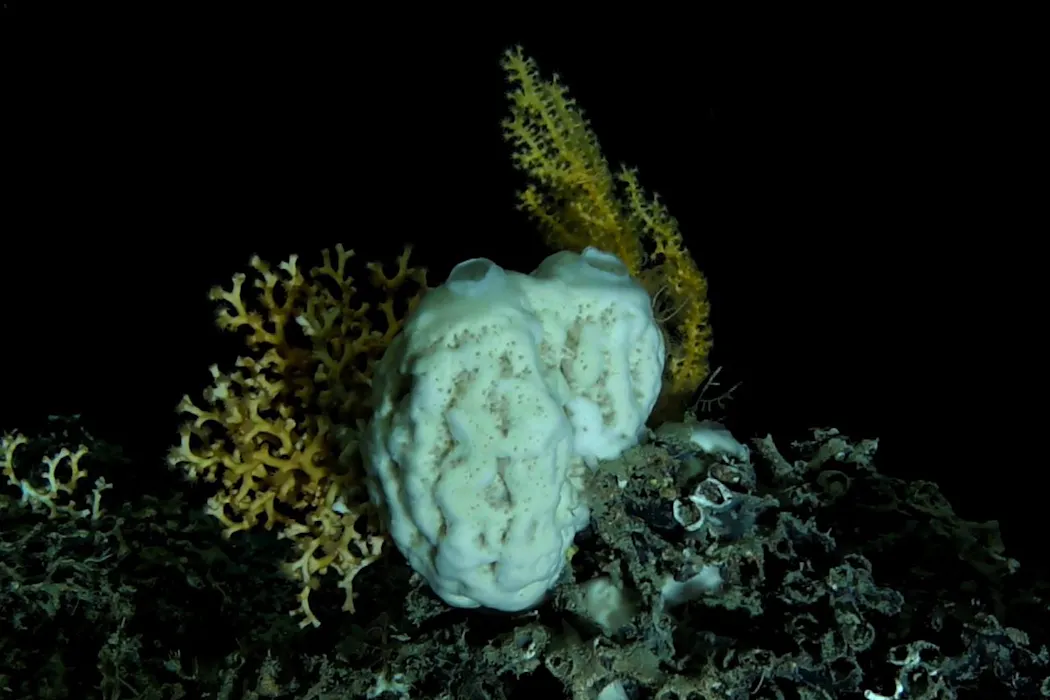
The deep-sea sponge _Calyx_ sp. in its natural habitat. PROBIO-DEEP/Fugro

When we think of marine life, we usually picture colourful coral reefs or dense seaweed forests filled with fish and other critters. The ocean that comes to mind is the one touched by sunlight.

However, most of the ocean is not like that. By volume, roughly 95% of the ocean consists of the permanently dark, cold deep sea. Despite such hostile conditions though, there is life in the ocean’s abyss.

Deep-sea marine sponges are among the organisms that live in these mysterious dark waters. They form “gardens” that are among the largest ecosystems on the planet, some spanning thousands of square kilometres on the ocean floor. They act as ecosystem engineers, providing habitats to many other organisms living on the seafloor.

Individual sponges can also pump and filter thousands of litres of water every day through their bodies. The nutrients they release support other organisms. Yet we know remarkably little about how sponges survive, let alone thrive, in the inhospitable environment of the deep-sea.

Symbiosis with microbes is an important part of how marine sponges live. We’ve been studying deep-sea sponges to better understand life in the ocean’s depths. So far, we’ve found some sponges are packed with microorganisms that use energy from chemical reactions.

The deep-sea sponge Aphrocallistes beatrix has the highest proportion of chemosynthetic symbionts reported to date. PROBIO-DEEP/Fugro

This is called chemosynthesis and is commonly found in other deep-sea organisms, such as mussels and tubeworms living in hydrothermal vents – deep-sea “hot springs”.

Our new study, published today in the journal Microbiome, shows sponges and their microbial partners also use a second strategy to make a living in the deep sea.

Two strategies, one sponge

All living organisms produce waste. Just like humans produce urine, many sponges produce ammonia as one of their waste products.

In this study, we analysed the Calyx species of deep-sea sponges from a depth of 830 metres.

About 16% of their microbial partners use the familiar chemosynthesis process. With ammonia as the energy source, they use carbon dioxide dissolved in the water to build biomass – it’s a bit like plants growing through photosynthesis from sunlight, but in the dark.

In well-lit shallow waters, many sponges and corals have photosynthetic microbes that help them build biomass from carbon dioxide. Our findings show that in the dark depths of the ocean, sponges have microbial partners that use ammonia instead of light for the same process.

The remaining 84% of microbial partners are where it gets really interesting. Instead of chemosynthesis these microbes use heterotrophy, which means consuming organic matter to generate energy and biomass (like the vast majority of animals, humans are also heterotrophs).

The problem here is that there’s little organic matter in the deep sea. Whatever falls down from the surface waters, such as dead plankton and algae, gets stripped by bacteria and small crustaceans of anything easily digestible as it sinks through the water column.

So, the little amount of organic matter that reaches the seafloor is generally poor food for the sponge itself. But, as we discovered, not necessarily for its microbial partners.

It turns out the heterotrophic microbes in Calyx sponges have lots of enzymes specialised in breaking down complex compounds, such as xylan and pectin, which make up the hard-to-digest cell walls of algae.

Feeding on these algal skeletons would allow the microbes to thrive and to transform organic molecules into nutrients their sponge host can use.

Deep-sea sponges and crinoids (marine invertebrates) in a deep-sea reef. PROBIO-DEEP/Fugro

Protecting what we don’t yet understand

Our study shows that sponges and their microbial partners are complex, biogeochemical reactors. They use and recycle ammonia “urine”, carbon dioxide and hard-to-digest organics to generate biomass.

The biomass can then support the growth of other organisms, such as brittle stars and fish, in turn supporting the broader community of animals living on the dark seafloor.

Unfortunately, these ecosystems are under pressure from human activities. Deep-sea trawling physically destroys sponge gardens. Deep-sea mining, now being actively pursued for rare metals used in batteries and electronics, threatens to disrupt the deep-sea habitat in ways that might take centuries to recover.

The United Nations has recognised deep-sea sponge gardens as vulnerable marine ecosystems, a formal acknowledgement of both their ecological importance and their fragility. But recognition alone is not enough.

If we destroy these habitats before we fully understand their role in carbon transformation, then we may lose a critical piece of Earth’s carbon cycle before fully realising it was there.

The Conversation

Torsten Thomas receives funding from the Betty and Gordon Moore Foundation USA and the Australian Government.

Alessandro N. Garritano does not work for, consult, own shares in or receive funding from any company or organisation that would benefit from this article, and has disclosed no relevant affiliations beyond their academic appointment.

One year after their brief war, how close are India and Pakistan to another conflict?

A year has passed since conflict broke out between India and Pakistan, briefly raising fears of an all-out war between the two nuclear powers.

While violent conflict between the neighbours has been commonplace for the past 80 years, this latest round of fighting felt different.

Both sides used new weapons against one another, including cruise missiles, short-range ballistic missiles and drones. The level of mistrust and sharp rhetoric worsened considerably, significantly testing regional partnerships.

One year later, tensions remain high, with an underlying risk of further escalation.

What happened last year?

The war broke out last May following a terrorist attack that killed 26 civilians in the Pahalgam area of Indian Kashmir on April 22.

Within days, Indian police claimed the Pakistan-based militant group Lashkar-e-Taiba was behind the attack. Pakistan vehemently denied any involvement.

Then, on May 7, India launched Operation Sindoor against alleged terrorist strongholds in Pakistan, which prompted a Pakistani retaliatory attack, Operation Bunyan-un-Marsoos.

Dozens of people are believed to have been killed. As in any India-Pakistan conflict, the possibility of the use of nuclear weapons created further alarm.

The four-day conflict came to an end with a ceasefire on May 10. It was announced by the Trump administration, which claimed to have mediated the deal. This irritated India, but Pakistan nominated US President Donald Trump for the Nobel Peace Prize.

India nonetheless claimed victory, boasting of its ability to deliver precise attacks far inside Pakistani territory, exposing weaknesses in its rival’s air defences. Pakistan, meanwhile, claimed to have shot down five Indian fighter jets (which India denies).

Political ramifications

In Pakistan, the Pakistani military returned to the political mainstream following the conflict. After leading Pakistan’s military response to India, the chief of army staff, Syed Asim Munir, was elevated to field marshal, and then to the post of the country’s first chief of defence forces.

Munir’s influence has only grown since. He has become very close to Trump and has been a key figure in the negotiations between the US and Iran to bring an end to their war.

In India, Operation Sindoor was seen as a win for the Modi government’s decisive foreign policy, and was a moment of rare political consensus in the country.

However, in Kashmir, the terror attack raised fresh questions about the government’s claims of normalcy in the region – and its push to boost tourism – following the controversial revocation of Kashmir’s statehood in 2019.

In the weeks that followed the attack, security operations in the Kashmir valley shut down several tourist sites. This led to a sharp decline in visitor numbers and severely affected local businesses. Security operations also targeted civilians, alarming human rights experts.

Shifting regional dynamics

Perhaps the most significant impact of the conflict has been the difference in diplomatic engagements of both countries.

The war highlighted Pakistan’s operational cooperation with both China and Turkey. The Pakistani military used Chinese-built fighter jets and missiles in its attacks, as well as Turkish-made drones. Its satellite-based intelligence was enabled by China, too.

After the war, Pakistan also signed a new deal with the Trump administration to develop Pakistan’s oil reserves, and a defence pact with Saudi Arabia, a staunch US ally.

India had pursued a decade-long push to isolate Pakistan diplomatically, which made Pakistan’s increasing bonhomie with the US and Gulf states particularly awkward.

Prime Minister Narendra Modi’s once-close relationship with Trump, meanwhile, began to deteriorate over US tariffs and India’s purchase of Russian oil.

Modi’s ill-timed visit to Israel and the visible lack of influence in the US–Iran war has also raised questions about India’s professed role as a regional leader. It has highlighted the limits to India’s strategy of balancing its strategic partnerships, especially during conflict.

India has tried to engage in proactive diplomacy, dispatching delegations of MPs and former diplomats to more than 30 countries over the past year. While India claims these visits were a success, they haven’t done much to convince the world that Pakistan was the aggressor in their conflict.

Where do things go from here?

One year on, the political rhetoric on both sides is as charged as ever.

Both India and Pakistan have signalled a resolve for further escalation in future conflicts.

Despite a sliver of hope for secret backchannel talks, India continues to give stern warnings to Pakistan over its alleged support to terrorist groups.

India has also reiterated that a major water-sharing treaty between the countries would remain suspended until Pakistan takes steps to end its support for terrorism – leaving a major concern over water security unresolved.

In response, Pakistan has made clear any attempt to target Pakistan again would “trigger consequences” that would not be “geographically confined or strategically or politically palatable for India”.

The shifting geopolitics and heightened rhetoric have narrowed the space for any prospects of meaningful dialogue between the two. As a result, the alarmingly low levels of trust will remain.

The ceasefire holds for now, but the conflict continues unabated.

The Conversation

Stuti Bhatnagar does not work for, consult, own shares in or receive funding from any company or organisation that would benefit from this article, and has disclosed no relevant affiliations beyond their academic appointment.

❌
STEM and Knowledge