Justin Paget/ Getty Images If your child has ever dug their heels in on the morning of the school athletics or cross country day, or refused to speak in front of the class, you’re not alone.
For some children, these kinds of events bring a heavy, anxious feeling: what if I’m the slowest, what if everyone’s watching, what if I get it wrong?
For parents, it can be hard to know what to do. Push too hard and the morning becomes a meltdown. Let them off and you worry you’ve taught them to opt out
If your child has ever dug their heels in on the morning of the school athletics or cross country day, or refused to speak in front of the class, you’re not alone.
For some children, these kinds of events bring a heavy, anxious feeling: what if I’m the slowest, what if everyone’s watching, what if I get it wrong?
For parents, it can be hard to know what to do. Push too hard and the morning becomes a meltdown. Let them off and you worry you’ve taught them to opt out.
Is it ever okay to follow their lead? And how do you give them the best chance of having a go next time?
Why (gently) facing fears matters
When we avoid something we’re afraid of, we feel instant relief. That relief is powerful, and it teaches the brain that avoiding worked. Over time, the fear grows and the impulse to avoid gets stronger. This is true for all of us, not just children.
So, in general, it helps for children to face fears sooner rather than later, before avoidance settles in.
But that doesn’t mean forcing a child through a panic. Pushing too hard can confirm to them the situation really is dangerous.
It’s worth helping your child face the fear before avoidance takes hold. What that looks like depends on what’s driving it.
Start by understanding what’s going on
If you can see a tricky day coming, talk to your child about how they are feeling ahead of time. Ask gentle questions to work out what the resistance is actually about.
Did something happen last time? Is something going on with friends? Is your child worried about failing, being judged, or being laughed at?
You might say:
I noticed you got really quiet when Dad mentioned athletics day. Is something about it worrying you?
Children won’t always have the words straight away, so give them time. It can help to have these conversations side-by-side rather than face-to-face: at bedtime, walking or driving together. Without eye contact, children find it easier to think and talk about hard things.
Try not to jump in to say “you’ll be fine” or “there’s nothing to worry about”. This can come across as dismissing the feeling, and your child may stop talking. Just listening can help children open up.
Validate the feeling
Once you have a sense of what’s going on, let your child know the feeling makes sense before moving to suggesting what to do. Children find it easier to think about solutions once they feel heard. You might say:
I can see this feels really big right now. It makes sense you’re worried.
Pause and stay silent for a moment. They may start crying, which is often part of processing fears.
This is often when we are tempted to rescue or reassure them. Instead, try to just remain a supportive presence. You can offer a hug and say, “This sounds really hard”.
Then work out a plan together
At this point, help your child think about what taking part might look like in a way that feels safe and manageable for them. You might say:
I wonder what might make it easier to go? What’s one small part of it you think you could manage?
Options might be walking the cross country instead of running it, reading the speech to one trusted teacher before presenting to the class, or going along and just observing to start with.
For some events, it’s worth having a quiet word with the teacher too, so the plan works at school as well as at home. The goal isn’t a perfect performance, it’s helping your child take part in a way they can manage.
Try not to rush or pressure them. If they say “I don’t know” acknowledge it can be hard to think when you are feeling worried. Sometimes it helps to take a brief break and come back to explore options later.
On the day
You can calmly remind them of what has been discussed. It can help to state what you would like to happen and then provide opportunity for the child to express how they are feeling:
It’s time to go. I know this is not easy and a part of you really doesn’t want to do this.
If they become upset, stay close and let the feelings be there. You don’t need to fix it or hurry them through it. A hand on their back or a quiet “I’m here” is often enough.
Children often need to feel their fear before they can move through it. This is where courage grows. Courage isn’t the absence of fear, it’s being able to move forward even when fear is present.
When children see they can carry their worries and still take part, they begin to develop confidence in their ability to cope with challenges.
Is it ever okay to follow their lead?
Sometimes, yes, if your child is really distressed, a brief step back will help them regain a sense of control.
A one-off opt-out isn’t a problem, and children are allowed to dislike things.
The warning sign is a pattern: when avoidance is creeping in more often, or your child is missing out on things they actually want to do.
If there’s a history of bullying, a bad past experience, or their fear and anxiety is starting to limit daily life, it’s worth seeing your GP for a referral to a psychologist who works with children.
How to approach ‘achievement’ and ‘participation’ in general
Most of what helps a child “have a go” is built in to the everyday conversations at home, not on the morning of the event. It’s about gently setting expectations: that we don’t always have to win, be the best, or get it right, and that’s okay.
A few themes are worth weaving in often.
The first is everyone has different brains and bodies so some things will come more or less easily to each of us. Difference is normal, and worth admiring rather than ranking. You might say:
I loved learning from my colleague Penny at work today. She knows so much about how water works in the environment.
The second is that skill is built, not bestowed. Children often think of sport, music or performance as fixed talents you either have or you don’t. But ability develops with practice. A child who plays sport every day will find running at athletics day easier, because they’ve put in the time, not because they were born for it.
The third is to help children notice progress against their own past self, rather than the ranking.
Last week you could swim 20 metres, and now you are swimming almost 30!
And the fourth, persisting at something hard is the real achievement. It’s easy to do what you’re already good at. Sticking with the thing that doesn’t come easily is harder, and worth naming when you see it.
I can see how frustrated you are with your reading. Keeping going – when it’s this hard is the bit I’m most proud of.
The goal isn’t a fearless child
The goal is a child who learns, over time and in small steps, that they can do hard things, and that being different from the child next to them is okay and a normal part of life.
Elizabeth Westrupp receives funding from the National Health and Medical Research Council. She is Editor-in-Chief of the journal Mental Health & Prevention, affiliated with the Parenting and Family Research Alliance, and is a registered clinical psychologist.
Christiane Kehoe is co-author on the Tuning in to Kids suite of programs and receives royalties from the sale of the facilitator manuals used by clinicians who deliver the parenting groups. She is affiliated with the Parenting and Family Research Alliance and Deputy Editor of the journal Mental Health & Prevention.
Rebecca Knapp does not work for, consult, own shares in or receive funding from any company or organisation that would benefit from this article, and has disclosed no relevant affiliations beyond their academic appointment.
You Le/UnsplashCities around the world are planting more trees to cope with rising urban heat. But our research shows trees alone are often not enough. In some cases, the wrong kind of greening can even make streets feel less comfortable on a hot day.
We compared field measurements from Melbourne, Munich and Hong Kong to test how different kinds of urban planting changed the heat people experience outdoors.
The results showed layered vegetation – where trees are combined with shrubs and grou
Cities around the world are planting more trees to cope with rising urban heat. But our research shows trees alone are often not enough. In some cases, the wrong kind of greening can even make streets feel less comfortable on a hot day.
We compared field measurements from Melbourne, Munich and Hong Kong to test how different kinds of urban planting changed the heat people experience outdoors.
The results showed layered vegetation – where trees are combined with shrubs and ground cover – often cooled cities more effectively than trees alone. We also found local climate and street design strongly shaped whether greening worked well.
These findings matter because urban greening is no longer just about aesthetics. As cities spend billions adapting to extreme heat, planting design may matter as much as planting quantity.
Cities are getting hotter
Cities trap heat. Roads, buildings and asphalt absorb solar energy during the day and slowly release it back into the air, especially at night.
This “urban heat island” effect, combined with climate change, is making heatwaves more intense and more dangerous in our cities.
Trees are one of the most popular responses because they provide shade and reduce the amount of heat absorbed by surrounding surfaces. But outdoor comfort depends on more than air temperature alone.
People experience heat through sunlight, reflected heat, humidity and airflow. A shaded street can still feel uncomfortable if humidity is high or if wind cannot move through the space.
That is why a “one-size fits all” greening strategy can fail. A planting design that works well in Melbourne may behave very differently in Hong Kong or Munich.
What we found
To better understand how urban vegetation affects heat stress, we did field measurements in three cities with different climates: temperate Melbourne, cooler Munich and humid subtropical Hong Kong.
Rather than relying only on computer models, we measured real conditions in streets and green spaces during summer.
We compared open urban spaces (with no plantings), sites with trees only, and layered planting (which means trees, shrubs and ground cover together).
Importantly, we did not just measure air temperature. We also measured “mean radiant temperature”, which captures the heat radiating from roads, walls and other surfaces onto the human body.
In Melbourne, street trees reduced radiant heat absorbed by pedestrians by more than 18°C, compared with open streets. Even where air temperatures changed only slightly, shaded streets felt substantially cooler.
Munich showed the strongest benefits from layered planting. There, streets and green spaces containing trees, shrubs and ground cover reduced afternoon heat stress by almost 8°C compared with more open spaces.
Hong Kong also benefited from vegetation, especially through shade created by overlapping tree canopies. But the results there were more mixed because the humid climate changed how cooling worked (more on that later).
Across all three cities, one finding stood out: vegetation structure matters.
Combining trees with shrubs and ground cover often performed better than trees alone, but the benefits depended on how the planting interacted with the local environment.
Why some greening can fail
The study showed that more vegetation is not automatically better.
In Hong Kong, dense vegetation sometimes increased humidity enough to reduce some of the cooling benefit. Plants release water vapour into the air through transpiration, which can help to cool dry climates. But in already humid cities, extra moisture can make outdoor spaces feel sticky and uncomfortable because sweat evaporates less efficiently.
In some Munich streets, dense vegetation reduced airflow through narrow urban corridors, trapping warm air and slowing the movement of vehicle pollution away from pedestrians.
These findings highlight why cities cannot rely on generic canopy targets copied from elsewhere. Climate, street width and airflow all shape whether vegetation improves comfort or creates unintended side effects.
Designing cooler cities
The solution is not to stop planting trees. It is to design urban greening more carefully.
Cities need planting strategies tailored to local conditions rather than universal greening formulas. In parks and open green spaces, layered vegetation can provide strong cooling while also supporting biodiversity. In dense streets, planners may need to balance shade with ventilation.
The findings also suggest cities should move beyond measuring success through tree numbers alone. The arrangement, density and type of vegetation matter just as much as canopy cover.
Designing for local conditions
Our research shows urban vegetation can reduce heat stress, but the benefits depend on how and where cities plant it.
Melbourne demonstrated the strong cooling effect of street trees on radiant heat, Munich showed the added value of layered vegetation, and Hong Kong revealed how dense planting can sometimes backfire in humid conditions.
Cities need climate-smart green spaces designed for local conditions, airflow and human comfort to remain liveable as temperatures rise.
Mohammad A Rahman receives funding from the German Research Foundation (DFG), TREE Fund, Humboldt Foundation, Bavarian State Ministry of the Environment and Consumer Protection, German Academic Exchange Service (DAAD), Sustainable Consumption Institute (SCI), University of Manchester and the European Union.
Brett Jordan/PexelsMore people are relying on social media – such as TikTok, Instagram, YouTube and Reddit – to learn about mental health conditions and to interact with people who have shared experiences.
These aren’t only long-familiar disorders such as depression, anxiety and schizophrenia. They also include conditions often placed under the “neurodivergent” umbrella such as autism, ADHD (attention-deficit hyperactivity disorder), Tourette syndrome and dyslexia.
For instance, on TikTok the
More people are relying on social media – such as TikTok, Instagram, YouTube and Reddit – to learn about mental health conditions and to interact with people who have shared experiences.
These aren’t only long-familiar disorders such as depression, anxiety and schizophrenia. They also include conditions often placed under the “neurodivergent” umbrella such as autism, ADHD (attention-deficit hyperactivity disorder), Tourette syndrome and dyslexia.
For instance, on TikTok the hashtag #adhd has had more than 50 billion views.
We wanted to explore how social media platforms shape how we understand mental health. So we analysed more than 14 million posts and comments about mental health on Reddit.
We show a shift in conversations toward ADHD and autism, and away from anxiety and depression.
Our findings have important implications for how people make sense of, and seek help for, mental health problems.
A complex relationship
Social media coverage of mental health has made it more visible, with some positive effects. It has probably reduced the stigma of mental illness and increased the use of mental health services.
However, it also has downsides. It can induce or exacerbate eating disorders, can contribute to the spread of symptoms (such as tic-like behaviours), and has been attributed to the rise of questionable self-diagnoses.
Misinformation is common in social media discussions of mental health. One study found a majority of the most popular TikTok videos on ADHD were misleading. Inaccurate information about manyothermental health conditions on social media is common.
Discussions change and evolve
Mental health content has not merely risen in volume. Some conditions have increasingly attracted the spotlight, others have receded from view, and the relationships among them have shifted.
In our Reddit study published last year, we found that as the largest ADHD- and autism- related communities (subreddits) became increasingly more prominent from 2012 to 2022, their content gradually became more similar, and their users increasingly overlapped.
Discussions in both communities increasingly emphasised the experiences of adults, challenges in accessing diagnostic assessments, and struggles with personal relationships.
This growing convergence of these two conditions on Reddit illustrates how social media can reshape representations of mental health.
Our latest study takes this further
In our new study, we analysed more than 14 million posts and comments from several of the largest mental health communities on Reddit.
The 14 communities we studied included those related to mood, anxiety, trauma, personality, dissociation and psychosis, as well as those focused on conditions often placed under the “neurodivergent” umbrella, such as autism, ADHD, Tourette syndrome and dyslexia.
We investigated how the people belonging to these communities and the language they used changed from 2015 to 2022.
We explored which communities became more or less closely associated over time – sharing more or fewer members and containing posts and comments with similar or different linguistic content. We also looked at whether these changes reflected shifts in the amount of attention the 14 conditions received.
Although our analysis only covered a seven-year period, it revealed a striking pattern of changes. The two diagrams show how the 14 communities were interrelated at the beginning and end of the period.
The size of the circles represents the relative size of the communities. The width of the links between them indicates how closely they were associated.
In 2015, depression and anxiety were prominent mental health communities on Reddit. They were among the most active and their members and content overlapped with those of many other communities. In this sense, they were “central” to the network.
However, in 2022, ADHD and autism communities had become most popular and prominent, displacing depression and anxiety. ADHD, autism and other neurodivergent conditions became more closely associated with other communities, and consequently more central to the network.
These analyses suggest that on Reddit the mental health landscape has been re-configured. Mood and anxiety disorders once dominated discussions. But discussions of mental health have increasingly pivoted to discussing conditions related to being neurodivergent.
Reddit users do not represent the general population; they tend to be younger, male, more educated, and have a higher income. Nevertheless, our study offers important insights into changes in mental health discussions on one social media platform over time.
Why does it matter?
The rising prominence and centrality of ADHD and autism makes them increasingly popular explanations for mental health problems. This might promote accurate self-diagnosis by people who once would not have recognised the nature of their difficulties.
However, it could also lead people to misinterpret and mislabel their experiences as ADHD and autism when there’s another explanation.
The rising prominence of these conditions on social media may also lead people to interpret mood or anxiety symptoms as signs of ADHD or autism.
Misinterpretations can lead people to pursue inappropriate diagnoses or unhelpful treatment, delaying access to the help they need. This in turn places increasing pressure on mental health services, and can lead to other conditions being overlooked.
Jemima Kang receives funding from an Australian Government Research Training Program Scholarship, an Australian Academy of Technological Sciences and Engineering Elevate Scholarship, and a University of Melbourne Helen Macpherson Smith Scholarship.
Nick Haslam receives funding from the Australian Research Council.
Mike Conway does not work for, consult, own shares in or receive funding from any company or organisation that would benefit from this article, and has disclosed no relevant affiliations beyond their academic appointment.
When the University of Queensland Press cancelled the publication of Wiradjuri poet Jazz Money’s book Bila: A River Cycle because of a blog post by its illustrator, 60 UQP contributors signed a letter of protest. Some declared they would no longer publish with UQP. Fourteen staff members issued a statement decrying “the precedent the University of Queensland has set”.
Had HarperCollins, a publisher owned and controlled by the Murdoch family, nixed
an Indigenous children’s book, the decision wou
When the University of Queensland Press cancelled the publication of Wiradjuri poet Jazz Money’s book Bila: A River Cycle because of a blog post by its illustrator, 60 UQP contributors signed a letter of protest. Some declared they would no longer publish with UQP. Fourteen staff members issued a statement decrying “the precedent the University of Queensland has set”.
Had HarperCollins, a publisher owned and controlled by the Murdoch family, nixed
an Indigenous children’s book, the decision would perhaps not have been experienced as such a betrayal. UQP, however, boasts on its website of “publishing literary works, poetry and Aboriginal Torres Strait Islander stories”: scarcely an orientation one usually associates with politicised book pulping.
The Bila episode follows a recent pattern in which supposedly progressive institutions and organisations respond to any connection to the Gaza genocide as aggressively as their right-wing counterparts, or even more so.
Conservative politicians and the right-wing press systematically demonise the Palestinian cause and its supporters. According to a study by Ette media, the Australian published, between October 7 2023 and April 9 2026, an astonishing 412 articles wholly or in part about Palestinian writer Randah Abdel-Fattah. Yet some of the most punitive campaigns have played out not in the corporate sector but at the ABC and within the university sector.
In How to Sell a Genocide: The Media’s Complicity in the Destruction of Gaza, Adam Johnson explores a similar phenomenon in the United States. His book does not focus, he says, on “the conservative or MAGA media’s dehumanization of Palestinians”. This is partly because right-wing outlets such as Fox News, the Wall Street Journal and The Daily Wire don’t disguise their anti-Palestinian stance, but also because the timing of the war in Gaza made the reporting and commentary by supposed progressives particularly important.
“There was,” Johnson reminds us, “a Democratic president in office when the
genocide began in earnest, and support from Democrats in Congress and in the think-tank and media world was dispositive in continuing said genocide.”
His critique of what he calls the “Center-Left media” is based on careful
documentation of some 12,000 articles and 5,000 television clips. He brings, as they say, the receipts.
For instance, Johnson notes that CNN – a pillar of US liberalism – mentioned the child deaths in the first 100 days of the Ukraine war far more (4,223 times) than child deaths in the corresponding period in Gaza (3,632 times). On MSNBC, child victims of the Ukraine war featured 1,775 times, compared with 1,522 times for Gaza.
The systematic obliteration of civilian infrastructure in Gaza meant that, even in the initial period Johnson studied, 80% of the population was displaced. In Ukraine, the equivalent figure was only 33%. Yet Johnson finds the US television networks referred to refugees, displaced people and similar terms eight times more often for Ukrainians than for Palestinians (1,663 versus 211).
Yet most liberal news outlets still do not use the word “genocide” in relation to Gaza.
Johnson shows how such lexical scruples do not apply elsewhere. “Even though the destruction of Gaza, by all objective metrics, has been magnitudes more brutal and deadly than that of Russia’s invasion and occupation of Ukraine,” he observes, “the totalising moral labels of ‘war crime’ and ‘genocide’ were used on CNN and MSNBC 17.2 times more often in the context of Russia’s invasion of Ukraine than Israel’s action in Gaza.”
His review of the first 30 days of the two conflicts found that, on CNN and MSNBC, Ukrainians were described on air as victims of genocide or war crimes 1,790 times: 1,515 for war crimes and 275 for genocide. When the victims were Palestinian, the terms were used 104 times: 92 for war crimes and 12 for genocide.
“Ostensibly non-opinionated reporters and ‘analysts’ on both MSNBC and CNN,” writes Johnson, “often asserted, as a matter of fact, that Russia was committing war crimes against Ukrainians, without this being seen as violating their neutrality.”
Higher standards
Israel’s defenders insist the country should not be held to a higher standard than other nations. Johnson’s research shows the opposite is true: judgements regularly made in other contexts become controversial only when applied to Israel.
Channel 4 quickly debunked the audio as a clumsy fake; the investigative group Forensic Architecture determined that most of Israel’s claims about the hospital attack were demonstrably false.
In the months that followed, the IDF engaged in what UN experts later described as “medicide”: namely, the targeted destruction of Gaza’s healthcare system and the killing of more than 1,500 healthcare workers. In one particularly ghastly incident, the IDF fired on five clearly marked ambulances and a fire truck after they came to the aid of Palestinians wounded in an earlier attack.
A subsequent investigation by Forensic Architecture and Earshot alleged the soldiers fired more than 900 bullets at the convoy, before shooting the survivors at close range. The IDF then deployed bulldozers to crush and cover the vehicles, and bury the dead in an unmarked mass grave.
That was one year and five months after Israeli president Isaac Herzog rejected allegations of Israeli responsibility for the Al-Ahli hospital attack as a “blood libel”.
The pushback by the Israelis led to US news outlets formulating new policies. CNN and the New York Times began instructing employees that attacks could only be attributed to Israel after confirmation from the IDF and GPS coordinate location. Johnson quotes a source at CNN:
Whether it’s in the newsroom or in the field, we couldn’t credit anything to Israel unless we were held to this impossibly high bar of having to call it an “explosion”, until we geolocated the site of the explosion, sent the coordinates to the Israelis and asked them for comment.
Asked about whether the policy was applied in other conflicts, such as the Ukraine
war, Johnson’s source answers: “Never, never, never, never, never.”
Previously, the World Health Organization, Human Rights Watch and the US State
Department had all used data from the Gaza Health Ministry because of its proven reliability. After the Al-Ahli hospital attack, US news outlets began appending the description “Hamas-controlled” or “Hamas-run” to descriptions of the health ministry. Johnson says:
in our 100-day survey period, CNN used the “Hamas-run” label and related terms 277 times and MSNBC used it 146 times, despite neither using it once between October 7, 2023 and October 17, 2023.
The practice spread, including to Australia. By October 28 2023, the Sydney Morning
Herald was also attributing casualty figures to the “Hamas-controlled Health Ministry”.
While no one has yet studied the liberal media in Australia with the rigour applied by Johnson in the US, the available evidence suggests it followed the patterns he describes. As I noted in a piece for Deep Cut News, the Age published a bold editorial declaring:
There is a genocide happening today […] Our government should urgently, repeatedly and loudly call for international intervention, and lead in imposing sanctions. We should send bountiful aid to the victims, and halt economic and diplomatic relations […] unless and until the savagery is stopped. All of us, as Australians, should shun travel […] for tourism or business.
And our government should, as it did with the Syrian refugee crisis a few years ago, rapidly engineer an intake of […] refugees.
That wasn’t about Gaza. It appeared in 2017, in relation to the persecution of the
Rohingya people in Mynamar.
Some commentators point to the absence of a final judgement by the International Court of Justice in relation to Gaza. But in 2017 the International Court of Justice had not ruled that the killings of the Rohingya were genocidal. It still hasn’t. The glacial pace at which the court moves means genocide allegations brought by Gambia against Myanmar remain unresolved.
Nevertheless, in 2017, the Age saw no problem with using the word “genocide” after studying reports from Medecins Sans Frontieres about “a deliberate, systematic campaign causing death and human suffering”.
Today, Medecins Sans Frontiers describes Israel’s operations in Gaza as genocidal. The Age does not. It has not published an editorial akin to that it issued in respect of Mynamar; it has not called for the government to impose sanctions, nor urged Australians to boycott Israel.
An acquiescent press
How to explain the special treatment of Israel by the liberal press?
The Gaza war focused attention on lobbyists and their influence on politics and the media. In the US, the American Israel Public Affairs Committee devoted the staggering sum of US$100 million in 2024 to unseating candidates it deemed insufficiently supportive of Israel.
In his book Dateline Jerusalem, veteran journalist John Lyons describes a similar process in Australia. Well before the Gaza war, he witnessed the brutal discrimination dished out by Israeli soldiers to 12-year-old Palestinians in the West Bank, but recognised that, if he reported it, “I would be the target of a backlash which would be tough, nasty and prolonged”.
So it proved. His 2014 story Stone Cold Justice won a Walkley, but he was “attacked professionally, personally and relentlessly by the pro-Israel lobby and its supporters”.
Famously, Edward Herman and Noam Chomsky list “flak” from corporate lobbyists as one of the filters that produces an acquiescent press. Dissenting journalists face a barrage of time-consuming complaints so exhausting it induces preemptive self-censorship. Flak from pro-Israel groups aims, as Lyons puts it, “to make journalists decide that, even if they have a legitimate story that may criticise Israel, it’s simply not worth running it as it will cause ‘more trouble than it’s worth’”.
Along with the stick comes various carrots. In Australia, pro-Israel groups regularly provide journalists, editors and other media workers (as well as politicians) with all-expenses-paid “study trips” to the Middle East. Recipients of this largesse include a roll call of conservative media talent, but also include prominent journalists from the liberal press.
To contextualise that record, consider the response when hundreds of media workers
(including me) signed an open letter on the Gaza conflict in 2023, calling on outlets to, among other issues, reject “both sideism”, centre the human casualties, show equal scepticism to IDF and Hamas reports, report credible allegations of “war crimes, genocide, ethnic cleansing and apartheid”, and cover the anti-war movement.
In reply, Nine issued a memo written by Tory Maguire, then executive editor of the Sydney Morning Herald and the Age, and signed by then Age editor Patrick Elligett, SMH editor Bevan Shields and national editor David King. The memo cautioned journalists that “personal agendas” should not influence reporting.
The principle, Maguire wrote, meant that “any newsroom staff who signed this latest industry letter will be unable to participate in any reporting or production relating to the war”.
Guardian staff received a similar message from the editors of its Australian, US and UK organisations: Lenore Taylor, Betsy Reed and Kath Viner. The memo explained that staff “should not sign public petitions or open letters about matters that have, or could be perceived to have, a bearing on [the publication’s] ability to report the news in a fair and fact-based way”.
Maguire, Shields and King had previously travelled to Israel on “study trips”; so had Taylor. A petition calling for fair cover for Palestinians created a perception of “bias” – but accepting free travel and accommodation from Israel or pro-Israel groups did not.
Double standards
Such double standards foster allegations of a media “captured” by pro-Israel lobbyists, a claim that can degenerate into antisemitic conspiracism. Johnson’s book rests on a much better analysis, one that centres US rather than Israeli power.
Three decades ago, secretary of state Alexander Haig provided a simple explanation of why Tel Aviv mattered so much to Washington. “Israel,” he said, “is the largest American aircraft carrier in the world that cannot be sunk, does not carry even one American solider, and is located in a critical region for American national security.”
Since the 1970s, the US has looked to Israel to protect American interests in the oil-rich Middle East. To equip Israel for that function, the US provides more cumulative foreign aid to Israel than any other nation: since 1948, more than US$300 billion (adjusted for inflation) in total.
Most US support, particularly in recent years, pertains to defence. The majority of Israel’s air force and all of its combat aircraft are made in the US. The analyst William D. Hartung estimates that, since the Hamas attack on October 7 2023, the US government has provided Israel with US$21.7 billion of military aid.
If we recognise America’s strategic reliance on Israel, we are better positioned to
understand the liberal response to Gaza, which also needs to be seen in the context of Trumpism. During the first Trump administration, many progressive institutions ostentatiously signalled their opposition to a presidency they considered illegitimate and anomalous.
Johnson notes that, when the killing of George Floyd in 2020 spurred a revival of the Black Lives Matter movement, “media outlets, cultural nonprofits, and colleges issued lofty – if vague – statements of support for racial justice”. These were low-stakes anti-Trump gestures that aligned mainstream liberals with what they saw as the imminent restoration of progressive normality.
Support for Ukraine was equally easy. Unlike Palestinians, Ukrainians were, after all, understood by the Western media as civilised. In the London Telegraph, pundit Daniel Hannon spelled out why Ukrainian suffering resonated in the West: “They seem so like us. That is what makes it so shocking.” In 2022, CBS News foreign correspondent Charlie D’Agata explained (in remarks for which he subsequently apologised) that Ukraine was not “a place, with all due respect, like Iraq or Afghanistan, that has seen conflict raging for decades”; it was “relatively civilized, relatively European”.
Adam Johnson, author of How to Sell a Genocide.Pluto Press
Johnson shows that, in the period he surveyed, the New York Times, the Associated Press, the Washington Post, CNN, Politico, USA Today and Axios collectively used the term “savage” 16 times for the killing of Israelis, but never for the killing of Palestinians.
Likewise, “slaughter” appeared 120 times in relation to the killing of Israelis, but only once for Palestinians. “Massacre” was used 344 times in relation to Palestinians killing Israelis, but never for Israelis killing Palestinians. “Barbaric” was used 14 times to describe the killing of Israelis, but zero times in relation to the deaths of Palestinians.
The cable coverage displayed a similar pattern. Johnson records that on MSNBC, presenters and guests used “massacre” 177 times, “barbaric” 46 times, “savage” 23 times and “slaughter” 102 times in relation to Israeli deaths. They never called the killing of Palestinians “barbaric” or “savage”. In relation to Palestinians, they only used “massacre” eight times and “slaughter” four times.
References to “savagery” and “barbarism” echo the logic of settler colonialism, identifying the uncivilised natives as a problem to be solved.
The sphere of deviancy
By denouncing Putin’s invasion, liberal politicians and institutions were opposing a traditional US adversary. They were siding with the incoming Biden administration and most Western nations. And they were distancing themselves from an increasingly unpopular Trump, widely seen as sympathetic to Russia.
After October 7 2023, the calculus changed. Unlike a stance on Ukraine, opposition to Israel’s war was not cost-free. Hostility to the longstanding foreign policy consensus required a modicum of courage. In the terms established by Daniel Hallin’s famous study of the US media and Vietnam, The “Uncensored War” (1986), those who opposed Israel’s war stepped outside the “sphere of consensus” and the “sphere of legitimate controversy” to inhabit the “sphere of deviancy”.
This is a space occupied, in Hallin’s words, by “those political actors and views which journalists and the political mainstream of the society reject as unworthy of being heard”.
Not surprisingly, as Johnson explains, institutions that had previously backed Black Lives Matter, the people of Ukraine and other popular causes “found both their tongues and hands tied on the subject of social justice as the death toll in Gaza skyrocketed”.
In 2022, Harvard president Lawrence Bacow proclaimed his institution’s solidarity with Ukraine with a rousing speech. “Now is the time for all voices to be raised,” he declared:
The deplorable actions of Vladimir Putin put at risk the lives of millions of people and undermine the concept of sovereignty. Institutions devoted to the perpetuation of democratic ideals and to the articulation of human rights have a responsibility to condemn such wanton aggression […]
Today the Ukrainian flag flies over Harvard Yard. Harvard University stands with the people of Ukraine.
By 2024, Harvard had changed its mind. The time for raising voices had,
apparently, come to an end. In the face of student protests, Harvard announced it would “no longer take positions on matters outside of the university”.
Then, as the Gaza crisis intensified, they suddenly explained they couldn’t take stands on political issues.
Third partying
The media, however, had to say something. In 2016, progressive outlets in the US had portrayed Trump as something akin to a fascist. In 2020, they had campaigned, more-or-less openly, for the Democrats. Even sober publications such as the New York Times made clear their preference for Joe Biden: a sensible centrist who would restore decency and democracy. Not surprisingly, in 2023, the Gaza genocide – and Biden’s complicity with the killing – created a tremendous ideological crisis for the liberal media.
Johnson notes that Biden could have stopped the war at any time, citing multiple Israeli sources to that effect. In November 2023, for instance, retired Israeli major general Yitzhak Brick acknowledged that the Gaza operation depended utterly on the US:
All of our missiles, the ammunition, the precision-guided bombs, all the airplanes and bombs, it’s all from the US. The minute they turn off the tap, you can’t keep fighting. You have no capability […] Everyone understands that we can’t fight this war without the United States. Period.
Michael Herzog, the former Israeli ambassador to the US, explained:
God did the State of Israel a favor that Biden was the president during this period, because it could have been much worse. We fought for over a year, and the administration never came to us and said, ‘ceasefire now’. It never did. And that’s not to be taken for granted.
Biden’s agency was rarely acknowledged by the mainstream media. Johnson
describes the emergence of several distinctive styles of reporting that allowed “the average media consumer – and media worker – to cope with the undeniable and untenable war crimes being carried out by their leaders before their eyes”. A common trope involved what he dubs “Third Partying”. This entailed journalists framing the US “as a neutral party – even a humanitarian force – always looking (but, mysteriously, always failing) to end the conflict”.
Liberals depicted Biden as helpless. As the New York Times put it, the most powerful man in the world was supposedly constrained by the “limits of US influence in the Mideast”. They wrote stories about what Johnson calls “Fuming/Deeply Concerned Biden”, in which the president featured as “secretly upset, outraged, having stern words for Netanyahu, or privately sad or anguished about civilian casualties”.
We might think about these tropes in relation to journalism professor Jay Rosen’s work on the professional socialisation of political journalists into what he describes as the “savvy style”. Rosen explains:
In politics, our journalists believe, it is better to be savvy than it is to be honest or correct on the facts. It’s better to be savvy than it is to be just, good, fair, decent, strictly lawful, civilized, sincere, thoughtful or humane. Savviness is what journalists admire in others. Savvy is what they themselves dearly wish to be. (And to be unsavvy is far worse than being wrong.)
Savviness is that quality of being shrewd, practical, hyper-informed, perceptive, ironic, “with it”, and unsentimental in all things political. And what is the truest mark of savviness? Winning, of course! Or knowing who the winners are.
In relation to Gaza, savvy commentators recognised (though not necessary openly) the US reliance on Israel to maintain hegemony in the Middle East. Savviness meant understanding the political consequences of that relationship: namely, that US politicians would back Israel under almost every circumstance.
Though the Australian situation is different, certain parallels can be identified.
The Albanese government came to power in 2022 with considerable support from a liberal media impressed by Labor’s aura of competence, particularly in contrast to the shambolic Morrison administration.
As a backbencher, Anthony Albanese had spoken at rallies to denounce the IDF for meeting “children throwing rocks with helicopters, with tanks and with missiles”. But as prime minister, he and his foreign minister Penny Wong sought, above all else, to strengthen the US alliance as a counter to an increasingly confident China. In relation to Gaza, Australia determinedly followed the US lead.
The tropes identified by Johnson appeared, in slightly modified form, in the
Australian liberal press. For instance, after Greens leader Adam Bandt’s defeat in the seat of Melbourne during the federal election in May 2025, Nine’s David Crowe explained that Bandt had lost in part because he had:
seized on the war in Gaza to accuse Albanese of knowingly aiding Israel in a genocide. There was no such support for genocide; the Australian government wants a ceasefire and a two-state solution. Most importantly, most Australians knew their government did not have the power to stop the war. The Greens leader was eyeless in Gaza, blind to the danger for him and his party.
Crowe was right to say that an Australian prime minister lacked the power of a US president to stop the war. But Bandt had never suggested otherwise. Instead, the Greens – like many others – had insisted that abstract calls for a ceasefire and a two-state solution (an outcome that Israeli Prime Minister Benjamin Netanyahu has repeatedly vowed to oppose) meant nothing unless accompanied by what Bandt called pressure from “real, concrete steps”, such as an end to military trade, the imposition of sanctions and the expulsion of the Israeli ambassador.
Symptomatically, in his condemnation of Bandt, Crowe does not reject his description of the war as genocidal. Instead, he presents Bandt’s response as an electoral misfire by the Greens. “Young voters may be drawn to its exaggerated rhetoric and confected conflict,” he concludes, “but voters trend to drop the party as they age.”
We might again recall Jay Rosen. “Prohibited from joining in political struggles,” he writes,
dedicated to observing what is, regardless of whether it ought to be, the savvy believe that these disciplines afford them a special view of the arena, cured of excess sentiment, useless passion, ideological certitude and other defects of vision that players in the system routinely exhibit. The savvy don’t say: I have a better argument than you. They say: I am closer to reality than you.
Throughout the liberal media in Australia, the question of Gaza often manifested as a tension between employees and management. In November 2023, for instance, the Australian Financial Review reported on a meeting by the staff of Schwartz Media, publisher of the Saturday Paper, at which editor-in-chief Erik Jensen addressed concerns about the paper’s response to the Gaza crisis.
As far back as 2021, Alex McKinnon, the one-time morning editor of the Saturday
Paper, identified what he called “an unofficial but widely known editorial policy of avoiding coverage of Israel and Palestine, especially any coverage that could be perceived as being critical of the Israeli government’s ongoing human rights abuses of Palestinians”. Many staff members, said McKinnon, “expressed discomfort with it, but all seemed resigned to it”.
In response to McKinnon, Jensen rejected claims of a pro-Israel bias. He said the same in the 2023 staff meeting. Yet, as the staff reportedly argued, the Saturday Paper had previously distinguished itself with overt stances on other progressive causes, such as refugee rights and climate; it campaigned, through the dogged reporting of Rick Morton, for justice over the Robodebt scandal.
On May 21 2022, the Saturday Paper called for the defeat of Scott Morrison in the federal election, saying Morrison “will be remembered, if he is remembered at all, as the country’s great torturer”. On April 8 2023, the paper attacked Peter Dutton’s stance on the Indigenous Voice to Parliament, saying his “cynicism is boundless” and calling him an “ugly person who makes true the old joke about politics and show business”. The editorial accused him of dividing the country with his “ghoul politics”.
Elections and Indigenous reconciliation are important issues. But so is genocide. Had the Saturday Paper applied the same editorial focus to Gaza, it might have published something like this:
How will history regard the government of Albanese, Chalmers, Marles and Wong? It
will record that after two and half years of genocide by Israel, Australia’s leadership invited Israel’s president for a state visit. Australia refused to condemn the raft of war crimes committed by Israel and supported by the United States, first in Gaza and then in Iran and southern Lebanon. […]
Australia has said nothing while Israel has continued to assassinate journalists, medics, aid workers, diplomats, foreign and spiritual leaders across the Middle East. Worse, it has done nothing even to dissuade Israel – no sanctions, no calls for justice or statements of support for the ICC arrest warrants, not even stopping our arms trade to Israel.
This passage was written by Nick Feik, the former editor of Schwartz Media’s magazine the Monthly, but it didn’t run in the Monthly or in the Saturday Paper. It appeared on Feik’s personal Substack.
Alternative platforms
That’s symptomatic of a growing trend in which writers horrified at the genocide are, either by choice or necessity, publishing on alternative platforms rather than the established liberal outlets. Robert Manne has long been acknowledged one of the most important public intellectuals in Australia. Remarkably, if you want to read his thoughtful comments on Gaza, Bondi and antisemitism, you must turn, not to any of the mainstream papers, but to his Substack.
Rick Morton, who spearheaded the Saturday Paper’s coverage of Robodebt, posted his thoughts on Gaza and the Bondi massacre on Ghost, a Substack alternative, in January 2026. He quit his job at the Saturday Paper shortly afterwards.
Alex McKinnon established a Substack to report “what others won’t about Australia’s silence on Palestine”; he later launched Deep Cut News with Antoun Issa, who resigned from the Guardian in 2024 “due to objections over the outlet’s coverage of the Gaza genocide”.
Antoinette Lattouf – who won a high-profile legal case against the ABC after it sacked her for sharing a post from Human Rights Watch about Gaza – now works with Jan Fran making podcasts and YouTube shows for their own Ette Media.
Scott Mitchell and Osman Faruqi, who both worked for Schwartz’s 7am podcast (as well as various other outlets), collaborate on the news platform Lamestream.
The proliferation of new outlets and the rejuvenation of older ones, such as Overland, has led to important interventions. The Klaxon, a project of investigative journalist Anthony Klan, doggedly pursued the ties between John Roth, the husband of antisemitism envoy Jillian Segal, and the far-right Advance project. Deep Cut News published the letter in which a pro-Israel academic group lobbied to exclude Abdel-Fattah from the Bendigo Writers Festival. Lamestream broke the story about UQP’s cancellation of Jazz Money’s book.
Yet good journalism does not, in itself, guarantee the survival of the outlets who
conduct it. The mass street movement in support of Gaza created a new audience for
alternative publications. But with the establishment of a ceasefire (though not a genuine peace) the protests have declined, creating a difficult environment for media projects challenging the liberal consensus.
Legal ramifications
In the US context, Johnson doubts that the progressive outlets that supported the genocide will pay much of a short-term price. On the contrary, he identifies a process of rationalisation and justification already underway. Insofar as liberals apportion blame, they attribute it to Netanyahu and what they see as an unfortunate overreaction by the IDF to the barbarities of Hamas. He concludes:
Mostly, I think the genocide in Gaza will be put into a memory hole, forgotten, dismissed as a lefty ‘obsession’, or hung up, the disproportionate focus of which, it will be heavily implied, is evidence of latent antisemitism. And that will be that.
Nevertheless, the consequences of so much killing cannot be evaded entirely. The precedent set by the genocide will reverberate for generations, in the media and elsewhere. As Johnson notes,
we will likely see versions of Gaza play out in the coming decades across various peripheries […] And the model of deflection, dehumanization, and liberal excuse-making perfected during the Gaza genocide will be the template – the weapons, technological and rhetorical, having been sharpened over late 2023 into 2025.
The Gazafication of south Lebanon provides one immediate and obvious example, but there are others. The indifference to legal norms shown by Donald Trump when he greenlit the US and Israeli war on Iran reflected the experience of Gaza, where nothing said by the International Court or the United Nations or similar bodies made any difference at all.
It is not just the existing international legal system that is in jeopardy now. At risk is the survival of any rules at all – and with them any constraints on the exercise of state power.
critique of the fourth estate, the so-called pillar of democracy, not only becomes more pertinent. It resonates as a broader analysis of the decay of democratic institutions in the West.
How to Sell a Genocide is part of that critique. But much more remains to be done.
Jeff Sparrow has signed statements of solidarity with Palestine and participated in campus campaigns against the genocide in Gaza.
Sarazh Izmailov/Pexels, The Conversation, CC BY-SAInterest in the manosphere has recently surged yet again, with the recent Louis Theroux documentary catapulting the term “manosphere” back to the forefront of our cultural psyche.
The term has become a catchall for the most inflammatory content and communities in young men’s digital worlds. Alarm bells are ringing, but our understanding of what the manosphere actually is – where it begins and ends – has more questions than answers.
As concern
Sarazh Izmailov/Pexels, The Conversation, CC BY-SA
Interest in the manosphere has recently surged yet again, with the recent Louis Theroux documentary catapulting the term “manosphere” back to the forefront of our cultural psyche.
The term has become a catchall for the most inflammatory content and communities in young men’s digital worlds. Alarm bells are ringing, but our understanding of what the manosphere actually is – where it begins and ends – has more questions than answers.
As concern grows, so does the ambiguity around how to define the manosphere and how young men actually experience it. Our policy responses, interventions and public discourse assume it’s one thing, one ideology, populated by one type of young man: a singular algorithmic journey from loneliness to radicalisation. It isn’t, and overlooking the complexity and nuance misses large parts of the problem.
So what is it instead? Our new research answers this question.
Simulations vs reality
Addressing ambiguity matters, whether you’re a researcher trying to measure the full spectrum of harm being experienced, or part of a community trying to talk about it with sons, brothers and friends. You cannot diagnose a problem without truly understanding it, and that means going into these online ecosystems to explore their bounds.
Previous research has included the use of dummy accounts to simulate internet use. These have been criticised by social media companies, who say the simulations don’t reflect the real experiences of users on their apps.
In response, our new research looked at the real TikTok viewing histories of 142 young men across Australia, the United States and the United Kingdom. We watched what they watched, 2,000 videos over the past month, and built a framework to map the full spectrum of masculinity content that young men encounter online.
It’s the first time academic research has used real user data in this space. It means we can respond to what young men and boys are actually seeing, rather than simulations of user experiences and what we think they’re seeing.
Almost half of the videos we analysed (44%) contained masculinity-related themes. Masculinity content fell into three distinct categories. Understanding these categories, how they escalate and who’s watching it makes tailored intervention possible, from policymakers to support services, and even the platforms themselves.
The journey can start somewhere ordinary. Three videos. Same young man. Same day. Same algorithm.
In the first video, a young, buff man located in a gym, demonstrating to his audience the correct technique when completing the “perfect lying tricep extension”.
We called this tier “cultural touchpoints”. It includes gym, sport, fashion and dating tips content. It made up 38% of what young men in our study watched, making it the most common type of content.
On the surface, none of it raises alarm. But it quietly sets a norm. One type of male body, one set of male interests, one way of moving through the world.
Travelling deeper
In the second video, a shirtless young man delivers a motivational-style speech about gym and discipline. He argues that physical commitment produces results in other areas of life, such as earning admiration from his girlfriend and becoming a “superhero” to his future children.
We called this tier “masculine status” content. It constituted 6% of the videos we analysed.
Outwardly, it looks like self-improvement, motivational and informative content with messages of discipline, ambition, levelling up as a man.
Underneath, the rigid moulds become clear: muscularity, emotional suppression, financial abundance, the “high-value” male archetype.
Women are framed as rewards to be earned. The content is ideologically hardened, but also easy to miss.
The destination
In the third video, a male creator sarcastically warns his audience against peptides. He then proceeds to list the side-effects of “getting leaner, shredded and getting more bitches”, while showing the vials to the audience.
We called this tier “degrading health” content. It made up less than 1% of content.
Most of it violates TikTok’s own community guidelines prohibiting the promotion of peptide hormones, testosterone boosters, and content that demeans, endangers or advocates for self-harm.
This category includes overt misogyny and graphic depictions of violence against women.
It’s infrequent, but not isolated. This content sits at the end of a journey that began with a tricep extension tutorial.
Three videos. Three very different messages about masculinity and health. This is how the manosphere finds young men: through platforms they’re already on, creators they already follow and in a cultural language they appreciate.
Cultural touchpoints lay the foundation that make messages of misogyny, risk-taking, violence and hate not just palatable, but reasonable. Ideological shifts happen because it feels like much of the same.
Exploiting insecurities
The manosphere doesn’t create these pressures – it finds genuine unmet needs and exploits them for profit and views. Often girls, women and other minority groups are at the receiving end of that harm, as well as the boys and men themselves.
Our broader framework, in which these classifications are a part, gives researchers, regulators, and platforms a tool to identify and intervene across the full spectrum of young men’s digital lives, not just at the extremes.
Current moderation and regulation approaches are reactive. Content is removed once platform guidelines are violated, but often that comes too late, after thousands if not millions of users have already seen it.
This research makes early and tailored intervention possible, disrupting the masculinity content pipeline at different points along the spectrum, before young men reach the most extreme end.
For example, tech companies could embed this classification framework into the design of recommender systems to ensure an age appropriate user experience. Cultural touchpoint content may be appropriate for a 16-year-old, but masculine status and degrading health videos may not be, and thus should not be recommended to them. Our work provides a defensible evidenced standard for appropriate moderation and digital platform design.
Lastly, it helps create a shared language and collective understanding of the manosphere. We can talk about masculinity content in a way that aligns with young men’s actual digital experiences, and to build solutions that fit the problem.
The manosphere has spent years speaking directly to young men’s fears and insecurities, building narratives that are fluent, persuasive and hard to counter. We need to be just as fluent, delivering effective responses and alternative narratives grounded in what young men actually see, watch and feel.
This research is the first attempt to do that. Now we need to use these insights to expand our evidence on the manosphere’s harm, develop tailored solutions, call for platform reform and develop community resources to help protect the men and boys exposed to this content online.
Krista Fisher is affiliated with the Movember Institute of Men's Health. Krista Fisher had support from the Polarization & Extremism Research & Innovation Lab (PERIL) and Diverting Hate when conducting this research.
Emily Lewis is affiliated with the Movember Institute of Men’s Health.
Zac Seidler has been awarded an National Health and Medical Research Council Investigator Grant. He is also the Global Director of Research with the Movember Institute of Men's Health. He advises government on men's suicide, masculinities, violence prevention and social media policy.
Cynthia Miller-Idriss and Ruben Benakovic do not work for, consult, own shares in or receive funding from any company or organisation that would benefit from this article, and have disclosed no relevant affiliations beyond their academic appointment.
For months, US President Donald Trump has been fixated on Cuba. He’s issued threats and imposed additional sanctions on the island. The US military has conducted dozens of intelligence-gathering flights off the coast in recent weeks, suggesting a prelude to an invasion.
The Cuban government has indicated a readiness to negotiate with the Trump administration on some issues, such as migration, drug trafficking and investment openings for Cuban-Americans. But Cuba’s sovereignty is not negotiable.
For months, US President Donald Trump has been fixated on Cuba. He’s issued threats and imposed additional sanctions on the island. The US military has conducted dozens of intelligence-gathering flights off the coast in recent weeks, suggesting a prelude to an invasion.
The Cuban government has indicated a readiness to negotiate with the Trump administration on some issues, such as migration, drug trafficking and investment openings for Cuban-Americans. But Cuba’s sovereignty is not negotiable.
After interviewing Cuban President Miguel Díaz-Canel last month, US journalist Kristen Welker seemed to catch on:
Nothing gets under [Cubans’] skin more than the notion that the United States can tell the Cuban government who should lead it or what it should be doing, how it should be governing, because that challenges the very idea of the sovereignty of the country.
This US obsession with controlling, influencing and coercing Cuba long predates Trump and even the Cold War. This is how President Theodore Roosevelt described the island in 1906:
I am so angry with that infernal little Cuban republic that I would like to wipe its people off the face of the earth. All we have wanted from them was that they would behave themselves and be prosperous and happy so that we would not have to interfere. And now, lo and behold, they have started an utterly unjustifiable and pointless revolution.
Understanding the current impasse between the two adversarial neighbours requires looking at this full arc of history. While the 1823 Monroe Doctrine sought to establish US predominance in the entire American continent, Cuba has always been a particular focus of Washington’s attention.
From the moment the 13 American colonies declared independence from Britain, Americans assumed Cuba would become part of the union. Successive US administrations sought to purchase, annex or otherwise control Cuba, claiming this was inevitable by virtue of the laws of gravity and geography. It was also seen as part of a self-proclaimed “civilising mission”.
When the Cubans eventually defeated their Spanish colonial masters in 1898, the United States stepped in and occupied the island to thwart its independence.
At the time, at least one third of Cubans were former slaves or of mixed race. The US governor of Cuba, Leonard Wood, argued they were not ready for self-government.
Illustration shows Uncle Sam talking to a young boy labelled ‘Cuba’ on a beach, from a 1901 publication.Library of Congress
Certainly, the US – especially the Southern former slave holders – didn’t want another Haiti in its neighbourhood. Haitian slaves had seized control of their island nation from the French in a violent rebellion in 1804, echoing the cries of the French revolution for liberty, fraternity and equality.
The US military occupation of Cuba ended in 1902 and Cuba formally declared independence – albeit with provisions. These allowed for future US intervention whenever Washington thought the Cuban people needed a guiding hand (which turned out to be fairly often).
In the decades that followed, US business interests deeply penetrated every sector of Cuba’s economy and had complete sway over Cuban governments.
On a cultural level, Cuba rapidly became “Americanised” through a new US-style education system. Travel to the island picked up, too. The popular Terry’s Guide to Cuba reassured US visitors in the 1920s they would feel right at home because “thousands [of Cubans] act, think, talk and look like Americans”.
Castro’s mission
All of this changed with the rise of Fidel Castro.
During the Cuban Revolution, Castro announced in April 1959 that the revolutionary government would be “Cubanising Cuba”. This might seem “paradoxical”, he explained, but Cubans “undervalued” everything Cuban. They had become “imbued with a type of complex of self-doubt” in the face of the overwhelming US influence on the island’s culture, politics and economy.
US journalist Elizabeth Sutherland similarly observed at the time that Cubans suffered from a “cultural inferiority complex typical of colonised peoples”.
For North Americans, however, Castro’s blunt statement seemed at best to reflect ingratitude, and at worst, an insult. As the US broadcaster Walter Cronkite recalled:
The rise of Fidel Castro in Cuba was a terrible shock to the American people. This brought communism practically to our shores. Cuba was a resort land for Americans […] we considered it part of the United States.
At the heart of Cuba’s revolutionary project has been an assertion of Cuba’s sovereignty, independence and national identity. The drive has been to create a new, united and socially just Cuban nation, as envisioned by its great national hero and poet, José Martí.
So, for Cubans it’s a matter of history. For North Americans, it’s a matter of self-image. They had “convinced themselves,” writes historian Louis A. Pérez, of the “beneficent purpose […] from which [the US] derived the moral authority to presume power over Cuba”.
When the Obama administration finally resumed relations with Cuba in 2014, it felt like a historic shift was taking place. The US might finally respect Cuban sovereignty and engage with Cuba on equal terms.
As President Barack Obama said at the time:
It does not serve America’s interests, or the Cuban people, to try to push Cuba toward collapse. […] We can never erase the history between us, but we believe that you should be empowered to live with dignity and self-determination.
Trump has now reverted to Washington’s traditional neo-colonialist view of Cuba, proclaiming he can do what he likes with the island. Perhaps it is time to try a new approach. As the spectacular debacle of the US-backed Bay of Pigs invasion showed 65 years ago, Cubans remain ready to defend their independence and their right to determine their own future.
Deborah Shnookal does not work for, consult, own shares in or receive funding from any company or organisation that would benefit from this article, and has disclosed no relevant affiliations beyond their academic appointment.
It’s the word of the decade. “A major signifier of our age.” “The invisible force that shapes our lives.”
But what is “trauma”? Although it occupies the cultural spotlight, its meaning has never been hazier. Can we bring it into focus?
“Trauma” derives from the ancient Greek for wound. According to the Oxford English Dictionary, this external bodily injury meaning dates back to 1684.
Late in the 19th century, “trauma” acquired a second meaning as psychological injury. In 1894, for example, th
But what is “trauma”? Although it occupies the cultural spotlight, its meaning has never been hazier. Can we bring it into focus?
“Trauma” derives from the ancient Greek for wound. According to the Oxford English Dictionary, this external bodily injury meaning dates back to 1684.
Late in the 19th century, “trauma” acquired a second meaning as psychological injury. In 1894, for example, the US philosopher and psychologist William James wrote of “permanent ‘psychic traumata’”, likening them to “thorns in the spirit”.
A third, figurative meaning emerged in the 1970s. “Trauma” now referred to suffering or adverse events in general. Just as “schizophrenia” and “hysteria” originated as clinical diagnoses and later picked up new, broader senses, trauma expanded and became a metaphor.
Everyone seems to be talking about trauma. Do we know more about it? Or has the meaning changed? In this five-part series, we explore the shifting definition of trauma, why talking about it doesn’t always help, and what else can work.
Trauma in psychology and psychiatry
In the mental health disciplines, the definition of trauma has followed a winding path. In 1952’s first edition of the Diagnostic and Statistical Manual of Mental Disorders (DSM), it referred exclusively to physical injury.
No diagnosis corresponding to the psychological meaning of “trauma” appeared until 1980, when DSM-III introduced post-traumatic stress disorder (PTSD).
DSM-III listed an array of PTSD symptoms and a definition of the kind of traumatic events responsible for them. For a diagnosis to be made, the event would have to evoke significant distress in almost everyone and be “outside the range of usual human experience”.
Controversially, later editions of the DSM loosened this criterion. For example, events that were indirectly witnessed – rather than directly experienced – came to be included. Emphasis shifted from an event’s objective severity to the subjective distress it caused. Consequently, a wider range of experiences became traumatic.
These changing rules for diagnosing PTSD point to a fundamental ambiguity in the psychiatric meaning of “trauma”. It can refer to a harmful event, as when a catastrophe is described as a trauma. But it can also name the event’s psychological impact, as when a person is said to suffer from trauma.
As a result, “trauma” awkwardly straddles the objective and the subjective, cause and effect.
Concept creep
The relaxation of the DSM’s definition of a traumatic event is an example of “concept creep” – the gradual broadening of harm-related concepts. Studies have demonstrated this trend in large historical datasets.
For example, a study by my research group shows that “trauma” came to be used in a wider range of semantic contexts from 1970 to the late 2010s. That broadening is found in general text, such as news media and fiction, as well as academic articles.
“Trauma” is also increasingly used in less emotionally fraught contexts, implying that its connotations have become milder and normalised.
Interestingly, one driver of trauma’s broadening appears to be the growing cultural prominence of the concept. Books now mention it six times more often than they did half a century ago, and in psychology articles the factor is 25. The more we talk about trauma, the more it means.
The everyday uses of ‘trauma’
The public has embraced “trauma” and run with it. As a recent review observed, “the definition of trauma is more restricted in clinical psychology and psychiatry than in common parlance”.
Studies find that people define a wider range of adversities as traumas than the DSM, stretching the concept from so-called “big-T” traumas to relatively “small-t” traumas. For example, they extend it to experiencing poor housing conditions and street harassment.
Social media users share the ‘childhood trauma’ of finding sewing supplies in a tin you expected to hold delicious butter cookies.Tik Tok
Social media is implicated in these broadened definitions. TikTok videos commonly describe minor embarrassments as traumas (for example, “I sat in chocolate and didn’t realise”) and innocuous experiences, such as mind-wandering, as signs of it.
Some of these uses are tongue-in-cheek and knowing. They poke fun at broad definitions (for example, “trauma is when you open the cookie tin to find sewing materials”). In the same spirit, participants in a recent Irish study were ambivalent about such definitions, “welcoming trauma’s de-stigmatisation but deploring its potential trivialisation”.
Benefits and costs of broad definitions
This ambivalence points to a backlash against expansive definitions, but that backlash carries risks. Trivialising trauma may be wrong, but people can be harmed by events that are not “big-T” traumatic. Those who have experienced adversity deserve compassion whether or not their experiences meet diagnostic benchmarks.
People who question the concept creep of “trauma” are sometimes accused of lacking compassion, glossing over adversity and policing language. If someone wants to describe their experience as traumatic, who are you to invalidate them?
However, some objections to the inflation of “trauma” are legitimate and grounded in compassionate concern. Holding a broad definition may harm people.
One study found that people induced to hold such a definition experienced more distress and intrusive thoughts after viewing a confronting video clip than those induced to hold a narrow one. Another showed that people who held broader trauma concepts were more distressed by an upsetting clip.
Perceiving something to be traumatic may contribute to making it so. Attributing distress to trauma implies that the injury we have suffered is enduring, indelible, overwhelming and identity-defining.
the idea that certain species of experience have the ability to injure us in lasting ways, such that we carry the wound – and, indeed, the experience itself – forever with us, often without our even knowing.
Understanding the cause of our suffering in this way – beyond our control, permanent and profoundly impactful – is the opposite of what is likely to promote recovery. It is a pattern associated with depression and hopelessness.
Another reason to resist the expansion of “trauma” is conceptual clarity. If all adversities become trauma, and all distress is ascribed to it, the concept becomes a blunt instrument. “Big-T” trauma is already widespread – three quarters of Australian adults have experienced such an event, such as a life-threatening car crash or the unexpected death of a loved one – without diluting it with small-t troubles.
The expansive view of trauma promotes the increasingly popular view that distress can be explained by adverse life experiences alone. The idea we should move from asking what’s wrong with people to what happened to them sounds humane, but it can lead to simplistic trauma determinism.
Life experiences matter, but they’re not all that matters. Only 4% of people who experience a DSM traumatic event develop PTSD, for example. Many biological, psychological and cultural factors play a role in mental ill health, not just traumatic experiences.
Questioning the expansion of “trauma” is essential if we are to avoid diluting and misusing the concept. This expansion is driven by benevolent societal trends but it has a downside. At this cultural moment, when “trauma” is everywhere, we need to think clearly and critically about it.
Nick Haslam receives funding from the Australian Research Council.
Marjane Satrapi, best known for her memoir and film Persepolis, has died, aged 56. The death of this much loved Iranian–French artist, graphic novelist, film-maker and activist has been met with widespread celebration of her life – and its dedication to resistance, freedom and humanity. French president Emmanuel Macron paid tribute to “a great artist who transformed an Iranian childhood into a universal fable”.
Satrapi was born in Rasht (like my own mother) in 1969, then raised in Tehran. She c
Marjane Satrapi, best known for her memoir and film Persepolis, has died, aged 56. The death of this much loved Iranian–French artist, graphic novelist, film-maker and activist has been met with widespread celebration of her life – and its dedication to resistance, freedom and humanity. French president Emmanuel Macron paid tribute to “a great artist who transformed an Iranian childhood into a universal fable”.
Satrapi was born in Rasht (like my own mother) in 1969, then raised in Tehran. She came of age during the Iranian Revolution and the turbulent years that followed. As political repression intensified, members of her family and wider social circle were arrested, persecuted – and in some cases, executed, like her uncle Anoosh, a former political prisoner and exile, executed by the Islamic Republic.
First published in 2000, Persepolis created a transformative shift in comics, memoir and political storytelling. Eventually extended into four volumes, it follows Satrapi’s childhood, her adolescence in Vienna (where her parents sent her to study in 1983) and her later struggle to navigate belonging between Iran and Europe. Satrapi returned to Tehran to attend university in 1989. In 1994, she moved back to Europe.
Satrapi finished her studies in France, where she settled, gaining French nationality in 2006. Last year, she refused France’s prestigious legion d'honneur, over its “hypocrisy” in its dealings with Iran.
Satrapi illustrated the dislocations of revolution, migration, adolescence and return in such a way that her memoir travelled far beyond her home country. Through its deceptively simple black-and-white illustrations, Persepolis became globally influential because it offered an intimate account of revolutionary Iran and exile that challenged dominant stereotypes.
For many readers, Satrapi is still the woman who explained Iran in the simplest, yet most powerful way.
Growing up between worlds with Marjane
Today, reading Persepolis with a cup of tea and a candle lit in Satrapi’s memory, I am struck by how little my reaction has changed since first watching the film at a university screening in France in 2019.
Like Marjane, I grew up between worlds: the child of returnees in the early days of the revolution, a girl who wore the compulsory hijab, listened to Western music, argued with authority, fell in love, had her heart broken and dreamed of lives beyond the horizon. Later, I welcomed political activism, harassment, migration and multiple exiles into my life. Yet what made Persepolis so powerful was not that it reflected my experiences of repression, but that it captured everything beyond.
Satrapi reminded the world that Iranians are not merely subjects of geopolitics or victims of authoritarianism. We have families, friendships, humour, terrible fashion choices, impossible romances and complicated identities.
Like all great memoirs, Persepolis made the particular universal. It allowed readers to see themselves in an Iranian girl from Tehran. In doing so, it made it harder to deny our shared humanity. Her art has the kind of charm that allows everyone to see themselves in one corner of it or another.
In Satrapi’s hands, exile was neither heroic nor tragic. It was disorienting, lonely, creative and politically productive. Her enduring legacy, however, lies not simply in what she told the world about the country she left behind, but in what she revealed about the experience of living between worlds as a human being.
“I was a Westerner in Iran, an Iranian in the West. I had no identity.” Few lines from Persepolis capture the condition of exile more powerfully than this one.
Reading Persepolis at different times of one’s life offers a language for contradictions that often feel impossible to explain: loving one’s country while criticising it, belonging to multiple places while feeling fully accepted by none, and carrying memories across borders that others struggle to understand.
In telling her own story, Satrapi captured something far larger than herself. In her 56 years of life, she stayed true to herself and never forgot where she came from.
Iran: misunderstood and dehumanised
After the Islamic Revolution, the hostage crisis in the United States, the wars with Iraq and the emergence of a new world order after 9/11, Iran became a misunderstood country, its population dehumanised. Satrapi’s memoir restored its complexities and nuances to the imaginations of readers from different backgrounds.
The power of Persepolis comes precisely from its ordinariness. Readers follow the life of a rebellious teenager. They learn about her family, grandparents, friends, teenage crushes, a failed marriage and the arguments that liven up any dinner table. Marjane’s story – garnished with music, humour and grief – reveals how extraordinary historical events are experienced through the mundane rhythms of everyday life.
Yet Persepolis is equally about leaving behind familiarity and home. Throughout, family becomes both refuge and history.
In one of the book’s most moving sections, Satrapi’s beloved Uncle Anoosh tells her, “Our family memory must not be lost.” Decades later, those words resonate for me. Reading them, I often think of my own uncle, Kambiz, whom I lost long before my birth, when he was executed by the Islamic Republic aged 23.
But the significance of this moment extends beyond the boundaries of any single household. In authoritarian contexts, where states often seek to monopolise history and memory, families become custodians of alternative narratives. In stories passed down by parents, grandparents and relatives, Satrapi preserves memories of political imprisonment, resistance – and hope that official accounts might prefer to erase.
Nominated for an Oscar
Satrapi returned to Iran before eventually settling in France, where she built the artistic career that would make her one of the most influential voices of the Iranian diaspora. She created several graphic storytelling books.
She co-wrote and co-directed the animated 2007 film adaptation of Persepolis, and was nominated for an Oscar, becoming the first woman nominated in the category of best animated feature. She went on to direct feature films.
Satrapi’s alternative view of Iran is so compelling because she refuses to romanticise her own country, or to idealise Europe or the West. She rejects both nostalgic nationalism and complete assimilation. Instead, she inhabits the uncomfortable space in between.
For many Iranian migrants and exiles who came after her, this condition feels deeply familiar. Loving a country while criticising it. Belonging to multiple places while feeling fully accepted by none. Carrying memories that others cannot quite understand. Satrapi transformed these contradictions into a language that could be shared.
She critiqued the repression of the Islamic Republic while remaining critical of Western hypocrisy. She condemned fanaticism without embracing cultural superiority. “Between one’s fanaticism and the other’s disdain, it’s hard to know which side to choose,” she wrote in Persepolis.
Importantly, Satrapi never positioned herself as the sole voice of Iran. Rather, she understood her work as a form of translation. As Iran enters yet another period of uncertainty, marked by regional conflict, repression and deepening social fractures at home and in the diaspora, Satrapi continued to insist on the humanity and complexity of Iranian lives.
Her activism included supporting the Woman, Life, Freedom movement, following the death of Mahsa Jina Amini: a 22-year-old Kurdish-Iranian woman detained for allegedly not properly wearing the Islamic headscarf in 2022.
Her final years were spent challenging both the authoritarianism of the Iranian state and what she saw as the West’s persistent tendency to reduce Iranians to geopolitical abstractions, rather than people with histories, aspirations and agency.
A gift for generations of exiles
For many Iranian exiles, Persepolis remains more than a memoir. It is a map. A guide to memory, identity, belonging and survival. It reminds me that exile is not simply a matter of geography, but of consciousness. It has taught me that dignity can be an act of resistance and that memory itself can become a political act in times of political amnesia.
Her characters rarely find liberation through departure alone; instead, they grapple with loneliness, reinvention and the persistent question of belonging. Yet Satrapi approached these themes with humour, tenderness and an insistence on complexity.
Marjane Satrapi spent her life ensuring that humanity, resistance and the memory of Iran is never forgotten. In doing so, she gave generations of readers – and generations of exiles – a more sophisticated language for understanding home, freedom and what it means to remain human between worlds.
Shadi Rouhshahbaz does not work for, consult, own shares in or receive funding from any company or organisation that would benefit from this article, and has disclosed no relevant affiliations beyond their academic appointment.
Marten Newhall/UnsplashGlobal society makes billions of images and uploads hundreds of thousands of hours of video on the internet every day.
The problem is, some of this content is misleading or downright wrong. And when it’s in visual form, it can be particularly convincing.
Take the Met Gala that happened earlier this month in New York. While photographers snapped photos of Rhianna, Beyoncé and Nicole Kidman as they strutted their stuff, others saw “photos” of celebrities, such as Rosalía,
The problem is, some of this content is misleading or downright wrong. And when it’s in visual form, it can be particularly convincing.
Take the Met Gala that happened earlier this month in New York. While photographers snapped photos of Rhianna, Beyoncé and Nicole Kidman as they strutted their stuff, others saw “photos” of celebrities, such as Rosalía, Lady Gaga and Jacob Elordi, who were actually elsewhere (the images in the below Instagram carousel are AI generated).
While this type of AI slop might seem harmless and can be easily verified, other “media fakery” is becoming far more problematic and demands more robust techniques to verify.
Traditional verification techniques are falling short as AI becomes increasingly convincing and the line between authentic and synthetic blurs. This is true across all content, from still images to moving ones and audio deepfakes.
The volume of content and the speed at which it travels doesn’t help. It also doesn’t help that fact-checking can take hours or days while fakes can be created in seconds.
First, equip yourself
Guides on detecting AI-generated content suggest multiple strategies and acknowledge there are no perfect solutions. But there are helpful things you can do.
Familiarise yourself with examples of fakes and study how they were fact-checked. This helps you understand what is possible and learn how fact-checkers sort real from fake.
Look deeply. Zoom in. Pause the content or watch it frame-by-frame. Inspect the small details. Look out for inconsistencies, textures that are flat when they shouldn’t be, or patterns that are too perfect or are inexplicably off. Does the location shown match with where the scene is purported to be? Do shadows fall naturally and do lines follow the rules of perspective?
Look widely. Are you familiar with the source? What else does it publish and how long has it been around? What do other trusted sources say? How does this depiction compare to others that are available? Or if there aren’t others available, should that give you pause?
Then, apply your learnings
Let’s take an example and work through it together.
This Facebook reel, posted by an account called “Real Talk Hub”, purports to show migrants being stopped and returned by Australian police at an airport.
Before getting too granular, let’s take stock of the opening image.
The video uses scale to show what appears to be a long stream of passengers. Some are moving toward and some are moving away from a plane. It is difficult to identify specifics in the video. The superimposed text blocks almost all of the horizon line. Shallow depth of field makes aspects in the distance blurry and hard to discern.
Many of the passengers have darker skin and are visually coded as “other”. They interact with a light-skinned police officer who takes notes on a clipboard.
The vertical video is framed carefully to not reveal identifiers like the name of the airline that seems to start with the letter “P”. This makes it difficult to search the airline’s name and whether credible sources corroborate the story that’s told.
Even though the people and scenes look realistic at first glance, the video’s integrity unravels when we slow down and look closer. People in the passenger line morph and transform.
The officer is able to single-handedly remove the paper from the clipboard and it appears to inexplicably leave white strips behind. The police vests look different to images you can find in verified media photos of the Australian Federal Police.
Taken together, all these clues suggest the video is AI-generated.
The paper on the clipboard moves in an unrealistic way, and the police vest is not accurate.Real Talk Hub/Facebook
Think like a fact-checker
Many AI-generated videos can trick you and create a very compelling narrative. So, fact-checkers have developed triangulated methodologies that examine elements beyond just what you see in the video.
One way to do this is to systematically check contextual factors – the other things surrounding the content. Our team’s research has found professional fact-checkers usually pay attention to the type of social media accounts or websites distributing suspicious media.
For this AAP verification on a video about banning dogs on the beach, it was crucial to inspect the user’s activity and posting patterns.
In addition to visual anomalies, the fact-checkers also found an invisible watermark that helped them determine the content was AI-generated.
Other things to check are how long a social media account has been operating, how often the social media account posts, and whether the account is transparent about its use of AI.
These aren’t fool-proof indicators of authenticity, though. The migrant example above comes from an account that is about five years old. It also comes from a “verified” account, which might make it feel more credible. But both Facebook and X now let users pay for this verification.
Overall, when it comes to suspect images or video, don’t just look deeply. Also look widely.
AI-generated content can increasingly fool our eyes, so you also have to look beyond what’s in the video. Taking a mixed-methods approach that considers visual and contextual clues can help. By training your ability to think like a fact-checker, you can stay safer online.
Silvia Montaña-Niño is also associate investigator of the ARC Centre of Excellence for Automated Decision-Making & Society and the Fact Check Research Team at this centre.
T.J. Thomson receives funding from the Australian Research Council. He is an affiliate with the ARC Centre of Excellence for Automated Decision Making & Society.
Ali Majdfar/GettyWhen major new climate change scenarios are released, there’s always strong interest. These scenarios lay out what our future climate will look like, depending on how fast we act to cut emissions.
But what was surprising about the seven new scenarios announced last week was that United States President Donald Trump took an interest.
Why? Because a high-emissions scenario – known as RCP8.5 and its successor SSP5-8.5 – had been removed. Under these worst-case scenarios, natio
When major new climate change scenarios are released, there’s always strong interest. These scenarios lay out what our future climate will look like, depending on how fast we act to cut emissions.
Why? Because a high-emissions scenario – known as RCP8.5 and its successor SSP5-8.5 – had been removed. Under these worst-case scenarios, nations would make no effort to cut emissions and expand fossil fuel use. By 2100, carbon dioxide levels would almost triple, to 1,135 parts per million and the world would be around 4.5°C hotter than the pre-industrial period.
The climate scientists responsible for laying out the range of possible futures removed the RCP8.5 scenarios for a very good reason. Although often slow and incomplete, our efforts to tackle climate change have made a tangible difference. We have averted the worst climate future once thought possible.
But the removal of this high-emissions scenario isn’t, as Trump and other climate sceptics have claimed, a sign of failed modelling, or that climate change was a hoax. It’s a sign the expansion of solar, wind, electric vehicles and batteries have slowed emissions growth.
Under the previous worst-case climate scenario of SSP5-8.5, the world would have warmed about 4.5°C by 2100.IPCC, CC BY-NC-ND
Because this period of extremely rapid climate change is due to human activities, it means we also have the opportunity to shape the future.
What will this look like? Will the world keep heating up, or will rapid action cut emissions and bring warming to a halt? The answer will make a big difference to the future humanity faces.
Predicting anything is difficult. But a group of scientists has created scenarios representing a range of possible climate futures.
Because the future is not set, scientists lay out a range of possible pathways for our future greenhouse gas emissions. They base them on what’s happened so far and what might happen in politics and technology over coming decades.
Then they select the emissions pathways deemed most plausible and then sample a range of different futures which are more or less optimistic about our fossil fuel use.
Scientific groups around the world then model these scenarios in depth using different climate models to ensure there’s a large amount of data available at global, regional and local levels.
These scenarios aren’t ranked by how likely they are. All are considered to be plausible futures. The huge range of temperature outcomes – approaching 2°C between the most and least optimistic scenarios by 2100 – points to how much of the future is in our hands.
Why the fuss about RCP8.5?
The two previous releases included two closely related scenarios – RCP8.5 and SSP5-8.5 respectively.
Here, “8.5” refers to radiative forcing – the level of extra heat (in watts) trapped per square metre by 2100.
In these worst-case scenarios, the world sharply boosts fossil fuel use. Unsurprisingly, this leads to very high amounts of global warming. Scientists have long argued over whether this was plausible in the first place.
None of the new scenarios are as pessimistic as RCP8.5/SSP5-8.5. The worst possible scenario now envisions high emissions leading to warming of around 3.5°C by 2100. That would still be very, very bad.
Sceptics acting in bad faith
Climate sceptics leapt on the removal of RCP8.5 as a sign the projections were wrong. These attacks were not made in good faith, but to cast doubt on climate science.
A clear eyed assessment is that RCP8.5 was removed because climate action is starting to work.
But while the worst outcome has been averted, we have also missed the window for the best future climate.
The new scenarios have no pathway as optimistic as the lowest emissions scenario from the last round of major climate projections. That scenario – SSP1-1.9 – envisaged strong climate action and rapid cuts to emissions, leading to global warming peaking at around 1.5°C.
Because global emissions haven’t yet begun to fall, the most optimistic new pathway would lead to warming peaking at about 1.9°C.
While we will definitely now pass 1.5°C, the hope is to only temporarily overshoot that level of warming while working to draw carbon dioxide back out of the atmosphere to get back to 1.5°C.
Our current emissions trajectory is somewhere in the middle – below the high emissions path but well above the most optimistic scenario. Based on current policies and countries’ actions, we’re looking at around 2.6°C warming by 2100.
You might wonder why we need to keep redoing these climate scenarios.
One reason: facts change on the ground. Solar keeps rolling out far faster than expected, but fracking has opened up large new fossil fuel deposits. Political shifts make climate action more or less likely.
Another is because our climate models are continually improving. The better the models get, the more accurate and detailed our projections of sea level rise and other climate impacts can be.
What our future climate looks like depends on how fast we act to cut emissions.Dmitrii Marchenko/Getty
Yes, this is progress
Taking RCP8.5 off the table is a sign of progress – we’ve avoided the worst-case scenario. But we have also missed the best case future.
The next five years could play out in many different ways, leading to better or worse future climates. We must understand and prepare for what we’re facing – and double down on our efforts to create the best future possible.
Andrew King receives funding from the Australian Research Council and the National Environmental Science Program.

 Login
Login




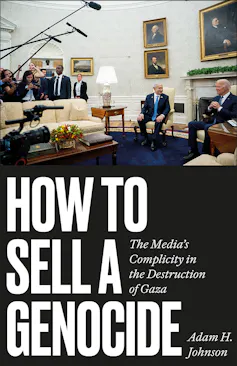


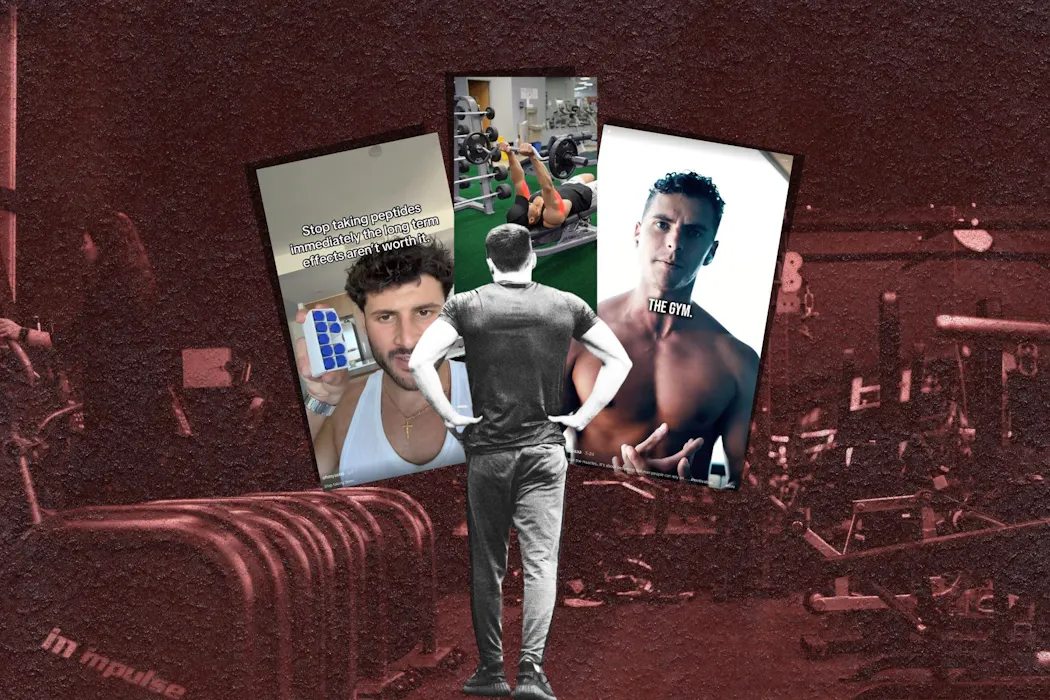
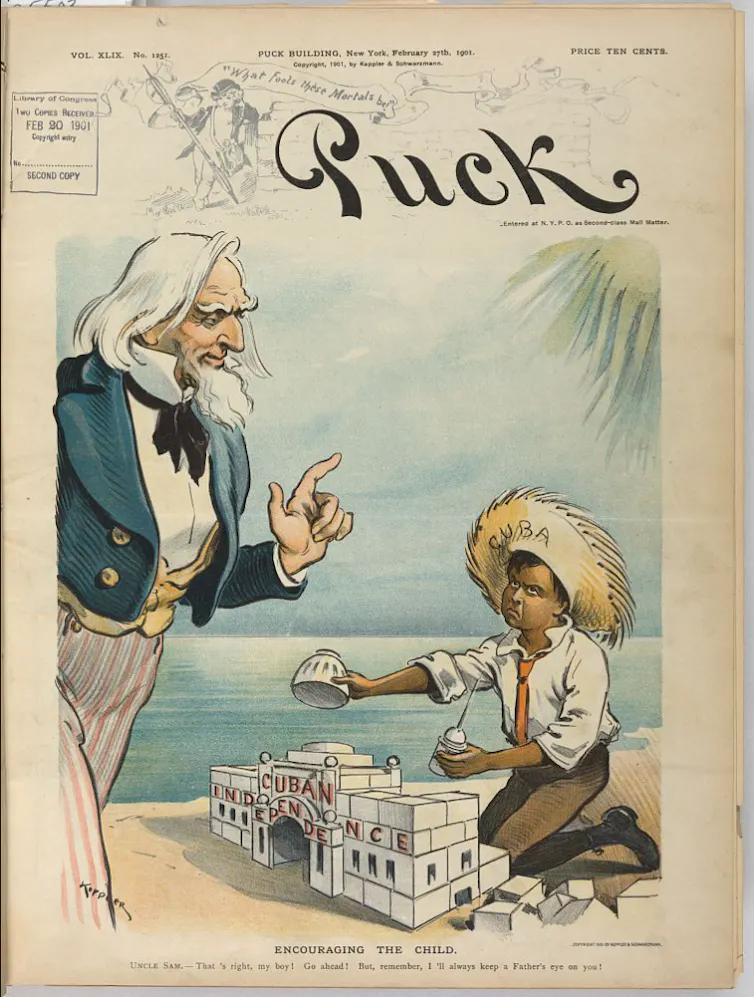

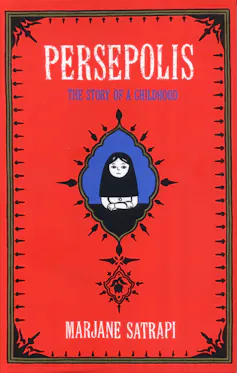








.png)
.jpg)