The Supreme Court of India on Thursday criticised the Centre for failing to file its affidavit in a case seeking regulation of fluctuating airfares and additional charges imposed by private airlines.A bench comprising Justices Vikram Nath and Sandeep Mehta questioned the government’s delay and directed it to submit an affidavit within a week, explaining both the reasons for the lapse and the request for more time.The court was hearing a petition filed by social activist S. Laxminarayanan, who ha
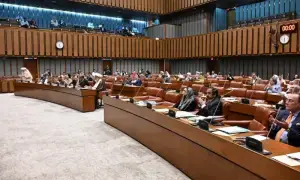
The Supreme Court of India on Thursday criticised the Centre for failing to file its affidavit in a case seeking regulation of fluctuating airfares and additional charges imposed by private airlines.
A bench comprising Justices Vikram Nath and Sandeep Mehta questioned the government’s delay and directed it to submit an affidavit within a week, explaining both the reasons for the lapse and the request for more time.
The court was hearing a petition filed by social activist S. Laxminarayanan, who has called for the establishment of a robust and independent regulator to ensure transparency and protect passenger interests in the civil aviation sector.
During the hearing, the petitioner’s counsel pointed out that the Centre had yet to file its response, despite multiple opportunities. In reply, the government’s counsel referred to evolving developments in West Asia and said the authorities were considering framing new rules.
The bench, however, expressed dissatisfaction, noting that time had already been granted on three occasions. It declined a request for an additional three weeks and instead ordered that the affidavit be filed by next Friday, 8 May, with the matter scheduled for further hearing on 11 May.
In its order, the court observed that despite issuing notice in November last year, no affidavit had been submitted so far. It said any further request for time must be accompanied by a formal application explaining the delay.
Earlier, the Centre had informed the court that the ministry of civil aviation was examining the concerns raised in the petition.
The case centres on allegations of “unpredictable” and excessive fluctuations in airfares, particularly during peak travel periods such as festivals. The court had previously described steep fare increases as potentially exploitative and sought responses from the government, the Directorate General of Civil Aviation and the Airports Economic Regulatory Authority of India.
The petition also challenges recent changes by airlines, including a reduction in free check-in baggage allowance for economy passengers from 25 kg to 15 kg, arguing that such measures effectively convert standard services into additional revenue streams.
It further claims that the absence of regulatory oversight allows airlines to impose arbitrary pricing and hidden charges, while offering limited grievance redressal mechanisms. According to the plea, such practices disproportionately affect passengers who must travel urgently or during emergencies.
The petitioner has argued that the lack of clear rules governing fare structures, cancellation policies and service standards amounts to a failure by the state to protect consumer rights and ensure fair access to essential transport services.
The Supreme Court is expected to take up the matter again after the Centre files its response.
Senior Indian National Congress leader Jairam Ramesh on 30 April alleged that the right to vote in India was under threat and called for it to be made a fundamental right under the Constitution.Addressing reporters in New Delhi, Ramesh sharply criticised Gyanesh Kumar and accused the Election Commission of India of no longer functioning as a neutral institution.Congress targets CEC“The rot started under his predecessor. This man is a player and not a neutral observer,” Ramesh said while attackin
Senior Indian National Congress leader Jairam Ramesh on 30 April alleged that the right to vote in India was under threat and called for it to be made a fundamental right under the Constitution.
Addressing reporters in New Delhi, Ramesh sharply criticised Gyanesh Kumar and accused the Election Commission of India of no longer functioning as a neutral institution.
Congress targets CEC
“The rot started under his predecessor. This man is a player and not a neutral observer,” Ramesh said while attacking the Chief Election Commissioner.
He alleged that Kumar had become “completely compromised” and was actively participating in electoral politics instead of acting independently.
“The Election Commission has never been as compromised as it has been under him,” the Congress leader claimed.
Questions over ‘detect, delete and deport’
Referring to remarks earlier made by Amit Shah about identifying illegal immigrants, Ramesh questioned the government over the implementation of what he described as the “three Ds” policy.
“Home Minister Amit Shah had talked about three Ds — detect, delete and deport. So we want to know how many non-Indian citizens have been detected, how many have been deleted and how many have been deported,” he said.
He alleged that voter disenfranchisement had become a growing concern.
Opposition seeking removal of CEC
Ramesh said opposition parties would continue efforts in the Rajya Sabha to seek the removal of the Chief Election Commissioner.
His remarks came after opposition MPs submitted a fresh notice in the Rajya Sabha seeking to move a motion against Kumar.
“We will continue our efforts for his removal because he is compromised,” Ramesh said.
Demand to make voting a fundamental right
The Congress leader also argued that the right to vote should be elevated from a statutory right to a fundamental right guaranteed under the Constitution.
“I believe that the time has come that the right to vote should be made a fundamental right. It is a statutory right, it is not a fundamental right. Fundamental rights are justiciable,” he said.
Ramesh noted that the issue had been debated during deliberations of the Constituent Assembly Debates.
Ambedkar warning cited
The former Union minister said B R Ambedkar and Jagjivan Ram had warned during the Constituent Assembly discussions that future governments might attempt to disenfranchise voters.
“Once and for all, include the right to vote as a fundamental right for Indian citizens,” Ramesh asserted.
Under the current constitutional framework, voting in India is treated as a statutory right governed by election laws rather than a fundamental right enforceable directly through constitutional remedies.
The Congress and several opposition parties have recently intensified attacks on the Election Commission over voter list revisions, deletion of names and the conduct of elections in multiple states.
Right to vote under threat, should be made fundamental right: Congress
The Supreme Court of India on Thursday reserved its verdict on a plea by Congress leader Pawan Khera seeking anticipatory bail in a case filed by Assam Police. The complaint was filed by Riniki Bhuyan Sarma, wife of Assam chief minister Himanta Biswa Sarma.A bench of Justices J.K. Maheshwari and Atul Chandurkar heard the matter after Gauhati High Court turned down Khera’s anticipatory bail plea, setting the stage for a broader contest over personal liberty, political speech and the limits of pol
The Supreme Court of India on Thursday reserved its verdict on a plea by Congress leader Pawan Khera seeking anticipatory bail in a case filed by Assam Police. The complaint was filed by Riniki Bhuyan Sarma, wife of Assam chief minister Himanta Biswa Sarma.
A bench of Justices J.K. Maheshwari and Atul Chandurkar heard the matter after Gauhati High Court turned down Khera’s anticipatory bail plea, setting the stage for a broader contest over personal liberty, political speech and the limits of police power.
Appearing for Khera, senior advocate and Congress MP Abhishek Manu Singhvi framed the case as one that goes beyond an individual FIR.
Arguing that Khera is “not a hardened criminal”, Singhvi alleged that Khera was being targeted by a “constitutional cowboy”, a pointed reference to the Assam chief minister’s public posturing on the case.
At the heart of the defence was the argument that arrest, in this case, would be punitive rather than investigative.
#BreakingNews The Supreme Court on April 30 reserved its verdict on the anticipatory bail plea filed by Congress leader Pawan Khera in a defamation and forgery case registered against him by the Assam Police.
Singhvi stressed that Khera is a public figure with a fixed address, no criminal antecedents, and no incentive to evade the law. Most of the charges, he noted, are bailable and relate to alleged defamation offences that ordinarily do not require custodial interrogation.
The show of force, he added, was disproportionate: “50–70 Assam police personnel” arriving at Khera’s Delhi residence “as if he is a terrorist”.
He argued that the prosecution bore the imprint of political vendetta, with the threat of arrest amplified through public statements rather than confined to the courtroom.
Opposing the plea, solicitor-general Tushar Mehta, representing the Assam government, told the court that the documents submitted by Khera were “fabricated and forged”, asserting that no such passports had been issued by any competent authority. He contended that custodial interrogation was essential to trace the origin of the documents, identify those who may have aided Khera, and determine whether any foreign links were involved.
Singhvi told the bench that some remarks attributed to Sarma were “unprintable” and claimed the chief minister had publicly suggested that Khera could spend the rest of his life in an Assam jail. Such rhetoric, Singhvi argued, erodes the institutional restraint expected of constitutional office holders, invoking Dr B.R. Ambedkar to underline the gravity of executive overreach in a constitutional democracy.
Invoking the guarantee of personal liberty under Article 21 of the Indian Constitution, Singhvi questioned the necessity of arrest at the pre-trial stage. “Even assuming a conviction at the end, what justifies arrest now?” he asked, pressing the court to draw a line between investigation and intimidation.
#GauhatiHighCourt "If Mr. Khera had raised those accusations against the Chief Minister of the State, then the matter would have been a political rhetoric. But in order to gain political mileage, Mr. Khera has dragged an innocent lady into the controversy" https://t.co/hZSjil3R8Hpic.twitter.com/9ROHM6wRsw
The state’s case, however, rests on a different footing. In rejecting anticipatory bail, the Gauhati High Court termed Khera a “flight risk” and underscored that the allegations go beyond political sparring, involving charges such as cheating and forgery.
The HC had noted that the remarks made by Khera were directed at a private individual — Sarma’s wife — rather than the chief minister, thereby weakening the defence of political rhetoric. It also held that custodial interrogation was necessary to establish the source and authenticity of documents cited by Khera.
This was second time that Khera appeared in the apex court in a month. On 17 April, the bench had refused to vacate a stay on transit bail granted by the Telangana High Court, shielding him from immediate arrest.
The legal battle, as per experts, sits at the intersection of two competing claims: the state’s assertion of investigative necessity and the defence’s warning against the criminalisation of political speech.
A minor child cannot be forced to bear a pregnancy, the Supreme Court said on Thursday, 30 April, while pulling up the Centre and asking it to amend the law to permit rape survivors to terminate unwanted pregnancies even beyond 20 weeks.In a ruling with far reaching implications for rape survivors, including children, and the issue of autonomy over their bodies, a bench of Chief Justice Surya Kant and Justice Joymalya Bagchi took strong exception to a plea by AIIMS seeking to set aside the apex
A minor child cannot be forced to bear a pregnancy, the Supreme Court said on Thursday, 30 April, while pulling up the Centre and asking it to amend the law to permit rape survivors to terminate unwanted pregnancies even beyond 20 weeks.
In a ruling with far reaching implications for rape survivors, including children, and the issue of autonomy over their bodies, a bench of Chief Justice Surya Kant and Justice Joymalya Bagchi took strong exception to a plea by AIIMS seeking to set aside the apex court order allowing a 15-year-old girl to medically terminate her 30-week pregnancy.
"Please amend your law that when there is pregnancy due to rape etc, then time limitation will not be there. The law needs to be organic and in sync with evolving times. Also amend the law so that such trials are completed within a week. Why should the child suffer the pending trauma of the trial also," the CJI said.
The court said in its impassioned observations that this is a case of child rape and the survivor will have a lifelong scar and trauma if termination is not allowed. If the mother does not have permanent disability, termination should be carried out, it said. "This is a curative petition. Unwanted pregnancy cannot be thrust on a person. Imagine... she is a child. She should be studying now. But we want to make her a mother. Imagine the pain, the humiliation the child has suffered in this," the bench said.
It asked AIIMS to counsel the survivor's parents and said the decision has to be of the person concerned.
"There are children for adoption. In this country we have lot of sympathies...There are deserted, abandoned children on the streets and even mafias on it. We have to look at them. This is an unwanted pregnancy of a 15-year-old child," it said.
During the proceedings, an AIIMS doctor told the court that it is not 'child versus foetus' but 'child versus child'.
Additional Solicitor General Aishwarya Bhati, appearing for AIIMS, mentioned the curative plea and said the termination of pregnancy is not possible.
"It will be a live baby with severe deformities. Minor mother will have lifelong health issues and cannot reproduce... This child can be given for adoption. It has been 30 weeks now. It is a viable life now," Bhati said.
Bhati also sought the court's permission for counselling with the teen and her parents.
Justice Bagchi said, "Who has stopped you? What is your Parens patriae (parent of the nation) approach ? Give respect to your citizen. Show data to the parents and if they choose to keep it. Then so be it.
"But if they think the mental health is in jeopardy then they will take a call.Please do not press your curative. The curative can come from the parents. Let us not make a fight between state and its citizens. Bring in a psychiatrist and counsellor. Let us not choose for people capable for choosing."
It is not for AIIMS, the judge said, to choose for citizens and it can only render medical service.
The top court said the decision on termination has to be that of the survivor and her parents. AIIMS, it said, may help them take an informed decision.
"Explain everything to the child and her parents. If after that they want to change views then we will see," the bench said.
Observing that the reproductive autonomy of a mother-to-be must be accorded the highest importance, a bench of Justices B V Nagarathna and Ujjal Bhuyan last week allowed the 15-year-old to medically terminate her pregnancy of 30 weeks.
The top court also dismissed the review plea filed by AIIMS and held that medical termination of unwanted pregnancy cannot be rejected on grounds of advanced stage of pregnancy or normalcy of foetus.
Not allowing the termination on that basis would "render the right to bodily autonomy nugatory", the bench said.
Centre also filed a curative petition, which is the last resort to seek judicial remedy.
In its April 24 order, the apex court had said the minor in this case is 15 years old and the pregnancy is unwanted. Continuing the pregnancy is not in the interest of the pregnant minor, particularly when she has attempted to end her life on two occasions.
"In the circumstances, we direct that the appellant's daughter (minor) is permitted to undergo medical termination of pregnancy. The appellant, on behalf of her minor child, shall furnish an undertaking consenting to the medical termination of pregnancy of her minor daughter.
"We direct that all medical safeguards shall be taken by the attending doctors, nurses and staff of the third respondent--AIIMS--where the procedure is to be conducted. We direct that aforesaid procedure be undertaken at the earliest," the bench had said.
In today’s fast-paced stock market environment, investors are constantly seeking ways to maximize returns while optimizing their capital. One such powerful tool is the margin trading facility, which allows traders to take larger positions in the market using borrowed funds. While this can amplify profits, it also increases risk, making proper planning essential.This is where tools like a MTF calculator (often referred to as an MTF calculator) become highly valuable. They help traders estimate co
In today’s fast-paced stock market environment, investors are constantly seeking ways to maximize returns while optimizing their capital. One such powerful tool is the margin trading facility, which allows traders to take larger positions in the market using borrowed funds. While this can amplify profits, it also increases risk, making proper planning essential.
This is where tools like a MTF calculator (often referred to as an MTF calculator) become highly valuable. They help traders estimate costs, risks, and potential returns before placing leveraged trades.
In this article, we’ll break down how margin trading works, its benefits and risks, and how calculators can help you make smarter trading decisions.
What is Margin Trading Facility?
Margin trading facility or MTF is a brokerage service that enables investors to purchase stock by making a fraction of the overall trade value. The balance is financed by the broker.
Simple Example:
● Total stock purchase: ₹1,00,000
● Your contribution: ₹30,000
● Broker funds: ₹70,000
This implies that you have the ability to manage a bigger investment using small funds.
How Does Margin Trading Facility Work?
In MTF, the broker provides leverage against eligible stocks. Here’s how it works:
● You pick a qualified stock that is eligible to be listed in MTF.
● You make the necessary margin (percentage of total value).
● The rest is financed by the broker.
● Collateral is in the form of shares.
● You pay interest on what you borrow.
● The position may last several days, as opposed to intraday trades.
● Margin Requirement - The amount you have to provide as your own money.
● Leverage - The funds which are multiplied by the broker.
● Interest Rate - Interest charged on the amount borrowed (Normally 8-18 percent a year in India).
● Maintenance Margin - Minimal balance to maintain the position.
What is a MTF Calculator?
A MTF calculator is a device that aids traders in estimating the financial effect of margin trading.
It calculates:
● Total trade value
● Margin required
● Borrowed amount
● Interest cost
● Possible profit or loss.
This enables traders to strategize trades before trading as opposed to guessing.
The Importance of Calculators in Margin trading
Calculator is a must when leverage is involved.
Accurate Cost Estimation: The cost of interest may be a major determinant of profitability.
Risk Assessment: You are able to assess the extent you will lose in case the market goes against you.
Position Sizing: The amount of capital to be allocated is determined by helps.
Scenario Planning: You are able to practice various price movements prior to making trades.
Understanding Interest Calculation in MTF
Interest is one of the most important costs in margin trading. It is calculated based on the borrowed amount and holding period.
Here’s the standard formula:
Interest=P×R×T/365T
Where:
P = Borrowed amount
R = Annual interest rate.
T = Number of days
Example on an MTF Calculator.
To illustrate the operation of a MTF calculator, we will see how it works in practice:
● Total trade value: ₹1,00,000
● Margin paid: ₹25,000
● Borrowed amount: ₹75,000
● Interest rate: 12 per cent/year.
● Holding period: 30 days
● Interest Cost: ≈ ₹739
This expenditure has to be subtracted off your profits.
Advantages of Margin Trading Facility
● Greater Buying Power: You are able to make larger positions on small amounts of capital.
● Increased Return Potential: When the market works towards your advantage, profits are increased.
● Improved Capital Usage: You are able to make diversification in investments with leverage.
● Flexibility: It is possible to hold positions outside of intraday trading.
Risks of Margin Trading Facility
Though the margin trading facility is advantageous, it is associated with risks:
● Amplified Losses: The losses grow proportionate to leverage.
● Interest Burden: Interest is paid even when your trade is not profitable.
● Margin Calls: You will have to add money in case of a decrease in the price of stocks.
● Forced Liquidation: Broker can sell your shares due to lack of maintenance of margin.
The Role of Calculators in Risk Management
A MTF calculator alleviates these risks by:
● Showing break-even points
● Estimating worst-case scenarios
● Assistance in determining stop-loss.
● Preventing over-leveraging
This renders your trading more disciplined and data-driven.
SEBI Rules of Margin Trading
SEBI regulates the margin trading to safeguard the investors.
Key Rules:
● Under MTF trading, only approved stocks are allowed to be traded.
● Interest rates should be disclosed by brokers.
● It is necessary to maintain margin requirements.
● Stocks are put as collaterals.
These laws make sure that everything is transparent and minimize unnecessary risk.
How to Use a MTF Calculator Effectively?
In order to maximize a MTF calculator, do the following steps:
● Input Accurate Data: The correct values of margin, interest rate and holding period are entered.
● Test Multiple Scenarios: Test the responses of profits and losses to price movements.
● Add All Costs: Include interest, taxes and brokerage.
● Set Limits: Determine maximum tolerable loss to trade.
A calculator helps you decide which approach suits your strategy.
A calculator assists you in choosing what approach is befitting to your strategy.
Common Mistakes to Avoid
In case of trading on margin:
● Ignoring interest costs
● Over-leveraging positions
● Not using a calculator
● Keeping losing trades excessively.
● Trading without research
These are some of the errors that you can avoid to enhance your trading results.
Tips for Smart Leveraged Trading
● Never make trades without a MTF calculator.
● Start with low leverage
● Select basically robust stocks.
● Monitor positions regularly
● Use stop-loss orders
● Avoid emotional decisions
Who Should Use Margin trading Facility?
The margin trading facility is suitable to:
● Experienced traders
● Knowledgeable investors on the market.
● Risk takers.
● It should be used with care by beginners and only after they are aware of the risks.
The Future of MTF Tools
With advancements in technology, MTF tools are becoming more advanced:
● Real-time calculators
● AI-based risk analysis
● Integrated trading dashboards
● Automatic margin call notifications.
These instruments are also enabling leveraged trading to be more organized and effective.
Conclusion
The margin trading facility is a powerful tool that can enhance your trading potential by increasing buying power. However, it comes with higher risks and costs, especially due to leverage and interest charges.
This is where a MTF calculator becomes indispensable. It helps you estimate costs, analyze risks, and plan trades effectively. Instead of relying on assumptions, you can make informed, data-driven decisions.
In the end, successful leveraged trading is not about taking maximum risk—it’s about balancing opportunity with discipline. With the right strategy, proper calculations, and risk management, margin trading can become a valuable part of your investment approach.
This is an advertorial. The article is published as received.
Margin Trading Facility Explained: How Calculators Help You Plan Leveraged Trades
The shocking incident of a tribal man carrying his dead sister’s skeleton to a bank in Odisha triggered uproar in a special session of the state Assembly on 30 April, with opposition parties attacking the BJP government over alleged administrative insensitivity and failure of governance.The special Assembly session had been convened to discuss “Participation of Women in Indian Democracy”, but proceedings quickly turned confrontational over the Keonjhar skeleton episode.Congress protests inside H
The shocking incident of a tribal man carrying his dead sister’s skeleton to a bank in Odisha triggered uproar in a special session of the state Assembly on 30 April, with opposition parties attacking the BJP government over alleged administrative insensitivity and failure of governance.
The special Assembly session had been convened to discuss “Participation of Women in Indian Democracy”, but proceedings quickly turned confrontational over the Keonjhar skeleton episode.
Congress protests inside House
As soon as proceedings began, Congress MLAs rushed to the well of the House holding placards and shouting slogans against the BJP-led government.
Despite the protests, Speaker Surama Padhy allowed proceedings to continue, prompting Congress legislators to stage a brief walkout.
The controversy centred around the recent incident in Keonjhar where a tribal man allegedly exhumed his sister’s skeleton and carried it to a bank after officials reportedly insisted on proof of her death before releasing money from her account.
CM attacks opposition on women’s quota
Opening the debate, Chief Minister Mohan Charan Majhi accused the opposition of obstructing women’s political representation.
Targeting the Biju Janata Dal over its 24-year rule in Odisha, Majhi said:
“The BJD reserving 33 per cent seats for women in the panchayati raj system was not sufficient. They should have made provision to give women adequate representation in the Lok Sabha and in the Assembly too.”
Naveen Patnaik hits back
Leader of Opposition Naveen Patnaik sharply criticised the state government over the Keonjhar incident, calling it a symbol of “inhumane governance”.
“Odisha's head hangs in shame as a woman's skeleton had to be exhumed by her family and carried to the bank to prove her death in order to claim her rightful dues,” Patnaik said.
Terming the BJP administration a “double engine government”, he added:
“Such inhumane governance has never been witnessed in the history of Odisha.”
Patnaik also accused the government of speaking about women’s empowerment while failing to ensure dignity and justice on the ground.
“The BJP government in Odisha has no right to speak of women's dignity and empowerment. Governance has been reduced to narratives and optics,” he said.
#Odisha tribal Jitu Munda's sister, Kalra Munda, died on January 26, 2026. He went to the bank to withdraw the 20,000 rupees from his sister's account. He informed them of his sister's death, but the bank officials refused to accept it. This happened several times. 1/2 pic.twitter.com/iyEo76iYHN
The debate also saw sharp exchanges over women’s reservation and delimitation.
Patnaik reminded the House that the women’s reservation bill had already been passed unanimously in Parliament in 2023 and said the BJD had fully supported it.
“The BJD had supported this bill in Parliament, and even today we demand that it be implemented immediately,” he said.
He also highlighted that the BJD had fielded women candidates in 33 per cent of Lok Sabha seats in Odisha during the 2019 and 2024 elections.
Patnaik accused the Centre of linking women’s reservation with delimitation in a “clandestine” manner aimed at reducing Odisha’s political representation.
“History will not forgive us if we support this delimitation bill,” he said.
BJP invokes Dana Majhi incident
Deputy Chief Minister Pravati Parida countered Patnaik by referring to the 2016 Dana Majhi incident, in which a tribal man carried his wife’s body on his shoulders for several kilometres due to lack of transport during the BJD government’s tenure.
“Odisha was condemned in the Dana Majhi incident. What was Naveen Babu doing then? Today, he is shedding crocodile tears,” she said.
Congress raises tribal rights issue
Congress Legislature Party leader Rama Chandra Kadam also attacked the government over the incident.
“A poor tribal man was forced to dig out his sister's skeleton to give proof of her death. This government has not implemented the PESA Rules to protect the rights of tribals,” Kadam said.
He added that the Congress had consistently fought for women’s rights and tribal welfare.
The Keonjhar skeleton episode has sparked national outrage after images emerged of a tribal man carrying skeletal remains to establish proof of death before accessing bank funds belonging to his deceased sister.
The incident has reignited debate over bureaucratic insensitivity, access to welfare systems and the condition of tribal communities in remote regions of Odisha.
Congress raises concern over delay in implementing PESA in Odisha
India has emerged as the largest user base for ChatGPT Images 2.0 within a week of its global rollout, reflecting the country’s rapid adoption of artificial intelligence tools for creative expression.Developed by OpenAI, the upgraded image-generation model has seen widespread use across India, where users are going beyond conventional applications and exploring new forms of visual storytelling and personal branding.While AI tools are often associated with productivity and automation, Indian user
India has emerged as the largest user base for ChatGPT Images 2.0 within a week of its global rollout, reflecting the country’s rapid adoption of artificial intelligence tools for creative expression.
Developed by OpenAI, the upgraded image-generation model has seen widespread use across India, where users are going beyond conventional applications and exploring new forms of visual storytelling and personal branding.
The popularity of the tool is underpinned by significant technological improvements. The latest version allows users to generate detailed images from minimal prompts, accurately render text — including in multiple languages — and process complex creative instructions. It also features enhanced reasoning capabilities, enabling it to interpret prompts more effectively and produce varied outputs.
In India, users are applying these features in distinctive ways. Everyday photographs are being transformed with dramatic lighting effects, while older images are being restored and enhanced. Many are creating professional-style profile pictures, fashion-inspired edits and stylised visuals tailored for platforms such as LinkedIn and Instagram.
More experimental uses are also gaining momentum. These include fictional newspaper front pages, tarot-inspired imagery and conceptual designs for interiors and architecture. Trends such as cinematic collages and retro-inspired edits are contributing to what observers describe as a uniquely local visual culture emerging on the platform.
The surge in engagement highlights a broader shift in how AI is being integrated into daily life. In India, image-generation tools are no longer confined to technical or professional use, but are increasingly woven into social media, fashion, fandoms and personal identity.
The rapid uptake suggests that AI-powered creativity is becoming an integral part of the country’s digital ecosystem, with users actively shaping how such technologies evolve in practice.
Indian equity markets recovered part of their early losses on Thursday, with the BSE Sensex and Nifty 50 rebounding in afternoon trade after a weak start to the session.By 1:44 pm, the Sensex was down 423.95 points, or 0.55 per cent, at 77,072.41, while the Nifty fell 155.15 points, or 0.64 per cent, to 24,022.50. The Nifty managed to reclaim the key psychological level of 24,000 after slipping below it earlier in the day, while the Sensex recovered nearly 800 points from its intraday low.Market
Indian equity markets recovered part of their early losses on Thursday, with the BSE Sensex and Nifty 50 rebounding in afternoon trade after a weak start to the session.
By 1:44 pm, the Sensex was down 423.95 points, or 0.55 per cent, at 77,072.41, while the Nifty fell 155.15 points, or 0.64 per cent, to 24,022.50. The Nifty managed to reclaim the key psychological level of 24,000 after slipping below it earlier in the day, while the Sensex recovered nearly 800 points from its intraday low.
Analysts attributed the rebound primarily to value buying, as investors stepped in to pick up stocks after benchmark indices had dropped more than 1.2 per cent during morning trade. Buying interest was particularly visible in information technology and pharmaceutical stocks.
V.K. Vijayakumar of Geojit Investments said investor focus is gradually shifting towards companies reporting stronger-than-expected fourth-quarter earnings and offering positive business outlooks, creating selective opportunities despite broader uncertainty.
The session also coincided with the monthly derivatives expiry for the Sensex, which typically leads to heightened volatility. The India VIX, a measure of market volatility, eased slightly from its intraday high, reflecting some stabilisation in investor sentiment.
Global factors continued to influence market direction. Brent crude prices, which had surged earlier to multi-year highs amid geopolitical tensions, moderated during afternoon trade. Oil prices had spiked following reports that Donald Trump was set to review new military options related to Iran, raising concerns over supply disruptions in the Middle East.
From a technical perspective, analysts noted that the Nifty’s immediate support lies in the 23,900–23,800 range, while resistance is seen between 24,200 and 24,300. A sustained move above higher levels would be required to confirm a stronger upward trend.
Market participants are expected to remain cautious in the near term, with movements likely to be driven by global developments, oil price fluctuations and domestic earnings announcements.
Global oil prices surged to their highest levels since 2022 after reports that the United States Central Command is preparing fresh military options for Donald Trump amid the escalating Iran conflict.According to a report by Axios, US military officials are set to brief Trump on plans involving a wave of “short and powerful” strikes on Iran aimed at breaking the deadlock in negotiations with Tehran.Brent crude crosses $126The possibility of further escalation in the Gulf sent oil markets sharply
Global oil prices surged to their highest levels since 2022 after reports that the United States Central Command is preparing fresh military options for Donald Trump amid the escalating Iran conflict.
According to a report by Axios, US military officials are set to brief Trump on plans involving a wave of “short and powerful” strikes on Iran aimed at breaking the deadlock in negotiations with Tehran.
Brent crude crosses $126
The possibility of further escalation in the Gulf sent oil markets sharply higher.
Brent crude briefly surged nearly seven per cent to $126.31 per barrel during Asian trading — the highest level since Russia’s full-scale invasion of Ukraine in 2022.
Prices later eased slightly to around $122 per barrel in European trading.
US benchmark West Texas Intermediate crude also rose, trading around $108 per barrel.
Strait of Hormuz fears intensify
Energy markets remain on edge because of disruptions linked to the Strait of Hormuz, through which roughly one-fifth of global oil and energy shipments normally pass.
The waterway remains effectively closed after Iran threatened vessels attempting to use the route in retaliation for US-Israeli strikes.
Washington has responded by maintaining a blockade on Iranian ports.
Axios report details military options
The Axios report, citing anonymous sources, said one US option under consideration involves strikes on Iranian infrastructure targets.
Another reported proposal focuses on securing and reopening parts of the Strait of Hormuz for commercial shipping, potentially involving deployment of ground troops.
Neither the White House nor US Central Command immediately commented publicly on the report.
Markets fear wider escalation
Analysts said oil traders reacted rapidly because even limited escalation could severely disrupt global energy supplies.
Economics professor Yeow Hwee Chua of Nanyang Technological University said even a small chance of expanded conflict carries “outsized implications” for world energy markets.
Oil analyst Naveen Das said markets were increasingly worried the conflict could intensify again.
“It does seem as though escalation in the war is back on the table,” he said.
Das warned that oil prices nearing $125 per barrel are levels at which governments and businesses “start to get a bit more jittery”.
Inflation fears return
Analysts warned that sustained high oil prices could trigger broader inflationary pressure globally.
“We might start seeing maybe more headlines of trying to de-escalate again,” Das said, adding that rising oil prices affect fuel, transport, manufacturing and everyday consumer costs.
The BBC also reported that senior energy executives recently met Trump to discuss ways of limiting the economic impact of the war on US consumers.
Will Walker-Arnott of Raymond James said investors were increasingly concerned about inflationary fallout.
“People are really beginning to worry about the inflationary impact coming through from the rise in the oil price,” he said.
Global markets weaken
Asian stock markets closed lower amid the uncertainty.
Japan’s Nikkei 225 fell 1.1 per cent, while South Korea’s KOSPI dropped 1.4 per cent.
In Europe, Germany’s DAX and France’s CAC 40 also declined in early trading.
Oil markets have remained volatile since the outbreak of the Iran-US-Israel conflict, with investors closely monitoring developments around the Strait of Hormuz, one of the world’s most strategically important energy chokepoints.
Oil tanker with 15 Indians onboard attacked off Oman coast; 4 crew injured