Reading view

Pope Leo warns of AI’s risks to humanity in his first encyclical

Pope Leo XIV has just declared artificial intelligence one of the defining moral challenges of our time, in his first encyclical: a formal letter intended to guide moral, social and theological thought. Titled Magnifica Humanitas (Magnificent Humanity), it argues technology must serve humanity, rather than concentrate power or weaken human dignity.

He presented it at the Vatican alongside AI developer Christopher Olah, cofounder of Anthropic, who acknowledged that companies like his need moral guidance to guard against “incentives and constraints that can sometimes conflict with doing the right thing”, the New York Times reported.

“Technology is not simply a tool,” read the roughly 42,300-word open letter. “When it becomes the standard by which everything is judged, it begins to dictate what matters and what can be discarded, reducing creation to an object of exploitation and human beings to mere cogs in a system driven toward ever greater efficiency.”

It warns that AI is never truly neutral, but “takes on the characteristics of those who devise, finance, regulate and use it”. And it calls for ethical oversight, social justice, protection of workers, responsible governance and peace.

Automated warfare

The encyclical criticises the use of AI in warfare, calling for imposing the “most rigorous ethical constraints” on weapons developed using AI.

As governments invest heavily in autonomous military technologies and AI-assisted defence systems, the “growing ease” of deploying them makes war more likely and “less subject to human control”, it warns. This “violates the principle that armed force should be used only as a last resort in cases of legitimate self-defense”.

The letter also criticises the growing concentration of technological power, and systems that reduce people to data or economic functions. It promotes what it calls a “civilisation of love”, centred on human dignity, solidarity, truth, compassion and the common good.

Pope Leo’s response to the the AI revolution deliberately references his predecessor Pope Leo XIII’s response to the problems of the Industrial Revolution, Rerum Novarum (“Of New Things”), in 1891. Though Magnifica Humanitas was released on May 25 2026, it is symbolically dated May 15, the date of Rerum Novarum.

Industrial Revolution to AI Revolution

An encyclical is not an ordinary papal statement. Traditionally addressed to bishops and the wider Catholic world, it is one of the Catholic church’s most authoritative teaching documents.

The pope no longer has the direct political power the papacy held in the 19th century. But papal teaching still carries moral weight across a global Catholic network of schools, universities, charities, hospitals and community organisations.

The Vatican cannot regulate AI. It cannot write safety standards, police data centres, or force companies to disclose how their systems work. But it can help shape the moral terms of the debate. For more than a century, Catholic social teaching has influenced public arguments about work, inequality, poverty, human dignity and the ethical limits of economic power.

Although popes issued encyclicals long before the modern era, Rerum Novarum made social encyclicals globally influential.

It confronted exploitative labour conditions, widening inequality, and conflict between workers and employers. Pope Leo XIII defended workers’ rights and argued that wealth carried social responsibilities. He criticised both unrestricted capitalism and revolutionary socialism.

The document influenced debates about labour rights and economic justice well beyond the church. In Australia in 1907, Justice H.B. Higgins drew on Rerum Novarum when establishing principles for a fair living wage.

Pope Leo XIV’s encyclical attempts to do for the AI age what Rerum Novarum did for the industrial age: provide a moral framework for a technological transformation reshaping work, power and human relationships.

Human dignity in the age of algorithms

Pope Leo XIV argues human rights are not granted by governments or corporations: they arise from the intrinsic dignity of every person. Technologies should serve humanity rather than reduce people to data, economic units or optimisation problems.

He builds on Pope Francis’ critique of “the tendency to let the logic of efficiency, control and profit alone shape personal, social and economic decisions”, in his 2015 encyclical. It, too, warned of the risks of technology.

Pope Leo XIV argues moral responsibility can’t be transferred to automated systems, regardless of how sophisticated they become. He also rejects transhumanist ideas that human limitations should be technologically overcome, arguing vulnerability, dependence and imperfection are essential to being human. Relationships, care, solidarity and compassion are not weaknesses. “Humanity flourishes not despite limitations, but often through them.”

Running throughout the encyclical is a contrast between a “culture of power” and a “civilization of love”. One treats technology primarily as a tool for domination and control. The other places human dignity, justice and care at the centre of social life.

Why this matters

The significance of Magnifica Humanitas lies in its ability to shape public conversation and moral imagination. Moral frameworks matter. They influence what societies fear, what they tolerate, what they defend – and what they refuse to sacrifice.

Governments are investing in AI capability while still developing frameworks for transparency, accountability and safe deployment. Businesses are adopting AI tools at speed. Schools and universities are rethinking assessment, authorship and learning. Workers are being asked to adapt to systems they did not design and often cannot challenge. And citizens are increasingly governed, assessed and targeted by automated systems they may never see.

Pope Leo XIV’s intervention reminds us the central question is not whether AI will be powerful: it already is. The question is whether that power will be made answerable to human dignity.

The future of AI will not just be decided in laboratories, boardrooms or parliaments. It will also be decided by the moral limits societies are willing to set. Pope Leo XIV’s encyclical is an attempt to draw those limits.

The Conversation

The authors do not work for, consult, own shares in or receive funding from any company or organisation that would benefit from this article, and have disclosed no relevant affiliations beyond their academic appointment.
  •  

John Adams and Thomas Jefferson disagreed about the American Revolution’s meaning even as they lay dying

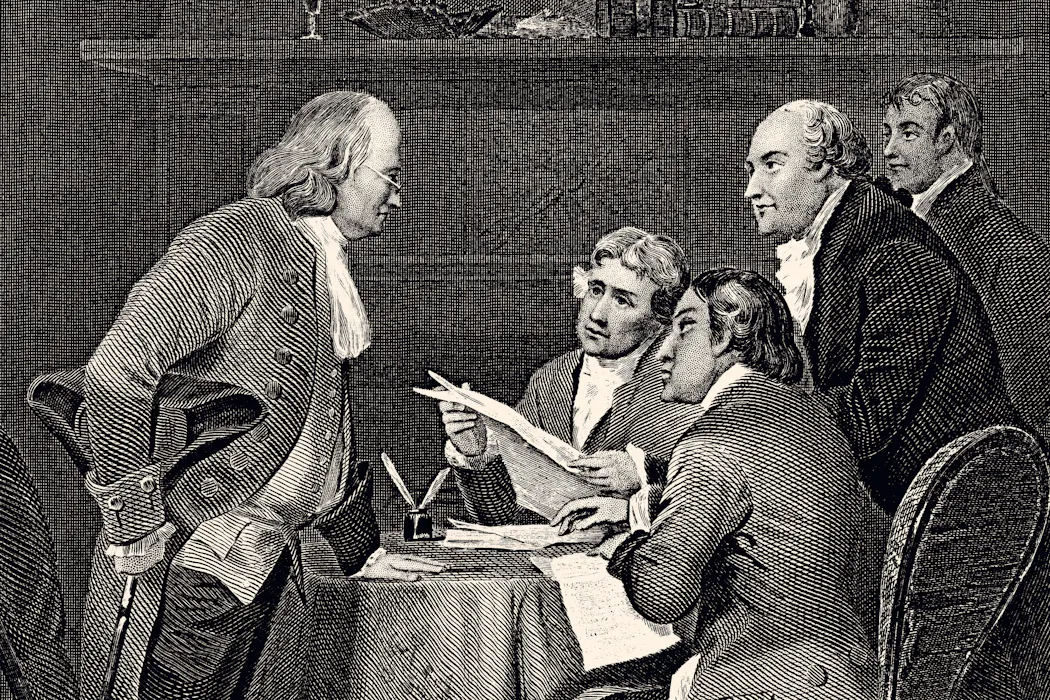
The men responsible for producing the Declaration of Independence, known as the Committee of Five, were, left to right: Benjamin Franklin, Thomas Jefferson, Roger Sherman, John Adams and Robert R. Livingston. Vintage etching circa late 19th century, digital restoration by Pictore via Getty Images

Like Americans today, the people living in the United States in 1826 were preparing to celebrate a milestone for their country. July Fourth of that year marked the 50th anniversary of the Declaration of Independence.

As what was known as the “Jubilee” of American independence approached, Americans realized that the founding generation was dying off. They wanted to take advantage of the founders’ insight while they still could.

This meant soliciting memories and advice from the signers of the Declaration, only three of whom were still alive. Thomas Jefferson and John Adams were the men most closely associated with the independence movement, yet they both lay dying and both declined invitations to attend the festivities planned for July Fourth.

But they were able to answer letters from younger men interested in their perspective on the revolution and subsequent history they had helped shape.

As an Adams scholar and someone interested in how he is remembered, I have studied with interest his response to the questions posed to him. He also wrote a good deal about the revolution to his friend and onetime rival, Jefferson.

These two men – who had worked well together during the American Revolution – could not have been more different. Both had thought long and hard about what the American Revolution meant to them. They did not always agree.

If Americans today are looking for a unified vision of their country in their own 250th celebrations, they will not find it with Adams or Jefferson.

A single page publication with the title 'FUNERAL THOUGHTS EXCITED BY THE DEATH OF JOHN ADAMS AND THOS. JEFFERSON'
A broadside published in Boston following the deaths of John Adams and Thomas Jefferson on July 4, 1826. Library of Congress Printed Ephemera Collection

Rival friends

After the Revolutionary War, Adams and Jefferson became political rivals. They disagreed about how powerful the federal government should be and on foreign policy at a time when England and France, once again at war, were presenting challenges to the new country..

Jefferson founded the Democratic-Republican Party to counter the influence of Alexander Hamilton’s Federalist Party. While Adams never formally aligned with the Federalists, he agreed with many of their policies, especially on foreign policy.

As a result, the friendship between Adams and Jefferson unraveled. For years, they did not speak or correspond until a mutual friend, Benjamin Rush, encouraged their reconcilation.

On New Year’s Day, 1812, Adams was the first to reach out. He used the excuse of sending to Jefferson a pamphlet written by his son, John Quincy, saying that it was from “One who was honoured in his youth with Some of your Attention and much of your kindness.” Adams continued, in casual language, to tell Jefferson about the family and wished him a happy new year.

Jefferson responded warmly, telling Adams, “A letter from you calls up recollections very dear to my mind.”

From that time on, the two wrote to each other on a regular basis, discussing every topic imaginable, from agriculture to religion. Yet it was clear that their past rift was on Adams’s mind when he wrote, “You and I, ought not to die, before We have explained ourselves to each other.”

In the process, they revisited the days when they worked together to form a new nation. As they reflected on the meaning of the United States’ birth, they agreed that writing a history of the American Revolution was next to impossible.

Adams wrote to Jefferson: “Who shall write the history of the American revolution? Who can write it? Who will ever be able to write it?”

The problem, as Adams saw it, was that so much was done in secret. Nobody recorded the debates and speeches of the Continental Congress, the governing body during the revolution. Therefore, how could a true history ever exist?

Jefferson agreed. After restating Adams’ question about who could write a true history, Jefferson’s response was “nobody; except merely it’s external facts.”

On this, they could agree. On some of the specifics, they did not.

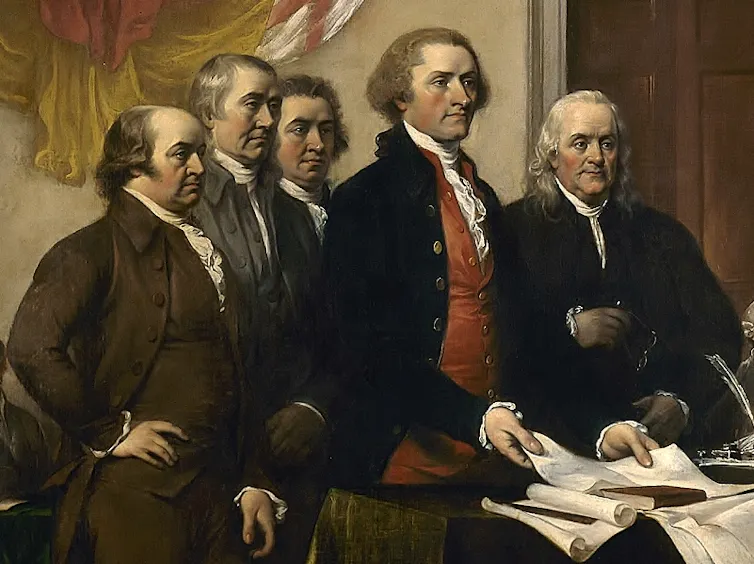
Five men in colonial dress, standing next to a table covered with papers.
The Committee of Five – left to right: John Adams, Roger Sherman, Robert Livingston, Thomas Jefferson, Benjamin Franklin – presenting their draft of the Declaration of Independence to the Second Continental Congress in Philadelphia. Detail from John Trumbull's 1818 painting in the U.S. Capitol, via Wikipedia

Fundamental difference

In old age, Adams remembered vividly how he convinced Jefferson to write the Declaration of Independence. One historian has argued that Adams’ memory seems a bit too clear, and suggested that he was working to elevate himself in the process of telling the story by claiming that he alone persuaded a reluctant Jefferson to take on the task.

However, scholars still accept Adams’ version of this event. Jefferson remembered the incident differently, stating that he was urged by the entire committee charged with producing the declaration, not just Adams, to take on the task and that he was happy to comply.

More important than the details was the ultimate interpretation by these two men of what they had accomplished 50 years before.

What their letters written after the Jubilee committee’s invitation reveal is a fundamental difference in their attitudes about the human spirit. Adams wrote that he appreciated the invitation and was sorry to decline. He called the birth of the U.S. “a Memorable epoch in the annals of the human race.”

Yet he also demonstrated his realistic view of human beings when he wrote that the independence movement would “form the brightest or the blackest page, according to the use or abuse of those political institutions by which they shall be shaped by the human mind.”

Adams understood that people interpret history according to their own circumstances. He was a realist who could not bring himself to accept the fundamentally optimistic view that humanity was always moving toward liberty.

Jefferson, on the other hand, was hopeful about the revolution’s impact on the world. He believed that the declaration would be “the Signal of arousing men to burst their chains.” The entire letter to the Jubilee committee offered an optimistic view of the future in which the human race was always progressing toward freedom.

When Adams and Jefferson died on July 4, 1826, their lives took on new meaning. In eulogizing them, House member Daniel Webster told the American public: “They are no more. They are dead. But how little is there of the great and good which can die! To their country they yet live, and live forever.”

Now, 200 years later, Americans still look to these Founding Fathers for inspiration. However, what Adams and Jefferson demonstrate is not unity. Instead, they exemplify the capacity for people to disagree and yet work for a common cause.

The Conversation

Marianne Holdzkom is affiliated with the Adams Memorial Foundation. She is an Adams Memorial Foundation Scholar, but receives no compensation from them.

  •  

Pope Leo warns of AI’s risks to humanity in his first encyclical

Pope Leo XIV has just declared artificial intelligence one of the defining moral challenges of our time, in his first encyclical: a formal letter intended to guide moral, social and theological thought. Titled Magnifica Humanitas (Magnificent Humanity), it argues technology must serve humanity, rather than concentrate power or weaken human dignity.

He presented it at the Vatican alongside AI developer Christopher Olah, cofounder of Anthropic, who acknowledged that companies like his need moral guidance to guard against “incentives and constraints that can sometimes conflict with doing the right thing”, the New York Times reported.

“Technology is not simply a tool,” read the roughly 42,300-word open letter. “When it becomes the standard by which everything is judged, it begins to dictate what matters and what can be discarded, reducing creation to an object of exploitation and human beings to mere cogs in a system driven toward ever greater efficiency.”

It warns that AI is never truly neutral, but “takes on the characteristics of those who devise, finance, regulate and use it”. And it calls for ethical oversight, social justice, protection of workers, responsible governance and peace.

Automated warfare

The encyclical criticises the use of AI in warfare, calling for imposing the “most rigorous ethical constraints” on weapons developed using AI.

As governments invest heavily in autonomous military technologies and AI-assisted defence systems, the “growing ease” of deploying them makes war more likely and “less subject to human control”, it warns. This “violates the principle that armed force should be used only as a last resort in cases of legitimate self-defense”.

The letter also criticises the growing concentration of technological power, and systems that reduce people to data or economic functions. It promotes what it calls a “civilisation of love”, centred on human dignity, solidarity, truth, compassion and the common good.

Pope Leo’s response to the the AI revolution deliberately references his predecessor Pope Leo XIII’s response to the problems of the Industrial Revolution, Rerum Novarum (“Of New Things”), in 1891. Though Magnifica Humanitas was released on May 25 2026, it is symbolically dated May 15, the date of Rerum Novarum.

Industrial Revolution to AI Revolution

An encyclical is not an ordinary papal statement. Traditionally addressed to bishops and the wider Catholic world, it is one of the Catholic church’s most authoritative teaching documents.

The pope no longer has the direct political power the papacy held in the 19th century. But papal teaching still carries moral weight across a global Catholic network of schools, universities, charities, hospitals and community organisations.

The Vatican cannot regulate AI. It cannot write safety standards, police data centres, or force companies to disclose how their systems work. But it can help shape the moral terms of the debate. For more than a century, Catholic social teaching has influenced public arguments about work, inequality, poverty, human dignity and the ethical limits of economic power.

Although popes issued encyclicals long before the modern era, Rerum Novarum made social encyclicals globally influential.

It confronted exploitative labour conditions, widening inequality, and conflict between workers and employers. Pope Leo XIII defended workers’ rights and argued that wealth carried social responsibilities. He criticised both unrestricted capitalism and revolutionary socialism.

The document influenced debates about labour rights and economic justice well beyond the church. In Australia in 1907, Justice H.B. Higgins drew on Rerum Novarum when establishing principles for a fair living wage.

Pope Leo XIV’s encyclical attempts to do for the AI age what Rerum Novarum did for the industrial age: provide a moral framework for a technological transformation reshaping work, power and human relationships.

Human dignity in the age of algorithms

Pope Leo XIV argues human rights are not granted by governments or corporations: they arise from the intrinsic dignity of every person. Technologies should serve humanity rather than reduce people to data, economic units or optimisation problems.

He builds on Pope Francis’ critique of “the tendency to let the logic of efficiency, control and profit alone shape personal, social and economic decisions”, in his 2015 encyclical. It, too, warned of the risks of technology.

Pope Leo XIV argues moral responsibility can’t be transferred to automated systems, regardless of how sophisticated they become. He also rejects transhumanist ideas that human limitations should be technologically overcome, arguing vulnerability, dependence and imperfection are essential to being human. Relationships, care, solidarity and compassion are not weaknesses. “Humanity flourishes not despite limitations, but often through them.”

Running throughout the encyclical is a contrast between a “culture of power” and a “civilization of love”. One treats technology primarily as a tool for domination and control. The other places human dignity, justice and care at the centre of social life.

Why this matters

The significance of Magnifica Humanitas lies in its ability to shape public conversation and moral imagination. Moral frameworks matter. They influence what societies fear, what they tolerate, what they defend – and what they refuse to sacrifice.

Governments are investing in AI capability while still developing frameworks for transparency, accountability and safe deployment. Businesses are adopting AI tools at speed. Schools and universities are rethinking assessment, authorship and learning. Workers are being asked to adapt to systems they did not design and often cannot challenge. And citizens are increasingly governed, assessed and targeted by automated systems they may never see.

Pope Leo XIV’s intervention reminds us the central question is not whether AI will be powerful: it already is. The question is whether that power will be made answerable to human dignity.

The future of AI will not just be decided in laboratories, boardrooms or parliaments. It will also be decided by the moral limits societies are willing to set. Pope Leo XIV’s encyclical is an attempt to draw those limits.

The Conversation

The authors do not work for, consult, own shares in or receive funding from any company or organisation that would benefit from this article, and have disclosed no relevant affiliations beyond their academic appointment.
  •  

The ‘warrior ethos’ promises victory — history says it leads to defeat

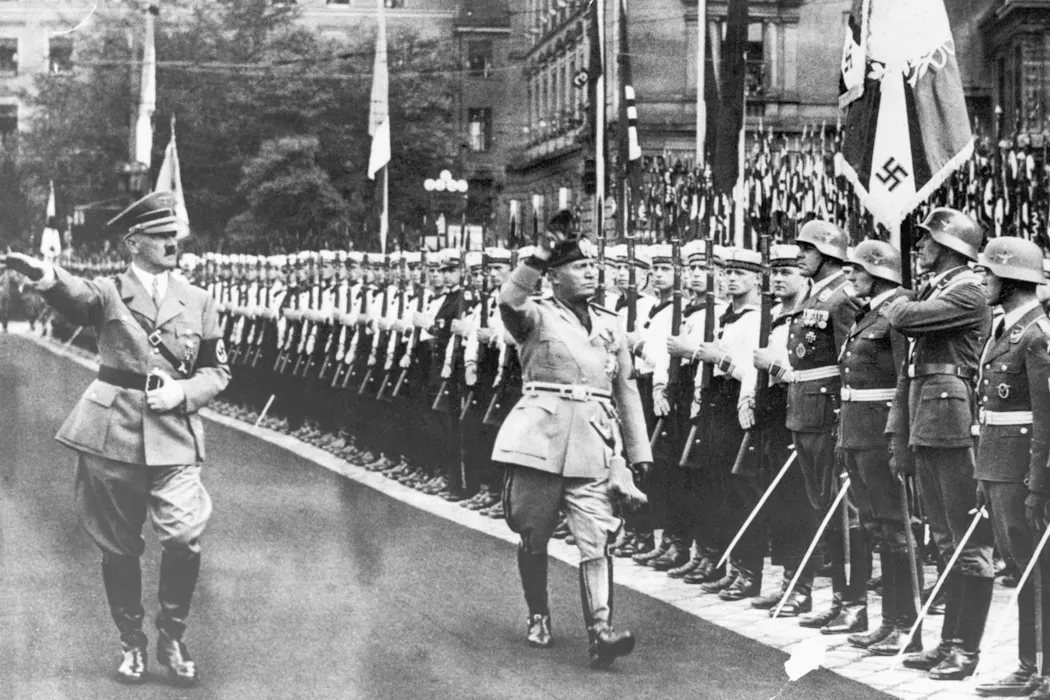
Hitler and Mussolini salute Nazi troops in 1937. Bettmann/Getty Images

At Marine Corps Base Quantico in September 2025, Defense Secretary Pete Hegseth promised assembled generals “maximum lethality” and no “stupid rules of engagement.” Under his leadership, the newly rebranded Department of War would “untie the hands of our warfighters to intimidate, demoralize, hunt, and kill.” Troops would be held to the “highest male standard,” he said. “Weak men won’t qualify.”

Hegseth also restricted anonymous whistleblower and discrimination complaints and limited how long past misconduct can be held against a service member, weakening internal rules and oversight processes the military had built over decades.

Months later, with the Iran war underway, he told reporters at a Pentagon briefing that the U.S. was “punching (Iran) while they’re down, which is exactly how it should be.” He has also said the U.S. will give “no quarter, no mercy” to its enemies, language legal experts say can constitute a war crime under international law.

Hegseth calls his military doctrine the “warrior ethos.”

Historians of fascism have catalogued similar rhetorical patterns — strongman posturing, contempt for constraint — for decades.

I’m a historian of race and nationalism and author of “Blood, Oil and the Axis,” a book about World War II and nationalism in Iraq and Syria. I’ve studied how fascist regimes fight. At its core, fascism is ultranationalism fused with a cult of masculine strength, racial hierarchy, paranoia about socialism and contempt for democracy. It also has a theory of war: Victory belongs to the ruthless and the ideologically pure. Rules are for the weak.

Nazi Germany, fascist Italy and Imperial Japan all built their military strategies on some version of this ideology in the run-up to the Second World War. And in each case, the strategy failed, undone by its own contradictions.

The fascist theory of war

Democracies don’t necessarily fight clean wars. During World War II, the Allies firebombed cities, created internment camps and dropped atomic bombs.

What distinguishes fascist powers from democracies is their contempt for rules based on their sense of superiority. In 1933, Adolf Hitler’s propaganda minister Joseph Goebbels announced that the Nazis would claim the absolute right to override democratic constraints. “This contemptible parliamentarianism … is gone,” he said.

Italian dictator Benito Mussolini said it more bluntly in 1936: “We do not argue with those who disagree with us, we destroy them.”

But rules of engagement function as a control system that ties tactical decisions to strategy, law and the risk of escalation. Discarding them tends to produce the atrocities and strategic blowback that lose wars.

Democratic procedure does similar work: Political scientists who studied 197 conflicts from 1816 to 1987 found that democracies won about 76% of their conflicts and non-democracies 46%, in large part because accountable leaders and public access to information force a government to notice when a plan isn’t working.

A fascist regime that treats democratic constraints as obstacles is likely to decide inconvenient information is an obstacle too. Because of this, in fascist governments, loyalists rank higher than experts. Fascist systems don’t remove people for being wrong; they remove them for insufficient loyalty. The man who tells the leader what he wants to hear rises. The man whose report contradicts the leader’s views endangers himself.

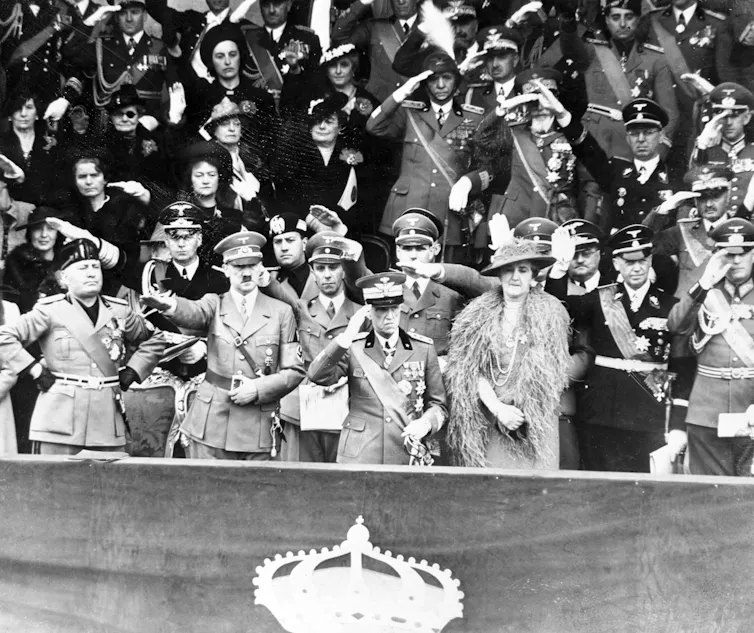
Benito Mussolini stands beside Adolf Hitler as they watch a military parade
Benito Mussolini, Adolf Hitler, King Victor Emmanuel III and Queen Elena watch a parade held in Hitler’s honor in 1938. Behind them, from left: Joachim von Ribbentrop, Galeazzo Ciano, Joseph Goebbels and Rudolf Hess. Bettmann/Getty Images

The closed circuit

Consider Joachim von Ribbentrop.

Before becoming Hitler’s foreign minister, he was a wine salesman whose years in Canada became his qualification for understanding America. He attached himself to Hitler and was rewarded with a top seat in his government, where Ribbentrop’s signature contribution was overruling the diplomats who warned that Americans would fight if pushed too far by the Axis.

The Nazi view prevailed: Americans were too racially mixed, too soft, too consumed by money to be dangerous. When Germany declared war on the U.S. four days after Pearl Harbor, it did so partly on that disdain for what Hitler called a “mongrel nation.” Ribbentrop was among the most consequentially wrong foreign ministers in modern history – he’d also misjudged Britain’s willingness to join the war over the invasion of Poland – still, he kept his job.

The ideology that produced Ribbentrop’s overconfidence also produced the Nazi theory of the Eastern Front: that Slavic peoples – fundamentally inferior and tainted by Bolshevism – would collapse within weeks. But the Red Army didn’t collapse. Hitler fired the officers who reported as much and demanded more of the same operations that had already failed. Operation Barbarossa, which was supposed to take weeks, stretched to years.

Attempting to match Hitler’s conquests and assert dominance over the Mediterranean, Mussolini invaded Greece in October 1940 with shorthanded divisions, in mountain terrain and at the start of winter, because he believed Italian spirit would overwhelm Greek resistance in two weeks. His generals had doubts, but many did not express them. The Greeks counterattacked, but Mussolini blamed his generals’ “insufficient will,” the only kind of failure his theory allowed. Germany had to intervene.

What the leader said happened

Connected to the fascist superiority complex is a contempt for feedback, creating a closed information system that can’t register failure, tolerate disagreement or revise a plan. Strategy requires accurate reporting, even when the news is bad, and the willingness to be wrong. Fascist regimes punish the first and refuse the second.

German high command was still reporting a controlled advance in November 1942 when its 6th Army, some 330,000 soldiers, was being encircled at Stalingrad. Hitler had declared the city practically taken; the press never reported the Soviet counteroffensive that surrounded it. When the remnants finally surrendered on Feb. 2, 1943, it was a turning point in the war – Germany’s first catastrophic defeat on the Eastern Front, from which the Wehrmacht never recovered.

Mussolini bragged about his mighty army of 8 million soldiers while 3.5 million – the real number – were being routed on three fronts in as many years.

Imperial Japan fused racial supremacy with a military code that forbade surrender and treated anyone who did as subhuman. Loyalty to the emperor was absolute; questioning his depiction of reality was betrayal.

In that environment, officers had every incentive to lie up the chain of command when reality on the ground did not match what leaders wanted to hear. For example, after the Battle of Midway, a catastrophic defeat for Japan in June 1942, naval headquarters filed reports that bore little resemblance to what happened. Later that year, the Imperial Navy told Tokyo they had sunk twelve American ships near today’s Taiwan when they had merely damaged two.

Two years of retreat later, the kamikaze program – which sent some 3,900 pilots to their deaths in suicidal crashes against Allied ships – was the logical conclusion: Let pilots prove their loyalty by dying.

The Conversation

John Broich does not work for, consult, own shares in or receive funding from any company or organization that would benefit from this article, and has disclosed no relevant affiliations beyond their academic appointment.

  •  

AI-generated fantasies of US intervention reveal how desperation has narrowed Cuba’s political horizons

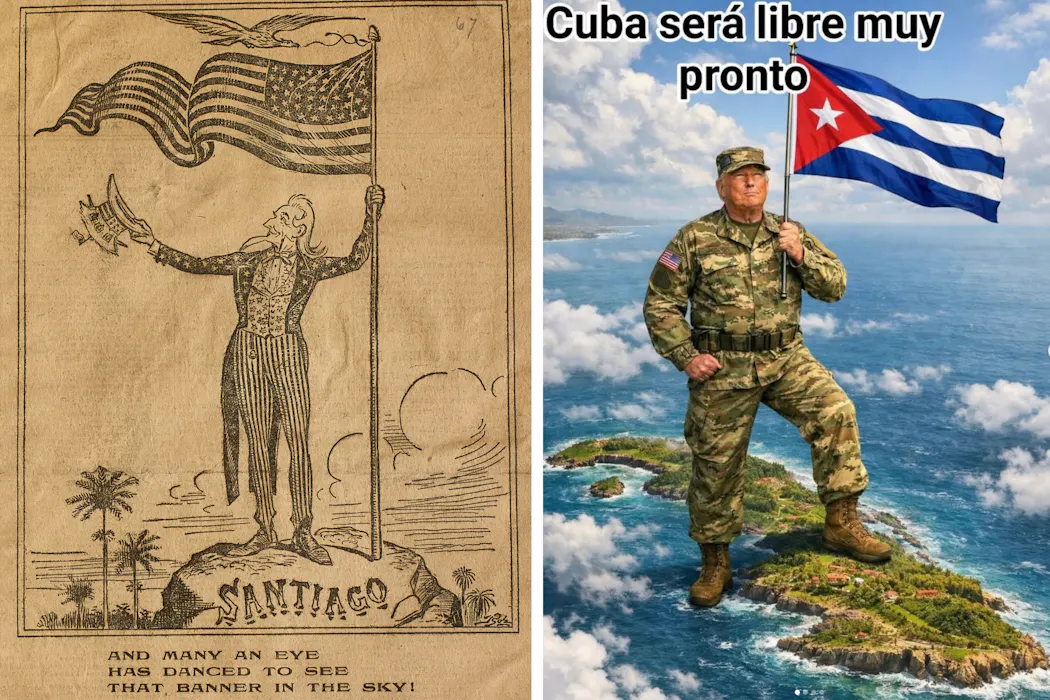
Cuba's American liberators, depicted on the left in a political cartoon from 1898 and on the right in an AI image. Cartoon: Blanche S. Crawford, Cartoon History of the Spanish American War (Scrapbook, 1898), 48. AI image: screenshot from Instagram. Images for this article sourced by Jorge Damian de la Paz.

Ever since U.S. commandos successfully removed Nicolás Maduro from power in Venezuela on Jan. 3, 2026, speculation has been growing that “Cuba could be next” on the list of the Trump administration’s targets.

“We’ll take over Cuba almost immediately,” President Donald Trump mused during a speech in Florida on May 1. “On the way back from Iran, we’ll have … the USS Abraham Lincoln come right by Cuba, stop about 100 yards offshore, and they’ll say, ‘Thank you very much, we give up.’”

It’s hard to say whether such remarks are just bluster. While the White House has been trying to coerce Cuban authorities into negotiated political and economic concessions through a de facto oil blockade since January, Trump has also reportedly grown frustrated by the Cuban government’s ability to outlast months of sustained U.S. pressure.

That has not stopped many Cubans and Cuban Americans from eagerly predicting a military operation’s success or insisting that such a U.S. action is necessary.

Their tool of choice? Not battle plans or political manifestos, but artificial intelligence. For weeks, Cuban social media feeds and WhatsApp groups have been filled with armchair fantasies of deliverance from communist rule made with tools like Midjourney, DALL-E, Runway and ChatGPT. In some clips and images, the island nation is represented as a female captive or a child being freed by an American protector. In others, magically renovated cityscapes feature statues and portraits erected in Trump’s honor, replacing revolutionary iconography.

It is easy to dismiss such animations as online trolling. But as a historian of Cuba, I noticed something troubling when my colleague Jorge Damian de la Paz sent me a selection of these digital illustrations and reels. Their visual language eerily mirrors classic U.S. political cartoons during Cuba’s final war for independence against Spain in the late 19th century. That imagery went on to justify U.S. meddling in Cuban affairs for decades.

A fraught history

In the 1890s, American illustrators at publications such as Puck, Judge and Harper’s Weekly similarly portrayed Cuba as a feminized victim: weak, vulnerable, often racialized as nonwhite and incapable of securing freedom on her own. They imagined grateful tropical citizens celebrating future American liberators for defeating their Spanish overlords and bestowing the benefits of “civilization” on Caribbean life.

Such tropes were not innocent. They helped generate the cultural consensus that legitimized U.S. intervention in the Cuban war in 1898 – known by most Americans as the Spanish-American War. They also shaped Cuba’s postwar order: four years of U.S. military occupation, an imposed amendment to Cuba’s first constitution authorizing future American military action to preserve stability, and decades of political and economic dependence on the United States.

Taking their cue from heroes of the independence struggle such as José Martí, many Cubans grew to resent this asymmetrical relationship with the North, even as they fell in love with imported American consumer products and cultural pastimes. Especially by the 1930s and 1940s, mainstream political movements on the island all sought to, at a minimum, rebalance the extent of U.S. influence over Cuban life. Their failure to do so was part of what propelled Fidel Castro’s radical nationalist revolution to power in 1959.

Reversing course

But today, formal and informal polling suggests that significant numbers of Cubans and Cuban Americans seem willing to welcome, or at least tolerate, the explicit U.S. intervention that most of their forefathers rejected.

AI-generated expressions of these views do not appear to be coming from staunchly anti-communist exiles in South Florida alone. Comments and reposts suggest they are resonating among Cubans living on the island, many of whom are desperate for “something, anything” to put an end to the worsening blackouts, shortages and societal paralysis that have made daily life feel like purgatory.

If a U.S. military operation is the only way to escape, one friend in Havana told me, “que sea rápido” – let it be over quickly.

What’s distinct about AI is that it is providing this fatalism with a visual vocabulary rooted in imperial attitudes from the 1890s. This makes sense when you consider how the technology works: Generative AI systems have been trained on enormous, often U.S.-centric archives of historical photographs and other materials. They easily reproduce the old cultural and political prejudices seen in these digital repositories.

As a result, image and video generators appear to be spitting 19th-century American discourses back at 21st-century Cuban users. The most extreme iterations of the imagery even resurrect a long-dormant idea from more than a century ago: the outright annexation of the island as a U.S. state. In so doing, AI provides narrative fuel for the Trump administration’s efforts to rewind the clock to an era when Washington condescendingly treated Latin America as its “backyard.”

Deprivation and desperation

The depth of Cuba’s predicament today helps explain why these images are going viral.

Long before the Trump administration cut off oil supplies, Cubans were enduring their worst economic, political and social crisis in three decades. Botched internal reform efforts, repression of dissent, and mass migration profoundly eroded faith in Cuba’s Communist Party leadership and institutions in recent years. This has been particularly true since the island’s tourist-heavy economy was hit hard by COVID-19 and 2021 mass protests rocked more than 50 towns and cities.

Of course, plenty of Cubans in Cuba still blame the long-standing U.S sanctions regime, and Trump’s unprecedented additions to it, for many of their problems. Not all are willing to accept change at any cost.

But Cuban officials’ defense of national sovereignty in the face of mounting U.S. threats rings increasingly hollow. Cuba hasn’t held a truly competitive election in nearly 80 years and has been ruled by a one-party state for 65. Under those circumstances, political independence does not rest on the consent of the governed. It’s also hard for a country to claim sovereignty when its economy relies so strongly on external patrons, such as Russia, China, Venezuela (until January) and even the United States. Despite the embargo, Cuban Americans send hundreds of millions of dollars in remittances, food, medicines and other goods annually.

The seduction of rescue

Yet even if fantasies of rescue are understandable, they should be deeply concerning to anyone who cares about Cuba’s future.

The danger posed by AI images is not simply that they normalize the idea of a U.S. military intervention that could cost Cuban lives. It is that they replace deeper civic imagination with spectacle and clickbait.

AI is offering visions of liberation without requiring Cubans to grapple with the far more difficult dilemmas that any real transition would entail. Those questions include how to rebuild institutions, restore trust, confront inequality, reconstruct the economy, forge reconciliation and negotiate competing political visions after decades of polarization and authoritarianism.

Prolonged desperation, coupled with authorities’ stubborn refusal to open the island’s political and economic systems, has narrowed some Cubans’ political horizons to the point where they outsource their own salvation rather than imagine it from the bottom up.

The coming weeks may determine whether digital fantasies turn into concrete policy or remain wishful thinking. But one thing is certain: AI images of U.S. military intervention in Cuba reveal that many Cubans and Cuban Americans have given up on defining change on Cuban terms. That choice could mean the difference between a Cuba that once again becomes a U.S. client state and one where Cubans reclaim ownership of their nation’s future.

The Conversation

Michael J. Bustamante does not work for, consult, own shares in or receive funding from any company or organization that would benefit from this article, and has disclosed no relevant affiliations beyond their academic appointment.
  •  
❌