Reading view

Italian prosciutto in place of Yunnan ham: how Chinese migrants navigate food in Australia

Angela Roma/Pexels

Chinese food heritage is diverse and vast, and embodies the distinct geographical and historical traces of various cultural identities.

As migrants in Australia, Chinese food features prominently in our everyday lives. Jing grew up eating regional cuisine from northern China; Wilfred grew up eating Cantonese food; Catherine grew up in Singapore enjoying home cooked Chinese food with a Eurasian twist.

The ways in which we understand, approach, enjoy and cook Chinese food are different, and we set out to find the role of food in the lives of other migrants of Chinese ancestry.

Tracing food heritage

We talked to Chinese-Australians between the ages of 18 to 40 to learn about how their food heritages have guided them to navigate and adapt to Australian lives.

They spoke to us about incorporating non-traditional Chinese ingredients, new ways of cooking and sourcing cooking equipment.

In their Australian kitchens, they experimented with the recipes they learnt from their families and those they interpret as “Chinese” cuisine.

They were concerned about authenticity, health and taste to varying degrees in the Chinese dishes they cooked, and spoke about how food heritage helped intergenerational families connect.

Fei* is ethnically Chinese and was born in Indonesia. She has lived in Australia for the past 12 years. She told us:

Whenever I go back to Indonesia, my auntie would cook for us, so I would ask a lot of old recipes […] I love their response because they will always say, when you were a child, you liked to eat this food. They will give you some feedback, but they’ll say, there’s a new way of cooking this.

Fei’s cooking was co-developed with family members, even when they are living in different countries. The art of cooking becomes a way for her family connect, despite distance.

Sally* migrated to Australia about nine years ago from Yunan Province. She shared a poignant story of the health of the older members of her family:

Even my grandmother [who] had Alzheimer’s and she barely remember who am I, but when she had – before I hang up the phone call, she’s like, remember to eat vegetable.

For Sally’s grandmother, even in old age, food was an expression of care.

Food facilitates new understandings of intergenerational family members – even those who have passed away.

Asian mother and daughter preparing a meal in a modern home kitchen.
Food facilitates new understandings of intergenerational family members. Annushka Ahuja/Pexels

Lynn* is an undergraduate student who migrated to Australia as a baby. She describes herself as “ethnically Chinese, but culturally Singaporean”, and told us how she got to know her grandfather through her father’s cooking:

I actually have never tried my grandpa’s chilli crab. I didn’t know that he actually made chilli crab until I think it was like two years [after] he’d passed when my dad made this recipe. […] I’m not sure how similar it was to the original, but it was pretty good.

Lynn’s father’s cooking his father’s chilli crab recipe as a way of honouring him and keeping his memory alive.

New habits

Food heritage is the phrase for the traditional cuisines which define our cultural identities and includes ingredient sourcing, food preparation and food consumption.

Food heritage is not static. It changes as migrants adapt to life in Australia.

Australia’s rich multicultural food cultures create transcultural food experiences for our Chinese-Australians.

Sally spoke to us about her and her mother melding Italian and Chinese ingredients:

If I cook dishes that require Yunnan’s ham, I use Italian prosciutto ham to replace it. It tastes really similar to Yunnan’s ham. My mum does that as well. She likes to get Italian Deli ham, smoked cured bacon, and then she’ll think it tastes like the actual thing from Yunnan.

A family sits down for a Chinese meal.
Migrants combine ingredients and cooking techniques from both Australia and China. Angela Roma/Pexels

Rong* came to Australia about 10 years ago from Shandong Province. She told us how she cooks for her daughter who loves noodles:

I need to bring something healthier to her table, and then I was like, okay, I’m not going to use the noodles, the Chinese noodles. I’m going to use pasta noodles, which is low GI, healthier. So, I just tried to figure different kind of ways of the noodles, not only Chinese noodles, but also Italian noodles, Vietnamese noodles, like pho. So all those kinds of things, and she loved them.

Rong also told us that she had to change the way she cooks because her apartment has an induction stove rather than a gas stove.

Although gas and induction stove tops are both common in China, certain dishes such as stir-fry are perceived to taste better in a hot wok on a gas stove.

“Soggy food”, according to many of our participants, is the result of induction stoves and flat pans rather than woks. Rong even told us that now, when she returns to China, she does not know how to cook in a Chinese kitchen with a gas stove.

Adapting to Australia

Food culture, is central to migrant adaptation, acculturation and wellbeing.

By better understanding the evolving nature of food heritage practices in Australia, we can better understand how migrants navigate Australia creatively while these transcultural connections provide an anchor for settlement and belonging.


*Names have been changed.

The Conversation

Catherine Gomes is a member of The Australian Sociological Association.

Jing Qi is affiliated with the RMIT Chinese-Australian Studies Forum, and the Chinese Community Council of Australia Victoria Chapter.

Wilfred Yang Wang is affiliated with Centre for Holistic Health, a not-for-profit organisation that supports the social and mental wellbeing of the Chinese communities in Melbourne, Australia.
  •  

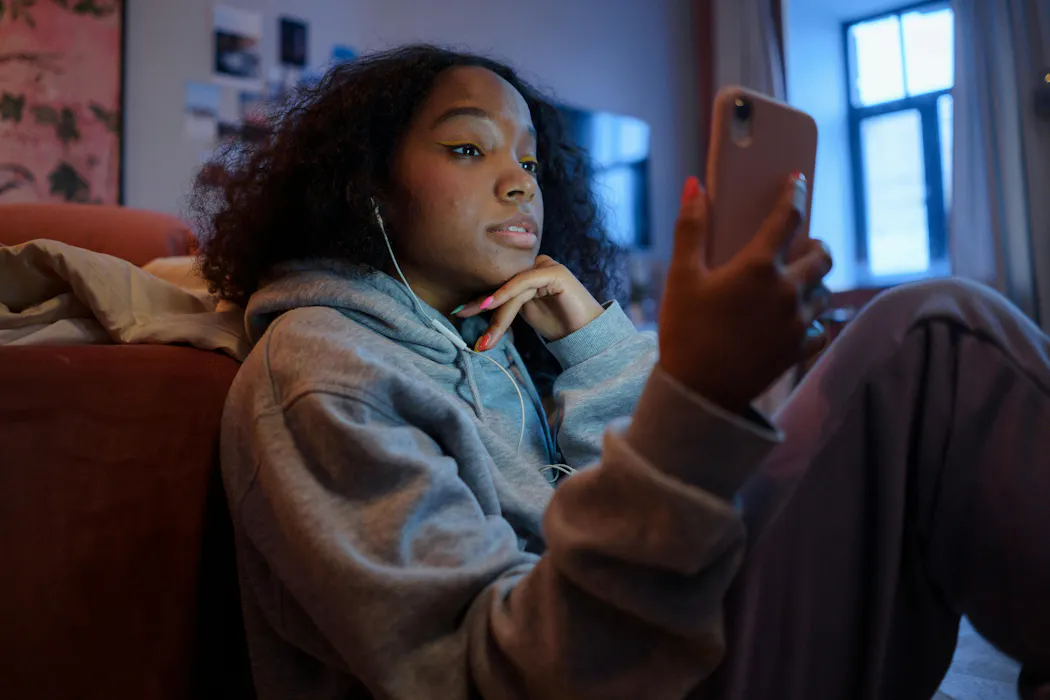
Meta’s new tools allow parents to better supervise their kids’ social media accounts. Will they work?

Cottonbro Studio/Pexels

Tech giant Meta recently announced a set of new features to give parents greater oversight of how their children use Facebook, Instagram, Messenger and Horizon.

This follows the company’s announcement earlier this month that it is expanding age assurance checks to filter 13-to-17-year-old users into teen accounts in the United States and other countries, following Australia’s rollout in 2025. Meta is also implementing new age checks and easier reporting of underage users to support account removals.

These changes come as Meta faces increasing pressure internationally to do more to keep kids safe on its platforms.

So what exactly are the changes? And will they likely work to reduce online harm?

Enlisting AI to search for clues

Meta’s new age checks will use “visual clues” about a user’s age, such as height and bone structure, alongside analysis of social media posts and interactions, to estimate a person’s age.

Using new techniques powered by artificial intelligence (AI), the company will scan photos, videos and content on users’ profiles – including bios, captions, and comments – to estimate their age. By looking for clues such as mentions of birthday parties or school grades, Meta plans to deactivate accounts for those believed to be under 13.

However, given the known limitations of age assurance technologies, and the compliance concerns raised with Australia’s social media ban, many underage children remain active on social media platforms. What is unclear about these new “clues” is whether and how teens may be able to circumvent these new controls by ensuring their platform content gives the appearance of older, adult material.

Meta’s new process for reporting underage accounts is likely intended to address this concern.

Easier reporting of underage accounts will augment content scanning, providing another avenue to identify underage accounts. This will also use AI, alongside human reviewers. Meta says this will ensure reports are “addressed with more speed and reliability”.

Meta explains that users who are reported to be underage, inaccurately, will be able to undergo age checks to retain their accounts.

A consolidated ‘Family Centre’

Meta’s new “Family Centre” will consolidate parental supervision tools for Facebook, Instagram, Horizon, and Messenger in one place.

Through the “Family Centre”, Meta will start sending parents notifications when their teens add new topics and interests across platforms – such as photography, sports, or beauty.

Meta says this will enable parents to “stay informed” and have “meaningful conversations” with their children about the general topics they follow.

However, under Australia’s social media restrictions, children under 16 are not allowed to hold social media accounts.

This means, in Australia, topic access will only be available to parents of teens aged 16 and 17 on Instagram and Facebook. But this access will not be automatic. Parents will need to send an invitation to their teens, asking to supervise their accounts, which teens must accept.

This means children can refuse to provide access and not provide topic visibility to their parents.

This is an important limitation. It means children can retain privacy for their account content if they choose. Under article 16 of the United Nations’ Convention on the Rights of the Child, every child has the right to privacy and the right to get information from the internet and other sources.

For those who accept a parent’s invitation, Meta’s changes may introduce some privacy risks. But limiting access to general topics does preserve some privacy, as specific conversations and materials cannot be accessed.

Parents will need to be proactive

This new parental supervision feature will only be successful if parents and teens choose to use it. Parents will need to be proactive, to request access and (if approved by the teen) review the topics. Parents will also need to start conversations with their children to determine the nature of the content within those general topics.

For example, a 2025 study showed a link between frequent social media use and negative body image. It highlighted the need for “support from parents […] to mitigate these effects”.

But a general topic such as “beauty” cannot distinguish between helpful makeup tips and content promoting unrealistic beauty ideals. Similarly, a general topic such as “sports” cannot discern potentially harmful gender stereotypes affecting young athletes.

Understanding the potential risks and harms of social media content requires parents to actively view – and discuss – that content with their teens.

In 2024, Meta’s then global affairs chief Nick Clegg explained that “even when we build these controls, parents don’t use them”.

A 2023 evidence review showed that while parents with higher levels of digital literacy are more likely to use safety controls, the results of doing so are mixed. While some studies show beneficial outcomes when safety controls are used (for example, reducing risks such as cyberbullying), others show no positive outcomes, or even adverse effects (for example, increasing family conflict).

Given Australia’s eSafety Commissioner has put several social media companies on notice for compliance concerns with Australia’s social media ban, it may come as no surprise Meta is introducing these changes.

Yet, their success relies significantly on parents’ abilities – and children’s willingness – to engage with these controls. Given the technical limitations of age assurance technologies, and teens’ determination to remain on social media platforms, these are likely not foolproof solutions.

The Conversation

Lisa M. Given receives funding from the Australian Research Council and the eSafety Commissioner. She is a Fellow of the Academy of the Social Sciences in Australia and a Fellow of the Association for Information Science and Technology.

  •  

Three ways to avoid being fooled by AI slop

Marten Newhall/Unsplash

Global society makes billions of images and uploads hundreds of thousands of hours of video on the internet every day.

The problem is, some of this content is misleading or downright wrong. And when it’s in visual form, it can be particularly convincing.

Take the Met Gala that happened earlier this month in New York. While photographers snapped photos of Rhianna, Beyoncé and Nicole Kidman as they strutted their stuff, others saw “photos” of celebrities, such as Rosalía, Lady Gaga and Jacob Elordi, who were actually elsewhere (the images in the below Instagram carousel are AI generated).

While this type of AI slop might seem harmless and can be easily verified, other “media fakery” is becoming far more problematic and demands more robust techniques to verify.

Traditional verification techniques are falling short as AI becomes increasingly convincing and the line between authentic and synthetic blurs. This is true across all content, from still images to moving ones and audio deepfakes.

The volume of content and the speed at which it travels doesn’t help. It also doesn’t help that fact-checking can take hours or days while fakes can be created in seconds.

First, equip yourself

Guides on detecting AI-generated content suggest multiple strategies and acknowledge there are no perfect solutions. But there are helpful things you can do.

Familiarise yourself with examples of fakes and study how they were fact-checked. This helps you understand what is possible and learn how fact-checkers sort real from fake.

Look deeply. Zoom in. Pause the content or watch it frame-by-frame. Inspect the small details. Look out for inconsistencies, textures that are flat when they shouldn’t be, or patterns that are too perfect or are inexplicably off. Does the location shown match with where the scene is purported to be? Do shadows fall naturally and do lines follow the rules of perspective?

Look widely. Are you familiar with the source? What else does it publish and how long has it been around? What do other trusted sources say? How does this depiction compare to others that are available? Or if there aren’t others available, should that give you pause?

Then, apply your learnings

Let’s take an example and work through it together.

This Facebook reel, posted by an account called “Real Talk Hub”, purports to show migrants being stopped and returned by Australian police at an airport.

Before getting too granular, let’s take stock of the opening image.

The video uses scale to show what appears to be a long stream of passengers. Some are moving toward and some are moving away from a plane. It is difficult to identify specifics in the video. The superimposed text blocks almost all of the horizon line. Shallow depth of field makes aspects in the distance blurry and hard to discern.

Many of the passengers have darker skin and are visually coded as “other”. They interact with a light-skinned police officer who takes notes on a clipboard.

The vertical video is framed carefully to not reveal identifiers like the name of the airline that seems to start with the letter “P”. This makes it difficult to search the airline’s name and whether credible sources corroborate the story that’s told.

Even though the people and scenes look realistic at first glance, the video’s integrity unravels when we slow down and look closer. People in the passenger line morph and transform.

The officer is able to single-handedly remove the paper from the clipboard and it appears to inexplicably leave white strips behind. The police vests look different to images you can find in verified media photos of the Australian Federal Police.

Taken together, all these clues suggest the video is AI-generated.

The paper on the clipboard moves in an unrealistic way, and the police vest is not accurate. Real Talk Hub/Facebook

Think like a fact-checker

Many AI-generated videos can trick you and create a very compelling narrative. So, fact-checkers have developed triangulated methodologies that examine elements beyond just what you see in the video.

One way to do this is to systematically check contextual factors – the other things surrounding the content. Our team’s research has found professional fact-checkers usually pay attention to the type of social media accounts or websites distributing suspicious media.

For this AAP verification on a video about banning dogs on the beach, it was crucial to inspect the user’s activity and posting patterns.

In addition to visual anomalies, the fact-checkers also found an invisible watermark that helped them determine the content was AI-generated.

Other things to check are how long a social media account has been operating, how often the social media account posts, and whether the account is transparent about its use of AI.

These aren’t fool-proof indicators of authenticity, though. The migrant example above comes from an account that is about five years old. It also comes from a “verified” account, which might make it feel more credible. But both Facebook and X now let users pay for this verification.

Overall, when it comes to suspect images or video, don’t just look deeply. Also look widely.

AI-generated content can increasingly fool our eyes, so you also have to look beyond what’s in the video. Taking a mixed-methods approach that considers visual and contextual clues can help. By training your ability to think like a fact-checker, you can stay safer online.


Read more: We teach young people to write. In the age of AI, we must teach them how to see


The Conversation

Silvia Montaña-Niño is also associate investigator of the ARC Centre of Excellence for Automated Decision-Making & Society and the Fact Check Research Team at this centre.

T.J. Thomson receives funding from the Australian Research Council. He is an affiliate with the ARC Centre of Excellence for Automated Decision Making & Society.

  •  

Australia wants social media to be ‘safe by design’. What does that actually look like?

visuals/Unsplash

Australia is world-leading in taking active measures to keep people safe online – home to the world’s first dedicated online safety regulator, the eSafety Commissioner, and the first country to introduce enforceable industry codes requiring platforms to tackle harmful content at scale.

And now, a newly released federal government issues paper proposes a “digital duty of care”, which would require social media platforms to take reasonable steps to prevent foreseeable online harm.

The proposal signals Australia’s position that it is platforms, not just individuals, who should be responsible for actively preventing online harms.

At the heart of the proposed digital duty of care is the principle that social media platforms should be “safe by design”.

But what does that mean in practice – especially for those who are most at risk? Our research with women and gender-diverse Australians offers six concrete recommendations for what safety by design could look like in practice.

Who bears the brunt of online abuse?

One in two Australian adults have experienced online abuse in their lifetime. Women and gender-diverse people are disproportionately targeted, experiencing harassment, non-consensual image sharing, impersonation, stalking and identity-based abuse at far higher rates than others.

Yet these groups are rarely involved in envisioning what safer platforms could look like. So, we asked them: what would safer social media look like to you?

We worked with 75 Australian women and gender-diverse social media users, and 21 experts in platform safety, digital policy and content moderation, to understand how existing safety features are falling short.

Here’s what they told us – and how it compares with the current Australian proposal for a digital duty of care.

1. Make abuse reports actually work. Abuse rarely fits a single category – without context, platforms don’t handle the reports well. A message that reads as innocuous to a stranger may be a clear threat to someone who knows their abuser. But without that context, platforms have no way of knowing.

Users want clearer processes that capture the full picture, smarter triage that prioritises urgent cases, and timely updates on what happened to their report. This fits well with what the digital duty of care proposes: platforms should have accessible complaint mechanisms and respond within 24 hours for serious issues.

2. Harmful content should be harder to share in the first place. Once someone shares intimate or sensitive content without your consent, it quickly spirals out of control. Australia’s proposal suggests platforms should prevent the upload of seriously harmful content such as image-based abuse, or detect and remove it.

Users in our research said they want prompts that encourage people to pause before sharing, technical measures that prevent screenshots or downloads, and real-time alerts showing when and where their content is being accessed.

3. Make bans harder to evade. If you block a user, they can create new accounts in minutes, facing few real barriers. The digital duty of care flags that anonymous account systems may need redesigning to prevent foreseeable harm.

As we found, users want layered verification – such as requiring a unique phone number or introducing delays before new accounts become active – that adds friction to repeat account creation, but not mandatory ID checks for everyone. This would protect those without formal ID, those escaping unsafe homes, or those who rely on anonymity to stay safe.


Read more: Tech solutions to limit kids’ access to social media are fraught with problems, including privacy risks


4. Harmful content should be caught before it spreads. Automated systems routinely miss culturally specific abuse and coded language. Content should be detectable before it is shared, and easy for bystanders – not just victims – to flag.

The users in our research recommended pairing automated detection with human moderators trained in cultural nuances, which is precisely the kind of effective content moderation system the proposed duty of care requires.

5. Recognise campaigns, not just individual posts. Abuse is often a sustained campaign, even when each message seems minor alone. The duty of care proposal requires platforms to mitigate reasonably foreseeable harms – which means looking beyond individual incidents.

Platforms should connect reports over time, identify patterns, and act before harm escalates, with independent audits to ensure these systems are never weaponised against the people they are meant to protect.

6. Surface safety tools before harm happens. Most users discover safety features only after something has gone wrong. Australia’s proposal envisions “empowering” users – but empowerment means more than adding features. It means the platform should offer the right tool at the right moment, rather than bury it in a settings menu that only the most determined users will ever find.

The real test

The proposed digital duty of care is a significant step in the right direction. But “safe by design” will only deliver if it works for everyone. As our research shows, those most affected already have clear, practical ideas about what would make platforms safer.

The opportunity now is to design with them – so safety is built in from the start.

Until the proposed digital duty of care is rolled out, it is up to all of us to look after each other. We can report harmful content, pause before we post and ask: is it true? Is it kind? Is it fair? And we can be active bystanders – commenting when we see something harmful, or offering support to those experiencing abuse.

We all have a role to play. From governments, to platforms, to everyday people – it is up to all of us to create a safe digital society, one that we can all be a part of.

The Conversation

Senuri Wijenayake receives funding from the Australian Research Council (DECRA) to investigate how social media safety can be designed to meet the needs of marginalised groups most at risk of online harm. She has previously received funding from Meta (Instagram). The report covered in this article was funded by the Australian Communications Consumer Action Network (ACCAN).

Anastasia Powell receives funding from the Australian Research Council, and is a director of Our Watch (Australia's national organisation for the prevention of violence against women). Anastasia teaches family violence specialist casework in the Graduate Certificate in Domestic & Family Violence at RMIT University.

Dana McKay receives funding from Professionals Australia to understand women's experiences working in technology. Dana has received funding from the Australian Research Council and Google in the past.

Madhuka Thisuri De Silva does not work for, consult, own shares in or receive funding from any company or organisation that would benefit from this article, and has disclosed no relevant affiliations beyond their academic appointment.

  •  

Three ways to avoid being fooled by AI slop

Marten Newhall/Unsplash

Global society makes billions of images and uploads hundreds of thousands of hours of video on the internet every day.

The problem is, some of this content is misleading or downright wrong. And when it’s in visual form, it can be particularly convincing.

Take the Met Gala that happened earlier this month in New York. While photographers snapped photos of Rhianna, Beyoncé and Nicole Kidman as they strutted their stuff, others saw “photos” of celebrities, such as Rosalía, Lady Gaga and Jacob Elordi, who were actually elsewhere (the images in the below Instagram carousel are AI generated).

While this type of AI slop might seem harmless and can be easily verified, other “media fakery” is becoming far more problematic and demands more robust techniques to verify.

Traditional verification techniques are falling short as AI becomes increasingly convincing and the line between authentic and synthetic blurs. This is true across all content, from still images to moving ones and audio deepfakes.

The volume of content and the speed at which it travels doesn’t help. It also doesn’t help that fact-checking can take hours or days while fakes can be created in seconds.

First, equip yourself

Guides on detecting AI-generated content suggest multiple strategies and acknowledge there are no perfect solutions. But there are helpful things you can do.

Familiarise yourself with examples of fakes and study how they were fact-checked. This helps you understand what is possible and learn how fact-checkers sort real from fake.

Look deeply. Zoom in. Pause the content or watch it frame-by-frame. Inspect the small details. Look out for inconsistencies, textures that are flat when they shouldn’t be, or patterns that are too perfect or are inexplicably off. Does the location shown match with where the scene is purported to be? Do shadows fall naturally and do lines follow the rules of perspective?

Look widely. Are you familiar with the source? What else does it publish and how long has it been around? What do other trusted sources say? How does this depiction compare to others that are available? Or if there aren’t others available, should that give you pause?

Then, apply your learnings

Let’s take an example and work through it together.

This Facebook reel, posted by an account called “Real Talk Hub”, purports to show migrants being stopped and returned by Australian police at an airport.

Before getting too granular, let’s take stock of the opening image.

The video uses scale to show what appears to be a long stream of passengers. Some are moving toward and some are moving away from a plane. It is difficult to identify specifics in the video. The superimposed text blocks almost all of the horizon line. Shallow depth of field makes aspects in the distance blurry and hard to discern.

Many of the passengers have darker skin and are visually coded as “other”. They interact with a light-skinned police officer who takes notes on a clipboard.

The vertical video is framed carefully to not reveal identifiers like the name of the airline that seems to start with the letter “P”. This makes it difficult to search the airline’s name and whether credible sources corroborate the story that’s told.

Even though the people and scenes look realistic at first glance, the video’s integrity unravels when we slow down and look closer. People in the passenger line morph and transform.

The officer is able to single-handedly remove the paper from the clipboard and it appears to inexplicably leave white strips behind. The police vests look different to images you can find in verified media photos of the Australian Federal Police.

Taken together, all these clues suggest the video is AI-generated.

The paper on the clipboard moves in an unrealistic way, and the police vest is not accurate. Real Talk Hub/Facebook

Think like a fact-checker

Many AI-generated videos can trick you and create a very compelling narrative. So, fact-checkers have developed triangulated methodologies that examine elements beyond just what you see in the video.

One way to do this is to systematically check contextual factors – the other things surrounding the content. Our team’s research has found professional fact-checkers usually pay attention to the type of social media accounts or websites distributing suspicious media.

For this AAP verification on a video about banning dogs on the beach, it was crucial to inspect the user’s activity and posting patterns.

In addition to visual anomalies, the fact-checkers also found an invisible watermark that helped them determine the content was AI-generated.

Other things to check are how long a social media account has been operating, how often the social media account posts, and whether the account is transparent about its use of AI.

These aren’t fool-proof indicators of authenticity, though. The migrant example above comes from an account that is about five years old. It also comes from a “verified” account, which might make it feel more credible. But both Facebook and X now let users pay for this verification.

Overall, when it comes to suspect images or video, don’t just look deeply. Also look widely.

AI-generated content can increasingly fool our eyes, so you also have to look beyond what’s in the video. Taking a mixed-methods approach that considers visual and contextual clues can help. By training your ability to think like a fact-checker, you can stay safer online.


Read more: We teach young people to write. In the age of AI, we must teach them how to see


The Conversation

Silvia Montaña-Niño is also associate investigator of the ARC Centre of Excellence for Automated Decision-Making & Society and the Fact Check Research Team at this centre.

T.J. Thomson receives funding from the Australian Research Council. He is an affiliate with the ARC Centre of Excellence for Automated Decision Making & Society.

  •  

Activism, complicated sexualities, and rural Oklahoma: what to stream this Pride Month

Pride Month takes place in June each year, prompting increased attention on the LGBTQIA+ community, key issues affecting us and our stories.

Some streaming services have previously curated prominent Pride Month categories, although these saw a downturn in 2025.

Queer “storyworlds” – television series that emphasise the social connections between LGBTQIA+ people – first emerged in the 1990s. These queer series were often products of experimentation in response to disruption, such as the proliferation of cable television.

In new research, we explore how queer storyworlds use the serial nature of television to present complex and nuanced portrayals of queer identities, experiences and community.

These storyworlds emphasise queer social connection, through friends and relationships. They move away from representations of the lone queer character in an otherwise straight world, who may occasionally have a love interest. And they use distinctly queer settings that include the spaces where community is formed, both in public – bars, cafes, nightclubs – and private homes.

Whether the 1990s or the 2020s, centrally queer stories on television remain revolutionary. They offer a glimpse into the ways we create liveable lives despite the dominance of heterocentric society. And for that, they remain a powerful and radical source of meaning making for our community.

We have found more than 70 queer storyworlds since the 1990s, created in the United States, the United Kingdom, Australia and Canada, but there are more queer storyworlds to explore. Here is just a small selection you should be streaming this June.

Queer as Folk

Prime Video

Russel T. Davies’ Queer as Folk (1999–2000) was the first fully queer storyworld in mainstream television. It centres the lives of gay men, and a few lesbians, in Manchester, and the scene on the infamous nightclub strip, Canal Street.

This bold, sexy series is also highly political. It critiques the UK’s oppressive Section 28 laws, which suppressed open discussion of homosexuality for those under 18 from 1988–2003 (2001 in Scotland).

The first episode features a 15-year-old Nathan Maloney (Charlie Hunnam) seeking and finding his first sexual experience on Canal Street, in a UK where it was also illegal for him to explore such desires with someone his own age in 1999.

The L Word

Stan (Australia), Prime Video (NZ and Australia)

Ilene Chaiken’s The L Word (2004–09) is the first all-lesbian (and bisexual woman) storyworld. It gained worldwide popularity early in its run, and is likely one of the most seen series on this list.

The L Word is sexy, dramatic and unafraid to tackle complex issues around relationships, infidelity, family and identity. As a central setting, the cafe/bar The Planet showcases a site of lesbian community-building.

In Our Blood

ABC iview and Stan

In recent years, period dramas have been a key feature of queer storyworlds. Australia’s own powerful contribution is In Our Blood (2023).

The miniseries focuses on queer community activist and government responses to the AIDS Epidemic in Australia. It highlights the diversity of Australia’s LGBTQIA+ community and the vital role of lesbians who led activism and care movements.

Importantly, In Our Blood has moments of levity, where the community comes together. Whether to celebrate progress towards their cause or to mourn loss, they are able to use spaces such as Oxford Street to find connection and joy.


Read more: The ABC’s In Our Blood shines a light on lesbian activism during the AIDS crisis – but there’s more to their story


Pose

Disney+

Another period drama, Pose (2018–21) celebrates the Black and Hispanic trans and queer voices at the centre of New York’s infamous ball culture in the 1980s and 1990s.

The series is groundbreaking for its casting of out trans and queer actors, the depth of storytelling, and the unflinching look at the impact of the AIDS epidemic on the community.

Pose boasts outstanding performances, and Dominique Jackson’s iconic reads – the act of throwing out witty, dismissive insults that originated on this scene – have become the subject of cultural listicle articles.

With 26 episodes over three seasons, Pose gives space to stories often overlooked in mainstream distribution.

Sort Of

ABC iview and Stan

Sort Of (2021–23) is a smart, funny series centring on non-binary Pakistani-Canadian Sabi (Bilal Baig), as they navigate between queer and non-queer spaces.

With three seasons and 24 episodes, Sort Of gives space to explore the complexity of trans and non-binary identity, including bisexual/pansexual attraction.

Sort Of also provides some hard hitting moments as Sabi finds a way to forge a liveable life.

Throughout the series, they learn how to understand and be understood by their family, how to be a good friend and how to make choices that are best for them.

But the series is about more than identity. It highlights the ways queer people build both literal and metaphorical community spaces, and how those remain vital today.

Eastsiders

Netflix

Starting on YouTube, Eastsiders (2012–19) is an independent web series that made the leap to streaming.

The first season of this dark comedy follows Cal (Kit Williamson) and Thom (Van Hansis) as they navigate a shift in what their relationship looks like after Thom is caught cheating.

As the seasons progress, the story expands to include a larger ensemble of LGBTQIA+ characters and community spaces.

The third and fourth season premiered on Netflix where all four seasons are now available.

Faking It

10Play

An astute teen comedy-drama that explores the “incoherence of identity”, Faking It (2014–16) follows Amy (Rita Volk) and Karma (Katie Stevens) who pretend to be queer to gain popularity at their progressive school.

As Amy begins to realise her sexuality might be more complicated, it prompts an important examination of the pressure to apply labels to our identity.

This series speaks to teen – and adult – audiences grappling with expectations to label themselves.

Smoggie Queens

Binge

Smoggie Queens (2024–) is all about the ways queer people find one another and build community wherever we are.

Set in the North Yorkshire port town of Middlesborough, this scrappy, queer chosen family ensemble shows off the beating heart of low-budget comedy as a place for sharp writing by new voices.

Smoggie is a term for people from Middlesborough, and this series gives us the queens of that community. It is packed full of acerbic wit, pop culture references and heartfelt moments.

Q-Force

Netflix

Q-Force (2021) blends the “chosen family” and “crack team of secret agents” tropes that stays on the funny side of stereotype.

The team features a type-A personality gay leader, a drag queen mistress of disguise, a trans hacker, a lesbian mechanic who is revealed to have a house full of rescue pitbulls, and a token straight guy (of course).

The series examines how we find community, sometimes despite our differences, as we are brought together under the LGBTQIA+ banner.

Iggy & Ace

SBS OnDemand

Part of the SBS Digital Originals initiative, Iggy and Ace (2021) follows its titular best friends (played by Sara West and Josh Virgona) as they navigate addiction within the queer community.

This short series examines the ways our community can find connection in bars and nightclubs, places intrinsically tied to alcohol, and the challenges this can bring.


Read more: Iggy & Ace: a zany Aussie comedy about two gay best friends — and alcohol abuse


Key highlights include the scenes set in Ace’s all-queer Alcoholics Anonymous group, led by Australian comedy legend Roz Hammond as Gwen. She brings heartfelt moments, and calls out Ace’s excuses, hitting at the heart of what makes queer community connection so powerful.

Special

Netflix

Created by Ryan O'Connell, Special (2019–21) is a semi-autobiographical comedy series about being a gay man with cerebral palsy in Los Angeles.

Special does more than putting an underrepresented story onscreen. It examines the life of a disabled gay man and his desire for friendships, relationships and sex.

The series gives us genuine, laugh-out-loud moments and shows how authentic writing can be irreverent and meaningful all at once.

Reservation Dogs

SBS OnDemand and Disney+

Reservation Dogs (2021–23) is a coming-of-age comedy about four Indigenous teenagers in a small town in the Muscogee Nation in rural Oklahoma. The series has been celebrated for its inclusive queer and trans Indigenous representation, both on screen and behind the scenes.

Over three seasons, the show reflects on community and culture, following Bear, Elora, Cheese and Willie Jack as they navigate the messiness, humour, and heartbreak of adolescence. One of the most refreshing aspects of Reservation Dogs is that it approaches LGBTQIA+ and Two-Spirit identities as a natural part of everyday life.

The Conversation

The authors do not work for, consult, own shares in or receive funding from any company or organisation that would benefit from this article, and have disclosed no relevant affiliations beyond their academic appointment.

  •  

With Grouse House TV, Aunty Donna make a bid to usher in the future of independent Australian comedy

Picture the scene: you kick back to enjoy some silly sketch comedy after a long day. You’re instead invited to play a choose-your-own-adventure game. You make a choice. It’s the wrong one. Now you’re stuck watching an unskippable, 40-minute real-time walk around Melbourne.

This is Bandersketch, the new interactive sketch from Australian comedy trio Aunty Donna.

Bandersketch, an absurd riff on Black Mirror: Bandersnatch (2018), is streaming on Aunty Donna’s new Australian comedy streaming platform, Grouse House TV.

A self-described home for “cooked” Australian comedy, Grouse House TV is the next step in the company’s quest to create a launchpad for emerging and alternative comedians.

Gatekeeping in Australian TV comedy

In a landscape where the future of broadcast TV is uncertain, Australian broadcast comedy has become paralysed by aversion to risk. Familiar faces and imported formats dominate our screens.

Local “drama” hours — the industry’s catch-all classification for scripted narrative content, including comedy — have fallen by 55% since their early 2000s peak. Adult scripted output on Australian broadcast TV fell from 520 hours in 1999 to 116 in 2023.

The decline of long-running broadcast staples has removed crucial training grounds for early-career practitioners to hone their craft.

Australian comedians have no choice but to build their own stages.

Aunty Donna’s Broden Kelly describes getting a show commissioned as an exhausting “Lord-of-the-Rings-style odyssey”. And that’s from someone who has done it twice, with Aunty Donna making shows for Netflix and the ABC.

In our previous research, head writer Sam Lingham said working with global streaming platforms promises creators a more hands-off, creatively liberating environment, compared to the risk-averse structures of Australian broadcasters.

Yet neither pathway guarantees career sustainability; neither the Netflix nor ABC shows received second seasons.

When emerging comedians have no access to sustainable careers, the cultural deficit is inherited by the next generation of audiences and creators.

The dropout blueprint and genre immersion

Aunty Donna first amassed a global fanbase on YouTube. But they warn the platform remains a fundamentally unstable environment.

Creators who rely on video-sharing platforms are vulnerable to black-box algorithms and unpredictable ad revenues.

Grouse House TV adopts the blueprint of independent United States subscription services such as Dropout and the HEI Network. These platforms have established a successful model of hyper-specific, community-driven comedy.

With this approach, Grouse House TV aims to fund boundary-pushing art on its own terms. At launch, the catalogue is a diverse mix of scripted and improvised shows featuring established and emerging comedians including Frankie McNair, Lena Moon, Ashley Apap, Jordan Barr and Alistair Baldwin.

Instead of prioritising algorithmically personalised access to a wide catalogue of content, genre-specific services curatedeep cuts” for genre enthusiasts.

Interactive features such as Bandersketch extend the genre experience beyond show content, immersing viewers within — and sometimes beyond — the platform interface.

At the service’s public launch in April, fans could participate in a live craft-along with Madi and Isaac, hosts of the show Crafternoon. Or, they could read Greg Larsen’s potty-mouthed tirade at the state of Australian television in Grouse Zone, a limited-edition zine we collaborated on.

As self-described “genre specialists”, Grouse House TV is targeting hardcore fans who to want to be immersed in comedy as active participants.

Reclaiming nostalgia and generic experimentation

Independence is not just important to the sustainability of Australian comedy. It also allows creators to push cultural boundaries and reclaim spaces increasingly hijacked by bad actors with toxic political motivations.

Aunty Donna’s career has been sustained through the long-term success of their self-titled podcast, which just celebrated its 10-year anniversary.

However, podcast comedy is a fraught cultural space. It is increasingly defined by a “right-wing comedy complex”, with comedians who stoke division, push public debate rightward, and drive young men down misinformation rabbit holes under the guise of comedy.

In his debut solo show Comedy, Aunty Donna’s Zachary Ruane satirised the inanity of the right-wing comedy complex with absurd performance art involving a motion-capture suit and an animated Joe Rogan singing, via Ruane, James Blunt classics.

American comedians Tim Heidecker, Rajat Suresh and Jeremy Levick have similarly skewered the rambling self-importance of the Rogan podcasting sphere through a 12-hour-long parody.

With Grouse House TV, Aunty Donna harness nostalgia for pop cultural oddities to foster inclusion through genre experimentation and play.

Bandersnatch once carried Netflix’s illusory promises of the TV of tomorrow. Bandersketch shows us how the comedy TV of today offers an alternative path to the future that side-steps major gatekeepers.

The Conversation

Jessica Balanzategui receives funding from the Australian Research Council and the Australian Children's Television Foundation. She has previously collaborated with members of Aunty Donna/Haven't You Done Well on a Creative Australia funded experimental arts project.

Bradley J. Dixon has previously collaborated with Haven't You Done Well on a Creative Australia funded experimental arts project.

  •  

Iran is threatening undersea cables. The world’s ‘digital chokepoints’ have never been more vulnerable

imaginima / Getty Images

Early this week, Iranian state-linked media floated a plan to charge the operators of undersea internet cables in the Strait of Hormuz for access to what they say is Iran’s offshore territory.

The suggestion comes after Iranian warnings that several important cables in the strait were a vulnerable point for economies in the Middle East.

Iran’s comments expose an invisible foundation of the internet and globalisation itself: the web of more than 500 undersea cables that carries more than 95% of international data traffic.

We may think the internet lives in a kind of virtual cloud. But its physical underpinnings are vulnerable – and that vulnerability is becoming a very real geopolitical concern.

Gulfs, straits and cables

Several of the world’s most critical submarine cable routes run through the Middle East. Narrow sealanes through the Red Sea, Bab el-Mandeb Strait, Suez Canal, and the Strait of Hormuz also function as “digital chokepoints”.

These maritime corridors connect major economic centres in Europe, Asia and Africa. In 2024, submarine cable incidents in the Red Sea disrupted around 25% of the internet traffic between Europe and Asia.

The strategic importance of submarine cables is not lost on Iran. Damage to these cables, whether accidental or deliberate, would have significant consequences.

In the bigger picture, the message is unmistakable. Digital infrastructure can give states strategic leverage, but it’s also a potential target.

Digital infrastructure

Critical infrastructure used to mean oil pipelines, ports, or power grids. But data infrastructure has become just as important for national and economic security.

The core problem of undersea cables lies in the concentration of infrastructure. Many of the cables are bundled together along the same seabed routes and funnelled through a small number of maritime chokepoints.

This creates dangerous single points of failure. A cable cut – whether deliberate or accidental – can degrade connectivity across multiple regions simultaneously.

While cable breaks are not uncommon, repairs are difficult – especially in contested or militarised waters. Repair vessels require safe access, international coordination, and time.

Fragmentation and disruption

A serious submarine cable disruption could have profound consequences. One immediate effect would be the fragmentation of global connectivity. The ability to communicate with anyone anywhere that we now take for granted could take a significant hit.

Regions which depend heavily on vulnerable cable routes might experience degraded internet performance, communications blackouts, or financial instability. Countries with little backup infrastructure, particularly developing states across parts of Africa, the Middle East, and South Asia, would be disproportionately affected.

Financial markets too are vulnerable. Extremely fast and reliable data flows underpin high-frequency trading systems, global payment networks, and international banking transactions.

Even brief disruptions can make markets fluctuate rapidly, delay transactions, and make investors uncertain. Because so much of the global economy is so thoroughly interconnected, digital instability in one region can rapidly create worldwide financial shockwaves.

If cable disruptions coincided with conflict or instability along major maritime trade routes such as the Strait of Hormuz or the Suez Canal, insurance markets, shipping industries, and energy supply chains would also face increased uncertainty.

The military domain

The military and strategic consequences of cable disruption may prove even more serious. Armed forces rely on secure long-range communications and real-time coordination.

When you get down to it, everything from command-and-control systems to drone operations and logistics planning relies on undersea cables. Damage to these networks would make forces less effective, make it harder to coordinate with allies, and make miscalculations more likely.

Cable sabotage is not as clear-cut a provocation as a conventional attack on a military target. It’s hard to work out who did it – in cases such as cable breakages in the Baltic Sea often attributed to Russian action – and the legal situation is ambiguous. This ambiguity creates a risk that conflict will escalate, as states may struggle to determine whether disruptions are accidental, criminal, or acts of war.

The digital world has physical foundations

The US–Iran conflict has already delayed construction of new undersea cables. It also highlights a broader reality: the foundations of the digital world are real and concrete, and they are not invulnerable.

Any deliberate targeting or sabotage would not just be a local event. It would reverberate across global communications, economies, and security systems. The seabed has become a zone of geopolitical competition – and the consequences of disruption could affect the world’s stability for years to come.

The Conversation

Meredith Primrose Jones does not work for, consult, own shares in or receive funding from any company or organisation that would benefit from this article, and has disclosed no relevant affiliations beyond their academic appointment.

  •  
❌