Reading view

When ICE ramped up enforcement, US-born workers didn’t see any economic gains
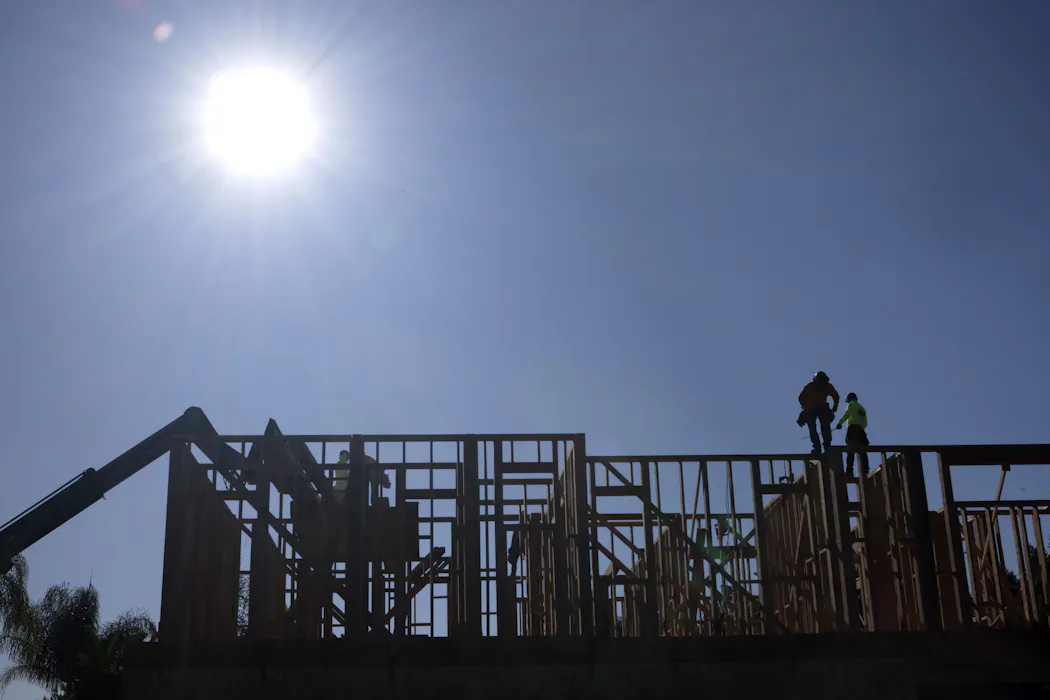
Despite the Trump administration's immigration crackdown, U.S.-born workers aren't seeing more jobs or higher wages, including in sectors with a high share of immigrant labor. AP Photo/Richard Vogel

President Donald Trump campaigned on a promise to strengthen the labor market. His immigration platform – including a pledge to conduct the largest deportation campaign in U.S. history – was central to that promise.

“For too long, Washington ignored how mass illegal immigration artificially suppressed wages, hurting working-class Americans – especially young men,” wrote Treasury Secretary Scott Bessent on X in July 2025. “But under President Trump, we now have a secure border, a blue-collar wage boom, and major investments from trade deals.”

The labor market tells a different story. In the first year of Trump’s second term, unemployment rose, hiring slowed and wage growth stagnated. The construction sector was hit particularly hard.

We’re scholars of labor markets, immigration and public environmental policy who have examined how these economic trends can be traced to the mass deportation campaign of Trump’s second term. Notably, while areas with heavier ICE enforcement saw a drop in employment among immigrants, there was no increase in either employment or wages among U.S. citizens.

A chilling effect on immigrant workers

Using data from October 2023 through November 2025, we looked at employment rates and wages for immigrant and U.S.-born workers in places that experienced sudden spikes in ICE arrests and compared them to places that did not.

In the regions where U.S. Immigration and Customs Enforcement ramped up its activity, we found a significant drop in the employment rate among likely undocumented immigrants who were neither detained nor deported. This was especially notable in sectors where such workers are heavily represented – such as agriculture, construction, manufacturing and wholesale markets – where we found a 4% drop in the employment rate.

These immigrants appeared to be staying home out of fear, a concern that’s widespread. In a Pew Research survey from summer 2025, 43% of foreign-born respondents said they feared deportation for themselves or someone close to them. We call this a chilling effect, since these people aren’t physically removed from the labor market. Instead, they changed their behavior because of ICE.

The chilling effect on employment in Trump’s second term is roughly double of what we found in prior work on mass deportations, when we looked at a program in President Barack Obama’s first term called Secure Communities. As we wrote in a companion paper co-authored with sociologist Caitlin Patler, a likely explanation is that ICE arrests during Trump’s second term have been far more indiscriminate and visible: The average number of daily ICE arrests was higher than any time in the past 10 years. The percentage of arrests conducted in public spaces – streets, workplaces, courthouses and school parking lots – more than doubled, rising from 19% to nearly 50% of all apprehensions. As a result, the intimidation effect was likely more widespread.

The broader effects

Trump pledged during his 2024 presidential campaign to focus ICE enforcement on criminals, especially violent offenders. In fact, we found the share of immigrants arrested by ICE who had a criminal conviction fell to a nearly record low in this time period, from roughly 60% in January 2025 to under 30% by the end of the year.

The economic effects have extended beyond immigrant workers. More broadly, many consumers have pulled back.

Other researchers have found that in cities with expanded ICE raids in 2025, consumer spending and economic activity fell. In February 2026, for example, Minneapolis officials estimated that the city’s economy lost US$203 million due to falling restaurant, hotel and retail revenues, as well as lost wages. Another analysis found that states with enhanced ICE enforcement saw aggregate credit- and debit-card spending drop by 1.7 percentage points compared with those that did not.

Scholars have found similar effects with foot traffic, which dropped sharply in areas where ICE expanded its activities. A Wharton study released in May 2026, for instance, estimated that foot traffic in areas heavily impacted by ICE operations dropped by 2.7%, with spending down by 6.2%, per week.

A view of mostly empty stores in the 24 Somali Mall in Minneapolis, Minn., on Jan. 15, 2026.
In areas with heavy ICE enforcement, economic activity and foot traffic have fallen. AP Photo/Abbie Parr

What happened to US-born workers?

Trump’s core political promise was that deportations would open up jobs for American workers. But we found the opposite: Employment among U.S.-born workers also declined in areas with heightened ICE activity. And employers didn’t respond by raising wages to attract more Americans to their workplace. Their demand for workers contracted instead.

At issue is the premise that foreign-born and U.S.-born workers directly compete for the same jobs. But the example of Trump 2.0 underscores a different dynamic. As we and other economists have documented, the labor market is not zero-sum. Immigrants and U.S.-born workers tend to fill complementary jobs rather than compete for identical ones.

Construction is a clear example. Fewer undocumented laborers on a job site means less work for the electricians, roofers and supervisors – roles more commonly held by U.S.-born workers who depend on those projects moving forward.

The broader stagnation of employment in the construction industry in 2025 fits this pattern. It also mirrors earlier findings that Obama-era deportations reduced homebuilding and pushed up new-home prices.

Immigration crackdowns are, of course, nothing new in U.S. history. In the early 1930s, President Herbert Hoover expelled 400,000 Mexican workers, which lifted neither wages nor employment of U.S.-born workers. Obama’s Secure Communities program in the 2010s had similar results.

And as our most recent research shows, mass deportations don’t create new job opportunities for American citizens. Presidents seeking to strengthen the labor market will need to look elsewhere.

The Conversation

Chloe N. East receives funding from the Russell Sage Foundation and NSF.

Elizabeth Cox receives funding from the Russell Sage Foundation and the National Science Foundation.
  •  

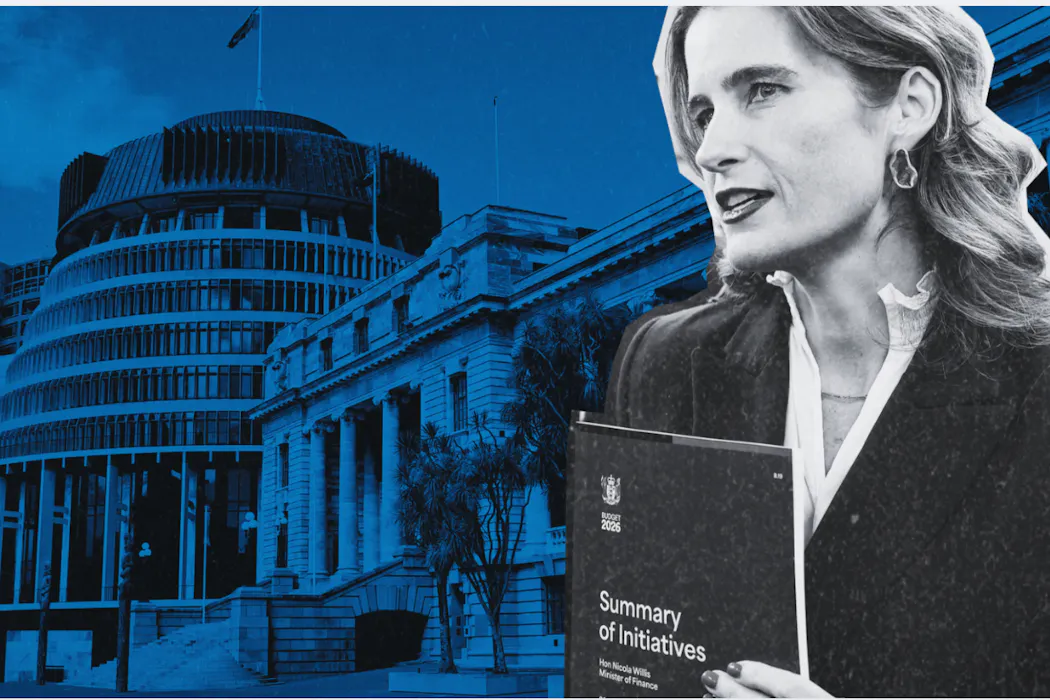
NZ Budget 2026 at a glance: follow the money here

Finance Minister Nicola Willis delivered a disciplined budget today, asking New Zealanders to accept continued restraint in return for promises of longer-term economic growth – and an earlier-than-expected return to surplus.

Willis told Parliament:

This is a responsible budget. The government is responding to an increasingly uncertain world with an economic plan and sensible choices that will make New Zealand more secure in the years ahead.

In her budget address, Willis said New Zealanders could look forward to “growth, higher wages, and rising employment”, as well as “better public infrastructure, expanded healthcare services, better schooling and safer communities”.

A key figure is the projected NZ$2.6 billion surplus by 2028/29 – a notable improvement from the $900 million deficit the government forecast in December, and a year earlier than previously expected.

Willis said the surplus would mean “less debt and lower interest costs for us to pay than would otherwise be the case”. Net core Crown debt is now forecast to peak at 46.1% of GDP in 2027/28.

The government’s central pitch is that careful spending restraint and reprioritisation can return its books to surplus earlier than expected, without abandoning essential public services.

Willis had already revealed the operating allowance for new spending had been reduced by $300 million to $2.1 billion. A total $5.7 billion will be allocated to capital projects.

Budget 2026 introduces a new levy on banks, insurers and financial firms to fund their own regulation via the Reserve Bank from mid-2027, recovering $209 million over four years. Willis noted the levy would shift costs away from taxpayers.

Elsewhere, health received a notable boost, securing $5.8 billion in new operational funding. This includes $5.5 billion to frontline services over four years. There is also $680 million for health infrastructure such as Whangārei Hospital’s new 158-bed ward and land for a new hospital in Drury.

Many other figures and initiatives shared this afternoon were well signalled before budget day. This included a $1.6 billion defence package and a gas transition loan guarantee scheme expected to make up to $1.2 billion of bank loans available to businesses to cut their dependency on gas.

As with the previous budget, the government’s restraint will be keenly felt in some areas – already apparent in the proposed reduction in public service numbers announced earlier this month.

Ultimately, the test will be whether the budget’s restrained operational spending and targeted capital and infrastructure investments provide sufficiently for future productivity growth.

The risks are that tight spending, public sector cuts and limited new operational funding may leave some public services struggling to keep pace with demand, inflation and population growth.

Key spending

The Conversation

Michael P. Cameron is Vice President of the Population Association of New Zealand.

  •  

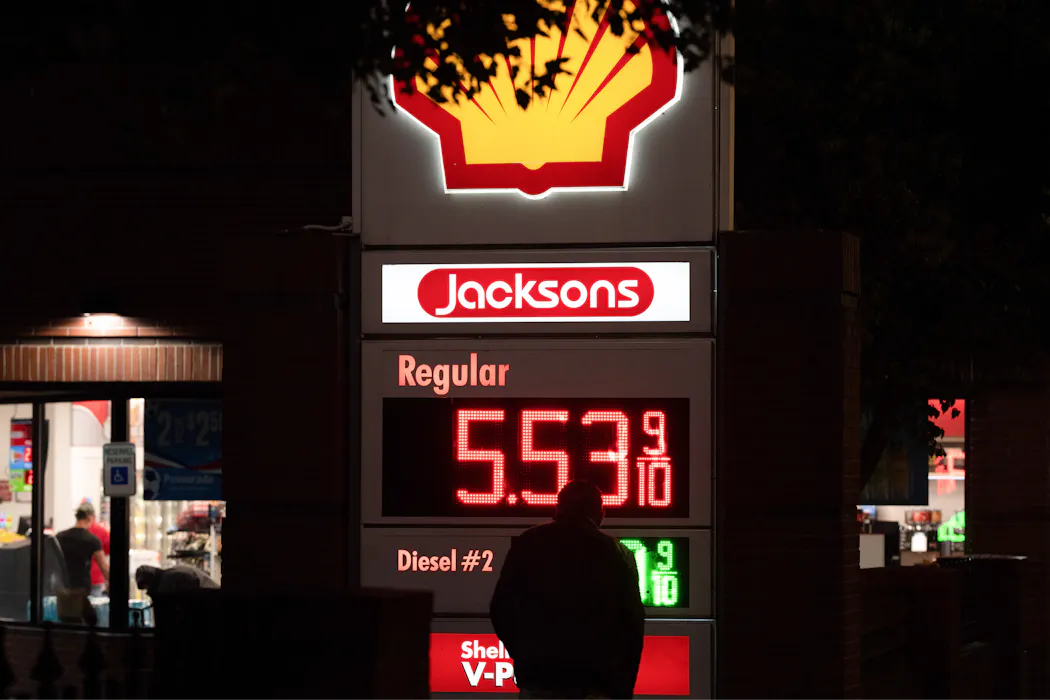
Suspending federal gas tax wouldn’t save drivers as much as they might hope – here’s what goes into the price of a gallon of gas

Gas taxes – federal and state – make up only a small piece of the price of a gallon of gas. AP Photo/Jenny Kane

With gasoline prices still high – averaging over US$4.50 a gallon in mid-May 2026 – President Donald Trump said he wanted Congress to suspend the federal gas tax, which is 18.4 cents a gallon for gasoline and 24.3 cents a gallon for diesel. A bill has been introduced in the Senate, and one is expected to follow in the House, according to Politico, but their fate is unclear.

States also charge their own taxes, ranging from 70.9 cents a gallon for gas in California to 8.95 cents in Alaska. Indiana, Georgia and Utah have suspended their gas taxes for at least some of 2026, and other states are considering similar measures.

As an energy economist, I have seen how suspending those taxes does reduce prices, but not as much as politicians – or drivers – might hope. Research on past gas tax holidays has found that consumers get about 79% of the reduction in gas taxes. That means oil companies and fuel retailers keep about one-fifth of the tax cut for themselves rather than passing that savings to the public.

Suspending the federal gas tax, which would require Congress to pass a law, wouldn’t help consumers much anyway. Even if oil companies passed on the whole savings to consumers, national average gas and diesel prices would drop only about 4%. The percentage reduction in high-cost states such as California would be even smaller.

Gas taxes are just one part of what drives gas prices. Overall, the price of a retail gallon of gas is the sum of four things: the cost of crude oil, refining, distribution and marketing, and taxes.

In nationwide figures from January 2026, crude oil accounted for about 51% of the pump price, refining roughly 20%, distribution and marketing about 11% and taxes about 18%. That mix shifts with conditions: When crude oil prices spike, that can drive more than 60% of the price; when the price drops, taxes and logistics are larger shares of the cost.

Crude oil is the biggest ingredient

Because the price of crude oil is the largest element, most of the price at the pump is derived from the global oil market.

Usually, big swings in crude prices come mainly from shifts in global demand and expectations – not from supply disruptions, according to widely cited research in 2009 by the economist Lutz Kilian.

But what is happening in early 2026 with the war in Iran is one of the exceptions: a classic supply shock. Severe disruptions to shipping through the Strait of Hormuz and attacks on Middle East oil infrastructure have taken millions of barrels a day off the global market.

Most drivers generally can’t quickly reduce how much they drive or how much gas they use when prices rise, so gasoline demand doesn’t change much in the short run. That means a jump in crude costs tends to result in people paying more rather than driving less.

Refining, regulations and the California puzzle

Refining turns crude into gasoline at industrial scale. The U.S. doesn’t have a single gasoline market, though. Roughly a quarter of U.S. gasoline is a cleaner-burning blend of petroleum-derived chemicals called “reformulated gasoline,” which is required in urban areas across 17 states and the District of Columbia to reduce smog.

California uses an even stricter formulation that few out-of-state refineries make. California is also geographically isolated: No pipelines bring gasoline in from other U.S. refining regions.

California’s gasoline prices have long run above the national average, explained in part by higher state taxes and stricter environmental rules. But since a refinery fire in Torrance, California, in 2015 reduced production capacity, the state’s prices have been about 20 to 30 cents a gallon higher than what those factors would indicate.

Energy economist and University of California, Berkeley, professor Severin Borenstein has called this the “mystery gasoline surcharge” and attributes it to the fact that there isn’t as much competition between refineries or gas stations in California as in other states. California’s own Division of Petroleum Market Oversight says the surcharge cost the state’s drivers about $59 billion from 2015 to 2024. It’s not exactly clear who is getting that money, but it could be gas stations themselves or refineries, through complex contracts with gas stations.

A person stands near a long metal truck in front of a gas station.
A tanker truck delivers fuel to a gas station. AP Photo/Erin Hooley

Getting the gas into your car

The distribution and marketing category covers the costs of everything involved in getting the gasoline from the refinery gate to your tank.

Gasoline moves by pipeline, ship, rail and truck to wholesale terminals, and then by local delivery truck to service stations.

At the retailer’s end, the key factors are station rent and labor, the cost to buy gasoline in bulk to be able to sell it, credit card fees of as much as 6 to 10 cents a gallon at current prices, and franchise fees paid to the national brand, such as Sunoco or ExxonMobil, for permission to put their branding on the gas station.

Most gas station operators net only a few cents per gallon on fuel itself – which is why many gas stations are really convenience stores with pumps out front. Borenstein and some of his collaborators have also documented that retail gas prices rise quickly when wholesale costs climb but fall slowly when wholesale costs drop.

The question of gas tax holidays

Gas tax holidays reduce funding for what the taxes are designed to pay for, typically roads and bridges. That pushes road and bridge upkeep costs onto future drivers and general taxpayers.

There is an additional problem, too: Taxes on gasoline are supposed to charge drivers for some of the costs their driving imposes on everyone else – carbon emissions, local air pollution, congestion and crashes. But Borenstein has found that U.S. fuel tax levels are already far below the true cost to society. Removing the tax on drivers effectively raises the costs for everyone else.

A fisherman holds a pole in the foreground as an oil tanker sails by at sunset
Suspending the Jones Act allows foreign-based oil tankers to sail between U.S. ports. AP Photo/Eric Gay

The Jones Act: A small number that adds up

The 1920 Jones Act is a federal law that requires cargo moving between U.S. ports to travel on vessels built and registered in the U.S., owned by U.S. citizens, and crewed primarily by U.S. citizens and permanent residents. Of the world’s 7,500 oil tankers, only 54 meet this requirement. Only 43 of these can transport refined fuels such as gasoline.

So, despite significant refining capacity on the Gulf Coast, some U.S. gasoline is exported overseas even as the Northeast imports fuel, in part reflecting the relatively high cost of moving fuel between U.S. ports.

Economists Ryan Kellogg and Rich Sweeney estimate that the law raises East Coast gasoline prices by about a penny and a half per gallon on average, costing drivers roughly $770 million a year. In light of the war’s effect on gas prices, the Trump administration has temporarily suspended the Jones Act requirements – an action more commonly taken when hurricanes knock out Gulf Coast refineries and pipeline networks.

What moves the number

The result of all these factors is that the price that drivers see at the pump mostly reflects the global price of crude, plus a stack of domestic costs, only some of which are inefficient.

Tax holidays give a partial, short-lived rebate. Jones Act waivers trim pennies, though permanent repeal may cause more fundamental changes, such as reduced rail and truck transport of all goods, which could lower costs, emissions and infrastructure damage associated with cargo transportation. Harmonizing fuel blends across states and seasons may lower prices somewhat, but likely at the expense of increased emissions.

Ultimately, the best protection against oil price shocks is a more efficient gas-burning vehicle, or one that doesn’t burn gasoline at all. In the meantime, the best I can offer as an economist is clarity about what that $4.50 actually buys.

This article includes material previously published on May 1, 2026.

The Conversation

Robert I. Harris does not work for, consult, own shares in or receive funding from any company or organization that would benefit from this article, and has disclosed no relevant affiliations beyond their academic appointment.

  •  
❌