Reading view

Would you buy milk from a gene-edited cow? Consumers may be more open than you think

Getty Images

As temperatures rise, New Zealand’s dairy farmers face a growing challenge: keeping cows cool enough to remain productive.

Heat stress can reduce milk production, harm animals and lower the environmental efficiency of dairy farming. For an economy so heavily reliant on dairy exports, the stakes are significant.

Over recent years, scientists have been exploring whether gene editing can deliver dairy cattle better able to cope with warmer temperatures, while producing fewer methane emissions. There is also potential for dairy products that carry valuable functions, such as being allergy-free.

Yet, regardless of the scientific promise behind such products, they still must gain consumer acceptance. Would shoppers actually buy gene-edited milk?

Our recently published study suggests they might, particularly if the products offer clear personal benefits and are priced competitively.

What we asked consumers

Gene editing enables specific tweaks to be made to an organism’s DNA. This can be done to promote desirable traits or remove undesirable ones – and without necessarily introducing new genetic material.

That sets it apart from traditional genetic modification technology and is seen by some researchers as a more precise approach that may prove more acceptable to consumers.

To understand how people would feel about milk from gene-edited “climate-smart” dairy cows, we surveyed nearly 1,100 New Zealand consumers. Rather than simply ask whether they supported the technology, we wanted to know the trade-offs they might make when faced with real purchasing decisions.

In a choice experiment designed to mimic supermarket shopping, they chose between conventional milk, organic milk and three forms of gene-edited milk.

These included a standard version, an allergy-free version designed to improve digestibility and a version incorporating a “COVID-protection” feature, based on research into milk carrying protective antibodies.

Because cows have not yet been gene-edited for commercial dairy production, our study did not provide participants actual gene-edited milk. Instead, they were asked to evaluate a series of hypothetical products and price points designed to reflect future supermarket choices.

They were first given information about gene editing and “climate-smart” milk before repeatedly selecting their most and least preferred options across a series of shopping scenarios.

This allowed us to examine not just attitudes towards gene editing, but how consumers weigh price, familiarity and potential benefits.

Price and benefits matter most

Overall, we found conventional milk to be the most preferred option. This wasn’t surprising. Consumers often trust familiar foods more than unfamiliar technologies, especially when it comes to products they consume regularly.

But the study also showed that consumer resistance to gene-edited milk is neither fixed, nor particularly high. When it was offered at a lower price than conventional milk, for instance, acceptance increased significantly.

We also found acceptance improved when the milk offered clear and easy-to-understand consumer benefits.

Among all the gene-edited products we tested, allergy-free milk was the most popular. This suggests consumers may be more open to food technologies when they can clearly see how the product benefits them personally.

Branding a product allergy-free, for instance, is tangible and easy to understand. By contrast, broader environmental or technical claims can feel more abstract or uncertain to many consumers.

While some consumers found the idea of milk with COVID-protection features appealing, others may have been sceptical or fatigued by pandemic-related messaging.

Compared with allergy-free milk, the health benefit was also more complex and potentially harder to understand.

A pathway to acceptance?

As climate pressures intensify, food systems around the world will likely face difficult trade-offs between sustainability, affordability and productivity.

Technologies such as gene editing may become more attractive, as they promise faster and more targeted solutions than conventional breeding methods.

Our findings suggest there may be a pathway towards greater consumer openness, particularly when innovations deliver direct and meaningful benefits, rather than vague promises of future sustainability.

At the same time, the study shows consumers still value familiarity and simplicity. Traditional products continue to hold a strong advantage, while price remains a major factor shaping purchasing decisions.

Gene-edited foods may therefore succeed not by replacing conventional foods overnight, but by gradually earning consumer trust through clear benefits, affordability and transparent messaging from producers.

For all the cutting-edge science that surrounds them, the future of these innovations ultimately depends on how well consumers believe they fit into their everyday lives.

The Conversation

Damien Mather has received research funding from the Ministry of Business, Innovation and Employment.

Götz Laible received funding from the Ministry of Business, Innovation and Employment with additional support from CRV Ltd and Livestock Improvement Corporation.

Kara Xiaohui Ma does not work for, consult, own shares in or receive funding from any company or organisation that would benefit from this article, and has disclosed no relevant affiliations beyond their academic appointment.

  •  

We proved these ‘forever chemicals’ can last longer than three decades

The fresh air, picturesque vistas and pristine bush of the Blue Mountains west of Sydney draw millions of visitors a year.

Unfortunately, the Blue Mountains are also the site of a controversial investigation into water contamination with “forever chemicals”, also called PFAS.

Our recent study investigated long-term PFAS contamination from two incidents, both involving petrol tanker crashes and fires. Both accidents occurred in drinking water catchments, and our study found contamination was present but undetected for 24 and 33 years, respectively. We have searched the international literature and could not find similar examples.

PFAS (Perfluoroalkyl and polyfluoroalkyl substances) are a broad category of thousands of synthetic chemicals used in numerous consumer and industry products. Exposure to PFAS is associated with a greater risk of several illnesses.

Our research shows how vulnerable drinking water supplies are to long-term PFAS contamination. It also shows how contamination can remain hidden due to an absence of PFAS monitoring.

Two historical accidents

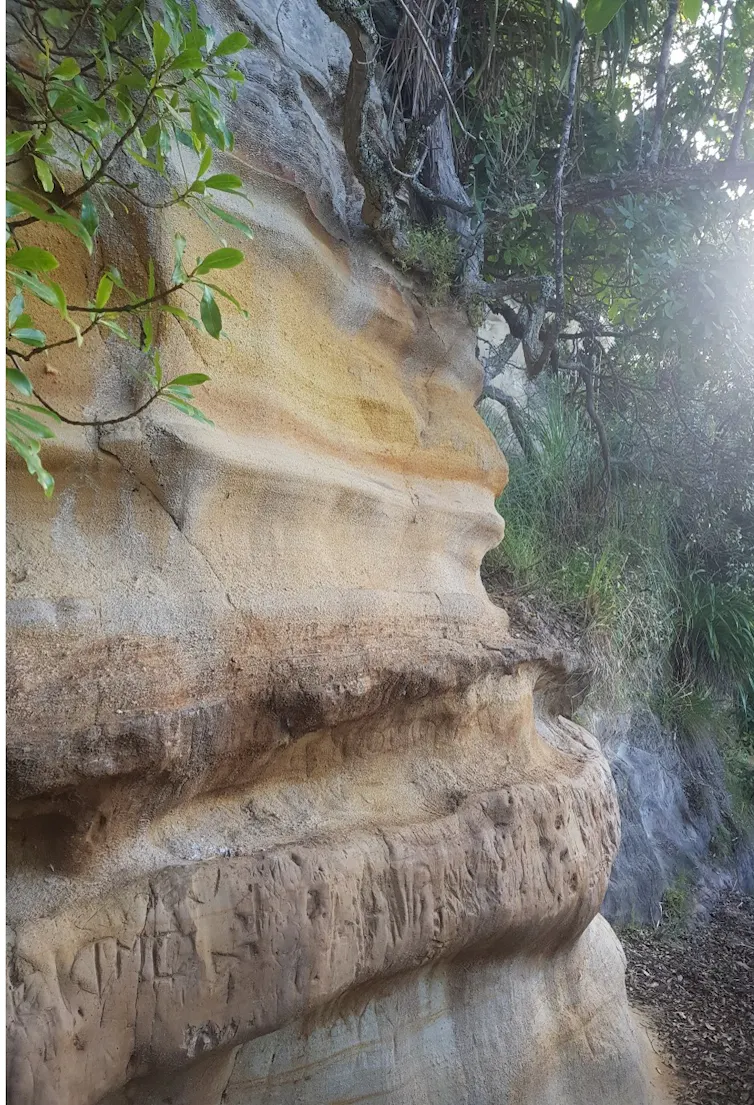
The 1992 petrol tanker accident in the Blue Mountains at Medlow Bath caused PFAS contamination of the local drinking water supply. And 32 years later it forced the closure of two storage reservoirs.

Despite limited data, we identified the source of contamination as a type of foaming material used globally by firefighters to help extinguish burning fuel fires. This foaming substance was mixed with water using perfluorooctane sulfonate, a type of PFAS.

Firefighters used this substance to form a foam “blanket” and coat burning materials and extinguish liquid fires. The PFAS foams were used for decades before their harmful human health and environmental impacts were understood.

Nine years after the first petrol tanker accident, another fuel tanker crash and fire linked to PFAS contamination occurred in 2000, near Ourimbah on the NSW Central Coast. The fuel tanker was carrying 40,000 litres of fuel, and the crash and fire were triggered by a collision with a car. This resulted in the tragic death of two people.

Similar to the Medlow Bath accident, news footage showed water and foam were used to control the blaze. It also showed a foamy runoff draining from the accident.

Why are PFAS a problem?

PFAS, often called “forever chemicals”, are a broad category of thousands of synthetic chemicals. They are used in numerous products, such as non-stick cookware, stain-resistant fabrics, takeaway food packaging and even cosmetics.

PFAS molecules don’t easily break down, and readily accumulate in tissue of wildlife across the globe. Exposure to small amounts of PFAS sees the chemicals build up in the vital organs of animals and people. Analysis of human autopsy tissue revealed accumulation of PFAS in the brain, lungs, liver, kidney and bones.

In 2025, an Australian Bureau of Statistics report revealed nearly all Australians have PFAS chemicals accumulating in our bodies.

Should we be worried?

Exposure to PFAS is associated with a greater risk of several illnesses. These include decreased fertility, higher blood pressure, increased risk of cancer (particularly prostate, kidney and testicular cancers), liver disease, higher cholesterol and obesity.

One of the humans are likely to consume PFAS is through eating foods containing PFAS and in drinking water.

The Upper Blue Mountains water supply serves about 40,000 people, and operated by Sydney Water Corporation. It reported that one of the most hazardous forms of PFAS, PFOS, reached 16.4 nanograms per litre in the local drinking water on June 25 2024. This is double the safe amount, according to the recently revised Australian drinking water guidelines.

Discovery of PFAS triggered the closure of two drinking water reservoirs downstream of the Medlow Bath petrol tanker crash and fire. Although a lack of testing data creates uncertainty, it is likely PFAS contamination was undetected in the Blue Mountains drinking water supply for more than 30 years.

What our study showed

Our study showed contaminated creek water contained 2,000–2,400ng/L of PFOS in October 2025. This is 250–300 times the maximum safe concentration (less than 8ng/L) recommended by the Australian Drinking Water Guidelines.

The Blue Mountains contamination plume extended downstream into Greaves Creek, in the upper Blue Mountains. This creek is part of the UNESCO Blue Mountains World Heritage Area, where PFOS levels exceeded aquatic ecosystem guidelines by 100 times. The safe level of PFOS concentration for protection of freshwater species is 0.23ng/L.

As far as we know, the PFAS contamination identified in this study has not received any remediation to remove contaminated soil or water. Most PFAS contamination across Australia has occurred at sites where PFAS foam was used in repeated fire fighting training activities. Our work shows even single incidents involving PFAS can have long-lasting environmental impacts.

The Conversation

Ian A. Wright has received research funding from industry, local, NSW and Commonwealth Government. He has previously worked for the water industry (Sydney Water) as a scientist and catchment officer.

Amy-Marie Gilpin receives funding from the research and development corporation Hort Innovation.

Katherine Warwick receives funding from the water industry (Sydney Water), WIRES, local and state government bodies.

  •  

We found hundreds of huge ancient mass graves hidden in the Sahara desert

We have been on a years-long campaign of satellite remote sensing of the vast desert landscapes in Eastern Sudan.

This involved using satellite aerial imagery to systematically and painstakingly search for archaeological features in Atbai Desert of Eastern Sudan, a small part of the much larger Sahara.

Our team – which includes archaeologists from Macquarie University, France’s HiSoMA research unit, and the Polish Academy of Sciences – wanted to tell the story of this desert region between the Nile and the Red Sea, without having to excavate.

One mysterious archaeological feature stood out. We kept finding large, circular mass graves filled with the bones of people and animals, often carefully arranged around a key person at the centre.

Likely built around the fourth and third millennia BCE, all these “enclosure burial” monuments have a large round enclosure wall, some up to 80 metres in diameter, with humans and their cattle, sheep and goats buried inside.

Our new research, published in the journal African Archaeological Review, reveals how we found 260 previously unknown enclosure burials east of the Nile River, across almost 1,000km of desert.

Who built them?

Already known from a few excavated examples in the Egyptian and Sudanese deserts, these large circular burial monuments have long puzzled scholars.

What seemed once isolated examples emerge now as a consistent pattern. It is suggestive of a common nomadic culture stretching across a vast stretch of desert.

Most are within the borders of modern Sudan on the slopes of the Red Sea Hills. Unfortunately, satellite imagery alone cannot communicate the whole story of these enclosure burial builders.

The carbon dates and pottery from the few excavated monuments tell us these people lived roughly 4000–3000 BCE, just before Egyptians formed a territorial kingdom we know of as Pharaonic Egypt.

But these “enclosure burial” nomads had little to do with urbane and farming Egyptians.

Living in the desert and raising herds, these were Saharan desert nomads through and through.

A new elite?

Some enclosures show “secondary” burials arranged around a “primary” burial of a person at the centre – perhaps a chief or other important member of the community.

For archaeologists, this is important data for discerning class and hierarchy in prehistoric societies.

The question of when Saharan nomads became less egalitarian has plagued archaeologists for decades, but most agree it was around this time of the fourth millennium BCE that a distinctive “elite” class emerged.

This is still a far cry from the sort of huge divisions between ruler and ruled as seen in societies such as Egypt, with its pharaohs and farmers. However, it ushers in the first traces of inequality.

Animals held in high esteem

Cattle seem very important to these prehistoric nomads (a theory also supported by ancient local rock art in the area).

Burying themselves alongside their herd, these nomads show they held their animals in esteem.

Thousands of years later, local nomads chose to reuse these now “ancient” enclosures for their burial plots – sometimes almost 4,000 years after they were first built.

In other words, the prehistoric nomads created cemetery spaces that lasted for millennia.

What happened to these people?

No one can say for sure.

The few dates we have for these monuments cluster between 4000–3000 BCE, nearing the end of a period when the once-greener Sahara was drying, a phase scientists call the “African Humid Period”.

From north to south, the summer monsoon gradually retreated, reducing rainfall and shrinking pastures. This led nomads to abandon thirsty cattle, increase the mobility of their herds, migrate to the south or flee to the Nile.

The monuments are overwhelmingly located near what were then favourable watering spots; near rocky pools in valley floors, lakebeds and ephemeral rivers.

This tells us that when the monuments were being built, the desert was already quite challenging and dry.

At some point, as grass and bush made way for sand and rocks, keeping their prized cattle became unsustainable.

Having large herds of cattle in this desert, at this period, may have been a way of showing off an expensive and rare possession – a prehistoric nomad’s equivalent to having a Ferrari. This may help explain why cattle were frequently buried alongside their owners in enclosure burial monuments.

A bigger story

These enclosure burials are only one part of the greater story of human adaptation to climate change across North Africa.

From the Central Sahara, to Kenya and Arabia, keeping cattle, goats and sheep transformed societies. It changed the food they ate, the way they moved around, and community hierarchies.

It’s no coincidence communities changed how they buried their dead at the same time as they adopted herding lifestyles.

These burial enclosures tell us even scattered nomads were extremely well-organised people, and expert adapters.

Our discovery reshapes the story of the Sahara deserts and the prehistory of the Nile.

They provide a prologue for the monumentalism of the kingdoms of Egypt and Nubia, and an image of this region as more than pharaohs, pyramids and temples.

Sadly, many of these enclosure monuments are currently being destroyed or vandalised as a result of unregulated mining in the region. These unique burials have survived for millennia, but can disappear in less than a week.

Maria Gatto (Polish Academy of Sciences) was an author on our paper. We also want to acknowledge Alexander Carter, Tung Cheung, Kahn Emerson, Jessica Larkin, Stuart Hamilton and Ethan Simpson from Macquarie University for their contribution. We are also grateful to the National Corporation of Antiquities and Museums (Sudan).

The Conversation

Julien Cooper receives funding from the Australian Research Council, (Future Fellowship, FT230100067).

Maël Crépy receives funding from the CNRS (HiSoMA) and the Ifao (NOMADES research program).

Marie Bourgeois receives funding from Ifao (NOMADES research program).

  •  

Germany pulled the plug on flagship FCAS fighter jet – the implications for European defence are worrying

The effective collapse of the Future Combat Air System (FCAS) fighter jet programme is a major setback for European defence cooperation.

France, Germany and Spain have spent nearly a decade trying to develop what was intended to become Europe’s premier next-generation combat aircraft, only for the programme to succumb to disputes over leadership, the distribution of work and intellectual property.

Yet Europeans shouldn’t be surprised. The history of European combat aviation is littered with programmes that struggled under the weight of competing national ambitions. In this respect, FCAS looks less like an extraordinary failure than the latest chapter in a recurring story.

The more important question is not why FCAS has run into trouble, but rather what its collapse reveals about Europe’s ability to generate and sustain the military capabilities it will need in a more dangerous world.

Adversaries are now investing heavily in integrated and layered air defences encompassing long-range missiles, electronic warfare capabilities and increasingly sophisticated sensors. Maintaining the ability to penetrate defended airspace in future conflicts will require a step change in capability.

FCAS was conceived as a “sixth-generation” combat system – the latest leap in fighter jet technology – to overcome this contested air environment. At its centre would sit a new combat aircraft, supported by autonomous drones, advanced sensors, electronic warfare systems and a digital network linking everything together from the 2040s.

The challenge is that such programmes are becoming extraordinarily expensive to develop. By sharing costs, expertise and industrial capacity, European governments hope to achieve capabilities that would otherwise be beyond their reach.

The Eurofighter Typhoon was one of the most successful military collaborations of the cold war. R. Sanchez Aviation Photo / Shutterstock

Reality check

Despite the perceived commonalities, the FCAS nations – France and Germany in particular – had very different objectives.

For France, the project was never simply about replacing its Rafale fighter jet. Any successor aircraft would eventually have to support the airborne component of France’s nuclear deterrent, operate from its aircraft carrier, and preserve sovereign industrial capabilities – specifically the ability to independently design and build advanced combat aircraft. The insistence by France on design leadership for FCAS therefore reflected concerns about national autonomy, even if portrayed as industrial obstinacy.

Meanwhile Germany, represented by the aerospace giant Airbus, had little interest in financing a programme that was likely to concentrate Europe’s most valuable expertise, intellectual property and design authority in Dassault, the French aerospace company, for decades to come.

These tensions are hardly new. In the 1960s, Britain and France attempted to build the Anglo-French Variable Geometry aircraft. But France’s withdrawal in 1967, for similar reasons to FCAS, led to the project’s collapse.

Other joint European projects have succeeded. For instance, the Panavia Tornado. And in the 1980s, the Eurofighter consortium was developed. This time, despite France withdrawing (to produce the Rafale), the UK, Germany and Italy proceeded (with Spain later joining) with what would become the Eurofighter Typhoon.

Reliance on America

For decades, therefore, European collaborative programmes have been expected to do several things at once: deliver military capability and sustain national industries while strengthening diplomatic relationships or at least not upsetting them.

That may have been a manageable compromise when Europe’s security was underwritten by the United States and the threat from Russian appeared contained. It is far harder to justify when European governments are warning that the continent must rearm.

Emmanuel Macron and Friedrich Merz.
Emmanuel Macron and Friedrich Merz have several options in the wake of the project’s collapse. EUS-Nachrichten

The challenge is compounded by the changing relationship between governments and industry. Unlike Airbus, which remains partly state-owned, Dassault is controlled by the family that bears its name.

This reflects a broader trend of European governments often exercising less influence over major defence firms than they did during the cold war, when state ownership and greater industrial competition gave them more leverage. This is to say nothing of the tech firms increasingly fundamental to military capability.

That matters because armed forces are built over decades, not electoral cycles. If European governments struggle to mobilise industry to meet their defence requirements, they may find themselves confronting capability gaps at precisely the moment they are trying to deter aggression.

Germany’s defence minister, Boris Pistorious, has already outlined three alternatives to FCAS. The first and simplest is to buy more F-35s from the US. But this would fall short of Germany’s requirements while also deepening dependence on the US – something European nations are keen to avoid.

The second option is to join another collaboration, most likely the UK-Italian-Japanese effort to build a sixth-generation fighter, called the Global Combat Air Programme (GCAP). Germany’s growing defence budget could provide the project with additional funding and a larger order book. But it would also raise questions about influence.

If Berlin rejected a subordinate role within FCAS, it is unlikely to accept one within GCAP. Existing partners may therefore conclude that the benefits of expansion are outweighed by the risks of delay to a programme targeting entry into service by 2035.

The third option is a German-led effort, being discussed through the proposed Team Gen 6 industrial grouping – an Airbus-led alliance of eight defence firms. This would solve industry concerns, preserve German design ambitions and might allow Berlin to build a coalition with other partners, such as Spain and Sweden.

But it could be prohibitively expensive, risky, and by further fragmenting Europe’s already crowded combat aircraft landscape, reduce the viability of all the existing programmes. France faces similarly difficult choices. It can pursue a national successor to Rafale, preserving control over industrial, nuclear and carrier requirements but accepting substantial costs. Or it could seek a revised collaborative framework.

In the meantime, both French president Emmanuel Macron and Germany’s chancellor Friedrich Merz have made clear that other opportunities for collaboration exist, such as the drones intended to support the FCAS fighter jet, or the main aircraft’s engine.

The experience of FCAS is not that Europe cannot cooperate. History shows otherwise, and GCAP may yet again demonstrate that a pragmatic coalition can succeed where a more politically ambitious partnership failed.

What FCAS does reveal, however, is a growing mismatch between Europe’s security environment, the way it continues to procure defence equipment and the costs involved. The recent resignation of Britain’s defence secretary, John Healey, amid disputes over defence funding, points to the same problem.

European governments increasingly agree on the threats they face, but remain “unwilling” to make the financial and political compromises required to address them. That should concern us all.

The Conversation

Arun Dawson does not work for, consult, own shares in or receive funding from any company or organisation that would benefit from this article, and has disclosed no relevant affiliations beyond their academic appointment.

  •  

Why do I get so tired while driving?

Kala Moments/Getty

Whether you’re commuting to work or roadtripping up the coast, driving can be tiring.

That’s because driving is a complex task that requires multiple parts of your brain – including those that help you plan, stay alert, and perceive the world – to work together.

But when you’re tired, these parts of your brain may not function as well. That’s one reason why driver fatigue is such a concern.

Recent research shows drowsy driving contributes to between 20% and 30% of all crashes on Australian roads. And it can affect drivers of all ages and levels of experience.

So how does driving affect your brain? And how can you stay alert while on the road?

The neuroscience of driving

Driving is a complex task that relies on brain regions that control attention and vigilance, perception, motor control and high-level cognition.

One meta-analysis examined existing research about how driving affects brain activity. It found driving requires a surprisingly large number of specific brain regions.

This includes the cerebellum and premotor cortex, two brain regions that help coordinate movement. Also involved is the extrastriate cortex, which processes visual information from the world around you. Driving also activates the thalamus, a part of the brain that helps you stay alert and turn sensory information into physical movement.

Why is driver fatigue so dangerous?

Research suggests driving while you are tired can be just as dangerous as driving under the influence of alcohol. About 20% of all deaths on Australian roads are fatigued-related.

Fatigue is a physiological state of impairment that impacts how well your mind and body function. Specifically, fatigue can negatively affect how well you pay attention, make decisions and respond to your surroundings – all of which are crucial for safe driving.

However, microsleeps are perhaps the most dangerous consequence of driving while tired. A microsleep is a brief, involuntary period of sleep which can last up to 15 seconds.

But even during a three-second microsleep at 100 kilometres per hour, your car may travel more than 80 metres without you being in control. This can have catastrophic consequences if you drift off the road, or into pedestrians or other vehicles.

Time matters

Driving may feel like a task you do automatically. But it does require a high level of sustained attention, especially compared to other activities such as responding to emails, operating machinery, or doing other ordinary work tasks.

If you drive for a long time, you might notice yourself paying less attention over time. That’s because driving takes significant mental effort, with some evidence suggesting fatigue may set in after just 60 minutes of driving.

The longer you’re continuously driving, the more likely you are to make a poor decision or fall into a microsleep. Research suggests this is especially true if you are driving at night or on monotonous roads. And even if you don’t feel tired, you may still make errors because your brain is not fully alert.

So if you have a long drive ahead of you, a good rule of thumb is to break it into two-hour blocks. This limits the amount of time spent driving without a break, which helps to reduce your risk of getting driver fatigue.

Other factors to consider

Several other factors may make you more tired while driving.

One is sleep. Research shows having less than five hours of sleep can double your chances of being in a crash. And being awake for long periods – that is more than 17 hours – is also associated with higher risk of driver fatigue.

Another factor is driving at times when you’d normally be sleeping. This disrupts your circadian rhythm – commonly known as your “body clock” – and may mean you’re more likely to fall asleep at the wheel.

Research suggests stress, parenting a newborn, and not consuming enough water or healthy food may also contribute to driver fatigue.

It’s also worth noting, being an experienced driver doesn’t protect you from fatigue. Research shows experienced drivers are still at risk of getting into a fatigue-related crash. Experienced drivers may also become overconfident and, as a result, may take more risks on the road.

So, how can I stay alert while driving?

It’s crucial to get enough sleep before jumping behind the wheel. To function at their best, adults generally need between seven and nine hours of sleep each night. But to drive safely, you need at least five hours of sleep the night before.

Importantly, there isn’t much evidence to suggest strategies such as winding down your window or listening to music actually fight fatigue.

Instead, when driving long distances, remember to stay hydrated and take regular breaks. And if you’re feeling too tired to drive, take a nap first. You can also share the driving or postpone your trip.

The Conversation

Madeline Sprajcer receives funding from the Australian Research Council.

Alysa Bachmann receives funding from Australian Rotary Health.

  •  

What the hit new show Off Campus gets right in its portrayal of sexual violence

Prime Video

In a media landscape where sexual violence is largely normalised, the hit new show Off Campus is a refreshing pivot.

Created for Amazon Prime by showrunners Louisa Levy and Gina Fattore, the series explores the devastating impacts of sexual violence on young women. But it does so with sensitivity, and without gratuitous depictions of said violence.

Normalising sexual assault onscreen

Off Campus, a romantic college drama based on author Elle Kennedy’s novel series of the same name, is enjoying plenty of popularity right now. This is mainly due to its ridiculously attractive leading men and women, coupled with steamy (consensual) sex scenes and cheesy romance.

Season one follows college junior Hannah Wells and her fake dating scheme-turned-romance with star hockey-player Garrett Graham.

In a main subplot, we learn Hannah was drugged and raped by a classmate, Aaron Delaney, at a party. She was 15 when it happened.

But Hannah’s experience of assault chronologically takes place before the first episode. The incident is only hinted at subtly, through flashbacks.

Instead, the focus is on her life in the aftermath of sexual assault. This is the kind of representation post-#MeToo activists have been advocating for. Here, the reality of violence against women is addressed, but not viscerally depicted.

Contemporary series and films have a plethora of narrative plots predicated on graphic depictions of violence against women. Yet little has been done to address this.

As gender studies experts Stephanie Patrick and Mythili Rajiva explain, onscreen rape depictions continue to “rehearse gendered scripts, positioning women as sexual objects onscreen for the pleasure of audiences and/or male protagonists”.

These portrayals are now a pervasive part of screen culture, spanning genres and audiences.

Game of Thrones (2011-19), for instance, had multiple violent depictions of rape of prominent female characters, including Daenerys Targaryen, Cersei Lannister and Sansa Stark.

Similarly, Teen drama 13 Reasons Why (2017-20) also depicted both the rape of the central character Hannah Baker and the gang rape of minor character Tyler Down.

Both shows, though wildly different, demonstrate a heinous interest in showing the violation of bodies for entertainment.

What do we audiences get out of watching this, other than gnawing discomfort? And why do such shows remain highly watched, despite the controversy they attract?

Do we need to see sexual violence?

One might argue depictions of sexual assault and violence may make viewers more invested in the issue, and therefore more empathetic towards the experience of survivors.

Feminist film scholar Debra Ferreday says “like fans, feminists are intimately invested in practices of remediation and in the creation of transformative works” – and are therefore more likely to respond to these depictions with an activist mindset.

But, it’s not that simple.

There is also the potential to re-traumatise viewers who have experienced sexual assault, something showrunners are starting to take into account. And this has partly driven the rise of intimacy coordination in the industry. In the words of screen and media scholar Inge Sørensen:

the ways in which nudity, sex and intimacy are […] directed and acted on and off set are no longer only an ethical issue for […] cast and crew members on discrete productions. It is an industry concern with potentially significant financial and reputational consequences for any production.

There is also the potential for graphic depictions of sexual assault to desensitise viewers and normalise predatory and/or violent behaviour, particularly with reference to young men.

We can sen the effects of this in regards to shows such as Game of Thrones, wherein a number of online users argued the fantasy setting provided justification for the violent rape scenes. They saw no issue with them.

The Off Campus approach

Enter Off Campus. Alongside the main plot of Hannah and Garret’s budding attraction, we get glimpses into Hannah’s post-traumatic stress.

She confides in Garrett about her inability to orgasm, is hesitant to drink at parties, and feels guilty the only result of her legal trial against her abuser was the alienation of her family in their hometown in Indiana.

Hannah eventually confides in her family and friends, who rally around her. Prime Video

These moments come to a crux in episode seven, when Aaron plays against Garrett in a hockey game, and Hannah is too traumatised to attend. She isolates herself, struggles with overwhelming anxiety and avoids Garrett’s calls.

This scene mirrors the experience of many victim/survivors, who fear they will not be believed, or their assault won’t be taken seriously. Hannah’s beliefs reflect pervasive rape myths and stereotypes that shroud victim/survivors in doubt and shame.

Off Campus successfully touches on these problematic ideologies, before challenging a legacy of storylines that have helped endorse rape myths and minimise the effects of sexual violence.

Hannah eventually reaches out to her family and friends, who rally around her. Her mum, for instance, tells her she has “nothing to be sorry for”.

Hannah’s performance in the college’s pop showcase symbolises a final reclamation of self. Prime Video

Almost a decade on from #MeToo

The series’ overall sensitive approach suggests at least some showrunners are becoming less interested in violent depictions of sexual assault onscreen.

As we near the ten-year anniversary of the #MeToo movement, violence against women remains high, with an estimated one in five women having experienced sexual violence since the age of 15.

Off Campus marks a pivot away from harmful representation on a macro level, while initiating important conversations around the impact of sexual violence on an individual level. This visibility can steer victim/survivors towards seeking support, and encourage greater empathy and awareness among the broader audience.

The National Sexual Assault, Family and Domestic Violence Counselling Line – 1800 RESPECT (1800 737 732) – is available 24 hours a day, seven days a week for any Australian who has experienced, or is at risk of, family and domestic violence and/or sexual assault.

The Conversation

Bridget Mac Eochagain does not work for, consult, own shares in or receive funding from any company or organisation that would benefit from this article, and has disclosed no relevant affiliations beyond their academic appointment.

  •  

A ‘supereruption’ transformed NZ 350,000 years ago. We now know how it happened

Deposits from the Whakamaru supereruption are pictured here on Chatham Island. Katherine Holt, CC BY-NC-ND

Some 350,000 years ago, the centre of New Zealand’s North Island appeared much different than the mountainous, scrub-covered landscape it is today.

Amid a glacial period, temperatures were colder and conditions harsher. Vast beech and podocarp forests blanketed the region, providing habitat for abundant native birdlife.

It was against this tranquil backdrop that the one of the Earth’s most explosive eruptions violently unfolded, releasing enough material to carpet much of the country.

Now, colleagues and I have pieced together traces left by the event to provide an unprecedented picture of how it happened – while shedding important new light on the mechanics of those rare cataclysms that are known as supereruptions.

Reconstructing a supereruption

The Whakamaru supereruption was one of the largest ever recorded on Earth – and the greatest produced by New Zealand’s famous Taupō Volcanic Zone.

Stretching from Whakaari/White Island to Ruapehu, this dynamic area is the product of two powerful geological processes: the Pacific Plate sinking beneath the Australian Plate, and the central North Island simultaneously being pulled apart.

It is home to numerous volcanic features today, from geothermal fields with bubbling hot springs and mud pools, to caldera systems and active stratovolcanoes.

Throughout its 2-million-year history, the zone has experienced four known events of such immense scale that they are formally classified as supereruptions – or those that would score a maximum 8 on the Volcanic Explosivity Index.

Only a few dozen have ever been recorded worldwide – the most recent being the Ōruanui eruption that helped create Lake Taupō around 25,300 years ago.

For volcanologists, they pose some of the field’s greatest mysteries: how can so much magma build up below the surface, and then erupt all at once? And what happens to the surrounding landscapes?

To help answer these questions, we turn to preserved volcanic deposits that can be used to reconstruct the processes that play out during these rare events.

Two signature products of supereruptions are “flow” deposits – hot, dangerous masses of rock and gas that travel along the ground – and “fall” deposits, typically mixtures of crystals and volcanic glass that fall from the air.

The challenge for volcanologists is that typically only fragments of these deposits are preserved – and they are often scattered across great distances.

In the Whakamaru supereruption, massive pyroclastic flows left behind thick layers of dense volcanic rock across the Whakamaru and King Country regions. Ash and pumice spread much farther, blanketing much of the North Island and parts of the Pacific Ocean.

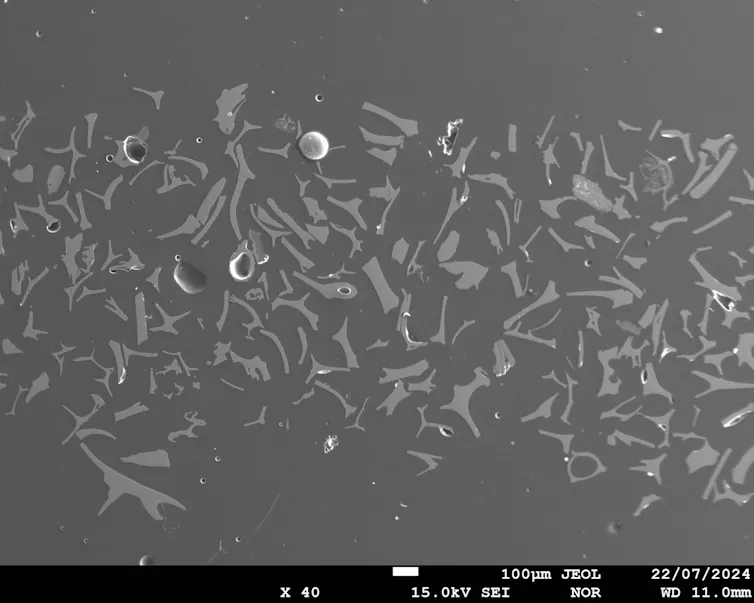
One of the first steps in our study was to build a database of these deposits by matching the unique chemical signature of volcanic glass produced during the eruption.

Glass shards from the Whakamaru Supereruption under the electron microprobe. Provided by author, CC BY-NC-ND

This process is similar to forensic science at a crime scene: fingerprints may suggest a suspect, but DNA evidence can confirm the match. In volcanology, deposits can offer clues as to how they got there, but it is their chemical composition which provides the definitive link.

Using this approach, we analysed more than 30 sites around New Zealand and the south Pacific Ocean. All were found to have come from the Whakamaru supereruption.

With these correlated, we were then able to reconstruct this extraordinary episode.

How the supereruption unfolded

At the beginning of the eruption, a large lake likely lay within the central North Island, much like Lake Taupō today.

When the magma reached the surface, it erupted directly into this lake, triggering extremely violent interactions between magma and water, which drove the earliest phase of the eruption.

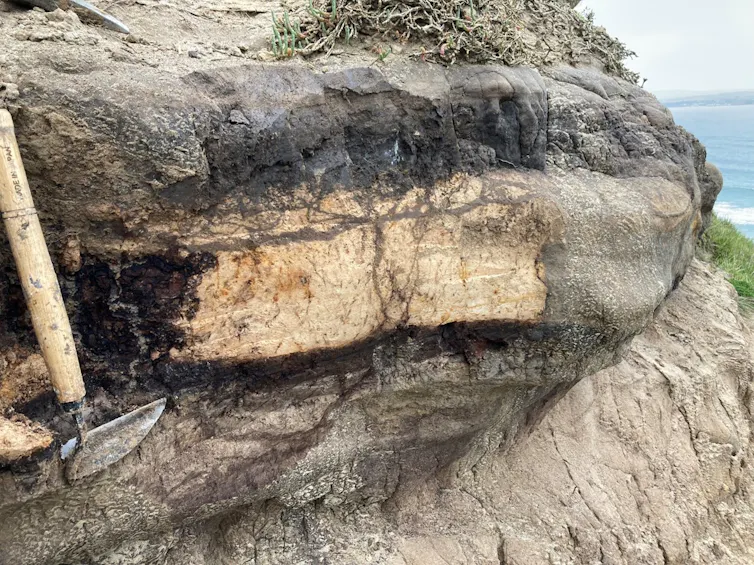
One of the ashfall deposits from the Whakamaru supereruption at Ōtarawairere, Bay of Plenty. Provided by author, CC BY-NC-ND

It appears this first phase was driven by the evacuation of a singular magma body.

As the eruption progressed, the lake was gradually destroyed and infilled. Eventually, the system transitioned into a much drier style of volcanism.

At the same time, the eruption evolved into a far larger and more complex event beneath the surface. Instead of being fed by one magma chamber, it appears to have triggered a cascading sequence involving at least five separate magma bodies erupting at once.

The amount of ash generated by the eruption is staggering.

Most of the North Island – and even far-away Chatham Island – would have been carpeted in around 30cm or more of material. Areas closer to the eruption were left buried under as much as 4.5m of ash.

One of the ashfall deposits from the Whakamaru supereruption, ~800 km from source on Chatham Island. Provided by author, CC BY-NC-ND

Hot, dense pyroclastic flows also swept across the landscape, leaving deposits up to hundreds of metres thick closer to the eruption source.

Altogether, we estimate the eruption released around 2,300 cubic kilometres of volcanic material – enough to bury the entirety of New Zealand beneath roughly nine metres of debris if spread evenly from Cape Reinga to Invercargill.

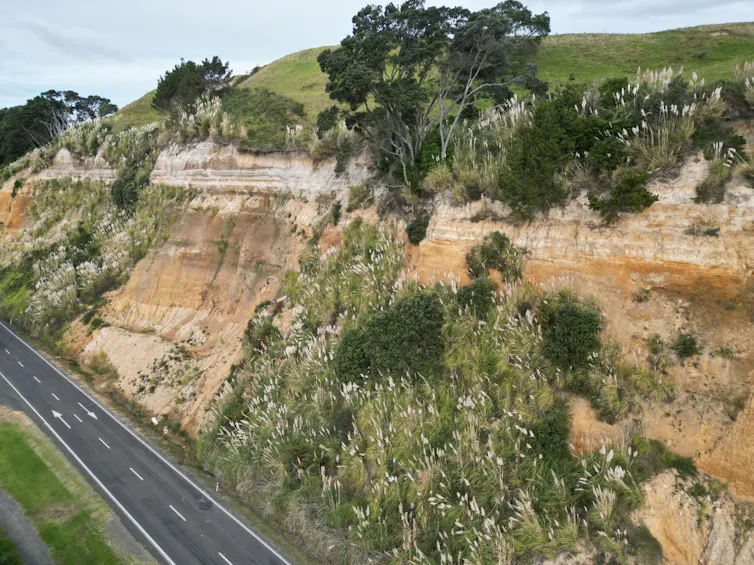
Ashfall deposits (the upper, whiter layers) from the Whakamaru supereruption at the Waiotahe Cliffs, Bay of Plenty. Provided by author, CC BY-NC-ND

Today, the Taupō Volcanic Zone remains one of the most active and powerful volcanic systems on Earth.

Although supereruptions like Whakamaru are rare, Taupō volcano has produced many smaller yet still devastating eruptions throughout its history, all of which would have had major impacts on both New Zealand and the wider world.

Understanding how these types of volcanoes operate is essential, both in preparing for future eruptions and for understanding how past events may have transformed the landscape we see today.

The author acknowledges the contributions of Simon Baker and Colin Wilson to this research.

The Conversation

Anna Miller does not work for, consult, own shares in or receive funding from any company or organisation that would benefit from this article, and has disclosed no relevant affiliations beyond their academic appointment.

  •  

We analysed 14 million Reddit posts to reveal a striking shift in how we talk about mental health

Brett Jordan/Pexels

More people are relying on social media – such as TikTok, Instagram, YouTube and Reddit – to learn about mental health conditions and to interact with people who have shared experiences.

These aren’t only long-familiar disorders such as depression, anxiety and schizophrenia. They also include conditions often placed under the “neurodivergent” umbrella such as autism, ADHD (attention-deficit hyperactivity disorder), Tourette syndrome and dyslexia.

For instance, on TikTok the hashtag #adhd has had more than 50 billion views.

We wanted to explore how social media platforms shape how we understand mental health. So we analysed more than 14 million posts and comments about mental health on Reddit.

We show a shift in conversations toward ADHD and autism, and away from anxiety and depression.

Our findings have important implications for how people make sense of, and seek help for, mental health problems.

A complex relationship

Social media coverage of mental health has made it more visible, with some positive effects. It has probably reduced the stigma of mental illness and increased the use of mental health services.

However, it also has downsides. It can induce or exacerbate eating disorders, can contribute to the spread of symptoms (such as tic-like behaviours), and has been attributed to the rise of questionable self-diagnoses.

Misinformation is common in social media discussions of mental health. One study found a majority of the most popular TikTok videos on ADHD were misleading. Inaccurate information about many other mental health conditions on social media is common.

Discussions change and evolve

Mental health content has not merely risen in volume. Some conditions have increasingly attracted the spotlight, others have receded from view, and the relationships among them have shifted.

In our Reddit study published last year, we found that as the largest ADHD- and autism- related communities (subreddits) became increasingly more prominent from 2012 to 2022, their content gradually became more similar, and their users increasingly overlapped.

Discussions in both communities increasingly emphasised the experiences of adults, challenges in accessing diagnostic assessments, and struggles with personal relationships.

This growing convergence of these two conditions on Reddit illustrates how social media can reshape representations of mental health.

Our latest study takes this further

In our new study, we analysed more than 14 million posts and comments from several of the largest mental health communities on Reddit.

The 14 communities we studied included those related to mood, anxiety, trauma, personality, dissociation and psychosis, as well as those focused on conditions often placed under the “neurodivergent” umbrella, such as autism, ADHD, Tourette syndrome and dyslexia.

We investigated how the people belonging to these communities and the language they used changed from 2015 to 2022.

We explored which communities became more or less closely associated over time – sharing more or fewer members and containing posts and comments with similar or different linguistic content. We also looked at whether these changes reflected shifts in the amount of attention the 14 conditions received.

Although our analysis only covered a seven-year period, it revealed a striking pattern of changes. The two diagrams show how the 14 communities were interrelated at the beginning and end of the period.

The size of the circles represents the relative size of the communities. The width of the links between them indicates how closely they were associated.

In 2015, depression and anxiety were prominent mental health communities on Reddit. They were among the most active and their members and content overlapped with those of many other communities. In this sense, they were “central” to the network.

However, in 2022, ADHD and autism communities had become most popular and prominent, displacing depression and anxiety. ADHD, autism and other neurodivergent conditions became more closely associated with other communities, and consequently more central to the network.

These analyses suggest that on Reddit the mental health landscape has been re-configured. Mood and anxiety disorders once dominated discussions. But discussions of mental health have increasingly pivoted to discussing conditions related to being neurodivergent.

Reddit users do not represent the general population; they tend to be younger, male, more educated, and have a higher income. Nevertheless, our study offers important insights into changes in mental health discussions on one social media platform over time.

Why does it matter?

The rising prominence and centrality of ADHD and autism makes them increasingly popular explanations for mental health problems. This might promote accurate self-diagnosis by people who once would not have recognised the nature of their difficulties.

However, it could also lead people to misinterpret and mislabel their experiences as ADHD and autism when there’s another explanation.

The rising prominence of these conditions on social media may also lead people to interpret mood or anxiety symptoms as signs of ADHD or autism.

Misinterpretations can lead people to pursue inappropriate diagnoses or unhelpful treatment, delaying access to the help they need. This in turn places increasing pressure on mental health services, and can lead to other conditions being overlooked.

The Conversation

Jemima Kang receives funding from an Australian Government Research Training Program Scholarship, an Australian Academy of Technological Sciences and Engineering Elevate Scholarship, and a University of Melbourne Helen Macpherson Smith Scholarship.

Nick Haslam receives funding from the Australian Research Council.

Mike Conway does not work for, consult, own shares in or receive funding from any company or organisation that would benefit from this article, and has disclosed no relevant affiliations beyond their academic appointment.

  •  

Why do male chimpanzees throw rocks at the same trees for more than a decade? We travelled to remote Guinea-Bissau to find out

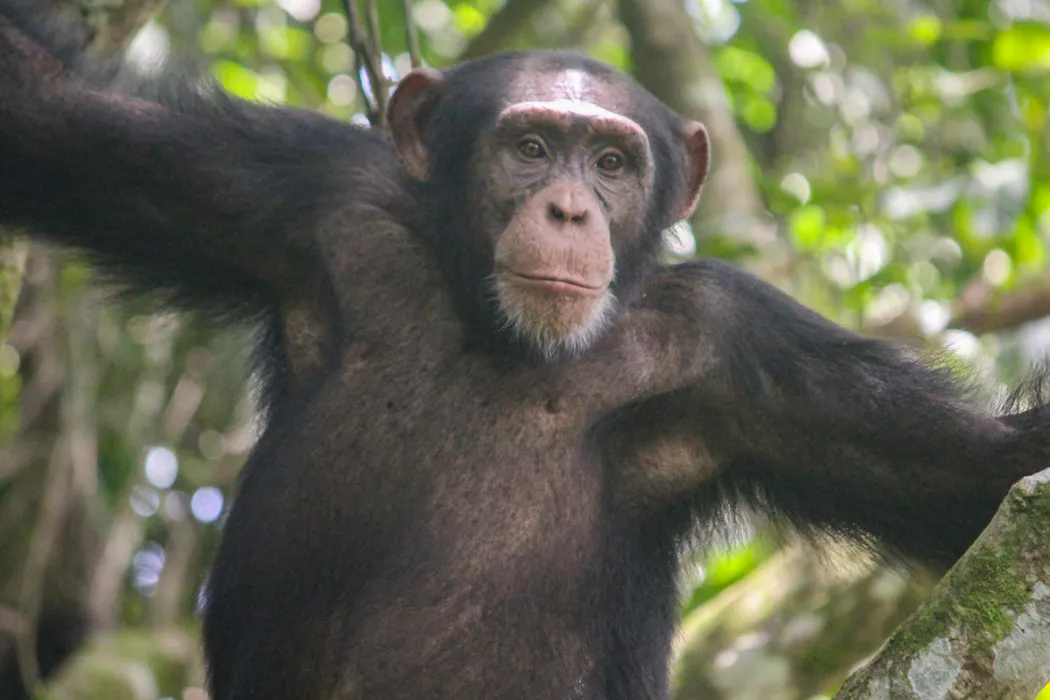
Accumulative stone throwing is a rare, potentially cultural, behaviour that has been observed among four groups of wild chimpanzees in West Africa. (Wikimedia Commons), CC BY-SA

Walking through the savanna-woodland landscape of Boé National Park, Guinea-Bissau, you might encounter a tree covered in gnarled scars, with an accumulation of rocks surrounding its base.

The chimpanzees may have left the area, but you are lucky nonetheless, because you have stumbled upon evidence of a rare — and potentially cultural — chimpanzee behaviour: accumulative stone throwing.

A compilation of chimpanzee stone throws collected by the Max Planck Institute of Evolutionary Anthropology Pan African Programme.

Video recordings show wild western chimpanzees, usually adult males, throwing rocks at specific trees and repeatedly returning to these trees to perform the behaviour.

While throwing, the chimpanzees pant hoot — a loud, long-distance communicative signal — and sometimes repeatedly hit their hands and feet on the tree in a behaviour called buttress drumming.

We have just returned from a field site in Guinea-Bissau where we collected data to help us investigate the social and ecological context of accumulative stone throwing to determine what these chimpanzees are trying to communicate.

Given our evolutionary relatedness to chimpanzees, we hope accumulative stone throwing can help us understand the emergence of complex communication and stone tool use over the course of human evolution.

A cultural behaviour

Pant hooting and buttress drumming are both part of the male chimpanzee display, suggesting that accumulative stone throwing might represent a modification of this common behaviour. It is likely a cultural behaviour due to its limited distribution, and because the availability of rocks and trees does not guarantee the presence of an accumulative stone throwing site.

Dr. Jane Goodall pant hoots with chimpanzees.

Previous research suggests that accumulative stone throwing is likely communicative or may even have a symbolic purpose, with sites marking important locations within the chimpanzees’ territory.

However, we still don’t know what accumulative stone throwing sites might mean to the chimpanzees themselves nor why they do it. While some primates use stone tools to access food, for instance to crack open nuts, accumulative stone throwing is a rare example of stone tool use in a social context. It has been observed in only four chimpanzee groups in West Africa to date.

Setting up camp

We travelled to the remote Boé chimpanzee territory in Guinea-Bissau and based ourselves in Béli, a small village where, in collaboration with local people, the Dutch non-governmental organization Chimbo maintains a compound. Visiting researchers and tourists can stay here and use a workspace with solar-generated electricity.

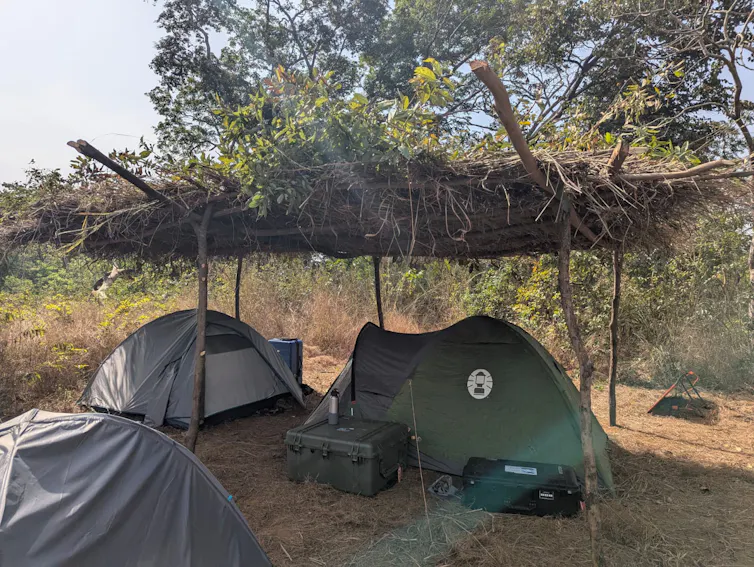
From Béli, we cycled and hiked 22 kilometres into the savanna-woodland to establish a bush camp with our two field assistants, Djei Baldé and Balu Séra, and a master’s student from the Great Ape Behaviour Lab, Taylor Tippett.

The Boé chimpanzees performing the behaviour are unhabituated; they are not used to humans, meaning that we cannot observe individual chimpanzees on foot because they will run away. Instead, we collected behavioural data using camera traps and recording devices.

Two people standing near a tree attaching a camera to its trunk
Author Ammie Kalan and field assistant Balu Séra set up a camera trap near an accumulative stone throwing site. (Taylor Tippett)

We set up two video cameras at each accumulative stone throwing site and placed the recording devices strategically to capture audio data from the areas around these sites.

Our campsite bordered the Fefine, a large river that flows even in the dry season. In a landscape like the savanna-woodland where water sources are scarce, rivers like the Fefine are important for wildlife and humans alike. We captured several of our neighbours on cameras set up near the riverbank.

Chimpanzee nests

On an average day, we woke up around 6:30 a.m. and ate a small breakfast before heading to a set of two to five sites. There, we replaced the SD cards and batteries on the cameras, made sure the devices were working well and collected any additional data needed, including measurements of the tree and 3D scans of rocks thrown at the tree for later analysis.

Along the way, we recorded observations of chimpanzee nests, feeding signs, vocalizations and sightings.

The video and audio data we collected will allow us to investigate the social traits of accumulative stone throwing, including the age and sex of the stone thrower and the audience (other chimpanzees nearby who might react to the throw). This information can help us determine what chimpanzees are trying to communicate.

We found that most of the sites first identified by the Pan African Programme, and revisited by our team in 2017, were still in use during our recent trip to the field, meaning that chimpanzees can use these sites for over a decade.

Three tents covered by a grass canopy
Our campsite featuring a canopy built by our guides. (Taylor Tippett)

The threat of bauxite mining

As many primate species face threats from human activities, cultural behaviours and the maintenance of rich cultural repertoires can help them adapt to environmental changes and provide support for conservation.

On top of its potential communicative importance and intrinsic value as a cultural behaviour, accumulative stone throwing involves durable primate material culture, the loss of which would constitute the erasure of primate heritage.

Unfortunately, chimpanzee habitat in Guinea-Bissau is threatened by extractive industries, particularly industrial mining. While in the field, we encountered bore holes from bauxite mining exploration.

Bauxite mining represents a significant opportunity for economic growth and development in Guinea-Bissau. It can also cause habitat destruction and pollution with severe detrimental effects for chimpanzees, other wildlife and the local people — as it already has in neighbouring Guinea.

Environmental oversight and regulations are much needed, especially given the added challenges of unstable governance in Guinea-Bissau.

A bare savanna landscape
A bauxite mining site in 2017 near the village of Sangaredi in Guinea. (Ammie Kalan)

By studying and bringing attention to chimpanzee cultural behaviours like accumulative stone throwing, we hope to support chimpanzee conservation and the maintenance of biodiversity more broadly, as well as the preservation of primate cultural materials for future research and education.

The Conversation

Robyn Nakano is supported in part by funding from the Social Sciences and Humanities Research Council of Canada.

Ammie Kalan receives funding from the Social Sciences and Humanities Research Council of Canada in the form of an Insight Development Grant which supported the research mentioned in this article. Previous research on AST was also funded by a National Geographic Explorers Grant and supported by the Max Planck Society.

  •  

The women’s rights crisis in Afghanistan is an ongoing humanitarian calamity

Where is one of worst places to be a woman? Afghanistan.

That’s what most people think when it comes to the topic of the women’s rights crisis under the ruling Taliban in Afghanistan. But this only tells part of the story.

Focusing on the word “rights” hides something more serious underneath: how people live and survive in this situation. What’s unfolding in Afghanistan is not just a women’s rights crisis, but a humanitarian disaster.

It affects how people access health care, education, food systems and basic supports and whether these system can function at all when half the population has been systematically removed from them. It forces families to deal with women’s limited access to work and services, often pushing households into deeper economic and social vulnerability.

The Taliban has steadily removed women from public spaces including work, health care and education. Recently, for example, female health-care workers were stopped at the gates of a United Nations office and banned from entering the facility by Taliban authorities.

These ongoing removals are incrementally creating a system that determines who has the right to exist, to provide assistance and to receive assistance.

What’s happening in Afghanistan is not simply gender discrimination; rather, it’s pushing an entire gender out of public systems altogether. The predicament of Afghan women is less a social problem and more a structural crisis that shapes institutions and everyday life.

Gender apartheid

This is why the situation in Afghanistan is increasingly referred to as a form of gender apartheid rather than a women’s rights crisis. The exclusion of women reveals how institutions are built and will be maintained in the future.

Gender apartheid refers to a situation in which people are banned from certain spaces or activities based on their gender identity.

This discriminatory and violent practice in Afghanistan has been widely documented and heavily reported on, but the situation continues to deteriorate daily.

Its effects are also accumulative, with each restriction reinforcing others and deepening the overall crisis. These systemic rights violations would be increasingly difficult to reverse even if political bodies and the ruling government changed tomorrow.

That’s because removing women from professional spaces leads to schools losing teachers, hospitals losing trained staff and aid networks losing access to half the population. And this loss isn’t temporary; it limits how systems can respond to the growing needs around them.

When women get barred from institutions, the problem isn’t just that these organizations suffer in their service delivery and performance. It also results in the loss of institutional memory — the skills, professional knowledge and experience that is no longer transferred to future generations.

Over time, institutions also scale down or suspend certain services due to a shortage of female workers. As services shrink, significant gaps appear in the networks of care and support leaving entire groups of people without consistent access to support.

Blocking aid and support

The Taliban refusal to allow female workers into UN and UNICEF offices is one of many examples happening today in Afghanistan that ban qualified women from entering places where they can deliver urgent care and assistance.

This effective crackdown on women’s rights is blocking aid and support in a society where it’s desperately needed.

Male workers are also limited in the ways they can assist female patients due to Taliban gender norms and restrictions, so support for women cannot be simply reassigned to them. This affects several aspects of humanitarian aid including health care, food distribution and protection systems.

It also delegates the burden of these unmet needs into households where women must provide unpaid labour and care-giving responsibilities.

Taliban rule consequently delays or prevents life-saving interventions for women and children, a violation of the human right to survive.

It’s not just UN and UNICEF offices where women workers are banned from entry: they’re being turned away at other aid organizations, hospitals, schools and various public institutions in a widespread erosion of human rights. The Taliban has put in place a network of human rights violations across the entire humanitarian system.

Humanitarian aid also depends on access to information and correct data: who is hungry, who is unsafe and who needs protection. In Afghanistan, where women are limited in who they can interact with and where female staff are largely absent from outreach, surveys and home visits, this information becomes incomplete.

Poor data leads to incomplete distribution of assistance and mismatched allocation of aid. As a result, the most vulnerable populations can remain invisible in official assessments.

This invisibility especially affects households headed by women and those living in remote or rural areas with already limited access.

Normalizing crises

The impact of Aghanistan’s gender apartheid might not be visible to many outside the country, but in the near future, humanitarian systems will break down.

Future generations of female professionals have already been eliminated by the Taliban’s ban of girls from schools.

UNICEF estimates the ban could cost Afghanistan 25,000 teachers and health-care workers. In a country where women are prohibited from receiving care from male providers, banning women from both education and health-care work creates a profound medical emergency.


Read more: The Taliban wages war on women, but their voices roar on the page. Here are 5 essential books by Afghan women writers


Over time, systems will be redesigned without women as providers even as they remain central as recipients. As gender restrictions disrupt the flow of resources, knowledge and care, the capacity to deliver services is declining every day despite high demand. Many women are also pushed into informal or hidden work that is insecure and vulnerable to exploitation and abuse.

Gender apartheid in Afghanistan will not end through recognition alone. Naming systemic terror does not stop it and, without action, repeated exposure to crisis can instead normalize it through compassion fatigue. Humanitarian organizations now face a stark choice: operate under restrictive conditions and risk legitimizing them, or withdraw and leave people without support.

The longer the situation persists, the more the exclusion of women in Afghanistan risks becoming a normalized structure rather than an emergency. The question is no longer only how to restore what’s been lost, but whether systems once dependent on women’s participation can be rebuilt at all.

The Conversation

Sepita Hatami does not work for, consult, own shares in or receive funding from any company or organisation that would benefit from this article, and has disclosed no relevant affiliations beyond their academic appointment.

  •  

Fast Food Nation predicted today’s chronic illness epidemic, 25 years ago

I was a junior doctor on the front lines when journalist Eric Schlosser published Fast Food Nation 25 years ago. Back then, my days (and far too many nights) were spent picking up the pieces of a healthcare system that already felt like it was bursting at the seams.

Fast Food Nation pulled back the curtain on the fast-food industry, showing how a system built for speed, efficiency and profit reshaped what Americans eat, how food is produced and the conditions under which many people worked. More broadly, it revealed the harms of the industrial food system as a whole. The New York Times called it “a fine piece of muckraking, alarming without being alarmist”.

We are no longer looking at a warning of what might happen. We are living through the reality Schlosser predicted: that allowing this hyper-processed, factory-style fast-food model to creep into our daily lives would drive a heartbreaking global epidemic of obesity and preventable chronic illness. Today, we know ultra-processed foods are linked to over 30 serious health problems, including cardiovascular disease (heart attacks and strokes), type 2 diabetes and mood disorders (anxiety and depression).

In an afterword to the 25th-anniversary edition, Schlosser shares angry responses to the book from McDonald’s, the National Restaurant Association and the National Meat Institute. He also describes being heckled at events, including by a man who put him in a headlock in a carpark and shouted, “Why do you hate America, why do you hate America so much?”

Today, United States health secretary Robert F. Kennedy Jr and his MAHA (Make America Healthy Again) movement echo the messages of Scholsser’s book, declaring ultra-processed foods “poison” and the main culprit of the nation’s “chronic disease epidemic”. (At the same time, president Donald Trump worked the McDonald’s drive-thru counter on the 2024 campaign trail and has even made a habit of serving McDonald’s to athletes at the White House.)

A broken food environment

In those early clinical years in 2001, I was treating what I now recognise as the end-stage symptoms of a broken food environment: Type 2 diabetes, heart disease, and the early wave of the obesity epidemic. But at the time, I lacked the perspective of a long career – and the personal stake of being a parent.

I saw the patients, but I hadn’t yet fully grasped what Schlosser calls the “operating system” driving them into my clinic. Reading the book in 2026, the stakes feel vastly different. With two decades of general practice behind me and my own children now navigating their way around a kitchen, the clinical has become deeply personal.

book cover: Fast Food Nation as a Penguin Modern Classic
Fast Food Nation is now a classic.

In 2001, fast food was still draped in a cloak of mid-century optimism. The Golden Arches of McDonald’s, for example, weren’t just a logo. They represented consistency, safety and an image of suburban success.

Schlosser didn’t just critique the menus of the fast-food industry. He deconstructed the entire machine, revealing that a “cheap” burger was a financial illusion. The true costs were being paid by the whole of society: the exploited workforce, the polluted environment and eventually, the unsuspecting taxpayer through soaring healthcare bills.

As a GP, I see this as an important shift in blame. It moves the conversation away from “bad individual choices” and toward an understanding that industrial forces have tipped the scales against our biology.

1. The chemical hijack of our tastebuds

One of the most unsettling parts of the book is the look inside the secret flavour labs of New Jersey: the origin story of our current ultra-processed food crisis. Scientists didn’t just make food taste good, Schlosser revealed – they engineered “mouthfeel” and “aroma” to replace the nutrition lost in processing.

In medical terms, these are neurological hacks. They are designed to hit a bliss point that bypasses the body’s natural satiety signals. (The “I’m full” feeling.)

When we consume these foods, we’re not just eating; we are ingesting an engineered experience that creates a cycle of addiction – one many of our children are trapped in before they even reach high school.

2. The ‘Shadow Workforce’ and human dignity

Schlosser highlighted how the industry relies on treating humans as interchangeable parts within a system. His depiction of fast food is less a collection of convenient eateries and more a meticulously engineered extraction machine that sustains itself by consuming a steady diet of vulnerable human “inputs”.

He describes various people used to keep the system running. Children targeted by “cradle-to-grave” marketing and hazardous night-shift labour. Service workers and immigrants facing injuries on slaughterhouse floors. Independent ranchers (farmers), now functioning as quasi-indentured labour under monopoly power. And the low-income families trapped in areas with a high concentration of unhealthy food outlets.

Ultimately, the industry thrives by externalising its “true cost”, he writes. The silent taxpayer is left to pick up the multi-billion-dollar bill for both the welfare subsidies of underpaid workers and the chronic disease epidemics.

From a public health perspective, when you prioritise “throughput” over human dignity, the trauma and physical toll on workers eventually lands right back in the lap of the public health system.

3. The monopoly on our health

By 2026, the “captive supply” Schlosser warned about has become a reality. “It’s just another way of controlling prices through captive supply,” he wrote. “The packers now own some of these big feeders lock, stock, and barrel, and tell them exactly what to do.”

A handful of companies now control everything from infant formula to meatpacking. This lack of competition isn’t just an economic issue; it’s a national security and health risk. When a system is this brittle, a single failure can threaten our access to basic nutrition.

Monopoly power has effectively diminished our “food sovereignty”, or community control over our own food – the freedom to choose health over convenience.

2026: from debate to rebellion

The most striking change since the book’s first edition is the shift in the political weather. For decades, critics of the food industry were dismissed as “nanny state” enthusiasts.

But in 2026, something has changed. We’ve seen an 83% consensus among voters for clearer warning labels on processed foods. Regardless of your personal politics, the emergence of the MAHA movement, and the unlikely alliance between traditional disrupters and health advocates, show that the old guard’s influence is being substantially challenged.

The movement echoes Schlosser’s core arguments.

The true cost must be paid, he argues. We can’t let corporations privatise profits while the public pays for expensive heart surgeries. Corporations aren’t people: the legal fictions that allow the manipulation and exploitation of children’s diets must be challenged. And agency is essential; we are not victims of an inevitable system.

A GP’s final word

Fast Food Nation shifted the public conversation about food and health away from individual “willpower” and onto systemic corporate accountability. It catalysed the modern food activism movement, forever changing how society calculates the “true cost” of a cheap meal. And it directly paved the way for today’s historic, cross-partisan demands for health reform and food sovereignty that we see today.

As a doctor who has spent 20 years treating damage done by the industrial food complex, I see this book as a necessary health check on the world we’ve built. The true cost of a fast-food burger is never just a few dollars; it’s the quiet, chronic toll it takes on our bodies, our families and our communities.

However, Schlosser’s 2026 update isn’t a “told you so”. It’s a call to take back our agency. The Golden Arches are no longer seen as a “trusted friend,” but as a monument to a model we have finally outgrown. We have the collective power to un-rig the system and choose real food again.

The question is: will we?

The Conversation

Natasha Yates is affiliated with the RACGP.

  •  

Israel’s destructive actions in Lebanon are normalising war without rules

In late April, Amal Khalil, a 43-year-old Lebanese journalist, was killed in a double-tap Israeli strike in southern Lebanon. When rescue teams tried to reach her and another injured journalist, they reportedly also came under fire.

Lebanese President Joseph Aoun said Israel’s “deliberate and consistent targeting of journalists” was “aimed at concealing the truth of its aggressive acts against Lebanon”, despite a ceasefire that had been agreed to by Israel days earlier.

Both Aoun and Lebanese Prime Minister Nawaf Salam declared they would pursue international accountability for her death. Khalil was the ninth journalist to be killed in Lebanon so far this year. Israel says the incident is under review.

The incident had parallels to the killing of six-year-old Hind Rajab in Gaza in March 2024. She and her family were fired on by Israeli forces while trying to evacuate Gaza City by car. Hind survived the initial attack, but remained trapped for hours, on the phone with Palestinian Red Crescent workers trying to reach her.

Even after following an approved route, the two medics sent to rescue Hind in a clearly marked ambulance were killed, as was Hind herself. A subsequent investigation by Forensic Architecture found 355 bullet holes in the car carrying her and her family.

These are not isolated incidents. This is a clear pattern across war zones in Ukraine, Gaza, Sudan and Lebanon. Militaries using drones and AI-assisted weapons systems – marketed for their precision – are changing the face of war and driving increasing numbers of civilian deaths.

These growing attacks on civilians, journalists and humanitarian personnel are leading many to fear a new normal setting in: war without rules.

Performative adherence to law

At a Chatham House event in London last month, UN Humanitarian Chief Tom Fletcher spoke plainly: “1,000 dead humanitarians in three years – when did that become normal?”

Fletcher identified the absence of legal accountability as an enabler of escalating attacks on aid workers.

Part of this is the performative adherence to international humanitarian law – often repeated in political statements and media coverage – as militaries simultaneously carve out exceptions for the use of force.

For example, Israel has continued to issue evacuation orders for residents of southern Lebanon in recent weeks. It has cited its compliance with international humanitarian law, while also expanding its control over territory there.

When evacuation orders primarily serve to shift populations, rather than protect them, it is a violation of the rules of war.

Self-assessments of legal compliance have also enabled systematic attacks on civilian infrastructure in Lebanon to continue, such as healthcare and food and water systems. Some 1.2 million people now facing crisis levels of food insecurity.

Ceasefires, too, have become performative. Experts argue they are merely serving to divert public attention from Israel’s broader goals in both Gaza and Lebanon.

Six months on, for instance, the Gaza ceasefire is failing to meet its stated objectives. There is no peace or safety for residents. More than 800 Palestinians have been killed since the ceasefire came into effect and 60% of people have lost their homes. Humanitarian aid continues to be obstructed, while children suffer from acute malnutrition.

The ‘Gaza playbook’

Last month, Israeli Finance Minister Bezalel Smotrich openly threatened to make Dahiyeh, a suburb of southern Beirut, look like Khan Younis in Gaza.

Israeli Defence Minister Israel Katz has also said all “houses in villages near the Lebanese border will be destroyed, in accordance with the model used in Rafah and Beit Hanoun in Gaza”.

This is precisely what is happening now, despite the ceasefire. Israel created a “buffer zone” in Gaza where it has expanded territorial control, and the same thing is taking place in southern Lebanon.

There were countless warnings, including from the UN secretary-general, that insufficient action over Gaza would have consequences – not only for Palestinian civilians and international law, but wider peace and security.

What can be done?

Now is the time for more principled confrontation from political leaders and concerned states to clearly call out performative adherence to international law and ceasefires.

The normalisation of Israel’s “Gaza playbook” strategies in Lebanon, without sustained outside political pressure, will only continue to escalate the threats to civilians and wider international peace and security.

Middle powers have important roles to play, too. Practically speaking, states can use what’s called “universal jurisdiction” to bring domestic legal action against Israeli leaders and individuals accused of crimes. This could include legal action for the targeting of aid workers and journalists.

A broad coalition of UN member states must also come together to reinforce international law against the forces and practices undermining it.

The “Hague Group” is one such path forward. Formed in early 2025, its membership has expanded to include more than 40 nations aimed at supporting international law, the right to self-determination and the prohibition on taking territory by force.

From Gaza to Lebanon to Iran, greater political action is needed to reinforce international law. The world cannot afford the reverberating human and security costs of continued impunity and war without rules.

The Conversation

Amra Lee does not work for, consult, own shares in or receive funding from any company or organisation that would benefit from this article, and has disclosed no relevant affiliations beyond their academic appointment.

  •  
❌