Reading view

Romy Ash’s novel imagines the next pandemic as an eerily beautiful mushroom disease

Iggii/Unsplash

Do you remember the very early days of the pandemic, before the freedom rallies, before even the vaccinations, when we were spraying boxes of muesli bars with Glen-20 in case that was how the germs were getting to us?

In those days, there was a feeling these lockdowns could perhaps save us from all the things wrong with the world. Emissions were way down. People were creating spontaneous collective musical experiences on the balconies of apartments. The canals of Venice ran clear. Maybe all it took was a deadly virus to make us change?

In the end, everything actually got worse and has continued to get worse. But that spirit is what animates Romy Ash’s eco-fiction novel, Mantle: the idea that a pathogen might make us wake up to ourselves; make us stop, think and change course.

What if we abandoned the idea of our separateness from nature? What if we embraced our porousness – “our bodies are hosts; we’re always living communally” – and treated ourselves as ecosystems, rather than individuals?

Romy Ash’s Mantle explores the idea that a pathogen might make us wake up to ourselves – and change course. Lauren Bamford/Ultimo

Bad – but beautiful

When she published her first novel, Floundering, in 2012, 31-year-old Ash was touted as the next big thing, with photo spreads in Women’s Weekly and a swag of prizes, including shortlistings for the Miles Franklin, Commonwealth Book Prize and Prime Minister’s Literary Awards. This second novel brings depth, humour and wryness, gained in the life she’s lived in between.

Ursula, her main protagonist, is 50, single and childless. She and her mother, Delores, are the last remnants of their family. Ursula works as an academic in Melbourne, but she’s taken a break to spend a little time with her mother, who lives alone in a self-built home where “the windows are actually shower screens”, in the far south of Lutruwita/Tasmania. It overlooks the salmon farms made infamous by Richard Flanagan’s Toxic.

Ursula has come because she needs some quiet time to work on a geology paper, but she discovers her mother is dying and the paper is quickly forgotten. Are the growths in Delores’ lungs cancer?

Delores is independent, fractious, deeply embedded in the intricacies of small-town Tasmanian life. She has a landline phone and a composting toilet. She “bought here because it was the cheapest place to buy land, and this was the cheapest block”.

As death approaches, Delores declines any treatment and focuses instead on making sure Ursula has all the information she needs: the Corolla is serviced at the BMW mechanic with the mossy cars out front, the best lemons come “from the driveway with one goat” and “there is a list of businesses in town that are not be frequented under any circumstances”.

Ash’s understanding and representation of life in the southern reaches of the Huon Valley, particularly for a writer from “the mainland”, is exquisitely accurate: “Small slight, large grievance, long held. This is the fabric of the town.”

book cover - mushroom pattern

Delores leaves Ursula with a house full of hoarded junk and a rash, which turns out to be widespread among the locals – and entirely untreatable. In the throes of grief, Ursula hooks up with Toby, a diver at the salmon farms. She wakes the next morning to find their bodies connected by fine, sticky threads, “pale, translucent, a soft earthy white”, in the places where their skin was touching. It’s a new fungal pandemic.

The borders close. News trickles in from the mainland. Whatever it is, it’s bad. But at the same time, it’s also beautiful: as they spend night after night together and wake each morning, ever more stuck, Ursula finds herself dreaming Toby’s dreams, learning new skills, losing her fear of the deep ocean. Then her body starts to fruit.

No easy binaries

Mantle is set in a near future, just far enough from now that Ursula can “stare out into the night, hoping for the flash of a swift parrot, even in the dark; even knowing they are extinct”. Unlike many contemporary eco-fiction novels, Mantle has no easy villains (not even, really, the salmon farms). It doesn’t let the reader feel self-righteous about their own environmental stance.

Ash takes a nuanced, exploratory approach to conservation ethics and to our individual roles in the broader crisis of extinction, wildlife depletion and climate change. She introduces us to an old fisherman, Ernie, who has been breeding and planting endangered giant kelp; Ursula laughingly calls him a greenie.

‘I wouldn’t sit next to a greenie at the pub,’ he continues, ‘but I know giant kelp is a bloody nursery, and I know its disappearance is one reason why we aren’t pulling any lobster out of the sea.’
‘I’m a greenie,’ I say. ‘It’s that and the salmon farms.’
‘You’re not a greenie; you’re a city slicker.’
I laugh. ‘Latte drinker,’ I say.

Delores’ best friend Joc tells Ursula:

I don’t eat meat. I do no harm. This is my philosophy. Those men who know the ocean is going to hold them, they’ve got a dive bag with a knife in it, they’ve got a spear gun, but they are also appreciating the wonder.

Ash rejects the easy binaries that can come with seeing “the environment” theoretically, and investigates the ethics that develop among people who live among, and off, other animals. She recognises the complexities that occur when a place has high unemployment and low education, and where the best jobs can be found at the salmon farms; where being a “greenie” is a privilege attached to class.

Next big thing

Ursula is middle-aged, grumpy, horny, an expert in her field, scared of the ocean – and not, in any way, a nature lover or an outdoors type. She is far from your typical eco-fiction narrator, and her perspective welcomes in all kinds of readers.

The novel is also replete with food, because while Ursula stops thinking about her profession – mudstone geography – almost as soon as the book begins, she never stops thinking about the joys of cooking and eating. Ash is a former food blogger and columnist for The Guardian: Mantle is crying out for an accompanying recipe collection (albeit one that’s mushroom-heavy).

This is a novel that explores connection, porousness, the possibilities offered by permeability. “It asks for a numb heart, the patriarchy,” says Joc. Mantle asks, what if we could ask for the opposite; what if we could let ourselves feel?

The Conversation

Jane Rawson was once at Varuna with Romy Ash.

  •  

Australia and Japan face a similar dilemma: how to be indispensable to the US without relying on it

Japanese Prime Minister Sanae Takaichi’s visit to Australia this week comes against a turbulent geopolitical backdrop. The war launched by the United States and Israel against Iran – and the subsequent closure of the Strait of Hormuz – have put energy issues at the top of the agenda.

The war has also weakened the United States’ strategic position in the Indo-Pacific. The US has had to divert crucial assets from the region to the Middle East, such as the 31st Marine Expeditionary Unit, based in Japan. There are also concerns about US missile stockpiles, as well as the overall attention of the Trump administration on the region.

As two of the most important US allies in the region, both countries see US military presence as essential to their defence strategies and have been vigilant in countering China’s coercive actions.

Now, however, policymakers in both Tokyo and Canberra are wondering if the US will return to the old status quo after Trump’s departure, or if this is a sign of a bigger shift to a new American grand strategy.

Why is the Australia-Japan relationship so important?

Amid growing uncertainty, predictable partnerships have taken on greater value.

The Australia–Japan relationship has steadily deepened in recent decades, particularly in strategic and defence partnerships. This is exemplified by the contract that Australia signed last month with Mitsubishi Heavy Industries to buy 11 next-generation frigates.

Takaichi’s visit is also being framed around the 50th anniversary of the Basic Treaty of Friendship and Cooperation between the two countries. But the real importance lies in what comes next and how far the alignment between the two countries can extend.

Despite converging interests, Japan and Australia do not see every issue the same way. As their cooperation deepens, these differences are likely to become more visible – and, in some cases, more consequential.

Two ways of reading the relationship

The Australia-Japan relationship can be viewed through two quite different lenses.

The first is through a “middle power” lens. In response to the fracturing world order, both Japan and Australia are building more self-reliant defence, economic and political systems to push back against the hegemonic tendencies of the US and China.

Through this lens, their relationship is the nucleus of a looser coalition of partners that also includes the ASEAN bloc, India, New Zealand and the Pacific island nations. Together, they can form a strong framework capable of withstanding pressure from either direction.

The second way of viewing the relationship is through a “great power order” lens.

Through this lens, Japan and Australia are working to preserve the postwar international order centred on the United States. Both countries are strengthening their alliances with Washington and sustaining US engagement in the Indo-Pacific. This means reinforcing the existing system, not building an alternative to it.

In this view, the greatest threat to both countries comes from authoritarian states, particularly China.

These two readings of the current geostrategic environment can coexist. But where the governments in Tokyo and Canberra decide to put their emphasis matters enormously. This differs depending on the policy area.

Seeking more independence on trade

In economics and trade policy, the new middle-power coalition building has real traction.

Tokyo and Canberra have both been subject to Trump’s tariffs. And both have already shown they can act independently of Washington, and even alongside Beijing, when it suits them.

Both Japan and Australia have led the negotiations to deepen and expand the Comprehensive and Progressive Agreement for Trans-Pacific Partnership (CPTPP) after the US withdrew in Trump’s first term in office. This free-trade agreement includes 12 countries that comprise 14% of global GDP.

And both have ratified the Regional Comprehensive Economic Partnership (RCEP), which is touted as the world’s largest free-trade agreement in terms of members’ GDPs. This group includes China, but not the United States.

Heavy reliance on US for defence

In defence matters, however, the picture is very different. Japan has no appetite for a middle-power approach. The US alliance is foundational – not optional – because of China, North Korea and Russia on its doorstep.

This is Takaichi’s policy. She is following closely in the footsteps of former Prime Minister Shinzo Abe and viewing the United States not as a partner to hedge against, but as an anchor to keep engaged.

Takaichi has also taken a hard line against China. She caused a diplomatic storm last year by suggesting, for instance, that Japan would feel compelled to defend Taiwan if it was invaded by China.

However, the threat posed by China looks different when viewed from Australia. China is not on Australia’s doorstep. So, at least initially, Australia would not be on the front lines of a regional war.

Some have also pointed out that Taiwan’s importance is not well understood by the general public, with many Australians believing tensions in the Taiwan Strait are simply “not Australia’s problem.”

This gap in threat perception has led some analysts to ask whether a more hawkish Japan could pull Australia into a conflict it would not otherwise choose to enter.

Yet Australia is also deeply entwined with the US militarily – through intelligence sharing, AUKUS and the rotational deployment of American forces to Australia. In practice, Australia’s strategic choices in a conflict over Taiwan would be heavily shaped by that existing entanglement, regardless of what Canberra says publicly.

Accepting that reality is, paradoxically, what gives the Australia–Japan relationship its real value. Both countries are deeply tied to the United States for their national security, and neither is in a position to opt out.

The question is not whether to rely on that alliance, but how to make themselves indispensable to it – so that American engagement in the Indo-Pacific remains worthwhile for Washington, not just assumed.

That is a difficult balance to strike. Takaichi’s visit is an opportunity to think through, carefully and honestly, how both countries view this dilemma – and what they are prepared to do about it.

The Conversation

Adam Lockyer has previously received funding from the Australian Department of Defence.

Ryosuke Hanada does not work for, consult, own shares in or receive funding from any company or organisation that would benefit from this article, and has disclosed no relevant affiliations beyond their academic appointment.

  •  

Honeybees may be helping spread tree-killing myrtle rust – new research

Robert Michael/Getty Images

We know introduced honeybees as the ever-busy helpers of our gardens, farms and orchards.

In pollinating crops and fertilising fruit, they support more than a third of the food we eat and are worth billions of dollars to New Zealand’s economy.

But they could also be unwittingly helping one of the worst natural threats facing Aotearoa’s native forests: myrtle rust.

By collecting spores as food, then carrying them from plant to plant, honeybees may be under-appreciated vectors of this recently-arrived fungal disease.

Our recently published research adds further weight to this idea, challenging the assumption that myrtle rust spreads mainly by wind alone.

How myrtle rust hitches a ride

Indigenous to Central and South America, myrtle rust was first detected in New Zealand in 2017. Since then, it has spread across much of the North Island and into parts of the South Island and the Chatham Islands.

It attacks plants in the myrtle family, including treasured native species such as pōhutukawa, rātā and mānuka, as well as exotic species such as guava, feijoa, bottlebrush, lilly pilly and eucalyptus. It poses a particularly serious threat to vulnerable native plants such as ramarama and swamp maire.

As the disease has emerged in more places, researchers have been paying closer attention to the possible role of honeybees in helping move it between plants and across landscapes.

These famously efficient foragers constantly buzz between flowers, collecting nectar and pollen before returning to the hive with their furry bodies coated in yellow dust.

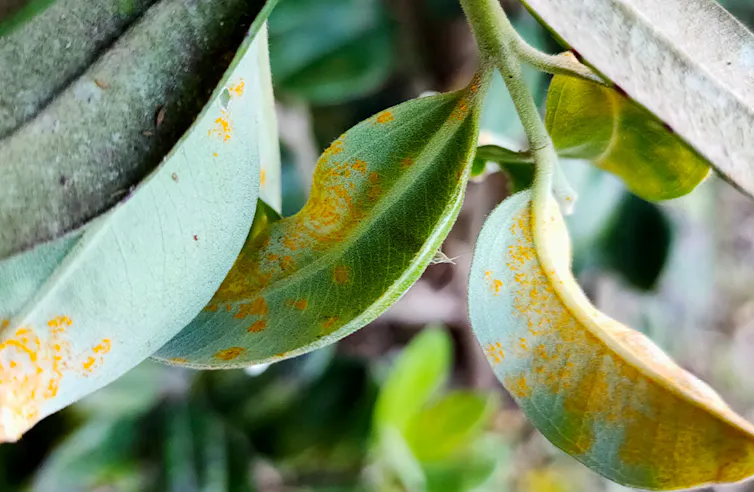
Myrtle rust spores closely resemble pollen grains: they are yellow, spherical and often found on flowers and infected leaves. That makes them easy for honeybees to take for a traditional food source.

Pōhutukawa leaves infected by myrtle rust. Department of Conservation, CC BY-NC-ND

To test whether this has been happening, we compared myrtle rust spores with familiar pollen sources such as kiwifruit and willow.

We found the spores themselves contained all the essential amino acids young bees need to grow, along with enough protein to support healthy colony development.

We also fed bee larvae royal jelly – a honey bee secretion used in the nutrition of larvae and adult queens – mixed with myrtle rust spores. The larvae developed just as well as those fed high-quality pollen from familiar sources such as kiwifruit and willow.

This suggests bees may not be collecting the spores by accident, but deliberately using them as a nutritious food source, which could increase the likelihood of repeated transport of spores.

We also tested whether the spores stayed alive after entering the hive. Honeybee colonies were placed near active myrtle rust outbreaks, and we sampled both returning bees and pollen stored inside the hive.

Spores were found on nearly half of returning bees and in almost half of the pollen cells. Further experiments showed those spores could remain viable inside colonies for at least nine days.

That means hives themselves may act as reservoirs for the disease, with managed hives potentially carrying infectious spores long distances when they are moved between sites.

Rethinking the risk

Our analysis suggests the very same behaviour that makes honeybees such invaluable pollinators may also make them highly effective carriers of myrtle rust.

The relationship may also represent what scientists call “invasional mutualism” – where two introduced species help each other succeed. In this case, the honeybee gains a new food source, while the fungus gains a powerful long-distance transport system.

That raises important biosecurity questions, not only for beekeepers but for the wider protection of native ecosystems.

Honeybees live in highly organised colonies and communicate with each other about good food sources. Once they find one, they recruit other workers and return to it repeatedly.

If myrtle rust spores are being treated like pollen, that means infected plants could become repeated targets, increasing the chances of spores being picked up and spread to new host plants.

There is also the issue of hive movement. Beekeepers often shift hives long distances to follow flowering crops and mānuka blooms, creating the possibility that spores could be transported far beyond the original outbreak.

If hives are moved from heavily infected areas into native forest or conservation land, they may unintentionally help trigger new outbreaks.

A stand-down period could potentially help reduce that risk, giving any spores carried back to the hive time to die off before bees are introduced near vulnerable native forest. Otherwise, infected hives could help drive more serious outbreaks in those ecosystems.

In Australia, myrtle rust has become a biological disaster, threatening at least 15 native species with extinction, while costing the nursery and lemon myrtle industries millions of dollars in annual management and lost production.

In Aotearoa, where taonga species are also under threat, the stakes are just as high.

Understanding how the disease moves – not just by wind, but potentially by bees as well – is essential if we want to slow its spread before irreversible damage is done to our native forests.


The authors acknowledge the contribution of Dr David Pattemore.


The Conversation

Sacchi Shin-Clayton received research funding from the New Zealand Ministry for Primary Industries and the New Zealand Institute for Bioeconomy Science Limited, Plant & Food Research Group.

Jacqueline R Beggs does not work for, consult, own shares in or receive funding from any company or organisation that would benefit from this article, and has disclosed no relevant affiliations beyond their academic appointment.

  •  

India’s Horn of Africa strategy has shifted: what it’s trying to do and how it could work

India’s engagement in the Horn of Africa and Red Sea basin was, until recently, largely limited to UN peacekeeping operations and anti-piracy patrols.

Since the second half of the 1990s, India has participated in nearly all peacekeeping operations in Africa.

Anti-piracy efforts emerged between 2008 and 2014 as piracy off Somalia and the Gulf of Aden spread across a vast maritime space. This spanned east Africa and the wider Indian Ocean, bringing threats close to India’s shores.

Indian trade routes were exposed to new security risks, so a more sustained maritime posture was needed.

From the mid-2010s, therefore, India expanded its engagement in the Horn of Africa and the Red Sea basin to secure shipping lanes linking it to global markets. At the same time, it sought to counter China’s growing naval presence along the western Indian Ocean coast, protect its diaspora and investments, and position itself as a regional security provider.

When Prime Minister Narendra Modi took office in 2014, this shift accelerated. India placed greater emphasis on proactive diplomacy, expanding high-level engagement, and trade and infrastructure links. It also pursued strategic coordination through bilateral agreements and naval exercises across west Asia and the adjoining African coastline.

India, the Horn of Africa and the Red Sea basin

This evolution reflects India’s transition from a post-colonial, non-aligned actor to a more assertive power with ambitions outside the region. It is now Africa’s third-largest trading partner. Economic interdependence is growing alongside geostrategic interests.

Drawing on our work on international security in the western Indian Ocean and sub-Saharan Africa, we argue that over the past decade New Delhi has redefined the Indian Ocean as a protective buffer and a primary theatre of influence linking the Indo-Pacific to the Red Sea. The Horn of Africa lies at the heart of this connective space.

In 2023, India declared itself the Indian Ocean’s “net security provider”. It introduced a framework to strengthen regional security, deepen economic cooperation and address shared maritime challenges.

Today, with shipping routes being recalculated and governments reconsidering their strategic partnerships, India’s position is being put to an operational test.

The Horn is a space where legitimacy, delivery and endurance determine who remains relevant after the headlines fade. For the first time, India’s quiet advance is visible. Next, it will have to solidify its presence.

Why the Horn of Africa is important for India

An initiative called the 2025 Africa-India Key Maritime Engagement, co-hosted with Tanzania, positions India as a security partner for African nations, particularly those along the Indian Ocean rim.

India is also involved in development and investment projects in the region. These include agricultural efforts to improve food security, infrastructure projects, and technical assistance in education and health. It also provides humanitarian assistance in Somalia, Kenya and Djibouti.

What distinguishes the past decade is the effort to align these activities within a broader strategic narrative – one that presents India as a partner offering technology and development without debt concerns or political conditions.

This narrative is attractive to local governments in the Horn. But it also creates a test: India must show that it can deliver consistently.

Ethiopia has an important role for India. It hosts the African Union, functions as a diplomatic centre and offers an entry point into African multilateral politics.

Somalia also matters. It sits close to critical sea lanes and is central to the security of the Gulf of Aden. External actors there can convert security assistance into political access.


Read more: China’s military support for Somalia is on the rise – what Taiwan and Somaliland have to do with it


India’s interest in Somalia and Somaliland has taken on a geo-economic dimension. Indian firms are focusing on gold and mineral resources, particularly in eastern Somaliland.

Although still limited in scale, this shift signals that India’s footprint in the Horn is no longer confined to security and development assistance. It is intersecting with resource access and supply chain strategies.

The competition

The corridor of the Red Sea, Gulf of Aden and western Indian Ocean has become a crowded arena for external powers over the past two decades.

Great powers have seen countries in the region as a platform for counterterrorism and naval reach. Small and middle powers (like Turkey, Iran and Gulf states) have sought to secure influence through ports, training missions, arms transfers, commercial access and selective mediation.

The result is a dense environment. Almost every external actor offers a package of security, finance, technology and diplomacy. Fragile local governments hedge among them.

India’s challenge is to deliver consistently through:

  • creating defence and security training pipelines

  • project delivery

  • stable financing instruments

  • sustained bureaucratic attention.

If India’s Africa policy is maritime-led, then things like naval exercises, information-sharing, coast guard cooperation and institutional training must become regular and visible.

If the strategy is also developmental and technological, then India must deliver flagship projects in digital infrastructure, health and agriculture.

From quiet influence to lasting power

India faces three constraints in growing its influence in the Horn of Africa.

1. Limited military capacity

India’s naval capabilities do not match the scale of China’s fleet or America’s technological edge and operational depth. This gap is not fatal if India’s aim is durable influence through partnership. It does mean that India’s leverage will depend on institutional cooperation and coalition-building.

2. Competitive density

The Horn’s architecture is made of foreign bases, port diplomacy and overlapping rivalries. India’s advantage is that it’s not overwhelmingly intrusive. But it could become just one more actor among many.

3. Institutionalisation

If India’s engagement depends too heavily on leader-level attention, it will remain vulnerable to distraction. Durable influence requires bureaucratic routines and financing mechanisms. It must survive political cycles and shifting crises. Ethiopia is a test case. High-level roadmaps will have to turn into visible digital infrastructure, health systems and agricultural support.

The broader point is that the Horn is not an empty theatre waiting for India to arrive.

The Conversation

Federico Donelli is affiliated with the Italian Institute for International Political Studies (ISPI), the Nordic Africa Institute (NAI), and the Orion Policy Institute (OPI).

Riccardo Gasco is affiliated with IstanPol Institute.

Chiara Boldrini does not work for, consult, own shares in or receive funding from any company or organisation that would benefit from this article, and has disclosed no relevant affiliations beyond their academic appointment.

  •  

Ten compelling poems about climate change – chosen by our experts

Three Reading Women in a Summer Landscape by Johan Krouthén (1908). WikiCommons

We asked ten literary experts to recommend the climate poem that has spoken to them most powerfully. Their answers span over 200 years and a range of emotions from sorrow, to anger, fear and hope.

This article is part of Climate Storytelling, a series exploring how arts and science can join forces to spark understanding, hope and action.

1. Death of a Field by Paula Meehan (2005)

Published in the wake of the 2008 financial crisis, Paula Meehan’s Death of a Field critiqued the environmental impact of the Celtic Tiger economy in Ireland.

The poem anticipates the destruction of the titular field by property developers with little regard for native ecologies: “The end of the field as we know it is the start of the estate.”

Death of a Field read by Paula Meehan.

The global effects of the climate crisis are seen from a uniquely local perspective as the displacement of Irish wildlife mirrors the effect of colonial violence. “Some architect’s screen” is simply the latest iteration of imperial technologies that seek to plunder Irish landscapes. The poem gains further strength by refusing to replicate a hierarchical relationship to nature by preserving its many mysteries:

Who can know the yearning of yarrow

Or the plight of the scarlet pimpernel

Whose true colour is orange?

Jack Reid is a PhD Candidate in Irish literature

2. Darkness by Lord Byron (1816)

Darkness imagines the fallout of a volcanic eruption that has destroyed the Earth. The “dream” that the poem mentions was inspired by genuine weather conditions during the “year without a summer” in 1816, caused by the eruption of Mount Tambora in Indonesia the previous year.

Darkness by Lord Byron.

Sulphur in the atmosphere caused darkness and low temperatures across Europe. In Lake Geneva, Lord Byron experienced the infamous “haunted summer” of darkness.

Byron’s depiction of climate catastrophe is bleak, with words like “crackling”, “blazing” and “consum’d” bearing resemblance to contemporary reports of wildfires caused by climate change. After a famine, all elements of Byron’s Earth, from the clouds to the tide, eventually cease to exist: “Seasonless, herbless, treeless, manless, lifeless– / A lump of death – a chaos of hard clay.” Read as a portent of the Anthropocene, Byron’s poem urges readers to seriously consider the future of mankind.

Katie MacLean is a PhD candidate in English Literature

3. Mont Blanc by Percy Bysshe Shelley (1817)

Byron’s close friend Percy Bysshe Shelley was also inspired by the “year without a summer”. He witnessed temperatures drop, volcanic ash hanging heavy in the air and crops failing. While his wife Mary used the gloomy climatic event to inform her novel Frankenstein (1818), Shelley channelled them into his poem Mont Blanc.

A reading of Mont Blanc.

In his ode, Shelley describes a timeless “wall impregnable of beaming ice”. By drawing on his scientific reading, he then explains his fears regarding global cooling and the possibility of vast glaciers eventually covering the alpine valleys.

He imagines “the dwelling-place / Of insects, beasts, and birds” being obliterated and mankind forced to flee. While Shelley saw this process as “destin’d” and inevitable, it is clear that Mont Blanc is a poem with catastrophic climate change at its heart. In 2026, it is difficult to read in any other way.

Amy Wilcockson is a research fellow in Romantic literature

4. Characteristics of Life by Camille T. Dungy (2012)

There’s something gloriously elastic about invertebrates: the spinelessness of a worm, the pulsing of the jellyfish, the curling of an octopus. Spiders, snails and bees, too, with their exoskeletons on display, invite us to see things “inside-out”.

These are the thoughts I have when I read Characteristics of Life by Camille T. Dungy, which opens with a snippet from a BBC news report claiming that “a fifth of animals without backbones could be at risk of extinction”. What would a world be without the “underneathedness” of the snail beneath its shell beneath the terracotta pot in the garden? Or “the impossible hope of the firefly” whose adult lives span only a handful of human weeks?

Camille T. Dungy speaks about nature and poetry.

Dungy speaks from a “time before spinelessness was frowned upon”, and from a world where to dismiss a being as “mindless” (jellyfish have no brains) or even “wordless” would be “missing the point” entirely. As I think of these creatures that dwell beyond our usual line of vision – flying, crawling, tunnelling and swimming – I find my perspective on our beautiful world turning and shifting.

Janine Bradbury is a poet and a senior lecturer in contemporary writing and culture

5. Prayer at Seventy by Vicki Feaver (2019)

One of my favourite poems about climate change is Vicki Feaver’s Prayer at Seventy from her 2019 collection I Want! I Want!.

The speaker’s request of passing her “last years with less anxiety” appears to be denied by a god who first responds by changing her into “a tiny spider / launching into the unknown / on a thread of gossamer” and who, when she begs to “be a bigger / fiercer creature”, turns her into “a polar bear / leaping between / melting ice floes”.

A reading of Prayer at Seventy by Vicki Feaver followed by an explanation by the poet.

Both images present creatures who are in precarious positions, their futures uncertain, reflecting the state of a person contemplating the unknowns of old age and death. But the poem moves beyond the personal. The reference to the melting ice floes is not solely metaphorical: it reminds us that the planet itself is in danger and every living thing is therefore vulnerable – and will be increasingly so.

Julie Gardner is a PhD candidate in literature


Read more: How poetry can sustain us through illness, bereavement and change


6. Walrus by Jessica Traynor (2022)

Walrus, from Jessica Traynor’s 2022 collection Pit Lullabies expresses the quiet anxiety a mother has for her child in the world of climate breakdown.

While stripping wallpaper from the box room of her house, the poet discovers a mural of the Walrus and the Carpenter from Alice’s Adventures in Wonderland. Traynor takes part of Lewis Carroll’s poem about the Walrus and the Carpenter walking along the beach, eating the vulnerable oysters, and weaves it into her own poem.

Jessica Traynor reading poems from her collection Pit Lullabies.

Carroll’s absurd verse includes what, at that time no doubt, seemed like an impossible image of a “boiling hot” sea. In the 21st century, this is no longer an absurdity, as Traynor knows. She makes a connection with Carroll’s poem, imploring her child:

Sleep as the sun rises and ice melts

and for want of the freeze a walrus

pushes further up a cliff-face.

It’s a complex poem that reimagines a key work of children’s literature, connecting it with the reality of the changing world. All the while the mother keeps her fears at bay for the sake of her child, “brows[ing] washing machines” with a “ball of tears” in her throat.

Ellen Howley is an assistant professor of English

7. Ocean Forest, co-created by the We Are the Possible programme

Ocean Forest is woven out of words, research, ideas and stories shared by scientists, educators, health professionals, youth leaders, writers and artists. They took part in creative writing workshops to co-create the anthology Planet Forest – 12 Poems for 12 Days for the UN Climate Conference in Brazil in 2025.

In the shallows, alert to change,

the minuscule, overlooked creatures

weave between seagrass, and weed –

live their shortened lives.

When ships pass overhead, when sands shift,

fish navigate swell, migrate beyond

where coral’s been bleached, through schools

of silenced whales and barely rooted mangroves

struggling to thrive in darkening water.

Deeper down,

pressure builds, species exist, unaware,

undisturbed. As heat and waves rise there’s hope

the unfound, the unnamed, the unpolluted

in the remotest ocean forests will survive.

Through uniting disciplines and voices the poem takes unexpected shifts. It demonstrates that climate change affects and erodes the habitats that lie beneath the surface and that urgent action is needed to protect disappearing species.

Yet, there is also a glimmer of hope – that in the deepest, darkest parts of the ocean, where temperatures are near freezing and there are bone-crushing pressures, maybe there are creatures that will survive human interference and pollution.

Sally Flint is a lecturer in creative writing and programme lead on the We Are the Possible programme

8. Di Baladna (Our Land) by Emi Mahmoud (2021)

Emtithal “Emi” Mahmoud is a Sudanese poet and activist, who has won multiple awards for her slam poetry performances. Mahmoud performed Di Baladna at the United Nations Climate Change Conference in 2021.

Poetry – especially spoken word – helps people connect emotionally with the human side of climate-driven displacement, a topic that’s often explained only through technical language. The language of emissions targets, temperature thresholds, or policy frameworks can distance people emotionally from its consequences. Yet poetry can cut through this abstraction.

Di Baladna (Our Land) read by Emi Mahmoud.

Mahmoud’s performance gave voice to those forced from their homes by environmental collapse, reminding listeners that climate change is not only an environmental crisis but a deeply human one, with profound effects on individuals, families and communities.

By merging vivid natural imagery with the rhythms of displacement and lived testimony, the poem urges listeners to replace passive awareness with empathy. Mahmoud implores us to feel the loss, fear and resilience of displaced communities, looking beyond news headlines and images of victimisation. Engaging with such work helps transform climate refugees from statistics into people.

Clodagh Philippa Guerin is a PhD candidate in refugee world literature

9. Flowers by Jay Bernard (2019)

At first glance, Jay Bernard’s Flowers is circular poem (one that begins and ends in the same place) but you soon realise that the circle isn’t going to complete. It opens:

Will anybody speak of this

the way the flowers do,

the way the common speaks

of the fearless dying leaves?

And closes:

Will anybody speak of this

the fire we beheld

the garlands at the gate

the way the flowers do?

And the answer seems to be, no: no one will speak of these things – the “coming cold” and the “quiet” it will bring – only the things themselves as they die. With the songs Where Have All the Flowers Gone? by Pete Seeger and Blowin’ in the Wind by Bob Dylan in its DNA, Flowers has the eternal power of a folk-lyric – prophetic and unignorable.

Kate McLoughlin is a professor of English literature

10. Place by W.S. Merwin (1987)

Climate change poetry – should it be a thing? How do poets avoid the oracular pomp it threatens? Browsing my small library I’m shocked anew to realise most poets lived and died blissfully innocent of our condition.

OK, what about the late John Burnside’s lyric Weather Report (“this is the weather, today / and the weather to come”). It poignantly extrapolates from a sodden summer to his sons’ futures: “a life they never bargained for / and cannot alter”. Heartbreaking. Or the odd dread of spring in Fiona Benson’s Almond Blossom, a season characterised as Earth’s, “slow incline … inch by ruined inch”. Ditto.

W.S. Merwin reads Place.

But then I reach back to the great American poet W.S. Merwin’s short prayer Place to find that grace-note of hope which surely needs to thread through all poems, whether they speak of climate change, mortality or love: “On the last day of the world / I would want to plant a tree.” Me too.

Steve Waters is a playwright and professor of scriptwriting at the University of East Anglia

This article features references to books that have been included for editorial reasons, and may contain links to bookshop.org. If you click on one of the links and go on to buy something, The Conversation UK may earn a commission.

The Conversation

Amy Wilcockson receives funding from Modern Humanities Research Association as Research Fellow for the Percy Bysshe Shelley Letters project.

Steve Waters receives funding from AHRC

Clodagh Philippa Guerin, Ellen Howley, Jack Reid, Janine Bradbury, Julie Meril Gardner, Kate McLoughlin, Katie MacLean, and Sally Flint do not work for, consult, own shares in or receive funding from any company or organisation that would benefit from this article, and have disclosed no relevant affiliations beyond their academic appointment.

  •  

Amid rising tensions, ‘friendshoring’ might keep global trade alive

Blossom Stock Studio/Shutterstock

The world economy is at a crossroads. International trade is slowing, economic uncertainty is rising, and trade between the US and China – the world’s two largest economies – risks pulling apart. And it is not just trade: the two countries also invest less in each other than they did just a few years ago.

What is driving this reconfiguration of trade? For some large economies, including the US under President Donald Trump, a desire for greater self-reliance is central. Between 2017 and 2023, American imports fell most sharply in the very products where the US had been most reliant on China – including industrial machinery, computers and computer parts, and other electronic equipment such as monitors.

This has important implications for global value chains (GVCs). GVCs are the backbone of international trade – production activities from research and product design to assembly are distributed across various locations, with “value” being added at each stage. This redistribution can take place across several countries, co-ordinated by multinational firms.

The reconfiguration of GVCs is accelerating, and so industrialised economies now have two main options. They can reshore production, bringing manufacturing back to their own countries (a stated priority for the current US administration).

Or they can “friendshore”, shifting imports and investments towards economies that are either geographically closer, or with which they have long-standing relationships.


Read more: After a year of Trump, who are the winners and losers from US tariffs?


For developing countries, the balance between these two strategies is crucial. If advanced economies reshore a substantial share of production, developing countries could suffer as investment and jobs are lost.

And automation and digitisation now make it more convenient for advanced countries to produce goods at home, making this a greater risk to these poorer countries than it was a decade ago.

For consumers though, this reshoring could mean higher prices for everyday goods, at least in the short term, because of the higher costs of manufacturing in more advanced economies. It should be said, however, that the empirical evidence for this remains limited.

Risks and opportunities

But friendshoring offers an alternative. Early signals from countries like Mexico and Vietnam – which have recently seen an increase in investment and factory expansions from multinational firms – suggest that friendshoring can create opportunities. When paired with supportive government policies such as investment incentives or help to upgrade technology, these shifts can ensure that more production takes place domestically. This can lead to greater technology spillovers and learning.

To understand the risks and opportunities, we examined the specific products where US-China decoupling is most pronounced (that is, where trade is reducing). From this analysis, two broad clusters emerged, each with different implications for developing economies.

The first group mainly includes relatively complex goods – things like consumer electronics, vehicle components, chemicals and machinery. Here, the US is both diversifying its imports quickly and is already producing these goods competitively.

The products and sectors at the heart of the reconfiguration of GVCs

These products can easily be reshored, particularly if automation lowers costs. Semiconductors, for instance, are already the focus of major US reshoring efforts. Yet the risk to current producers of the US reshoring appears limited for now. While the US has reduced imports from China of these products, other developing regions have not experienced a similar trend.

In the second group, the US is diversifying but is not competitive enough to bring production home. This group accounted for just over 6% of finished products that the US imported in 2023 – roughly US$181 billion (£134 billion). This is a small share overall, but economically significant.

Within this group, two types of opportunity emerge. Technologically complex goods, such as electrical equipment, computers and car parts, offer the greatest potential for middle-income economies with strong manufacturing experience to win contracts and investments. Lower-tech goods like textiles and furniture are better suited to lower-income countries. In both cases, governments need to negotiate carefully to ensure investments add value locally, support skills development and avoid social or environmental harm.

For consumers worldwide, friendshoring offers a more benign outlook than reshoring or tariffs. Goods may simply be made in different countries, with prices remaining broadly stable.

Who could gain?

So far, east and south-eastern Asia – including Vietnam, Thailand, Malaysia and Indonesia – have captured the largest share of these friendshoring opportunities, particularly in high-tech sectors like computers. Their exports to China have also risen, reinforcing their central role in Asian manufacturing networks. But whether this momentum continues will depend on tariffs, production costs and the pace of automation.

Other beneficiaries could include Latin America and Caribbean nations, led by Mexico. Here, the automotive sector dominates export growth. South Asia could also benefit, with India expanding in both high- and low-tech products, and Bangladesh at the lower-tech end. In contrast, Africa and western Asia remain largely absent from the emerging friendshoring landscape.

The risk to these countries of large-scale reshoring remains limited for now but cannot be ignored amid shifting global trade and investment patterns. But friendshoring could offset or even exceed potential losses, offering new pathways for industrialisation.

As economic uncertainty and technology reshape global value chains, developing economies that invest in production capabilities – and implement smart industrial policies – will be best placed to harness opportunities. In some cases, friendshoring may even allow them to leapfrog into more sophisticated activities faster than traditional development paths would allow.

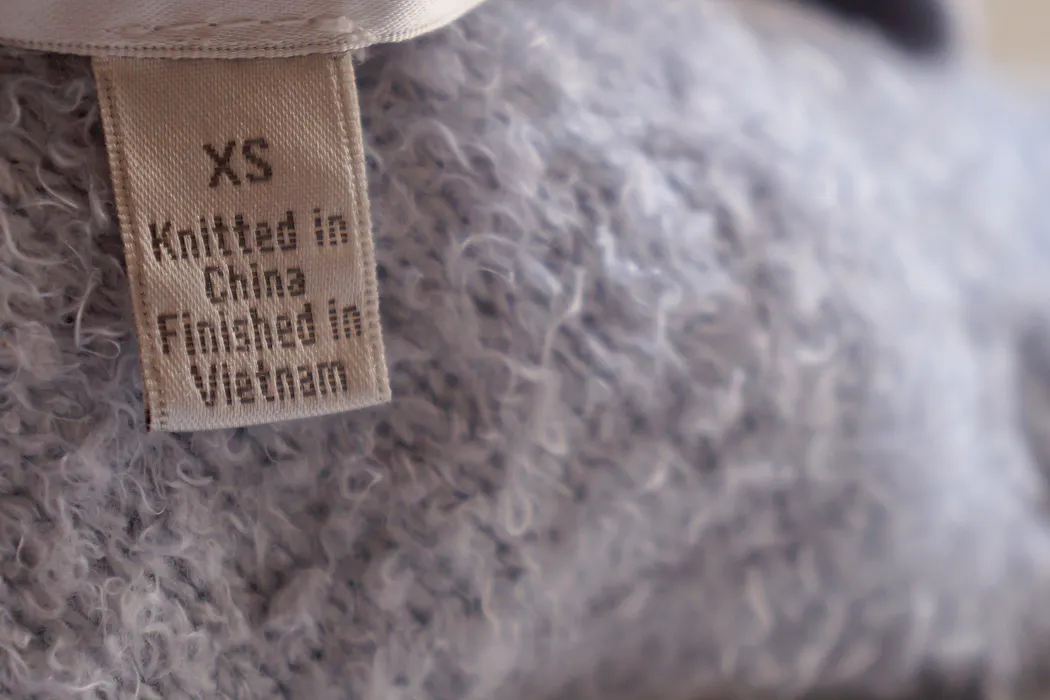
For consumers, there are benefits too. The label on our next laptop, charger or T-shirt might change, but prices will remain broadly stable – at least before tariffs kick in. In this sense, globalisation will not disappear. But it will take on a different geographical shape.

The Conversation

This article builds on UNIDO IID Policy Brief 28, "Navigating a fragmenting global economy: What GVC reconfiguration means for future industrial development". The views expressed in the Policy Brief and in this article are those of the authors, based on their research and expertise, and do not necessarily reflect the views of UNIDO.

Carlo Pietrobelli and Nicolò Geri do not work for, consult, own shares in or receive funding from any company or organisation that would benefit from this article, and have disclosed no relevant affiliations beyond their academic appointment.

  •  

How authoritarian regimes use education as a political tool

School students in a National Day parade, Asmara, Eritrea. Angela N Perryman/Shutterstock

It’s often assumed that expanding access to education is progressive – that it’s a means of ensuring social, economic and political development. However, this is not always the case.

We’ve carried out research examining the relationship between education and authoritarianism with a focus on Eritrea. Eritrea has been under a single political party and leadership since its independence in May 1993. The country lacks a functioning or implemented constitution and freedom of the press.

Our research has concluded that, in countries under authoritarian rule, education is not necessarily a path to empowerment. Instead, it’s a fertile ground for the spread of authoritarianism. Governments can spread their ideas and principles through repressive and ideological state apparatus – the processes and organisations they use to maintain power. This includes education.

Authoritarian regimes such as Eritrea claim to address societal problems through social justice and cohesion. However, they consolidate power around a single or dominant regime, which restricts democratic institutions and erodes civic liberties. They also apply preferential treatment based on political loyalty. People are elevated to positions of power for allegiance rather than merit. This causes division and political polarisation in the name of protecting national security.

Expanding education

Authoritarian states use education to maintain political stability to ensure the survival of the regime. Although many authoritarian regimes expand access to education, it is often used as a means of control and a tool for manufacturing loyalty.

For example, since independence, the number of schools and student enrollment in Eritrea has increased around fourfold. However, such regimes also see education as an opportunity to impose their attitudes onto young people. They use education to keep students isolated from ideas that may differ from or be critical of the regime.

Authoritarian regimes use deception and misinformation to uphold their ideology and extend their control. In doing so, they attempt to ensure that citizens accept the legitimacy of their rulers without question.

Additionally, authoritarian regimes politicise the school curriculum. They manipulate content, such as in history and citizenship education. This is used to mislead citizens and make them supporters of the degradation of human rights.

Building with flags against blue sky
Flags on a government building in Asmara, Eritrea. Angela N Perryman/Shutterstock

For example, Eritrea’s school curriculum normalises the creation of a militarised citizen who upholds the Eritrean People’s Liberation Front’s legacy and revolutionary culture. Similarly, North Korea uses school education to shape students’ behaviour, attitudes and beliefs to be compatible with and supportive of the regime. This is often supported by controlling the teaching and learning process and the academic environment.

Monitoring teachers and research

Authoritarian regimes recognise that safe education spaces can help students develop critical thinking and eventually question the country’s political system. They monitor teachers and school leaders, and promote those loyal to the regime’s ideas and principles. And, rather than encouraging critical thinking, they foster students’ sense of nationalism and patriotism.

Academic research is also a target of authoritarian regimes because of its scrutiny of government policies and actions. Researchers’ academic freedom is limited, and their choice of research topics is policed.

Most of these control measures are imposed in the name of protecting national security. For example, Eritreans are not allowed to conduct critical research that challenges the existing systems, inequalities and power structures of the country.

Researchers who cross the boundaries and criticise authoritarian regimes are silenced. Some are fired from their jobs while others face prison terms.

Meanwhile, authoritarian regimes rely on loyal academics to promote the state’s narrative. Loyal academics are also used to conceal authoritarian regimes’ failures by presenting selective evidence.

Many authoritarian states, such as China, Eritrea and North Korea, also incorporate military training into education. They blend political and ideological instruction to sustain their power. They teach students discipline and promote patriotism to develop loyal and obedient citizens.

Militarisation education sometimes places teachers and school leaders under military control. In Eritrea, all secondary school students complete their last year under military authority. This approach leads students to drop out of school. Additionally, it causes students and teachers to leave the country.

Authoritarian regimes manifest their true nature by spreading their ideas and principles. Our research shows that the education system is one of the most important levers in the propaganda machine for authoritarian countries.

The Conversation

Samson Maekele Tsegay is a Research Fellow at Anglia Ruskin University.

Zeraslasie Shiker is a PhD researcher at the University of Leeds.

  •  

Marty Supreme, Watergate, and menopausal punk-rock rage: what to stream in May

The Conversation

Along with a drop in temperatures, May brings plenty of new streaming options, whether you’re after some classic American political drama, or some local family TV you can enjoy with the kids.

We’ve also got Timothée Chalamet’s Oscar-nominated film Marty Supreme coming to Stan, as well as a new series from Richard Gadd (of Baby Reindeer fame) on HBO Max. Sit back, grab a blanket, and enjoy.

All The President’s Men

Prime Video and Apple TV

All the President’s Men, which has just turned 50, was based on the 1974 book by journalists Bob Woodward and Carl Bernstein, who investigated the Watergate scandal for the Washington Post.

A masterpiece of political cinema, All The President’s Men remains one of the finest films about investigative journalism ever made. Steeped in a fog of paranoia and distrust – an atmosphere shaped in no small part by cinematographer Gordon Willis’ matchless treatment of light and shade – it is as relevant now as it was on first release.

Redford was the driving force behind the film. Convinced that the story demanded a restrained, quasi-documentary approach, he initially envisioned a black-and-white film shot in a pared-back style, with an emphasis on process rather than star power.

Warner Bros, with whom he had a production deal, thought otherwise. Having already agreed to finance the film, the studio insisted that Redford take a leading role – and marketed the as yet-unmade project as “the most devastating detective story” of the century.

The result is an endlessly watchable and quotable (“Follow the money”) film that generates narrative and dramatic tension through the sheer difficultly of knowing anything at all.

In age beset by disinformation, brazen political deceit, strategic obfuscation and collapsing trust in public institutions, that lesson feels less historically distant than it does disturbingly prescient.

– Alexander Howard


Read more: All The President’s Men at 50: one of the finest films about investigative journalism ever made


Caper Crew

ABC iView

The ABC’s new series Caper Crew follows 12-year-old Amelia Delaney (Isabella Zhang) and her 9-year-old brother Kai (Luka Sero), who live in Woodspring, “the most boring town on Earth”. That is, apart from one incident 27 years ago when the infamous Kangaroo Gang stole the town’s priceless golden meteorite. “The Nug” was never found, despite a $100,000 reward.

When their mysterious con-artist grandmother, Queenie, appears out of the blue and starts teaching them the art of the grift, Amelia and Kai can’t help but wonder: was Queenie part of the Kangaroo Gang? Does she know where The Nug is? The siblings join forces with their friends Penelope (Caitlin Niemotko) and Ophelbert (Tevita Hu) on a mission to find the lost object.

The young cast members are very endearing. The adults don’t disappoint, either; Tina Bursill is magnetic as Queenie, while Annie Maynard and ABC-favourite Michael Theo captivate as Mayor Katinkatonk and drama teacher Jojo Encore, respectively.

For parents and carers watching with kids, Caper Crew combines a Wes Anderson-esque visual quality with a nostalgic ode to millennial classics such as Matilda and Harriet the Spy. It may charm younger viewers into taking up magic, or planning their own heists. It also reminds us just how good Australian family TV can be, with a bit of resourcing.

– Alexa Scarlata


Read more: ABC’s Caper Crew delivers heists and heart – a bright spot in a struggling kids’ TV sector


Riot Women

SBS On Demand

“And you thought The Clash were angry!” retorts Beth (Joanna Scanlan), describing her newly-formed punk band of women largely 50 years and over.

Riot Women, a hilarious five-part BBC drama series, champions strong female characters whose dilemmas authentically reflect the female experience. The band’s tracks Hot Flush, I’m Not Done Yet, and Invisible No More counter society’s assumption that menopausal women have a use-by date.

Punk is used as a metaphor for female rampage, rather than the show’s subject – and despite some dark storylines (including suicide and violence against women), the show is a raucous celebration of women on their own terms. These women find joy and energy in mid-life, emerging as formidable because they no longer give a damn.

Riot Women is written by Sally Wainwright and co-directed by Wainwright and the late Amanda Brotchie, an enormously talented Australian director.

The outstanding ensemble cast is drawn from the crème de la crème of British talent, with Joanna Scanlan as Beth, Rosalie Craig as Kitty, Lorraine Ashbourne as Jess, Tamsin Greig as Holly, and Amelia Bullmore as Yvonne.

It’s an original, emotionally resonant and high-quality drama that, like much of Wainwright’s work, doesn’t disappoint.

– Lisa French

Marty Supreme

Stan, from May 15

Marty Supreme is a frenetic tale inspired by Marty Reisman, the charismatic American table tennis champion of the 1950s.

Charged by Timothée Chalamet’s electric lead performance – alongside a stellar supporting cast (including Gwyneth Paltrow), and director Josh Safdie’s signature, anxiety-inducing aesthetic – the film captures a young man’s all-or-nothing quest for greatness.

Marty Mauser is a morally ambiguous protagonist engaged in a sociopathic, self-obsessed pursuit of glory. But Safdie invites the audience to champion his quest. In this, Marty emerges as a particularly compelling entry into Hollywood’s longstanding tradition of unlikable heroes.

How does Safdie succeed in creating a protagonist who – despite lying that his mother died during childbirth and neglecting his pregnant girlfriend – nonetheless wins the audience’s support?

Marty’s championing is undoubtedly in part due to Chalamet’s star image and onscreen charisma. And his quest for greatness depicts the triumphant tale of a figure who, against all odds, continues to pursue his dreams with obsessive belief.

While his extreme measures may be unsympathetic – and perhaps unforgivable – Marty’s fundamental desire to transcend his circumstances remains relatable. His unrelenting commitment to his dream catalyses his moral failing. But he is nonetheless a figure capable of tenderness.

While Marty Supreme dramatises the egotistical pursuit of its flawed protagonist, it ultimately explores the universal ambition to dream big – and questions what is worth sacrificing in order to achieve success.

Oscar Bloomfield


Read more: Antihero Marty Supreme is sociopathic in his pursuit of glory. Why do we want him to win?


Lizard

Mubi

Lizard (2020) is a Sundance-winning short film by British-Nigerian filmmaker and writer, Akinola Davies Jr. Currently streaming on Mubi, alongside Davies’ BAFTA-winning debut feature My Father’s Shadow (2025), it’s a magical and gritty portrait of religion, hypocrisy and violence.

Co-written with his brother, Wale Davies, Lizard is based on Davies Jr’s own childhood experiences. The thematically nuanced 18-minute narrative follows the inquisitive eight-year-old Juwon who, following some misbehaviour and removal from her Sunday school service, confronts the criminal underbelly of her Lagos church.

The fluidity between the real and surreal is central to Davies Jr’s cinematic imagination. Juwon is gifted with the ability to sense danger. Her mystic-like intuition materialises in the presence of the eponymous agama lizard: a figure who leads the young girl through her milieu.

The film masterfully blends elements of the fantastical with realist stylisation. It’s a portrayal of sociopolitical corruption and exploitation, but also extends beyond this. Through Juwon’s child-like imagination, it confronts the processes of understanding trauma and memory – with the film’s sensibilities questioning reality’s supposed superiority over fantasy.

Davies Jr is cementing himself as an exciting, distinctive voice in international cinema. I’m looking forward to watching My Father’s Shadow.

Oscar Bloomfield

Half Man

HBO Max

Richard Gadd is perhaps best known for his hugely successful series, Baby Reindeer. Part of the unsettling thrill of that Emmy-award winning series was watching a dramatisation of Gadd’s own experience of being stalked. We saw a vulnerable protagonist, played by Gadd, drawn into considerably uncomfortable situations.

Now Gadd has returned to our screens with a new series called Half Man. A similar viewing experience to Baby Reindeer is established in the opening episode, where we witness a vulnerable, isolated young man get drawn into a toxic relationship. Gadd is a master at building tension and discomfort.

Niall (Jamie Bell) is visited by his estranged step-brother Ruben (Gadd) on his wedding day. After a violent confrontation, we jump back 30 years to when they were two schoolboys. Ruben has just gotten out of youth detention and, since his mother is dating and living with Niall’s mother, he has no choice but to move in and share Niall’s room.

As boys, a young Ruben (Stuart Campbell) is prone to violent outbursts at any moment, and young Niall (Mitchell Robinson) is shy and bullied by his classmates for being perceived as gay. The early dynamics between the two boys make for incredibly unsettling viewing. But knowing how good the emotional pay-off of Baby Reindeer was, I can’t wait to see where the series goes.

– Stuart Richards

The Conversation

The authors do not work for, consult, own shares in or receive funding from any company or organisation that would benefit from this article, and have disclosed no relevant affiliations beyond their academic appointment.

  •  

Which bird has the best song? These experts think they know

To mark International Dawn Chorus day we’ve asked wildlife experts to make their case for why their favourite songbird deserves your vote. Cast your vote in the poll at the end of the article and let us know why in the comments. We hope their words will inspire you to step outside and soak up some birdsong this spring.

Song thrush

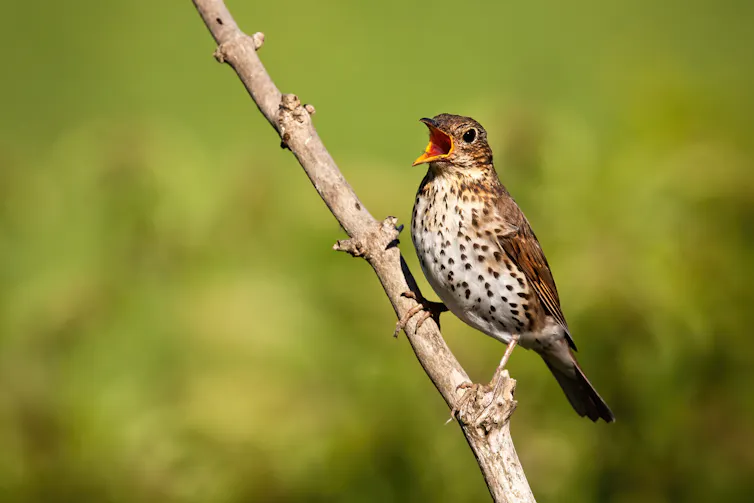
Brown bird perches on branch, beak open in song
Could the song thrush steal your heart this spring? WildMedia/Shutterstock

Championed by Cannelle Tassin de Montaigu, Research Fellow in Ecology and Evolution, University of Sussex

When people talk about the UK’s best bird songs they often go straight for the big names – loud, dramatic performers that grab your attention. But quietly in the background is the song thrush, a bird whose song is far more impressive than it first appears.

What sets the song thrush apart is not volume or flair, but structure. Its song is built from short, clear phrases, each repeated two or three times before moving on. It’s as if the bird is politely checking that its audience is paying attention. In a dawn chorus that often feels a bit chaotic, there’s something refreshingly organised about it. It’s a bird that’s actually thought things through.

It might not have the dramatic flair of the common nightingale, and it’s less showy than some of the usual favourites. There are no soaring crescendos or dramatic flourishes. But that’s part of its charm. The song is neat, rhythmic and surprisingly memorable once you start listening for it.

In the early morning soundscape, where many birds seem determined to out-sing one another, the song thrush isn’t trying to steal the spotlight. It just quietly does its thing, and does it very well. Underrated? Definitely. Worth your vote? I’d say so.

Robin

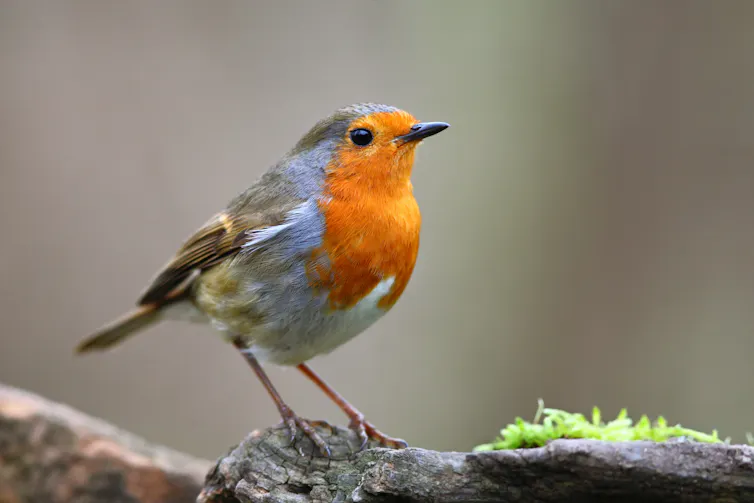
Robin perching neatly on log.
The robin - so much more than just a red breast. Tomatito/Shutterstock

Championed by Judith Lock, Principal Teaching Fellow in Ecology and Evolution University of Southampton

The European robin is a delightfully common sight in gardens. You will very likely have heard the characteristic “tic”, followed by a tuneful verse lasting a few seconds. In noisy urban environments they sing louder, less complex songs, in order to be heard.

The male robins use their spring song (January to June) to signal their quality to females, then forming breeding pairs, and to signal competitive ability to other males. The spring song lasts one to three seconds, composed of four to six short motifs. They have an impressive repertoire of about 1,300 motifs, indicating that song is the particularly important for robins, in comparison to birds that rely more on colourful plumage or behavioural displays to communicate with each other.

Most birds sing mainly in the morning but robins sing all day. People often mistake their lovely evening song for a nightingale’s. Constant territory defence from non-migrating robins means that the robin song is a year-round soundtrack too. From July to December, both males and females sing the autumn song, of higher-pitched long, descending notes, with interspersed warbles. This song is to defend their individual winter territories. This indicates that song first evolved first in songbirds to ensure survival, before it became a signal used by males for reproduction. Each robin’s song is dynamic, constantly changing in response to the condition and age of the bird, and their rival.

Great tit

Championed by Josh Firth, Associate Professor of Behavioural Ecology, University of Leeds

Its song may not be as flashy as the nightingale or as poetically melancholy as the blackbird. But scientists have been taught so much by the great tit’s song, heard across British habitats from ancient woodlands to urban gardens. This spring marks 80 continuous years of UK-based scientists studying great tits at Wytham Woods, Oxford, the world’s longest-running study of individually-marked animals.

The unique dataset includes a family tree totaling over 100,000 great tits, with some birds’ lineages traceable back 37 generations. Early research on Wytham’s great tits during 1970s-1980s resulted in some the first studies to inform the scientific world about how bird song can help males find mates and defend territories, how larger song repertoires can bring more reproductive success, and how young birds learn these repertoires from neighbours (not just their fathers).

And a pioneering study published in 1987 taught us how male great tit song even tracks female fertility, increasing their singing efforts as their female partner’s egg-laying period approaches, and then quietening after she starts laying. Modern technological advances are allowing insight into the hidden meaning embedded in great tits’ songs. In-depth processing of 109,000 recordings of great tit songs has revealed how each bird’s melody tells the story of their own identity as well as that of their local culture and social circles.

A great tit’s age also affects their song: older males keep singing rarer, fading song types while younger birds adopt newer ones. So, Britain’s greatest song belongs to the great tit’s “teacher-teacher” call, for all it has taught us, and for all we have left to learn.

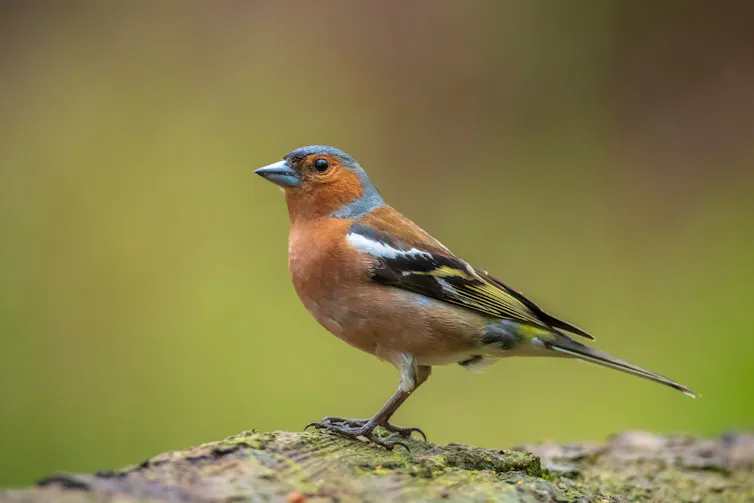
Chaffinch

Finch with copper and grey plumage.
Is the chaffinch underappreciated? Joey certainly thinks so. SanderMeertinsPhotography/Shutterstock

Championed by Joey Baxter, PhD Candidate in Ecology and Evolutionary Biology, University of Sheffield

Why change a winning formula? As far as I’m concerned, the chaffinch sings the biggest banger that UK birds have to offer. While the blackcap attempts to impress with ostentatious bells and whistles, the chaffinch keeps things simple with a catchy riff. Where the starling goes for quantity and novelty, with a frankly plagiaristic repertoire of mimicry, the chaffinch goes for quality, singing proudly in the knowledge that it is delivering a true earworm.

Bubbling trills accelerate before tumbling downwards, slowing to rich watery chirps and finishing with the final flourish. This jaunty lick, the real hook of the song, is often punctuated by an upward inflection at its end, the rising intonation giving it the air of an unanswered question. The chaffinch’s song has rhythm, it has melody, and it’s instantly recognisable. It possesses the wisdom that sometimes it is better not to do everything, but to do one thing well.

The Conversation

Joey Baxter receives funding from UK Research & Innovation (UKRI), via the Engineering and Physical Sciences Research Council (EPSRC).

Josh Firth receives from UK Research & Innovation (UKRI), via the Natural Environment Research Council (NERC).

Cannelle Tassin de Montaigu and Judith Lock do not work for, consult, own shares in or receive funding from any company or organisation that would benefit from this article, and have disclosed no relevant affiliations beyond their academic appointment.

  •  

Bill C-223 aims to protect kids while navigating complex family violence cases — but will it work?

When parents separate, decisions about children are often among the most contested aspects of the legal process. In cases involving allegations of intimate partner violence (IPV), judges are often tasked with resolving disputes of extraordinary complexity as they try to balance children’s best interests and safety with parents’ rights to remain involved in their kids’ lives.

In these types of cases, rulings about access to the children are about more than determining parenting schedules. Decisions shape whether children are protected and if abuse continues through the legal system itself.

Bill C-223, the Keeping Children Safe Act, is Parliament’s attempt to address how Canadian courts navigate these tensions. Introduced in September 2025 by Liberal MP Lisa Hepfner, the bill proposes changes to the Divorce Act aimed at strengthening how courts address family violence during divorce and custody proceedings.

Misused parental alienation claims

Research shows that accusations of parental alienation are sometimes used to undermine or silence parents who report abuse or coercive control. This dynamic disproportionately affects mothers.

IPV survivor support groups and advocates have long raised concerns about the weaponization of parental alienation claims against mothers in cases involving IPV — especially against those who raise concerns about their children’s contact with an abusive parent.

This dynamic often follows a familiar pattern — a mother experiencing IPV may seek to limit parenting time due to child safety concerns. In response, the other parent may allege parental alienation.

When courts accept these allegations, the focus shifts away from abuse and toward the primary caregiver’s behaviour, which can then be interpreted as manipulation.

In some cases, this has led to expanded or even court-ordered contact, including reunification interventions, despite children’s expressed fears or resistance to contact with the other parent.

Requiring evidence, facts

Bill C-223 aims to address this by directing courts to rely on evidence-based understandings of coercive control, trauma and abuse dynamics rather than on the assumption that violence stops when partners separate or that children’s resistance to contact with one parent is always the result of influence from the other.

Organizations like the National Association of Women and the Law and Battered Women’s Support Services have argued that the bill addresses well-established research findings that in cases where alienation is alleged and IPV has happened, protective mothers are often penalized for prioritizing their children’s safety.

Limiting alienation claims, then, is not a denial that children can be harmed when one parent undermines their relationship with the other. Instead, it acts as a safeguard against post-separation abuse continuing through the legal process.

Oversimplifying complex family situations

Despite support for the bill among advocacy groups, some legal scholars and family justice researchers have raised concerns about how it may limit judges’ ability to respond effectively. This is particularly the case in situations where one parent has genuinely undermined a child’s relationship with the other parent, even in the absence of IPV.

Critics point out that when children resist contact with one parent, it’s often due to a mix of emotional, relational and environmental factors, including loyalty conflicts, emotional pressures or prolonged exposure to parental conflict or abuse — even if that abuse wasn’t directed at them.

It is precisely because similar dynamics can arise in both abusive and non-abusive situations that critics argue judges require broad discretion to examine multiple possible explanations for a child’s resistance, including — in some cases — deliberate interference by a parent.

This suggests that limiting reliance on alienation-style evidence could restrict how courts evaluate such complexity, raising concerns about how effectively high-conflict parenting disputes can be resolved.

Critics of the bill aren’t defending or overlooking the historic misuse or weaponization of alienation claims. Instead, they question whether the bill risks replacing one flawed framework with another — one that may be poorly suited to ambiguous or less typical cases.

Balancing protection and children’s voices

At the centre of debates over Bill C-223 is a broader question about what effective child protection should look like in family law.

On one hand, the bill strengthens children’s voices and moves away from reducing their views as simply a product of parental influence.

At the same time, there is value in maintaining judicial flexibility. Even though clearer legislation may reduce the misuse of claims like parental alienation, there is still risk when limiting the range of options available to judges faced with complex situations.

Bill C-223 certainly reflects a positive shift in Canadian law towards trauma- and violence-informed approaches. It’s a clear effort to align legal frameworks with the research on abuse, coercive control and child well-being

But whether the bill ultimately achieves its intended goal will depend not only on its final wording, but also how courts interpret and apply its principles in practice.

As debates over Bill C-223 continue, the question is not whether reform is needed, but how to develop legal frameworks that protect children from harm while also preserving the flexibility that is needed to respond to complex, highly individualized cases.

The Conversation

The authors do not work for, consult, own shares in or receive funding from any company or organisation that would benefit from this article, and have disclosed no relevant affiliations beyond their academic appointment.

  •  

The Devil Wears Prada 2: lots of frothy fun, not so much devilry

Twenty years after the first instalment catapulted Anne Hathaway and Emily Blunt onto Hollywood’s A-List, The Devil Wears Prada is back with a second incarnation. The sequel reunites the pair with Meryl Streep and Stanley Tucci for a fun, frothy – but not very devilish – time.

Set at Runway, a thinly veiled fictional version of Vogue magazine, much has changed in the world of journalism since the first film was released in 2006.

Anne Hathaway’s Andy Sachs has spent the intervening years becoming a “Serious Journalist”, with awards galore under her belt. In 2026’s precarious media landscape, though, her job is wiped out. She, somewhat miraculously, finds herself back at Runway as features editor, no longer a harried underling.

Delightfully, the gang is back together for part 2. The Devil Wears Prada’s mastery was always its actors, and the returning main cast are in fine form here. Andy (Hathaway) now has an assured confidence that was just budding in the first film.

The growth in her character is believable and realistic, and as an actor, Hathaway is edging towards greatness, one teary-eyed smile at a time. Andy’s elevated position at Runway allows the dynamic between her and her icy boss, Miranda Priestley (Meryl Streep), to shift.

Miranda de-fanged

Fun is poked at Miranda’s behaviour, which is now subject to HR rules and regulations. Where once she struck fear into the hearts of all she encountered, delivering caustic lines in a low sardonic murmur, Streep’s performance, while fuller and more rounded, de-fangs Miranda.

With disappointingly fewer barbs, she is less “devil”, delivering a more complex portrait of a successful woman struggling to keep a dying industry afloat. Much of the villainy is handed instead to Emily (Emily Blunt). All eye rolls and sharp edges, Blunt has a ball reprising the role that made her a star.

She is given more screen time in this instalment, with a love interest and a life outside of work. She is magnetic in every frame she inhabits, bringing comedy and deliciously over-the-top cattiness.

Stanley Tucci’s Nigel, a relic of the bygone days of print fashion journalism, radiates a warmth that grounds the film. His endless patience with the nonsensical behaviour of those around him, delivered with Tucci’s characteristic panache, steadies the ship when all threatens to spiral into parody.

In 2026, the romantic comedy is a lesser spotted animal in Hollywood compared to when the first film was released. This sequel recalls familiar tropes of the early noughties rom-com: pop music blaring over street scenes of characters speaking on phones, quick cuts between fashion shows and urban life, big cities rendered in gloriously lit night scenes.

The “rom” part of rom-com, though, could have been left in the past for this sequel. Patrick Brammall is criminally underused as Peter, a love interest for Andy. Their dalliance adds little to her character or the story, and never meaningfully develops or resolves.

Journalism SOS

Story-wise, it feels as though the film-makers wanted to comment on the state of journalism. In today’s world awash with algorithms, misinformation and the relentless churn of online content, there was certainly potential to mine, but these themes are mentioned and then glossed over.

This would be forgivable, given the sugary tone of the film, but consequently the drama becomes a little convoluted and at times gets in the way of the relationship dynamics, which is really why we are all in the cinema in the first place. Minor characters played by B.J. Novak, Kenneth Branagh, Lucy Liu and Justin Theroux often lean too far into caricature and disrupt the tone of the film. Their inclusion is another unnecessary dilution of the core four’s chemistry.

The Devil Wears Prada 2 is a little long and Meryl Streep’s performance lacks the bite that made the first film so memorable. But getting to see Hathaway, Streep, Blunt and Tucci work together again is joyful and escapist.

This film won’t change your life. But it is not trying to. It tells you exactly what it is in the marketing: a celebratory reunion of the actors and a fun retreading of familiar ground. Go for the characters, stay for the nostalgia.

The Conversation

Laura O'Flanagan does not work for, consult, own shares in or receive funding from any company or organisation that would benefit from this article, and has disclosed no relevant affiliations beyond their academic appointment.

  •  

The UK’s ocean health report card is damning, and protected areas aren’t enough

Grey seal populations are relatively stable but a lot of marine wildlife is struggling in UK seas. Ellen Cuylaerts/Ocean Image Bank, CC BY-NC-ND

The UK now protects 38% of its seas by law. Yet the government’s own assessment shows that our oceans are not thriving.

In April, the Department for Environment, Food, and Rural Affairs (Defra) published its latest assessment of the health of our seas: the UK marine strategy report.

Of the 15 components of ocean health assessed, only two clearly meet the standard of good environmental status (GES) – the benchmark for healthy seas that the UK committed to achieving by 2020. The other 13 are failing, uncertain or getting worse.

This is despite the UK now having 377 marine protected areas (MPAs), sections of sea designated by law to protect wildlife and habitats. Protected areas are important, but the detail behind that impressive-looking map is sobering.

Marine mammals, such as Whales, dolphins, and porpoises are not judged to have achieved good status. A key reason for this is bycatch: they are being accidentally caught and killed in fishing nets meant for other species.

Seabird populations are declining, with fewer chicks surviving each breeding season as the fish they depend on become harder to find.

puffin bird among white flowers, yellow background
Seabird populations, including puffins, are struggling. Victor Maschek/Shutterstock, CC BY-NC-ND

The types of fish living in our seas are changing for the worse, with the biggest cod disappearing while smaller species take their place.

The entire food web is under strain. The microscopic organisms that underpin ocean life, called plankton, are becoming less productive as seas warm, and that loss ripples upward through every species that depends on them.

On the seabed, fragile habitats such as seagrass meadows continue to be damaged by pollution and disturbance from shipping and boat activity.

Our seas are getting noisier, more polluted with heavy metals, and littered with waste on the seafloor.

There are some bright spots. The numbers of grey seals are stable or increasing. Beach litter is declining. Commercial fisheries have shown modest improvement, with the share of fish stocks being fished at sustainable levels rising, though it is still fewer than half.

But these gains are outweighed by the broader trajectory.

Why MPAs are not enough

Protected areas play an important role, but they cannot address the full range of pressures our seas face. Drawing a boundary on a nautical chart does not stop warm water crossing it. It does not filter out the nutrient runoff flowing in from agricultural land and overwhelmed sewage systems. It does not silence the increasing underwater noise from shipping and industrial activity. It does not prevent whales, dolphins and porpoises from being caught in fishing gear that operates both inside and outside these boundaries.

Climate change is perhaps the telling example. Sea temperatures around the UK have risen by roughly 0.3°C per decade over the past 40 years, with extreme underwater heatwaves becoming more common. The report acknowledges that this is already altering marine ecosystems, affecting everything from plankton at the base of the food chain to the distribution of fish species. No MPA can insulate its inhabitants from a warming ocean.

Land-based pollution is another pressure that flows straight through protected area boundaries. The report identifies food production and sewage treatment as major causes of nutrient enrichment, with increasing nitrogen inputs entering coastal waters. Heavy metals from legacy mine contamination, particularly in Wales, continue to pollute the marine environment. Contaminants have not met good status because lead, mercury, copper and zinc remain above environmental thresholds.

What ocean recovery actually requires

None of this is an argument against marine protected areas. Well-managed MPAs are an essential tool, and recent proposals to ban bottom trawling in some protected sites are welcome.

But if we are serious about ocean recovery, we need to tackle root causes. That includes reducing agricultural and urban runoff and sewage discharges into rivers and coastal waters. The climate crisis is reshaping our marine ecosystems from the bottom of the food chain upwards so tackling greenhouse emissions is a key step. Managing underwater noise from an increasingly industrialised seascape is essential. And enforcing meaningful fisheries management will reduce bycatch and protect whole ecosystems, not just commercial stocks.

The government’s own environmental watchdog, the Office for Environmental Protection, has reached a similar conclusion. In September 2025, it identified possible serious failures by Defra to comply with environmental law in relation to the missed GES target, and launched a formal investigation. It is now asking the government to produce an evidenced, resourced and time-bound delivery plan.

When even the body set up to hold government to account on the environment is questioning whether the law has been broken, it is hard to argue that the current approach is working.

The UK was supposed to have achieved good environmental status in our seas by 2020. Six years past that deadline, this report shows we are still far from it. We cannot afford to let the percentage of protected areas on a map be a substitute for the hard and messy work of actually making our oceans healthy.

The Conversation

Heidi McIlvenny receives funding from the National Environment Research Council, the Department of Agriculture, Environment and Rural Affairs, and Ulster Wildlife. She is affiliated with the IOLN, RSPB, National Trust, and Ulster Wildlife.

  •  
❌