Reading view

Taylor Swift trademarking her voice and likeness points to a new legal frontier in combating AI deepfakes

Taylor Swift’s filings sit at the messy intersection of copyright, publicity and trademark law, each of which addresses different aspects of AI deepfakes. Luis Gutierrez/Norte Photo via Getty Images

As one of the most popular celebrities in the world, Taylor Swift has already endured her share of AI-related abuse.

Fake nudes of the singer have spread widely online. Her voice and likeness have also been used to create fabricated political messages and bogus product endorsements.

In April 2026, Swift pushed back. Her intellectual property and brand management company, TAS Rights Management, filed trademark applications covering short audio clips of her voice and her visual likeness.

As a law professor, I was struck by Swift’s filings because they highlight a new legal frontier in artificial intelligence.

Most AI-related litigation has centered on copyright law, which protects creative works such as songs, books, photographs and recordings from being copied, distributed, adapted or publicly performed without permission.

But TAS Rights Management’s recent move involves trademark law, not copyright. The filings aren’t really about protecting Swift’s lyrics or albums. Instead, they’re about preventing AI-generated voices and images from misleading people into believing she has endorsed a product, political message or cause.

Copyright is about creative works

Most AI-related lawsuits have been tied to whether copyright violations have taken place – specifically, whether AI companies used copyrighted works to train their systems, or whether their chatbots have produced outputs that too closely resemble protected material.

For example, The New York Times sued OpenAI and Microsoft in 2023, alleging that the companies used the outlet’s journalism to train their AI systems, which then went on to generate outputs that have competed with or reproduced New York Times articles. Authors, publishers, photo agencies and music publishers have sued other AI companies for the same reason.

But copyright violations are only one part of the legal issues raised by generative AI.

Copyright doesn’t necessarily protect a person’s identity. It does not give Swift a general right to control anything that sounds like her, looks like her or evokes her in the minds of audiences.

If an AI-generated voice imitates Swift without copying a particular recording, song or lyric, copyright may not address the real issue, which is that people are being led to believe she said, sang or endorsed something she never approved.

Trademarks are about trust

Trademark law starts from a different concern. It protects names, images, sounds and other markers that help consumers identify who or what is behind a product or service.

A trademark can be a word, phrase, symbol, design or combination of these things. Familiar examples include brand names such as Coca-Cola, logos like the Nike swoosh, slogans like Subway’s “Eat Fresh” and even distinctive sounds, such as the MGM lion roar.

A red banner featuring the Coca-Cola logo and the text 'FIFA World Cup 26.'
FIFA uses a ‘TM’ wordmark in its 2026 World Cup logo, meaning soccer’s world governing body is claiming the logo as a trademark. Coca-Cola features a small ‘R’ with a circle around it at the end of its iconic cursive logo to indicate that it has registered the design as a trademark with the United States Patent and Trademark Office. Steve Russell/Toronto Star via Getty Images

A trademark is not a general ownership right over a word, phrase, voice or image. It is a way of helping consumers know who stands behind what they are buying, hearing or seeing.

That difference becomes crucial once AI can mimic a person’s voice or face. Suppose a company uses an AI-generated Swift-like voice to sell perfume or cryptocurrency. The concern is that listeners may think Swift approved of the product or message.

That is a trademark problem. Trademark law asks whether the use misleads consumers about whether a company or person has produced or endorsed something. Swift’s filings appear aimed at that danger. They suggest a concern beyond copied songs: fake endorsements, fake appearances and fake signals of approval.

Swift’s concerns also bleed into what are known as “publicity rights,” which generally protect against unauthorized commercial use of a person’s identity, such as a name, image, likeness or voice.

A classic publicity rights case involves a company using a celebrity’s face in an advertisement without permission to mislead consumers into believing the celebrity endorses the product.

AI’s ability to clone voices and images makes publicity law especially relevant. But in the United States, publicity rights are mostly governed by state law, and the rules vary widely from one state to another. That patchwork helped inspire the bipartisan NO FAKES Act, introduced in 2025, which would create a national standard that would prohibit unauthorized AI-generated replicas of a person’s voice or visual likeness. The bill, still in its early stages, has been referred to the Senate Judiciary Committee for consideration.

The untested part

Swift is not alone: Actor Matthew McConaughey trademarked “alright alright alright,” his memorable line from “Dazed and Confused,” to protect it from being used in AI-generated content.

The courts have already affirmed that sounds can function as trademarks. But it isn’t clear whether trademark law can police AI-generated replicas of a person’s voice or image when the issue is not counterfeiting but a manufactured endorsement.

A person’s voice or likeness is not automatically a trademark. In order to qualify as one, it must be used help consumers identify who is behind a product or service.

One existing limit on trademark protection is especially important. Federal law protects certain uses of a celebrity’s image and likeness in cases involving parody, criticism, commentary and news reporting. Not every imitation is a form of deception.

Courts will have to draw that line on a case-by-case basis. A fake ad that makes consumers think Swift endorsed a product is different from a parody that comments on celebrity culture. A scam using her voice is different from a news story about AI deepfakes.

That said, Swift’s filings reflect a real problem: AI has allowed fake endorsements to look and sound real enough to spread before anyone has time to set the record straight.

Major AI copyright cases will continue to focus on copied works. But when AI is used to manufacture identity, endorsement or trust, copyright alone is no longer enough. Swift’s filings suggest that AI law will increasingly focus not only on protecting the work of musicians, writers, journalists and artists, but also on protecting the signals that tell audiences who is really speaking.

The Conversation

Daryl Lim does not work for, consult, own shares in or receive funding from any company or organization that would benefit from this article, and has disclosed no relevant affiliations beyond their academic appointment.

  •  

Why Pennsylvania’s low-income residents are feeling the squeeze as gas prices rise

Pennsylvania consistently ranks among states with the highest gas prices. eyecrave productions/iStock via Getty Images Plus

When gas prices rise, not everyone feels the pain equally. For low-income and rural Pennsylvanians, a trip to the gas station can mean choosing between a full tank and groceries. Many factors, such as crude oil costs, distribution and marketing, and to some extent Pennsylvania gas taxes all add up to keep Pennsylvania’s gas prices higher than average.

Pittsburgh gas prices are among the highest in Pennsylvania due to higher urban demand, refinery maintenance issues in the Midwest and supply shortages.

Currently, the average gas price in the U.S. is $4.50. In Pennsylvania, the average is $4.66, and in Pittsburgh it’s $4.91.

To understand why, and what – if anything – can be done about high gas prices, The Conversation U.S. spoke with Hannah Wiseman, an energy and environmental law scholar whose work focuses on how regulation is designed. She explains who gets hit hardest by high gas prices and why relief is so hard to come by.

How do rising gas prices hit low-income Pennsylvanians differently than middle- or upper-income residents?

Low-income people typically have a limited monthly budget, with fewer or no savings to draw from. Each essential expense is a portion of an individual’s or family’s fixed budget, and when an essential expense rises, it eats up more of this fixed budget. For the costs of fuel and electricity, this is called the “energy burden” – the percentage of someone’s income that goes to energy costs. The higher the cost of energy, the more this impacts people’s ability to pay for other essential goods, such as food, medicine and medical care.

Pennsylvania consistently ranks among states with the highest gas prices. What regional conditions make Pennsylvania expensive?

Like any other good, the cost of gas is influenced by the cost of the raw product from which gasoline is refined, crude oil, the costs of operating the facilities that transport and distribute gas, and the amount of retail competition.

As the U.S. Energy Information Administration explains, distance from supply – refineries, ports and pipelines – usually means higher prices. This type of infrastructure is scarcer in the mid-Atlantic region, including Pennsylvania. And some rural areas have fewer gas stations, which can result in less retail competition.

Gasoline prices tend to be lowest in Gulf Coast states, such as Texas, with a current average of $4.01, and Louisiana, with a current average of $3.99, where there are many crude oil refineries and oil pipelines.

A landscape scene featuring two silos and farmland.
Due to lack of public transit, rural Pennsylvania residents rely on their personal vehicles to get to work. aimintang/E+ collection via Getty

How does the lack of reliable public transit in rural areas deepen the inequality issue?

Rural areas tend to have less public transportation – making personal vehicles essential – and people have to drive to their jobs to make ends meet. So when gas prices go up, rural residents often have no option but to fill up their tank at a high cost and potentially forgo other essentials.

Rural populations also have a substantial percentage of individuals defined as the “working poor.” These are low-income individuals for whom getting to work is essential. They are already saddled with high energy burdens, which rise with higher gas prices, and they live in rural areas with few affordable options for getting to work.

Are there existing state or federal programs that help low-income residents offset fuel costs?

Low-income support tends to come from states. Most government programs support home heating costs and utility bill payments for low-income residents; programs are more limited for gasoline. In California during the 2022 spike in gasoline prices the state sent checks to low-income families. Currently, Pennsylvania has no formal legislation in place to assist low-income families with gasoline costs.

Most electric-vehicle owners can no longer rely on the $7,500 federal tax credit for owning one. UCG/Universal Images Group via Getty Images

Electric vehicles remain out of reach for many low-income families. Does the green energy transition risk widening the equity gap?

Many U.S. residents cannot buy electric vehicles, largely because of tariffs on the import of affordable electric vehicles from countries such as China.

Additionally, the H.R. 1 Act erased the $7,500 tax credit for buying electric vehicles. This limited access to EVs widens the gap – wealthier families with electric vehicles can plug in their vehicles and avoid high gas prices, while lower-income individuals lack this option.

What can be done about high gas prices for low-income Pennsylvanians?

Pausing gasoline taxes, which is currently being debated by Pennsylvania state legislators, can reduce prices, but it also lowers revenues needed for public programs.

Direct rebates from the state to low-income individuals offer more value. However, Pennsylvania lawmakers are not presently considering direct rebates.

Read more of our stories about Pittsburgh and Pennsylvania.

The Conversation

Hannah Wiseman is a member of the Center for Progressive Reform. Her research on renewable resources, carbon sequestration, hydrogen, and energy/land use connections has received funding from the Sloan Foundation, Arnold Ventures, the Center for Rural Pennsylvania, the U.S. Department of Energy, and the National Science Foundation.

  •  

Teens aren’t as disengaged as you may think: What adults get wrong about adolescents’ civic contributions

Teens contribute in ways that go far beyond organized volunteering. Maskot/DigitalVision via Getty Images

A teenager scrolls through their phone at the dinner table, barely looks up and answers questions with one-word replies. For many adults, that image has come to stand for a larger fear: that today’s young people are disconnected from others and may be uninterested in the world around them. Concerns about declining civic participation often deepen that worry.

As researchers who study adolescent development, we believe this picture is incomplete. Adults help shape the environments in which young people learn to contribute, or learn not to. In worrying that young people are disengaged from participating in civic society, adults may overlook both their own role in fostering engagement and the many ways young people are already contributing.

Youth civic and community engagement matters because it helps build skills, relationships and habits of participation that carry into adulthood. How do teens actually express their care for the world around them, and what helps them to do so?

What does engagement really look like?

When adults talk about “engaged” teens, they often picture a narrow set of activities: volunteering, joining clubs, leading student government, maybe attending a rally or organizing a fundraiser. Those forms of contribution to society matter. But they are not the whole story.

In two recent studies, we surveyed 723 American adolescents, with an average age of 15, to understand what predicts whether teens will contribute to society and what their contribution looks like.

In the first study, we identified four distinct patterns: Some teens were generally less engaged; this group represented 21% of our sample. Another 19% we called “Digital Advocates,” highly active online but less involved in face-to-face settings. A third group, 33% of our sample, we termed “Local Helpers,” more engaged in interpersonal and community-based helping. “Contributors” were our fourth profile type, making up 26% of our sample; they reported high engagement across all domains.

Our finding pushes back against a common adult assumption that “real” engagement has to look a certain way. It doesn’t. A teen sharing information online about where local families can access food assistance and a teen quietly checking in on a struggling friend are both contributing – just differently. Digital participation is not automatically shallow; for many young people, online spaces are where they learn about issues, form opinions and connect with others who share their concerns.

Crucially, these profiles were shaped less by demographics – age, gender or race and ethnicity – and more by whether our teen respondents had the personal and contextual supports that helped them act on what they cared about.

What supports adolescent contribution?

In our second study, we found that more-engaged young people reported higher levels of hope, purpose and critical consciousness, which together help explain why some adolescents are more likely to act on what they care about. Hope is the sense that the future can be better and that you can help make it better. Purpose is a stable sense of direction. Critical consciousness is a teen’s ability to notice and think critically about the social dynamics around them.

We were especially interested to see that purpose mattered not only when it was self-focused – wanting to succeed, build a career and so on – but also when it extended beyond the self, such as wanting to help others or contribute to something larger than one’s own interests.

That may sound obvious, but it has real implications. Adults often tell teens to “get involved” without helping them connect that involvement to a meaningful why. Our findings suggest young people are more likely to contribute when they feel hopeful about the future and when they see their lives as connected to others.

What adults can do

To help young people make a difference, first broaden your definition of contribution. The teenager organizing a school drive, the one helping a neighbor and the one making informative videos about a community issue are all contributing in real ways. Notice these efforts and support them in their chosen contribution.

You can also support adolescents in building the traits that make it easier for them to get involved and make a difference:

  • Help young people develop a sense of purpose that goes beyond themselves. Ask questions like: What do you care about? What kind of difference do you want to make? Purpose-driven engagement tends to be more durable than participation that’s driven by obligation.

  • Nurture hope. Young people are less likely to act when they feel that nothing will change. Adults can support hope by helping teens see realistic pathways for success and giving them opportunities to speak up or solve real problems in their schools and communities.

  • Make space for critical consciousness. After-school programs, classrooms and youth groups can create environments where conversations about social issues are taken seriously and connected to real action. Young people need chances to talk about the world they see – and the world they want.

Teens often make a difference in ways that reflect both what they care about and how they are beginning to understand the world around them. Contributing is about more than just involvement in civic institutions; it can also look like helping a neighbor, speaking up for others or creating social media content that raises awareness about an issue. Instead of expecting teens to be checked out, caring adults can help them develop the skills and resources to contribute in any and all of these meaningful ways.

The Conversation

The authors do not work for, consult, own shares in or receive funding from any company or organization that would benefit from this article, and have disclosed no relevant affiliations beyond their academic appointment.

  •  

The 1994 World Cup helped rescue ‘the beautiful game’ from mediocrity. On its return to the US, expect more of that beauty

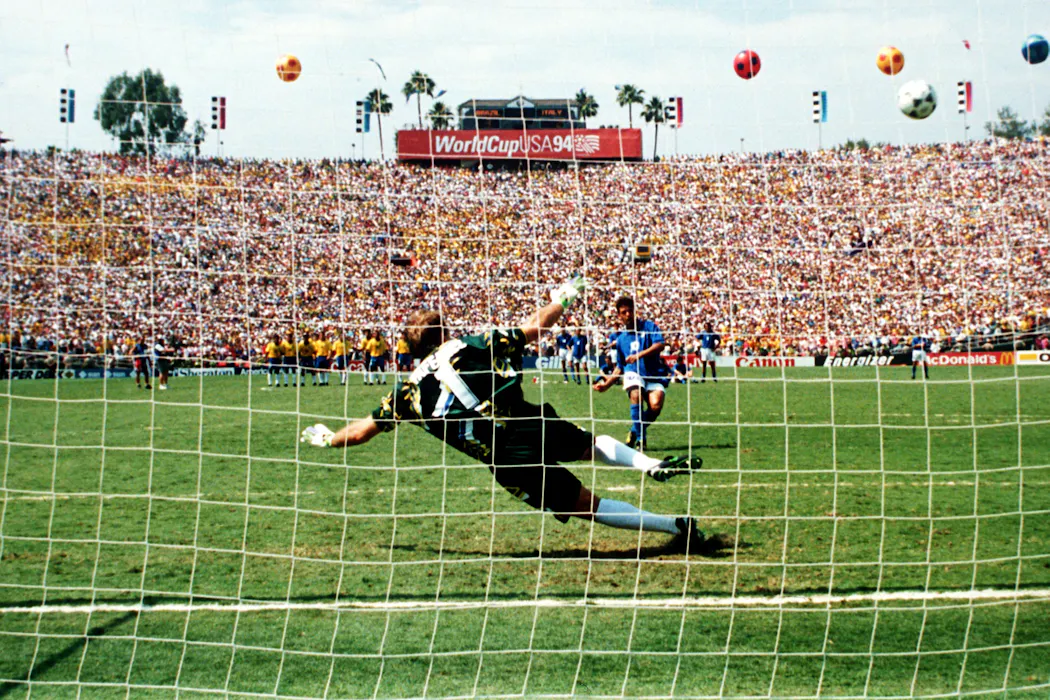
Italian forward Roberto Baggio misses during the 1994 World Cup final, but the tournament itself was a hit. Picture Alliance via Getty Images

Ahead of the 1994 World Cup – the first staged in the United States – players were asked to do something they never had before: sign a fair play declaration. The document, in which the soccer stars of the day pledged to respect the rules and opponents, was part of a plan by governing body FIFA to restore soccer’s reputation as “the beautiful game.” And expectations ran high before kickoff.

After all, it could not be as bad as the previous edition of the tournament, held in Italy four years earlier. That dour affair left a sour taste in the soccer world. Noting that it had the lowest goals per game in World Cup history, Eduardo Galeano, known as the game’s global poet laureate, wrote that Italia ’90 consisted of “boring soccer without a drop of audacity or beauty.”

The remarks not only referred to the aesthetics of the game – tedious matches devoid of skillful merit that were unpleasing to watch. They also pointed to its ethics – questionable behaviors and strategies that belittled soccer and its practitioners. This was an era in which wasting time, intentional fouling, theatrics and defensive schemes predominated.

The state of soccer after Italia ’90 required a holistic approach to understanding and improving the game.

For almost 30 years, I have been studying the ethics and aesthetics of soccer as both a philosopher of sport and an aficionado of the beautiful game. In that time I have seen how thoughtful changes to the rules shaped the game for the better. It has left me hopeful that, borrowing from Galeano, soccer is not “condemned to mediocrity.”

FIFA’s response to an ugly tournament

Reviewing Italia ’90, Los Angeles Times sportswriter Grahame Jones urged that something had to be done to increase goal-scoring and put an end to “the cynical, don’t-lose-at-any-cost approach” that dominated the game.

FIFA was not oblivious to such criticism. This was strikingly evident in the governing body’s technical report of the tournament, which described the final between Argentina and West Germany – an ugly 1-0 victory for the latter – as “a dreadful advertisement for the game of football.”

The report was not wrong. Looking back, the final is marked out by intentional fouling, the first red card in a World Cup final and plenty of simulation, including diving – a ploy players use to deceive referees and get a favorable call. Indeed, the incident resulting in the penalty from which West Germany scored is widely seen as a case of diving. That match illustrated the unimaginative and negative soccer played throughout the tournament.

A man in black holds aloft a red card as football players stand around.
An ugly first at Italia ’90 as Argentinian Pedro Monzon is sent off in a final. Passage/ullstein bild via Getty Images

Sepp Blatter, then FIFA’s general secretary and later its reproved president, concluded that “something is wrong with this game.” His main concerns, shared with many within the soccer community, were the time-wasting, intentional fouling and theatrics that were extensive in Italia ’90.

To address these concerns and improve the game, FIFA established a commission composed mainly of former players and coaches. Largely based on the observations of this group shortly after the 1990 World Cup, FIFA and the International Football Association Board, the body that oversees the game’s rules, decided to implement changes.

One key change was the adoption of a three-point system for wins during the group phase of the 1994 World Cup instead of two. This meant that teams were rewarded more for winning, encouraging imaginative and positive play over unimaginative and negative play aimed at sneaking a win or grinding out a draw.

Another change was the refinement of the offside rule to make it less restrictive for forwards trying to score. In addition, referees were instructed to apply the rules regarding fouls and misconducts more strictly – a move meant to protect players and their inventiveness.

However, the most momentous change was the introduction of the backpass rule, which would eventually revolutionize the game. This rule prohibited goalkeepers from receiving the ball with their hands if a teammate deliberately kicked it to them. It was planned to curb typical time-wasting that was orchestrated by goalkeepers and defenders and was painful to watch.

As a whole, the aspirations of these changes were to improve the aesthetics of the game, by promoting matches with plenty of forward-looking and creative play that was pleasurable to watch, as well as its ethics, by discouraging and sanctioning behaviors and strategies that disrespected soccer’s defining skills and opponents.

All four of these changes were in place by the time 24 nations competed in the nine U.S. venues during the 1994 World Cup.

So, too, was FIFA’s requirement that players sign its fair play declaration. Although the latter was largely a symbolic gesture intended to emphasize desired behaviors and strategies and minimize skulduggery, the tournament was nonetheless an improved spectacle.

In its technical report of the tournament, FIFA proclaimed that “USA ’94 was much better than Italia ’90,” with “more goals, fewer fouls, more attacking play and almost no ugly incidents between players.”

While for FIFA it was “most encouraging to see that the new measures … were so successful,” it admitted that the final between Brazil and Italy, won by the former in a penalty kick shootout, “did not live up to expectations,” with “few highlights in terms of pure skills.”

A mediocre final aside, USA ’94 was seen favorably. George Vecsey, reporting for The New York Times, spoke for many when he said, “It was a very good World Cup.”

What to expect in Canada/Mexico/USA ’26?

Much has shifted in soccer since USA ’94. But the game has definitely benefited from the changes introduced ahead of that tournament and some that came after.

In 1998, for instance, FIFA introduced the six-second rule, which prohibits goalkeepers from controlling the ball with their hands for more than six seconds. Eventually, new sanctions for actions such as diving along with the use of video assistance for referees were also brought in. Other developments have helped advance the game, from better training methods and medical care to innovative tactics and skill improvement, expanded youth talent identification and development, and data-driven match plans.

Clearly, the level of the game has been elevated. FIFA considered the last World Cup, held in Qatar in 2022, to have “produced arguably some of the most intricate and entertaining technical and tactical football that the World Cup has ever seen,” culminating in “a scintillating game” that many consider as “one of the best FIFA World Cup final matches ever witnessed.”

A man in a blue and white jersey holds aloft a gold trophy.
Lionel Messi celebrates winning the World Cup final in Qatar in 2022. David Ramos/FIFA/FIFA via Getty Images

Given the current state of the game, it is reasonable to expect exciting, enjoyable-to-watch soccer at the upcoming World Cup, co-hosted by Canada, Mexico and the United States. This does not mean that time-wasting, intentional fouling and theatrics – as well as occasionally prosaic play – will not rear their ugly heads. Such tactics have not been, and probably will never be, eradicated from the game. Consider, too, relatively new forms of trickery, such as manipulating substitution procedures or spying on rivals.

Yet, while there are still some who embrace the “dark arts” of soccer, such practices do not seem to have the favor they once had. Indeed, there is a widespread belief that soccer is experiencing another golden age. And even though soccer has many ethical and aesthetic flaws, both on and off the pitch, the beautiful game seems to have been largely restored.

The Conversation

Cesar R. Torres is also Distinguished Professor Emeritus of Kinesiology, Sport Studies, and Physical Education, The College at Brockport, State University of New York

  •  

Bingles, knuckleballs and ‘Beer Barrel Polka’ – hundreds of forgotten works showcase the eclectic world of baseball scholarship

The aerodynamics of the knuckleball was one of the hundreds of academic theses and dissertations that were recently compiled in a database. Diamond Images/Getty Images

Today’s fans may associate baseball research with cutting edge analytics. But long before data-driven tools like Statcast and FanGraphs, university students were conducting research about baseball.

About three years ago, I came across a 1988 article published by the Society for American Baseball Research. Written by a historian of Cuban baseball named Peter C. Bjarkman, it highlighted several academic dissertations, noting that they “provide a fruitful scholarly resource … yet at the same time represent one of the least explored sources.”

The baseball fan in me immediately wanted to know how many other dissertations existed, and which topics they covered. But after digging around, I realized that no such list existed. So the academic librarian in me decided to compile it for future researchers.

I ended up locating more than 850 dissertations and theses written by students between 1908 and 2024 from nearly 300 universities, and compiled the data, which appears in a recent issue of the Baseball Research Journal.

I was impressed by how many students across so many disciplines found a way to connect their area of study to baseball. It has been eye-opening to read about the game from the perspectives of business, communication, history, music, physics, psychology and more.

The new catalog is full of curiosities, but here’s a sampling of five that showcase the range and creativity of baseball scholarship:

1. “Smoking and Its Effects Upon Base Ball Pitching

Hughie Jennings, manager of the Detroit Tigers from 1907 to 1920, once observed that “the use of tobacco in any form … has a very bad effect upon athletes.”

In 1916, William A. Lang, a student at the International Young Men’s Christian Association Training School – now Springfield College in Massachusetts – attempted to provide some scientific evidence, though his methods lacked the rigor of today’s scientific research.

He had 12 players perform a series of pitching activities. During a break between round one and round two, they smoked either one cigar, two cigars or no cigars. Pitching accuracy decreased noticeably after smoking, while accuracy increased after a break with no smoking.

Several participants, especially those who were not smokers before, dropped out of the study after becoming sick. Even so, many professional baseball players smoked cigarettes into the 1970s, while the more discreet practice of chewing tobacco persisted longer.

Black-and-white photo of smiling man in baseball uniform next to an image of a box of cigarettes and the text 'Go, Dodgers, Go!'
Los Angeles Dodgers Hall of Fame pitcher Sandy Koufax appears on a billboard advertising Tareyton cigarettes in 1962. Gary Leonard/Corbis via Getty Images

2. “An Historical Dictionary of Baseball Terminology

As baseball writing expanded in the 1890s, newspaper reporters tried to come up with creative ways to avoid repeating common words.

In 1939, Edward J. Nichols, an English student at Penn State, noticed how many terms had carried over into everyday speech, many of which are still in use today: There are “hit-and-run” accidents, “pinch hitters” who swoop in to offer a helping hand, and big successes are described as “home runs.”

Nichols compiled a list of well over 1,000 baseball-related terms and definitions, and the dates of earliest known use.

Many are still used today:

  • At Bat (1861)
  • Backstop (1887)
  • Bean Ball (1912)
  • Clean up Hitter (1907)
  • In the Hole (1937)
  • Whiff (1881)

Other words and phrases are no longer commonly used:

  • Balldom (1905) was used to describe the world of baseball
  • Bingle (1902) was a term for a safely batted ball
  • Bird Cage (1906) was slang for a catcher’s mask
  • Egg Feast (1891) described a scoreless game
  • Ice Wagon (1908) was an exceedingly slow runner
  • Pill (1906) was simple slang for the baseball itself
  • Tissue Paper Tom (1937) for a player who is easily injured
  • Unbutton the Shirt (1937) meant preparing to take a big swing

3. “The Sporting Spirit: Perceptions in Philatelic Art Iconography and Sports Philately, 1896–1974

In 1991, an Ohio State University physical education student named Myrtis Herndon compiled a comprehensive catalog of international sports-related postage stamps.

A green postage stamp featuring Arabic text and a drawn portrait of a baseball player.
Hall of Fame shortstop Honus Wagner appeared on a set of stamps issued by the United Arab Emirates, then known as the Trucial States, in 1969. Post of Ajman/Wikimedia Commons

The first to feature baseball appeared in 1934 and was issued in the Philippines, where the sport had been introduced under American colonial rule.

In 1969, the United Arab Emirates – then known as the Trucial States – produced a series of stamps, aimed primarily at global collectors, of iconic artists, musicians and athletes, including six Major League Baseball Hall of Famers. A 1971 set, which appears to have been produced by the kingdom of Ras Al Khaimah, highlighted the baseball diplomacy between the U.S. and Japan.

Taiwan issued several stamps in the early 1970s to celebrate the country’s string of Little League World Series championships. Costa Rica, the Dominican Republic, Nicaragua, San Marino and Venezuela also produced baseball-themed stamps at various points.

4. “The Aerodynamics of the Knuckleball Pitch

Michael Morrissey, a mechanical engineering student at Marquette University in 2009, noticed that while others had written about the movement of pitches like curveballs, research was lacking when it came to knuckleballs.

Very few pitchers can successfully throw this pitch, which requires a special grip that significantly reduces the spin of the ball, making it difficult to hit.

Morrissey’s thesis includes a history of the knuckleball, an interview with All-Star knuckleballer R.A. Dickey and experiments to better understand the pitch’s strange, unpredictable movement. He used a series of sophisticated techniques and instruments – including a wind tunnel, a helium bubble generator and high-speed camera – to observe its lift, rotation and velocity, among other forces.

5. “From the Hammond Organ to ‘Sweet Caroline’: The Historical Evolution of Baseball’s Sonic Environment

In his 2012 dissertation, Matthew Mihalka, a music student at the University of Minnesota, described the sounds of the ballpark from the game’s earliest days to the modern era.

Before loudspeakers, fans could see live musicians, military bands and even Broadway acts at the ballpark.

Organ music became one of the sport’s defining sounds in the 20th century. The first organ appeared in 1941 at Wrigley Field. More stadiums added the instrument after the invention of the Hammond electric organ and following improvements to stadium public address systems.

Organs reached their peak in the 1960s, but some live organists still carry on this baseball tradition. While the organists usually remain in the background, at least one was ejected from a game for playing “Three Blind Mice” in response to an umpire’s call.

Mihalka profiles several of baseball’s most prominent ballpark organists, including Gladys Goodding, who worked the keys and pedals for the Brooklyn Dodgers from 1942 to 1957, and Nancy Faust, who was the organist for the Chicago White Sox from 1970 to 2010.

While recorded music largely dominates the ballpark soundscape today, audience participation and communal singing have long made up another important element of the baseball experience, with fans regularly belting out “Sweet Caroline” in Boston, “Here Comes the King” in St. Louis and the “Beer Barrel Polka” in Milwaukee.

Nancy Faust, who was the organist for the Chicago White Sox for over 40 years, briefly came out of retirement to play six Sunday games in 2025.

The full list of dissertations and theses is free to access – a resource for casual fans and researchers alike who want to learn more about the game.

The Conversation

Tom Reinsfelder is a member of the Society for American Baseball Research.

  •  

Russia’s pared-down Victory Day parade tells a story: Away from the pomp, war in Ukraine is not going to Putin’s plan

A police boat patrols the waters of the Moskva River near Red Square, which is decorated for the celebration of the 81st anniversary of the Soviet Union's victory over Nazi Germany in World War II. AP Photo/Alexander Zemlianichenko

Victory Day in Russia, which marks the surrender of Nazi Germany to the Soviet Union, has long held particular importance in Vladimir Putin’s Russia.

Yet this year the May 9 celebration – usually replete with extensive parades across the country and a demonstration of military hardware in Moscow – is expected to be significantly pared down. That’s due to Kyiv’s ongoing long-range military capabilities. For the first time in two decades, Russian officials have said, there will be no lavish display of tanks and missiles.

The reality for Putin is that the war in Ukraine, now in its fifth year, continues to be a grueling drain on Russian men, its economy and resources – and may continue to be for some time.

That was underscored by the European Union’s April 23 approval of a US$106 billion loan package to Ukraine. The aid, which will be a boon to Ukraine’s war-torn economy, had been stymied by EU-member Hungary under its former president, Viktor Orban, who was ousted in April 12 elections.

The resumption of EU aid and the removal of a pro-Moscow European voice at the EU represent major blows to Russia’s regional strategy. Perhaps trying to reset the narrative, Russia declared it would mark this Victory Day with a two-day ceasefire with Ukraine. Ukrainian President Volodymyr Zelenskyy responded by saying his country would also observe a ceasefire, starting two days earlier on May 6.

But there remain few immediate signs of a breakthrough in the conflict – and Russia appears chiefly interested in negotiating Ukraine’s future not with Kyiv but with U.S. President Donald Trump, who has been sympathetic to Russian interests.

As a scholar of contemporary politics in Eastern Europe, I see that as part of a pattern of Russian miscalculations and consistent denial of the will of citizens in democratic societies in Eastern Europe. Indeed, it reflects a dominant imperial mindset among Russia’s political elites, which the Kremlin has not altered since the collapse of the Soviet Union in 1991.

Losing hold of the old Soviet bloc?

While formally recognizing the independence of former Soviet republics in 1991, Moscow has continued to treat those countries as part of its sphere of influence.

For more than 25 years, Russia has pursued a hybrid approach of influencing former Soviet countries, along with others in Eastern Europe. That has included supporting electoral fraud, economic machination, media manipulation and use of force and violence.

Indeed, suspected Russian interference in politics and elections has been a frequent occurrence in Armenia, Georgia, Moldova, Romania and most recently Hungary.

A man in a suit gestures on a stage.
Hungary’s former Prime Minister Viktor Orban was Russia’s most stalwart ally in Europe. AP Photo / Petr David Josek

But Hungary and Armenia are recent and powerful examples that show the limits of Russian operations. Orban’s loss in Hungary immediately dislodged Russia’s most powerful point of leverage in European politics.

Meanwhile, in Yerevan on May 5, Armenia hosted a bilateral summit with the EU where the country established stronger economic and defense ties to the bloc. It was a stark diplomatic event for the country that has long been a junior ally of Russia’s but which has increasingly moved away from Moscow.

Ukraine: A test of Russian policy

Yet Ukraine remains the focal point of both the extent and limits of Russian external interference.

Putin has been attempting to have a loyal proxy government in the country ever since being spurned by Leonid Kuchma – the second president of Ukraine, who was in office until 2005 – who proclaimed that “Ukraine is not Russia.”

In Ukraine’s 2004 presidential elections, Putin’s Kremlin threw its substantial resources behind Kuchma’s prime minister, Viktor Yanukovich, who was seen as more friendly to Russian interests.

Since then, its relationship with the country has been one of external interference. Putin’s message throughout has been clear: The West, in its fights against Russia, has sought to colonize and destroy Ukraine by supporting nationalist forces against Moscow’s interests.

Facing consistently strong Ukrainian civil society and sovereignty movements, Russia found it difficult to fully implement its goals through political subversion or influence. So Moscow increasingly turned to military options.

In March 2014, Russia moved to annex Crimea and began a war in Ukraine’s eastern border regions of Luhansk and Donetsk.

That war in the east ground on for years, until in 2022 Putin made the decision to double down yet again, this time opting for a full invasion. The goal of the war was in Putin’s own words to “de-militarize” and “de-nazify” Ukraine. Yet, four years later, Putin’s desire for regime change has not yielded the desired results.

The human cost of Russian pursuits

Over the past year, Trump’s commitment to a peace deal between Ukraine and Russia, without first establishing a durable ceasefire, has moved the U.S. position toward Putin’s. That has included Trump’s support for Ukraine territorial concession as the grinding war continues.

Without significant territorial gains, Russia has continued and intensified its campaign of mass airstrikes and drone attacks on Ukrainian population centers. Indeed, 2025 was the deadliest year since the start of the full-scale invasion; civilian deaths were up 26% in 2025 over the previous year.

A rescue worker walks among rubble.
A rescue worker walks inside apartments destroyed by a Russian strike in Odesa, Ukraine, on April 27, 2026. AP Photo/Michael Shtekel

In the especially cold winter of 2025-26, Russia consistently targeted the energy grids vital to the millions of Ukrainians. Across Ukraine, at the record-low freezing temperatures, people endured daily attacks by drones and artillery, while trying to survive without electricity, heat and running water.

The Kremlin’s plan to put maximum pressure on Ukrainian civilians in the hope that Ukrainians would start blaming their leadership for refusing peace on Putin’s terms has not worked. For its part, the Ukrainian leadership has refused Russia’s maximalist war aims while cautiously continuing a commitment to the U.S.-mediated peace process.

Zelenskyy’s approval ratings remain steady at around 60%. The public opposition to Moscow’s demands on territorial concessions have not budged either, with a majority of Ukrainians continuing to categorically reject territorial concessions. Those numbers have not changed significantly since 2024.

Yet, war and surviving it takes a toll. And the experience of the year of negotiations has left many disillusioned, with some 70% doubting that peace talks will lead to a lasting solution.

A murky future

The last rounds of U.S.-mediated talks between Russia and Ukraine took place Feb. 16, 2026.

While Zelenskyy insists that the talks are not stalled, Russian’s top diplomat, Sergey Lavrov, has said the negotiations are not Russia’s top priority.

Buoyed by high oil prices as a result of the U.S. war in Iran, Russia has pursued a spring offensive and not relinquished its demands on Ukraine’s territories.

Yet this demand remains a nonstarter for Ukraine and Zelenskyy. As the Trump administration embraces the Russian “land for security” plan, Russia and its allies are likely to continue to put pressure on Zelenskyy, portraying him as an obstacle to peace talks.

But especially given Moscow’s recent woes, from losing a reliable ally in Hungary to the related EU loan guarantee, it’s unlikely that a continued grinding war will convince Ukrainians to abandon their sovereignty – or serve Russia’s own security.

The Conversation

Lena Surzhko Harned does not work for, consult, own shares in or receive funding from any company or organization that would benefit from this article, and has disclosed no relevant affiliations beyond their academic appointment.

  •  

AI interviewers can’t connect with people the way human researchers can – they can produce only data, not meaning

AI models can pose questions and follow up on them, but the answers they solicit may be limited in scope and depth. Andriy Onufriyenko/Moment via Getty Images

Anthropic, the company behind the generative AI tool Claude, claimed in March 2026 that it used an AI interviewer to conduct “the largest and most multilingual qualitative study” ever done. The AI tool collected responses from nearly 81,000 people about their visions for AI, spanning 70 languages and 159 countries. Anthropic contends that tools like this can enable researchers to conduct “rich, open-ended interviews at a very large scale.”

Qualitative research is useful for understanding the lived experiences of people. “Qualitative” refers to both the type of data that researchers collect and their purpose for conducting a study. Qualitative data includes text, images, audio, video and anything that isn’t a number. This is why the term “qualitative” is often discussed in contrast to “quantitative” – that is, numerical – data.

Qualitative research enables researchers to deeply explore the tensions, ambiguities and paradoxes that characterize everyday life. It also helps unpack how social norms, cultural dynamics and subjective experiences shape people’s perspectives, beliefs and attitudes.

So, can an AI model without lived experience or a capacity to self-reflect connect with people enough to understand their worlds?

We are researchers who specialize in qualitative research on digital technologies. Collectively, we have decades of experience developing, conducting and publishing interview studies, and we teach qualitative research methods to undergraduate and graduate students.

While AI tools can support social science research, they also have significant limitations. Not taking these limitations into account risks undermining the unique value of research that relies on human connection.

What is qualitative research?

Broadly speaking, qualitative inquiry is about exploring the meaning people give to experiences.

Qualitative inquiry often involves face-to-face interviews with individuals and groups. What this looks like in practice varies based on a researcher’s academic discipline, their philosophical approach and their personal background.

While the goal is to produce explanations about the world, qualitative inquiry is designed to reveal the nuanced ways people make meaning while accounting for the different contexts that shape their experiences.

Qualitative and quantitative research approach questions from different angles.

For instance, our team has used qualitative inquiry to explore how parents, children and teachers navigate digital privacy issues. We’ve also used qualitative data to analyze how influencers, activists and everyday users make sense of and respond to social media algorithms.

Anthropic Interviewer can pose questions to participants and present follow-up questions based on a participant’s response. However, we argue that qualitative inquiry requires human capacities that an AI model lacks.

AI is programmed, human conversations are not

Unlike studies focused on quantitative data, qualitative inquiry relies on flexibility.

Research that collects quantitative data requires carefully managed study conditions. They often aim to test specific hypotheses and measure the relationship between variables. To establish the validity of their findings, researchers need to demonstrate that they controlled for confounding factors.

In contrast, qualitative studies are more open-ended. They typically consider how people understand or experience the world in context. Since the world is complex, messy and nuanced, interviewers may need to change their initial questions or add new ones to collect insightful data. In other words, researchers adapt the interview to follow the conversational flow.

To plan out the interactions Anthropic Interviewer would have with study participants, researchers need to specify core interview questions and give the program instructions on how to engage with participants. For its recent study on people’s visions for AI, some of the core questions Anthropic used include “What’s the last thing you used an AI chatbot for?” and “If you could wave a magic wand, what would AI do for you?” The company did not specify what prompts or hypotheses they fed the system to come up with follow-up questions for this study.

By relying on fixed instructions, Anthropic Interviewer does not have a conversation with a participant the way a human researcher does. Instead, it executes a series of tasks in response to prompt engineering. In a conversation, a human interviewer absorbs a variety of information from a participant – their words, tone, demeanor – and responds organically in a way that meets the moment. An AI interviewer, being a machine, can act only within the parameters set by the system designers. This means that even if it is trained on large datasets, as the Anthropic Interviewer is, it will not be able to account for the unique, often unspoken relational dynamics of new interviews.

Using an AI tool can generate qualitative data, but it is not the same as conducting qualitative inquiry.

AI does not have positionality

Most qualitative researchers see their identity, lived experiences and relationships to the people they study as central to their work. This positionality can be thought of as a series of lenses through which researchers approach their studies, such as their race, gender, beliefs, values, biases and life circumstances. These factors position researchers in relation to their area of focus – as insiders, outsiders or somewhere in between, depending on the context.

Anthropic Interviewer has no position in relation to the research it is meant to support, because it has no body, identity, life history or lived experiences. Even if prompted to imitate a particular perspective – such as from “one woman to another” – it will not “contain multitudes,” as poet Walt Whitman put it, like real people do.

As opposed to a real person with a personal perspective who can genuinely respond to a live conversation, AI models use probabilities to match the patterns of how a person may commonly act or speak. It may also be alienating for participants if an AI interviewer assumes a particular persona and changes how they respond. In some ways, Anthropic AI can present only what philosopher Donna Haraway called “a view from nowhere.”

Moreover, an absence of a personal lens does not imply neutrality. Because AI systems are trained on existing data, they can reflect the dominant stereotypes and worldviews of the time, including that of their developers, curators and the companies behind them.

Two people sitting in armchairs facing each other, the person in the foreground holding a stylus and touchpad
A researcher’s own background shapes how they relate to – and subsequently study – their participants. Fiordaliso/Moment via Getty Images

The AI tool’s lack of positionality matters because this quality shapes every stage of research. This includes what questions researchers ask in interviews and how they ask them; how researchers filter information and interpret responses; and which topics they follow up on. Sharing things in common with participants – even just as a fellow human who can have firsthand experiences, thoughts and emotions – can be critical for data collection and analysis. It enables a deep, intuitive understanding of how participants perceive and interpret what they share.

A researcher’s personal lens also shapes how participants respond to them: what they choose to share and how comfortable they feel. For example, someone who grew up poor may feel more comfortable discussing debt and public assistance with someone who has a similar background than with someone who does not.

Without a personal lens, interviews can become flat and lack context. Questions may become mechanical, and the development of mutual understanding is limited. Participants may also respond differently when they sense the interviewer lacks a clear perspective.

AI cannot be reflexive

When researchers are able to reflect on their own assumptions, they can produce more thoughtful and responsible findings that avoid misrepresenting their participants. This reflexivity is another key human aspect of qualitative inquiry: researchers’ ongoing efforts to self-monitor the ways their personal background and choices over the course of a study may affect the work.

Good qualitative researchers do not try to eliminate their biases but instead try to account for them. They continually think about how their identity, experiences and perspectives shape their work and publicly share these reflections. While quantitative researchers see bias as a source of error, qualitative researchers see their viewpoints as assets in producing meaning.

Close-up of two people clasping hands
Empathy helps researchers hold themselves accountable to their participants. dragana991/iStock via Getty Images Plus

For example, when our team interviews students for our studies, we consider how our dual roles as college professors and researchers may influence how we interpret our participants’ experiences, what they feel comfortable sharing and how they share it. Openly sharing such accounting provides important context for readers considering the findings, judging how far they can be applied elsewhere and building trust in the findings.

Anthropic Interviewer is not capable of reflexivity, because it has no frame of reference or capacity for self-reflection. As a machine, it cannot self-monitor its “choices” in interactions, consider how participants perceive it, or reflect on how these factors may shape what participants share or hold back. When readers cannot take stock of the ways researchers’ assumptions, values, beliefs and choices affected how they collected data, this can make the research seem less trustworthy.

Interviewing often helps researchers develop an empathetic connection to their study participants, which can help ensure their work is ethical and accountable. This deeply felt connection can guide researchers in respecting boundaries in interviews.

Empathy also helps researchers take care in honoring the thoughts, feelings and experiences of their participants by representing them as faithfully as possible.

Qualitative interviews still need humans

Anthropic Interviewer introduces new possibilities for qualitative research by enabling data collection at an unprecedented scale and speed. However, this does not mean that it does what human interviewers do in qualitative inquiry.

Research interviewing is not about extracting ready-made insights from research participants as efficiently as possible. It is about entering into other people’s realities and leveraging shared human experiences that make mutual understanding possible, both cognitively and emotionally.

As sociologist Douglas Ezzy once said, good interviews are about communion, not conquest.

The Conversation

Kelley Cotter has received funding from the National Science Foundation.

Priya C. Kumar has received funding from the Institute of Museum and Library Services (IMLS).

Ankolika De does not work for, consult, own shares in or receive funding from any company or organization that would benefit from this article, and has disclosed no relevant affiliations beyond their academic appointment.

  •  

As goes CBS Radio News, so goes the idea that news media should serve the public interest

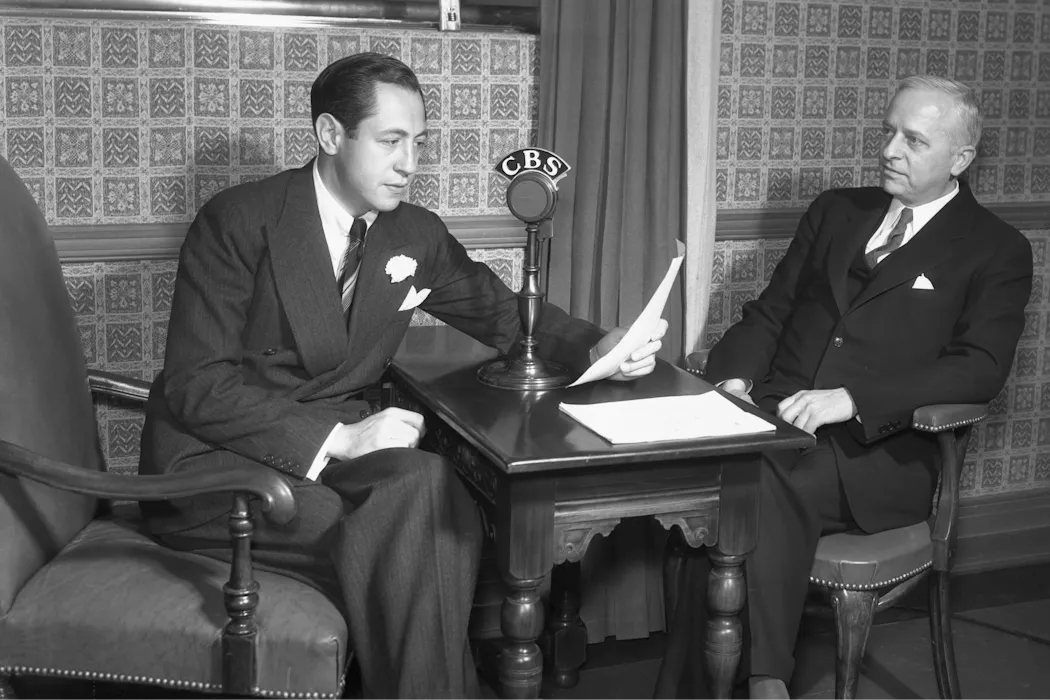
Former CBS President William S. Paley, left, who once called broadcasting 'an instrument of American democracy,' speaks on his radio network in 1934. Bettmann/Getty Images

When CBS Radio News goes silent on May 22, 2026, Americans will lose access to news programming they’ve tuned into from their living rooms, kitchens and cars for nearly a century.

The once-bipartisan idea that the nation’s media should exist to serve democracy continues to fade with it, too.

As a media historian, I think the story of CBS Radio News’ rise and fall cannot be told without telling another parallel story: the story of how the U.S. stopped demanding that media serve the public interest.

When CBS was born in 1927, radio was ascendant, and this new form of mass communication was spurring vibrant discussions about how media could better serve democracy.

Americans had already seen how concentrated wealth during the Gilded Age had tilted the news ecosystem by overemphasizing the concerns of the rich while glossing over inequality, graft and corruption. World War I further demonstrated the power of mass media to shape public opinion through propaganda, reinforcing calls for democratic oversight of broadcasting.

Just how to regulate radio was up for debate. But there was broad consensus across party lines that government could play a role in protecting the public from concentrated media power and, with it, foreign misinformation, bad-faith special interest messaging or fraudulent advertising.

The formative years

CBS radio traces its origins to the United Independent Broadcasters, a network of 16 local stations founded by music manager Arthur L. Judson. When Columbia Records bought a stake, it was renamed the Columbia Phonographic Broadcasting System.

Early broadcasts simply involved announcers reading short breaking-news dispatches distributed by the United Press wire service. Within months, Columbia sold its share to investors including William S. Paley, who streamlined the name to CBS.

Paley was no public media crusader. He was a businessman who wanted radio to turn a profit. But his management reflected a belief that radio could serve two masters: the public interest and advertisers.

He hired journalist Paul J. White to run the news division and created a regular news segment called “Something for Everyone.”

Though they differed on how best to achieve it, Democrats and Republicans agreed that radio ought to serve the public interest. In other words, because the airwaves belonged to all Americans, broadcasters had obligations beyond profit. They needed to provide reliable information, platform diverse viewpoints and cover matters of public concern.

A drawing of a sinister-looking man smoking a cigar and wearing a top hat looms over the word 'RADIO.'
A cartoon from the March 22, 1924, edition of The Literary Digest reflects the fear that radio would be subsumed by corporate interests. Internet Archive

In the 1920s, then-Secretary of Commerce Herbert Hoover was charged with formulating federal radio policy. Though he was a staunch, pro-business conservative, Hoover was also an engineer who thought that the radio system should be “free of monopoly” and, like any machine, could be gradually improved so it would better serve democracy.

“The ether is a public medium, and its use must be for the public benefit,” he said in November 1925.

Republican President Calvin Coolidge signed the Radio Act of 1927 into law. Passed with overwhelming support, it required radio stations to demonstrate a commitment to “public interest, convenience and necessity” in order to receive a license.

Forging the public’s trust

By the time the 1934 Communications Act created the Federal Communications Commission, a regulatory agency tasked with licensing broadcasters and enforcing ownership rules, the idea that radio should serve the public had been normalized.

In 1935, Paley made Edward R. Murrow – the man most associated with CBS Radio’s public service mission – head of news programming.

With fascism threatening democracy across Europe, Murrow launched “World News Roundup” in 1938. The longest-running news program in American media, it featured live reports transmitted by shortwave from locations around the world. American audiences huddled around their radios nightly to hear CBS’ reports, which showed how live news could unite a nation and cultivate a richer information ecosystem than the uniform propaganda of Europe’s fascist strongmen.

CBS’ gripping coverage of World War II solidified its importance as an American institution. Murrow’s signature tag lines – “this is London” and, later, “good night and good luck” – helped forge the public’s trust in CBS’ reliable and informative programming.

The dangers of delusion and amusement

After the war, television challenged radio’s dominance. Paley understood that Murrow had built a deep trust among listeners, and he put him in charge of CBS News as the network expanded its programming to TV.

In a 1954 broadcast, CBS News anchor Edward Murrow famously framed Wisconsin Sen. Joseph McCarthy’s anti-communist investigations as antidemocratic.

Yet Murrow grew uneasy with shifts in the network’s coverage, which, in his view, increasingly served the economic interests of its owners.

Speaking to the Radio Television News Directors Association in 1958, Murrow lamented how radio and television had forgotten “to operate in the public interest.” He worried that “we have currently a built-in allergy to unpleasant or disturbing information” and saw mass media increasingly “being used to distract, delude, amuse and insulate us.”

Without serious reporting and civic responsibility as their animating principles, radio and television were losing their democratic utility, becoming mere “wires and lights in a box.”

Corporations gain the upper hand

Throughout the 1960s and 1970s, many of the rules dating from when CBS Radio News was born, like ownership restrictions and requirements for educational programming, remained on the books.

But during this period, media companies started spending enormous sums of money on donations to legislators who could do their bidding – and capturing the regulatory bodies that were supposed to be holding them accountable. The spirited debates about how radio could better serve democracy largely disappeared. Instead, the conversation shifted to whether government should have any role at all in regulating the media.

Principles that once had broad public support – producing public interest news as a quid pro quo for licensing, limits on foreign ownership and fairness rules that required stations to give equal time to both sides of an issue – faded away.

Any societal obligation outside of earning profit started being described as a threat to the American way of life. Those arguing that media should be regulated like a public utility in a pluralistic democracy were effectively ignored.

After President Bill Clinton signed the 1996 Telecommunication Act, critics argued that industry lobbying had helped dismantle much of the public interest framework that had long governed American broadcasting. The legislation relaxed ownership caps and cross-ownership rules, allowing a small number of large corporations to acquire far more stations and weakening the older public interest obligations tied to broadcast licensing.

Before the act, corporations were limited to owning 40 radio stations. Now, conglomerates like iHeartMedia and Audacy can own thousands.

‘The tube is flickering’

Through it all, CBS Radio News’ top-of-the-hour bulletins remained on the air, a reminder of its original public mission.

Yet increasingly, the deregulated radio ecosystem failed to perform that function.

Back in the 1920s, you could hear editorials arguing that the radio should not be given over to “propagandists, religious zealots and unprincipled persons to grind their own axes.” By the early 2000s, divisive shock jocks and hosts feeding on partisan anger dominated the radio dial.

In a 1938 radio address on CBS’ ethical commitments, Paley argued that “broadcasting as an instrument of American democracy must forever be wholly, honestly and militantly non-partisan.” By 2016, CEO Les Moonves defended CBS’ decision to increase its coverage of President Donald Trump’s spectacularly divisive politics to juice ratings: “It may not be good for America, but it’s damn good for CBS.” Four years later, Trump awarded one of radio’s most polarizing partisan propagandists, Rush Limbaugh, the Presidential Medal of Freedom.

In his second term, Trump has abused his power over the media ecosystem. In 2025, the Trump administration’s FCC approved the merger of Paramount Global, the parent company of CBS, with Skydance Media. But it only did so after Paramount Global settled a lawsuit Trump had filed against CBS for $16 million.

Though many talented journalists and producers remain, CBS News’ recently hired editor-in-chief, Bari Weiss, has worked to make the network more friendly to the Trump administration. She temporarily shelved a “60 Minutes” segment critical of Trump’s use of El Salvador’s CECOT prison and promoted a friendly town hall with conservative commentator Erika Kirk, the widow of assassinated political activist Charlie Kirk. Ratings at the network have collapsed.

Though Paramount Skydance is using its enormous debt load to justify taking CBS Radio News off the air, the conglomerate is trying to purchase CNN’s parent company, Warner Bros. Discovery, in a move that would only further the monopolization of the news media.

Americans can’t say Murrow didn’t warn them.

“The tube is flickering,” he said in 1958. And unless Americans reclaim their right to information not colored by profit motive and special interests, “we will soon see that the whole struggle is lost.”

The Conversation

Matthew Jordan does not work for, consult, own shares in or receive funding from any company or organization that would benefit from this article, and has disclosed no relevant affiliations beyond their academic appointment.

  •  

The 1994 World Cup helped rescue ‘the beautiful game’ from mediocrity. On its return to the US, expect more of that beauty

Italian forward Roberto Baggio misses during the 1994 World Cup final, but the tournament itself was a hit. Picture Alliance via Getty Images

Ahead of the 1994 World Cup – the first staged in the United States – players were asked to do something they never had before: sign a fair play declaration. The document, in which the soccer stars of the day pledged to respect the rules and opponents, was part of a plan by governing body FIFA to restore soccer’s reputation as “the beautiful game.” And expectations ran high before kickoff.

After all, it could not be as bad as the previous edition of the tournament, held in Italy four years earlier. That dour affair left a sour taste in the soccer world. Noting that it had the lowest goals per game in World Cup history, Eduardo Galeano, known as the game’s global poet laureate, wrote that Italia ’90 consisted of “boring soccer without a drop of audacity or beauty.”

The remarks not only referred to the aesthetics of the game – tedious matches devoid of skillful merit that were unpleasing to watch. They also pointed to its ethics – questionable behaviors and strategies that belittled soccer and its practitioners. This was an era in which wasting time, intentional fouling, theatrics and defensive schemes predominated.

The state of soccer after Italia ’90 required a holistic approach to understanding and improving the game.

For almost 30 years, I have been studying the ethics and aesthetics of soccer as both a philosopher of sport and an aficionado of the beautiful game. In that time I have seen how thoughtful changes to the rules shaped the game for the better. It has left me hopeful that, borrowing from Galeano, soccer is not “condemned to mediocrity.”

FIFA’s response to an ugly tournament

Reviewing Italia ’90, Los Angeles Times sportswriter Grahame Jones urged that something had to be done to increase goal-scoring and put an end to “the cynical, don’t-lose-at-any-cost approach” that dominated the game.

FIFA was not oblivious to such criticism. This was strikingly evident in the governing body’s technical report of the tournament, which described the final between Argentina and West Germany – an ugly 1-0 victory for the latter – as “a dreadful advertisement for the game of football.”

The report was not wrong. Looking back, the final is marked out by intentional fouling, the first red card in a World Cup final and plenty of simulation, including diving – a ploy players use to deceive referees and get a favorable call. Indeed, the incident resulting in the penalty from which West Germany scored is widely seen as a case of diving. That match illustrated the unimaginative and negative soccer played throughout the tournament.

A man in black holds aloft a red card as football players stand around.
An ugly first at Italia ’90 as Argentinian Pedro Monzon is sent off in a final. Passage/ullstein bild via Getty Images

Sepp Blatter, then FIFA’s general secretary and later its reproved president, concluded that “something is wrong with this game.” His main concerns, shared with many within the soccer community, were the time-wasting, intentional fouling and theatrics that were extensive in Italia ’90.

To address these concerns and improve the game, FIFA established a commission composed mainly of former players and coaches. Largely based on the observations of this group shortly after the 1990 World Cup, FIFA and the International Football Association Board, the body that oversees the game’s rules, decided to implement changes.

One key change was the adoption of a three-point system for wins during the group phase of the 1994 World Cup instead of two. This meant that teams were rewarded more for winning, encouraging imaginative and positive play over unimaginative and negative play aimed at sneaking a win or grinding out a draw.

Another change was the refinement of the offside rule to make it less restrictive for forwards trying to score. In addition, referees were instructed to apply the rules regarding fouls and misconducts more strictly – a move meant to protect players and their inventiveness.

However, the most momentous change was the introduction of the backpass rule, which would eventually revolutionize the game. This rule prohibited goalkeepers from receiving the ball with their hands if a teammate deliberately kicked it to them. It was planned to curb typical time-wasting that was orchestrated by goalkeepers and defenders and was painful to watch.

As a whole, the aspirations of these changes were to improve the aesthetics of the game, by promoting matches with plenty of forward-looking and creative play that was pleasurable to watch, as well as its ethics, by discouraging and sanctioning behaviors and strategies that disrespected soccer’s defining skills and opponents.

All four of these changes were in place by the time 24 nations competed in the nine U.S. venues during the 1994 World Cup.

So, too, was FIFA’s requirement that players sign its fair play declaration. Although the latter was largely a symbolic gesture intended to emphasize desired behaviors and strategies and minimize skulduggery, the tournament was nonetheless an improved spectacle.

In its technical report of the tournament, FIFA proclaimed that “USA ’94 was much better than Italia ’90,” with “more goals, fewer fouls, more attacking play and almost no ugly incidents between players.”

While for FIFA it was “most encouraging to see that the new measures … were so successful,” it admitted that the final between Brazil and Italy, won by the former in a penalty kick shootout, “did not live up to expectations,” with “few highlights in terms of pure skills.”

A mediocre final aside, USA ’94 was seen favorably. George Vecsey, reporting for The New York Times, spoke for many when he said, “It was a very good World Cup.”

What to expect in Canada/Mexico/USA ’26?

Much has shifted in soccer since USA ’94. But the game has definitely benefited from the changes introduced ahead of that tournament and some that came after.

In 1998, for instance, FIFA introduced the six-second rule, which prohibits goalkeepers from controlling the ball with their hands for more than six seconds. Eventually, new sanctions for actions such as diving along with the use of video assistance for referees were also brought in. Other developments have helped advance the game, from better training methods and medical care to innovative tactics and skill improvement, expanded youth talent identification and development, and data-driven match plans.

Clearly, the level of the game has been elevated. FIFA considered the last World Cup, held in Qatar in 2022, to have “produced arguably some of the most intricate and entertaining technical and tactical football that the World Cup has ever seen,” culminating in “a scintillating game” that many consider as “one of the best FIFA World Cup final matches ever witnessed.”

A man in a blue and white jersey holds aloft a gold trophy.
Lionel Messi celebrates winning the World Cup final in Qatar in 2022. David Ramos/FIFA/FIFA via Getty Images

Given the current state of the game, it is reasonable to expect exciting, enjoyable-to-watch soccer at the upcoming World Cup, co-hosted by Canada, Mexico and the United States. This does not mean that time-wasting, intentional fouling and theatrics – as well as occasionally prosaic play – will not rear their ugly heads. Such tactics have not been, and probably will never be, eradicated from the game. Consider, too, relatively new forms of trickery, such as manipulating substitution procedures or spying on rivals.

Yet, while there are still some who embrace the “dark arts” of soccer, such practices do not seem to have the favor they once had. Indeed, there is a widespread belief that soccer is experiencing another golden age. And even though soccer has many ethical and aesthetic flaws, both on and off the pitch, the beautiful game seems to have been largely restored.

The Conversation

Cesar R. Torres is also Distinguished Professor Emeritus of Kinesiology, Sport Studies, and Physical Education, The College at Brockport, State University of New York

  •  

5 reasons Stephen Colbert is one of the most important satirists in American history

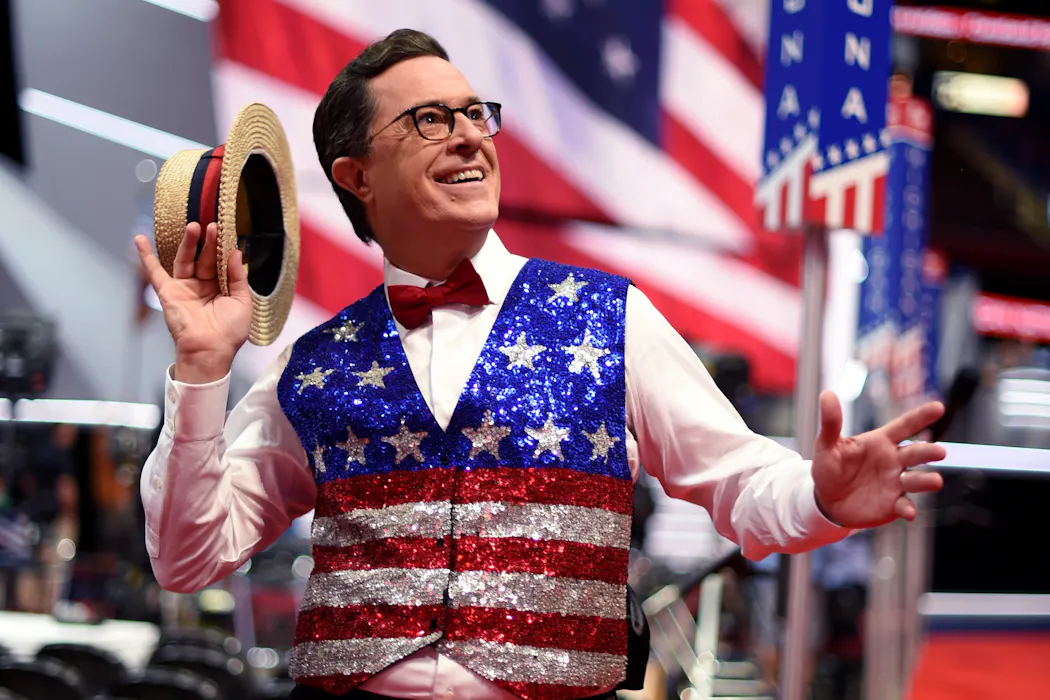
Stephen Colbert tapes a segment for 'The Late Show' at Quicken Loans Arena ahead of the 2016 Republican National Convention in Cleveland. Timothy A. Clary/AFP via Getty Images

Stephen Colbert’s final episode as host of “The Late Show” on May 21, 2026, won’t mark the end of his career.

But as a scholar of political satire, I think it offers a chance to reflect on the lasting impact of his comedy, which has spanned his work as a correspondent on “The Daily Show,” his conservative pundit persona on “The Colbert Report” and his reinvention on “The Late Show.”

The best satirists do more than entertain. They influence public discourse and leave lasting marks on political life. This group includes towering writers such as Benjamin Franklin and Mark Twain, alongside performers like Lenny Bruce and George Carlin.

In my view, Stephen Colbert has earned a spot in the top tier. Here are five reasons why.

1. He didn’t just satirize the news – he informed the public

Most satirists offer wry commentary about political events.

Colbert often did something more ambitious: He helped audiences understand them.

Critics have long dismissed political comedy as superficial entertainment, but Colbert’s satire frequently offered valuable information to the public.

In 2010, the U.S. Supreme Court’s Citizens United decision transformed campaign finance law, tilting political influence toward wealthy people and corporations. As host of the “Colbert Report,” the comedian responded by creating an ongoing series of “Colbert Super PAC” segments. Working with former Federal Election Commission Chair Trevor Potter, Colbert was able to translate the opaque mechanics of campaign finance law into accessible civic education.

The best satirists don’t just make people laugh. They help people understand power. And with that in mind, Colbert is among the best.

It’s hard to fully track the impact of this approach. But a 2007 Pew Research Center study did find that audiences for satirical news programs such as “The Daily Show” and “The Colbert Report” scored high on political knowledge measures, outperforming audiences who only consumed political news from traditional outlets.

That urge to use satire as a vehicle for civic education continued after Colbert became host of “The Late Show” in 2015.

With debates raging over the border wall proposed by the first Trump administration, Colbert brought experts on to the program to break down the engineering, financial and logistical realities of building one that spanned the entirety of the U.S.-Mexico border. Yes, the absurdity of the physics and finances elicited laughs. But Colbert also helped viewers understand why Trump’s promises were implausible.

2. He gave Americans a new political vocabulary

When the world is absurd, the satirist uses ironic wit to make sense of it.

Colbert excelled at distilling the spin and duplicity of politics into memorable soundbites.

On the first episode of “The Colbert Report” in 2005, he introduced the word “truthiness” to describe the tendency to prefer what “feels true” over what the evidence supports. It incisively gave a name to a deceptive political tactic, one that the Bush administration had repeatedly used, from “Mission Accomplished,” to “weapons of mass destruction” and “enhanced interrogation techniques.”

“Truthiness” took on a life of its own. Merriam-Webster named it Word of the Year in 2006.

Colbert continued this rhetorical work on “The Late Show.” For example, in February 2017, after Donald Trump escalated his attacks on the press by labeling major news outlets “the enemy of the American people,” the comedian shifted from parody to diagnosis. He foregrounded the phrase’s authoritarian history, insisting that the rhetoric signaled a meaningful escalation in attacks on First Amendment rights, rather than a passing controversy.

In other words: There was nothing to laugh about here.

Colbert used his platform to highlight the dangers of unrestricted, anonymous donations in politics.

3. He blurred the line between satire and direct action

Media scholars have increasingly noted how political comedians now function as hybrid figures who blur journalism, entertainment and civic engagement. According to communications scholar Joseph Faina, Colbert may be one of the clearest examples of that shift.

Colbert’s satirical presidential campaign in South Carolina in 2007 mocked the theater of American electoral politics. He actually attempted to enter the race through official channels, only to be blocked by the South Carolina Democratic Party. But even in his failure to appear on the ballot, he was able to show how party control and media spectacle, not just voter choice, structure the field of viable candidates.

In 2010, he held a rally with Jon Stewart on the National Mall before a crowd of over 200,000 people. Assuming his conservative pundit persona, Colbert blended irony and sincerity, mocking the self-seriousness, sensationalism and outrage-driven news cycles of cable news through his competing calls for “sanity” and “fear.” But the event was also designed to motivate voter turnout in the midterm elections.

That interventionist impulse continued on “The Late Show.” During the 2020 election cycle, for example, Colbert encouraged voting through segments like “Better Know a Ballot.” A riff on his previous “Better Know a District” from “The Colbert Report,” the “Better Know a Ballot” series was designed to educate viewers about ballot access, voting procedures and the practical elements of democratic participation.

Two middle-aged men, one wearing a red, white and blue daredevil outfit with a cape, hold microphones on stage.
Stephen Colbert, left, and comedian Jon Stewart onstage at their ‘Rally to Restore Sanity and/or Fear’ on Oct. 30, 2010, in Washington, D.C. Paul Morigi/WireImage via Getty Images

4. He measurably influenced political behavior

Claims about comedians changing politics can easily become exaggerated. But Colbert’s influence has empirical support.

Research by political communication scholars Jody Baumgartner and Jonathan Morris found that exposure to political satire can increase viewers’ sense of what’s known as “political efficacy” – the belief that they can understand and engage with politics. Other studies suggest satirical news audiences are often more politically active than they’re assumed to be.

Colbert is repeatedly cited in these studies as one of the prime examples of a satirist who makes an impact.

Take, for instance, the so-called “Colbert bump,” where candidates who appear on his programs experience boosts in fundraising, visibility and media coverage. Political scientist James H. Fowler found that Democratic candidates who appeared on “The Colbert Report” experienced a 44% increase in campaign donations within 30 days of their appearance.

A similar effect could be seen on “The Late Show.”

After Colbert interviewed Texas state Rep. James Talarico, a U.S. Senate candidate, in February 2026, CBS canceled the segment, claiming – perhaps disingenuously – that the network could be punished for not adhering to the FCC’s “equal time” rule, which requires broadcast stations to offer comparable airtime to opposing candidates.

A taped version of the interview was nonetheless posted to YouTube, where it racked up over 9 million views, helping fuel Talarico’s US$27 million first-quarter fundraising haul, the largest amount ever raised by a U.S. Senate candidate in the first quarter of an election year.

5. He redefined American patriotism

To rank Colbert among America’s most important satirists requires one additional consideration: his role in redefining not only what America stands for, but what it means to be patriotic.

Many satirists lean toward cynicism, portraying politics as hopelessly corrupt and public life as fundamentally absurd. Not Colbert.

As linguist Geoffrey Nunberg argued in his 2006 book, “Talking Right: How Conservatives Turned Liberalism into a Tax-Raising, Latte-Drinking, Sushi-Eating, Volvo-Driving, New York Times-Reading, Body-Piercing, Hollywood-Loving, Left-Wing Freak Show,” conservatives had claimed a monopoly on patriotism as the 20th century drew to a close. At the same time, many of them promoted what’s known as “blind patriotism,” in which any criticism of the U.S. is cast as evidence of insufficient national loyalty.

Colbert’s satire directly challenged that framework.

To expose that performative patriotism, Colbert’s persona on “The Colbert Report” wrapped itself in exaggerated patriotic imagery: flags, bombast, overconfidence and chest-thumping nationalism.

But the joke was never America itself. The target was a performance of patriotism that treated dissent as disloyalty, emotional certainty as evidence and partisan identity as civic virtue.

As I argue in my 2011 book, “Colbert’s America,” Colbert’s satire consistently distinguished between nationalism and democratic patriotism. The former demands unquestioning loyalty. The latter demands accountability. For example, through segments like “Threat-Down” on “The Colbert Report,” he satirized the way nationalism often depends on exaggerating fictive dangers and denouncing symbolic, external enemies.

In that sense, Colbert belongs in a distinctly American satirical tradition that stretches back to Benjamin Franklin. The great American satirists have used humor not to reject the national project, but to expose the gap between its ideals and its realities. They reshape how citizens understand power and civic responsibility.

For nearly three decades, Stephen Colbert has done exactly that.

The Conversation

Sophia A. McClennen does not work for, consult, own shares in or receive funding from any company or organization that would benefit from this article, and has disclosed no relevant affiliations beyond their academic appointment.

  •  
❌