Reading view

UKEF teams up with Finance for Forces to put veteran-led exporters on the global map

Veteran-led small businesses are about to find the door to international trade rather easier to push open.

Veteran-led small businesses are about to find the door to international trade rather easier to push open.

UK Export Finance (UKEF), the government’s export credit agency, has today unveiled a partnership with specialist broker Finance for Forces designed to plug an awkward gap that has long frustrated former service personnel turning their hand to enterprise: getting the right finance, at the right moment, to chase orders overseas.

For the thousands of veterans who have built businesses since leaving uniform, the appetite to export is rarely in doubt. The cash flow to underwrite that ambition, however, has been another matter. Under the new arrangement, Finance for Forces, founded by Russell Lewis MC and Paul Goodman, will be able to introduce qualifying clients to UKEF’s suite of short-term products for smaller exporters, including working capital guarantees, bond support guarantees and export insurance policies. UKEF, in turn, will refer veteran-led firms back the other way where the fit is right.

It is a neat piece of joined-up government, and one that comes with a clear strategic backdrop. The collaboration is explicitly designed to support the Government’s Veterans Strategy, launched in November 2025, which framed the ex-service community as a national economic asset rather than a welfare line item, citing the leadership, discipline and operational nous that translate, with surprising frequency, into commercially robust SMEs.

Beyond the referrals plumbing, the two organisations will run information sessions and networking events aimed at demystifying export finance, an area that even seasoned founders can find labyrinthine. For veteran entrepreneurs, many of whom are scaling for the first time, that hand-holding is likely to matter as much as the products themselves.

Chris Bryant, Minister of State for Trade, said the partnership was about converting service into commercial reward. “Our veterans have shown extraordinary bravery and dedication in service to the nation, and their skills should be matched by real commercial opportunity,” he said. “This partnership will help turn entrepreneurial ambition into export success, helping veteran-led businesses reach international markets with the backing and confidence they deserve.”

Tim Reid, chief executive of UKEF, said the agency’s small business remit was central to the move. “Supporting small businesses to export and grow is central to UKEF’s mission. By partnering with Finance for Forces, we can reach more veteran-led businesses and help them access the finance they need to win international contracts, enter new markets and scale up with confidence.”

Paul Goodman, co-founder of Finance for Forces, was perhaps the bluntest on the practical problem the deal is meant to solve. “Veterans bring leadership, resilience and a mission focus to business, but navigating commercial finance can be challenging,” he said. “This partnership with UKEF will help veteran-led firms understand their options and access the backing they need to develop exports and accelerate growth.”

For UKEF, the announcement sits within a broader push to shed any lingering reputation as a facility primarily for the corporate heavyweights. The agency has spent recent years recalibrating towards SMEs in every corner of the country, promising faster response times and more targeted support irrespective of location, size or ownership. Bolting on a dedicated channel for the veteran business community, a constituency with a particularly strong record on resilience and follow-through, looks, on the face of it, like a sensible bet.

Whether the partnership translates into a meaningful uplift in veteran-led export volumes will depend, as ever, on awareness and execution. But for founders who have spent years wondering whether the export financing system was really built for businesses like theirs, the answer just got a little more encouraging.

Read more:
UKEF teams up with Finance for Forces to put veteran-led exporters on the global map

  •  

OpenAI mints hundreds of overnight millionaires as staff cash out $6.6bn in share sale

OpenAI has agreed a multibillion-dollar partnership with Advanced Micro Devices (AMD) to secure massive computing power for its next generation of artificial intelligence models — a direct challenge to Nvidia’s dominant position in the global AI chip market.

Roughly 600 staff at OpenAI have walked away with an average of $11 million (£8 million) apiece after cashing out a combined $6.6 billion (£4.8 billion) in shares, in one of the largest single transfers of employee wealth that Silicon Valley has produced.

The secondary share sale, first reported by the Wall Street Journal, allowed early employees of the ChatGPT developer to sell stock to incoming investors rather than wait for an initial public offering. As many as 75 of the lucky group sold the maximum permitted by the company and walked away with $30 million each.

It is a vivid illustration of the concentration of wealth being generated by the artificial intelligence boom and a sharp reminder, for British SME founders watching from the sidelines, of the scale at which the US technology sector now operates. The single payout pool exceeds the entire annual research and development budget of most FTSE 250 companies.

OpenAI requires staff to hold their shares for two years before they can be sold, meaning last year’s deal was the first significant opportunity for early employees to realise their gains since ChatGPT was released to the public in November 2022. The product’s instant global success has driven one of the steepest re-ratings of a private company in corporate history.

The lab founded by Sam Altman and his co-founders was valued at around $1 billion in 2019, when it established a profit-making subsidiary alongside its non-profit parent. By 2023, after Microsoft’s landmark investment shortly following ChatGPT’s launch, the figure had reached $29 billion. The October secondary sale that delivered last year’s payouts valued the company at $500 billion, and a further $122 billion fundraising round completed in March pushed the figure to $852 billion.

An initial public offering, expected in early 2027, could value OpenAI at more than $1 trillion and turn dozens of its earliest employees into multimillionaires several times over. Elon Musk’s SpaceX, which now houses his xAI laboratory, and Anthropic, the developer of the Claude chatbot, are both reported to be eyeing public market debuts at comparable valuations.

The scale of the OpenAI payout has not gone unnoticed in the wider technology labour market. Meta, the owner of Facebook and Instagram, is reported to have offered individual compensation packages worth more than $300 million in an attempt to lure leading AI researchers from rivals. The resulting talent war has pushed salaries for senior machine-learning engineers well into seven figures and is making it increasingly difficult for European start-ups, including British ones, to retain home-grown talent.

The transaction was completed even as concerns about an AI bubble reached a recent peak. Technology stocks suffered a sharp sell-off between September and October last year amid investor unease over the circular financing arrangements between AI laboratories, chipmakers and cloud providers, and over the eye-watering capital expenditure being committed by the largest players. That OpenAI was able to clear a $6.6 billion secondary at a $500 billion valuation in the middle of that wobble underlines the strength of demand from sovereign wealth funds and private investors for exposure to the sector.

The payouts also coincide with an increasingly bitter legal dispute between the company and Mr Musk, an early backer who has sued OpenAI over its conversion from a charitable foundation into a for-profit enterprise. The case, which has been in court for the past fortnight, has produced one of the more eye-popping disclosures of the boom: Greg Brockman, OpenAI’s president, testified that his stake in the business is worth approximately $30 billion. OpenAI has dismissed the litigation as motivated by jealousy and did not respond to a request for comment on the share sale.

For founders of British growth-stage businesses, the OpenAI numbers serve as both inspiration and warning. They demonstrate the extraordinary value that secondary markets can unlock for employees without the need to list, a route increasingly favoured in Silicon Valley as companies stay private for longer. They also underline the talent and capital headwinds facing any UK firm hoping to compete with the American hyperscalers, where stock-based compensation alone can exceed the lifetime earnings of an entire British R&D team.

Whether the AI boom proves to be a generational technological shift or a richly priced rerun of the dotcom era, the cheques have already cleared.

Read more:
OpenAI mints hundreds of overnight millionaires as staff cash out $6.6bn in share sale

  •  

King’s Speech leaves small firms wanting more on rates, energy and red tape

Britain's small and medium-sized businesses have given the King's Speech a decidedly lukewarm reception, with industry leaders accusing ministers of squandering a "critical opportunity" to ease the mounting cost pressures threatening to choke off growth across the economy.

Britain’s small and medium-sized businesses have given the King’s Speech a decidedly lukewarm reception, with industry leaders accusing ministers of squandering a “critical opportunity” to ease the mounting cost pressures threatening to choke off growth across the economy.

While the legislative programme offered some genuine wins, most notably a long-awaited crackdown on late payments and a meaningful overhaul of City regulation, there was a conspicuous silence on the three issues that dominate the in-tray of every SME owner in the country: business rates, soaring energy bills and the rising cost of employing staff.

Coming as the deepening conflict in the Middle East drives up energy and shipping costs, the omissions felt particularly raw to firms already navigating what the CBI’s chief executive, Rain Newton-Smith, described as “strong global headwinds”.

A missed moment on rates and energy

Shevaun Haviland, director-general of the British Chambers of Commerce, did not mince her words. “With the Middle East conflict ratcheting up cost pressures, this was a critical opportunity to deliver meaningful change and give companies the certainty they urgently need,” she said. “Businesses will be disappointed to see no clear progress on reforming business rates, which remain a major cost burden for firms across the UK.”

Haviland was equally pointed on what she called the speech’s failure to grapple with supply-chain resilience, urging ministers to accelerate work on infrastructure, planning reform and the chronic backlog of grid connections that has become a binding constraint on industrial investment. Businesses, she said, wanted “a relentless focus on reducing costs, boosting investment and improving competitiveness”.

Newton-Smith struck a similar note. Firms, she argued, “want to go for growth, but they need strong leadership from government to reform an unfair business rates system, lower business energy bills and find appropriate landing zones on the Employment Rights Act”.

The British Retail Consortium went further, warning that ministers risked allowing an “inflationary storm” to take hold. Helen Dickinson, its chief executive, said: “Government cannot raise living standards without reducing the costs of doing business. Every moment of indecision will deepen the damage done to the British economy and extend the pain felt by households everywhere.”

Late payments: a long-overdue win for SMEs

For all the grumbling, one measure was greeted with something close to euphoria in the SME community. The Small Business Protections (Late Payments) Bill will impose maximum payment terms of 60 days, mandate interest on overdue invoices and arm the Small Business Commissioner with powers to investigate serial offenders and issue fines.

The economic case is stark. Late payments drain an estimated £11 billion from the UK economy every year and, according to government figures, contribute to the closure of 38 businesses every day.

Tina McKenzie, policy chair at the Federation of Small Businesses, called the bill “an historic moment for small firms”, adding: “Late payment destroys thousands of viable small firms a year. For too long, large businesses have used small suppliers as a free overdraft.”

Emma Jones, the Small Business Commissioner, described the package as “excellent news for UK businesses”. Steve Thomas, insolvency partner at Excello Law, said the measures could finally arrest the “domino effect” of large companies pushing smaller suppliers towards insolvency, though he argued the 60-day deadline should ultimately be tightened to 28.

The City cheers a regulatory reset

In the Square Mile, the mood was markedly brighter. The Enhancing Financial Services Bill promises a significant pruning of the post-crisis regulatory thicket, including an overhaul of the Financial Ombudsman Service, the absorption of the Payment Systems Regulator into the Financial Conduct Authority, and a streamlining of the Senior Managers and Certification Regime.

Miles Celic, chief executive of TheCityUK, said the package “signals a clear commitment to strengthening the UK’s position as a leading international financial centre”. Hannah Gurga, director-general of the Association of British Insurers, hailed it as “a significant step towards strengthening the UK’s competitiveness and long-term economic stability”.

Chris Hayward, policy chairman at the City of London Corporation, struck a note of cautious optimism. “Delivery will be key,” he said. “We must now maintain momentum and ensure reforms translate into tangible improvements in how regulation operates in practice.”

The accompanying Competition Reform Bill, which aims to speed up merger investigations and bake a growth duty into regulators’ decision-making, was similarly well received. Michael Moore, chief executive of UK Private Capital, said quicker, more focused investigations would provide “increased clarity” for private capital firms weighing UK investments.

Hospitality braced for a holiday tax

If the City had cause to smile, the hospitality sector did not. Proposals for local tourist levies have alarmed an industry already grappling with the highest employment and energy costs in its recent history.

Allen Simpson, chief executive of UK Hospitality, was blunt: a holiday tax, he said, would be “wildly unpopular, as well as economically destructive. A holiday tax will increase the cost of a staycation for Brits, it will hit lower income families hardest, it will lose the Treasury money and it will cost 33,000 jobs.”

Matthew Price, chief executive of Awaze, the holiday rentals group behind cottages.com and Hoseasons, warned that any levy on overnight stays “risks placing further pressure on consumers with already tight budgets, and by extension the communities and businesses that rely on holidaymakers for their living”. If a levy is unavoidable, he urged, it must be applied through “a standardised national framework that minimises the impact on guests, owners and the wider visitor economy in Britain”.

Steel, Europe and a leasehold flashpoint

Elsewhere, the Steel Industry (Nationalisation) Bill gives ministers the powers to take British Steel into full public ownership, subject to a public interest test. The CBI cautiously described nationalisation as “an expensive option of last resort”, while conceding that preserving sovereign steelmaking capability mattered for economic security.

The European Partnership Bill, which would fast-track future UK-EU agreements, was warmly welcomed by exporters and retailers. The BRC called it a “golden opportunity” to cut red tape for food businesses, manufacturers and suppliers trading across the Channel, though it pressed for clear guidance on the sanitary and phytosanitary arrangements that will follow.

The Commonhold and Leasehold Reform Bill, which will ban leasehold for new flats in England and Wales and cap ground rents at £250 a year, drew predictable battle lines. Matthew Pennycook, the housing minister, said the legislation “marks the beginning of the end for the leasehold system that has tainted the dream of home ownership for so many”. The Residential Freehold Association countered that the proposals were “a wholly unjustified interference with existing property rights” that risked damaging investor confidence in the housing market.

Regulatory sandboxes for the innovators

Finally, the Regulating for Growth Bill empowers regulators to establish “sandbox” schemes allowing firms to trial emerging technologies — from defence innovations to AI-controlled ships — under lighter-touch oversight. It was warmly received by investors, with Moore suggesting the powers would help founders and backers “grow, innovate and support jobs” in sectors often dependent on private capital.

 The verdict

Across 37 bills, the King’s Speech offered something for almost every business constituency, and, in the eyes of many SMEs, not nearly enough. The late payments crackdown will rightly be celebrated as a structural reform a generation overdue. The City has its long-promised regulatory reset. Exporters have a route to a closer European relationship.

But for the corner-shop retailer staring at a quadrupled rates bill, the manufacturer absorbing yet another energy price spike, or the publican counting the cost of the Employment Rights Act, the speech will feel like a missed opportunity. The political theatre may have moved on; the economic anxiety on Britain’s high streets has not.

Read more:
King’s Speech leaves small firms wanting more on rates, energy and red tape

  •  

The Knowledge versus the algorithm: inside London’s £42bn robotaxi reckoning

The black cab is the most reliable piece of street furniture in London. It has outlasted hansom carriages, two world wars and the rise of Uber. But the trade now faces an opponent it cannot intimidate with a beep of the horn, an artificial intelligence that drives two million miles a week and never has to learn a single street name.

The black cab is the most reliable piece of street furniture in London. It has outlasted hansom carriages, two world wars and the rise of Uber. But the trade now faces an opponent it cannot intimidate with a beep of the horn, an artificial intelligence that drives two million miles a week and never has to learn a single street name.

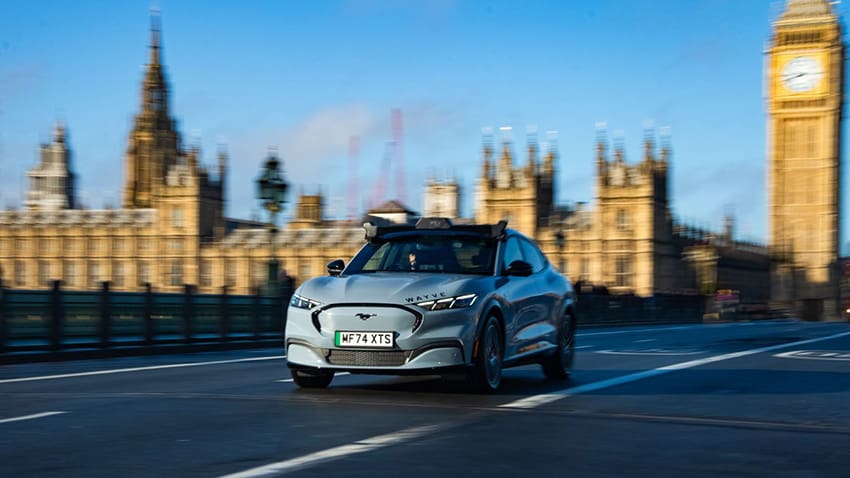
In a quiet corner of Westminster, just behind Parliament Square, a Jaguar I-Pace is nosing its way around a roundabout choked with tourists. The wheel is turning, the indicators are flicking on and off, the speed is precisely judged. The man in the driver’s seat is not driving. Alex Kendall, chief executive of the British self-driving start-up Wayve, has his hands in his lap.

A few miles east, in a hushed examination room at Transport for London, Steven Fairbrass is sitting his twentieth attempt at the Knowledge of London. He has been studying for eight years. He stumbles on a street name in Portland Place and the examiner, kindly, tells him to come back another day.

These two scenes, highlight the future of London transport and frame the most consequential business story the capital’s streets have seen in a generation. The world’s most heavily regulated taxi trade is colliding with one of the world’s most heavily capitalised pieces of artificial intelligence, and the collision is going to shape everything from urban property values to the United Kingdom’s industrial strategy.

A trade already in retreat

The numbers tell their own grim story. Licensed black cab drivers in London peaked at 25,538 in 2014. By November 2024 the figure had fallen to 16,965, a contraction of more than a third in a decade. Over the same period the number of licensed private hire drivers, Uber, Bolt, Addison Lee and the rest, has grown by 82 per cent, to 107,884. As Business Matters has previously detailed, the lost fare income runs into hundreds of millions of pounds a year, and the trade’s underlying cost base, electric-vehicle financing, congestion charging, insurance, keeps rising.

The pipeline of new cabbies is drying up faster than the existing workforce is retiring. The pass rate for the Knowledge, the test that for 161 years has separated the “knowledge boys” from the rest, has slumped from 59 per cent in 2020 to 38 per cent in 2025. Steve McNamara, head of the Licensed Taxi Driver’s Association, has warned that without intervention the trade could be functionally extinct by 2045.

Into this softening market arrive two competitors with very different business models but identical ambitions.

Waymo, the autonomous-driving arm of Alphabet, has been quietly mapping a 100-square-mile patch of London since the autumn

Silicon Valley meets the South Circular

Waymo, the autonomous-driving arm of Alphabet, has been quietly mapping a 100-square-mile patch of London since the autumn. A fleet of around 100 Jaguar I-Paces, fitted with the company’s proprietary stack of 29 cameras, six radars and five lidar units, has been recording the city’s curious right-hand-drive choreography. The company, as Business Matters reported earlier this year, is targeting a fully driverless commercial launch in the fourth quarter of 2026, in partnership with the fleet operator Moove.

Waymo’s co-chief executive, Tekedra Mawakana, points to a fleet that has now driven more than 170 million paying-passenger miles in the United States and a safety record that, the company says, shows 92 per cent fewer serious-injury crashes than the human benchmark. “We travel over two million miles a week,” she recently told Anderson Cooper for a CBS Minutes piece. “Humans drive about 700,000 miles in a lifetime, so this is almost three lifetimes per week that our fleet is driving.”

Wayve, the Cambridge-founded scale-up backed by Microsoft, Nvidia and now Uber, takes a deliberately different approach. Its AI Driver is a foundation model trained end-to-end on millions of hours of footage, designed to generalise to any city rather than relying on the pre-built high-definition maps that Waymo favours. The bet is leaner, faster and, in theory, exportable. It has been enough to attract a $1bn funding round last year and a valuation of $8.6bn, the richest yet awarded to a British AI company. In May, Wayve signed a Memorandum of Understanding with the Department for Business and Trade to fast-track the path from test fleet to commercial deployment.

The prize is not just London fares. Ministers estimate that the autonomous vehicle sector could add £42bn to the UK economy and create close to 40,000 jobs by 2035. Whoever wins London, the most complex, most regulated and most observed urban driving environment in the western world, wins a benchmark that can be sold to every other capital.

The regulatory starting gun

For years, the British self-driving question was theoretical. The Automated Vehicles Act 2024 settled the legal architecture, creating a new category of “authorised self-driving entity” that takes on legal liability when the car is in charge. In a significant acceleration, the Department for Transport has brought forward the Automated Passenger Services permitting regime to spring 2026, allowing pilots of driverless taxi and bus services with no safety driver onboard. The Vehicle Certification Agency has been confirmed as the single national gatekeeper deciding which vehicles can carry paying passengers.

This matters commercially because permits, not technology, were the real bottleneck. Now the path is clear. Uber, which is partnering with Wayve, plans to fold autonomous vehicles into its existing London app. Bolt has indicated it will follow. Waymo’s pilot may carry no driver at all from day one. Within twelve months, a Londoner could be hailing a robotaxi on the same screen they currently use to summon a human one.

The human moat

The cabbies’ counter-argument is not that the technology will fail. It is that a London journey is not a navigation problem.

The Knowledge requires aspiring drivers to memorise some 25,000 streets and 20,000 points of interest within a six-mile radius of Charing Cross. Tom Scullion, who has been driving for 34 years, says he is regularly asked to ferry unaccompanied children to school and a regular client’s Irish wolfhound to the vet. The trust is a function of the licence, and the licence is a function of the years of study.

It is also a function of biology. Research by the late Professor Eleanor Maguire at University College London famously demonstrated that the posterior hippocampus, the brain’s spatial filing cabinet, grows measurably larger in qualified cabbies. New work from UCL’s Spatial Cognition Group suggests, intriguingly, that taxi drivers’ route-planning strategies could in turn inform the next generation of AI navigation systems, an irony not lost on the trade.

Whether that biological moat translates into commercial defensibility is the question that matters in the boardroom. Wayve and Waymo are not pitching themselves as better navigators. They are pitching themselves as cheaper, always available and, they argue, safer. In a city where average black cab fares have risen sharply with electric-vehicle financing costs, price competition is the threat the trade has the least answer to.

What it means for UK plc

The substantive question is not whether the cabbie survives, it is what the disruption tells us about Britain’s appetite for tolerating one. The Treasury has banked on AV adoption to lift productivity and rejuvenate UK automotive manufacturing. The National Wealth Fund is reportedly close to backing the Oxford-founded driverless start-up Oxa. Sherbet London has just raised £40m to electrify its black cab fleet, an explicit defensive play. Insurance underwriters, fleet operators, mapping companies and local councils are all being asked to model a scenario that did not exist eighteen months ago.

Three commercial implications stand out. The first is that London is being treated by the world’s largest AV companies as a global proving ground; success here unlocks a regulatory passport to Paris, Berlin and Tokyo. The second is that the United Kingdom, almost uniquely among large economies, has both a credible domestic champion in Wayve and a willing regulator, which is rare leverage in a sector dominated by American capital. The third is that the long-feared “Uberisation” of the taxi industry was, in retrospect, a soft landing. The next disruption removes the driver altogether, and with it the principal cost line, the principal customer-service complaint and, less comfortably, the principal employer of working-class Londoners who never went to university.

The black cab will not vanish overnight. The same regulatory frame that admits Waymo also affirms the taxi trade’s protected status to ply for hire on the street, and the iconography remains commercially valuable: every tourism board on earth would pay to keep a TX5 in the establishing shot. Sherbet’s investors, evidently, agree.

But the economics are unforgiving. The number of “appearances” booked at TfL each year is falling. The capital cost of a new electric London-style cab now exceeds £70,000. And the next generation of would-be cabbies, including 41-attempt Knowledge graduate Anshu Moorjani, are entering a market in which their newly enlarged hippocampi will be competing with neural networks that learn faster every week.

A century after the last horse-drawn hansom left the streets of London, the same city is preparing to host the first commercial robotaxi service in Europe. The Knowledge made the London cab the gold standard of urban transport. Whether it survives the algorithm is now, finally, a question with a deadline.

Read more:
The Knowledge versus the algorithm: inside London’s £42bn robotaxi reckoning

  •  

Farage promises tax-free overtime in £5bn pitch to working Britain

Reform UK leader vows to lift income tax from overtime pay for anyone earning under £75,000, a policy he says will reward graft, lift productivity and put more than £1,000 a year back into the pockets of nurses, police officers and factory hands.

Reform UK leader vows to lift income tax from overtime pay for anyone earning under £75,000, a policy he says will reward graft, lift productivity and put more than £1,000 a year back into the pockets of nurses, police officers and factory hands.

Nigel Farage has fired the starting gun on what is shaping up to be the most consequential domestic tax debate of the parliament, pledging to abolish income tax on overtime hours for the bulk of the British workforce should Reform UK win the next general election.

Under the proposal, unveiled in a Telegraph column timed to coincide with the Makerfield by-election campaign, employees on salaries below £75,000 who work beyond a 40-hour week would keep every penny of their additional pay. The party has badged it the “hard work bonus” and put the cost at around £5bn a year.

For Business Matters readers running payroll, the policy lands somewhere between a productivity opportunity and an administrative headache. It also marks Mr Farage’s most pointed move yet to recast Reform as the natural home of the working voter — territory Labour has long taken as its own.

A direct strike at Burnham’s Labour

The timing is no accident. Survation’s constituency poll on Saturday put Labour on 43 per cent in Makerfield against Reform’s 40 per cent, a wafer-thin margin in a seat Andy Burnham is fighting in the hope of using a Westminster perch to challenge Sir Keir Starmer for the Labour leadership.

Mr Burnham’s pitch, a £35bn land value tax paired with a £39bn social care levy, has handed Reform a clean line of attack. Mr Farage, writing in The Telegraph, accused Labour of being “more on the side of welfare” than workers, and argued that ordinary families were being “dragged into higher tax bands with nothing to show for it”.

The policy also bears the unmistakable fingerprints of Donald Trump’s “no tax on tips” pledge, a populist tax cut aimed squarely at the workers Labour assumes will vote for it by reflex.

What it would mean in the workplace

Reform’s worked examples are deliberately granular. A nurse on a 40-hour contract at the Royal Albert Edward Infirmary working six extra hours of overtime each week would, the party claims, take home an additional £5 an hour and be more than £1,300 better off across a year. Workers on the line at the local Heinz factory would gain more than £1,000.

That is a meaningful sum in a constituency where average earnings have lagged the national figure for the better part of a decade, and it speaks to the broader frustration with fiscal drag that has seen more professionals question the value of earning more as frozen thresholds pull them into ever-higher tax bands.

For SME owners, the implications are double-edged. A genuine “hard work bonus” could ease recruitment in sectors where overtime is the difference between covering a shift and turning custom away, hospitality, logistics, social care, construction. Office for National Statistics data on average hours worked by industry already shows healthcare and construction running well above the national mean on weekly hours, and a tax-free top-up could materially shift the labour supply equation.

The flipside is administrative. Reform concedes that anti-avoidance rules will need to be drafted to stop employers reclassifying ordinary hours as overtime, a temptation that will fall hardest on smaller firms without payroll departments. Amendments to the Working Time Regulations, a piece of retained EU law, would also be required.

The fiscal credibility test

This is Mr Farage’s first major tax announcement since October, when he scrapped his £90bn package of cuts in a deliberate move to harden Reform’s fiscal image, a turn already covered by Business Matters in our analysis of the party’s revised manifesto promising seven million workers would pay no income tax.

Reform says the £5bn cost would come out of £40bn in annual savings, ending welfare entitlement for foreign nationals, capping foreign aid at £1bn, axing net zero schemes, removing personal independence payments for non-serious anxiety conditions and trimming Civil Service back-office headcount.

Not everyone is convinced. Helen Miller, director of the Institute for Fiscal Studies, has called the proposal “problematic in principle and practice”, questioning why a tax break should be aimed at employees already clocking 40 hours a week. The behavioural risk — that workers and employers simply restructure existing pay arrangements to qualify, is one HMRC will need to plan for from day one.

There is also context worth noting for British employers. The UK has just seen the largest employer-side tax rise in the developed world on the back of the OECD’s recent labour cost data, a backdrop that has sharpened the appetite for any policy that puts cash back into the take-home pay column without obviously hitting business.

The political read

Polling by More in Common suggests a Burnham-led Labour would beat Reform 30 per cent to 27 per cent in a general election, within the margin, but tighter than the figures Sir Keir is currently posting. Wes Streeting’s pitch this week for a wealth tax, including aligning capital gains tax with income tax to raise £12bn, has further muddied Labour’s message on aspiration.

Into that confusion, Mr Farage has dropped a policy that is easy to explain, easy to cost on the back of a payslip and aimed squarely at the kind of voter neither of the legacy parties can now take for granted.

Whether the Treasury would ever sign it off is another matter entirely. But as a piece of political positioning four weeks out from a by-election Reform was already favoured to win, it is the cleanest piece of retail politics Mr Farage has produced in this cycle.

Read more:
Farage promises tax-free overtime in £5bn pitch to working Britain

  •  

King’s Awards crown Britain’s small business heroes on 60th anniversary

A Cotswold soap-maker, a Warwickshire 3D-printing pioneer supplying supercar manufacturers and an Edinburgh tech-refurbishment social enterprise are among 186 organisations honoured this year with The King's Awards for Enterprise, as Britain's most prestigious business accolade marks its 60th anniversary.

A Cotswold soap-maker, a Warwickshire 3D-printing pioneer supplying supercar manufacturers and an Edinburgh tech-refurbishment social enterprise are among 186 organisations honoured this year with The King’s Awards for Enterprise, as Britain’s most prestigious business accolade marks its 60th anniversary.

The 2026 cohort, which includes 76 winners for international trade, 52 for innovation, 36 for sustainability and 22 for promoting opportunity through social mobility, underlines the growing breadth of the awards first presented by Queen Elizabeth II in 1966. Renamed in 2022 following the King’s accession, the honours have now recognised more than 8,000 British businesses across six decades.

A sustainability story written in soap

For Emma Heathcote-James, founder of the Little Soap Company, the recognition vindicates an approach that has prized principles over margins since she began hand-crafting bars from her Cotswold cottage in 2008.

“We don’t make the profit that we perhaps could if we made everything in China, but every single decision that we make is putting the planet and people first,” said Heathcote-James, 49, whose products are now stocked by Waitrose, Tesco and Boots.

The business, which turns over around £2.4 million and employs 13 staff, manufactures exclusively in Scotland and northern England, home to the few soap factories Britain has left, and produces vegan-certified, cruelty-free ranges in recycled packaging.

It has not, however, been insulated from the macroeconomic squeeze. Chief operating officer Sharon Redrobe, who is married to Heathcote-James, said geopolitical tensions had pushed up the cost of raw materials including the essential oils used as fragrances, while greenwashing by some competitors remained a source of frustration. Winning as a small, independently financed business, she said, was the company’s “biggest coup” to date.

Little Soap Company has deliberately avoided external investment, wary of pressure to grow margins by switching to cheaper inputs. “It’s really important that we can demonstrate you can have a successful business and still do things correctly from the start,” Heathcote-James said.

From a mother’s garage to the supercar grid

In Shipston-on-Stour, Warwickshire, RYSE 3D has secured an international trade award after export orders rose by an extraordinary 2,300 per cent to £2.24 million over three years. The company manufactures high-performance 3D-printed parts for more than 20 of the world’s leading supercar marques.

Founder Mitchell Barnes, 29, started developing a 3D printer in his mother’s garage as an undergraduate, using his student loan to build the first prototype and selling the service to coursemates after successfully printing a model for his car-design degree. He is among the youngest ever recipients, and has now collected a second King’s Award in as many years, having won his first at 27.

“It’s a royal honour,” Barnes said. “You don’t believe it when you first get it, but then winning two is even more insane.”

The business, which employs 25 people, exports principally to Latvia, Denmark and the United States, although the tariff regime introduced by Washington last year has eaten into US returns. Healthy margins have allowed RYSE 3D to absorb some of the impact, but Barnes said the team had had to redouble efforts elsewhere to compensate, including launching an automated online ordering tool aimed at everyday customers.

To address a chronic skills shortage, the company has taken to recruiting from outside the sector altogether, training former coffee baristas as 3D printing engineers. Barnes plans to open offices on both the east and west coasts of the United States before the end of 2026.

Refurbishing devices, repairing communities

Edinburgh Remakery, a ten-strong social enterprise honoured in the sustainability category, refurbishes and resells used technology, donating devices to people experiencing digital exclusion and routing unsalvageable components to specialist processors including the Royal Mint, which extracts gold from old motherboards.

Chief executive Elaine Brown said the team had been overwhelmed when the news arrived: “There was much jumping up and down in the remakery that day and a few more cakes were had just to celebrate.”

Demand for the service has surged as businesses retire PCs ahead of the end of support for Windows 10, but Brown argued that many of these machines could be given a second life by being fitted with alternative operating systems. “Being a business for good has been good for business,” she said. “We’ve grown our turnover, we’ve grown our engagement, and the King’s Award is the icing on the cake.”

Winners universally described the application process as exhaustive. Serial entrepreneur Will Fletcher, 46, who oversaw the promoting opportunity category as a judge, said the assessment was deliberately rigorous.

“It’s a really, really thorough process,” he said. “You always get a few that are out-and-out winners, and then there’s a few really tough cases.”

The category, Fletcher noted, rewards profitable companies that channel resources back into their communities, work that is “time-consuming to do properly and not directly linked to how much profit the company makes”. His own former business, Recycling Lives, won the award four times, including in 2019 for supporting ex-offenders into employment, where reoffending rates among participants ran at less than 5 per cent against a national average of around two-thirds. Fletcher now runs Car.co.uk, a Lancashire-based digital car-buying platform, which itself takes home a 2026 award for innovation.

Taken together, this year’s roll call suggests that British SMEs continue to find competitive advantage not in spite of their values, but because of them, a message the King’s Awards have championed, in one form or another, for sixty years.

Read more:
King’s Awards crown Britain’s small business heroes on 60th anniversary

  •  

JPMorgan threatens to scrap Canary Wharf skyscraper if Labour swings left on bank taxes

Jamie Dimon has fired the bluntest warning shot yet at Westminster, signalling that JPMorgan Chase will walk away from its planned multibillion-pound Canary Wharf skyscraper if the political weather in Britain turns colder for the banking industry.

Jamie Dimon has fired the bluntest warning shot yet at Westminster, signalling that JPMorgan Chase will walk away from its planned multibillion-pound Canary Wharf skyscraper if the political weather in Britain turns colder for the banking industry.

Speaking to Bloomberg TV on Tuesday, the chairman and chief executive of America’s largest bank said the lender would “reconsider” the project should its UK tax bill climb “too much”, a pointed intervention as speculation grows in the City that Sir Keir Starmer’s premiership is vulnerable and that a successor government could lurch leftwards.

“Not political instability, but if they become hostile to banks again, yes,” Dimon told the broadcaster when asked whether the febrile mood in Westminster was giving him pause. “I’ve always objected to the fact, we didn’t damage the UK in any way, we paid probably $10 billion in extra taxes by now. I don’t think that’s right or fair. If that happens too much we will reconsider.”

The proposed tower, which would span roughly three million square feet and accommodate up to 12,000 staff, was unveiled the day after Rachel Reeves delivered her latest Budget. The chancellor opted against raising taxes on banks after intensive lobbying by the industry, a decision that JPMorgan rewarded with one of the most consequential corporate property announcements London has seen in a generation.

Were it built, the skyscraper would rank among the largest office buildings in Europe. JPMorgan has put the construction-phase boost to the local economy at £9.9 billion, while the Treasury has dangled a business rates discount of “up to 100 per cent” to secure the investment. The bank, however, was careful to caveat its commitment at the time, stressing that the project remained “subject to a continuing positive business environment in the UK”.

Dimon’s latest remarks make plain what that small print really means.

Britain’s lenders are enjoying a profitable run. First-quarter results from the high street banks confirmed earnings continue to be flattered by higher-for-longer interest rates, themselves a consequence of the inflationary shock from the war in Iran. That combination, fat banking profits, squeezed household budgets and battered public finances, has long been a recipe for political appetite to raid the sector.

UK Finance, the industry’s lobbying arm, calculates that banks operating in Britain now shoulder the heaviest tax burden of any major financial centre, with an effective rate of 46.4 per cent last year against 27.9 per cent in New York and 38.9 per cent in Frankfurt. The numbers reflect a bank levy on balance sheets introduced in the 2010 emergency Budget after the financial crisis, layered with a corporation tax surcharge on profits brought in five years later.

CS Venkatakrishnan, the Barclays chief executive, captured the mood last month when he observed that “banks in the UK are more highly taxed than they are in other major jurisdictions.” Analysts at Jefferies told clients last week that they considered an increase in the bank surcharge to be “more likely than not”.

A retreat by JPMorgan from Canary Wharf would not simply leave a hole in the Docklands skyline. It would dent the supply chain of construction firms, fit-out specialists, security contractors, cleaners, caterers and software vendors that depend on big anchor tenants. It would also chill the broader signal sent to overseas investors weighing whether London remains, post-Brexit, a credible base for European headquarters, investors whose downstream spending touches thousands of British SMEs.

There is, equally, a financing dimension. Punitive levies on banks rarely stay confined to the banks themselves. They tend to manifest in tighter lending criteria, higher arrangement fees and a more cautious approach to small business credit, precisely the segment of the market that already complains loudest about access to capital.

Whether the warning lands depends on who occupies Number 10 by the autumn. Should Sir Keir survive, Treasury officials are likely to continue the delicate dance of squeezing revenue from elsewhere while keeping the City onside. Should he fall, his successor will inherit a fiscal hole, a restless backbench and an industry that, despite record profits, has become extraordinarily adept at signalling its mobility.

Dimon, who has spent the better part of two decades reminding politicians on both sides of the Atlantic that capital travels, has chosen his moment. JPMorgan’s tower is not merely a building. It is a bargaining chip, and the chancellor, whoever she or he turns out to be, has just been put on notice.

Read more:
JPMorgan threatens to scrap Canary Wharf skyscraper if Labour swings left on bank taxes

  •  

Reeves’s pay-per-mile EV tax ‘could cost Treasury £4.8bn’, industry coalition warns

Chancellor Rachel Reeves has been warned that her flagship pay-per-mile tax on electric vehicles risks blowing a £4.8bn hole in the Treasury's own coffers, with potentially serious knock-on consequences for the small and medium-sized businesses that underpin Britain's burgeoning clean transport sector.

Chancellor Rachel Reeves has been warned that her flagship pay-per-mile tax on electric vehicles risks blowing a £4.8bn hole in the Treasury’s own coffers, with potentially serious knock-on consequences for the small and medium-sized businesses that underpin Britain’s burgeoning clean transport sector.

In a robustly worded letter to Dan Tomlinson, the exchequer secretary, a coalition of trade bodies representing EV drivers, renewable energy firms and charging operators has argued that the Chancellor’s new electric vehicle excise duty, due to take effect on 1 April 2028, could backfire spectacularly. Their case: that the levy will suppress new car sales to such a degree that it ends up costing the Exchequer considerably more than it raises.

Announced in the November 2025 Budget, the duty will charge fully electric car drivers 3p per mile and plug-in hybrid motorists 1.5p per mile. Treasury forecasts put the expected take at £1.1bn in 2028-29, rising to £1.9bn by 2030-31. The industry’s number-crunchers, however, paint a starkly different picture.

Research carried out by Beama, the trade body representing energy infrastructure companies, suggests the Treasury could lose £630m in VAT receipts in 2028 alone, as motorists postpone EV purchases. In a worst-case scenario, where buyers also defer ordering petrol and diesel vehicles ahead of the looming combustion-engine ban, the cumulative hit to the UK economy could reach £4.8bn.

“Introducing the pay-per-mile policy early is a fiscal own goal,” said Matt Adams of Beama. “It will slow EV uptake, reduce EV charging investments and cost the UK economy more than the Treasury stands to raise with the taxation.”

The warning carries particular weight for the thousands of SMEs operating across Britain’s nascent EV ecosystem, from independent charge-point installers and small fleet operators to clean-tech start-ups and aftermarket specialists. Many of these smaller firms have invested heavily on the assumption that EV adoption will continue its upward trajectory, using rising registrations to justify capital expenditure, recruitment and expansion plans. A sudden slump in demand would, the trade bodies argue, leave a long tail of smaller operators dangerously exposed.

The signatories, Beama, ChargeUK, EVA England and the Renewable Energy Association, point to overseas precedents that should give the Chancellor pause for thought. The introduction of a pay-per-kilometre charge in Iceland sent new EV sales tumbling by 75 per cent in 2024, while a comparable measure in New Zealand triggered a 50 per cent slump.

Replicating that pattern on British roads would have profound implications for the public finances, the trade bodies argue, given that electric vehicles cost on average £6,000 more than their petrol and diesel equivalents, and therefore generate proportionally higher VAT receipts on purchase.

Jarrod Birch, head of policy at ChargeUK, said the timing of the proposed levy was particularly ill-judged. “EVs are experiencing a surge of interest as an alternative to roller-coaster petrol prices,” he said. “Government should be doubling down on the transition by making buying and charging an EV affordable for all.”

Recent months have indeed seen EV sales accelerate, buoyed in part by volatility in oil markets following the outbreak of the Iran war. The trade bodies cautioned, however, that this short-term fillip is likely to prove temporary, and that the structural impact of a per-mile charge could weigh on the sector for years to come.

A Treasury spokesperson defended the Government’s broader approach. “This Government is committed to the EV transition, boosting support to save drivers up to £3,750 on a new car and investing over £3 billion into UK manufacturing and more charging points,” they said.

For Britain’s SME-heavy charging and clean-tech sectors, however, the central question is whether those incentives will be sufficient to offset the chilling effect of a tax that critics say risks pulling the rug from under the very transition Whitehall claims to be championing. With less than two years until the duty comes into force, the Chancellor has time to think again. Whether she will is another matter entirely.

Read more:
Reeves’s pay-per-mile EV tax ‘could cost Treasury £4.8bn’, industry coalition warns

  •  

Andrew trade envoy files: Queen ‘very keen’ ex-prince led UK plc abroad, Whitehall papers reveal

The late Queen Elizabeth II was “very keen” that her second son, then the Duke of York, take on a “prominent role in the promotion of national interests” as the United Kingdom’s special representative for international trade and investment, according to confidential papers on his 2001 appointment released by Downing Street this week.

The late Queen Elizabeth II was “very keen” that her second son, then the Duke of York, take on a “prominent role in the promotion of national interests” as the United Kingdom’s special representative for international trade and investment, according to confidential papers on his 2001 appointment released by Downing Street this week.

The cache of 11 files, published on Thursday following a successful Liberal Democrat motion in the Commons, sheds fresh light on how Andrew Mountbatten-Windsor came to occupy one of British business diplomacy’s most senior unpaid posts, a role he held for a decade and which has since become the focus of a Metropolitan Police criminal inquiry.

A royal recommendation, in writing

In a memorandum to the then-foreign secretary Robin Cook dated February 2000, Sir David Wright, the chief executive of British Trade International, the predecessor to today’s Department for Business and Trade, set out the palace’s thinking in unusually direct terms.

“The Queen’s wish is that the Duke of Kent should be succeeded in this role by the Duke of York,” Sir David wrote. “The Duke of Kent is to relinquish his responsibilities around April next year. That would fit well with the end of the Duke of York’s active naval career. The Queen is very keen that the Duke of York should take on a prominent role in the promotion of national interests.”

He added: “No other member of The Royal Family would be available to succeed the Duke of Kent. The Duke of York’s adoption of his role would seem a natural fit.”

For Whitehall officials charged with selling British plc abroad, the recommendation from Buckingham Palace was, in the language of the time, treated as decisive.

The envoy who preferred ‘sophisticated countries’

If the appointment had a regal sheen, the papers also reveal a markedly less flattering portrait of the working envoy. In a letter dated 25 January 2000, Kathryn Colvin, then head of the Foreign Office’s Protocol Division, recorded a briefing from the duke’s principal private secretary, Captain Neil Blair, on his employer’s travel preferences.

The ex-prince, the note records, “tended to prefer more sophisticated countries” and preferred “ballet over theatre”. Captain Blair also stipulated that “the Duke of York should not be offered golfing functions abroad. This was a private activity and if he took his clubs with him he would not play in any public sense”.

For an envoy whose taxpayer-funded brief was to open doors for British exporters in fast-growing emerging markets, the attitudes set out in the briefing will sit uncomfortably with the SME exporters who relied on the office to act as a battering ram into difficult jurisdictions. As former business secretary Sir Vince Cable noted earlier this year, the conduct of Andrew’s tenure deserves serious examination by investigators, not least because the role traded on the prestige of the Crown to win commercial advantage.

From soft power to criminal inquiry

Andrew Mountbatten-Windsor’s arrest on 19 February, his sixty-sixth birthday, has transformed what was once a footnote of royal soft power into a constitutional and commercial headache for the Government. The arrest followed allegations that the former envoy shared sensitive material with the late paedophile financier Jeffrey Epstein during his time as trade representative.

Emails published by the US Department of Justice indicate that Andrew forwarded official reports of trips to Singapore, Hong Kong and Vietnam to Epstein in 2010 and 2011, within minutes of receiving them from his then special adviser. Metropolitan Police Commissioner Sir Mark Rowley has reportedly pressed US authorities to expedite the release of unredacted exchanges held in the wider Epstein files.

Detectives are understood to be considering whether to broaden the scope of their inquiry beyond the offence of misconduct in public office — a notoriously difficult charge to mount — to encompass potential corruption offences as well as alleged sex trafficking. Any prosecution will fall to the Crown Prosecution Service’s Special Crime Division, which handles the most sensitive matters.

Lord Peter Mandelson, the former business secretary and a mutual acquaintance of both men, was himself arrested following the release of the Epstein files in the United States, accused of having disclosed sensitive information. Both men deny any wrongdoing and have been released under investigation; both maintain they had no knowledge of Epstein’s crimes.

What it means for British business

For owner-managers and SME exporters, the readership Business Matters has championed for more than two decades, the documents matter for reasons that go well beyond royal soap opera.

The Special Representative for International Trade and Investment was, until 2011, the public face Britain put forward to court inward investors and to bang the drum for UK companies in capitals from Riyadh to Astana. It was, in effect, a brand. The newly-published file makes plain that the appointment process was driven less by a forensic assessment of commercial fit than by dynastic convenience and palace preference.

That has implications for how the present generation of trade envoys, and the export support architecture around them, is scrutinised. UK Export Finance has spent the past three years dramatically expanding its direct support for SME exporters, precisely because the soft-power model that underpinned the Andrew era proved fragile when its figurehead became politically toxic. The unwinding of Pitch@Palace, the ex-prince’s own start-up showcase, tells a similar story.

The Government’s decision to release the file, under duress from the Liberal Democrats and against the backdrop of an active criminal inquiry, as the BBC reported earlier this year, is a tacit acknowledgement that public confidence in the way British trade promotion was conducted at the turn of the century has not survived contact with the Epstein files. As RTÉ noted in its coverage of Thursday’s release, the documents arrived “just months after lawmakers accused the king’s brother of putting his friendship with Jeffrey Epstein ahead of the nation”.

For Britain’s exporters, the lesson from these dusty memoranda is brisk and uncomfortable: the credibility of UK trade promotion abroad now depends on transparent process, not royal patronage. The sooner Whitehall internalises that, the better for the businesses that pay its salaries.

Read more:
Andrew trade envoy files: Queen ‘very keen’ ex-prince led UK plc abroad, Whitehall papers reveal

  •  

Kyle vows no climbdown on late payment crackdown as landmark bill enters parliament

Peter Kyle has issued a defiant message to the boardrooms of corporate Britain: the government's long-awaited crackdown on late payments will not be diluted, no matter how loudly big business lobbies against it.

Peter Kyle has issued a defiant message to the boardrooms of corporate Britain: the government’s long-awaited crackdown on late payments will not be diluted, no matter how loudly big business lobbies against it.

In an interview with Business Matters, the Business Secretary said he would not “resile from delivering” what he described as a “step change in the relationship between all larger businesses and their supply chains” as the Small Business Protections (Late Payments) Bill is laid before parliament on Tuesday.

The legislation, billed by Whitehall as the most far-reaching shake-up of commercial payment rules in more than 25 years, caps payment terms at 60 days for large firms paying smaller suppliers, imposes mandatory interest of 8 per cent above the Bank of England base rate on overdue invoices, and hands the Small Business Commissioner sweeping new powers to investigate, name and fine serial offenders. It also outlaws the controversial use of “retentions” in the construction sector, a practice in which main contractors withhold a portion of a supplier’s bill, ostensibly as a defects guarantee, but which the government argues has long been abused to prop up cashflow further up the chain.

According to government figures, poor payment practices drain roughly £11 billion a year from the UK economy and contribute to the closure of an estimated 38 small businesses every day.

A line in the sand

Kyle was unequivocal when asked whether ministers would soften the bill in the face of pressure from corporate Britain. “I am fighting to bring more fairness to our economy,” he told Business Matters. “Sixty days is a solid, reasonable outer limit for paying a small business.”

He claimed the reforms would give the UK “the strongest legal framework in the G7” on commercial payments — a point ministers have made repeatedly since the package was first trailed earlier this year.

“An unhealthy economy is one in which businesses are exploited or strangled to death,” he said. “I don’t think there are many people in their personal lives, let alone in their professional lives, that think it’s reasonable to wait more than two full months to be paid.”

His comments come amid mounting unease in Westminster that the legislation could be watered down at committee stage. Both the British Retail Consortium and the Confederation of British Industry have flagged concerns. The CBI warned last week that the new rules must be “balanced carefully against the need to protect the competitiveness of larger businesses — particularly those operating across complex supply chains”.

Supporters of the bill, however, see those interventions as precisely the reason ministers cannot afford to flinch. Craig Beaumont, executive director at the Federation of Small Businesses, pulled no punches. “Many big businesses are using small businesses for free credit, and some are busy lobbying to keep it,” he said. “As this bill goes through parliament, it absolutely must not be watered down. Victims don’t want a balanced approach with perpetrators.”

A commissioner with teeth

For the reforms to bite, much will hinge on enforcement — and on Emma Jones, the small business commissioner appointed last year to take on Britain’s payment culture. Until now her office has been seen by critics as toothless, having not used its existing “name and shame” powers since Labour came to power. The government has said that is because no complaint from suppliers had merited that step.

Kyle insisted that would change once the new bill became law, and made clear he expected Jones to use her new powers assertively, including fines that could run into the tens of millions of pounds for “persistently” late payers.

“I’m empowering her to do these things, and she also has my full backing to act as swiftly as possible,” he said. “We need to have swift inquiries, swift judgments, and we need to have swift enforcement. And that will lead to the behaviour change we need.”

A drag on growth

The political logic for Kyle is clear enough. Cashflow remains the single biggest pressure point for Britain’s 5.5 million small and medium-sized enterprises, and recent figures suggest the problem is getting worse, not better, with UK firms hitting record levels of late invoice payments and SMEs collectively left more than £100 billion out of pocket last year.

For a government that has staked its growth agenda on unblocking the supply side of the economy, the message that businesses can no longer treat their smaller suppliers as a free line of credit is, by ministerial standards, an unusually sharp one. Whether the bill survives its passage through parliament without significant amendment will be the first real test of how serious Kyle is about that promise.

Read more:
Kyle vows no climbdown on late payment crackdown as landmark bill enters parliament

  •  
❌