
 Login
Login
NZ Budget 2026 at a glance: follow the money here
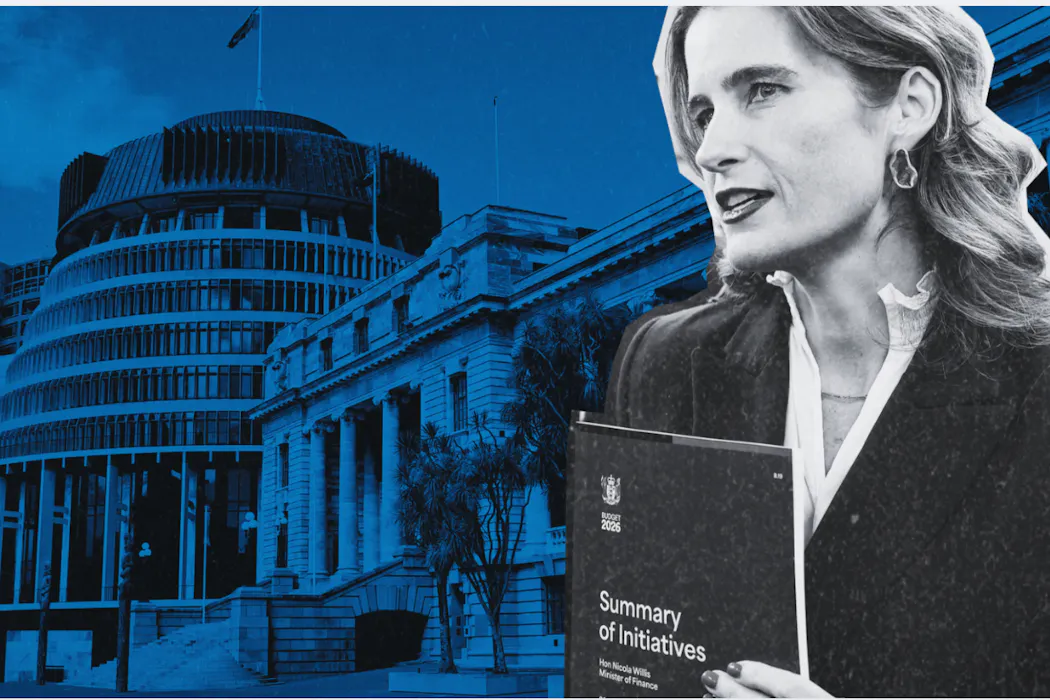
Finance Minister Nicola Willis delivered a disciplined budget today, asking New Zealanders to accept continued restraint in return for promises of longer-term economic growth – and an earlier-than-expected return to surplus.
Willis told Parliament:
This is a responsible budget. The government is responding to an increasingly uncertain world with an economic plan and sensible choices that will make New Zealand more secure in the years ahead.
In her budget address, Willis said New Zealanders could look forward to “growth, higher wages, and rising employment”, as well as “better public infrastructure, expanded healthcare services, better schooling and safer communities”.
A key figure is the projected NZ$2.6 billion surplus by 2028/29 – a notable improvement from the $900 million deficit the government forecast in December, and a year earlier than previously expected.
Willis said the surplus would mean “less debt and lower interest costs for us to pay than would otherwise be the case”. Net core Crown debt is now forecast to peak at 46.1% of GDP in 2027/28.
The government’s central pitch is that careful spending restraint and reprioritisation can return its books to surplus earlier than expected, without abandoning essential public services.
Willis had already revealed the operating allowance for new spending had been reduced by $300 million to $2.1 billion. A total $5.7 billion will be allocated to capital projects.
Budget 2026 introduces a new levy on banks, insurers and financial firms to fund their own regulation via the Reserve Bank from mid-2027, recovering $209 million over four years. Willis noted the levy would shift costs away from taxpayers.
Elsewhere, health received a notable boost, securing $5.8 billion in new operational funding. This includes $5.5 billion to frontline services over four years. There is also $680 million for health infrastructure such as Whangārei Hospital’s new 158-bed ward and land for a new hospital in Drury.
Many other figures and initiatives shared this afternoon were well signalled before budget day. This included a $1.6 billion defence package and a gas transition loan guarantee scheme expected to make up to $1.2 billion of bank loans available to businesses to cut their dependency on gas.
As with the previous budget, the government’s restraint will be keenly felt in some areas – already apparent in the proposed reduction in public service numbers announced earlier this month.
Ultimately, the test will be whether the budget’s restrained operational spending and targeted capital and infrastructure investments provide sufficiently for future productivity growth.
The risks are that tight spending, public sector cuts and limited new operational funding may leave some public services struggling to keep pace with demand, inflation and population growth.
Key spending

Michael P. Cameron is Vice President of the Population Association of New Zealand.
