Reading view

How Pennsylvania’s new paid leave bill leaves the sandwich generation behind

Approximately 63 million Americans are family caregivers. Jub Rubjob/Moment Collection via Getty Images

The number of family caregivers has grown from 53 million Americans in 2020 to 63 million as of 2025. This number is expected to increase as the baby boomer generation ages and faces the limitations of our current health and social services systems.

A family caregiver is an unpaid individual who provides assistance to a family member who needs support due to illness, disability or aging.

The population of metro Pittsburgh is one of the oldest in the country, according to U.S. Census Bureau data. This means an increasing proportion of the local population will require care from family caregivers as they age. In Allegheny County, the number of residents age 65 and older is projected to grow by 50,000 by 2050.

Despite their critical role in supporting the aging population, however, family caregivers are not often provided with medical training or help with navigating the health and social services systems. This puts them at significant risk of experiencing physical and mental strain that can lead to burnout and leaving the workforce before retirement age. Caregivers and those they support can also develop health complications based on these factors.

This is particularly true for women, who provide a disproportionate amount of care in the U.S.

I study ways to improve the quality of life for aging adults and their care partners. My work centers on how family caregiving can improve mental health for families. I also examine the toll that caregiving takes on families navigating serious illness and decline.

Sandwich generation caregivers

The “sandwich generation” refers to adults – typically in their 40s and 50s – who are simultaneously caring for their aging parents while raising their own children. They are “sandwiched” between two generations of dependents and often face significant financial and emotional pressures as a result.

A woman wearing glasses stands at a podium.
Pennsylvania is currently debating paid leave legislation through the Family Care Act, proposed by Democratic Rep. Jennifer O'Mara. Rep. Jennifer O'Mara/Instagram

These caregivers often find themselves caught between work and unpredictable caregiving demands. Without formal protections like paid leave, they may feel forced to reduce hours, turn down promotions or leave the workforce altogether. These decisions can add to the financial strain they’re already under.

Where the law falls short

Several national and state programs exist to support older adults.

The federal Older Americans Act funds services like meal delivery, transportation and caregiver support, and Medicaid Home and Community-Based Services helps older adults receive care at home rather than in a facility. But systemic barriers – from eligibility gaps to access issues – limit their reach.

Federal initiatives like the RAISE Family Caregivers Act offer some hope for family caregivers. It outlines specific actions the government can take to help caregivers, including making it easier for them to balance caregiving with their jobs.

In addition, several states have implemented paid family leave policies. California, for example, offers up to eight weeks of paid family caregiving leave – replacing up to 90% of wages for lower earners. Washington and Massachusetts both provide up to 12 weeks, with wage replacement rates of 90% and 80%, respectively, and include job protection so caregivers don’t have to choose between their loved one and their livelihood.

Pennsylvania may be next. Legislators are currently debating the Family Care Act, paid leave legislation proposed by state Rep. Jennifer O'Mara. The bill, approved by the Pennsylvania House in March 2026, would allow employees to take up to 12 paid weeks off after the birth of a child or to care for a family member during a serious illness. Spotlight PA reports that the House-approved bill proposes employers cover the cost, with grants available for small businesses.

The state Senate’s version of the Family Care Act, pending in the Labor & Industry Committee as of May 2026, would fund benefits through employee payroll deductions of up to 1% of their income. This addresses a critical gap in existing federal law, which guarantees only unpaid leave.

Even if passed and signed into law, the proposal may fall short for sandwich generation caregivers, who face simultaneous, overlapping demands on both ends of the age spectrum. Many of these caregivers have already reduced hours or left the workforce entirely. A benefit tied to employment may never reach the people who need it most.

Pittsburgh’s generational tug-of-war

Pittsburgh-based sandwich generation caregivers face competing demands: securing reliable, affordable childcare – a growing problem in Allegheny County driven by staffing shortages and limited spots – while simultaneously managing eldercare responsibilities. Without a state or federal paid leave mandate, many Pittsburgh workers, like those in lower-wage or part-time roles, have no guaranteed access to the time off they might need to meet either obligation.

Paid leave policies vary by employer, and without a universal federal mandate, coverage is uneven – often weakest for lower-wage workers, part-time employees and people at small businesses.

Research has shown that sandwich generation caregivers already use most of their paid time off for caregiving tasks. This means they have limited time to take care of their own health. The proposed Family Care Act caps paid leave at 12 weeks per year. While this is an improvement from having no mandatory paid leave, it’s designed to supplement – not replace – standard sick days. The Family Care Act would cover intermittent leave for singular events, like childbirth or surgery. But sandwich generation caregiving is chronic, overlapping and resource-intensive in ways the bill isn’t designed to address.

A historic-looking building behind a sign that says
The Pennsylvania paid leave bill would give workers paid leave for up to 12 weeks. arlutz73/iStock collection via Getty Images Plus

In addition, the act proposes a partial wage replacement – 90% of wages for a weekly benefit cap ranging from $573 to $995 per week, depending on the individual’s earnings.

Caregivers who step back from work to care for a child or an aging parent are disproportionately lower- and middle-income workers. A 90% wage replacement rate at a lower-wage tier means those workers don’t have to choose between a paycheck and showing up for their family.

Yet this coverage is still likely insufficient for caregivers who often face significant financial strain related to caregiving, such as out-of-pocket expenses for care.

While the Family Care Act – whether it is funded through employee and employer payroll contributions – is a step forward, it still falls short for sandwich generation caregivers. What this population needs is the ability to take flexible time off as needs arise, not just in one block. However, intermittent leave presents administrative challenges for employers, like scheduling disruptions and paperwork burdens that could make it harder to put into practice.

The Conversation

Kate Perepezko does not work for, consult, own shares in or receive funding from any company or organization that would benefit from this article, and has disclosed no relevant affiliations beyond their academic appointment.
  •  

Cincinnati, where Vance converted, gives a glimpse of Catholicism’s history in America’s heartland

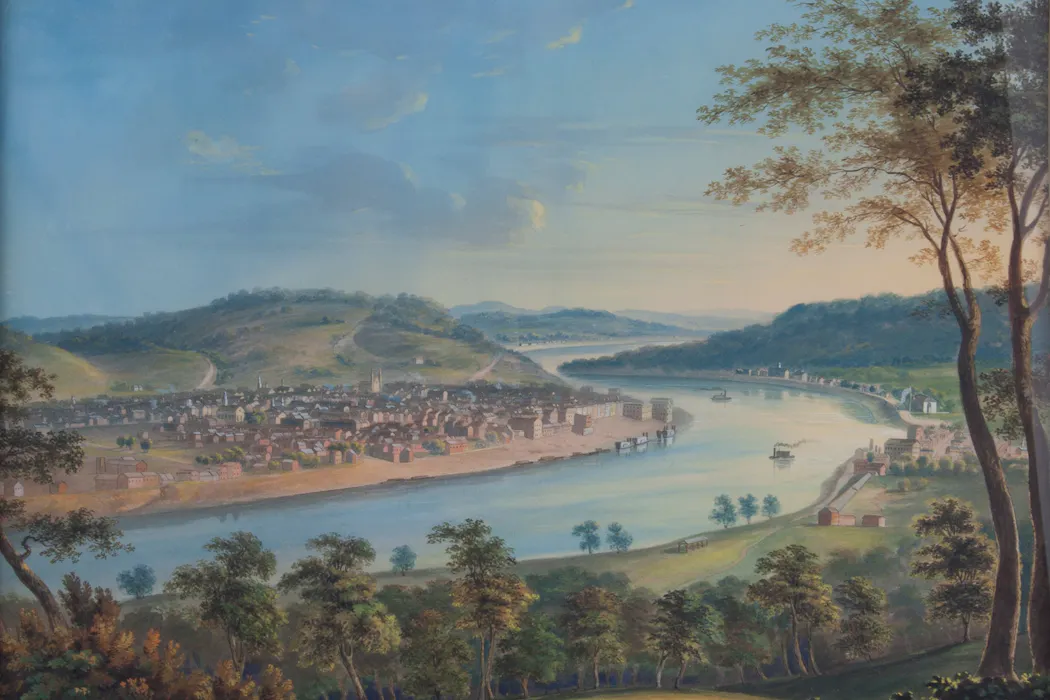
John Caspar Wild painted 'View of Cincinnati From Covington' in 1835, as the city was booming. Cincinnati Museum Center at Union Terminal/Google Art Project via Wikimedia Commons

Ten years after “Hillbilly Elegy” catapulted its author into public view, JD Vance is publishing a new memoir, “Communion: Finding My Way Back to Faith.” The vice president explains the book as a sort of self-help guide for the spiritually lost: “… by sharing my journey I might be helpful to others – Catholic, Protestant, or otherwise – who are seeking reconciliation with God.”

Scheduled for publication in June 2026, “Communion” promises “an intimate account” of its author’s religious journey. But the Catholicism to which Vance converted in Cincinnati in 2019 is quite unlike the evangelism he encountered in his childhood, famously described in “Hillbilly Elegy.”

As a historian of religion in Appalachia and the Midwest, I find America’s religious mosaic endlessly fascinating. Vance’s journey from Protestantism, to atheism, to Catholicism, not to mention his marriage to a Hindu woman, reflects the diversity of the United States.

My own experiences teaching in Vance’s hometown of Middletown, Ohio, suggest that America’s Midwestern communities, tarnished by “Rust Belt” stereotypes, are as dynamic and as changing as everywhere else – including in matters of faith.

Nearby Cincinnati, where Vance was confirmed at a Dominican priory, is a case in point and a window into Catholicism’s history in the American heartland. For more than a century, anti-Catholicism was a powerful force in culture and politics – yet, time and again, religious pluralism triumphed.

A brown-haired man looks ahead of him, hands clasped, as he leans his elbows on a padded railing.
U.S. Vice President JD Vance and his wife, Usha Vance, attend services at St. Peter’s Basilica in the Vatican on Good Friday, April 18, 2025. Andreas Solaro/AFP via Getty Images

Scots-Irish settlers

“To understand me, you must understand that I am a Scots-Irish hillbilly at heart,” Vance declared in his first memoir.

The Scots-Irish played an outsized role in history. Initially, these Protestants were from Scotland, but they moved to Ireland in the 17th century. “Planted” by the British Crown as a form of colonization, these immigrants riled the Catholic majority whose lands they occupied.

Later, many crossed the Atlantic and settled the Colonial American backcountry. Their distinctive influence shaped the “hillbilly” culture of Appalachia.

The faith of these settlers kindled a fervent Protestant piety, found in the Great Revival of the Ohio Valley frontier. In this early 19th-century rebirth of backcountry religion, traveling ministers preached a fiery gospel of grace, stirring large crowds with their open-air sermons.

Queen City

Boundaries between urban and rural America were always porous. By 1830 a quarter of Ohio’s 1 million inhabitants clustered in the state’s southwestern corner. Cincinnati was the heart of this region: the “Queen City” of the United States’ expanding Western frontier.

It had become a hub of Catholic immigrants from Germany and Ireland – and a center for anti-Catholic preaching and anti-immigrant politics. In 1835, leading Protestant evangelist Lyman Beecher infamously denounced immigrants “rushing in like the waters of the flood” and argued the Vatican and Catholic schools posed dangers for America.

A sepia illustration of a wooden building with a small cross on the top.
The first Catholic parish in Cincinnati originally met in a small building just outside city lines. Cincinnati Public Library via Wikimedia Commons

Amid such prejudice, Protestant Irish Americans embraced the term Scots-Irish to distinguish their more established population from recent Catholic arrivals. Many of these Catholic newcomers, fleeing famine and persecution, were disparaged as poor, illiterate and superstitious.

Yet despite alarmism and periodic violence, including ethnic riots in 1855, Cincinnati’s sectarian relations were surprisingly pragmatic, shaped by a sense of shared civic endeavor. Protestants welcomed the city’s first Catholic church, for example, and often sent their children to the Catholic parochial schools. Many converted to Catholicism, including wealthy philanthropists.

In 1837, Cincinnati’s Catholic Bishop, John Baptist Purcell debated Protestant preacher Alexander Campbell on the merits of Catholic religion for several days before a crowded audience. Both debaters claimed victory, and proceeds from the published debates were evenly split between Catholic and Protestant charities in Cincinnati.

Changing country

By the mid-19th century, the city’s Catholics, while still a minority, were larger than any single Protestant denomination and central to the cultural landscape.

A black and white photo of a large crowd standing along a road with a large white building in the background.
People observe the National Eucharistic Congress, a gathering for Catholics, in Cincinnati in 1911. Wikimedia Commons

At the time, Catholics represented only 5% of the U.S. population. That percentage would triple by the turn of the century, due to immigration from southern and eastern Europe.

Anti-Catholic backlash continued into the 20th century, along with other forms of religious prejudice. For example, the U.S. Immigration Act of 1924 restricted immigration from parts of Europe heavily populated by Jews and Catholics. Animosity once focused on immigrants from Germany and Ireland shifted to those from Italy and Russia.

Bias against Catholics remained a robust force in Appalachian politics, too. Leading up to the 1960 Democratic primary, John F. Kennedy campaigned tirelessly in West Virginia, considered a tough arena for a Harvard-educated Catholic but critical to his electoral strategy. His success in the Mountain State defied the myth that a Catholic candidate could never win the White House.

A black and white photo of a man in a suit above a crowd, standing on a stage on a downtown street.
John F. Kennedy campaigns in West Virginia on May 10, 1960. Corbis/Corbis Historial via Getty Images

Turn toward ‘Communion’

Southern Ohio, where Vance grew up and converted to Catholicism, is deeply Midwestern. But its heritage has been influenced by the wave of workers who left Appalachia in the mid-20th century looking for jobs, including Vance’s family.

As Vance wrote in a 2020 essay for Lamp magazine, which addresses Catholic issues, his early ideas of Catholicism were negative ones – assuming, for example, that the church “rejected the legitimacy of Scripture.”

As a young man, he drifted away from faith altogether. During his days at Yale Law School, however, Vance discovered a curiosity that drew him toward Catholicism, inspired by thinkers from Silicon Valley mogul Peter Thiel and French philosopher René Girard to the fourth-century theologian St. Augustine.

Vance wrote in his essay, “I often wonder what my grandmother” – a woman with Christian beliefs, but skepticism of institutional religion – “would have thought about her grandson becoming a Catholic.”

Today, 1 in 5 U.S. adults is Catholic, and another 9% consider themselves “cultural Catholics.” America’s prejudice toward their tradition has eroded. Six out of nine Supreme Court justices are Catholic, along with 28% of Congress.

In fact, Vance’s new faith highlights a growing alliance between culturally conservative elements of American Catholicism and America’s religious right, dominated by conservative Protestants since its emergence in the 1970s.

Lately, this alignment has come under strain, in part reflecting American-born Pope Leo XIV’s wariness toward U.S. policies, such as the war in Iran. Nowhere have such spats been more ironic than in Vance’s rebuke of the pope. After Leo remarked that Jesus’ followers are “never on the side of those who once wielded the sword and today drop bombs,” the vice president warned, “If you’re going to opine on matters of theology, you’ve got to be careful.”

It will be interesting to see how such tensions play out in years to come.

The Conversation

Matthew Smith does not work for, consult, own shares in or receive funding from any company or organization that would benefit from this article, and has disclosed no relevant affiliations beyond their academic appointment.

  •  

Today’s bans on DIY repairs of everything from cell phones to tractors grew out of Hollywood’s fear of videotaping

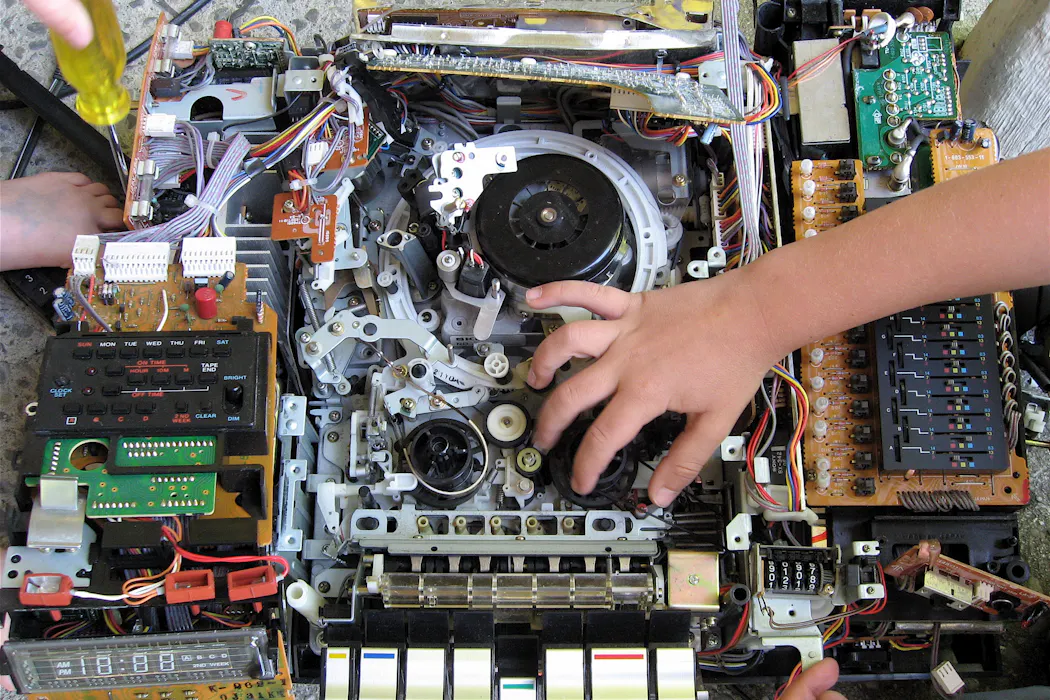
Betamax video recorders like this one helped set off a chain of events leading to bans on repairing your own devices. Steve Jurvetson/Wikimedia Commons, CC BY

If you have ever tried to repair something, realized that it was beyond your financial or technical means, and ended up buying a new one, you are not alone. Repairing electronics and household appliances has not been a real option in the United States for decades now, particularly for items that have proprietary software in them.

Absurd situations have proliferated. It can cost about the same to buy a new printer as it does to replace the ink cartridge. The U.S. Department of Defense cannot repair the weapons systems it purchases because the intellectual property rights remain with the manufacturer. John Deere, the farming equipment company, doesn’t allow farmers to access the software needed to repair their own combines and tractors because, while the purchase covers the physical machinery, it does not cover the software.

One consequence, in addition to cost and frustration for consumers, is environmental harm. The U.S. is the world’s second producer of electronic waste after China, to the tune of about 43 lbs (19.5 kg) of electronic waste annually per person. Only 25% of this e-waste is recycled.

The right-to-repair movement emerged in response, calling for people to be able to repair what they purchase, or have third parties do the repair work, without unnecessary financial, legal or technical barriers. Right to repair seems to be a rare area of bipartisanship in Congress. The Warrior Right to Repair Act – introduced in 2025 by a Democrat – and the Repair Act – introduced by a Republican – are two ongoing legislative initiatives to create a federal legal framework that would make it easy and cheap for American users to repair their devices. Both bills are fiercely opposed by industry groups.

As a scholar of American culture, I found through my research that the origins of the legal and technical obstacles to product repairs lie in debates in the 1980s over new media and copyright guardrails.

Hollywood and VCRs

The rapid rise and popularity of video cassette recorders, or VCRs, in the late 1970s transformed films and TV shows from transient experiences into tangible consumer goods. As I show in my book, “Videotape,” despite the potential for extra revenue, Hollywood was alarmed by the fact that users were now able to copy films on videotape, and tried to stop the technology. Today’s repair bans are part of that story.

The first U.S. copyright provisions were embedded in the 1790 Constitution. Over time, the law was amended to include new technologies, but at the core of future legal arrangements remained the initial intent: to protect the financial rights of creators while giving enough access to information for society as a whole to progress.

Until the second half of the 20th century, the American doctrine of fair use, which allows the unlicensed use of protected works under specific conditions, allowed judges to prevent copyright law from negatively affecting public interest. Organizations such as public libraries, book clubs, universities and news organizations benefited from this legal approach. The concept was codified into American law in the Copyright Act of 1976.

When the film studios took Sony to court to stop the production and sale of video recorders in 1976, they argued that Sony’s product encouraged copyright infringement. But the U.S. Supreme Court ruled in 1984 that taping TV content for personal use did not violate copyright law, expanding the understanding of fair use.

The industry then focused on finding a technological solution to the piracy problem and on securing stricter legal protections for its products.

They identified the digital versatile disc, or DVD, as a safer alternative to the VHS tape. Initially, the DVD was a read-only format. It took a few more years of engineering before affordable recording was possible. Even then, the process was far more complicated for users than videotape recording. In 1997, barely one year after the video disc was launched, all of the Motion Picture Association of America member studios joined the DVD Forum, collectively adopted the new format and started to phase out films released on videotape.

Manufacturers use several tactics to block consumers and third-party repair shops from fixing their products.

Copyright and virtual locks

Then came digital rights management. Collectively, the term refers to the battery of technological tools that the industry developed in order to control user access to content. These include encryption software and various forms of authentication or enforcement software that limit which types of digital activities users can perform. For instance, some mechanisms block the option to download or share a digital file.

The Digital Millennium Copyright Act, or DMCA, signed into law by President Bill Clinton in 1998, provided the broad legal framework that allowed these technological locks to expand far beyond entertainment, including to software. The Digital Millennium Copyright Act reflected a new alignment in interests between the entertainment and software industries. It increased existing penalties for copyright infringement online and criminalized any technology used to bypass technological locks. The law was adopted although at the time – and since then – critics warned that it could stifle innovation and increase costs for consumers.

Since 1998, more and more consumer products, from toys to dishwashers, use microchips and proprietary software protected by copyright. Because of the Digital Millennium Copyright Act, third party repairers cannot alter or bypass the proprietary software. If they did so, they would be liable for infringing the manufacturer’s intellectual property rights, as is the case for John Deere farm equipment. Some electronics are even designed to make tampering with the product impossible.

Manufacturers maintain that only they or authorized personnel can and should repair their products. These repairs are often quite costly. When getting a product repaired becomes almost as expensive as buying a new one, many consumers will choose to buy and throw repairable items away.

Rising resentment over repair bans

Technology tends to outpace existing legal arrangements. With over 80% of Americans supporting the right to repair, it remains to be seen when or if American law will catch up with the unexpected consequences of a law meant to protect the intellectual rights of the creative industries, but which is now hurting consumers’ pocket books.

The Conversation

Oana Godeanu-Kenworthy does not work for, consult, own shares in or receive funding from any company or organization that would benefit from this article, and has disclosed no relevant affiliations beyond their academic appointment.

  •  
❌