
Reading view

Explained: How police remand works and why suspects cannot be publicly identified before facing official charges
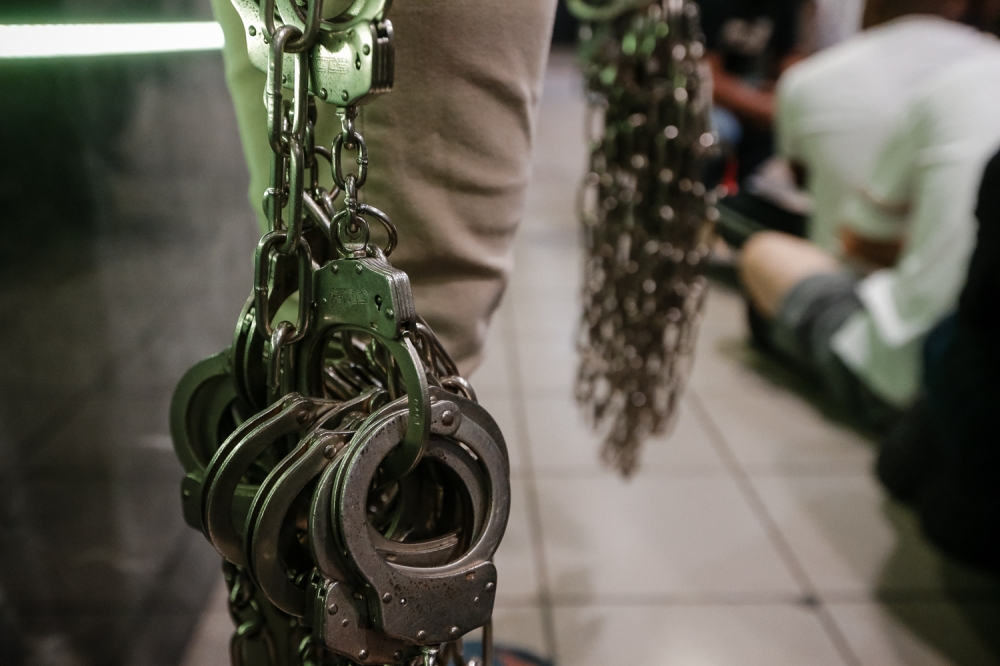
Malay Mail

KUALA LUMPUR, May 1 — In the hours following the apprehension of a suspect, before any formal charges are filed, a court process determines whether the person in custody can be held longer to facilitate ongoing police investigations.

This formal process — a remand proceeding — is an important part of the Malaysian criminal justice system in which magistrates decide if police have sufficient grounds to continue detaining a suspect.

However, because the process largely occurs out of public view except in cases of public interest, it may be unfamiliar to many.

Past instances have arisen where suspects are widely identified or speculated about online through viral footages or posts following an arrest.

However, legal safeguards remain in force at this stage, including media restrictions on public identification such as revealing a suspect’s face or name.

So why the secrecy then?

It is important to understand what leads to a remand in the first place.

Under Section 28 of the Criminal Procedure Code (CPC), the police cannot hold a person in custody for more than 24 hours for investigation without a magistrate’s authorisation.

If investigations cannot be completed within this period and police seek to detain a suspect beyond 24 hours on the basis that the allegations are well-founded, they must apply to the Magistrate’s Court within that timeframe for further detention.

This application — typically made for a remand order — is provided for under Section 117 of the CPC.  

A person is therefore “remanded” when the magistrate issues a remand order to extend the suspect’s detention beyond 24 hours.

In short, the purpose of a remand is to give the police more time to complete the investigation and to decide whether there is enough evidence to charge the suspect with the suspected offence.

Most importantly, a suspect is still considered innocent at the remand stage.

TLDR: Individuals on remand have not been formally charged, and restrictions on naming them or publishing identifiable images are meant to protect the integrity of investigations and uphold the presumption of innocence.

Okay, so what happens if I am remanded?

According to the Office of the Chief Registrar of the Federal Court of Malaysia, several steps take place during a remand proceeding.

First, the police must give the magistrate reasons justifying why they need to detain the suspect beyond 24 hours and the court then considers these reasons and later issues the remand duration.

If the offence investigated relates to imprisonment of less than 14 years, detention shall not exceed four days for the first application and three days for any subsequent application.

If the offence relates to imprisonment exceeding 14 years, detention shall not exceed seven days for the first application and seven days for the second application.

During remand, a suspect in custody at a police lockup may make several requests according to their rights enshrined under Article 5 of the Federal Constitution and further codified under Section 28A of the CPC.

This includes being represented by a lawyer of their choice, contacting their family members to inform them of their whereabouts, getting reasonable medical attention and even lodging complaints of ill-treatment.

The magistrate can either allow or refuse a remand order, and if allowed, the police must then charge the suspect or release him/her.

TLDR: Police must justify continued detention by applying for a remand order, with the duration subject to legal limits depending on the offence being investigated, and if no remand is granted, the suspect must be released within 24 hours.
  •  

PDRM seizes nearly 500,000 illicit files in sweeping child exploitation crackdown across Malaysia

Malay Mail

KUALA LUMPUR, April 30 — The Royal Malaysia Police (PDRM) announced today the seizure of 498,694 digital files in a single sweeping crackdown on online child sexual exploitation in Malaysia, carried out as part of a recent seven-country operation targeting cross-border networks involved in the sharing of child sexual abuse material (CSAM).

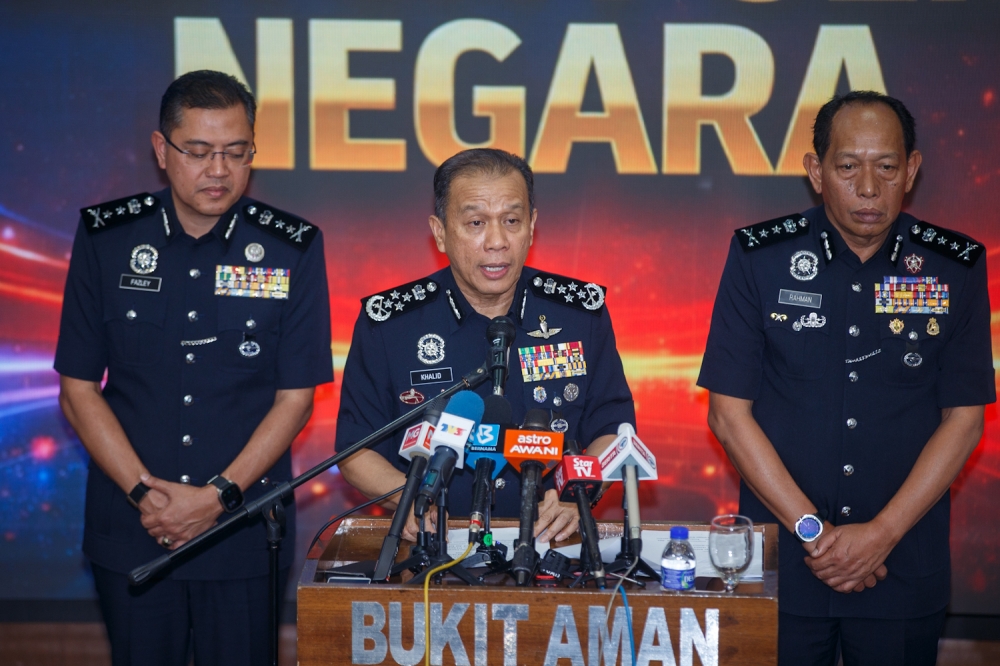
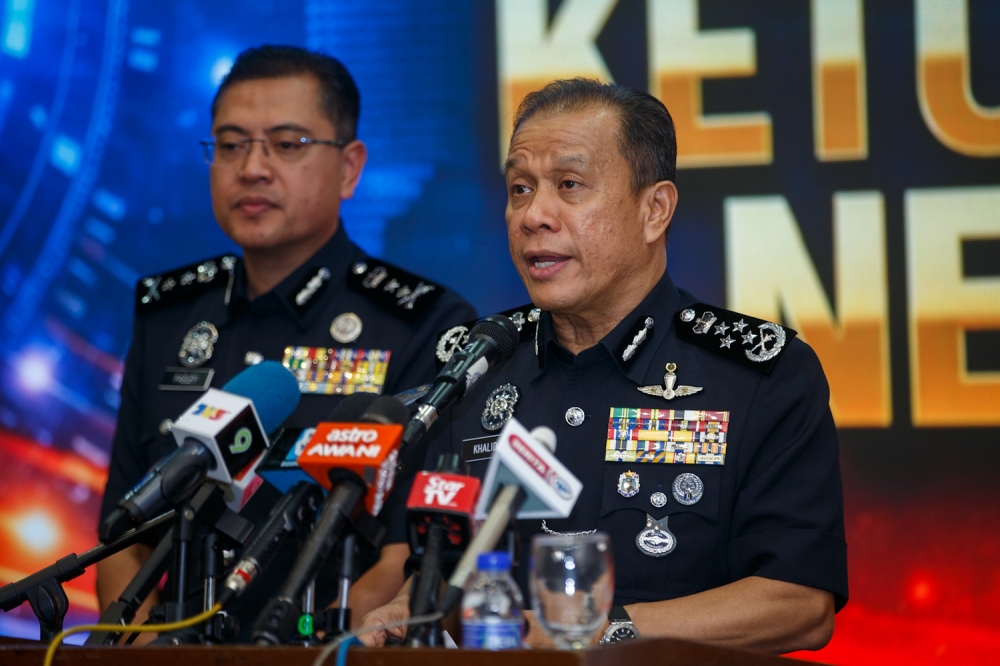
Inspector-General of Police Datuk Seri Mohd Khalid Ismail said 69 out of 101 identified CSAM enablers were tracked down and arrested in Malaysia following extensive intelligence-sharing with regional and international law enforcement partners.

The transborder operation, dubbed Operasi Cyber Guardian 2026, saw participation from six other countries, namely Brunei, Japan, South Korea, Hong Kong, Thailand and Singapore.

With the main operation taking place from March 23 to April 17, Mohd Khalid said PDRM alongside its state contingents conducted simultaneous arrests nationwide between April 6 and April 8.

“Searches were performed on the premises and electronic devices of those targeted and our profiling of the identified perpetrators found that they came from various backgrounds.

Those arrested were aged between 15 and 66, with all except one being male.

“A total of 124 electronic devices alongside 204,934 CSAM and 293,760 adult pornography files were also seized,” he told a press conference at the federal police headquarters in Bukit Aman here.

A total of 339 personnel from the PDRM, including the Malaysian Communications and Multimedia Commission (MCMC) which provided technical support, were mobilised.

According to Mohd Khalid, 171 online platforms and groups were found to be involved in the distribution and sale of CSAM in Malaysia following the crackdown.

“Some of those arrested were group administrators who offered paid access to CSAM via e-Wallet and QR payment which showed element of commercialisation by utilising the digital ecosystem to access, store and distribute CSAM,” he said.

The breakdown of arrests according to states was Selangor (22), Kedah and Johor (10); Penang, Perak and Pahang (9); Perlis and Negeri Sembilan (8); KL (5); Kelantan, Terengganu and Sarawak (3); Sabah and Melaka (1).

Following the arrests, Mohd Khalid said 67 investigation papers (IPs) were opened, with 62 leading to prosecutions, two still under investigation, and three classified as requiring no further action.

Mohd Khalid said the latest crackdown demonstrates PDRM’s consistent, uncompromised and stern enforcement against online child sexual exploitation crimes.

“Such crimes are no longer individual in nature, but have evolved into more organised, profit-driven networks operating across borders.

“PDRM views these developments seriously as online child sexual exploitation is becoming more complex, structured and wide-ranging, requiring a comprehensive approach involving intelligence, enforcement and strategic cooperation at both national and international levels,” he said.

Mohd Khalid also reiterated that strict and uncompromising action will be taken against any party involved, while urging the public to strengthen digital awareness and closely monitor children’s use of digital devices to reduce exposure to online threats.

“We are committed to strengthening strategic collaboration with local and overseas agencies to ensure children are protected from any form of exploitation and abuse,” he said.

  •  

IGP urges restraint over N. Sembilan political crisis, assures public order intact

Malay Mail

KUALA LUMPUR, April 30 — The Royal Malaysia Police (PDRM) has urged for calm and restraint amid an ongoing political crisis in Negeri Sembilan, as law enforcement work to ensure public order.

Inspector-General of Police Datuk Seri Mohd Khalid Ismail said what is currently taking place in Negeri Sembilan relates to customs practiced and the public should allow due process to proceed without interference.

“I am urging all parties to remain calm and refrain from making unnecessary comments.

“As a law enforcement agency, PDRM will always ensure the safety and harmony of the state remains intact,” he said during a press conference at the federal police headquarters in Bukit Aman here.

Mohd Khalid said numerous police reports have been lodged by relevant parties, mostly related to dissatisfaction, but did not provide their breakdown.

“We will conduct the necessary investigations on them,” he said.

The state’s administrative crisis was triggered when all 14 Umno and Barisan Nasional assemblymen in Negeri Sembilan unanimously declared a loss of confidence and withdrew their support for the state government led by Menteri Besar Datuk Seri Aminuddin Harun following a leadership conflict.

However, Aminuddin was given the mandate to continue leading the state administration after receiving the consent of the Yang Dipertuan Besar of Negeri Sembilan, Tuanku Muhriz Tuanku Munawir.

  •  
❌