Reading view

The complex history of ‘pride’, from shame and sin to a symbol of protest and power
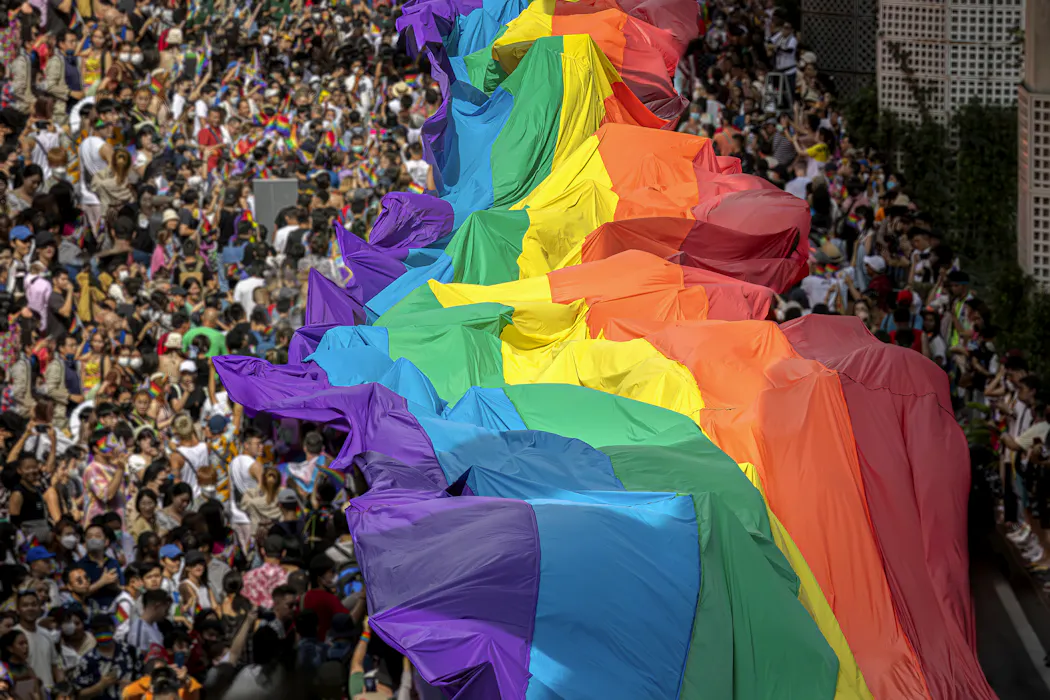
Getty

Pride is primarily a social emotion. It is about position, confidence, and power. This is why, for the LGBTQIA+ community, collective pride is adopted as the primary emotion to fuel unity and belonging.

June is Pride Month, celebrated the world over by LGBTQIA+ individuals as a reclamation of strength. But there’s a much longer history to this emotion, which can be produced in a great variety of contexts.

The circumstances of “pride” change over time, and the way this emotion is felt is directly tied to the social, cultural and political reality of different eras, and different places.

Pride, like the diametrically opposed shame, cannot be locked down.

Tracing the history of this emotion can help us understand how it came to be the empowering concept it is today – even as certain groups try and hijack it for their own means.

Religious influence

In classic Judeo-Christian thinking, pride was originally one of “eight evil thoughts” identified by the Christian monk Evagrius Ponticus (345–399 CE), who characterised it as an overblown sense of self-importance.

Depiction of an early Christian monk.
Evagrios Pontikos (345–399 CE) was a Christian monk and one of the most influential theologians in the late 4th-century church. Wikimedia

Pride was also closely related to another of Ponticus’ “evil thoughts”: vainglory. This referred to an excessive, disordered craving of praise and recognition from others. Both pride and vainglory were considered vices.

Ponticus’ thoughts on these matters were widely influential, and made their way to the Western Church in the early 5th century. By the 6th century, Pope Gregory I formalised the eight evil thoughts into the seven deadly sins, with “pride” and “vainglory” bundled together.

Gregory I named the feeling of pride as the root cause of all sins. This is because the serpent found resonance in Eve’s pride and ambition – two emotions that tempted her to eat the forbidden fruit.

In the 14th century, the rising European English nobility – and an increasingly wealthy merchant class – began adapting chivalric codes.

So, despite condemnation in the church, pride became associated with slightly more positive, secular concepts of honour and glory in battle, and a strong sense of personal renown. This pride was considered more genuine, authentic and justified.

In English, however, the word was always tainted by its first meaning – no matter how impressive the justification.

A 16th-century print by German engraver Georg Pencz, depicting pride as one of the seven vices. Wikimedia, CC BY

A few centuries later, Scottish philosopher David Hume, in his famous Treaty of Human Nature of 1740, observed:

pride and humility, tho’ directly contrary, have yet the same object. This object is self.

Hume went further to claim the things that make us feel “proud” only matter insofar as others are aware of them. He argued the pleasurable feeling of pride came from the satisfaction of being respected and valued by others.

Pride in war, and in whiteness

In the long Western tradition, the feeling of pride is predicated on hierarchy, determining whom one should feel for, or against. This positions the emotion as politically significant.

In 1945, when Britain and the Allies declared peace, headlines flooded British and Australian newspapers decreeing “pride” for the nameless millions who had worked for six years without reward to protect the cause of democracy and freedom against an unjust and tyrannical dictator.

The Allies’ “pride” became the losing powers’ shame. German historian Ute Frevert explains that:

maintaining and restoring national honour was of vital importance to any state that claimed a powerful position within the European system, and the interests, principles and moral laws it stood for.

Honour and national pride were equivalent to power. So when these were threatened, war became justified.

A 1943 war propoganda poster.
A 1943 poster distributed by the Australian Commonwealth Military Forces. AWM ARTV06715

In 2005, 5,000 mostly white Australians gathered at the Cronulla beach in Sydney to seemingly, “reclaim the beach from outsiders”.

The violence that ensued toward people who appeared to be of Middle Eastern descent was claimed to be justified by the “pride” the white Australians ostensibly held for their country. They etched the words “100% Aussie Pride” into the shoreline – a visual display of how emotions can be employed as political weaponry.

The words '100% Aussie Pride' are etched into the sand at a beach.
The slogan ‘100% Aussie Pride’ was etched into the sand at Cronulla Beach on December 11, 2005. Violence erupted at the beach that day, with several people of Middle Eastern appearance attacked by a violent mob. Chris McGrath/Getty Images

Pride as an opposition to shame

Gay pride is celebrated in direct opposition to shame, an emotion that seeks cover and is often hidden from view. For generations, LGBTQIA+ individuals were forced to hide their identities out of social stigma and fear. “Pride” serves as a defiant, outward-facing emotion in the face of this systemic marginalisation.

As we celebrate another Pride Month, let’s remember the many ways in which this emotion has been politicised.

In the context of LGBTQIA+ communities, pride calls for belonging, tolerance, equality and acceptance.

Yet it continues to be hijacked by some in a bid to demarcate unjust boundaries, defining who belongs and who doesn’t.

The Conversation

Melissa Black is affiliated with the Society for the History of Emotions
  •  

US and Iran’s exchange of strikes shows how far diplomacy has changed

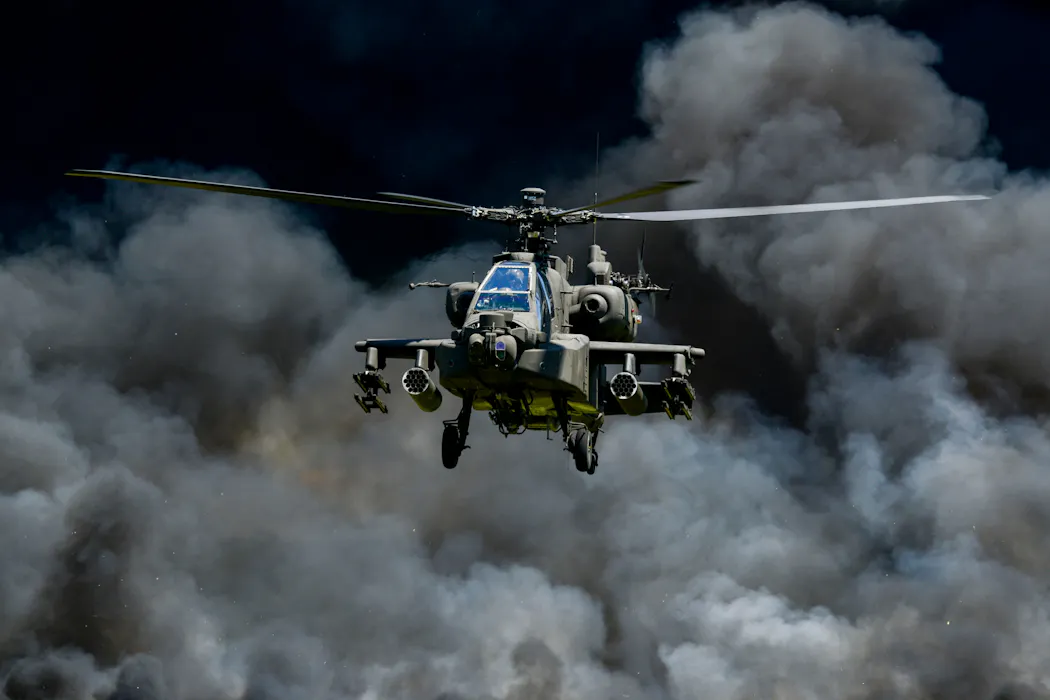
A US Army Apache helicopter was downed near the Strait of Hormuz on June 8, with the two crew members rescued by an American sea drone. Rawpixel.com / Shutterstock

The US military launched strikes against Iran on June 9 in response to the downing of a US Army helicopter near the Strait of Hormuz a day earlier. These strikes, which the US military called “a proportional response to unjustified Iranian aggression”, came after Donald Trump claimed he was in the “final throes of what will be a very, very good deal” to end the war.

Iran swiftly carried out retaliatory attacks of its own. The powerful Islamic Revolutionary Guard Corps branch of Iran’s armed forces says it has struck US bases in Bahrain and Jordan. And it has warned of “even more severe attacks” if the US repeats its strikes.

This episode took place days after Israel and Iran had briefly returned to direct conflict. Triggered by Israeli operations against Hezbollah in Lebanon, where a ceasefire was supposedly in effect, both sides launched various rounds of tit-for-tat strikes before announcing they would halt hostilities.

At first glance, these incidents appear contradictory. Diplomacy is supposed to be the alternative to war and ceasefires are supposed to reduce violence. Yet with the US, Israel and Iran once again exchanging attacks, and as military operations continue in Lebanon despite ceasefire arrangements, diplomacy and conflict increasingly seem to be unfolding simultaneously.

For decades, policymakers assumed that war and diplomacy were distinct phases of international politics. States negotiated until talks broke down, and fighting followed. Eventually, battlefield realities or international pressure pushed adversaries back to the negotiating table. Diplomacy then functioned as an exit ramp from conflict.

The aftermath of the 1973 Arab-Israeli war exemplified this model. Sustained diplomatic efforts following the conflict culminated in the 1978 Camp David accords, which laid the groundwork for a definitive peace treaty between Egypt and Israel. This treaty was signed the following year and remains in effect to this day.

However, this model is becoming difficult to recognise, with the Middle East nowadays characterised by a different dynamic. Negotiations between warring parties continue during military confrontations, ceasefires coexist with airstrikes and mediators shuttle between capitals even as threats escalate.

The problem is not that diplomacy is failing. Instead, it is that diplomacy is no longer serving its traditional purpose. Rather than ending conflicts, diplomacy is helping to manage them – a distinction that matters because a conflict that is managed is not necessarily a conflict that is resolved.

Managing conflict

The latest escalations between Israel and Iran, and now Iran and the US, illustrate this dilemma. None of these parties appear to want a full-scale regional war, as the costs would be enormous and the consequences unpredictable. Yet each of them is unwilling to abandon what they see as vital security interests.

Israel views Hezbollah’s military capabilities as a major threat and therefore has a strong incentive to weaken the group. Iran, on the other hand, sees defending Hezbollah as critical to its security because the group serves as a key deterrent against Israel and extends Tehran’s regional influence. And the US struck Iran in an attempt to uphold deterrence and signal that attacks on US personnel and assets would carry consequences.

The result of this is a cycle of calibrated escalation. Military force is used not to secure decisive victory but to signal resolve to adversaries, reassure allies and domestic audiences, and persuade opposing leaders that the costs of further escalation outweigh the potential benefits. Diplomacy, meanwhile, works not to eliminate the underlying dispute but to prevent escalation from spiralling beyond control.

This creates a dangerous equilibrium. When diplomacy functions primarily as a mechanism for crisis management, leaders face less pressure to make the difficult compromises that lasting peace requires. Negotiations can continue indefinitely while violence persists, ceasefires become pauses rather than settlements and conflict becomes chronic.

The old distinction between war and peace is becoming blurred in the Middle East. Rival powers do not move neatly from diplomacy to conflict and back again. Instead, they are operating permanently in the space between the two. This should concern policymakers.

Much of contemporary diplomacy remains based on assumptions that no longer fully apply. Negotiations are often treated as evidence of deescalation, while ceasefires are assumed to signal progress towards peace. Yet neither necessarily tells us much about whether a conflict is actually moving closer to resolution.

The latest exchanges between the US and Iran, as well as Iran and Israel, therefore raise a troubling possibility. The greatest danger may not be that the Middle East slides back into a wider war. It may be that it settles into a condition of permanent confrontation in which violence periodically erupts, diplomacy periodically intervenes and neither fundamentally changes the underlying reality.

For decades, the central challenge of international politics has been how to move from war to peace. The challenge emerging today is different, with negotiators grappling with the much more difficult task of ending a conflict when war and peace are happening at the same time.

The Conversation

The authors do not work for, consult, own shares in or receive funding from any company or organisation that would benefit from this article, and have disclosed no relevant affiliations beyond their academic appointment.

  •  
❌