Reading view

Federal investigation into Smith College probes whether transgender students can attend women’s schools – challenging the evolving mission of women’s education

The Smith College campus in Northampton, Mass., in October 2025. Jonathan Wiggs/The Boston Globe via Getty Images

Within the past decade, most women’s colleges in the United States – including Smith College, a liberal arts college in Northampton, Massachusetts – have expanded their admissions policies, allowing transgender students to also attend. Many of these policies allow transgender women to apply, while policies for transgender men and nonbinary students vary more widely.

The Trump administration announced on May 4, 2026, that it is investigating Smith College for violating Title IX, a law that prohibits discrimination based on someone’s sex.

“An all-women’s college loses all meaning if it is admitting biological males,” Assistant Secretary for Civil Rights Kimberly Richey said in a statement issued by the Education Department.

As a scholar of higher education who studies the experiences of LGBTQ+ students, I think it is important to recognize that women’s colleges offer a unique experience to students, including transgender and queer students. They create environments where students who are marginalized by their genders see themselves as leaders.

Women’s colleges have also long been welcoming places for lesbian and queer relationships, offering community and support as attitudes about gender and sexuality have changed.

A woman with dark hair and a long jacket smiles and holds a trophy, walking next to a man in front of a woman's bathroom sing.
Lia Thomas, a competitive swimmer at the University of Pennsylvania, walks with her coach after winning an event in March 2022. Mike Comer/NCAA Photos via Getty Images

A prior focus on trans athletes

Up until now, the Trump administration’s policy agenda on transgender rights and education has primarily focused on whether universities should let transgender students participate in college sports.

The Trump administration froze US$175 million in federal funding to the University of Pennsylvania in 2025 because it objected to how the school allowed transgender students to participate on women’s sports teams. One trans woman athlete named Lia Thomas, in particular, gained recognition for her strong performance on the women’s swim team at Penn.

The administration released the frozen funding after Penn agreed in July 2025 to block trans athletes like Thomas from participating in women’s sports.

Some of the sports-related lawsuits the administration filed in 2025 – like those targeting Penn and the University of Maine for allowing trans women to participate in women’s sports – have been settled out of court.

Other Title IX investigations into San José State University and the University of Nevada-Reno, for example, are still ongoing.

Understanding role of women’s colleges

Women’s colleges were created in the mid-to-late 1800s, when women were largely not allowed to enroll in most colleges. Women’s colleges became places where these students would be taken seriously as women and leaders.

As more colleges went coeducational, women’s colleges had to explain their purpose and evolving missions over time.

After World War II, for example, people said that American women who were working jobs outside the home should stop. Women’s colleges again explained their mission to the public, stating they could prepare women for the workforce and home. So, while women’s colleges were created to respond to the gendered exclusion of women, their missions have shifted as societal understandings of gender have evolved, too.

Transgender students didn’t suddenly appear at women’s colleges or other higher education institutions. But in the early 2000s, more students began to openly identify as transgender, and colleges increasingly had to decide how to adjust their policies.

Some older alumni of women’s colleges have expressed concern about admitting trans students, including whether allowing them affects a women’s college’s reputation, traditions or identity. These debates can matter a lot because most women’s colleges in the U.S. are private liberal arts colleges that depend on tuition payments and donations.

But some alumni have supported more expansive admissions policies consistent with the broader mission of women’s education.

While women’s schools have presented their own challenges for some queer and transgender students, they have long remained significant to the LGBTQ+ community.

A group of young women sit close together and look at one woman who is drawing an air foil on a chakboard.
The women of Smith College’s flying club learn about airplane maintenance, flying instruction and flight logging management in September 1945. George Woodruff/Bettmann Archive/Getty Images

What should women’s colleges be?

The number of women’s colleges has declined sharply over the past few decades.

In 1960 there were about 230 such colleges. In 2023 there were 30 women’s colleges in the United States. As more colleges became coeducational, women had more options, and many women’s colleges either closed, merged or began admitting men.

This decline in women’s colleges helps explain why debates over admitting trans students to women’s colleges are so charged. Each decision becomes part of a broader question about what women’s colleges are and should be.

The conversation around transgender and nonbinary students attending women’s colleges became more public in the 2010s. In 2013 Smith College denied admission to a trans woman because the student indicated that she was male on her federal financial aid forms.

This resulted in a big debate between Smith alumni and students about what the school’s admission policy should be. Leading up to this point, several women’s colleges – including Barnard, Smith, Mills and Wellesley – treated trans student applicants on a case-by-case basis, or in an informal way.

In 2014, Mount Holyoke, a women’s college in western Massachusetts, created one of the most expansive early policies on this issue. It allowed applications from transgender women and from some applicants who identified as transgender more broadly, while continuing to exclude cisgender men.

Smith also announced a new policy in 2015 that allowed anyone who identified as female to apply and be admitted.

Today, most but not all women’s colleges have their own policies regarding the admission of trans students. These policies vary: Some admit transgender women and some nonbinary applicants, while others are more restrictive. Many do not admit applicants who identify as men, including transgender men.

Mixed experiences for trans students

Some research finds that students overall at women’s colleges report higher levels of support – including from faculty – than students at coeducational colleges. Some transgender students arrive expecting these colleges to offer a safe and accepting atmosphere.

But some transgender students have negative experiences at women’s colleges and can feel like they are being watched too closely, ignored or both. These problems aren’t just because of interactions with other people. They can also occur when trans students encounter student records, bathrooms, housing and campus rules that assume everyone is either a man or a woman, or identifies with the sex they were assigned at birth.

Transgender students often report that college can feel less welcoming to them. Research on trans college students shows that academic, cocurricular, peer and institutional contexts shape how welcoming or alienating campus feels.

My research with other colleagues also examines how trans and queer students thrive in college, whether at co-ed or women’s colleges. Many form close-knit communities and are vital members of their campuses. The difficulties trans students face are not inherent to being trans. I believe they are produced by policies and systems that marginalize them because they are trans.

Barring transgender people from attending women’s colleges would block a higher education pathway for transgender and queer students.

Women’s colleges were created in response to gender inequality. I believe this history should push them to keep making college more open and supportive for students excluded because of gender.

The Conversation

Alex C. Lange receives funding from the Spencer Foundation.
  •  

A fungal disease, along with climate change, threatens Colorado’s prized peaches

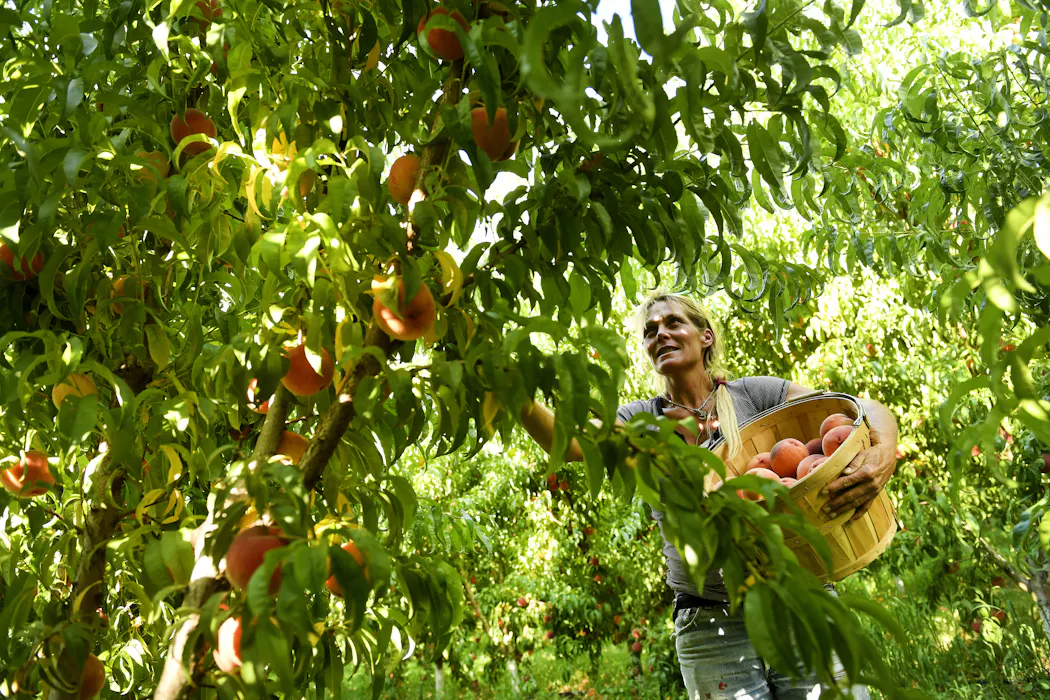
Colorado's peach industry is threatened by a fungal disease. Helen H. Richardson/The Denver Post via Getty Images

In western Colorado, home to the treasured Palisade peach, cytospora canker is one of the most economically consequential fungal diseases faced by growers.

A recent survey conducted by Colorado State University in Orchard Mesa found that 100% of the orchards have trees infected with cytospora canker. In some orchards, you can smell the sweetness of gummosis, the sweet oozing of sap from a tree that occurs from injury, stress, pathogen infection or insect damage.

We are part of a team of fruit tree growers, extension personnel and researchers who are developing tools for mitigating cytospora canker in fruit tree orchards in Colorado and Utah.

In a study we published, we estimate this disease results in at least US$3 million in annual economic losses for growers in Colorado. In infected large branches, which are called scaffolds, the damage can result in a 50% loss of peaches per tree.

Peaches were first planted in Palisade and Grand Junction in 1882 by one of the first white settlers to the area, John Harlow. Peaches and other fruit trees have been Colorado staples ever since. In 2024, Colorado farmers produced roughly 15,000 tons of peaches valued at $34 million.

However, fruit tree production in the Intermountain West, which covers Colorado, Utah and Idaho, is threatened by diminishing water supplies, spring frosts, variable winter temperatures and soils that are above the ideal pH range for peach trees. Further exacerbating the environmental stresses are pest problems and the persistent cytospora canker disease.

What is cytospora canker?

Cytospora canker is caused by fungi within the genus Cytospora. These pathogens are found globally and affect more than 70 species of woody shrubs and trees. These fungi have been present on fruit trees in the U.S. since at least 1892 when cytospora canker was first discovered on peach, plum and almond trees in Pennsylvania and New Jersey. Cytospora canker was first described as only a disease of stressed trees, but now it is recognized as a destructive disease in tree fruit across the U.S.

Plant Talk Colorado: What is cytospora canker? A video from Colorado State University Extension.

Growers expect peach trees to live for 20 years. The first five of those years are initial growth. The next 10 years are full production. Then, the tree’s productivity tapers off in the last five years of its life. The disease has halved the life of an orchard in Colorado from 20 years to 10 years or fewer. Trees that get infected during the first or second year are typically dead by year four or five before they reach peak production.

Cytopora canker typically enters through wounded and woody branches or twigs. Wounding occurs when branches are pruned to maintain tree vigor or through severe freezing or hail events. Freeze events are common in Colorado and are particularly harmful in the fall if temperatures drop abruptly without giving trees enough time to acclimate to the temperature shift.

Ice formation within plants causes swelling and cracking in woody tissues, as well as the formation of ice crystals within plant cells that can puncture the cells, leaving them vulnerable to oxidative damage and infection. Small cracks enable cytospora spores, like the seeds of a plant, to enter and begin to cause infections.

Cytospora canker and freeze

In 2020, a major freeze event damaged many trees throughout Colorado.

Following a warm October, temperatures dropped from 65 degrees Fahrenheit (18 degrees Celsius) to below 10 F (-23 C) in a 48-hour time span in the fruit region around the town of Hotchkiss. Because the recent temperatures had been in the 70s, there was not an appropriate amount of acclimation in the trees to be prepared for this large temperature drop. Leaves were still green, and sap was still flowing through the woody tissues.

The damage from this single freeze directly led to the death of tens of thousands of peach trees across the western slope of Colorado.

The sudden freeze also allowed for a proliferation of new cytospora canker infections on peaches trees that were not killed outright by the freeze. The surviving trees were often more vulnerable because the cracked skin and bark of peach branches was now exposed to infection by the fungus. This correlation between cytospora infection and cold damage is thought to be a major reason why cytospora canker is a particularly significant disease in Colorado.

To manage the pathogen, growers can remove trees that are infected, protect wounds with chemicals to prevent new infections and ensure that established trees are free of stress. However, management strategies have limited efficacy due to the growing conditions. While Palisade has the most ideal peach-growing microclimate in Colorado, the cold season is near the limits of what peaches can tolerate.

In April 2026 there were several nights when the temperatures reached into the low 20s F (-7 degrees C) in different orchards in Delta County, Colorado. Fruit had already started to grow and was very susceptible to the cold temperatures. As a result, growers around Hotchkiss and Paonia lost their peach crop.

Palisade orchards avoided that level of damage because on those same nights the temperatures dropped only to the upper 20s F (-2 degrees C), which damaged some fruit but left enough behind to have a full crop in most cases. Spring frosts like these reduce fruit production but generally aren’t going to contribute to increased proliferation of cytospora canker.

Solutions in progress

Researchers from Colorado State University are working toward developing strategies to combat this disease. Our team has developed chemical options for conventional and organic growers that have helped slow the spread. We are determining whether some peach cultivars are tolerant to the pathogens, and we are continuing to understand the population biology of cytospora to help us develop new management strategies.

The pathogen can be spread through air, on insects, during irrigation and possibly with the movement of new peach trees into orchards. Many fungi that produce cankers in trees can move spores only short distances through rain splash. But spores of the fungus have been found in collection traps about 250 feet (76 meters) from a tree with canker that is making spores.

We have established the cytospora working group as a collaborative research, extension and grower group to collectively develop solutions for cytospora canker. We are continuing to better understand factors involved in disease development and establish best management practices to help growers combat this disease and keep the Colorado peach industry vibrant.

Read more of our stories about Colorado.

The Conversation

Jane Stewart receives funding from USDA NIFA AFRI.

David Sterle does not work for, consult, own shares in or receive funding from any company or organization that would benefit from this article, and has disclosed no relevant affiliations beyond their academic appointment.

  •  

From the San Luis Valley to Vail, Latino labor powers every sector of Colorado’s economy

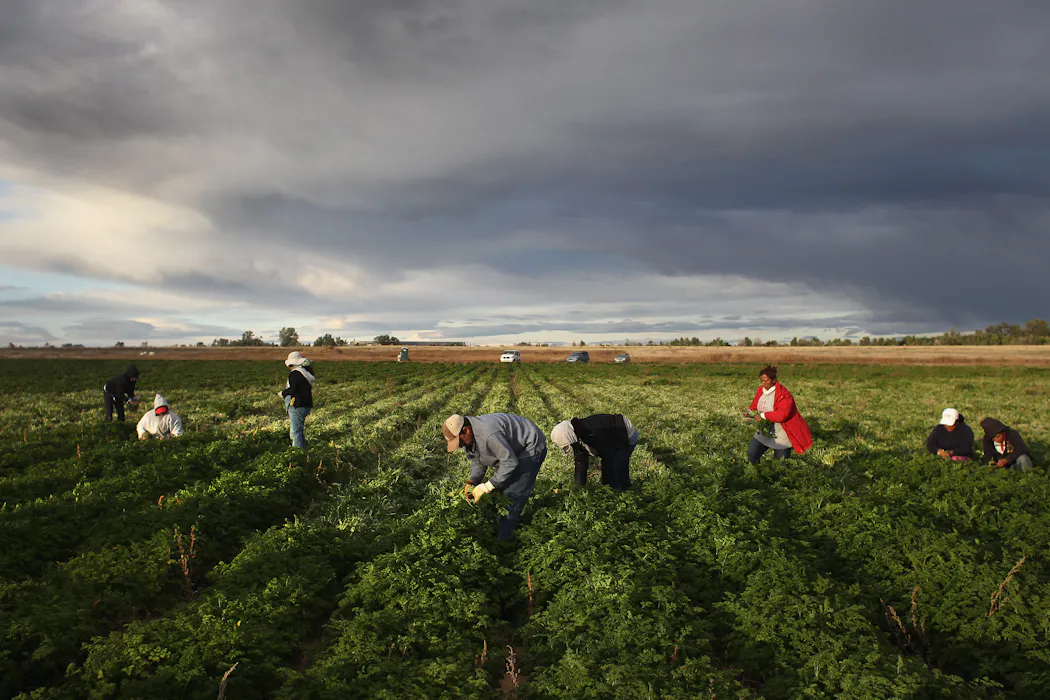
Migrant workers from Mexico make up a large portion of the agricultural labor needed across the state. John Moore/Getty Images

In Colorado, a national debate about the role of Latinos in American society has deep roots in the state’s history, current identity — and future.

I’m a professor of ethnic studies at Colorado State University. I recently published a book titled “Latino Colorado: The Struggle for Equality in the Centennial State.” In it, I explore how Latinos in Colorado have bridged Old West and New West industries to help our state grow. As a longtime resident of the state, I have witnessed many of these socioeconomic phenomena firsthand and through my research.

Latinos have always been a part of the Colorado story. Let’s look at some ways Latinos help drive the state’s economy and contribute to its unique culture and lifestyle.

Latino labor in Colorado

Latinos were the first Coloradans.

San Luis was founded in 1851 by Hispanic settlers from northern New Mexico. It is the oldest continuously inhabited town in the state. In the late 19th century, Hispanic Coloradans and immigrants from Mexico fanned across the territory and later the state to work in mining, the railroad industry and the emerging agricultural sector.

A black and white photo of a field with people picking potatoes and loading them into a horse drawn carriage.
Workers harvesting potatoes in the San Luis Valley of southern Colorado in 1939. GHI/Universal Images Group via Getty Images

In the first decades of the 20th century, Colorado’s sugar beet industry relied heavily on Latino workers. Those workers then established Hispanic neighborhoods in cities along the Front Range and the Eastern Plains.

Colorado’s geographic diversity has led to the development of numerous economic sectors from so-called Old West industries like agriculture, cattle ranching and mining to New West industries like tourism, real estate and tech startups.

The running thread of Colorado’s diverse economic picture is its reliance on Latino labor, whether from U.S.-born or immigrant workers. The state has relied on this labor practically since the territory was acquired from Mexico in 1848. The region known as the Western Slope is a good example of this trend.

In the Western Slope, Latino workers were the muscle behind the building of railroad lines and the growth of the sugar beet industry in the early 20th century. Latino immigrants still work in the oil and gas industry and the fruit orchards that dot the region. But, more recently, their descendants have moved into the middle class. They’ve opened small businesses and some have even become white collar professionals.

As tourism began to flourish in the Western Slope in the 1990s, Latinos quickly became the indispensable labor force that kept the ski resorts, hotels and restaurants running. And as Baby Boomers began to retire and move to the region, Latino labor supported the construction boom fueled by this demographic shift. There is practically no sector of the Western Slope’s — and the state’s — economy that does not rely on Latino labor.

Latino demographic shifts

Latinos have also driven the Western Slope’s demographic growth. The expansion of the real estate and tourism sectors around the turn of the 21st century attracted tens of thousands of Latinos to the region. They came from Colorado’s Front Range, other U.S. states and Mexico and Central America.

Their presence has revitalized towns historically afflicted by the woes of the boom-and-bust cycles of the oil and gas industry. For example, along the west I-70 corridor, towns such as Eagle, Edwards and Gypsum in Eagle County, and towns like Glenwood Springs, Parachute, Rifle and Silt in Garfield County, have seen their Latino populations soar with the arrival of families attracted to job opportunities in resort destinations like Vail and Aspen. By 2020, Latinos made up more than a third of these counties’ total populations compared to the 1990s when Latinos made up less than 10% of the population in the region.

Further west, Montrose’s Latino population has grown in tandem with the popular resort town Telluride’s economic expansion. Nowadays, Latinos represent more than 20% of the Montrose County population compared to 12% three decades ago. Mesa County has the largest number of Latinos on the Western Slope, about 25,000, which make up 15% of the population. Latinos are mostly clustered in and around Grand Junction, the largest metro hub between Denver and Salt Lake City.

Like most working-class Coloradans, these Latino families typically cannot afford to live in the ritzy communities where they work. Many make long commutes over treacherous mountain roads to get to their workplace. Some juggle multiple jobs and rely on carpooling because they don’t own cars and don’t make enough money to afford their long, potentially dangerous commutes.

Cost of living among top concerns for Hispanics in Colorado, a 9News report.

While the first-generation immigrants who came to Colorado’s Western Slope in the 1990s-2000s have a limited educational background and speak little English, their second-generation children are trying to realize the American Dream by moving into the middle class. This second generation benefits from a public education, command of the English language and greater knowledge of American society than their parents.

The U.S.-born descendants of Latino immigrants represent a tip-of-the-iceberg phenomenon. They currently make a large component of the school-age population in these counties. In another decade or two, they will join the labor force, pay taxes, vote and likely transform the demographics, culture and political status quo of these mountain communities.

Challenges facing Latino Coloradans

Latino Coloradans’ story is fraught with challenges, too.

First-generation Latino laborers often endure long work hours for low pay, a high cost of living, occupational hazards and the stigma of racial discrimination. Moreover, shifting political winds represent a significant challenge for Latinos concerned about changes in U.S. immigration policies.

President Donald Trump’s recent immigration dragnet has reached the Western Slope, where Latino individuals have been routinely arrested and Latino families fear deportation. Many Latino families in Colorado are mixed-status families, in which some family members may lack U.S. citizenship or work visas and are subject to deportation. They feel targeted for the color of their skin, their accent or the jobs they do. The immigration operations are having an impact on the economy and social fabric of the communities where Latinos live and work.

Still, Latinos have grown deep roots in Western Slope communities. Grand Junction has a thriving Latino middle class and is home to the Western Colorado Latino Chamber of Commerce. Latinos, such as State Rep. Elizabeth Velasco, are running for office in the region and getting elected. Velasco represents House District 57, which covers Glenwood Springs and Aspen.

Latinos have always been an intrinsic feature of the Western Slope’s socioeconomic landscape, as ubiquitous as the area’s mountains, mesas and canyons. In cities like Grand Junction and Durango, and ski towns like Aspen, Telluride and Vail, they enrich the region’s economy, society and culture.

Read more of our stories about Colorado.

The Conversation

Ernesto Sagás does not work for, consult, own shares in or receive funding from any company or organization that would benefit from this article, and has disclosed no relevant affiliations beyond their academic appointment.

  •  
❌