Reading view

Why a landmark Supreme Court ruling has failed to keep racial bias out of jury selection

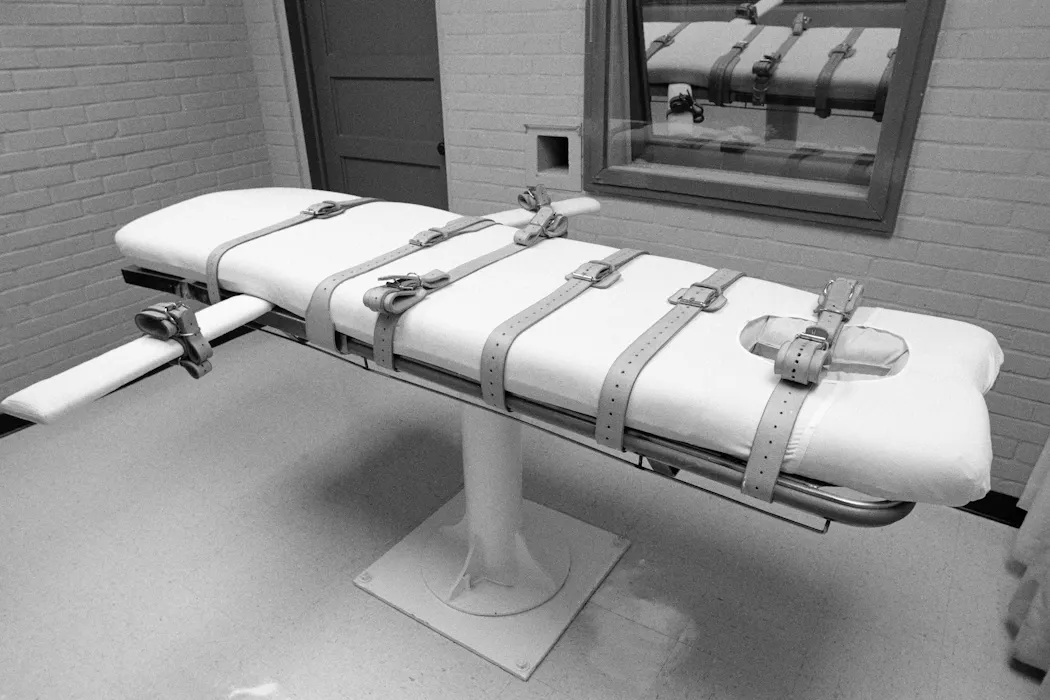
In 1986, the Supreme Court barred prosecutors from striking jurors solely because of race. Bloomberg Creative/Getty Images

On April 30, 2026, Texas executed James Broadnax, a Black man who was sentenced to death for the robbery and murder of two men in 2008.

Before the jury was seated, the prosecutor moved to dismiss each of the seven Black people from the jury pool. Citing court documents, CNN noted that he “(utilized) a spreadsheet during jury selection that bolded only the names of every Black juror” and none of the white or Latino people. After defense objections, the judge reseated one Black juror, citing the otherwise all-white jury.

The trial proceeded with 11 white jurors and one Black juror.

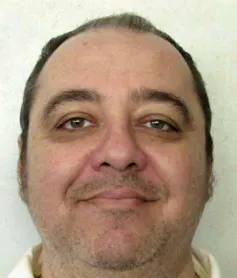
Mugshot of James Broadnax
James Broadnax was executed in Texas on April 30, 2026. Associated Press/Texas Department of Criminal Justice

A jury with that racial composition is likely to deliberate in a different way than one that is more racially diverse. According to Duke University law professor James Coleman, “Juries with two or more members of color deliberate longer, discuss a wider range of evidence, and collectively are more accurate in their statements about cases, regardless of the race of the defendant.”

A 2012 Duke University study of two Florida counties found that juries “formed from all-white jury pools convicted Black defendants 16% more often than white defendants, a gap that was nearly eliminated when at least one member of the jury pool was Black.”

Broadnax was executed on the 40th anniversary of Batson v. Kentucky, in which the Supreme Court ruled that prosecutors cannot exclude jurors solely on account of their race.

But Broadnax’s case is not an outlier. Similar efforts to “whiten” juries in capital cases regularly occur in states that authorize the death penalty. A 2025 analysis of Alabama’s death row by the Equal Justice Initiative found that across 122 capital cases – involving Black and white defendants in roughly equal numbers – more than one-third were decided by juries with no Black jurors or, like Broadnax’s case, only one.

As a death penalty scholar who has tracked the role of race in the death penalty system, I believed Batson was a step forward in the effort to address a long history of excluding Black people from jury service. But 40 years have shown that Batson merely scratched the surface of the problem.

A long history

The exclusion of Black people from jury service is as old as the republic itself.

Before the Civil War, one way this was done was by limiting eligibility for such service to those who could vote. Some states went further, saying only whites could serve on juries. A Tennessee law dating from 1858 is a good example: “Every white male citizen who is a freeholder, or householder, and twenty-one years of age, is legally qualified to act as a grand or petit juror.”

It was only after the Civil War and the passage of the 13th, 14th and 15th amendments to the Constitution that Black people were entitled to serve on juries nationwide – at least in theory.

Some states resisted. For example, West Virginia law specified that “all white male persons who are twenty-one years of age and who are citizens of this State shall be liable to serve as jurors.”

In 1880, 12 years after the ratification of the 14th Amendment – which guarantees equal protection of the law – the Supreme Court struck down that West Virginia law. It did so in the case of a former slave who was convicted in a capital case by an all-white jury and given a death sentence – a preview, I believe, of the kind of thing that happened to Broadnax.

The court held that the West Virginia law that “denies to colored citizens the right and privilege of participating in the administration of the law as jurors because of their color … is, practically, a brand upon them, and a discrimination against them which is forbidden by the [14th] amendment.”

Despite the court’s unequivocal ruling, the door to jury service remained closed to Black people. As legal scholar Sarah Claxton argued in 2022, “States across the country enacted vague and subjective standards for juror eligibility – requiring good moral character, honest and intelligent men, persons having educational qualifications – whose discriminatory application excluded Black citizens from juries.”

The modern story

The story of racial discrimination in jury selection is not simply a story of a now discredited past.

In 1965, the Supreme Court refused to remedy the exclusion of Black people from juries that its 1880 decision was supposed to have ended. It held, in Swain v. Alabama, that “a defendant in a criminal case is not constitutionally entitled to a proportionate number of his race on the trial jury or the jury panel.”

Two decades passed before the court again took up the glaring problem of racial discrimination by prosecutors seeking to keep Black people off juries.

In Batson v. Kentucky, the court considered a case in which the prosecuting attorney “used his peremptory challenges to strike all four black persons” in the jury pool and managed to seat an all-white jury. And on April 30, 1986, it reaffirmed that “a State denies a Black defendant equal protection when it puts him on trial before a jury from which members of his race have been purposefully excluded.”

The court then created a process for challenging jury selection. First, the defendant must point to evidence – based on how the prosecutor used their strikes – that suggests racial discrimination. If they can, the prosecutor must then come forward with “a neutral explanation for challenging Black jurors.” Finally, the trial judge weighs all the evidence to decide whether the prosecutor’s stated reason is genuine or a cover for bias. In practice, this means a Batson challenge will fail as long as the prosecutor can offer any nonracial reason for excluding Black jurors, however thin.

Thurgood Marshall standing outside the Supreme Court building
When Batson v. Kentucky was decided, Justice Thurgood Marshall warned that the decision would not end racial discrimination in jury selection. Bettmann/Getty Images

When Batson v. Kentucky was decided, Justice Thurgood Marshall, drawing on his years of experience as an NAACP Legal Defense Fund lawyer, warned that the decision would not end racial discrimination in jury selection. “Merely allowing defendants the opportunity to challenge the racially discriminatory use of peremptory challenges in individual cases will not end the illegitimate use of the peremptory challenge,” he explained.

He predicted that “any prosecutor can easily assert facially neutral reasons for striking a juror, and trial courts are ill-equipped to second-guess those reasons.”

40 years of Batson

History has proved Marshall right.

In the Broadnax case, prosecutors claimed that their efforts to remove Black jurors had nothing to do with their race. They suggested that they were dismissed because they could not be impartial or they had reservations about the death penalty, disqualifying them from service on a jury in a capital murder trial.

The Batson test has not been much of an obstacle for prosecutors in other capital cases either. In fact, in 2025 the Death Penalty Information Center reported that in the years after Batson, “prosecutors soon learned how to successfully defend race-based challenges, and courts generally accepted even the flimsiest excuses.” That’s why defendants rarely win Batson challenges “despite powerful evidence of racial bias.”

In the 40 years since Batson was decided, the Death Penalty Information Center has identified only 68 cases across 16 states in which a capital defendant succeeded in getting a conviction or death sentence reversed because of racial discrimination in jury selection.

The picture is similar in California, where more comprehensive data exists. According to a 2020 Berkeley Law report, the California Supreme Court reviewed 142 cases involving Batson claims over 30 years and found a violation in only three. At the time the report was published, it had been more than three decades since that court found a Batson violation involving the strike of a Black prospective juror.

Looking at what has happened since Batson v. Kentucky, Elisabeth Semel, a UC Berkeley law professor and co-director of the school’s Death Penalty Clinic, said in an interview with the Death Penalty Information Center that she would give Batson a grade of “F.” As she explained, “It certainly has failed to achieve its promise.”

The Conversation

Austin Sarat does not work for, consult, own shares in or receive funding from any company or organization that would benefit from this article, and has disclosed no relevant affiliations beyond their academic appointment.
  •  

When a president settles his own lawsuit to create a fund for allies, fundamental questions about justice arise

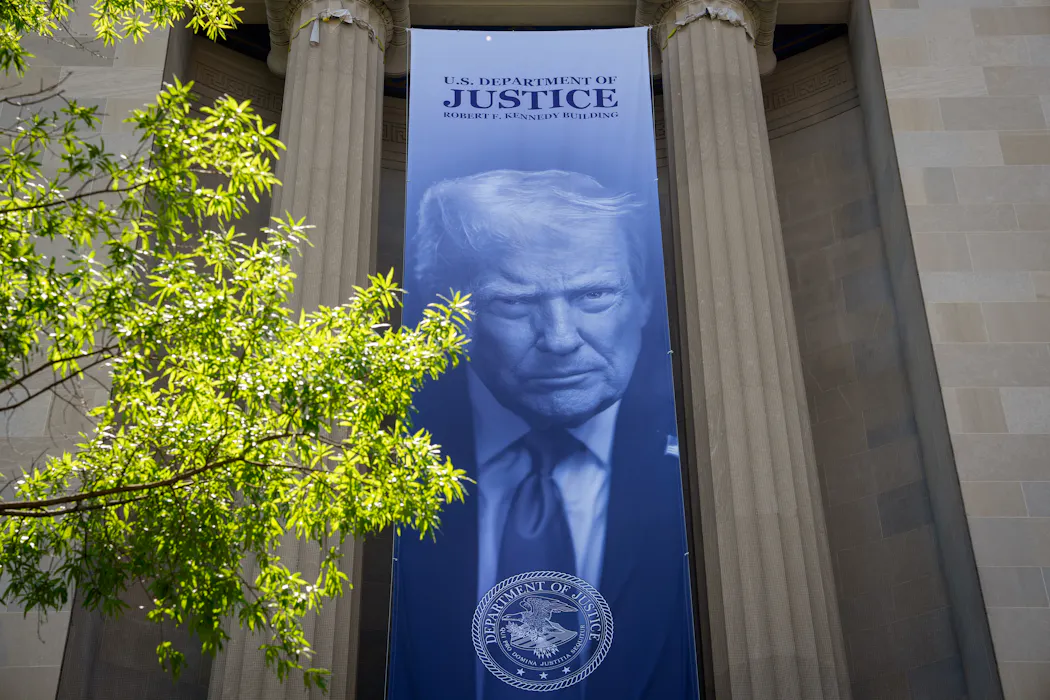
A banner featuring President Trump on the outside of the DOJ building in Washington, D.C. Andrew Harnik/Getty Images

Thomas Hobbes took a very dim view of rebels and insurrectionists. He believed that insurrectionists relinquish their status as citizens the moment they seek to overthrow the government and should never be rewarded for doing so.

Hobbes, one of the finest political theorists of his time, said this in his great political treatise, “Leviathan,” published in 1651 during a civil war in England and Scotland.

Hobbes would likely also take a dim view of a major development announced by the Trump administration on May 20, 2026.

The U.S. Department of Justice has established a US$1.776 billion “Anti-Weaponization Fund,” to be used, the AP reports, to “allow people who believe they were targeted for prosecution for political purposes, including by the Biden administration Justice Department, to apply for payouts.”

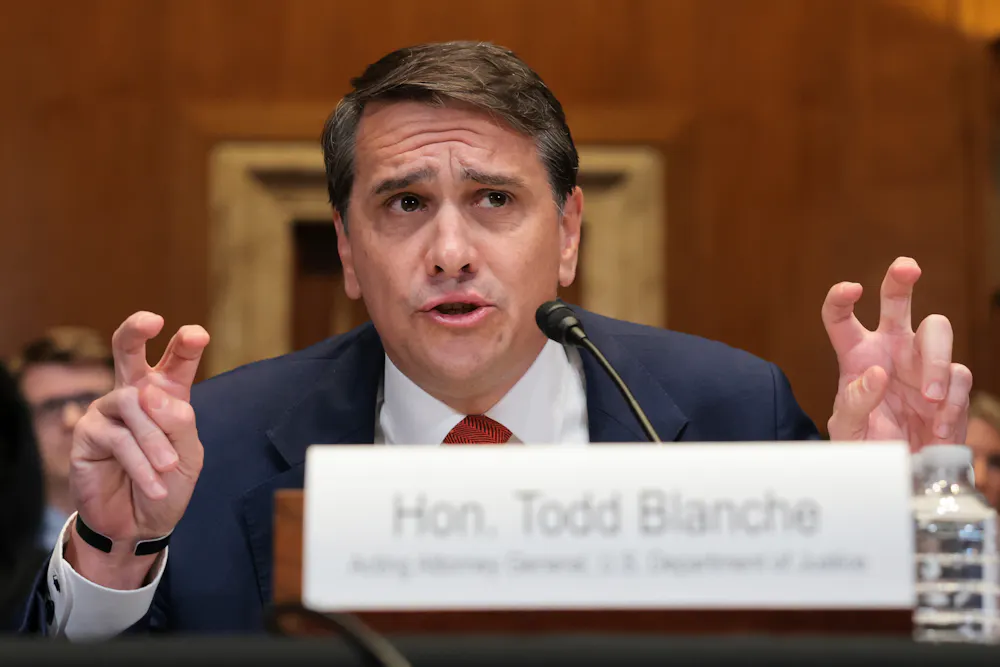
The fund, Acting Attorney General Todd Blanche said, offers “a lawful process for victims of lawfare and weaponization to be heard and seek redress.”

Critics immediately charged that it might be used to compensate people involved in – some even convicted for – the Jan. 6, 2021, attack on the Capitol. Blanche has not ruled out that possibility.

The establishment of the fund is part of a settlement agreement, in response to which President Donald Trump dropped his $10 billion lawsuit against the Internal Revenue Service for damages stemming from the leak of his tax returns. Those leaks, the lawsuit alleged, “caused Plaintiffs reputational and financial harm, public embarrassment, unfairly tarnished their business reputations, portrayed them in a false light, and negatively affected President Trump.”

A DOJ press release indicates the fund will provide “formal apologies and monetary relief” to those who file claims and will cease processing claims “no later than” Dec. 1, 2028. It will be run by a five-person board appointed by the attorney general, and the president will also have the power to remove board members.

Whether or not Jan. 6 participants benefit, some believe that this situation creates an unavoidable appearance of self-dealing and favoritism. As a student of American law and political morality, I think there are important moral and constitutional issues implicated by the president’s suit against the IRS and the creation of the Anti-Weaponization Fund.

Some of them are straightforward; others are less so.

A man talking at a table behind a name plate, gesturing with his fingers.
Acting U.S. Attorney General Todd Blanche testified about the compensation fund during a Senate Committee on May 19, 2026, in Washington, D.C. Anna Moneymaker/Getty Images

A judge in their own cause

An obvious question is: Should taxpayer funds be given to Trump allies, in a settlement reached by the Trump-controlled DOJ as compensation for a Trump family lawsuit?

As far back as ancient Greece, philosophers like Aristotle have worried about what happens when people are called on to make judgments in cases where they are involved. Aristotle thought that the natural instinct for self-preservation meant that they would always favor themselves.

From that concern emerged what was then, and remains, an uncontroversial, bedrock moral principle.

In the Roman world, the Latin phrase “Nemo iudex in causa sua” meant “no one should be a judge in their own cause.” It recognized that anyone having a personal interest should not get to decide matters in which they are involved.

In the Englsh-speaking world, Hobbes himself reiterated that phrase as he explained some of the advantages of living in an organized society, which could supply impartial judges to resolve disputes. And in 1787, James Madison wrote, “No man is allowed to be a judge in his own cause, because his interest would certainly bias his judgment, and, not improbably, corrupt his integrity.”

Commentators reacting to the Justice Department’s decision to establish an Anti-Weaponization Fund to settle the president’s claims against the IRS have drawn on these longstanding principles to criticize it, including how the DOJ, which is part of the executive branch controlled by Trump, negotiated with him to reach this settlement.

The conservative lawyer and activist Ed Whelan said, “There is a glaring conflict of interest with Trump being on both sides of the claim.” Whelan added, “It is outrageous that he and those answering to him would be deciding how the government responds to these extravagant claims.”

In testimony on May 19, 2026, before the Senate Appropriations Committee, Blanche offered a different view. He said the settlement fund was not unprecedented and likened it to a different fund, established by the Obama administration, to settle discrimination claims brought by Native American and Black farmers.

“It’s not limited to Republicans. It’s not limited to Democrats,” Blanche added. “It’s not limited to January 6th defendants. It’s limited only by the term weaponization.” Blanche promised that payments from the fund will be publicly disclosed.

Negotiating with himself

In April, Kathleen Williams, the Florida federal judge who was presiding over Trump’s lawsuit, reframed the moral issue of self-dealing as a legal one. She questioned whether the case could go on, noting “President Trump’s own remarks about this matter acknowledge the unique dynamic of this litigation.”

The remarks she referenced occurred when the president talked about the lawsuit and the prospect of negotiating with himself. “And they do say that, you know, it’s never been a case like this. Donald Trump sues the United States of America. Donald Trump becomes president, and now Donald Trump has to settle the suit.”

Williams, the judge, wrote that “it is unclear to this Court whether the Parties are sufficiently adverse to each other so as to satisfy Article III’s case or controversy requirement.” That requirement means that a court can only rule when there is a real dispute before it.

That rule is designed to prevent so-called collusive lawsuits, in which “the parties are not actually in disagreement but are cooperating” to achieve a result. Judge Williams was scheduled to hear arguments on that question on May 20, 2026. But the settlement announcement was made two days before, and, in light of it, she dismissed the case.

Back to Hobbes

Beyond the case and controversy question, the Justice Department’s actions may implicate constitutional issues.

One is whether, under the constitutional separation of powers, the executive branch has the authority to create a victim compensation fund, or whether that authority rests with Congress.

Another is whether the fund violates the Constitution’s Emoluments Clause, which prohibits the president from receiving any “Emolument from the United States” other than his salary.

While the new fund may not make direct payments to Trump, he may benefit from payments to family members, business associates and others who will claim to have been victimized by the Biden administration, including people prosecuted and convicted of crimes committed on Jan. 6.

Democratic Congressman Jamie Raskin, a former professor of constitutional law, also contends that what the Justice Department has done violates Section 4 of the 14th Amendment, part of which states: “neither the United States nor any State shall assume or pay any debt or obligation incurred in aid of insurrection or rebellion against the United States.”

Referring to the president, Raskin argues hypothetically, “So, to the extent that he wants to give a million dollars to each of 1,600 pardoned rioters and insurrectionists, we think that that’s an unconstitutional use of money.”

That section of the 14th Amendment was designed to ensure that Confederate rebels would not receive compensation for the value of their emancipated slaves. However, in Perry v. United States, a 1935 case, the Supreme Court stated that Section 4’s “language indicates a broader connotation” beyond its Civil War context.

It seems clear that courts will soon be asked to decide whether Raskin and other legal critics are right in their assertions of a host of legal problems with the Anti-Weaponization Fund. How they will do so remains to be seen.

But, in a democracy, deciding whether the creation of the fund violates the moral maxim that no one can be a judge in his or her own cause ultimately will be up to the people.

The Conversation

Austin Sarat does not work for, consult, own shares in or receive funding from any company or organization that would benefit from this article, and has disclosed no relevant affiliations beyond their academic appointment.

  •  

More universities are disinviting commencement speakers who might challenge students’ ideas, unraveling an apolitical tradition

College commencement ceremonies celebrate students' achievements, but also have become occasionally fraught with politics. photosbyjim/iStock/Getty Images Plus

Delivering a university commencement address used to simply be a unique kind of honor. Speakers stand before a podium, wearing a traditional graduation cap and robe, and offer graduates life lessons and inspirational words as they enter the next phase of life.

But today, speaking at a university commencement ceremony carries considerable risk, as Morton Schapiro, former president of Northwestern University, recently found out. Schapiro was scheduled to speak at Georgetown University Law Center’s graduation on May 17, 2026, but announced on May 6 that he would no longer appear at the event.

Some Georgetown law students had protested and petitioned to have Schapiro’s invitation rescinded, citing what they said were Schapiro’s “controversial, Zionist, and harmful opinions.” The students pointed to an op-ed that Schapiro wrote expressing support for Israel and Jewish people a few days after the Hamas attacks on Oct. 7, 2023, which killed 1,200 people.

Schapiro is in good company. There’s a reason why the free speech advocacy group FIRE calls the lead-up to college commencements disinvitation season.

Over the past two decades, colleges and universities across the country have withdrawn invitations to various commencement speakers after students protested their scheduled appearance. Or, in some cases, invited speakers have said they will no longer participate after students spoke out against their upcoming speeches.

As a political scientist who has written about the First Amendment and free speech on college campuses, I think Schapiro’s ill-fated Georgetown commencement invitation – and other instances like this one – show that intolerance for dissenting viewpoints lasts until the last diploma is handed out at graduation.

Some students only want people who hold similar views to address them at their graduation. They exercise what free speech law experts call a “heckler’s veto,” meaning when an audience’s reaction, or anticipated response, stops someone from speaking. Free speech then takes a back seat, and a graduation becomes just a performative moment of political correctness.

Two men wear purple robes and smile in a crowd of people.
The comedian Seth Meyers, left, attends the Northwestern University graduation with Morton Schapiro, the school’s then-president, in June 2016 in Evanston, Ill. Timothy Hiatt/Getty Images

It wasn’t always this way

The first university commencement in the U.S. took place in 1642, when Harvard College held a ceremony to honor its nine graduates. The students were joined by some of the Massachusetts Bay Colony’s most distinguished citizens, including Governor John Winthrop and his deputy, John Endicott, who observed the proceedings.

No one delivered a commencement address.

Instead, each graduate delivered an address and displayed the fruits of their classical education by speaking in Latin and English.

By the middle of the 19th century, university commencements drew well-known outsiders to college campuses to speak.

In 1837, for example, the poet and essayist Ralph Waldo Emerson addressed Harvard’s Phi Beta Kappa graduates and issued a stirring call for American students and scholars to end what he called “our long apprenticeship to the learning of other lands.”

In 1881, James Garfield became the first sitting American president to deliver a commencement address, when he spoke at the United States Naval Academy in Annapolis, Maryland.

Twenty-four years later, President Theodore Roosevelt spoke at the first graduation ceremony at Clark University, in Worcester, Massachusetts. He told his audience there, “I have always felt most strongly that it is true of a nation as of the individual that the greatest doer must also be a great dreamer.”

Since then, other presidents have used commencement speeches to announce major policy initiatives and agreements, including on foreign policy.

In 1963, President John F. Kennedy told the graduating seniors at American University that the U.S., the United Kingdom and the Soviet Union would start negotiations to ban the testing of nuclear weapons.

Two years later, President Lyndon Johnson announced at Howard University’s commencement that he would launch a major initiative to address socioeconomic disparities that disadvantaged Black people.

There was no controversy or protest about Kennedy, Johnson or other prominent speakers who delivered commencement addresses before a few decades ago.

A man stands at a podium that says 'president of the United States' in a black-and-white photo.
President John F. Kennedy delivers his commencement speech at American University in June 1963. Bettmann/Contributor/Getty Images

The commencement speaker as a lightning rod

But that was then. Times have changed.

FIRE estimates that between 2000 and 2024, there were 345 attempts to disinvite commencement speakers. Many of the scheduled speakers who faced pressure to not appear at the ceremonies backed out.

Examples of commencement speaker disinvitations have happened at small, private liberal arts colleges, as well as big public universities. Being uninvited from speaking at a graduation is often precipitated by petitions and protests, from both conservative and progressive activists.

For example, in 2019, former Nebraska Senator Bob Kerrey, a Democrat, withdrew as the scheduled commencement speaker at Creighton University. This followed the Nebraska Republican Party objecting to Kerry’s pro-abortion rights voting record.

In 2024, Dickinson College rescinded a commencement invitation for Michael Smerconish, an author and television commentator who focuses on politics. This decision came after a student wrote an opinion piece that showed that 20 years earlier, Smerconish said, “in order to keep America safe, the TSA should deliberately target Arabs and Muslims for searches because they look like the perpetrators of past terrorist attacks.”

“Does someone like Mike Smerconish in any way represent the achievements and ambitions of its students? If Dickinson truly loves and values its students, shouldn’t it honor them with someone who reflects that love?” the student asked in the opinion piece.

Protests ensued, and the college president gave in.

In 2025, the noted author Salman Rushdie withdrew as commencement speaker at Claremont McKenna College in Claremont, California, after members of its Muslim Student Association urged the school to revoke his invitation. They accused Rushdie, a self-described “hardline atheist,” of “disparaging a global religious community” in his writing and public appearances. In a 2015 commencement address at Emory University, he said: “I sometimes think we live in a very credulous age. People seem ready to believe almost anything. God, for example.”

Over the past few years, the Israel-Hamas war in the Gaza Strip has led to various commencement controversies and rescinded invitations, based on scheduled speakers’ politics around the conflict.

There have also been various commencement speakers who have delivered controversial addresses that some graduates – and outside observers – found offensive. Kansas City Chiefs kicker Harrison Butker, for example, spoke at Benedictine College’s commencement in 2024 and encouraged women to become homemakers.

A man stands at a wooden podium on a stage, surrounded by people in graduation attire and a crowd of people wearing black graduation caps.
The author Salman Rushdie delivers a commencement address at Emory University in Atlanta in May 2015. Marcus Ingram/Getty Images

Commencement and free speech

That brings us back to Schapiro.

“I have presided over 28 commencements as a president and dean,” Schapiro wrote in a note to Georgetown’s law students, “and those ceremonies are about celebrating the graduates and their supporters. I was looking forward to giving a talk about humility and gratitude, but I don’t want my presence to distract from the day’s festivities.”

Humility and gratitude are often missing in disinvitation season.

In 2017, Drew Gilpin Faust, then the president of Harvard University, seemed to understand this absence when she issued a free speech message to graduates in her commencement address. “Silencing ideas or basking in intellectual orthodoxy independent of facts and evidence impedes our access to new and better ideas, and it inhibits a full and considered rejection of bad ones,” Faust warned.

Commencement season puts Faust’s admonitions to the test. “Universities,” she said, “must model a commitment to the notion that truth cannot simply be claimed, but must be established – established through reasoned argument, assessment and even sometimes uncomfortable challenges that provide the foundation for truth.”

The Conversation

Austin Sarat does not work for, consult, own shares in or receive funding from any company or organization that would benefit from this article, and has disclosed no relevant affiliations beyond their academic appointment.

  •  

Tony Carruthers recently survived a lethal injection attempt – the latest man to endure a failed execution

In the past 80 years, at least nine men have survived execution attempts. Bernd Obermann/Getty Images

Tennessee set out to execute Tony Carruthers on May 21, 2026, but he lived to tell about it.

Carruthers, who was sentenced to death for a 1994 triple murder, survived his date with death when the execution team members could find only one suitable vein in which to secure an IV, but not, as USA Today reports, the “backup line, which is required under the state’s lethal injection protocol.”

After the failed attempt, Tennessee Gov. Bill Lee gave Carruthers a one-year reprieve, a decision the governor did not explain.

What happened to Carruthers is a reminder that things frequently go wrong in executions, even if in almost all cases the problem is resolved and the execution is completed.

Indeed, in the past 80 years, only eight other men have had experiences like Carruthers’ and survived execution attempts.

Four of those execution “survivors” were killed by a second execution attempt, while others escaped that fate. Three others died on death row; one of them after the state agreed not to try to execute him a second time, and one of them is still alive and awaiting his fate.

Having studied capital punishment for decades, I know the Eighth Amendment’s prohibition of “cruel and unusual punishment” has shaped constitutional discussions around failed executions. But so far, courts have not stood in the way when state governments have wanted to try to execute the same man again.

Not just a lethal injection problem

Carruthers survived a lethal injection attempt, but execution failures have not been confined to that method. A look at the history of hanging reveals several instances in which it failed.

In 1833, for example, a hanging in Pennsylvania failed to kill Charles Getter, who had been sentenced to death for murdering his wife.

“The rope was placed around Getter’s neck. The hangman drew it up fast,” true crime author Amanda Howard notes. “Getter struggled and kicked, choking, before the rope broke, throwing him to the ground.” However, Getter did not die.

The executioner sent someone to look for a stronger rope. This time, the rope did not break and Getter met “the fate of a murderer.”

In 1894, Will Purvis’ hanging also failed when the noose loosened. Instead of dying from a broken neck, Purvis survived, suffering only rope burns on his neck.

Unlike Getter, Purvis returned to prison contending that he was innocent. His lawyers unsuccessfully tried to get the courts to prevent a second execution attempt. Purvis remained behind bars until 1898, when Mississippi’s governor pardoned him. Purvis is the only execution survivor ever to receive such grace.

In the late 19th century, the electric chair replaced hanging as the country’s primary execution method, but it did not prevent failed executions. At least once in the 20th century, the electric chair also failed to kill.

In the spring of 1946, the state of Louisiana tried to use it in the execution of Willie Francis, a 16-year-old Black youth who had been convicted of murdering a local sheriff. At the time, the electric chair was said to be the most humane execution method.

But what Francis experienced hardly seemed humane. When the electric current reached him, “He started going into convulsions.” The executioner “flipped the switch again,” but Francis was not killed.

Later, like Purvis, Francis turned to the courts to try to stave off another execution attempt. The decision in his case would set the precedent for how judges would deal with other execution survivors.

A young Black man sits in a prison cell and smiles.
Willie Francis, 17, who was convicted of murdering a sheriff, sits in a prison cell in May 1946. AP Photo/Bill Allen

An accident?

In January 1947, months after Francis survived the electrocution, the U.S. Supreme Court gave Louisiana permission to try again. The justices split, with five giving Louisiana the green light and four dissenting.

Justice Stanley Reed’s majority opinion emphasized that what had happened to Francis was accidental and that, without malicious intent, there was no violation of the Eighth Amendment. As he put it, “The fact that an unforeseeable accident prevented the prompt consummation of the sentence cannot, it seems to us, add an element of cruelty to its subsequent execution.”

In his view, “The cruelty against which the constitution protects a convicted man is cruelty ‘inherent’ in the method of punishment, not the ‘necessary suffering’ involved in any method employed to extinguish life humanely.”

Justice Harold Burton spoke for the dissenting judges. As he put it: “The intent of the executioner cannot lessen the torture or excuse the result.” A second execution would offend the “fundamental instincts of civilized man.”

Francis was put to death almost a year to the day after his first execution failed.

It would be several decades until another person survived an execution. But the pace of failed executions has only picked up since the start of the 21st century.

21st century execution survivors

From 2009 until May 2026, six people survived failed lethal injection attempts. Romell Broom became the first 21st-century execution survivor when in 2009 the state of Ohio gave up after trying for two hours to find a usable vein in which to secure an IV line.

In his case, the Ohio Supreme Court, relying on the Francis precedent, decided that “The insertion of IV lines is merely a preparatory step to the execution.” In its view, Broom’s punishment had not really begun. Therefore, a second execution would not violate the prohibition on double jeopardy or on the imposition of cruel punishment.

Mugshot of a white man.
The state of Alabama executed Kenneth Smith in 2024 after he survived a previous lethal injection attempt. Alabama Department of Corrections via AP

But before Ohio could again attempt to execute Broom, he died on death row in December 2020 after contracting COVID-19. Another 21st-century execution survivor, Alva Campbell, also died on death row.

In 2018, Doyle Hamm reached an agreement with the state of Alabama stating that he would not be subject to a second execution after executioners couldn’t access a vein during an attempted lethal injection. Hamm died from cancer in 2021.

However, Alabama succeeded in executing two other execution survivors, Alan Miller and Kenneth Smith, both in 2024. In both cases, they had survived failed lethal injections.

And Thomas Creech is, like Carruthers, still alive after lethal injection failure, this time in Idaho. It’s not clear if and when Idaho will try again to put him to death. If it does, the state will use the firing squad, which will become its primary execution method on July 1, 2026.

Carruthers’ fate

As Carruthers awaits his fate in Tennessee, defense lawyers in the state have asked Gov. Lee to halt all executions pending a thorough review of its protocol.

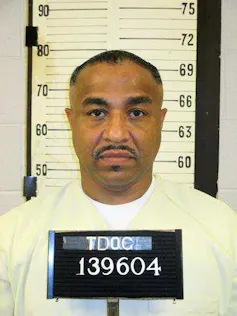
A mug shot of a Black man.
This undated photo released by the Tennessee Department of Correction shows Tony Carruthers. Tennessee Department of Correction via AP

And as the Death Penalty Information Center reports, “attorneys from the Federal Public Defender’s Office filed a new federal lawsuit … to prevent Tennessee from attempting to execute Mr. Carruthers a second time.”

That suit builds on litigation filed in March 2025 alleging that the administration of lethal injection in Tennessee inflicts cruel and unusual punishment.

Only time will tell if the judges who hear those cases will be persuaded by what Justice Burton wrote in the Francis case: “Although the failure of the first attempt, in the present case was unintended, the reapplication of the electric current will be intentional … The present case demonstrates that, today, two separate applications are sufficiently ‘cruel and unusual’ to be prohibited.”

When the state, Burton explained, seeks to execute someone, it has a duty “to make sure that there (is) no failure.”

The Conversation

Austin Sarat does not work for, consult, own shares in or receive funding from any company or organization that would benefit from this article, and has disclosed no relevant affiliations beyond their academic appointment.

  •  

US immigration policies interfere with prenatal care and parenting choices, hurting people and communities

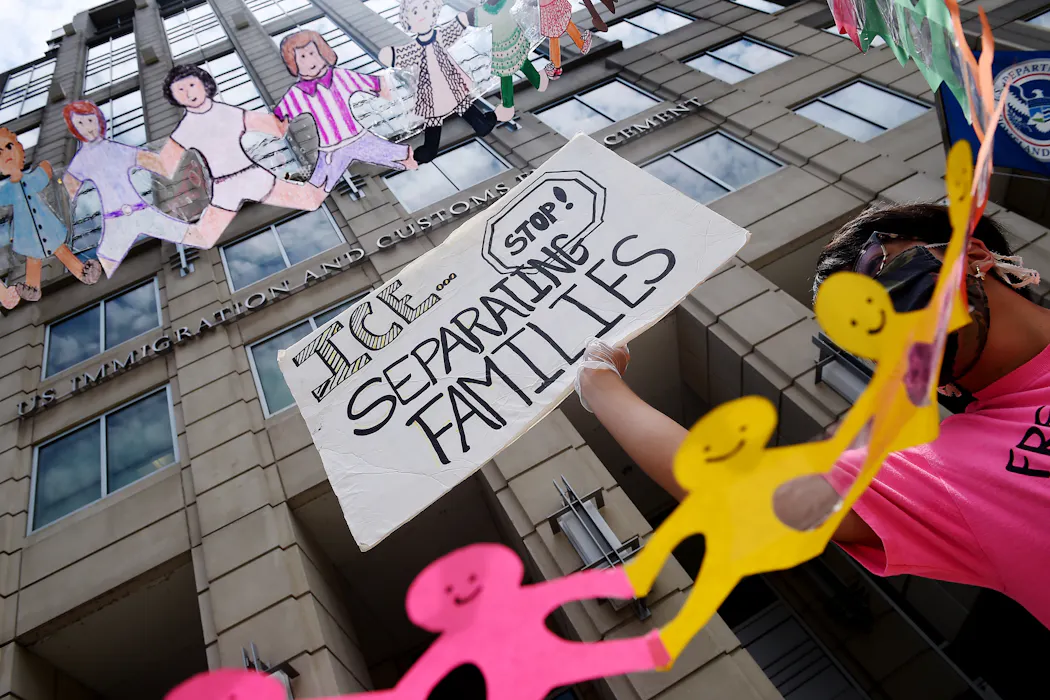
The threat of family separation has been linked to anxiety and chronic conditions such as hypertension during pregnancy, which can affect children's development. OLIVIER DOULIERY/AFP via Getty Images

Late in her pregnancy in the fall of 2025, Jacqueline, a Guatemalan immigrant living in North Florida, began planning for labor alone.

After her husband was detained and deported by Immigration and Customs Enforcement, she stopped leaving her home except when absolutely necessary. Even routine prenatal visits felt risky, she told the news site The 19th. A local clinic eventually arranged Uber pickups and drop-offs so she could continue care, but each trip required calculation: Was it safe to leave? When labor began, she asked hospital staff a question few patients ever have to consider: Were immigration agents nearby?

Stories like Jacqueline’s were widely reported in the news through early 2026.

And although such stories are less frequently in the headlines now, immigration enforcement is ongoing, and health providers say the fear it generates continues to deter patients from seeking care. Since mid-2025, clinics in several states have documented increases in appointment cancellations, missed follow-ups and disruptions to time-sensitive services, including prenatal care and cancer screenings.

As a scholar of reproductive justice and public health, I write about how systems meant to provide care can instead cause harm in my book, “Ill Erotics: Black Jamaican Women and Self-Making in Times of HIV/AIDS.” Reproductive justice, a set of ideas developed by Black women activists, defines three core rights: the right to have a child, the right not to have a child and the right to parent children in safe and sustainable communities. My work explores not only the legality of these rights but also how social, economic and political conditions make it possible for people to access them.

Emerging evidence suggests immigration enforcement is reshaping access to healthcare in ways that limit each of these core rights. It is also redefining institutions such as clinics, hospitals and detention centers as sites of surveillance rather than sites of care.

Concerns abound about the treatment of pregnant women and children in immigrant detention facilities.

The right to carry and birth a child safely

Consistent medical care is not optional in pregnancy. Major medical and public health organizations, including the American College of Obstetricians and Gynecologists and the Centers for Disease Control and Prevention, identify regular prenatal visits, proper nutrition and monitoring for complications as essential to reducing maternal and infant mortality and other preventable complications.

In an executive order issued on Jan. 20, 2025, the Trump administration rescinded a federal policy that discouraged immigration enforcement actions in “sensitive locations,” such as hospitals, clinics, schools and places of worship.

According to health providers and advocacy organizations, patients may be avoiding clinics because they don’t trust the healthcare system, don’t want to share their data with the government and fear the presence of immigration officials near health facilities. Healthcare providers across the country report rising no-show rates for prenatal appointments.

When people avoid prenatal and other medical care out of fear, their right to carry a pregnancy safely – with the best chance for a healthy outcome – is constrained. In this way, immigration enforcement doesn’t just limit immigrants’ legal rights – it actually shapes who gets to have a safe and healthy pregnancy. The result is that healthcare systems end up prioritizing the lives and pregnancies of some people, while immigration enforcement and other policies can lead others to experience barriers in accessing the same kind of care.

For pregnant people in immigrant detention, this right is even more compromised. Pregnant detainees routinely face inconsistent or inadequate care in custody.

ICE’s own standards require that the agency provide comprehensive prenatal services, including routine checkups, access to specialists and proper nutrition. But interviews with detained women and their attorneys, along with a report published in March 2026 from the Women’s Refugee Commission and Physicians for Human Rights, describe a different reality: sporadic medical visits, delayed responses to urgent symptoms and limited access to basic prenatal resources.

A mom and holds her toddler child as they stand in a room in front of a sun-filled window.
Parents’ fear that they could be separated from their families creates intense stress that can adversely affect mental and physical health. timnewman/E+ via Getty Images

ICE detention facilities fail to meet even the minimum standards of care outlined in the agency’s own policies. People detained while pregnant have reported bleeding, pain or other warning signs of miscarriage without receiving timely follow-up care. Others described being transferred between facilities without their medical history, seriously disrupting their medical care.

The right not to have a child

The right not to have a child depends on access to contraception and abortion services. These forms of care are often highly time sensitive, which means that constrained access to healthcare has an especially big impact.

Without access to contraception, unintended pregnancies – or worries that they will happen – can drive up financial stress and mental health risks.

Immigration enforcement disrupts access to these healthcare services. People who are exposed to heightened surveillance and who are at risk of being detained often cannot get reproductive health services, even when those serves are legal.

Delays in abortion care can limit the reproductive health options available in pregnancy, potentially leading to more medically complex procedures as well as higher costs and farther travel for healthcare. When access is restricted, some patients are forced to continue pregnancies against their intentions, while others may attempt to manage abortions outside clinical settings, which can increase medical risk.

From a reproductive justice perspective, these unevenly distributed and compounding risks can function as a form of forced birth. In this way, immigration enforcement policy thwarts reproductive autonomy.

The right to parent children in safe and sustainable communities

Parenting children in safe and sustainable communities doesn’t just require proper medical care, but also broader social conditions that support family well-being.

Immigrant parents’ constant stress of dealing with immigration enforcement – particularly the enduring sense that they are not safe and the fear that they could be separated from family at any time – can take a toll on their mental and physical health. Studies have linked such stress with chronic conditions such as hypertension and anxiety.

For children, that stress can affect long-term development and school performance and can disrupt family networks.

In communities experiencing heavy immigration enforcement, people often avoid using essential services and activities. They may keep children home from school, stay home from work, avoid shopping and social welfare programs, and forgo healthcare appointments. That leads to lost income for local businesses and weakening the social structures that neighborhoods rely on, harming the community overall.

Community consequences

Immigration policies shape health in ways that go beyond hospitals or doctors’ offices and ripple across entire communities. Viewing immigration enforcement through a reproductive justice lens reveals how access to care, bodily autonomy and community stability are deeply connected – and how obstructing them has real health consequences.

The Conversation

Jallicia Jolly does not work for, consult, own shares in or receive funding from any company or organization that would benefit from this article, and has disclosed no relevant affiliations beyond their academic appointment.

  •  
❌